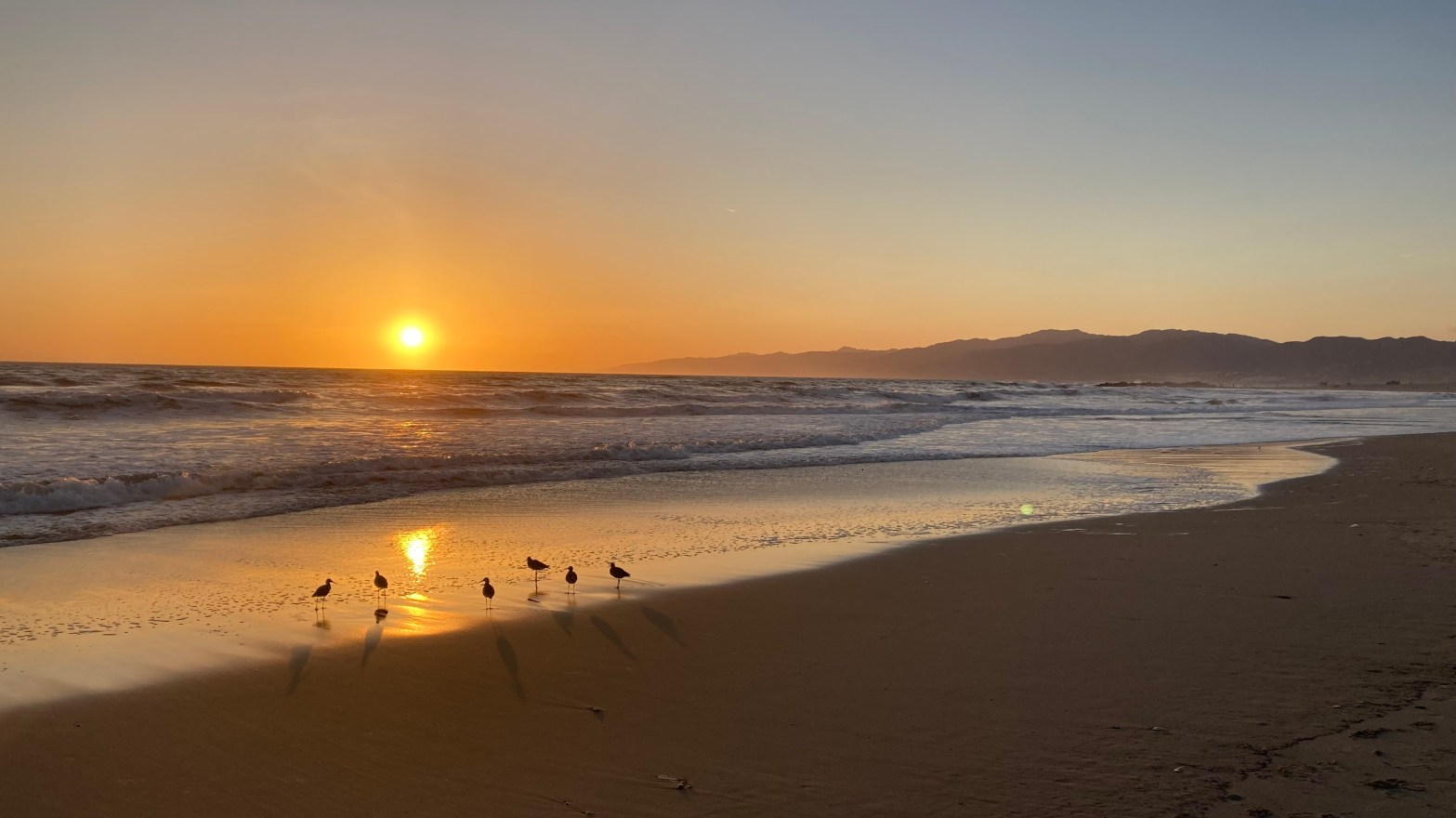
There’s this song called Something In The Orange. It’s not something I’d usually listen to, but it came to mean something to me.
I heard the song for the first time at a brewery in BC with friends, where a cover band was playing it. That’s one of my favourite ways to come across new music – out in the wild. I find that hearing music played live can strike you harder than hearing it on the radio, or Spotify. It was the lyrics that caught my attention, they hit home at the time. I made note of them and googled them the next day in order to identify the song.
A little while later, in another BC town, I posted a clip of the song to my socials alongside a photo of an orange sunset. A friend of mine responded, jokingly poking fun in his surprise at my song choice – he knew it wasn’t something I usually listened to. But it was his style. This friend told me he played that song regularly. He sent me a clip of him playing it.
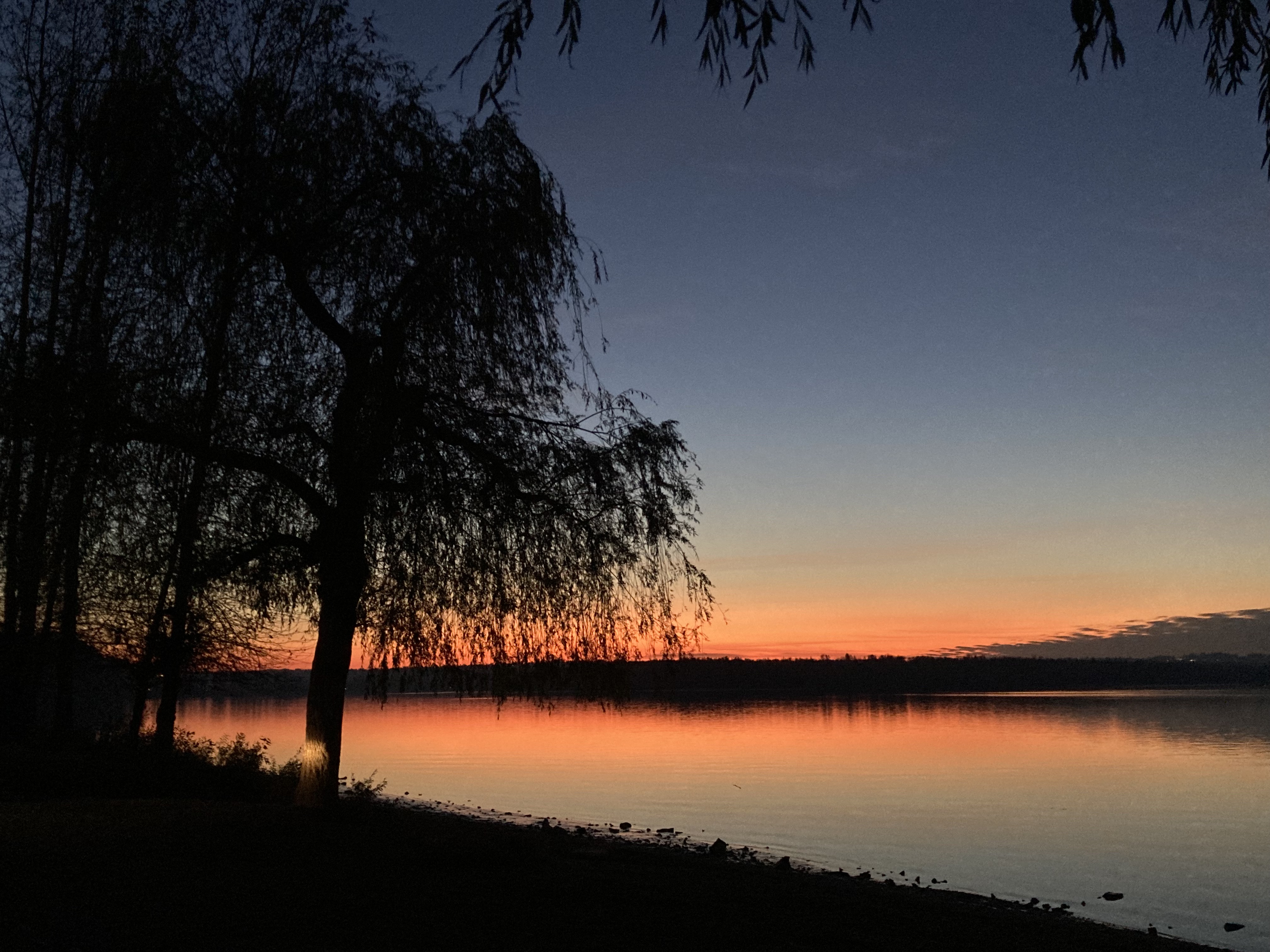
The song would take on greater meaning during my time in California. Music has a way of worming itself into hearts, attaching itself to memories, creating connections between people.
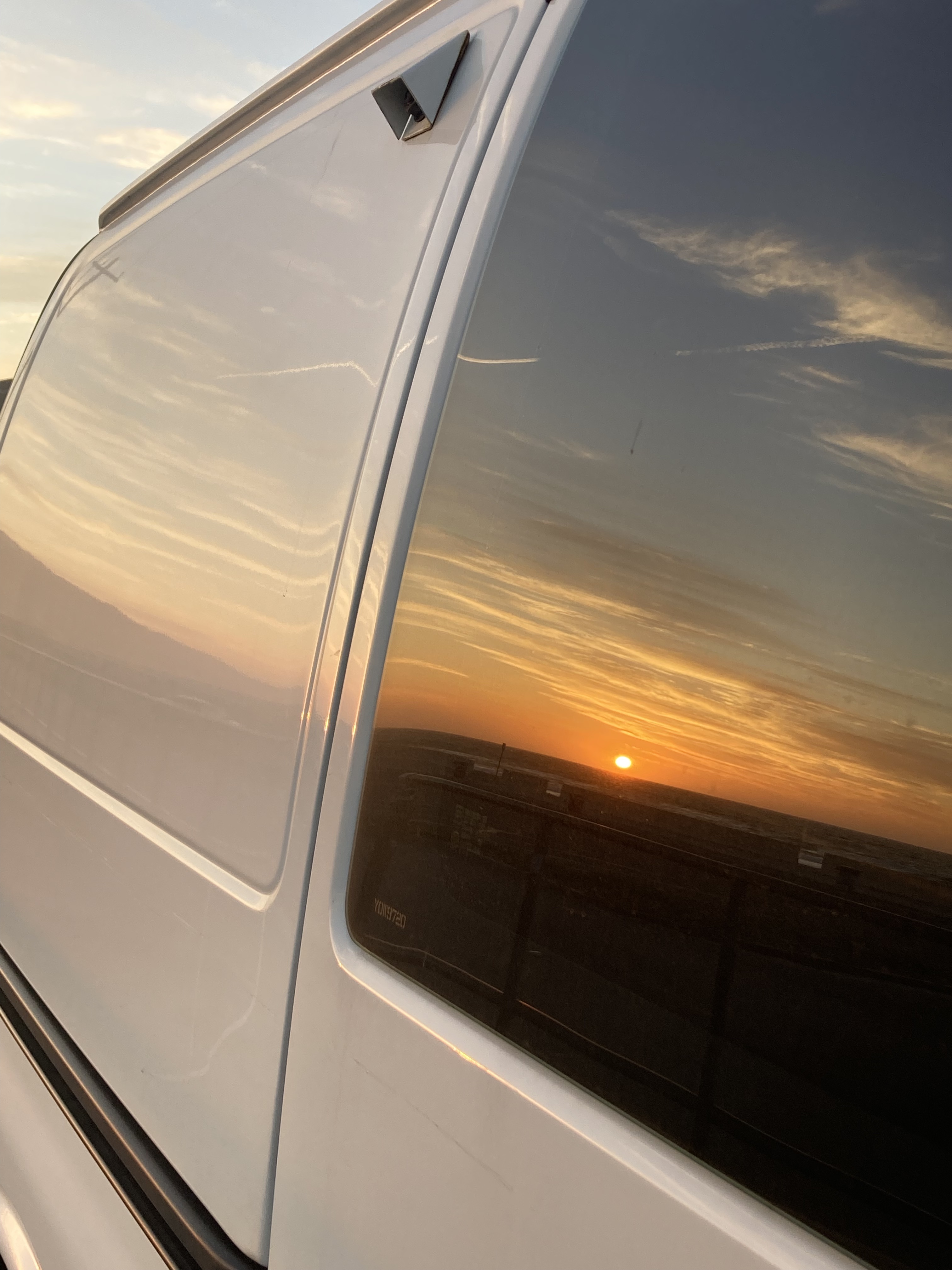
As I made my way down the west coast I made a point of watching as many sunsets as I could. One particular sunset I’ll remember for the rest of my life. There was definitely something in the orange that night.
But we’ll get to that.
Table of Contents
Buckle up, this is another long one. To reiterate: my intention with these posts is documentation, with references and storytelling. I keep it real, and I keep a record. Feel free to scroll through the photos or jump to points of interest. If you’re reading, thanks for being here!
- Table of Contents
- SoCal Coast
- Other
SoCal Coast
Santa Barbara
Santa Barbara felt like the introduction to the meat of Cali/LA stereotypes and tinseltown culture. It’s firmly SoCal, but not just a beach town. It’s upscale, where you genuinely could see celebrities. I’m not big into celebrities – I could have easily walked by them and not known it (save for a select few musicians maybe). I could certainly sense the vibe shift here, especially downtown.
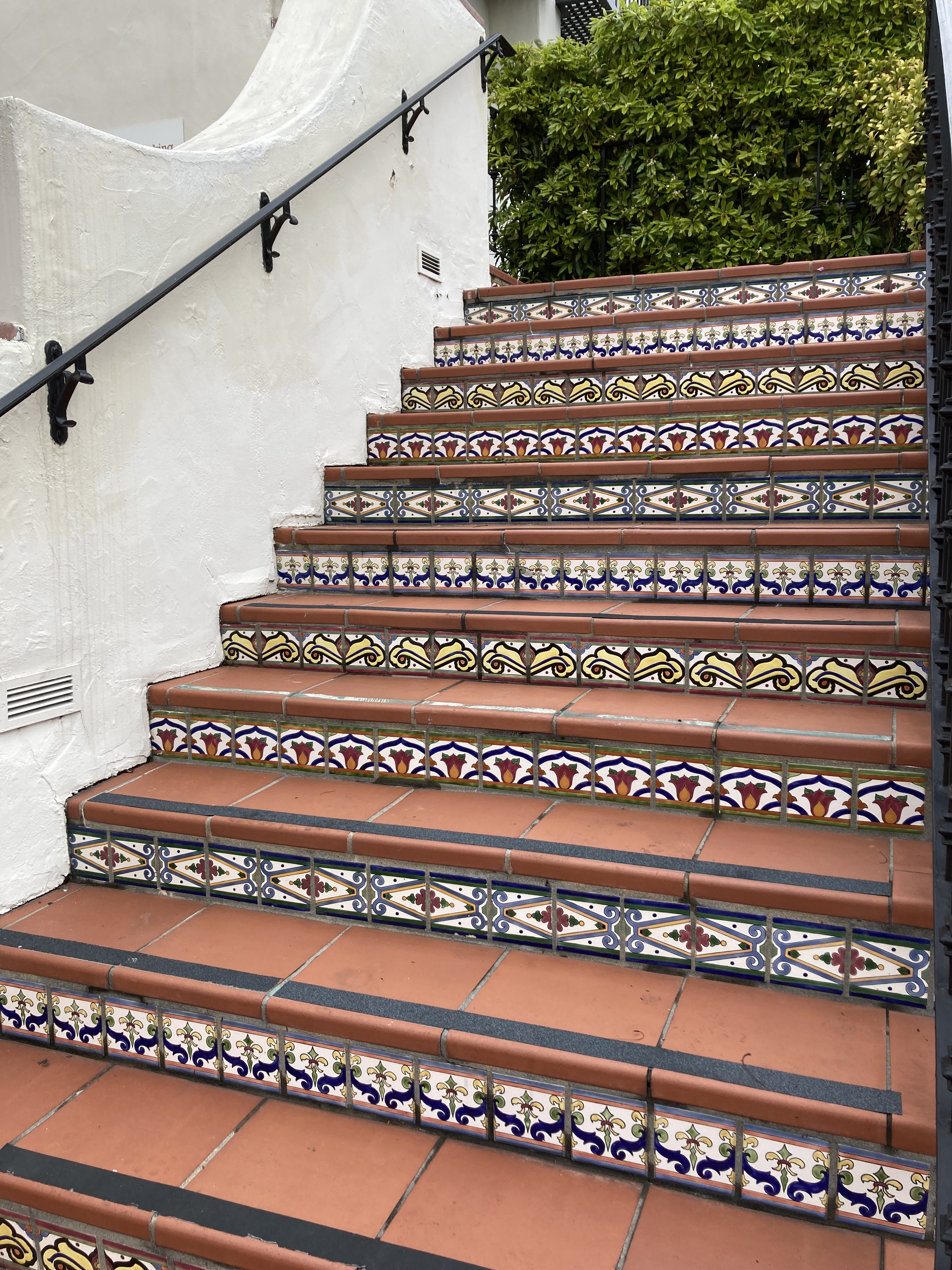
Santa Barbara is a city with a population of 89,000, located about 90 miles north of Los Angeles, on a south-facing strip of coast, sandwiched between the Santa Ynez Mountains and the Pacific Ocean. Like many other southern California coastal hubs, it has beaches, a pier, and a mission (a religious/ military outpost established by Spanish Catholic missionaries in the late 18th century to colonize natives). A characteristic feature of Santa Barbara is the Spanish colonial revival style buildings, with white stucco walls and red clay tile roofs, which were rebuilt after a major earthquake in 1925 and inspired by Mission Santa Barbara. The mediterranean climate and style has also contributed to the nickname “American Riviera”.
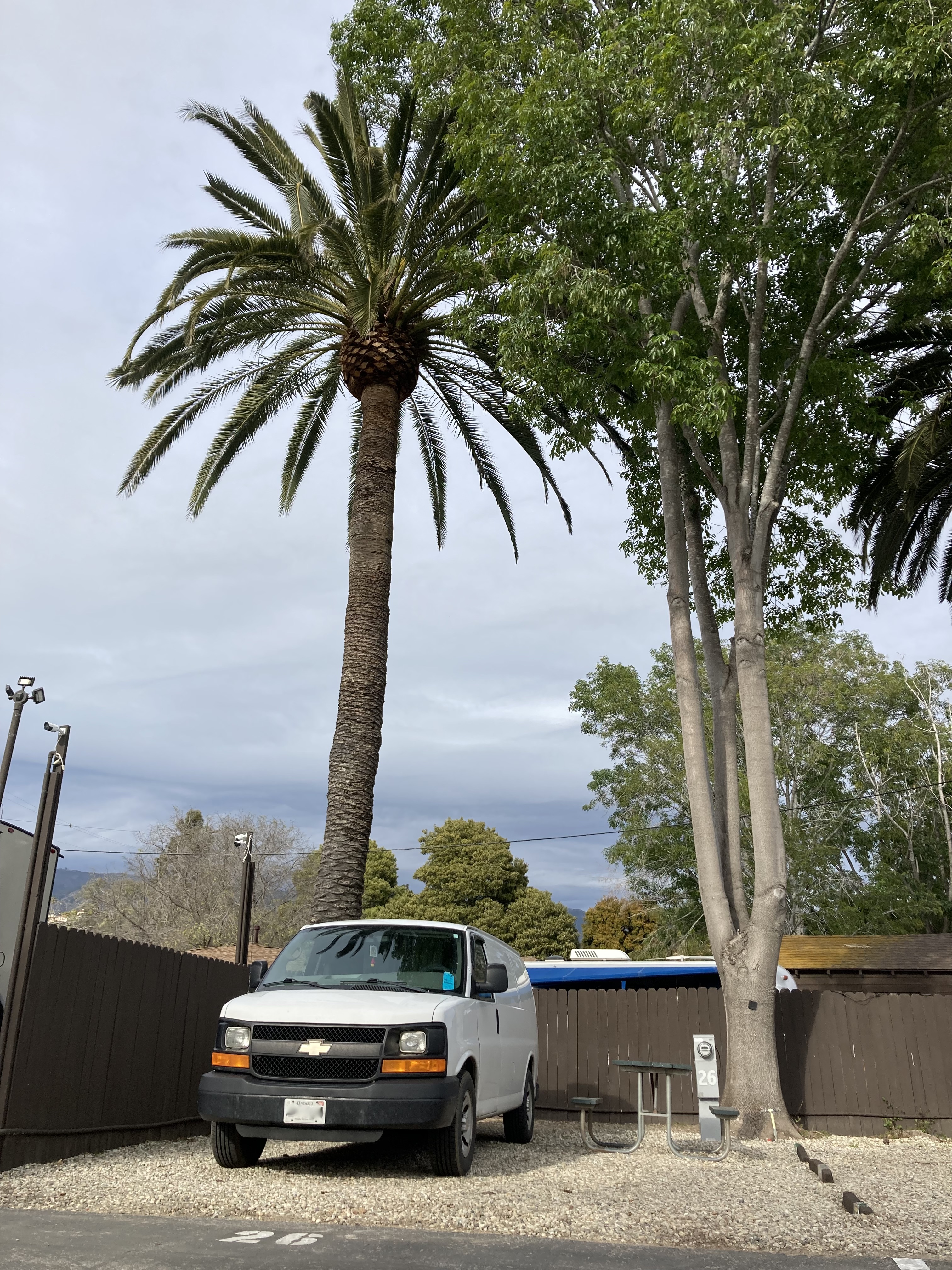
I headed to Sunrise RV Park for my first two nights in Santa Barbara. I remember how busy the freeway was here, in stark contrast to the fairly chill smaller highways I’d been on for much of my time in northern and central California (barring SF).
I got to park right under a palm tree. My first day in the area was sunny and beautiful so I headed out for a run. This RV park is located pretty close to the waterfront so I ran through some neighbourhoods, crossed a bridge over the freeway, and then ran along palm-lined East Beach and Cabrillo Bike Path to Stearns Wharf (built in 1872) to check out its shops and view of the city and mountains.
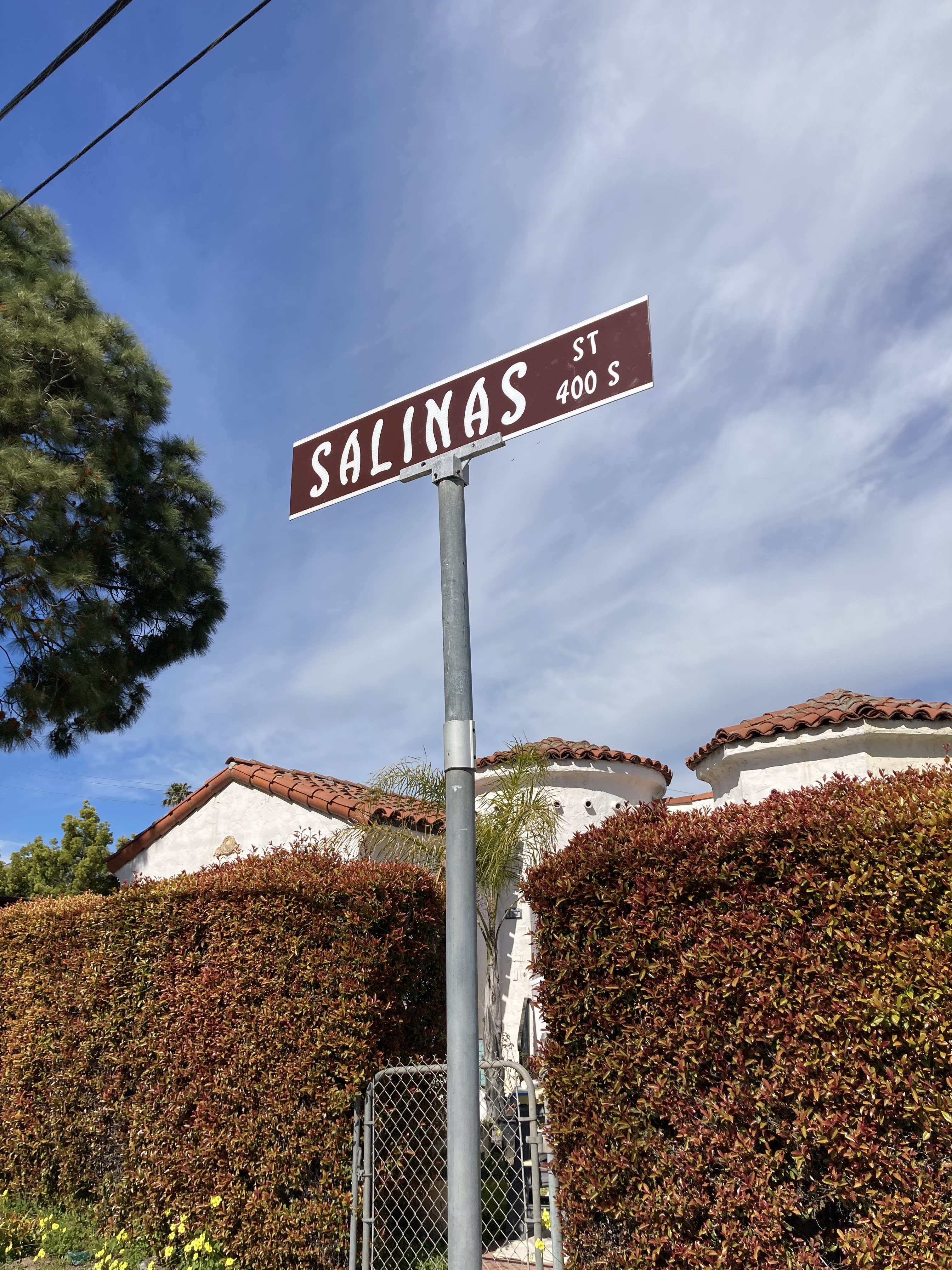
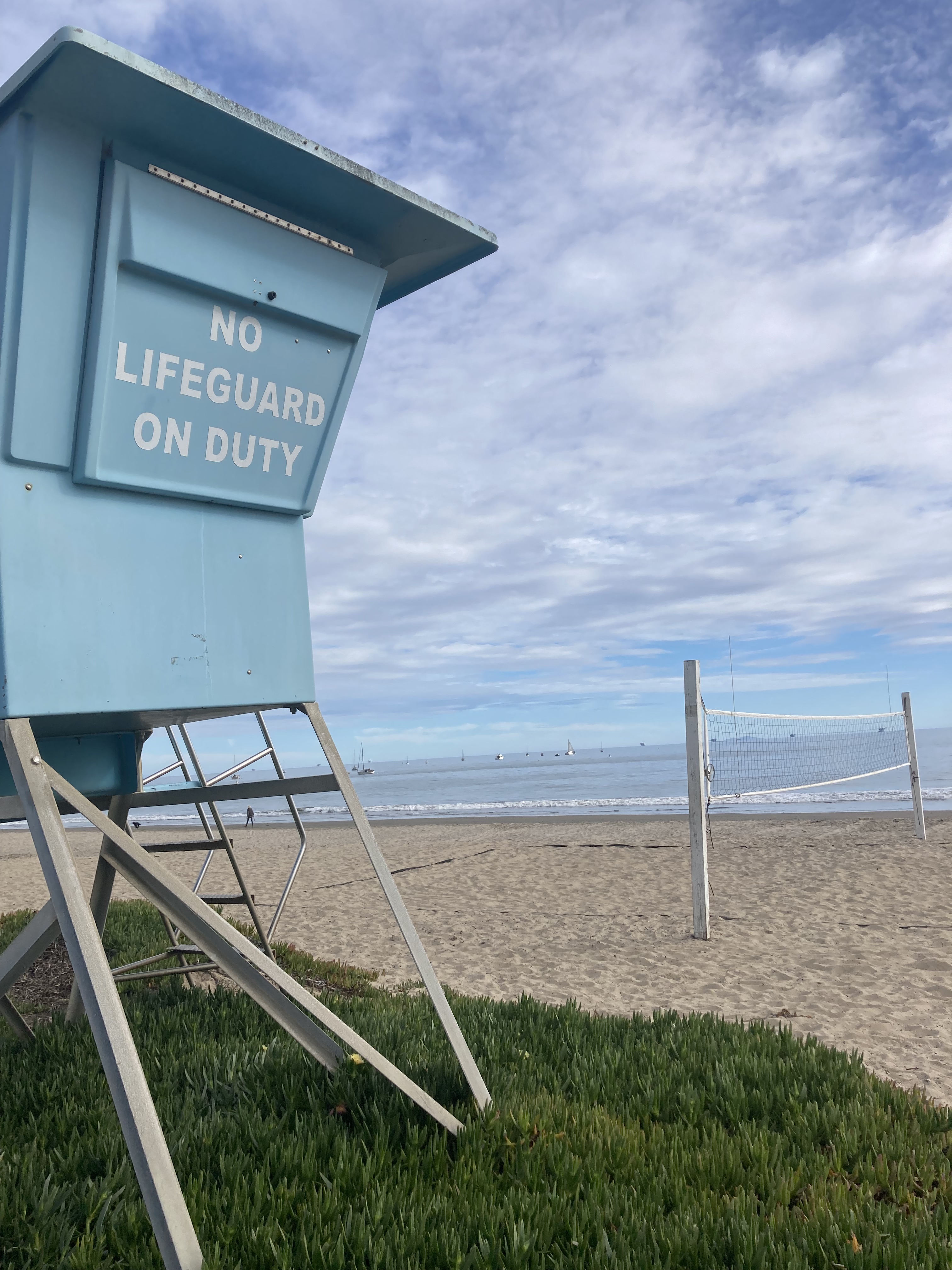
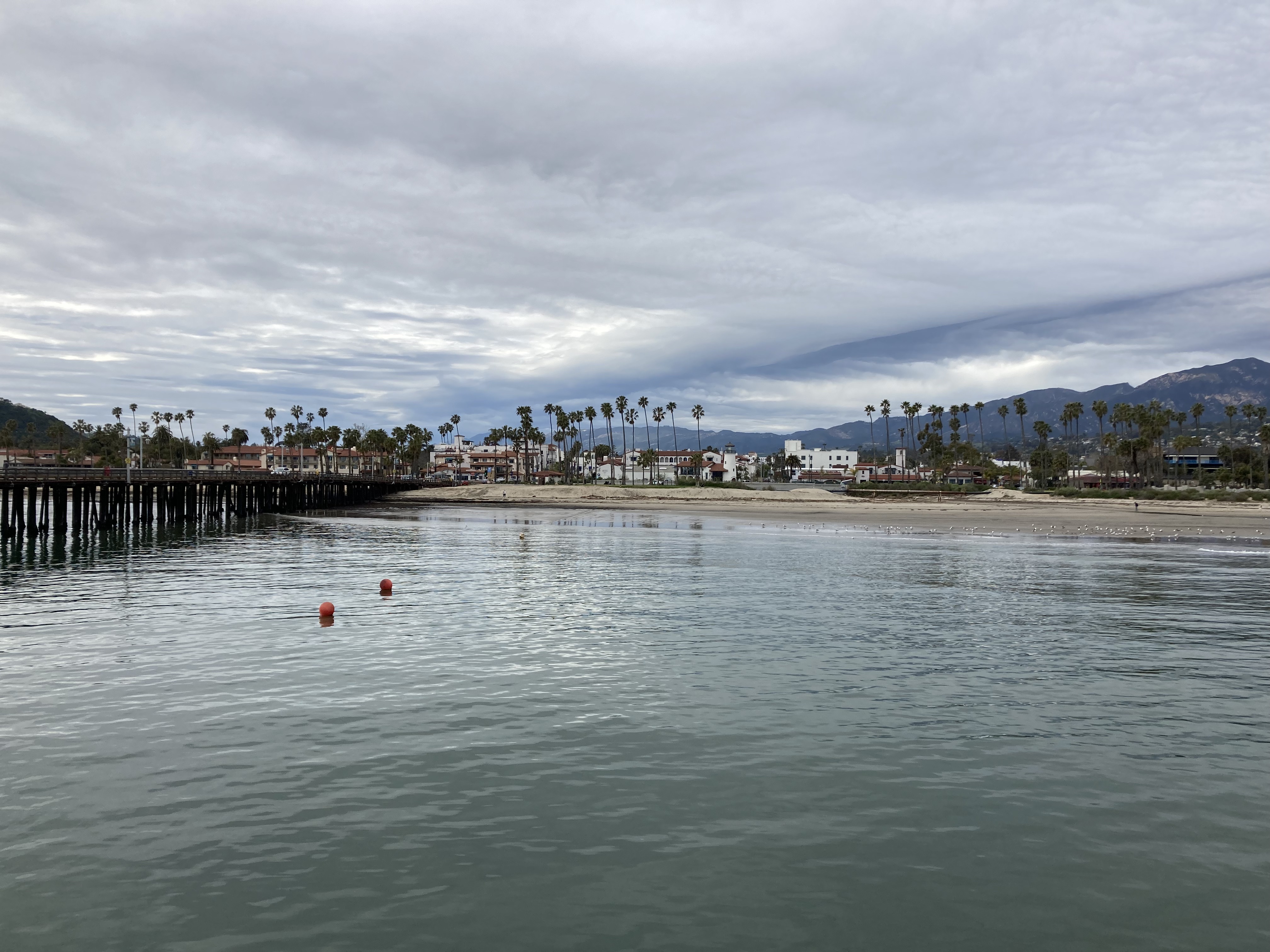
I of course got some laundry done before leaving the RV park. The rest of my days in Santa Barbara were pretty gloomy – it downpoured one day and was cloudy the rest.
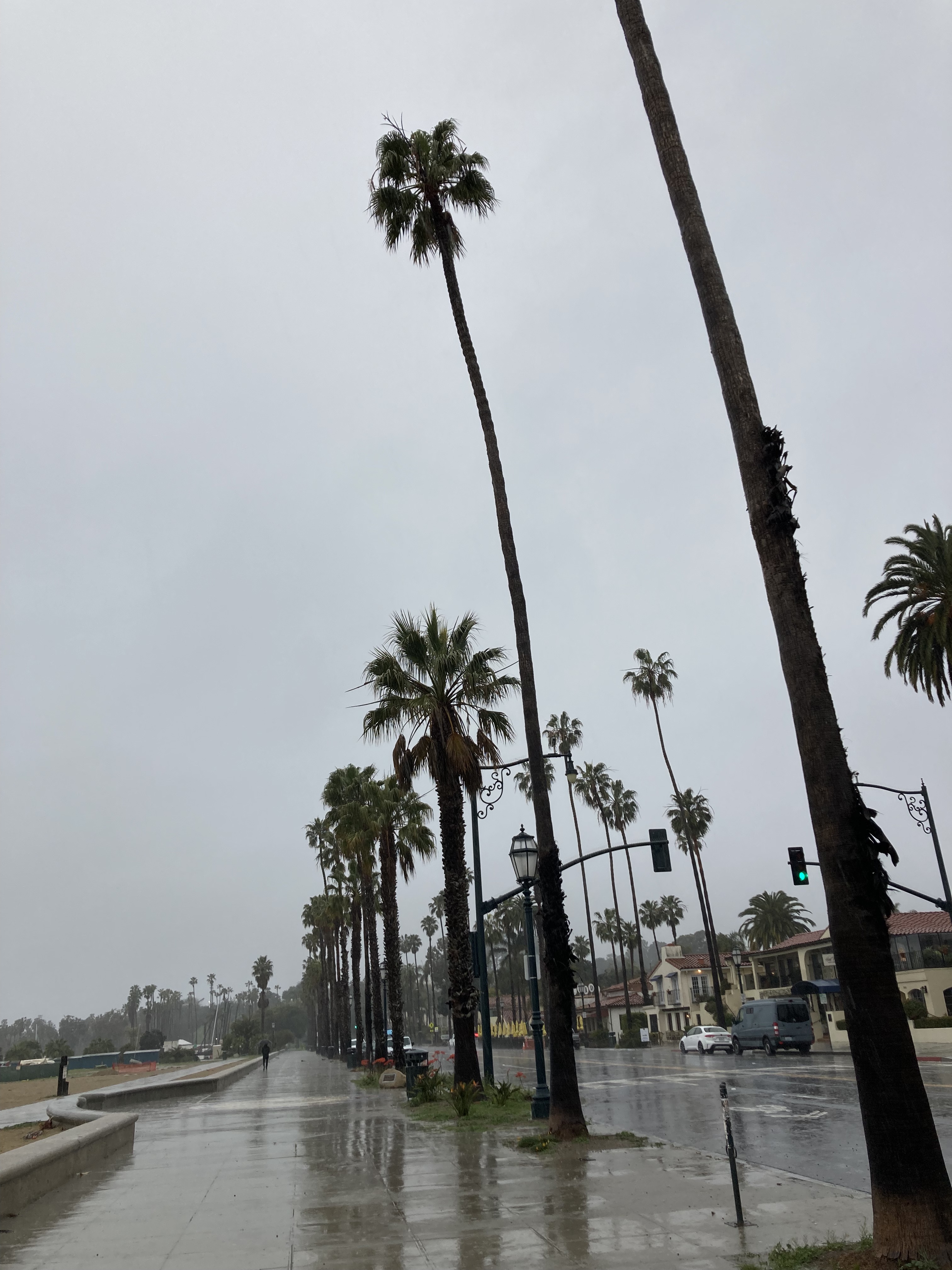
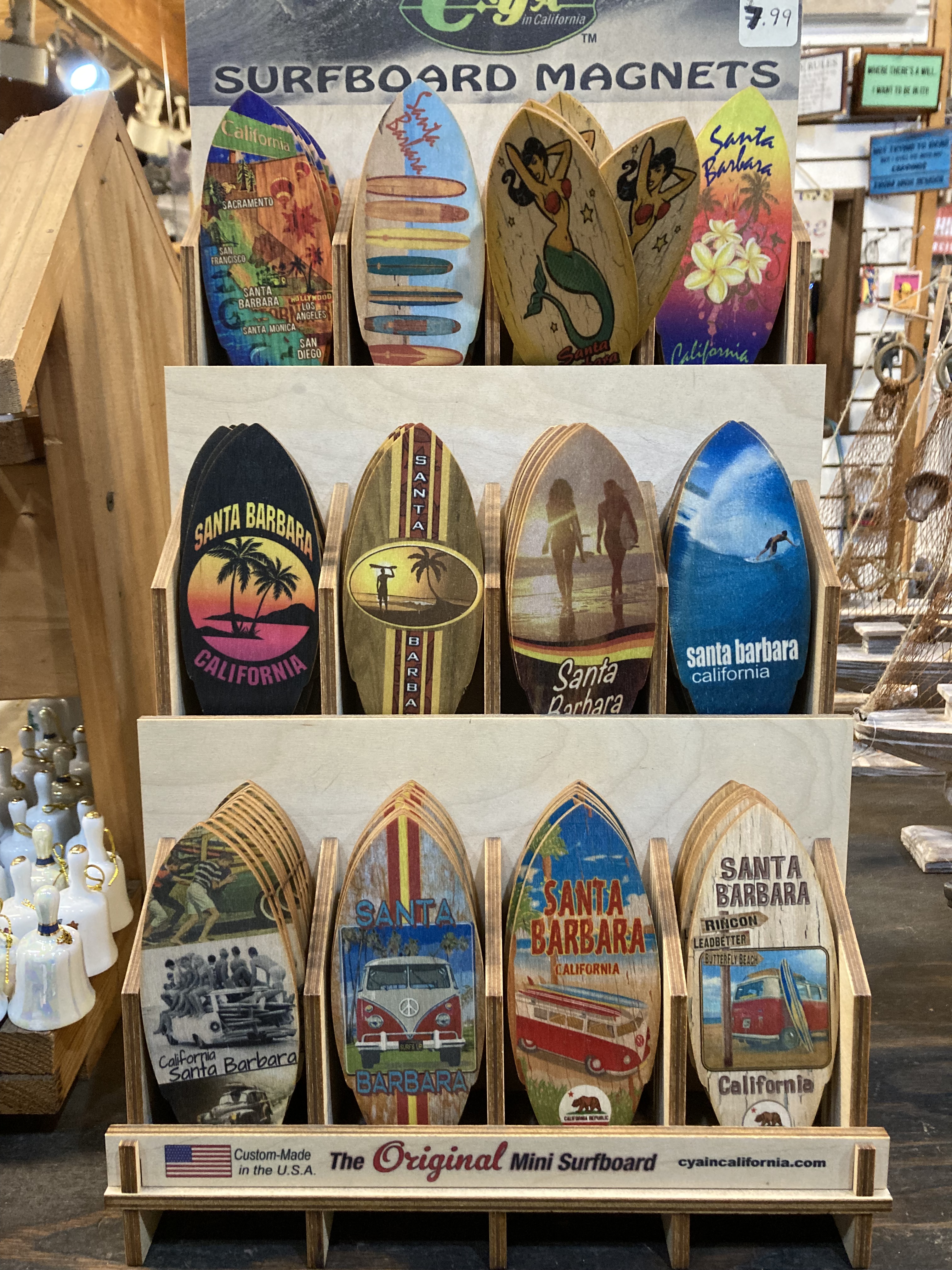
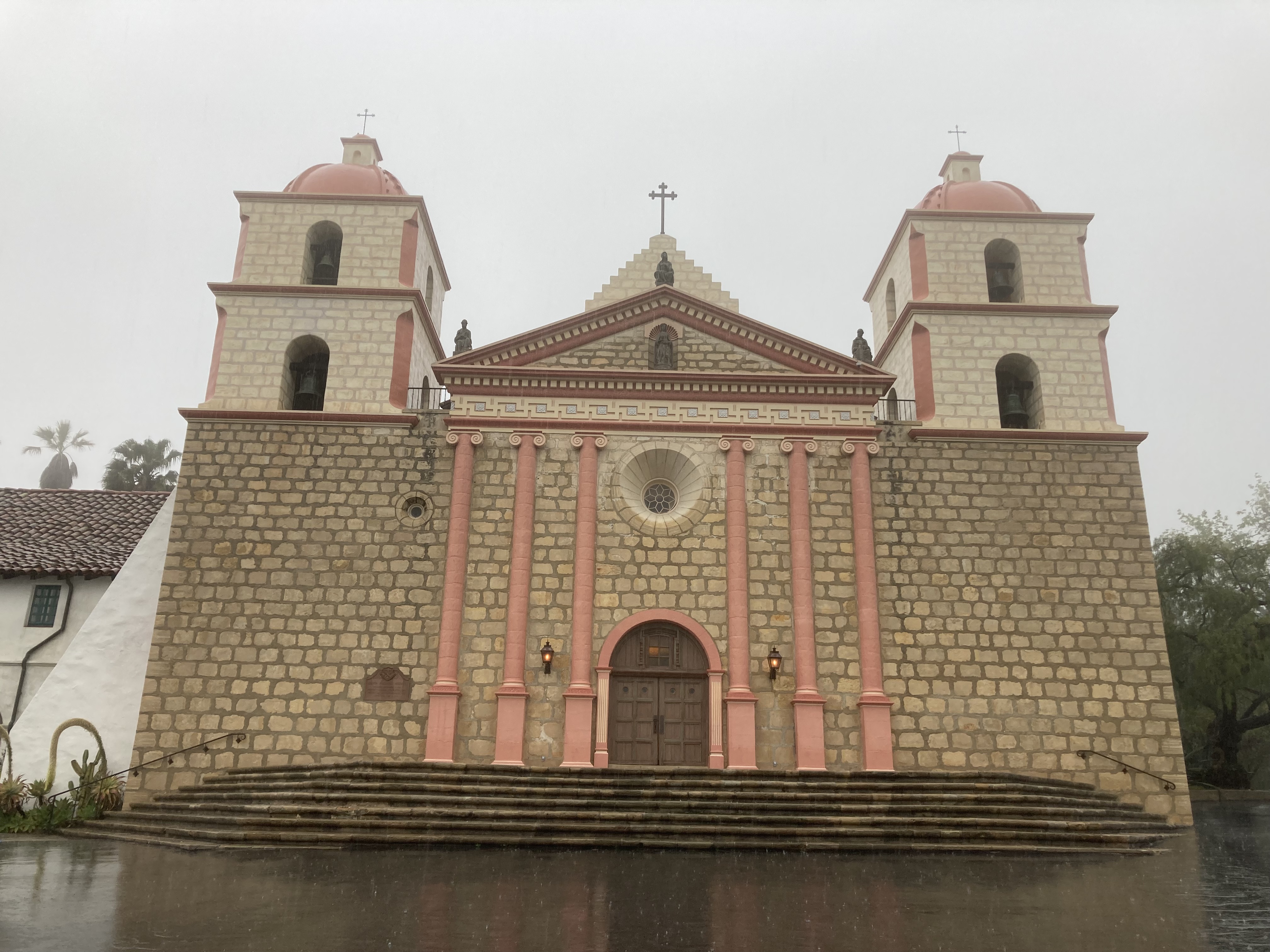
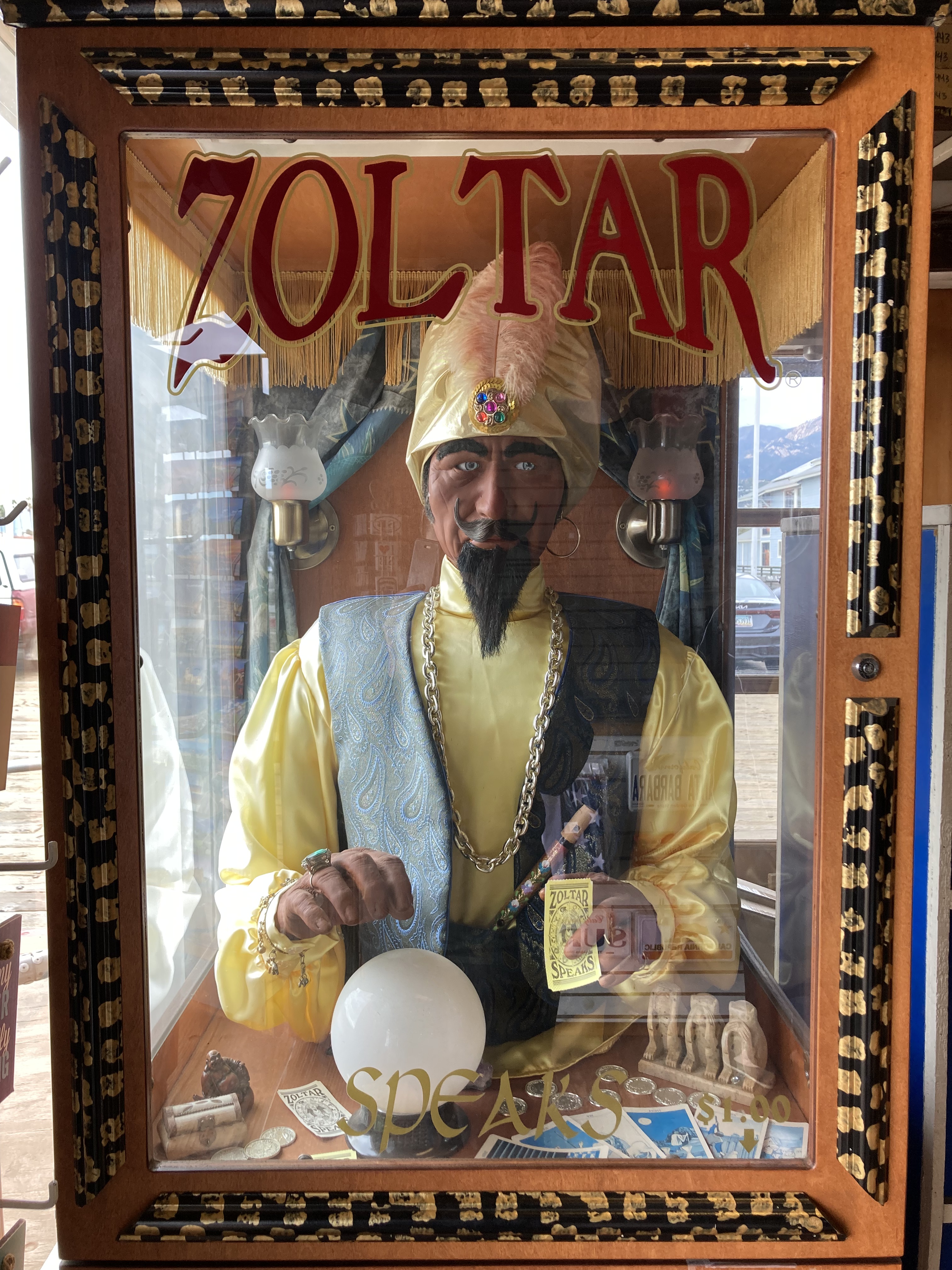
I went back to Stearns Wharf for some souvenirs that I’d spotted on my run (where there was another Zoltar). Then I headed to Mission Santa Barbara, also known as the “Queen of the Missions”. I didn’t do the tour, but I took in the outside and the gift shop. There are also ruins across the street from the mission and a rose garden.
The next day the rain stopped and I explored the downtown area, starting with a tour of the Santa Barbara County Courthouse. This building is considered an architectural jewel of the city and there are free docent-led tours daily.
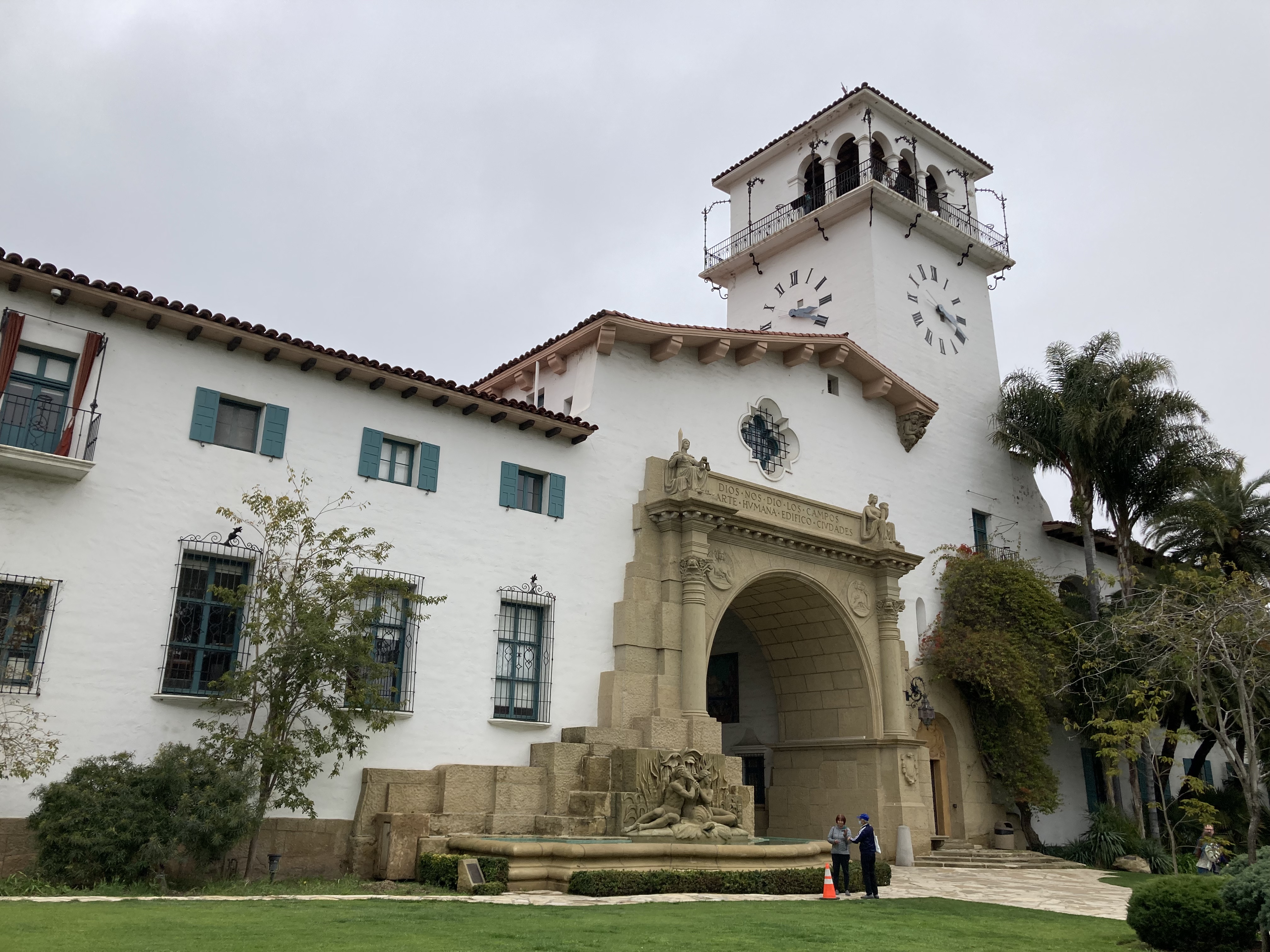
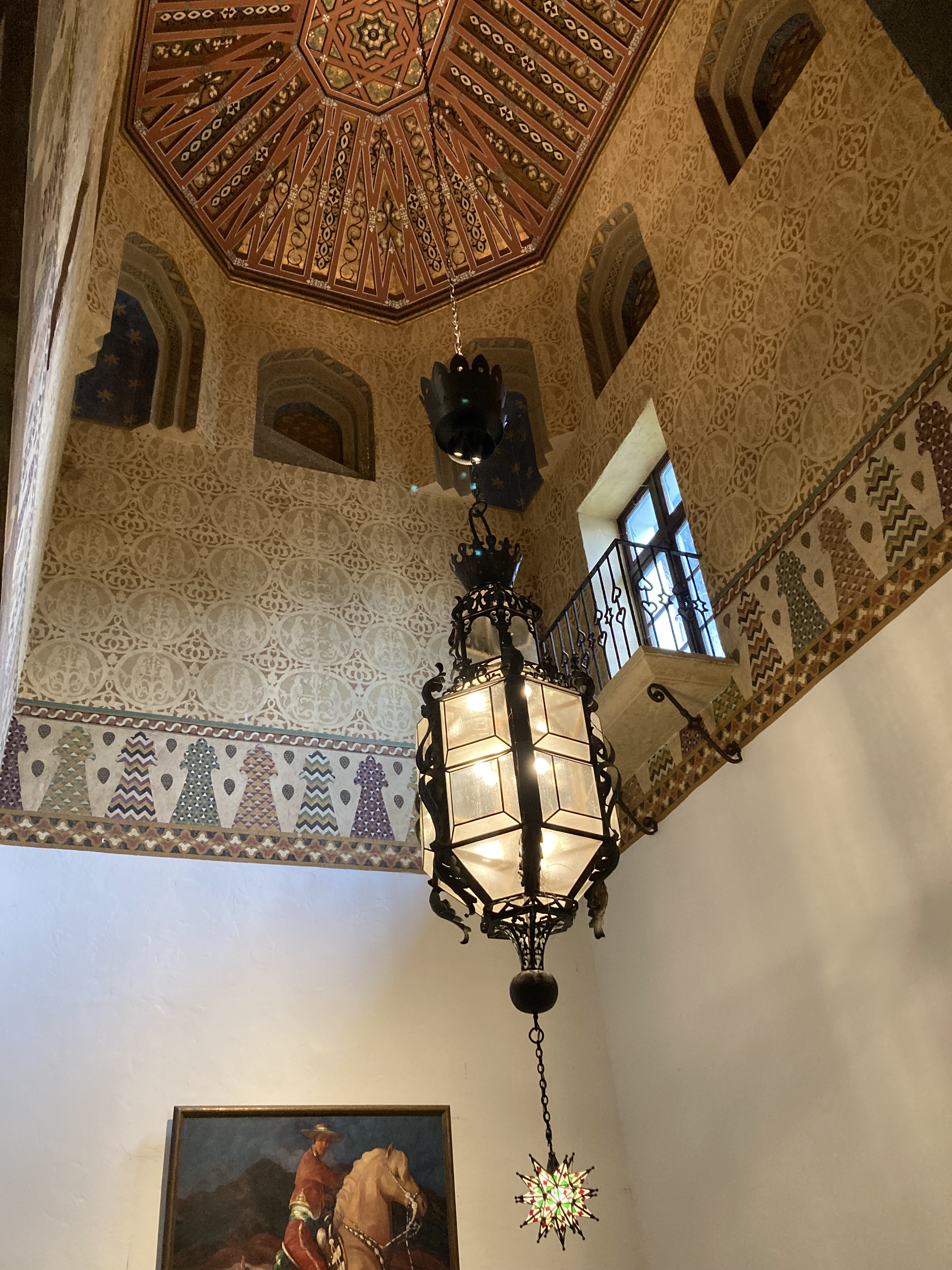
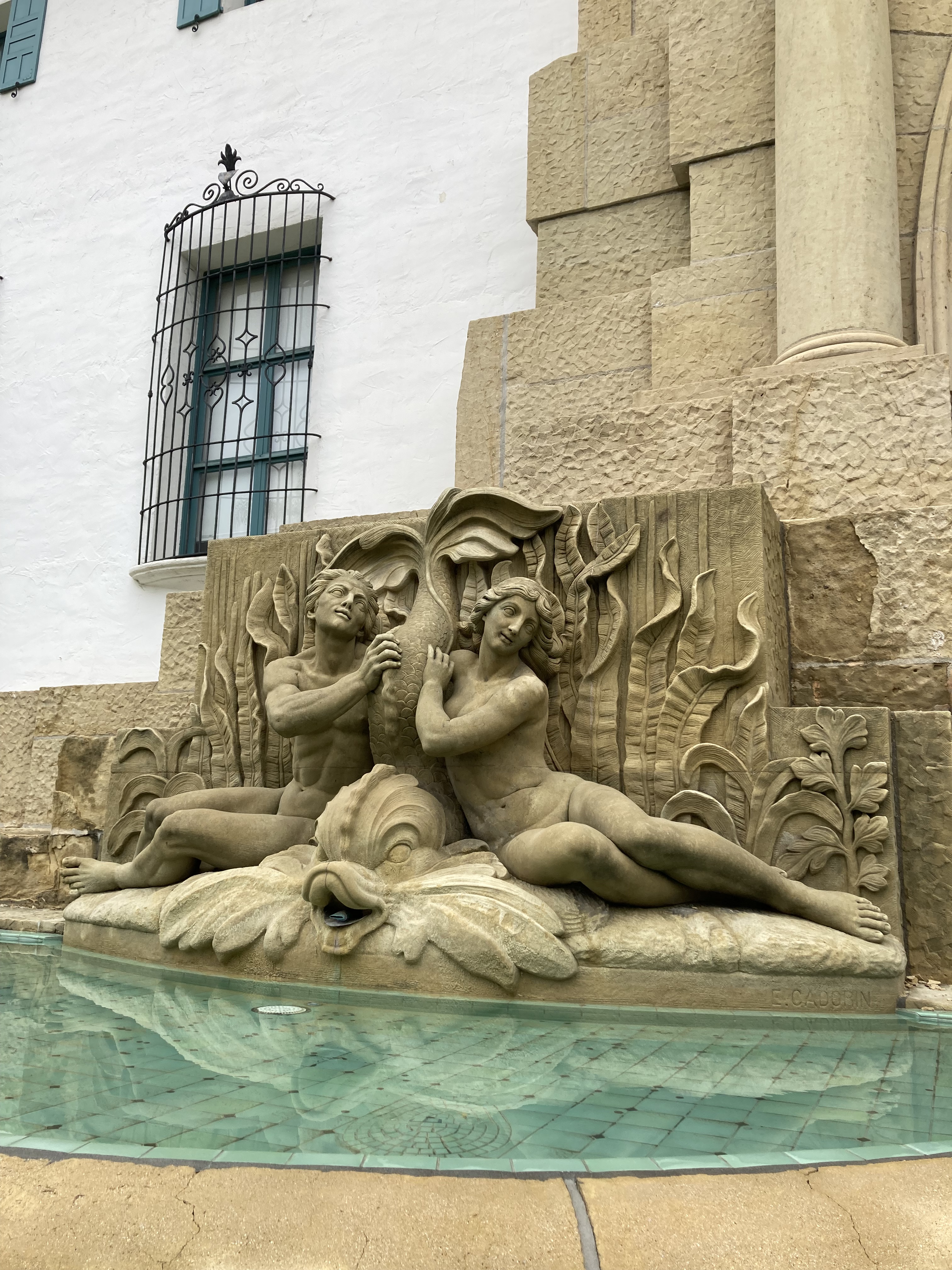
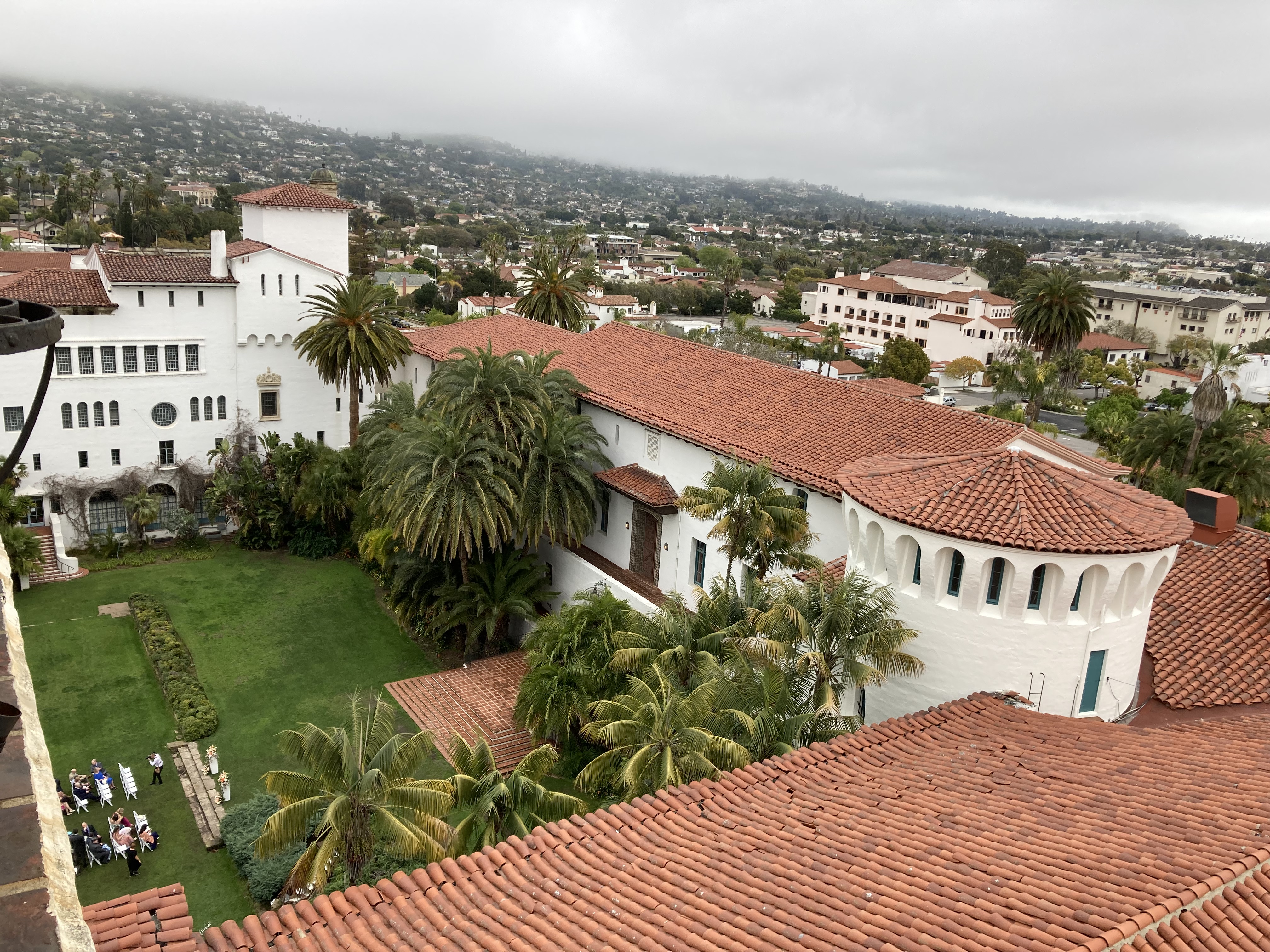
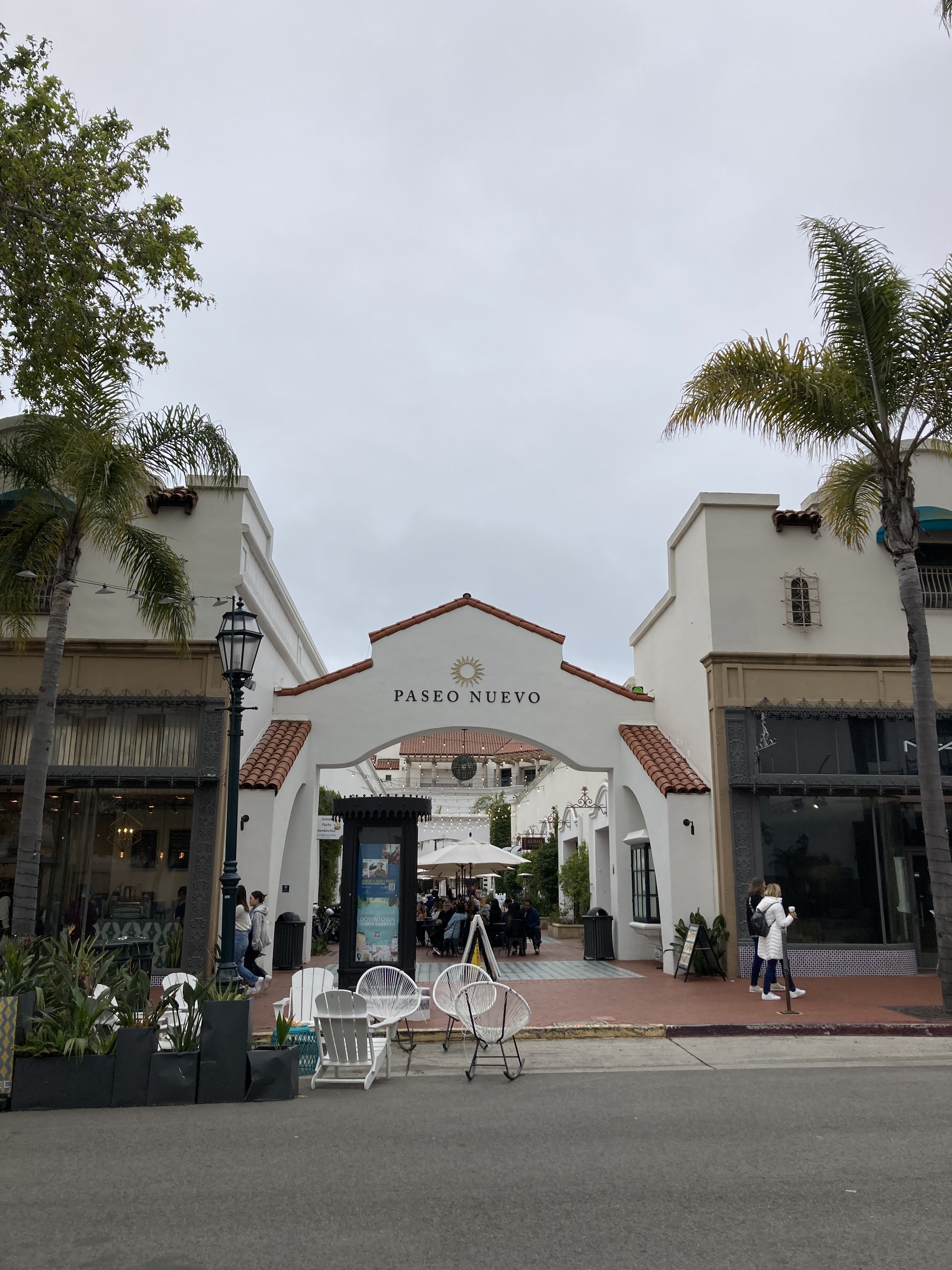
I explored downtown, the shops on Paseo Nuevo (an open-air mall) and State Street, which I was impressed by – it had definite ambiance.
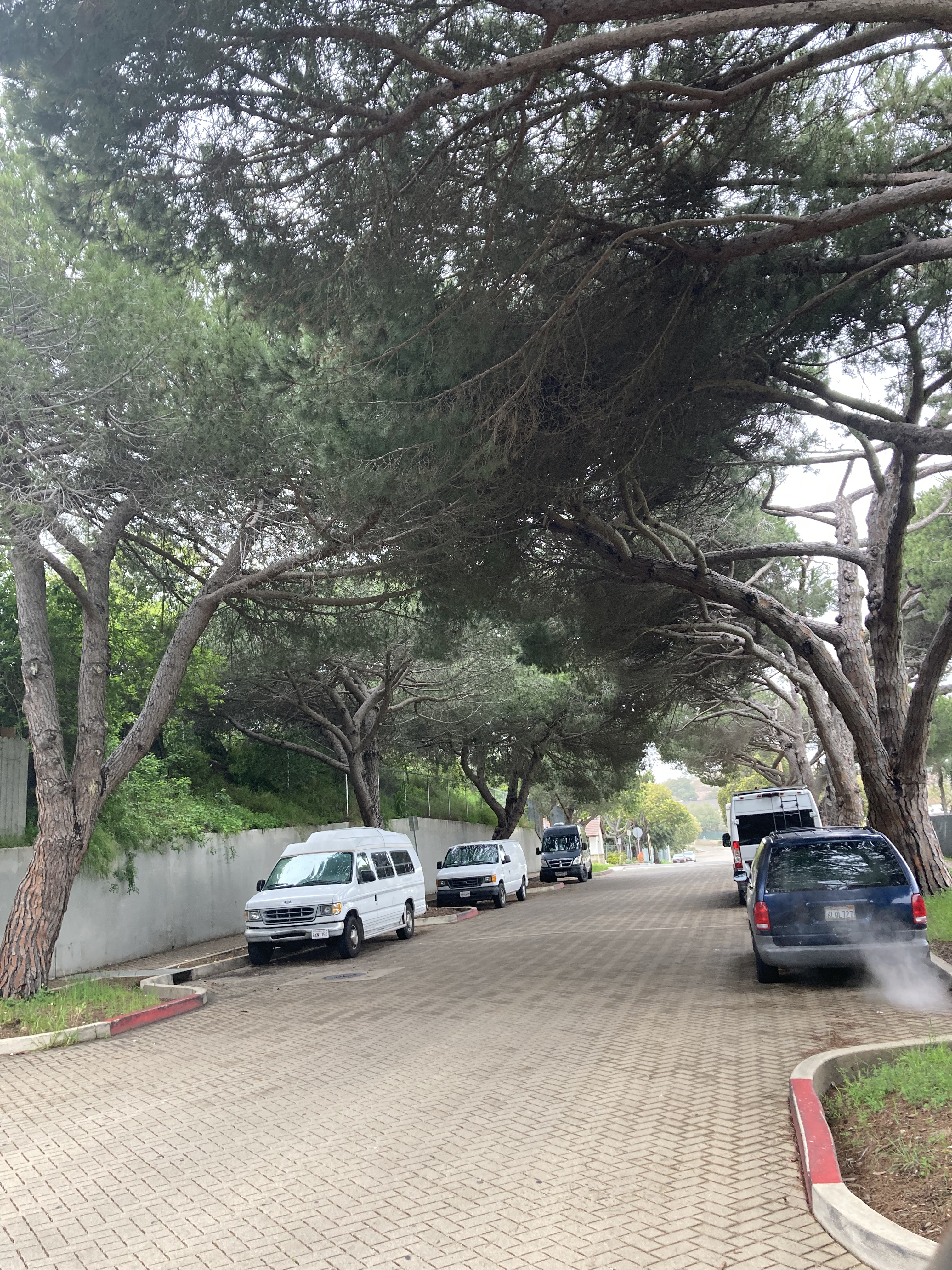
I found an overnight parking spot in Santa Barbara that I quite enjoyed – I tend to enjoy spots where I see other vans. Though it looks like this may no longer be a viable option (it’s not marked on iOverlander anymore).
Among other things in Santa Barbara that I did not do were visit the Santa Barbara Zoo, check out Brophy Bros for fresh seafood, and take in Lotusland gardens.
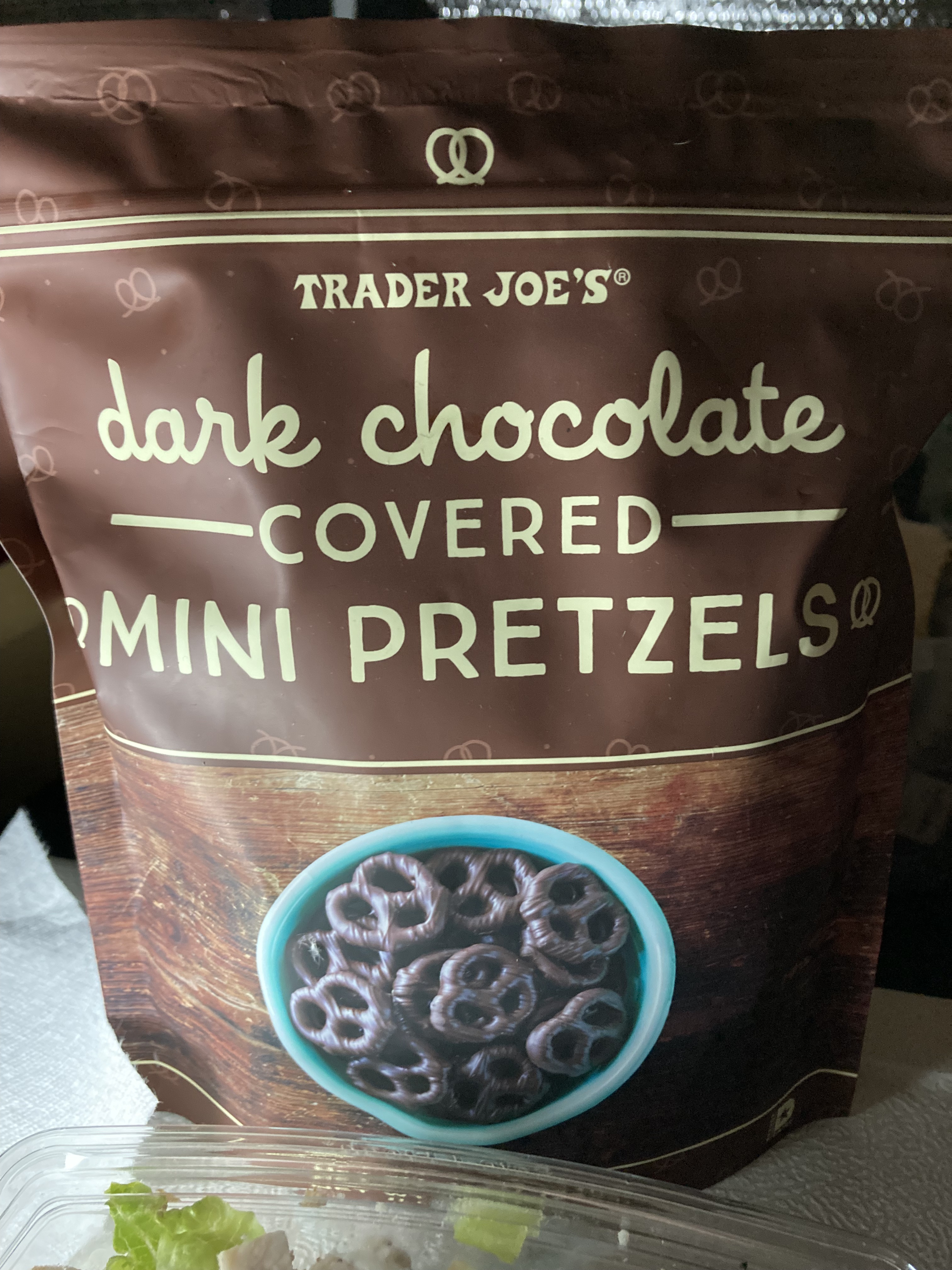
Santa Barbara was also the first place where I experienced a Trader Joe’s. I can see why they’re popular.
I explored a couple of beaches east of Santa Barbara near Montecito – no sightings of Prince Harry and Meghan Markle – and popped by the Montecito Country Mart (which is talked up online but I didn’t find it to be anything extraordinary).
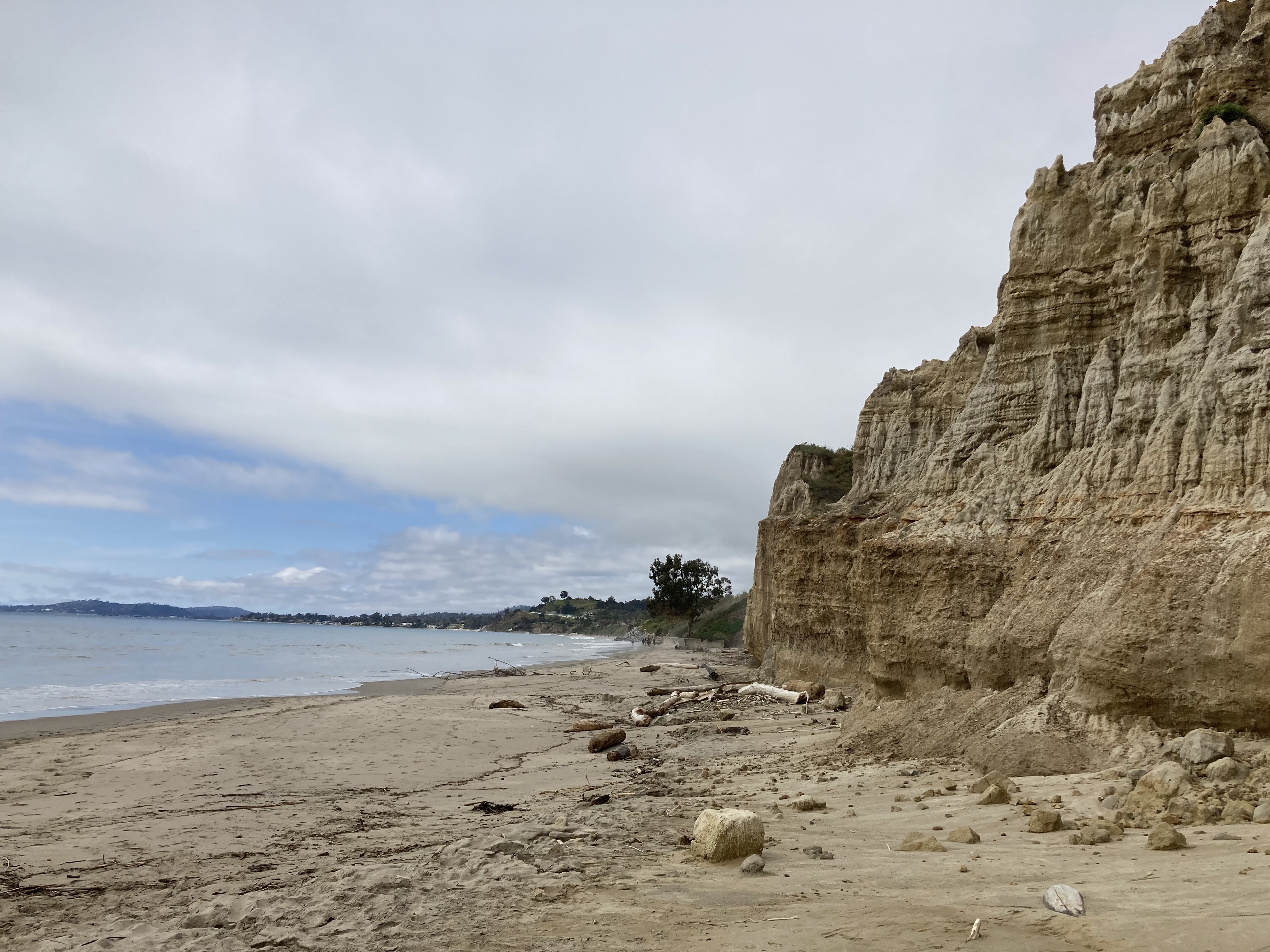
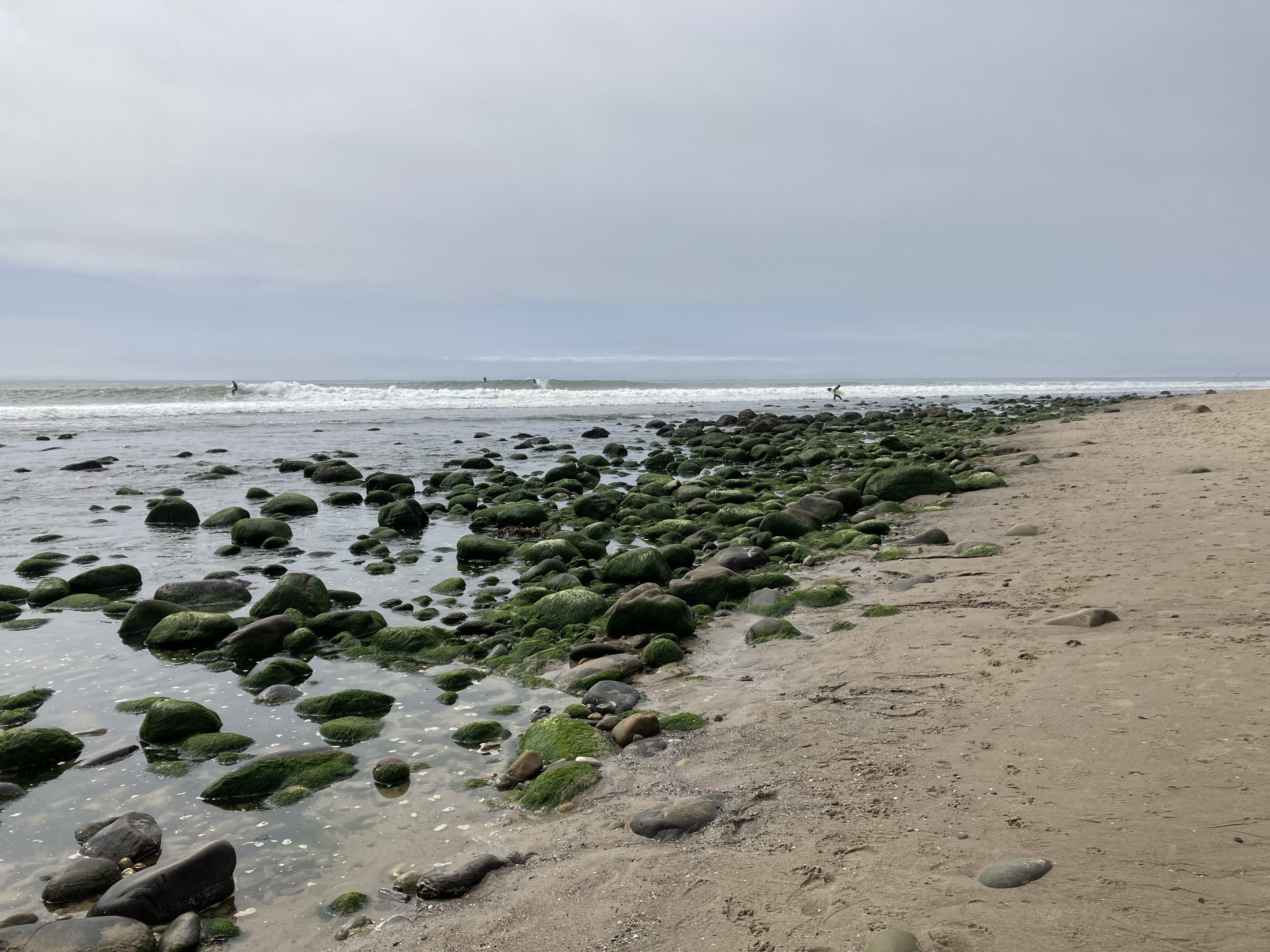
Butterfly Beach is also said to be nice. And Coast Village Road has a reputation for luxury (upscale shops).
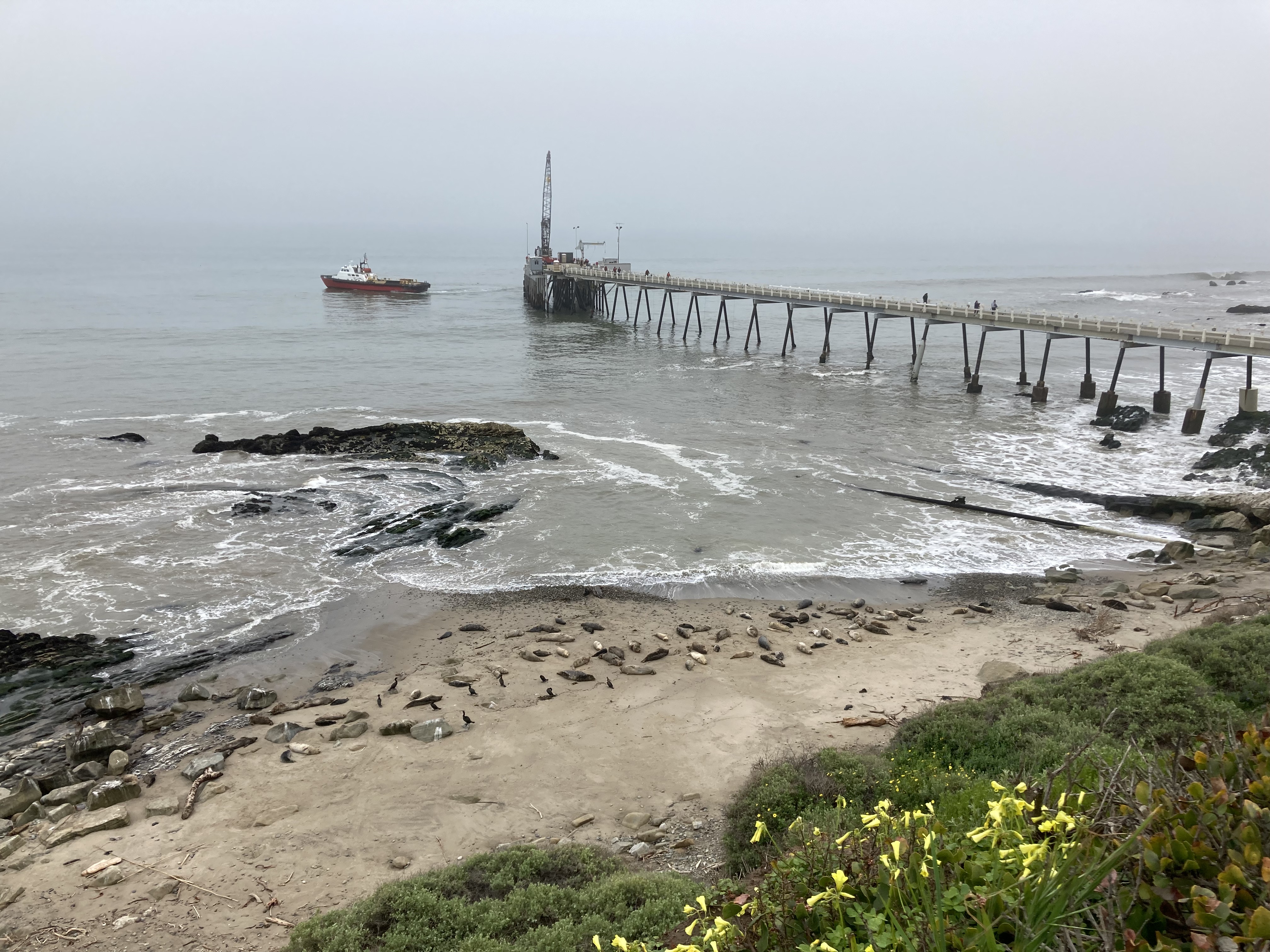
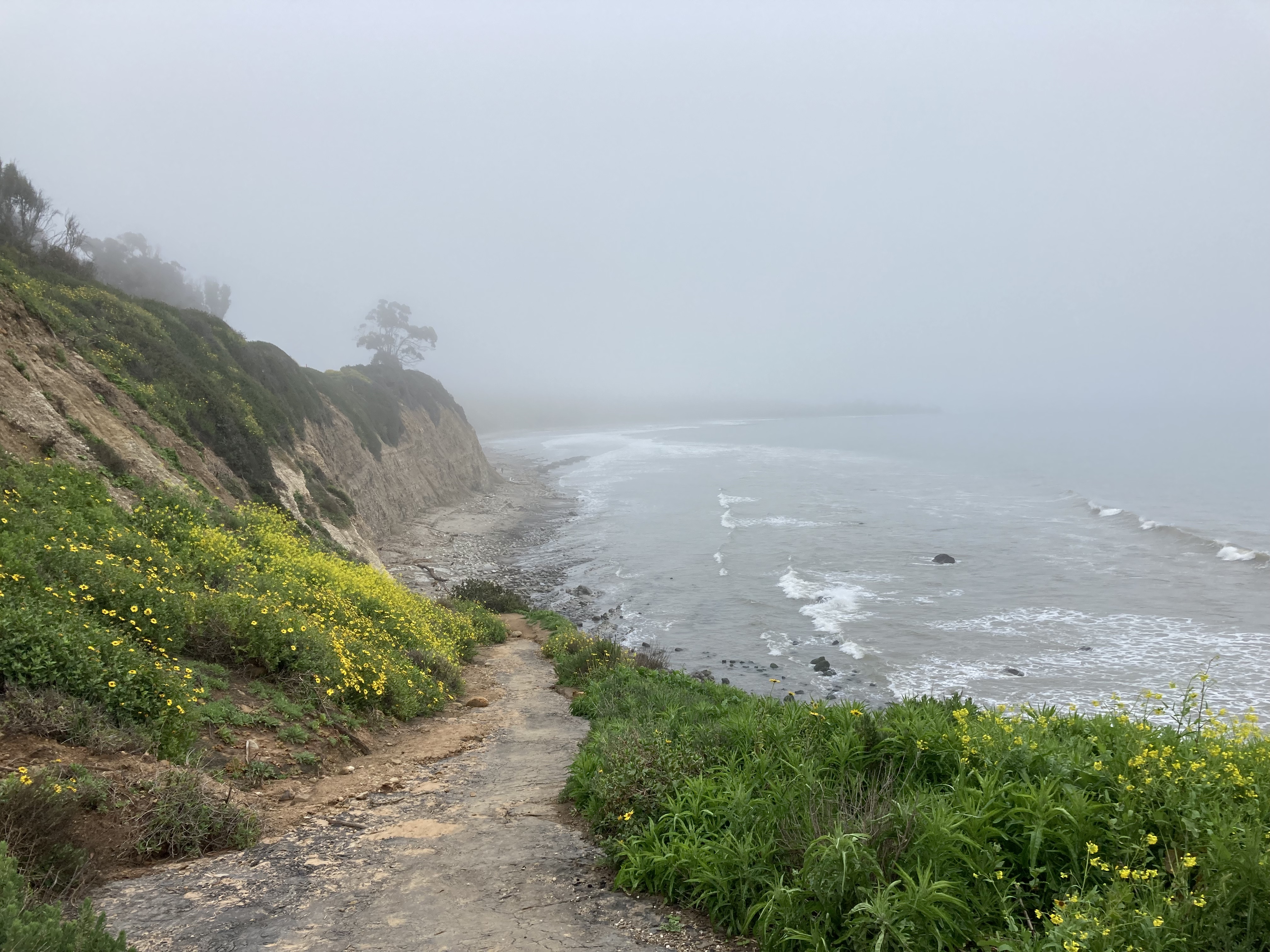
On my way out of the Santa Barbara area I stopped at the Carpinteria Bluffs Nature Preserve & Seal Sanctuary. Not a big attraction that one might go out of their way to visit, instead a stop of convenience. It had a parking lot where I could do some planning, and then since I was there I took a walk on the trails, taking in the coast line, bluffs, and seals.
That night I parked in an industrial complex. I had no problems, but it wouldn’t have been my first choice. It was just the only/ closest option. I have a sneaking suspicion that sometimes I’ve parked places that I simply lucked out on not having issues. It didn’t feel unsafe, I just felt a bit exposed and out of place. And I trust my gut.
The following night I stayed in a pullout off the small and winding highway 150 overlooking Lake Casitas. You can find the spot on iOverlander, and there was no signage, though that doesn’t guarantee it being allowed – again, I had no issues. And you do well to get there after dark and leave early.
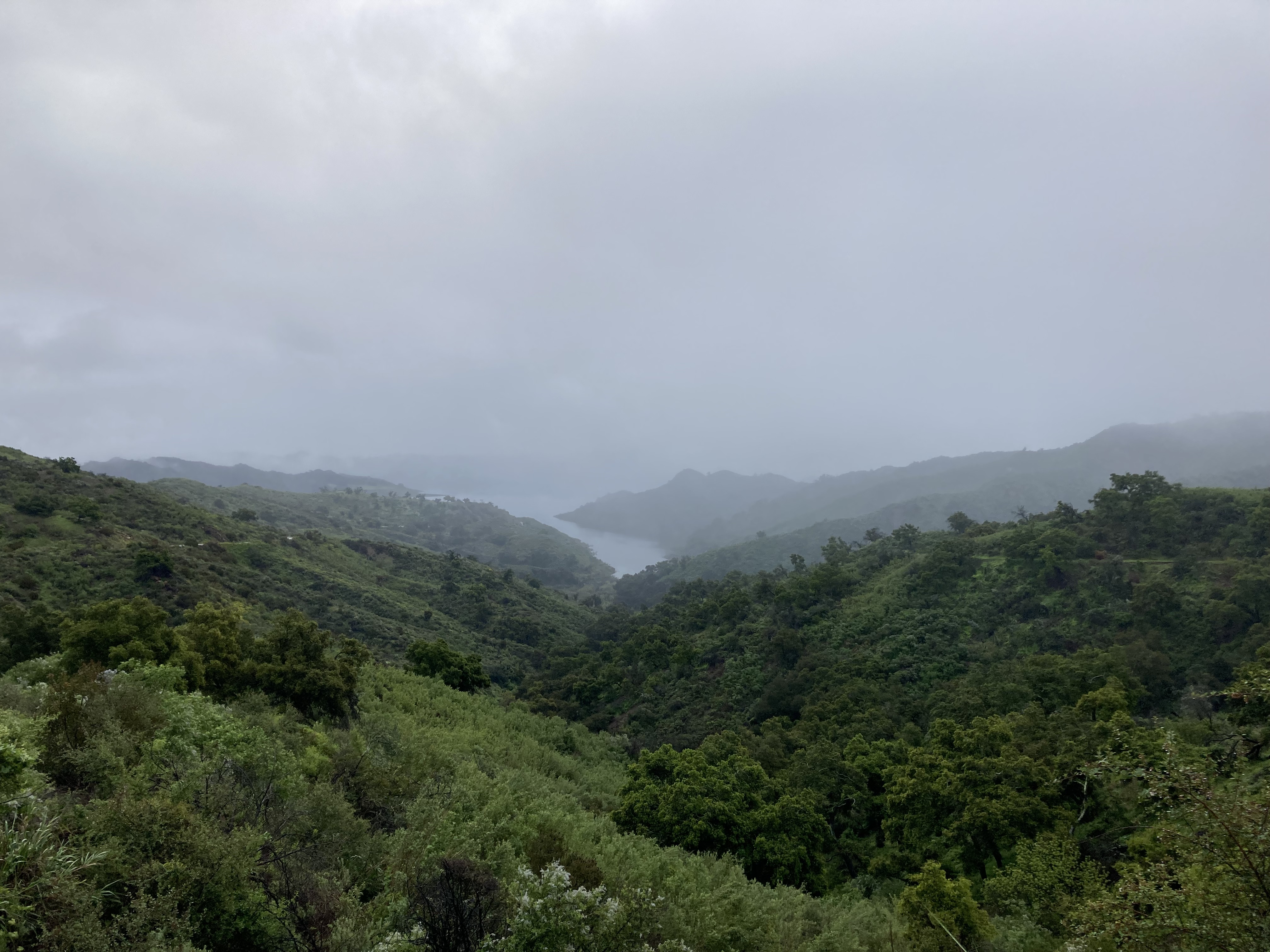
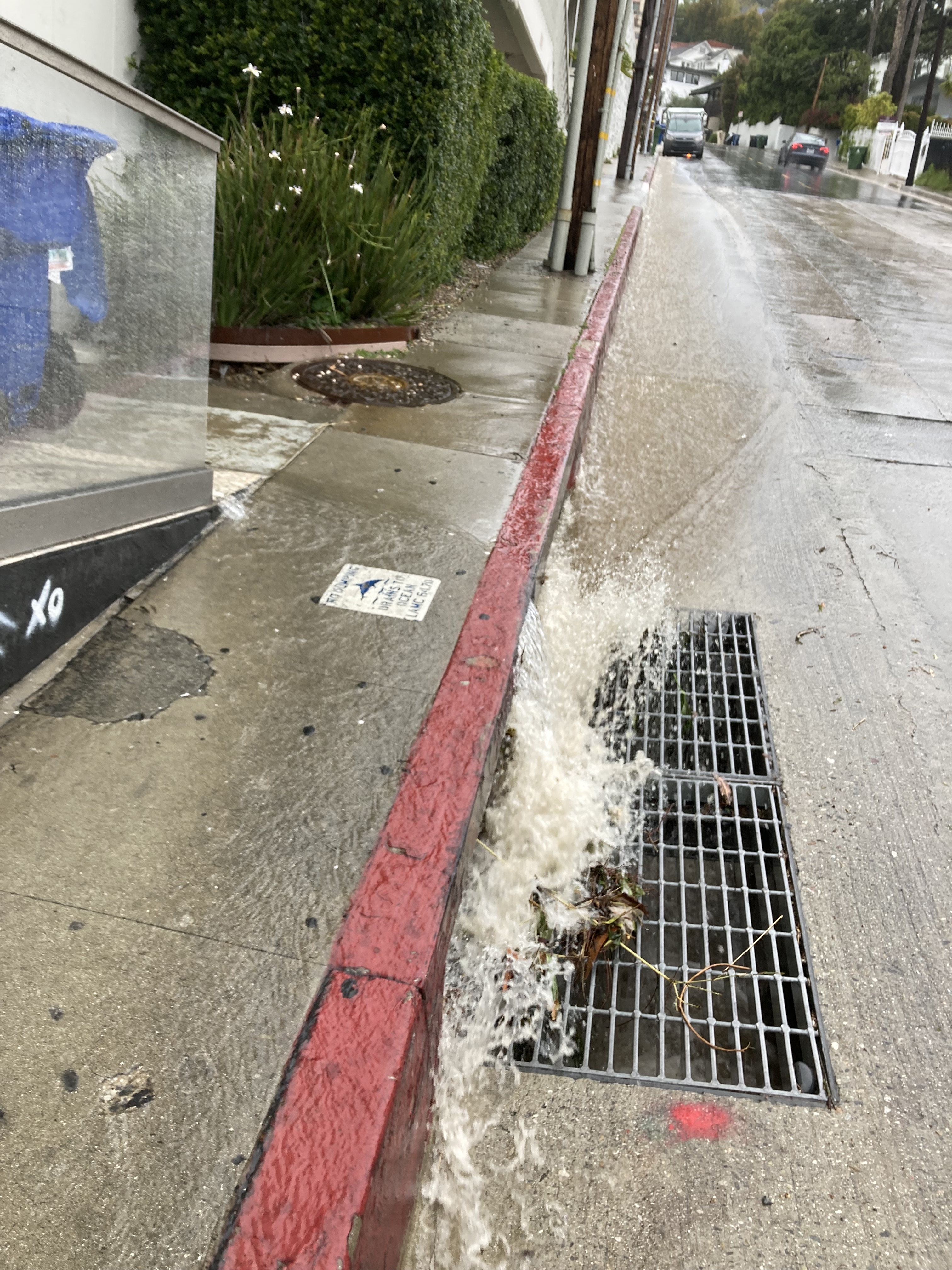
I remember there being flood warnings in the Santa Barbara area around this time, and while driving back down highway 150 there were work crews on the road – the road was full of water and mud and you could see the streams of water over the land and how the sandy dirt could not hold the water at all – no wonder mudslides happen here and even small amounts of rain (by Canadian standards) were worrisome. This was a sign to be careful of what roads I chose to overnight on. And whether I was close to a cliff and if the ground would be stable.
Misc
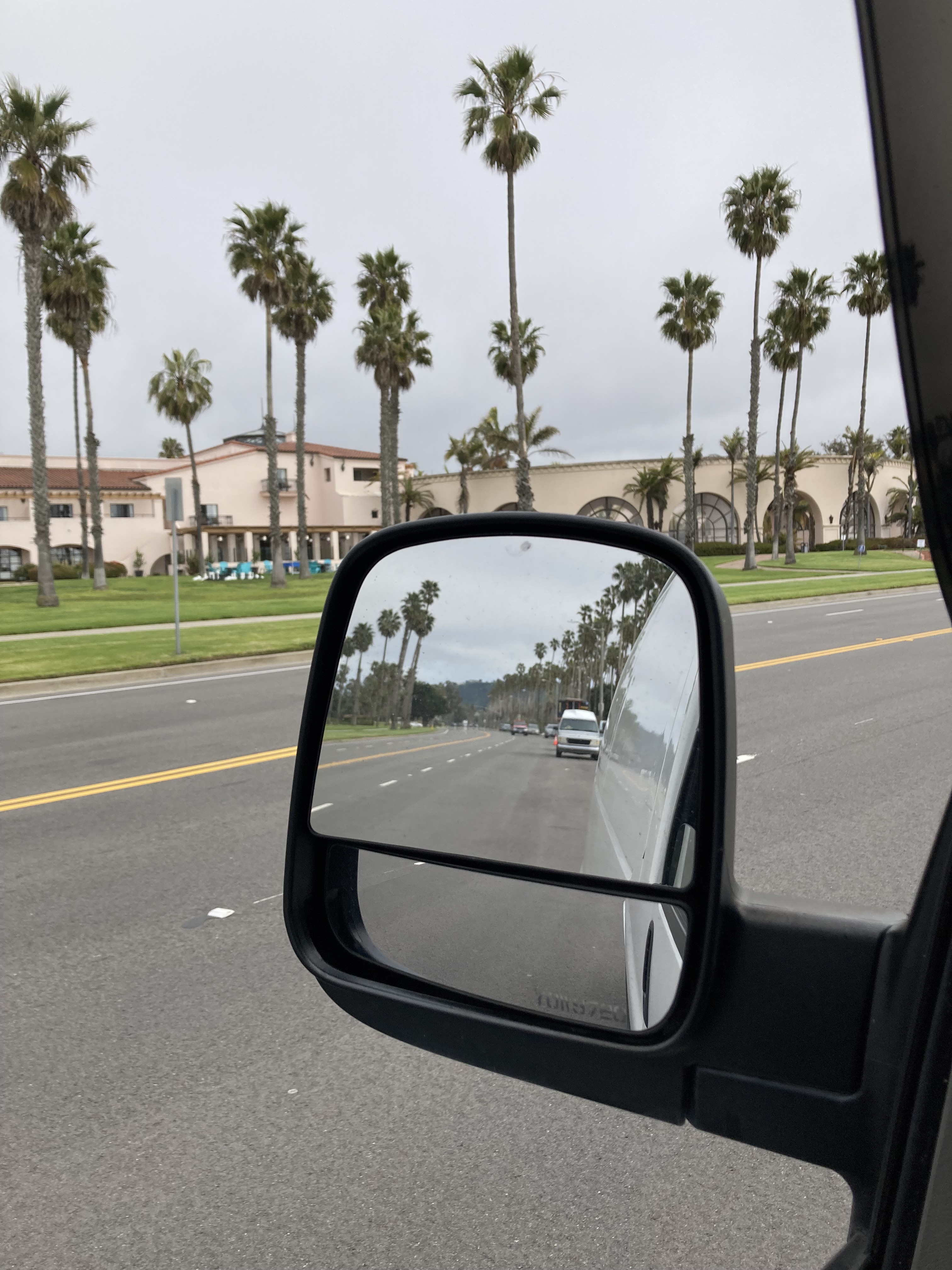
Ventura
Ventura (or San Buenaventura) lies about a half hour’s drive southeast of Santa Barbara on the coast. It is a city with a population of about 111,000 people (which surprised me, it felt smaller). I was a little more mindful of theft here, just from a feeling I had when I parked the van. But otherwise I felt relatively fine. I couldn’t help but think of Ace Ventura here, for whatever that’s worth.
I spent a morning here. I parked at Surfers Point, Seaside Park, though I could have easily parked downtown near the mission. The morning was cloudy and gloomy, but the sun came out later, making everything look prettier.
I walked along the palm-lined Ventura Promenade, which runs three miles from Surfers Point to Marina Park, along the beach to Ventura Pier. There was flooding and the pier was closed and didn’t have much going on besides a restaurant at its base. This area offers a view of Channel Islands (a national park you can take a ferry to – Inspiration Point on Anacapa Island is said to have great views) and you’re next to 2-mile long San Buenaventura State Beach.
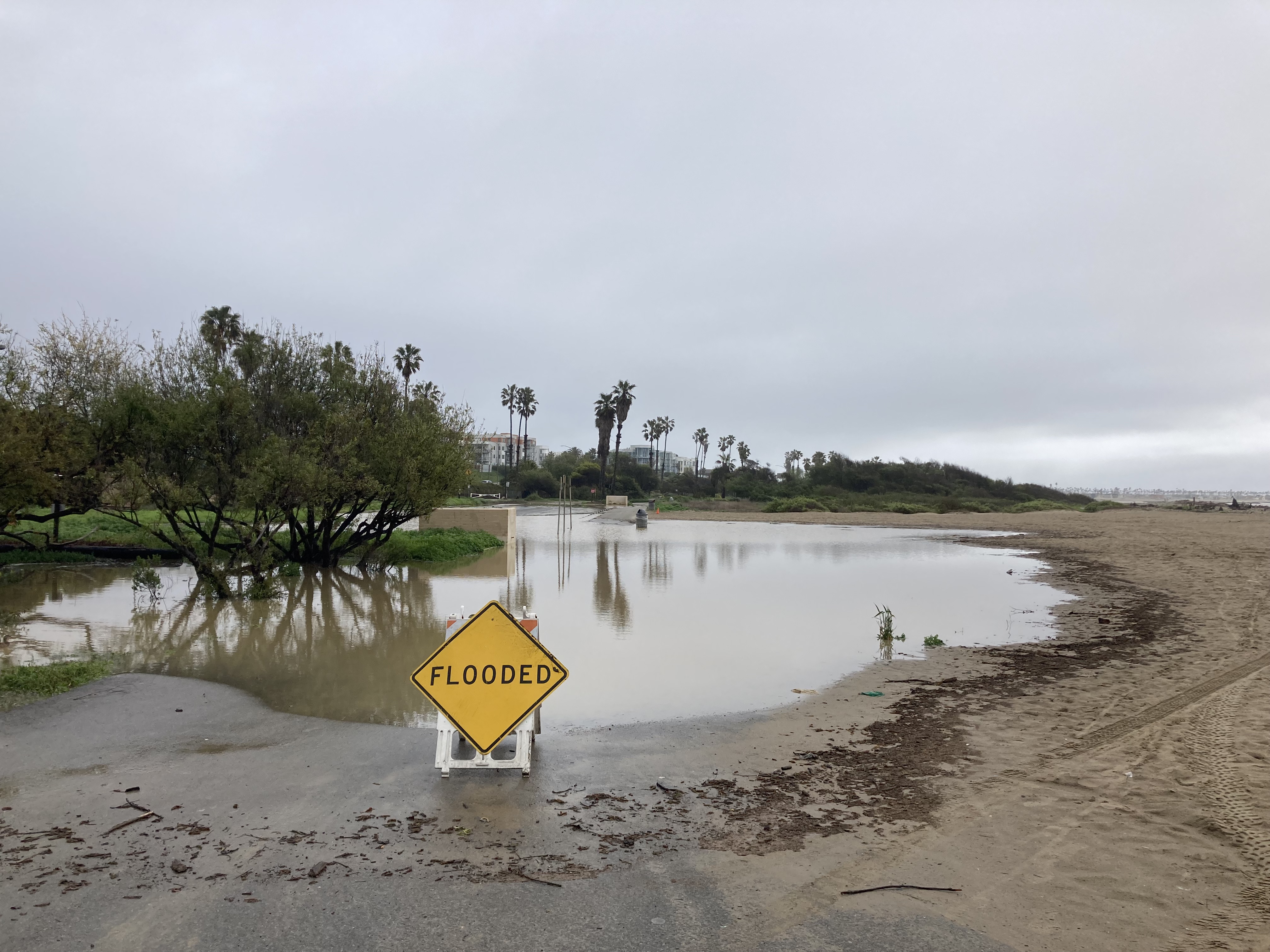
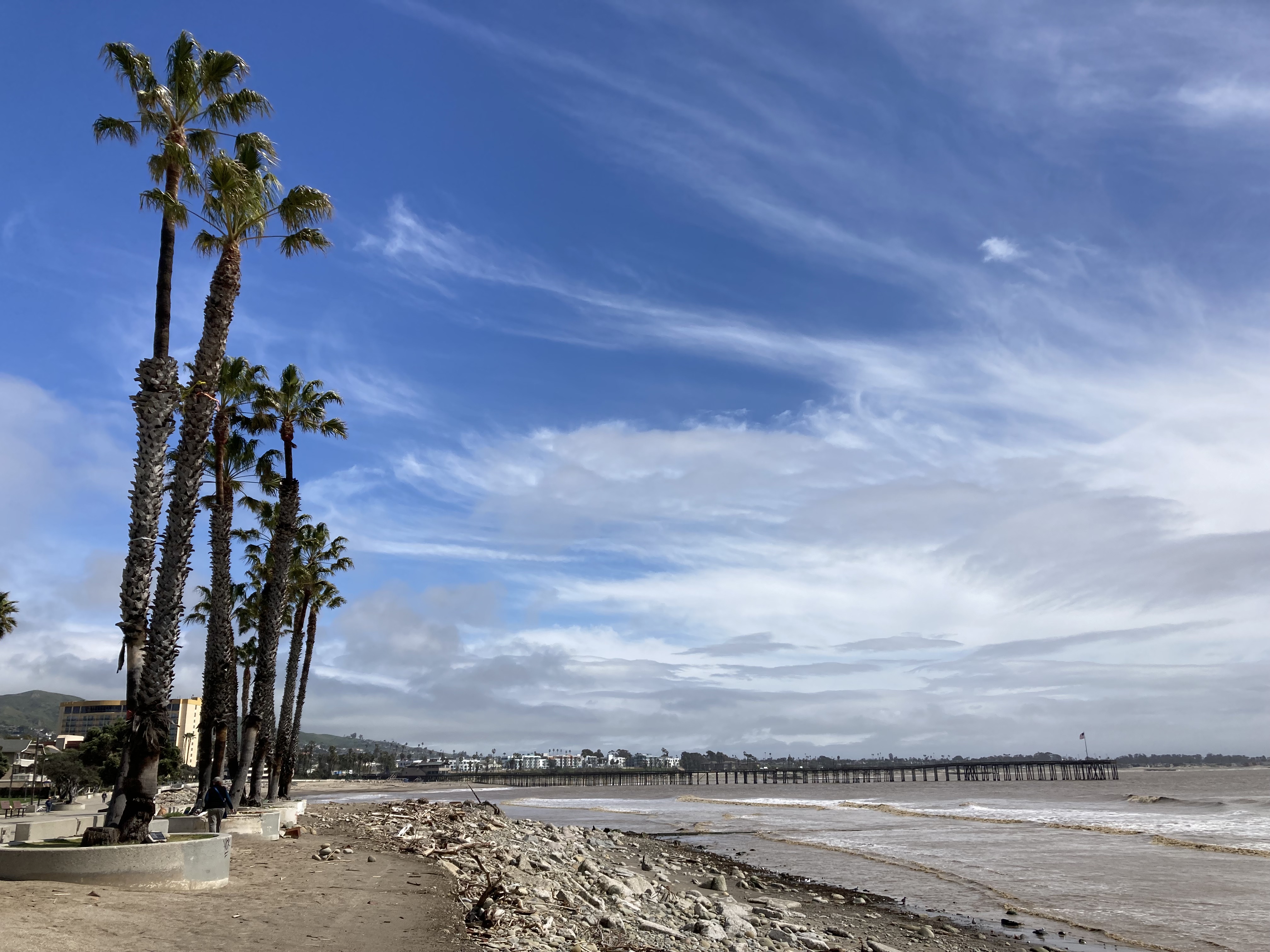
I walked up to the downtown district and took in the court house, Main Street with 5 blocks of shops, and Mission San Buenaventura (I didn’t do the tour, just visited the shop and appreciated the outside).
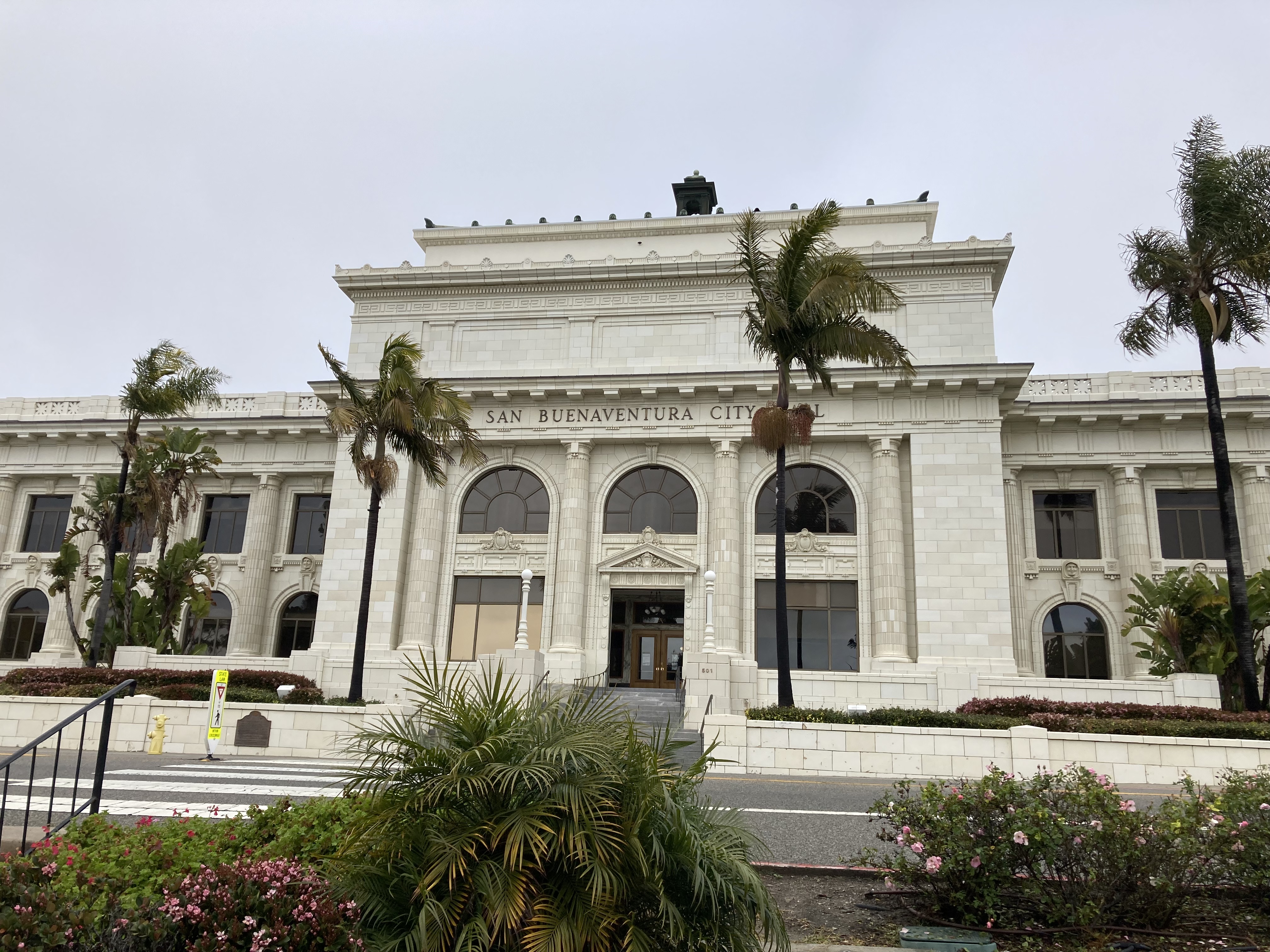
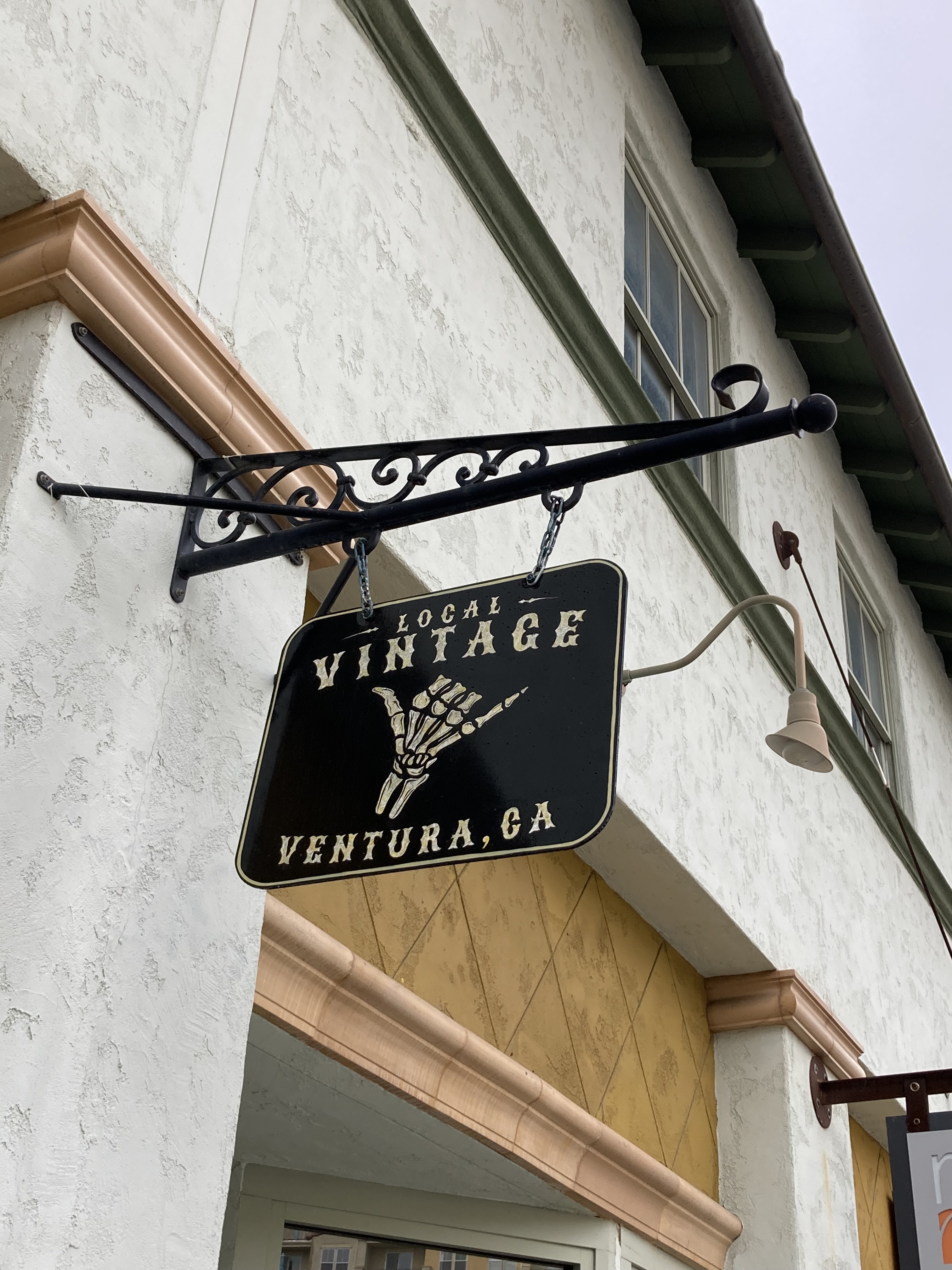
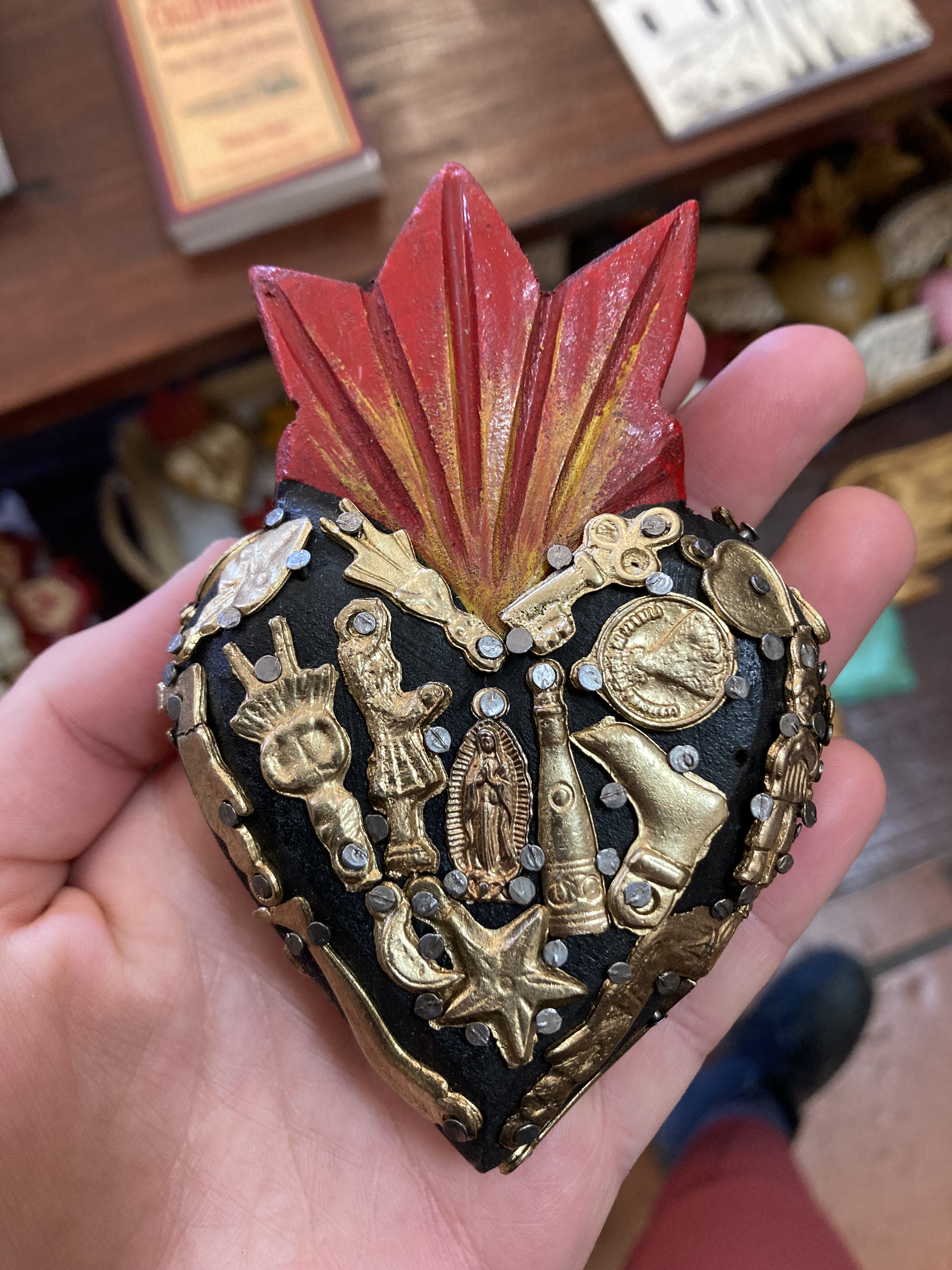
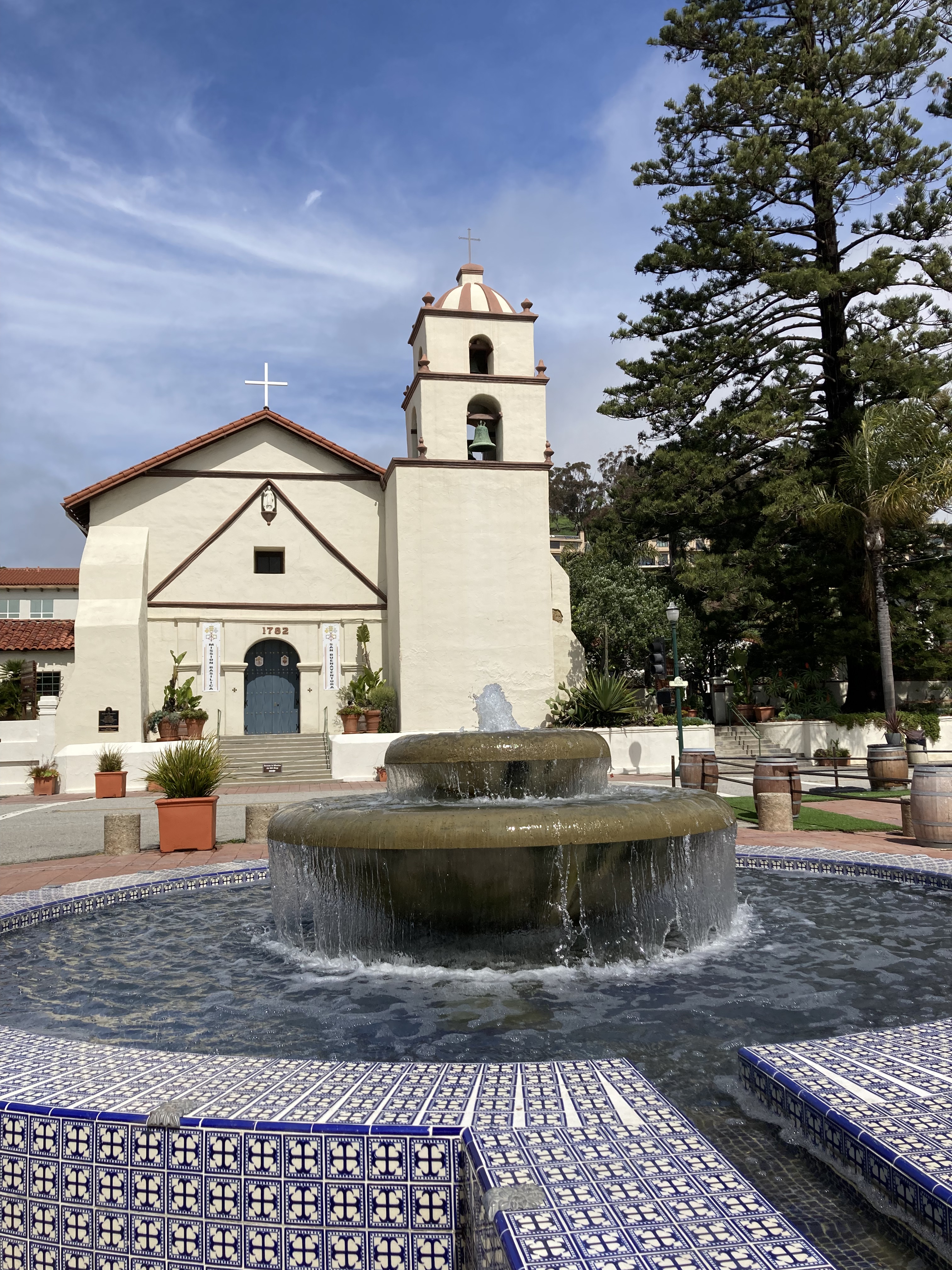
There’s also the Ventura Botanical Gardens and Ventura Harbor Village – which I do wish I’d explored.
Malibu
No other song was going to live rent free in my head when I got to Malibu…
Although Hole also has a song called Pacific Coast Highway, which I did have in the back of my mind pretty much the whole time I was on highway 1/ the California coast.
And on that note, be warned: the LA area is equipped with no shortage of location specific songs to arm your soundtrack, and I have many in my arsenal to share!
MALIBU!
I’d talked to people who hadn’t even heard of Malibu when I told them that’s where I was. I think of it like the gateway to LA. Or a getaway for those coming from LA. It has endless beaches and lies at the foot of the Santa Monica Mountains, just west of LA, in LA County. The scene is a combo of surf culture and posh lifestyle. And I was beyond excited to get here. It would be my “home base” while I spent days in LA.
Fun fact: Malibu shares its birthday with me, incorporated on March 28th, 1991. It has a small population of about 10,000, and is known for its celebrity homes and beaches. It is also quite safe, which I could feel and is reflected in its crime rates.
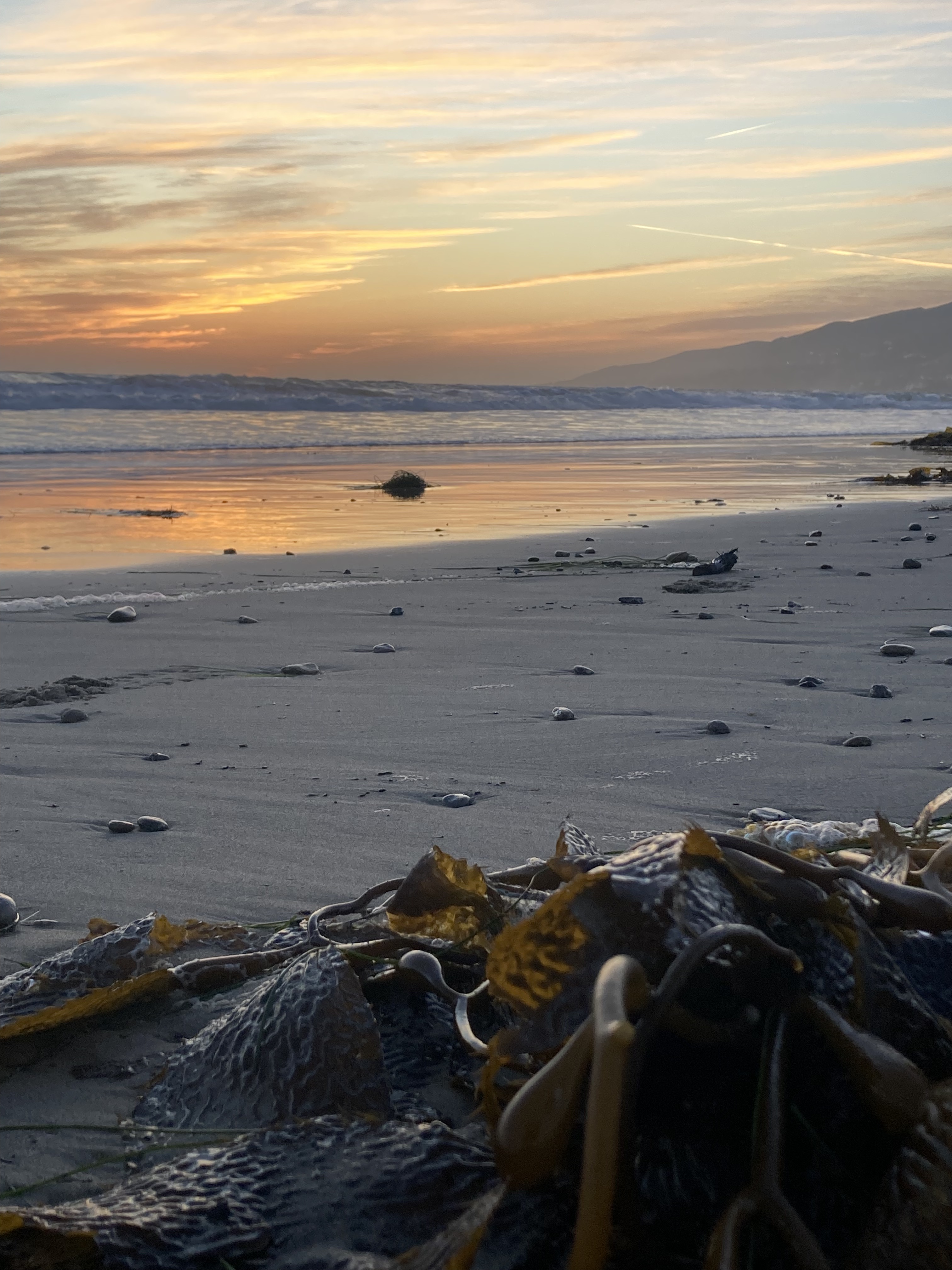
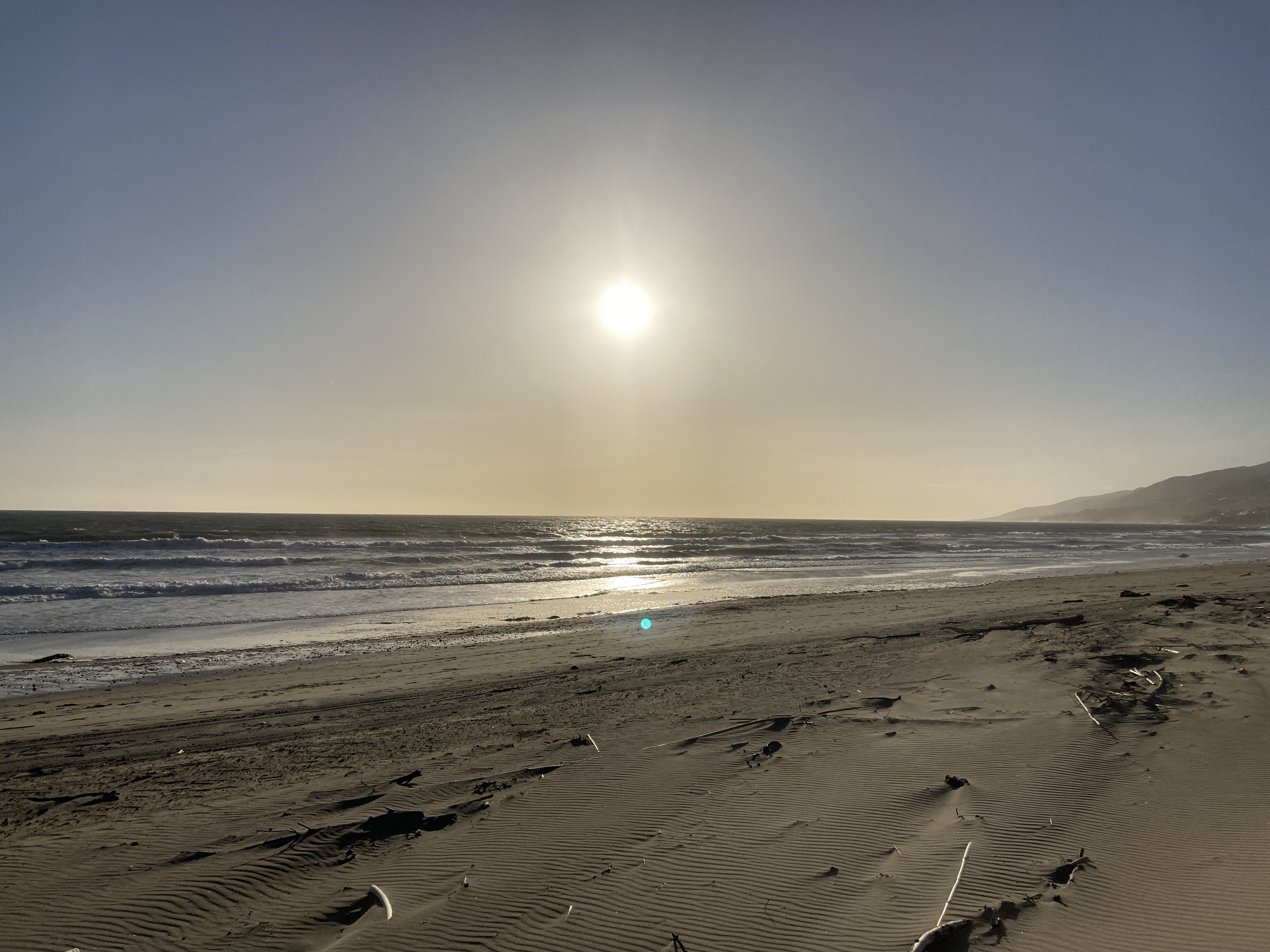
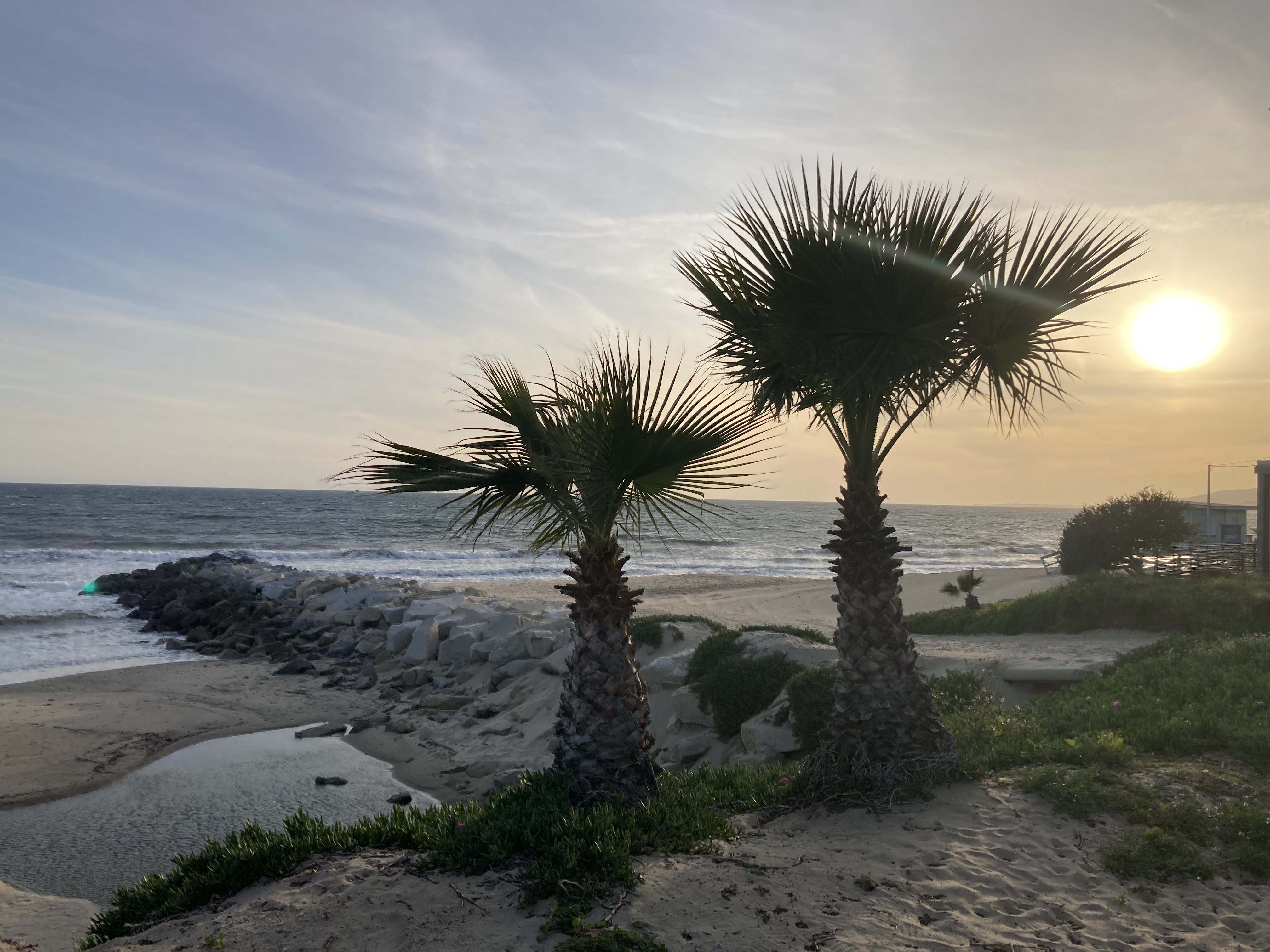
I arrived at a stretch of the PCH just south of Point Mugu where cars were pulling over onto the shoulder, so I did the same. It was a beautiful spot next to a large dune and right on the ocean, where I watched the sunset, had a snack, and looked up overnight spots in the area.
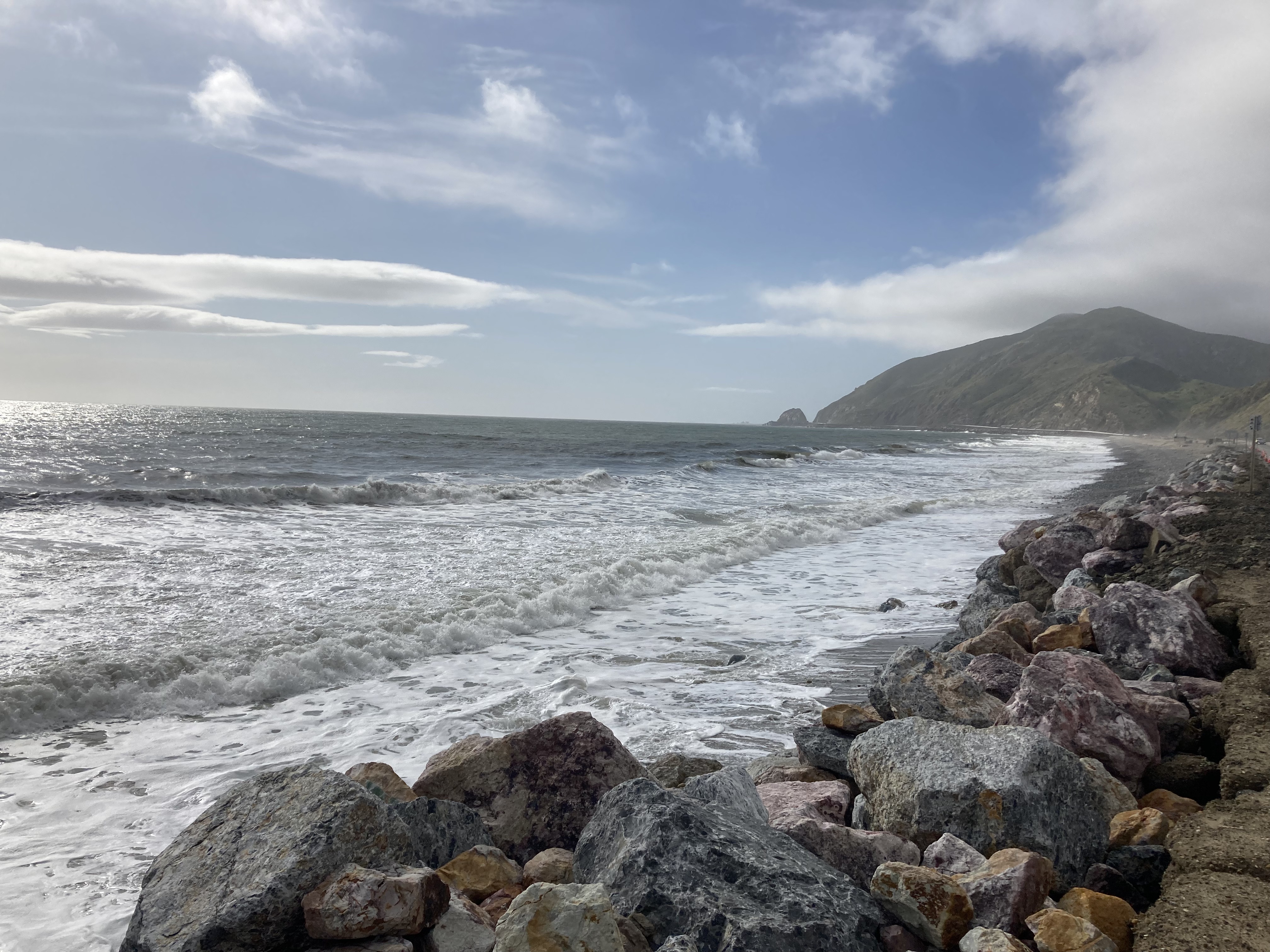
Several of the campgrounds in the area were closed at the time, so I utilized pullouts. There were a couple that became my favourites. One further west, quiet. Another more central but at a higher elevation looking over the ocean – this was a bigger, more popular spot, both for overnighters and as a view point.
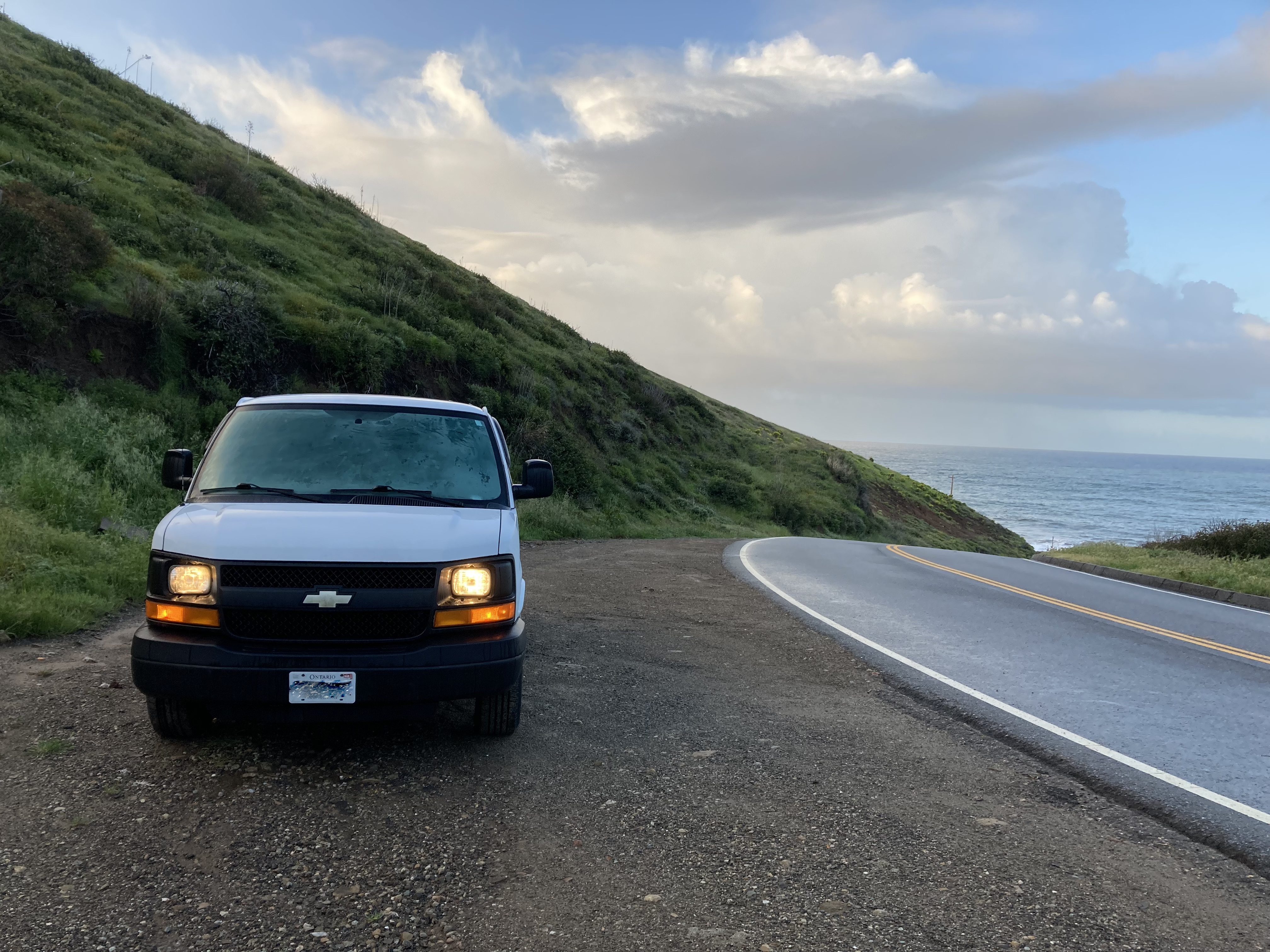
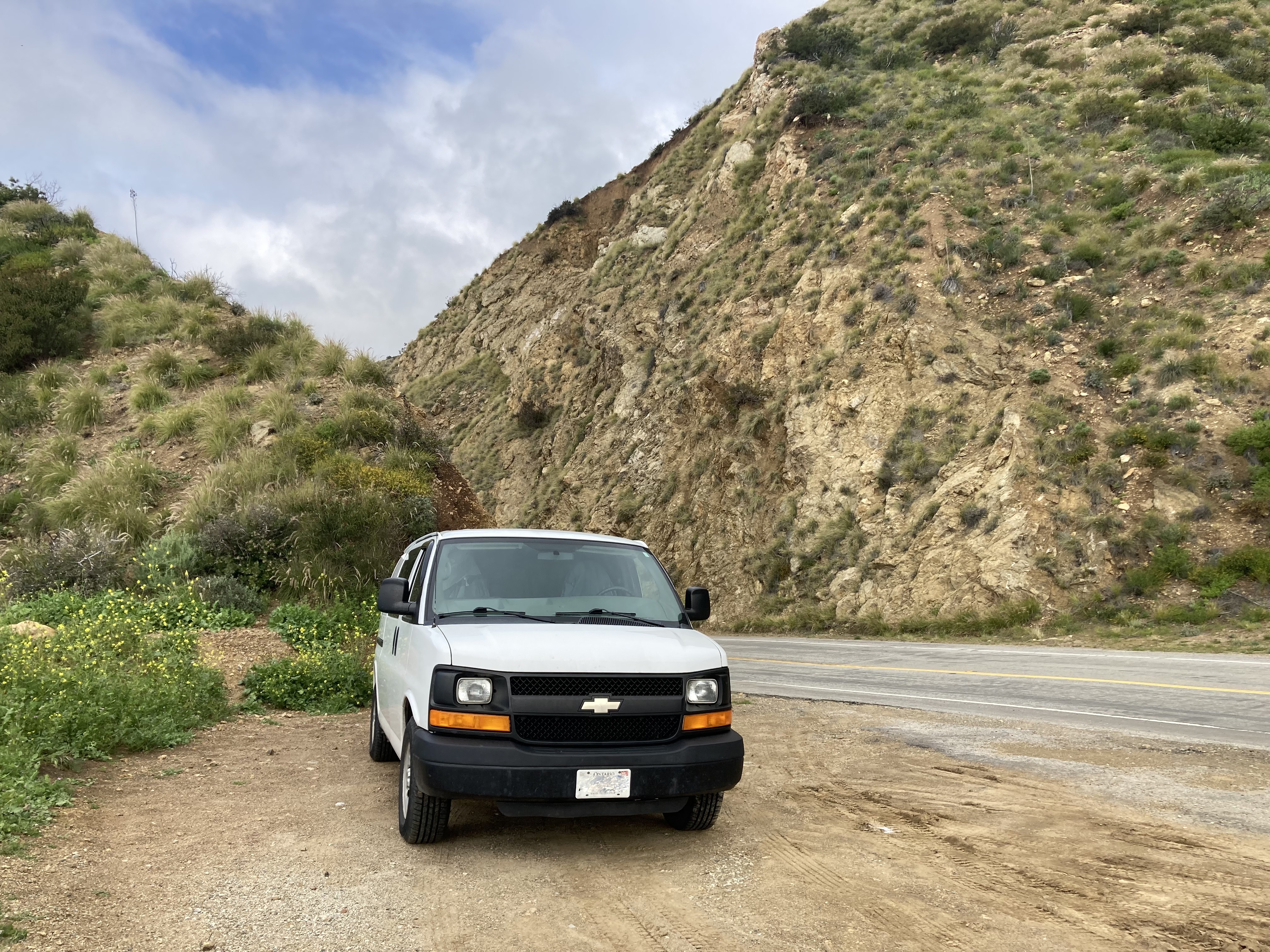
Overnight spots have an element of trial and error. Apps like iOverlander are great for reading others’ reviews, especially when it shows others have used a spot recently. But they may not always communicate the full picture. For example, I found a spot up in the Santa Monica Mountains (Latigo Canyon Road), a small pullout off the road. I arrived after dark, so I didn’t see until morning the sign that said no parking, unauthorized vehicles would be towed, and there was a neighbourhood watch that reports suspicious activity to police. I got out of there as soon as I saw the sign, and can laugh about it now. Another spot in the area, not unlike a couple of the others I used, was notorious for a particular lady who would honk or yell at you while driving by. I got the honk and when I looked closer at the reviews for the spot I found that this lady had a reputation among other vanlifers!
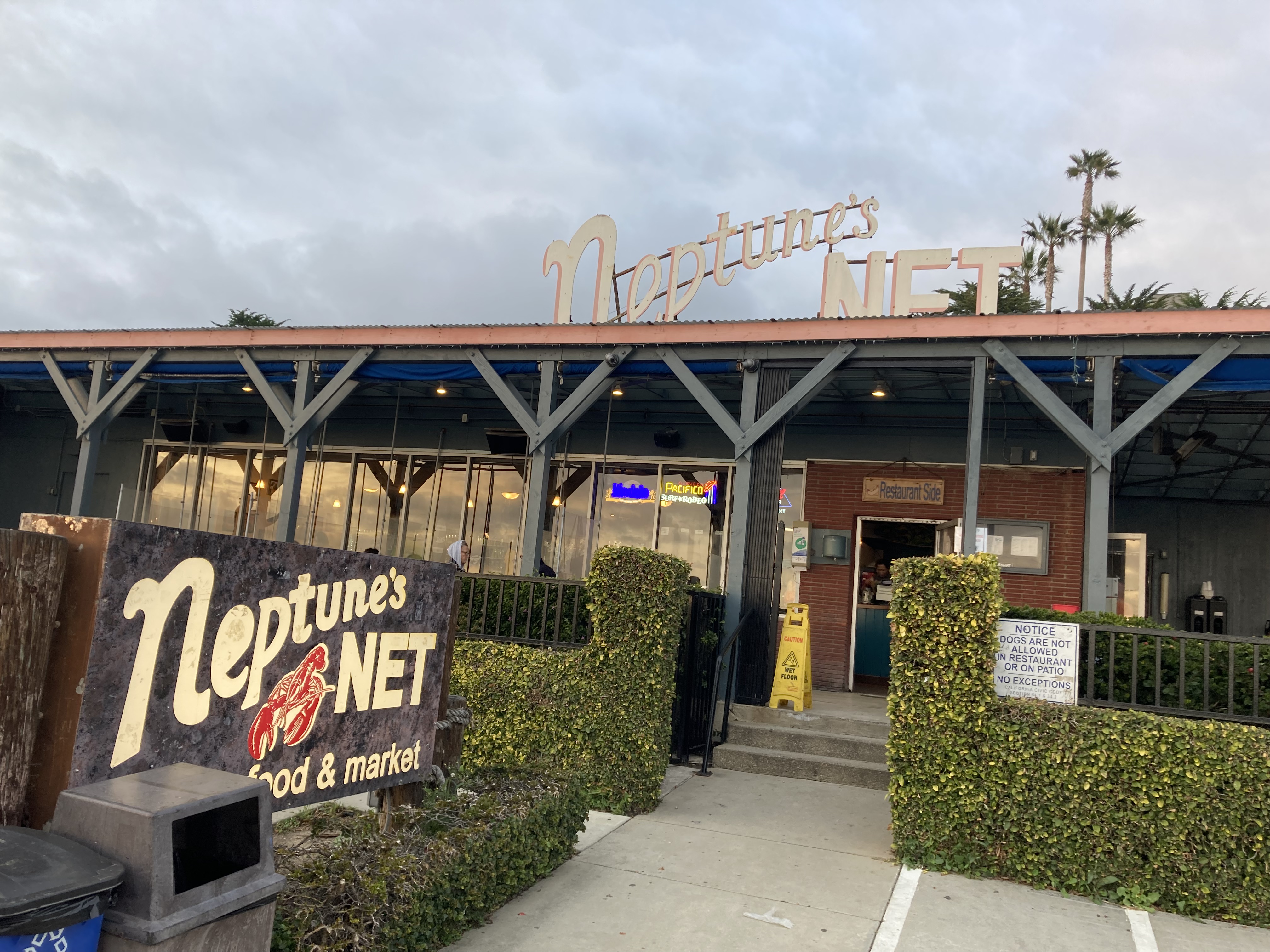
One of the first things I did in Malibu was check out Neptune’s Net, which has recently caught fare, and is described as a popular place for celebrities, locals, and motorcycle riders. It was in the movies Point Break and Iron Man 3, among other shows, and is located right on the PCH. I found the food to be okay.
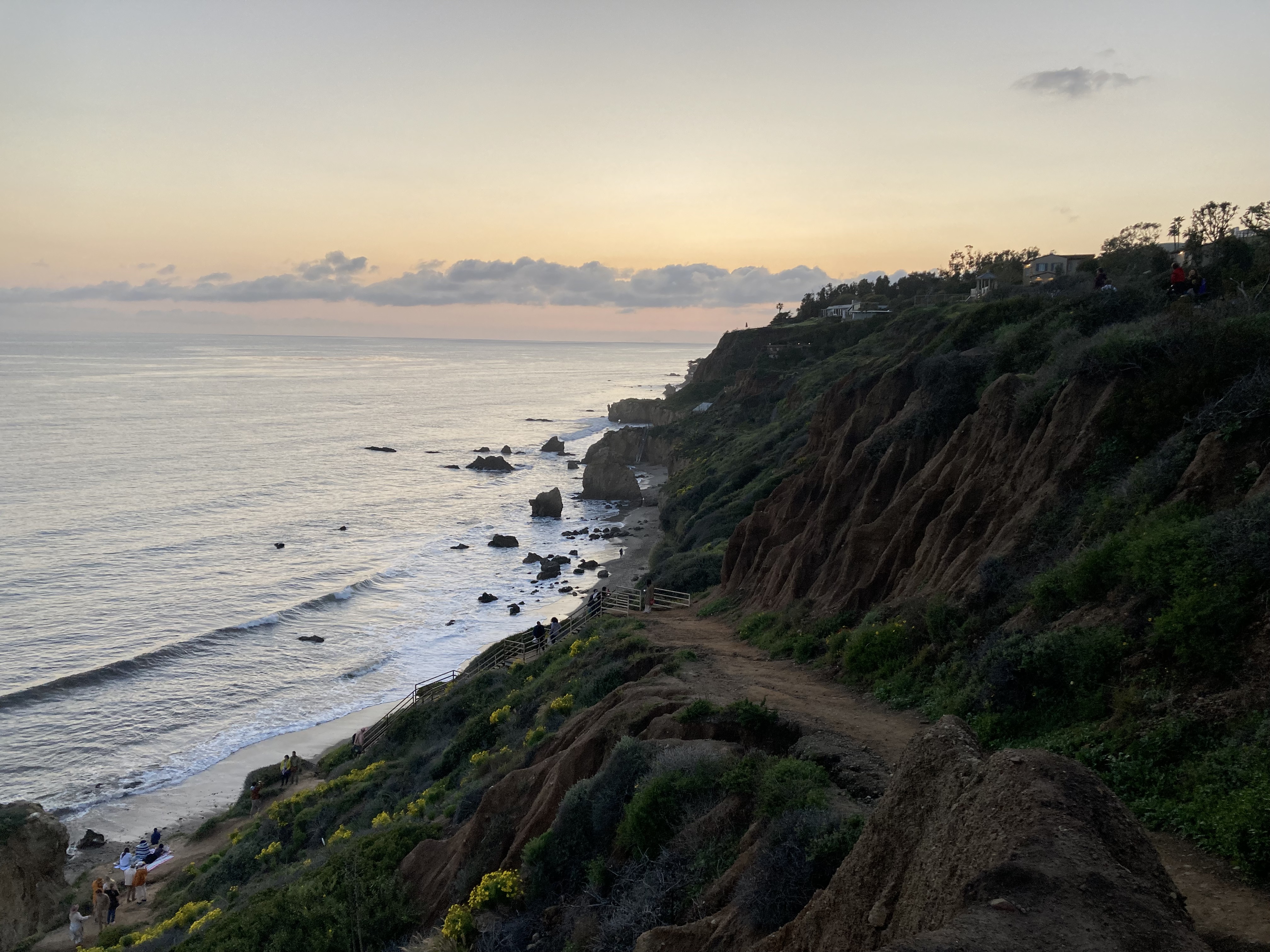
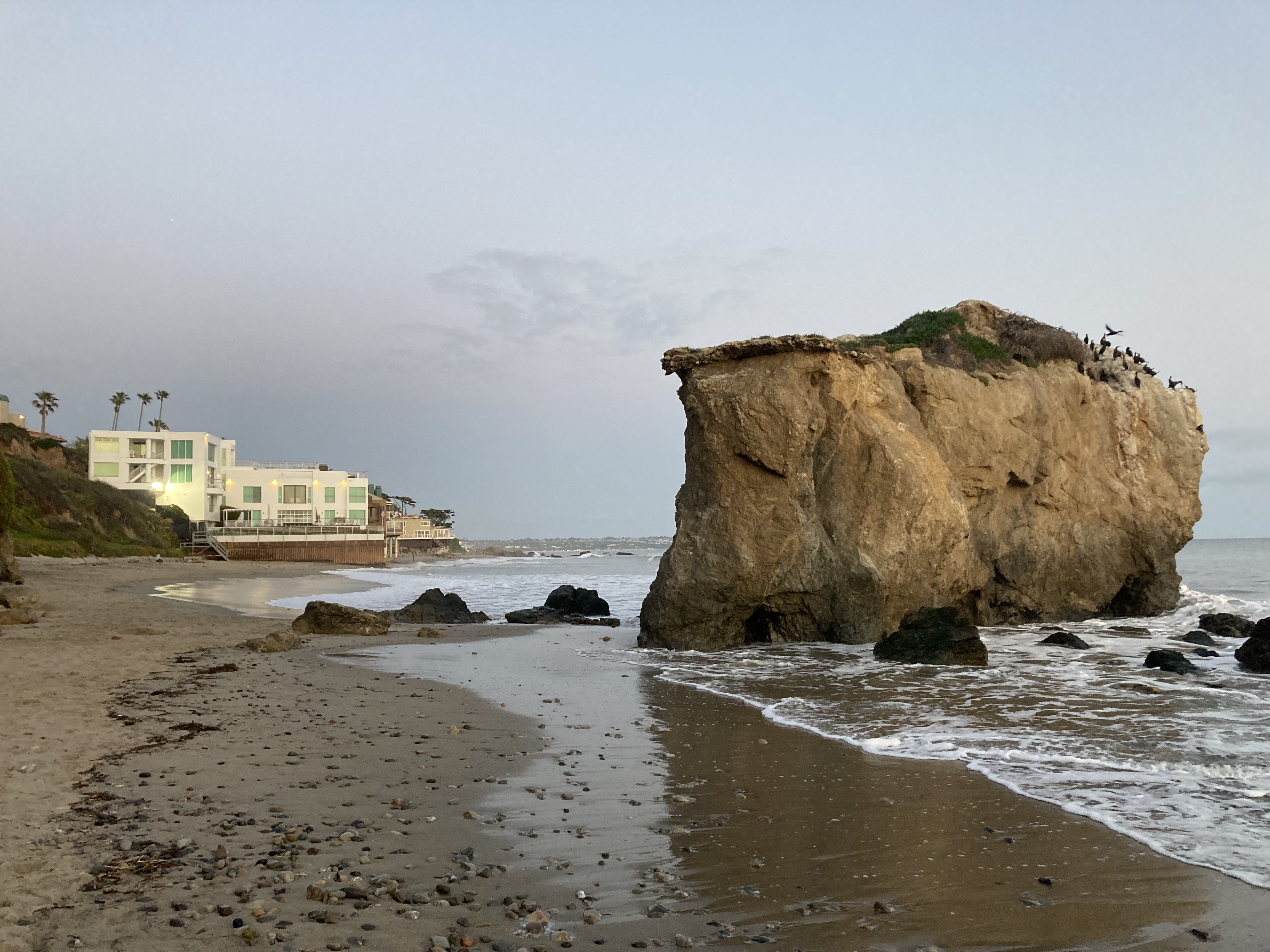
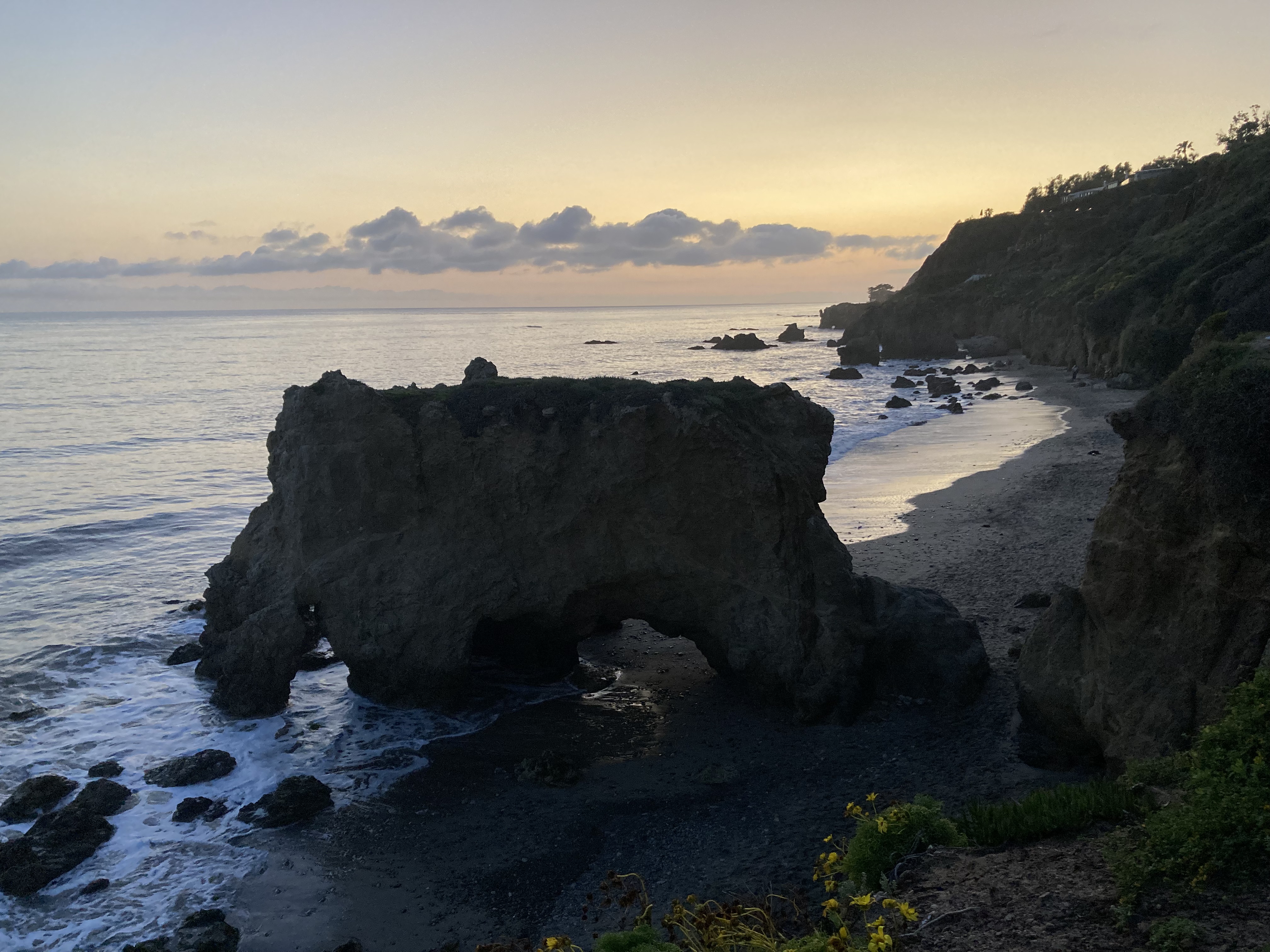
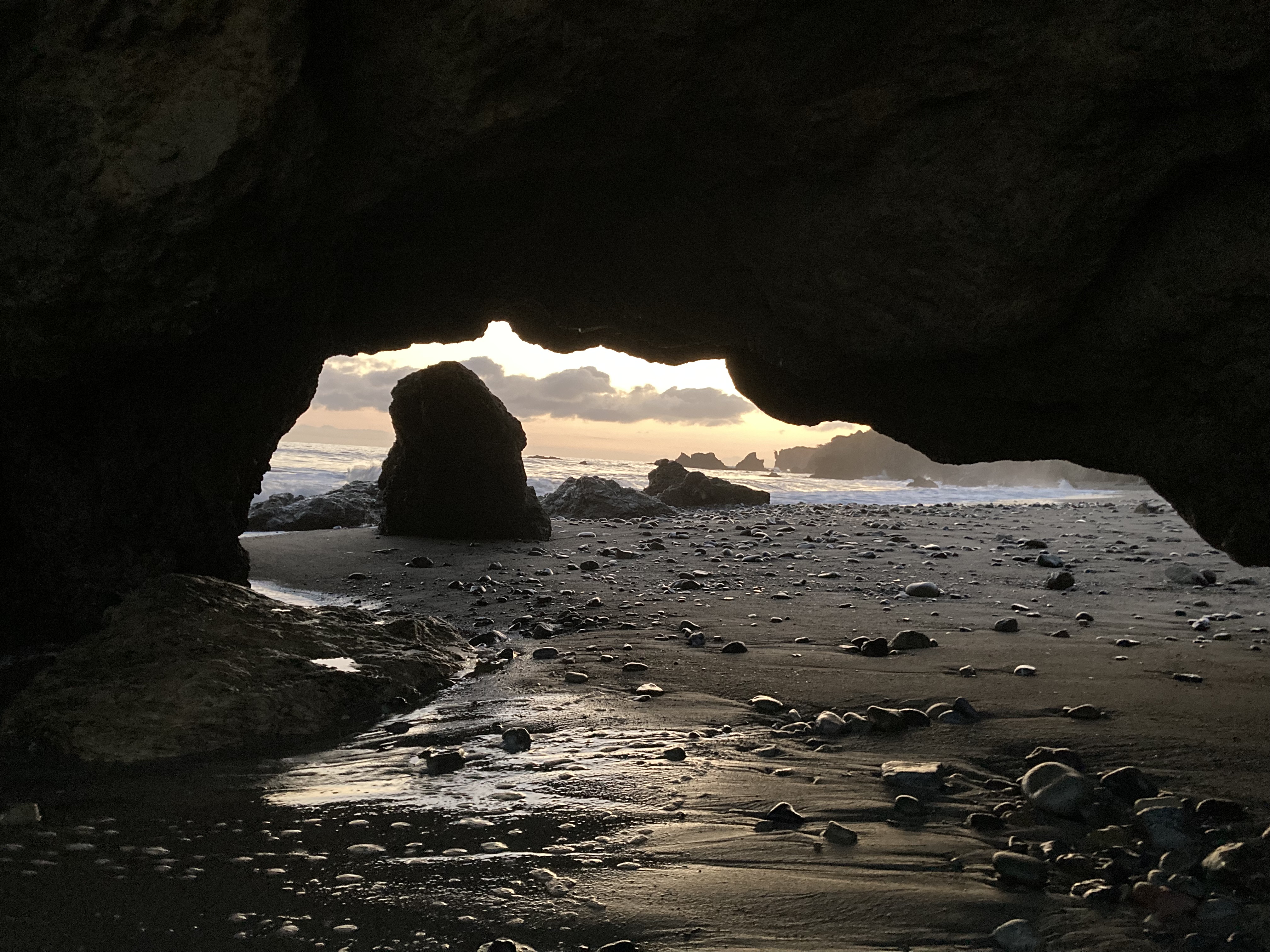
I then went to El Matador State Beach to see its sea stacks. This area is also called Robert H. Meyer Memorial State Beach, which comprises a pocket of three beaches: El Matador, El Pescador, and La Piedra. It was pretty, but felt small – I might have been there at high tide.
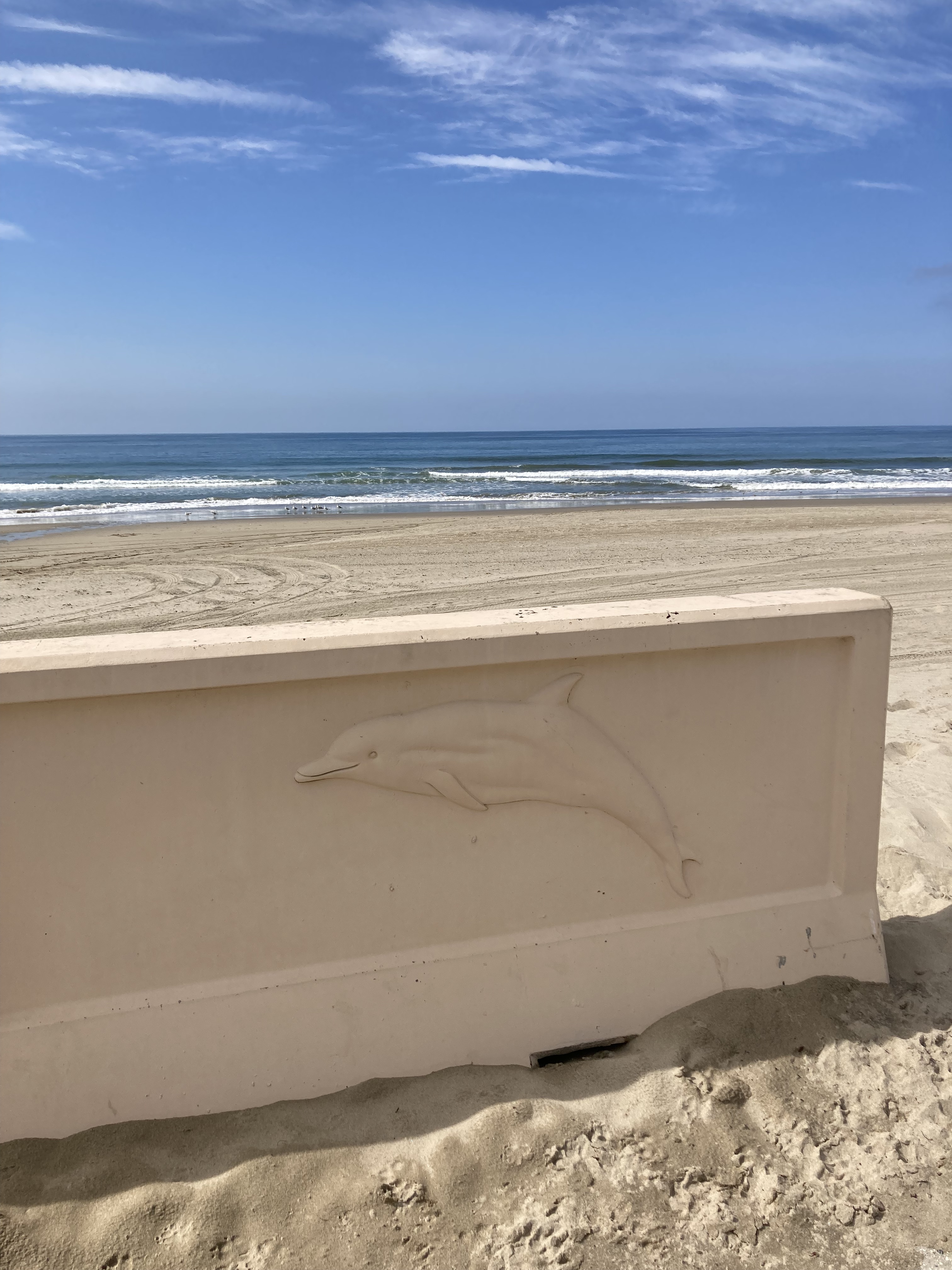
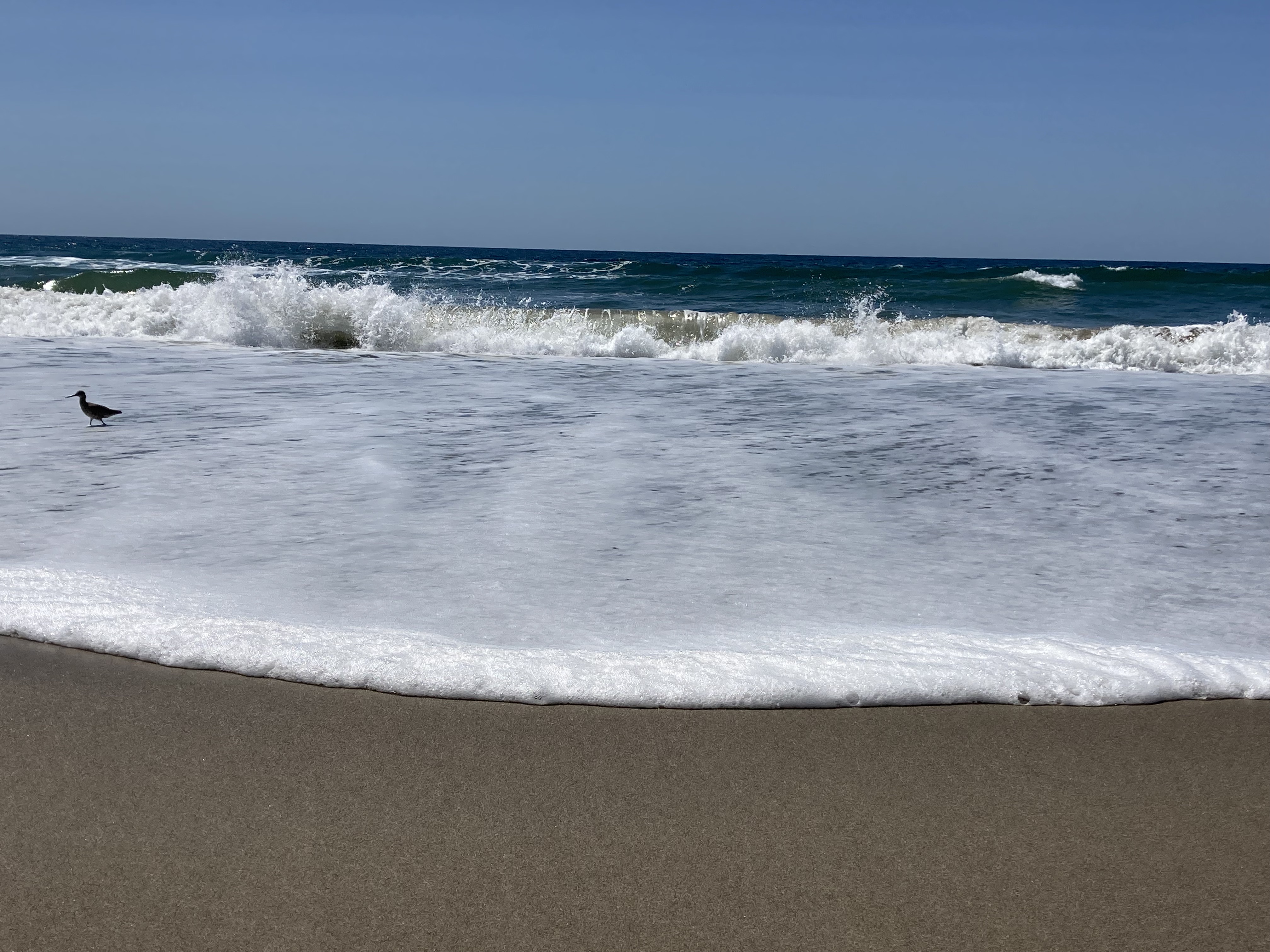
The next beach I checked out was Zuma Beach, which is the biggest beach (2 miles long) in Malibu, and I would venture a guess at saying the most popular. There are big paid parking lots for this beach, but a lot of people (myself included) just parked on the side of highway 1. I saw a bus and some RVs that seemed to stay parked on the roadside for days – not sure if they got ticketed, but I never had any problems while parking there in the day. This beach has a lifeguard headquarters, and the lifeguards are out in boats as well as trucks that drove on the sand. There are many bathroom buildings and outdoor showers. There’s a lot of space and the sunsets were beautiful.
I walked a good portion of the beach’s length barefoot, feeling the sand under my feet and the waves rolling in. I also went for a couple of runs here. It became a favourite haunt of mine in Malibu.
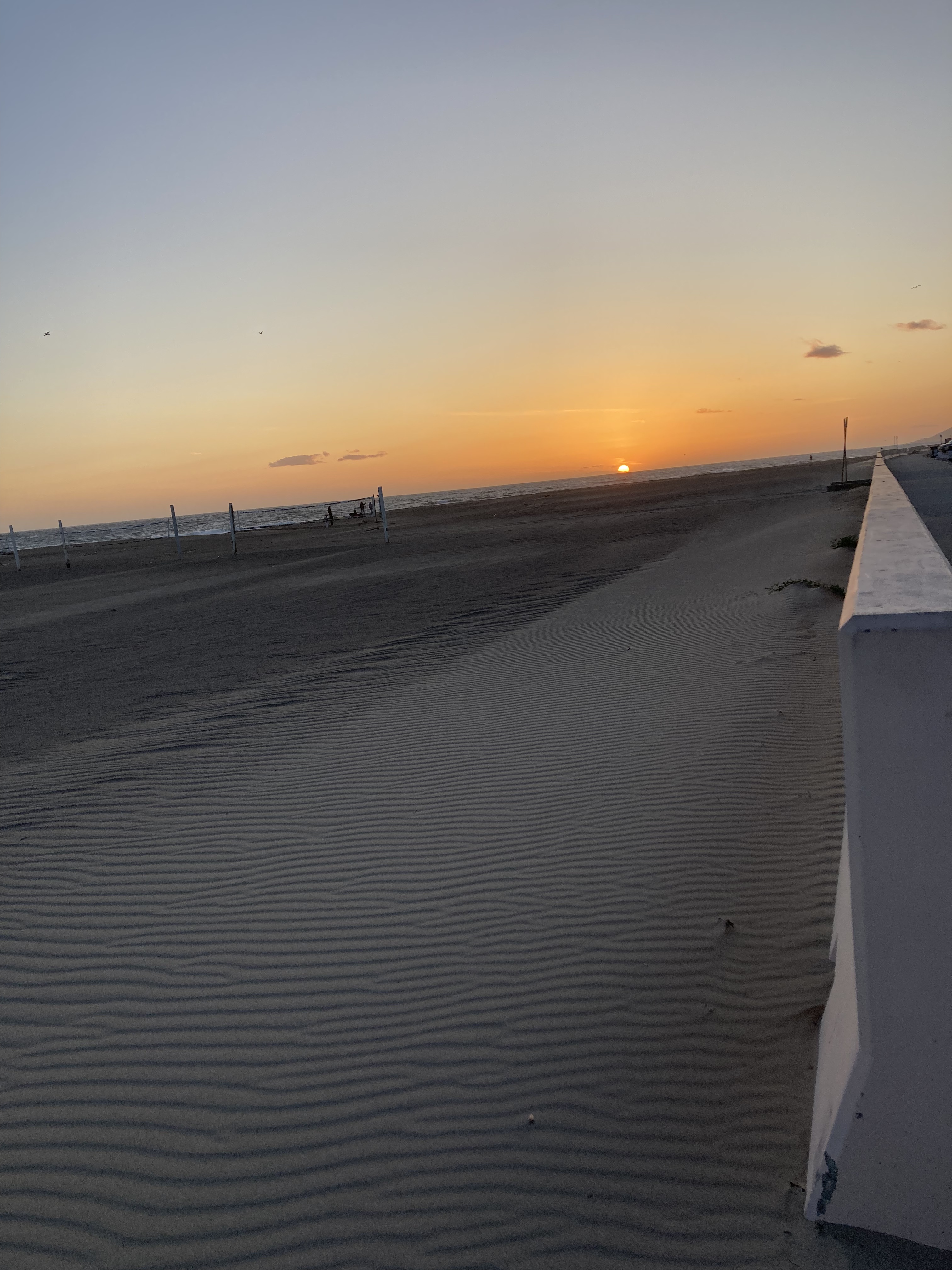
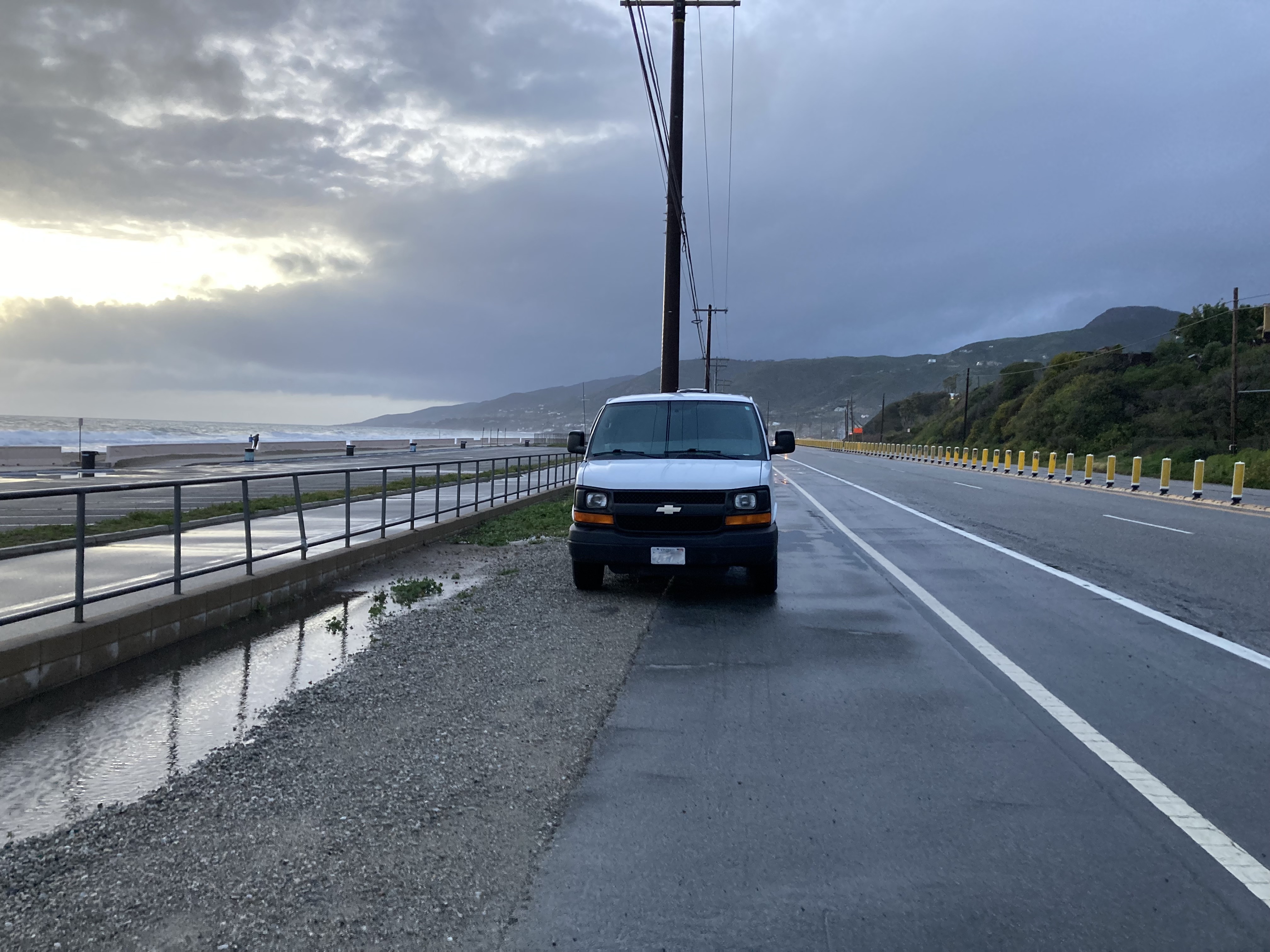
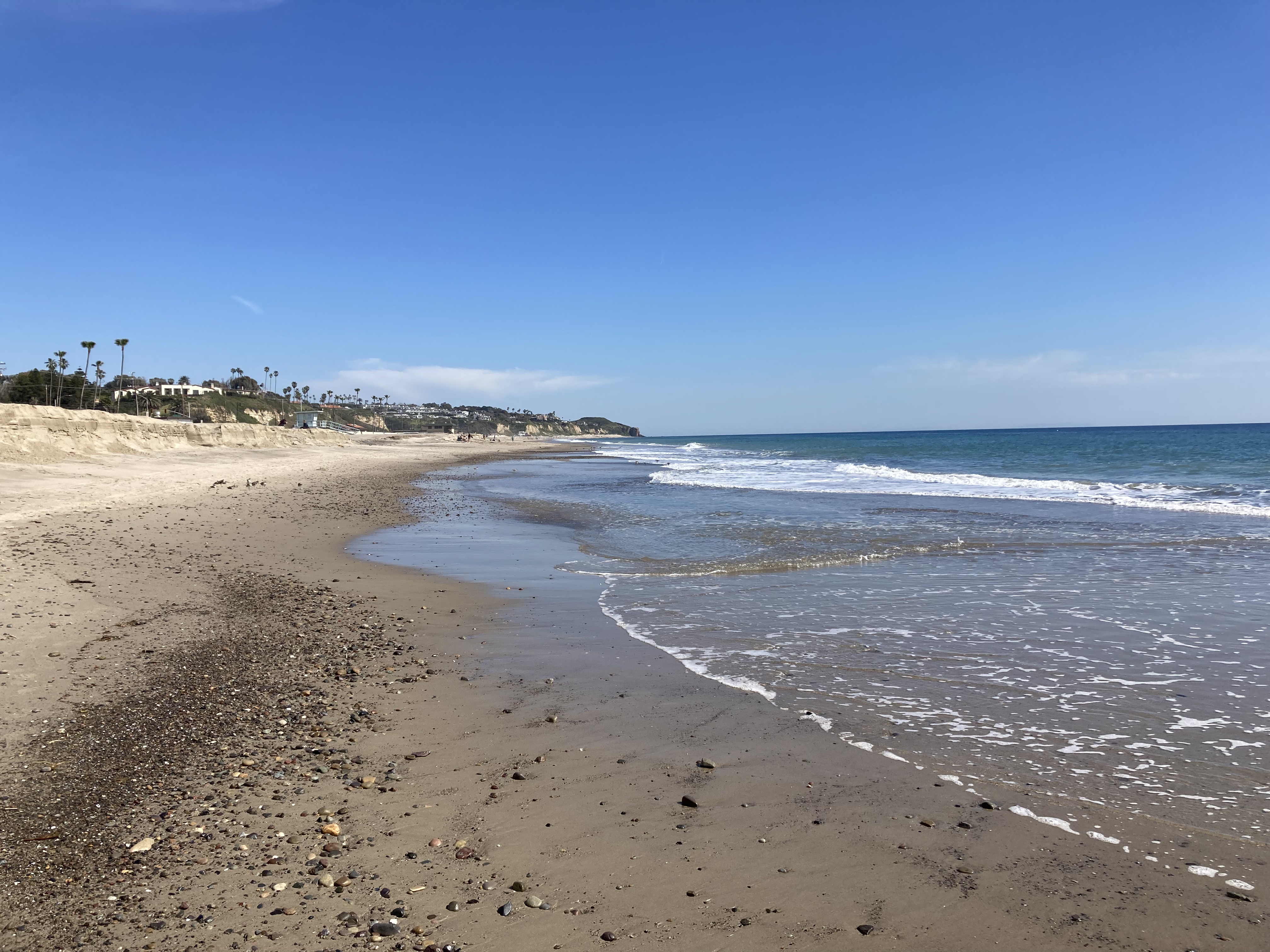
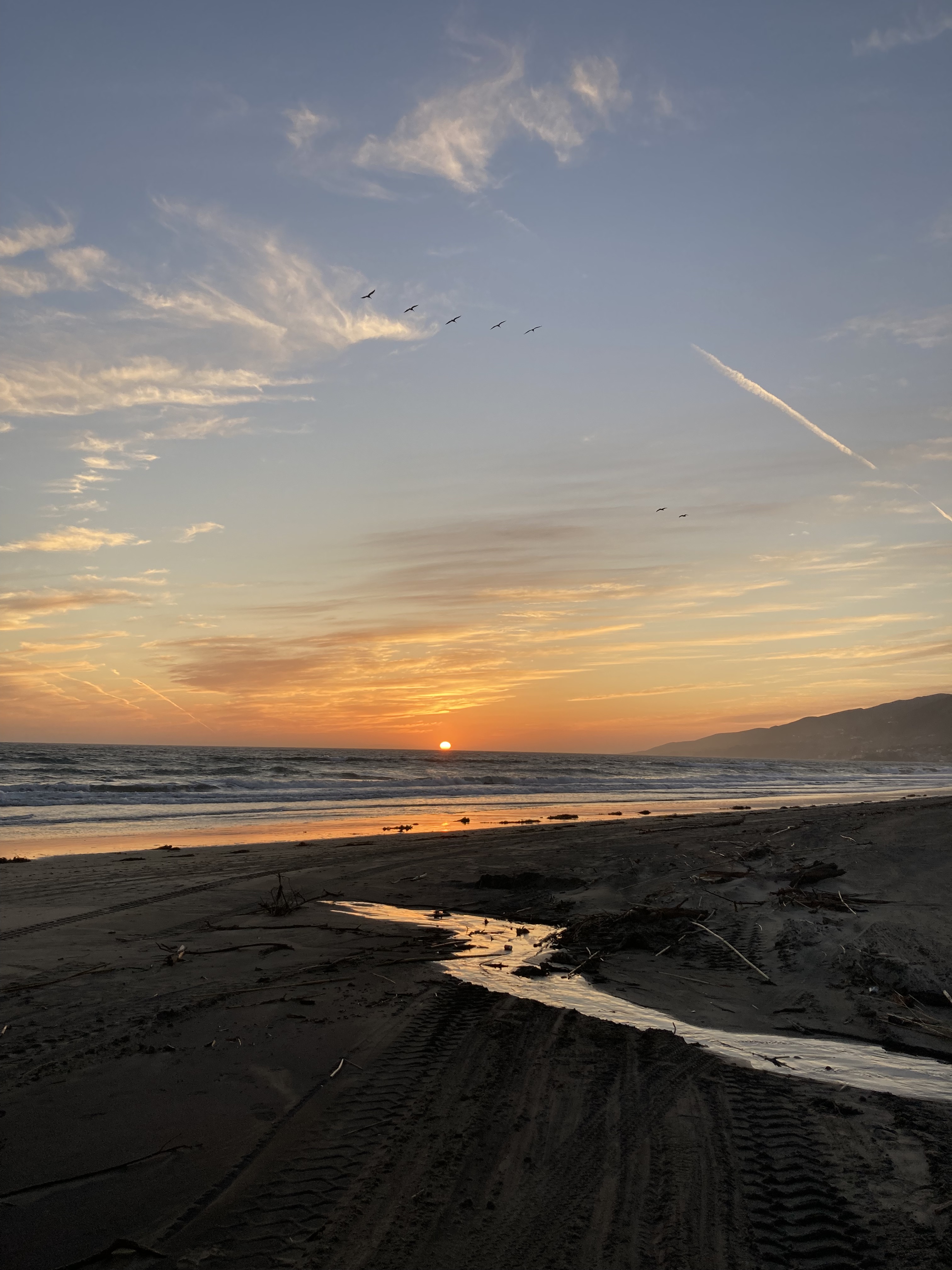
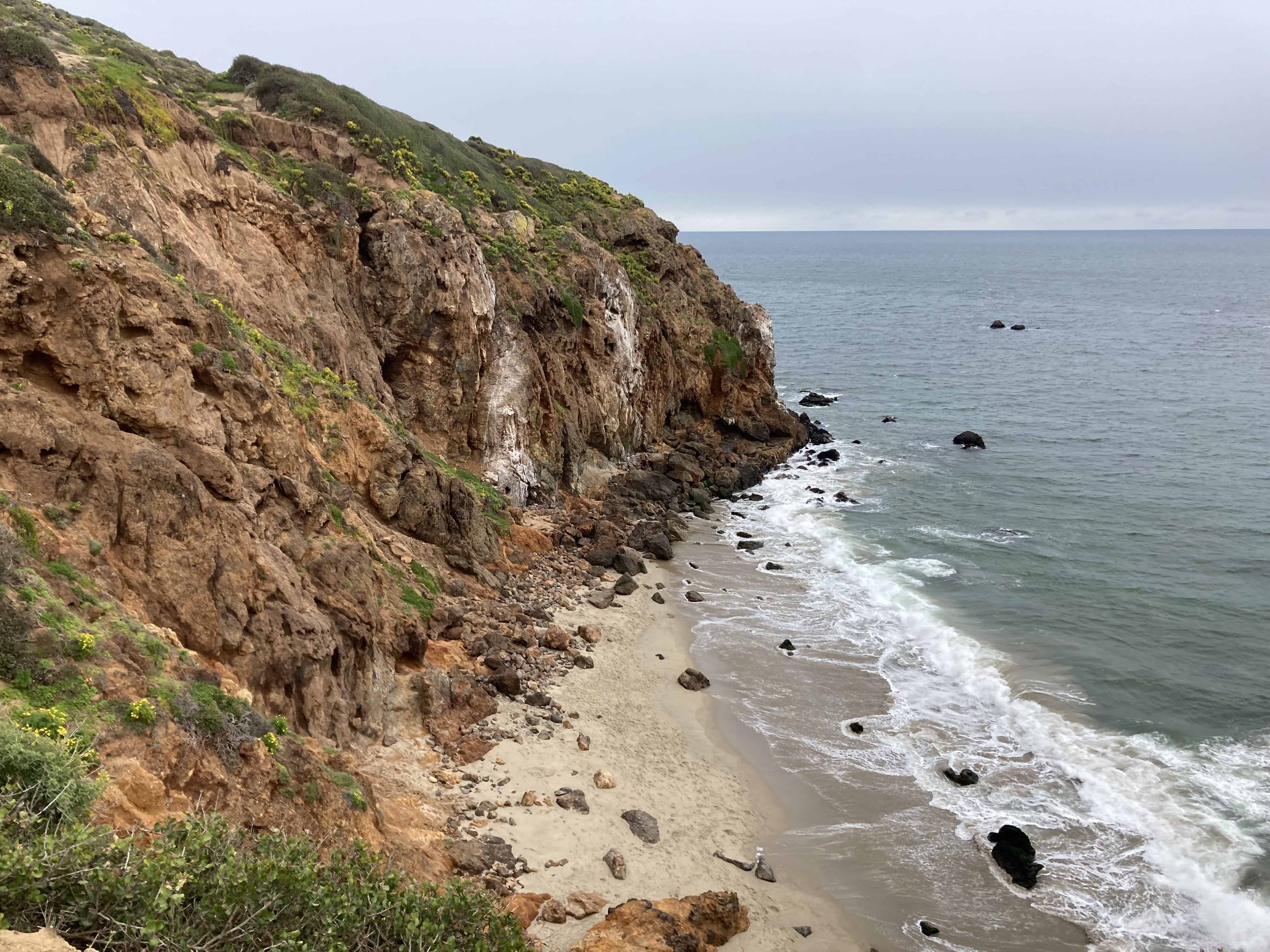
I wandered the beach and trails that take you to the top of the bluffs at Point Dume Nature Preserve, which lies at the eastern edge of Zuma Beach and northern edge of Santa Monica Bay – around the middle of Malibu’s coastline.
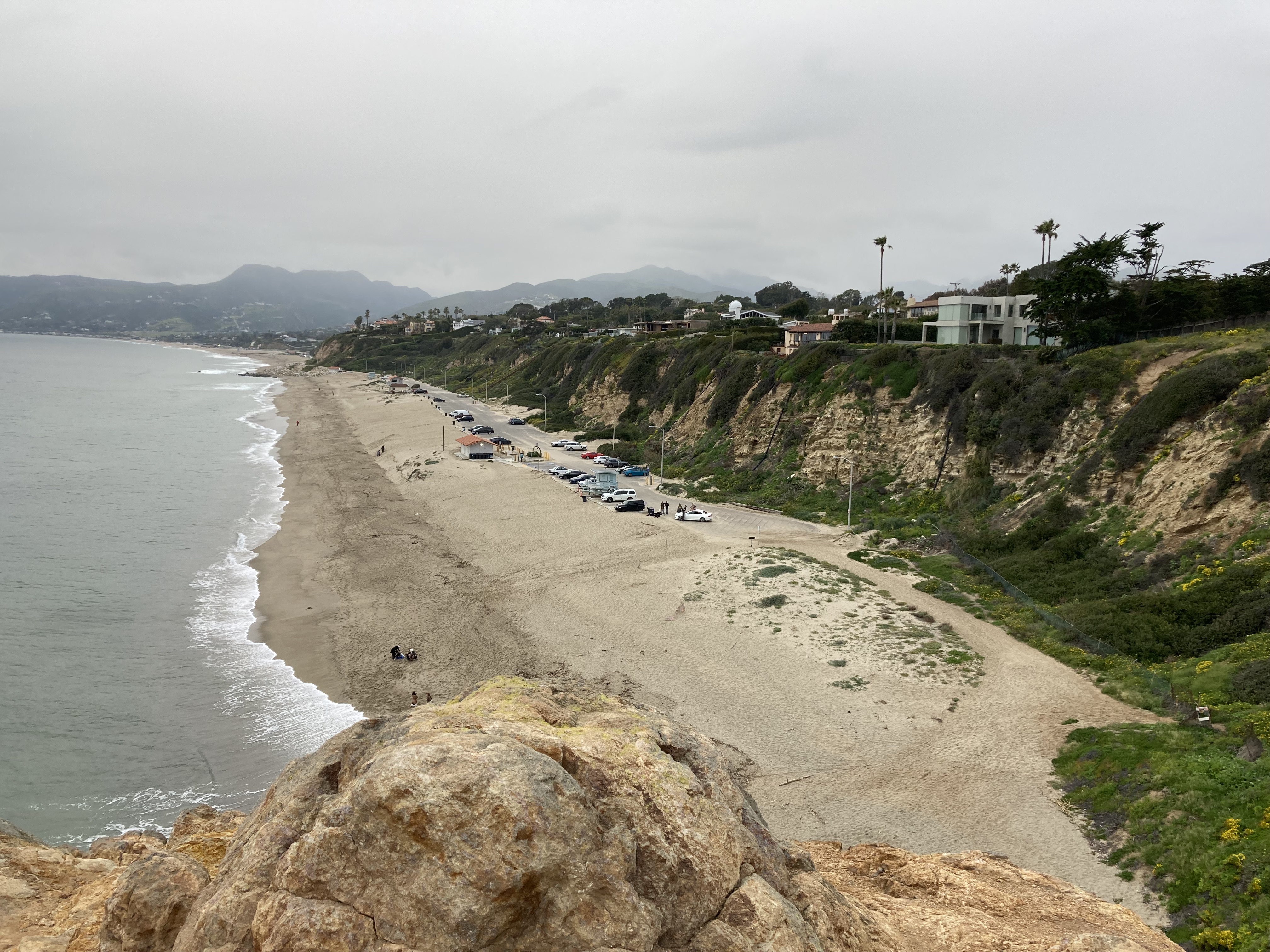
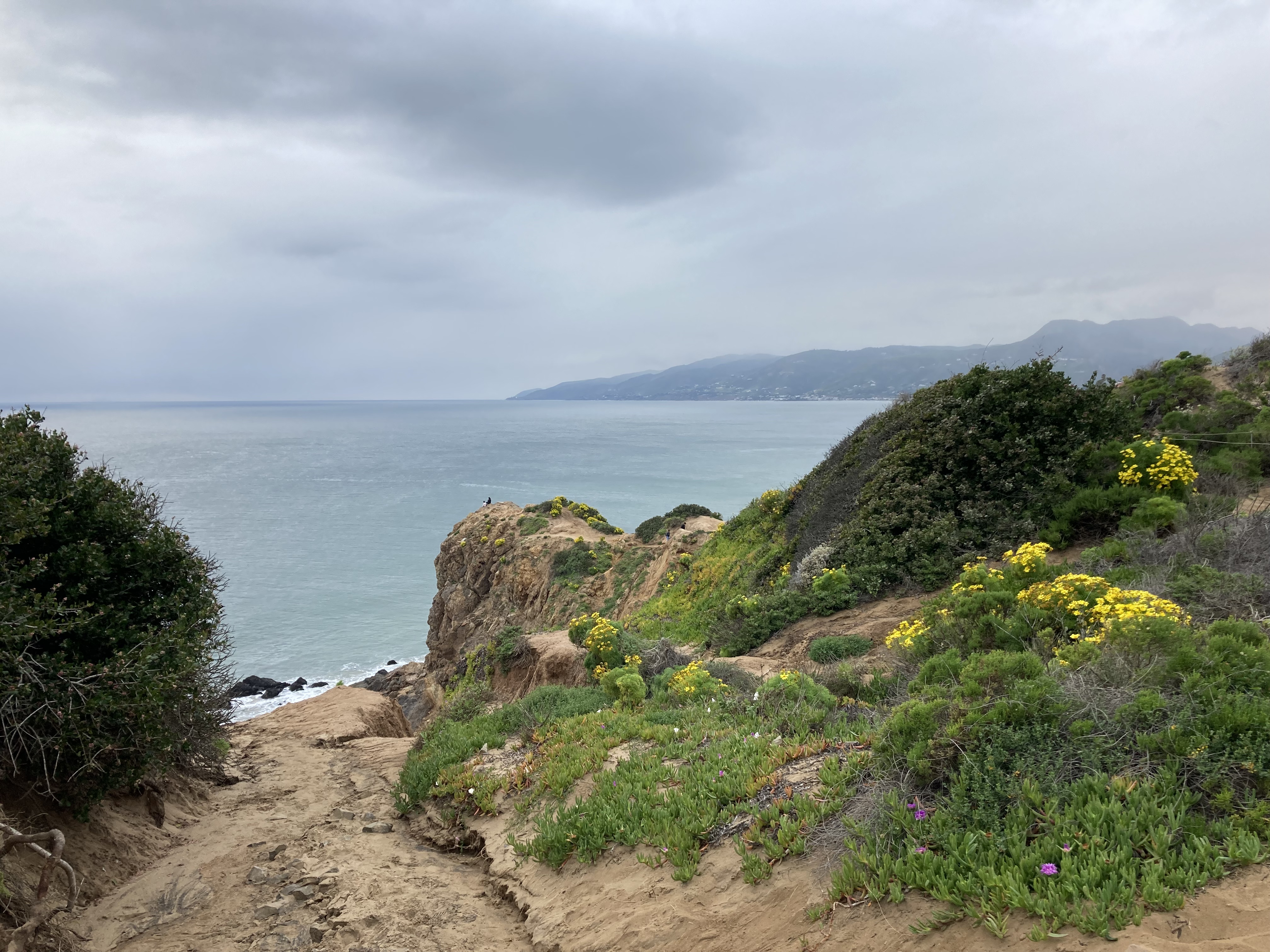
When I climbed back down the bluff to the beach and where I was parked, I had to walk by a photoshoot. It could not have been more stereotypical: men taking photos of girls in bikinis in fancy cars.
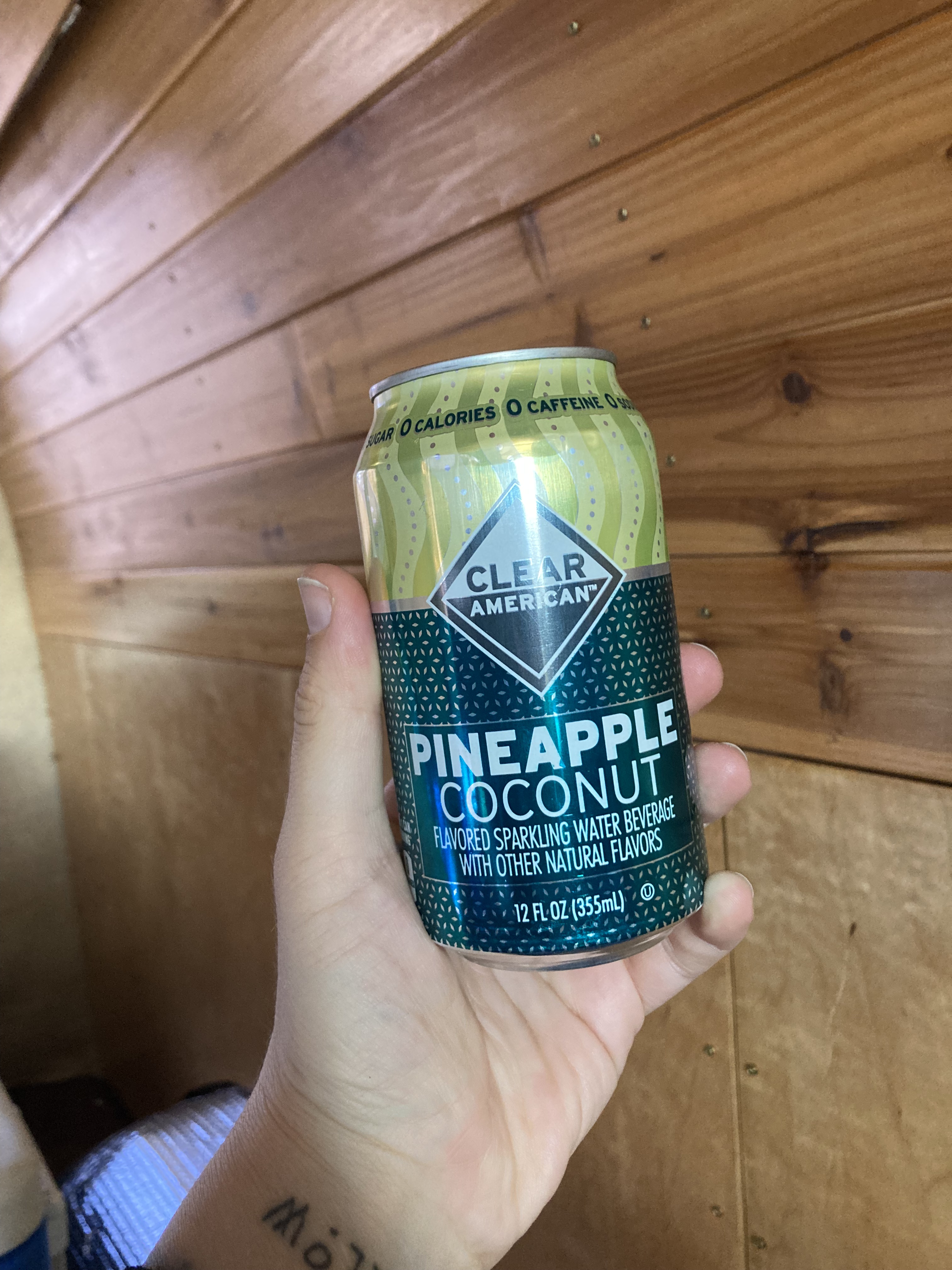
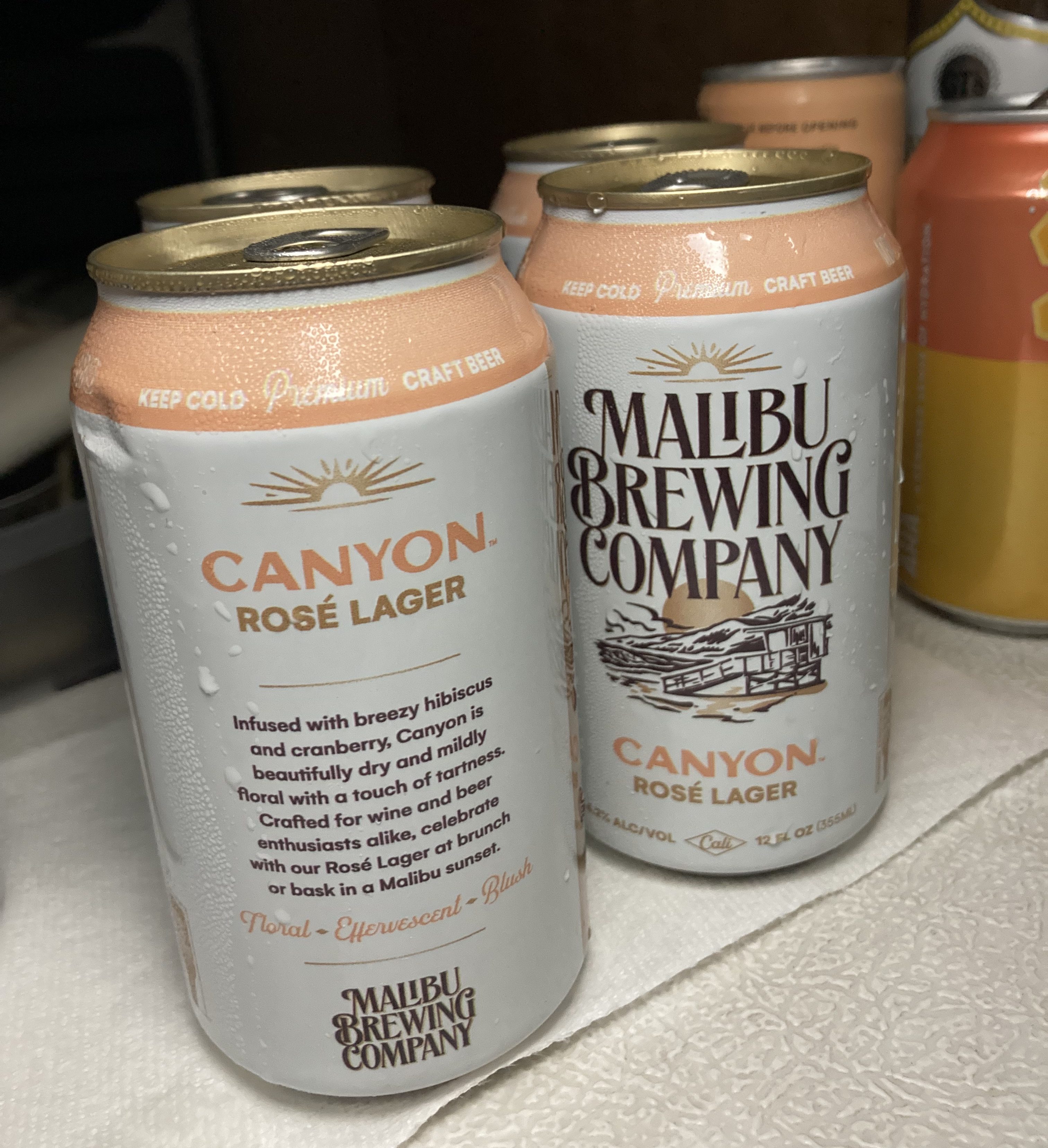
I checked out Malibu Brewing Company and picked up their Rosé Lager which was fun and easy drinking (and had a pretty can). The taproom was part of a hub of shops called Trancas Country Mart, located across from Zuma Beach. There was a Starbucks and a grocery store here called Vintage Grocers (which was quite expensive), among other boutiques.
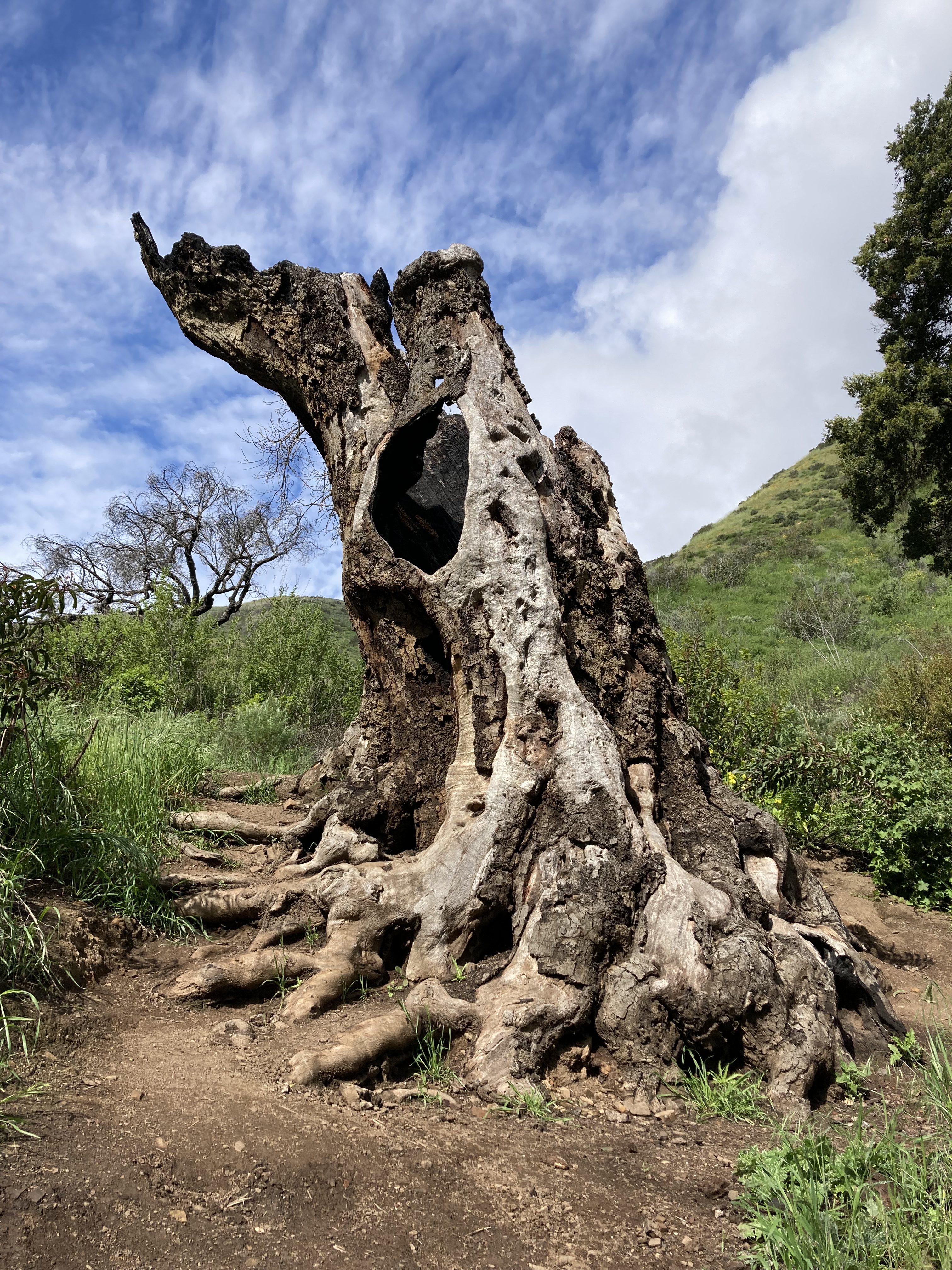
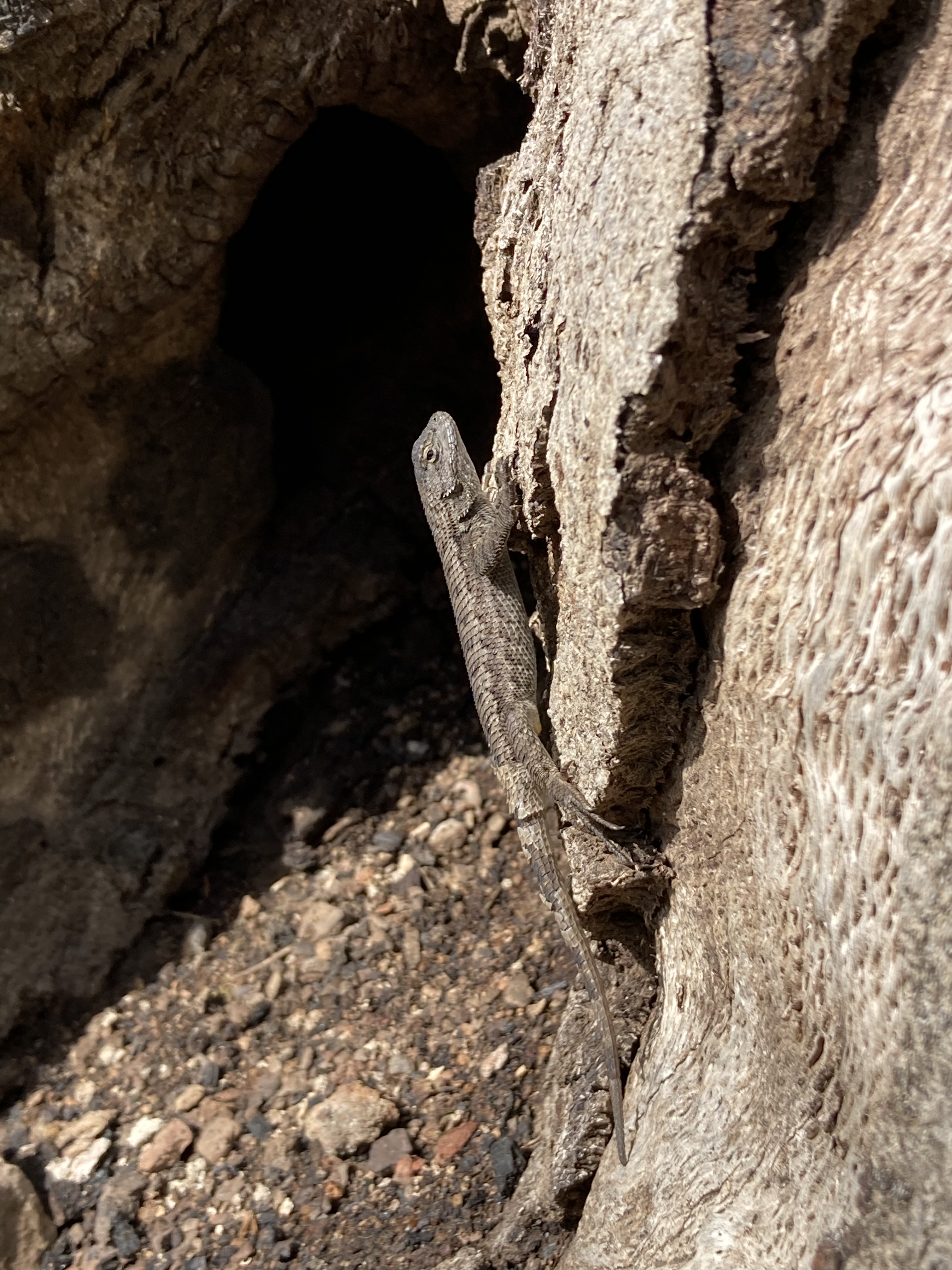
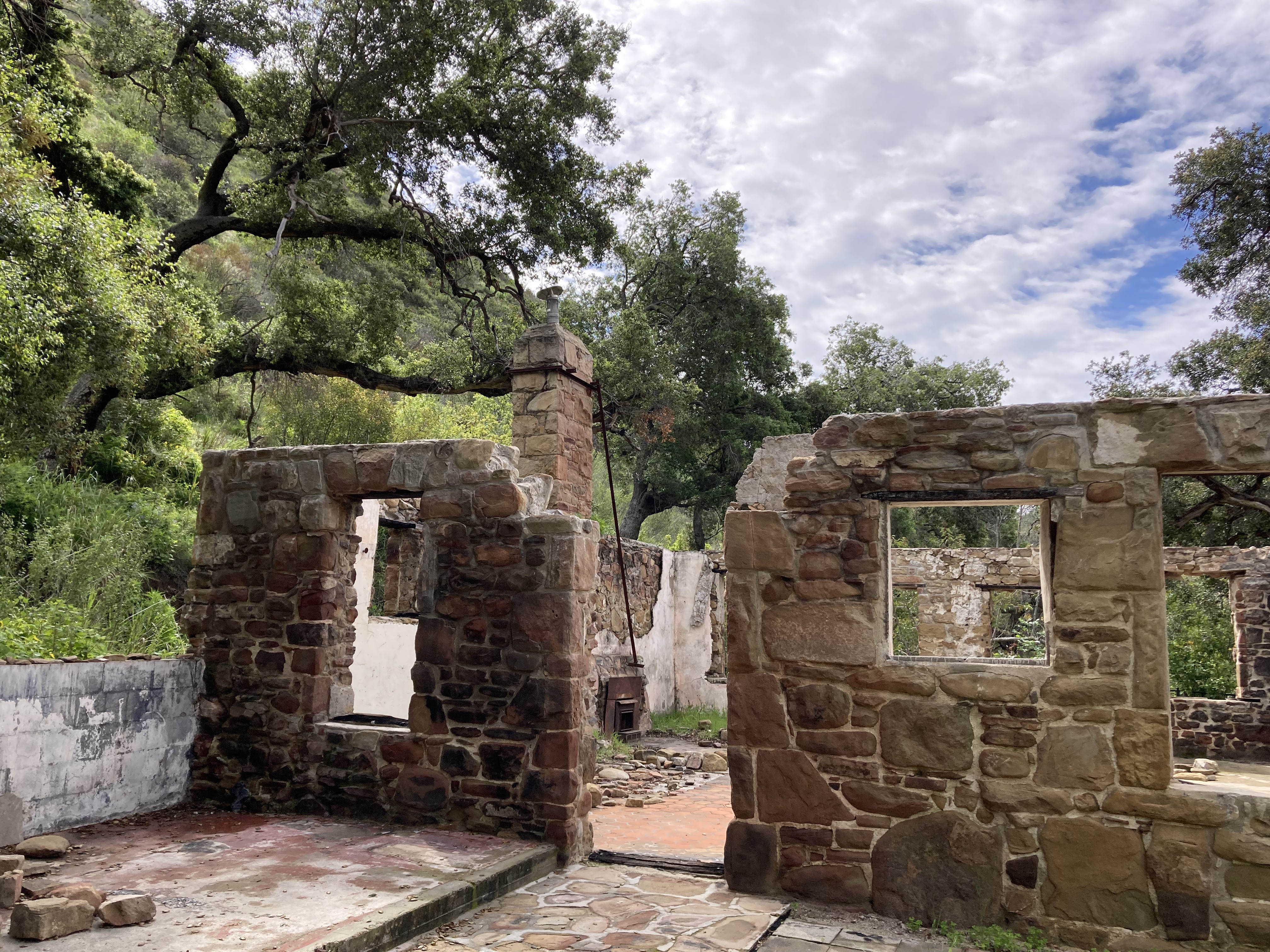
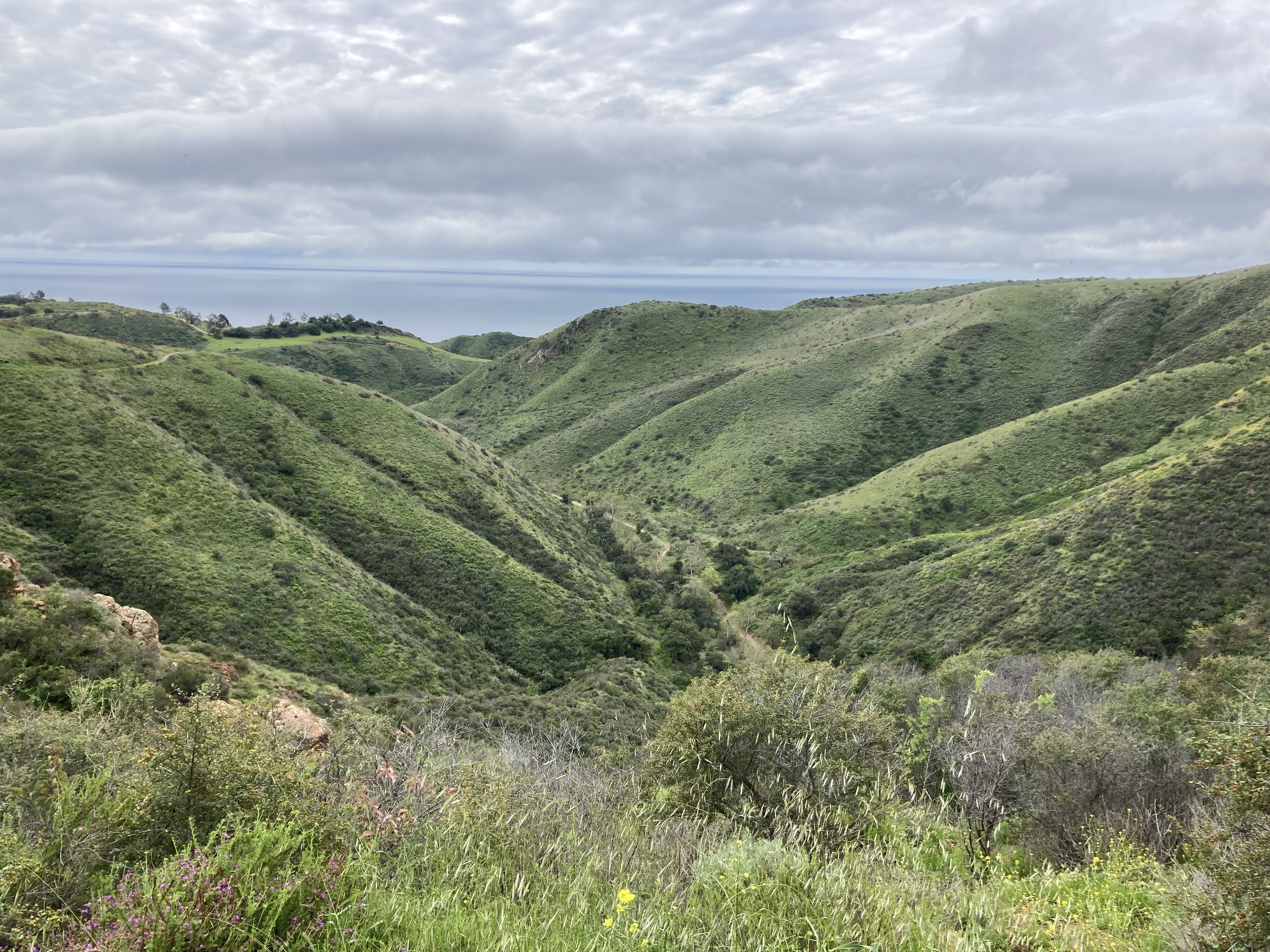
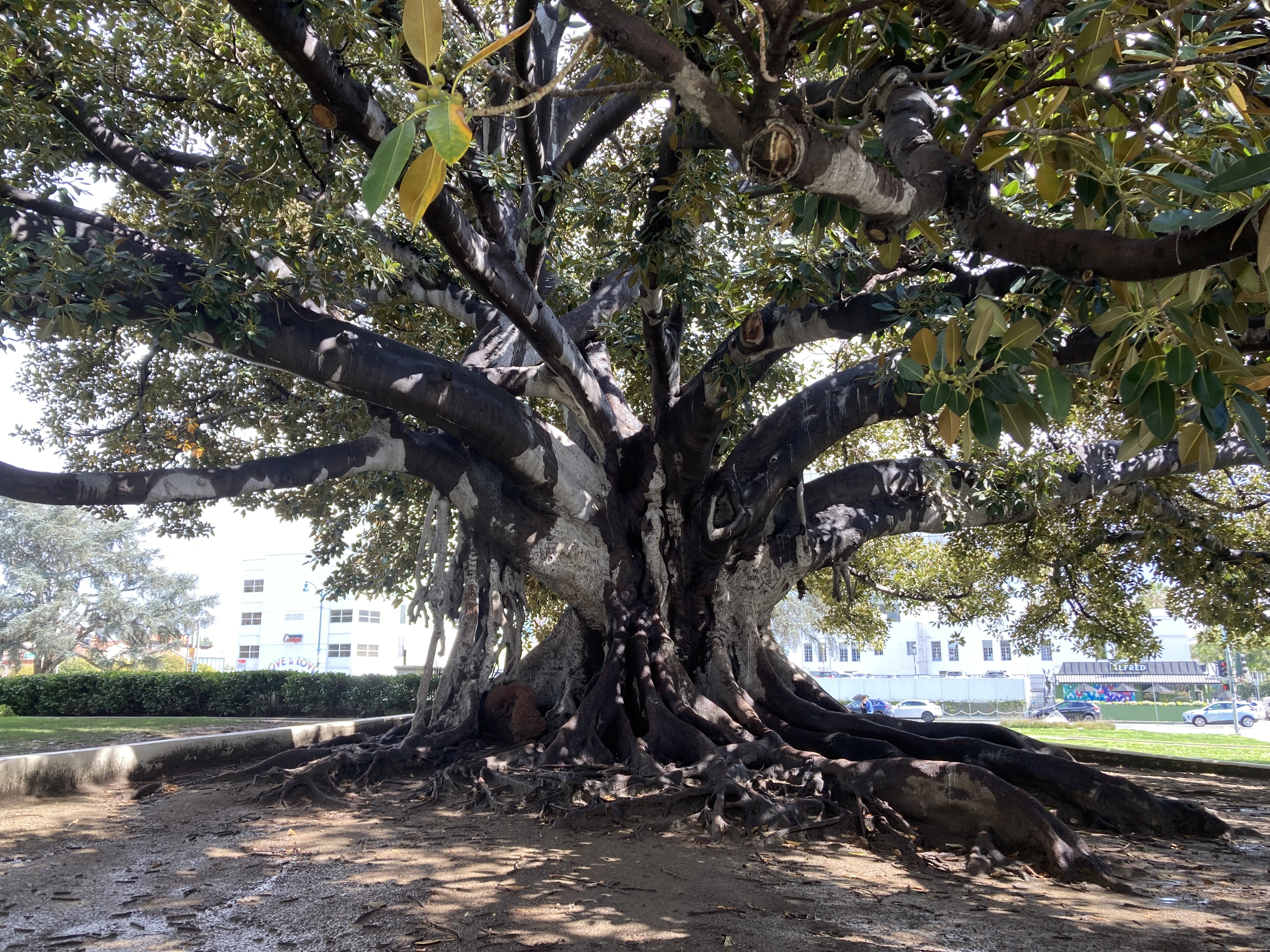
I also did a bit of hiking, tackling Solstice Canyon in Santa Monica Mountains National Recreation Area. The hike was interesting, with old ruins. I thought I saw a mountain lion print – the area does have mountain lions – as well as rattlesnakes. But it was probably just a dog or coyote. The only wildlife of note that I saw was a lizard. I do love seeing lizards in the wild. And a really cool tree!
Next I did some more central Malibu things. I’d sort of been on the outskirts for the first while that I was here.
I visited Malibu Bluffs Park – which in retrospect I’m not sure why I went, as it just turned out to be your average park.
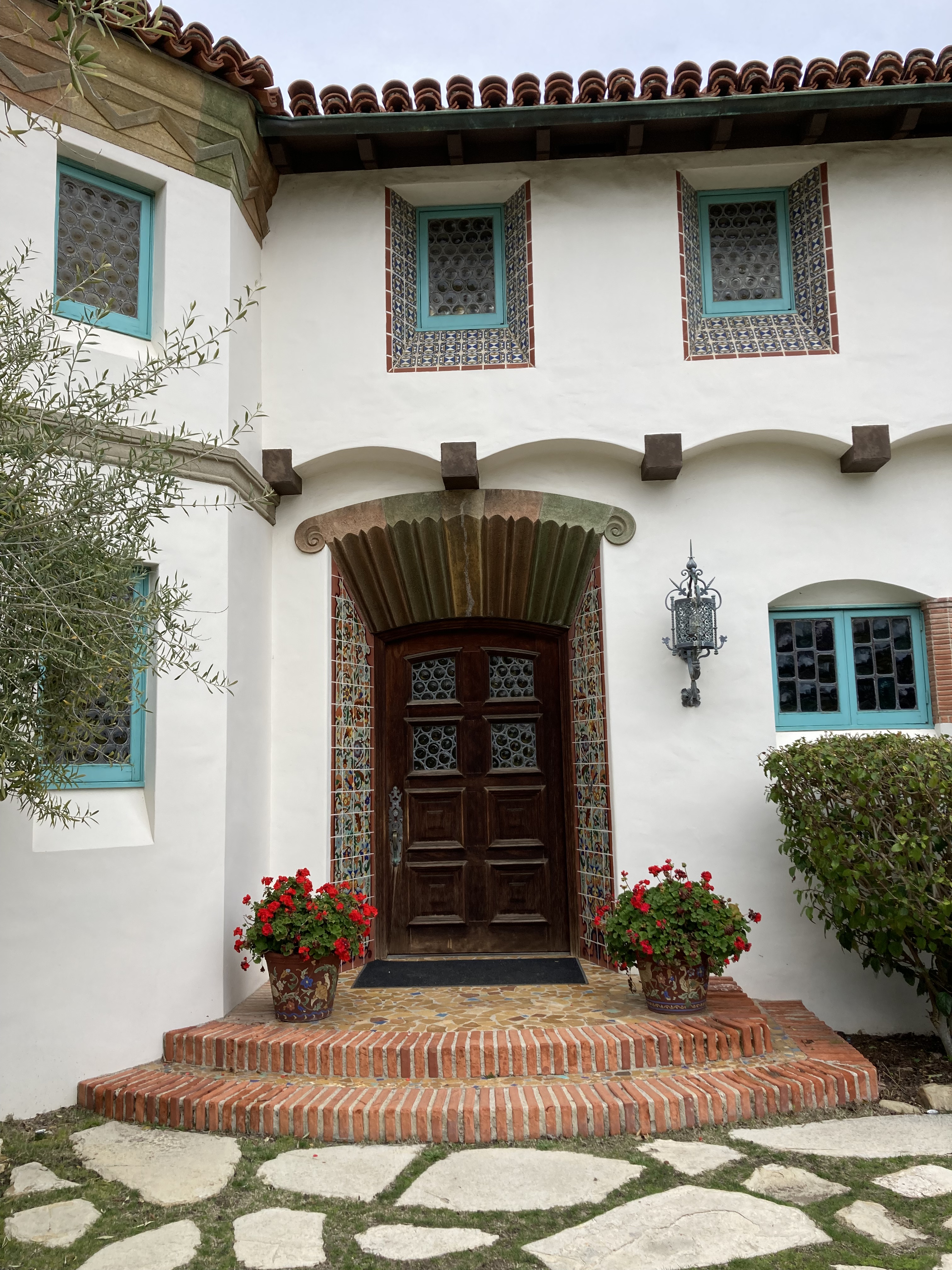
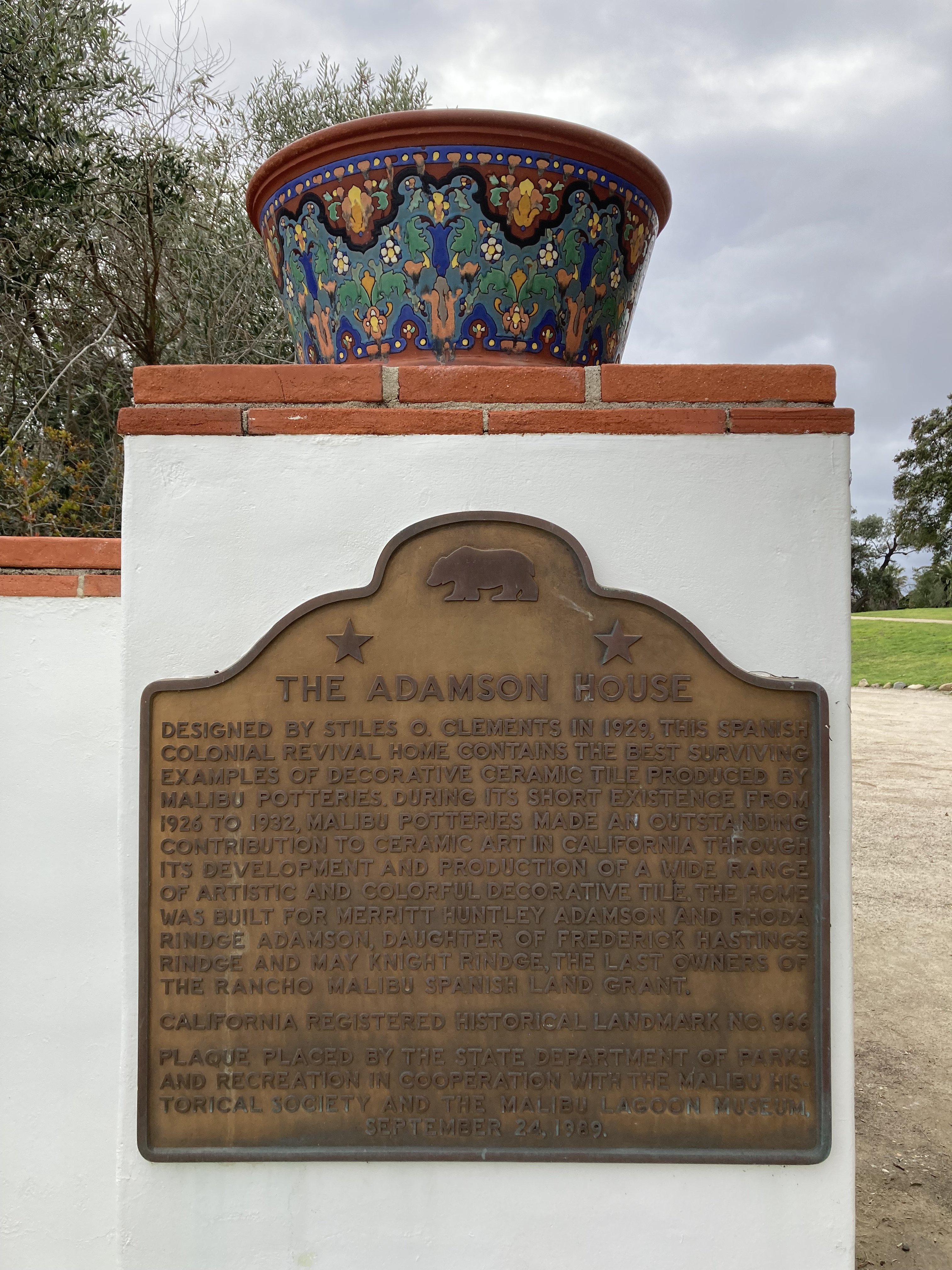
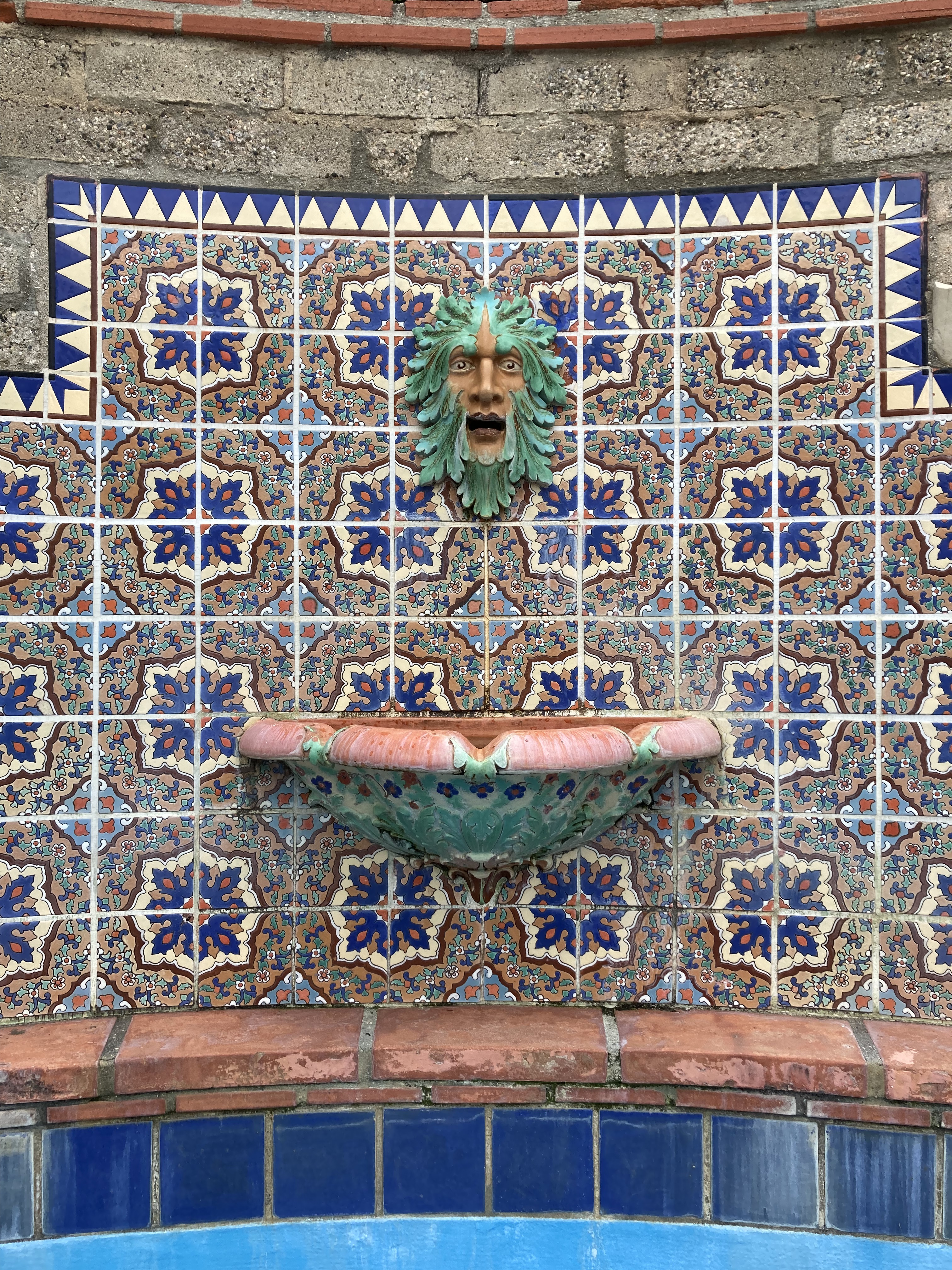
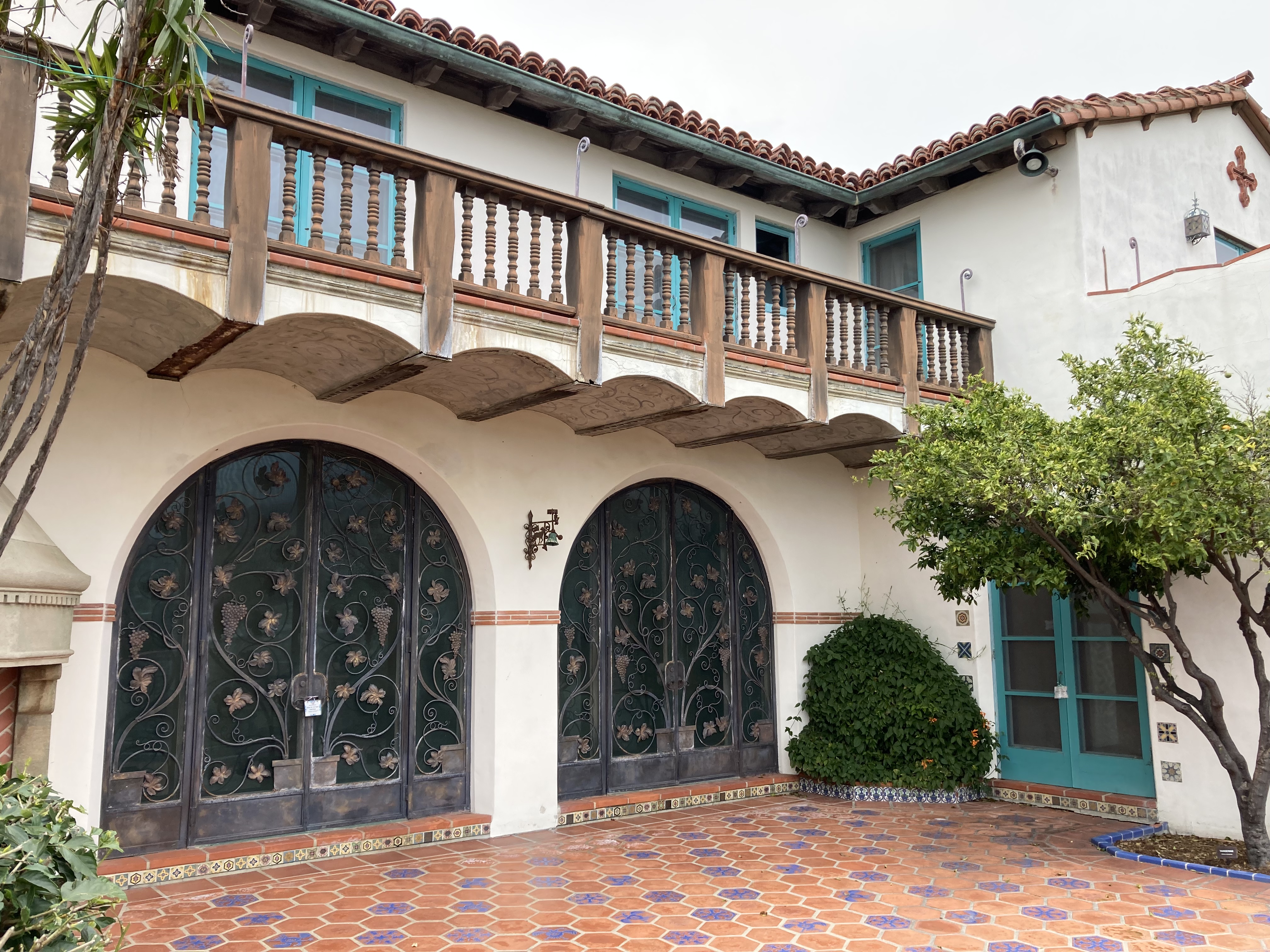
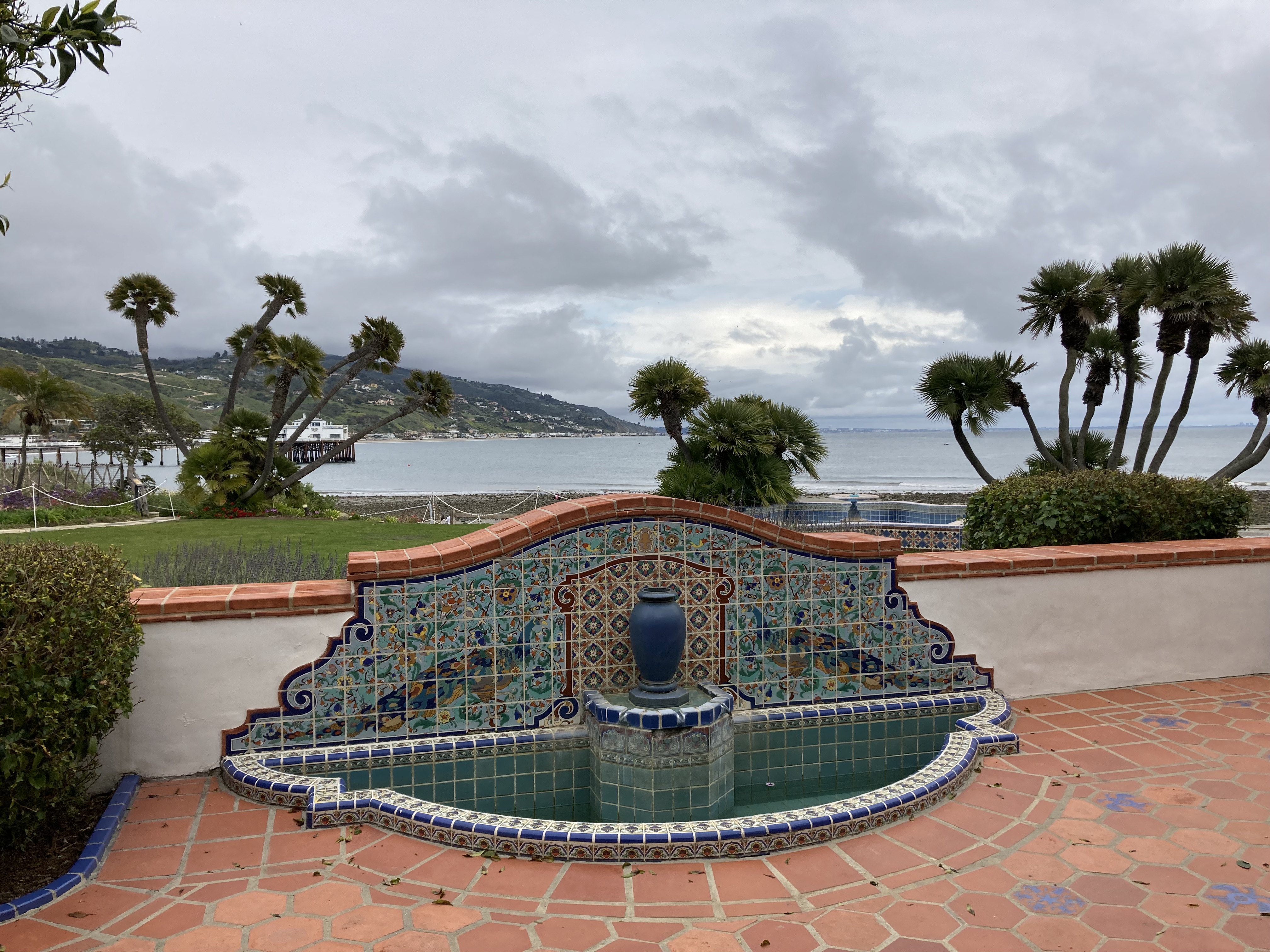
Then I went to the Adamson House. While I didn’t get to tour the inside of the house, there was still a lot to take in outside on the property, which had informational plaques. This house was completed in 1930 in the Spanish Colonial Revival style. It is known for its preservation of decorative ceramic tile, both inside the house and on the grounds, produced by Malibu Potteries. Local clay deposits were used to make the tiles from 1926-32, with Malibu Potteries operating a half mile from the Malibu Pier, on the beach. The Adamson House is located by Malibu Lagoon, where Malibu Creek meets the Pacific Ocean, creating a unique fresh water and salt water habitat.
From here it was a short walk to Surfrider Beach, an extension of Malibu Lagoon State Beach and a world-renowned surf spot that was designated the first World Surfing Reserve. Malibu Pier is here as well, which has a few shops, like Malibu Farm Cafe. Both the beach and pier are relatively small.
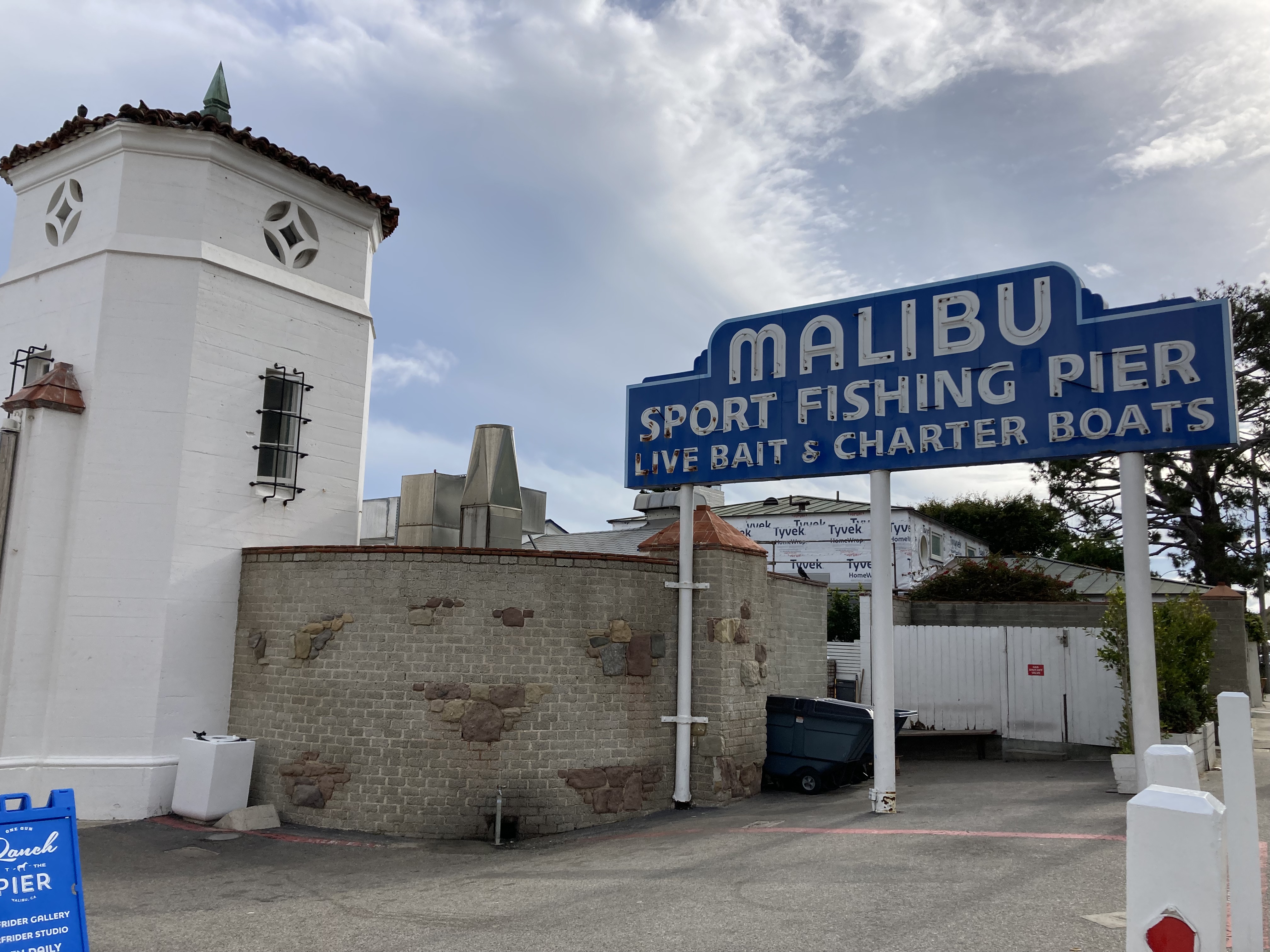
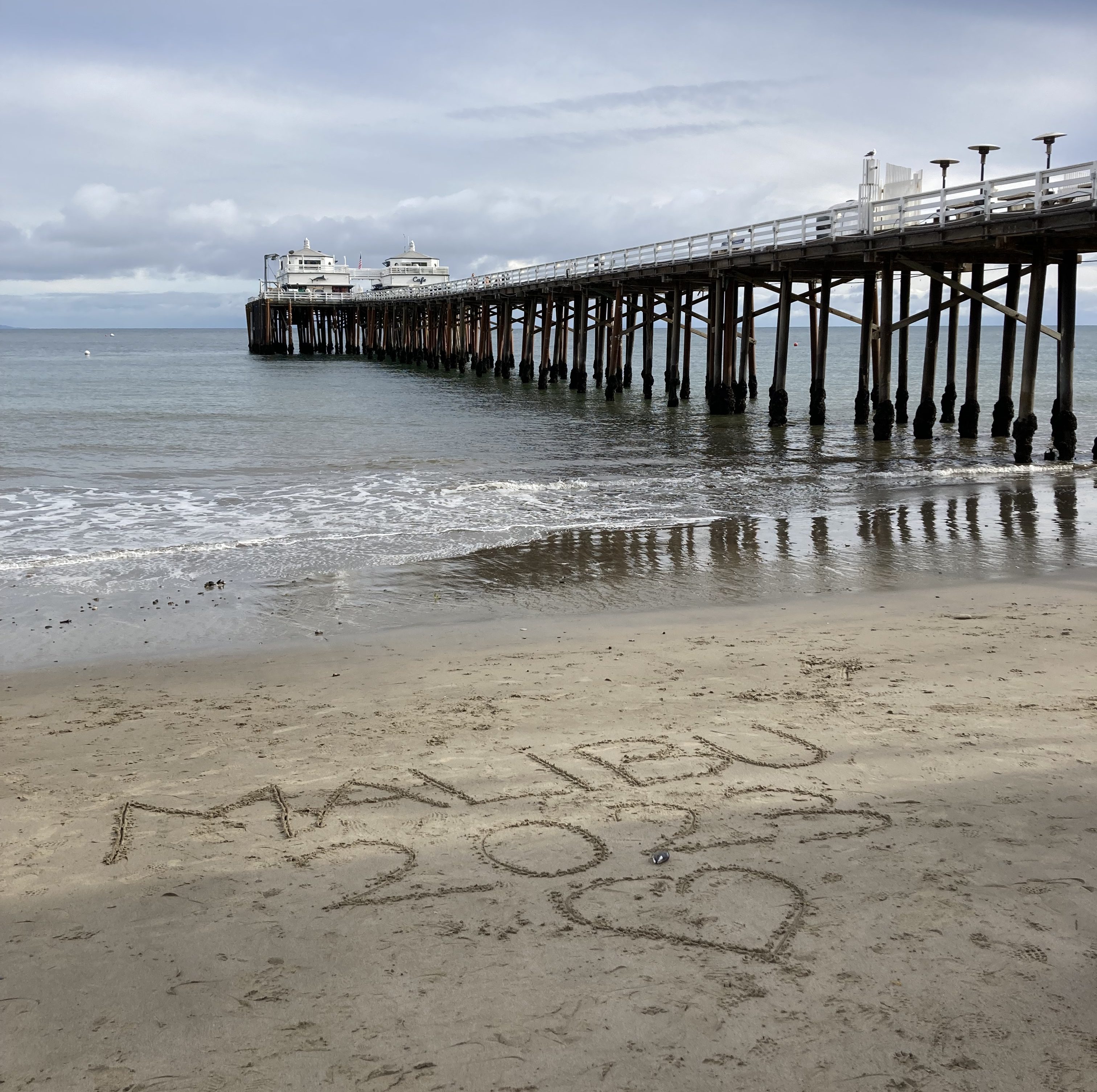
Also near the Adamson House is Malibu Country Mart, or Malibu Village (Mall) if you want to do some shopping.
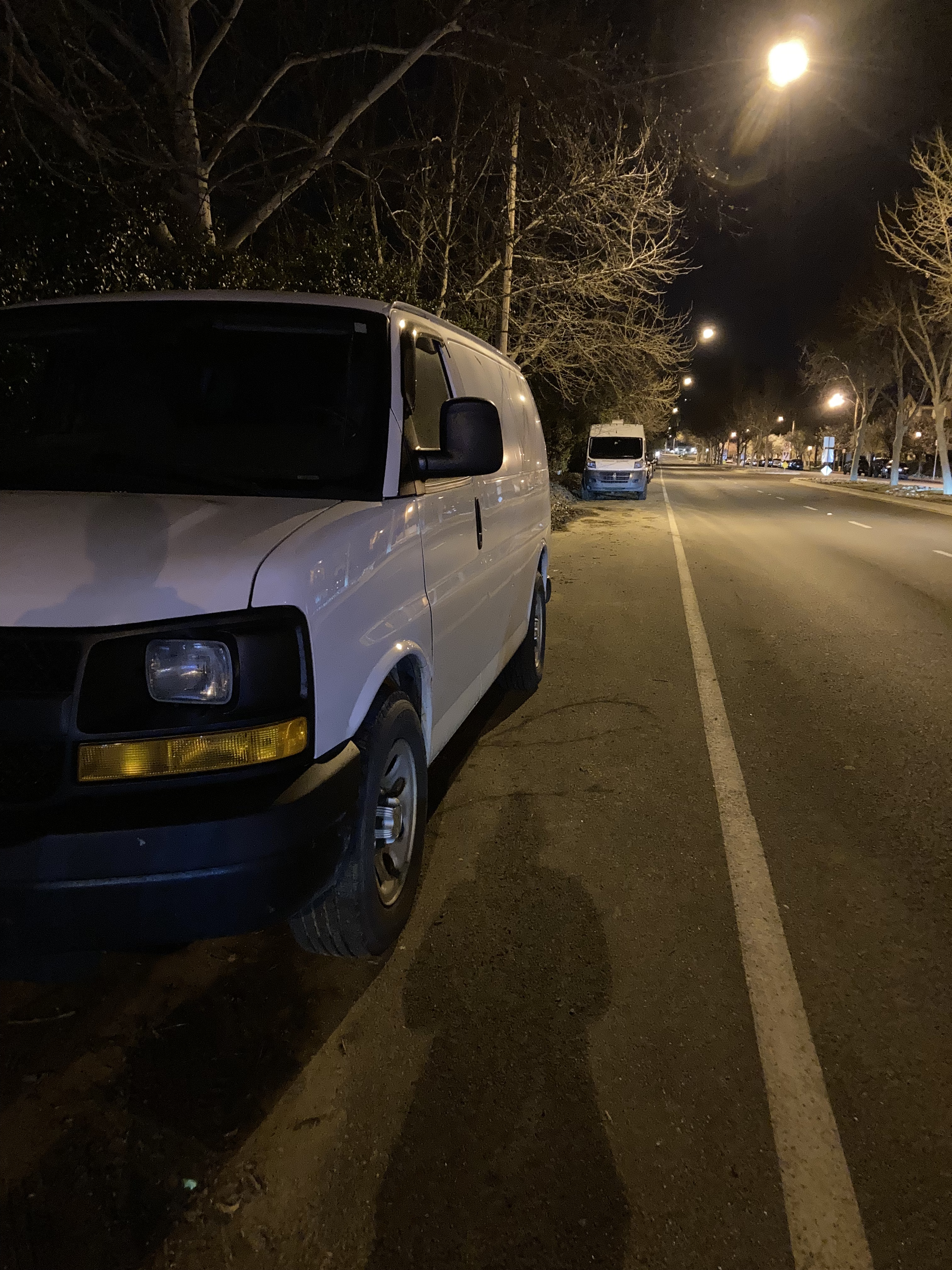
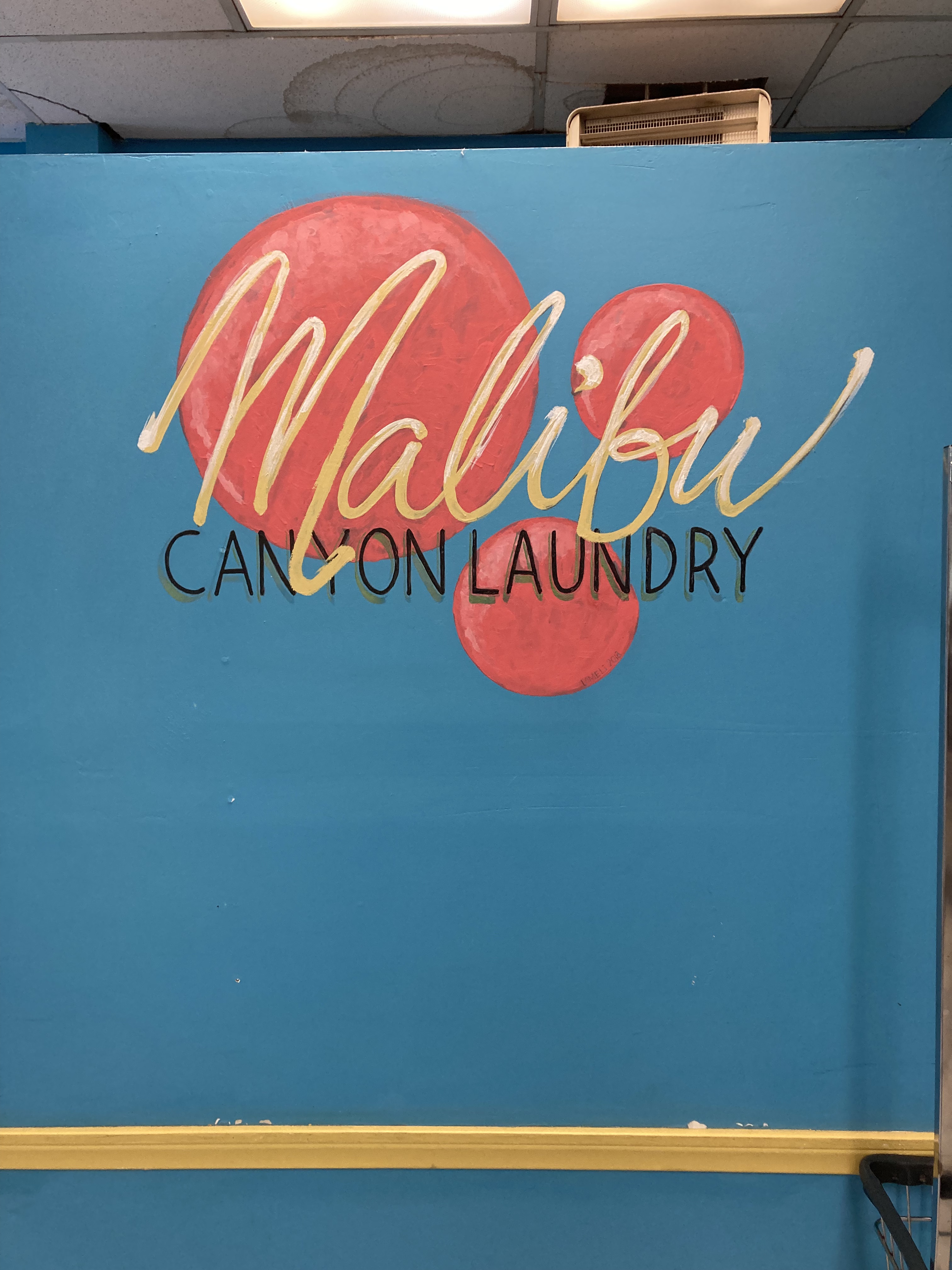
I spent a night street parking in Calabasus, which is a town on the other side of the Santa Monica Mountains from Malibu. I went to a laundromat and the grocery store here and my impression was that it was quite nice, and a bit more like a real town than Malibu. It had more of the typical set up and amenities, whereas Malibu was more beaches, gated residences, and upscale shops.
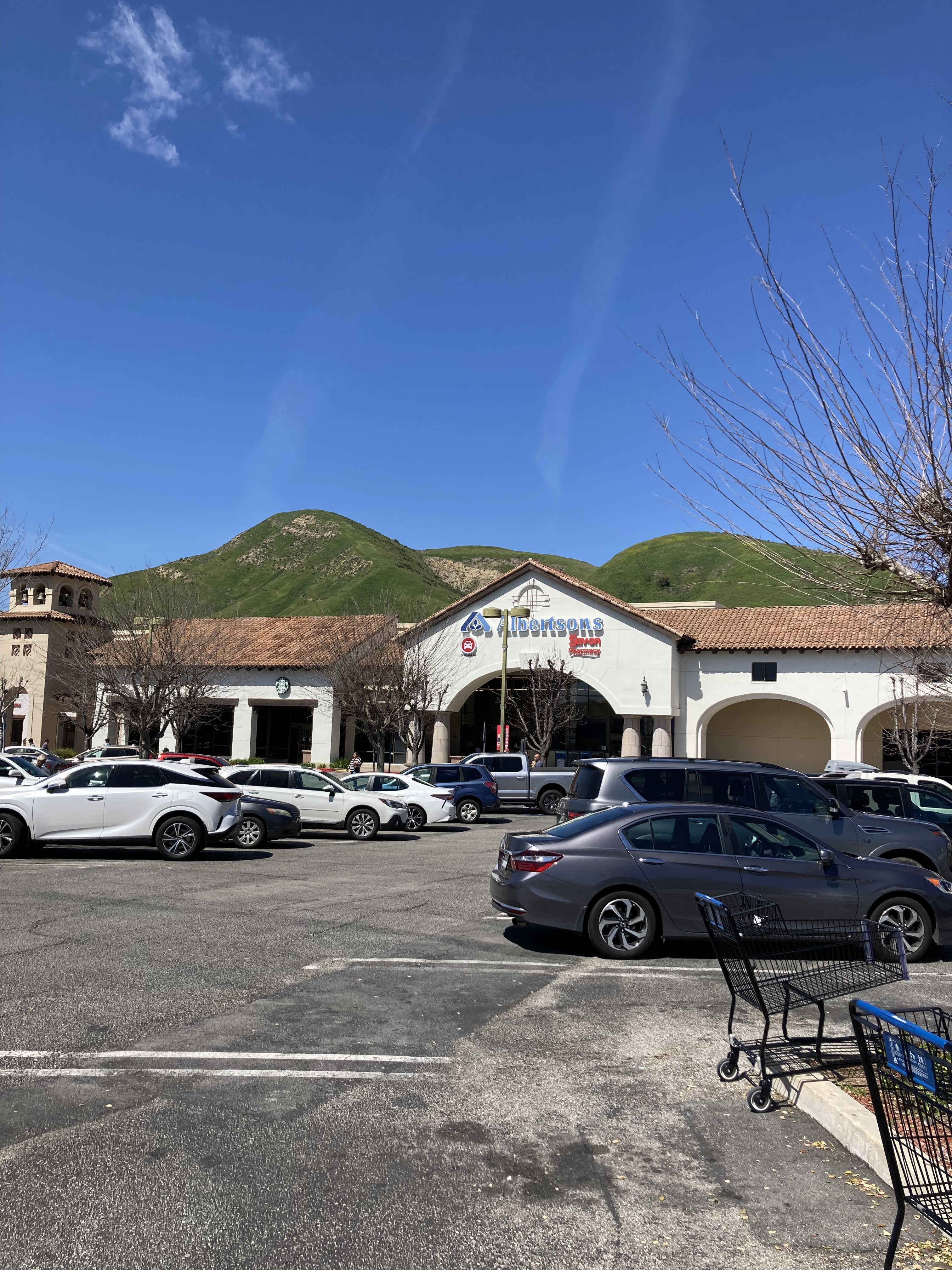
I drove back down to the ocean, through the mountains via Topanga Canyon Boulevard, a winding road, which has many attractions of its own and was pretty busy. There were vendors on the side of the road and great views. If I was back in the area I’d probably spend more time exploring here, but I was on a mission to visit the Getty Villa, my first foray into LA.
As I explored the big city next door, I spent my nights in Malibu as it felt safer, was quieter, and I had leisurely places (like Zuma Beach) where I could decompress and plan between busy sightseeing and travel days. Plus, I just liked it in Malibu.
As with a lot of places, it’s common to do the touristy stuff on your first (or first few) visits. Then you look for gems that locals love. As Anthony Bourdain said, be a traveller, not a tourist. So next time I get to Malibu I’d love to check out some more diverse spots, like the food places in this article or the live music venue Aviator Nation Dreamland, just across from Malibu Pier (admittedly both put on my radar due to Joshua Homme connections).
LA
Los Angeles needs no introduction – City of Angels, Tinseltown, La-La-Land. The entertainment capital of the world, centre of America’s film and television industry, with a population of almost 4 million people in the city and over 18 million in the greater LA area (for comparison Toronto has a population of 3.3 million and the GTA has a population of about 7 million/ 8+ million in the GTHA). LA is the second most populous city in the states (behind New York).
While I’m not a huge TV / movie fan, there are certain aspects of LA that call to me, one being the music history. You can also find so many cool alternative shops. And of course – historic buildings and architectural gems.
I broke my visits to the city up into sections. I started with the closest spot to me (from Malibu), which was the Getty Villa.
The Getty Villa
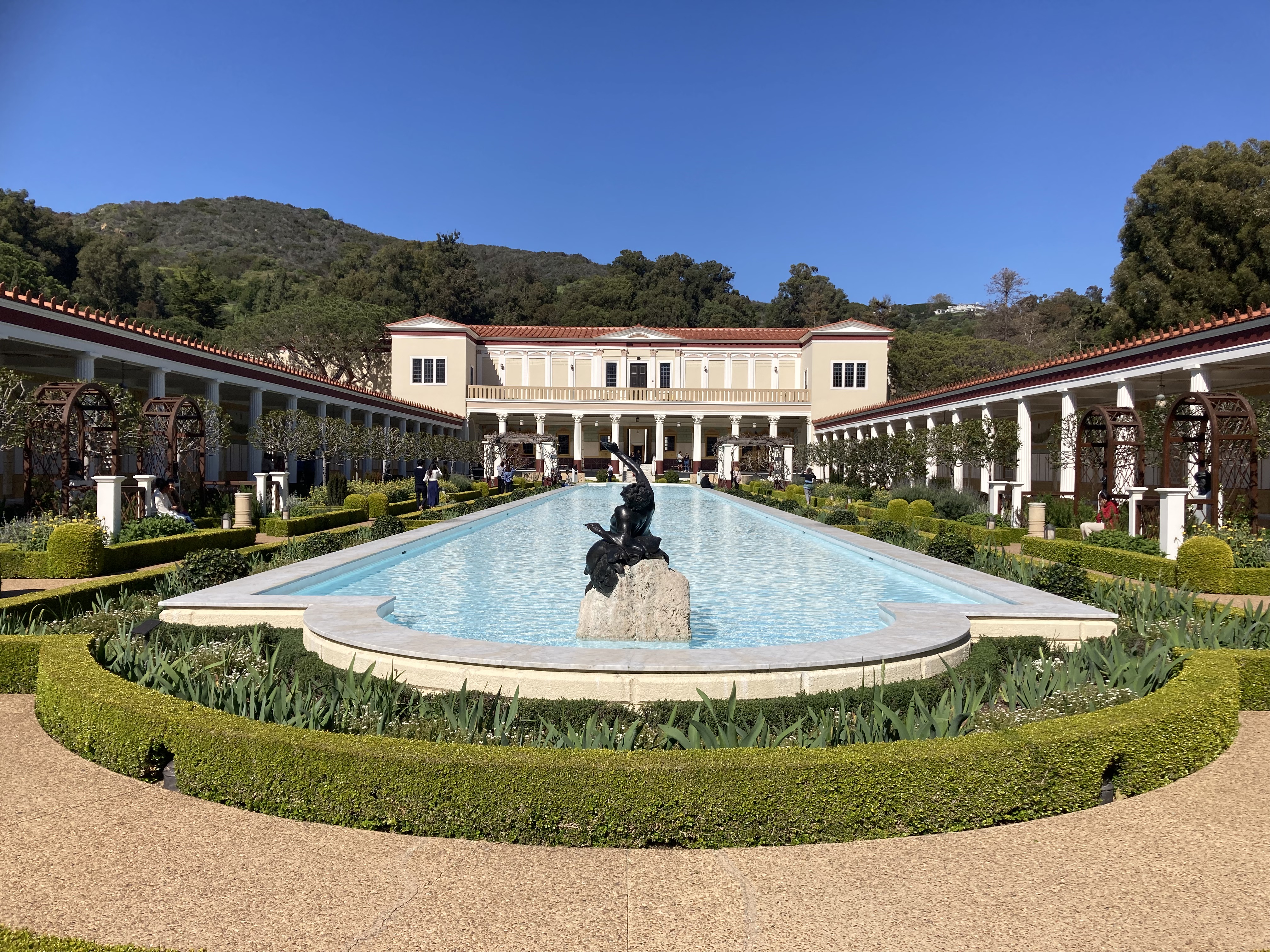
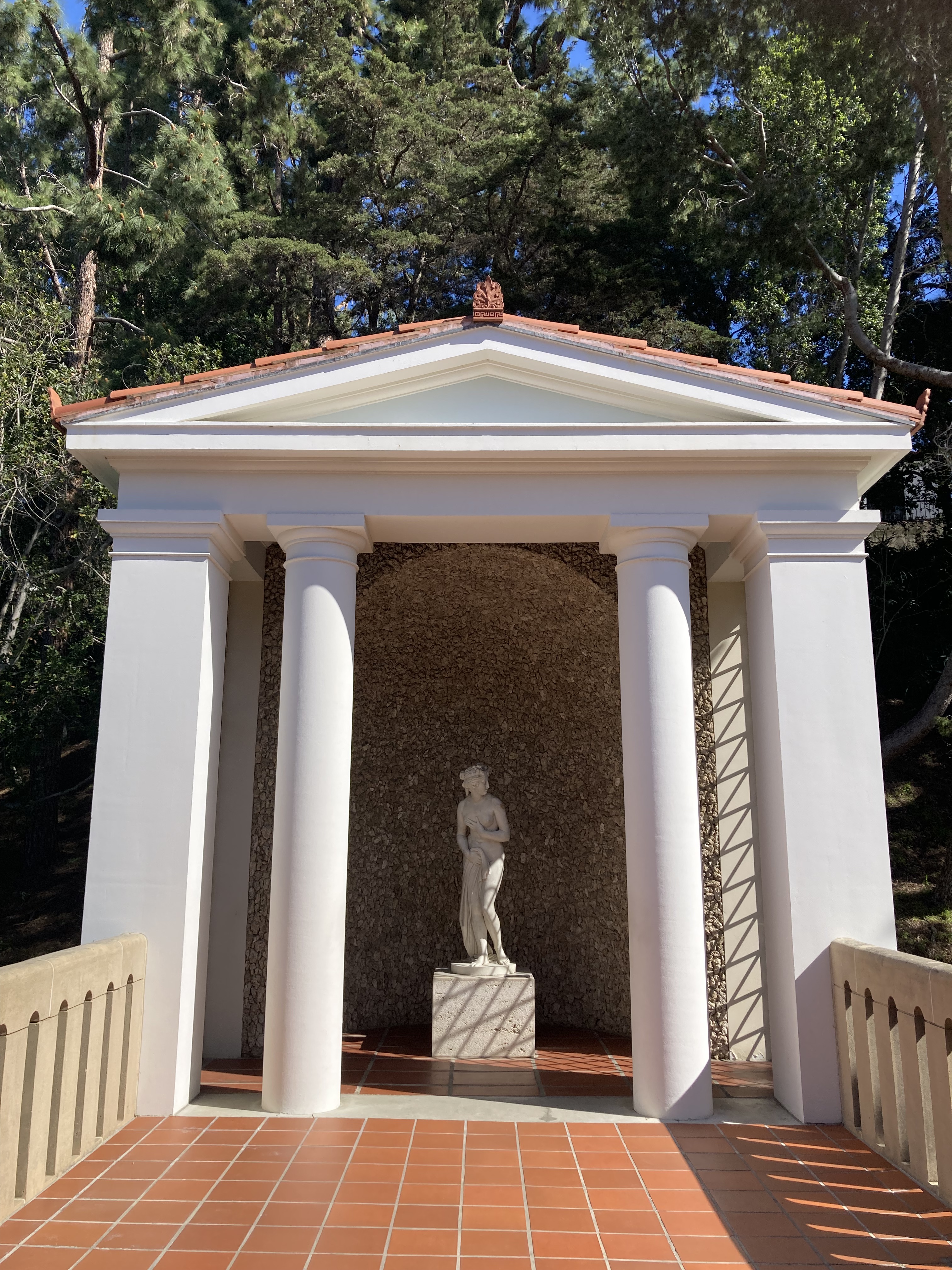
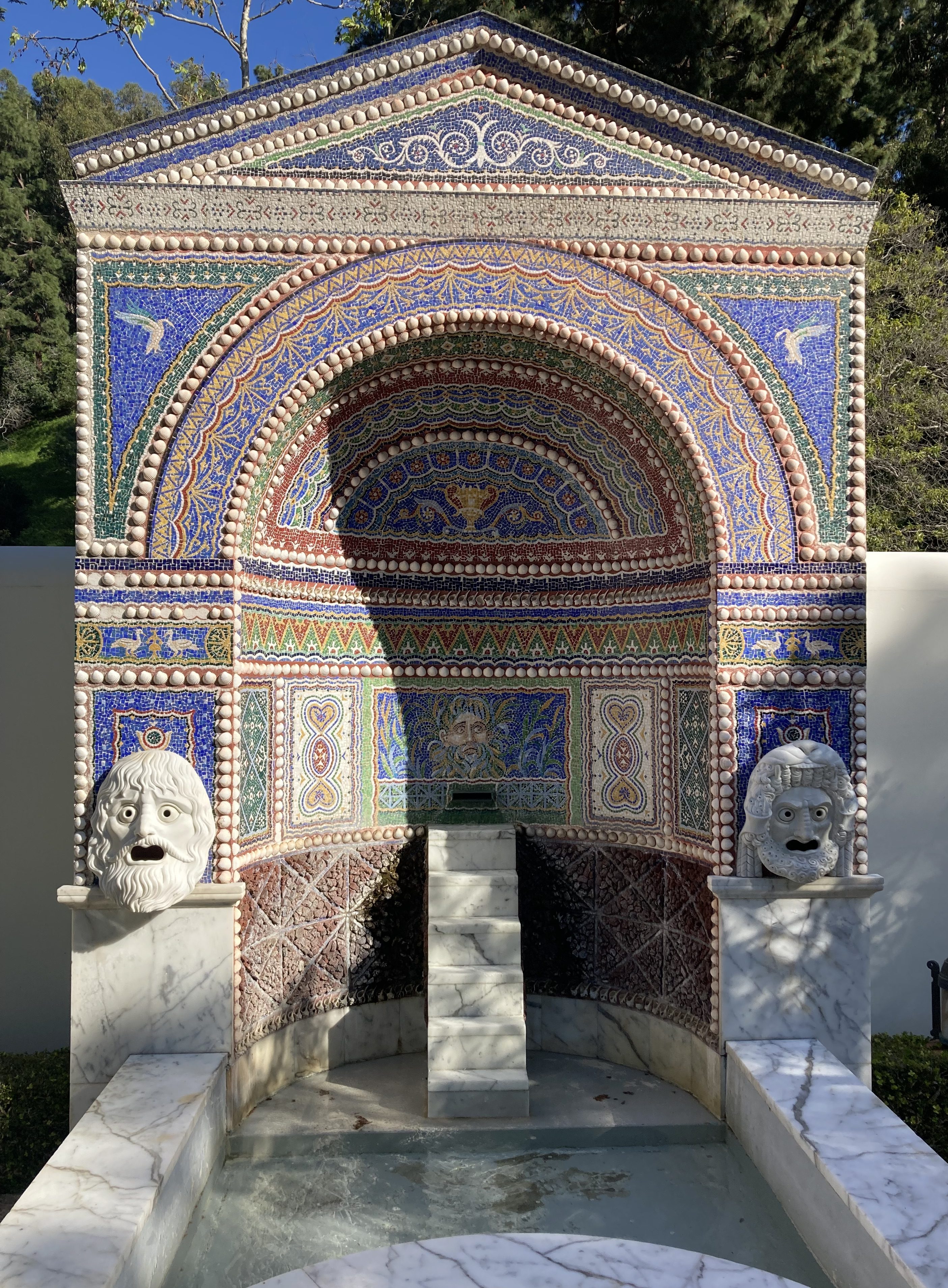
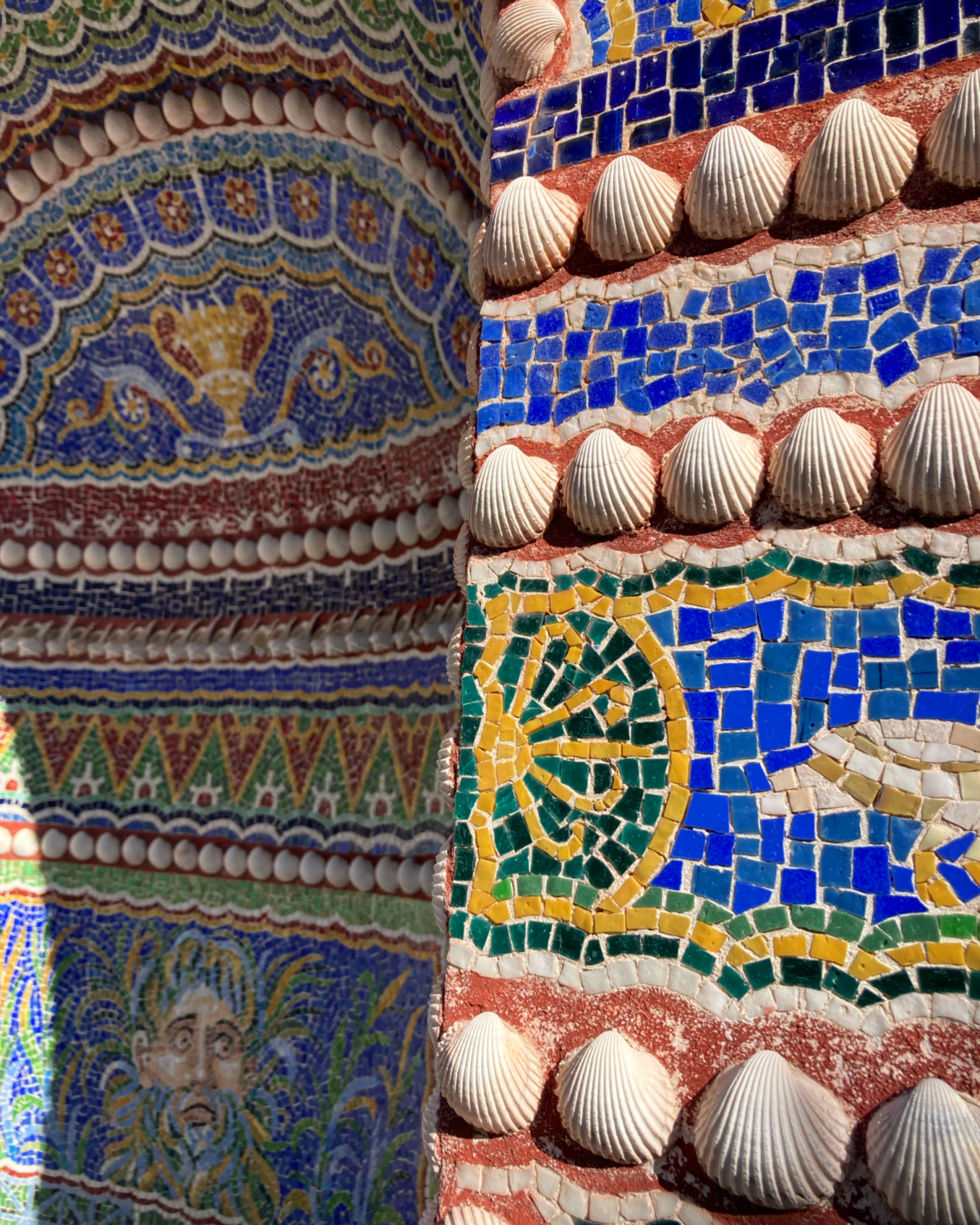
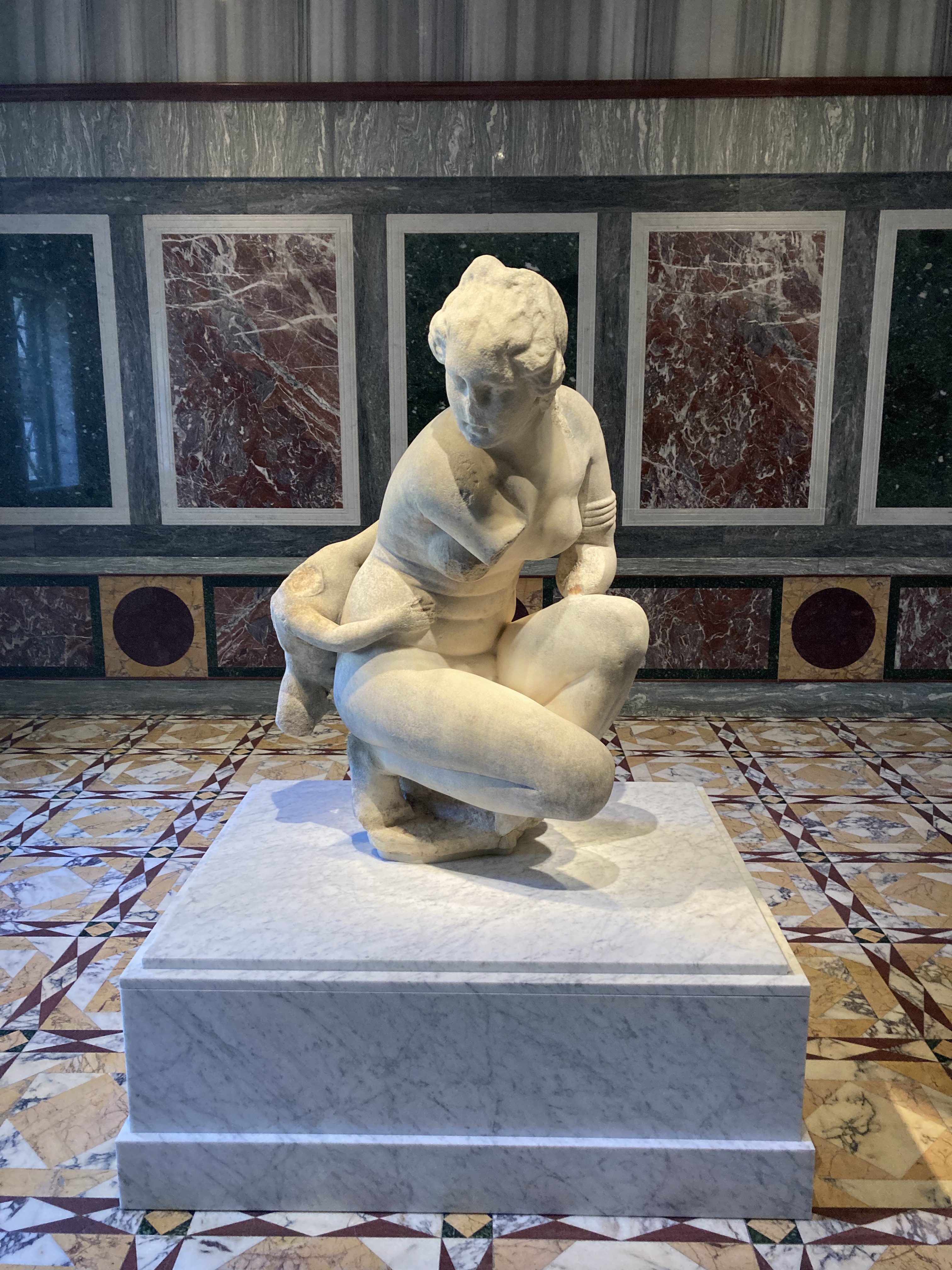
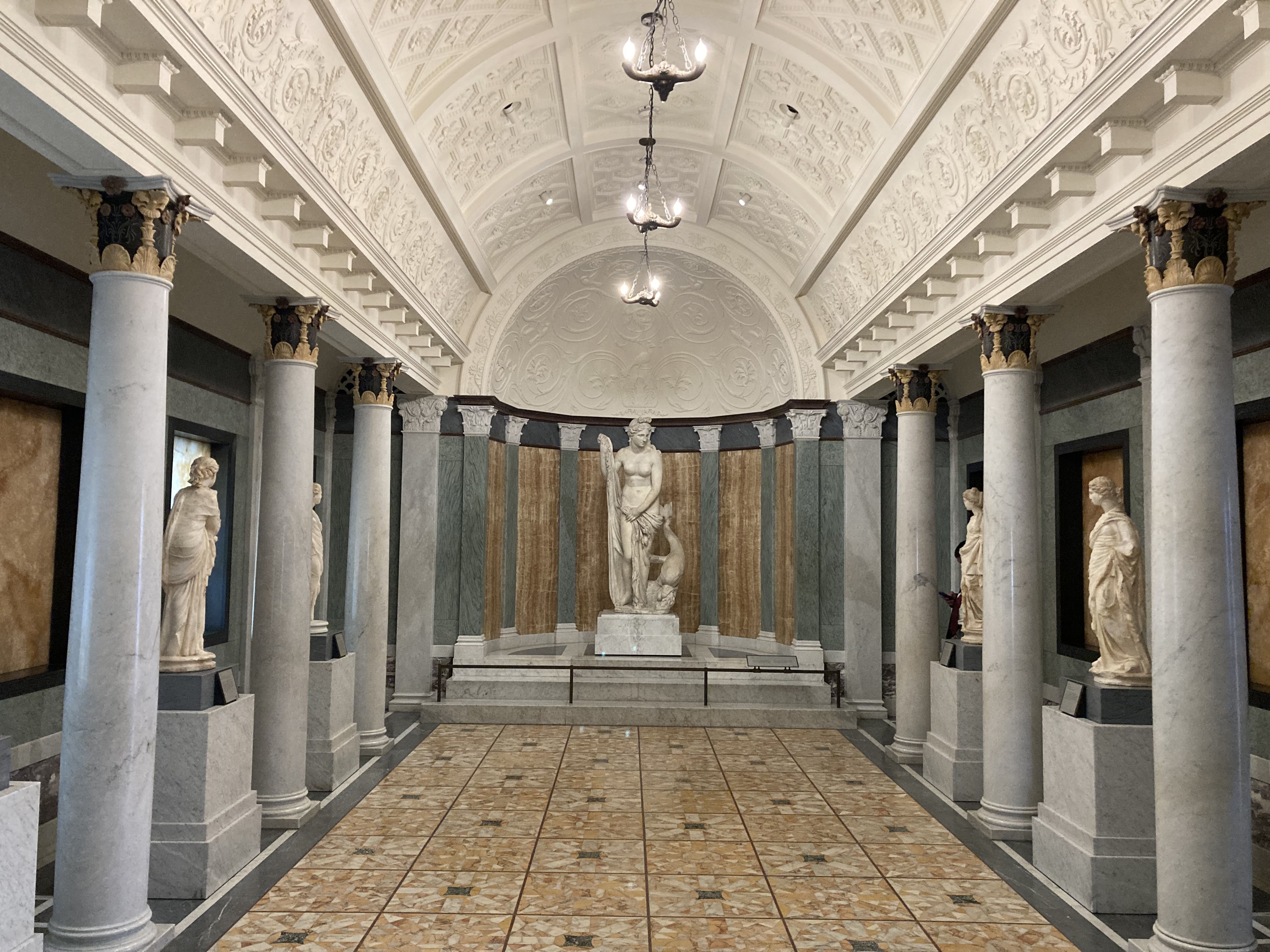
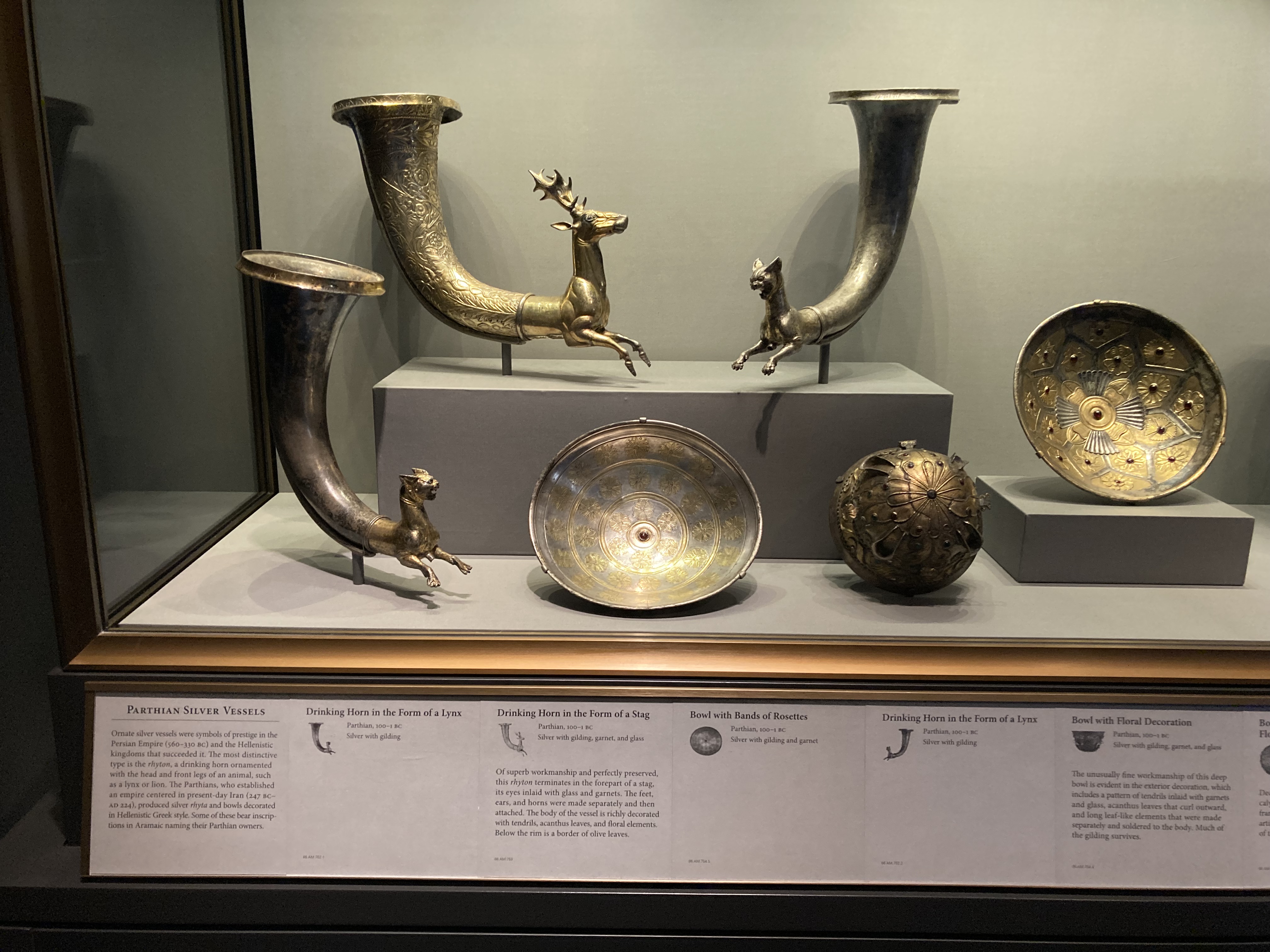
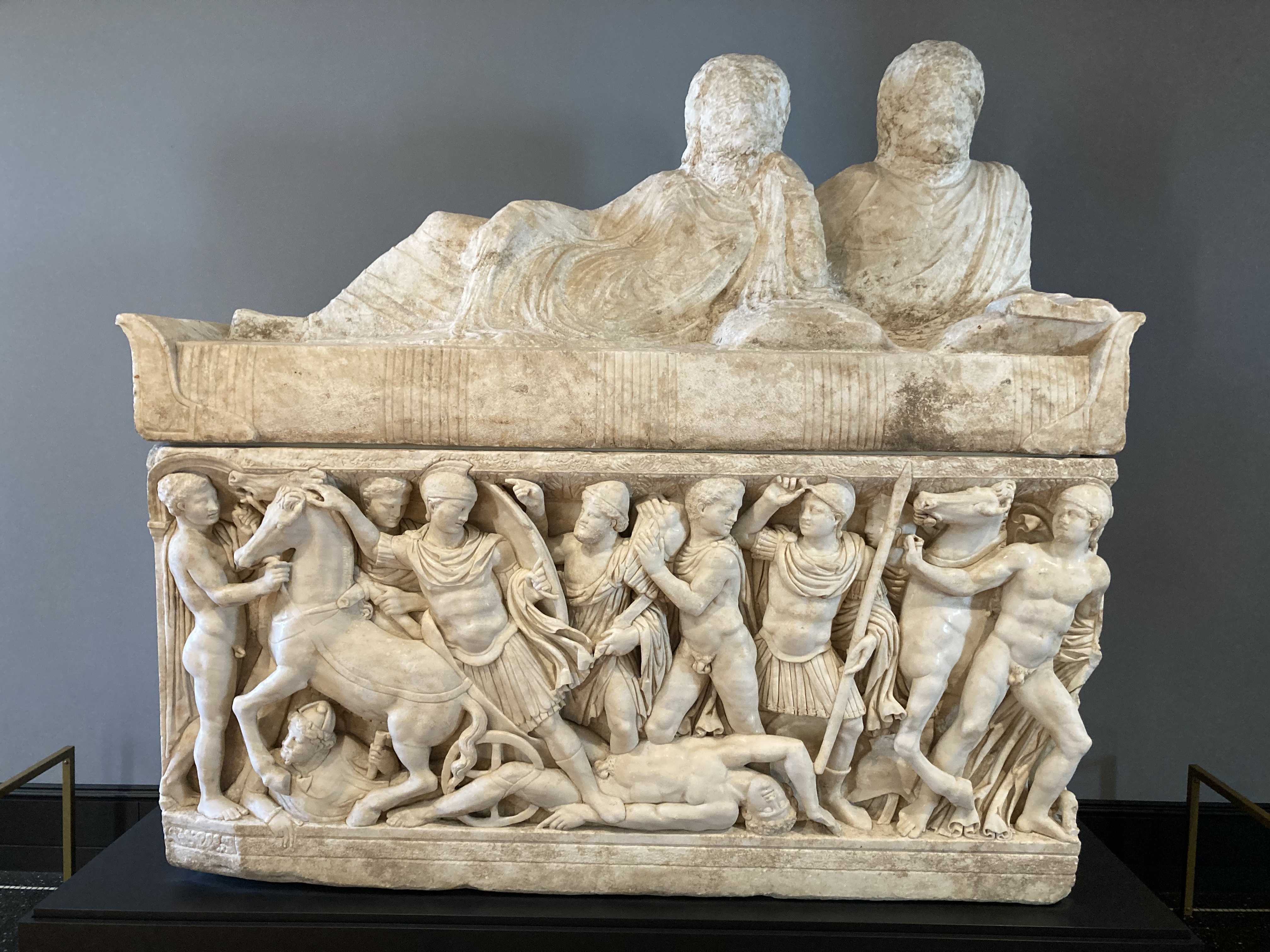
The Getty Villa museum, established by collector J. Paul Getty, is a re-creation of an ancient Roman villa – the Villa dei Papiri, which was buried when Mount Vesuvius erupted in AD 79. It is just east of Malibu, in the Pacific Palisades neighbourhood of Los Angeles. It houses many amazing artifacts, largely Greek and Roman. It is a seaside retreat reminiscent of those owned by wealthy Romans who had multiple homes and escaped the stifling heat of the capital city in the summer, to their luxurious estates along the Mediterranean coast. I highly recommend a visit – it is stunning.
Venice Beach
Venice Beach: people-y, maybe a little bit sketchy, iconic.
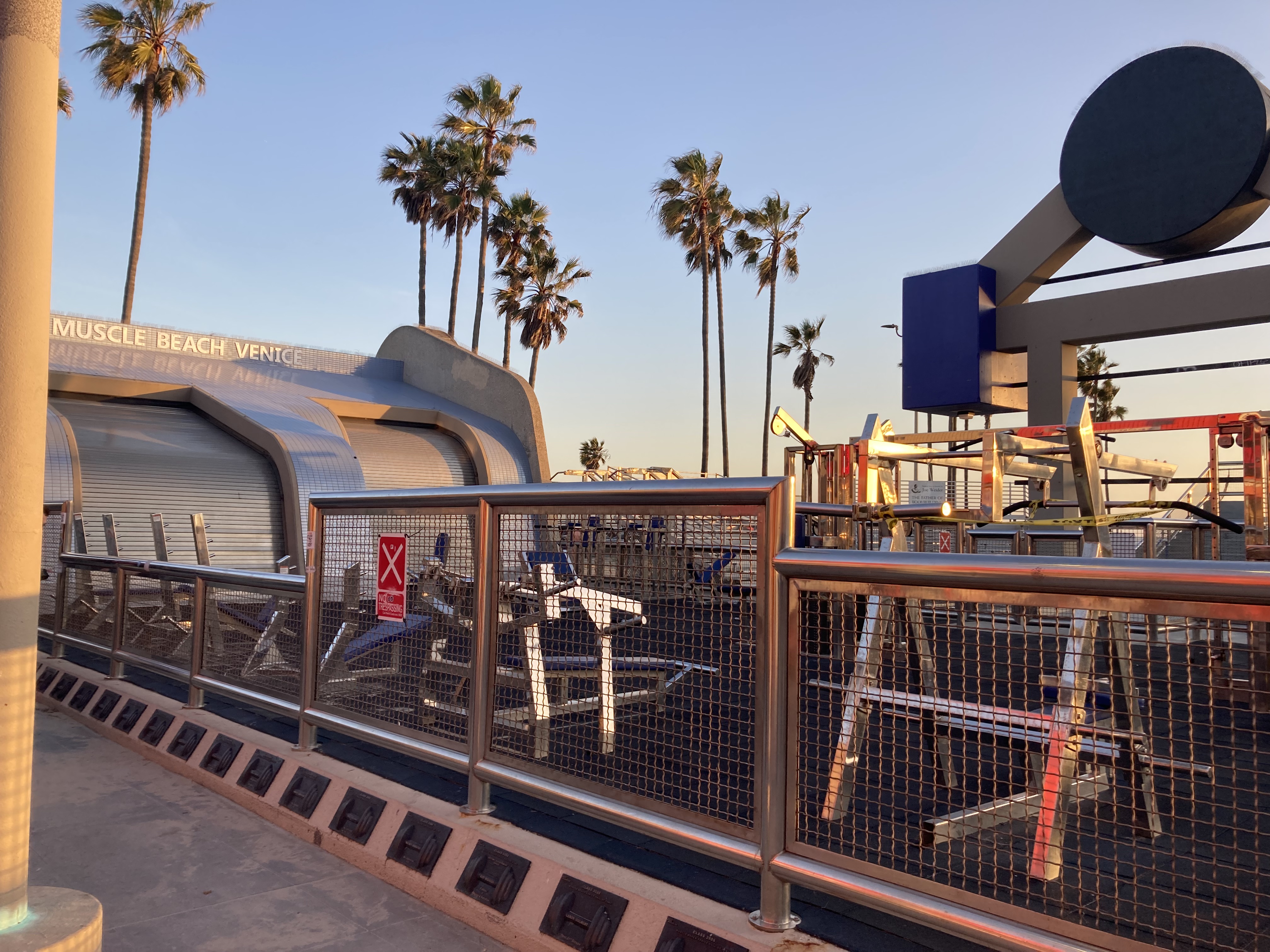
Venice was named after Venice, Italy, and founded as its own independent city and seaside resort town in 1905 by Abbot Kinney. It was annexed by LA in 1926 and is now a neighbourhood in LA known for its beach, promenade/ Ocean Front Walk, canals, and bohemian spirit. You’ve got the Venice Skatepark, Muscle Beach outdoor gym, lots of vendors and performers, as well as murals, restaurants, and shops. To me, it’s the boardwalk and canals that stood out as characteristic of the location.
I got there an hour or two before the sun went down and got some of my favourite sunset photos.
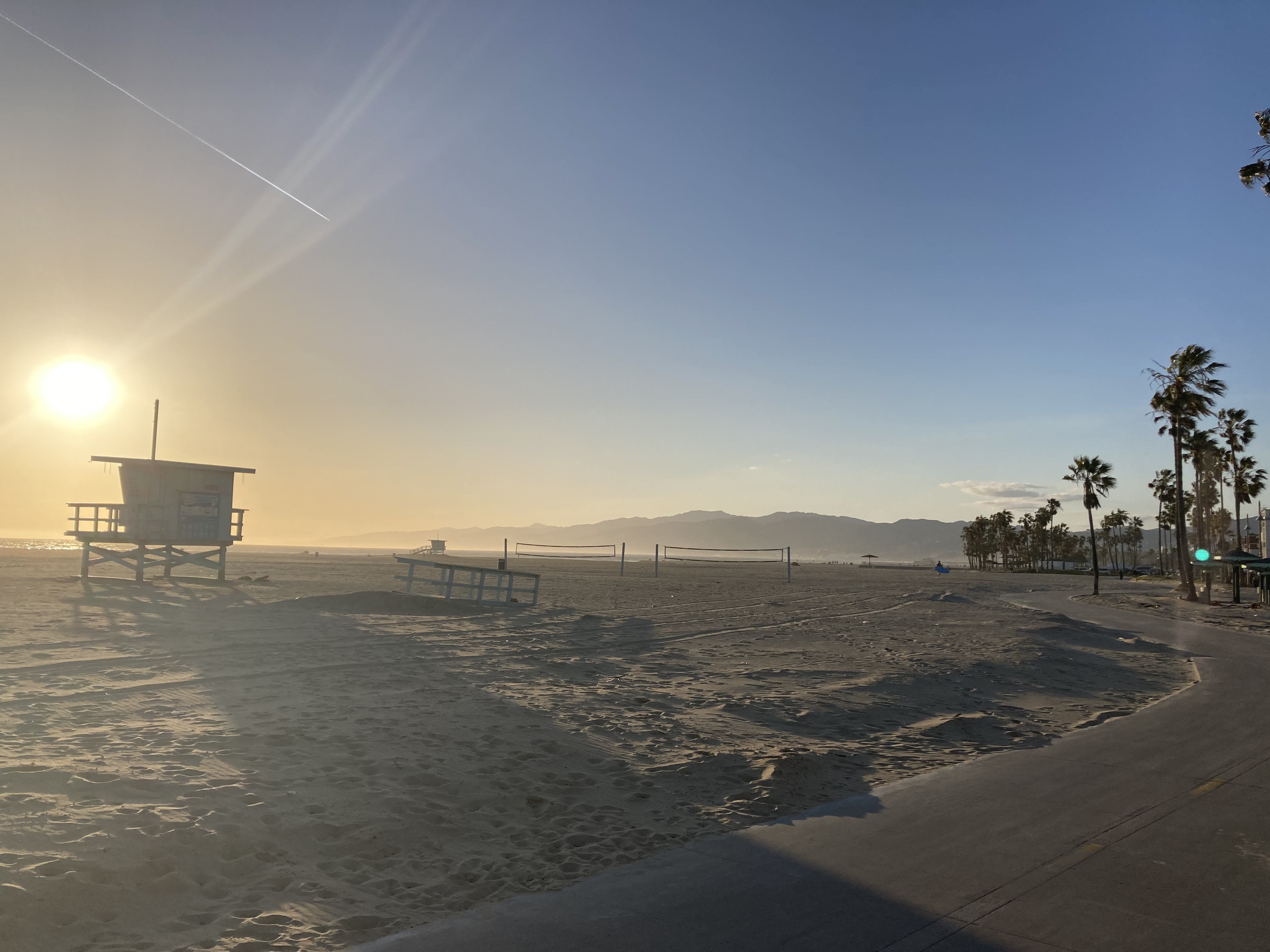
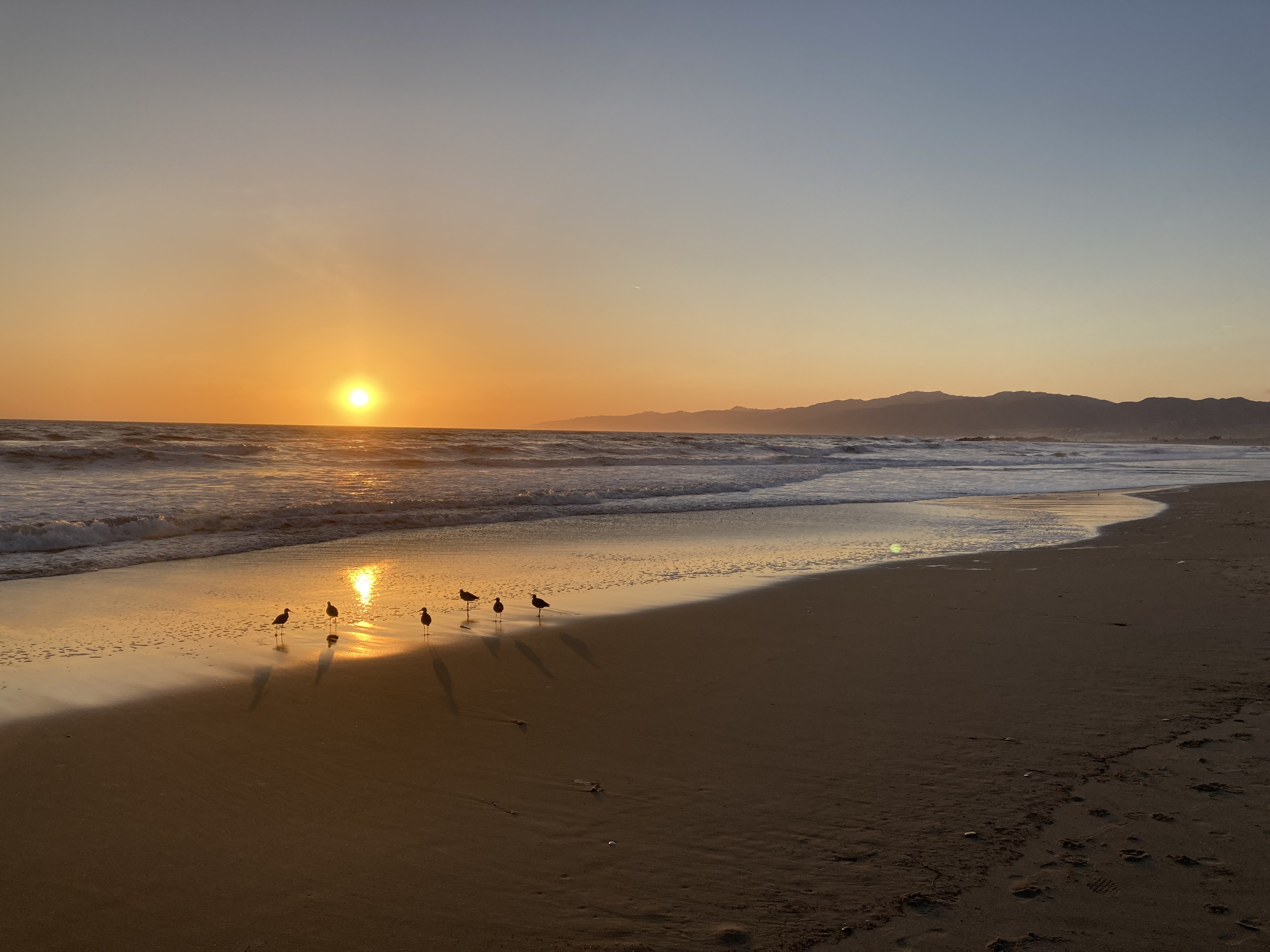
The first parking lot I went to was really chill, spacious, closer to Santa Monica, and seemed to be having a classic car show. There were other vans and RVs there, too. I would have loved to have stayed here, but the signs said they were closing? So I had to scope out another lot. But a classic car show at Venice Beach was a very cool unplanned thing to witness. The vibe also made me feel like I’d “arrived”. It felt straight out of a 90’s music video.
Once I got parking situated I just started walking around.
The skatepark was super cool – made me wish I’d picked up a skateboard as a kid, but I feel like there wasn’t as big a skateboarding culture where I grew up (or maybe I just wasn’t exposed to it).
Muscle Beach gave me a chuckle. Apparently Arnold Schwarzenegger frequented here.
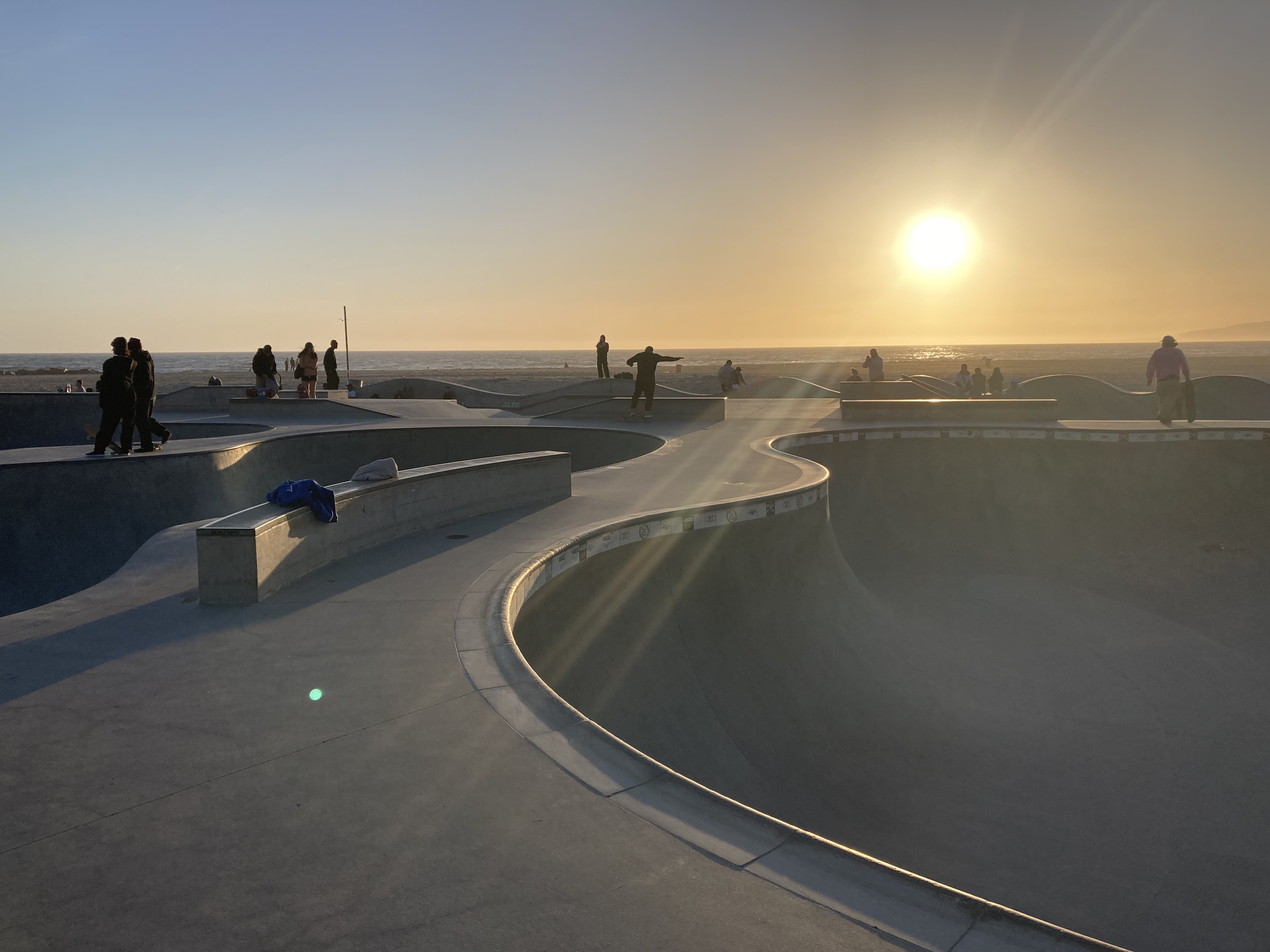
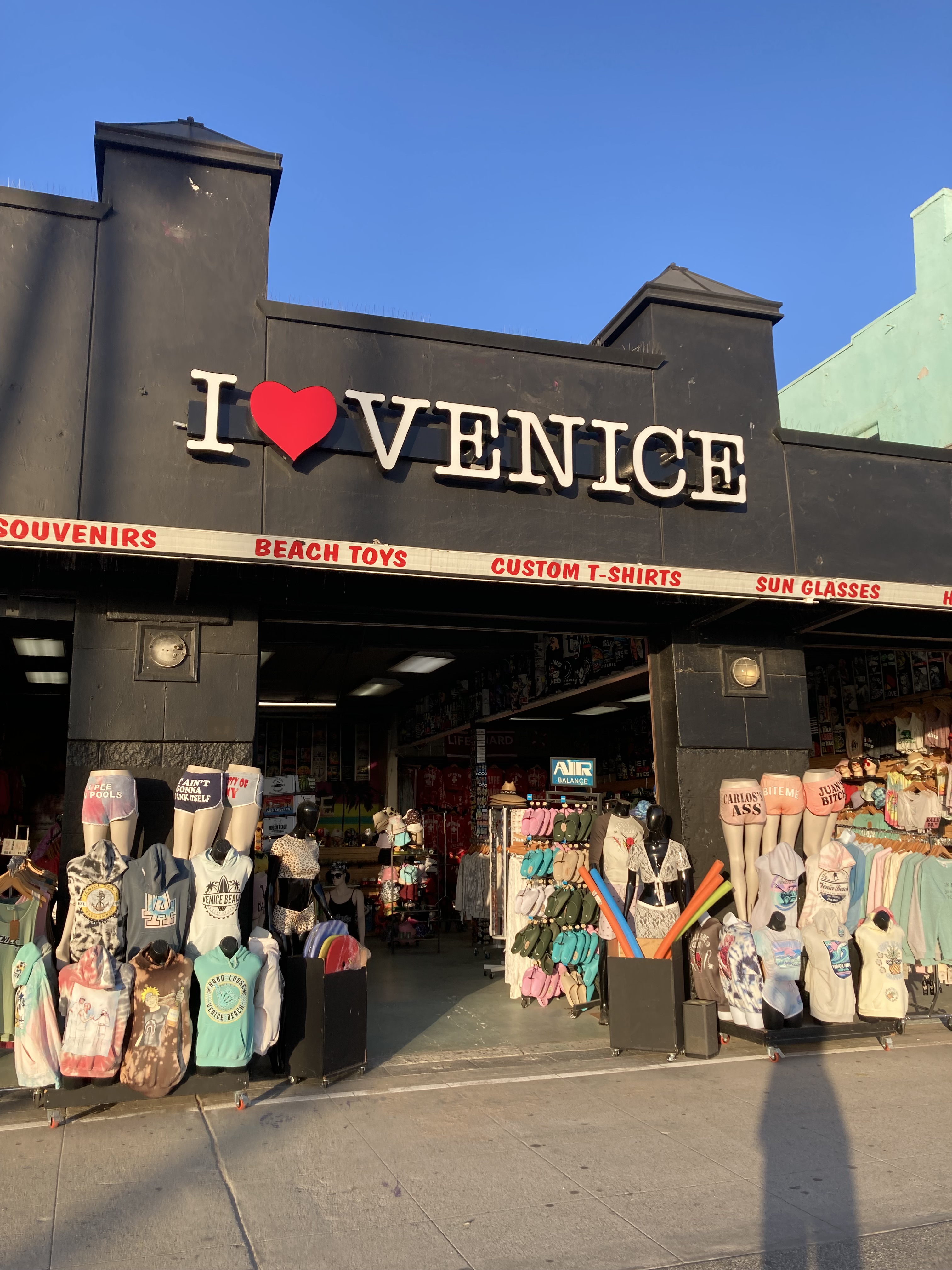
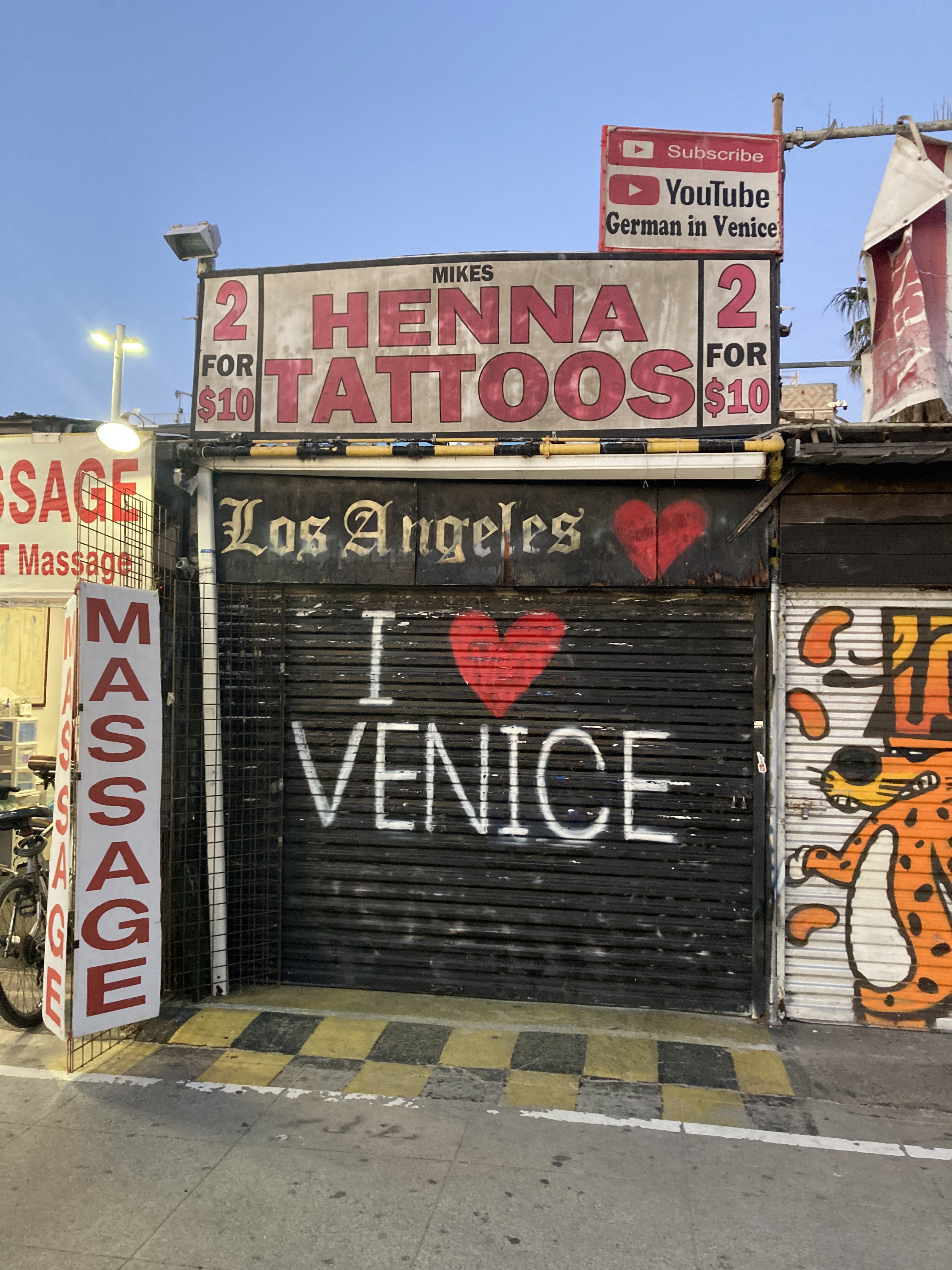
There was no shortage of touristy shops along the crowded boardwalk, with lots of interesting characters and music blaring.
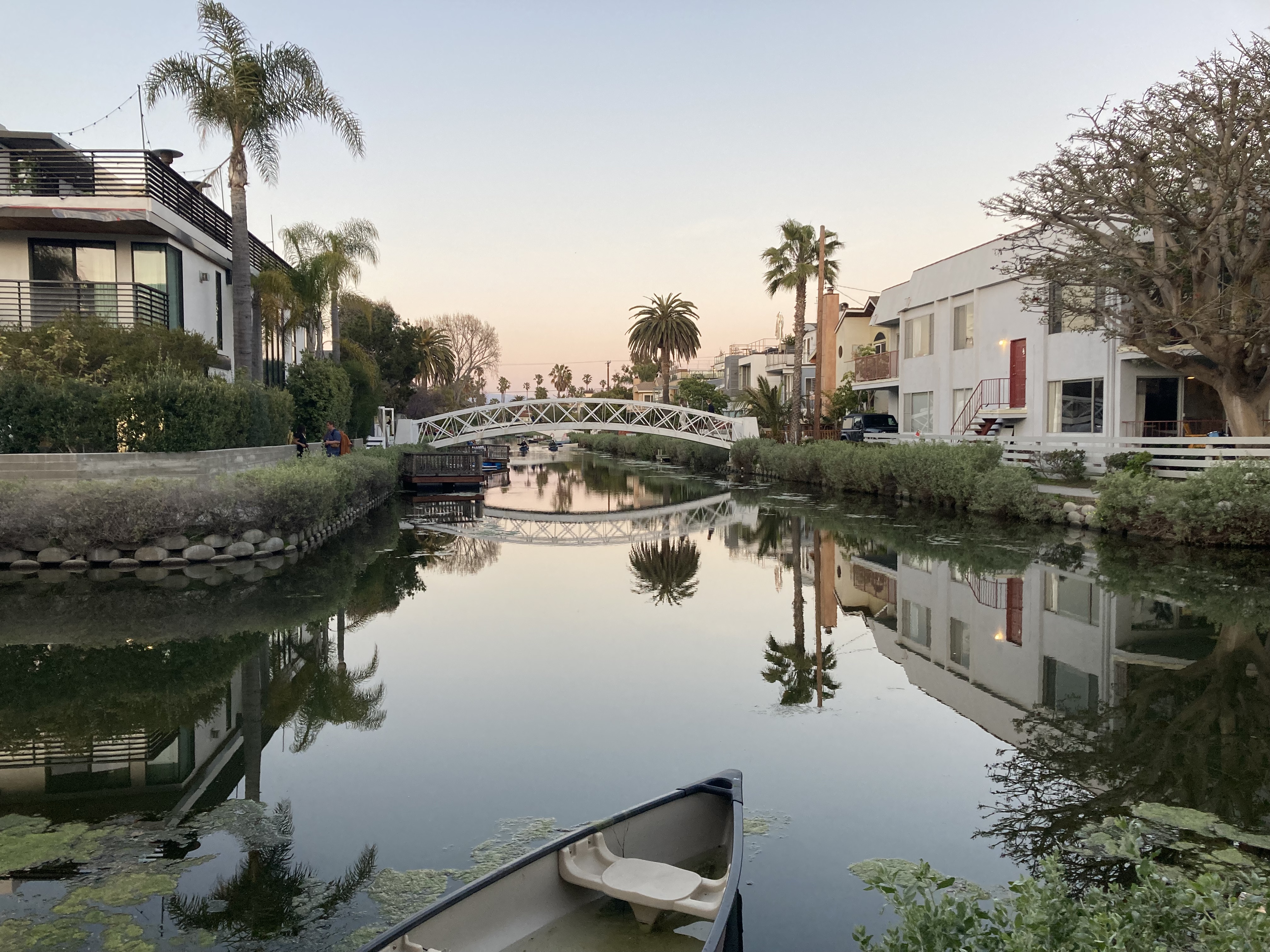
But the Venice Canal Historic District was a unique experience, which gave a serene reprieve from the crowds, with its modern homes and lush greenery. Peaceful and pretty.
There was a homeless encampment on an adjoining street to the canals where I exited. I tried to find the Venice Sign, but it eluded me. It was a Friday night and streets were getting crowded, with fancy people.
It was the crowds, and as it got dark, that had my spidey senses started tingling more about potential for sketchiness. Especially being a female, alone. I felt like I was getting some looks. It definitely would have felt better to be here in a group.
I walked back to the van and as I got to the parking lot I took in a stunning view of palm trees against an indigo sky, the Malibu coastline glowing purple against the fiery horizon.
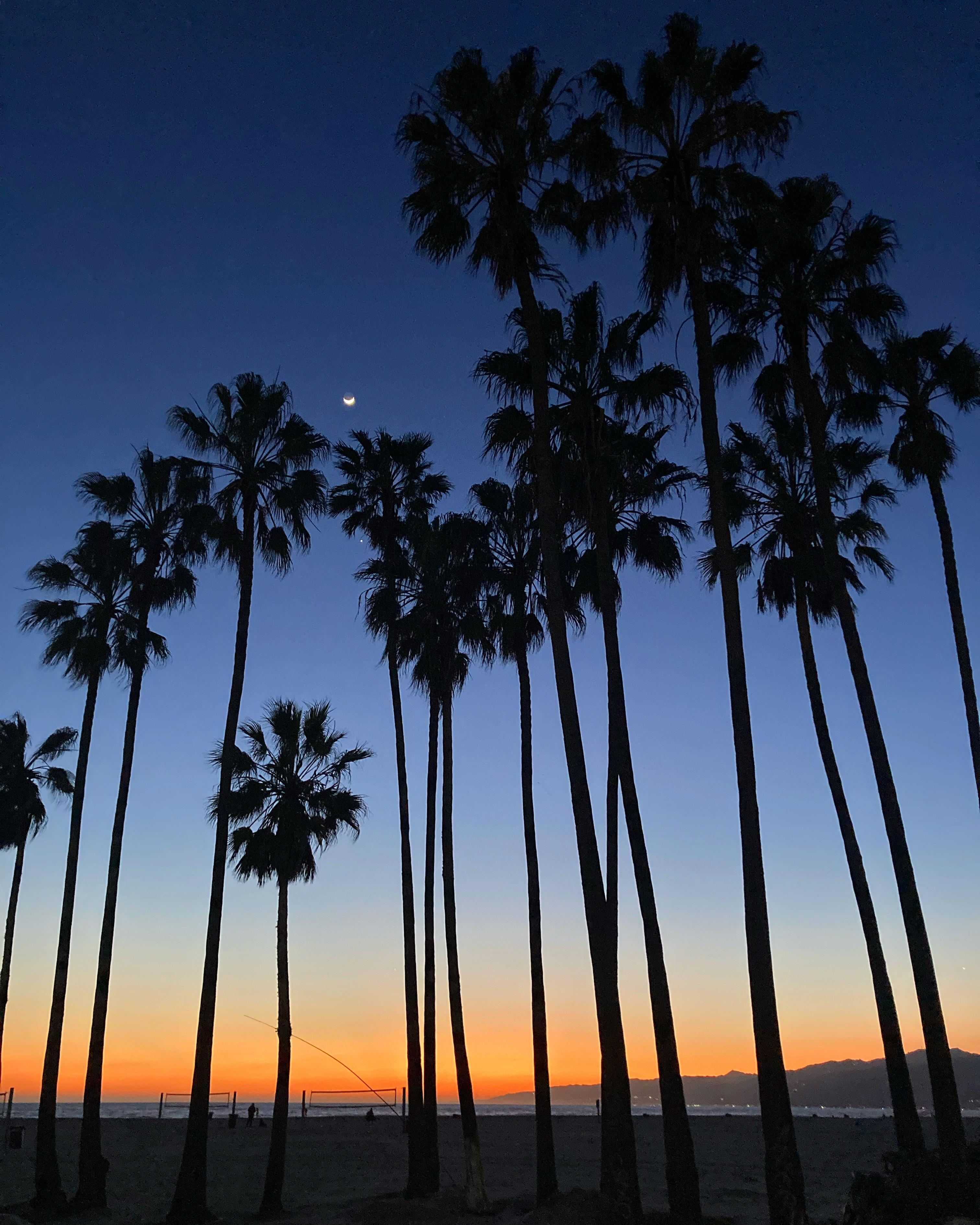
Such a wide and long expanse of beach, the Santa Monica Pier ferris wheel lit up against the night sky to the north.
I figured overnight street parking would be tough, and since I wasn’t feeling the safety I drove back to Malibu for the night (plus bathrooms here seemed nasty).
I was only in Venice for a few hours, but if I ever get back here I’d love to explore Abbot Kinney Boulevard, a mile long road with shops, restaurants, galleries, and cafes said to exhibit bohemian charm and modern luxury. Also maybe the acclaimed Tito’s Tacos.
The Hollywood Hills
The Hollywood Hills are essentially the petering out of the Santa Monica Mountains just north of DTLA and Hollywood, around where highway 101 cuts through them. They’re known for Griffith Observatory, the Hollywood Sign, Hollywood Bowl, panoramic views, and the celebrities that live there.
Mulholland Drive takes you through the hills. While I don’t believe I’ve seen the David Lynch movie of the same name, the lore of Mulholland Drive rattled around in the recesses of my mind, along with a Failure song by the same name. Mulholland Drive is also part of the Santa Monica Mountains National Recreation Area and has many scenic overlooks to take in.
I wondered if I might get the most out of Mulholland Drive by doing a guided tour (though I’ve seen locals dismiss the guided tours). But I drove it myself from about highway 405 to the 101, making several stops along the way.
I drove up from Malibu through the Santa Monica Mountains to Agoura Hills and the 101 first:
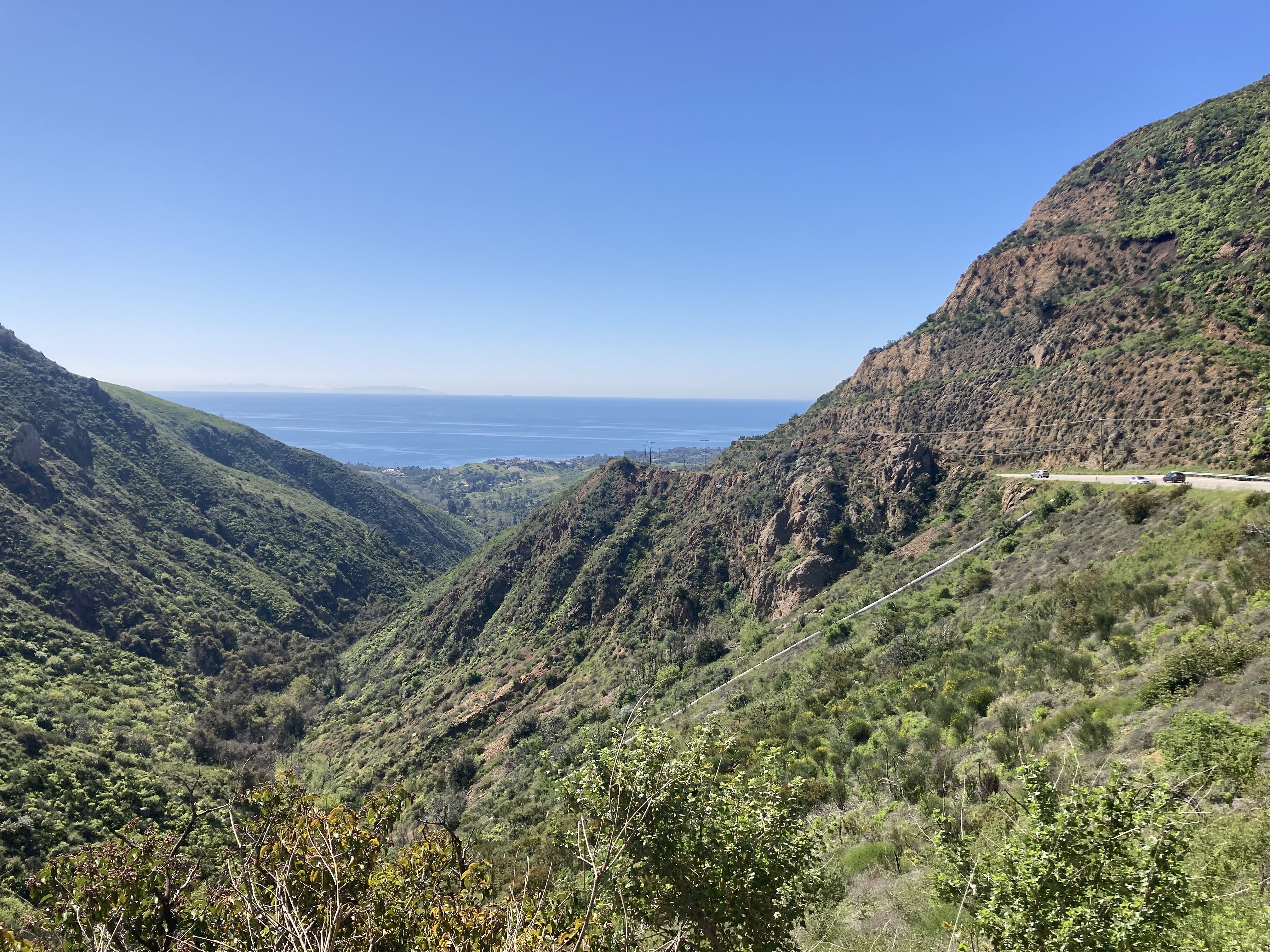
There are lots of roads that cut through these mountains, and you can take in beautiful views on any number of them.
Then it was the 101 east to around the 405 where I hopped on Mulholland. Most people drive along the ~24 mile section of Mulholland between the 405 and 101. Mulholland continues as Mulholland Highway west of the 405 all the way to Leo Carillo State Beach in Malibu (about 30 miles) but this section is less popular, especially as there is an 8 mile stretch that is dirt road and subject to closures.
Personally, I kind of thought the views were just okay along Mulholland Drive. The best one (that I stopped at) was probably the Hollywood Bowl overlook, where you could see the bowl and the DTLA skyline.
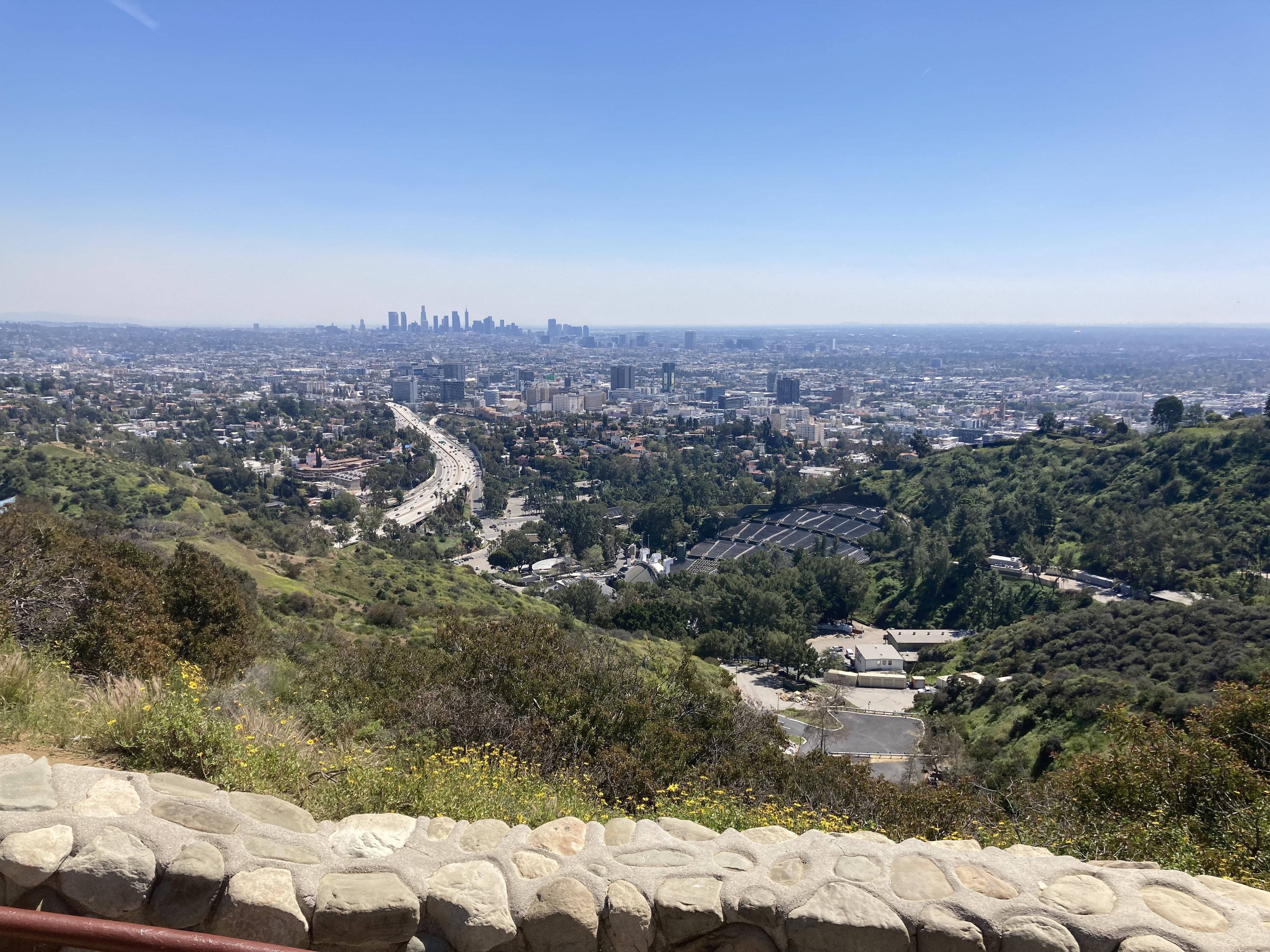
I also stopped at Stone Canyon Overlook, Fryman Canyon Park, and Universal City Overlook. Roads were very winding, getting especially tight on the turns once you got into the thick of the Hollywood Hills (near the 101).
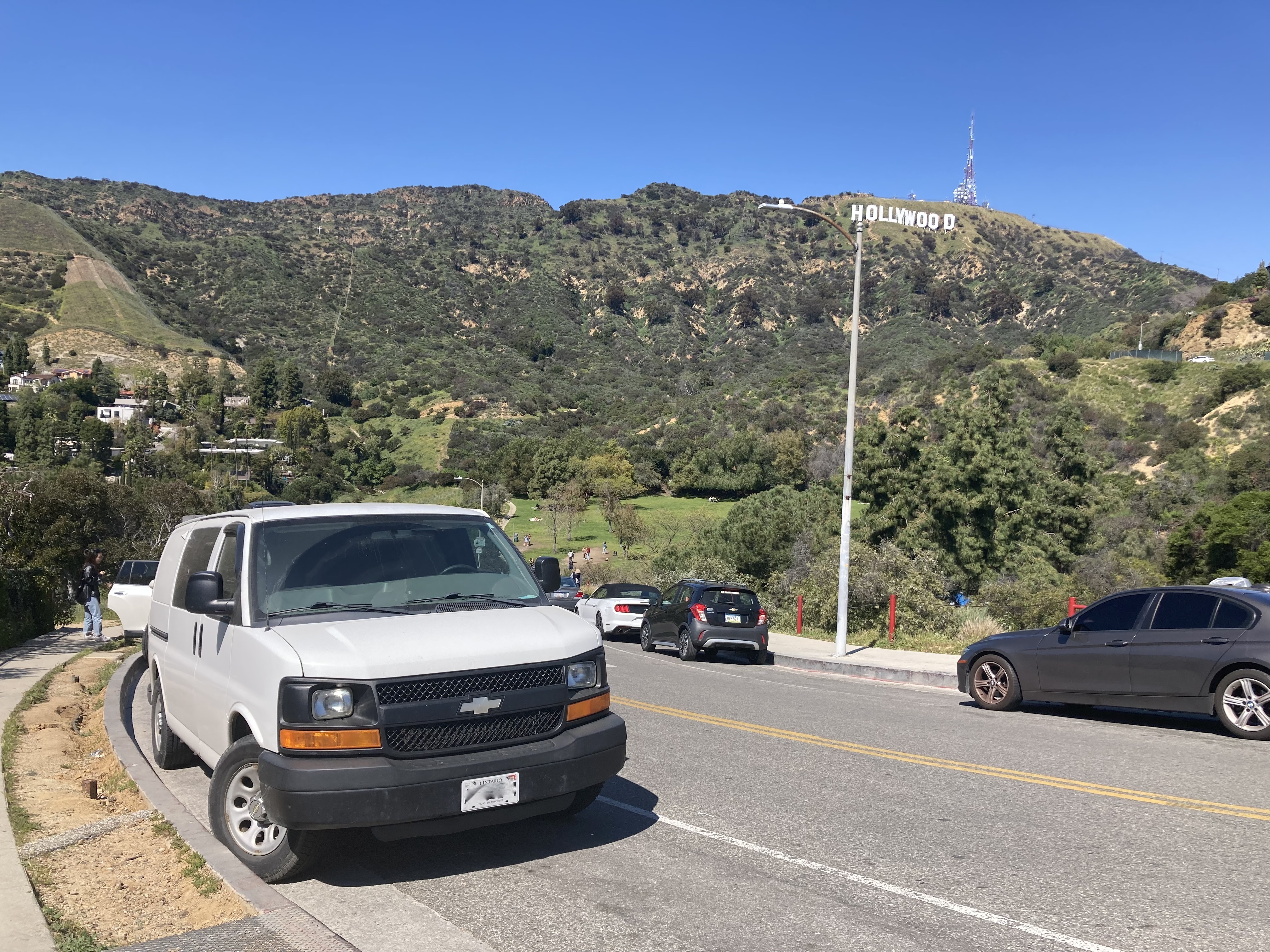
On the other side (east) of highway 101 I went to Lake Hollywood Park for views of the Hollywood Sign (the best way to get up close is to hike).
Then I had a special interest in seeing a particular celebrity’s previous homes. This required navigating the very narrow and ever-winding small streets in the hills. I think this was like – if someone wanted to see the old Spahn movie ranch where Charles Manson and the Manson Family lived in 1967-68, planning the Tate-LaBianca murders. It was morbid, and not out of fandom, that I wanted to see these particular homes. It’s also a bit awkward driving through to take a look in a white cargo van. I’m always trying to be lowkey and respectful, but that can feel difficult in residential neighbourhoods.
The celebrity in question: Marilyn Manson. I used to listen to his music. Antichrist Superstar, The Pale Emperor – they left their mark on me. I even met him at a VIP meet and greet once. But after allegations came out, I personally could not continue to listen to him or fund him with my support. People might say “innocent until proven guilty”, but if you know the stats involved in DV and SA cases, you know that about 97% of perpetrators are never convicted. So it’s hard to believe that those not convicted are innocent, especially when only 6% of incidents are even reported and only 2-4% of reports are false. “Not proven guilty” does not equate to “proven innocent”. And a lot of stuff was hiding in plain sight, permitted through cultural norms. I’m not going to get into the weeds on this topic, it’s a case that means something deeper to me, so I share this for context, because somehow it felt like I got closure by visiting these places (as backwards as that might seem). Buildings hold memories, and being somewhere in person helps to realize the tangible nature of history.
It was also just kind of neat to see the style of homes and some of the smaller streets in this area that one might never have seen if exclusively doing touristy stuff.
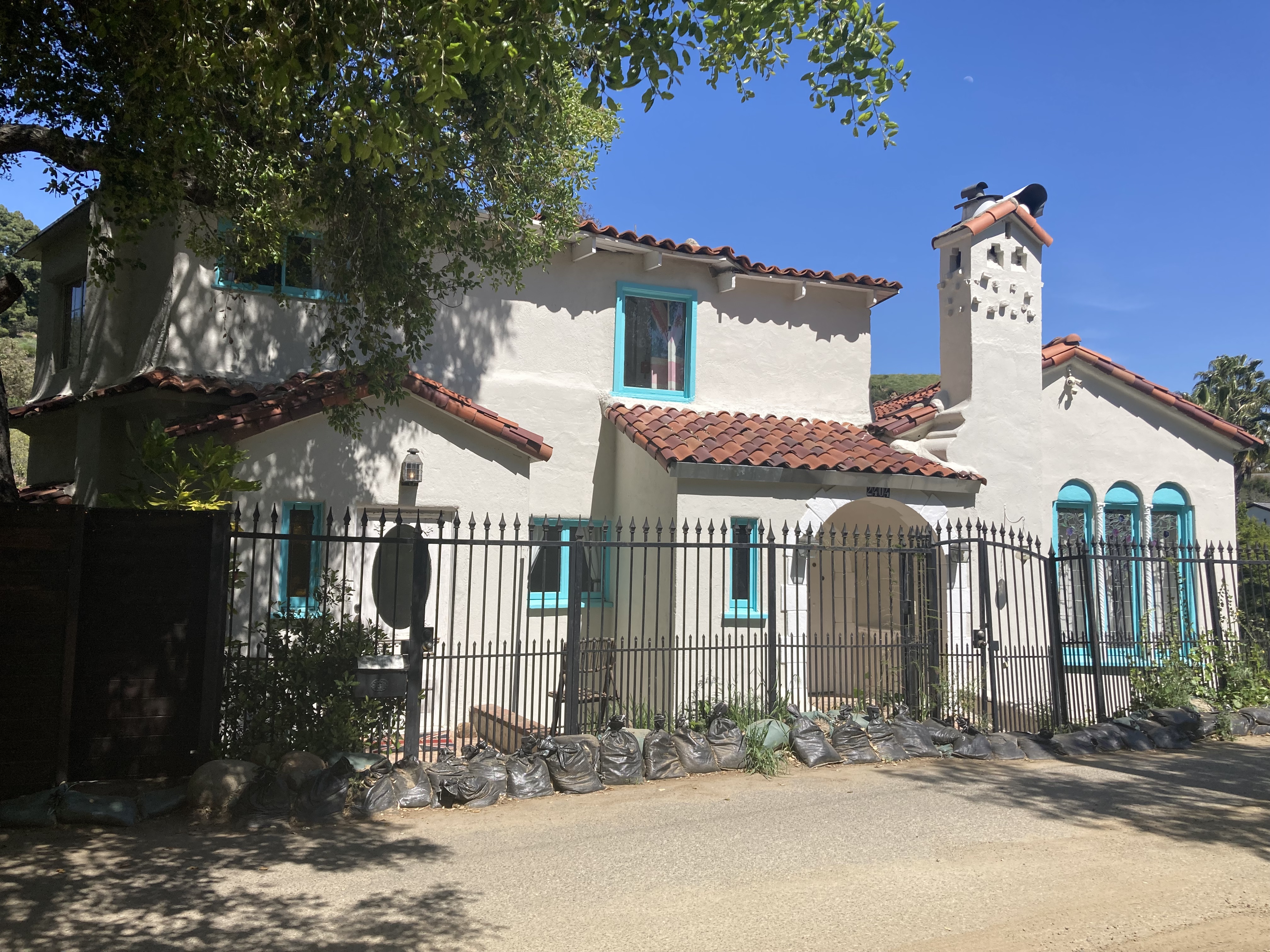
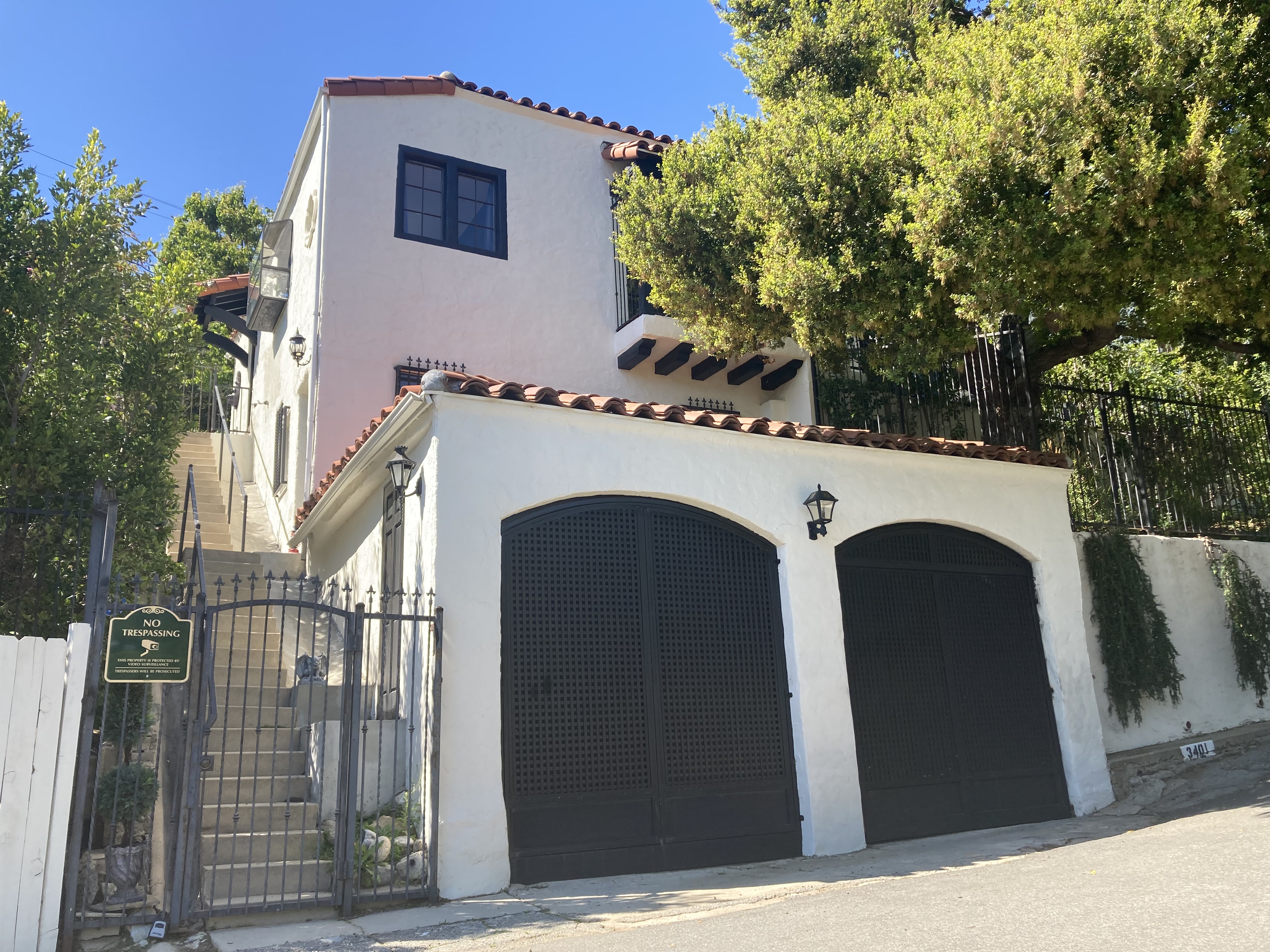
To be clear, he doesn’t live here anymore. That would be weird. I was interested in architecture and history.
In the same area as Lake Hollywood Park and the Hollywood Sign is Griffith Park and Observatory. Griffith Park is the encompassing area, east of highway 101, at the eastern end of the Santa Monica Mountains.
Griffith Observatory is an Art Deco building, opened in 1935, perched high on the hills with views of DTLA, Hollywood, the Pacific Ocean, and the Hollywood Sign. You can take in the sunset here, gaze at the stars (or use their public telescopes), see a film screening, visit the planetarium, or geek out on space stuff in their exhibits.
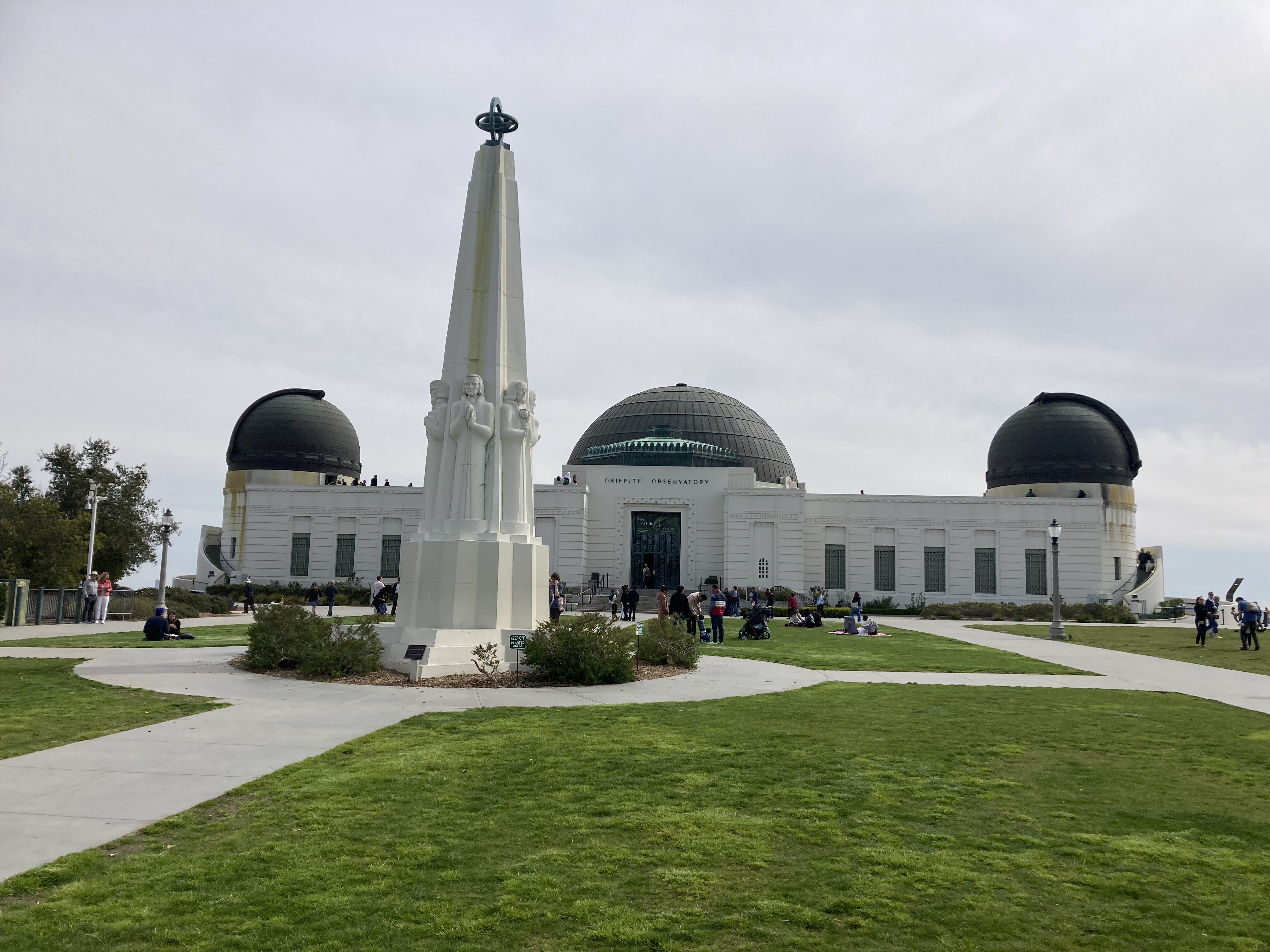
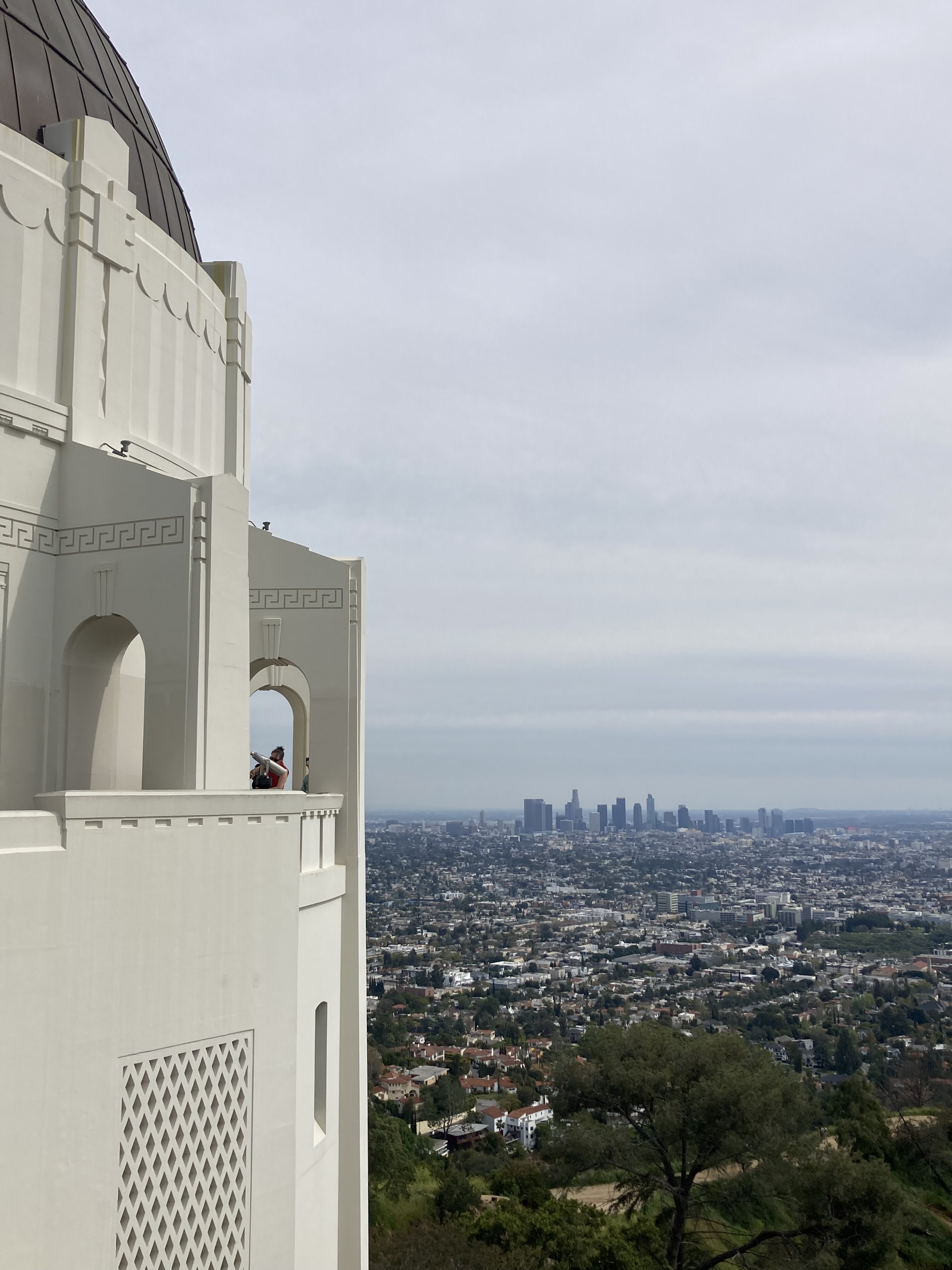
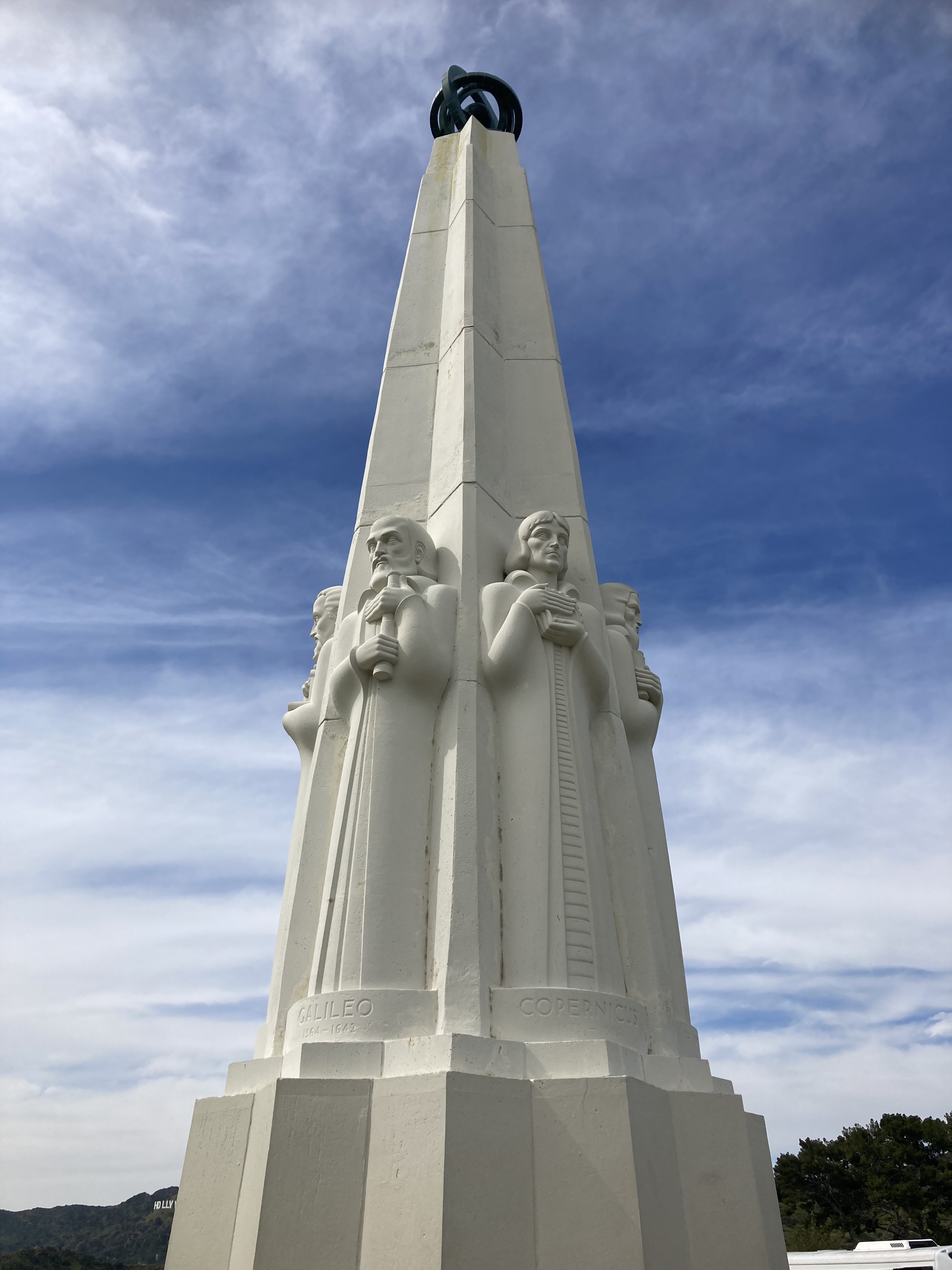
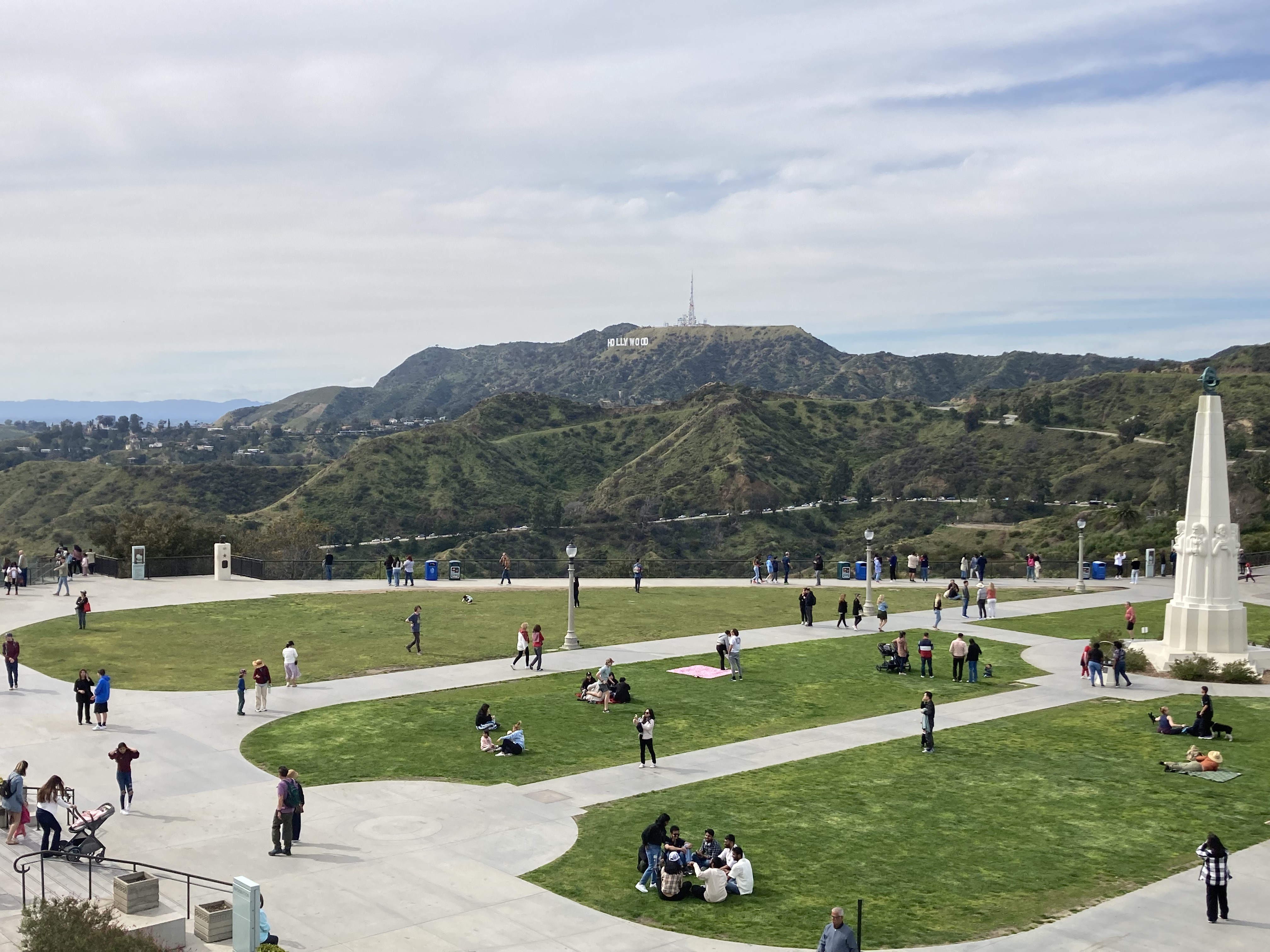
If I were to visit Griffith Park again I might check out the Bronson Caves (with ties to Batman), maybe the Greek Theatre (amphitheatre), and probably do some hiking (especially to the Hollywood Sign).
The final thing that I did in the Hollywood Hills was visit Universal Studios, mostly for The Wizarding World of Harry Potter. I will say, this was before I was aware of the depth of J.K. Rowling’s transphobia. I’m not sure if I knew, or how much I knew at the time, I just know that I wouldn’t line her pockets with my money now. At the time I was enjoying a cool bucket list experience that still spoke to the nostalgia of a prominent book and movie series I grew up with.
After getting to underground parking, I walked through a section of shops leading to the theme park entrance (City Walk). I spent most of my time in Harry Potter World. It had everything you’d expect – the Hogwarts Express, Hogsmeade, Zonko’s, Honeydukes, Three Broomsticks, Ollivander’s, Hogwarts, Hagrid’s cabin. I of course got Butterbeer (very sugary) and a real beer. I got a churro (so good). I rode two of the Harry Potter Rides – a small rollercoaster called Flight of the Hippogriff, and an indoor ride through the castle (which I did twice). I also watched a light show on the castle after it had gotten dark. It was really cool.
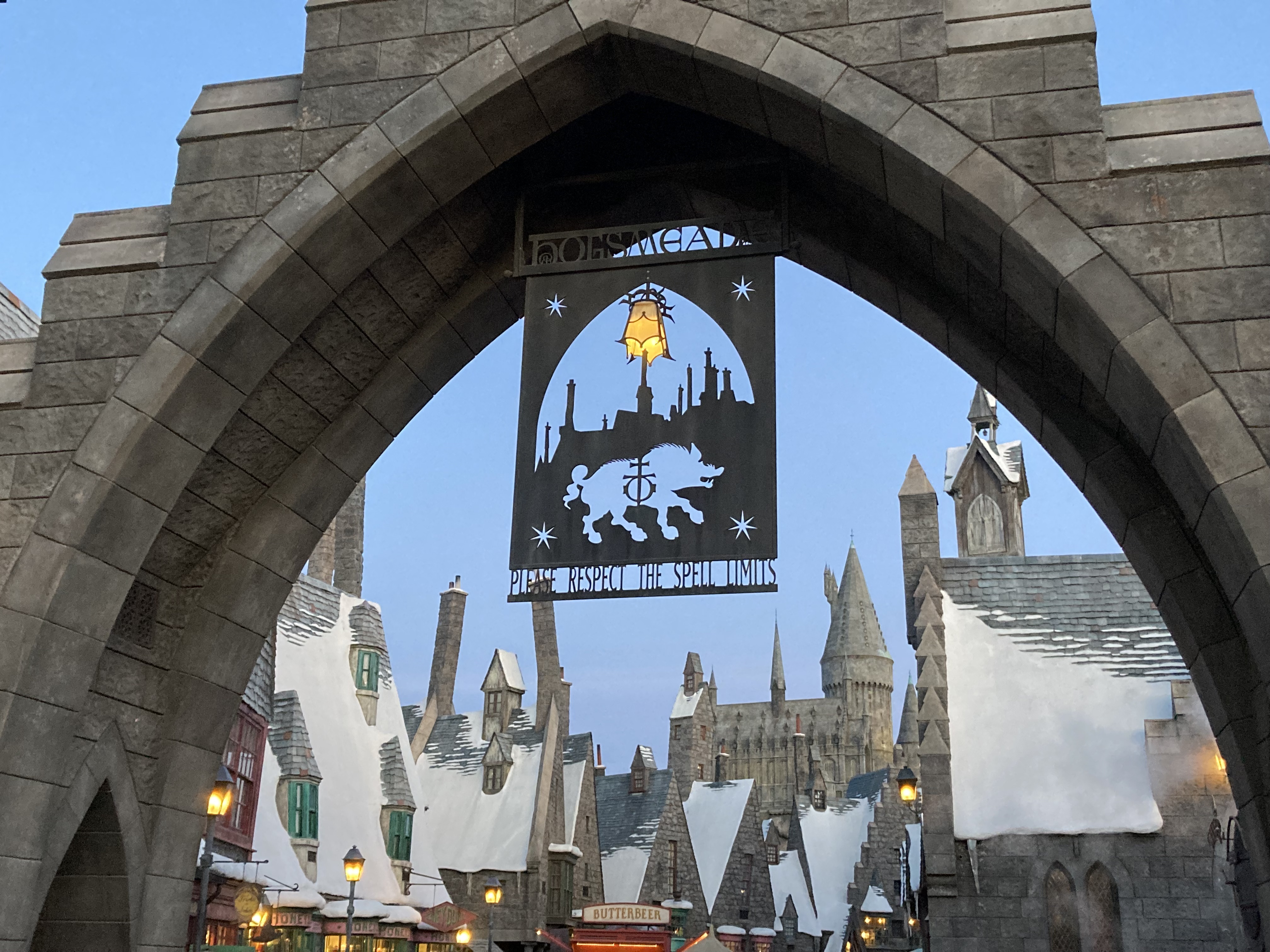
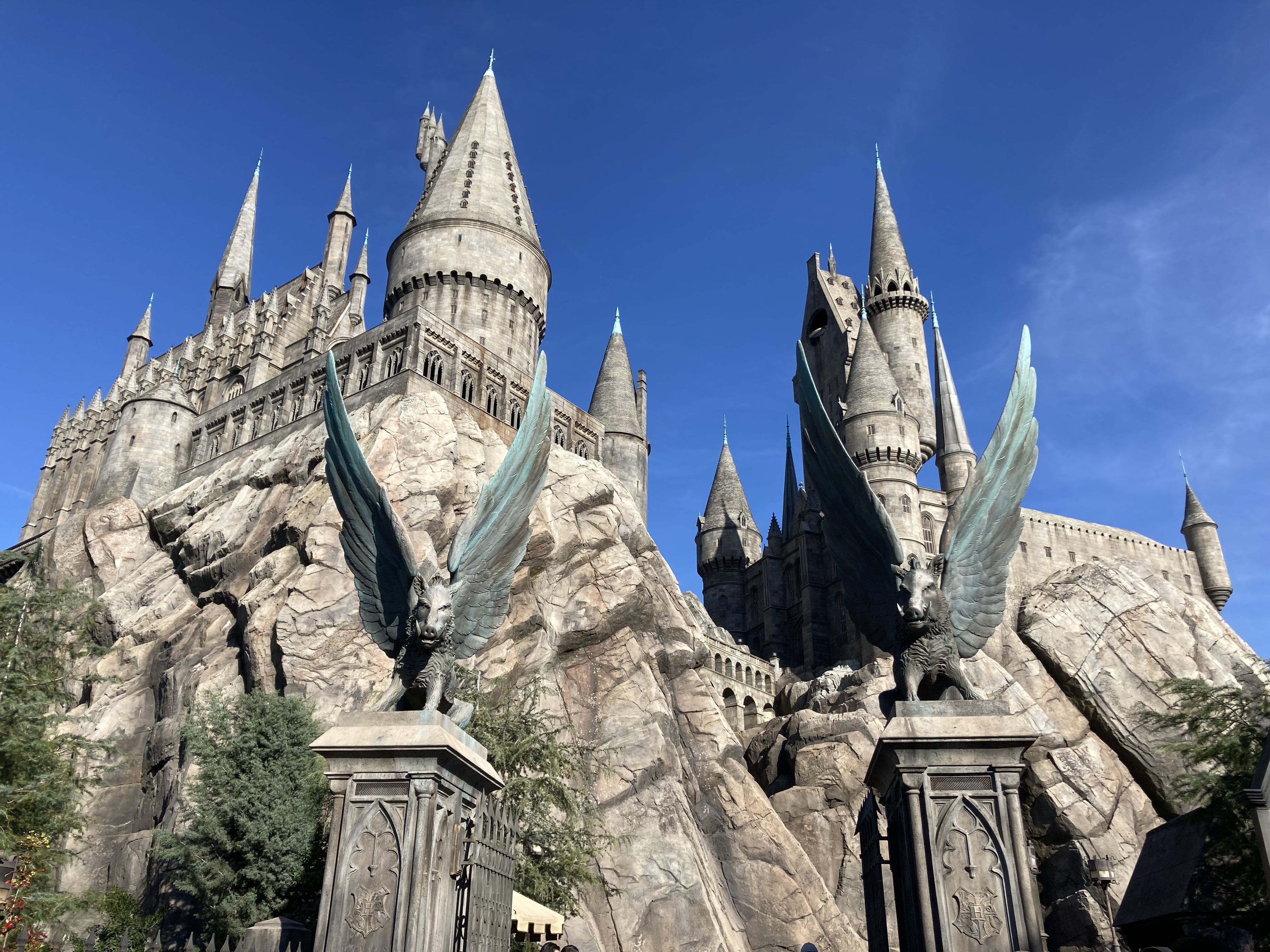
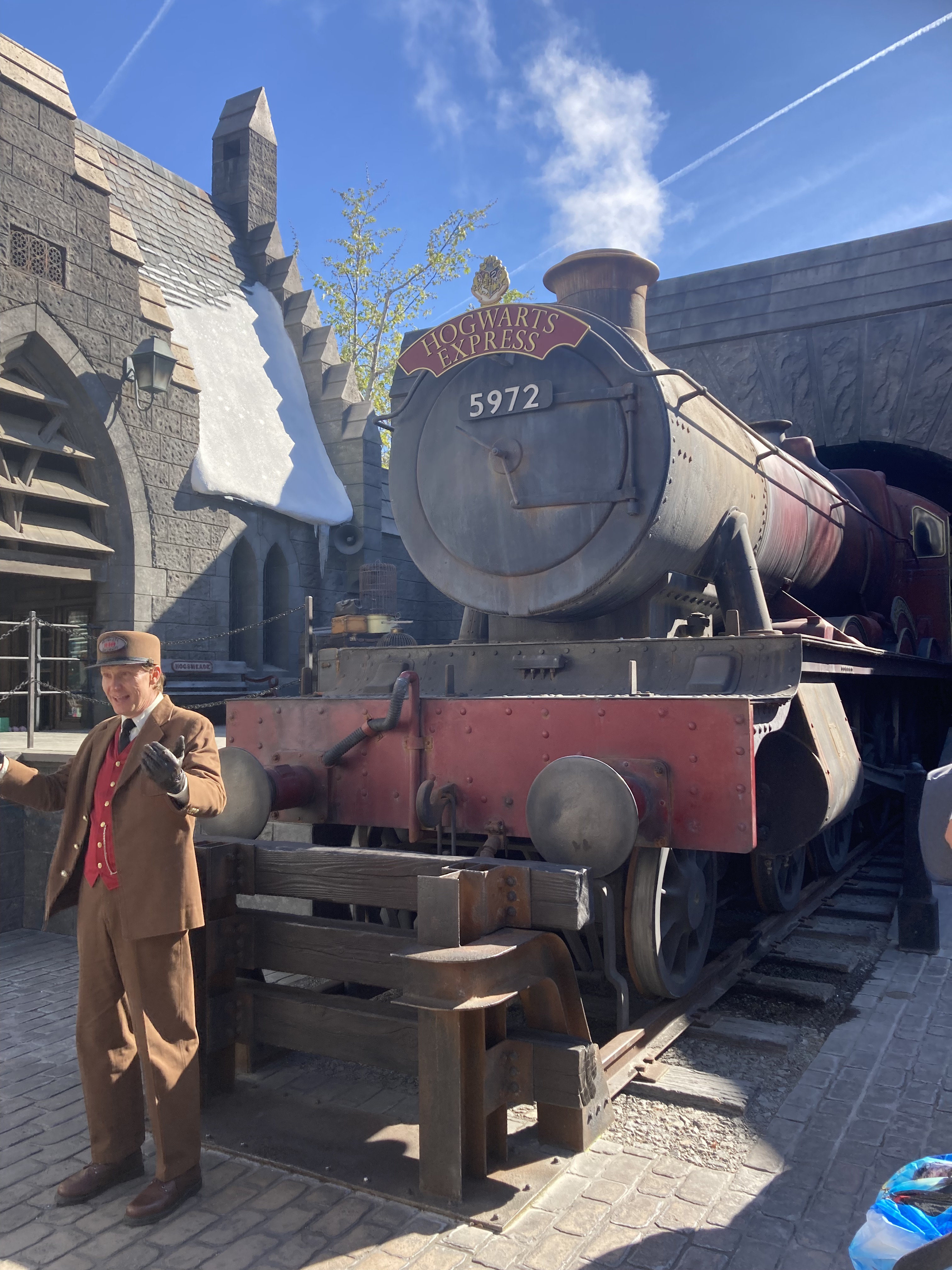
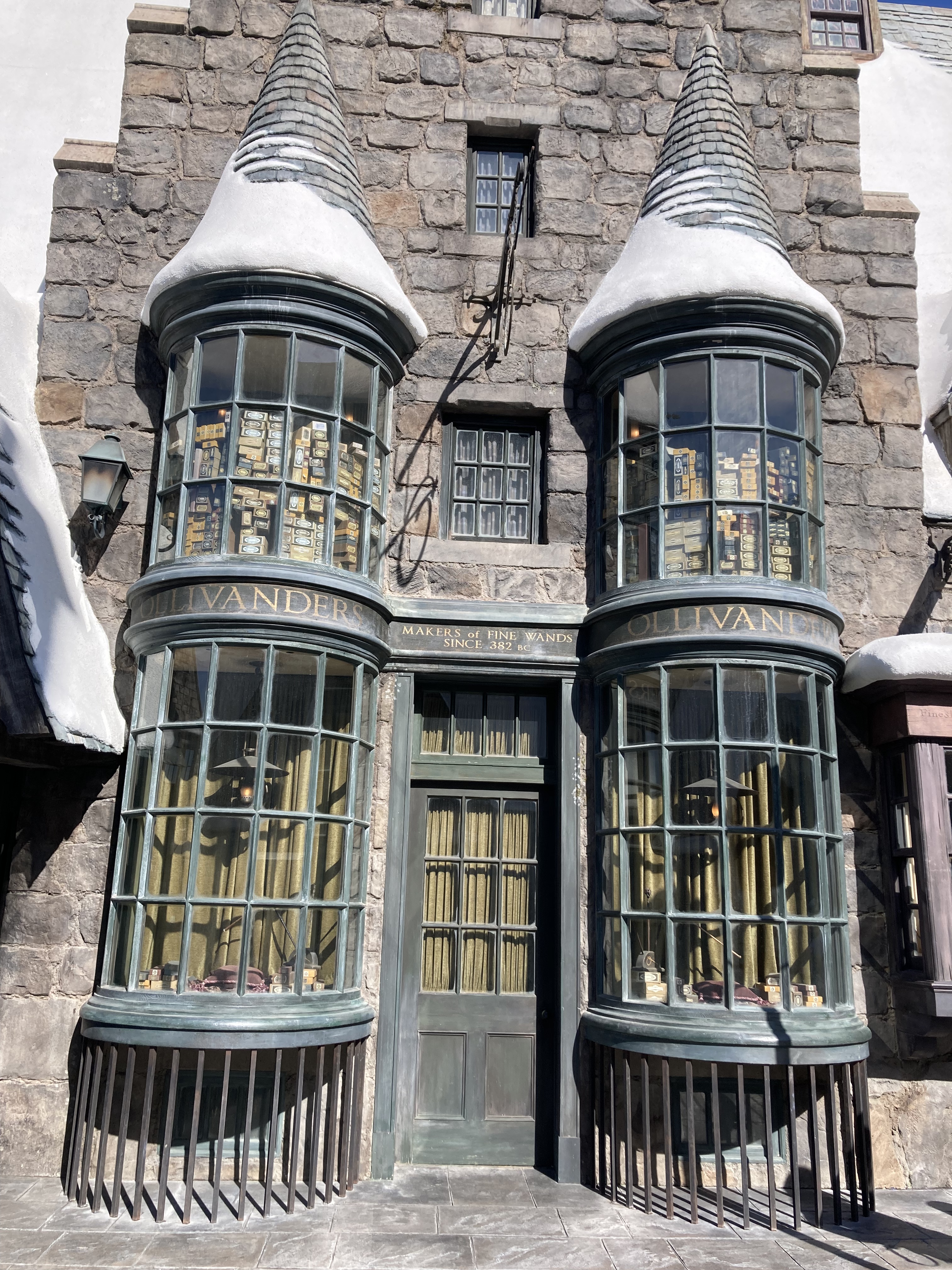
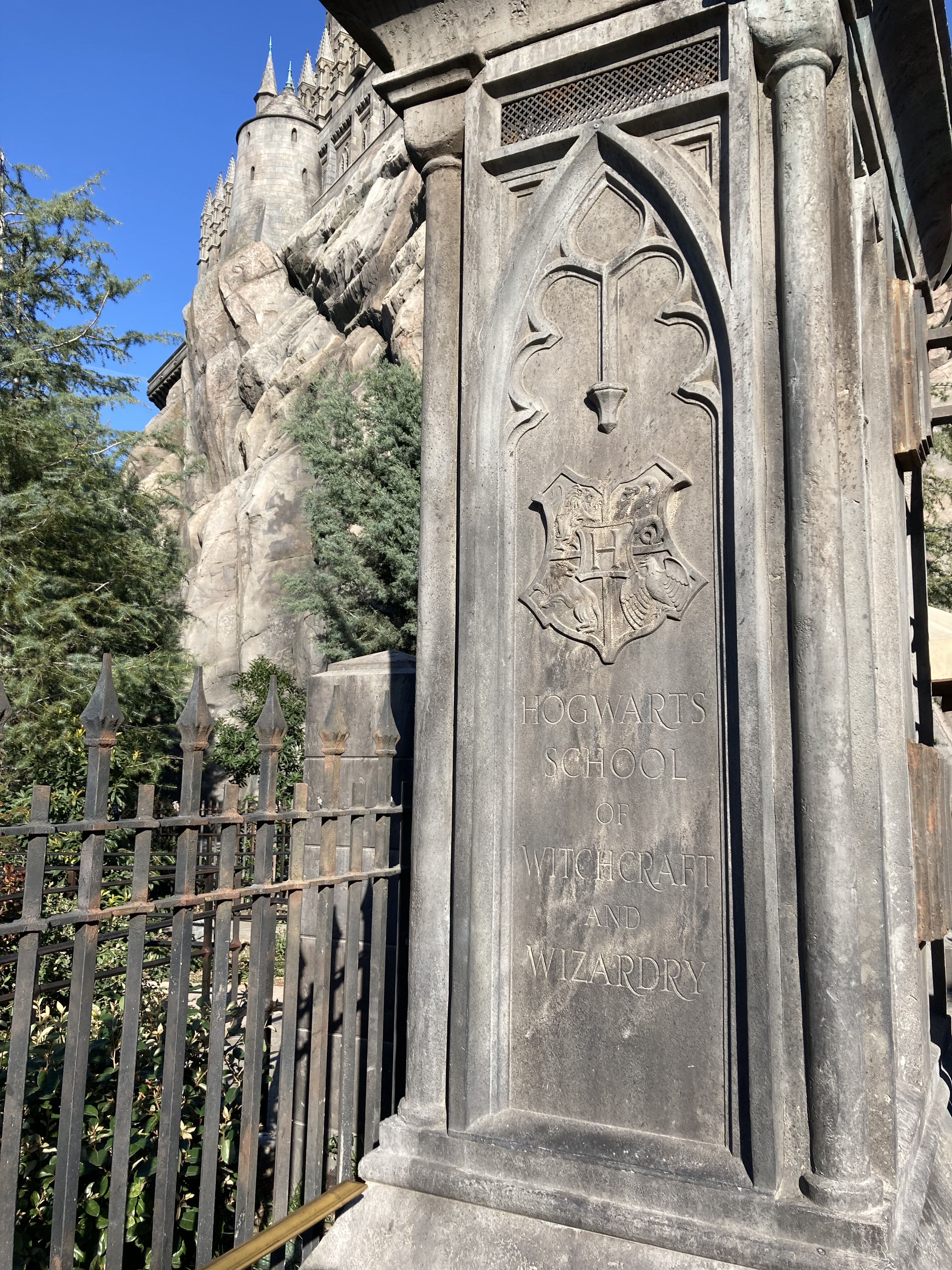
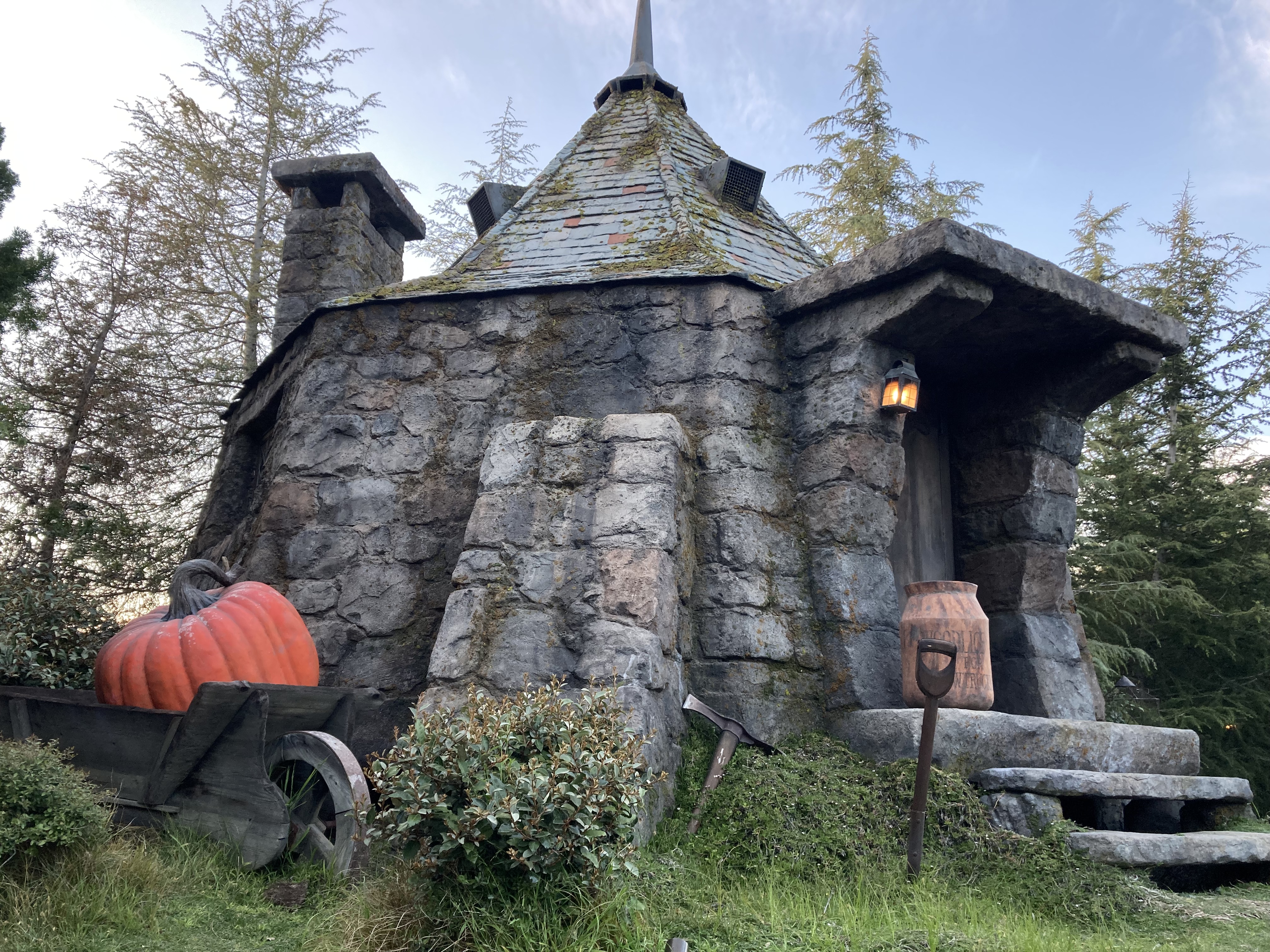
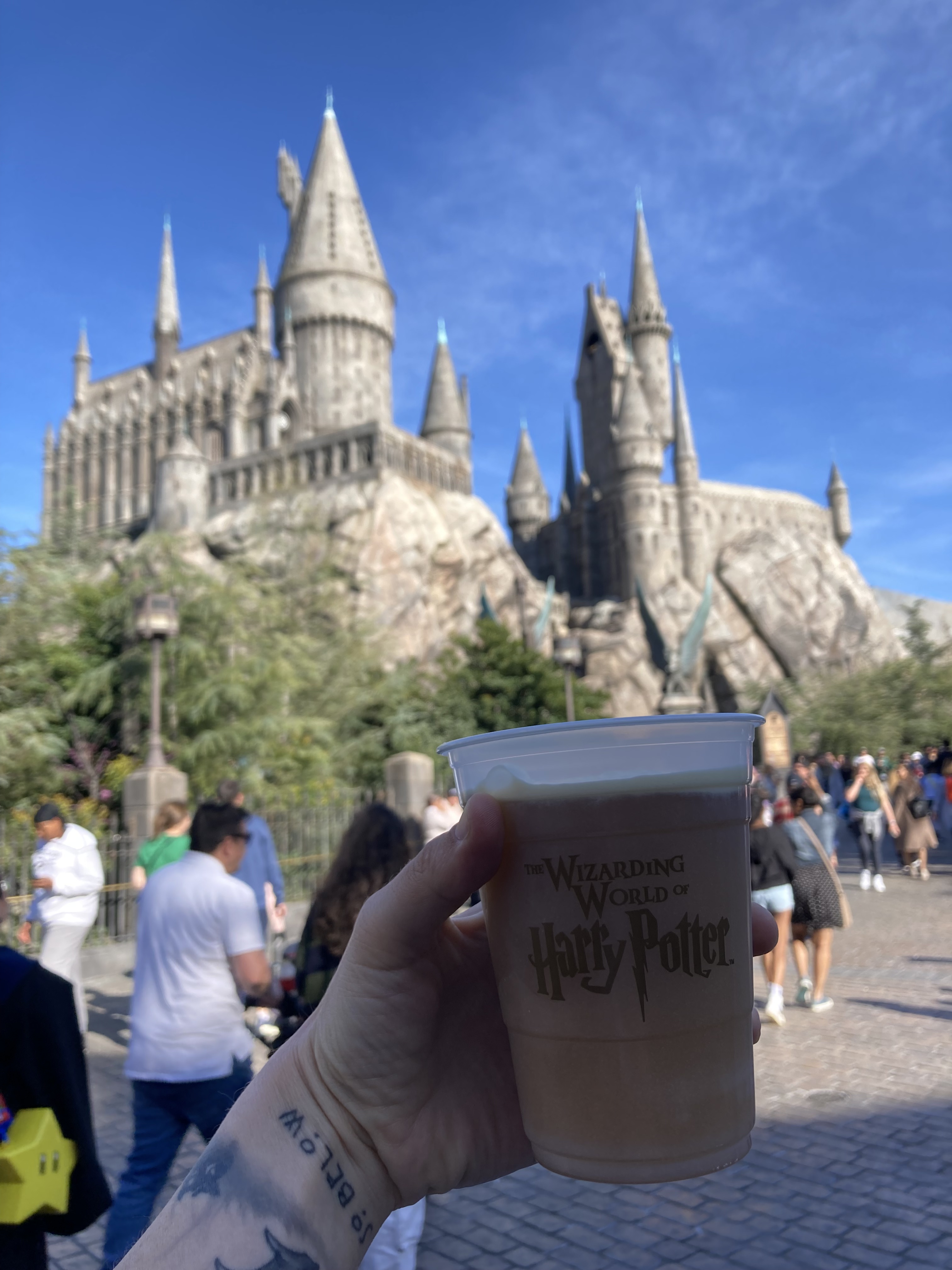
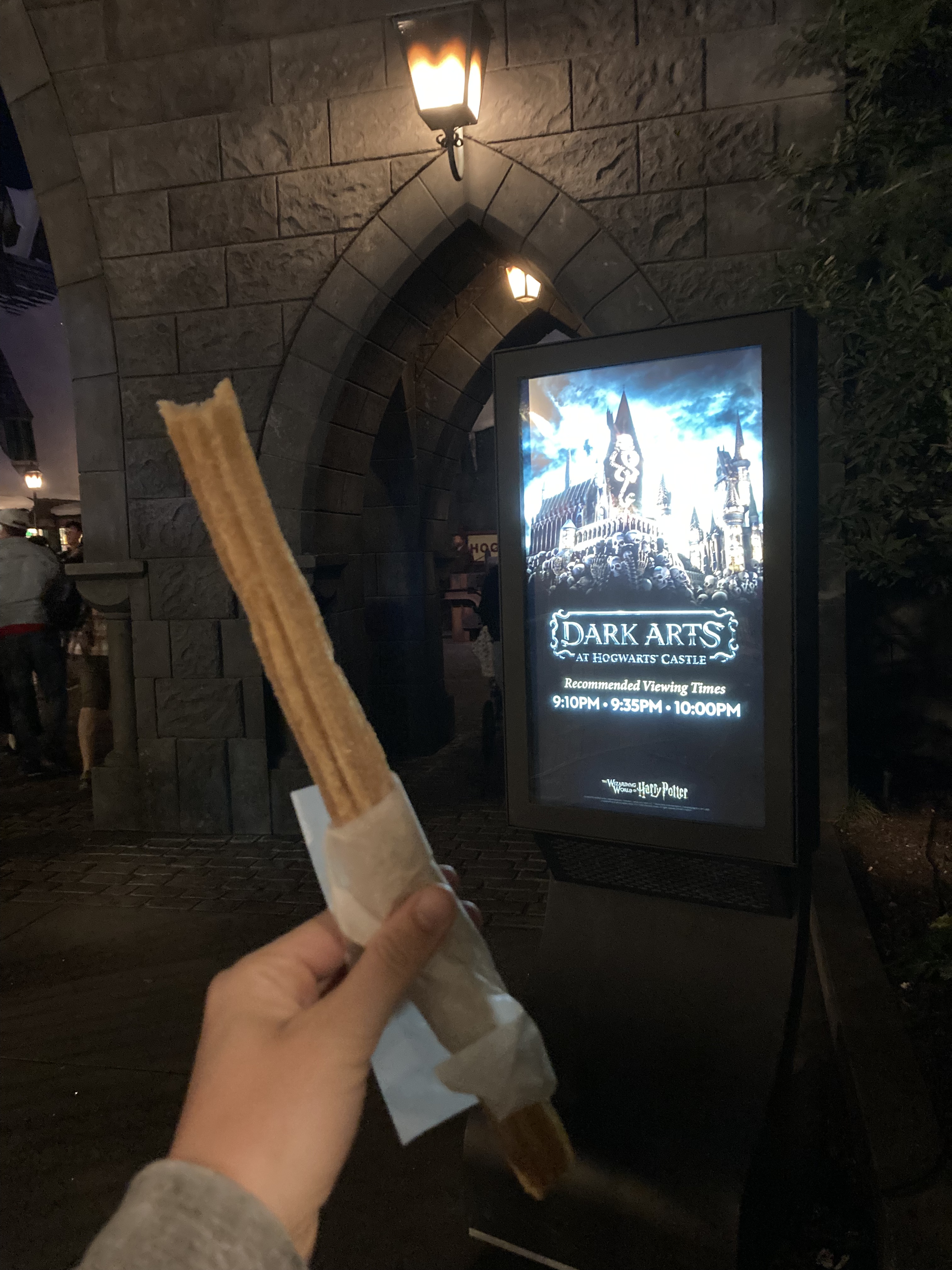
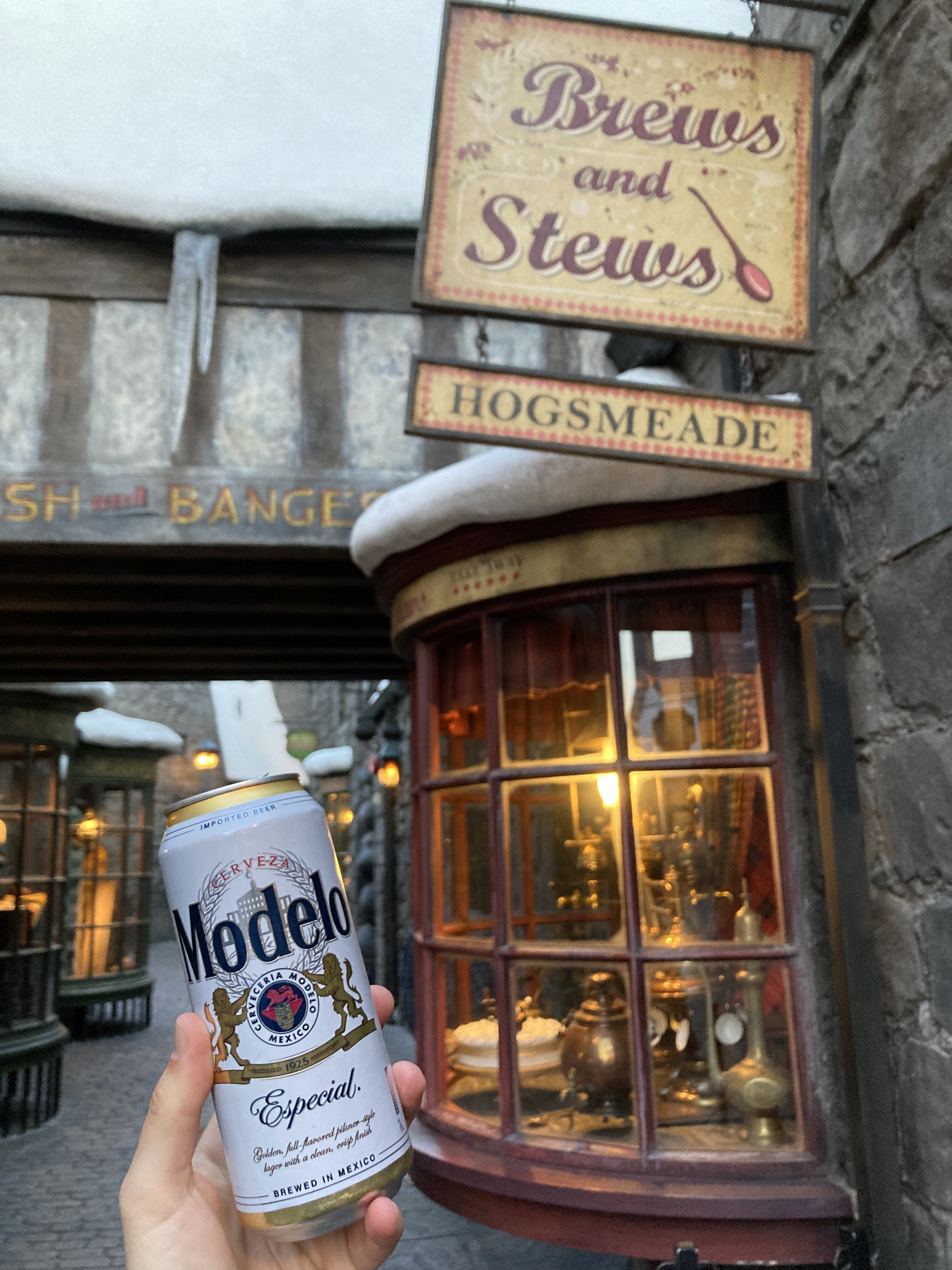
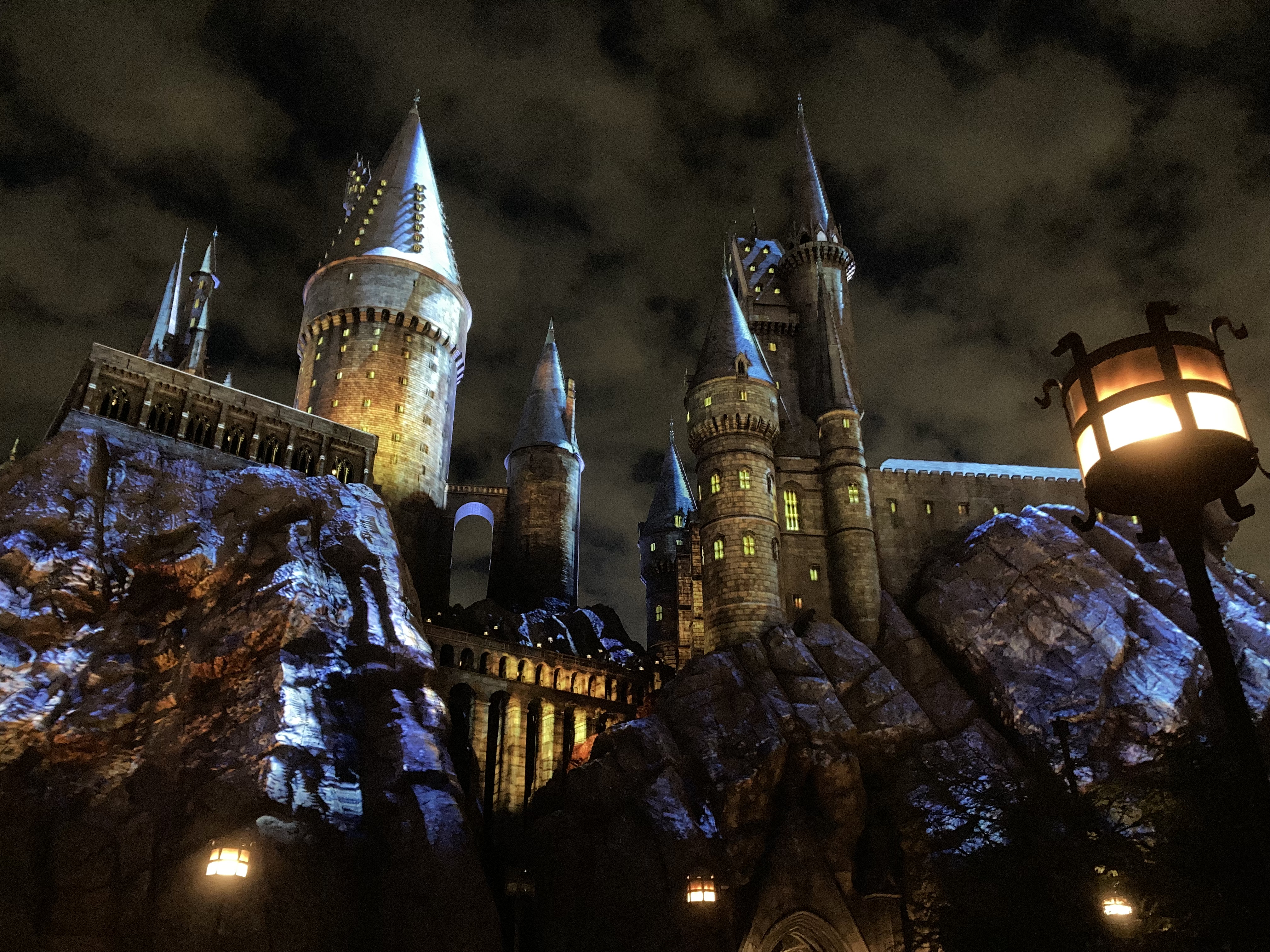
I did a brief exploration of the other themed areas – there was Jurassic World, Simpsons, Nintendo, a Mummy ride, Moulin Rouge, lots of gift shops, restaurants, stands, characters.
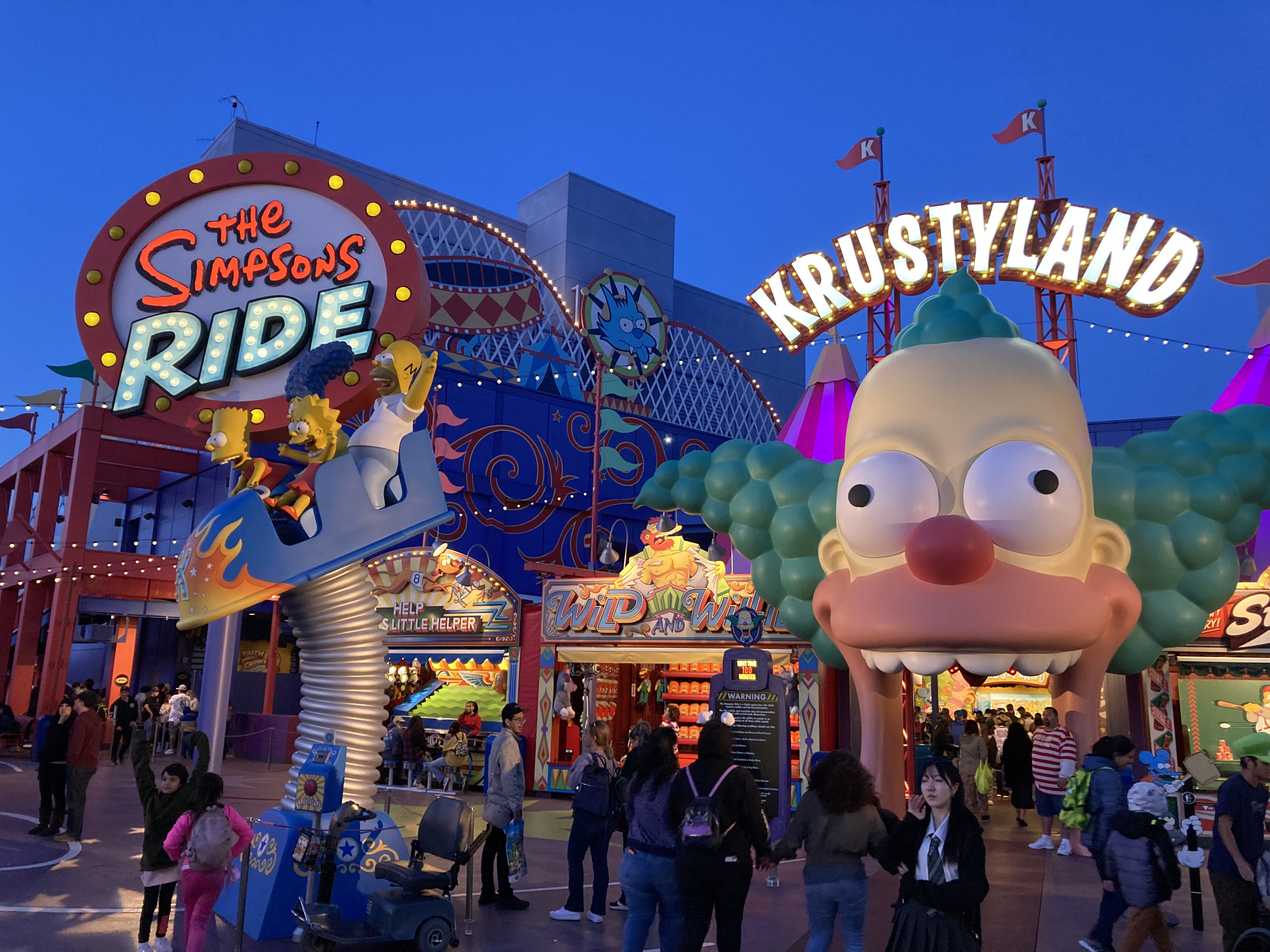
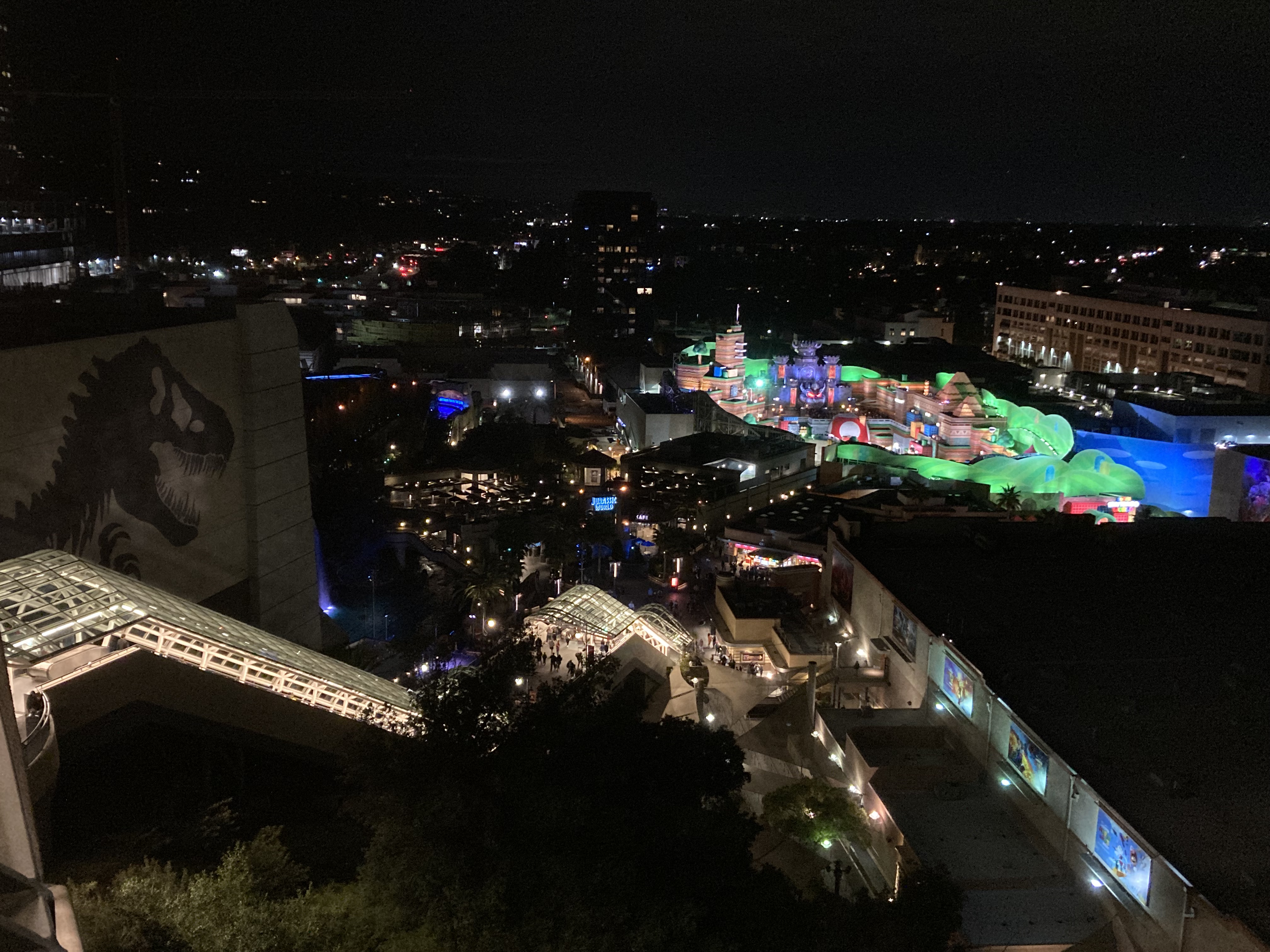
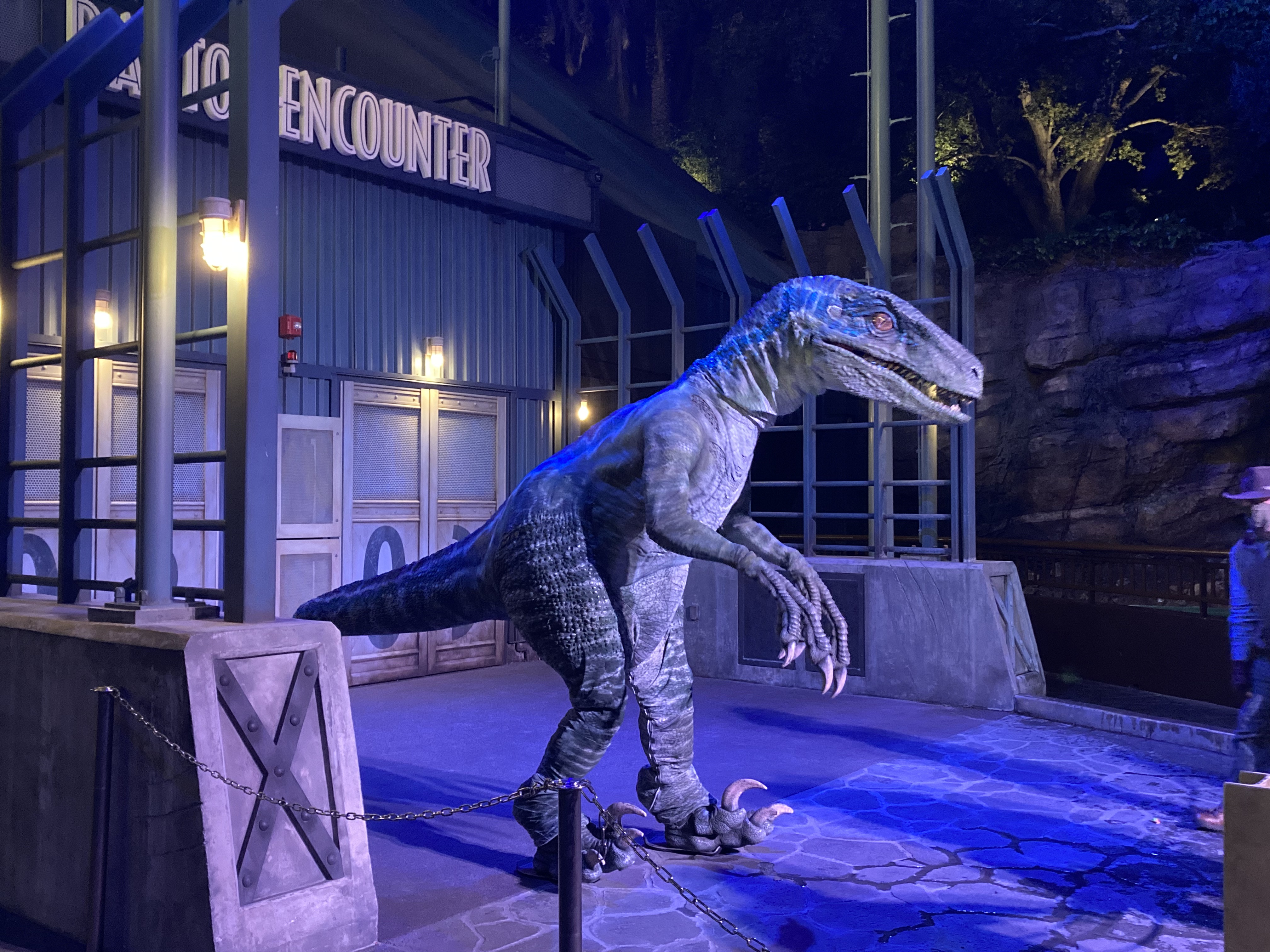
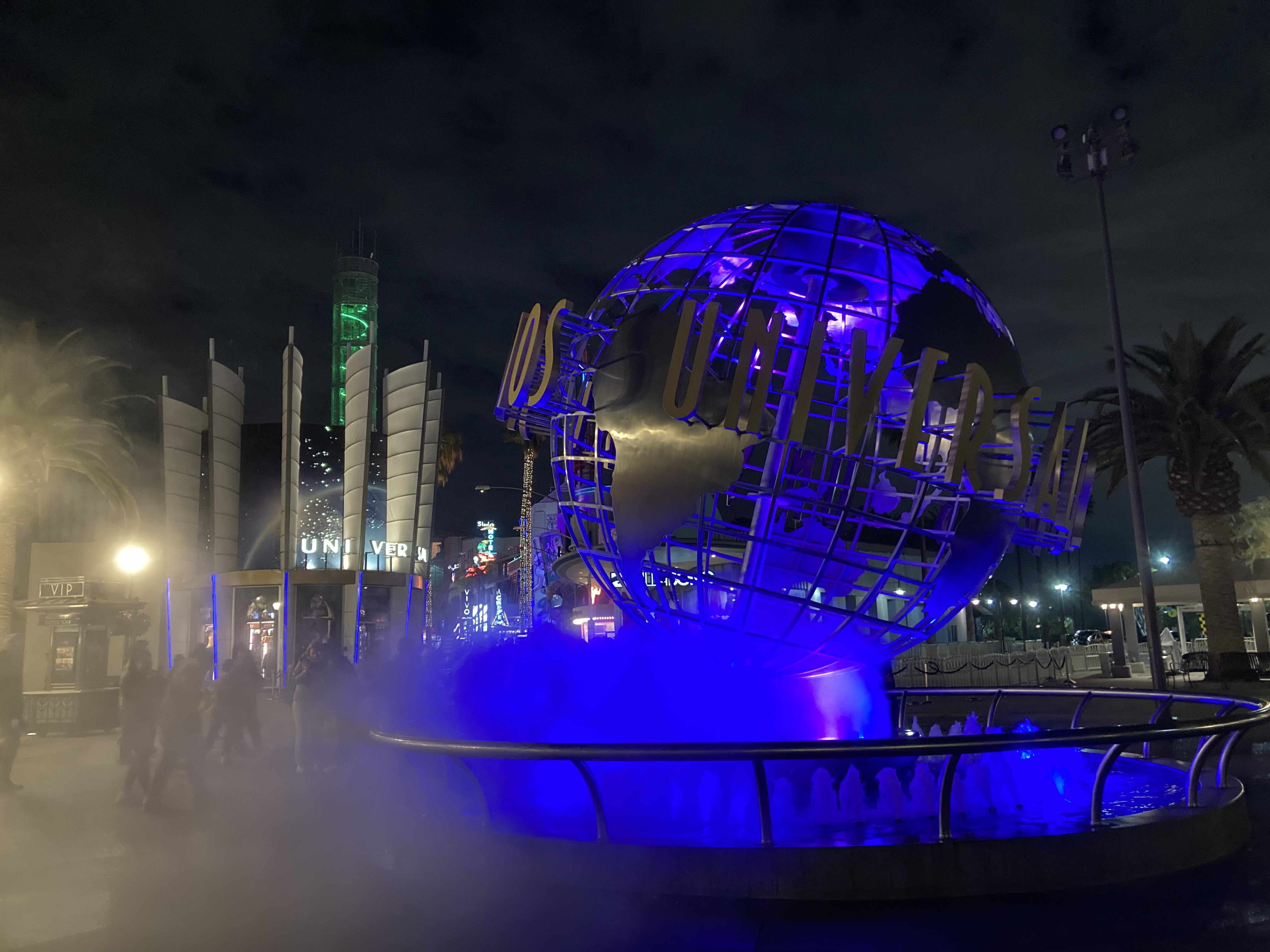
You can also book tours of the working studios.
I’m not a huge fan of crowds like these, or amusement parks in general. But there are a few places I would brave such crowds for (though more often this would be concerts or music festivals).
Beverly Hills
Beverly Hills, 90210, The Garden City. Home to the stars and the poshest street in the world. Inland from Santa Monica, west of West Hollywood and LA, at the foot of the Hollywood Hills. With a population of about 33,000 and considered an affluent suburb within the Greater Los Angeles area.
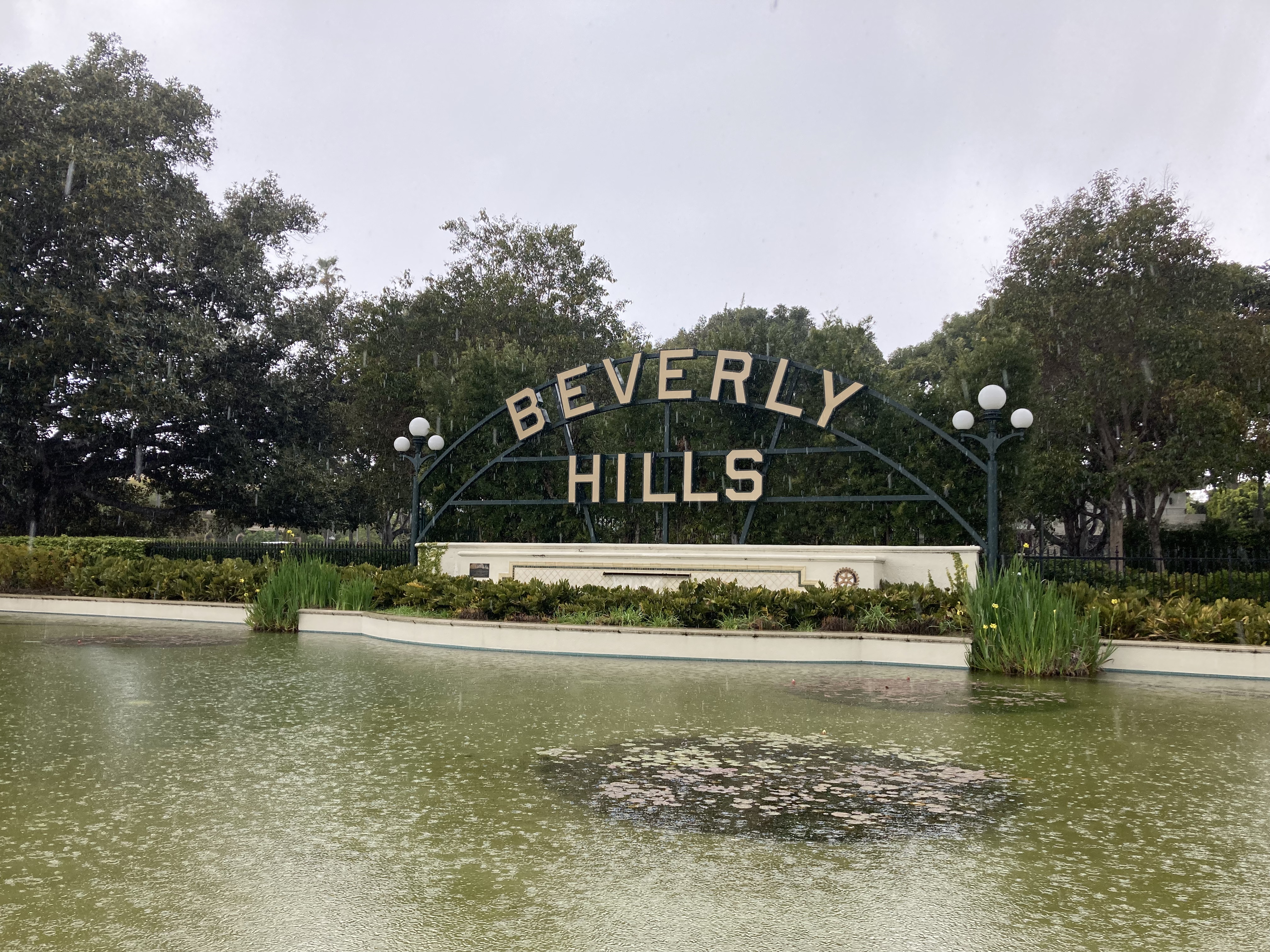
When I got to Beverly Hills it was pouring buckets. I had two main destinations to explore. First: Rodeo Drive.
No celebrities were spotted, but I would have been oblivious anyways.
Luxury, one of the most expensive streets in the world – certainly a sight to behold. Rodeo Drive is the focal point of an area called the Golden Triangle – the convergence of South Santa Monica Boulevard, Wilshire Boulevard, and Cañon Drive. This is the business district in downtown Beverly Hills, revered as some of the best shopping in the world with its upscale retail and dining, celebrity sightings, and luxury cars.
I’m not a big shopper myself, but this is an area worth seeing regardless.
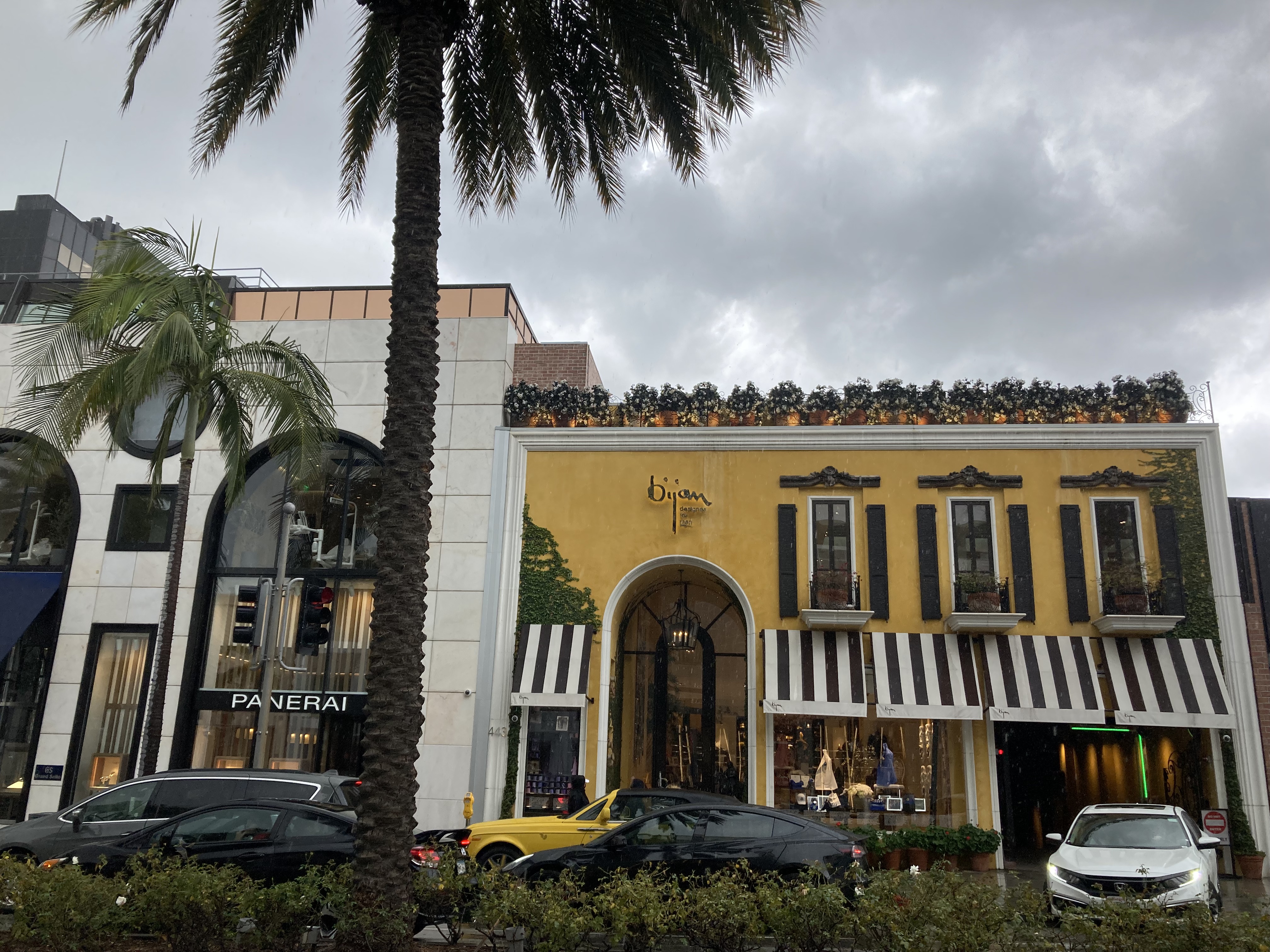
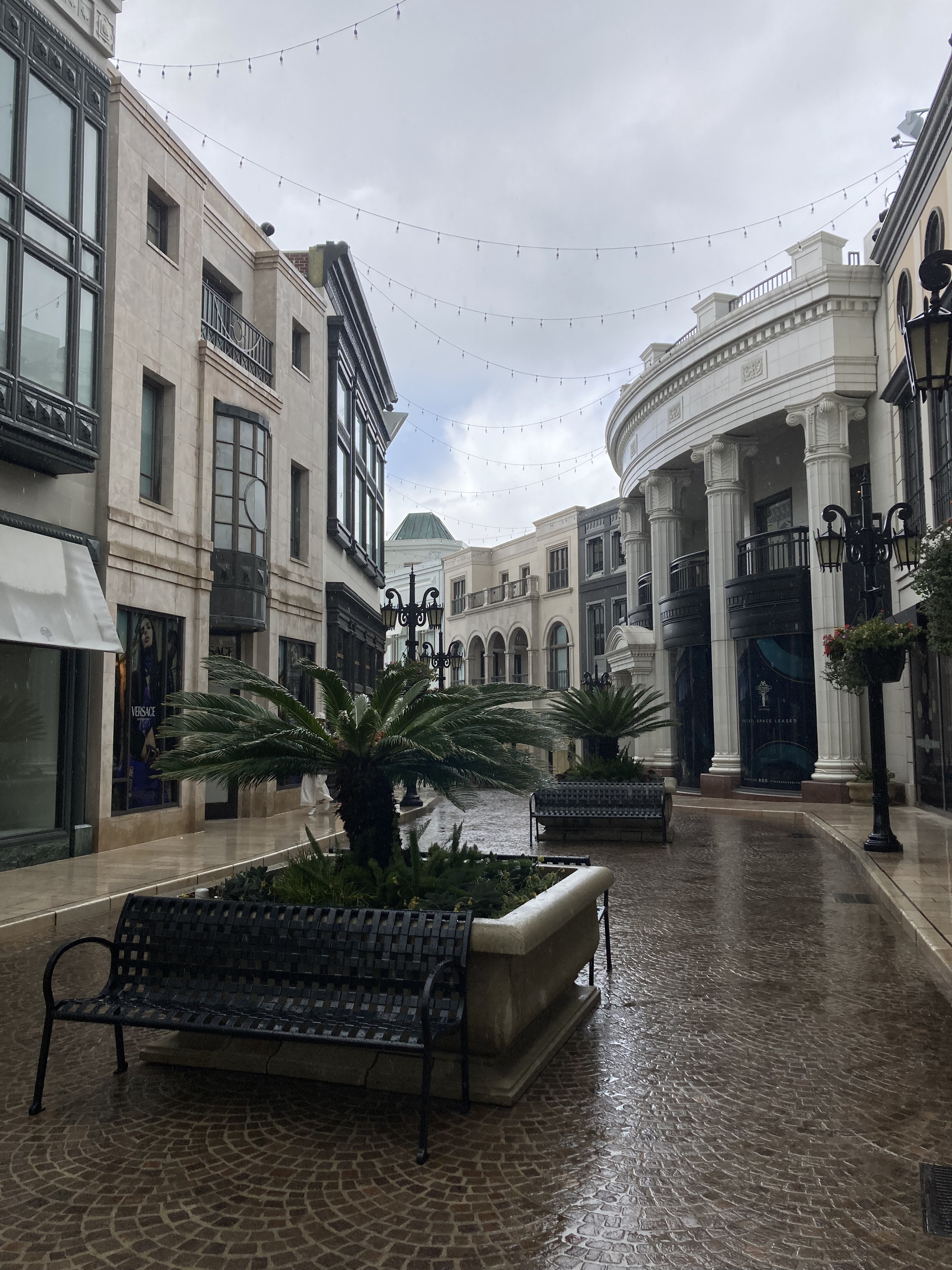
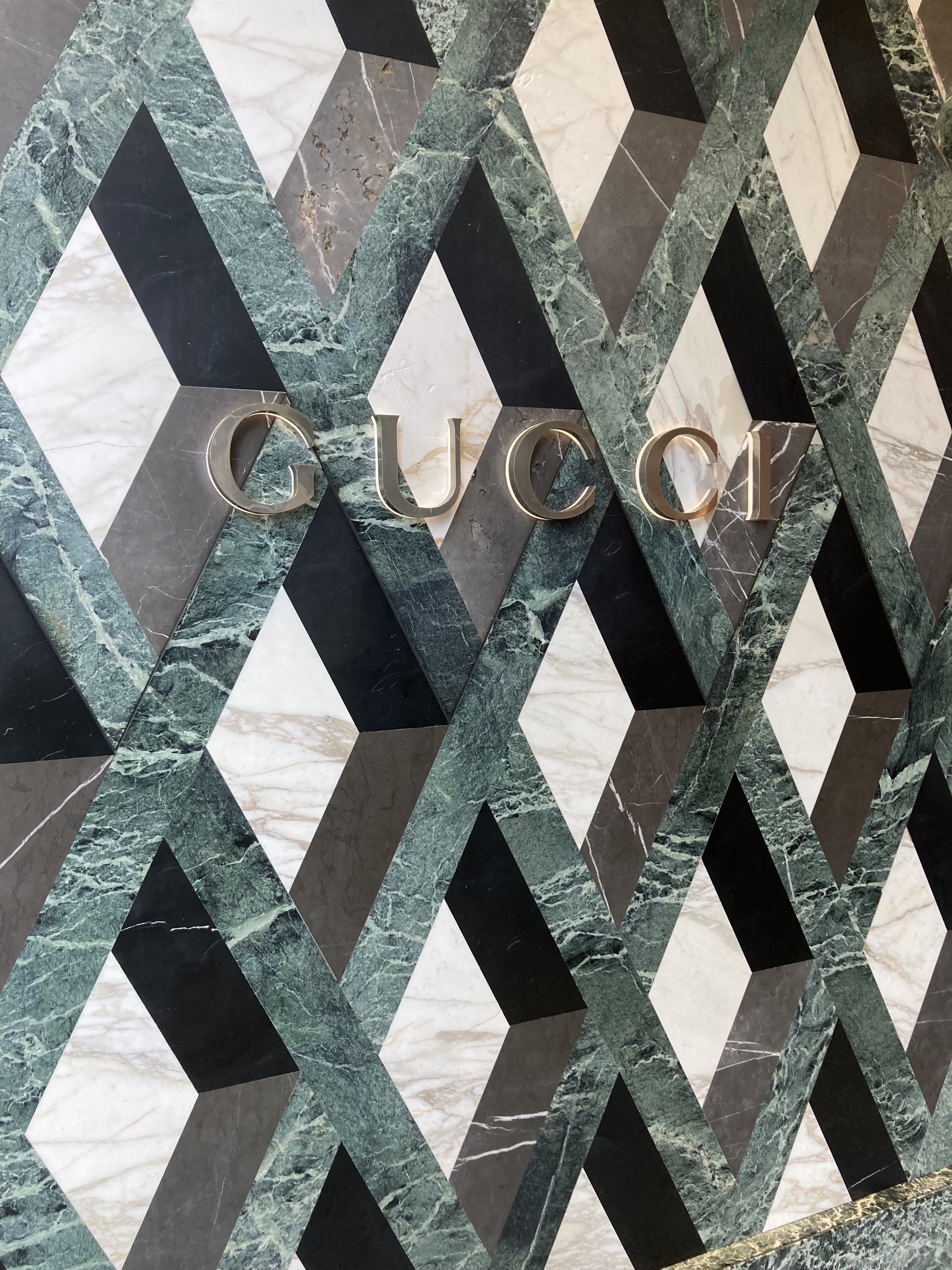
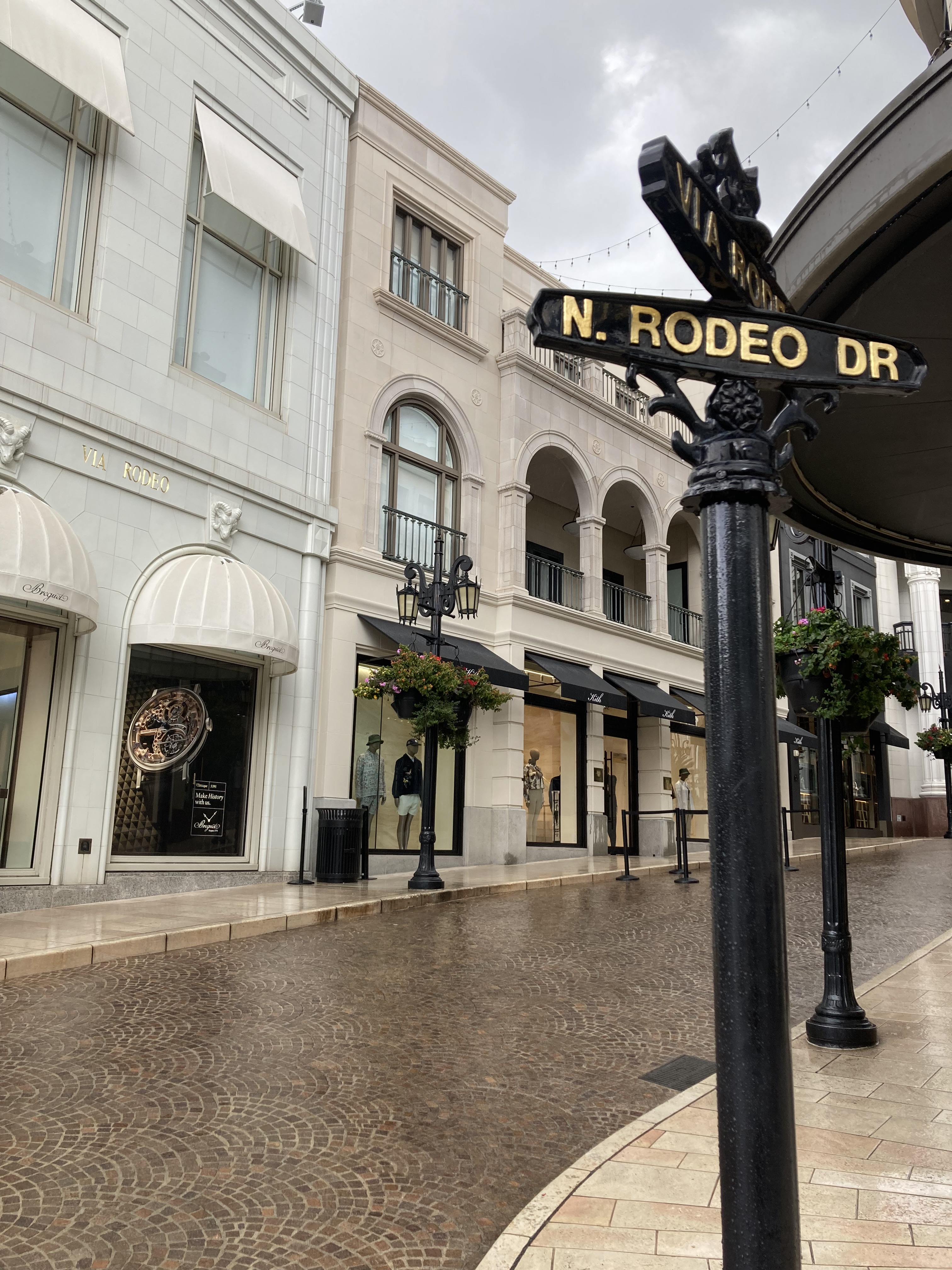
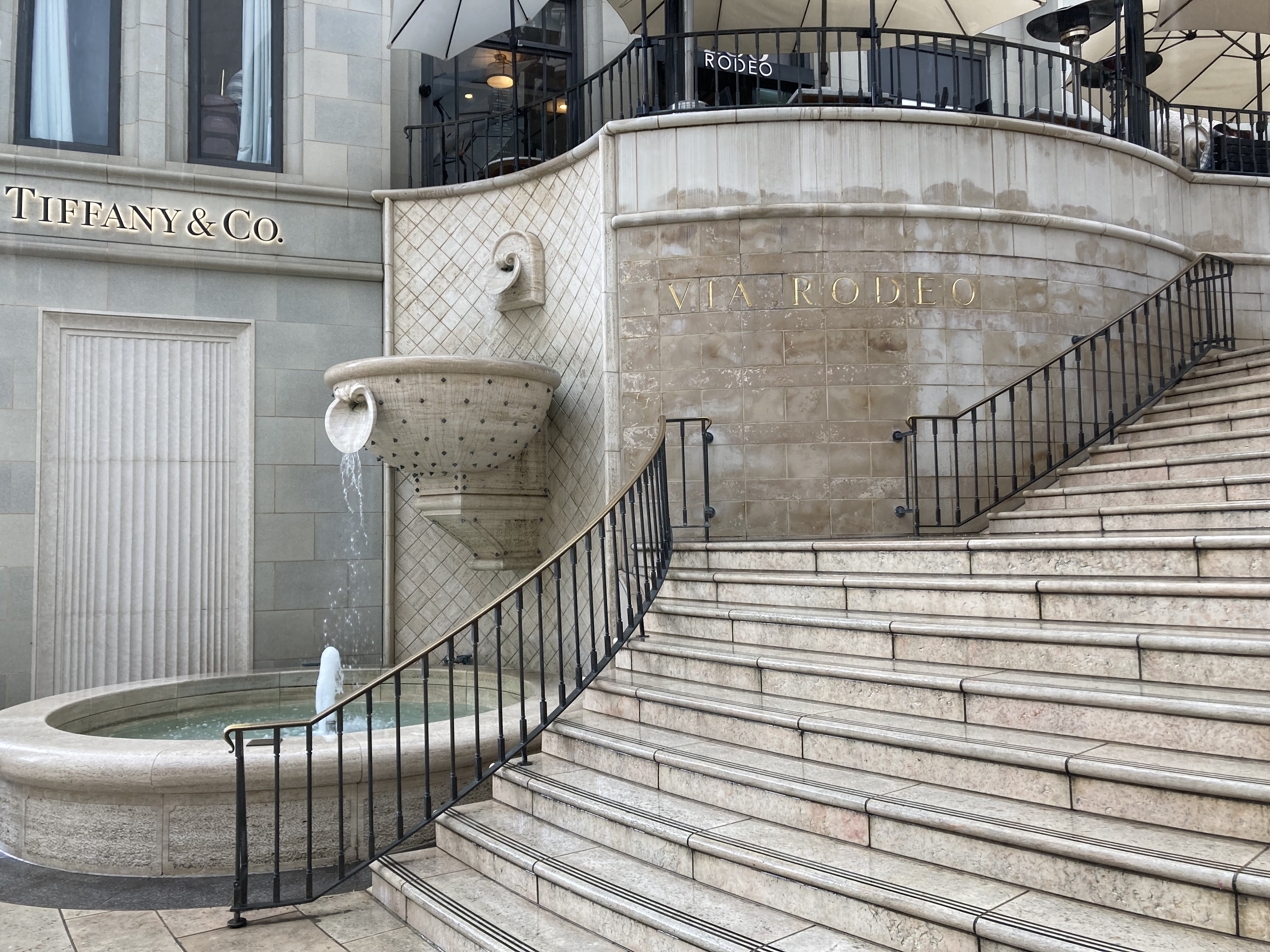
As I made my way to my next stop the skies started to clear and the sun thankfully came out (palm trees just don’t have the same effect with grey skies, do they?).
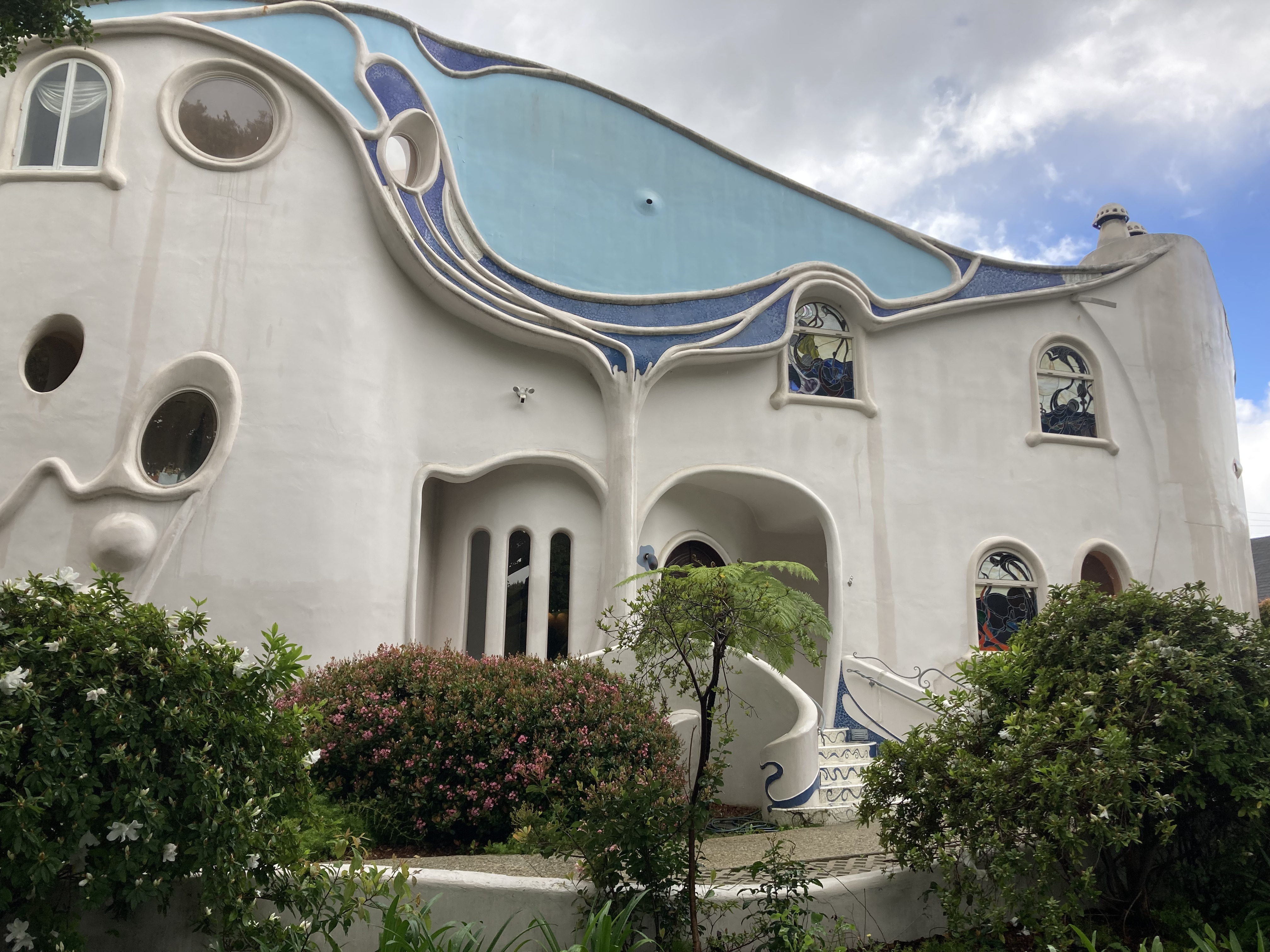
Next up was The Spadena House, also called The Witch’s House. It is a private residence, but a hotspot for photos and visitors. It was originally built in 1921 to house offices and dressing rooms for a silent film movie studio. It’s been restored and updated and now stands as an iconic storybook house.
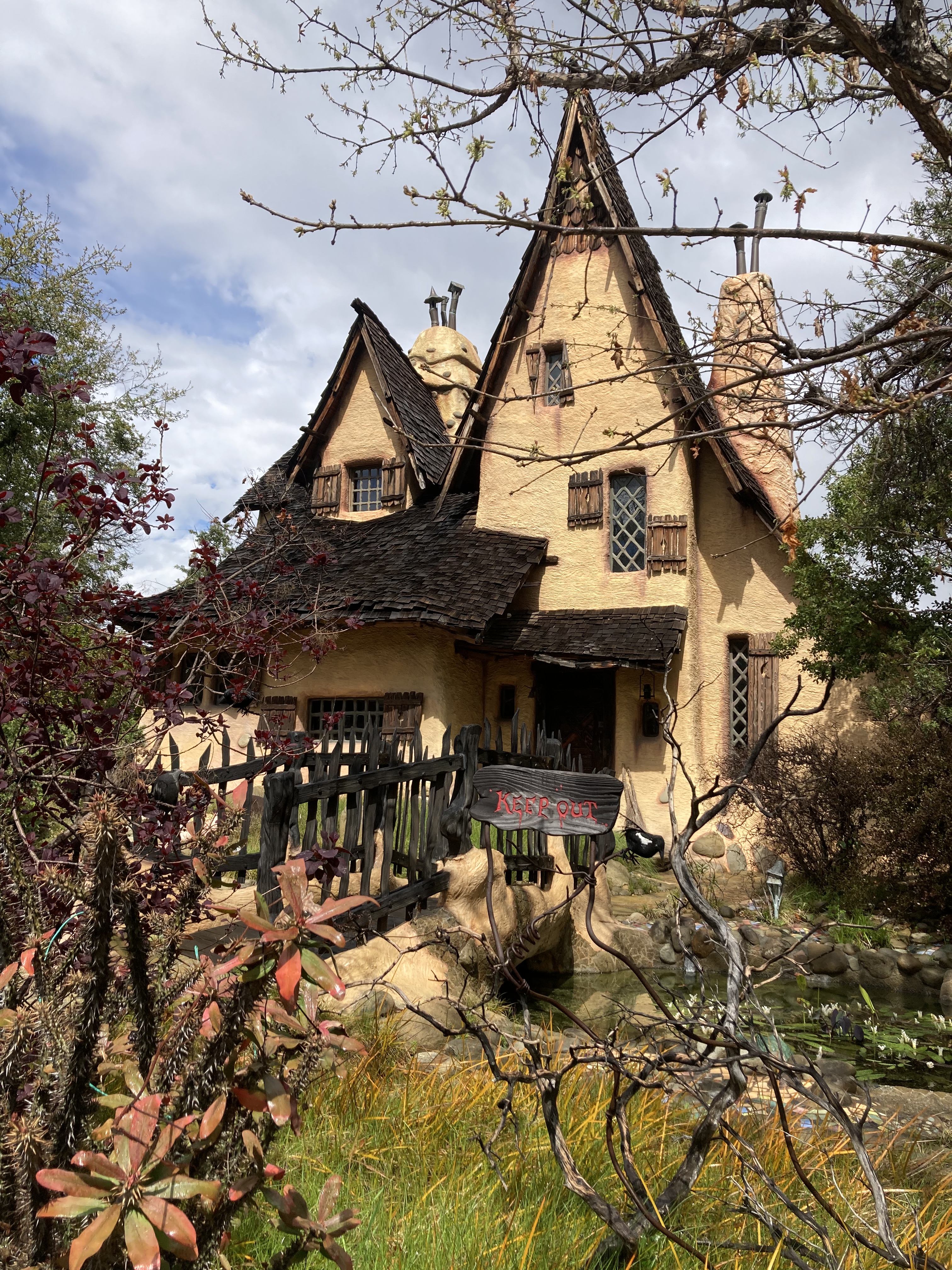
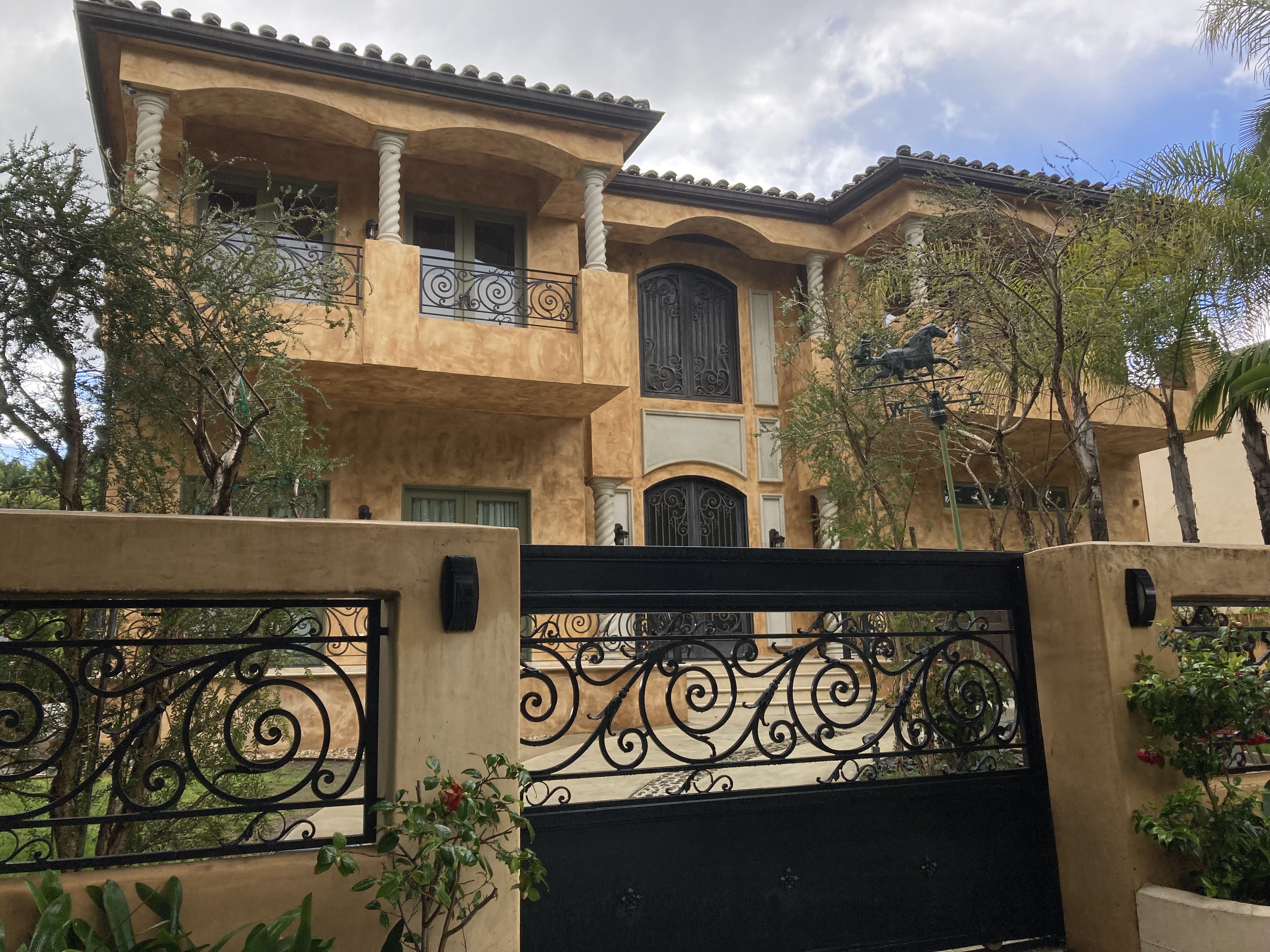
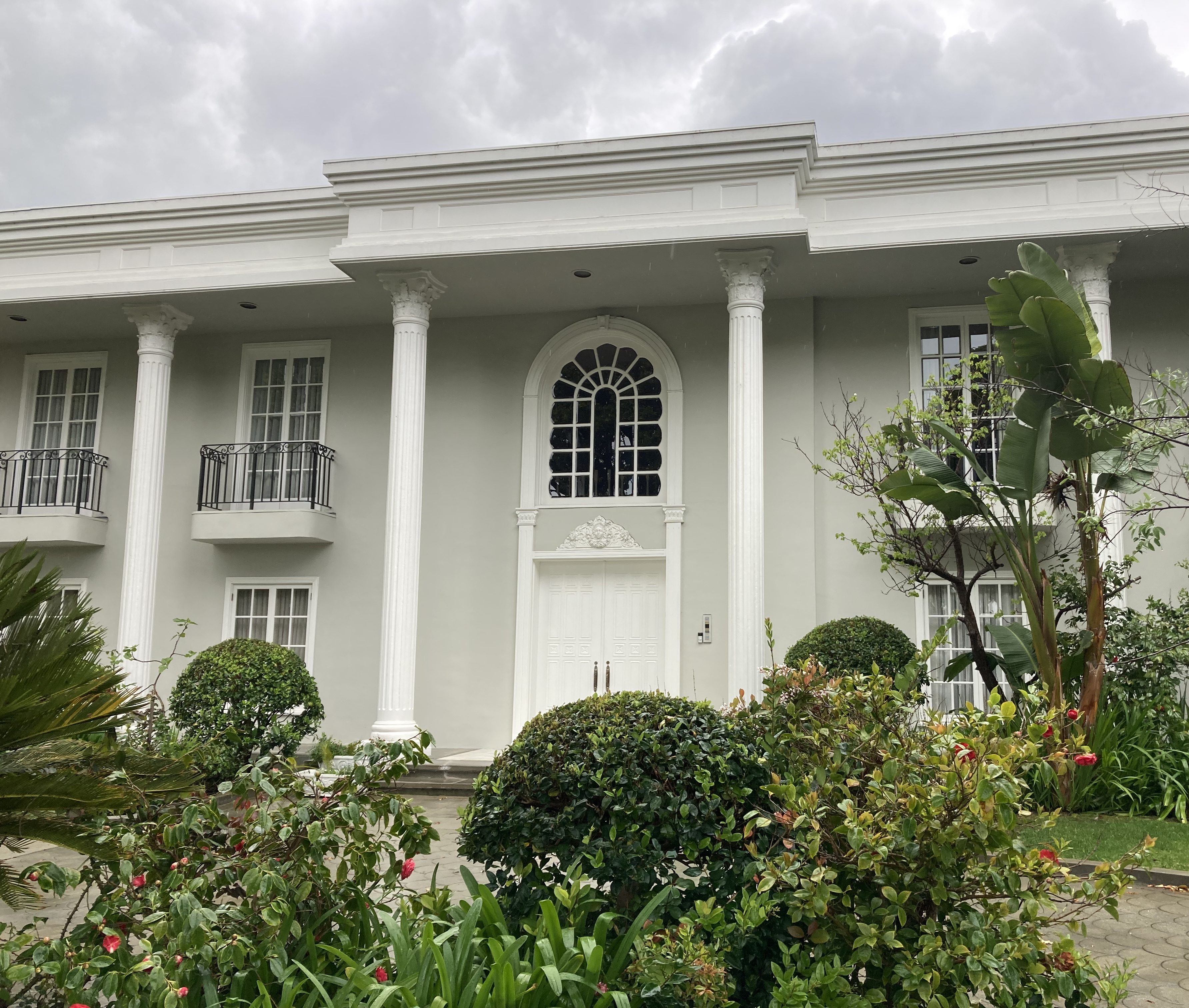
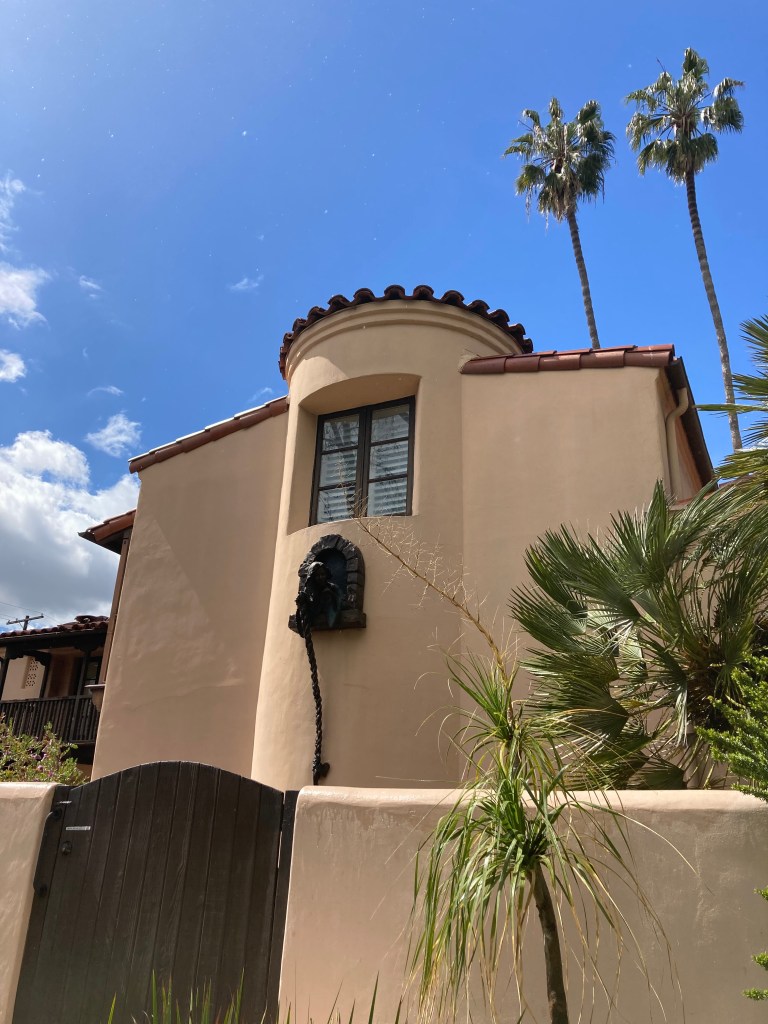
Another perk to visiting the Witch’s House was strolling through the Beverly Hills neighbourhood The Flats – which epitomizes California aesthetic.
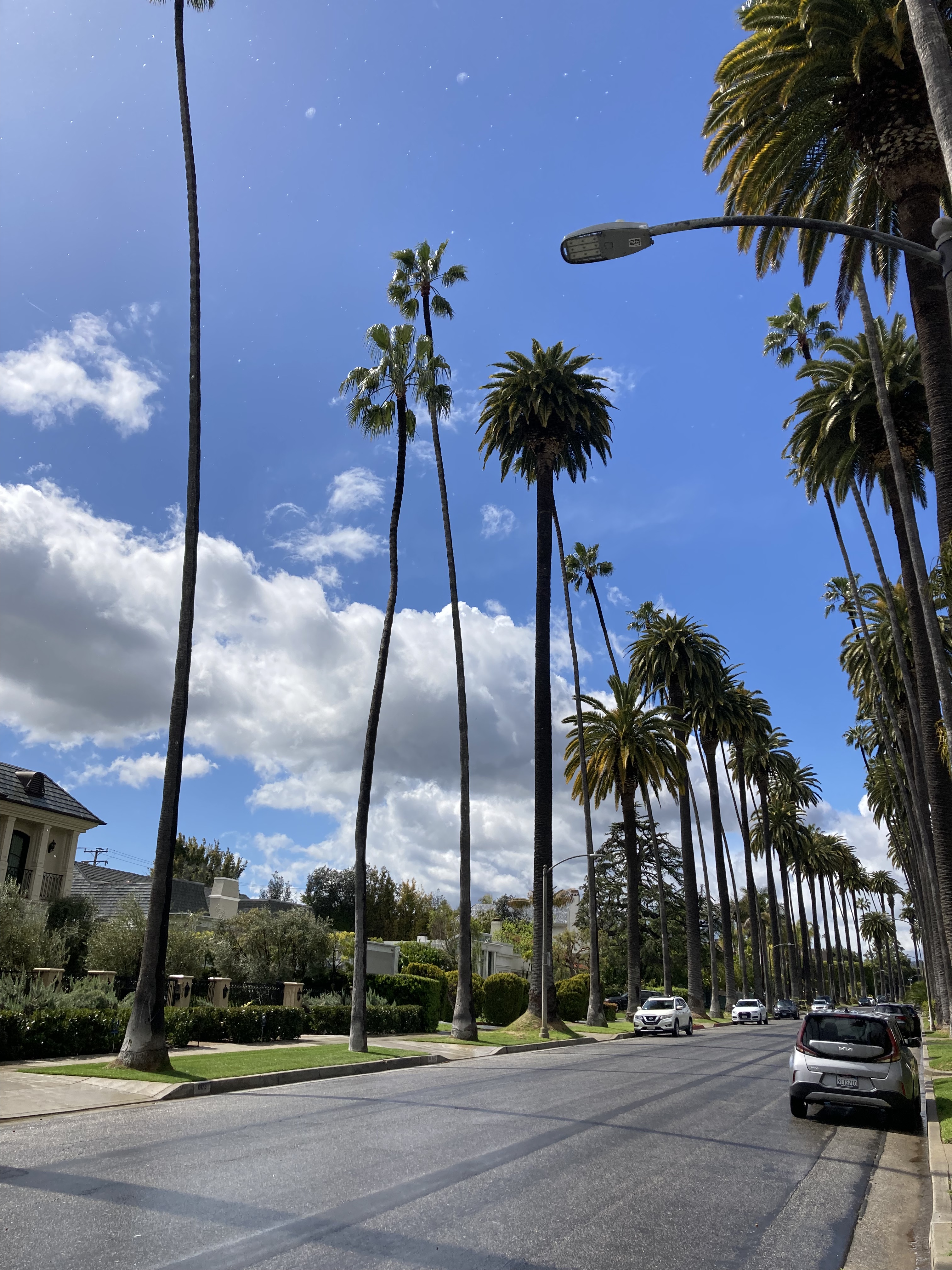
This is where you see the iconic, staple palm-lined streets that have characterized numerous films and music videos. There were also just so many beautiful homes – one even had this interesting Rapunzel statue on its siding.
Things I did not see in Beverly Hills that I would consider in the future:
- Beverly Gardens Park (I actually was sort of here as I parked near the Beverly Hills sign).
- The Beverly Wilshire – known from the set of Pretty Woman!
- Beverly Hills Hotel – The “Pink Palace”, where many celebrities have stayed, and rooms do not come cheap.
- Greystone Mansion – who doesn’t want to tour a mansion and its gardens?
- Virginia Robinson Gardens – first luxury estate built in Beverly Hills, once hosting lavish Hollywood parties.
- Beverly Cañon Gardens – public gardens, water features, walkways, outdoor dining.
Sunset Strip
The Sunset Strip.
As someone who grew up as a bit of a self-proclaimed groupie (I do shudder at this now), reading books by Pamela Des Barres, the Sunset Strip was like the promised land.
I’d been here before, spending nights in the dark Viper Room, the rustic Whisky A-Go-Go, and spontaneously getting thrown off a mechanical bull at Saddle Ranch. This time around was a bit more chill, as I was solo and exploring during daylight hours.
Walking along the strip, it feels like a busy industrial street. While it was sunny when I got there, it didn’t take long for it to start pissing rain again. The weather was moody. I really wanted to stop in to the Chateau Marmont for a drink (Bar Marmont is open to the public, but you need a reservation ahead of time). That’s one place I dream of staying in one day.
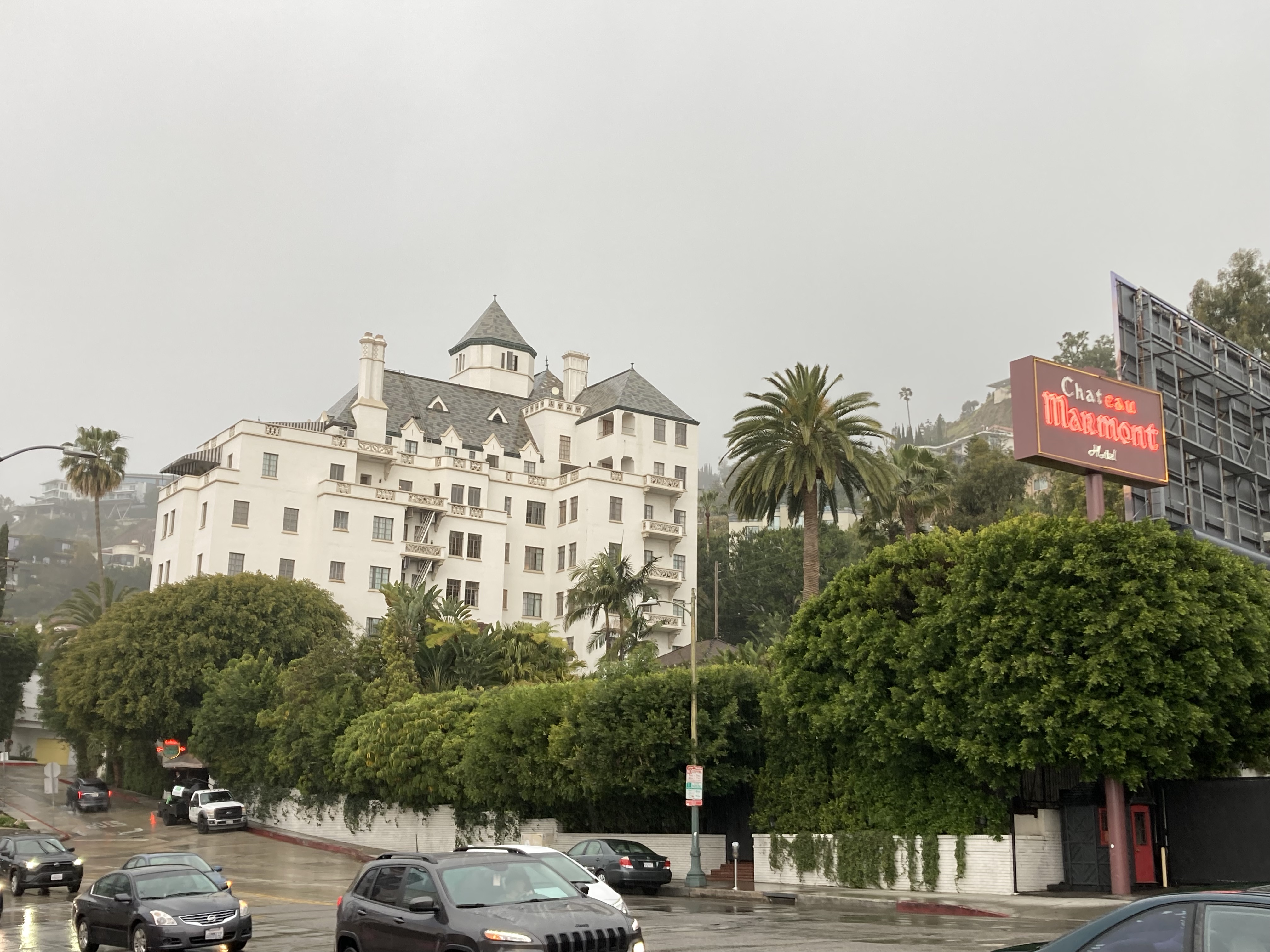
I walked by so many iconic venues – The Viper Room (Johnny Depp previously opened and co-owned from 1993-2004, though the building has a longer history; River Phoenix died here), The Roxy (opened 1973, proclaimed as the best live music venue in LA), The Whisky a Go-Go (opened in 1964, from the 1960s go-go dancers and freak scene to punk and hair metal, putting the sunset strip on the map). I ended my tour at The Rainbow Bar & Grill. While these first three venues are primarily live music venues, open at night, The Rainbow is a restaurant and (dive) bar, and more of a hangout spot. I found it to be a welcoming place. The outside bar is called Lemmy’s Lounge, paying tribute to Motörhead’s Lemmy Kilmister (there’s even a statue), while the inside is like a rock museum, with memorabilia plastered all over the walls (something I love to see). Since it was open I grabbed a drink and took it in, the walls oozing with history and hinting at the stories they could tell.
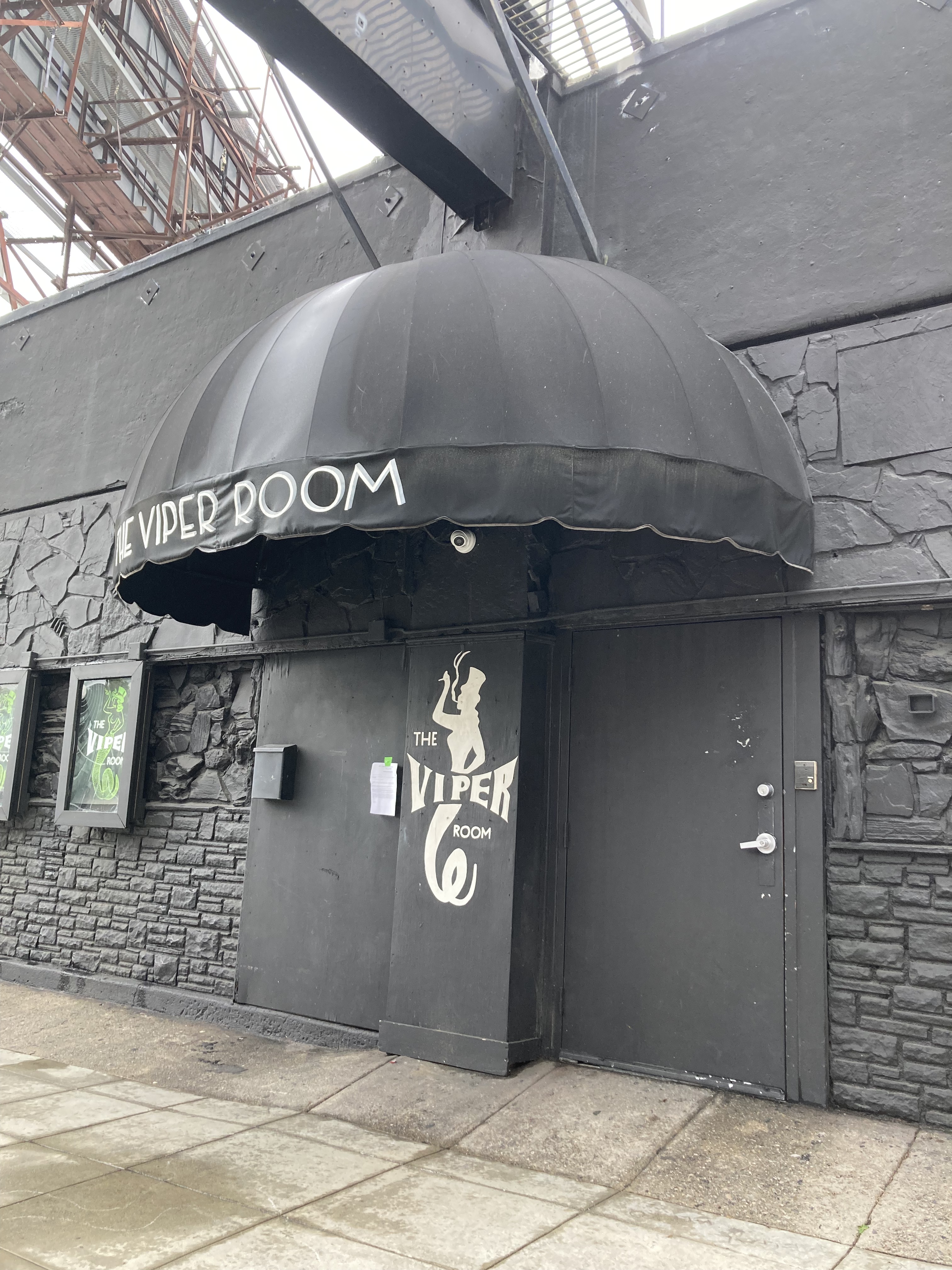
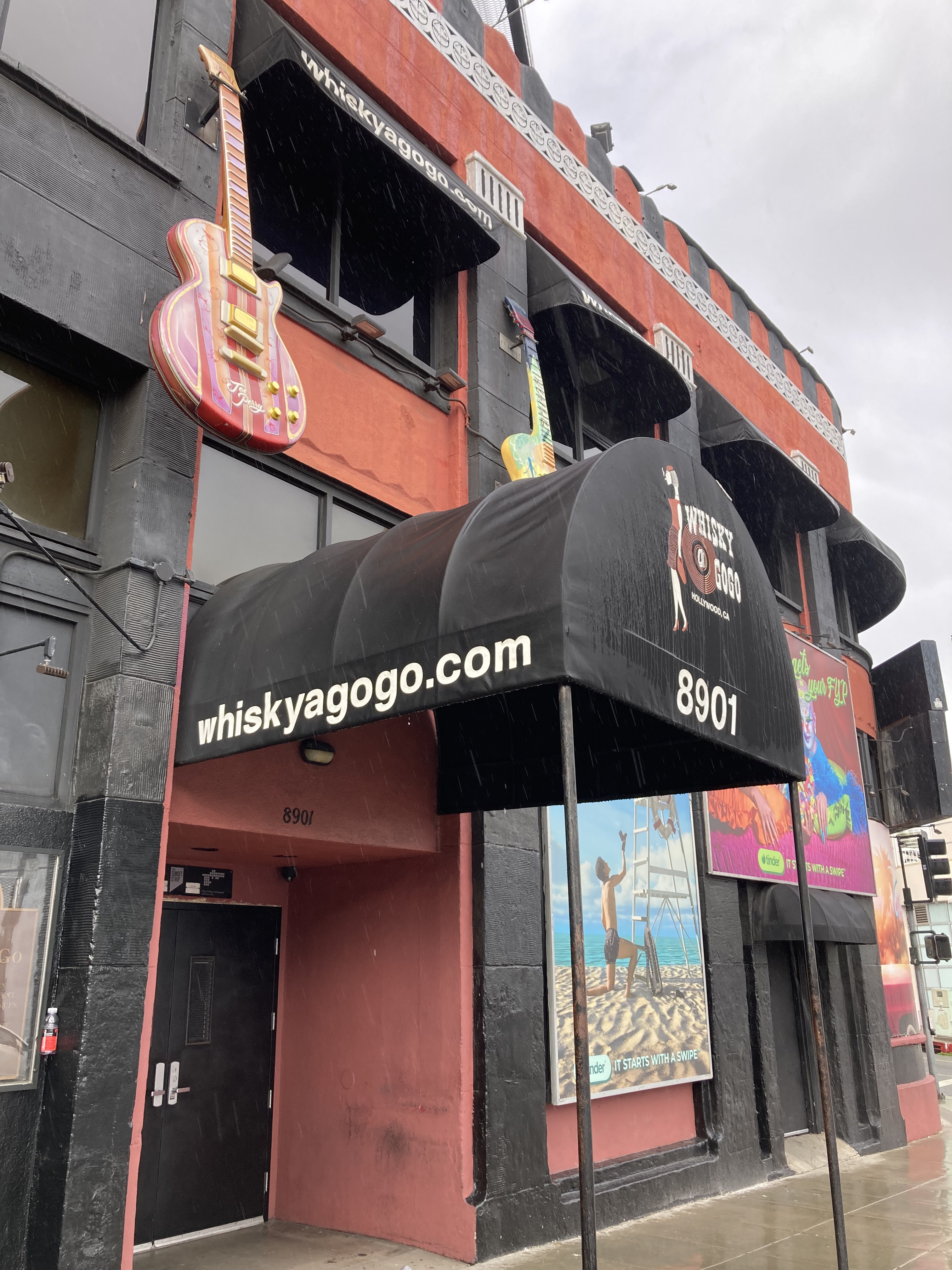
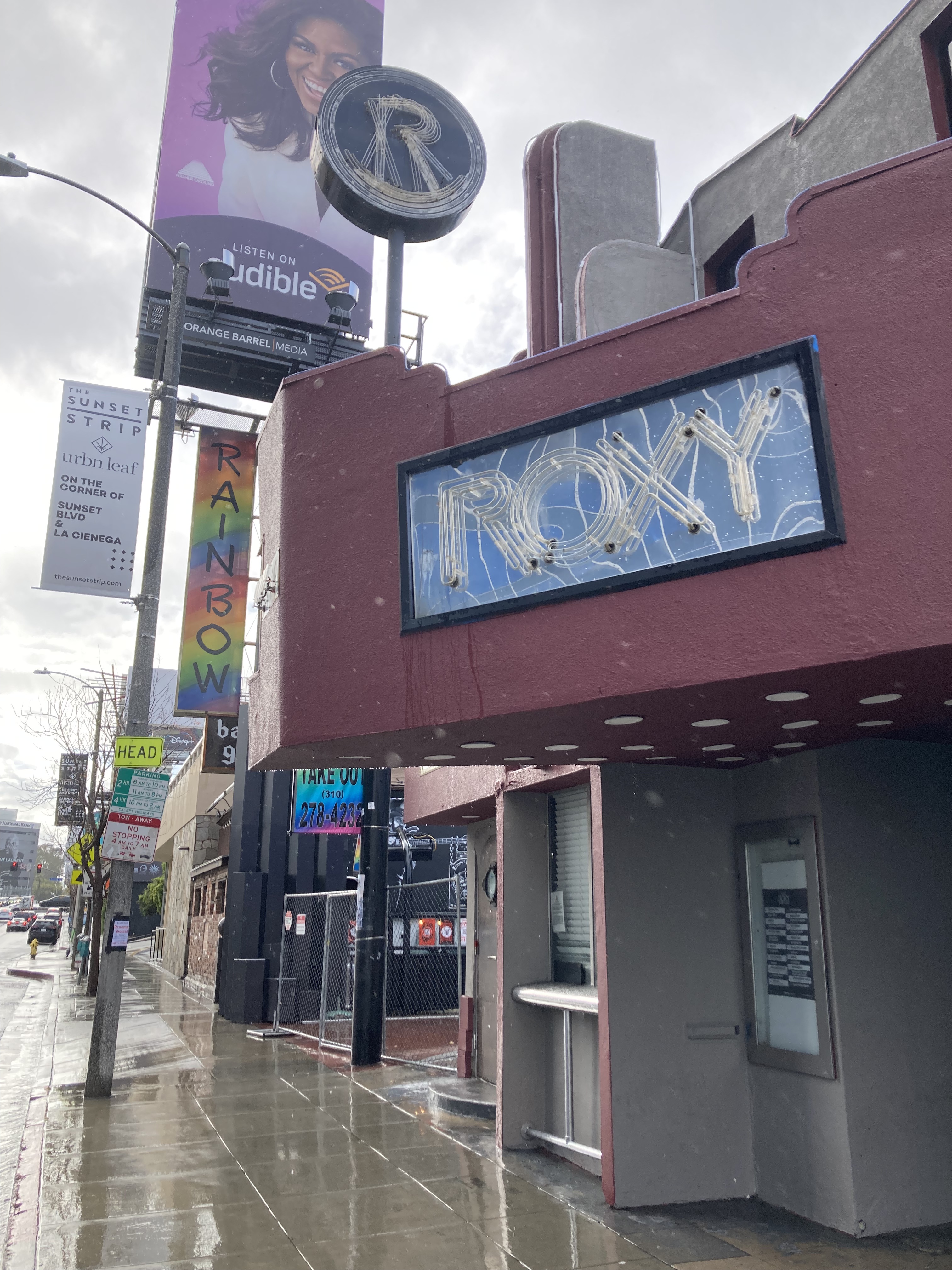
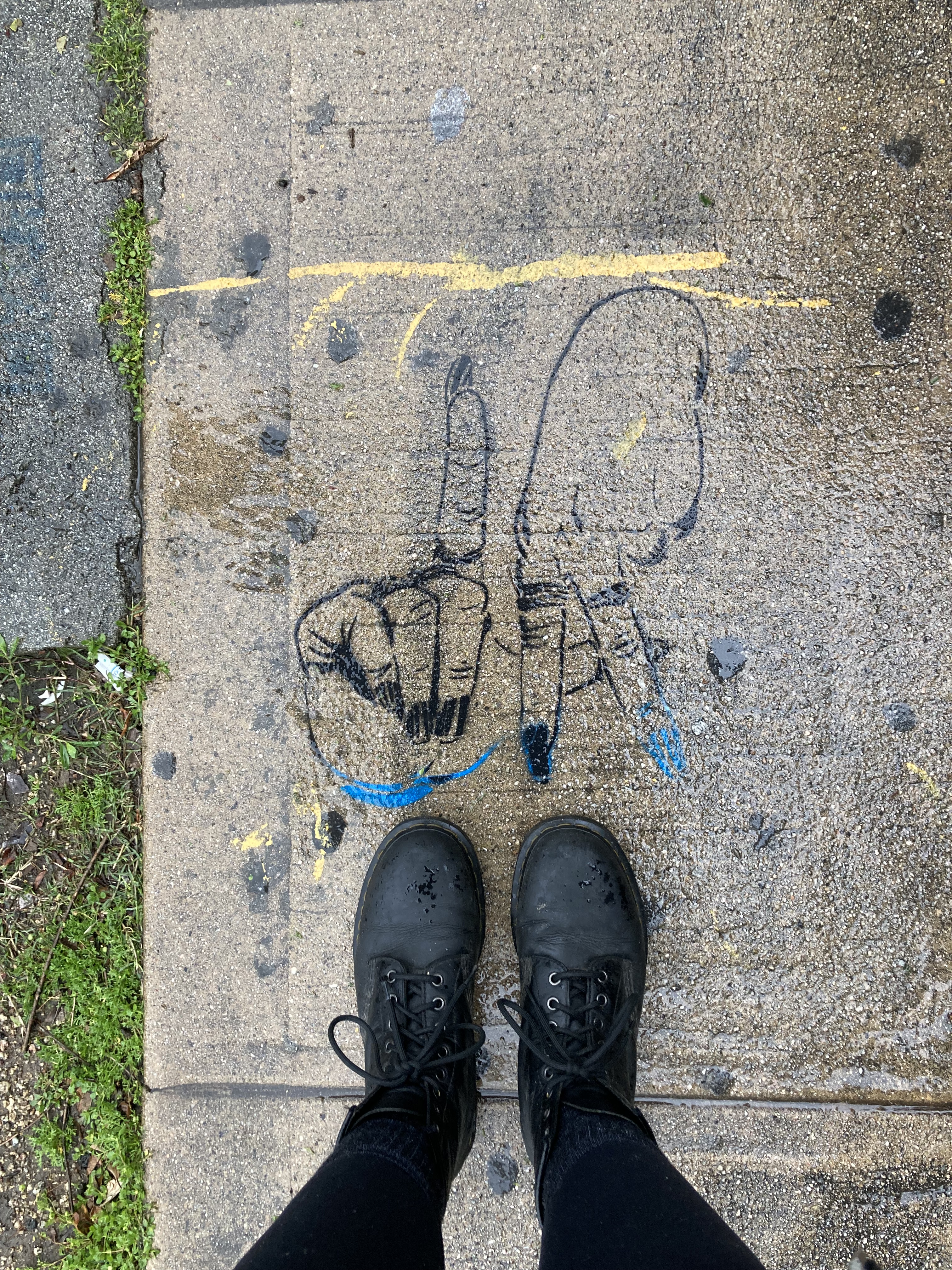
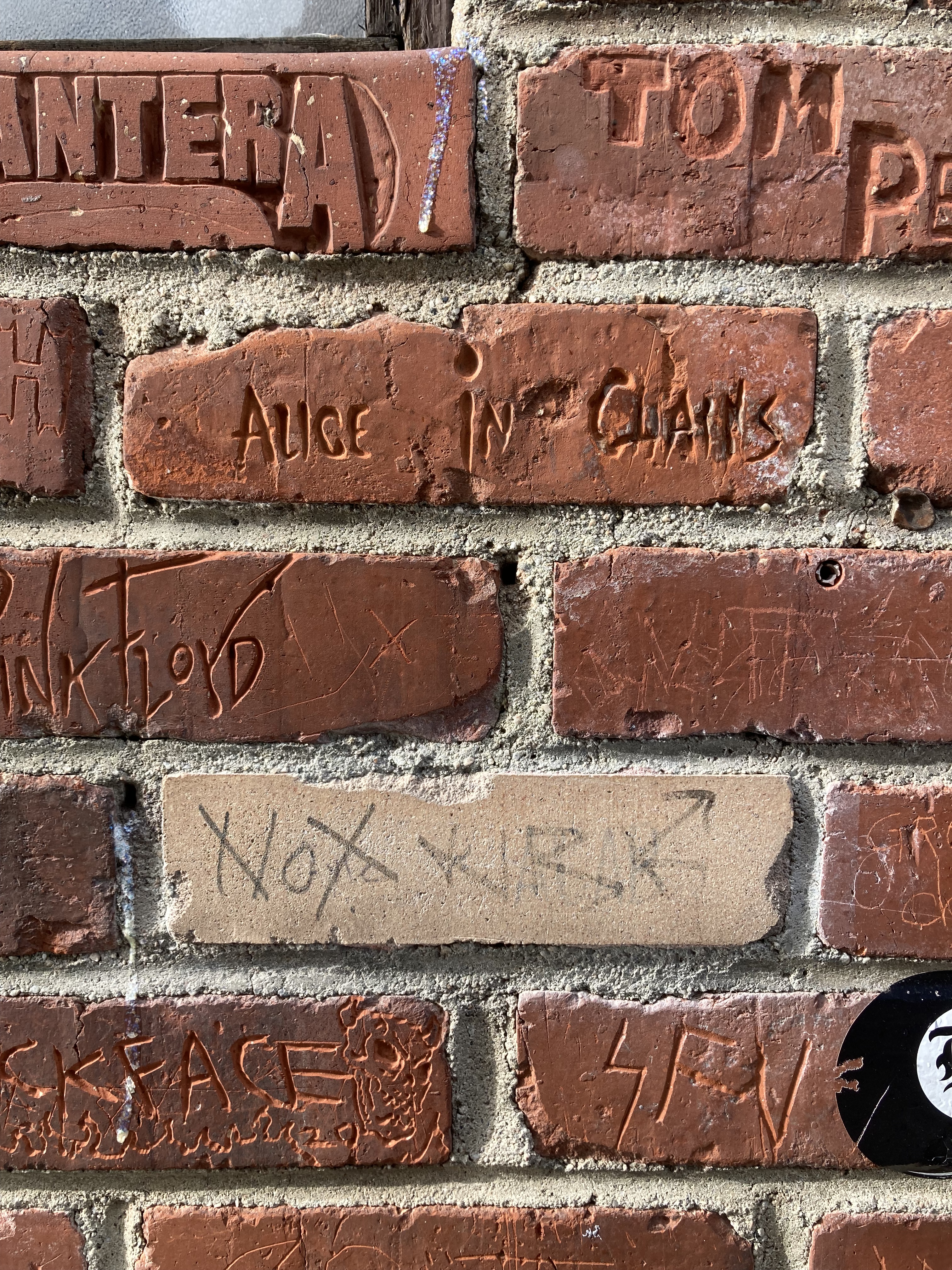
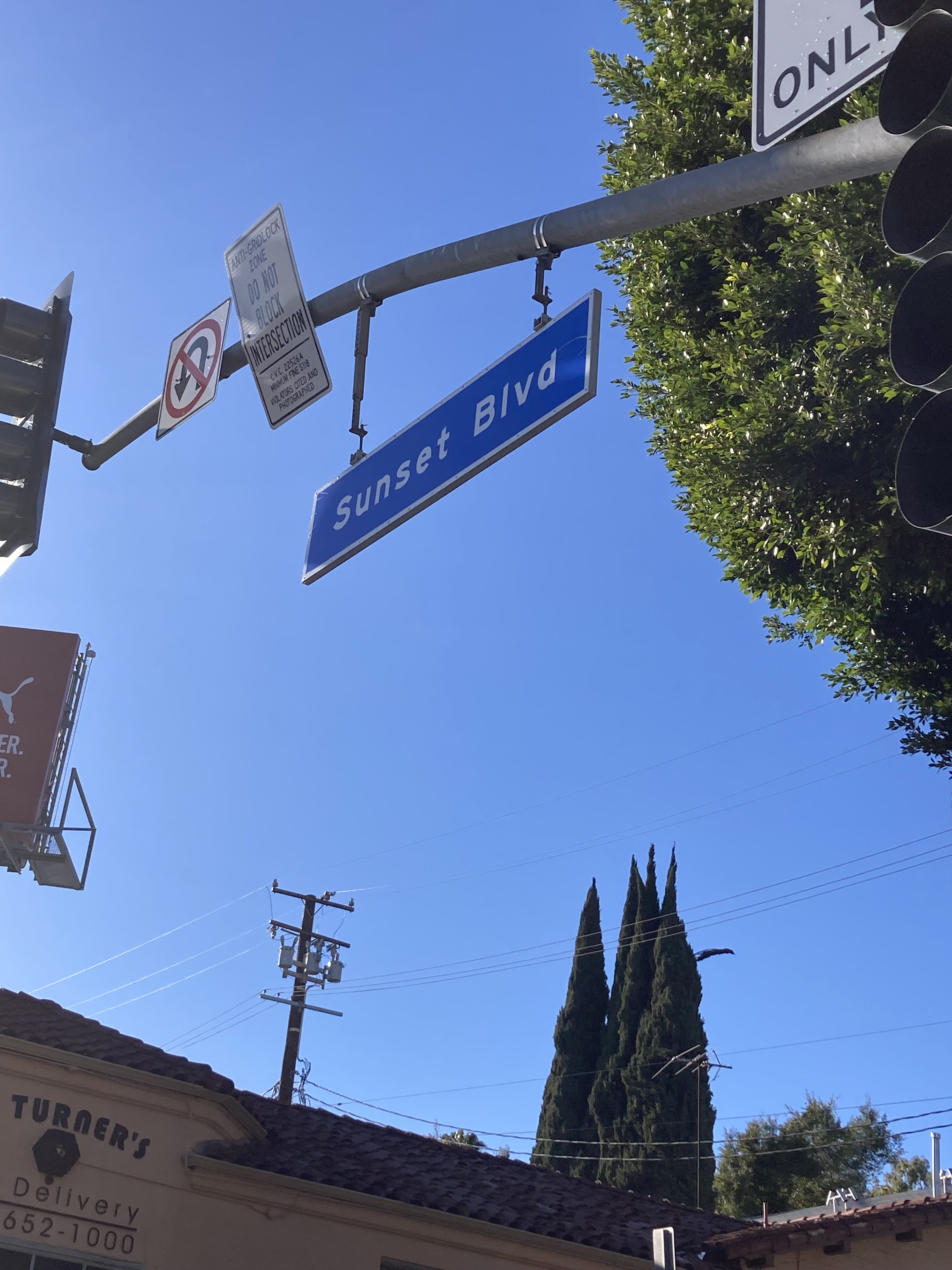
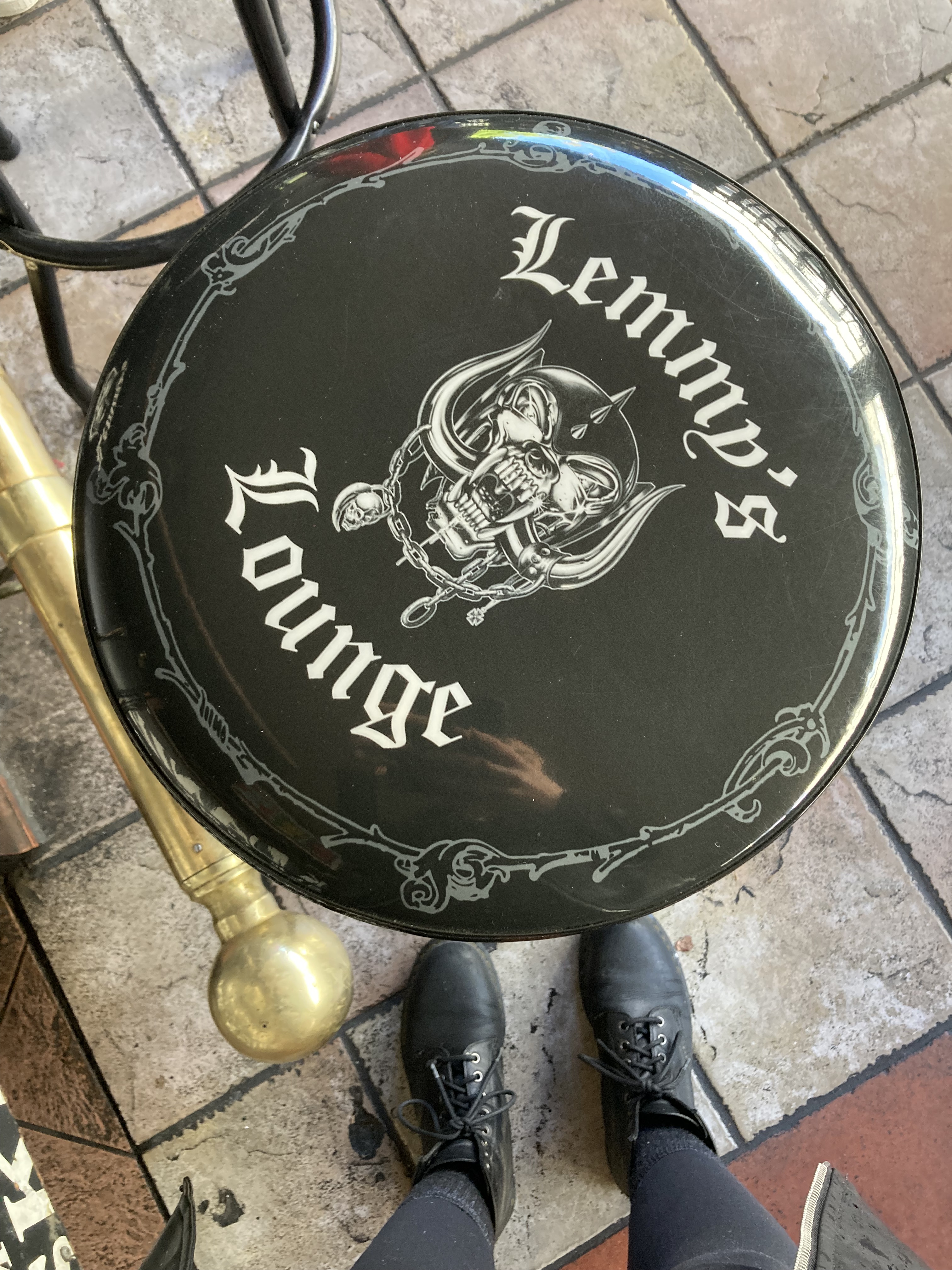
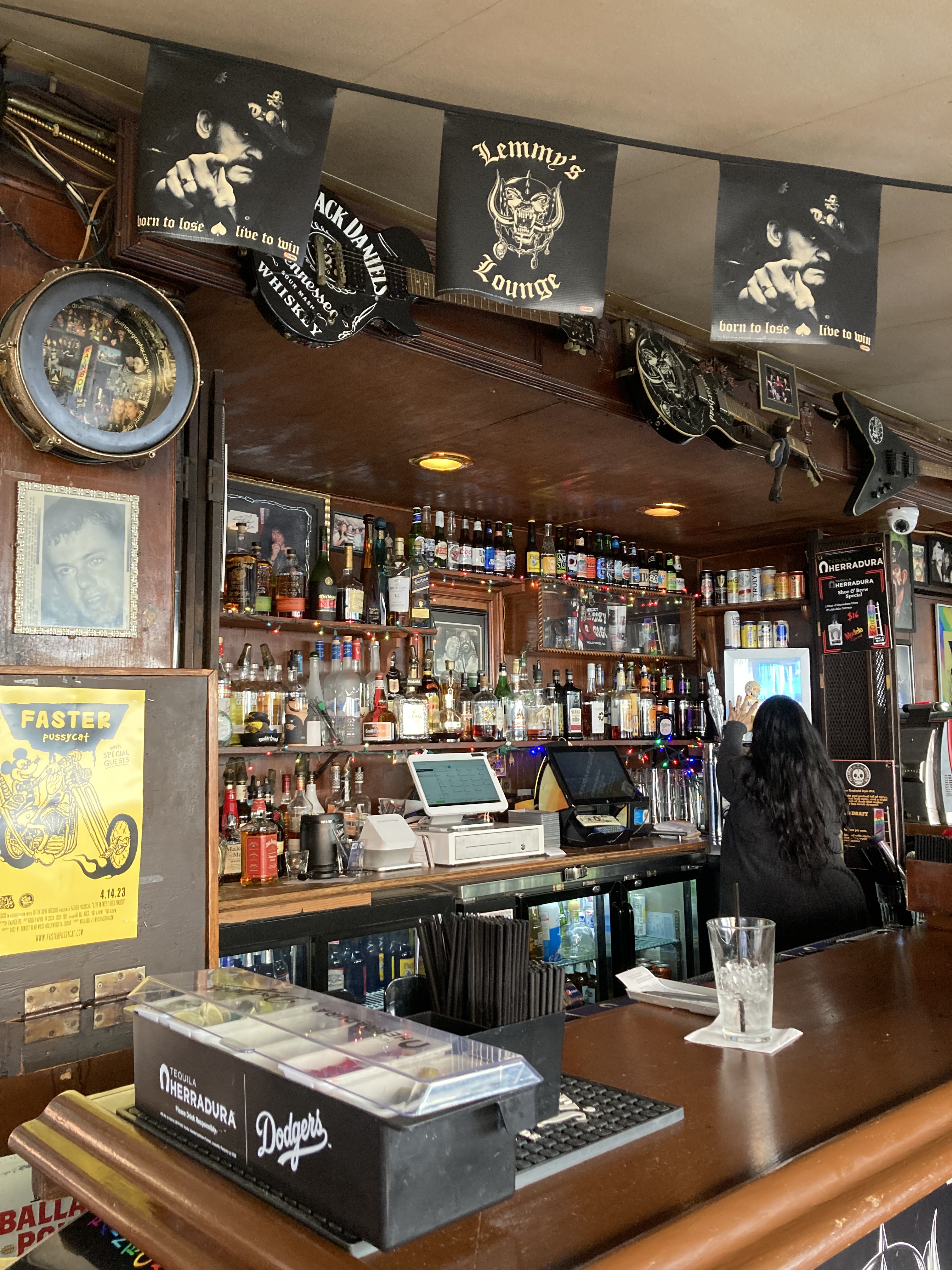
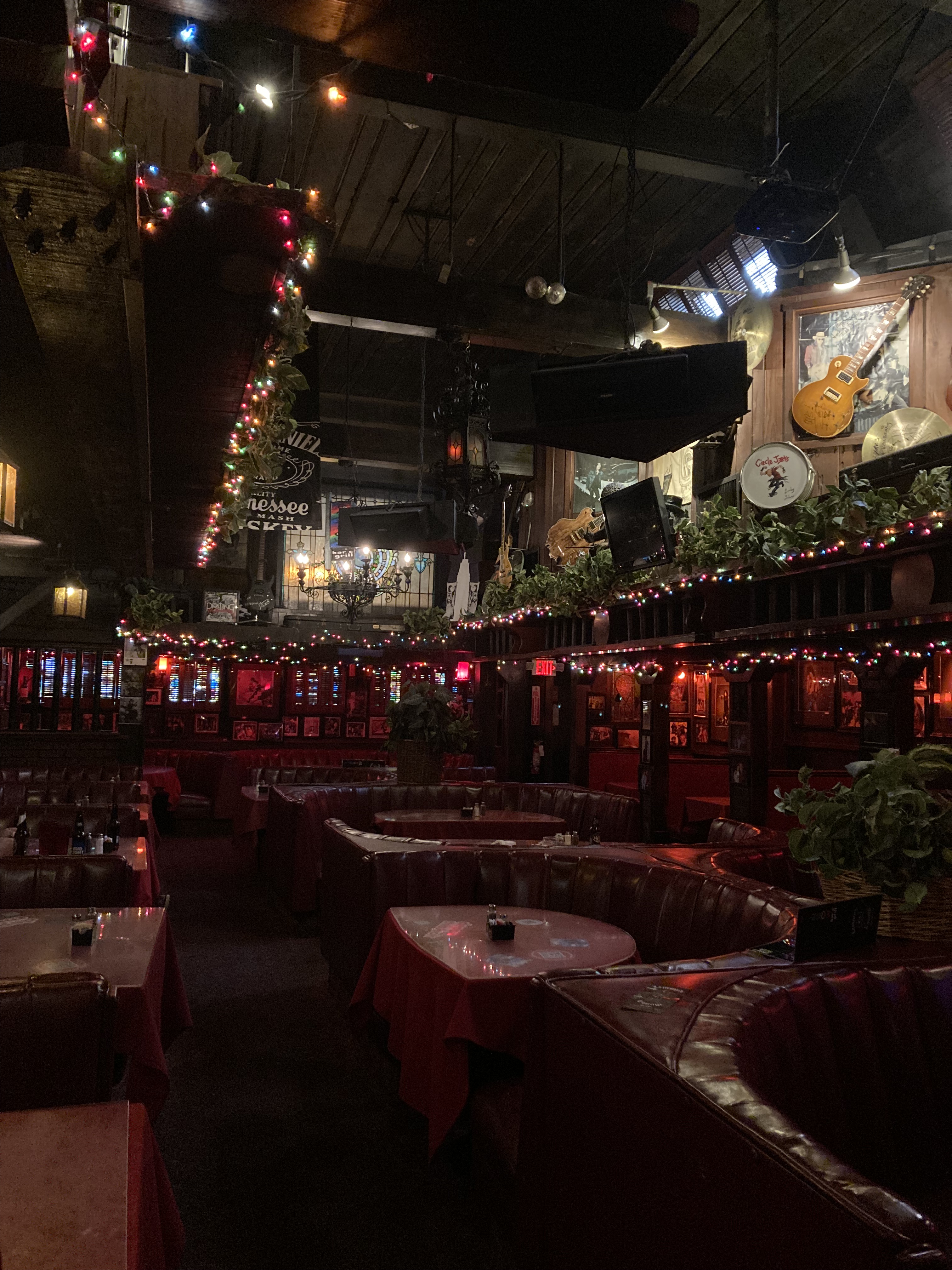
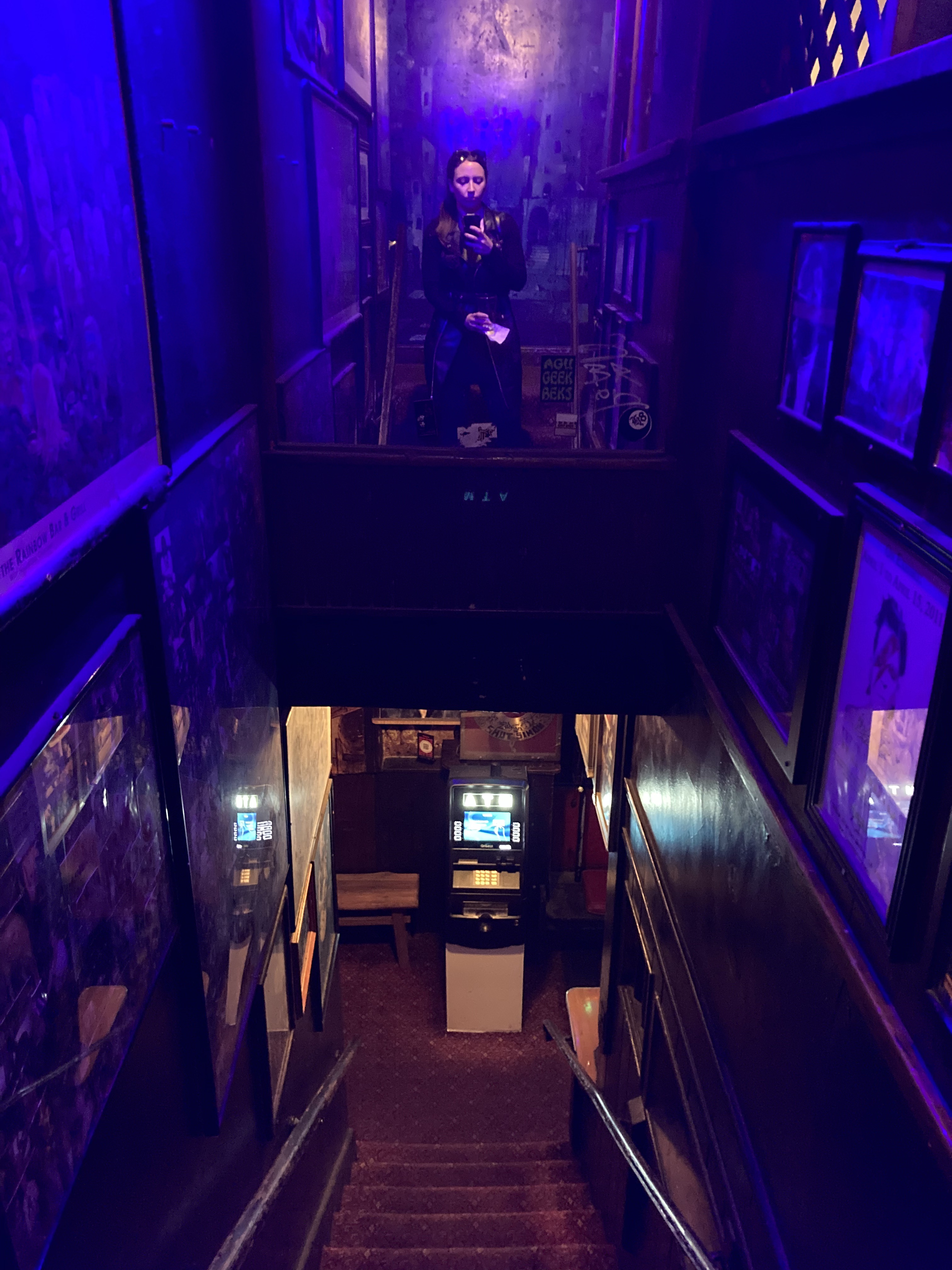
The Sunset Strip isn’t what it used to be, but it encapsulates a lot of significant music history. Next time I get here I’d want to attend live shows in the venues, especially the Roxy, since I haven’t been there.
There’s also places like Book Soup and The Comedy Store if that’s your speed.
And make sure to take note of Andaz West Hollywood – formerly the Continental Hyatt House, or “Riot House”. So many iconic rock star residencies, parties, and stories happened here – Jim Morrison hanging from a balcony, Led Zeppelin throwing things out windows, motorcycles ridden through corridors, Robert Plant shouting “I am a golden god!”, Keith Richards throwing a TV out a window. And films like Almost Famous and This Is Spinal Tap filmed scenes here, too.
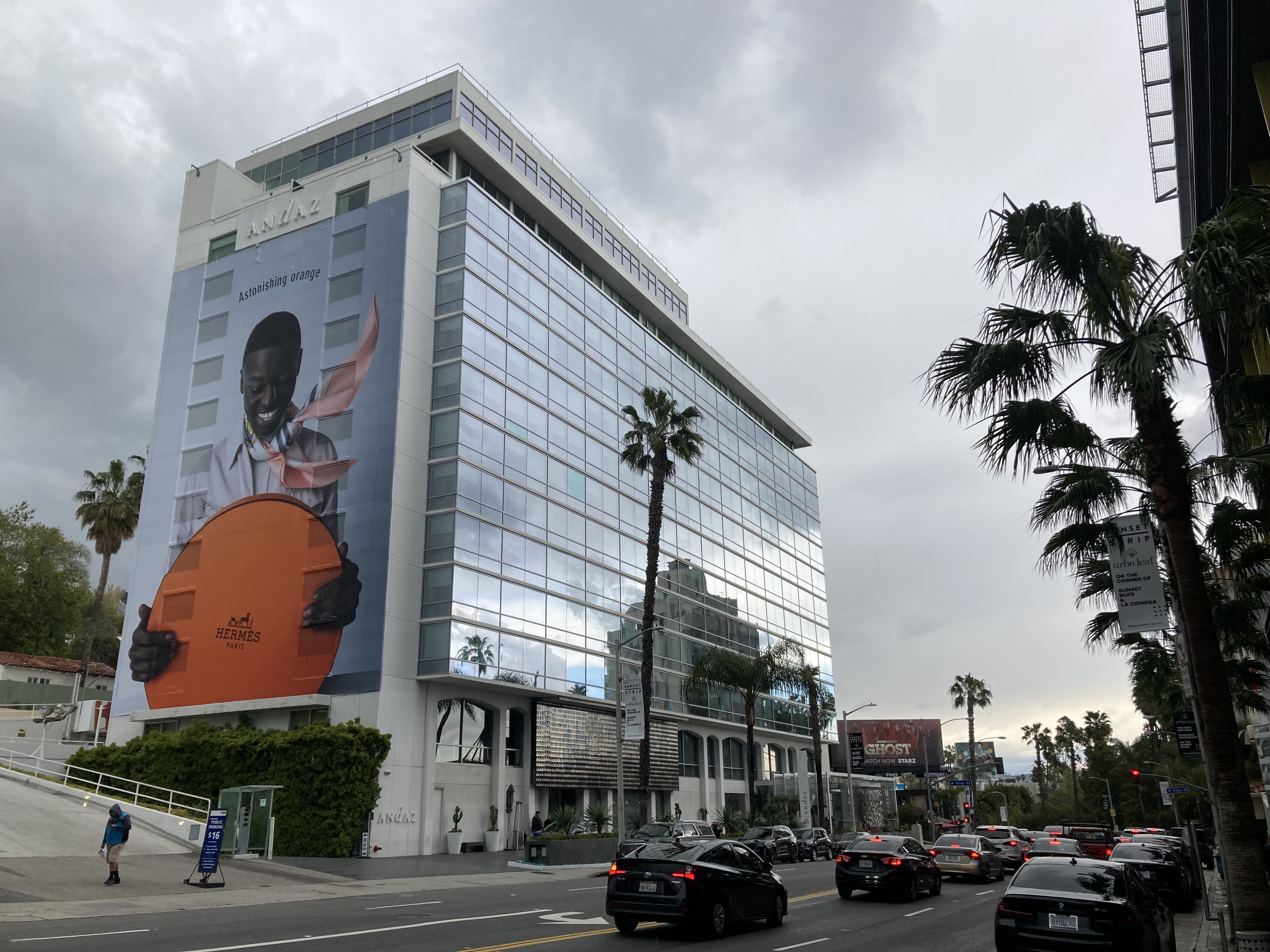
I decided to sleep in Hollywood this night. I was in West Hollywood already, and the next morning I was planning to start my day on Hollywood Boulevard, so it didn’t make sense to leave, and I found a good street parking spot just a few blocks from the Walk of Fame (which was surreal).
While I find referring to a forum like iOverlander usually lets you know whether parking is permitted or not – here is an article I found that notes some traffic and parking regulations for LA County. For example, overnight parking is restricted in some cities, like Beverly Hills.
Loss On The Road
But sleeping in Hollywood was not the only surreal thing to happen here. I woke up to news that one of my dearest friends, Tyler, had died.
You’re never prepared for this kind of news, but I think it is a unique experience to get it while on the road – alone and on the other side of a continent from loved ones.
I don’t mind being alone. I would say that I like it more than most people. Especially when handling hard things – I am better at processing on my own. But multiple people expressed their concern, as these are the times in life where you lean on others for support. That’s not something I’m used to. But I will always be grateful to those who showed up for me.
Oddly, another friend of mine lost someone the day before. We were both going through something similar, in tandem. Though I hesitate to draw parallels, as no loss is the same, because every relationship is different.
So I got the news, and I think I was in shock. The world didn’t feel real. It was like everything was glazed over. I think I was also probably dissociating. I didn’t know exactly what had happened at this point and was trying to find out. While I was under the impression that he had already passed, I would find out that night that he actually hadn’t passed yet but was taken off life support during the day. A mutual friend, one of Tyler’s closest, spent over two hours on the phone with me. It was an act of kindness that I will never forget. He informed me of what had happened, and we chatted about our friend.
I had just been talking to Tyler a few days prior. A week before a song came on that I hadn’t heard in a long time that reminded me of him.
You might ask, why share this in a “travel blog”? Well, my blogs aren’t just about vanlife and destinations. They’re about the realities of life on the road. I like to keep it real. Anything can happen on the road. We think about our vehicles breaking down. Or theft. Or wildlife encounters. But life doesn’t stop. We can have a turn in our health. We can lose people.
So, what do you do when the worst thing happens?
Life is full of unforeseen events. You react and adapt. You make arrangements. You think ahead so you’re prepared for the unexpected.
To me, a death trumps everything else. Other things get put on pause. I realize not everyone thinks this way, and it isn’t always possible to put things on hold. That’s a cruel reality about death – life goes on. But you make space if you can.
The biggest obstacle for me was the fact that I didn’t just have to drive down the road to attend the celebration of life. I was on the other side of the continent, and logistically, I couldn’t get there. That’s something I’ll carry guilt over for the rest of my life. All I could do was send flowers and contribute to expenses.
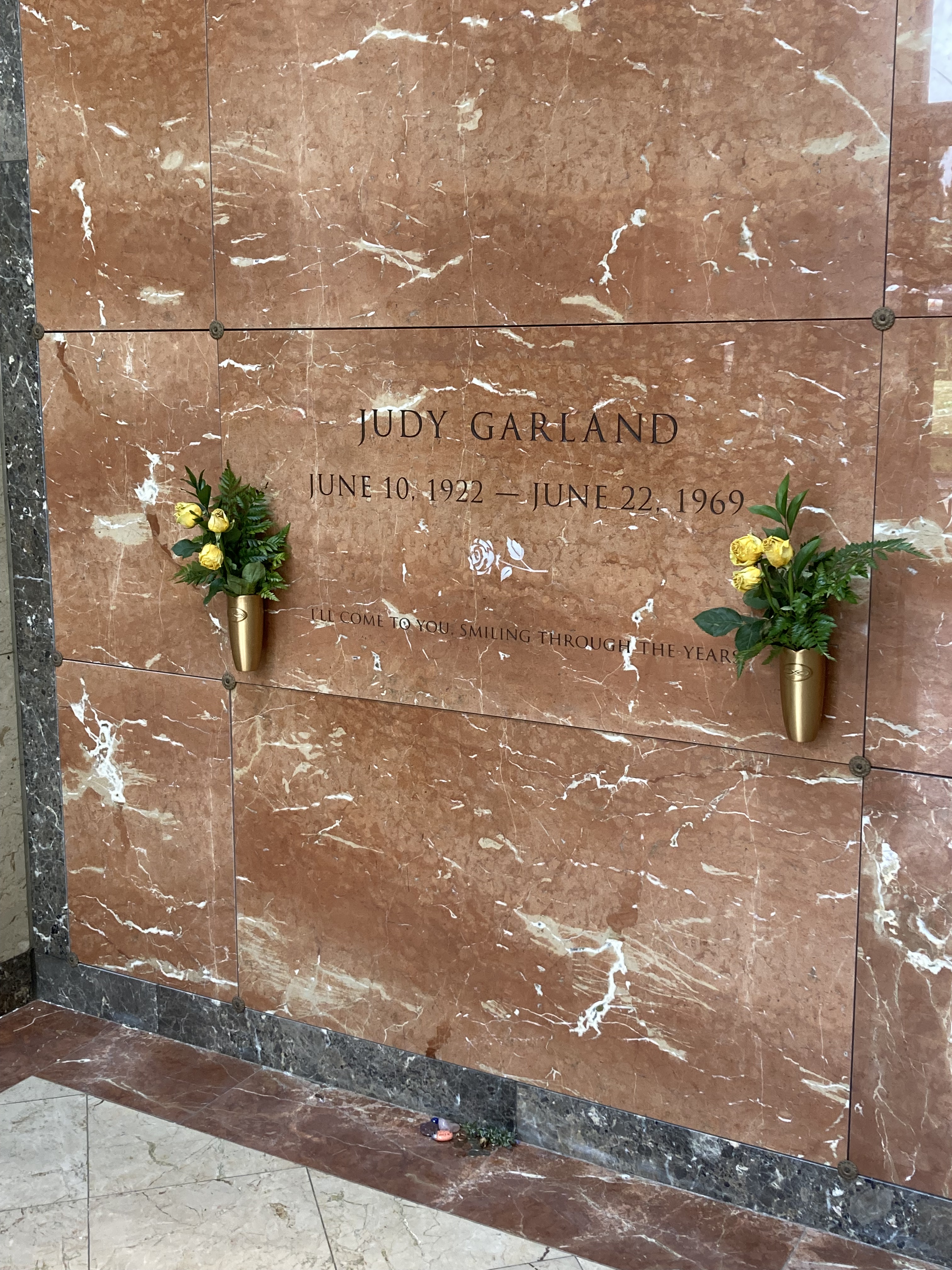
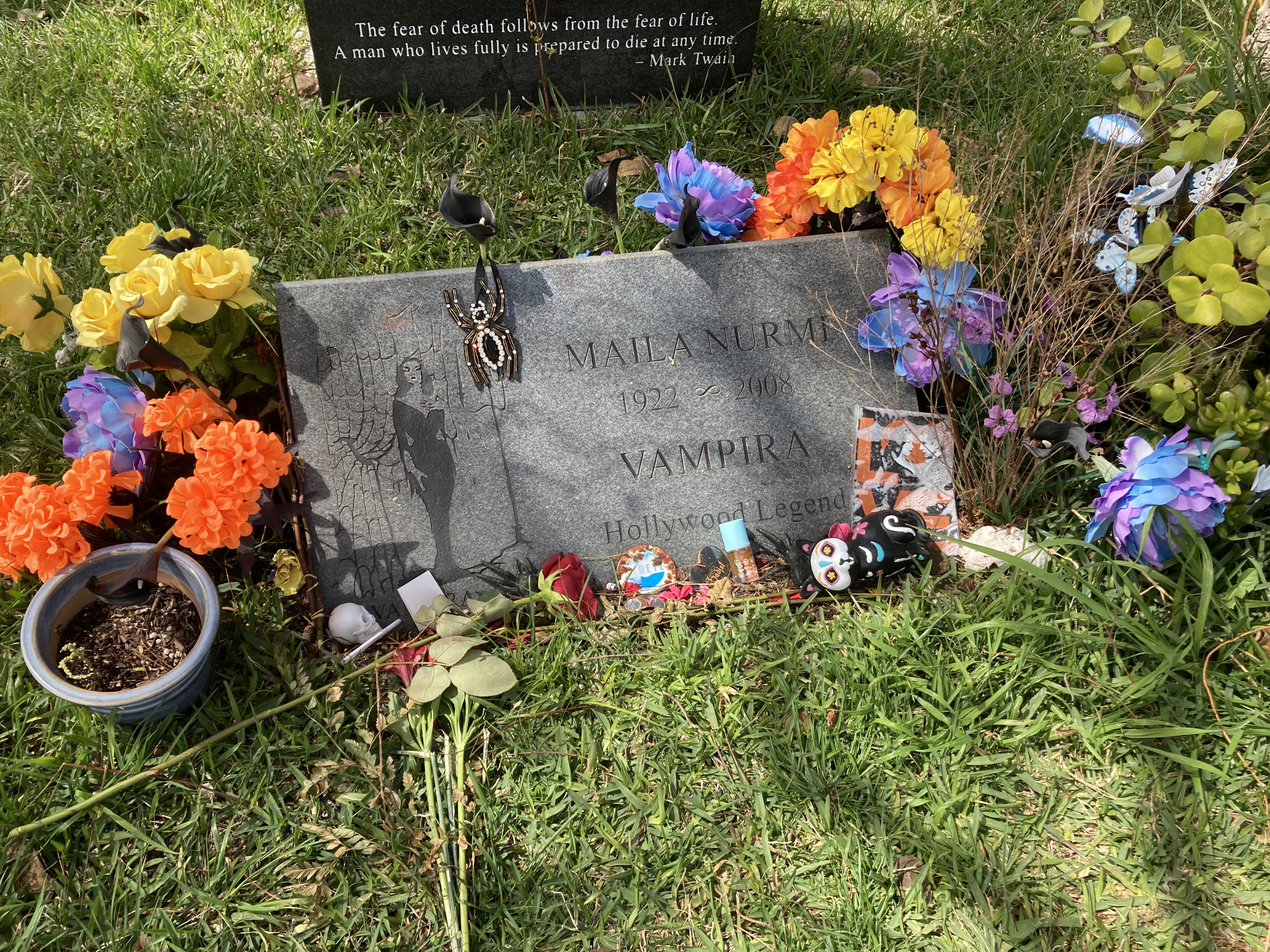
Fittingly, one of my stops in Hollywood that day was the Hollywood Forever Cemetery. I think, in an indirect way, my paying respects to a couple of people buried there helped me pay respects to my friend.
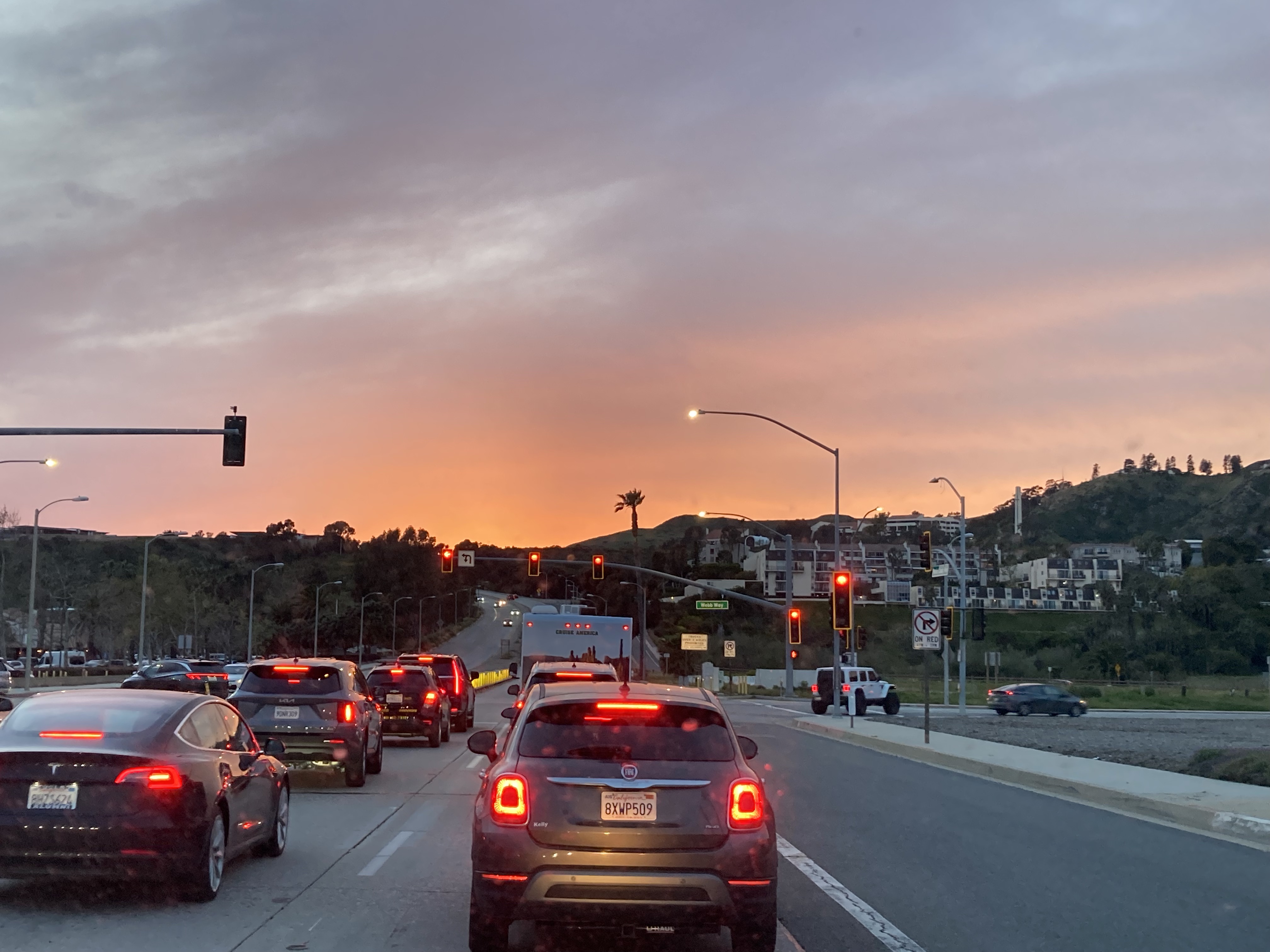
And I will never forget the sunset on the day that Tyler died. As I drove out of LA and back to Malibu – it was the deepest orange sunset I had ever seen in my life. It was like the whole sky was on fire. I got to Zuma Beach to watch the tail end of it, and this is what I mean when I say there was something in the orange. I will forever think of Tyler when I see an orange sky at dusk.
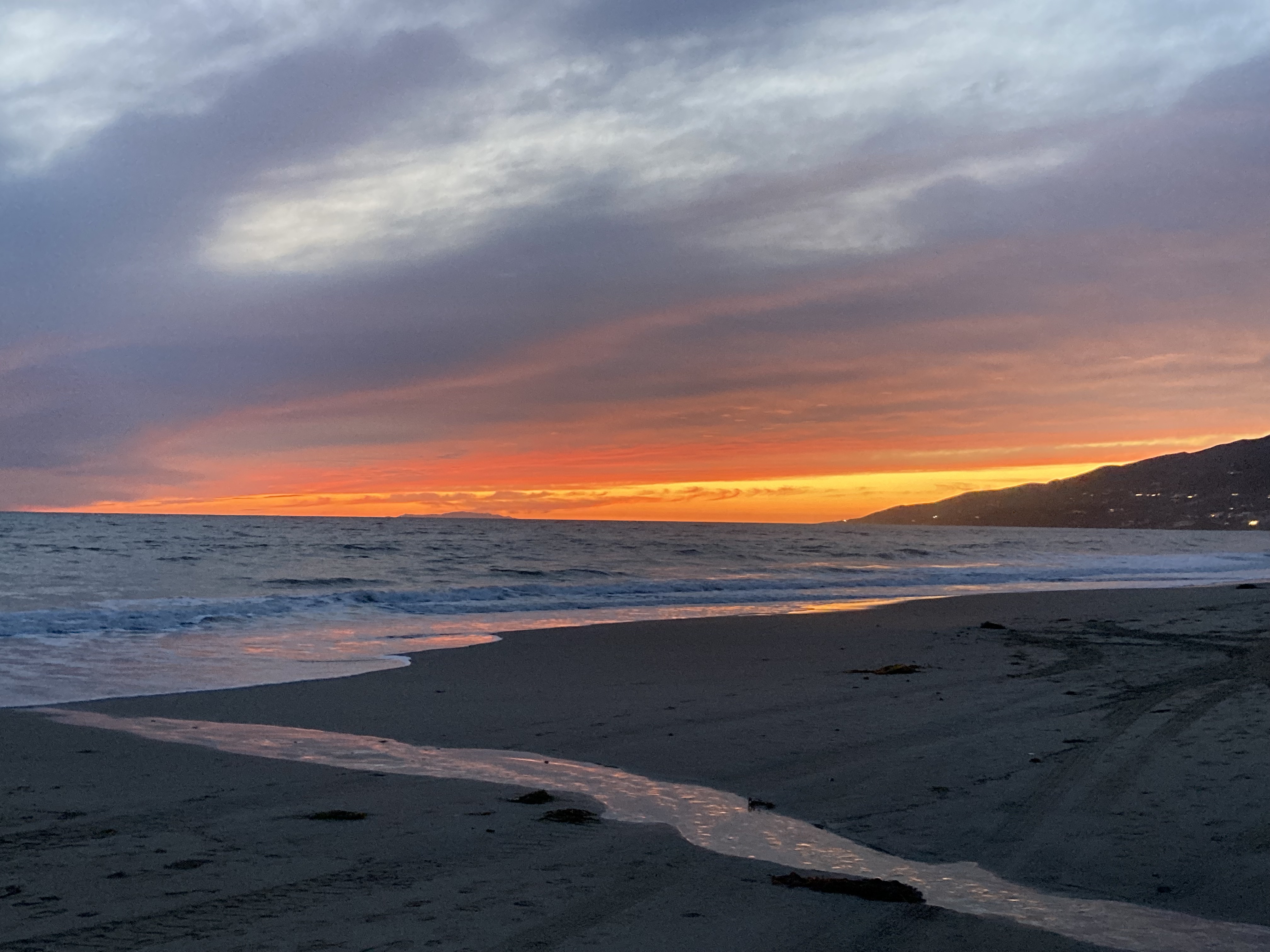
The next couple of days I hunkered down in Malibu, in a daze.
Tyler was the kind of friend you could only dream of having. He was there for me when no one else was. He always seemed to know the right thing to say. He was always positive, uplifting, thoughtful, and inclusive. He was funny, and witty, and kind. We bonded over music. It’s hard to put into words when you just click with someone, and how much that means. He’s inspired me to be a better person and better version of myself in so many ways, and I’m still working on that. I’ll carry him with me always.
The road teaches you some hard lessons, directly and indirectly. Life doesn’t stop. Expect the unexpected. Do what you can, while you can – appreciate people when you’re with them. Make the plans you’ve been putting off. Our time in this life is fleeting and never guaranteed.
Hollywood
Hollywood also needs no introduction.
My overnight spot was a few blocks northwest of the Walk of Fame. After moving my parking spot (it was 2 hour parking in the day), I simply walked down.
On the way I happened across a very interesting building, called The Magic Castle – which turns out is a private headquarters of sorts for magicians.
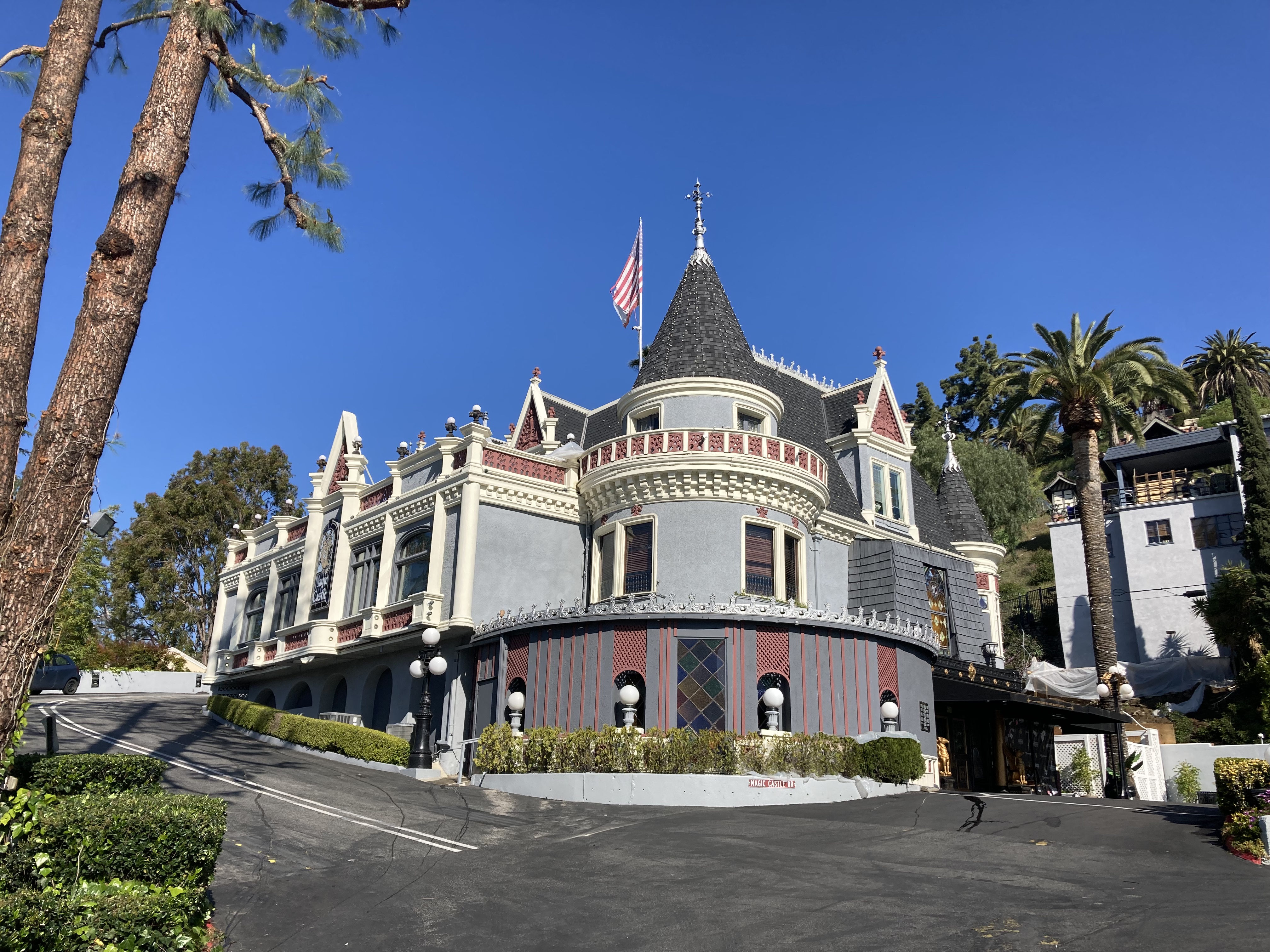
I walked along Hollywood Boulevard and the Walk of Fame, leisurely taking in the stars and the famous establishments, like the Chinese Theatre and Hotel Roosevelt. I walked past Hollywood & Vine (which became known in the 1920s for its concentration of radio and movie related businesses). I explored some shops. I grabbed a coffee (there was a Ghirardelli’s). It was pretty chill. (Not to sound like a psychopath, having just found out that a friend died – I was absolutely dazed and confused – but in looking back after a few years I am able to separate the experiences).
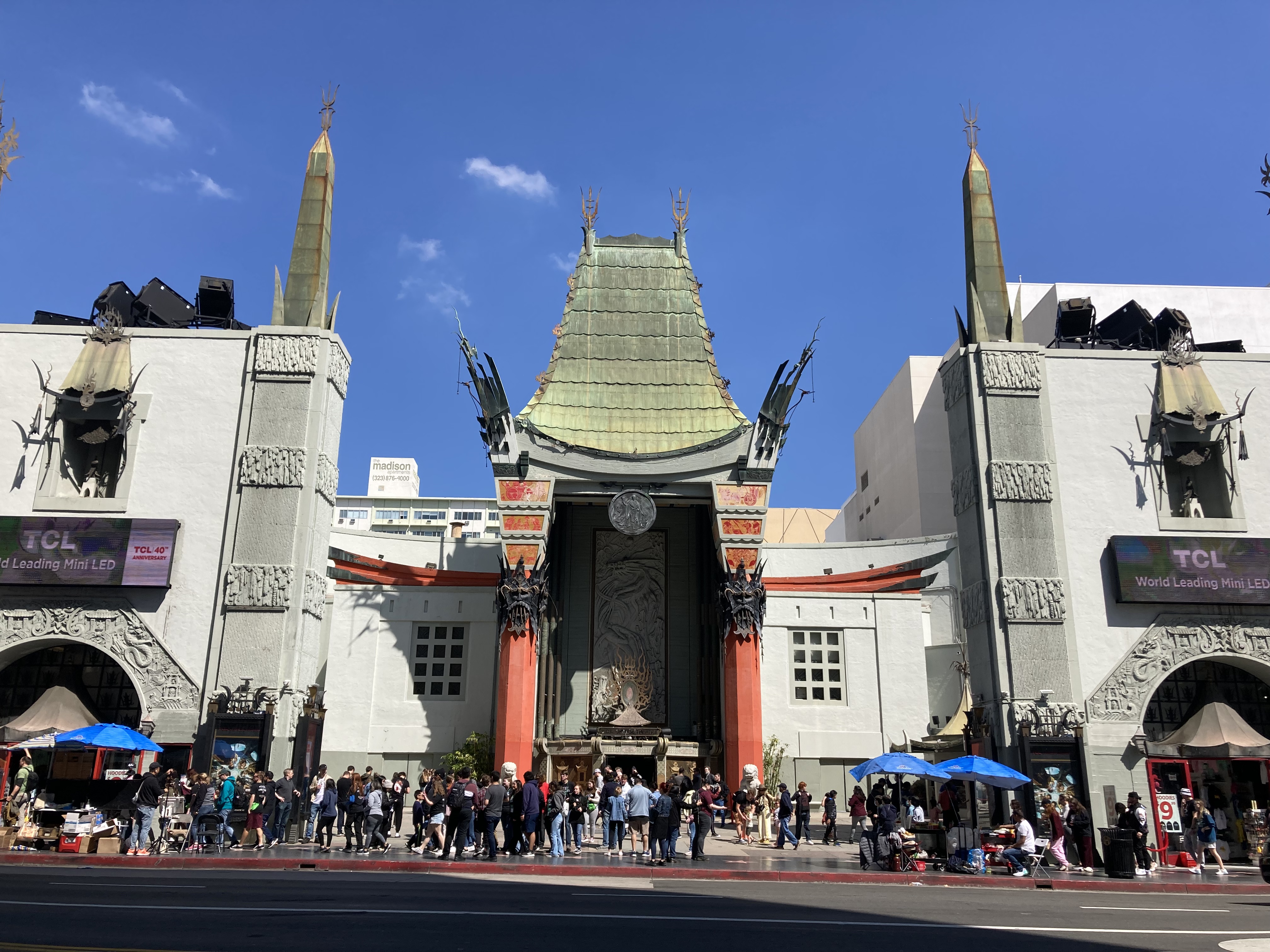
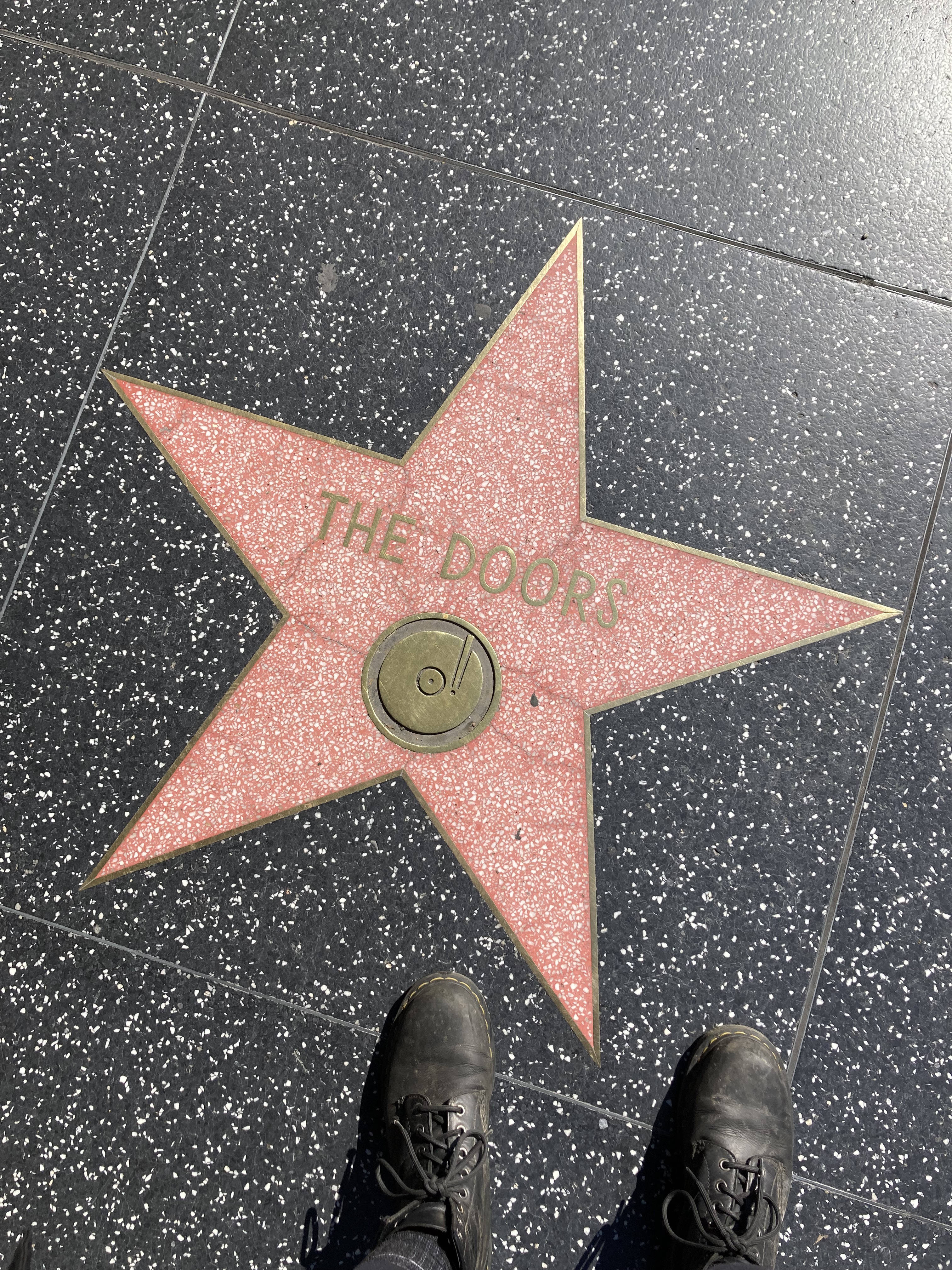
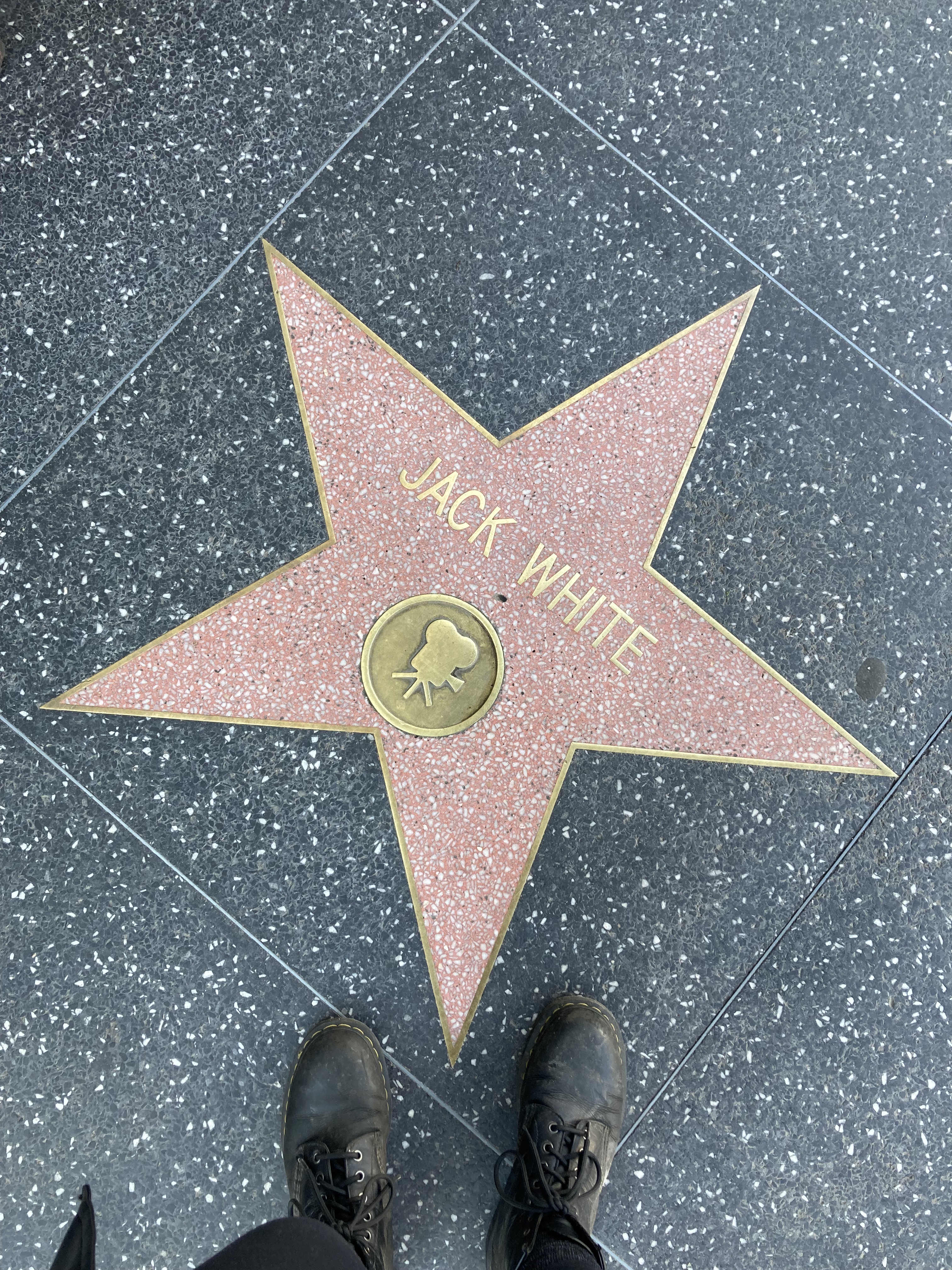
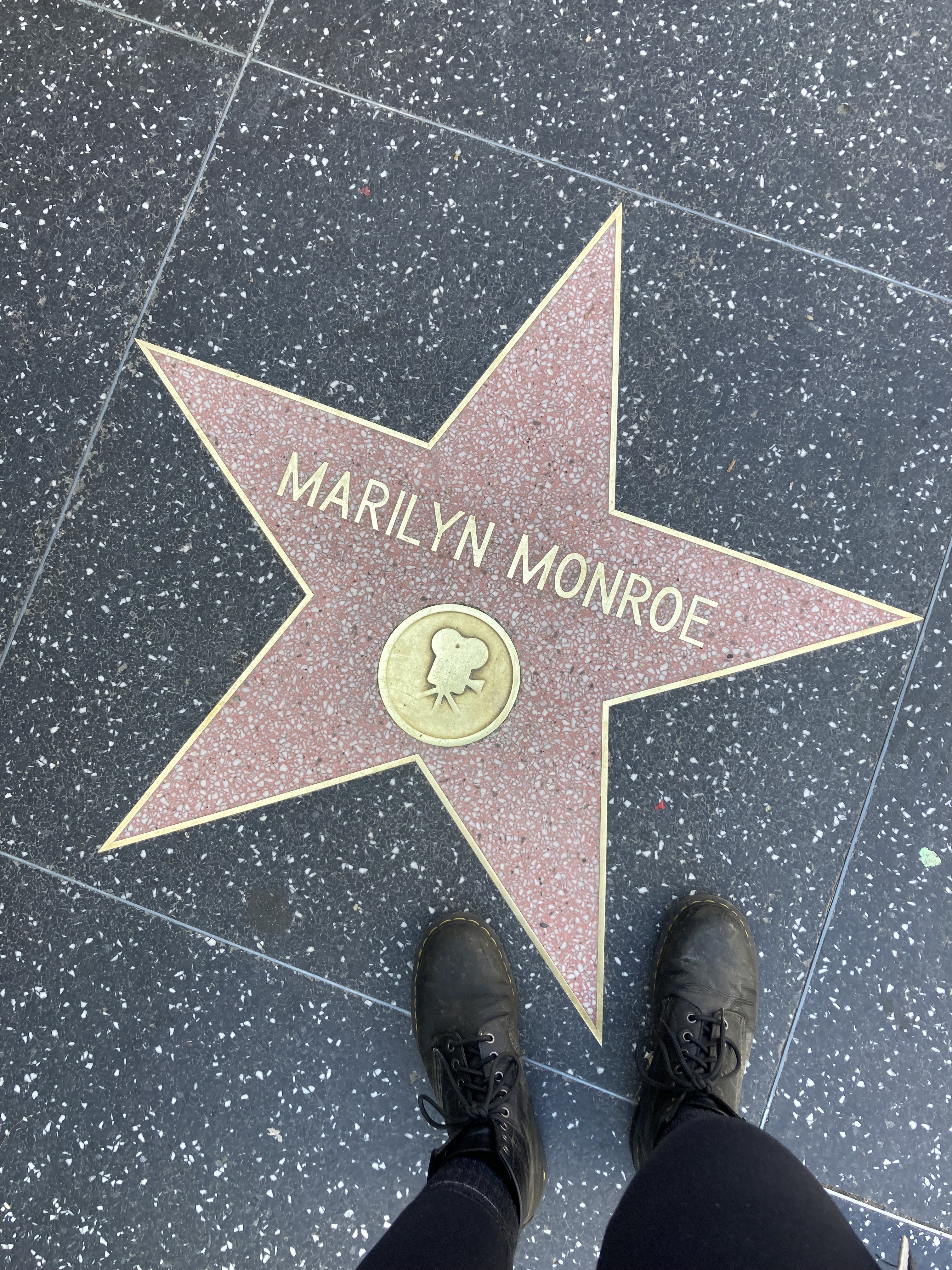
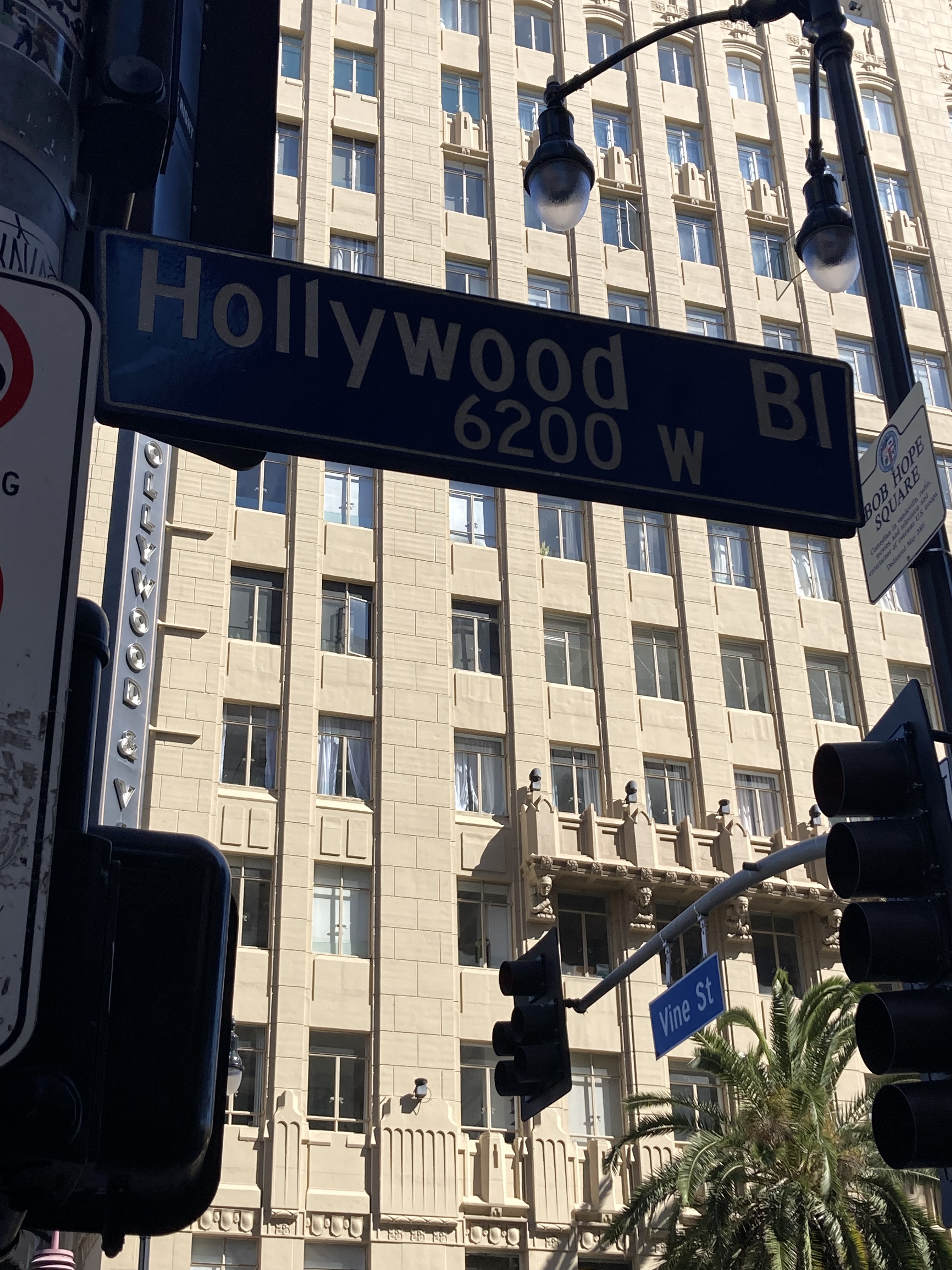
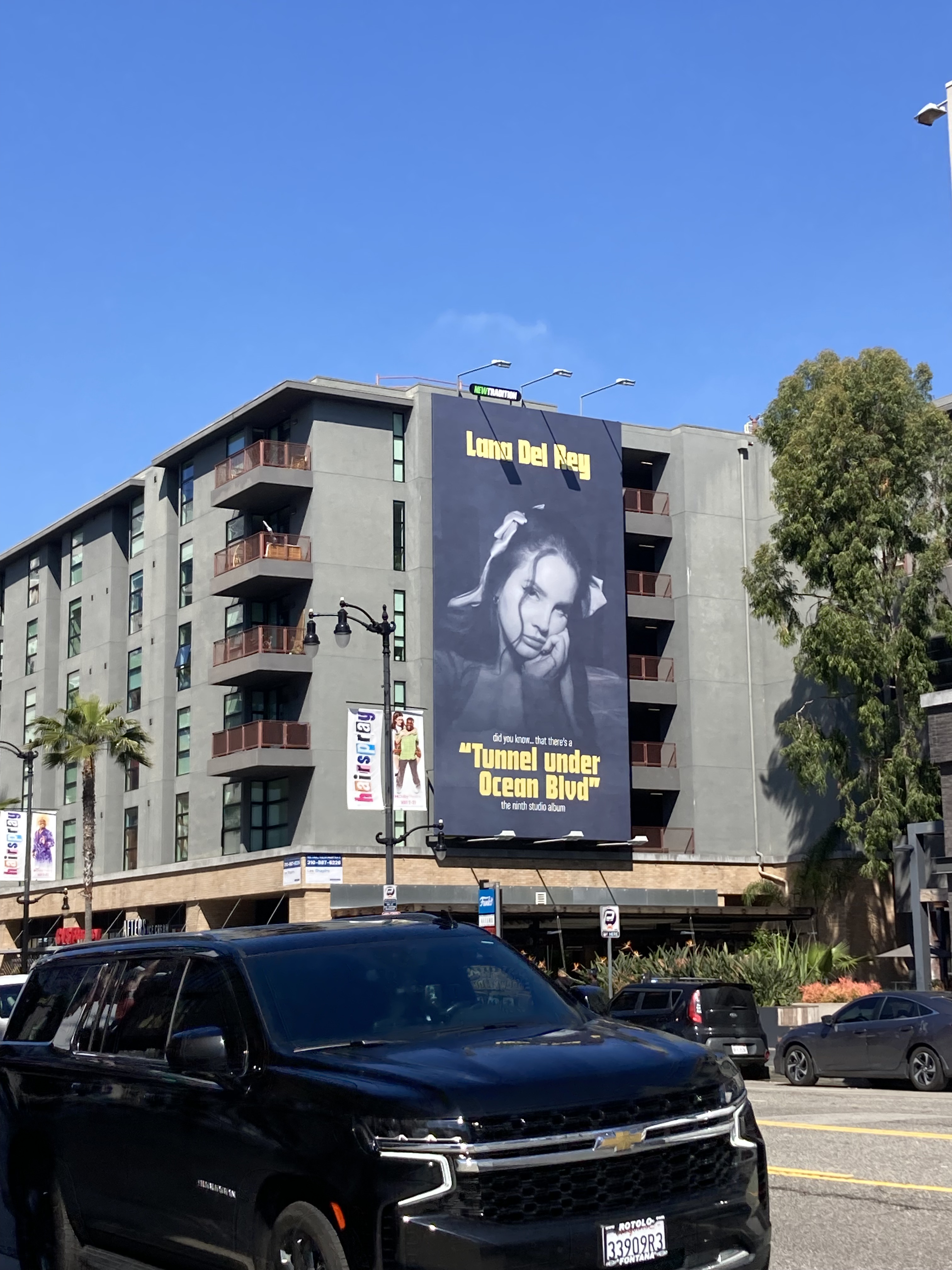
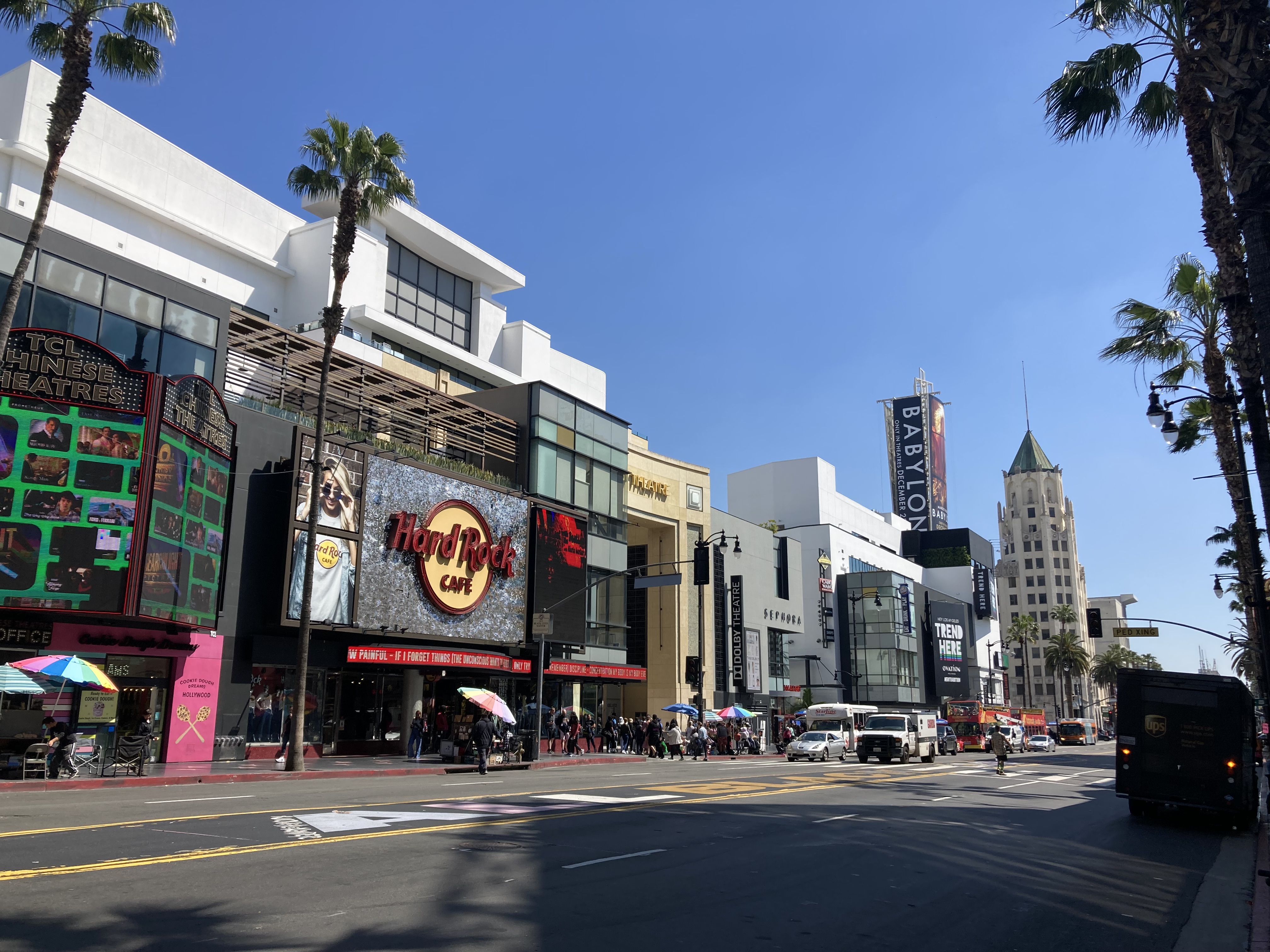
There are of course lots of other things to see and do here. Theatres like the El Capitan (for movies) and the Fonda Theatre (for concerts). Years ago I went to the Museum of Death (just around the corner from Hollywood and Vine) – which had some Manson Family artifacts, but it is quite morbid from memory. There’s also Amoeba Music a block east of Hollywood & Vine.
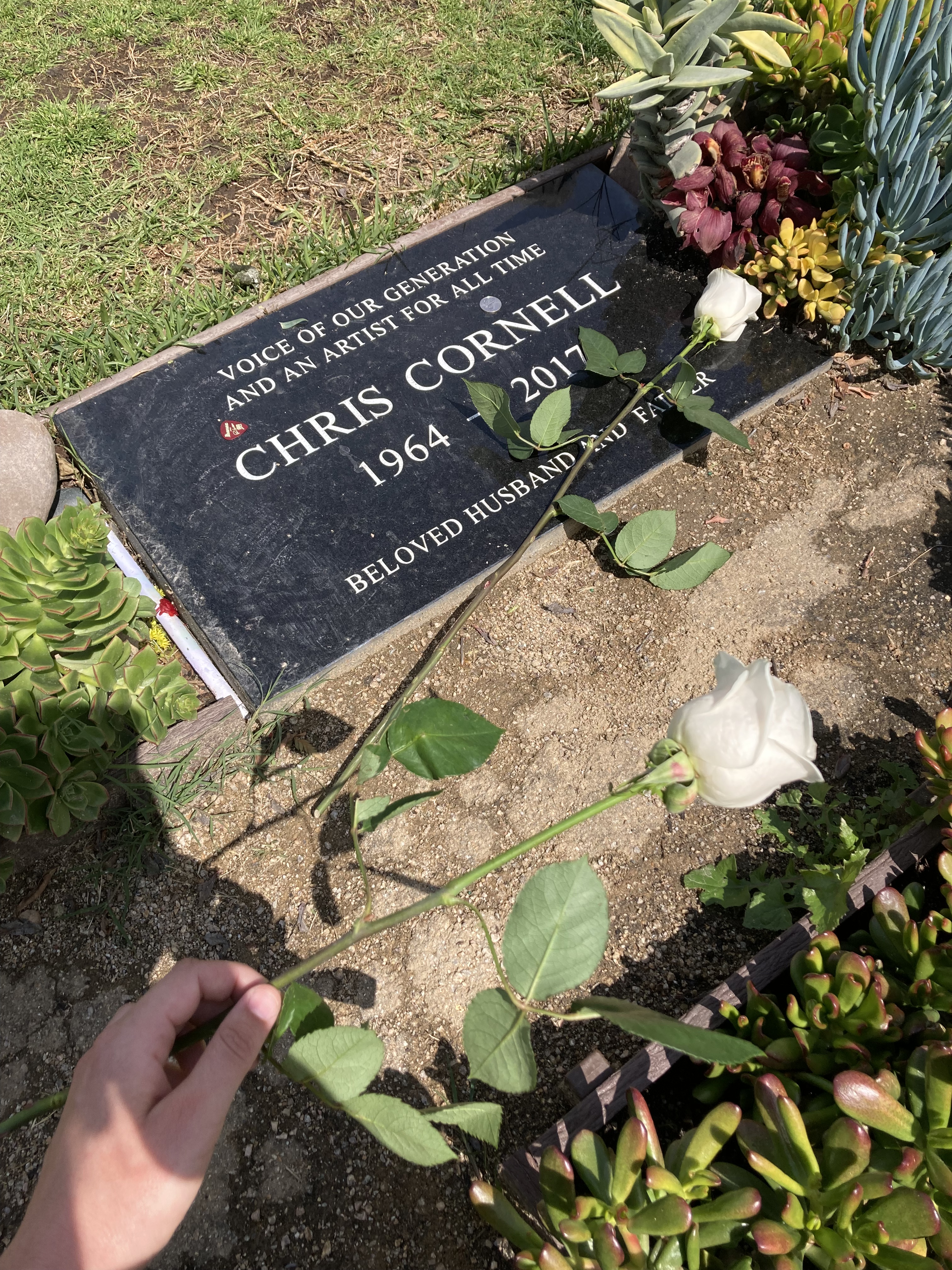
Once I got back to the van I drove to Hollywood Forever Cemetery. I myself am a graveyard wanderer. I also wanted to pay respects to Chris Cornell and Mark Lanegan. It felt like a fitting thing to do, especially today, and especially as these musicians made music that me and my late friend had bonded over.
There is a flower shop near the entrance where you can buy flowers. I got a few white roses and a map and walked around. It was peaceful. I had also been here before. Lanegan’s plot was new though, and there were trinkets and a guest book to write in at his plot.
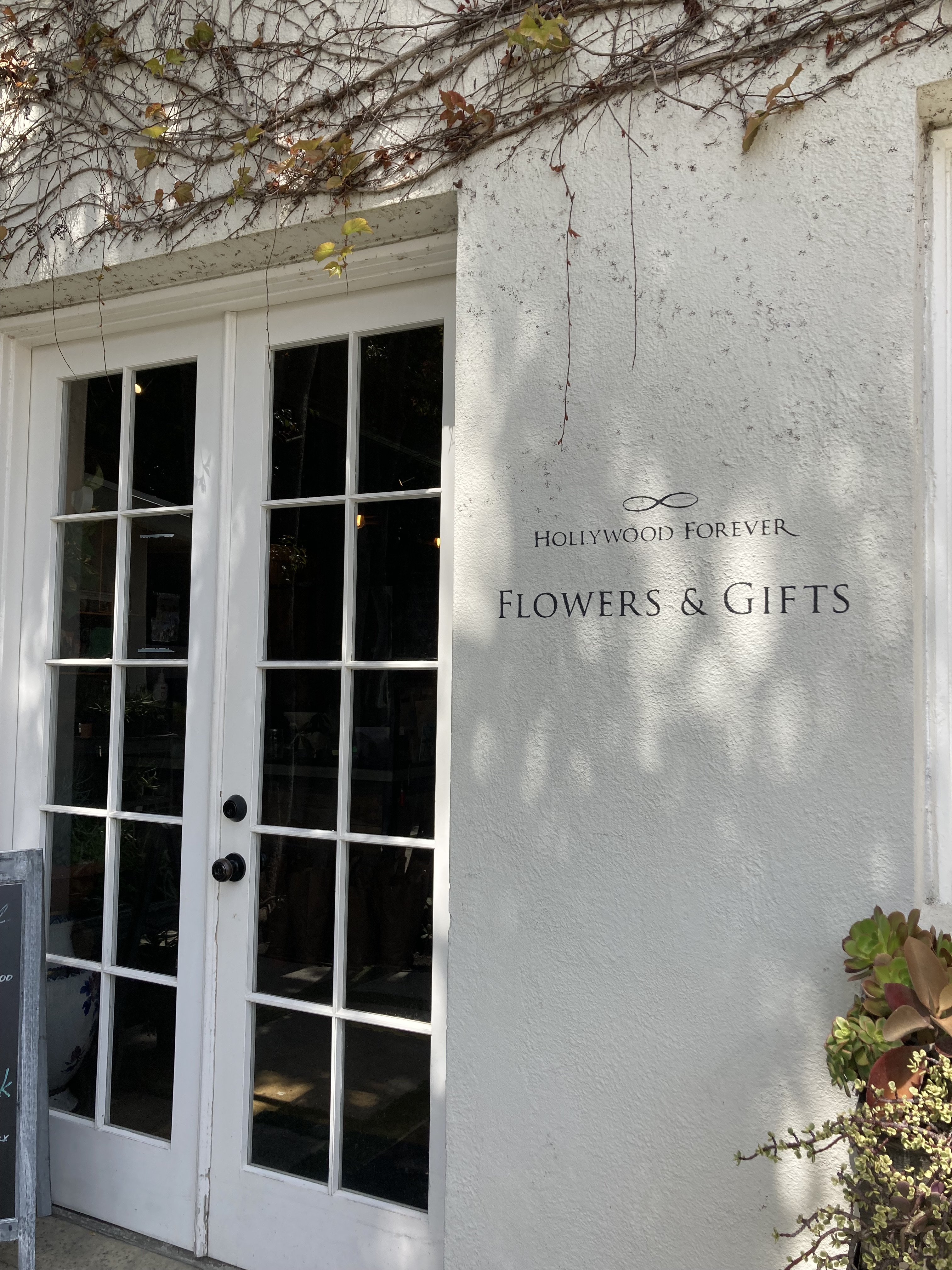
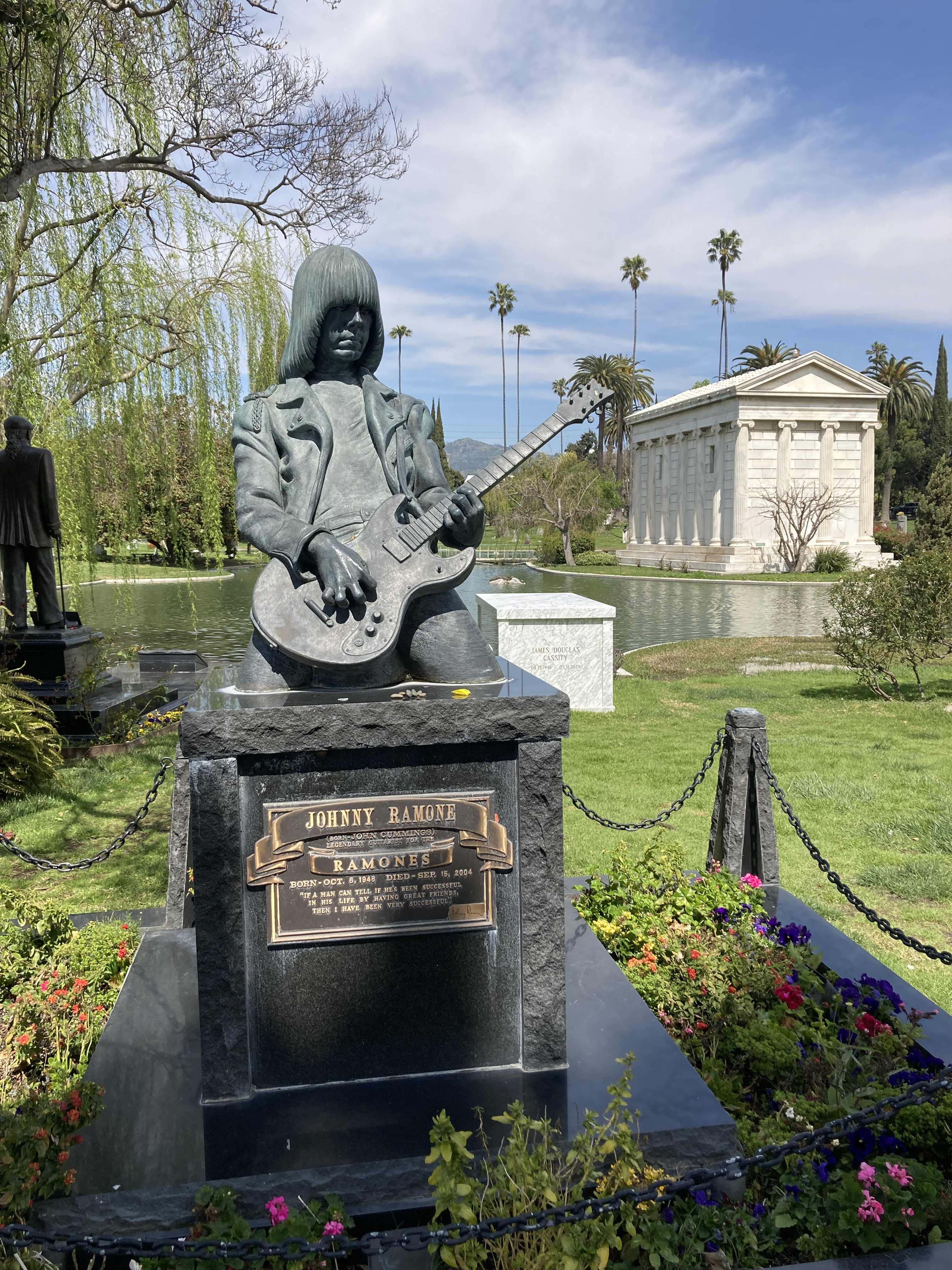
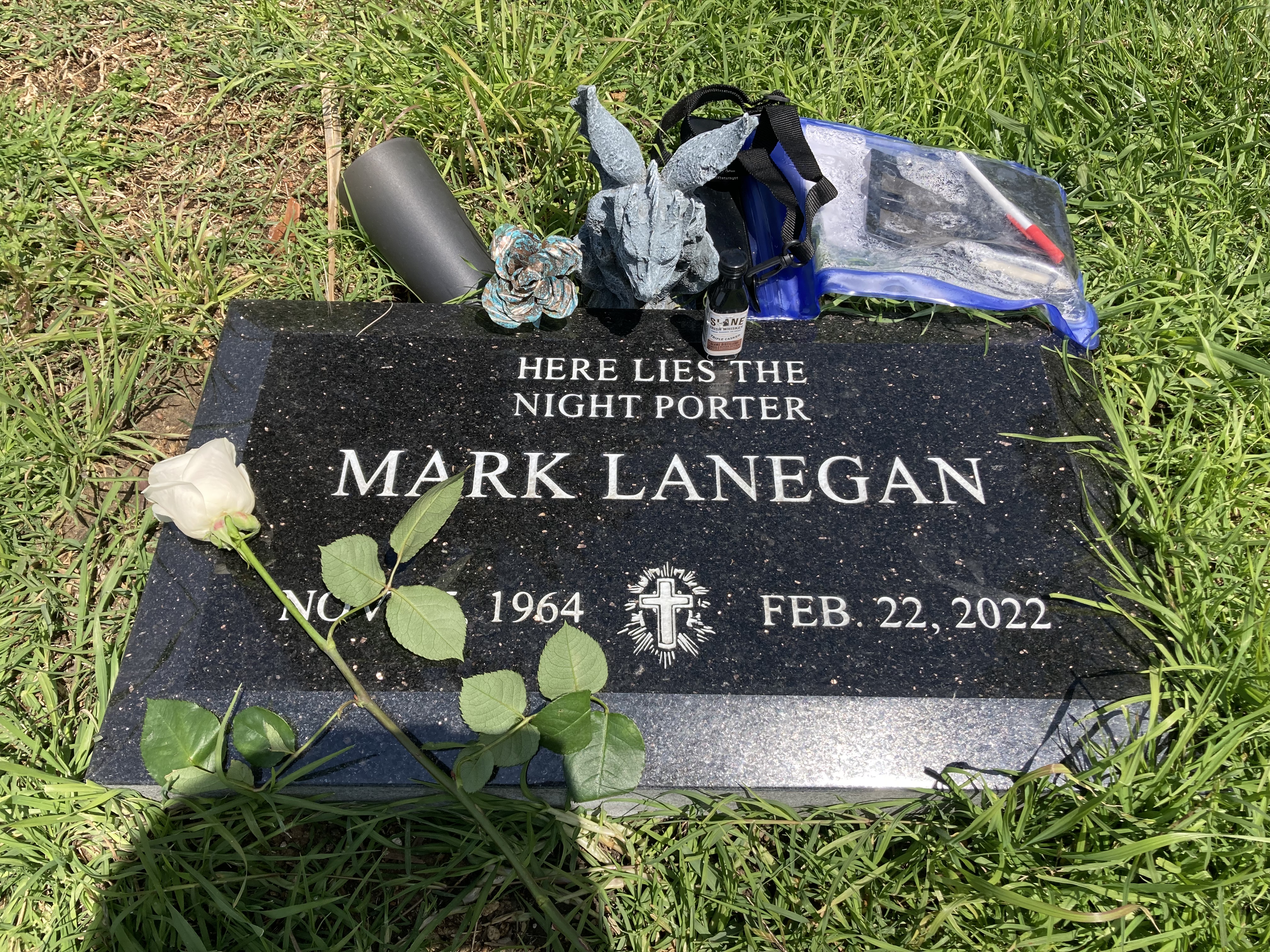
Night Porter was a nickname given to Mark by Kurt Cobain. It has a haunting backstory.
DTLA
To be frank, downtown LA wasn’t an area that I looked much into. I’m sure there are things I’m missing, and you can look up plenty of things to do, but I was already saturated by other areas in and around LA.
Compared to other “downtown” areas of cities, DTLA felt quite small to me. It didn’t feel as sprawling, or have as many sky scrapers, as other major cities. Of course, the greater LA area is huge, but DTLA itself felt underwhelming. That’s just my outsider’s first impression.
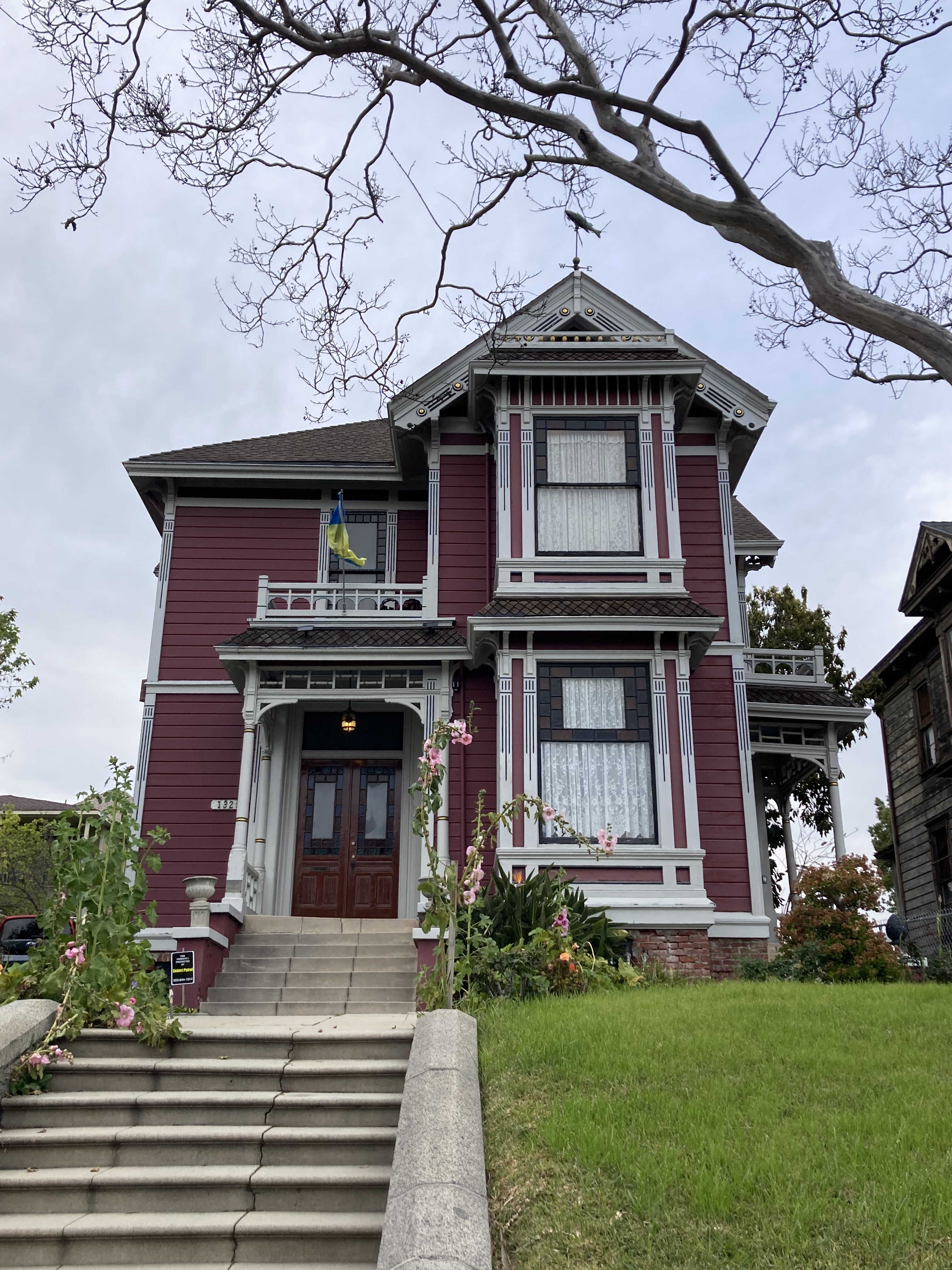
One stand out spot I visited nearby was the Charmed House, or “Halliwell Manor”, from one of my favourite shows growing up – Charmed. It’s a bit counterintuitive, as the TV series’ storyline was depicted as being in San Francisco. But they actually filmed at this house in LA. It was super cool to see it in person. It’s on a street that has a bunch of Victorian style homes. But beware – if you plan to go, the area felt sketchy. Pretty much every car I walked past had some sort of visible extra security on their car, like steering wheel locks, and I saw broken glass on the ground.
I also drove through Silver Lake, an LA neighbourhood described as “the Brooklyn of Los Angeles” – popular, modern, and perfect for hipsters, artists, and foodies. I knew next to nothing about Silver Lake, other than it was the topic of a song by a band I used to listen to. But that is the sort of thing that peaks my interest. All I really saw was a water reservoir and paths with people running and walking their dogs.
I also only drove through DTLA. I know, I know – take what I say here with a grain of salt. I wanted to go by the old (haunted?) Cecil Hotel – which used to be a hotel but is now a protected low income housing complex. I might have considered parking and checking out the lobby, but the area felt sketchy (it’s on the edge of Skid Row), so I just drove by.
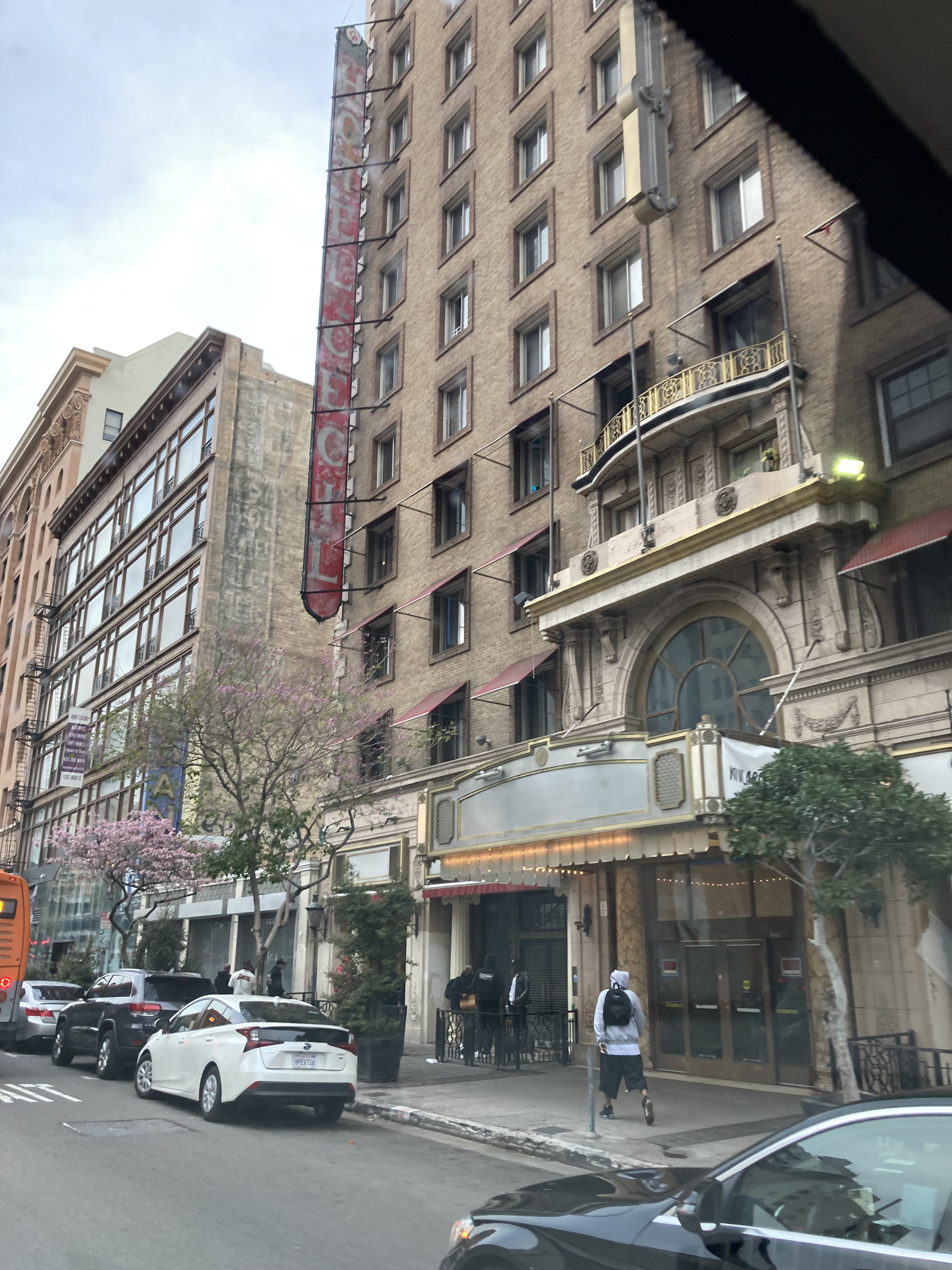
If you haven’t heard of the Cecil Hotel, American Horror Story did a season loosely inspired by it (season 5, 2015, Hotel). People claim it to be haunted – maybe it is, or maybe that impression is just a product of myth, urban legend, and its violent history checkered with suicides, murders, resident serial killers (two!), and mysterious deaths. You may have heard the story of Elisa Lam, a young Canadian who was found in 2013 in the water tank, with cameras showing erratic behaviour at the elevators before she went missing.
Wether you believe in the paranormal or not (or maybe you’re a true crime junkie) – this place is interesting. I myself believe in the paranormal. And I’ve sought out establishments with haunted reputations and stayed in them for curiosity’s sake (see my post on Alberta for my stay at the Rosedeer Hotel in Wayne, AB, near Drumheller). But I don’t think I’d stay here. I found a Reddit thread detailing someone’s stay, and even if it’s a work of fiction it’s a compelling read (see part 1 and part 2). That shit is scary, and feels very unsafe.
Other things in & around DTLA:
- Watts Towers Arts Centre (sculptural towers and mosaics in Watts, south central LA; folk art reminiscent of Slab City).
- The Angels Flight (a little incline railway in Bunker Hill district).
- Public Art Urban Light at the Wilshire Boulevard entrance to the Los Angeles County Museum of Art near La Brea Tar Pits (a “forest” of restored antique California city street lights from the 1920s and 1930s).
- The Bradbury Building (architectural landmark with ornate Victorian style iron railings, skylit court, marble stairs, and birdcage elevators).
- La Brea Tar Pits & Museum (west of DT, closer to Beverly Hills; active paleontological research site with fossils and natural asphalt seeping up from the ground).
- Grand Central Market (historic landmark, 40+ vendors of LA cuisine and culture).
- The Broad (contemporary art museum, free general admission, includes works by Andy Warhol).
- The Last Bookstore (used and new books, records, coffee, local art).
- In general lots of music venues in LA (Troubadour, Wiltern, Forum, Coliseum, Hollywood Palladium, Dolby Theatre, Greek Theatre, Hollywood Bowl, Fonda Theatre, Ford, etc.).
- The Grammy Museum.
- Walt Disney Concert Hall (home to the Los Angeles Philharmonic).
Santa Monica
There is a song in my head ready for any occasion!!
Not only did I have this song stuck in my head all day (the acoustic version is also a treat, and okay yes there is also this Santa Monica song), I also got to witness real life Baywatch:
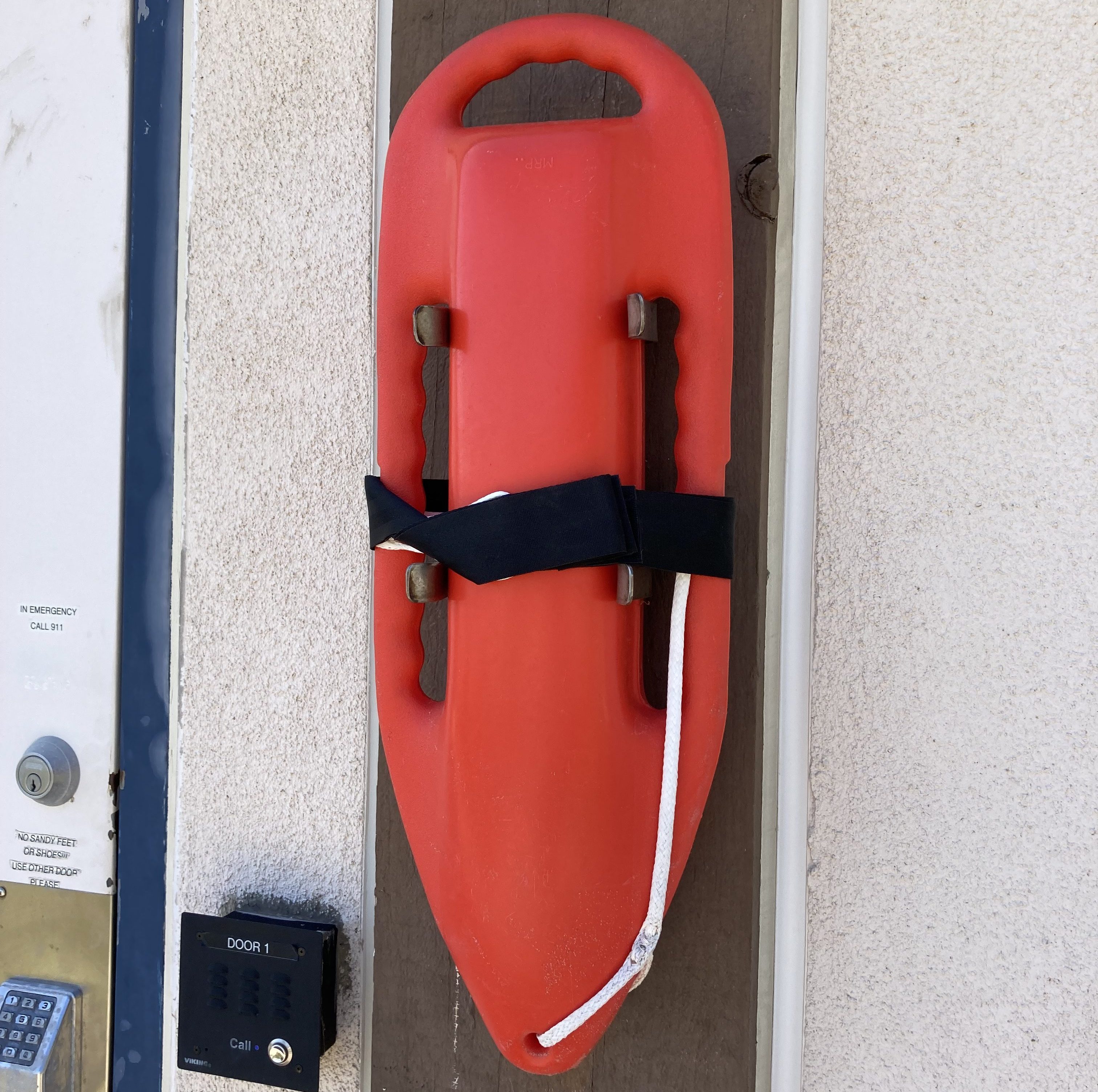
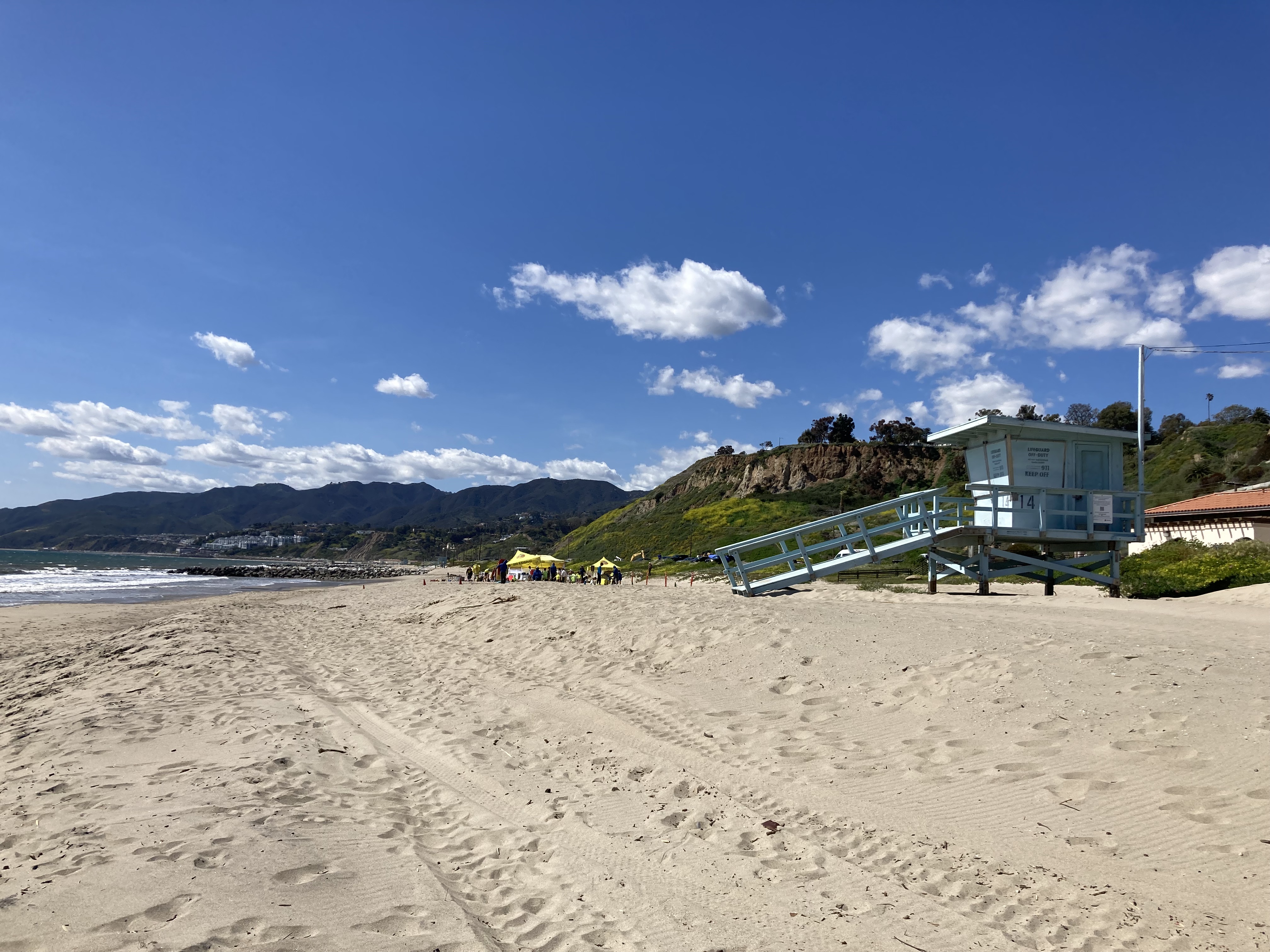
If you search “Baywatch Headquarters” in maps you’ll get a hit in the Pacific Palisades at Will Rogers State Beach. There’s a parking lot here and it’s just a few miles north of Santa Monica, with the Ocean Front Walk – a long walkway along the beaches. I parked here and walked to and from Santa Monica. I remember Baywatch being on TV when I was a kid, and it was kind of cool to see a filming location and those unmistakeable red floating devices. There were no signs to designate the spot, it just looked like a regular lifeguard station, but it would be cool to compare it to scenes in the show.
A little ways from here is Palisades Park, a coastal bluffs park. There are access walkways from the beaches, over the PCH, and stairs up the bluffs, to a manicured park with palm lined walkways, gardens, art installations, and fruit carts. It was pretty, a nice place to walk and look out over the coast from above.
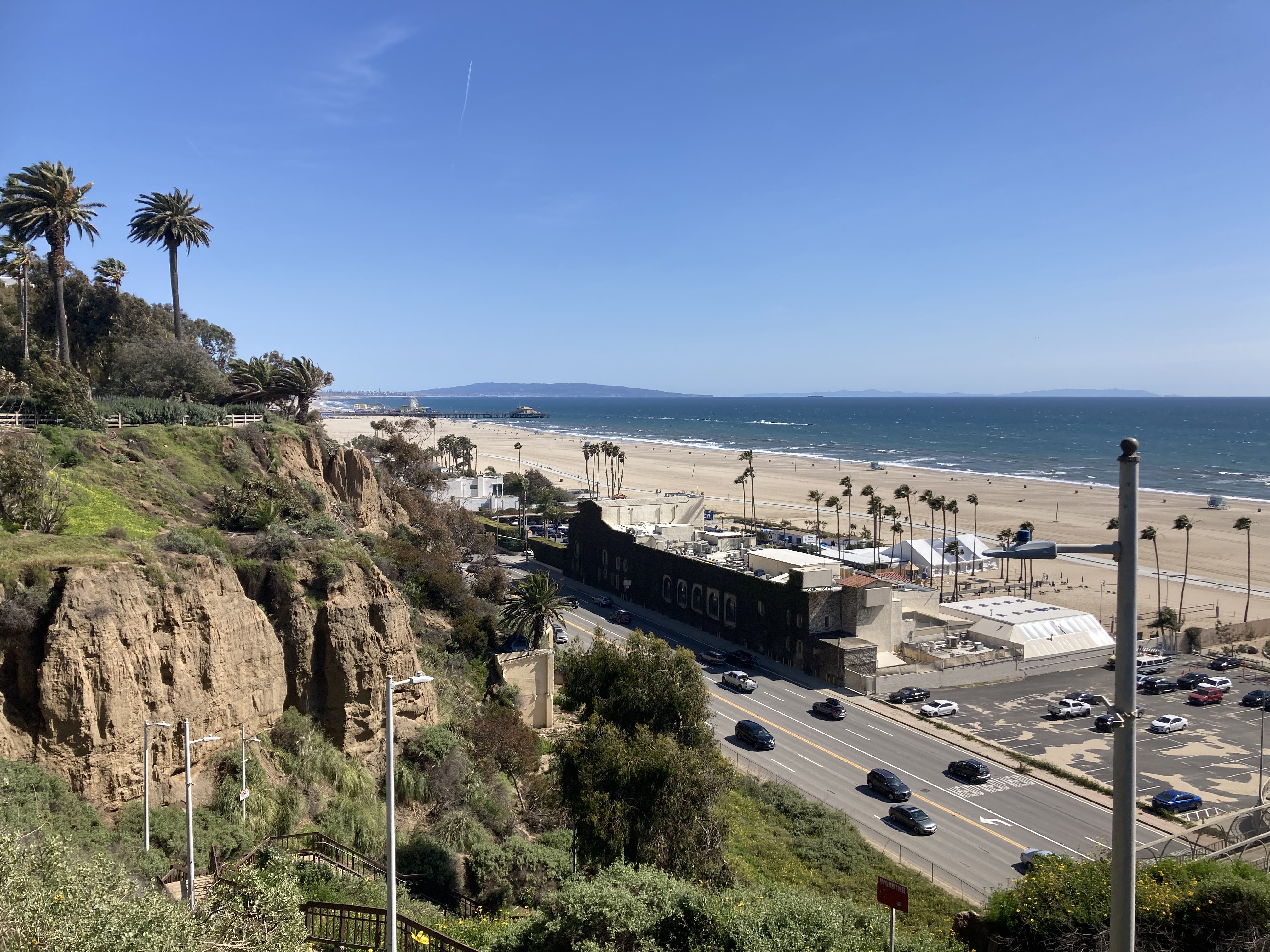
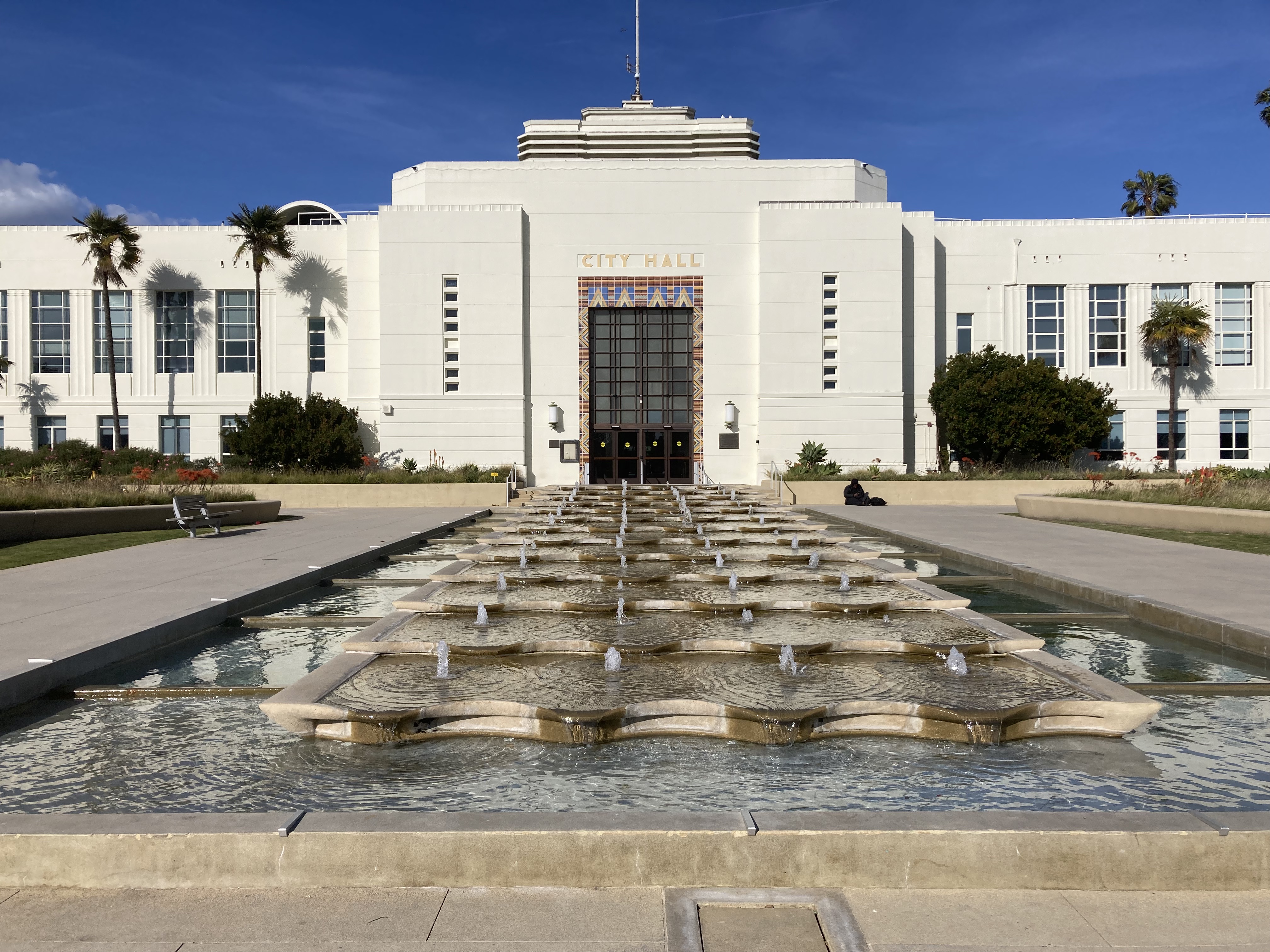
From here I walked to downtown Santa Monica‘s 3rd Street Promenade, which is a pedestrian street with shops and more art installations. There is also Santa Monica Place (a mall) and City Hall here. I read about Tongva Park and it was nice, but nothing to go out of your way for and had a homeless presence.
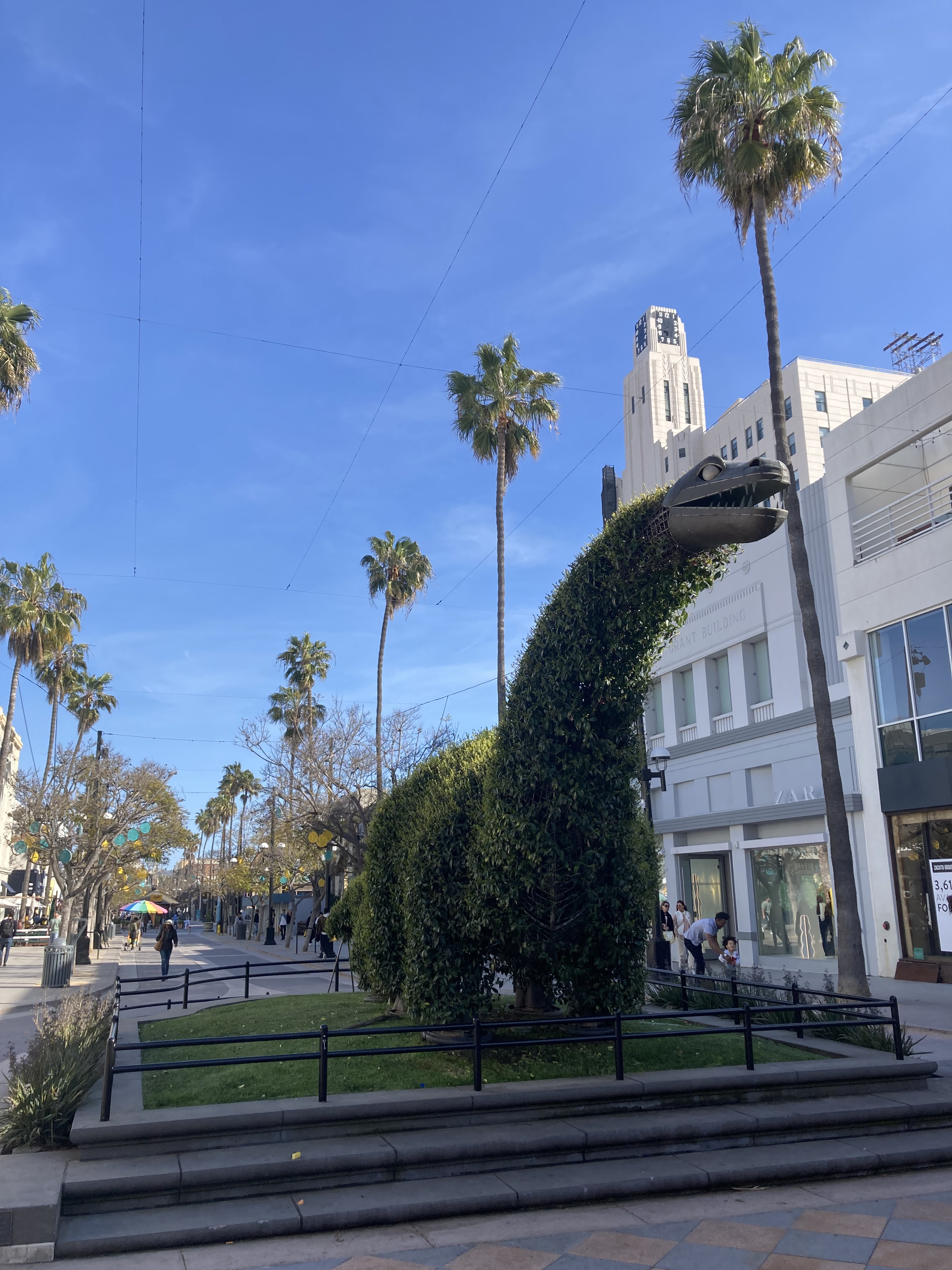
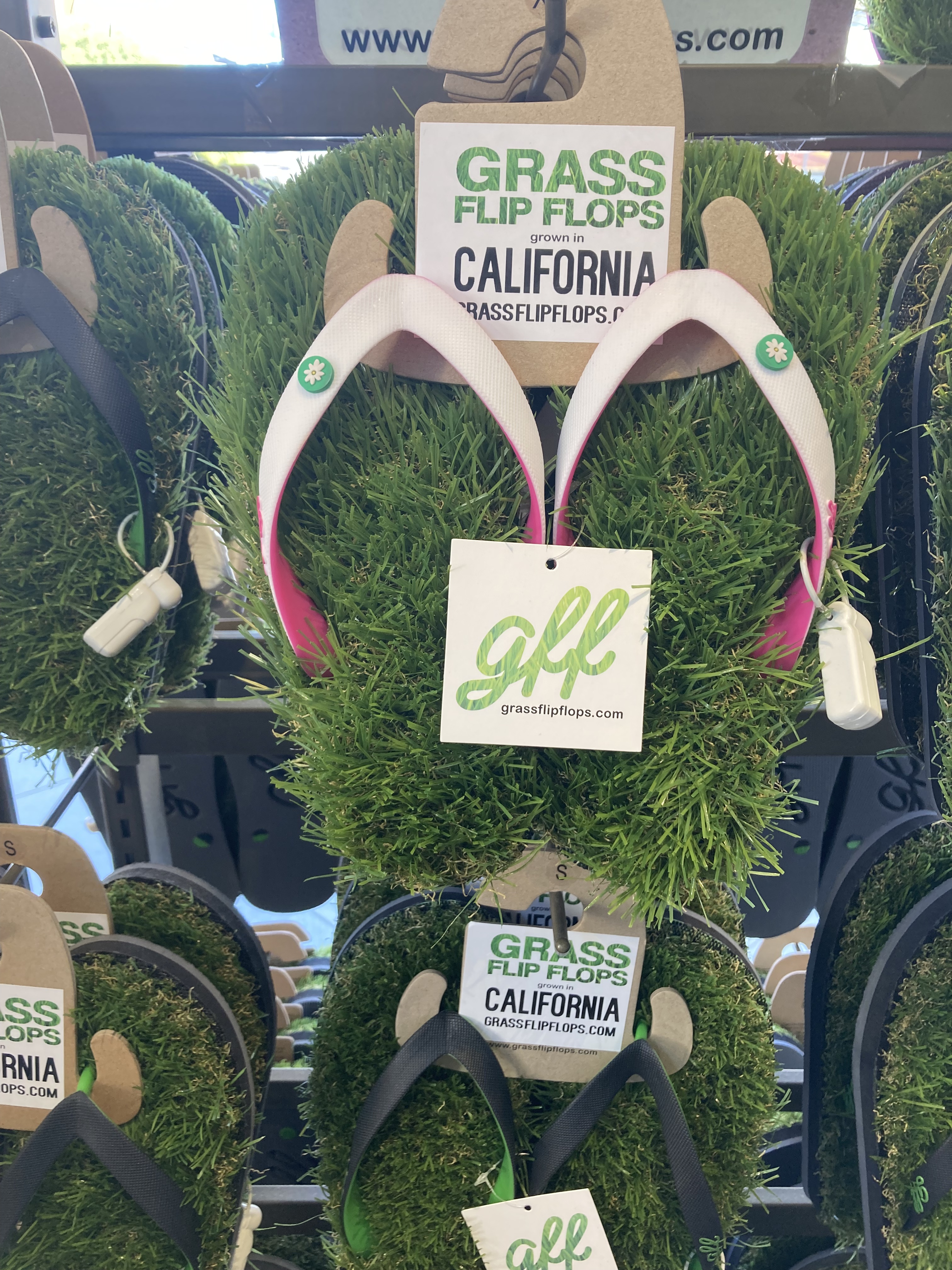
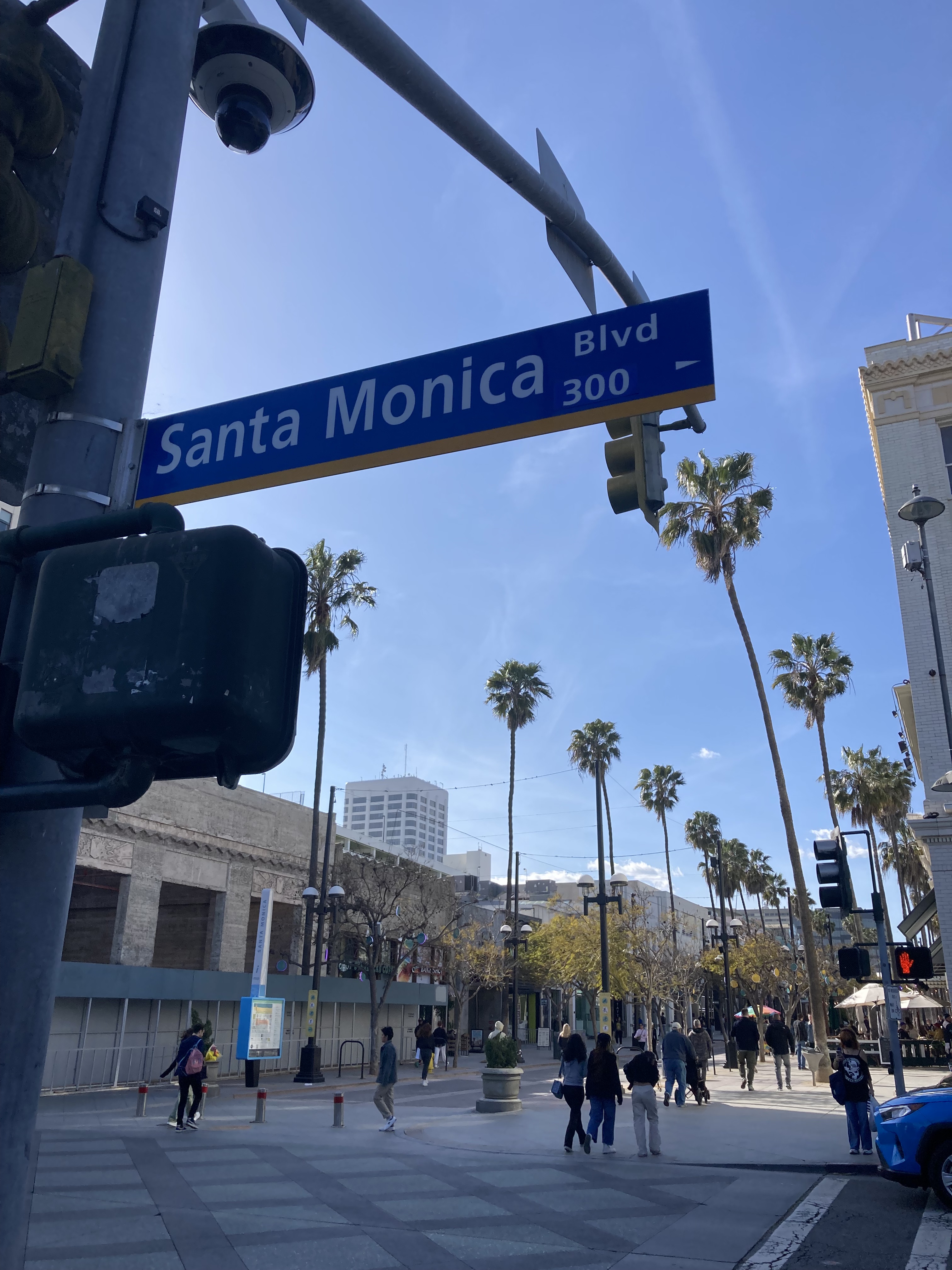
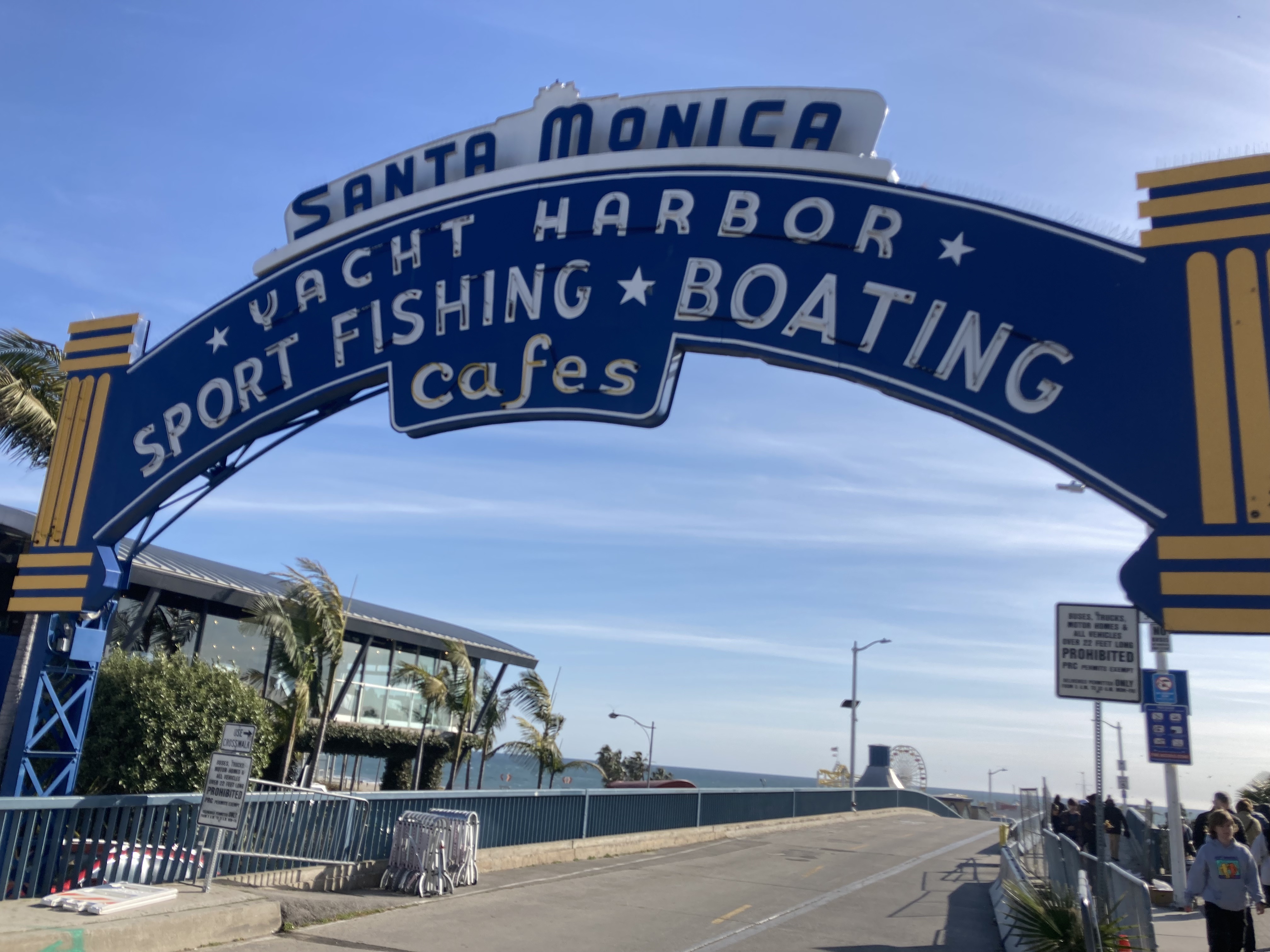
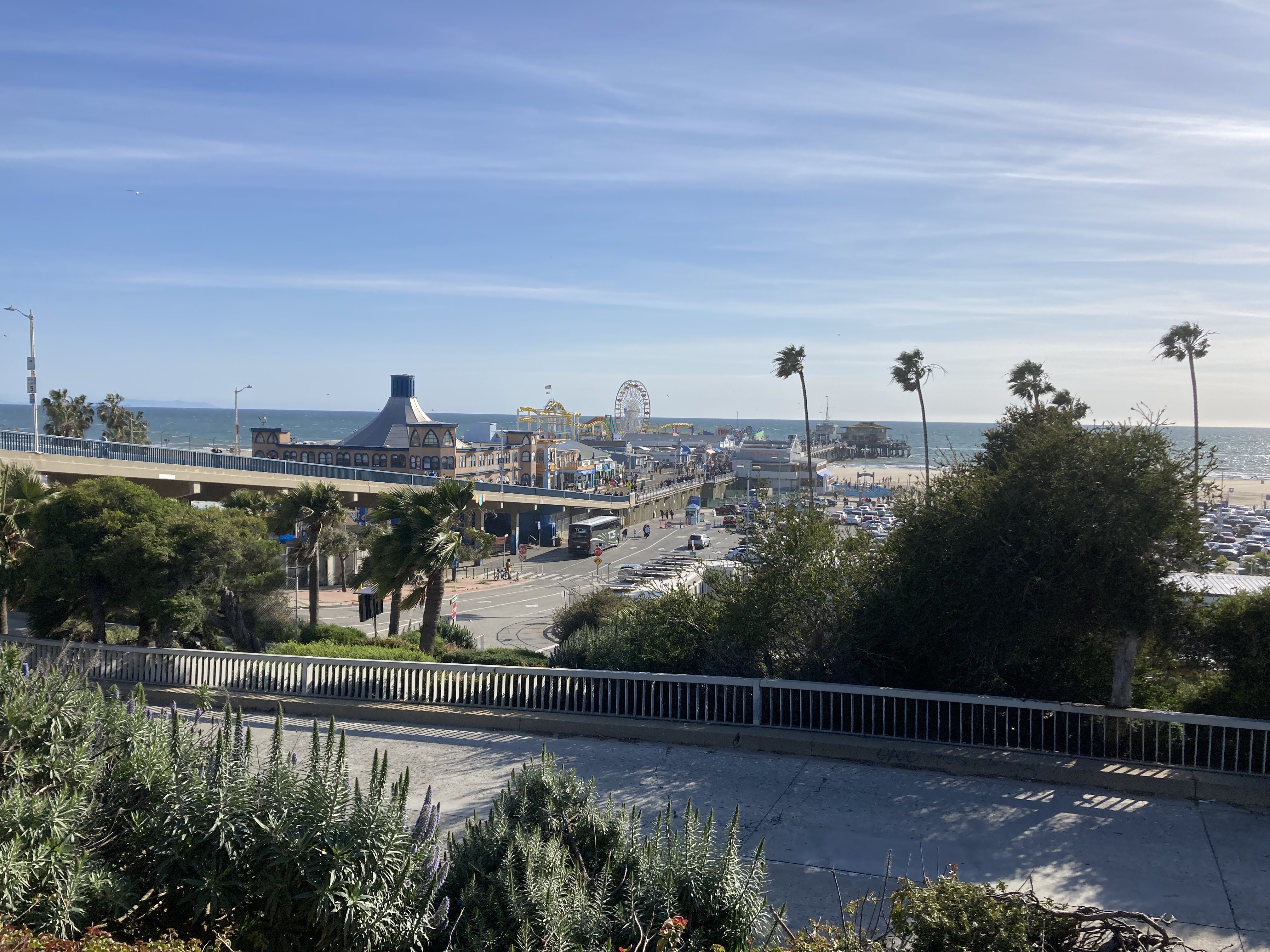
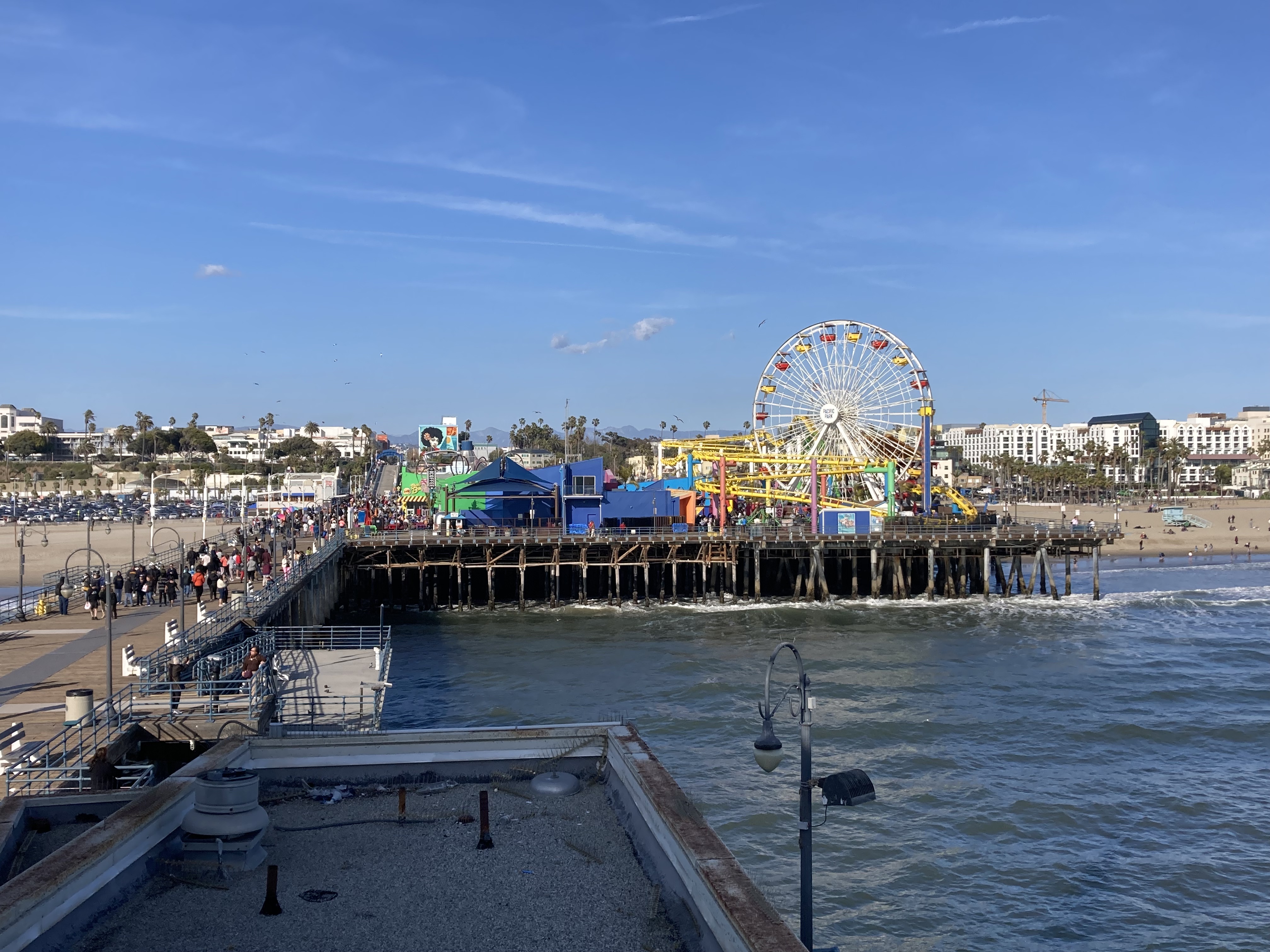
It’s a short walk to the Santa Monica Pier, which is also the terminus for historic Route 66. This was one of the nicer piers I’d been to in California, but also the busiest. There are lots of tourist shops and a small amusement park with rides – Pacific Park, Playland Arcade, the recognizable ferris wheel – as well as an aquarium. There is a huge parking lot here, and the surrounding Santa Monica State Beach.
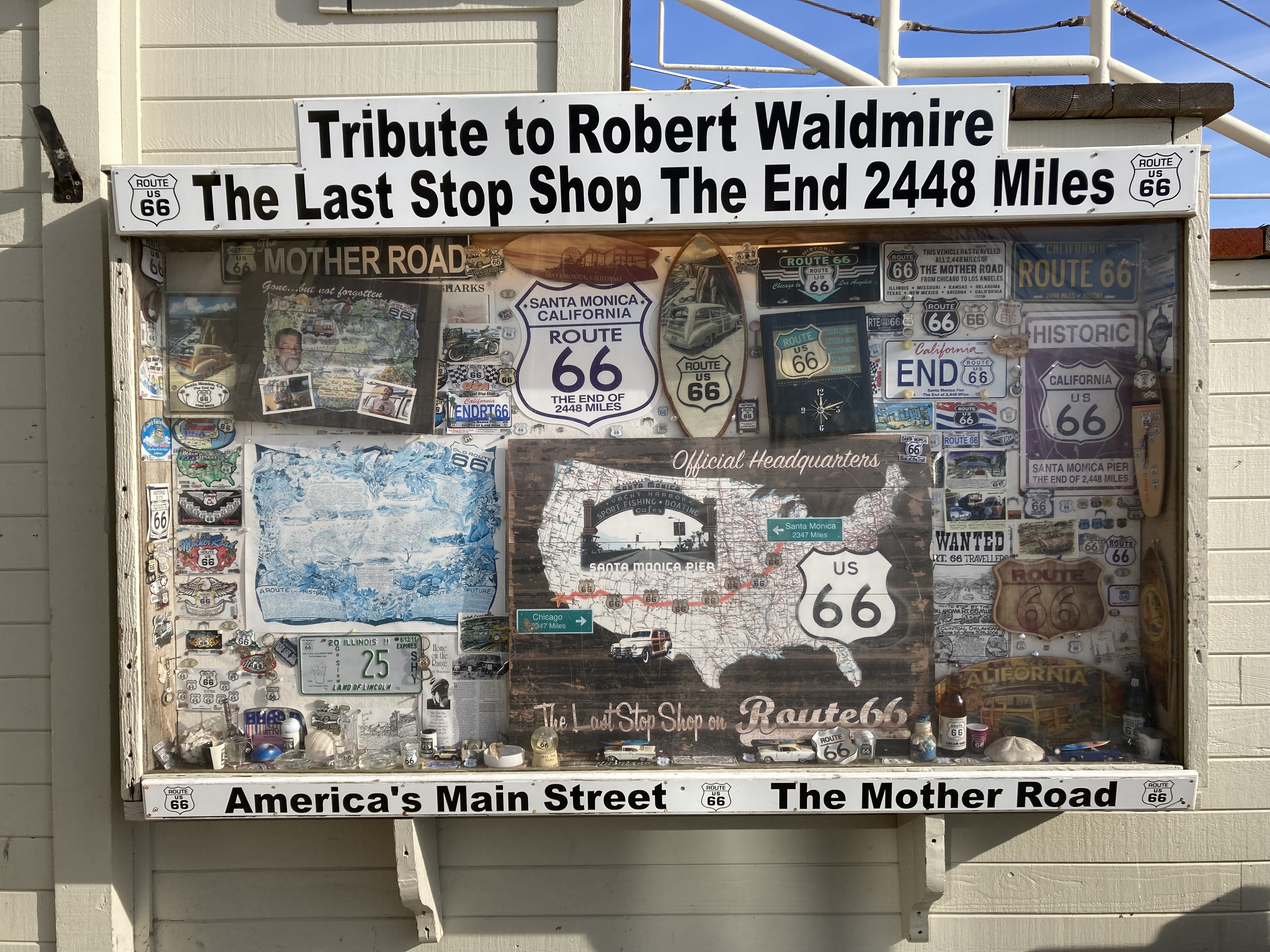
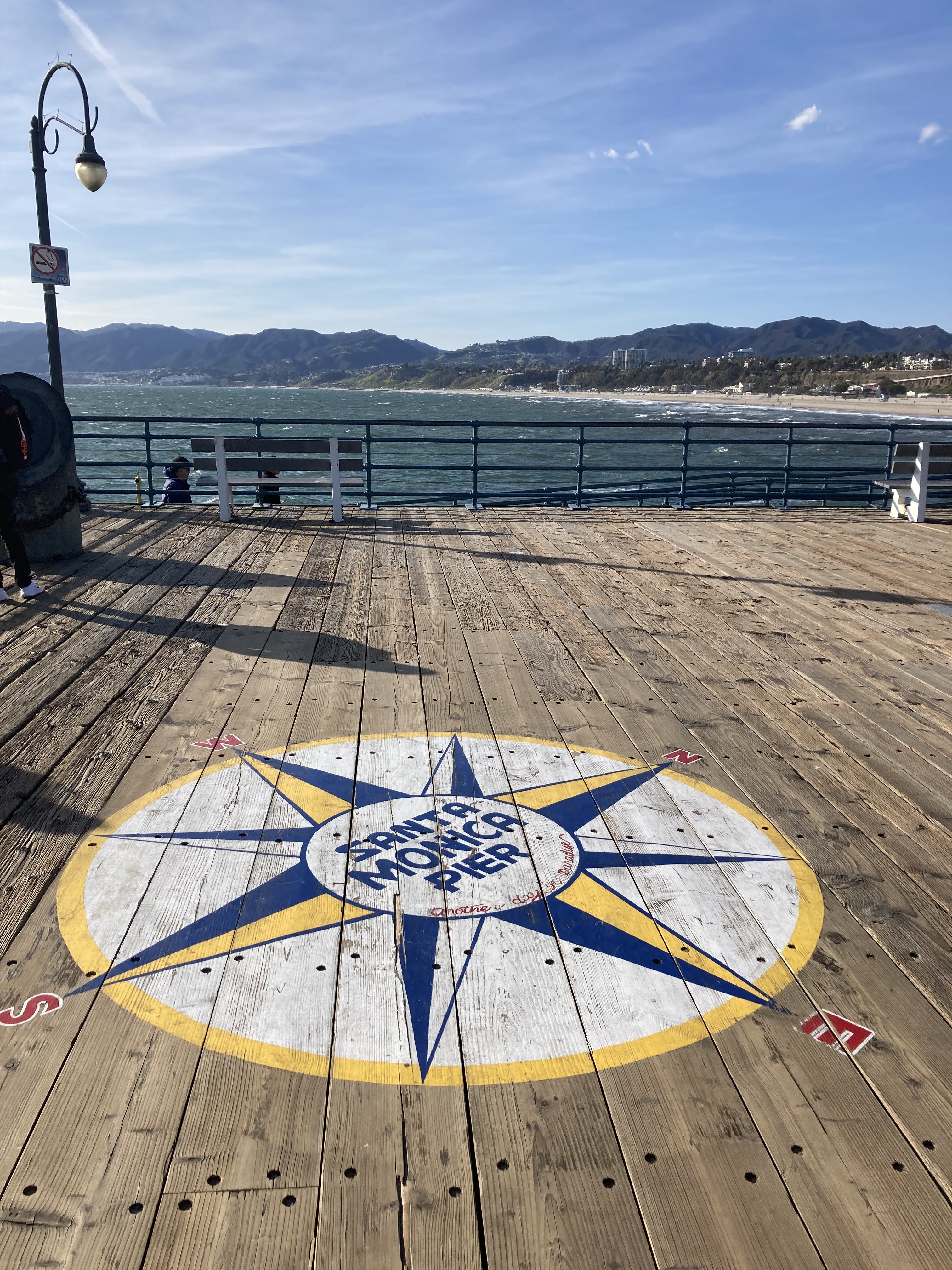
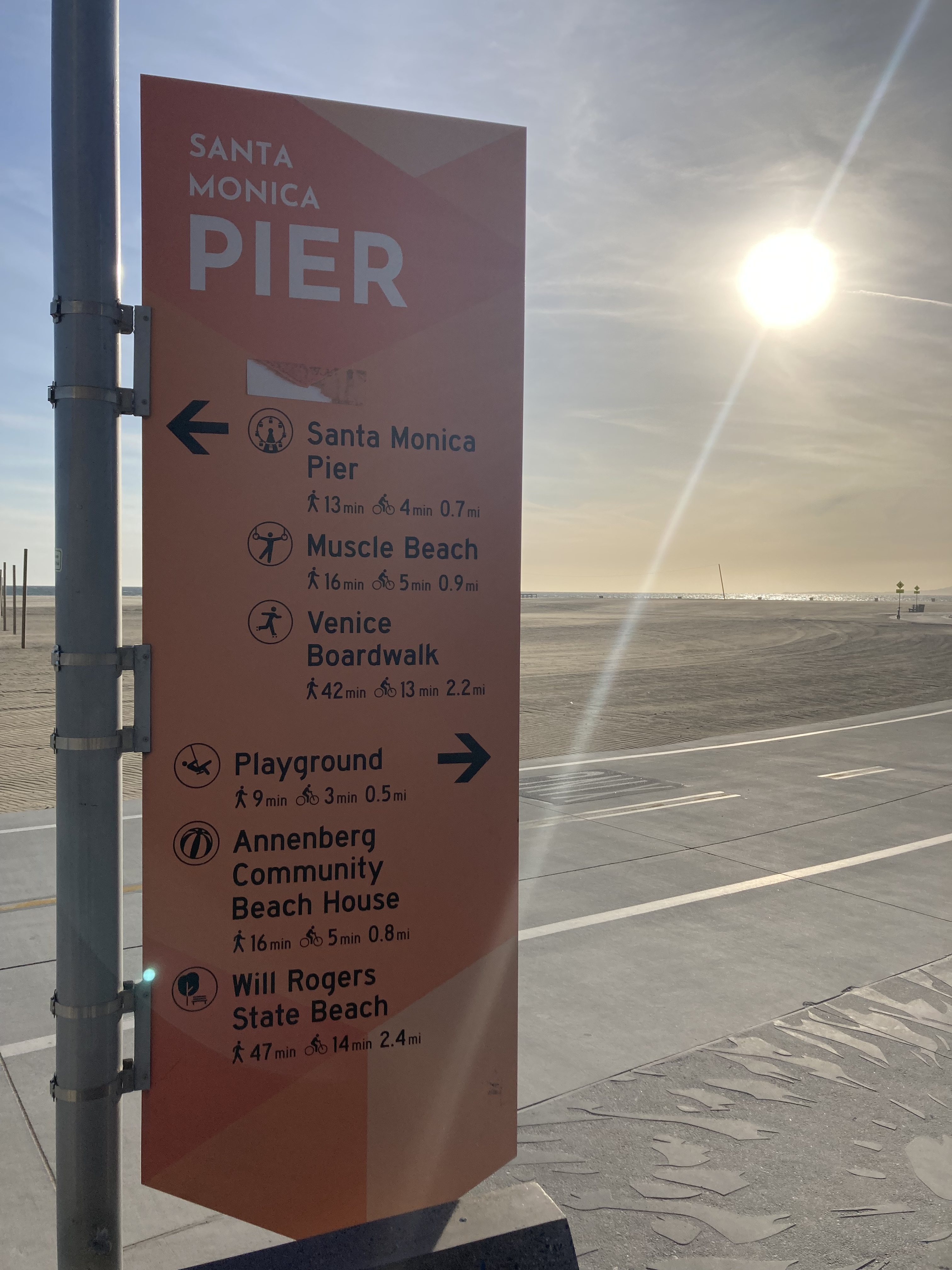
It was a very pretty walk back to Baywatch Headquarters as well.
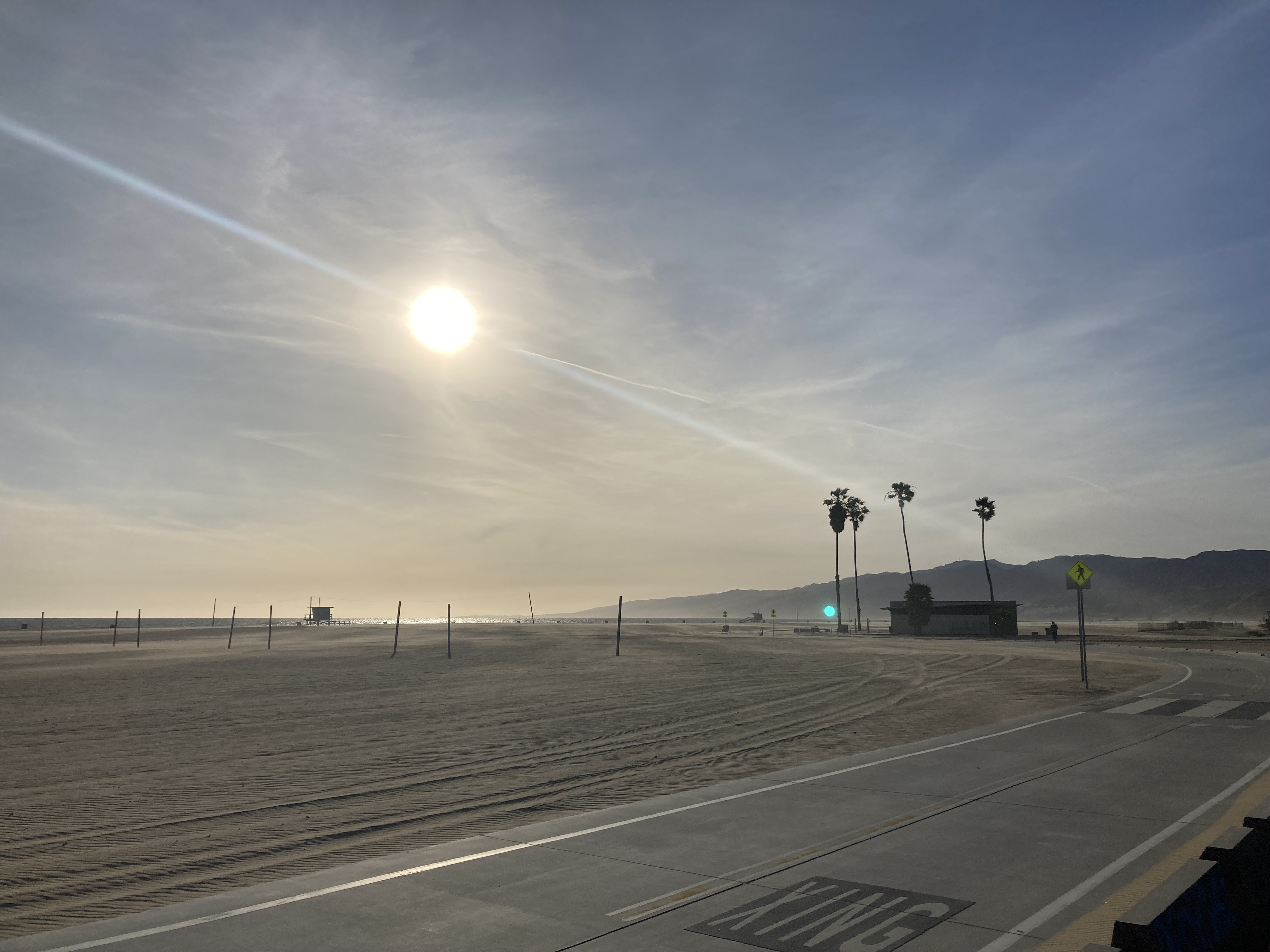
One thing I was kicking myself for missing, simply due to absent-mindedness, was the “Goth and Bubblegum houses” just north of the pier.
I also wasn’t aware at the time, but if you go to Christine Reed Park (formerly Lincoln Park) there is a plaque in honour of Chester Bennington (Linkin Park). This is the park the band was named after and apparently where Chester would sleep in his car when he came to LA to audition for the band.
The area also has Inspiration Point Loop Trail in Will Rogers State Park for hiking. And Montana Avenue as a more chill shopping alternative in Santa Monica.
Dangerous Neighbourhoods in LA
I felt pretty safe in the touristy spots for the most part. Maybe pickpocketing could be a thing in Venice Beach and on the Hollywood Walk of Fame. Car theft and break in is a general concern in big cities and tourist areas, though I didn’t feel as concerned here as I was in San Francisco. I always trusted my gut, and when I would look up an area after getting a sketchy vibe my gut was usually proven right. But it pays to know in advance what to look for or where to avoid.
You hear about places like Skid Row and Compton. From what I see online, generally downtown adjacent areas (like Skid Row, Westlake, Fashion District, Lincoln Heights) are higher in crime, as well as areas south and southwest of DTLA like South Los Angeles, Florence, Watts, West Adams, Compton, Leimert Park. Even Hollywood and North Hollywood come up, as well as Koreatown.
Next Time
There are obviously going to be a plethora of things that you don’t see, miss, or don’t even have on your radar in a big city.
One place I would go in the future is the Getty Centre – counterpart to the Getty Villa – with its modern architecture, gardens, and art from the middle ages onward.
Another activity I was eyeing was Wolf Connection, a sanctuary for wolves and a place to connect – they even promote therapy. It’s about 45 minutes north of LA, and was a bit out of the way for me to fit in.
There is the Heritage Square Museum, where you can tour Victorian era LA homes. I came across this place because I was looking into some US based small businesses and their stockists – some things are hard to get in Canada! But this place was said to carry a candle company from Salem, MA that I adore (Witch City Wicks).
Of course there are other staples like the Warner Brothers Studio Tour or I suppose Disneyland south of the city in Anaheim (as well as the theme park Knott’s Berry Farm). But personally those aren’t really on my list.
Honestly, I would just love to see some live music at some of the well known venues around LA next time I’m in the city.
I would maybe also consult some online creator accounts that I follow who are based in LA to see if they have suggestions for more off the beaten path, local loved spots.
Misc

Palos Verdes
Palos Verdes Estates is located on the Palos Verdes Peninsula, just south of LA, along with other cities like Rancho Palos Verdes and Rolling Hills Estates. This area is elevated atop oceanside bluffs and hills and is quite beautiful. Palos Verdes Estates has a reputation as California’s richest suburb and one of the wealthiest cities in the United States. It is very exclusive, known for its school district, hiking trails, and oceanside properties. And you could definitely sense that here.
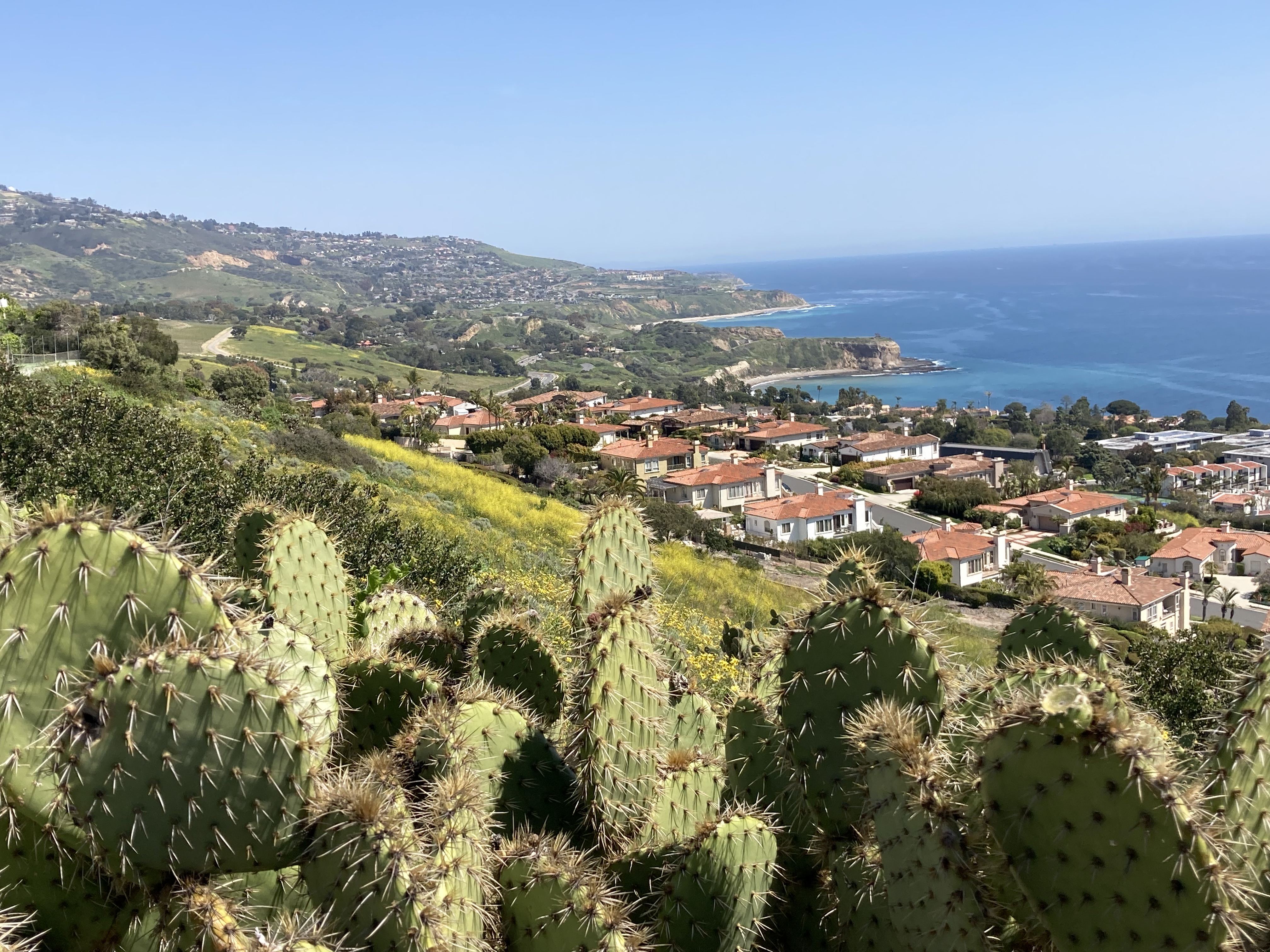
After exploring Santa Monica, having completed pretty much everything I wanted to do in Los Angeles, I headed south of the city for the first time. I found an overnight spot at a Home Depot in Torrance. I knew I would be going to Long Beach, but first I wanted to go to Palos Verdes. Why? Because this is where Chester Bennington lived and passed, and it is where his funeral was held.
At the time I was looking up his resting place to hopefully pay my respects, but there is no memorial place for him. It’s unfortunate, as I know fans would want a place to pay their respects (but that is the family’s prerogative). Chester’s music meant a lot to a lot of people. I remember vividly the first time I heard In The End as a kid (I could tell you the whole story, I think that experience changed my brain chemistry).
This will sound morbid to some, but I find peace in graveyard wandering and paying respects to the dead. Being no stranger to death, and having just lost a close friend, as well as not really having anywhere to put that grief, I think it might have been cathartic to be spending time visiting places like this.
I did see the house where Chester died in Palos Verdes Estates. Maybe shouldn’t have. I tried to be low key, it being a residential area.
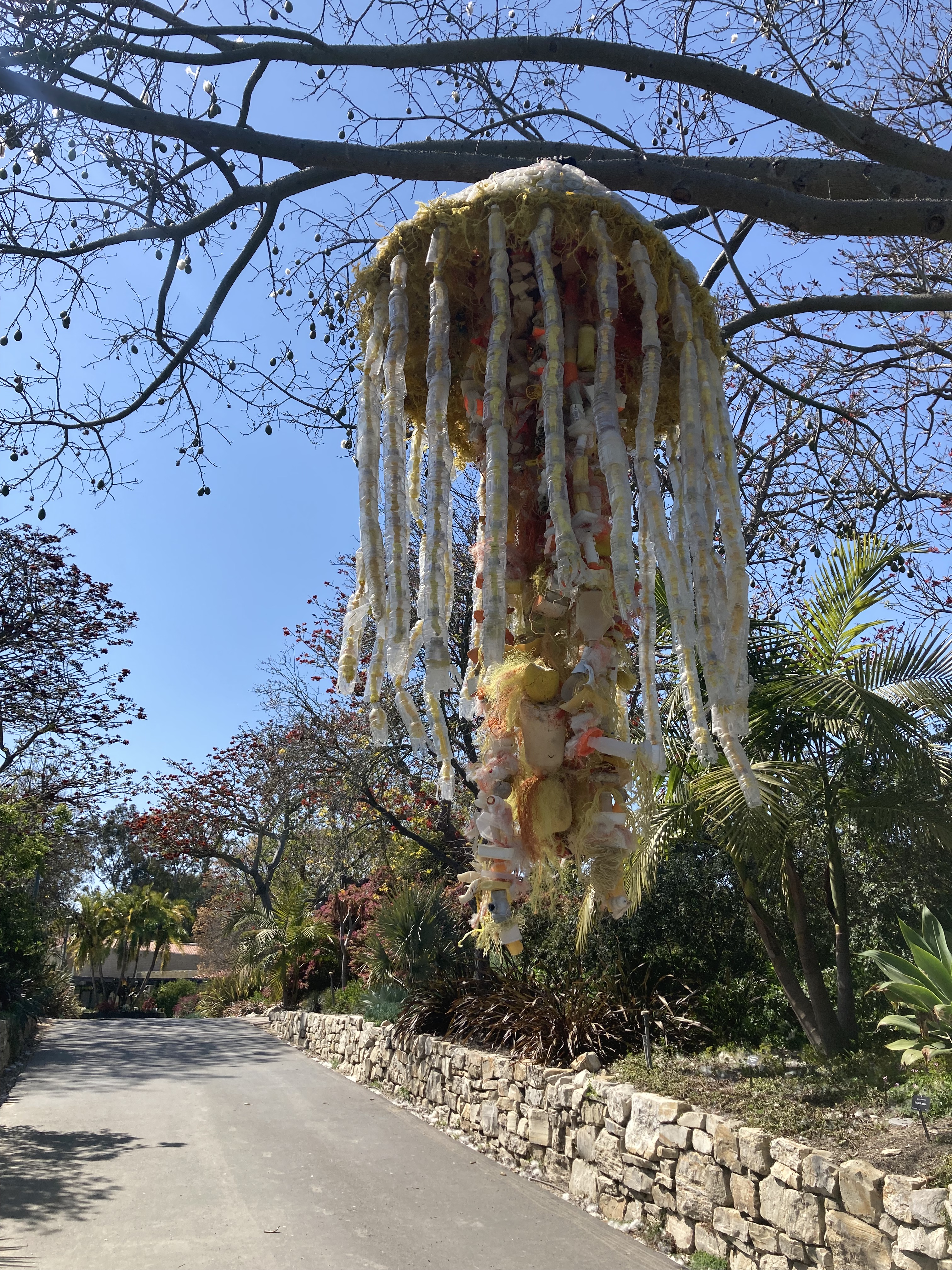
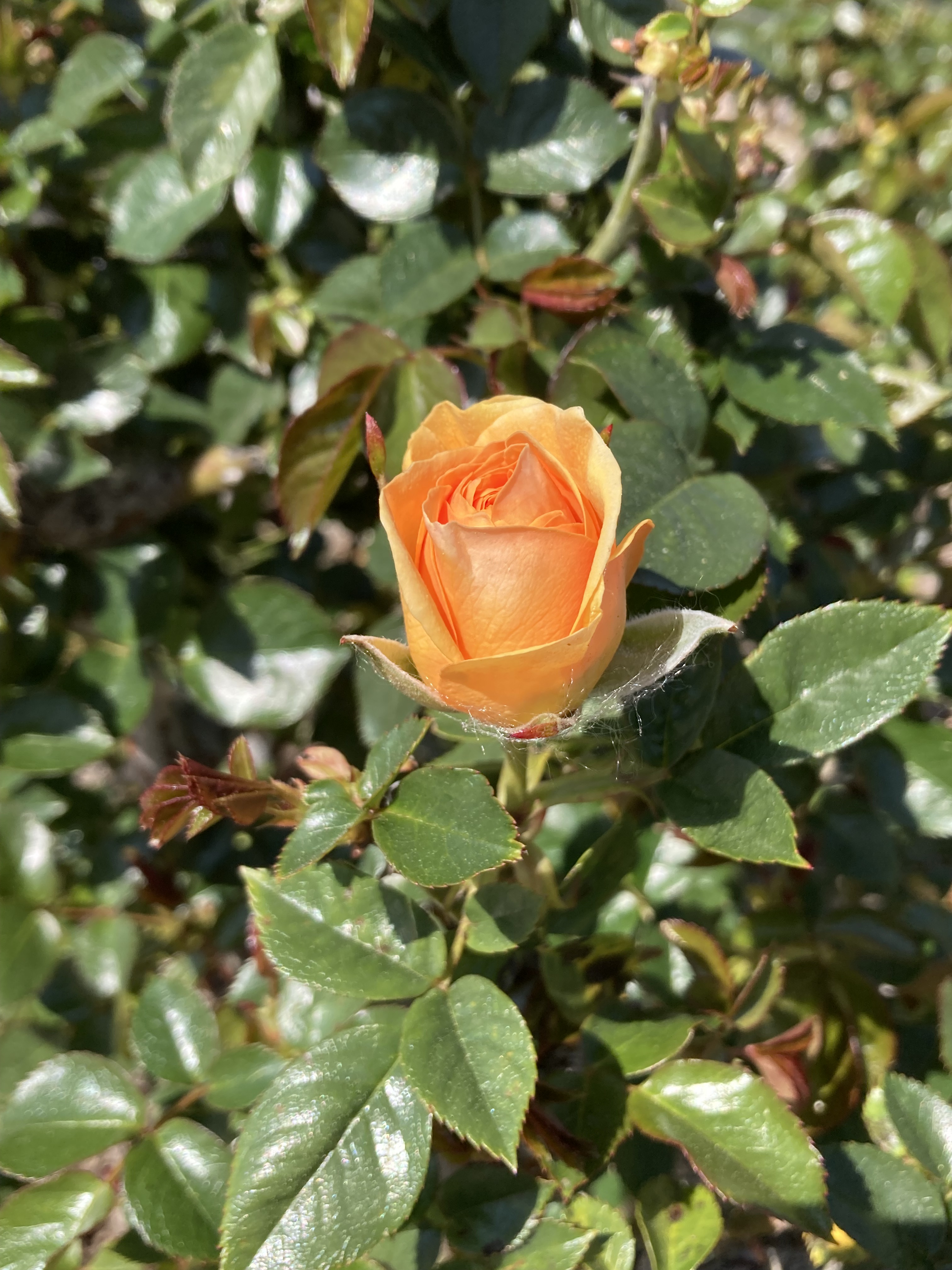
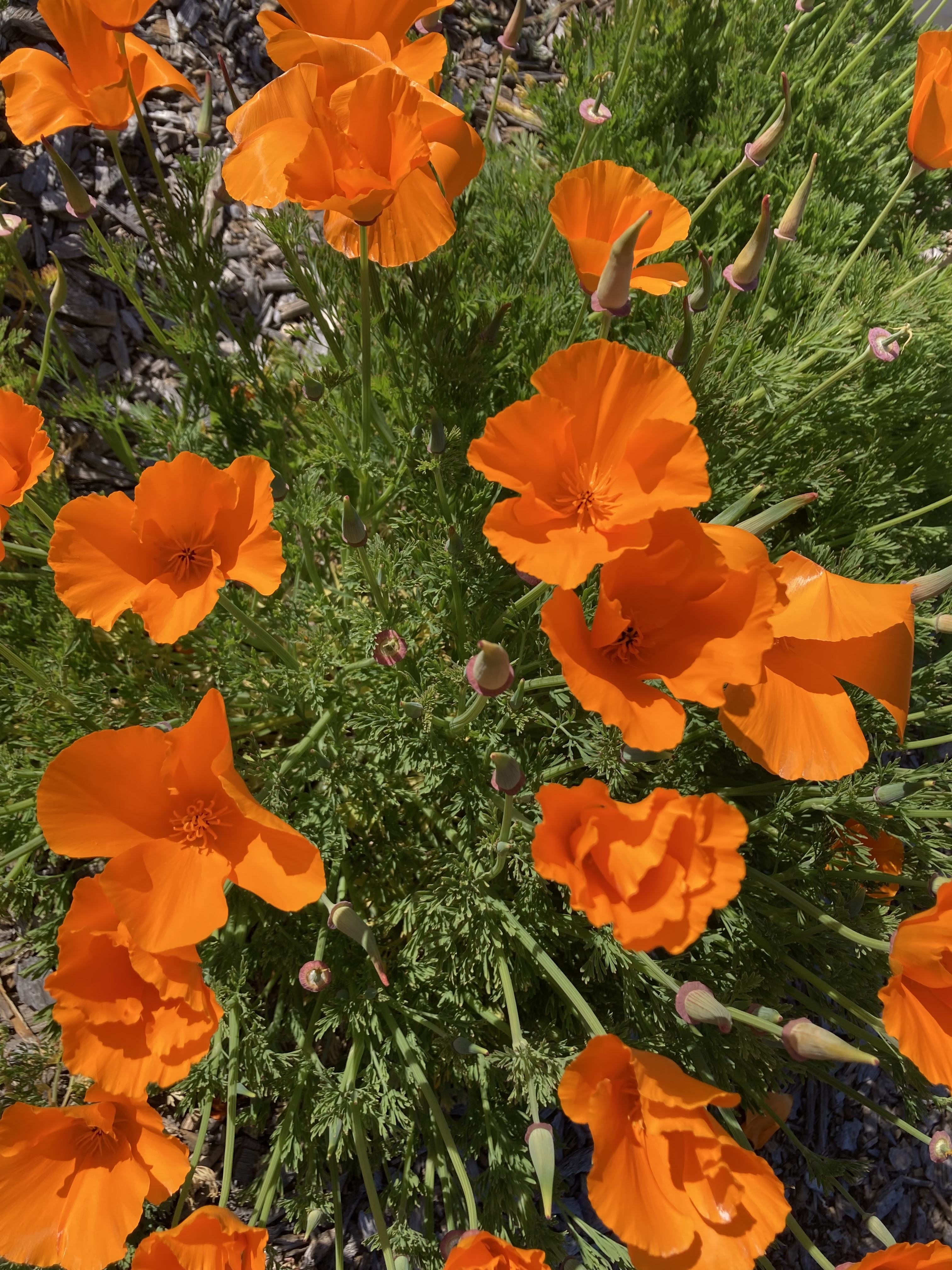
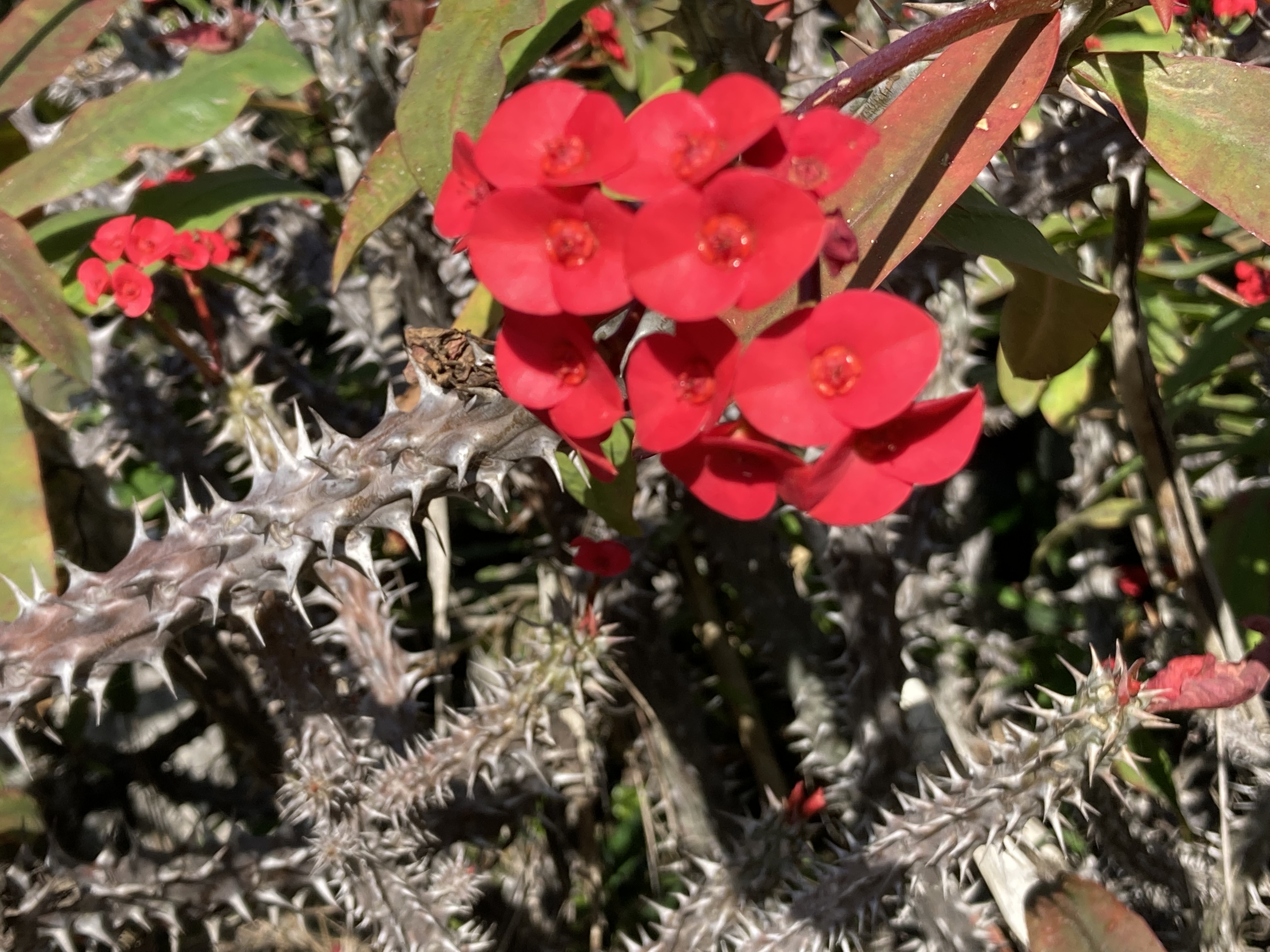
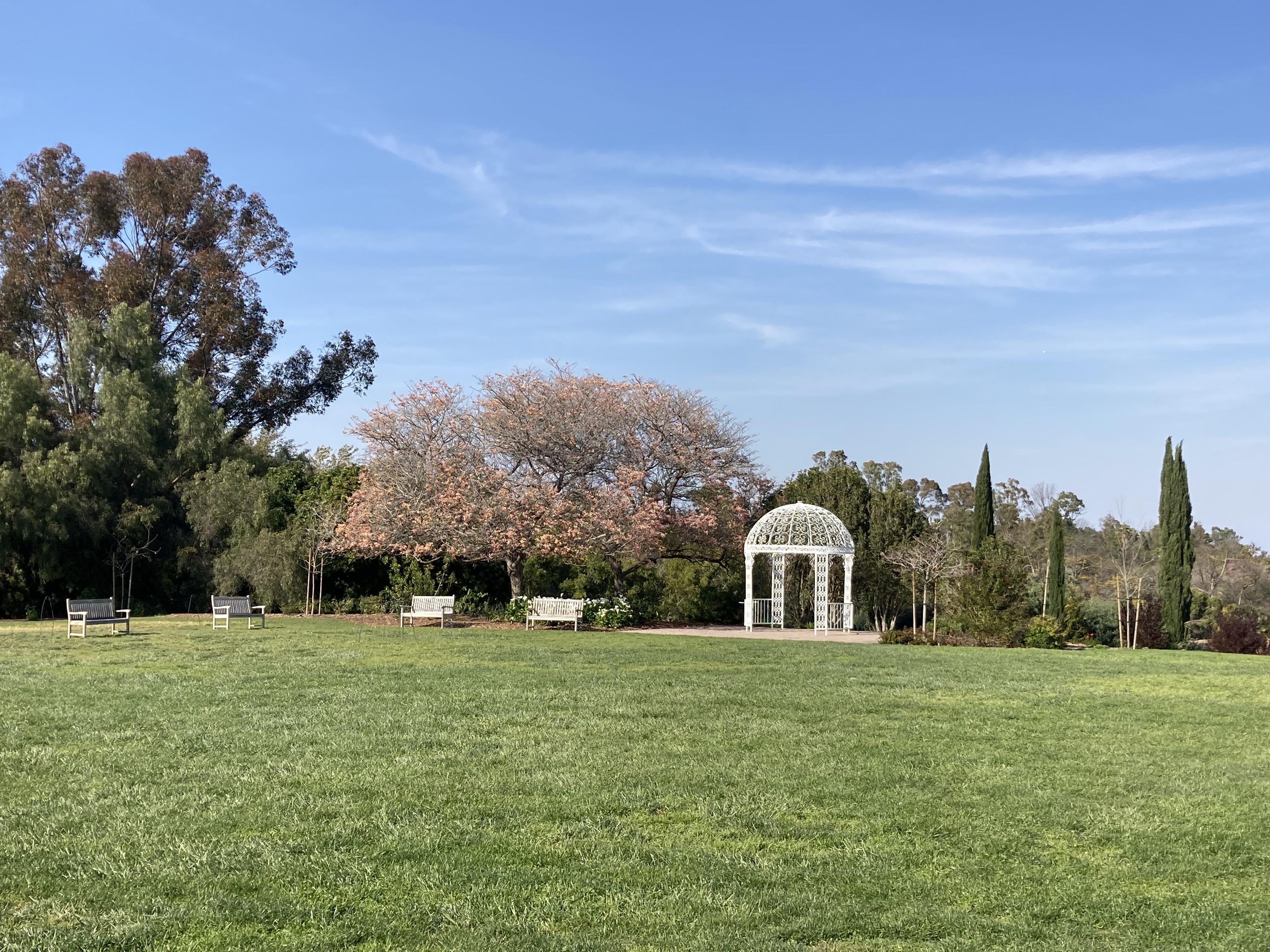
I then went to the South Coast Botanic Gardens. It’s one of the first botanical gardens in the world to be developed over a landfill, reclaiming the land and improving the environment (which explains some of the art installations throughout the gardens made of recycled materials).
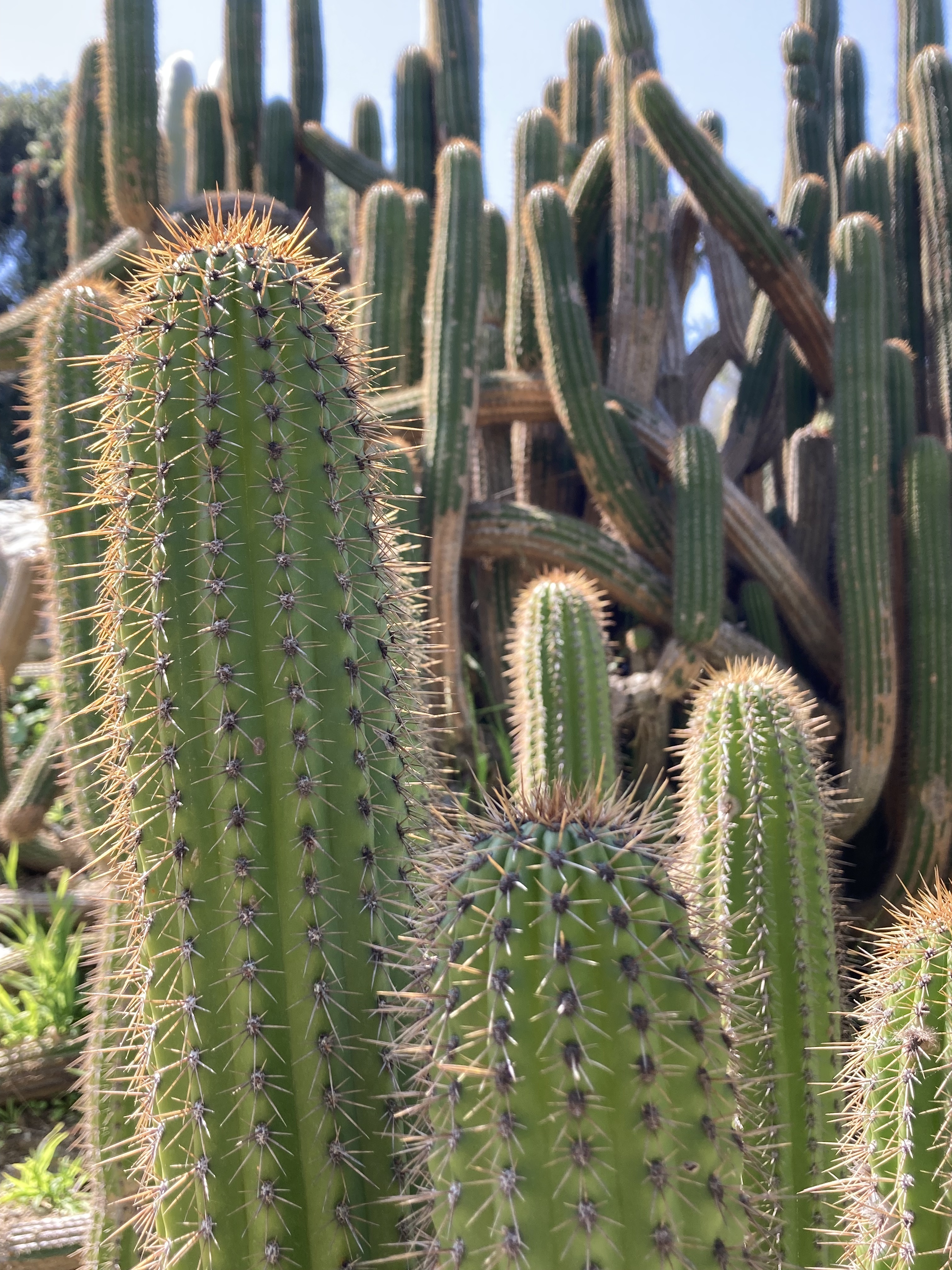
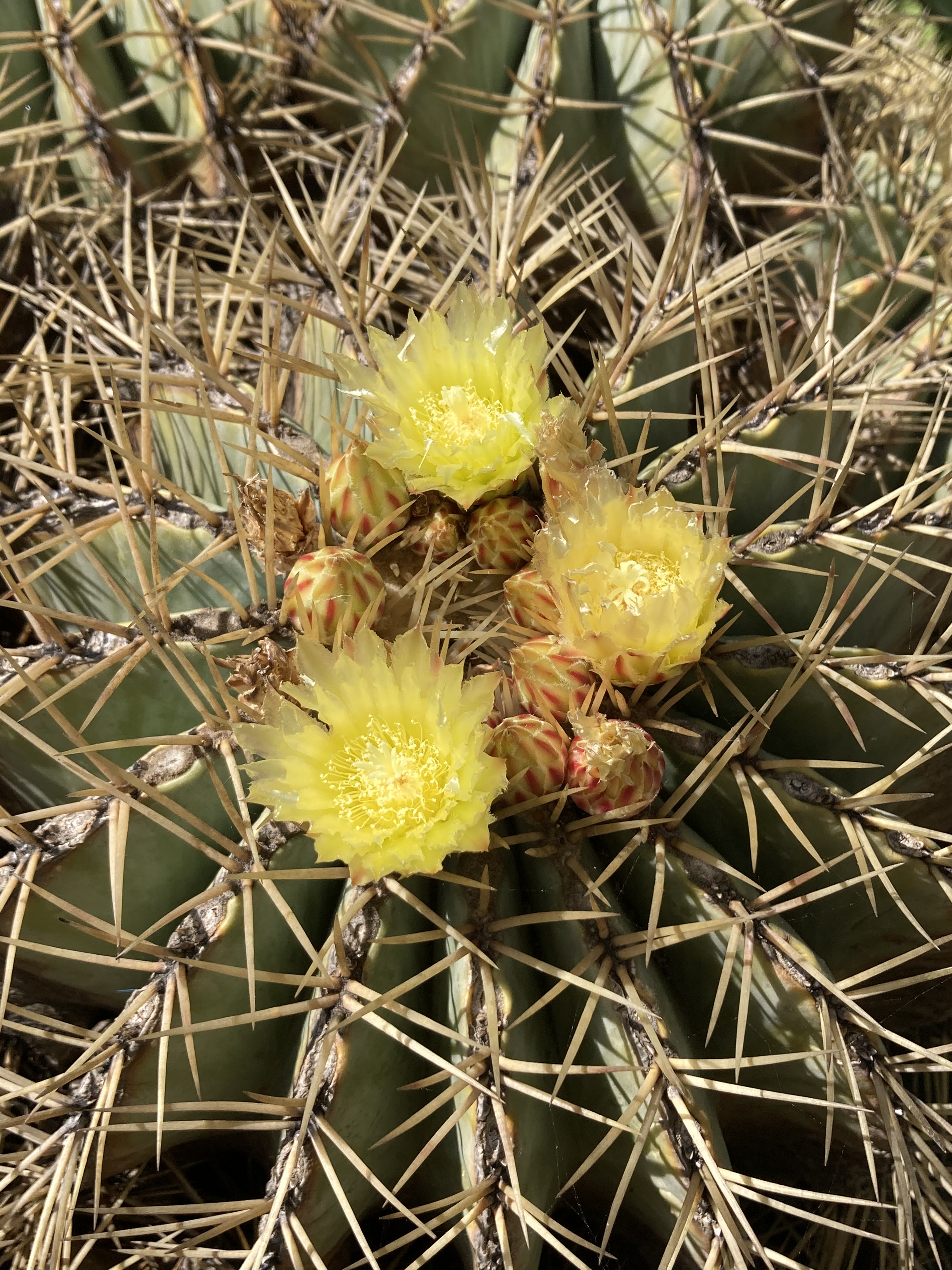
This is where Chester’s funeral was held. There is no dedication to him here – the only one I know of is at Christine Reed Park in Santa Monica. But it was interesting to see the clearing where it happened (Upper Meadow), and nice to just spend some time in nature. There was a desert garden which I particularly enjoyed. Nature really helps a lot when you’re going through something.
Long Beach
It was convenient to sleep at the Home Depot in Torrance again. I was also in no head space to make things more difficult for myself. I try not to stick around my overnight spots too long, so I made my way to a nearby park the next morning (Ernie Howlett) where I could chill and plan my visit to Long Beach.
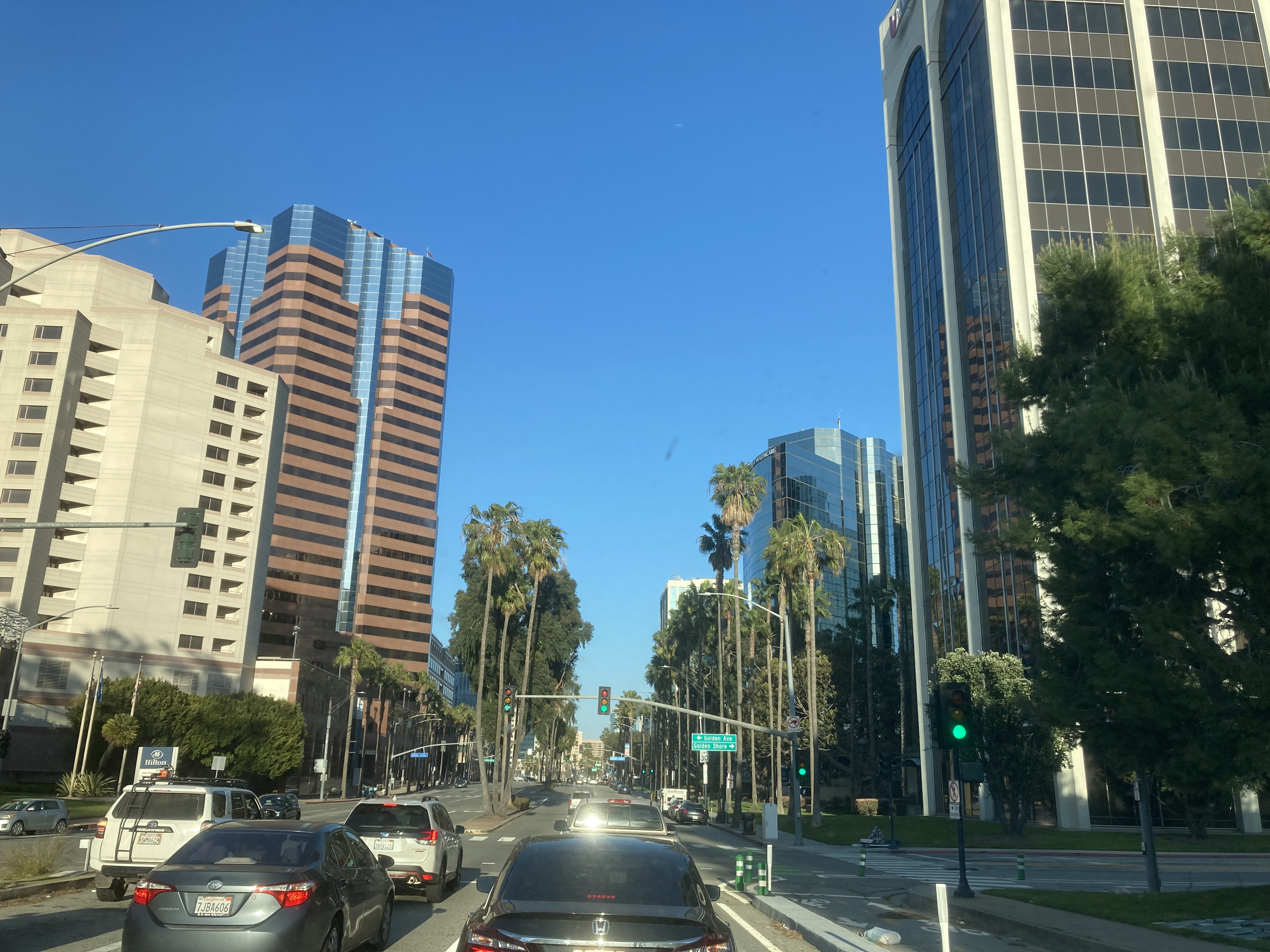
Driving into Long Beach was – cool. I don’t really know how to describe it other than industrial… but on a grand scale, with overpasses, and modern? I have no photos because I was driving. But it just struck me as cool.
Long Beach is in the southern part of Los Angeles county, about 20 miles south of DTLA, and has a population of around 450,000. It is considered a “Gateway City” as it lies between Orange County and LA. Long Beach is known as a port city, as an oilfield, and for its waterfront attractions.
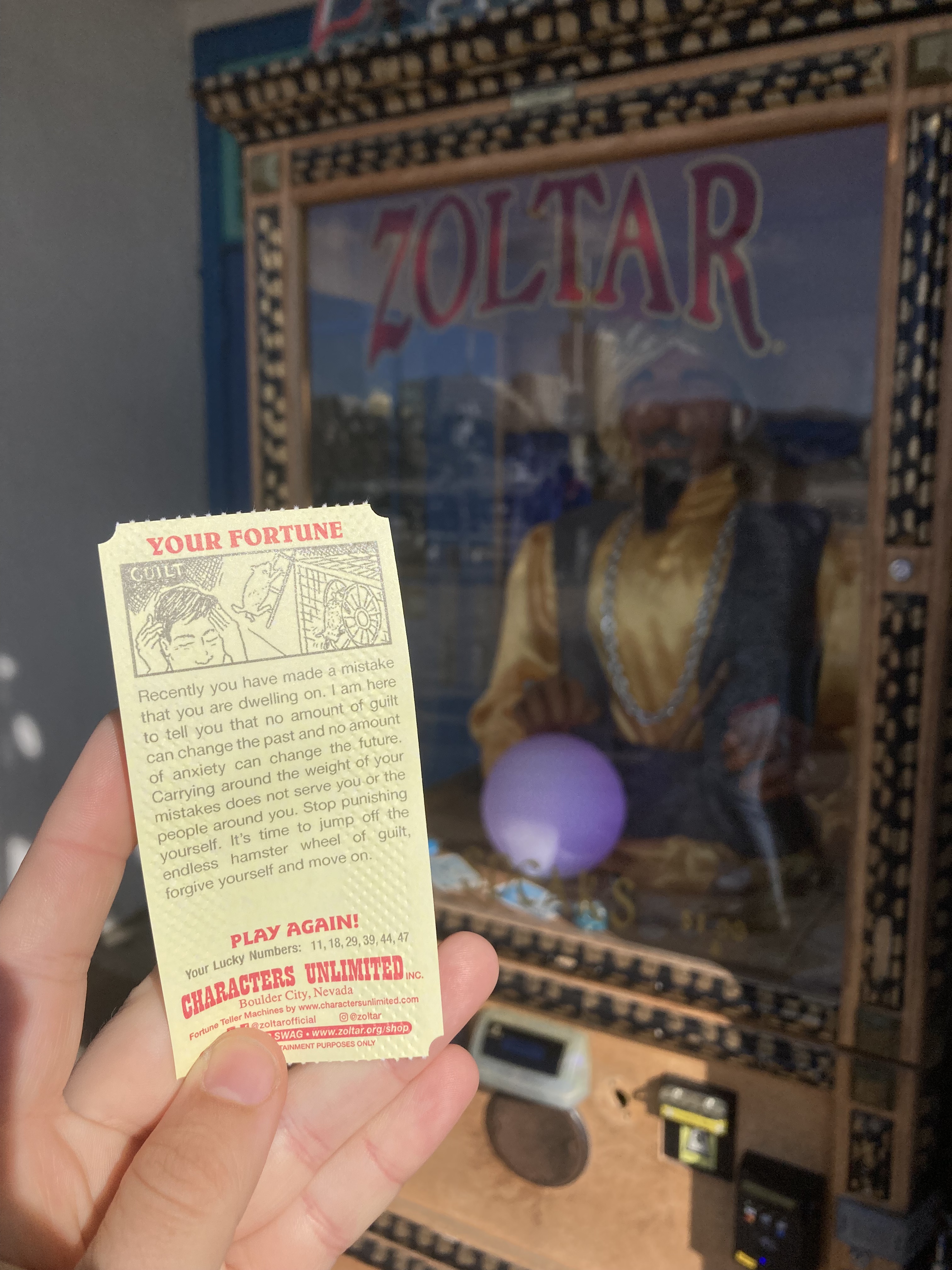
I really just scraped the surface of Long Beach, spending an afternoon around Shoreline Village, in the waterfront downtown district. There are shops to explore here (I got myself a churro and a fortune from Zoltar), waterfront walkways, views of the Queen Mary ocean liner (which operates as a hotel and offers dining, historical tours, and paranormal tours), and the Aquarium of the Pacific (which has a “shark lagoon”). I ended my evening with a walk along Alamitos Beach, which I usually wouldn’t do (exploring out after dark), but there were a good number of people around and Long Beach’s crime index was relatively low (you absolutely can never be too careful though).
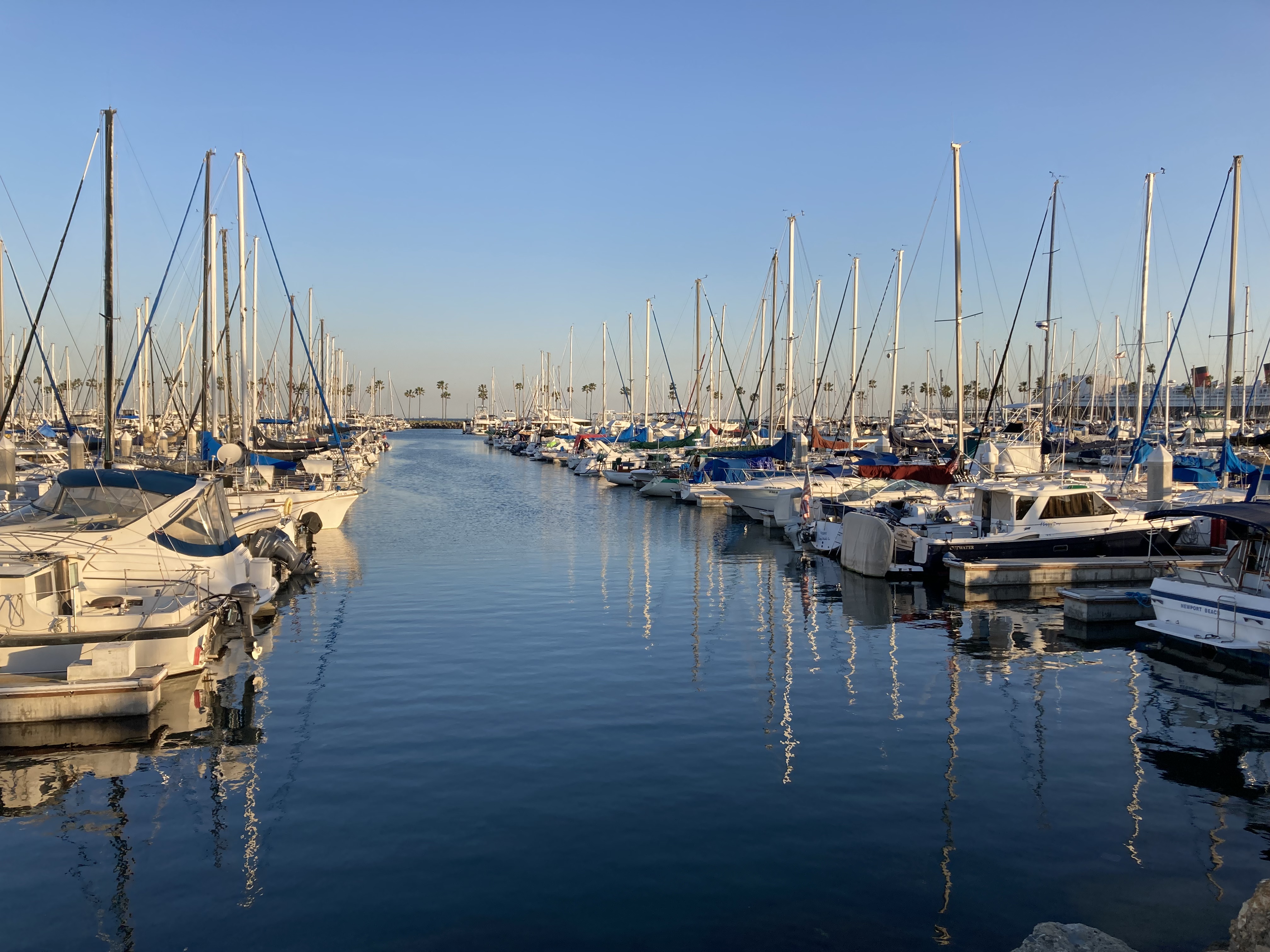
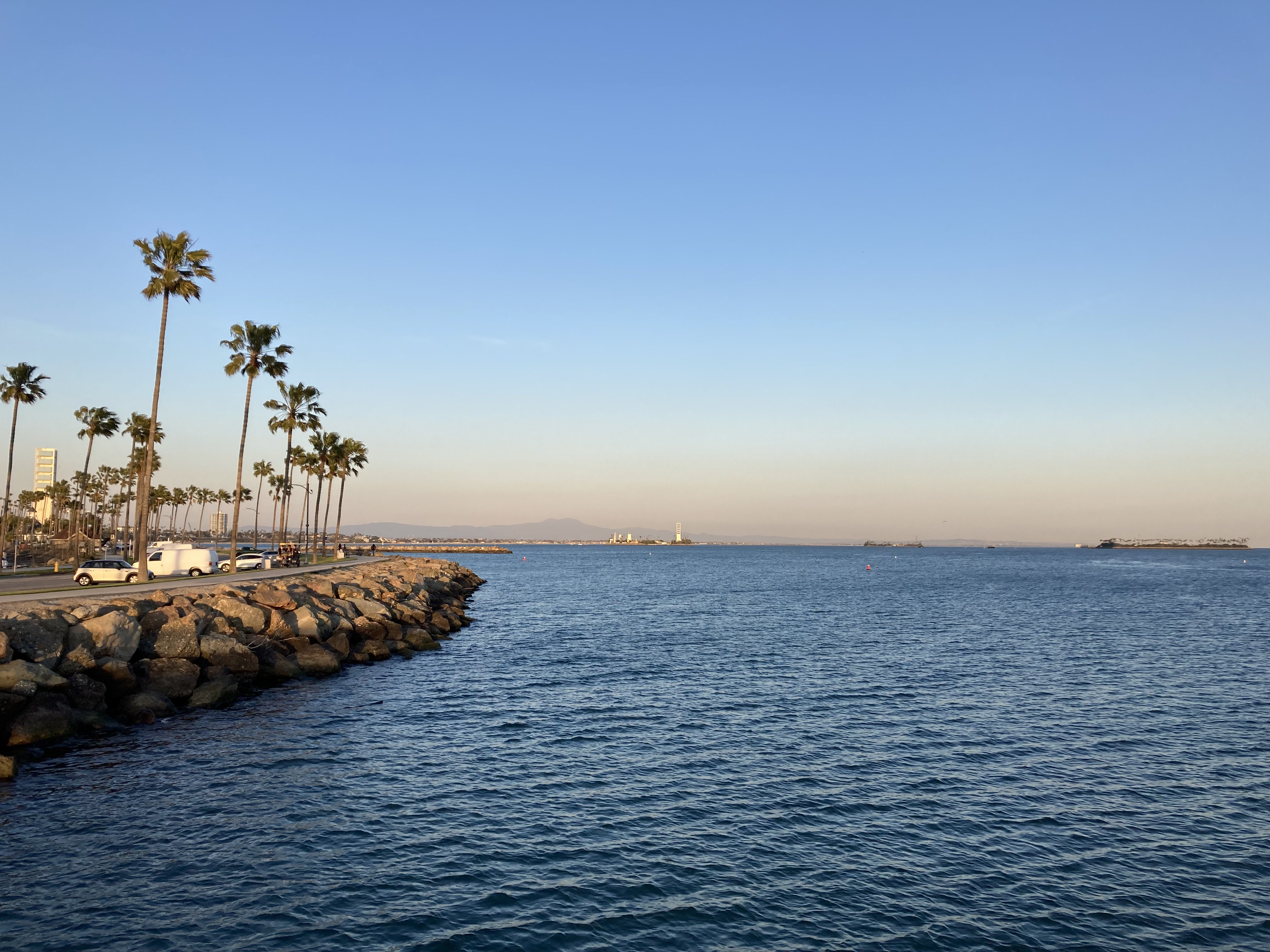
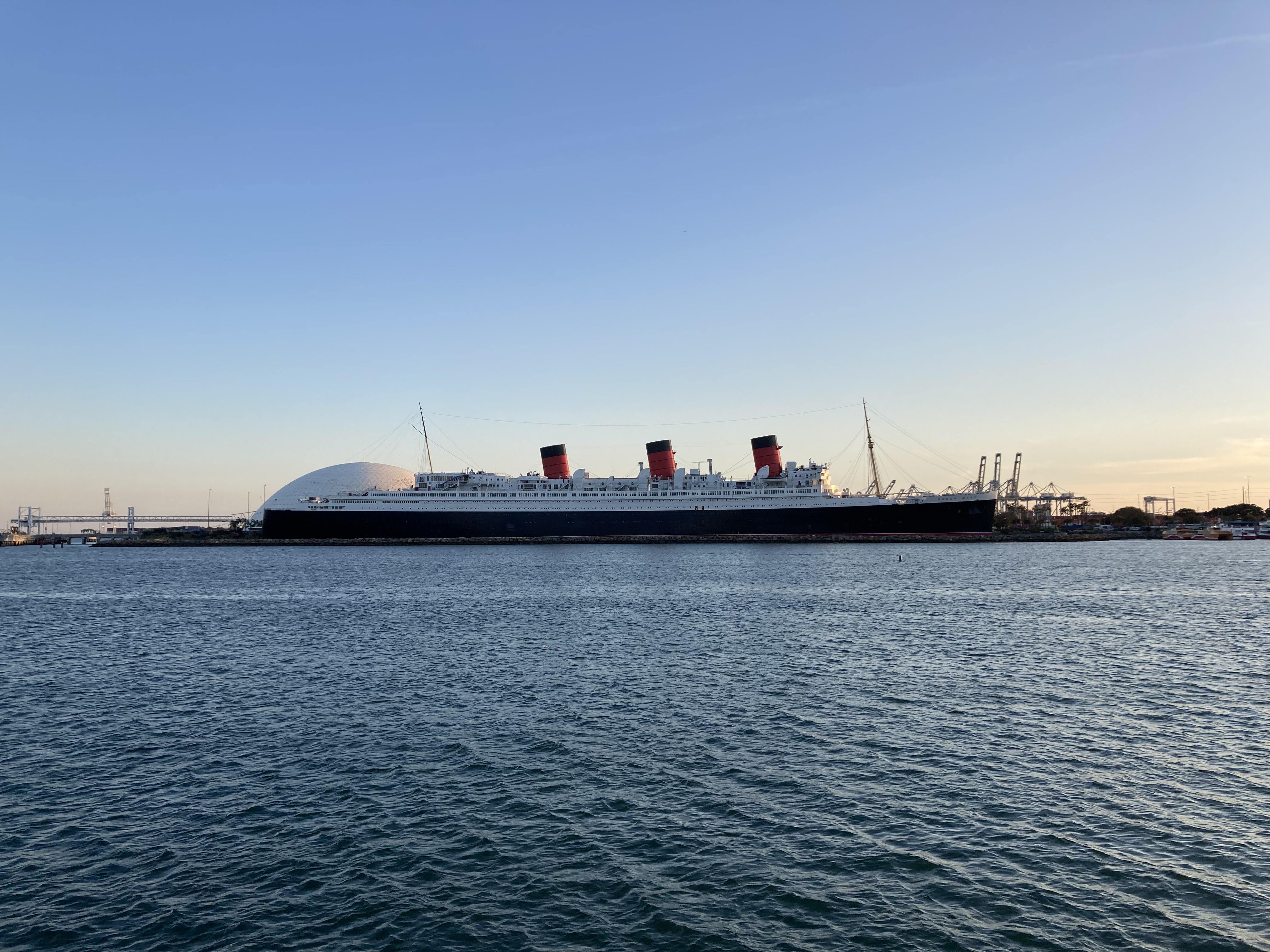
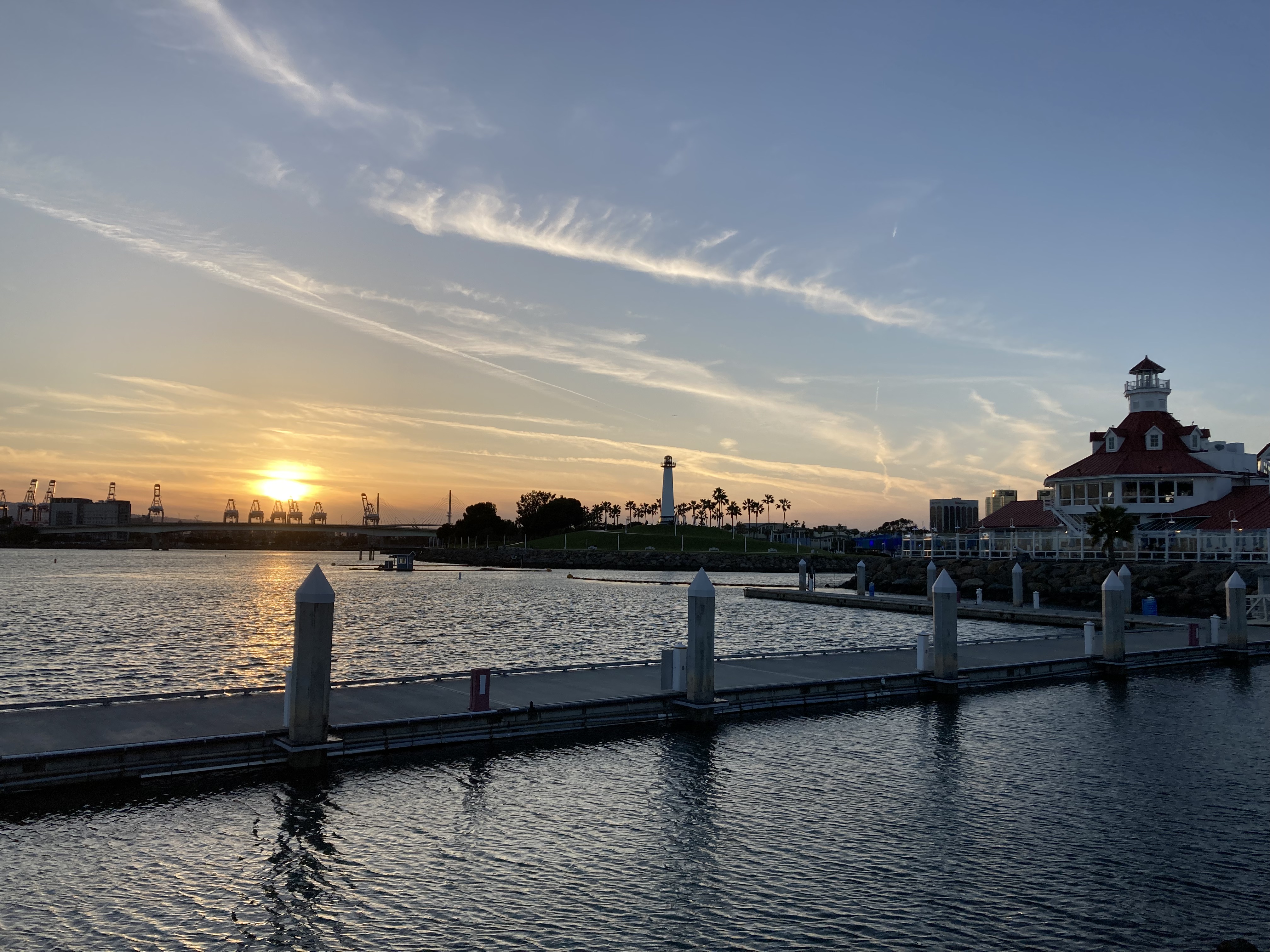
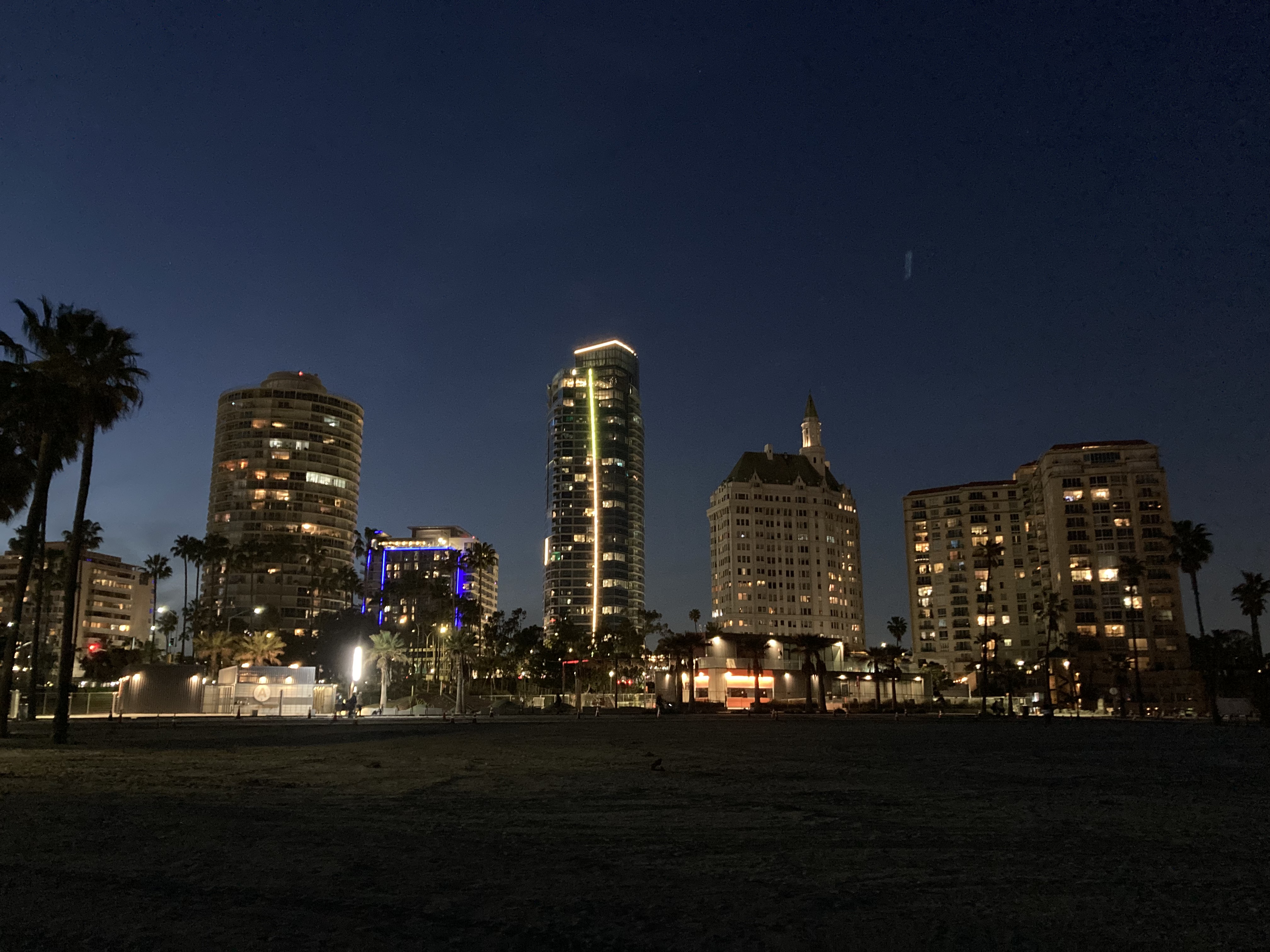
A few things I might consider visiting here in the future would be the Naples Canals (Italian style canal), a day trip to Catalina Island, Rancho Los Cerritos (19th century adobe home), Rancho Los Alamitos (19th century adobe residence and ranch), El Dorado Nature Center (hiking), Long Beach City Beach, and Hilltop Park in Signal Hill (for sweeping city views). I’m sure there’s more – I happen to have an acquaintance that lives in Long Beach so I would probably consult him, too, if I ever got back here!
Overall, I quite liked Long Beach, it’s pretty.
That night I found parking just south of Long Beach in an area called Sunset Beach. The location is no longer on iOverlander, but it was lovely, with plenty of parking, but residential.
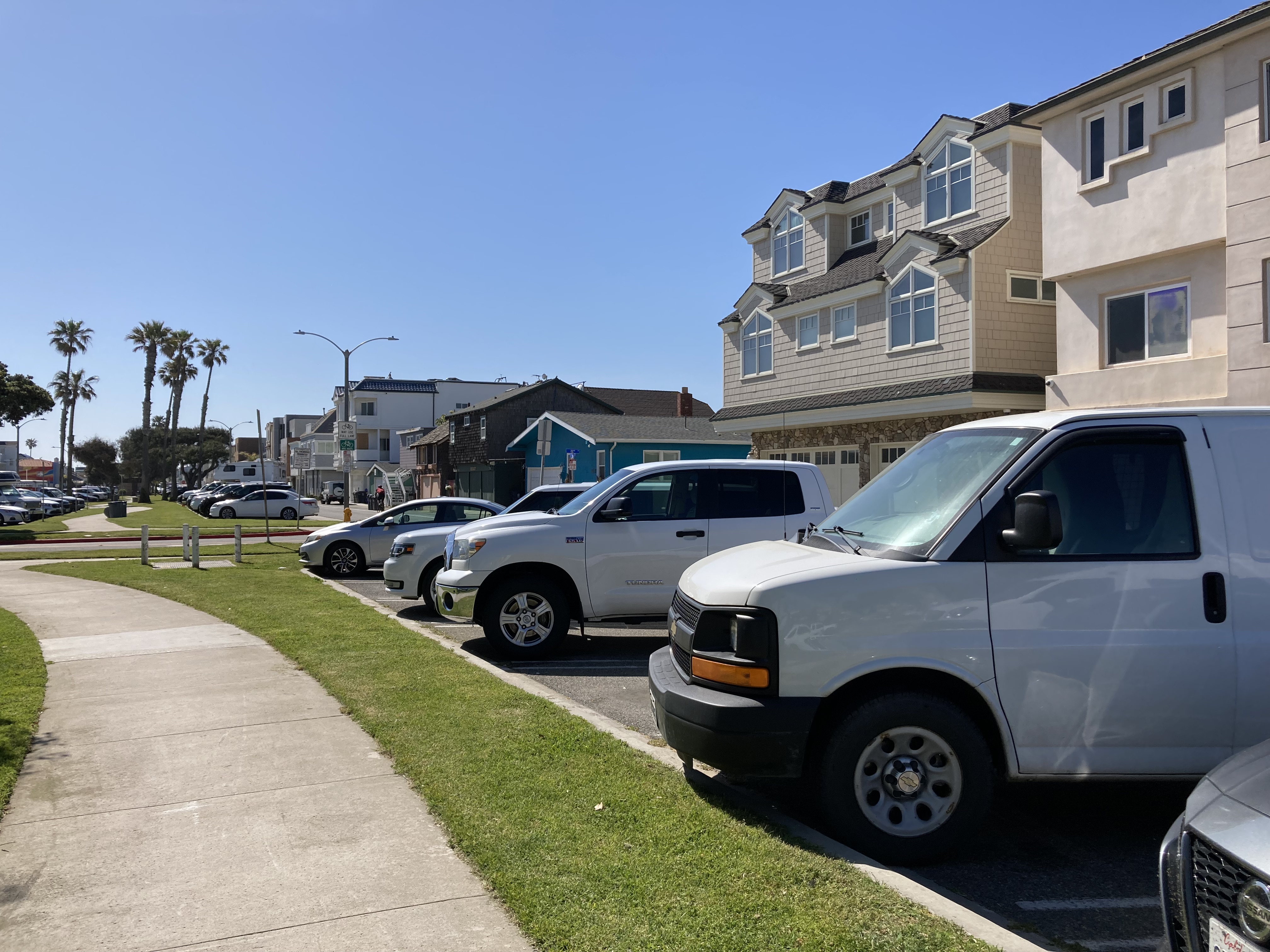
Orange County
Orange County lies between Los Angeles County and San Diego County on the SoCal coast, starting just below Long Beach. It encompasses beach after beach and notable beach towns like Newport, Huntington, and Laguna.
I couldn’t help but think about the show The OC. While the show is fictionally set in Newport Beach, filming happened in LA County on the beaches and piers of Redondo Beach and Hermosa Beach, with house scenes in Malibu, and sets in Manhattan Beach. I was slightly kicking myself for not going to Redondo Beach Pier.
But I was mostly just making my way to San Diego.
A few things I might do if I was back here – Newport Beach’s Balboa Peninsula/ Island/ Pier, Newport Pier, the wedge to take in the waves and surfing; Laguna Beach’s tide pools, Crystal Cove State Park, and especially Victoria Beach – where there is a “Pirate Tower“!
Huntington Beach
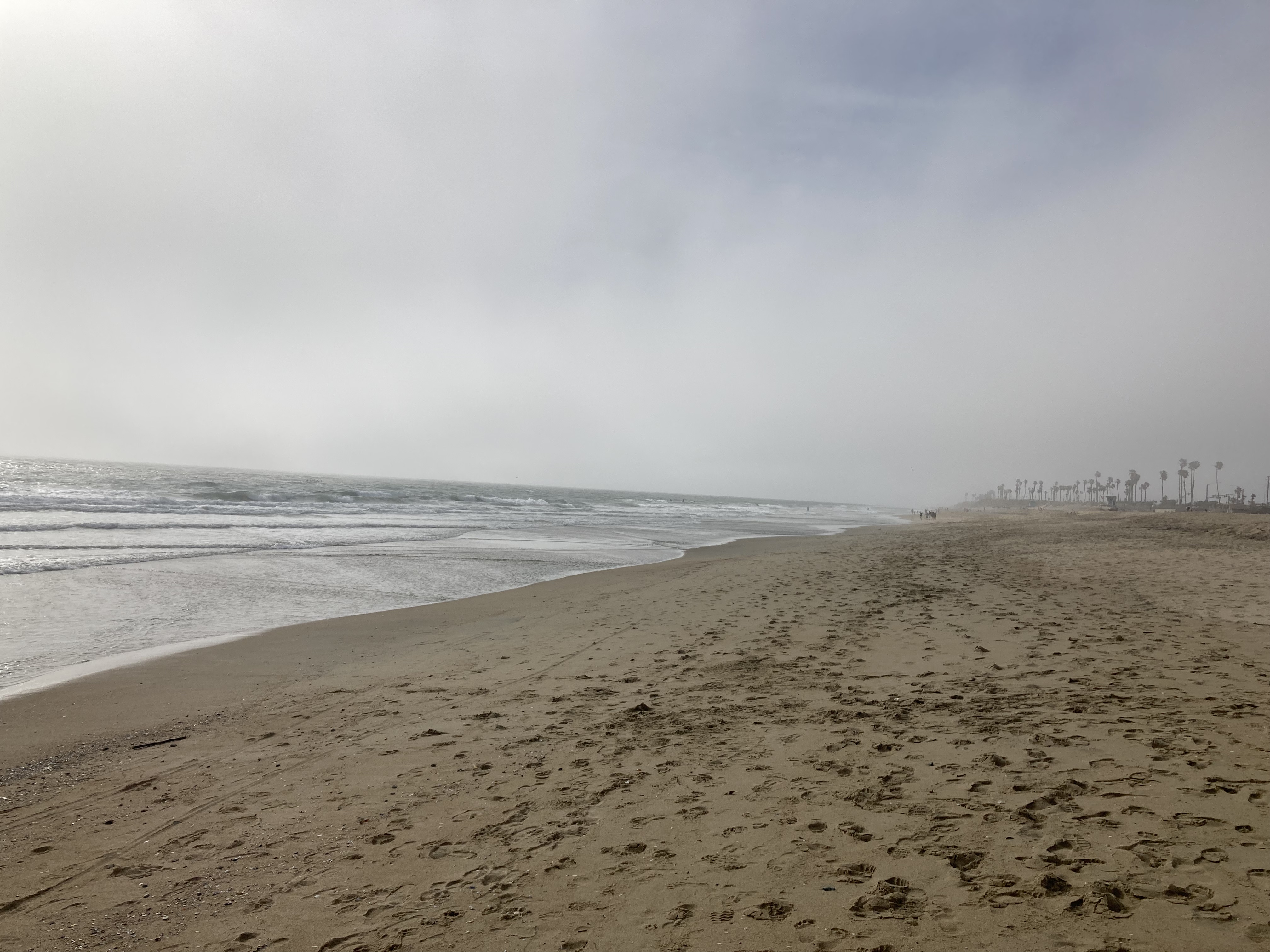
Making my way down the coast, approaching Huntington Beach, I spent an afternoon at Bolsa Chica State Beach. Gorgeous sunset here, got pretty crowded.
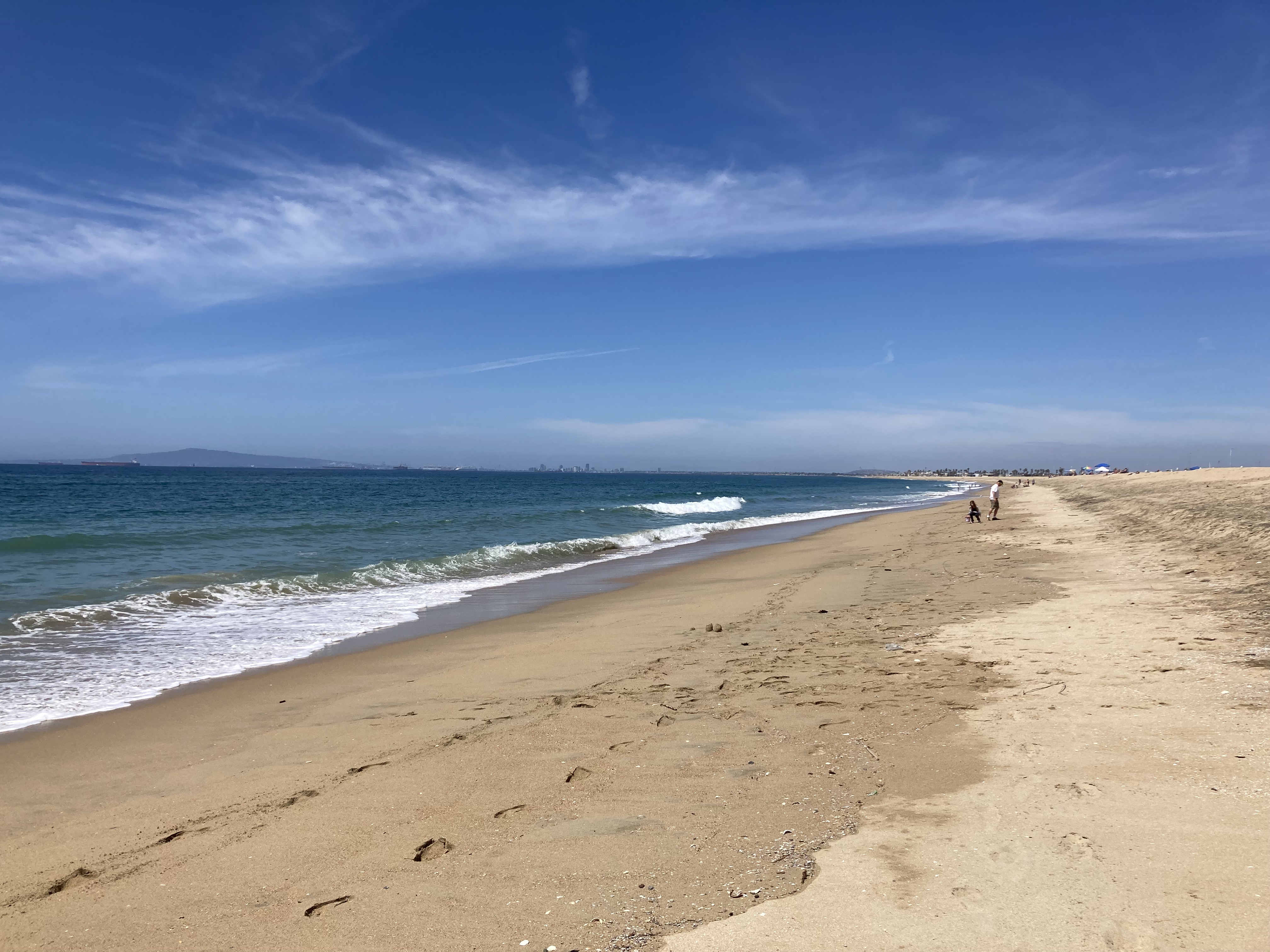
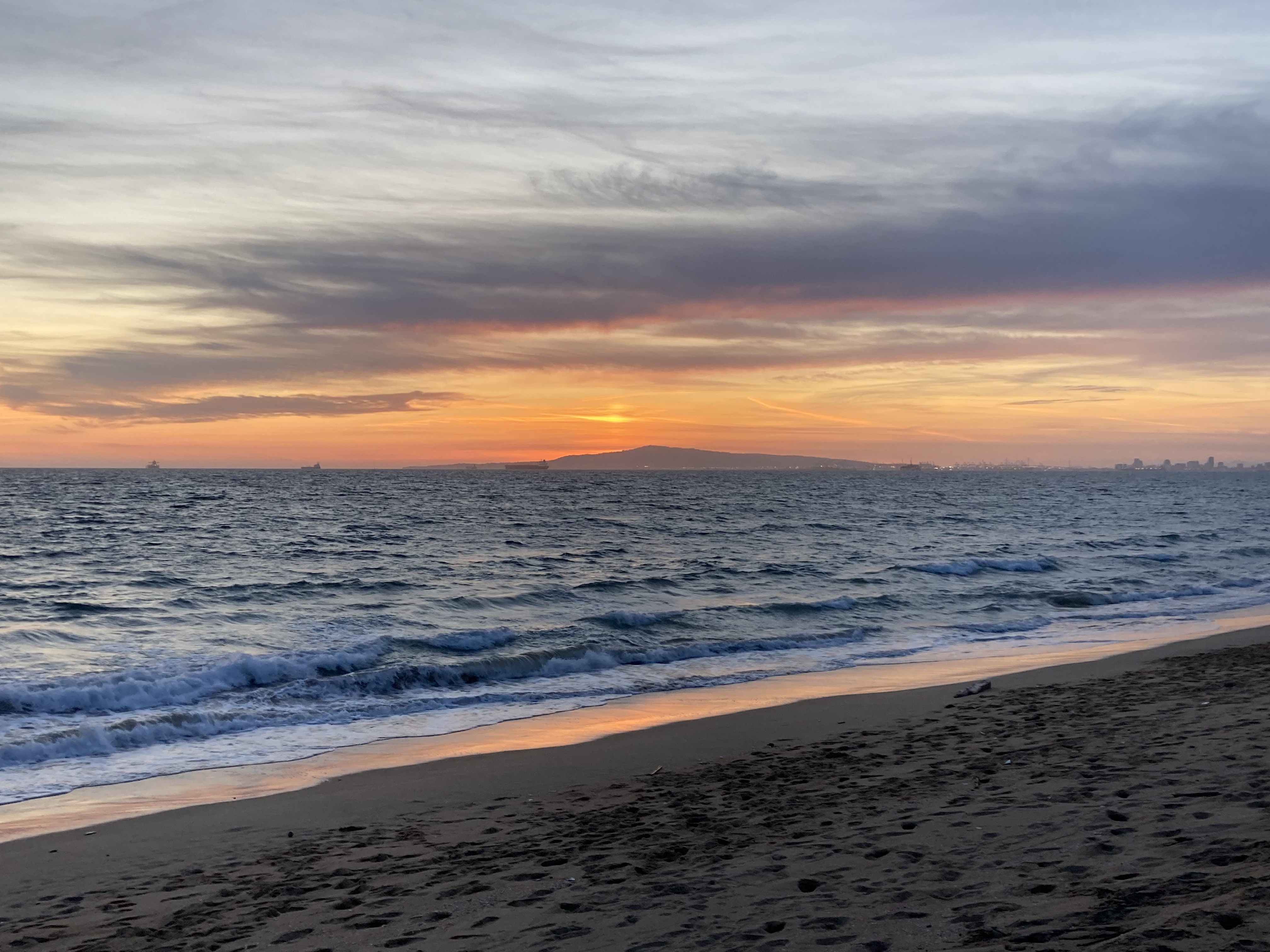
Huntington Beach is a quintessential beach town with surf culture. It is nicknamed Surf City USA and is home to the International Surfing Museum. It even has a Surfing Walk of Fame. It has a population of about 200,000, and of course has a pier.
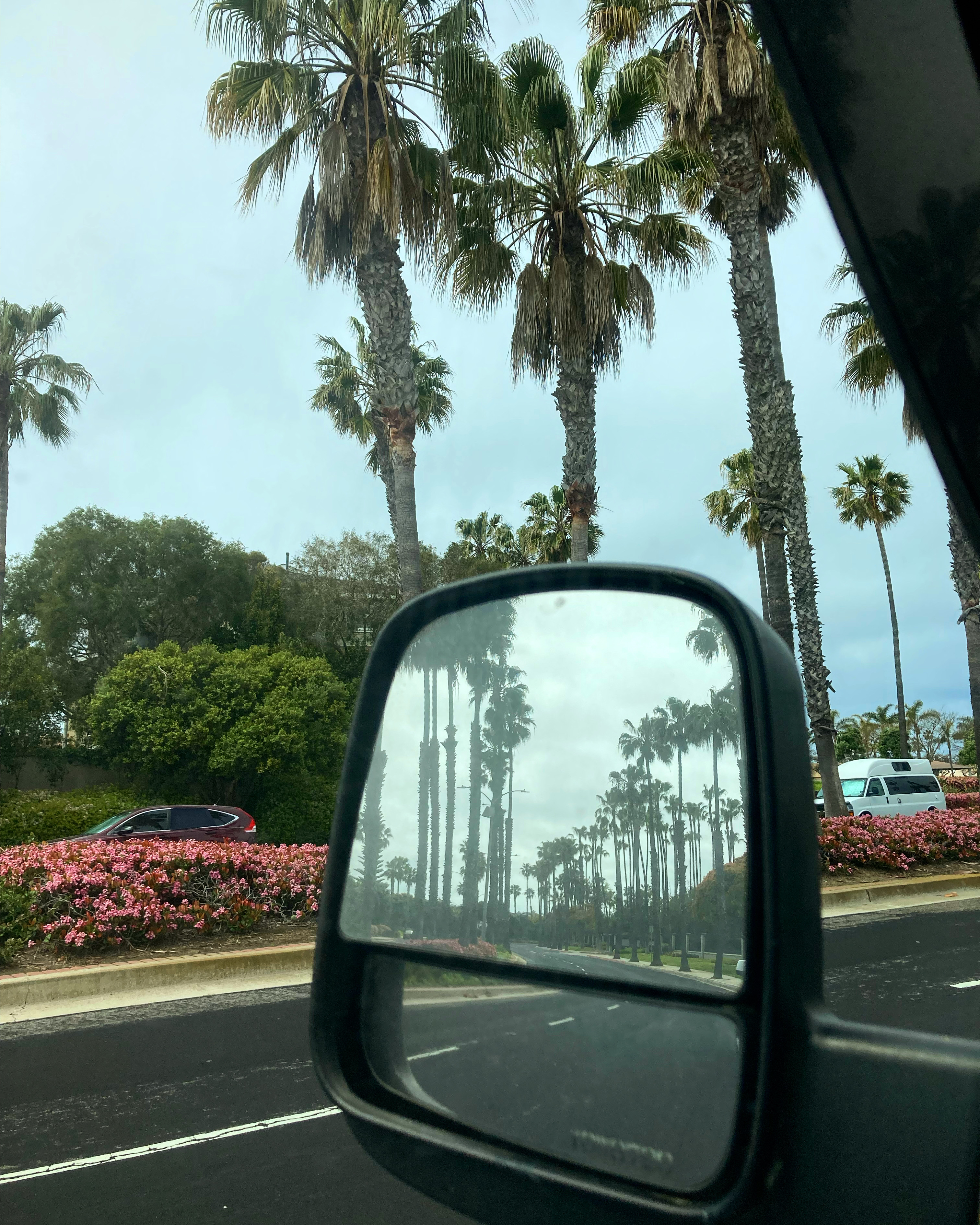
I didn’t plan on being in Huntington Beach – I just found a great overnight spot here. Even if it’s street parking, finding a spot with other vanlifers always made me happy – being among peers!
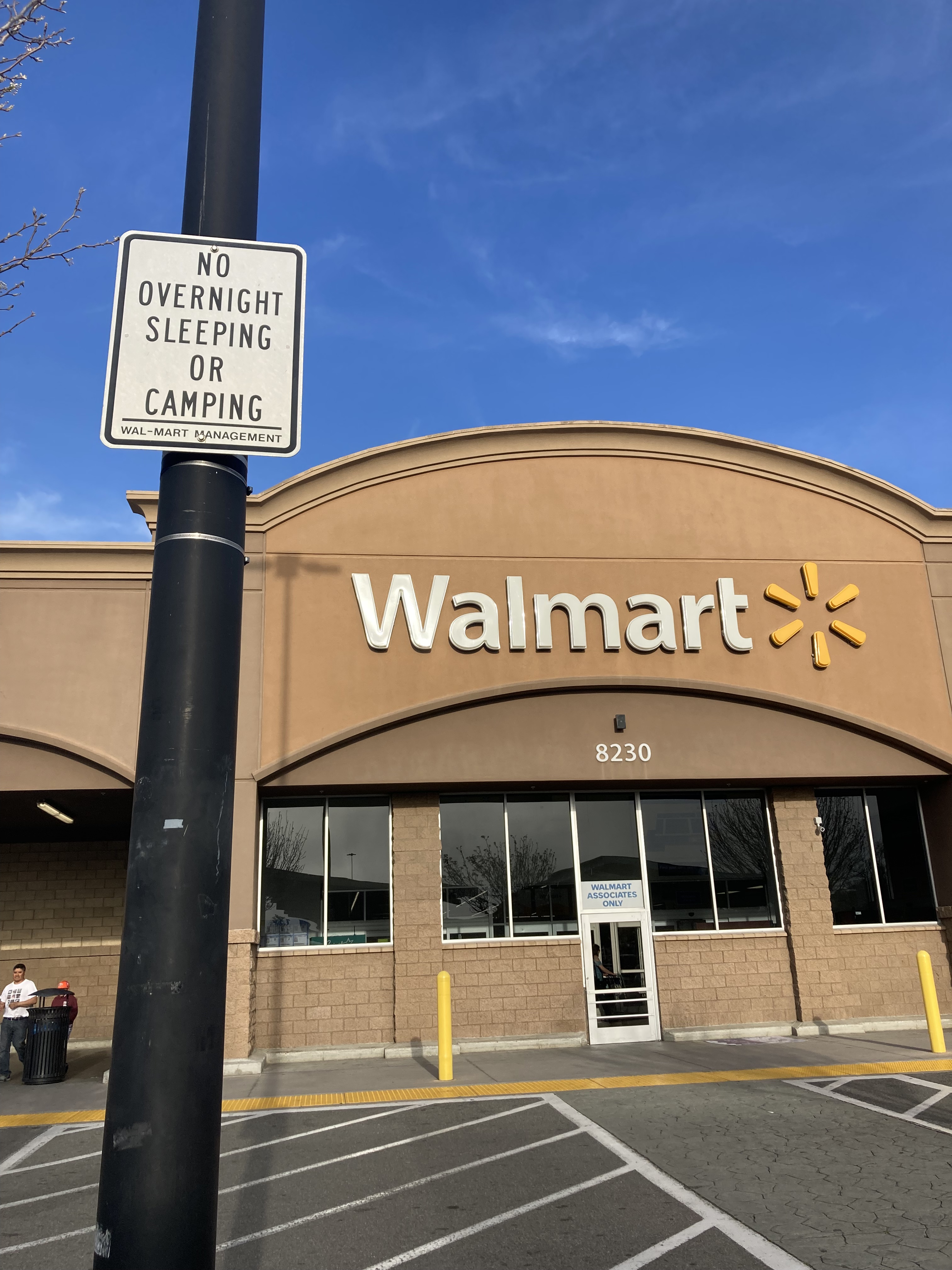
I’m seeing recent posts about people staying at this spot (Palm Ave.) without issue but also a moderator note on iOverlander saying Huntington Beach prohibits overnight parking – this is why I think we always have to do our own research and make our own judgement calls. I had no issues, but that was a few years ago, and the world seems to increasingly want to close ranks on what it allows.
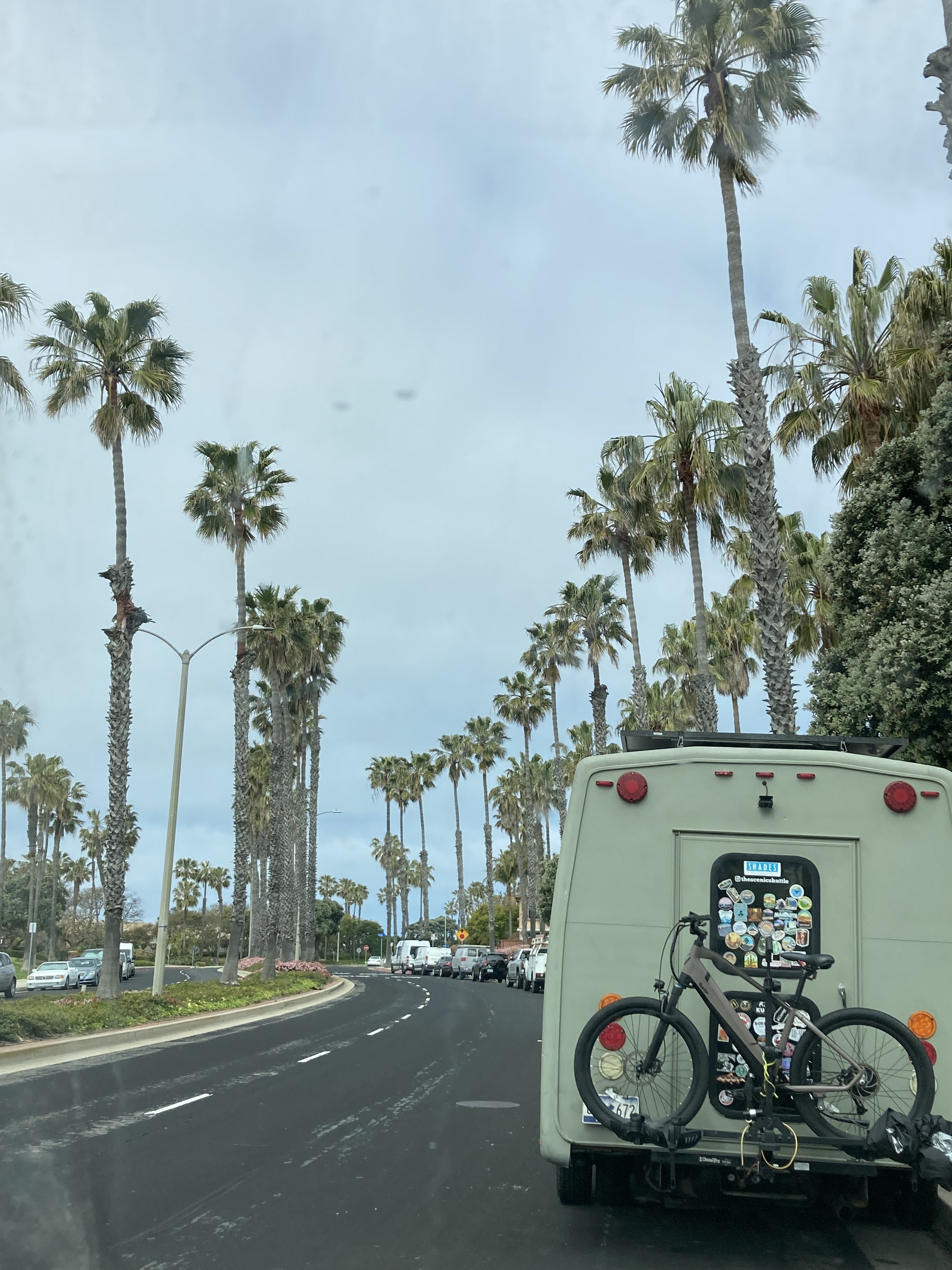
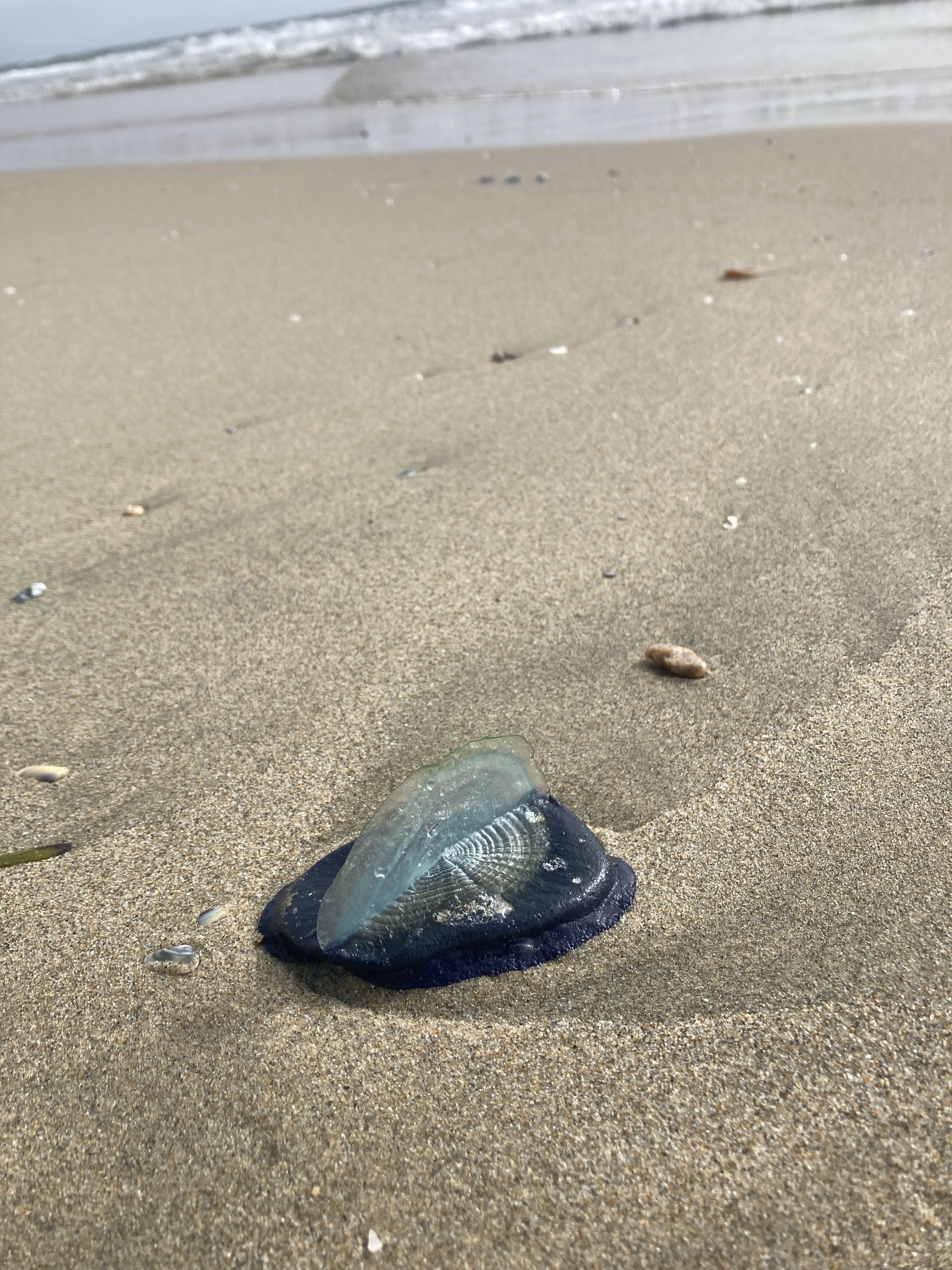
Side note, an increasingly common sight:
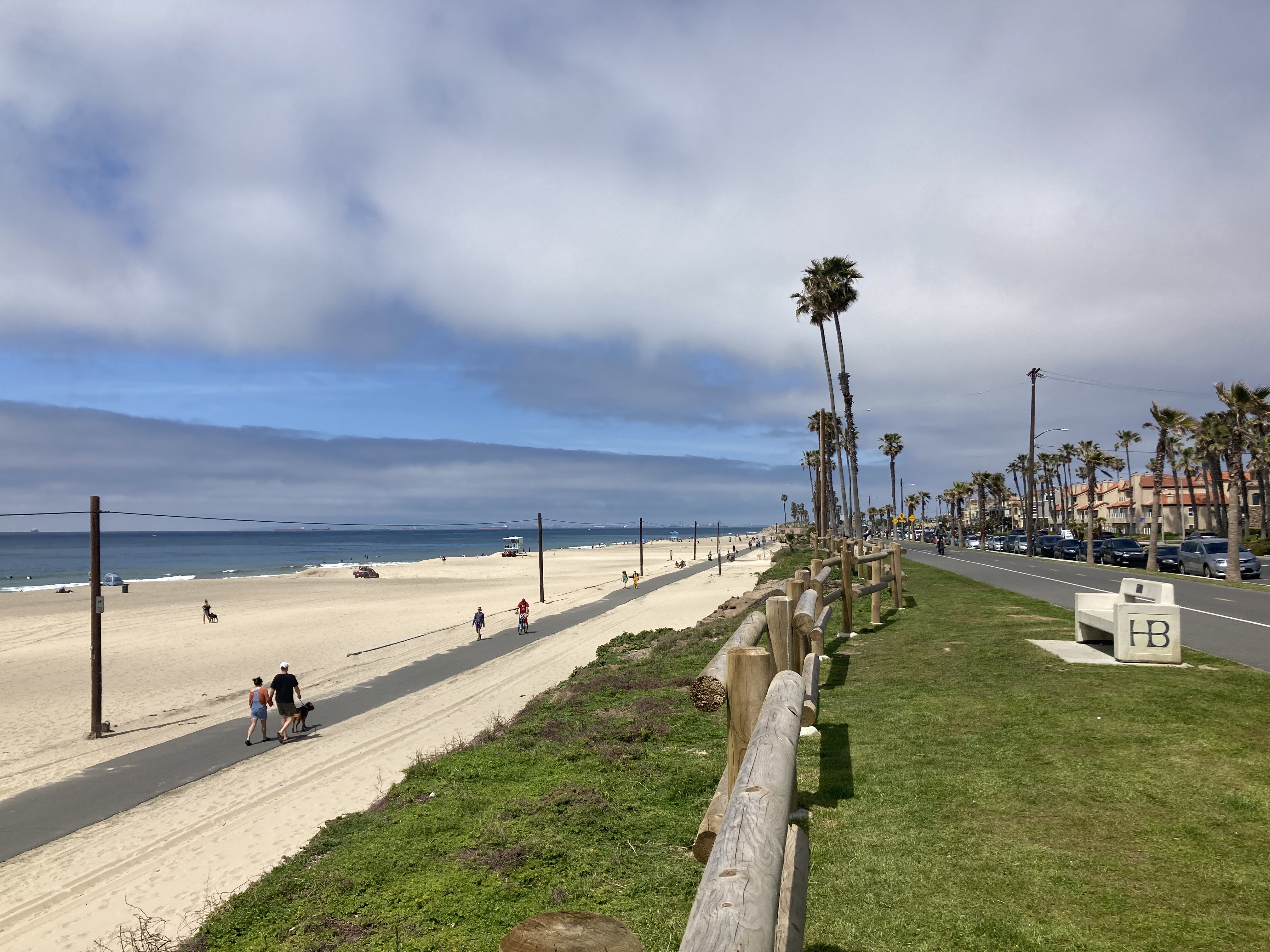
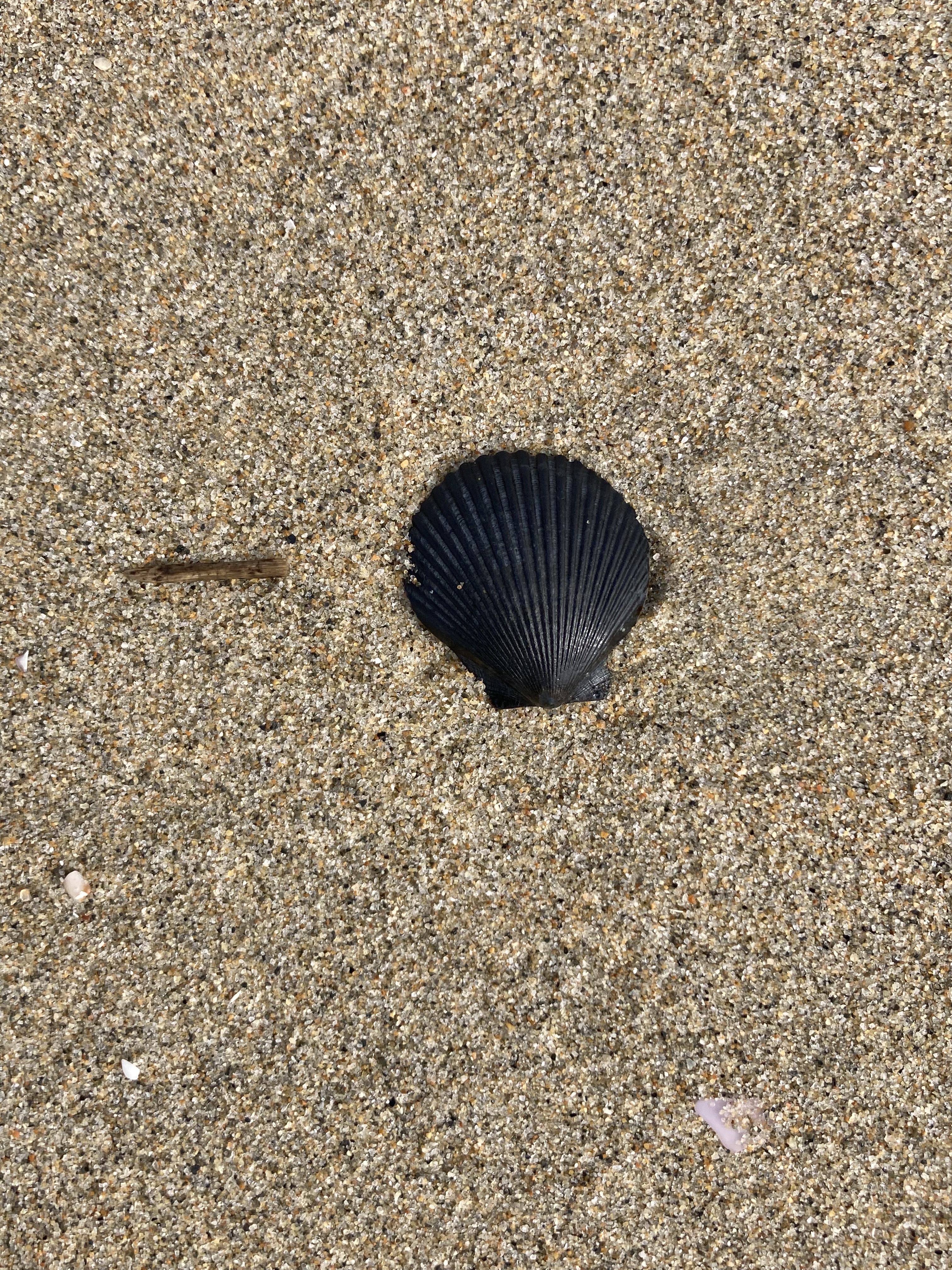
And if you’re in town you might as well check out the waterfront.
Dana Point & San Clemente
Sometimes I just opened maps and picked a place to go. Often this would be public places with parking where I could do whatever I needed to do in the van – eat, research, plan, clean. I ended up picking Dana Point and headed there.
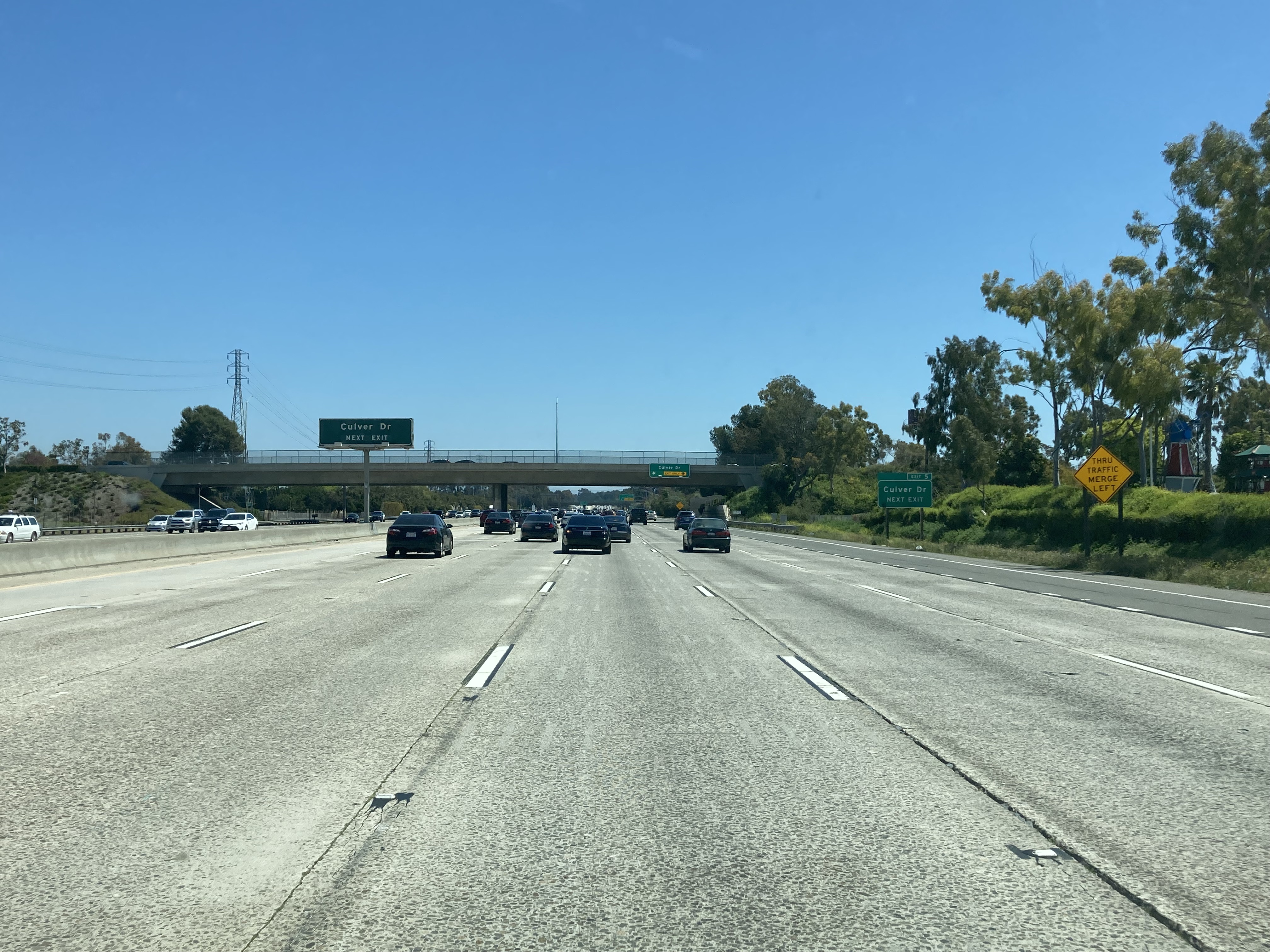
Dana Point is a little town known for its harbour, bluffs, and whale watching. California’s first surf shop opened here, it has Doheny State Beach, as well as Bluff Top Trail. For my purposes, it was a checkpoint.
I decided to stay that night at San Clemente State Beach Campground to the south. It was nice to get out for a run – trails lead from the campground down to the beach and I ran to the San Clemente Pier, which had people fishing and seemed to be in a nice downtown area. On the run back pelicans flew overhead and dove vertically into the water for fish.
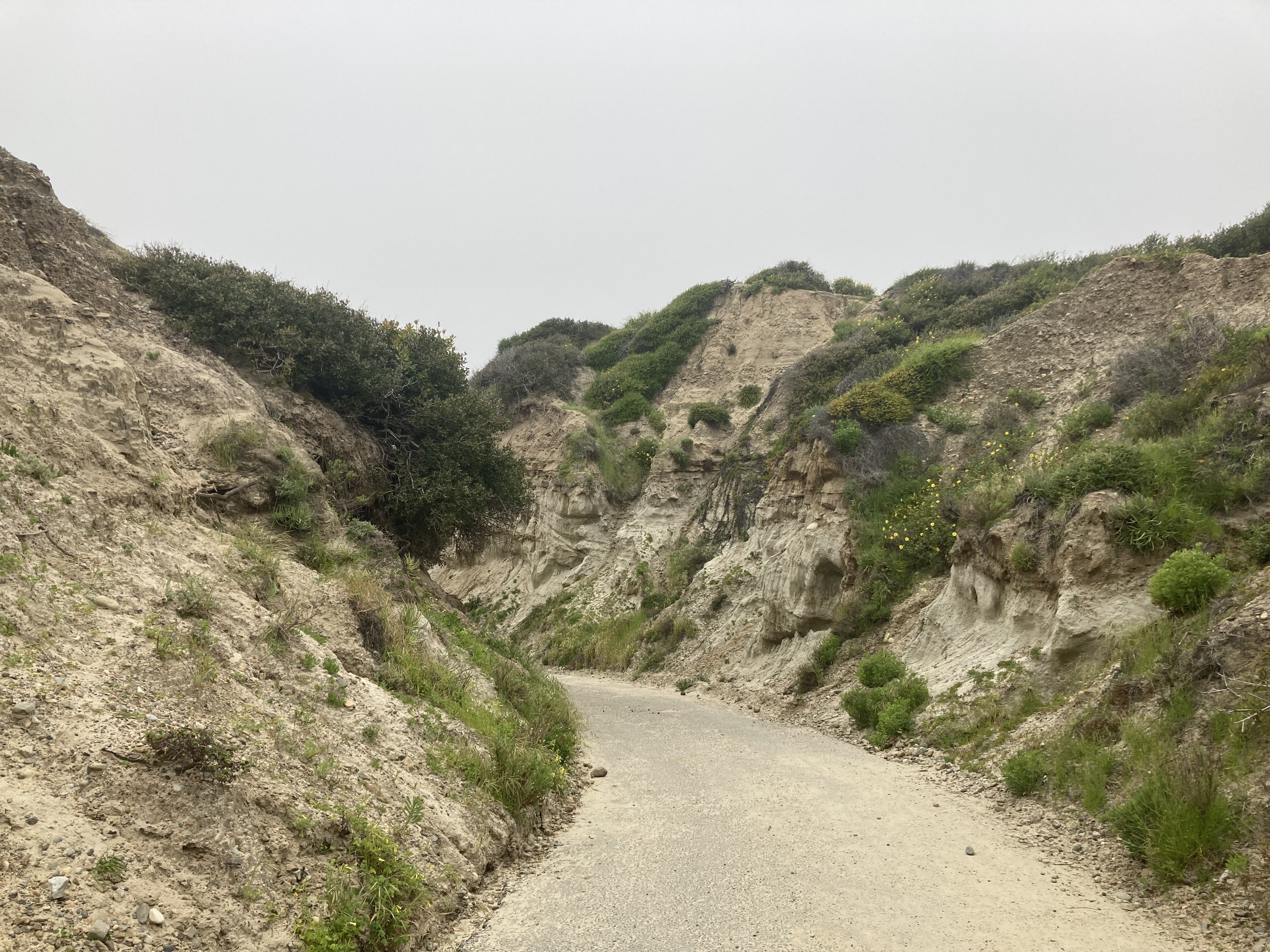
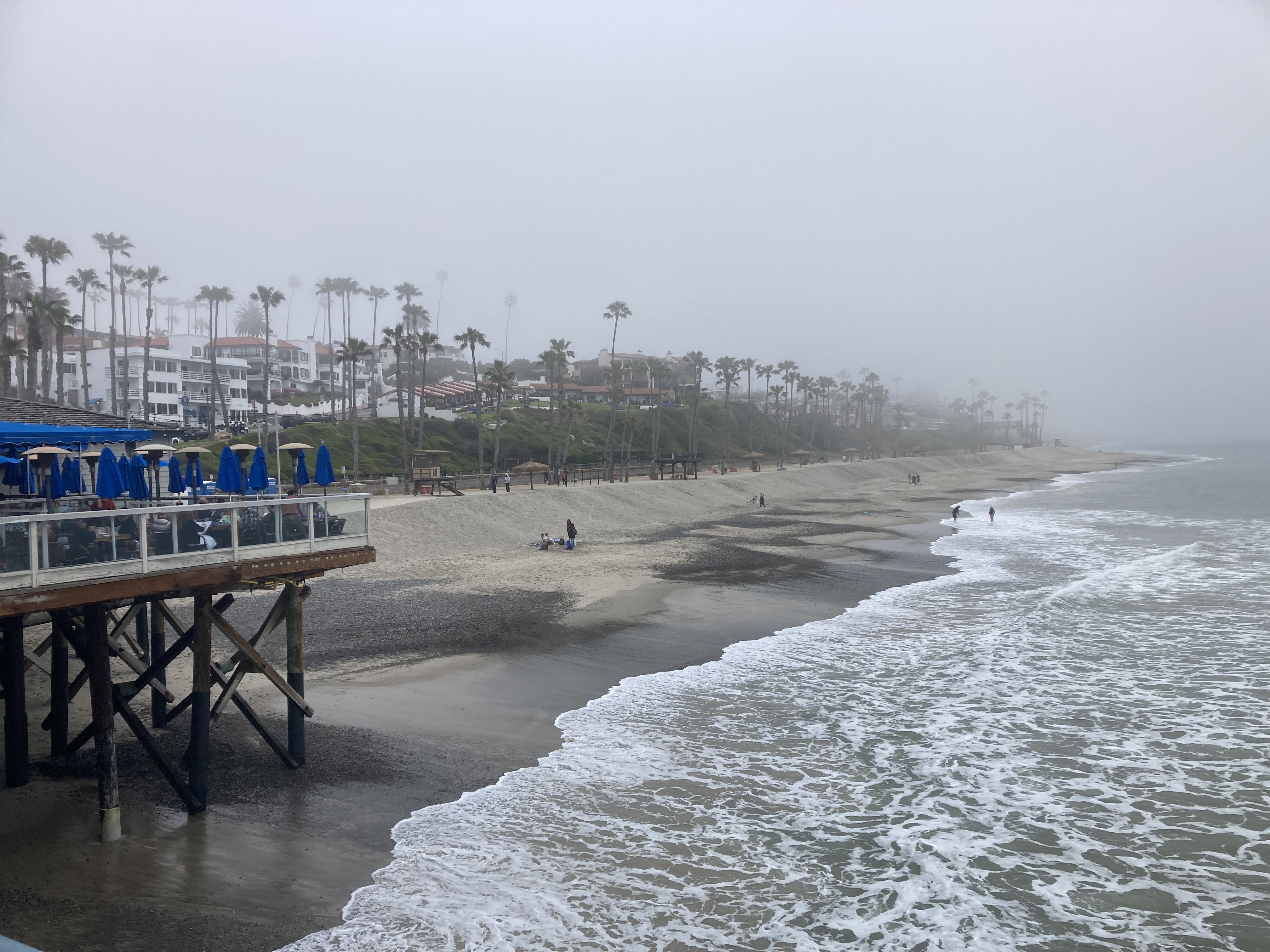
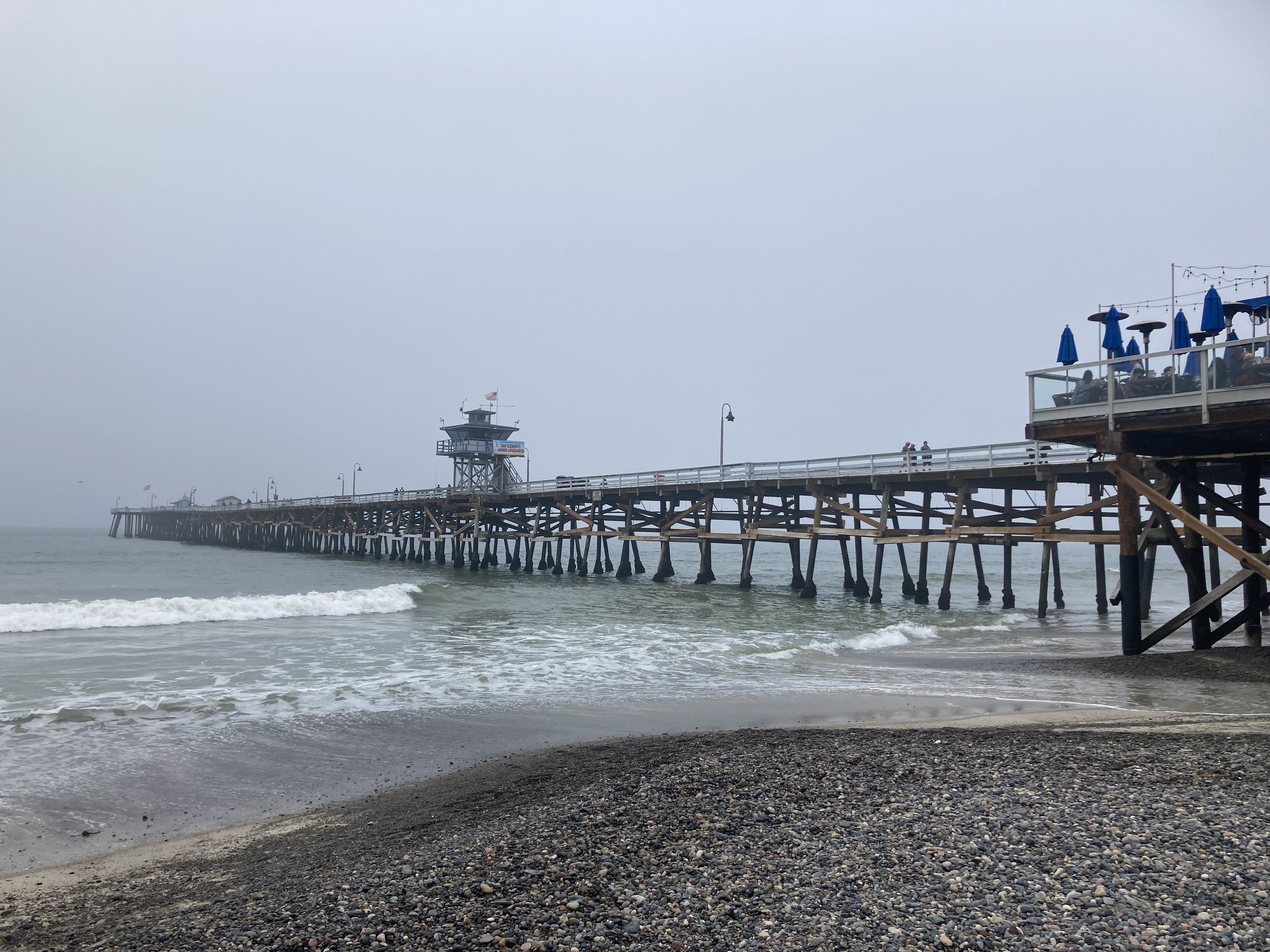
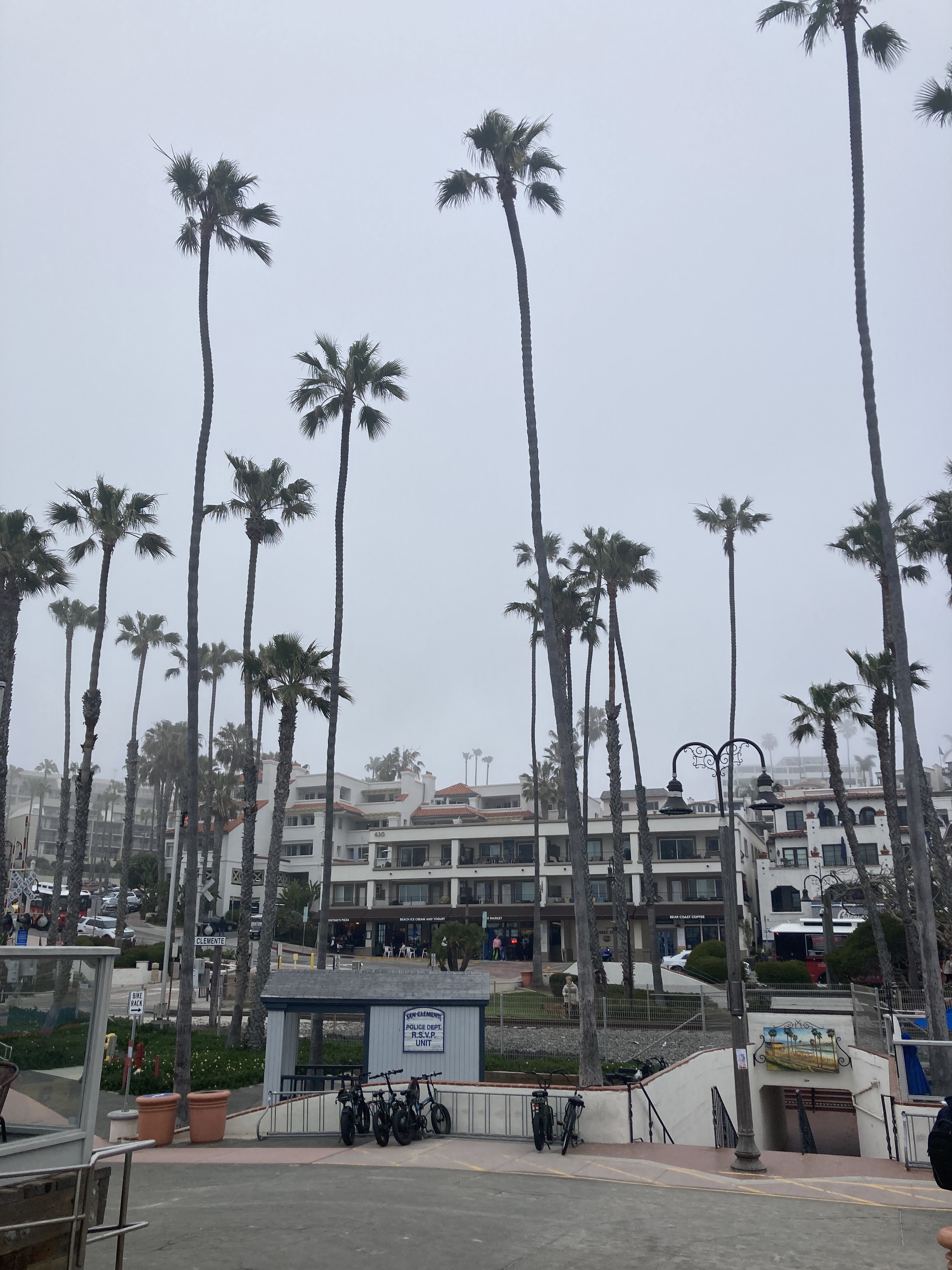
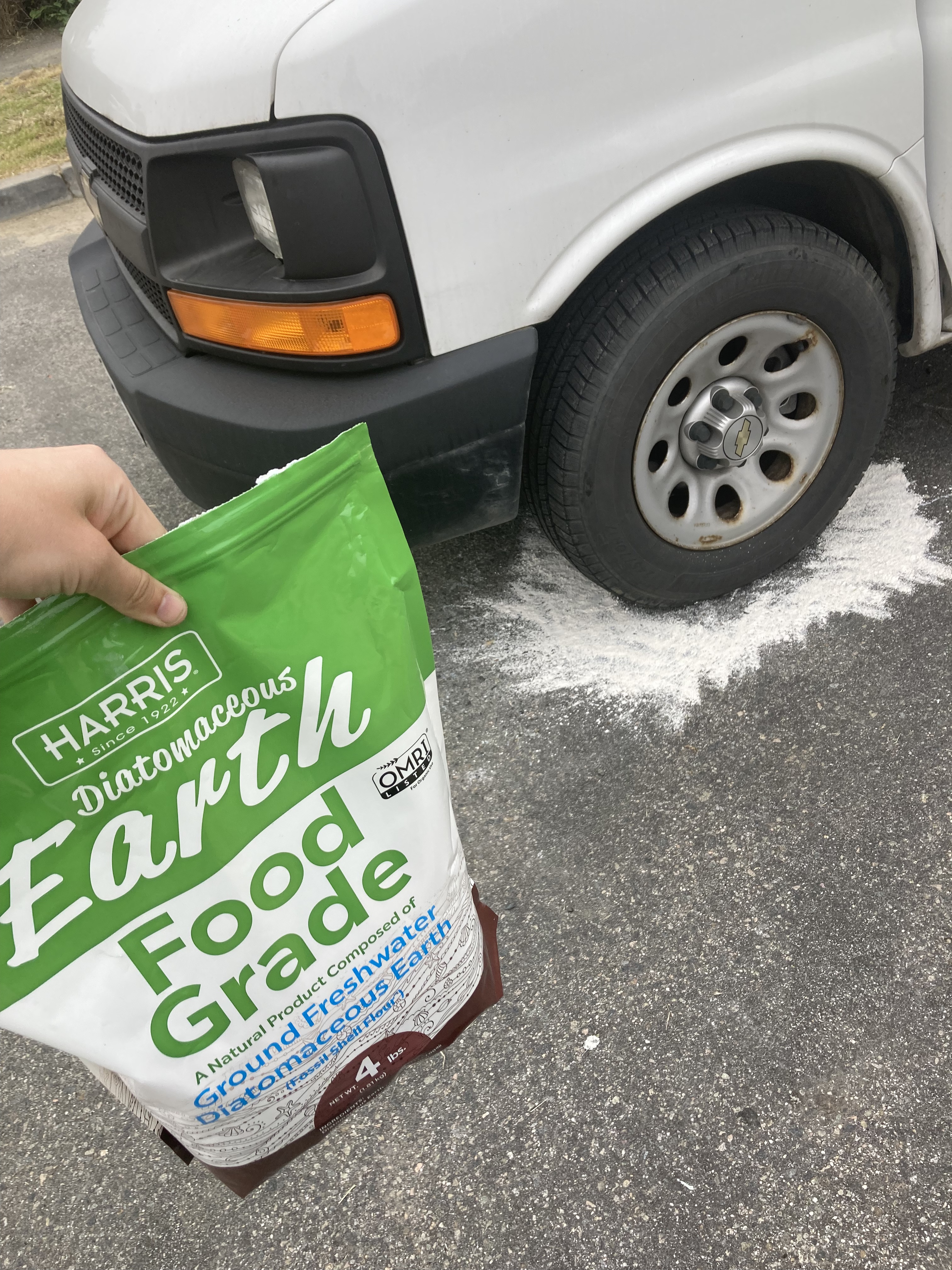
I’d read multiple reviews online for the campground that said ants were a huge problem. So I actually put diatomaceous earth around my tires and sprinkled peppermint essential oil around the van and by the van doors or where I thought ants could get in. I did not see a single ant. Either my precautions worked wonders or I did more than I had to and fellow campers thought I was weird.
Then it was time for a glorious shower, even if it was token operated and the bathroom sinks had no soap – these bathroom/shower rooms were big, private, and clean.
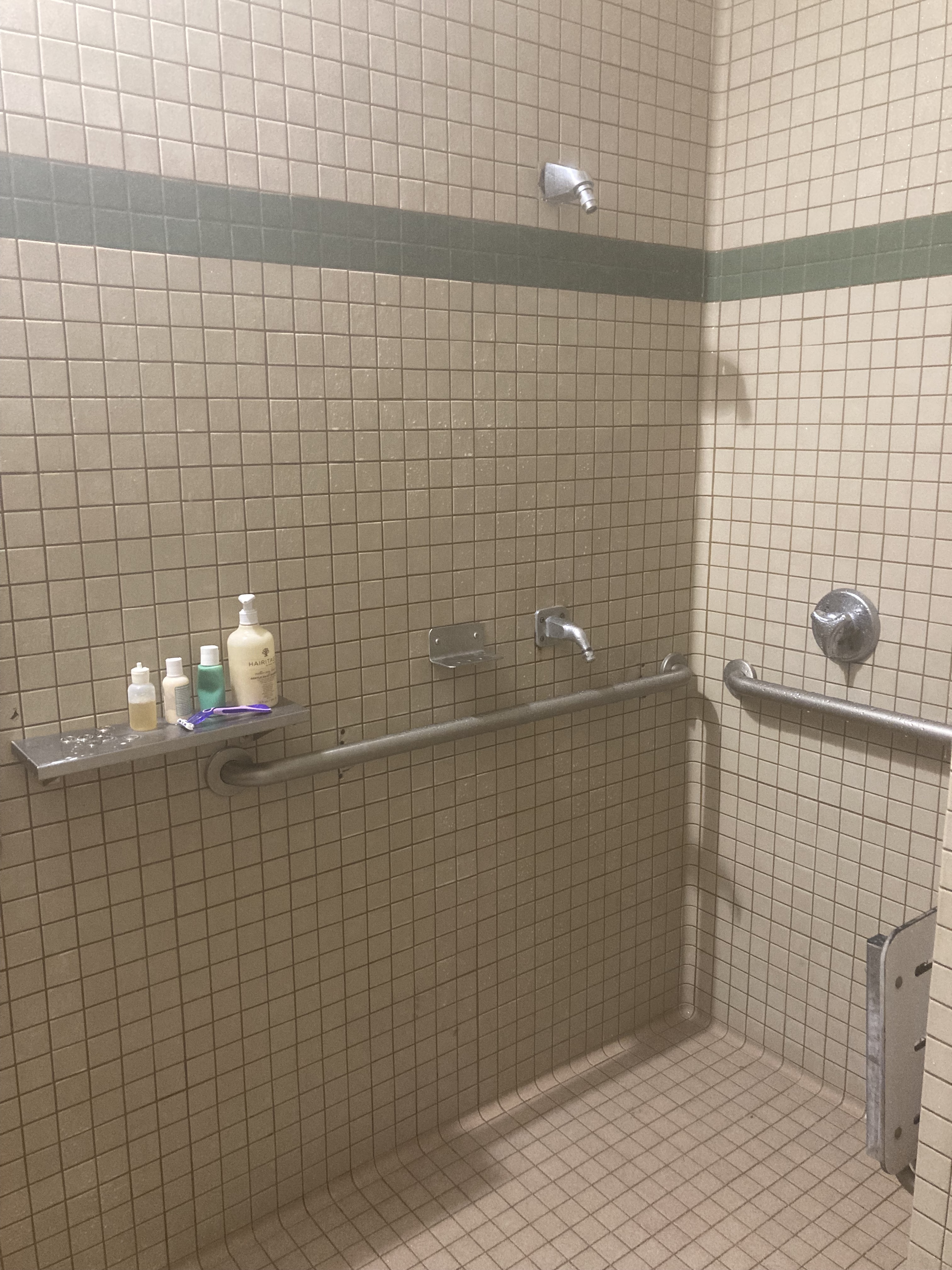
State campgrounds were not my favourite, they’re no frills, but they are economical.
Had I been inclined to explore San Clemente, I could see myself having visited Casa Romantica Cultural Center and Gardens, a blufftop 1927 Spanish Colonial Revival estate of the city’s founder. There’s also the Beach Trail and the surf spots at Trestles Beach, part of San Onofre State Beach.
After leaving the campground I headed back to Dana Point to do a little planning, and I spontaneously bought a ticket for a concert that night in San Diego.
But first – laundry at a little laundromat up on the bluffs in Dana Point.
San Diego
San Diego rivalled San Francisco as one of my favourite cities in California. With the ornate architecture in Balboa Park and rich Mexican culture in Old Town (and throughout), this city really grabbed me. It has a Mediterranean climate, beautiful beaches, Mexican cuisine, natural areas for hiking, surf culture, and just so much to explore – I’m sure I only tapped the surface. San Diego has a population of about 1.4 million, and to me felt pretty safe for the most part (it turns out it is one of the safest big cities in the US).
The Concert
There’s nothing like diving right in to a city! For the rest of my explorations of San Diego I did still work my way in from the outside, leaving the downtown area for last. But my first time in San Diego was this concert at Pechanga Arena.
It’s interesting to be part of a crowd when you don’t really know what the people of an area are like. But concerts have a way of uniting people on a human level. And the particular entertainment can dictate what kind of crowd is drawn.
Who was I seeing? It was a stacked lineup: Highly Suspect, Evanescence, and Muse.
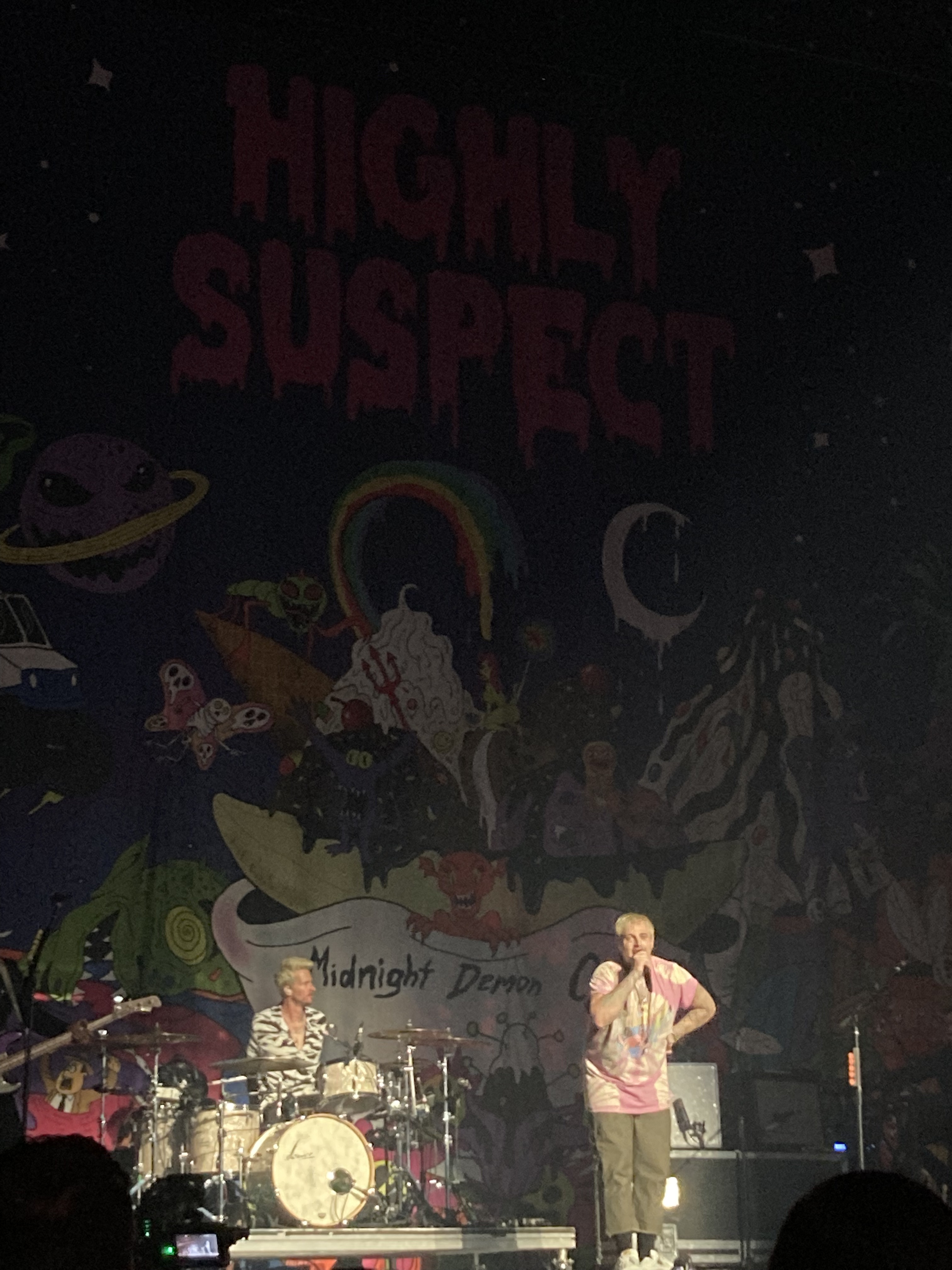
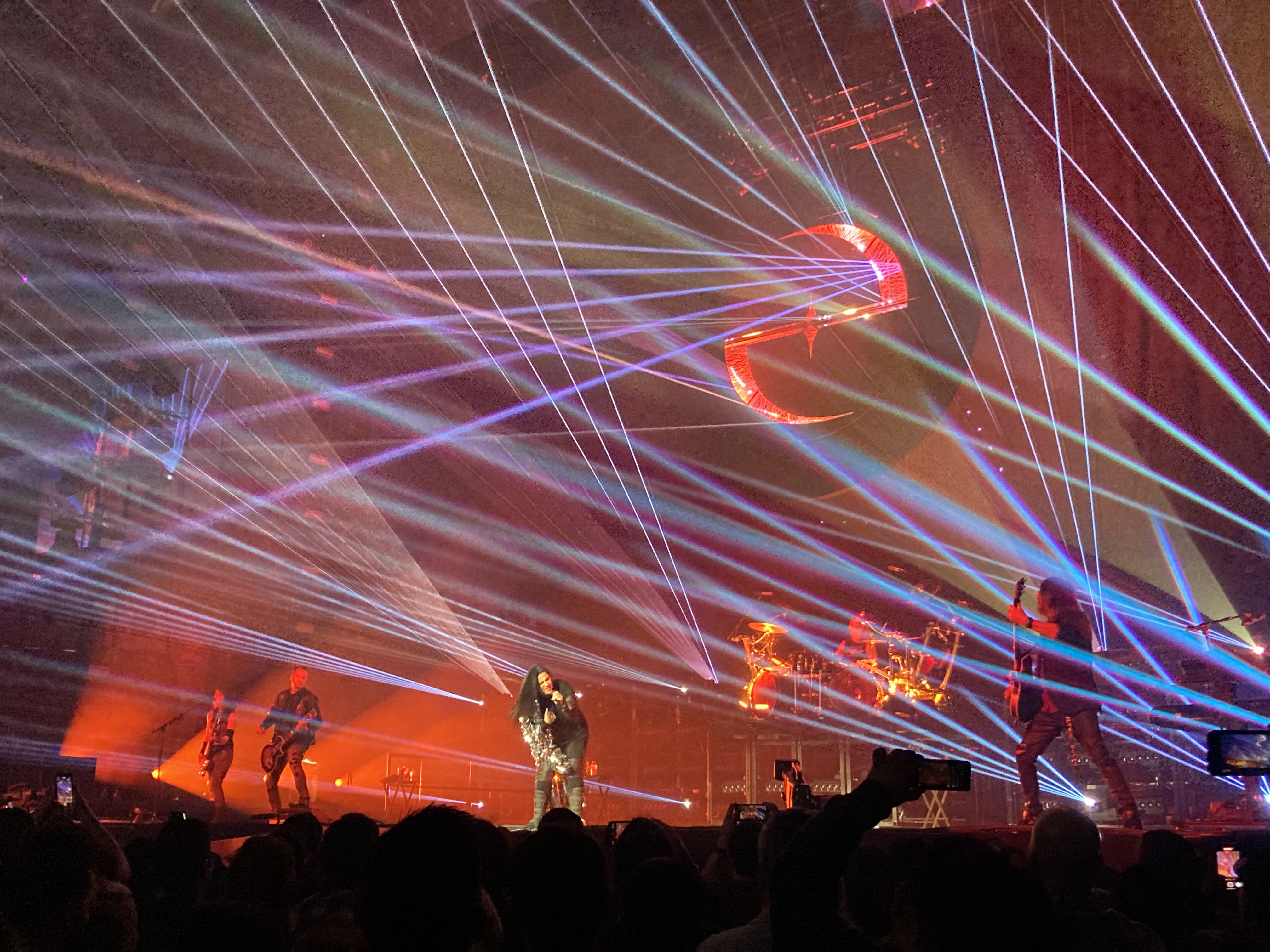
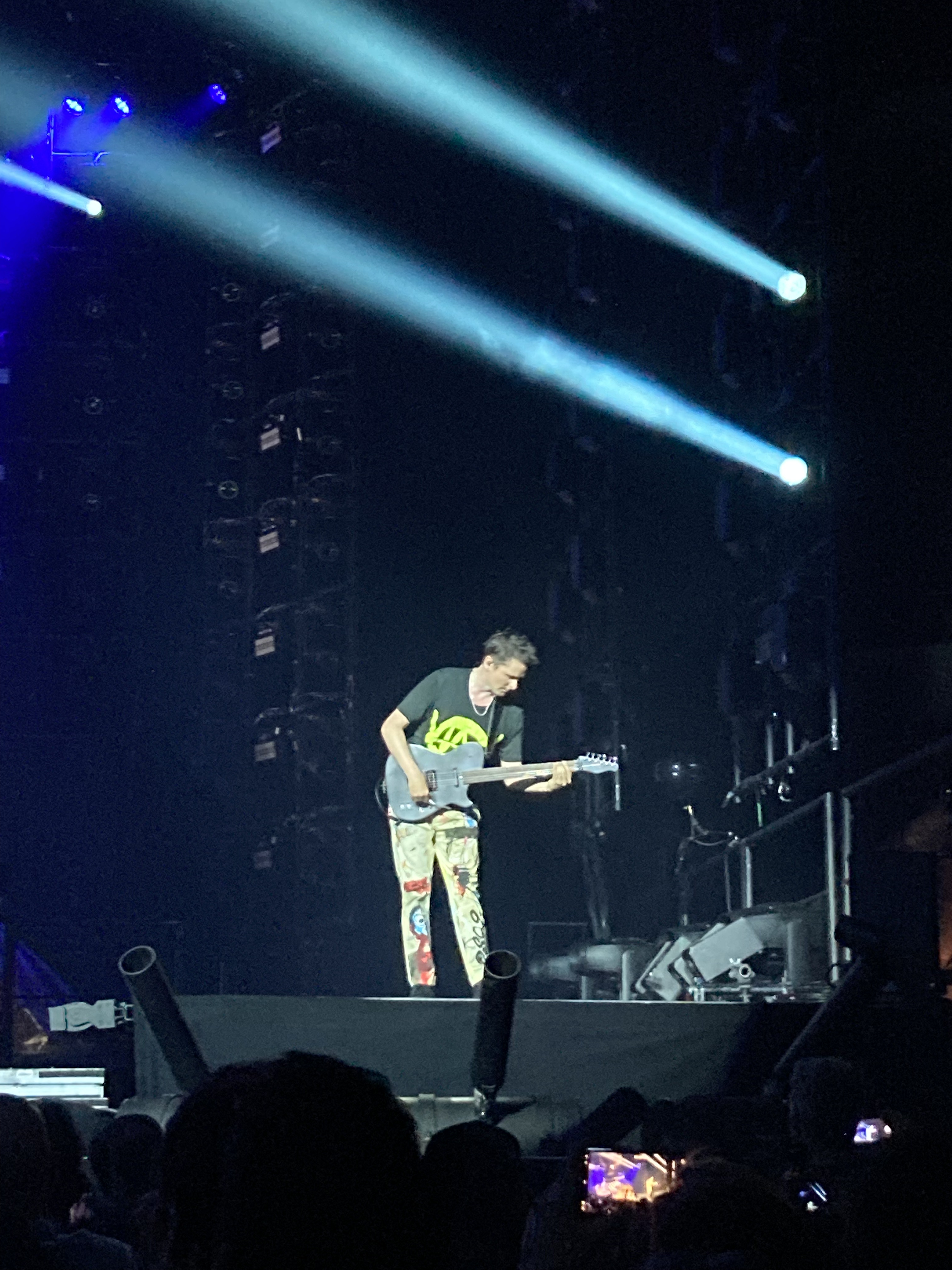
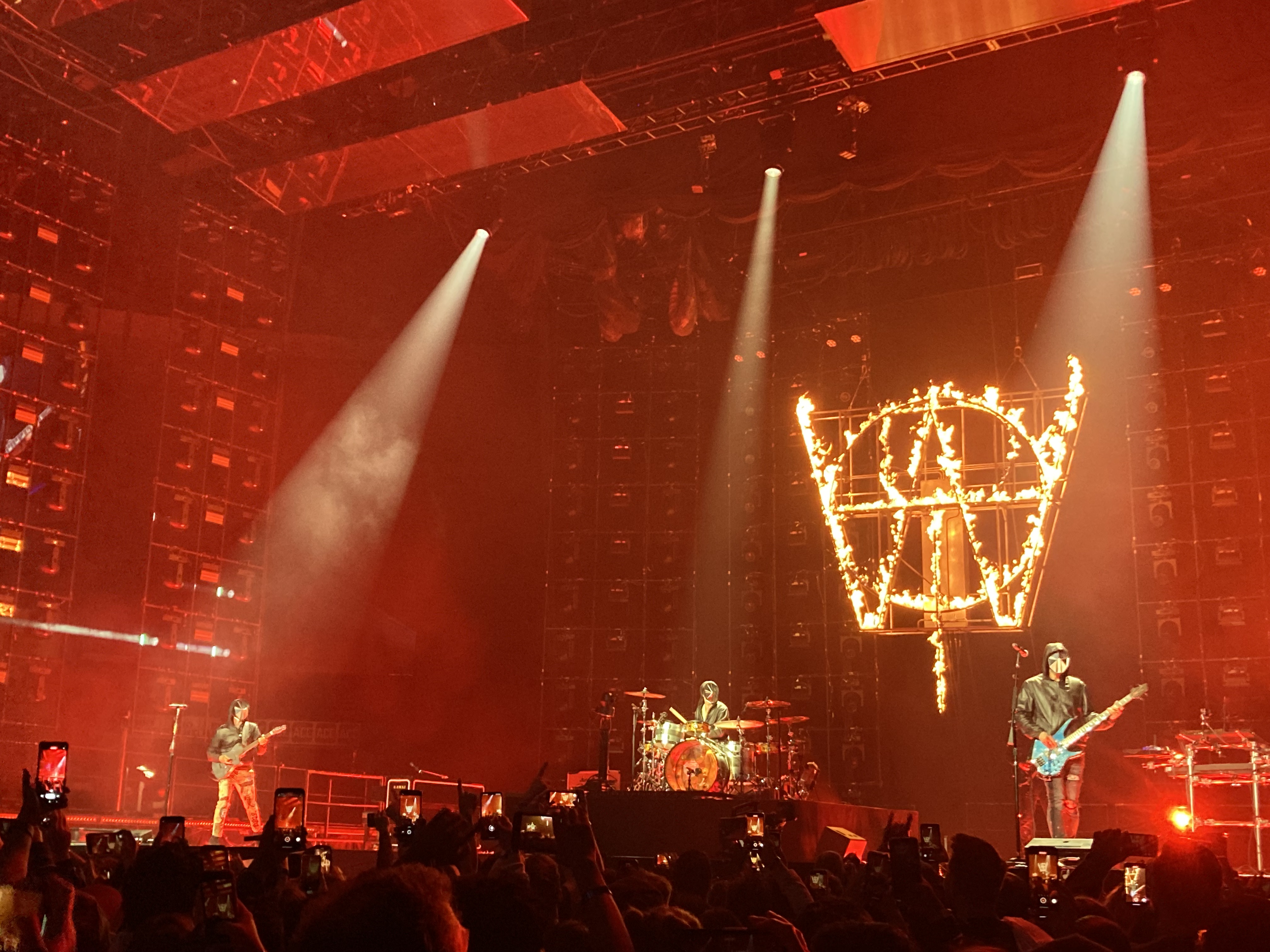
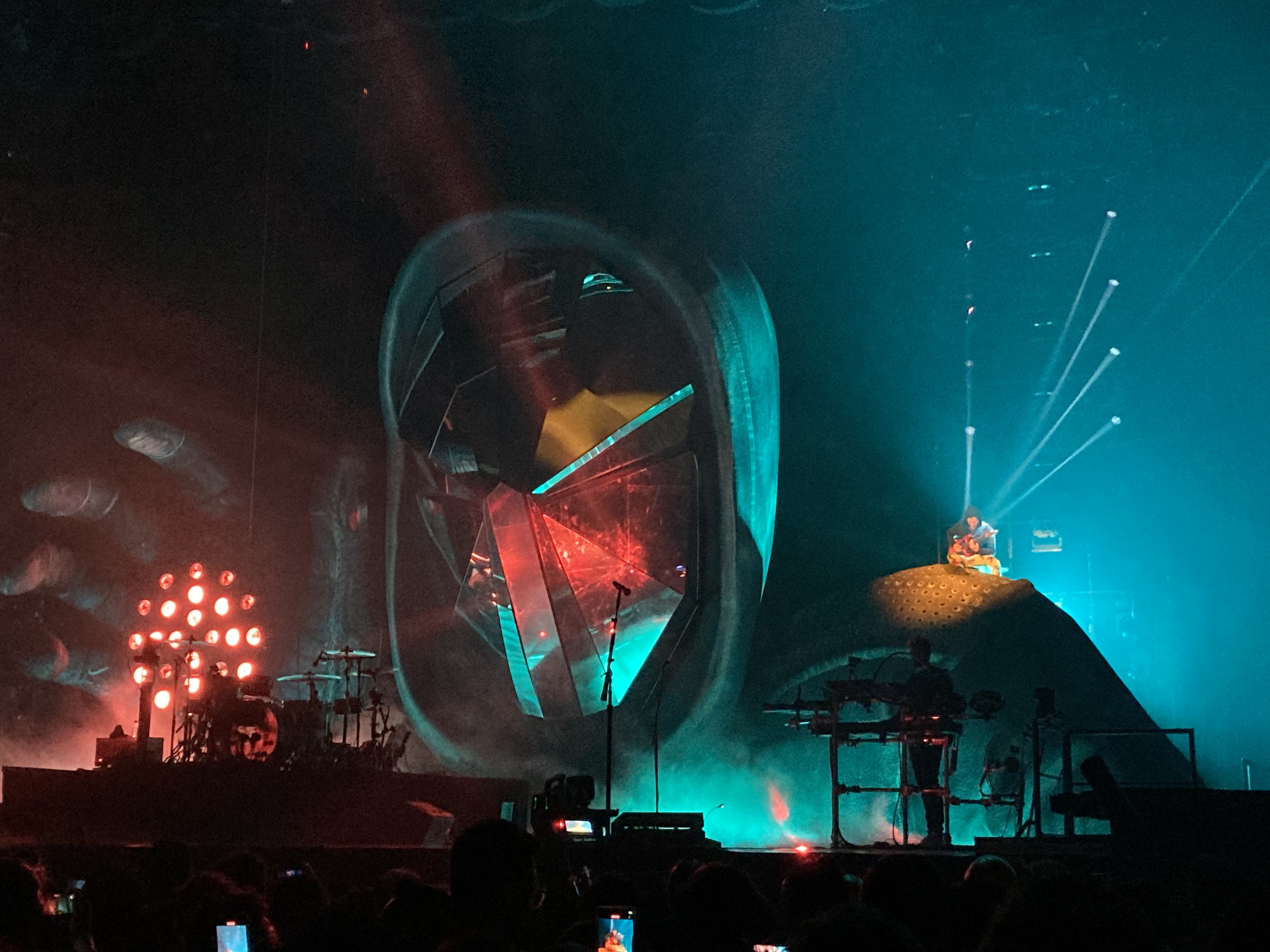
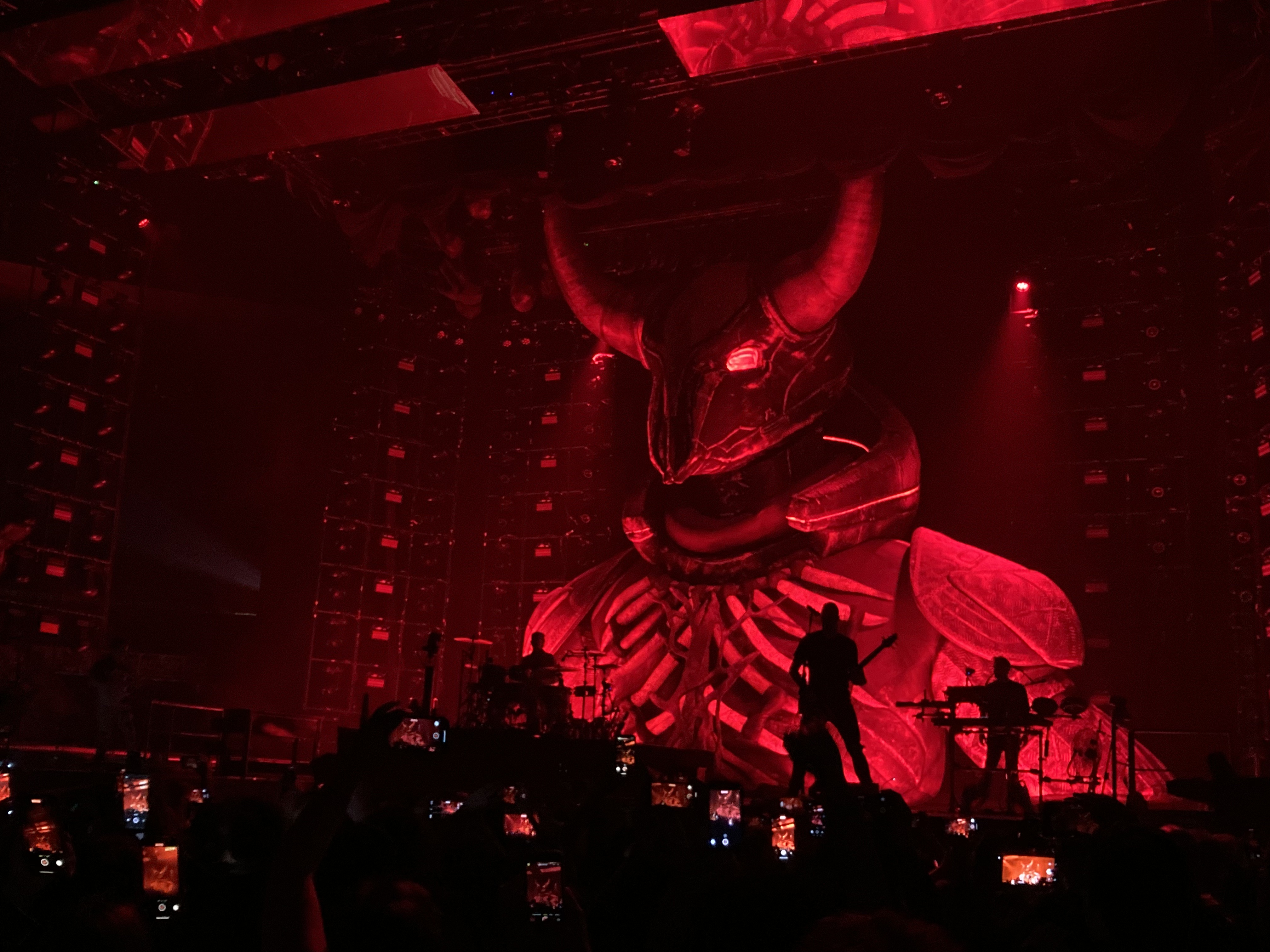
I was really excited to see Highly Suspect, as I love this band and hadn’t seen them before. They’re an amazing bluesy rock band.
Evanescence I definitely appreciated – I also hadn’t seen them before, and Amy Lee’s voice is truly phenomenal.
While I’d seen Muse before, this was a special show. Because Muse is one of a few bands that cemented the friendship between me and my late friend Tyler. Heck – we’d recently been talking about their album Origin of Symmetry. What were the odds that so soon after Tyler’s death I would be in a city where this band was playing?
But I learned a grim lesson at this concert – grief is not something you can rush. Having lost my dad 9 years prior, I thought that because I’d been through grief, I knew what to expect. But that’s not how grief works. You can’t fast forward through it. Each experience is its own. It won’t be easier – because each loss demands its own processing and healing. Grief is a reflection of the individual relationship that was lost. Losing a close friend is also quite different from losing a parent, each heavy in their own way.
So – the concert was not exactly cathartic. It was upsetting. Things were too raw. I’m glad I went. But by golly was that emotional. Especially when Muse played songs like Time Is Running Out. I was basically in tears – while this drunk guy next to me started putting his arm around people, myself included, trying to get everyone to dance.
I wasn’t keen on the city parking situation, so I ended up driving north out of the city to the closest rest area (which wasn’t close at all, a 40 minute drive) for the night. I used that time to listen to music *loud* for catharsis, and I remember screaming along to Nirvana’s Scentless Apprentice – because grief anger is real. I actually highly recommend screaming along to music, and if it’s while driving on a highway – no one can hear you. Don’t get distracted, eyes on the road, but let it out.
I will say, since I stayed at this rest area a few times, it was a nice one but a small one. If I got there too late it was likely to be totally full. Which did leave me without any other option one night than to seek out street parking, ending up on a residential street that I wasn’t too keen on. I think I just wasn’t super comfortable with sleeping in a larger city that I didn’t know much about at this point, so I chose to do this drive out of San Diego a few times. There probably were better options, but this is what I did.
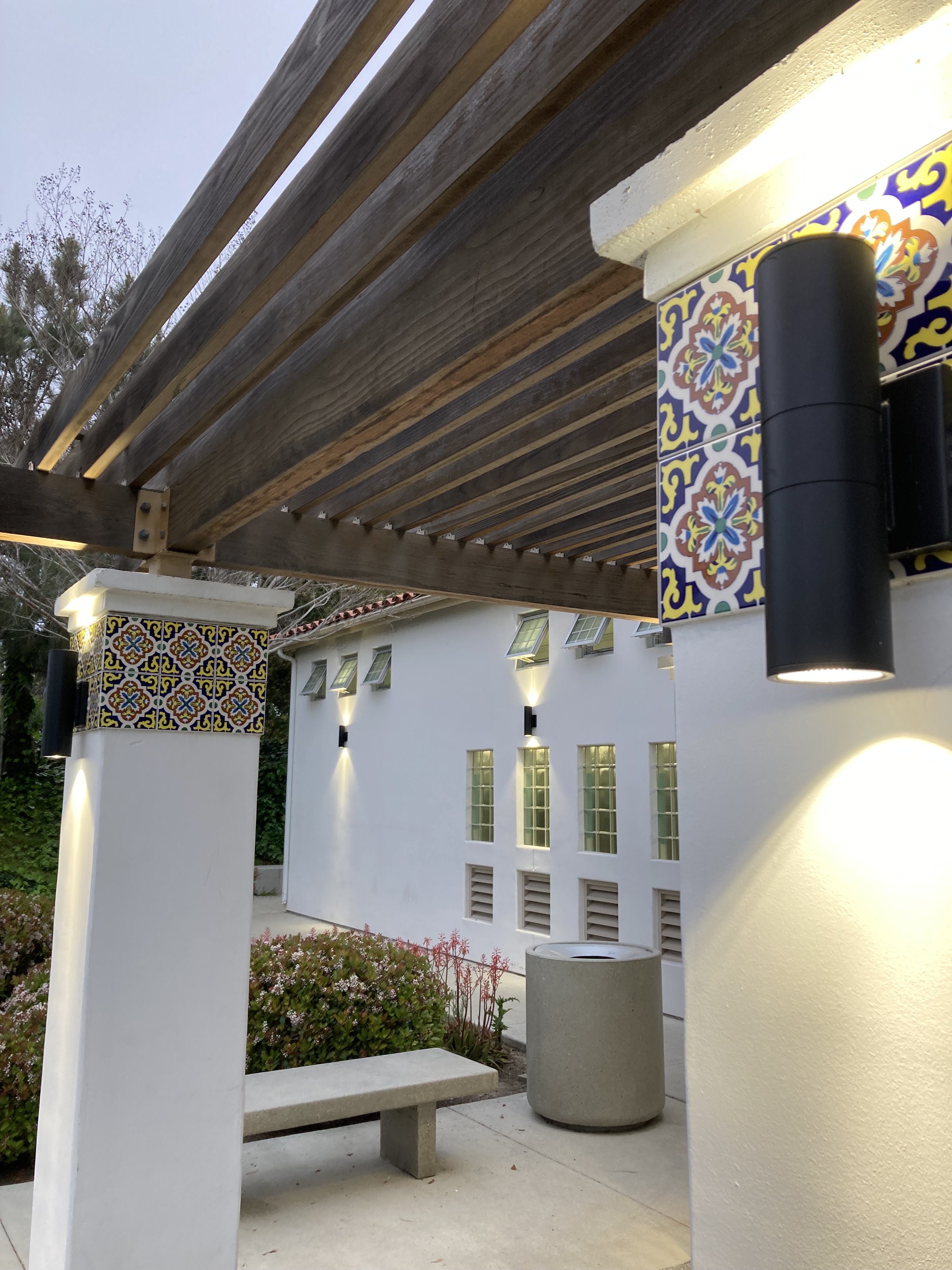
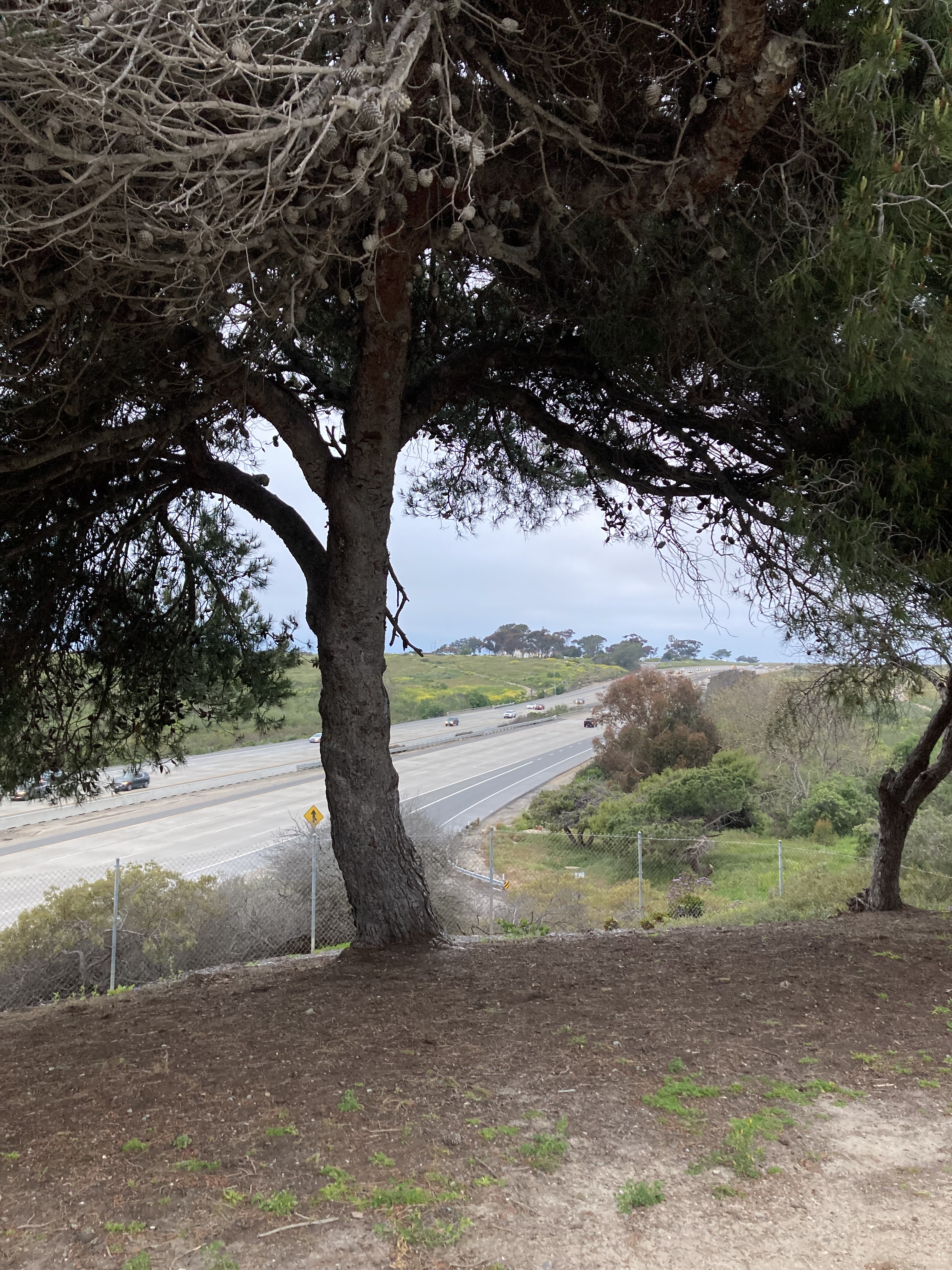
You do sometimes see police patrolling rest areas, enforcing time limits. In California there is an 8 hour limit. While some places restrict you from alternating between north and south bound rest areas that are essentially across the highway from each other, I did switch it up so it wouldn’t look like I was at the same spot long term. And I never had any issues. I was always gone in the day, only in the area a few days, and interspersed a couple of nights in other places (Carlsbad, Chula Vista).
Carlsbad
About a half hour north of San Diego, and 10 minutes south of these rest areas, is Carlsbad. I might not have otherwise explored Carlsbad if it hadn’t been for passing through due that last minute search for an overnight spot.
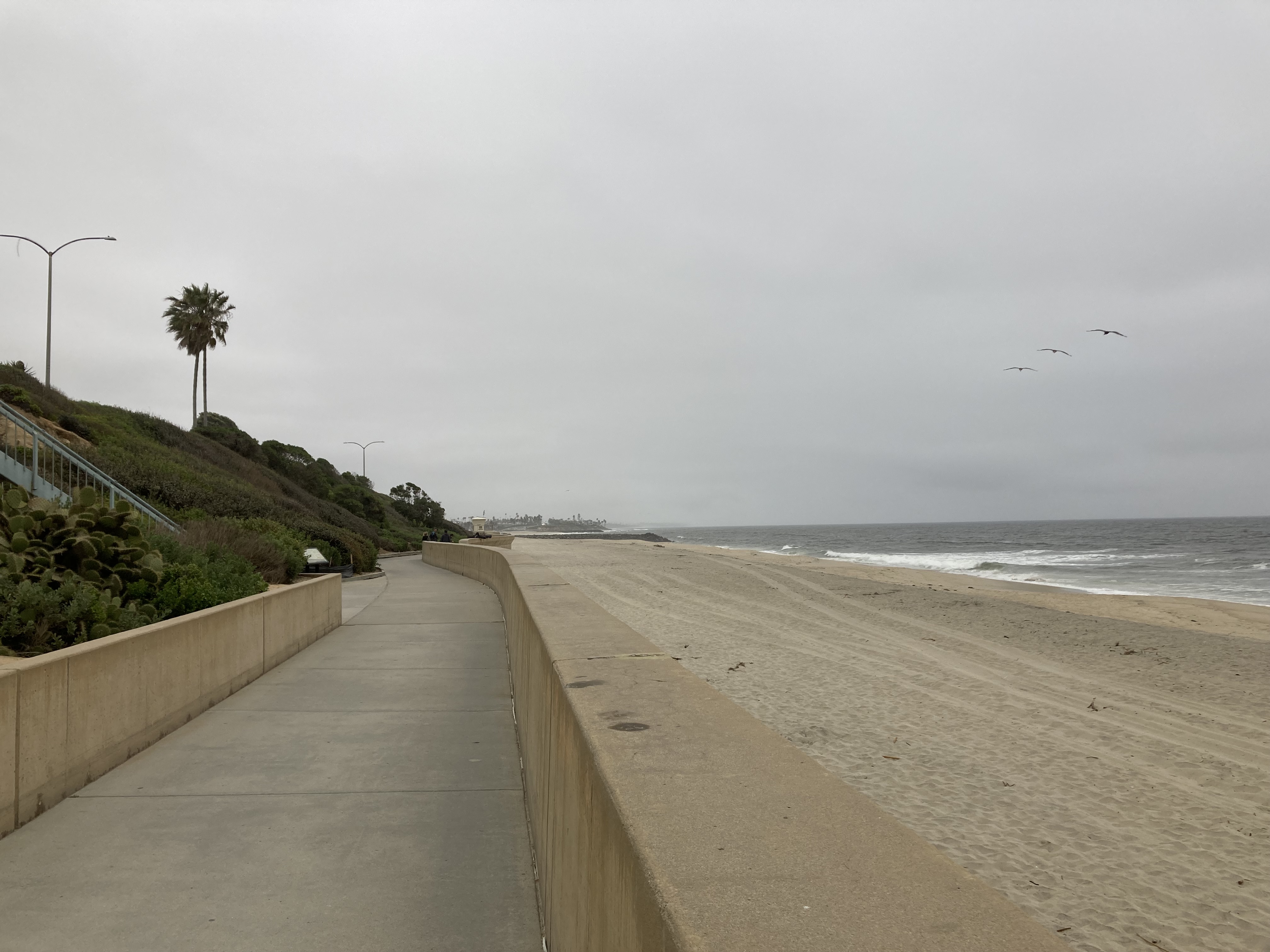
I parked at a lot near Tamarack Surf Beach and walked along the beach and the sea wall north to the downtown area of Carlsbad Village. Pelicans flew overhead as I walked beside the ocean. There were various species of cacti, including prickly pear. Then I wandered around the little downtown area and its shops.
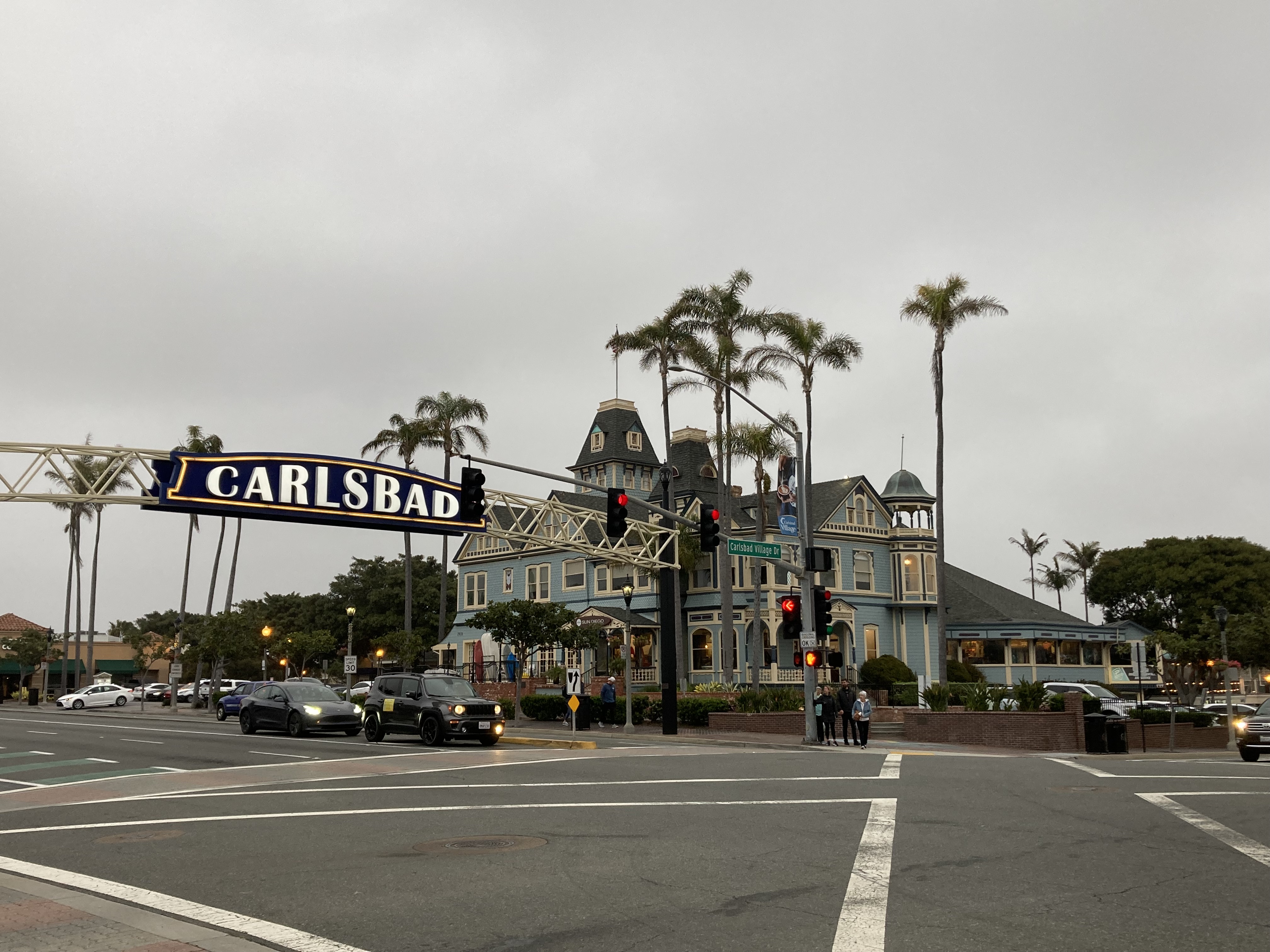
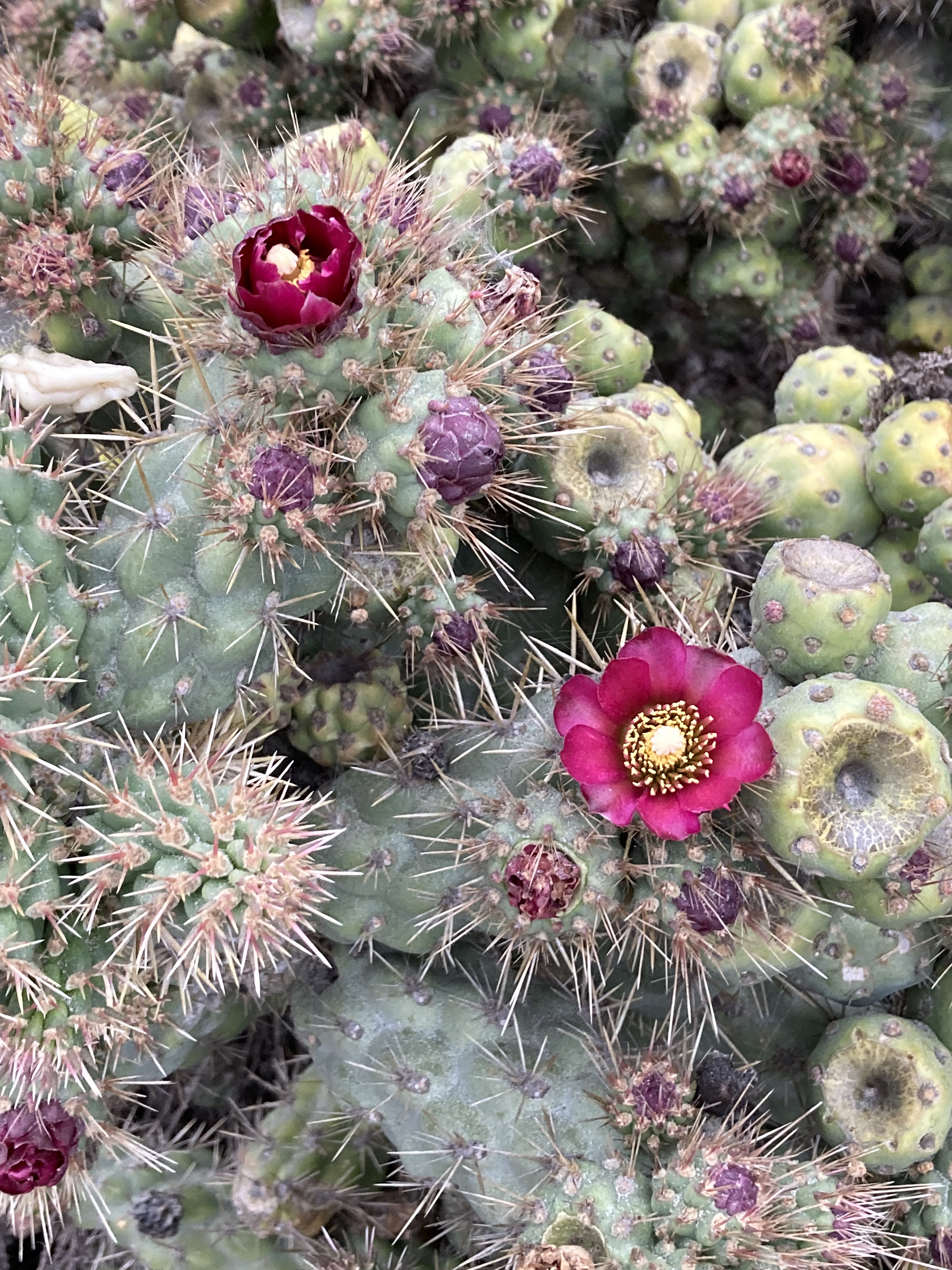
A little further south of here are Batiquitos Lagoon Ecological Reserve, Flower Fields at Carlsbad Ranch, and South Carlsbad State Beach.
Del Mar
My first day of really getting into the San Diego area, I started the day with a quick stop into Del Mar before heading to Torrey Pines State Natural Preserve, which lies about 25 minutes north of San Diego. I believe I popped into Del Mar because of its proximity to Torrey Pines. Del Mar has a population of about 4,000 and is known for horse racing. I grabbed a coffee and went for a little walk along the shoreline to take in the stretch of coast here.
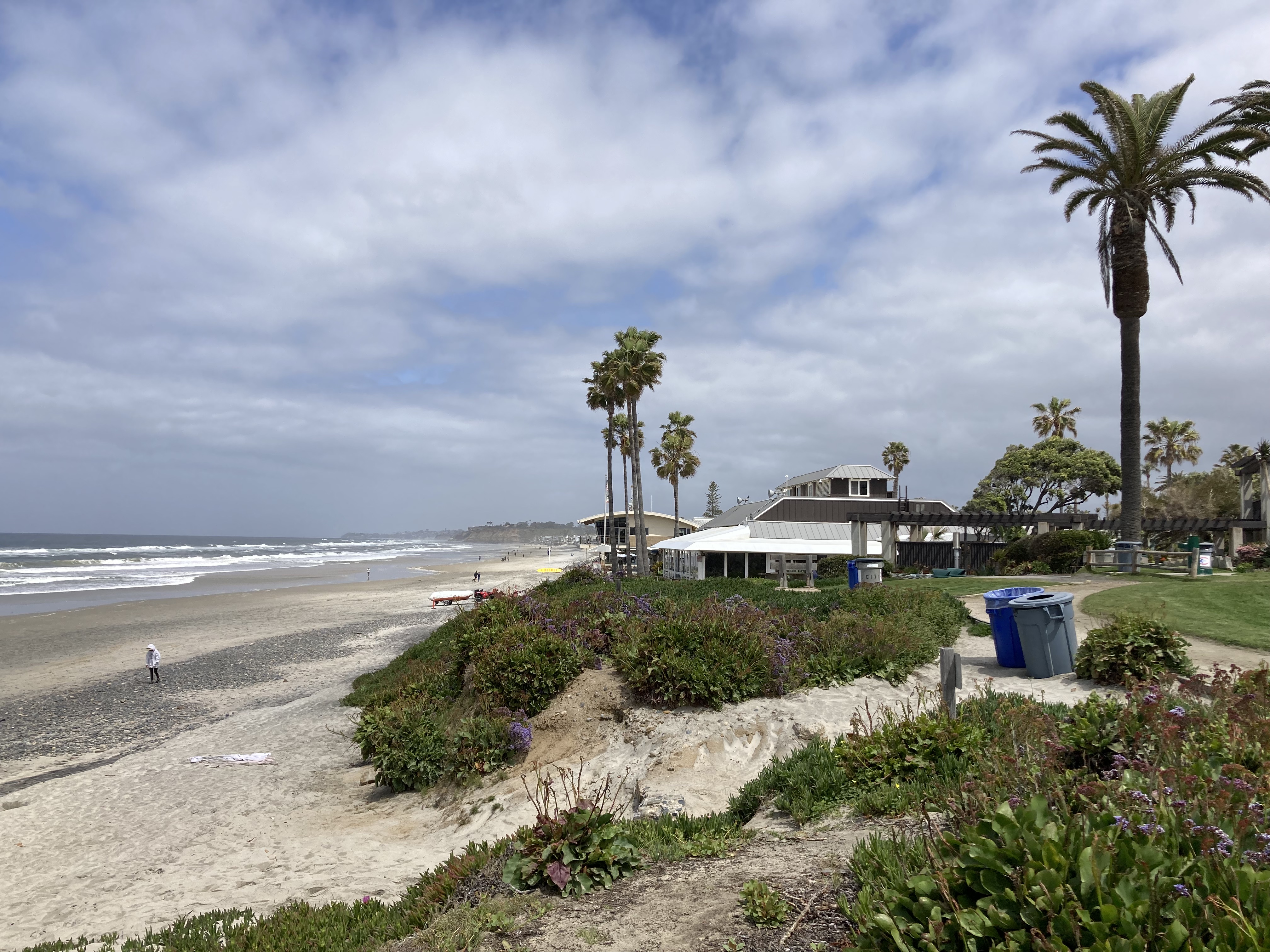
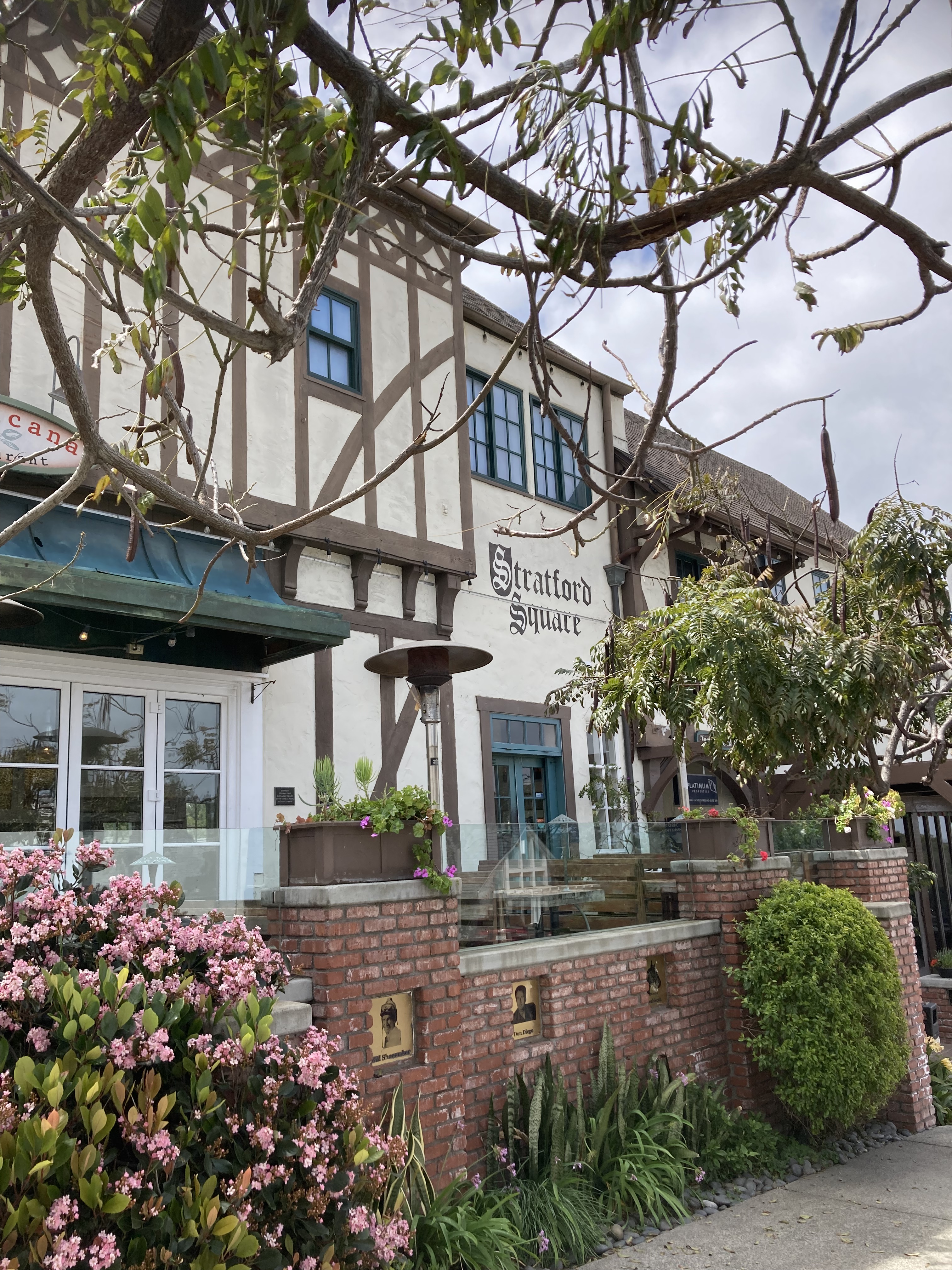
Torrey Pines State Natural Reserve
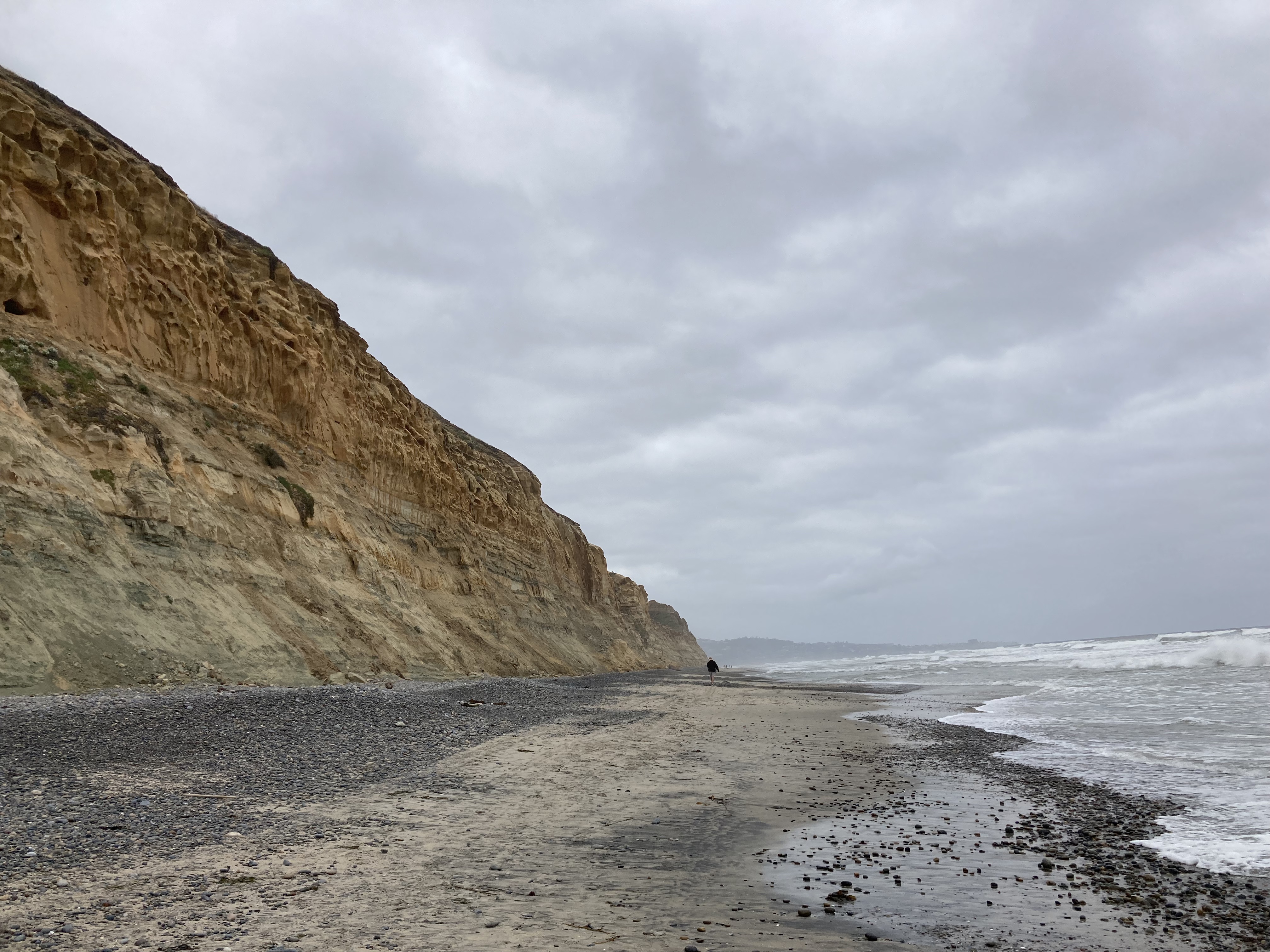
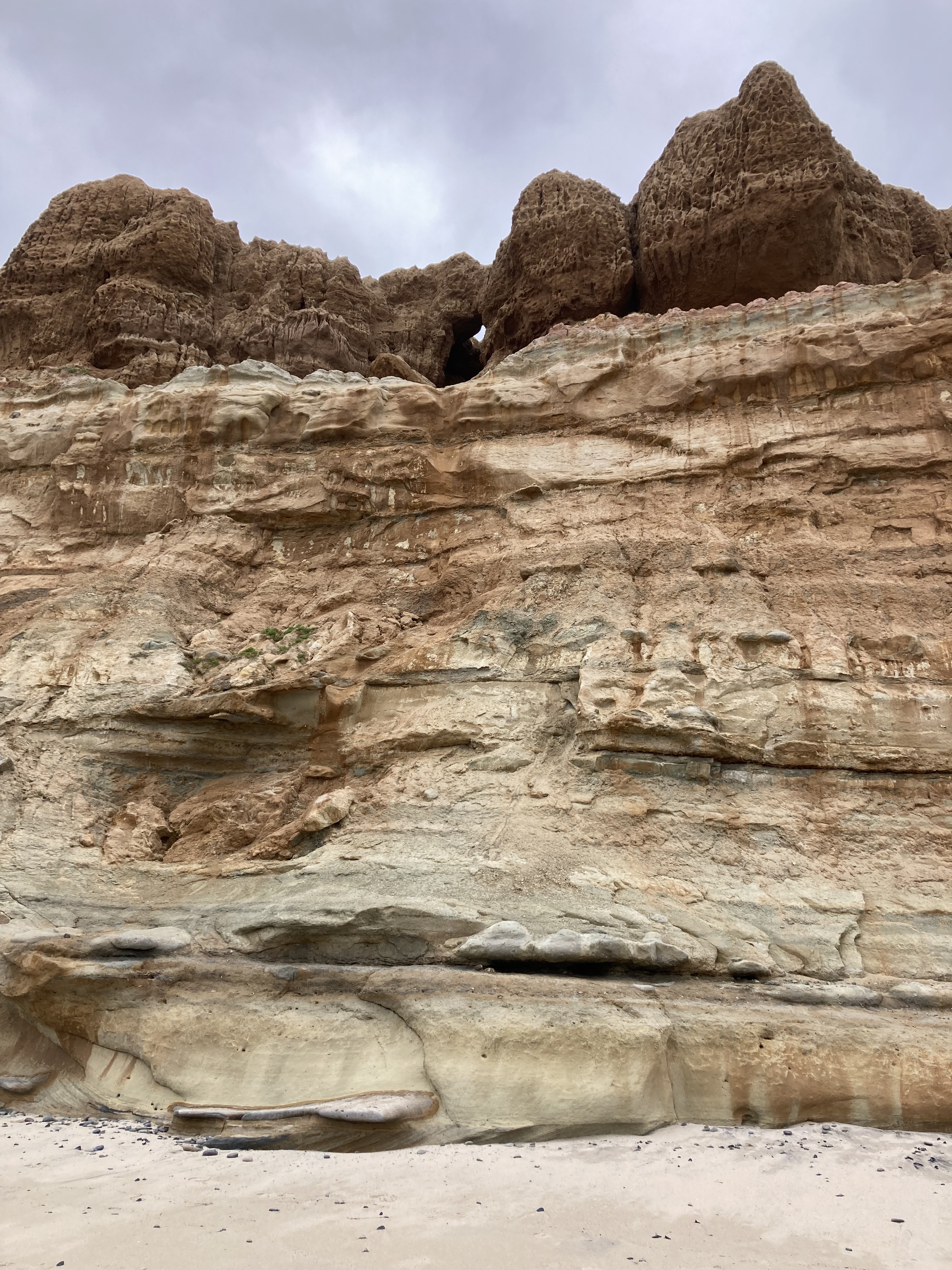
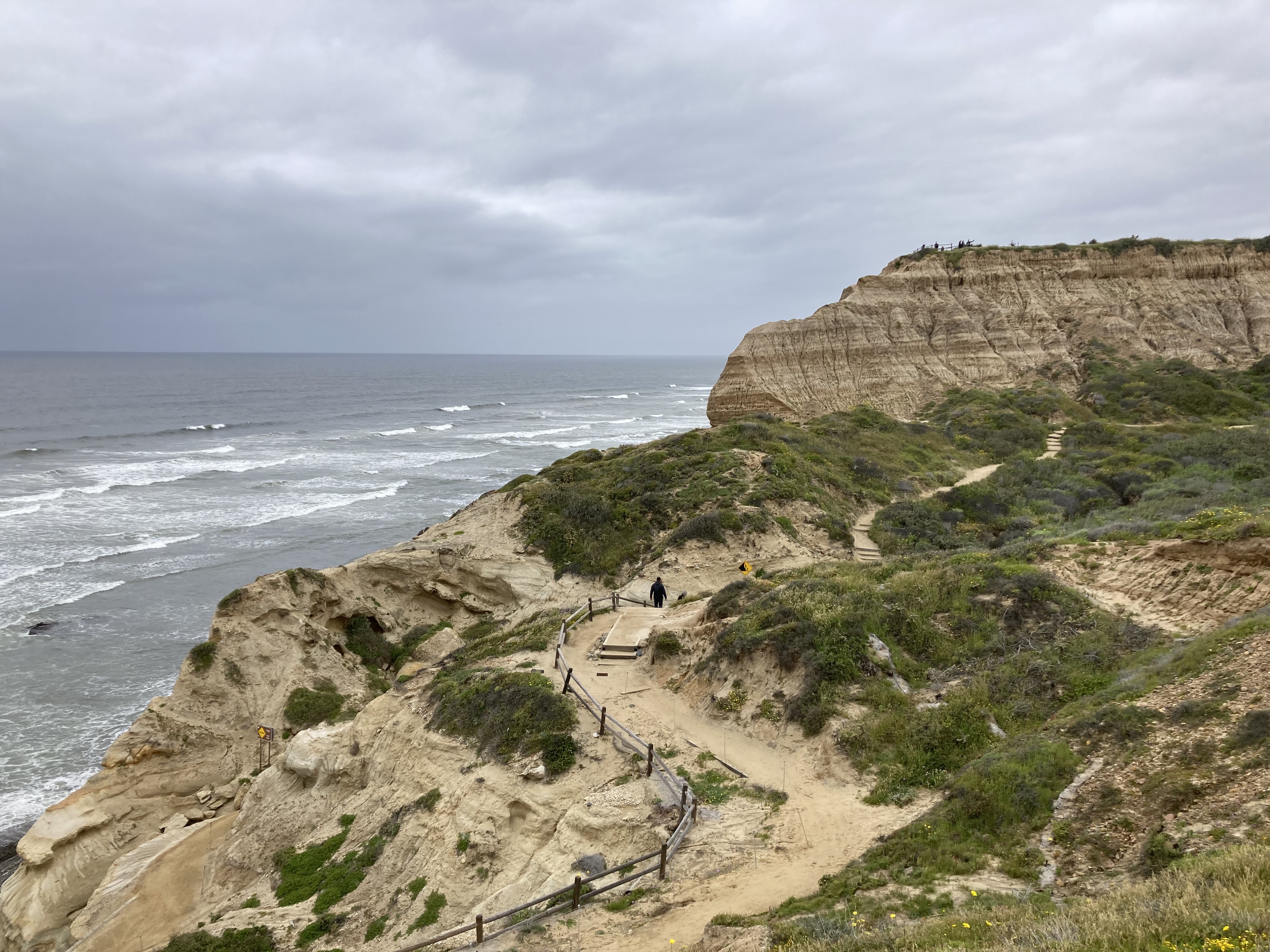
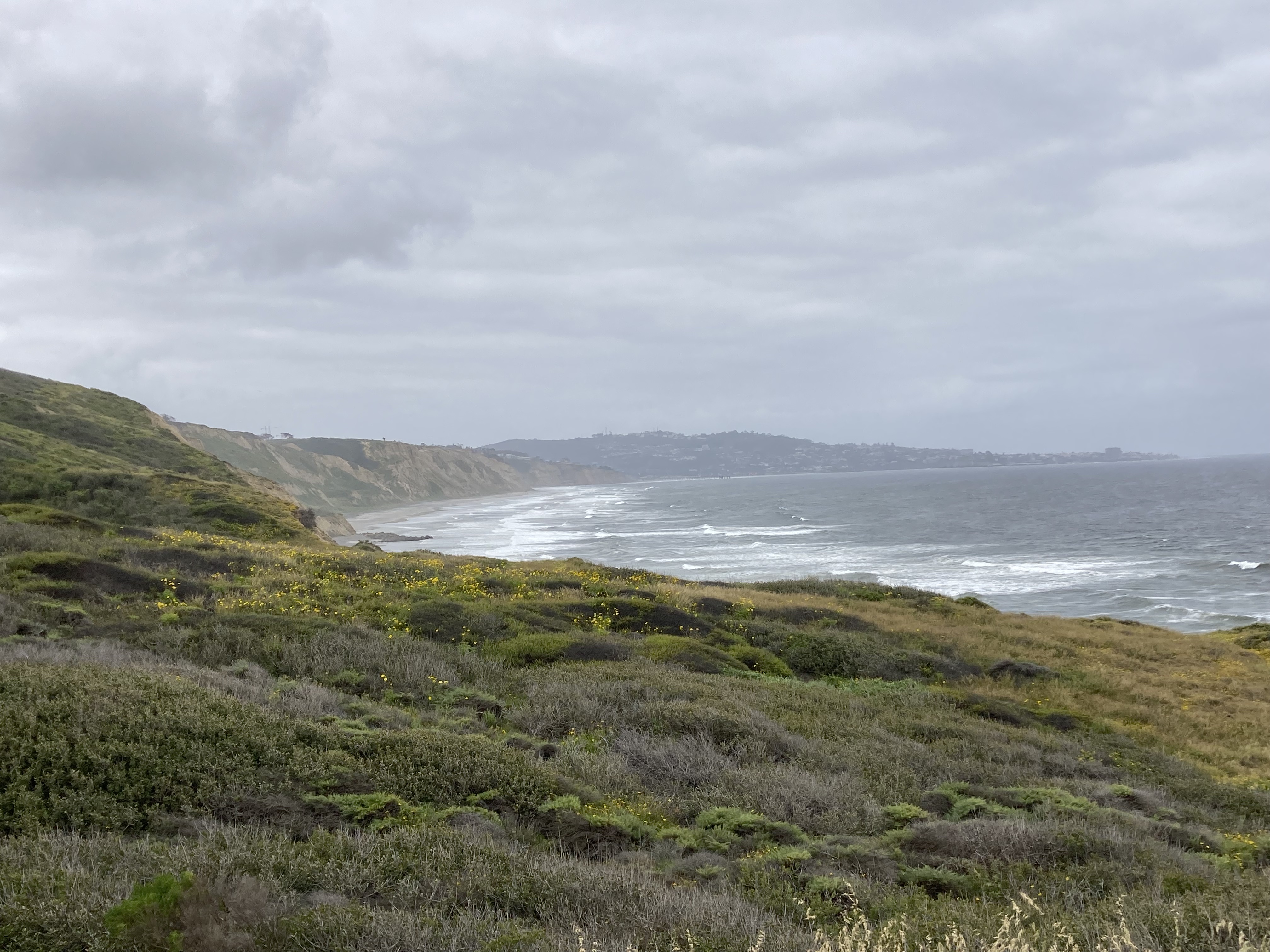
Torrey Pines is just a five minute drive south of Del Mar. It’s a coastal state park and reserve, with stretches of beach, from which rise sandstone bluffs, with hiking trails through elevated protected lands covered in chaparral, and home to the rare Torrey pine tree.
La Jolla
South of Torrey Pines I took in La Jolla Shores Beach (La Jolla/ La Jolla Shores being San Diego neighbourhoods). It seems some people claim this to be the best beach in San Diego. It was okay.
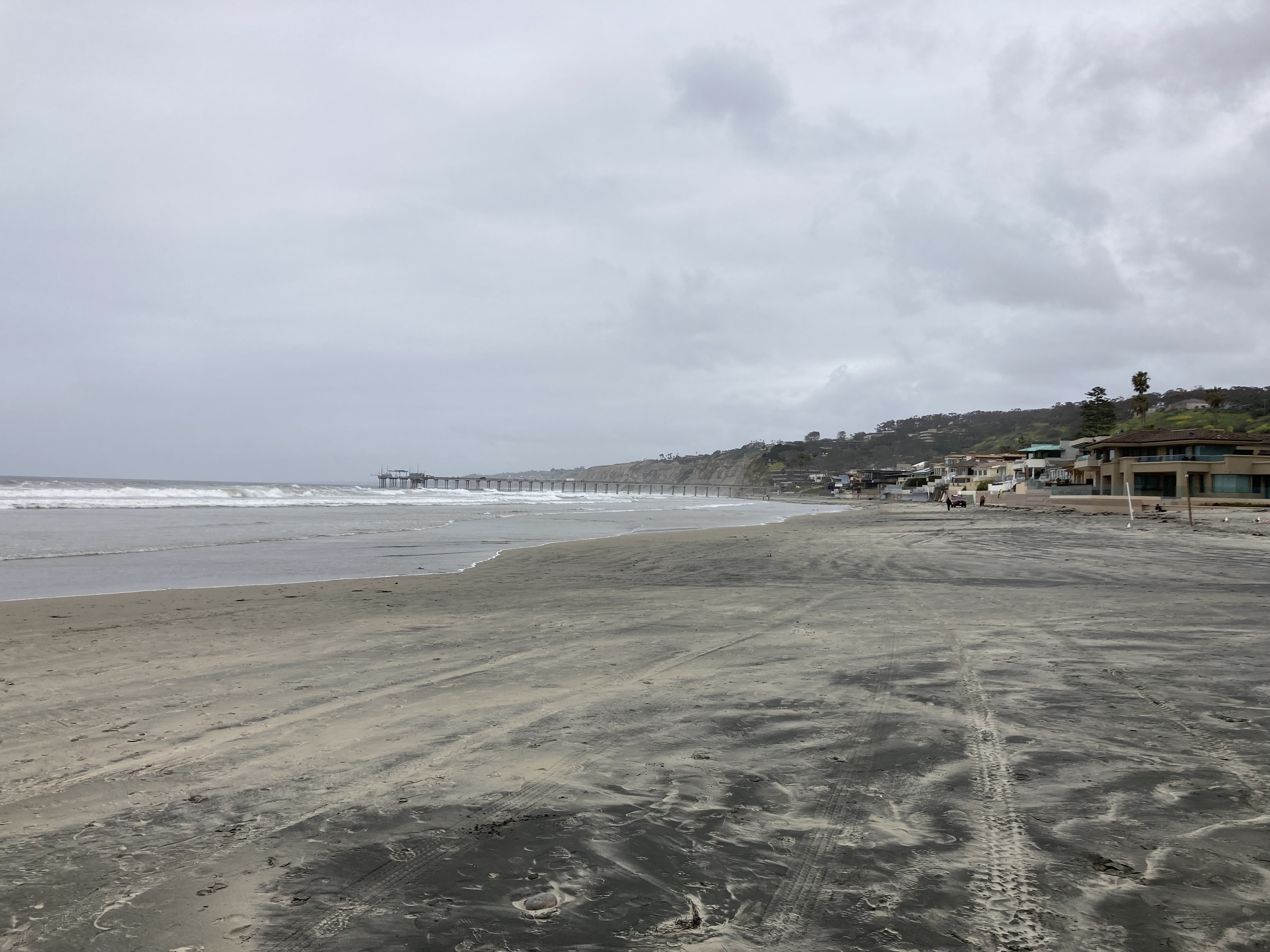
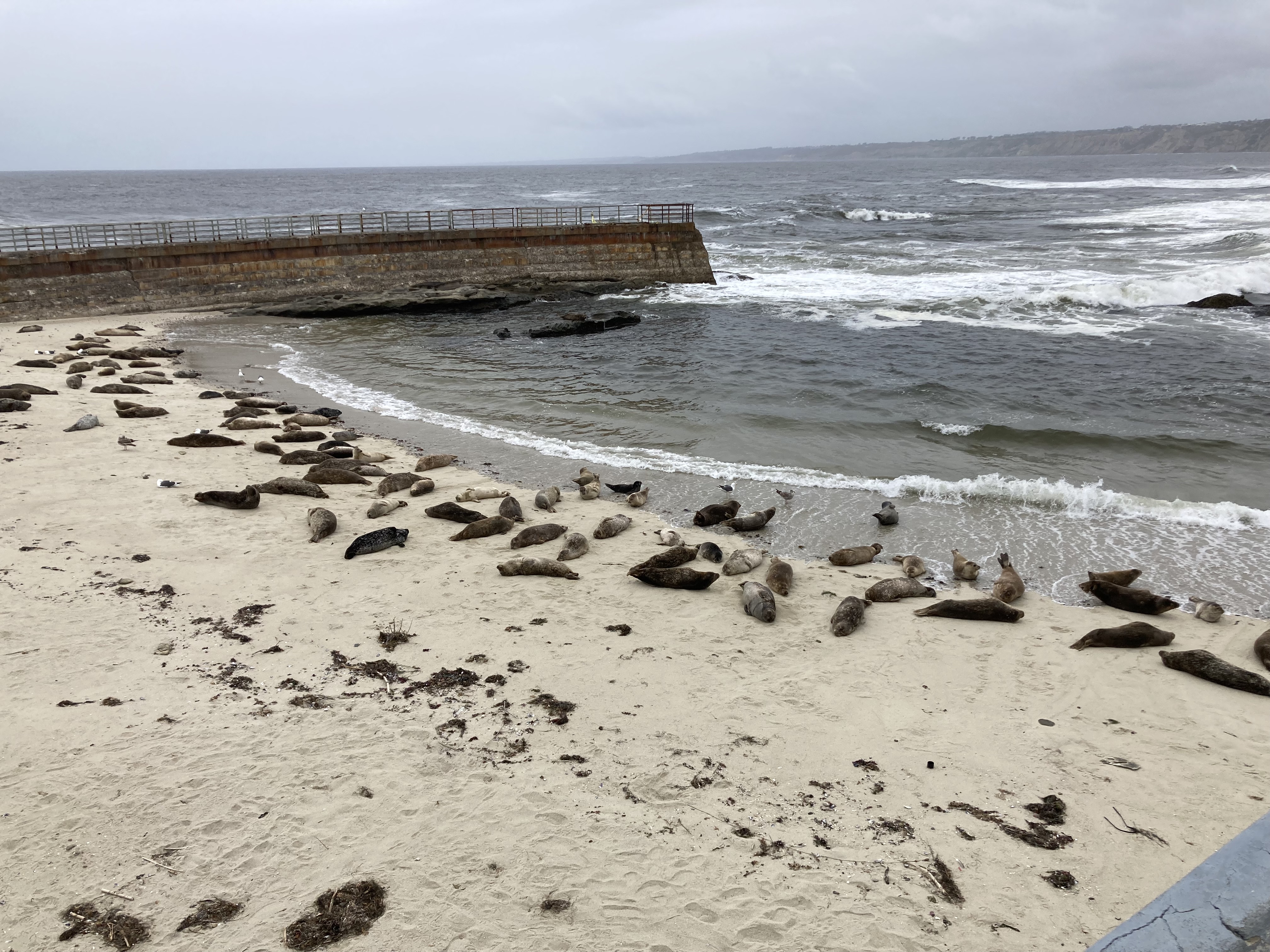
A little south of La Jolla Shores is La Jolla, where you can find the “Children’s Pool“. Contrary to its name, it’s actually a small beach with a sea wall that is a popular spot for harbour seal viewing. It’s in the downtown area of La Jolla and there are a few areas you could explore around here along the coast (tide pools, caves, parks).
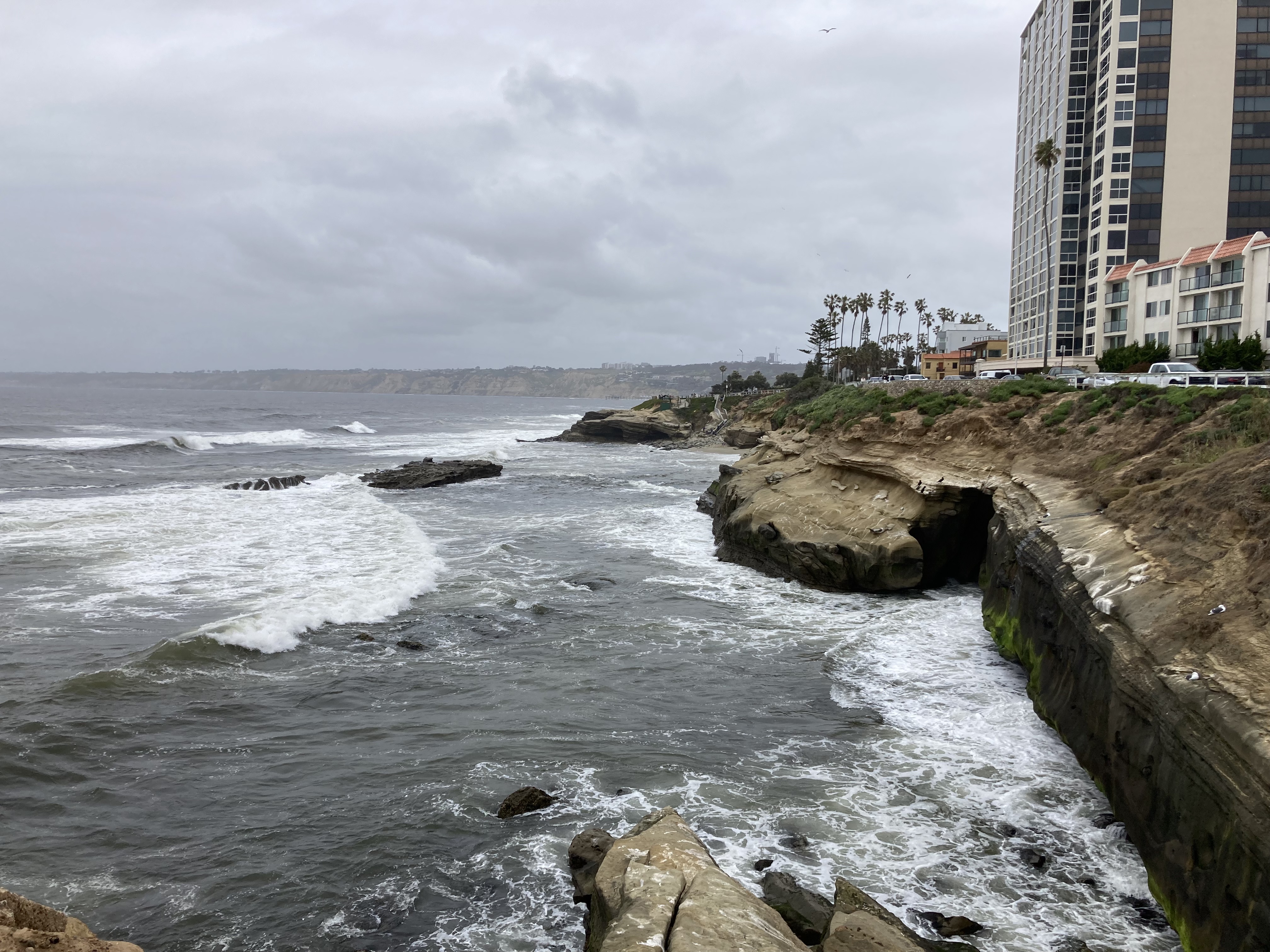
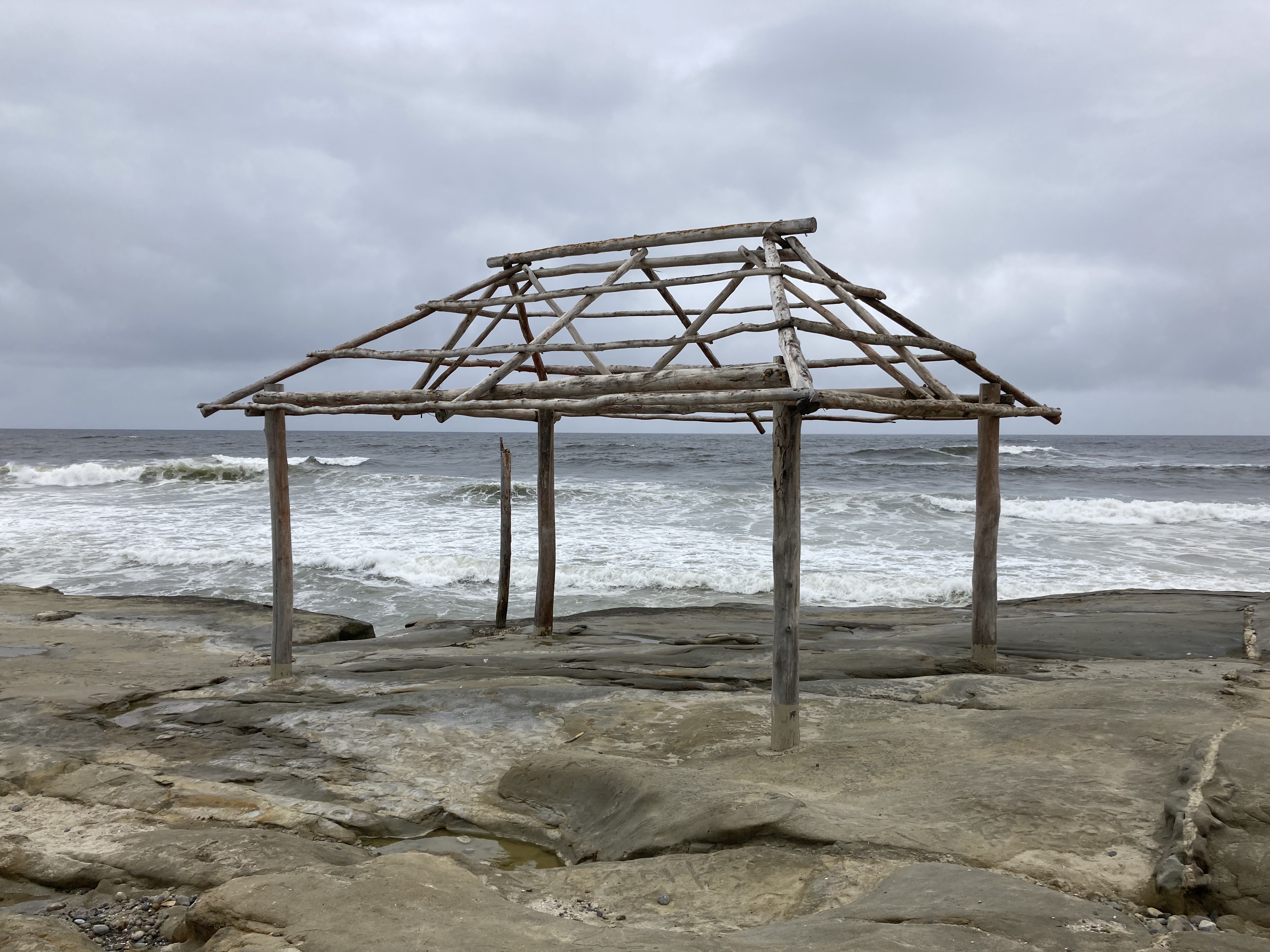
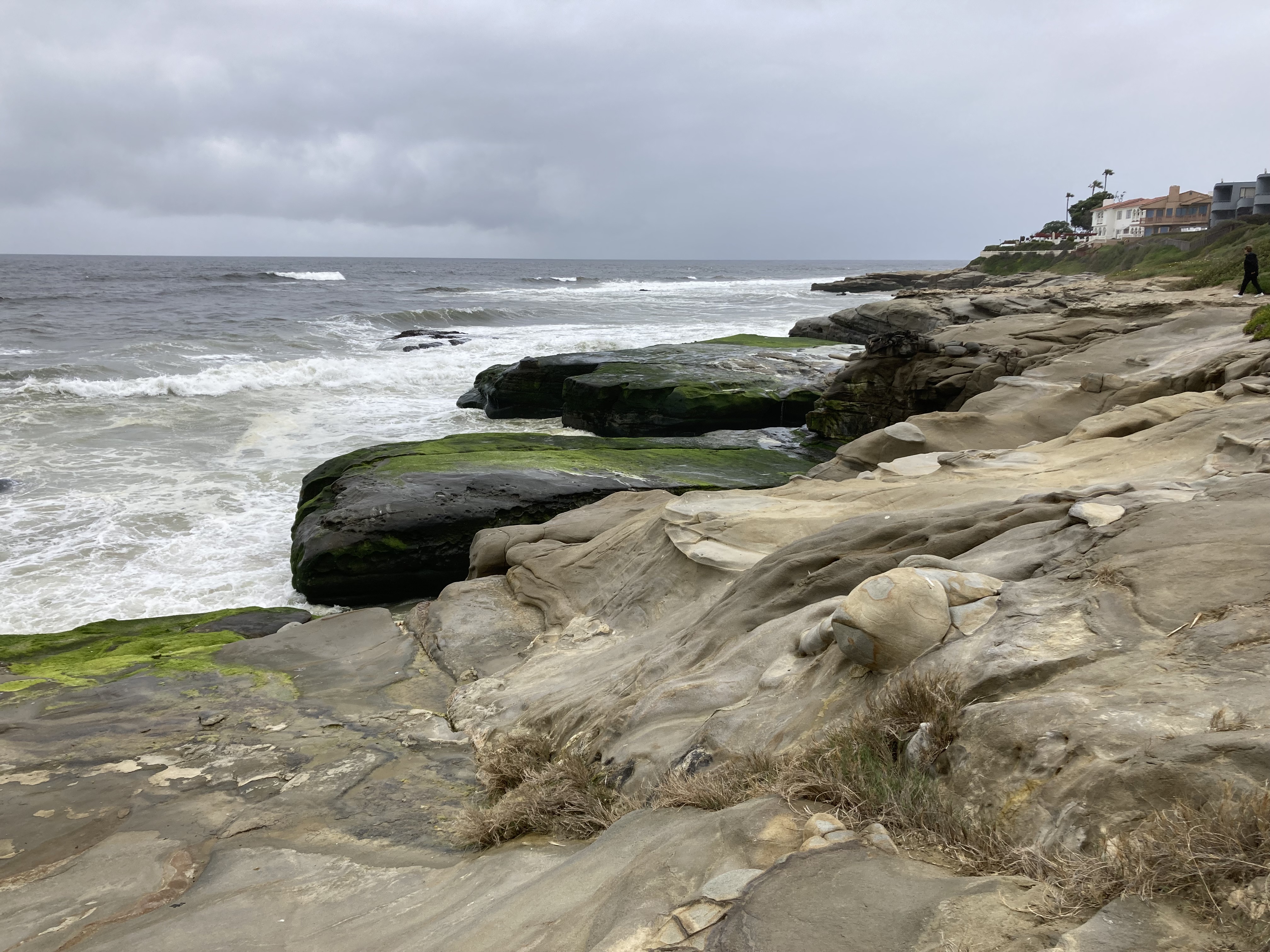
A little south of here is Windansea Beach, revered as a surfing spot, with a historic surf shack (I was sad there were no palm fronds on the roof when I was there). I must have been here at high tide, because waves were crashing up into the crevices of the sandstone rocks, and there was no sand to be seen.
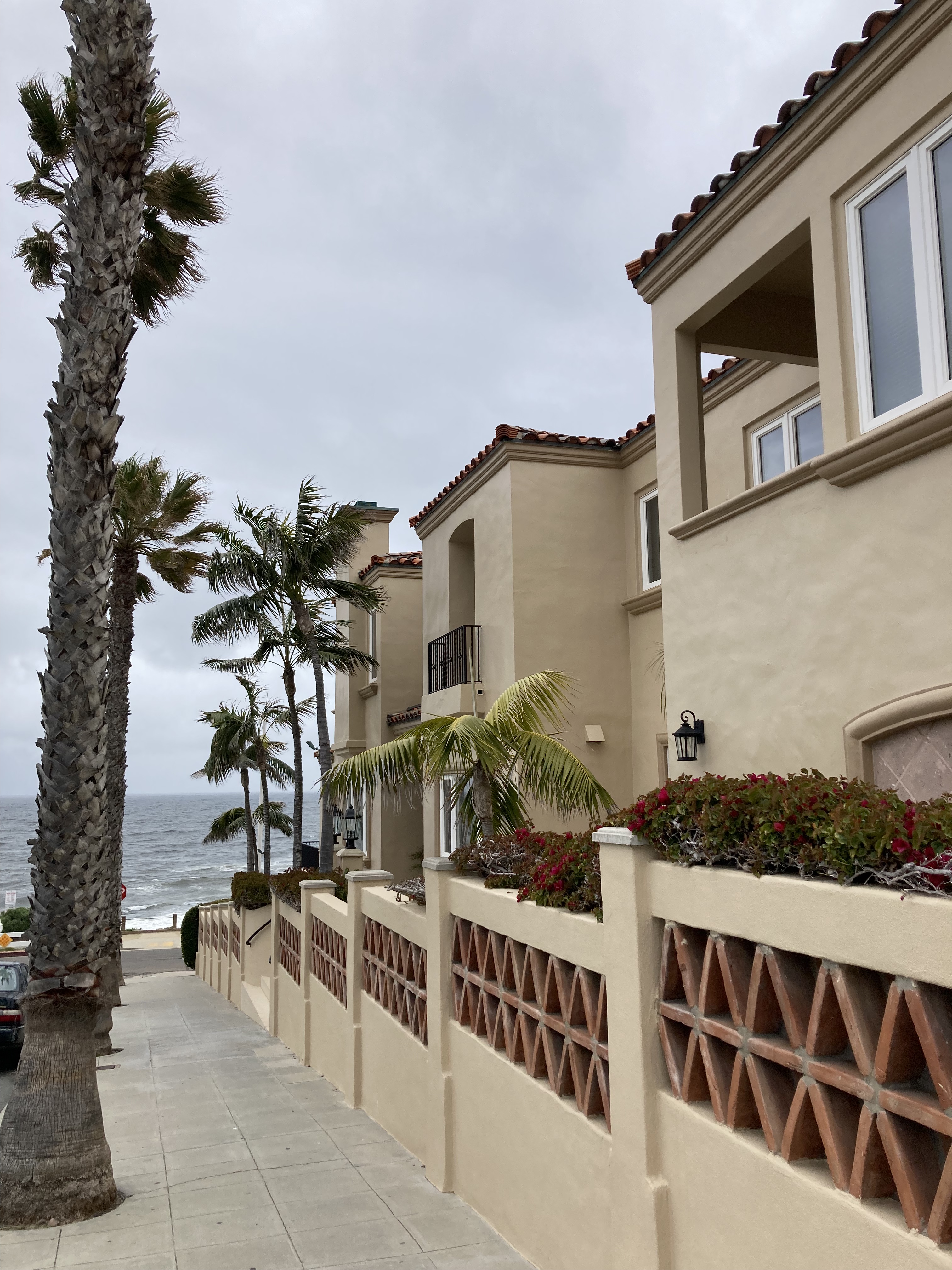
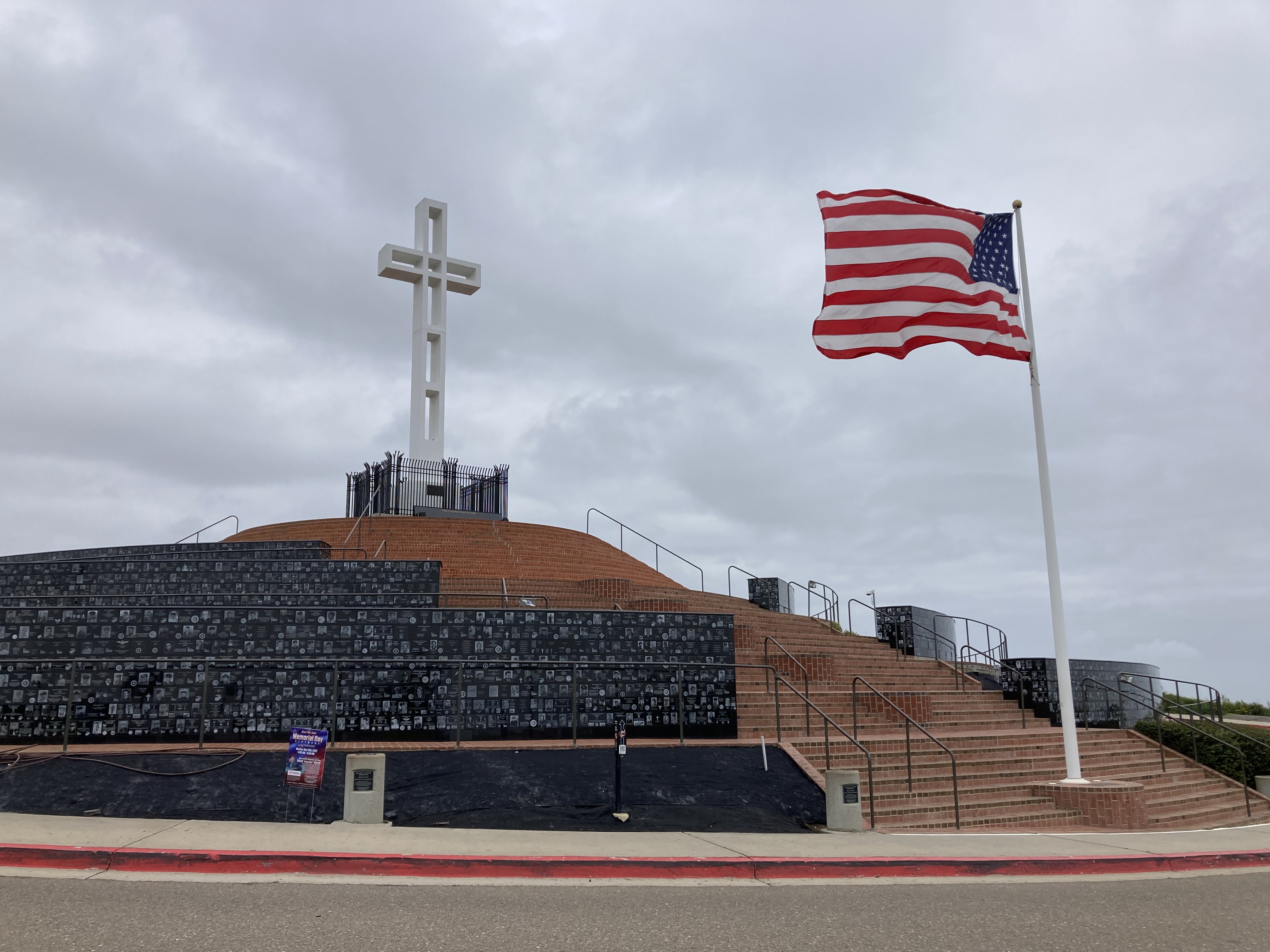
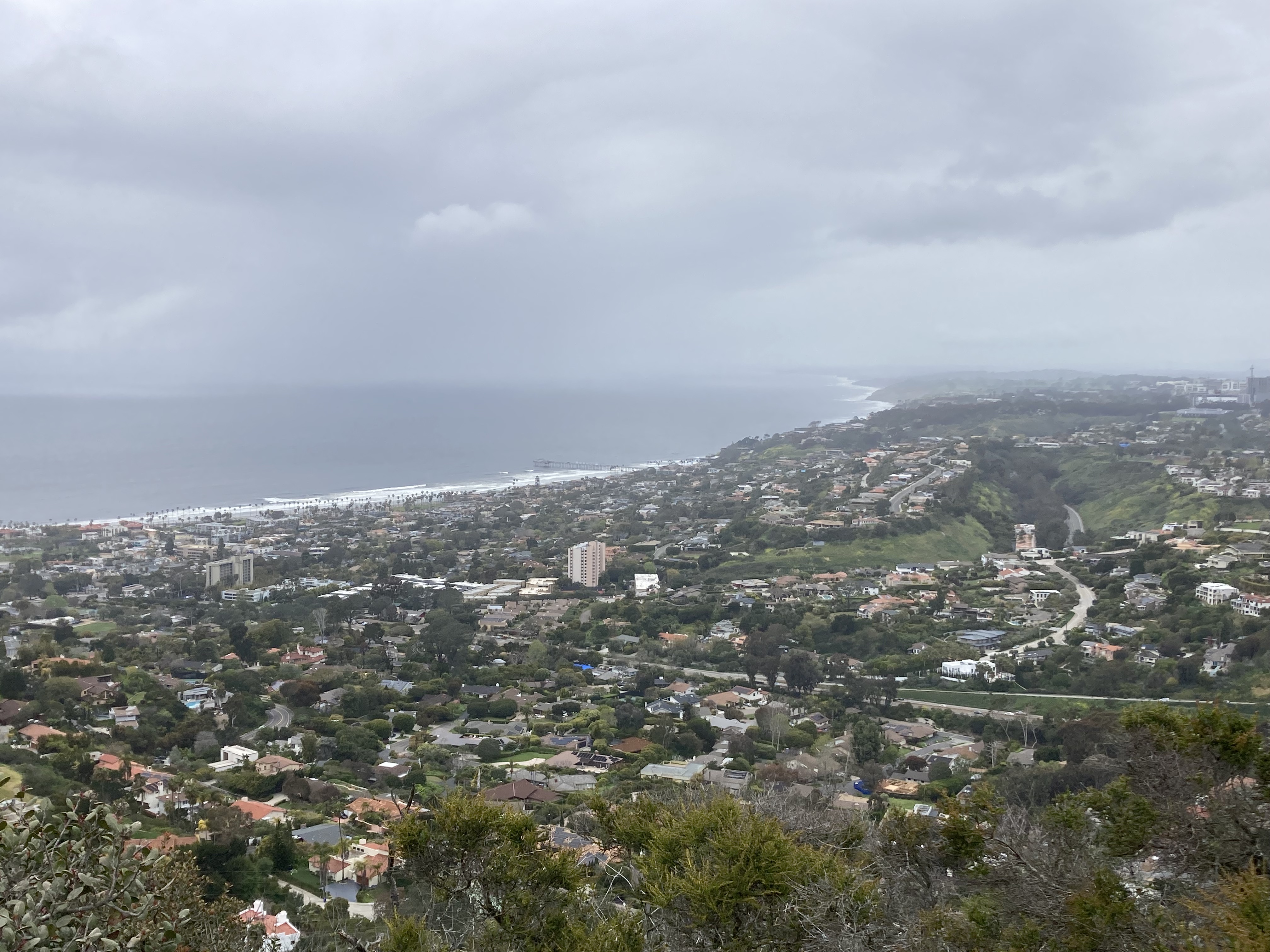
Also in La Jolla, inland from the above beaches, is Mt. Soledad National Veterans Memorial. Mount Soledad is the highest coastal peak in San Diego County and offers 360 degree views of the San Diego area, a beautiful place to take in a sunset. Unfortunately, I was there on a cloudy day, so my views weren’t as expansive. While this is a Veteran’s memorial, it is crowned with a large cross and has a history of controversy regarding this religious symbol being built on what for a long time was government property. This place has also been called out as a representation of a history of institutional racism in San Diego. It’s not a big leap to think of the KKK burning crosses on hills as forms of intimidation and threat when seeing a large cross on the highest hill in San Diego. I had mixed feelings about visiting this spot myself, but I was happy to take in the views, and I think such landmarks always have some education to offer us – perhaps especially when uncomfortable.
Mission Bay & Belmont Park
From here I headed to Belmont Park, a small beachside amusement park with a retro vibe, established in 1925. It’s located south of La Jolla, along the coast on Mission Beach, a strip of land between Mission Bay and the ocean. Here you can explore the rides, games, shops, eateries, beach, boardwalk, and water activities in the bay.
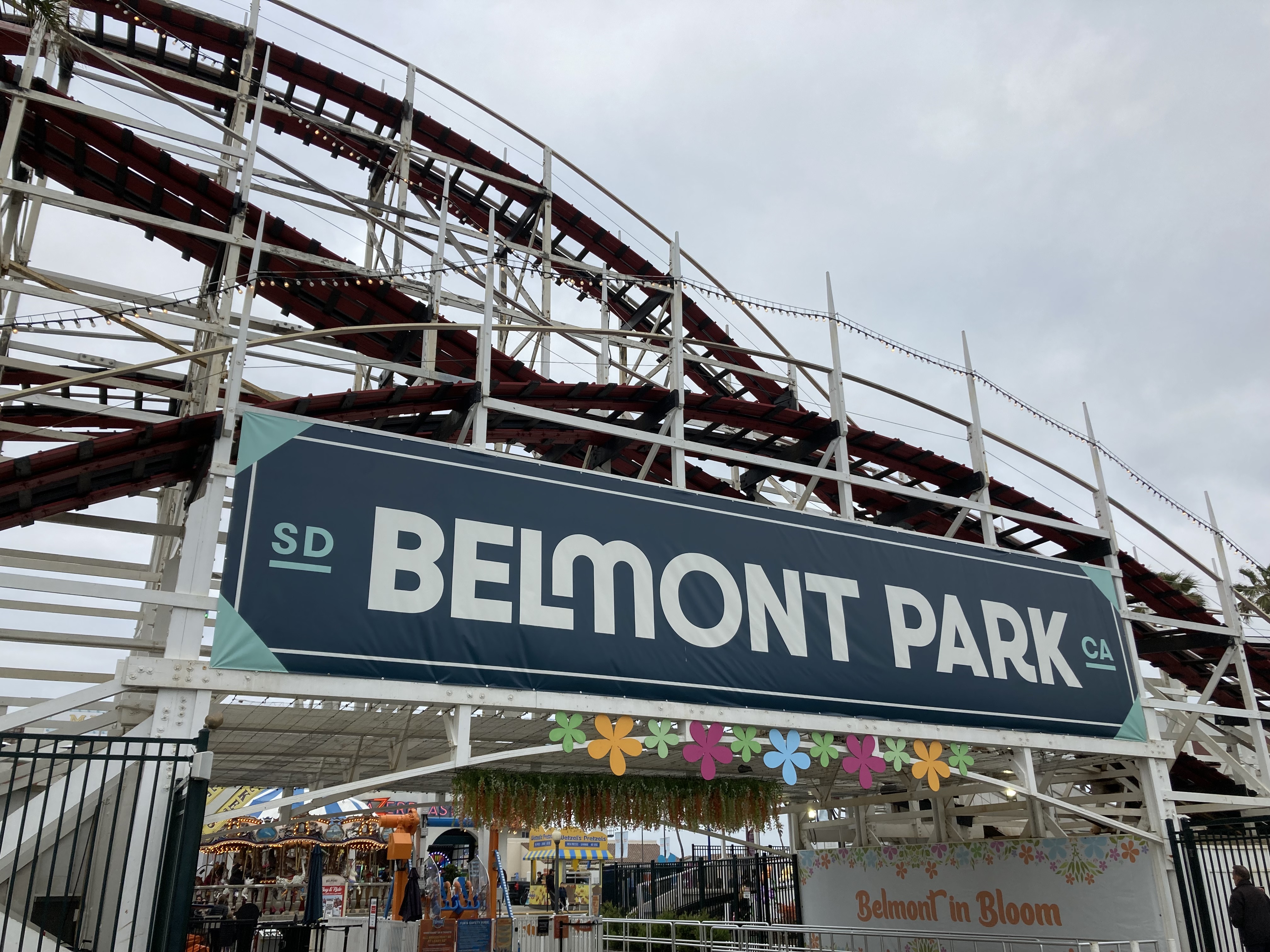
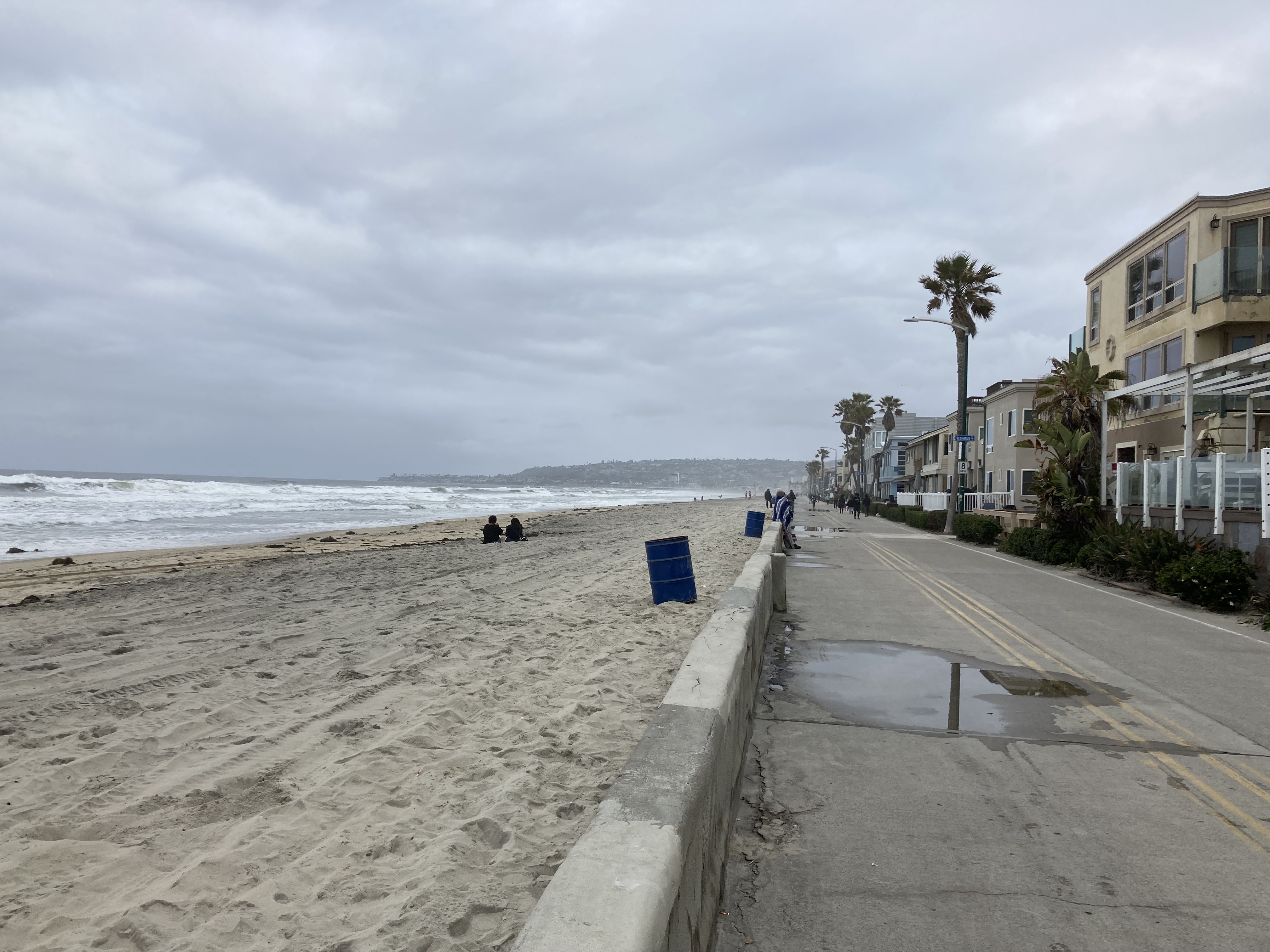
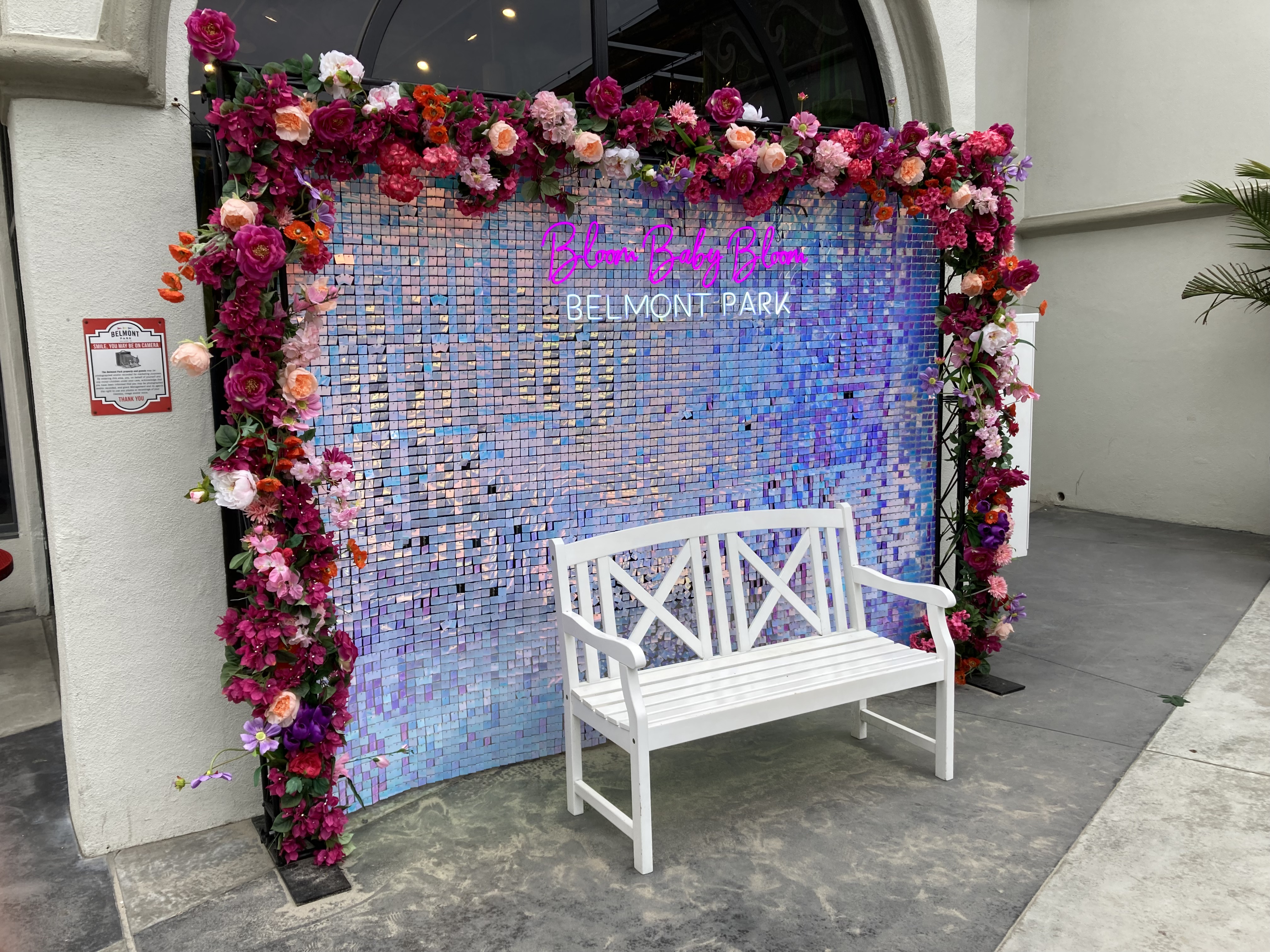
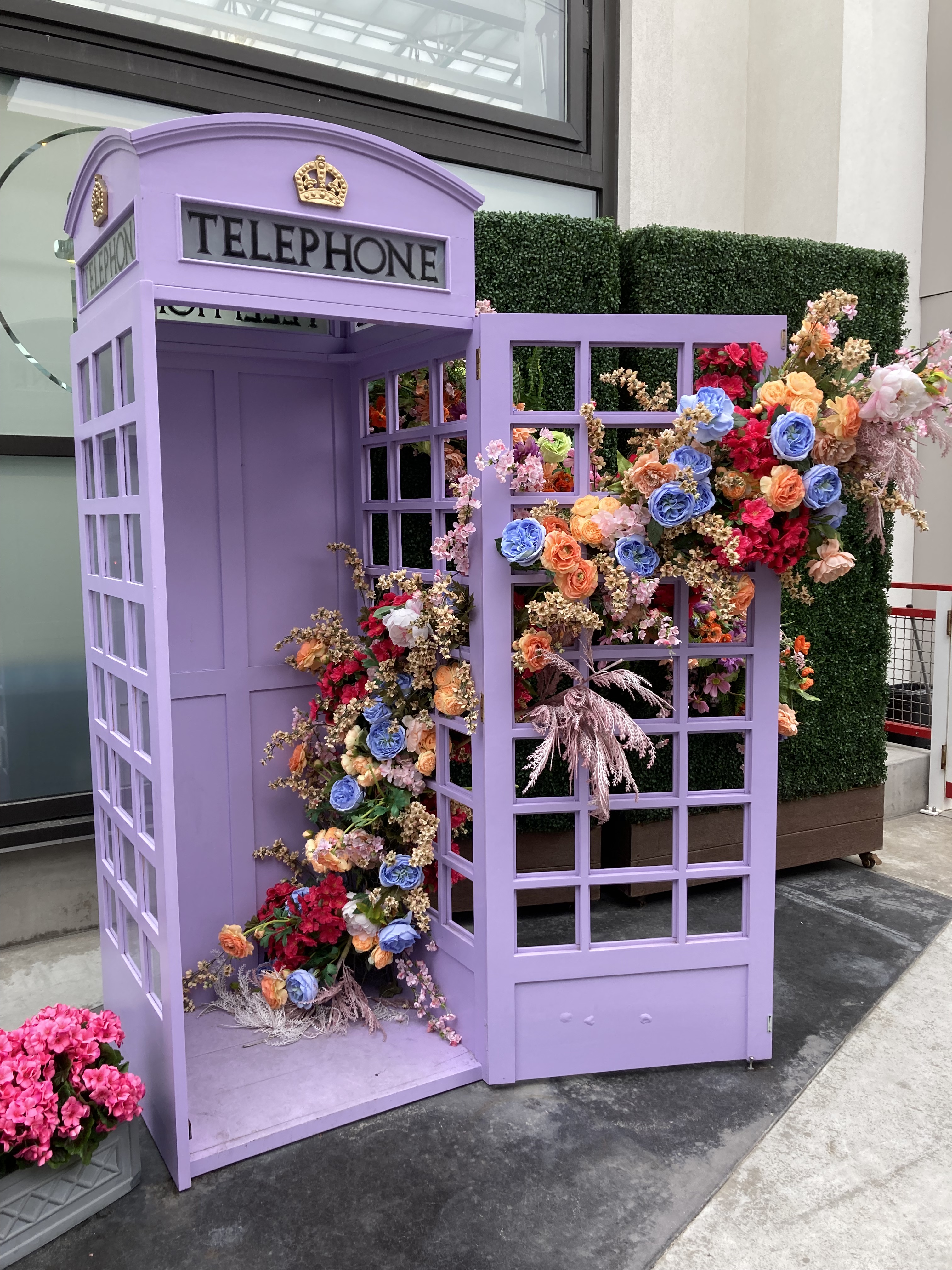
I’ve said it before and I’ll say it again: places in California are a lot prettier in the sun. But despite the gloom of the cloudy skies, I still felt like Belmont Park, Mission Beach, and Mission Bay were a gem of an area. I would come back here.
Although I did get a slightly sketchy vibe where I parked in one of the big lots in the park across the street from the amusement park. There were some characters wandering around. Ultimately I felt okay to leave the van as there was a police presence. If you look Mission Bay up online it seems to have a reputation as a safe area. The area is also a bit run down and the roads aren’t in the best condition.
Point Loma & Cabrillo National Monument
The next day I started at Cabrillo National Monument. Still working my way south along the coast, Cabrillo National Monument is located at the tip of Point Loma peninsula, south of Mission Bay and west of downtown San Diego.
At the entrance to the park I bought myself an annual national park pass (which I was very excited about – at $80USD it would easily pay for itself with just a few days spent in national parks – and I would easily surpass that number of visits).
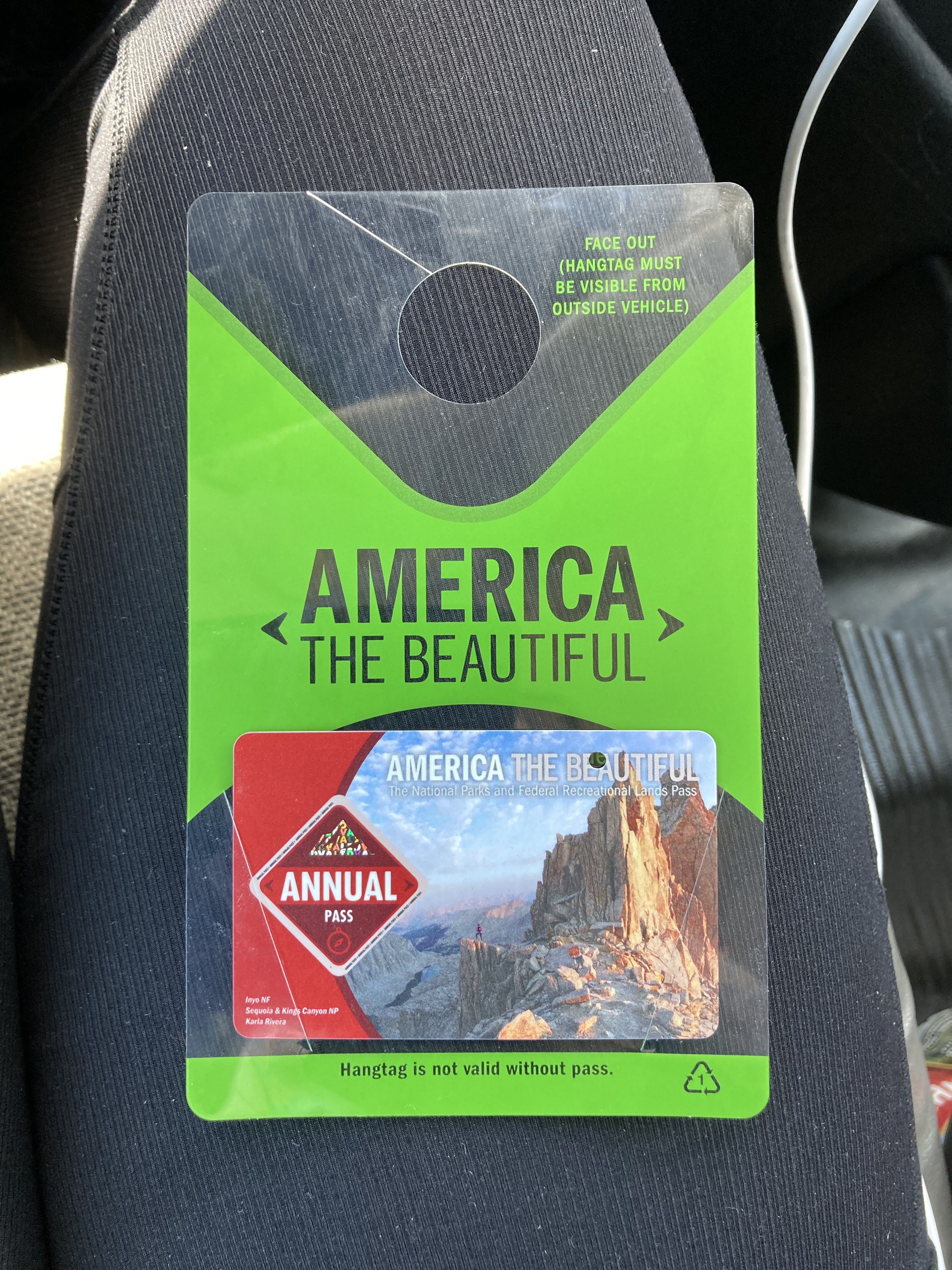
The park ranger was super nice, sharing with me some advice. He said that car break ins can be high in parks, and hanging your pass in your car can motivate a break in, so if you show your pass at a kiosk when entering a park you don’t need to hang the pass to be visible in your car. If there is no kiosk or check in then technically you are supposed to hang your pass, but if I were to get a ticket I could send in a photo of my pass, with signature and date of expiry. He said break ins were particularly bad in Washington. When I told him I would be heading to Joshua Tree NP he said the lines to enter the park can get extremely long and backed up at the west entrance (from Joshua Tree and for those coming from LA) – he said he’d seen it a mile long. But that the north entrance from Twentynine Palms is better, and the south entrance from the valley has no kiosk so no line. All good info, and I appreciated it. I didn’t hang my park pass in any NP – I’d rather dispute a ticket than have someone target my van, break my windows, and rob me.
Of note are the changes that have been applied to US National Parks recently. As of 2026 there is a new non-resident fee for travellers in US national parks. It is no longer $80USD, it is now $250USD for an annual pass, or $100USD per entry for non-residents. This also means that residency and personal information will be checked upon entry national parks. This, of course, is not the only challenging change that the US national parks are facing, from lay offs to threats on land protection.
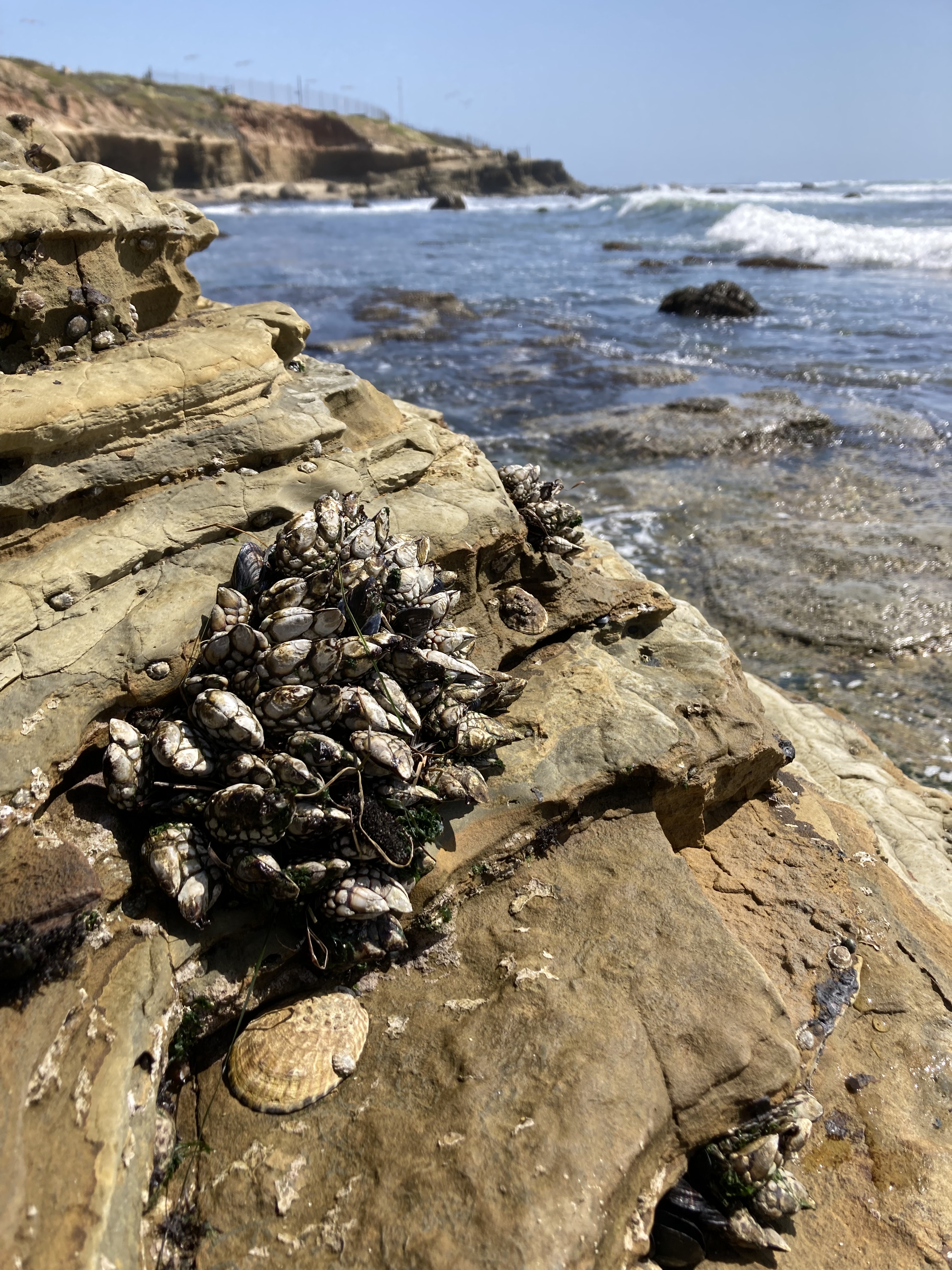
At Cabrillo National Monument there is the Point Loma Tide Pools, which is where I started. Then near the visitor centre there is the Cabrillo Statue and Old Point Loma Lighthouse.
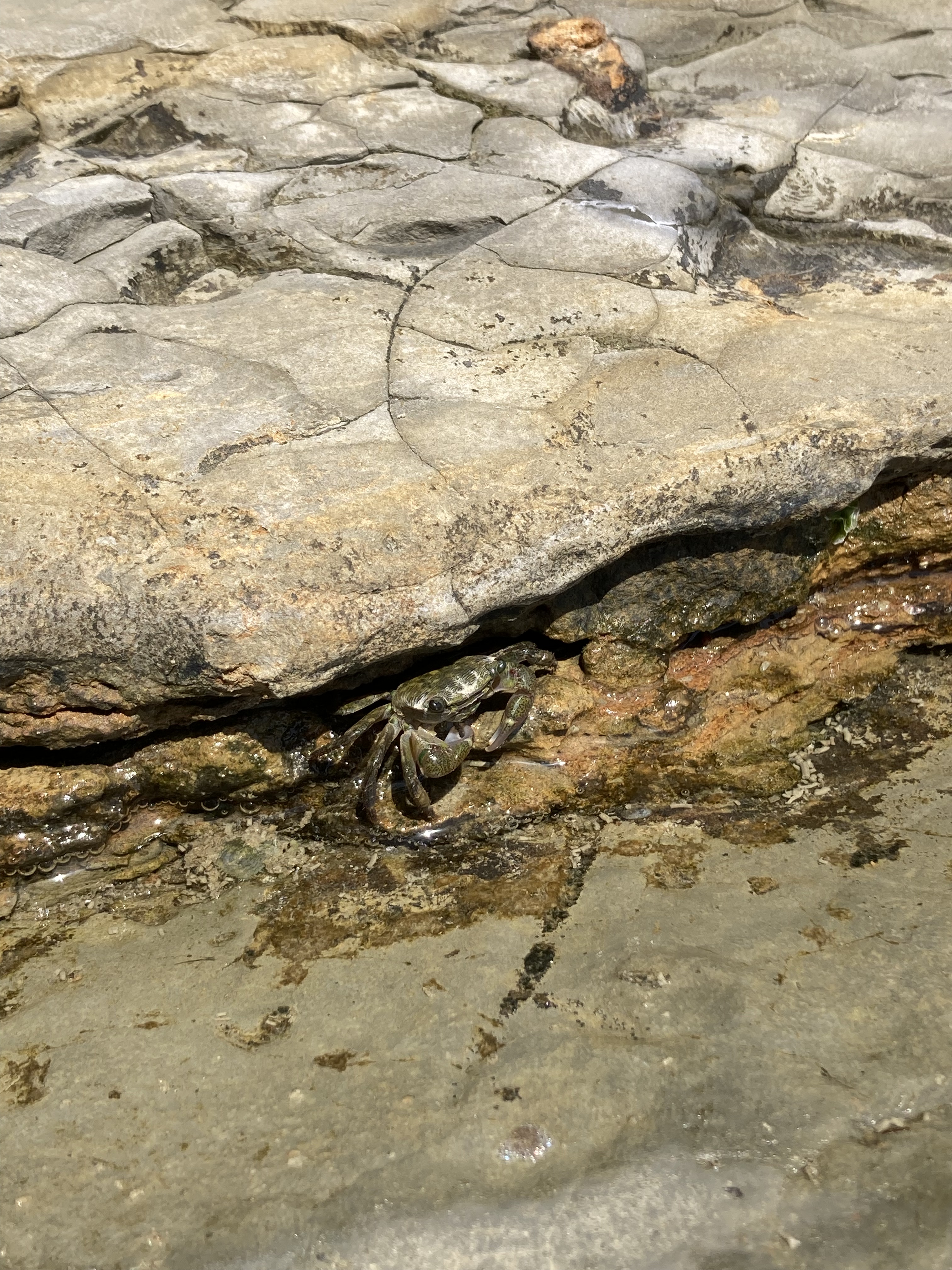
The tide pools and coastal area was beautiful to explore. The highlight of this part of my morning was my encounter with some crabs. In a little pool of water up on the rocks you could see lots of little crabs hidden under folds of rock on the outer edges of the pool. They hid if I moved, but after staying still for a while they would slowly emerge, move around, feed. At one point I moved around the pool to get another view, and suddenly I let out a blood curdling scream – purely reactionary and out of my control – as I saw something move across my shoe in my peripheral vision. It took my mind a second to catch up with my body’s reaction, at which point I started laughing because it was just a crab scuttling over my shoe. But if anyone heard me they were probably wondering what had happened. I just hadn’t expected these crabs to get anywhere near me, let alone crawl over me. I was flattered. I continued to watch a little crab come out, feed, and sun himself. It made my day.
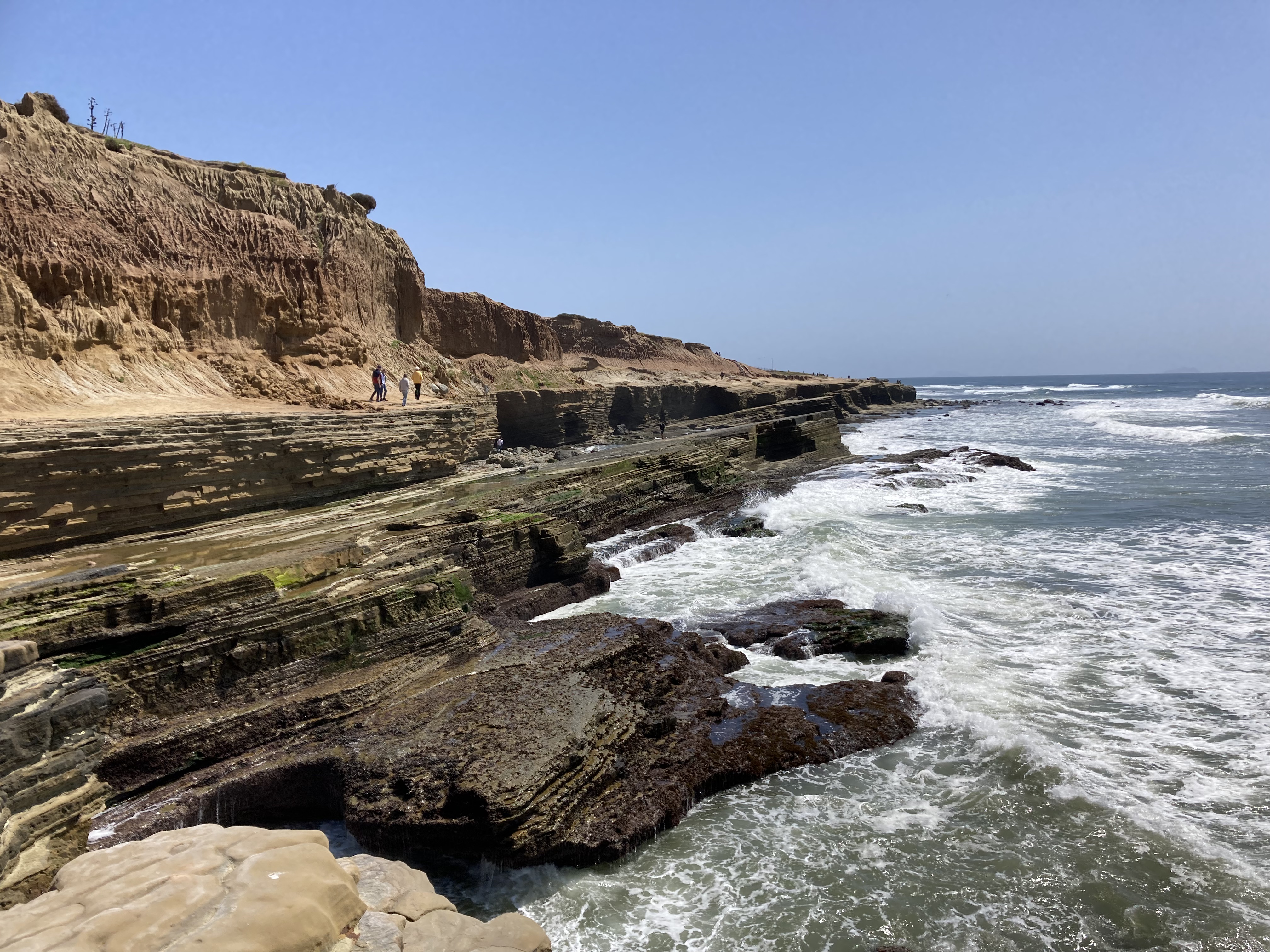
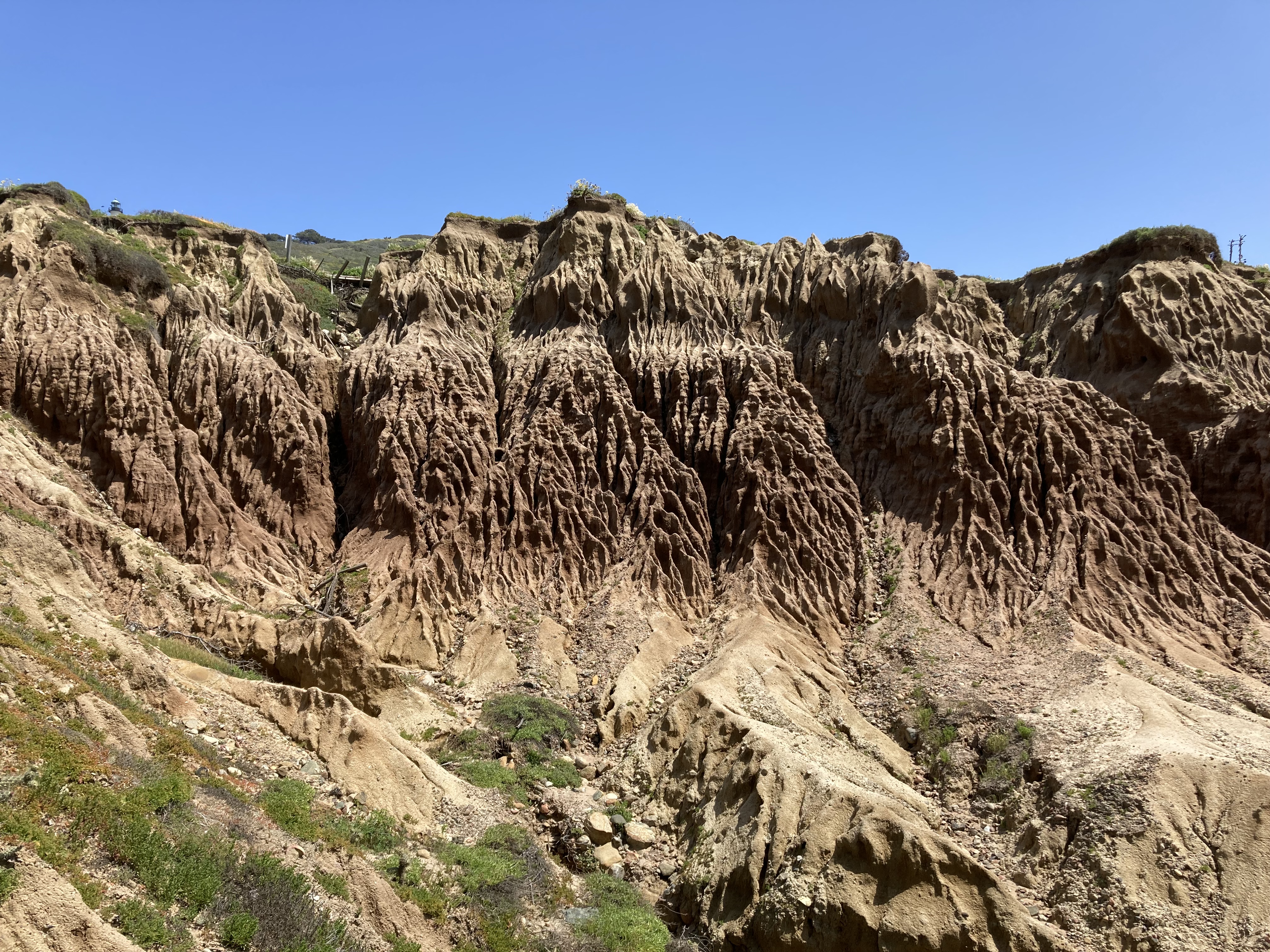
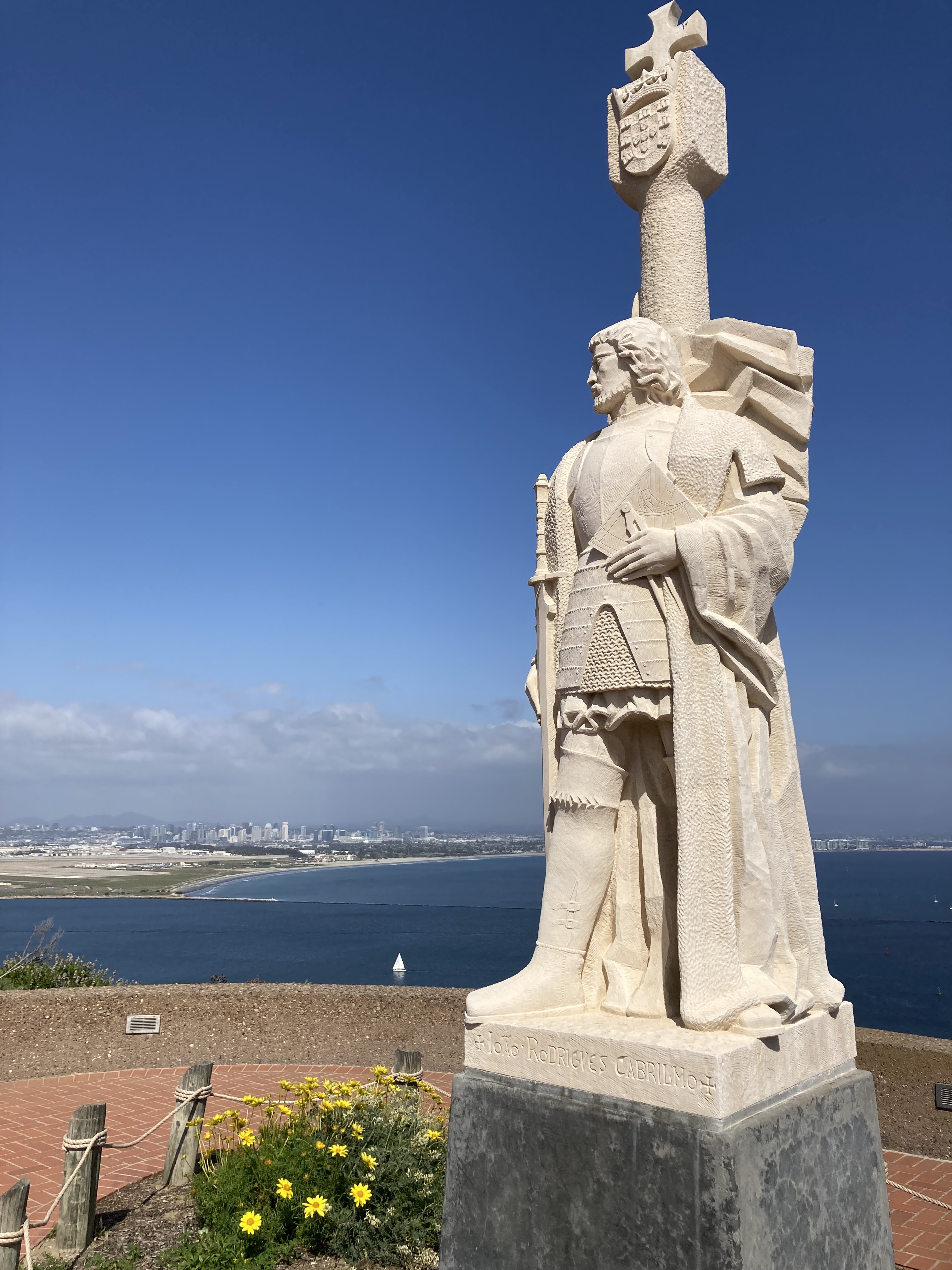
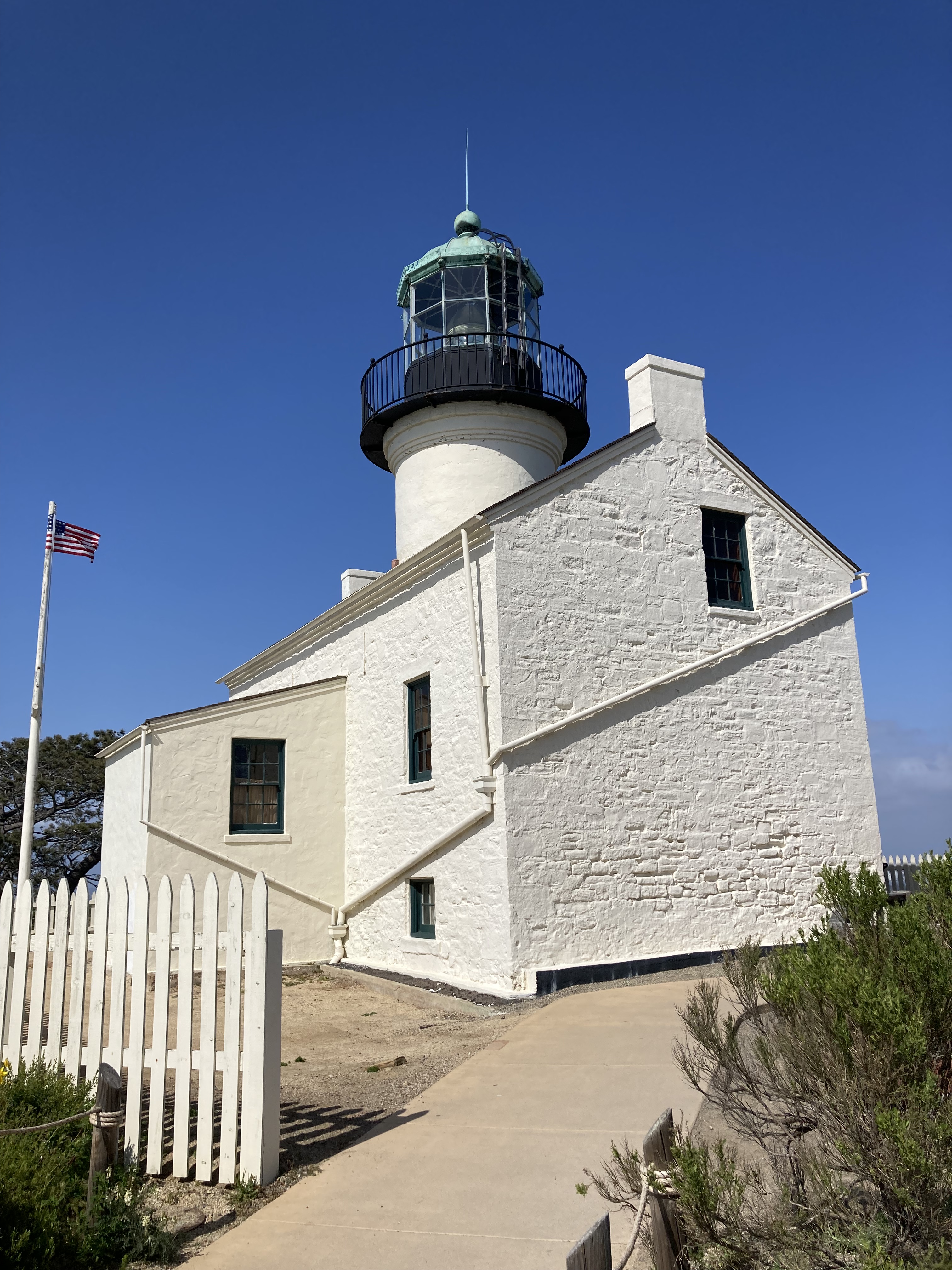
The visitor centre has exhibits that explain a lot of the history of the area. Primarily, this area focuses on Juan Rodriguez Cabrillo, the first European to touch down on the west coast of North America. Cabrillo landed at San Diego Bay in 1542, 50 years after Columbus landed on the east coast (in the province I grew up in, Newfoundland). You do hear about Cabrillo in many towns along California’s southern coast. Taking in this history demands mindfulness of colonization and evangelism. Behind the statue of Cabrillo are views across San Diego Bay to the downtown San Diego skyline, Coronado and the Naval Base, and even to Mexico. It is a short walk to the 1854 lighthouse, and trails with sage brush and ocean views, where whales can be seen migrating throughout the year.
Old Town
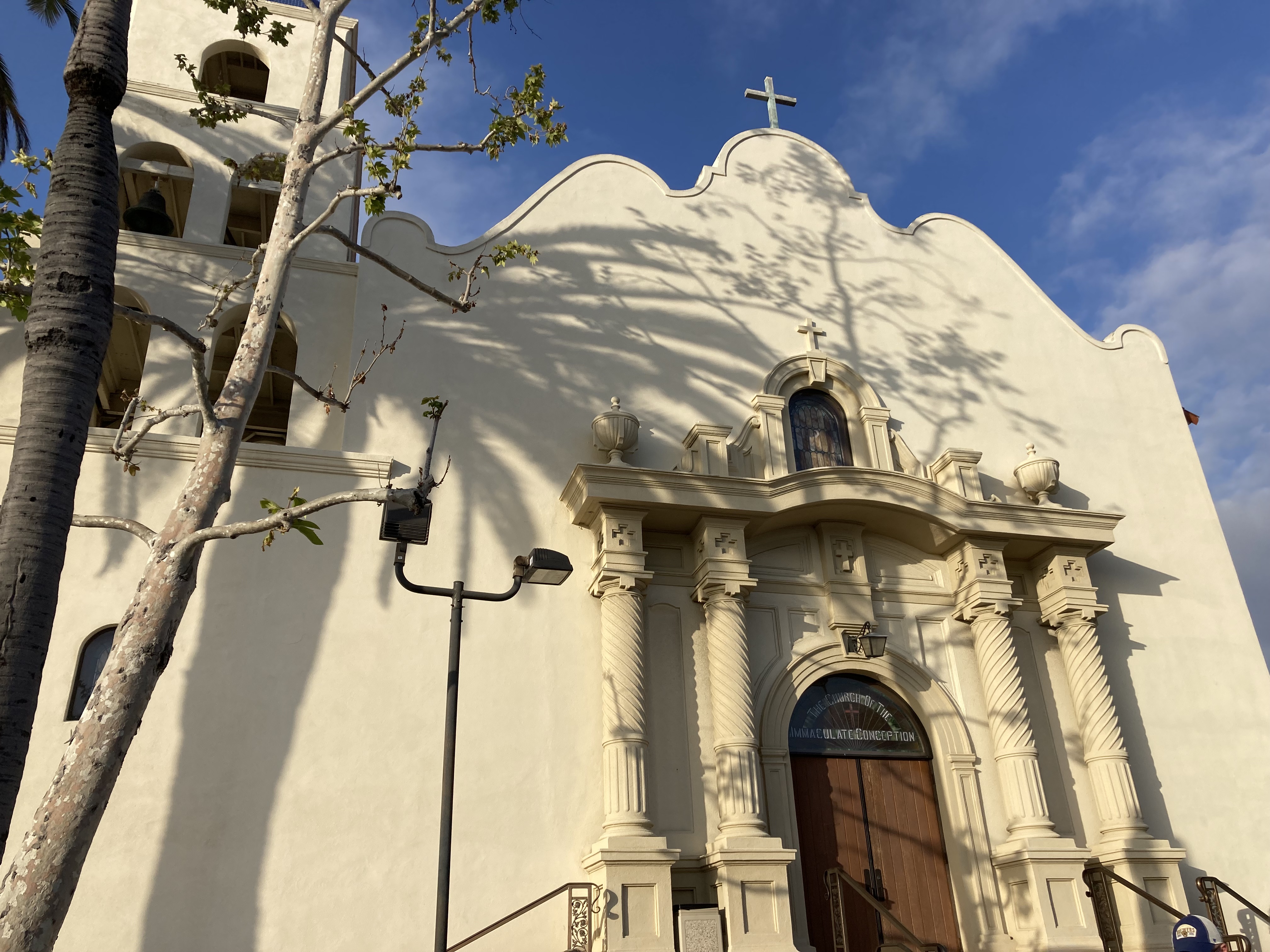
My next stop was Old Town San Diego, which was a favourite of mine. This neighbourhood is the oldest settled area/ site of the first European settlement in California, and considered the birth place of California. Its original native inhabitants were the Kumeyaay people, who’d been here for over 10,000 years. Then came Juan Rodriguez Cabrillo’s expedition in 1542. The first Spanish settlement came in 1769 with Junípero Serra and his missions. The town of San Diego was growing here in the 1820s. In 1834 the Mexican government granted (old town) San Diego the status of a pueblo, or chartered town. In 1850, when California became part of the US, San Diego was made the seat of government in San Diego County. By the 1860s the main hub of San Diego took form in modern day San Diego’s downtown (“New Town”), as it was a more convenient area for imports and exports, closer to the water for shipping.
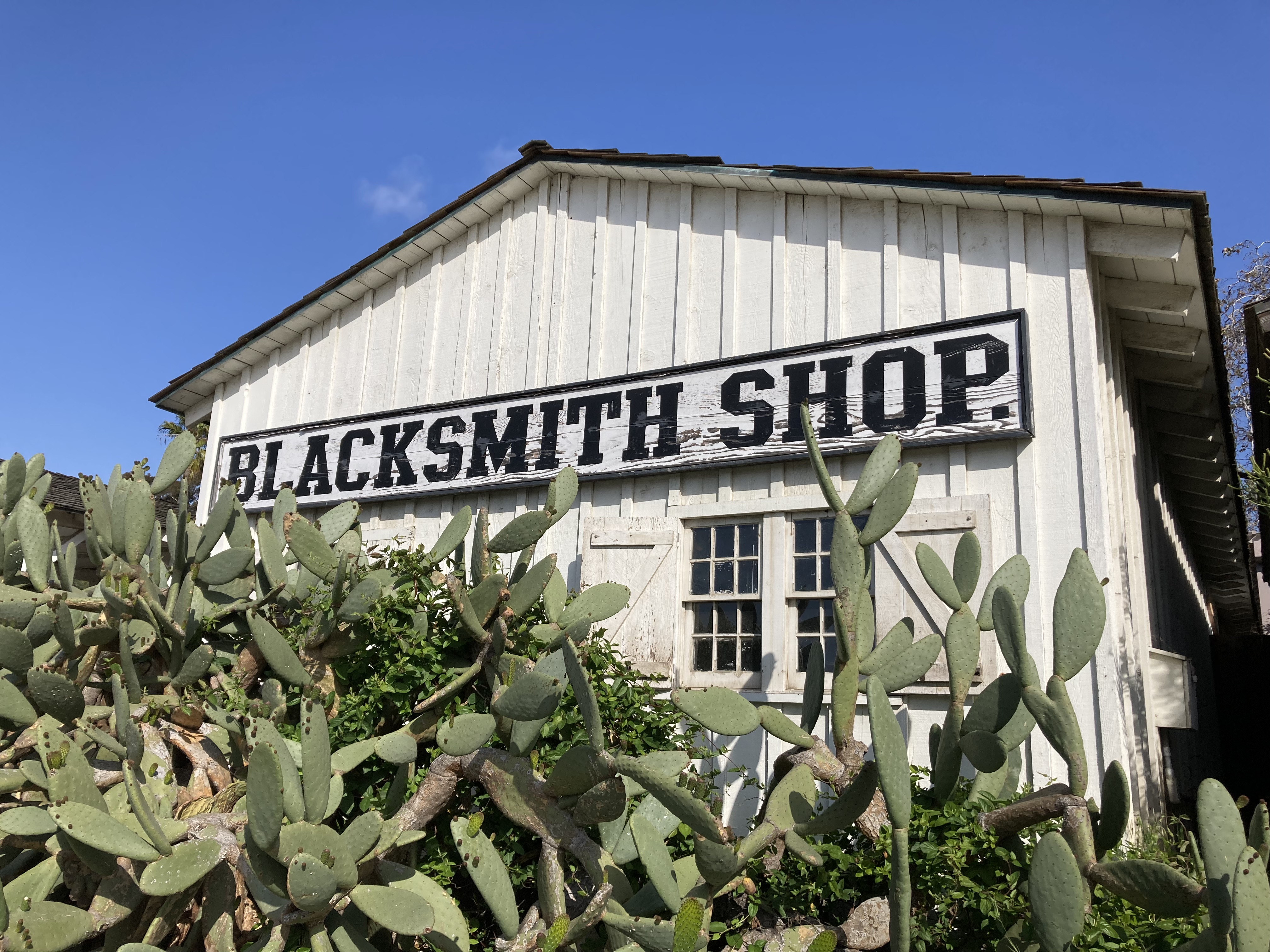
Old Town State Historic Park was created in 1968 to preserve the history of Old Town and serves in part as a living history museum. It contains several preserved adobe buildings (La Casa de Estudillo, with its 13 rooms, is the most famous of the original adobe homes) as well as some reproductions, showcasing the merging of cultures and time period from Mexican California.
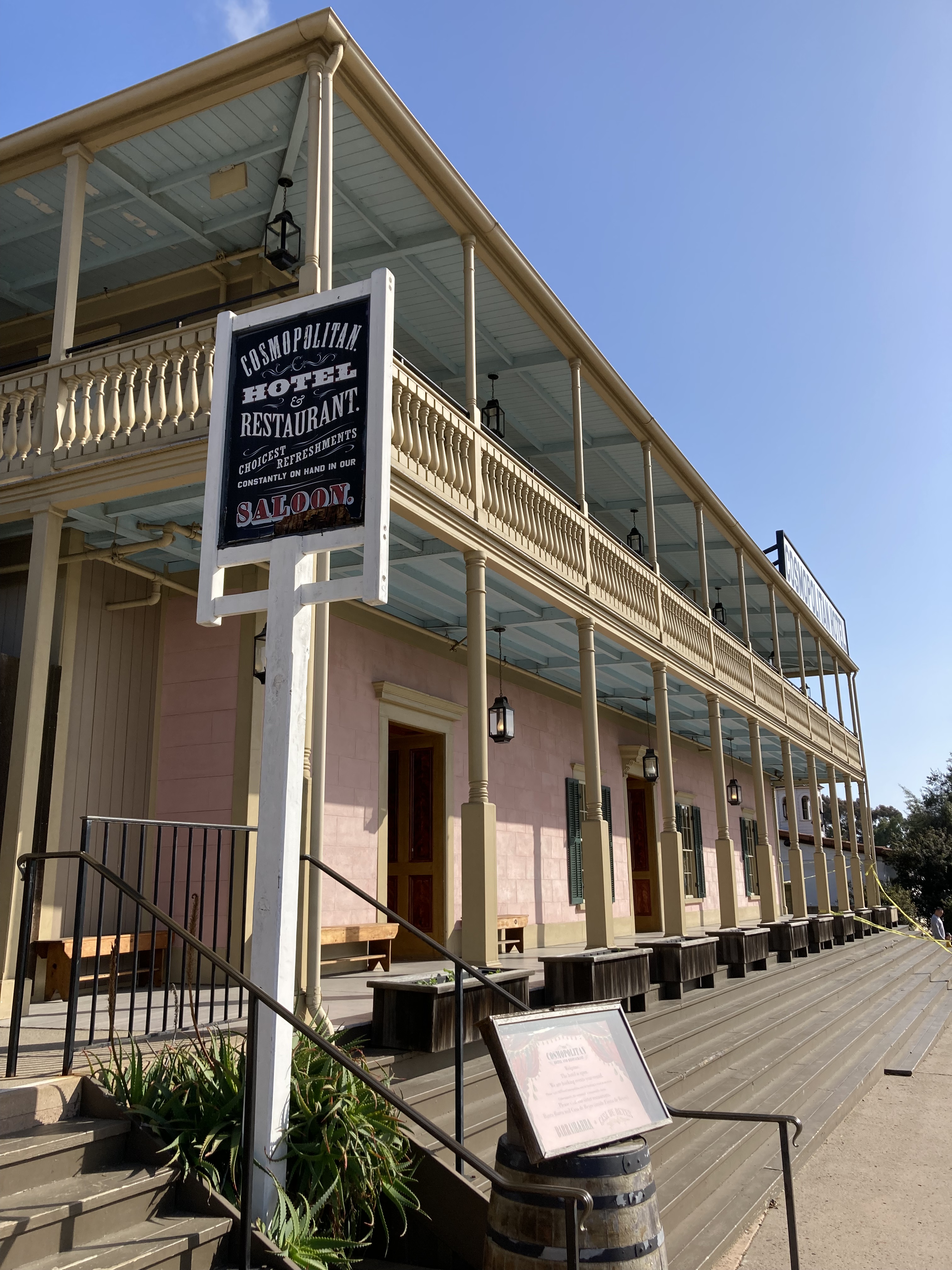
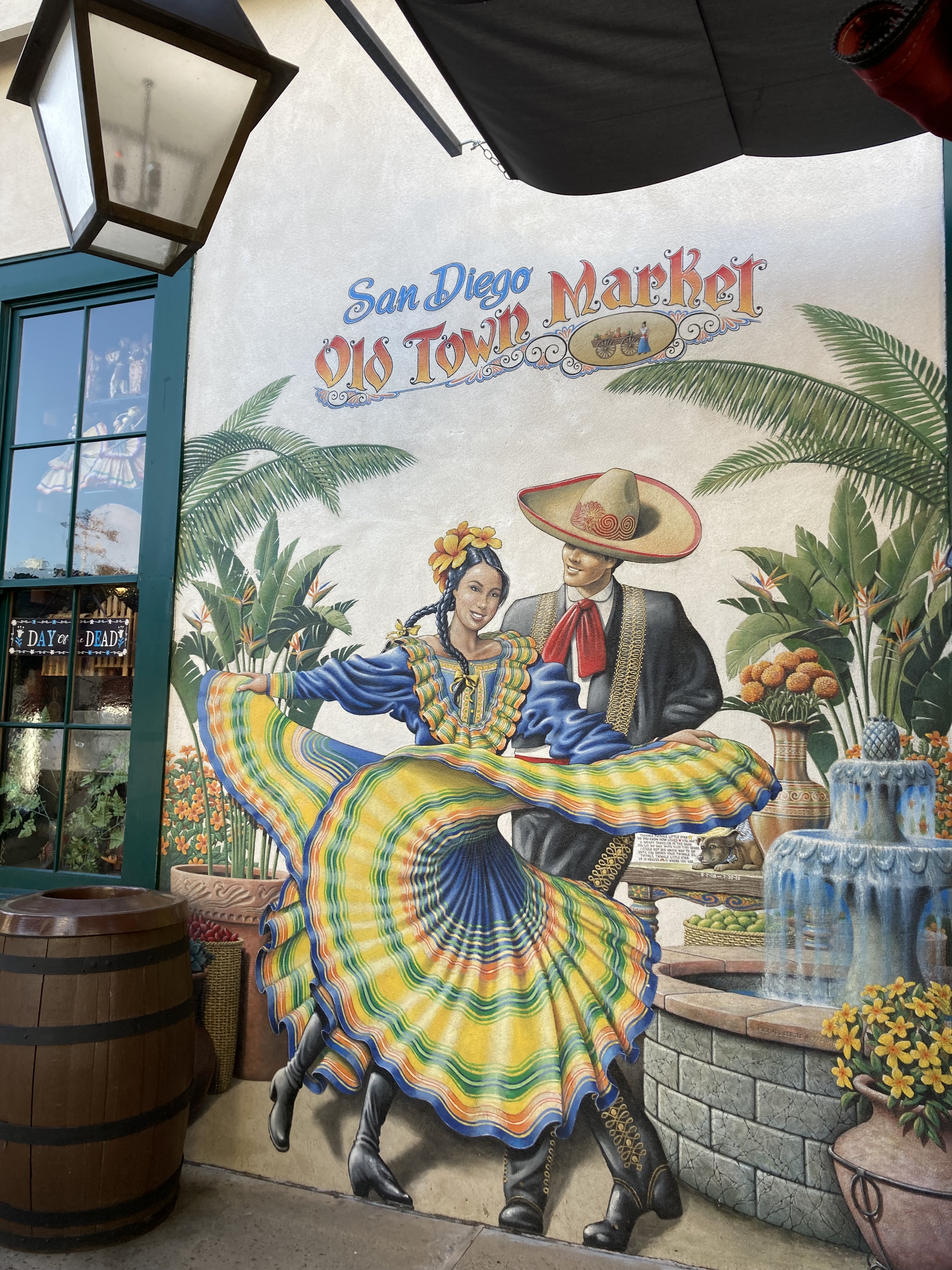
At one end of the state park is Fiesta De Reyes, a plaza with shops and dining, a courtyard, as well as live entertainment like mariachi bands and dancers. I highly recommend this place – it’s so rich in beauty and culture.
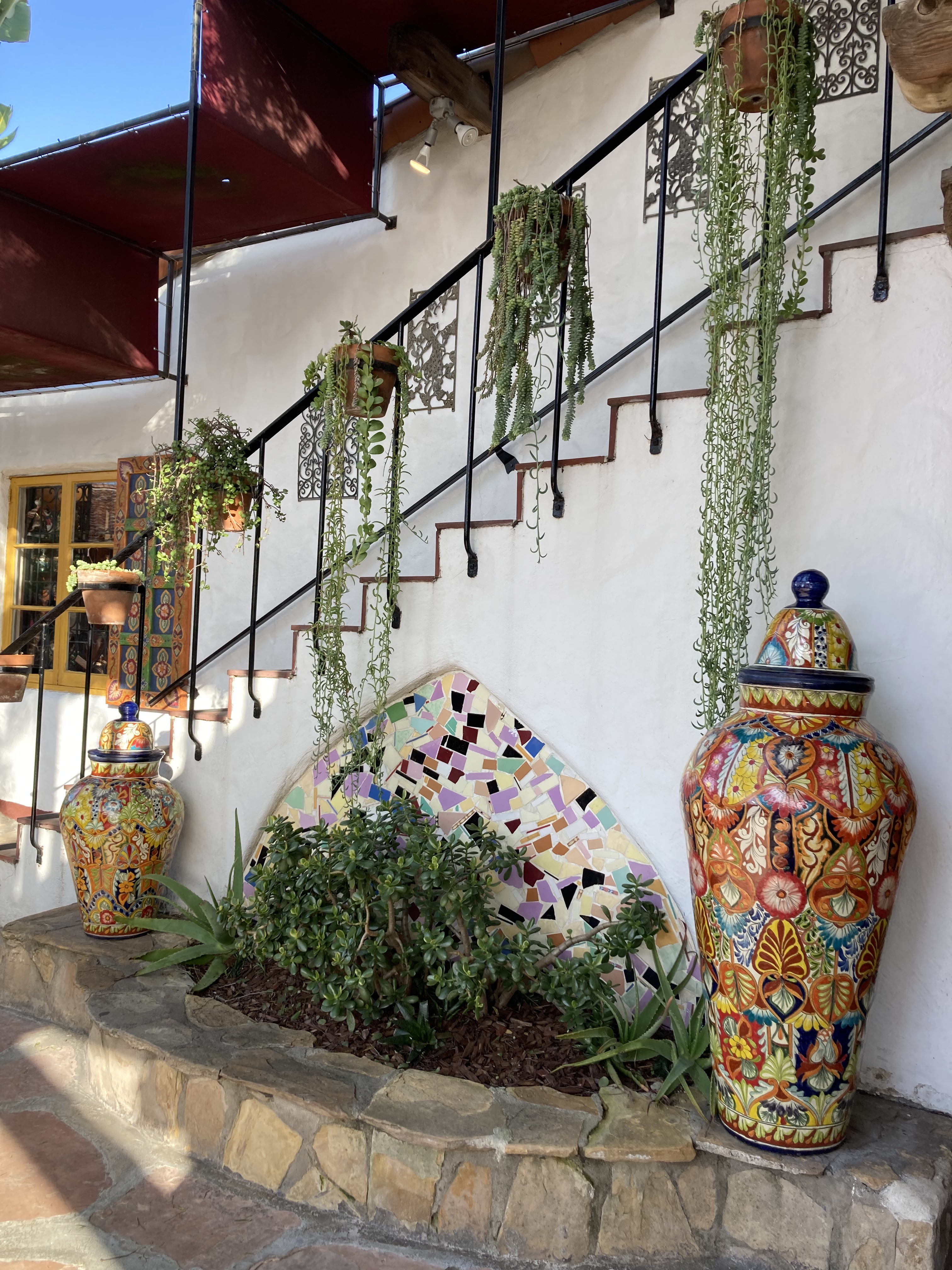
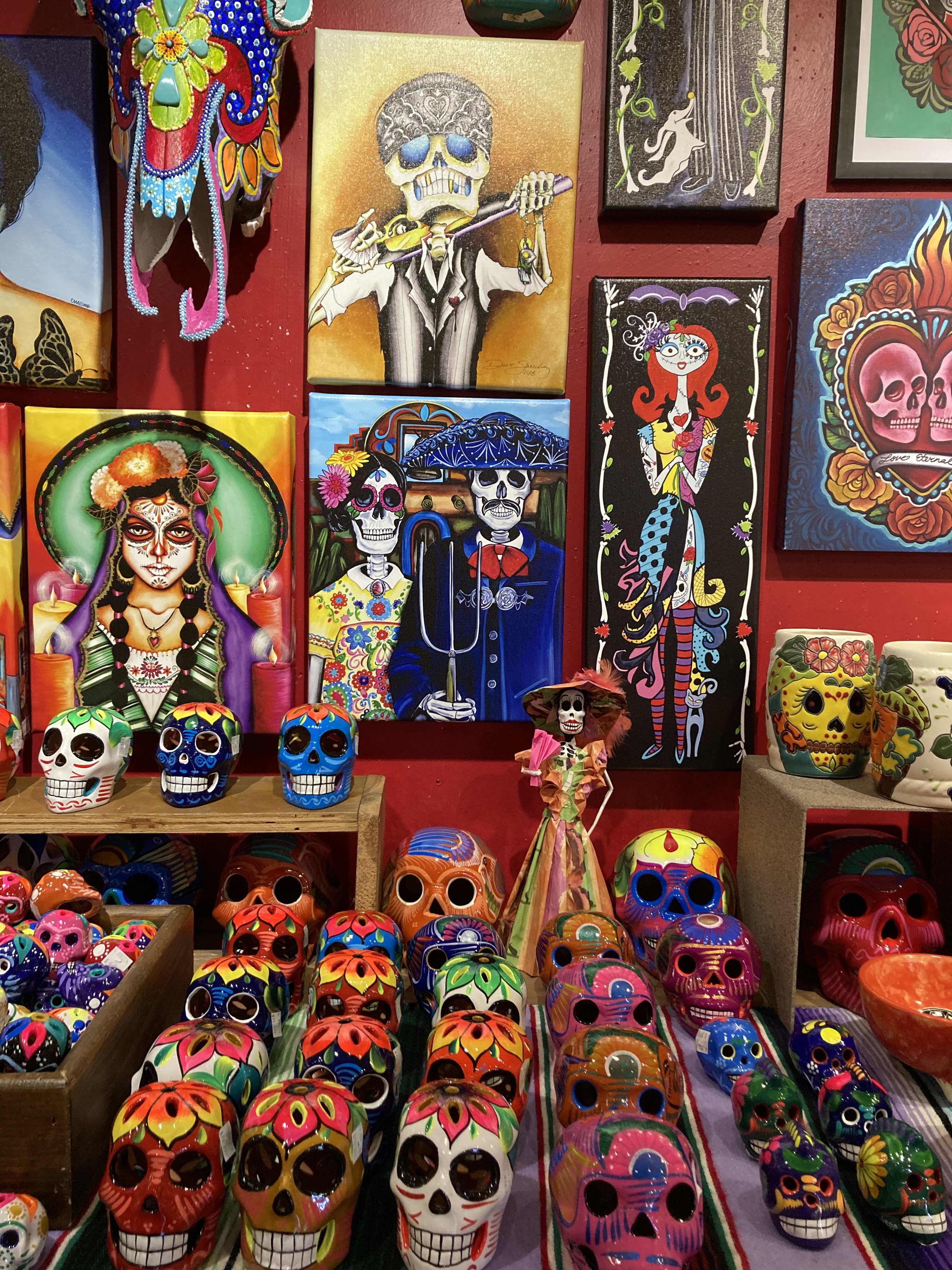
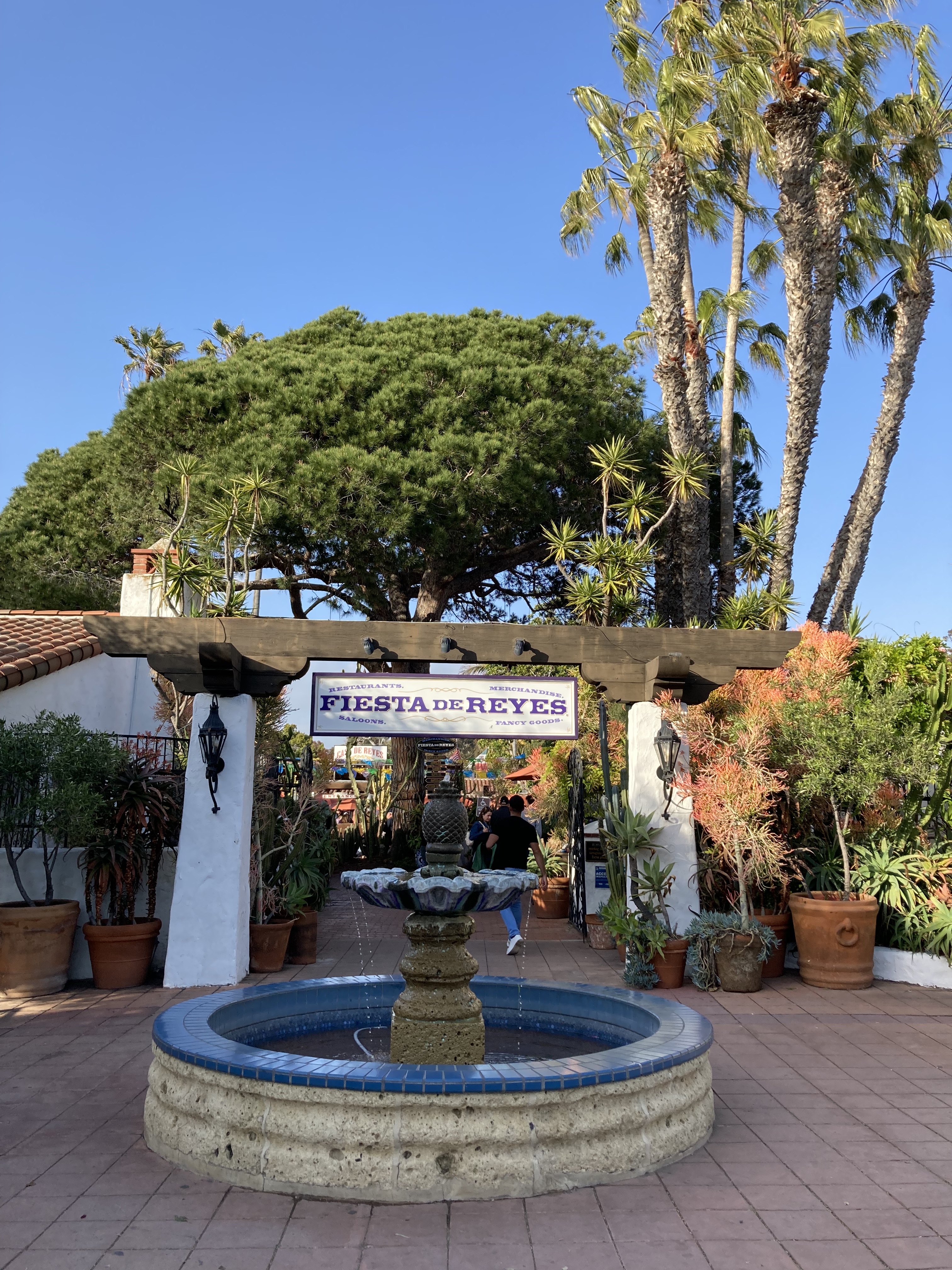
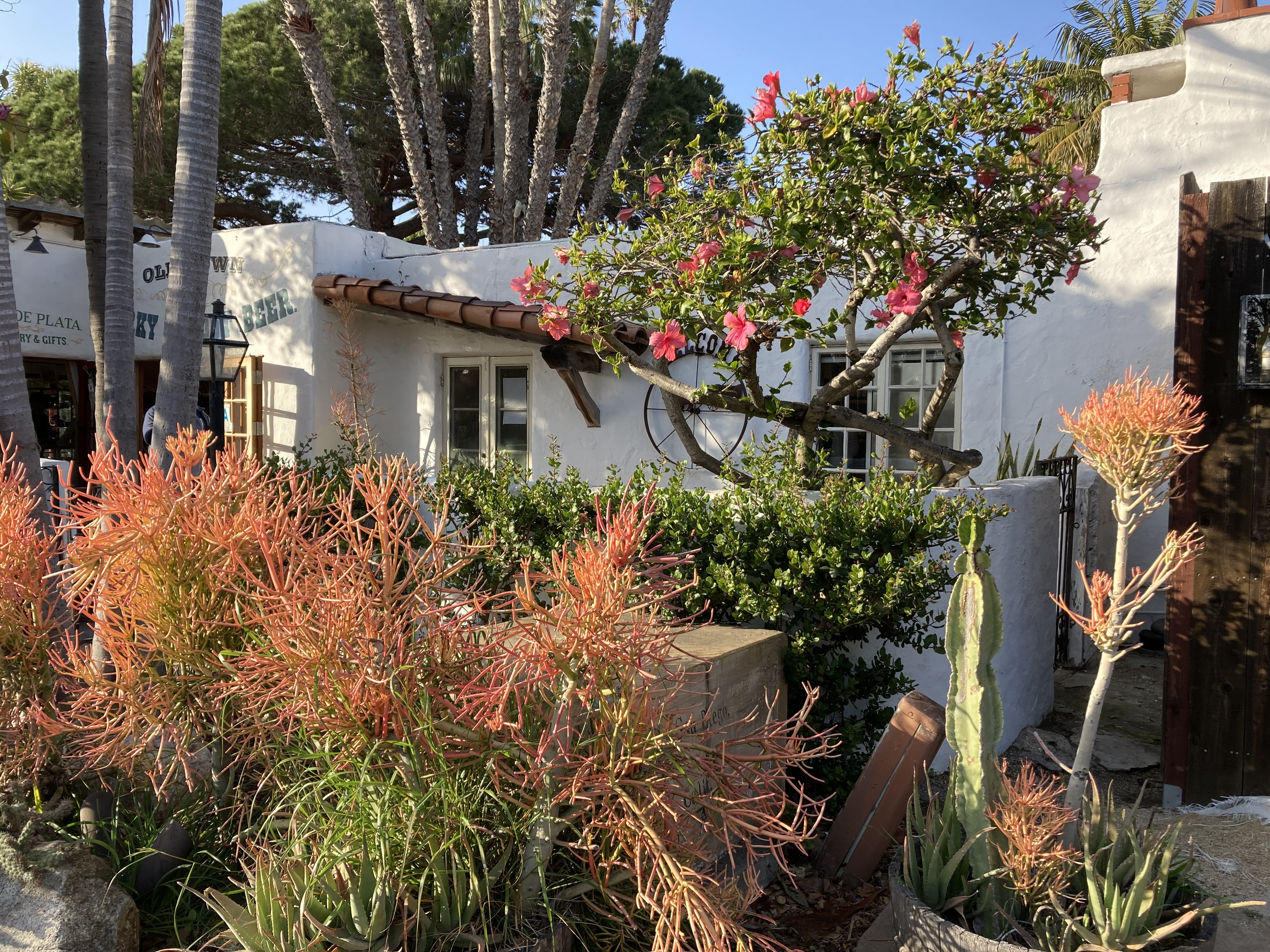
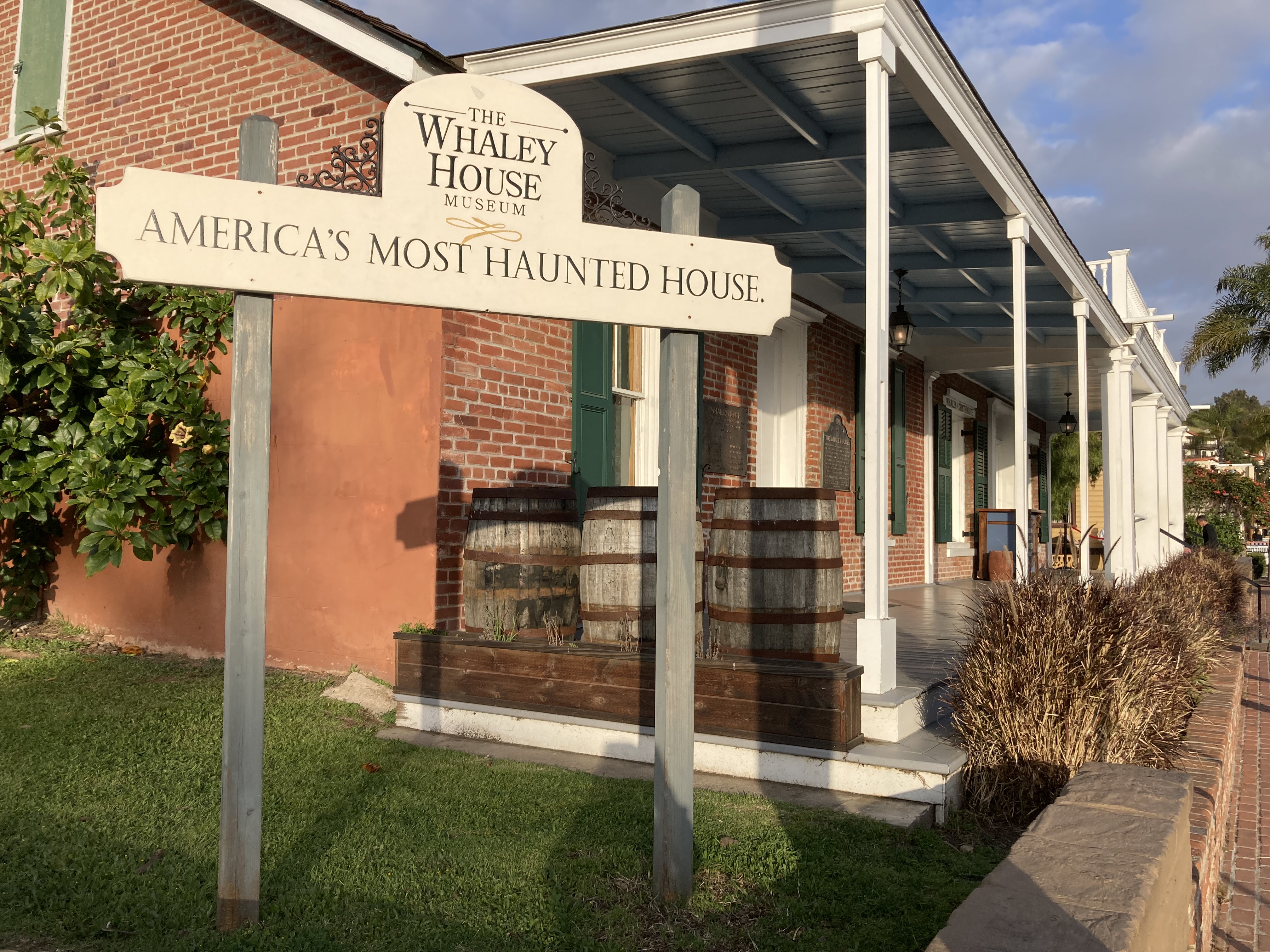
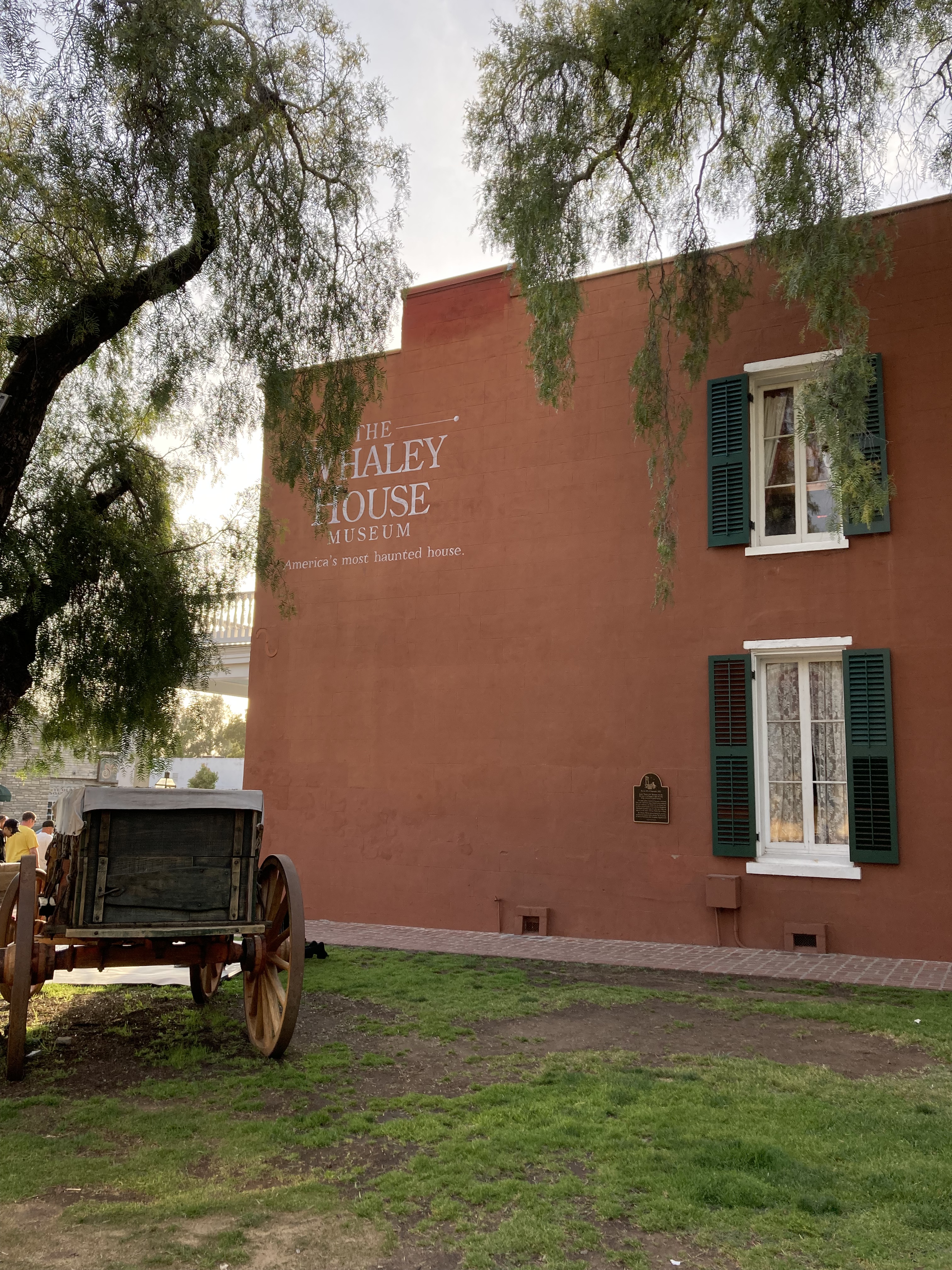
From the state park, along San Diego Avenue, you can find the Whaley House. I should have done a tour inside the home, and in the future I would pinch myself to do a paranormal investigation here (they offer both evening haunted tours and paranormal investigations). While this house has played a large role in San Diego’s history, it also has a reputation as one of America’s most haunted homes. Unsurprising, as it was built on the site of San Diego’s first public gallows.
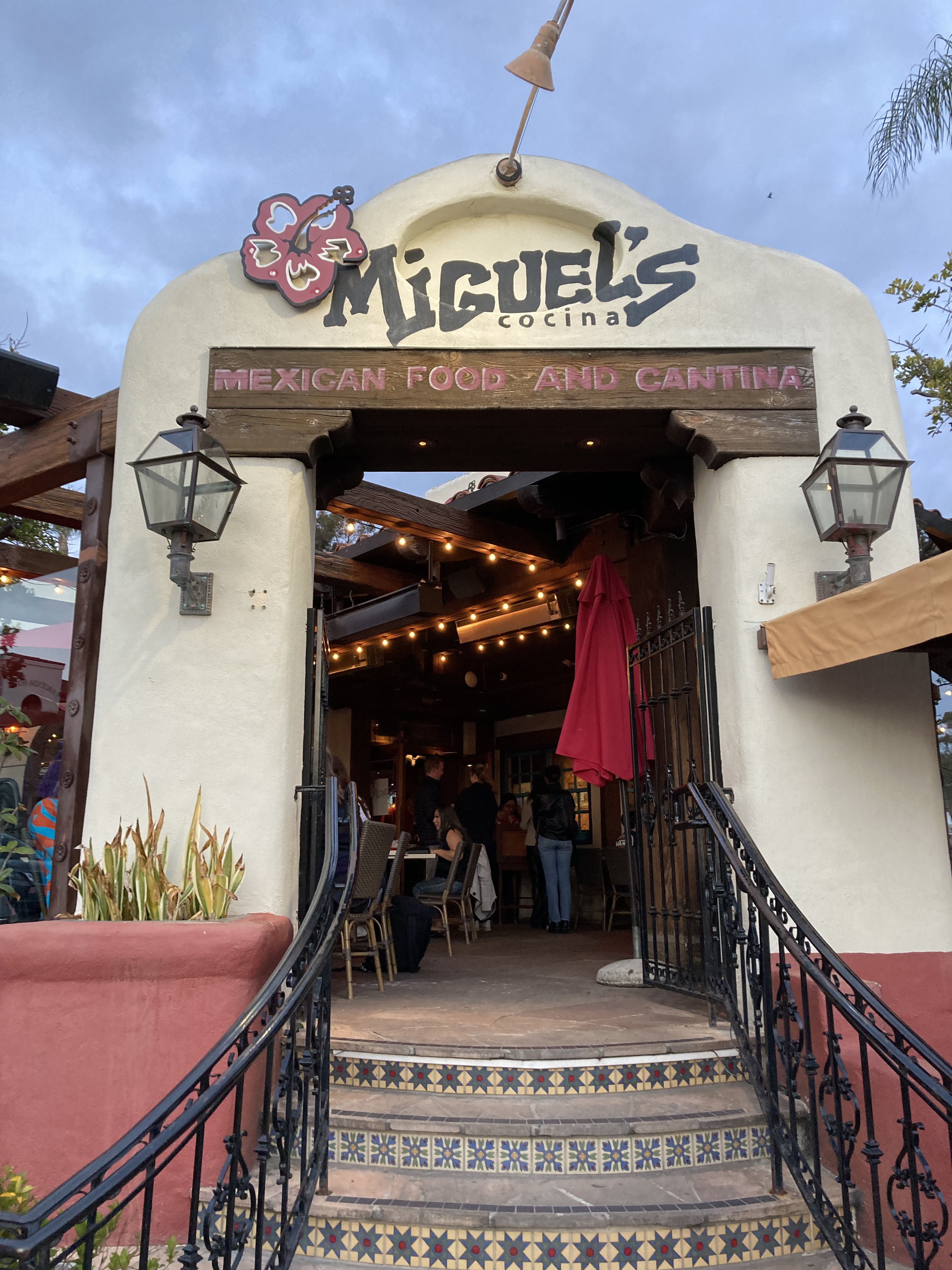
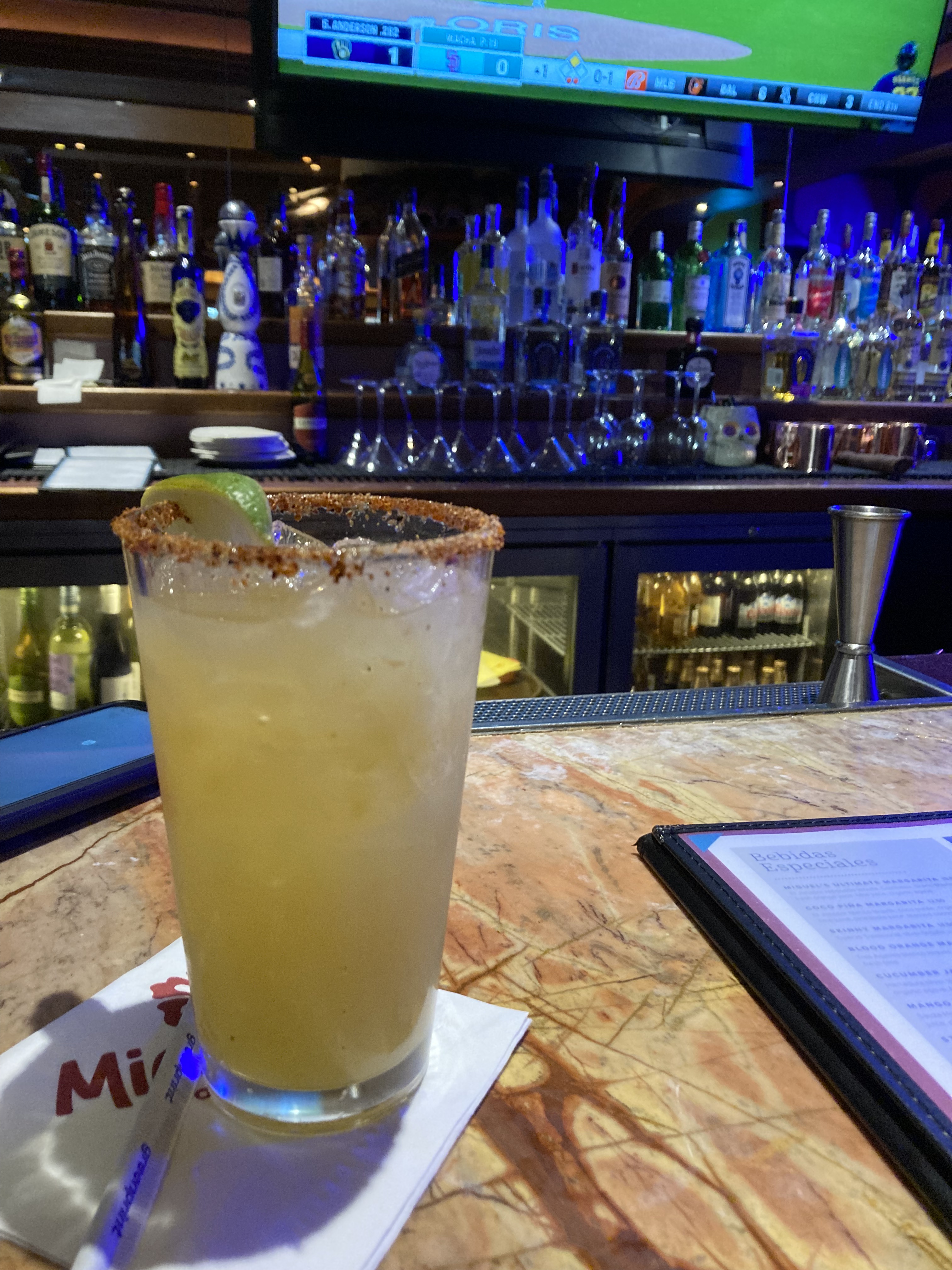
I stopped in to a Mexican restaurant called Miguel’s Cocina for some food and drink and ended up having a really nice chat with an older couple who sat next to me at the bar. They were clearly locals, friendly with the bartender. Somehow it was like the exact conversation and connection I didn’t know I needed at that moment. They brought up topics that hit home and the conversation flowed. Real talk – talk about life. I left the bar feeling uplifted.
I’ve probably said it before, but being on the road solo can create a deficit for social connection. I’m an introvert and I need more alone time than most people, but I have my limits. And when you’re on the road solo, I believe it pushes you to be more outgoing than you might otherwise be. I think people think I’m more outgoing than I am when their impression of me is formed from my time on / stories from the road. But from this dynamic, I get the types of experiences like the above.
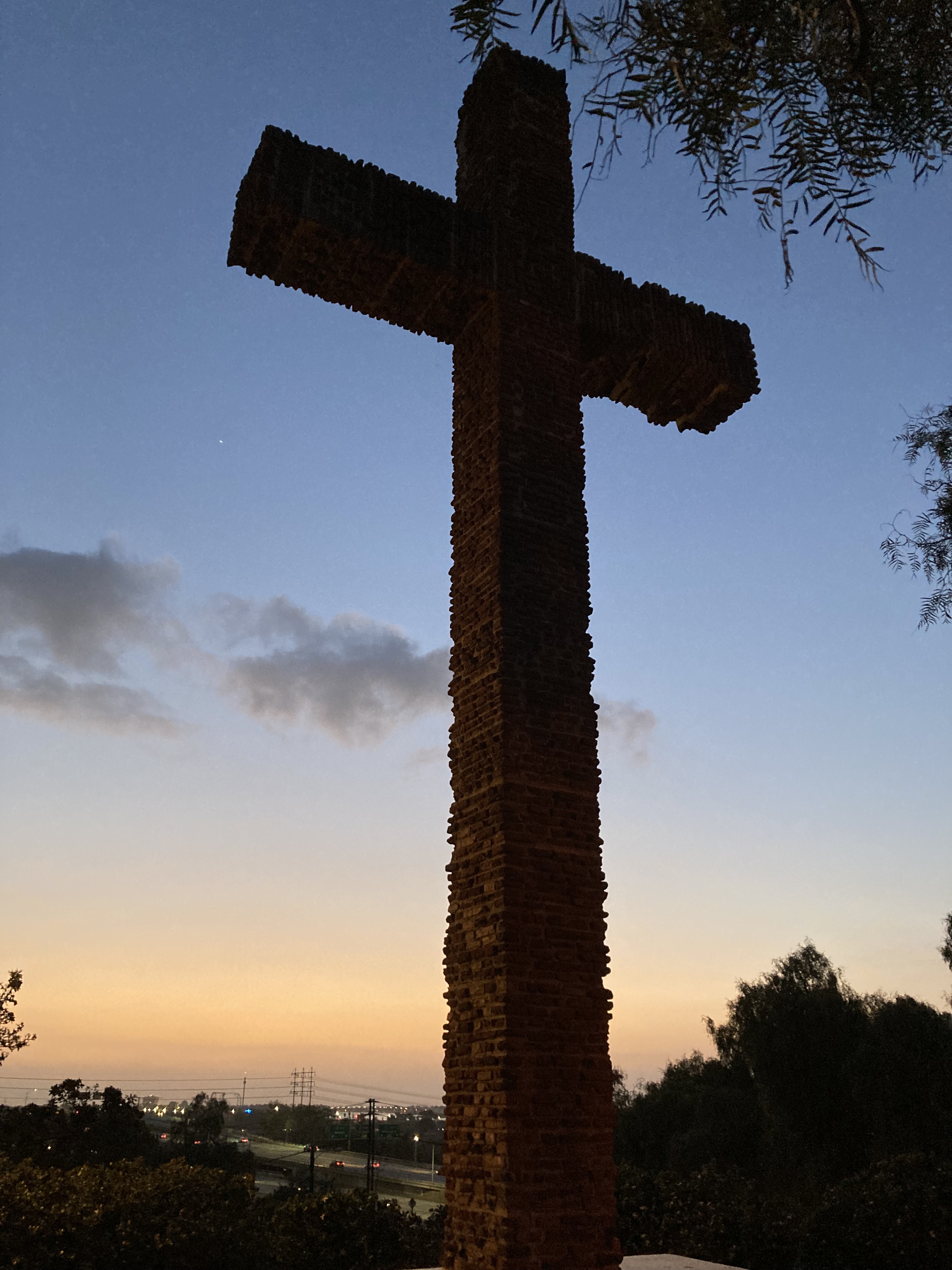
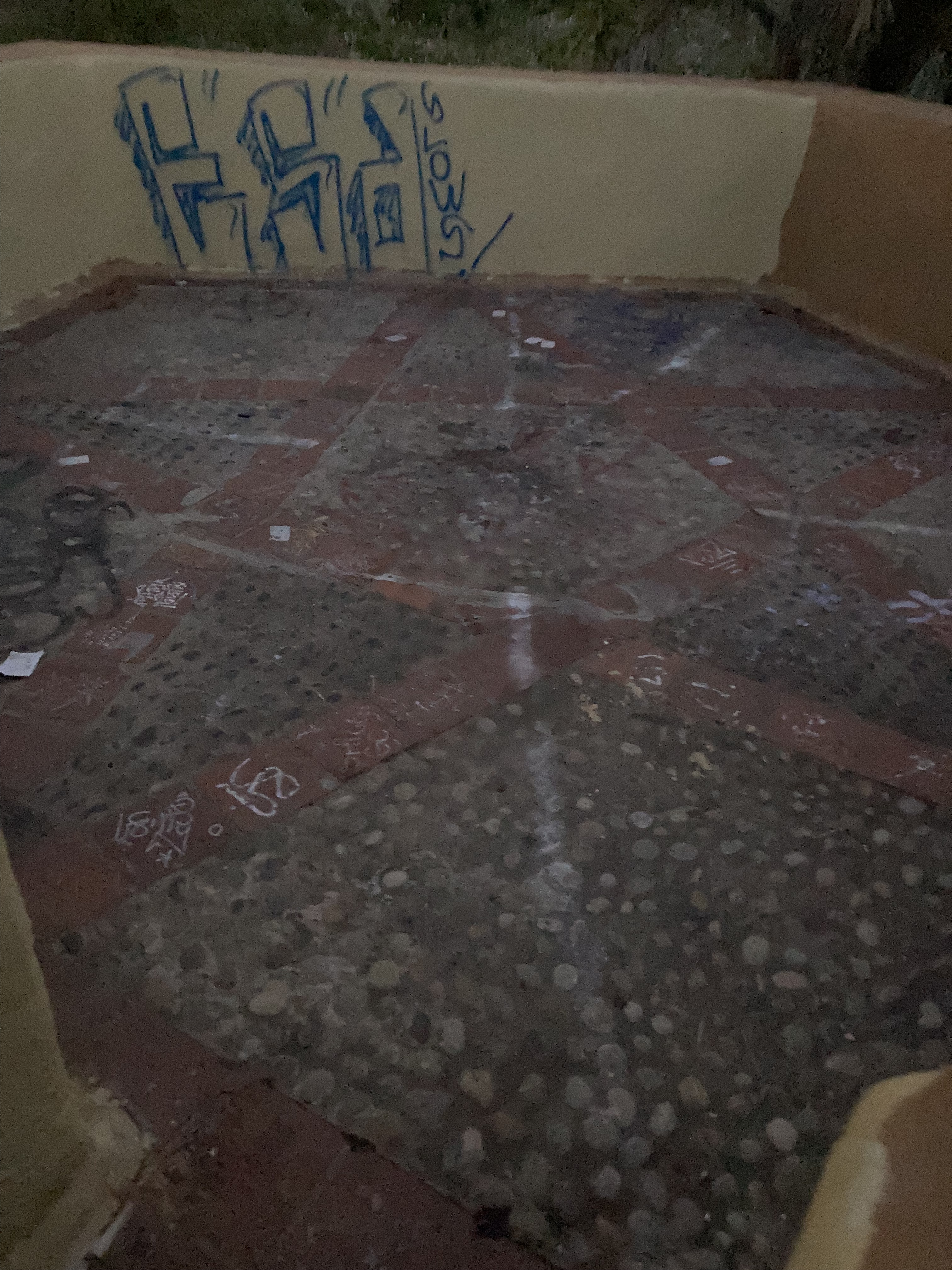
After having a margarita I wanted to kill some time before driving, and somehow I had come across something called the Witches Tower nearby. Being me, I was curious and headed out for a little walk to explore. It’s located in Presidio Park, just beyond Old Town. The park is home to the Junípero Serra Museum as well as the Junípero Serra Cross, made from fragments of the presidio’s ruins. The Witches Tower was underwhelming visually. The history of it is as a memorial and old holding cell. But the upper level has a pentagram as part of the stone floor, which puts people on edge. People claim it has been used as a place for occult practices, with candle wax drippings, among other remnants and eerie stories.
I can’t believe I missed it, but also along San Diego Avenue in Old Town is El Campo Santo Cemetery, a small historic burial ground that was established in 1849. If I were to get back to San Diego and Old Town I would also love to see Heritage County Park and its preserved Victorian homes. If you’re a guided tour person, the “tequila, tacos, and tombstones” tour by So Diego caught my attention.
Balboa Park
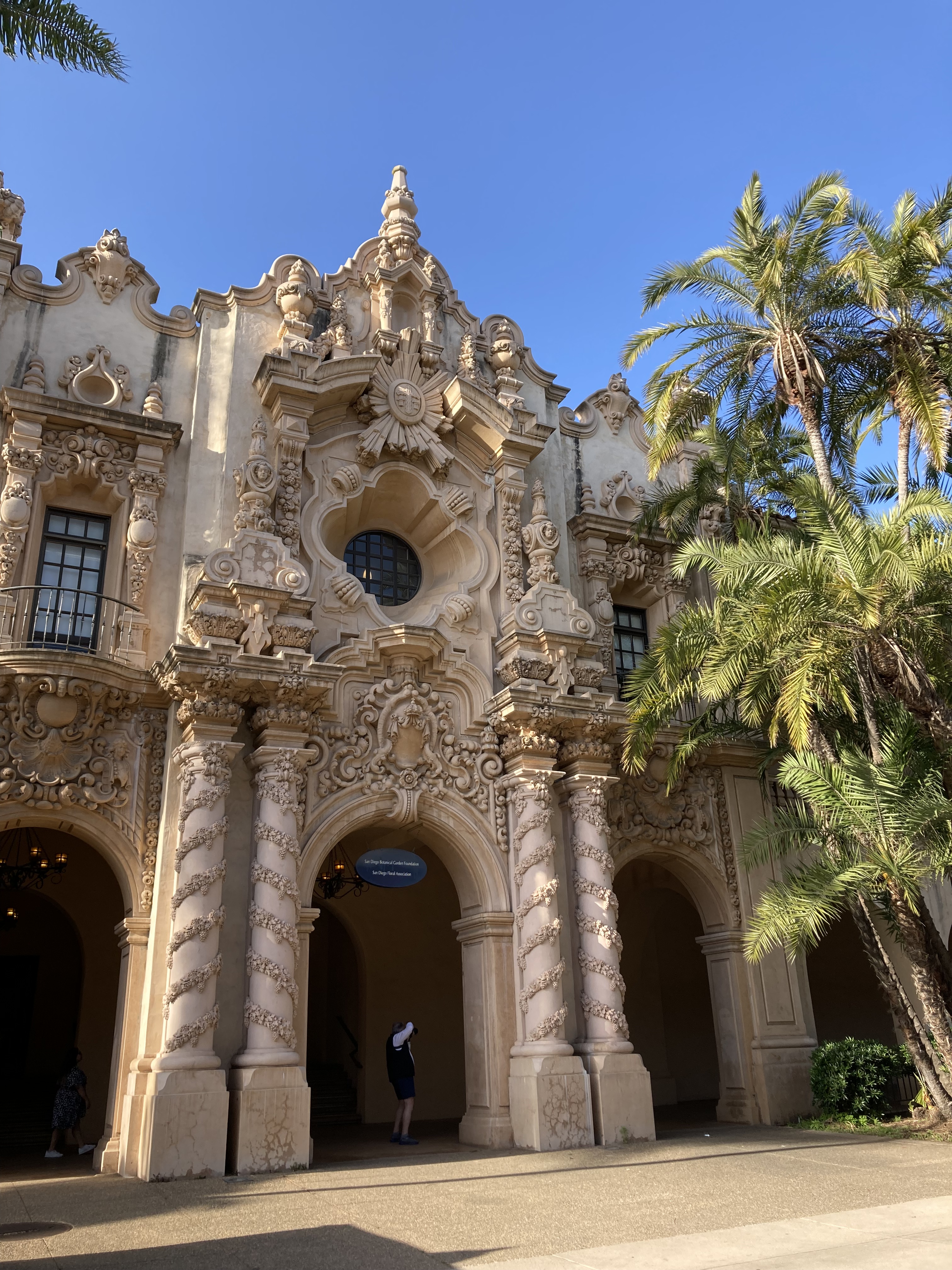
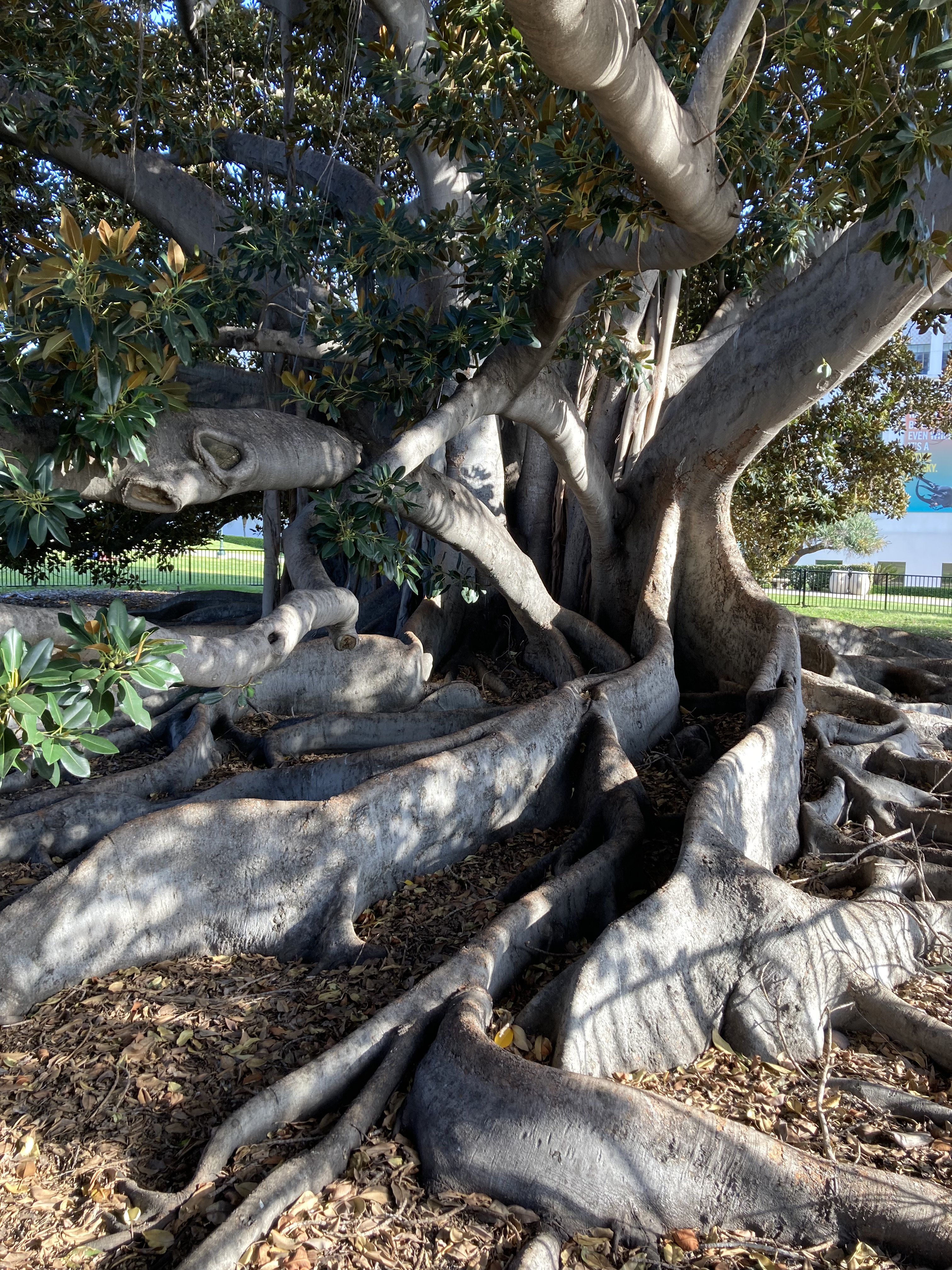
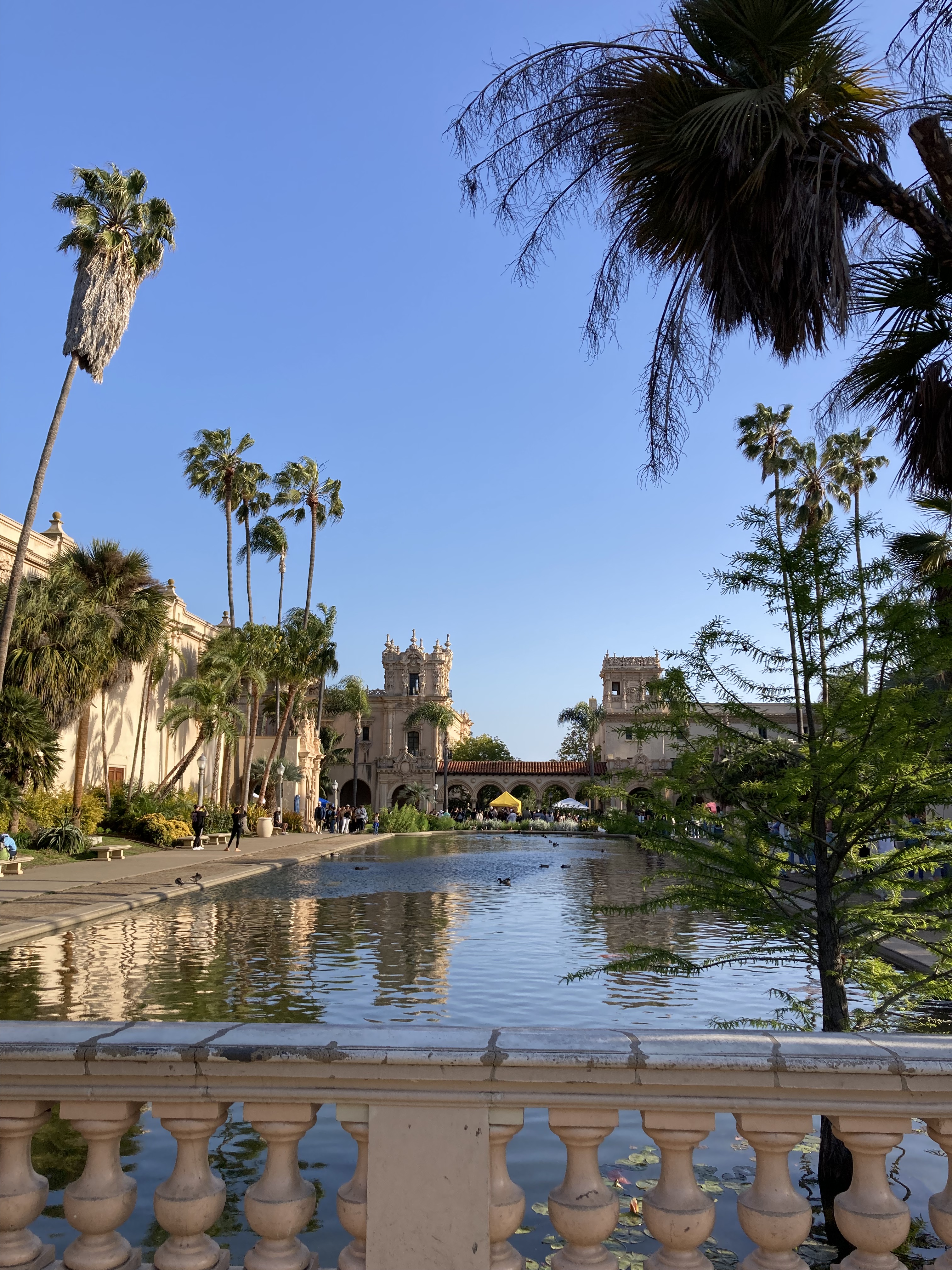
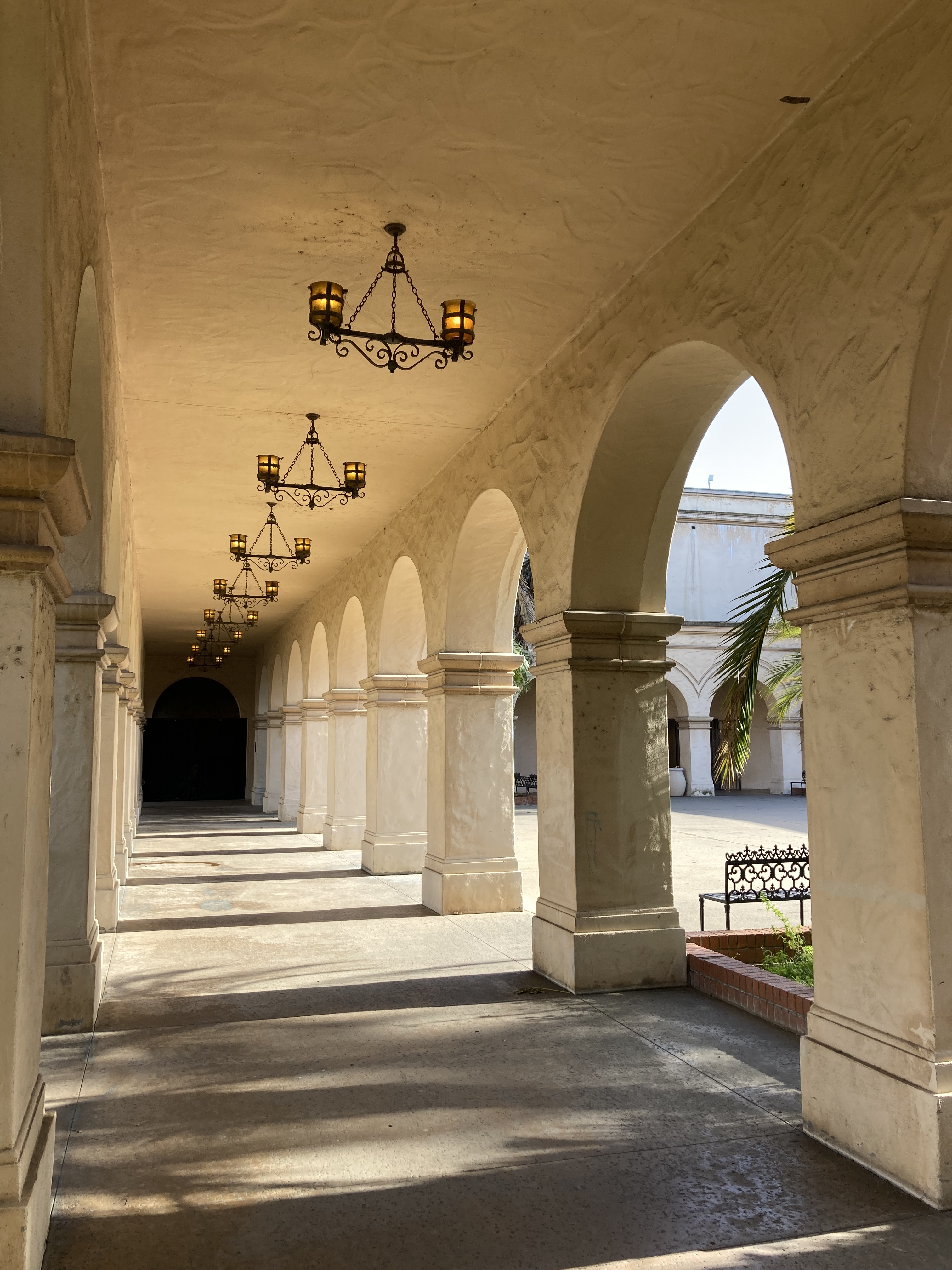
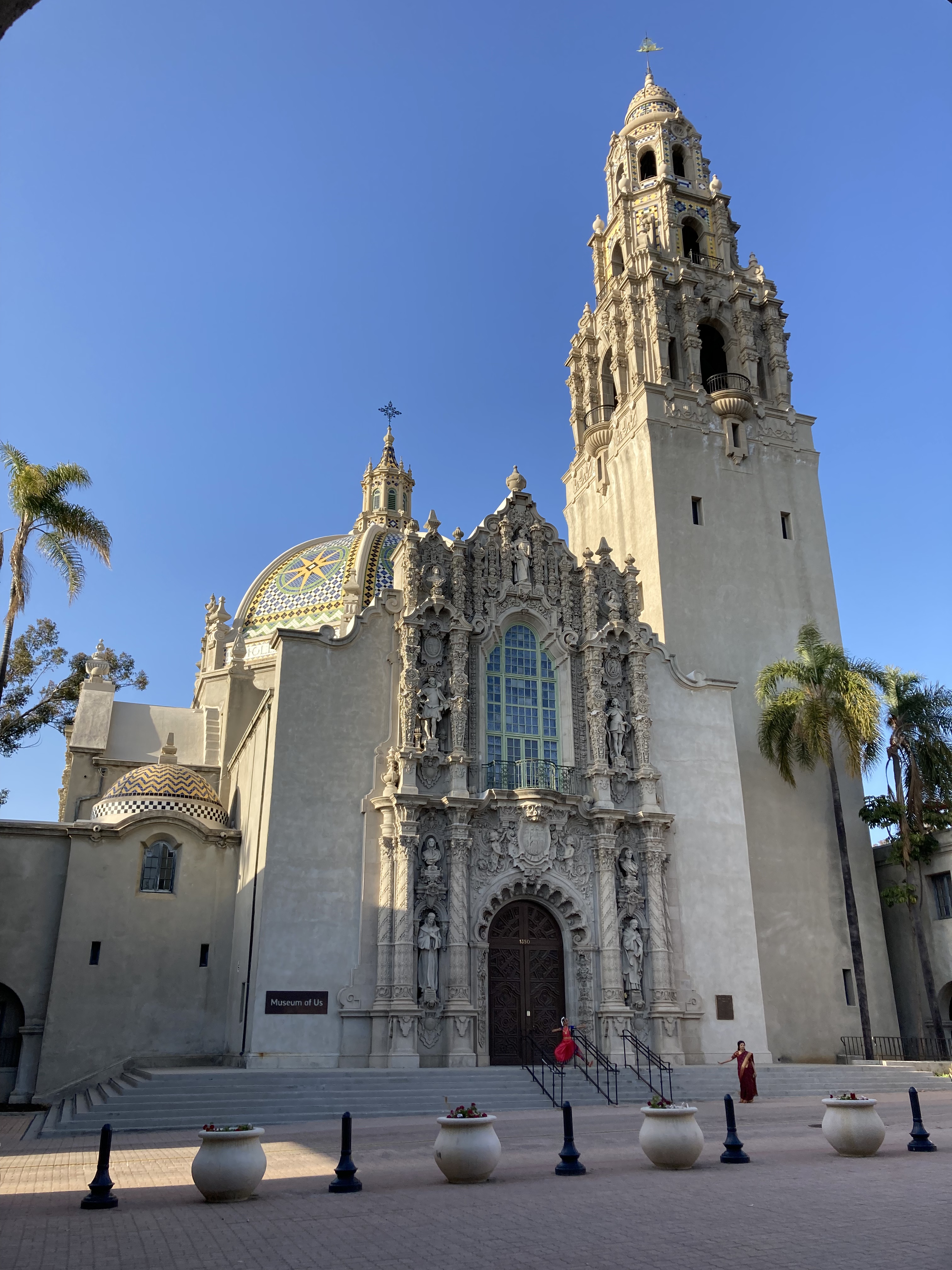
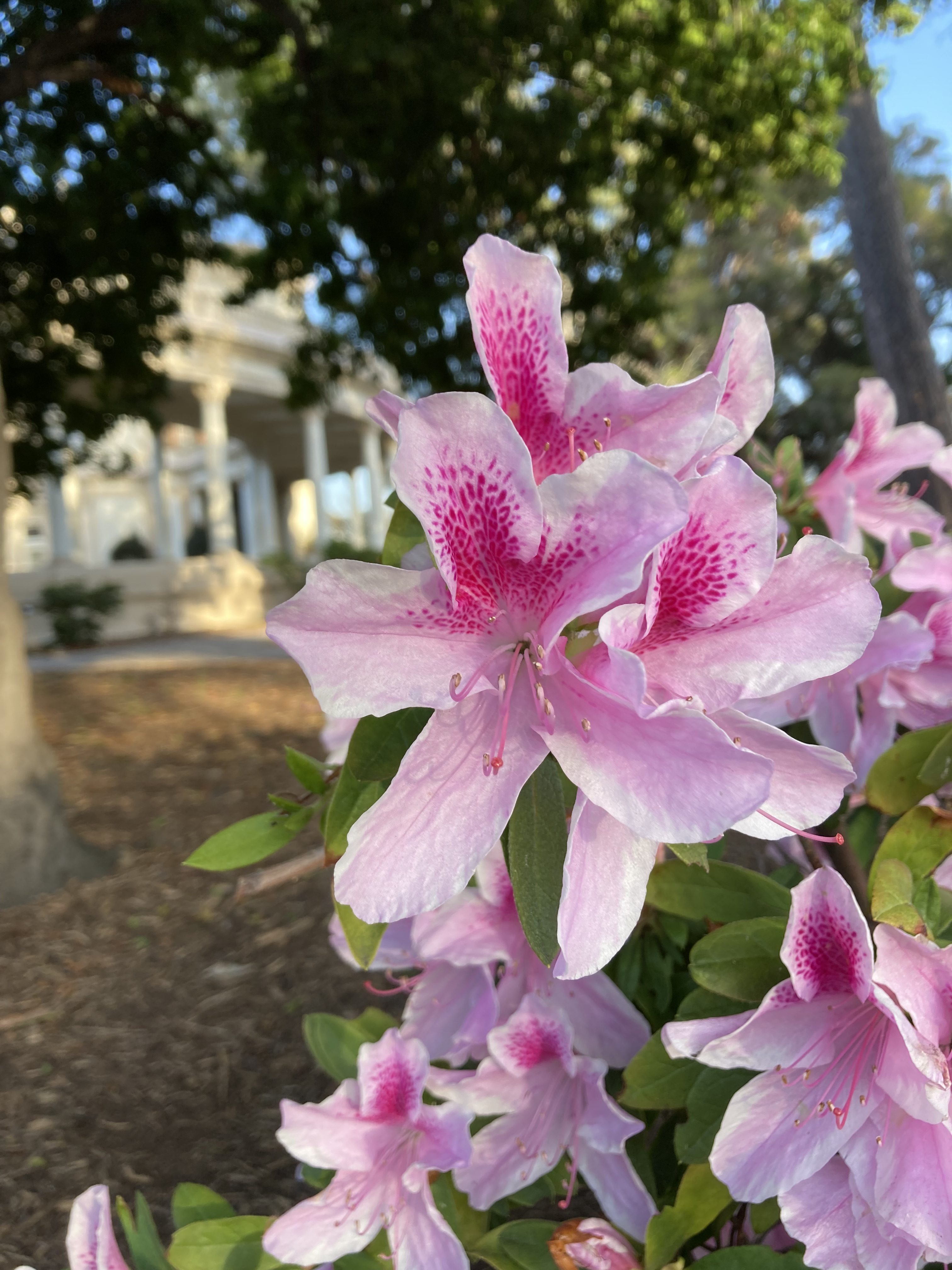
The next day I went to Balboa Park, which was breathtaking in its display of Spanish Colonial Revival architecture. It is also home to the San Diego Zoo, one of the world’s largest and most renowned zoos. It has many museums, among which are the Museum of Us (anthropology), San Diego Museum of Art, Natural History Museum, and Mineral & Gem Society. It has gardens, including a rose garden, cactus garden, and palm tree forest. There are street vendors and performers, restaurants, and it’s a popular place for wedding photos. And then there are various landmarks, like statues, a century old Fig Tree, and buildings with beautiful architecture, like the California Tower (which you can tour and climb to the top of for 360 degree views over San Diego), the California Quadrangle Historic building, Cabrillo Bridge, and the Casa Del Prado Theatre (performing arts). In my books Balboa Park is a must – the architecture is just too stunning and ornate to not bask in its atmosphere (especially on a sunny day!)
Coronado
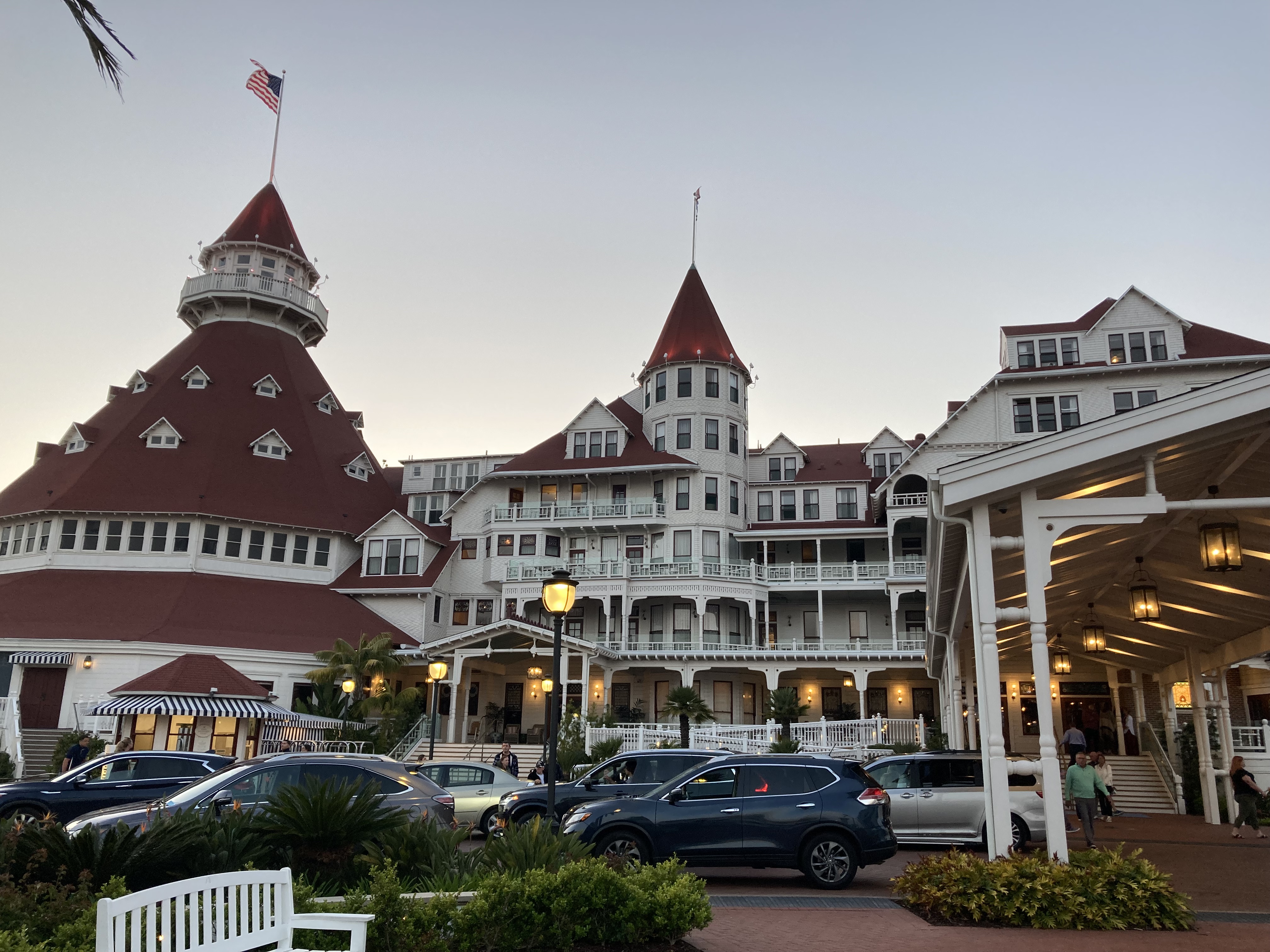
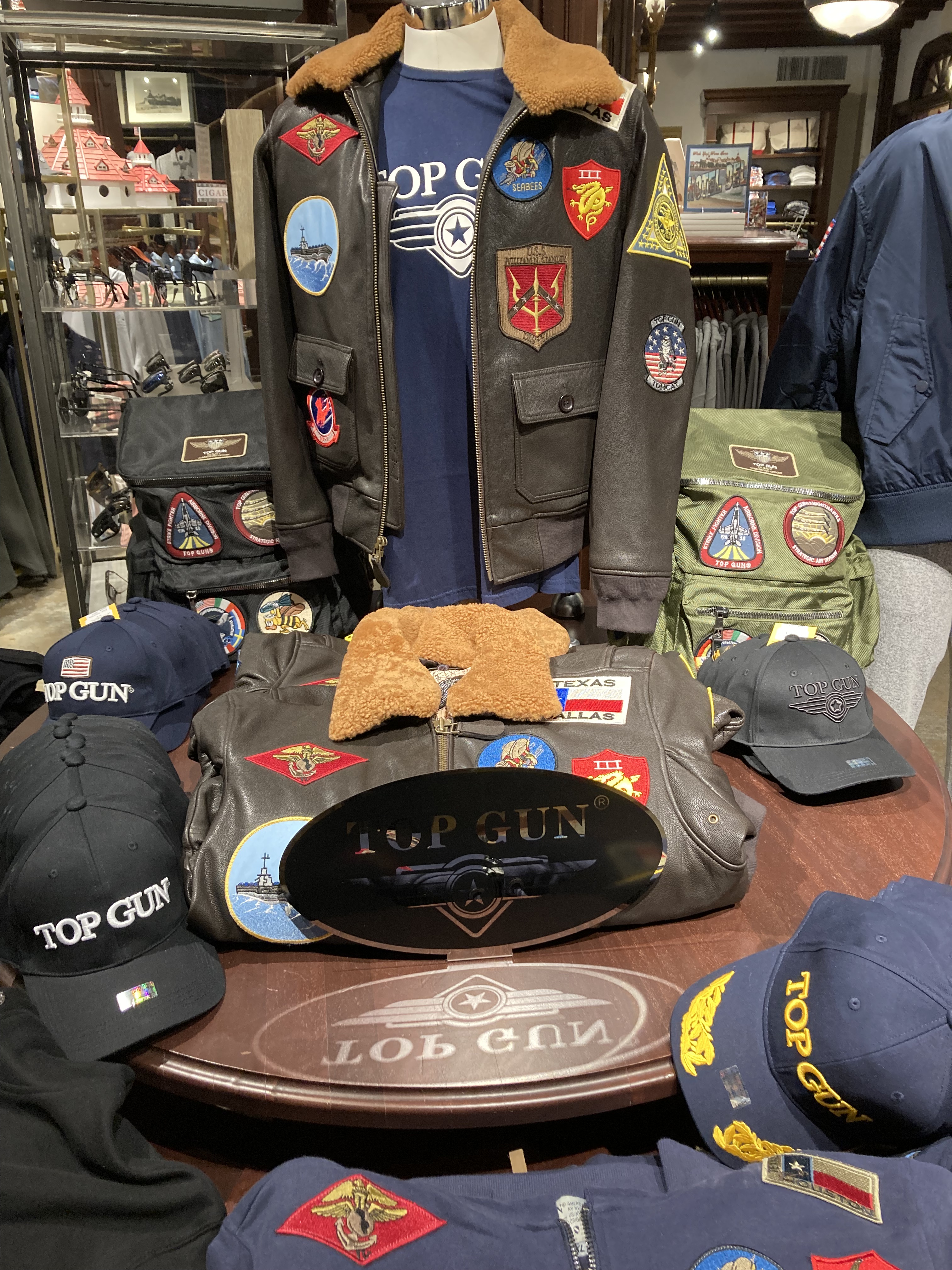
Next up: Coronado. Coronado is a resort city centred around the 1888 Victorian Hotel del Coronado and Coronado Beach, on a peninsula in San Diego Bay. On the other side of the peninsula from Hotel del Coronado is Centennial Park, which offers views of the downtown San Diego skyline. The northwest part of the peninsula is a designated Naval Air Base, which hosted filming for the 2022 Top Gun movie. To get to Coronado you can take a ferry from downtown or drive over the Coronado Bridge like I did. Additionally you might explore the shops on Orange Avenue, or take a gondola through the Coronado Keys further south along the Strand.
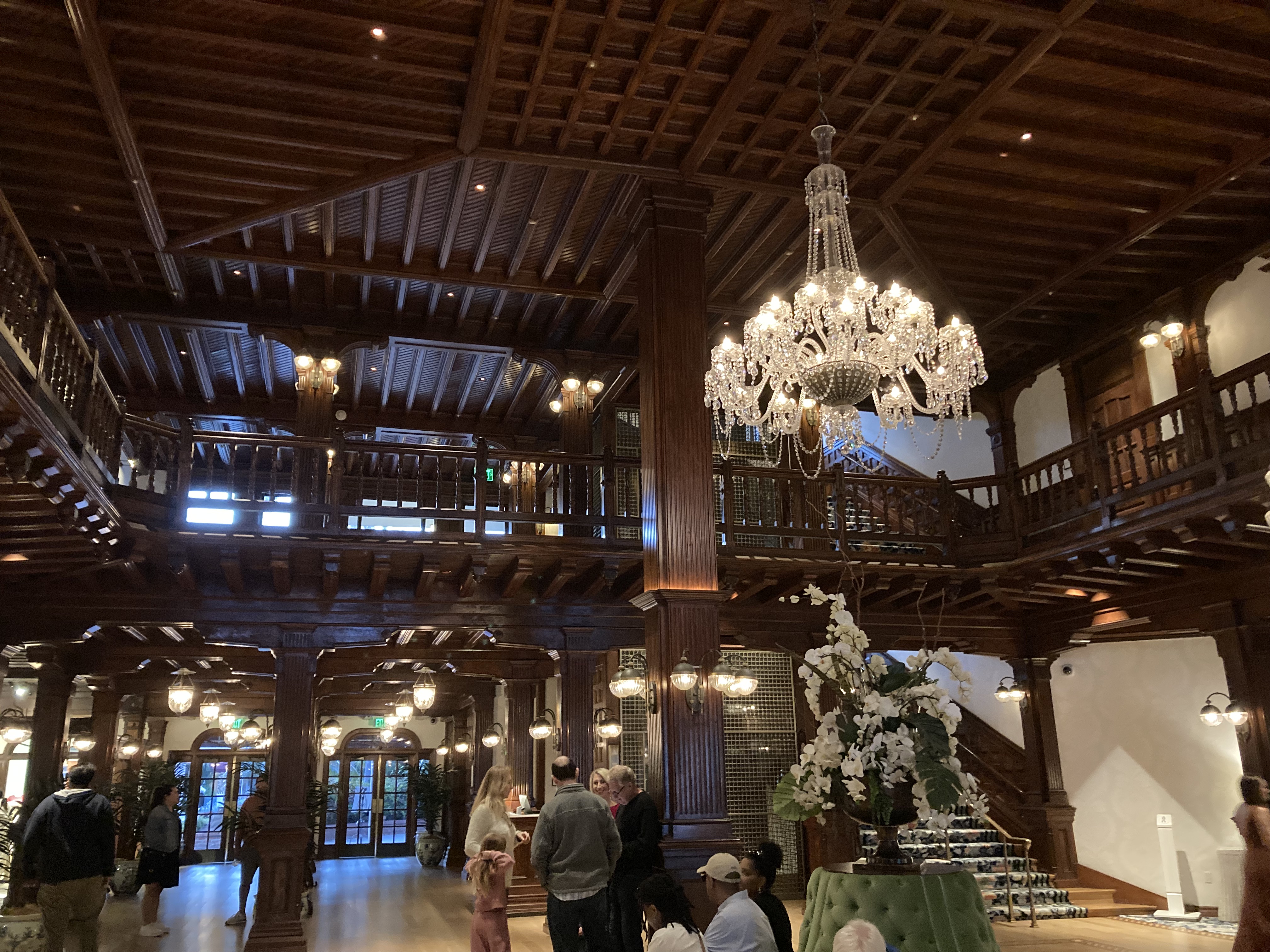
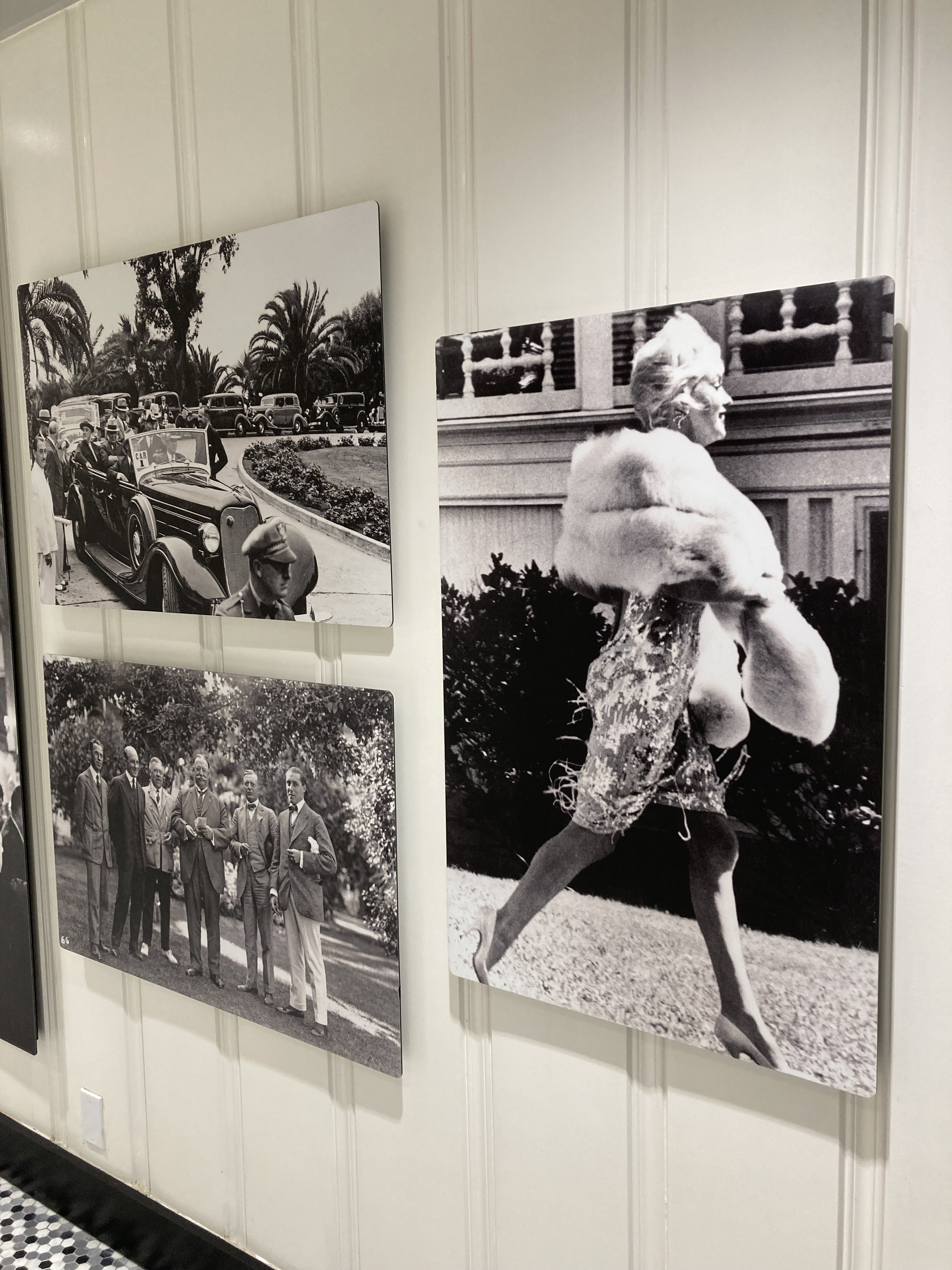
There was parking along Ocean Boulevard (parallel to Coronado Beach) and I walked along the beach toward Hotel del Coronado. The beach was quite beautiful, with its white sand and dunes, as was the hotel, which seemed to be hosting some sort of event and had string lights decorating the palms. I ventured inside the hotel to see the lobby and some of the shops on the lower level. There were photos on the walls showing past visitors, including Marilyn Monroe (the film Some Like It Hot from 1958 was filmed at the hotel) and various presidents.
Fun fact: author of the Wizard of Oz, L. Frank Baum, used to stay here. The hotel is also thought to be haunted.
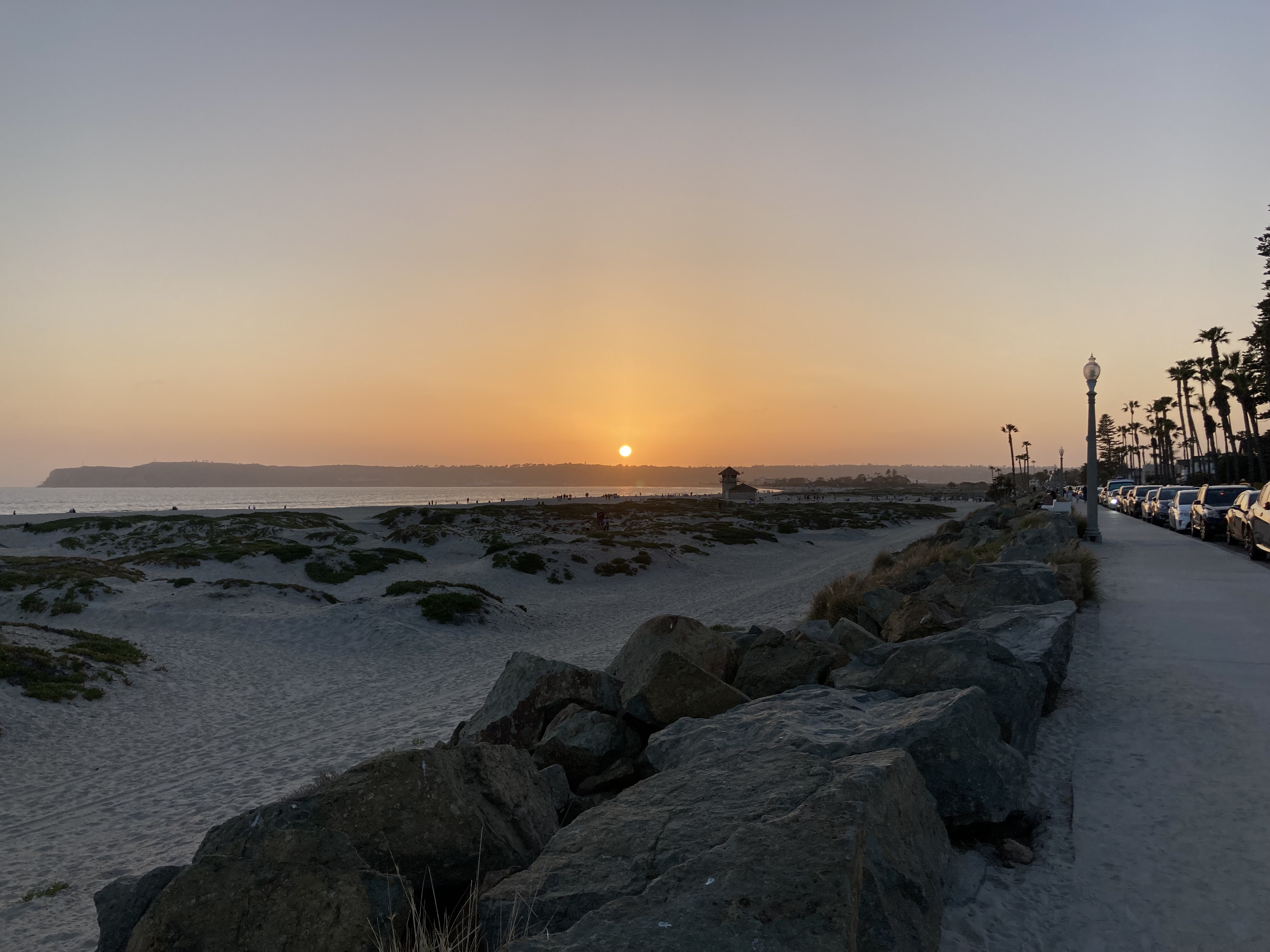
Downtown
My final area of exploration in San Diego was, of course, downtown. I first stopped by Torrey Pines to say goodbye to the ocean. It had felt like I’d been on the coast for so long, and it felt weird to be leaving it. I love the ocean, and I’d grown attached. It was a bit melancholic.
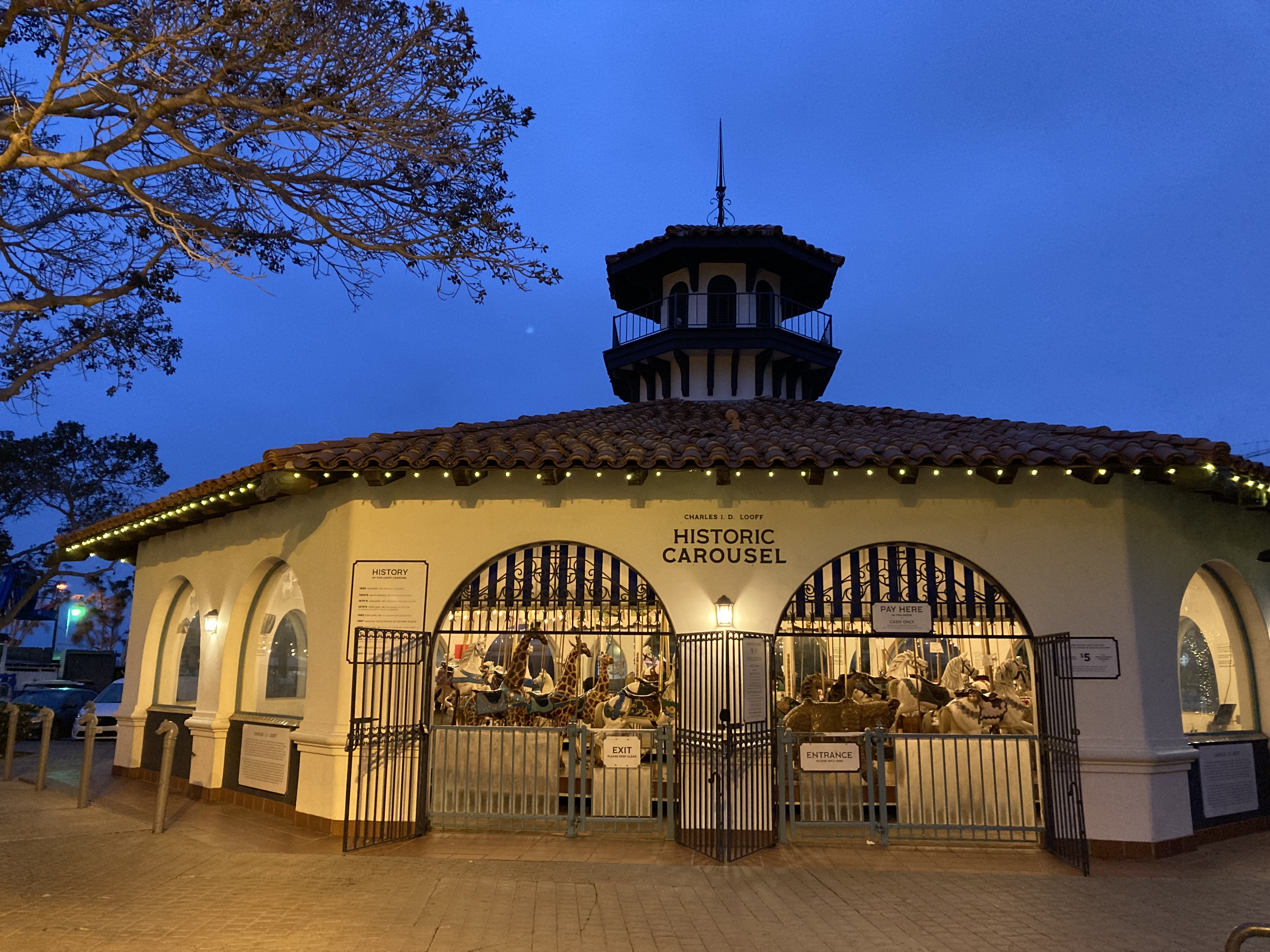
Once I pulled myself away from the waves I headed to Seaport Village. It’s a space on San Diego’s waterfront with plenty of shops and eateries, like San Diego Surf Co., a historic carousel, and of course a Zoltar.
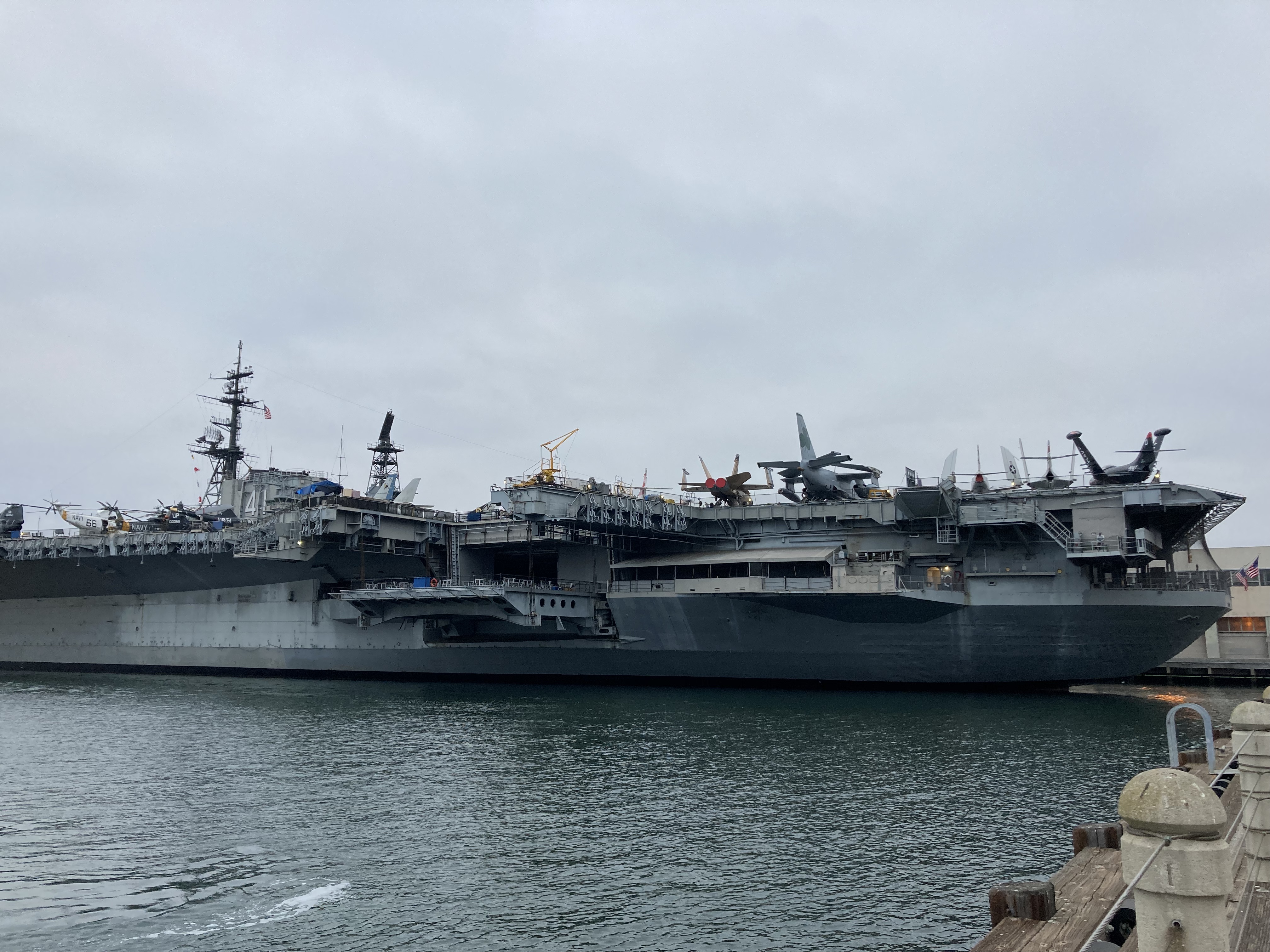
Nearby is the Star of India, a historic sailing ship from 1863 and the oldest active sailing ship in the world.
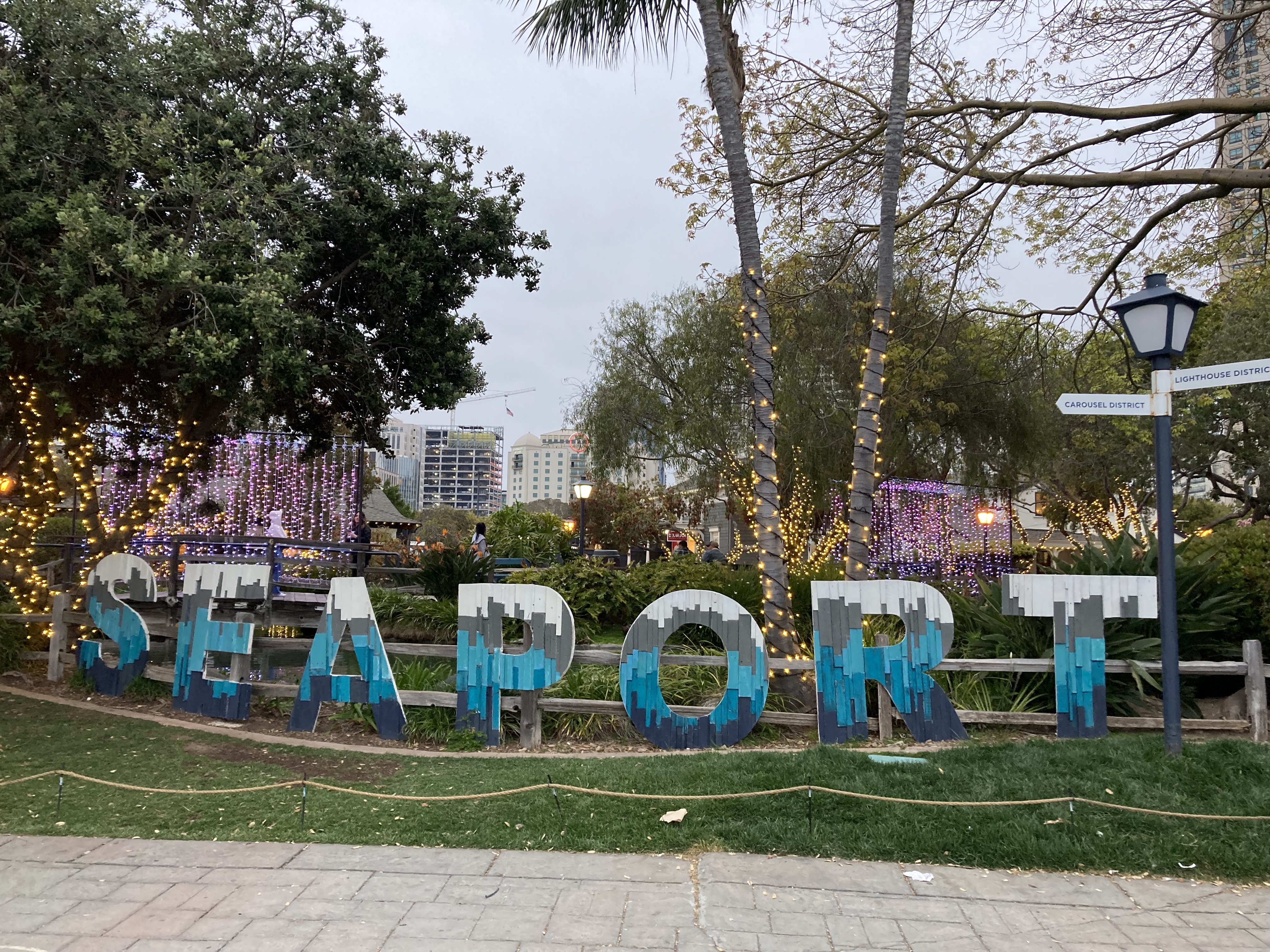
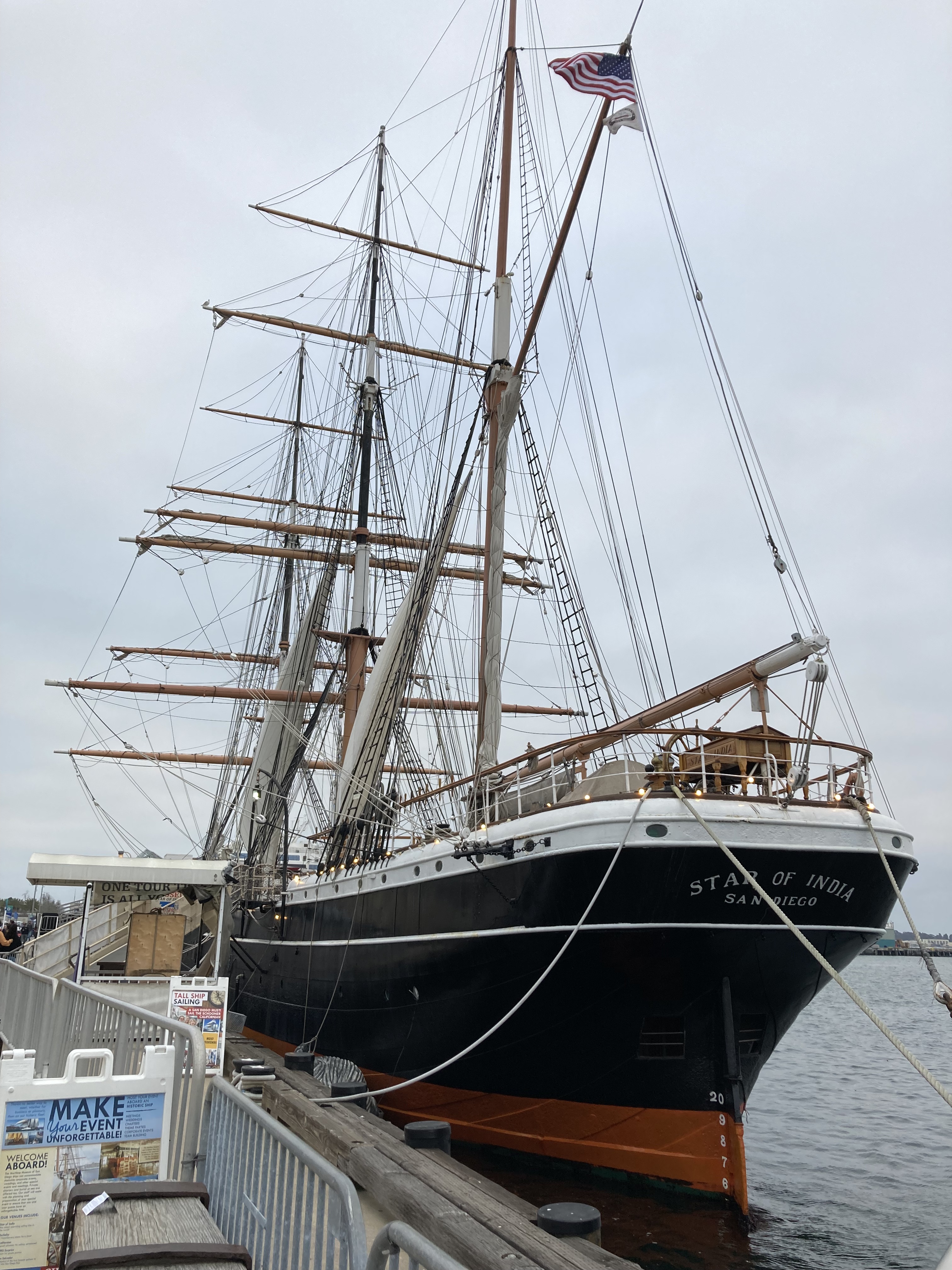
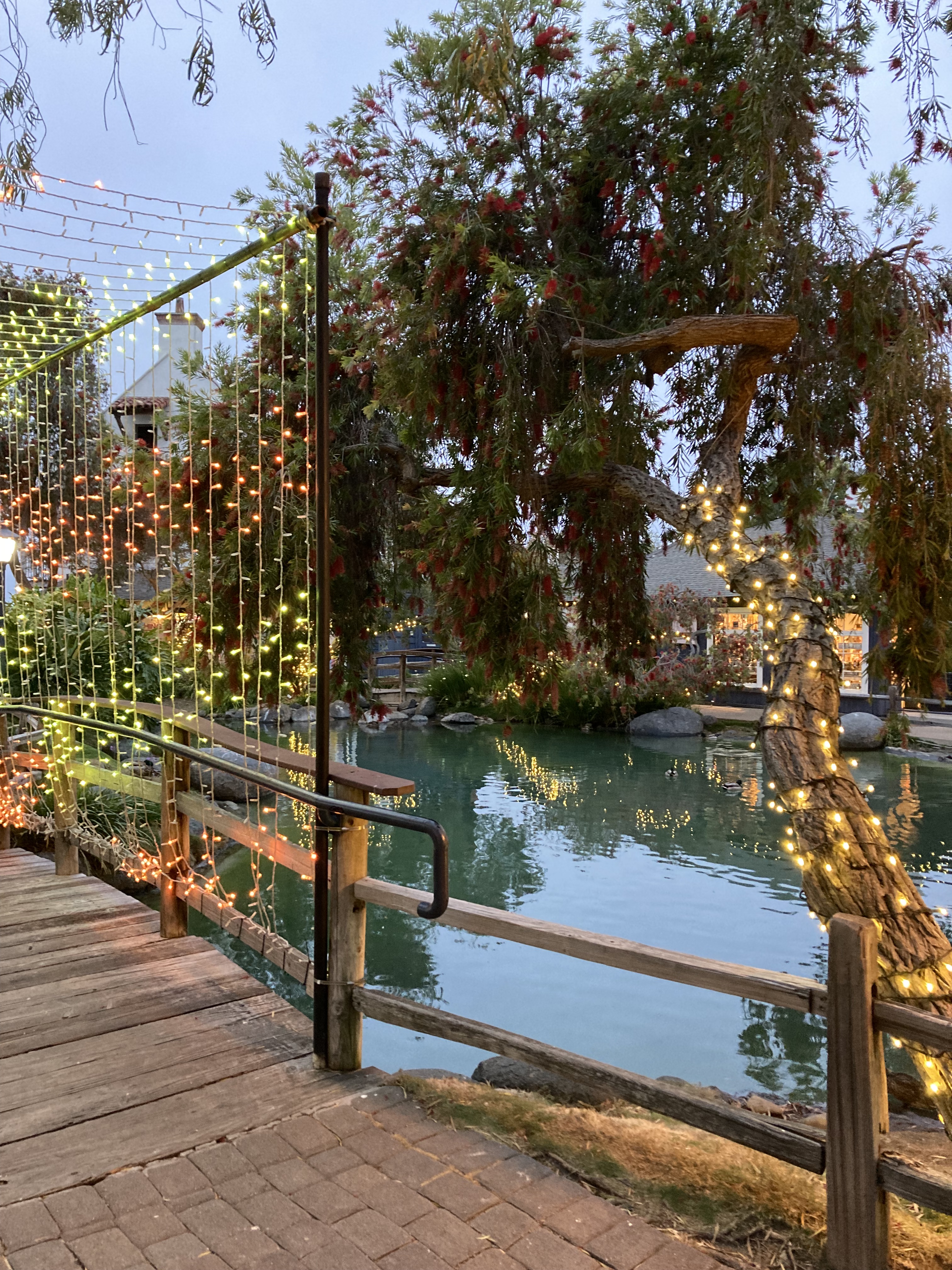
Sometimes you don’t get as much done in a day as you’d like and I ran out of daylight, so I spent a night in Chula Vista, a city halfway between downtown San Diego and the Mexican border, a 15 minute drive. I remember thinking how this was the closest to Mexico I’d ever been. I found residential street parking on iOverlander, though the spot had me close to houses and a municipal park, which I wasn’t comfortable with – I felt like I stuck out. So I drove a little further down on the same road to where there were some other cars and I wasn’t in front of homes – it was on a hill, but it felt better.
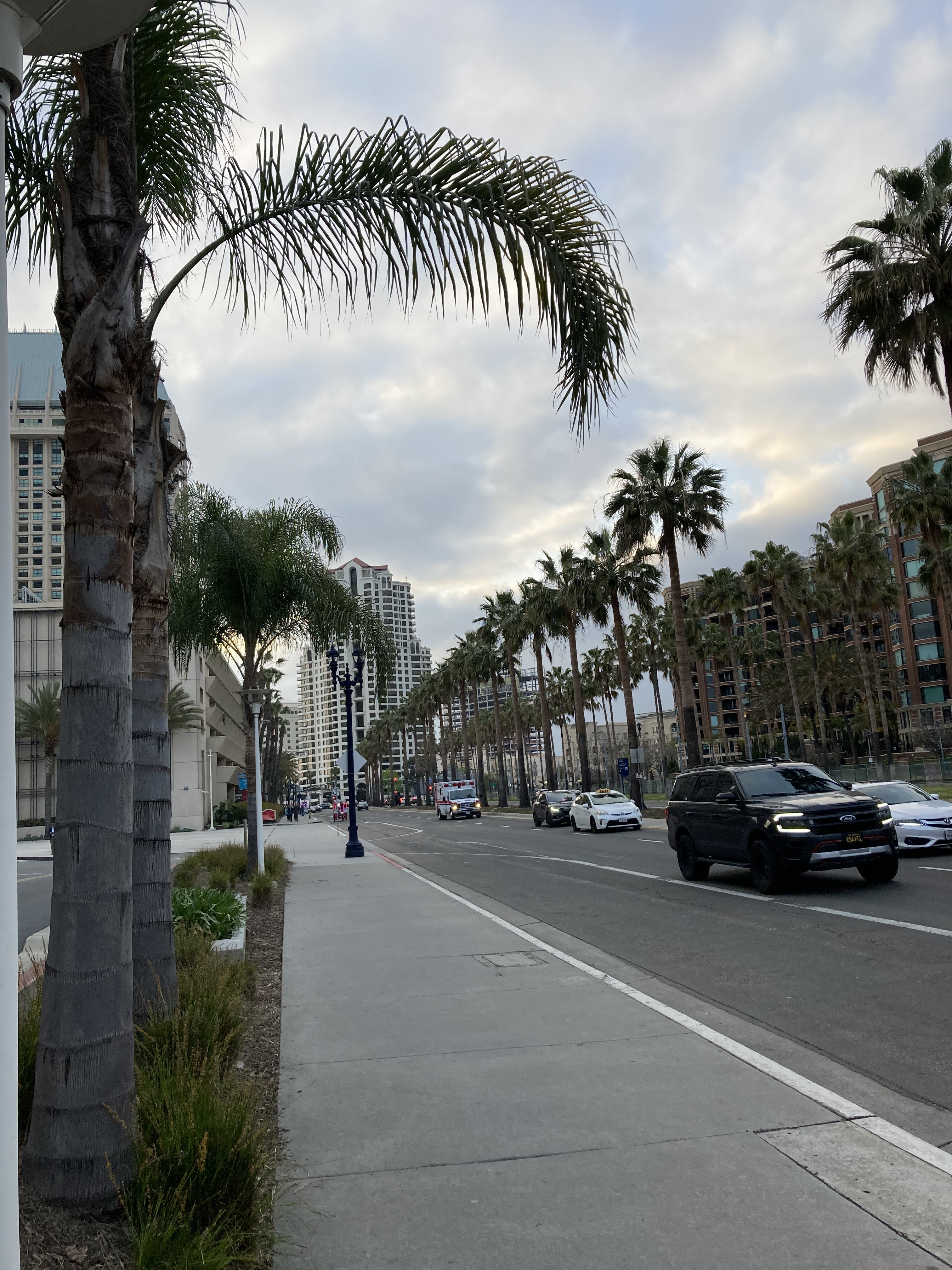
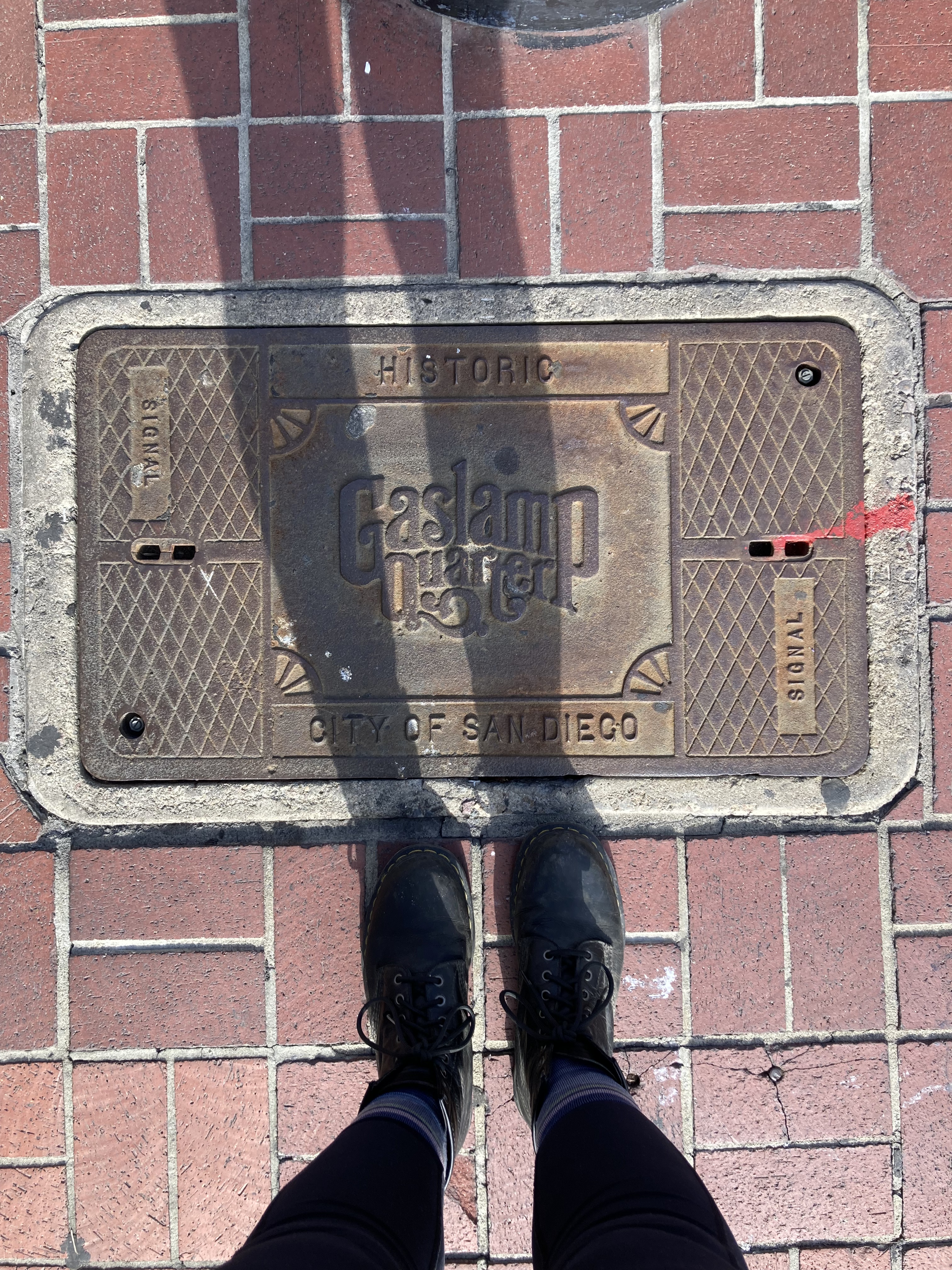
My very last exploration of San Diego was the Gaslamp Quarter – the “historic heart” of the city (and its nightlife scene). I parked along the waterfront and walked by Petco Park, high rises, and the busy palm tree lined streets, which contrasted the victorian era brick buildings of the quarter.
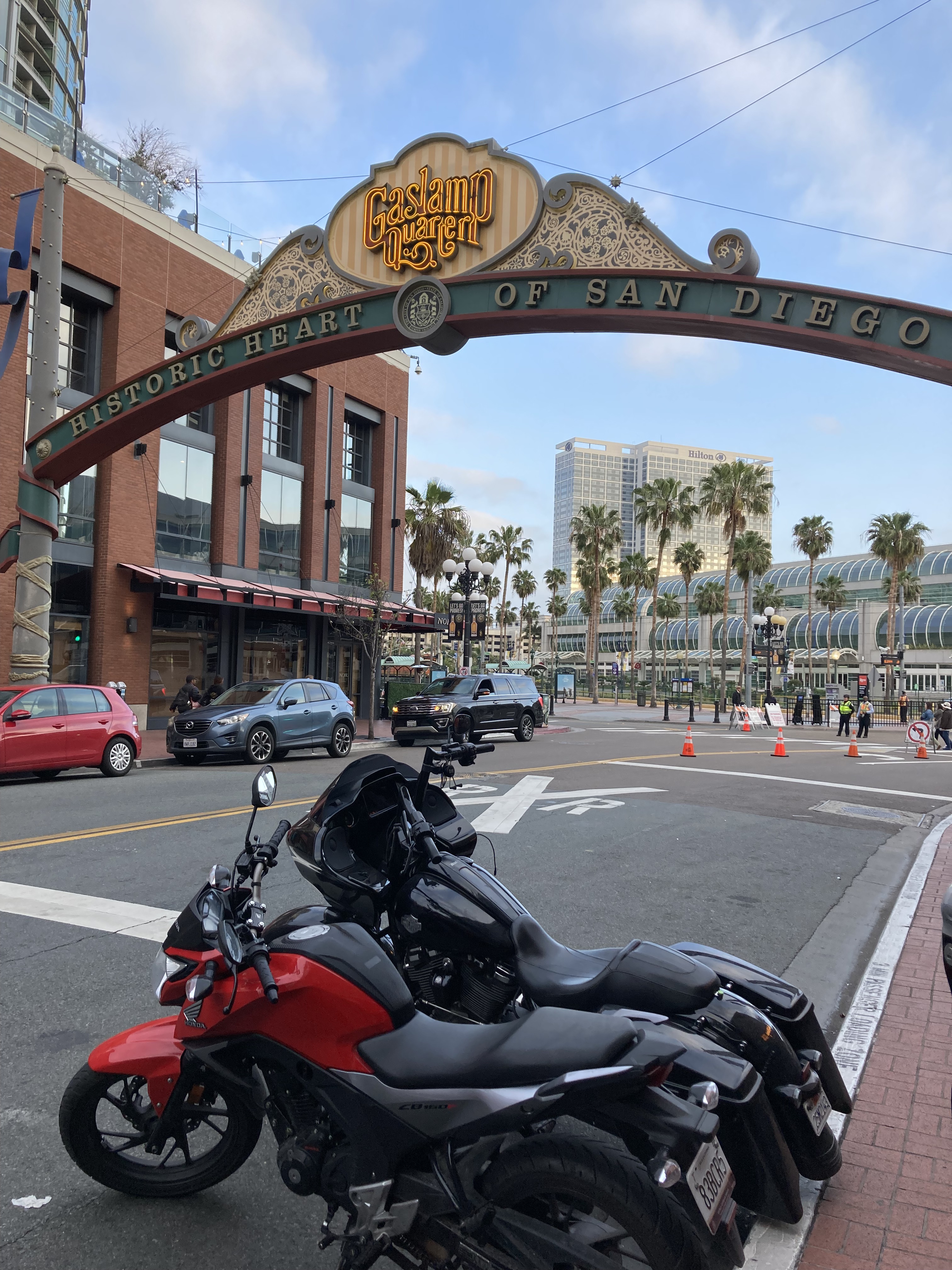
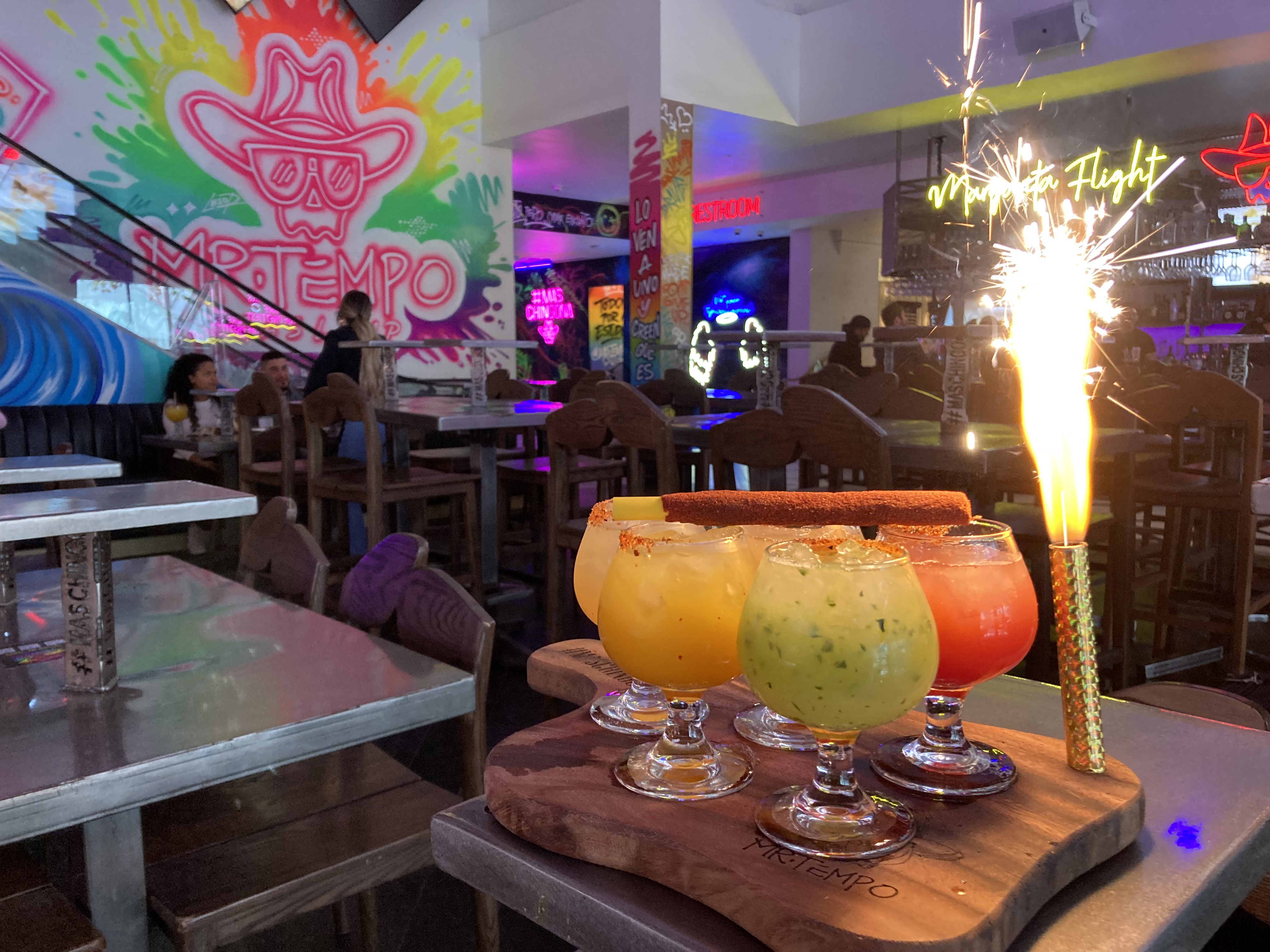
I stumbled upon this place that had margarita flights, and as someone who always gets beer flights, I was intrigued. It was amazing and a nice way to celebrate my conclusion in San Diego and on the California coast before leaving for the interior.
Next Time
Some places in San Diego that I made note of but did not visit:
- Pacific Beach (neighbourhood north of Mission Bay with expansive sandy beaches).
- Sunset Cliffs Natural Park (acclaimed sunset viewing along sandstone cliffs on the Pacific Ocean and coast of Point Loma peninsula).
- Mission Basilica San Diego de Alcalá (first mission in California).
- Gaslamp Museum at the Davis-Horton House (oldest standing residence in the Gaslamp Quarter).
- Los Peñasquitos Canyon Preserve (hiking, inland from Torrey Pines).
- Ocean Beach (south of Mission Bay, north of Sunset Cliffs; a bohemian neighbourhood, Ocean Beach & Pier, Newport Avenue with brewpubs, taquerias, shops).
- Shelter Island (a little strip of land off Point Loma at the north end of San Diego Bay; home to Bali Hai – a tiki-inspired restaurant).
- Spruce Street Suspension Bridge.
- SeaWorld / Theme Park.
- Breweries.
Misc
Other
Safety
In my last post, on California’s northern and central coast, I broke down the crime rates that I referenced heading into new areas and cities. I used a resource that provided information by state, county, and city, including population, population density, reported crimes, rate of crimes per 1,000 people, and broke the crimes down into violent and property crimes. Rate per 1,000 people for violent and property crimes were the two numbers I focused on, and as I travelled and got a feel for places and cross-referenced to the numbers, I started being able to gauge what the numbers meant – aka how a place felt.
For example, a violent crime rate of 3 or 4 or less did not feel too worrisome. But I would see big cities with violent crime rates around 8 or 9, and that or higher meant that I would be more aware of my surroundings. With property crime rates anything in the low 20s or less felt pretty good. The 30s felt like a middle ground where I would want to be more aware. With big cities I often saw property crime rates around 50 (per 1,000), which felt high, and anything above that I might want to steer clear.
Of course, in big cities the safety and feel of a place can vary widely based on neighbourhood, even down to the block.
The above resource is from 2014 and rates have probably shifted, though I felt it was a good enough source to give me an idea, and I found it most user friendly.
Here is a roundup of crime rates for some of the cities I visited on the SoCal coast:
| Location | Violent crimes per 1,000 people | Property crimes per 1,000 people |
| Santa Barbara | 3.32 | 26.28 |
| Ventura (San Buenaventura) | 2.53 | 35.4 |
| Malibu | 1.94 | 24.16 |
| Calabasas | 0.78 | 10.36 |
| Beverly Hills | 3.19 | 30.79 |
| West Hollywood | 7.52 | 37.32 |
| Los Angeles | 4.91 | 21.28 |
| Santa Monica | 3.63 | 32.48 |
| Palos Verdes Estates | 0.37 | 8.85 |
| Long Beach | 4.89 | 26.40 |
| Huntington Beach | 1.96 | 21.28 |
| Carlsbad | 1.82 | 15.41 |
| San Diego | 3.81 | 19.59 |
Obviously with a big city like LA I would take the above numbers with a grain of salt and look more to neighbourhoods rather than make a blanket statement about the entire area. See the end of the LA section for neighbourhoods with higher crime around LA. There also used to be a resource called the LAPD Crime Map – but it seems recently public access to it has been revoked.
Zoltars
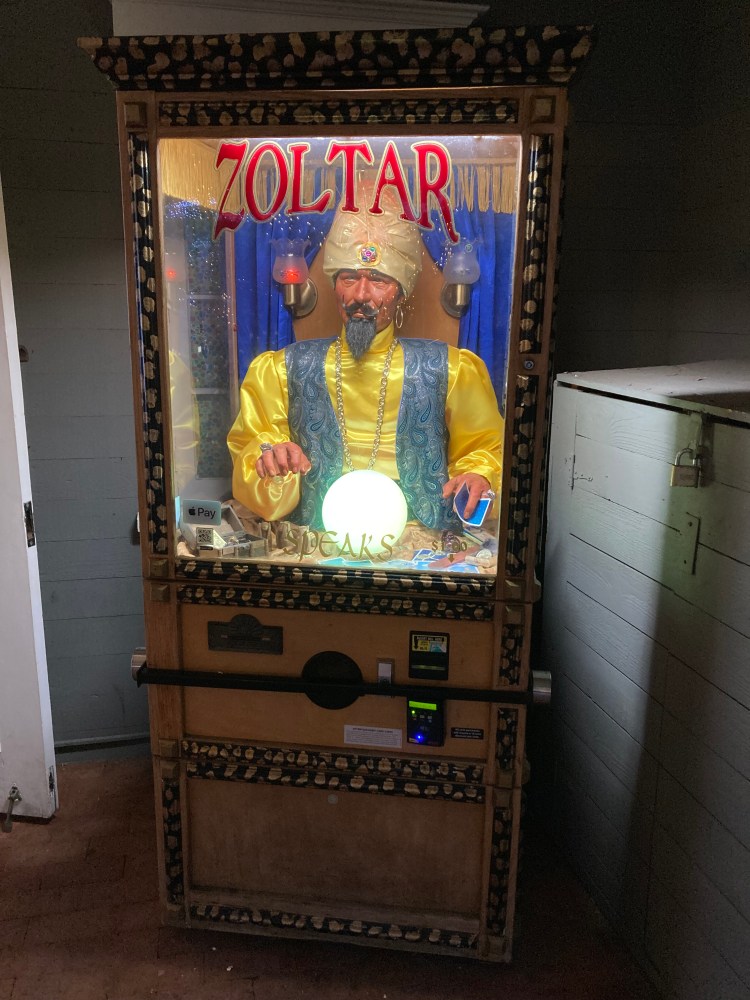
Shout out to Zoltar, who I kept coming across on the Cali coast. It had become a thing where I said to myself that if I ever came across a Zoltar, I would get a fortune. Here are all of the Zoltar locations that I encountered:
- Pier 39, San Francisco
- Cannery Row, Monterey Bay (+ Elvis)
- Stearns Wharf, Santa Barbara
- Ventura
- Santa Monica Pier
- Shoreline Village, Long Beach
- Seaport Village, San Diego
- (Also one in Banff, AB!)
Best Sunsets
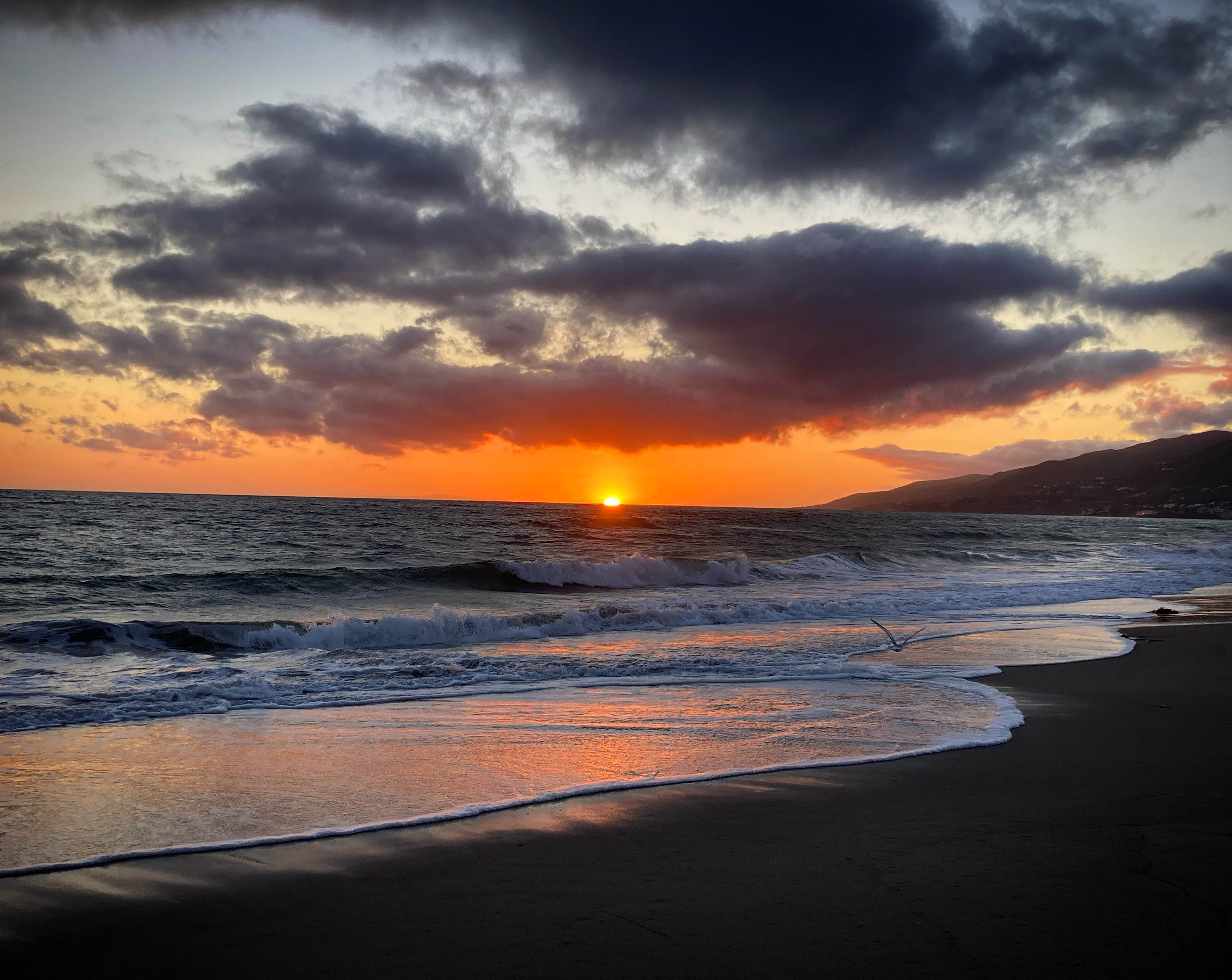
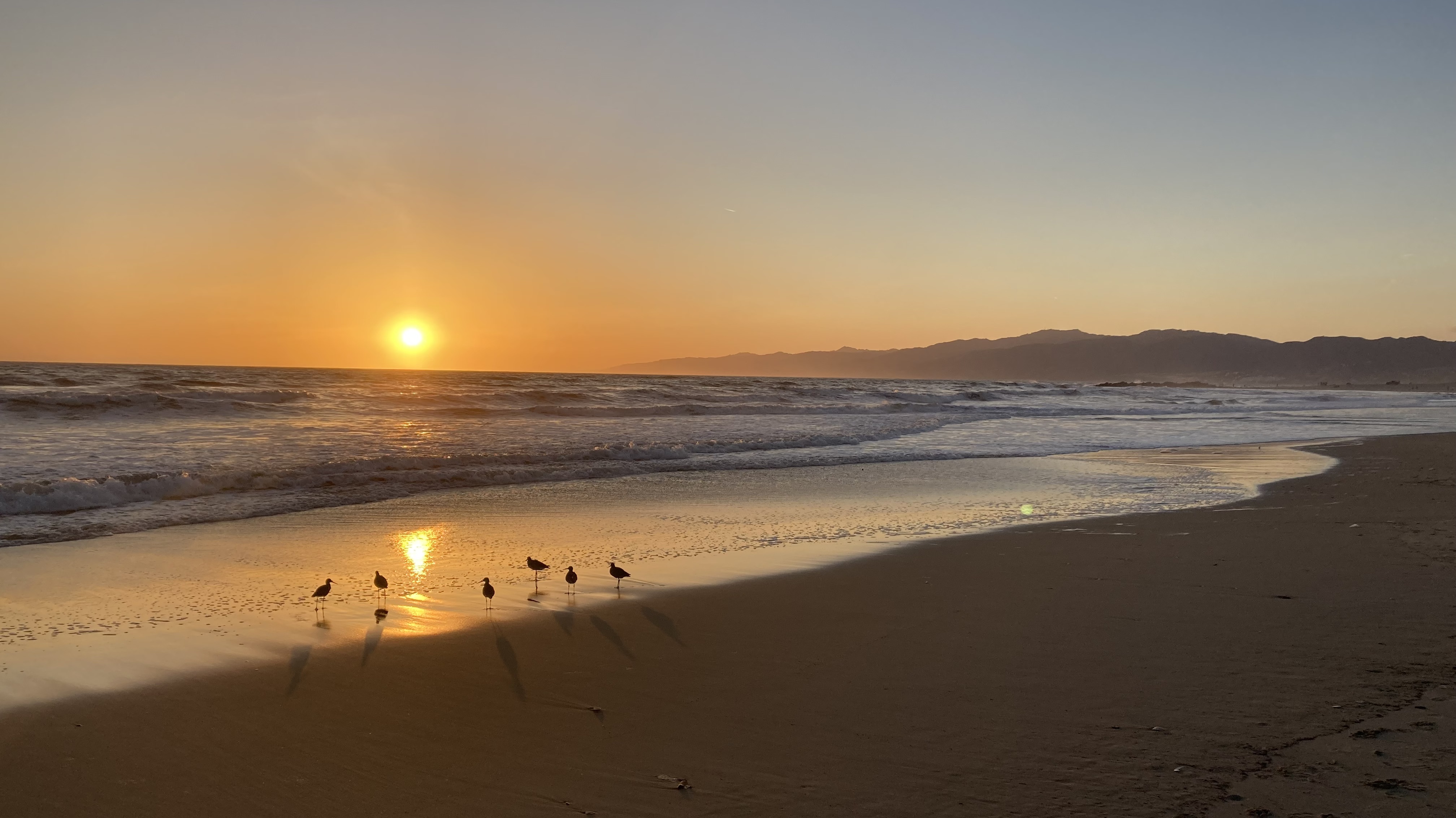
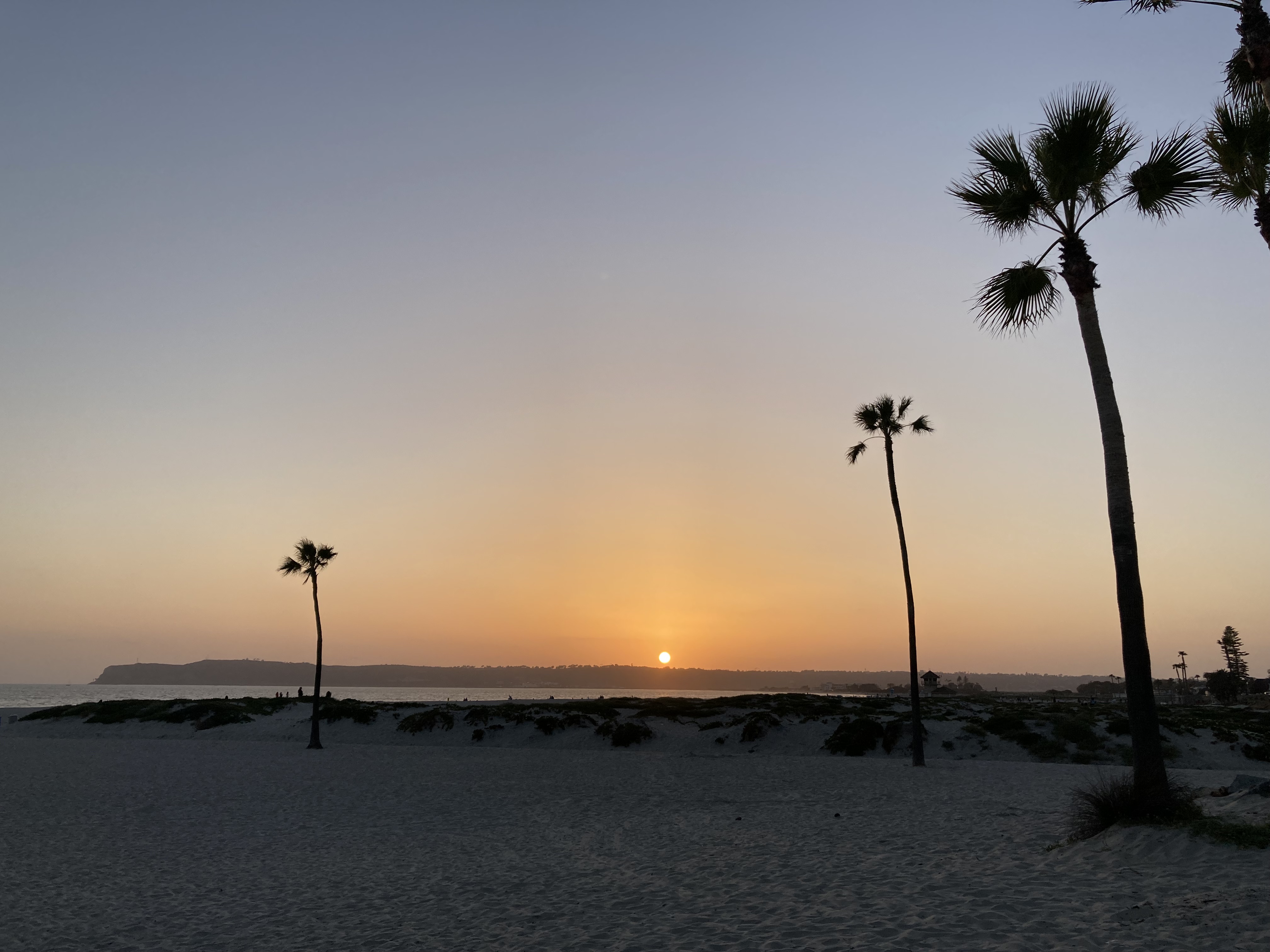
Misc
I’m not sure if I’ve said this before, but being on the west coast, on the Pacific Ocean – it’s a very different feeling compared to the east coast/ Atlantic Ocean. Maybe I take a particular notice to this as I grew up on the Atlantic – with its cold, its power, its ruggedness. The beaches were all rocks, no sand. The cliffs had jagged edges. I know this is not how it is along the whole east coast. In fact I was surprised to learn that the Atlantic is actually warmer than the Pacific, which is due to currents in the west moving south from Alaska, while currents in the east move north from the Caribbean. All in all, the pacific struck me as softer somehow. But that’s just my impression.
Final Thoughts
I really loved my time in California. I always love being on the ocean. As I write this, I live inland – I’m on a lake, but it’s not the same as the ocean. I prefer the ocean, I always have. I was so lucky to have mornings where I woke up to the sound of ocean waves. I was so lucky to watch as many sunsets over the ocean as I did.
While I cherish my time in California, parts of it – especially on the SoCal coast – are obviously hard to think about. I think I avoided writing this blog post for that reason.
It’s bitter sweet in the sense that some of the memories are so painful, but having memories and reminders of people who aren’t around anymore are also priceless.
Now an orange sky, dusk, a sunset – they remind me of my friend, they keep his memory alive. He’s the something in the orange for me.
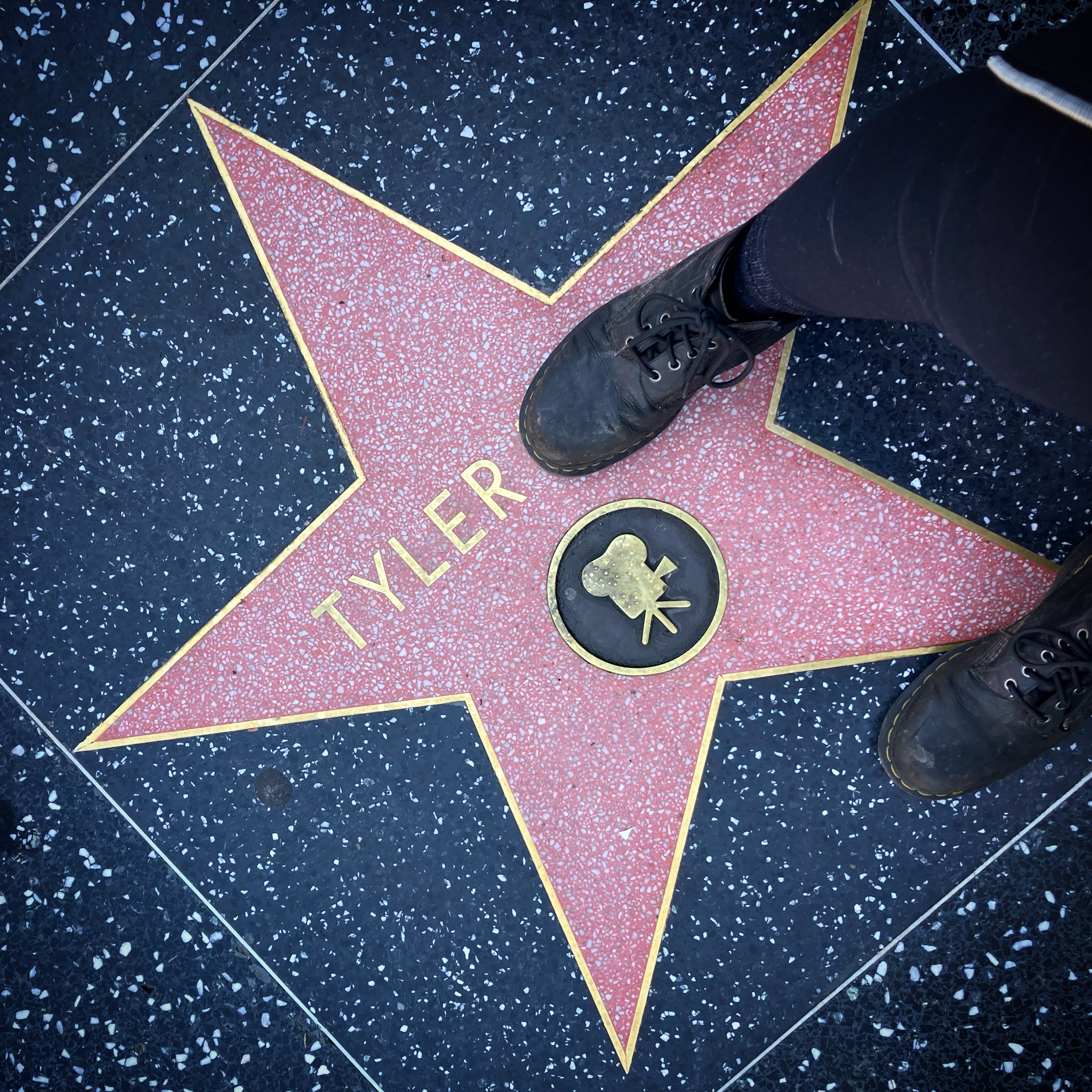
Next up: the California interior!
Till next time,
Keep it real,
Kat
ChronicXRoads on Instagram
Copyright © 2026 Chronic X-Roads. All Rights Reserved.
 Chronic X-Roads
One thought on “Something In The Orange: California’s Southern Coast”