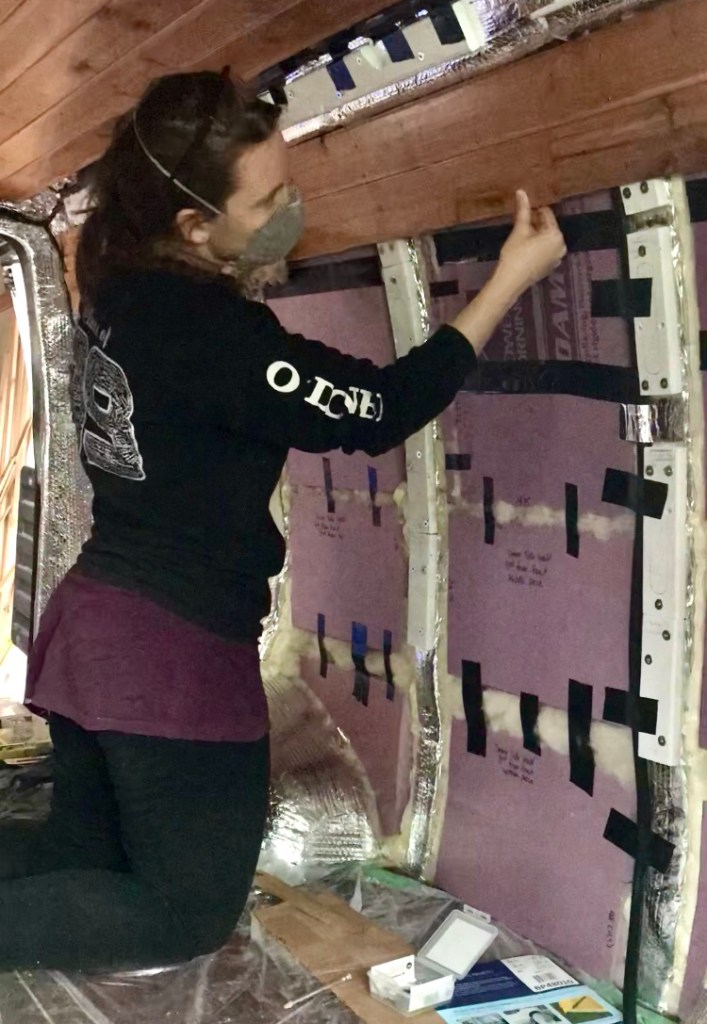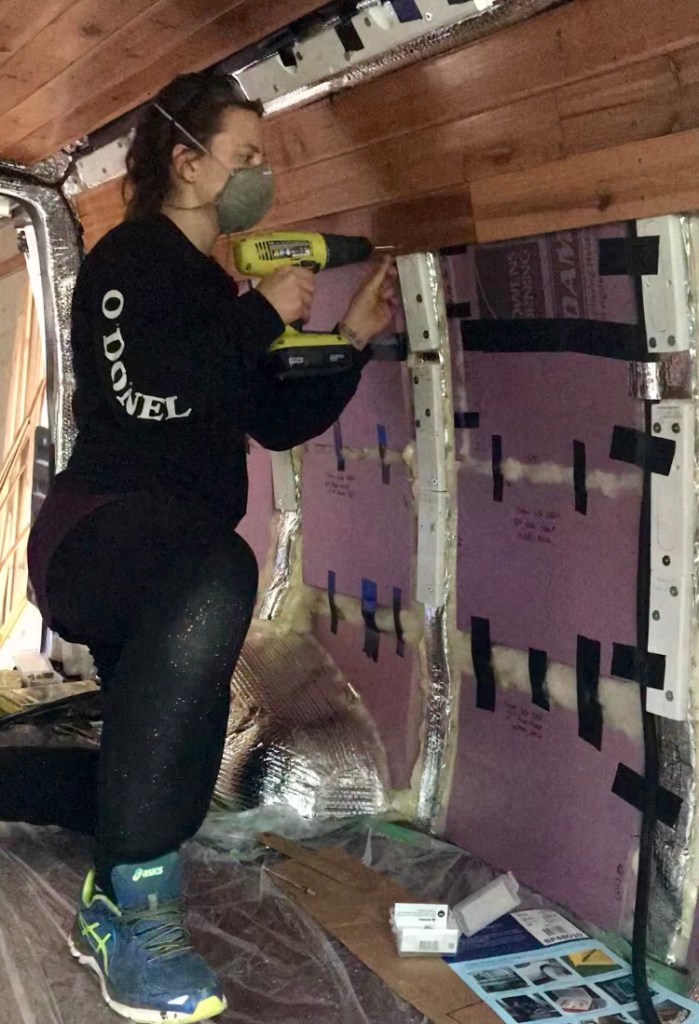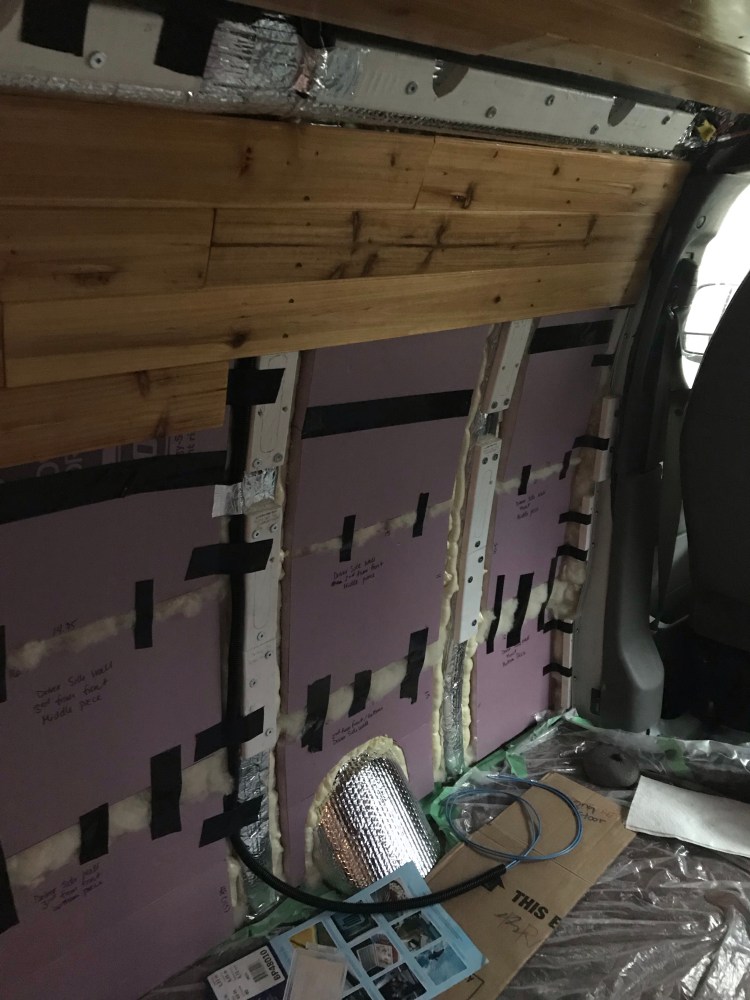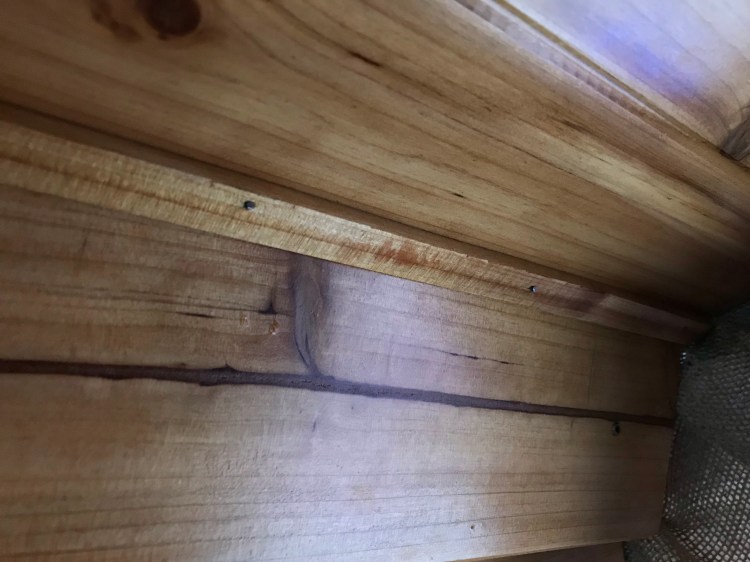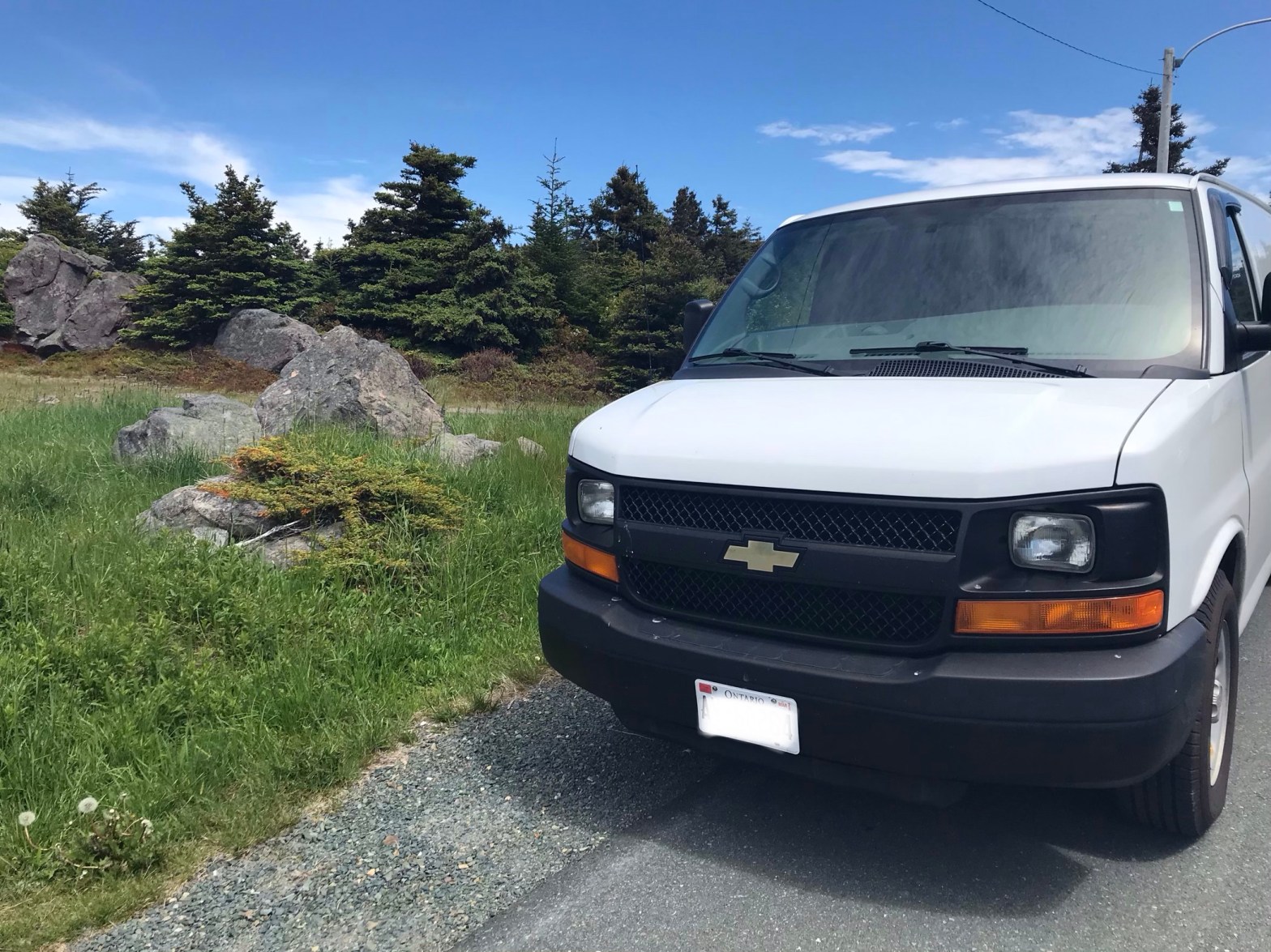
Vanlife: Travelling in my Self-Made Campervan for the First Time

*This post was originally written October 10, 2019

_______________________________

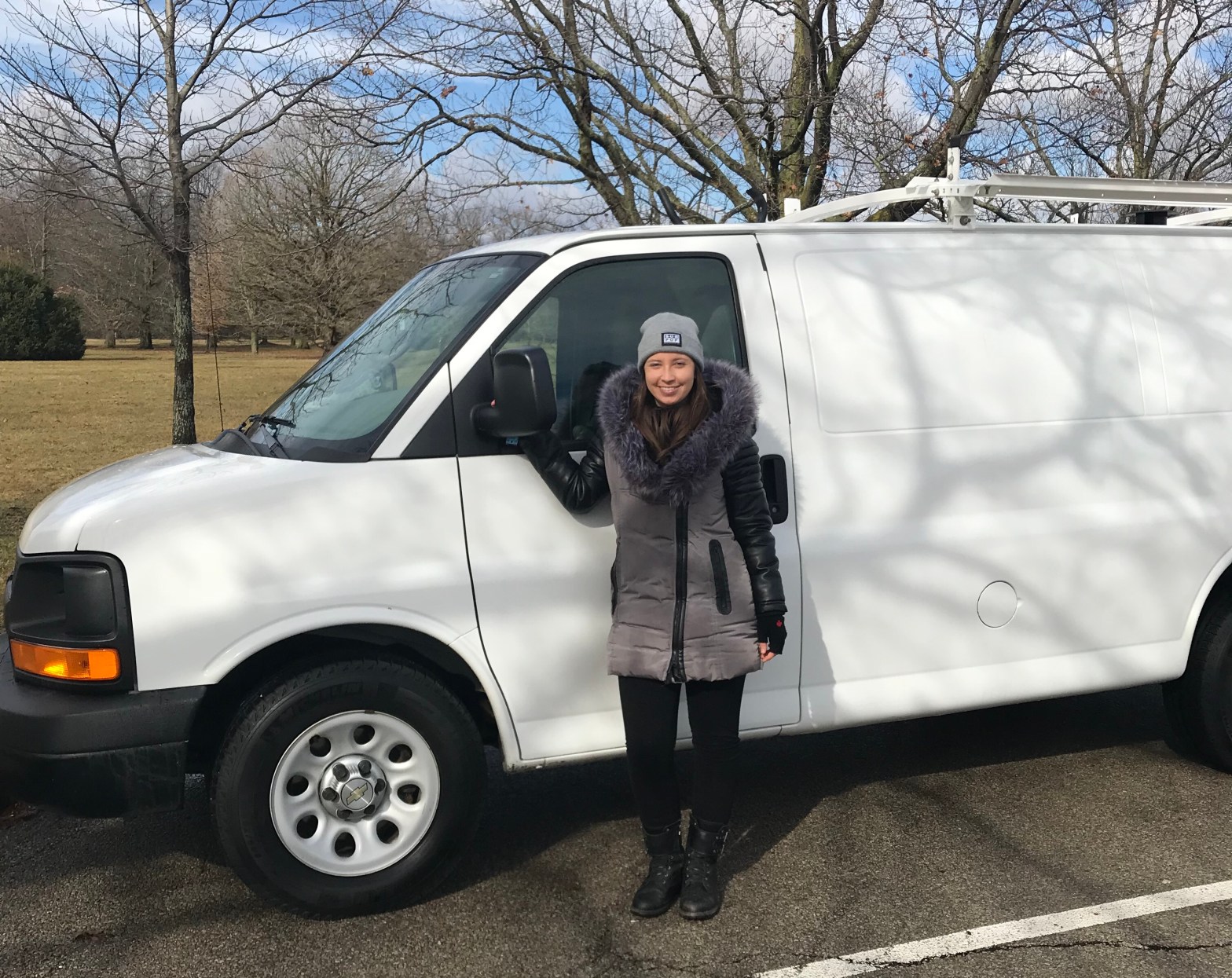
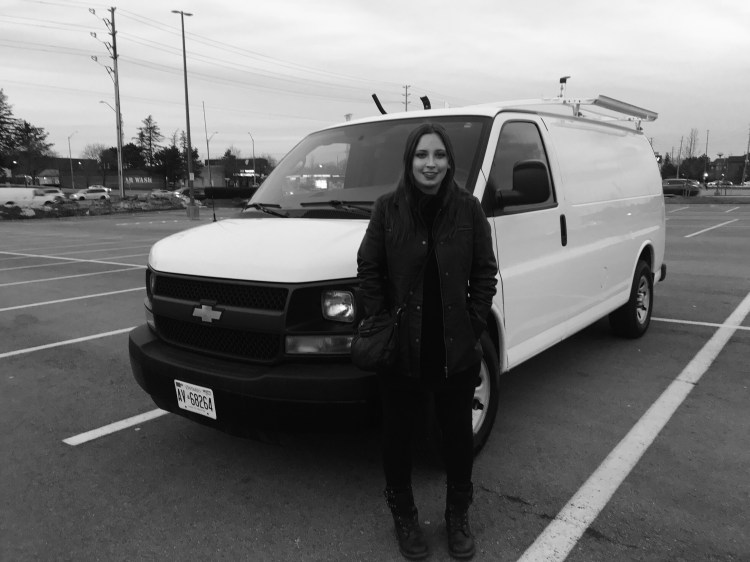
This past summer I embarked on my first van life road trip. Here’s how it went!
Prep

I had a friend’s wedding to get to in June, which is why I had a hard deadline for my departure. As per usual with this build, everything has taken longer than expected, so I didn’t get near everything I wanted to done before leaving. But I like having a deadline because it lights a fire under my ass to get shit done. My approach to this deadline was to prioritize the most important things to get done.

In full Kathleen fashion, I had lists galore to keep track of my “To Dos”.

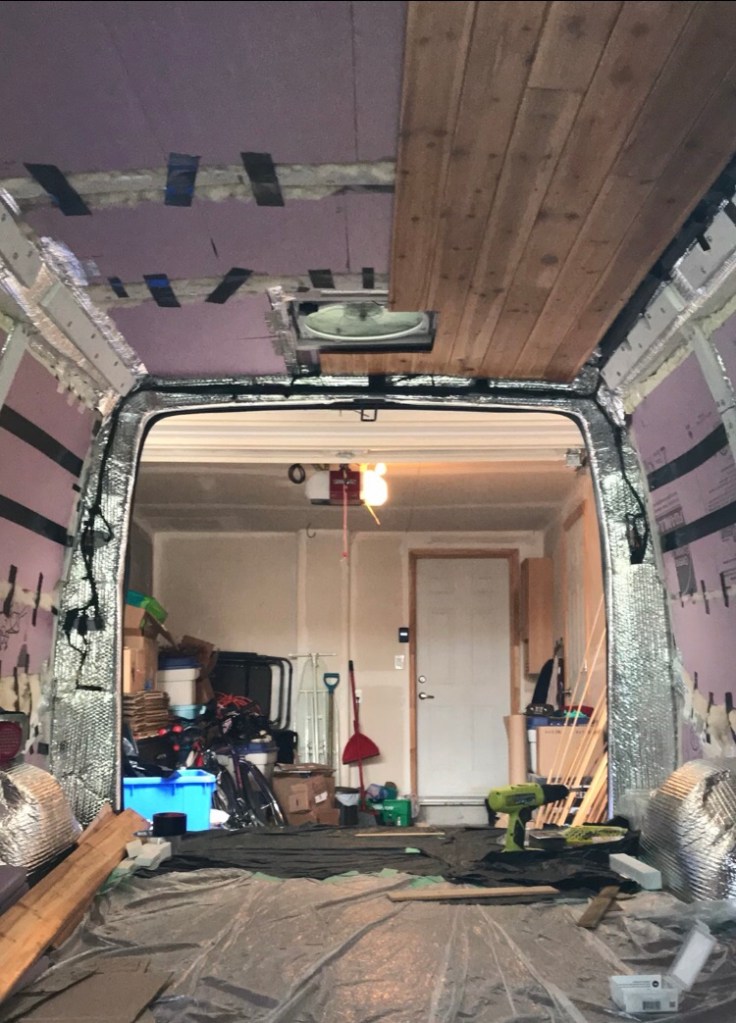
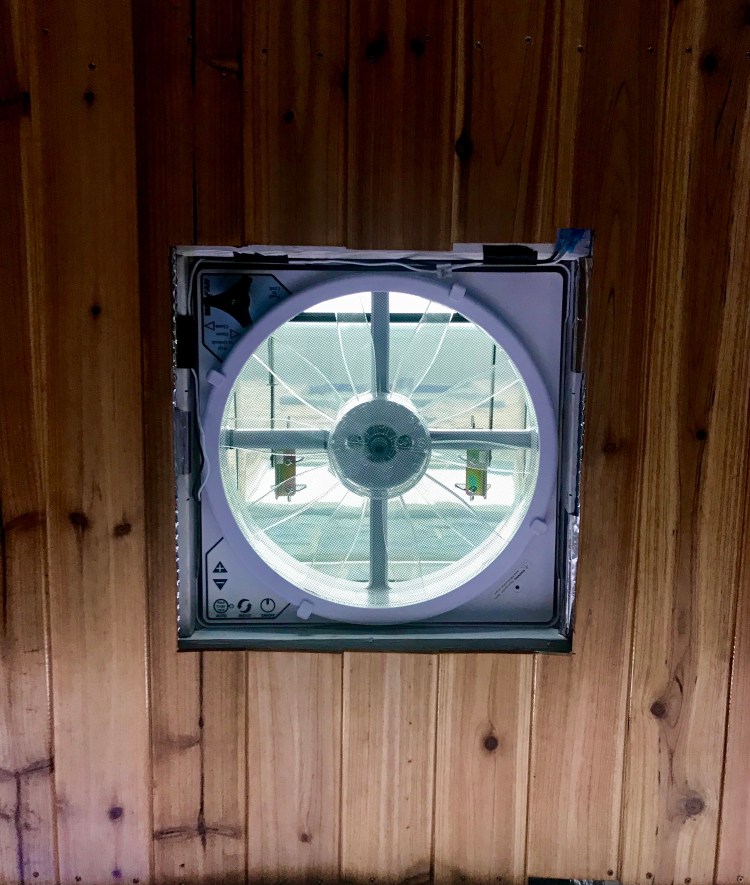
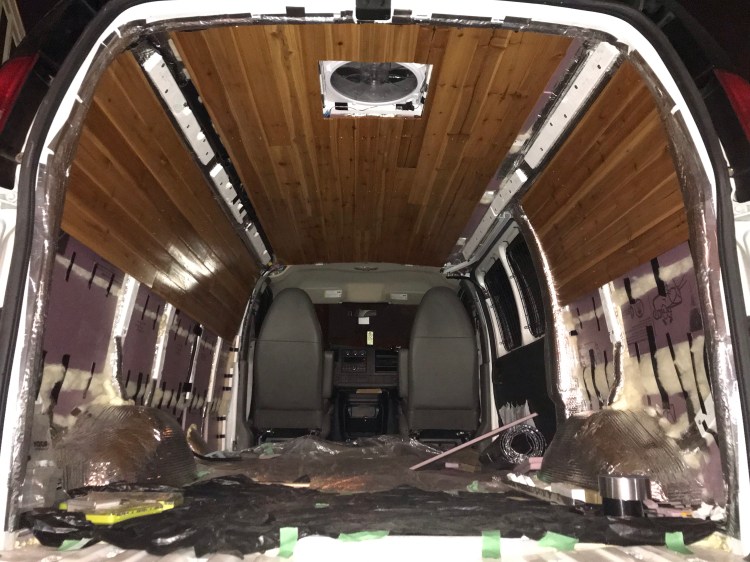
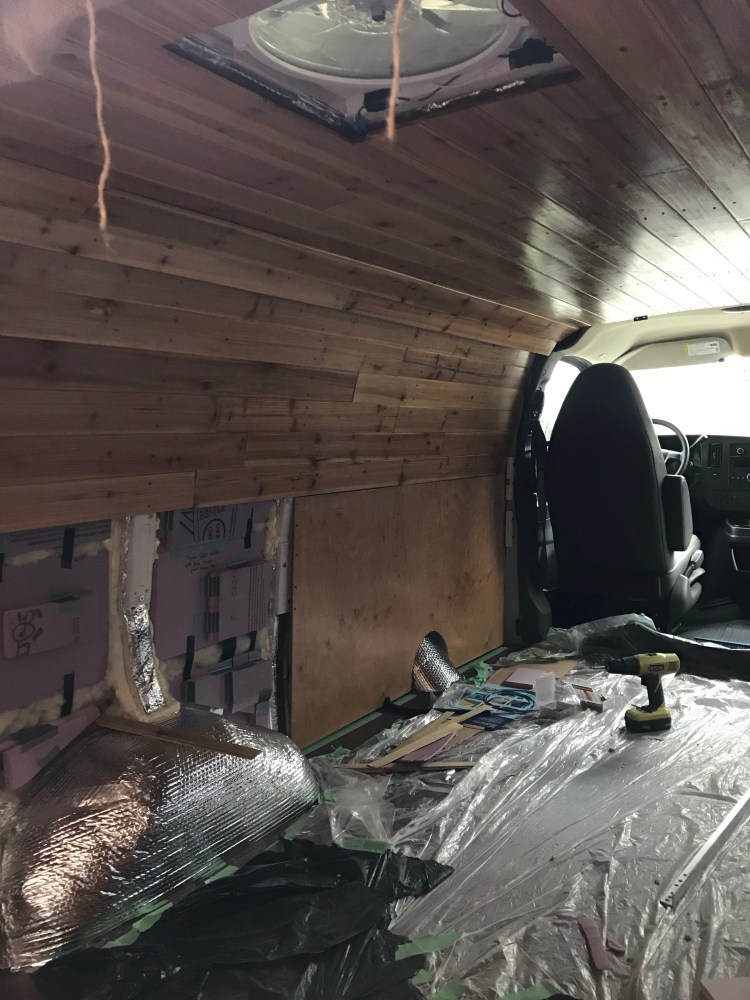
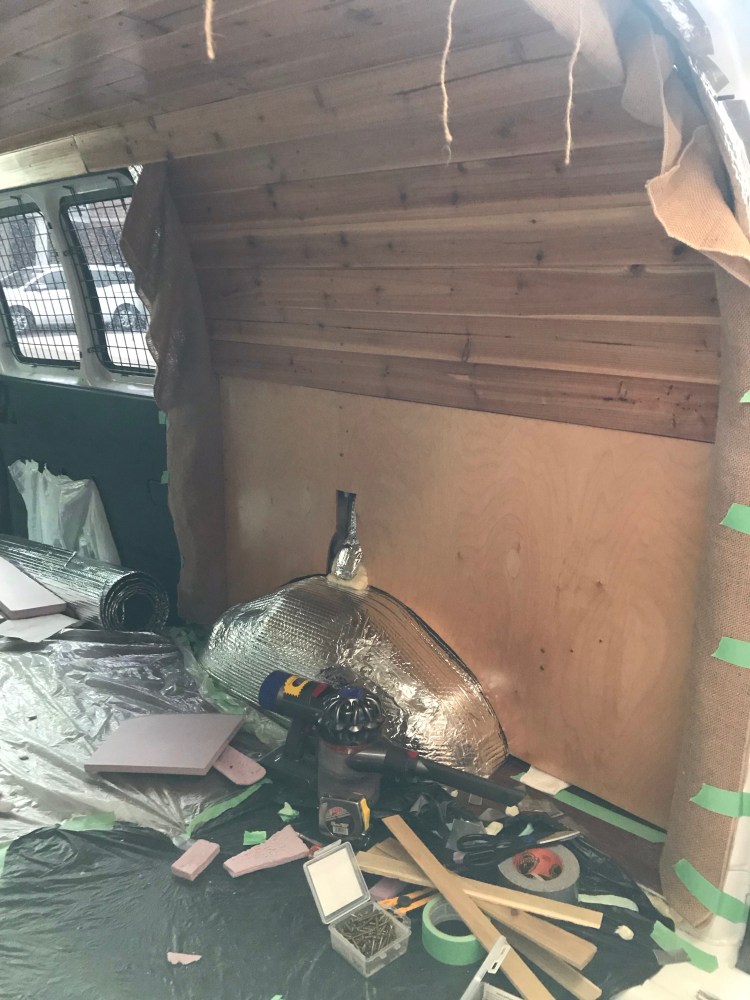
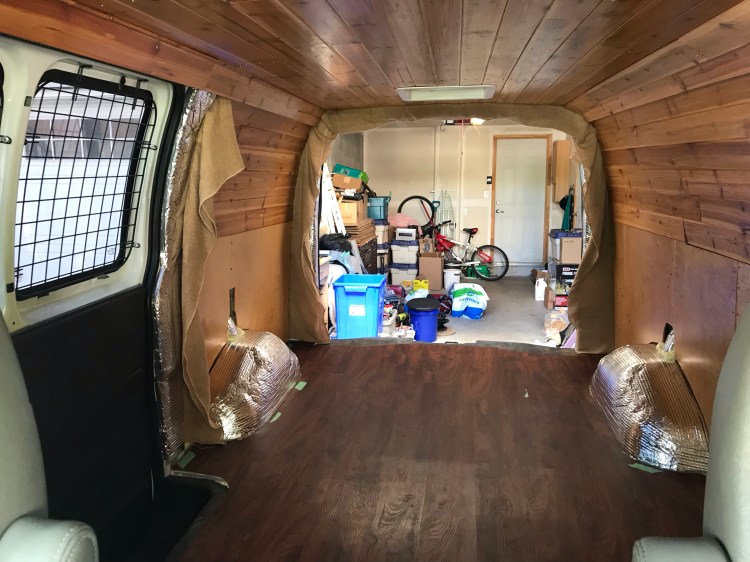
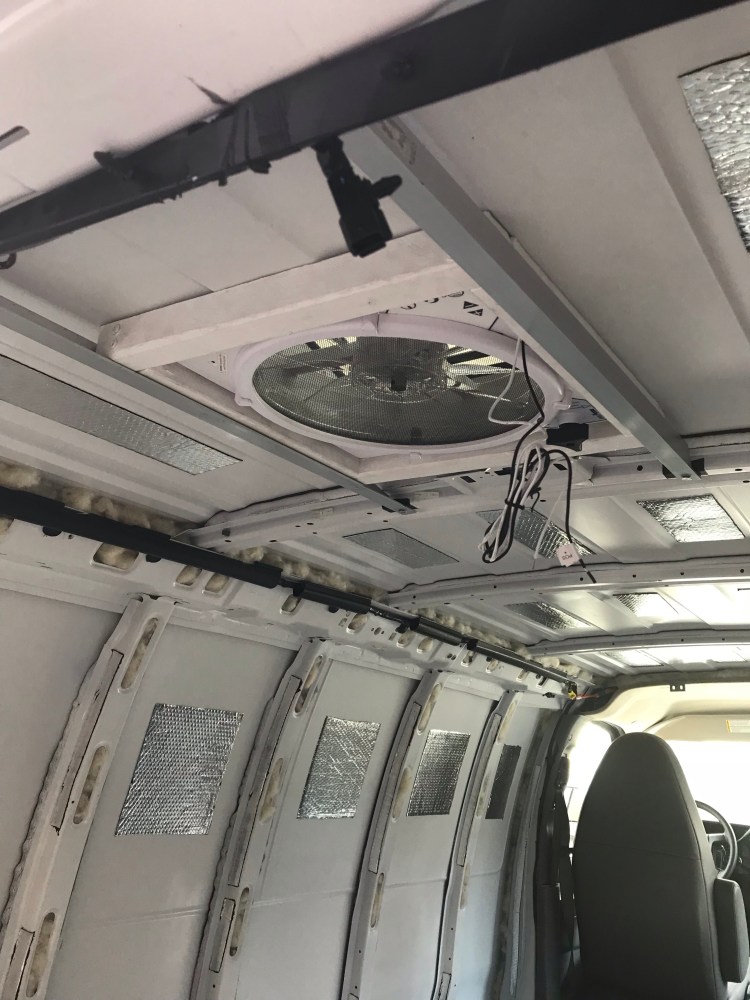
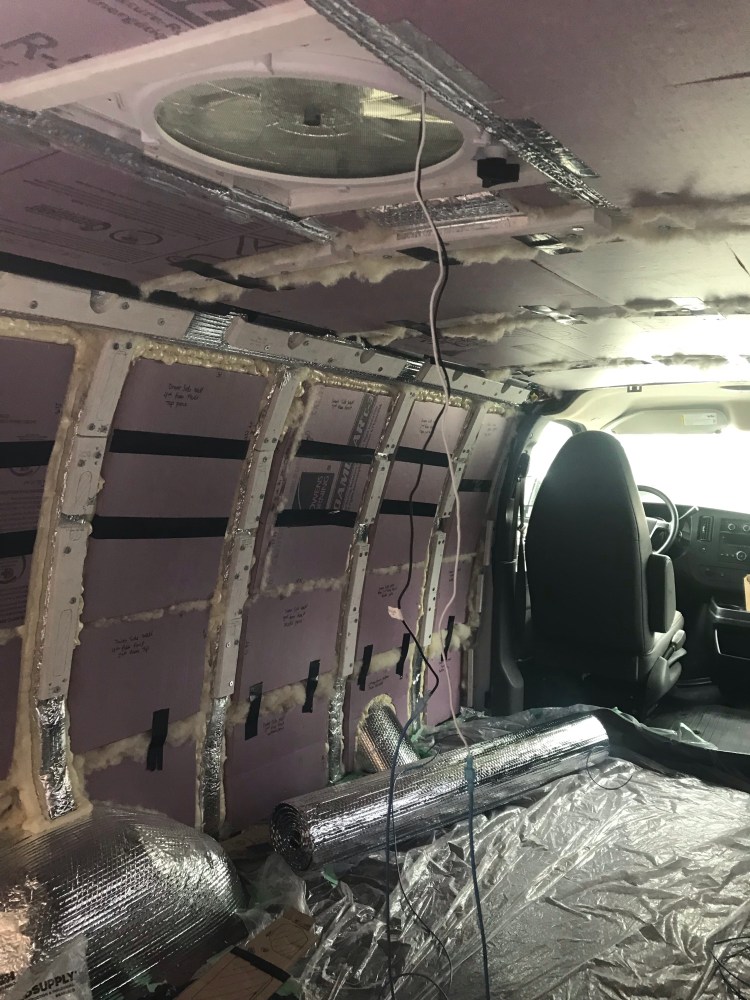
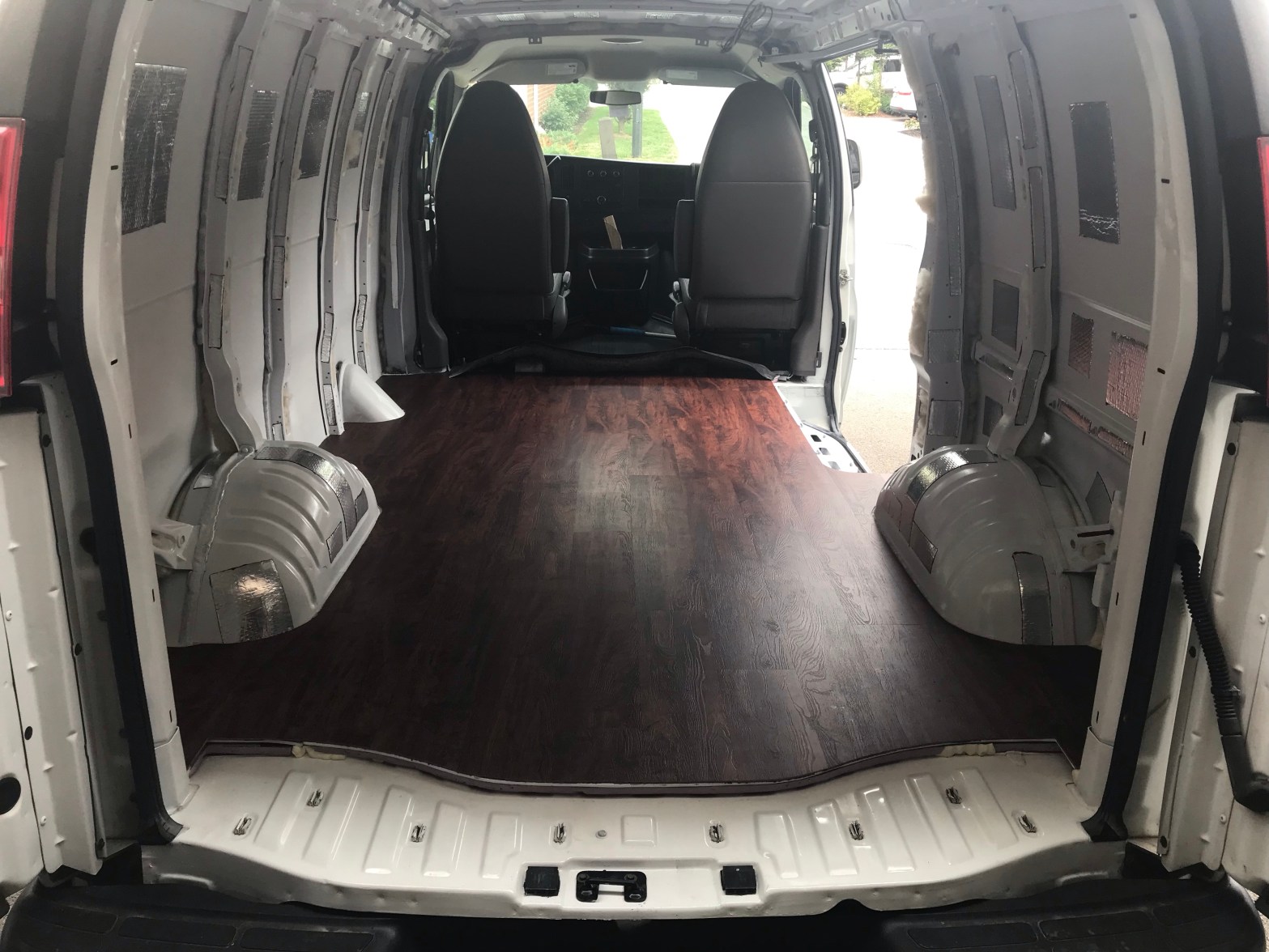
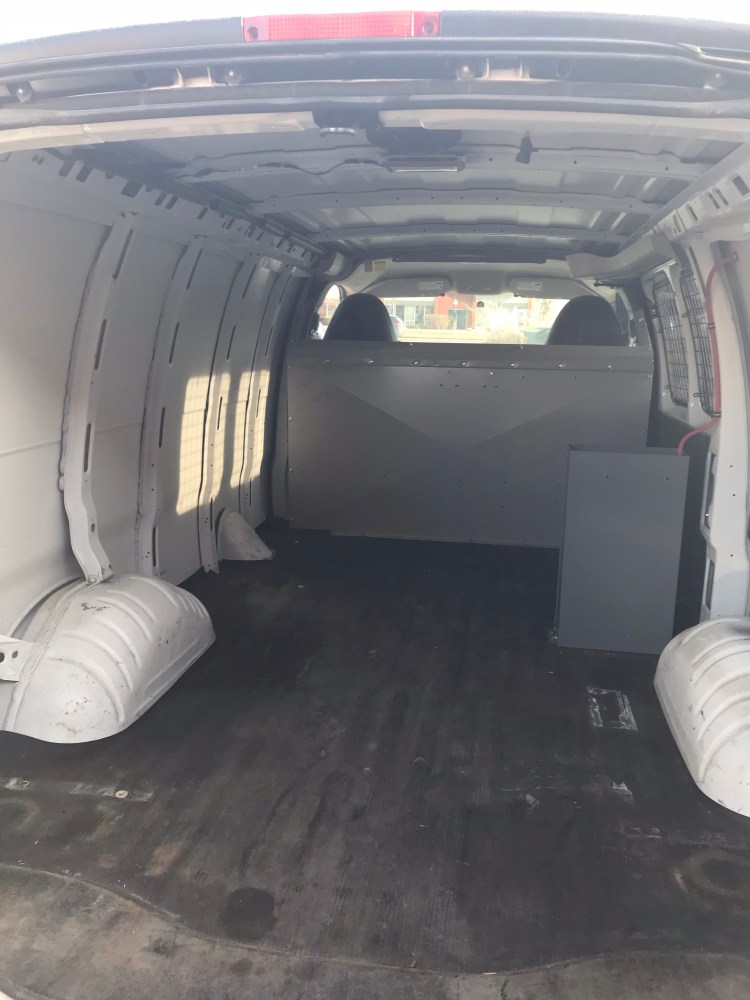
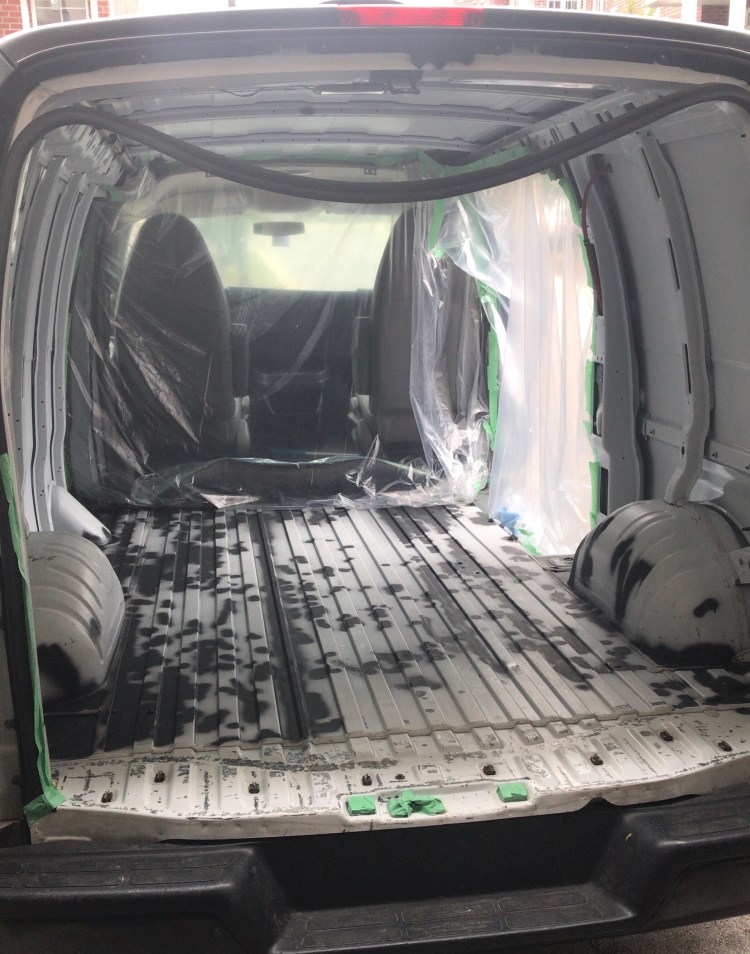
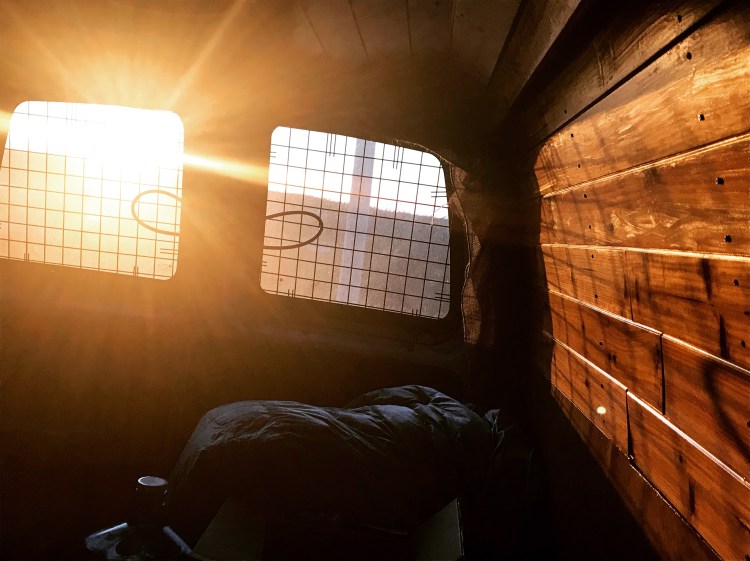
Since the van was unfinished, I joked about it being like a tent on wheels. I had finished the ceiling and walls. The only thing missing was the furniture and hooking up the electrical components.

Electrical Considerations

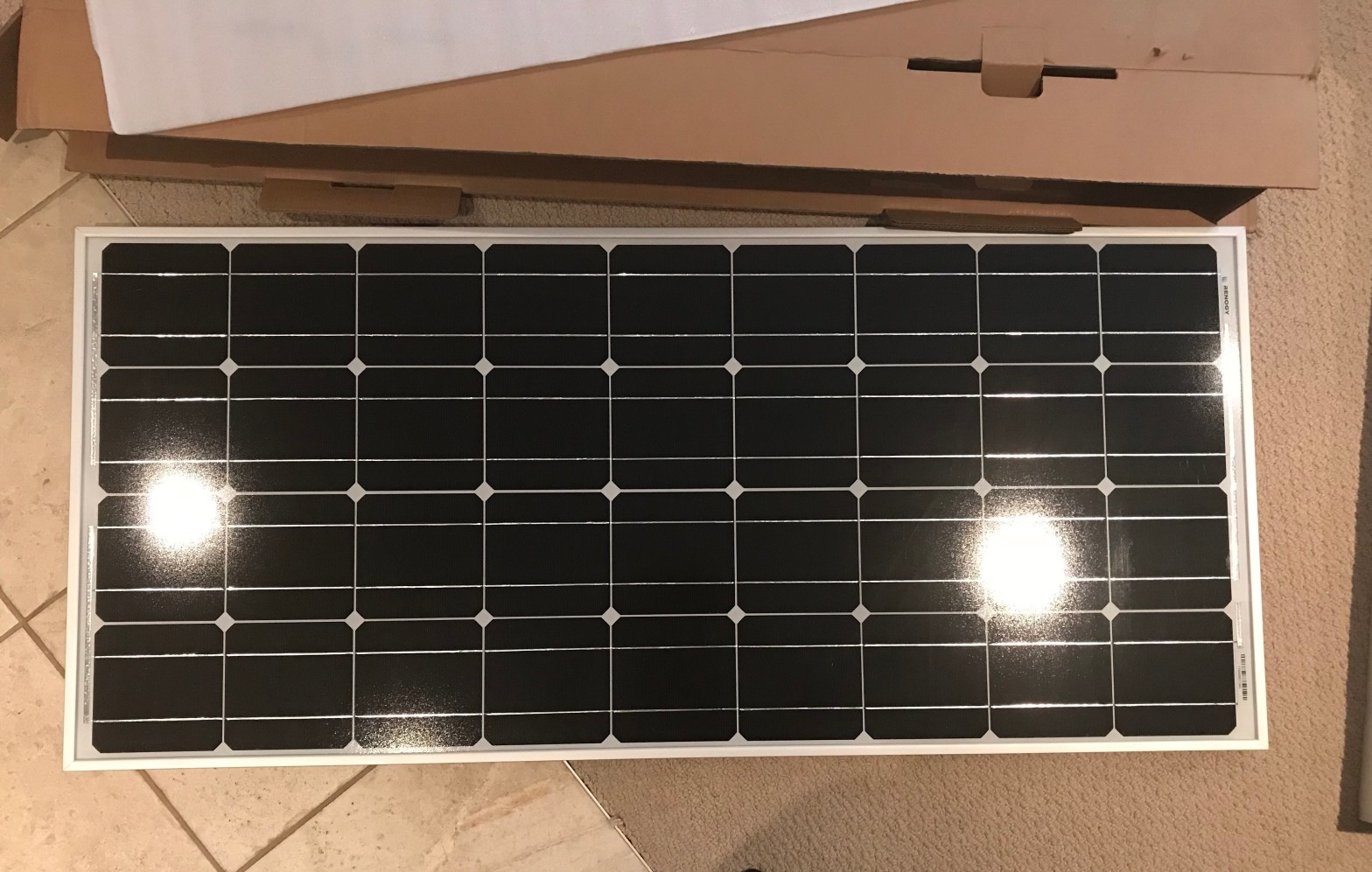
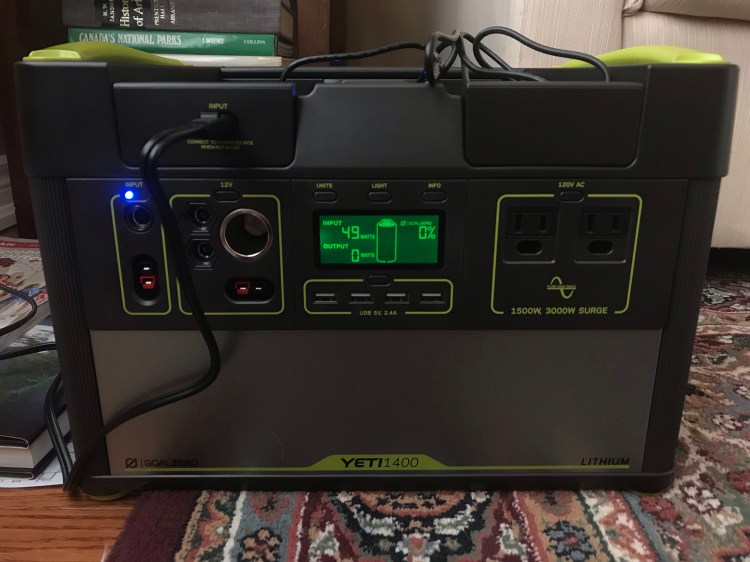
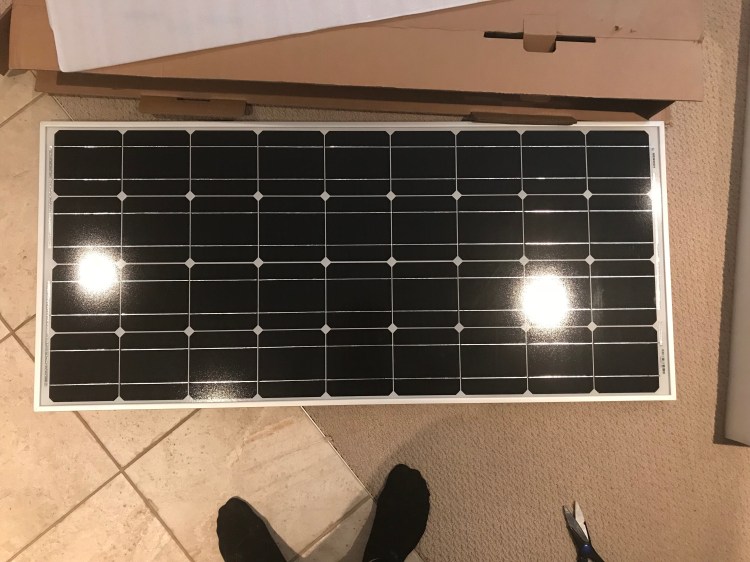
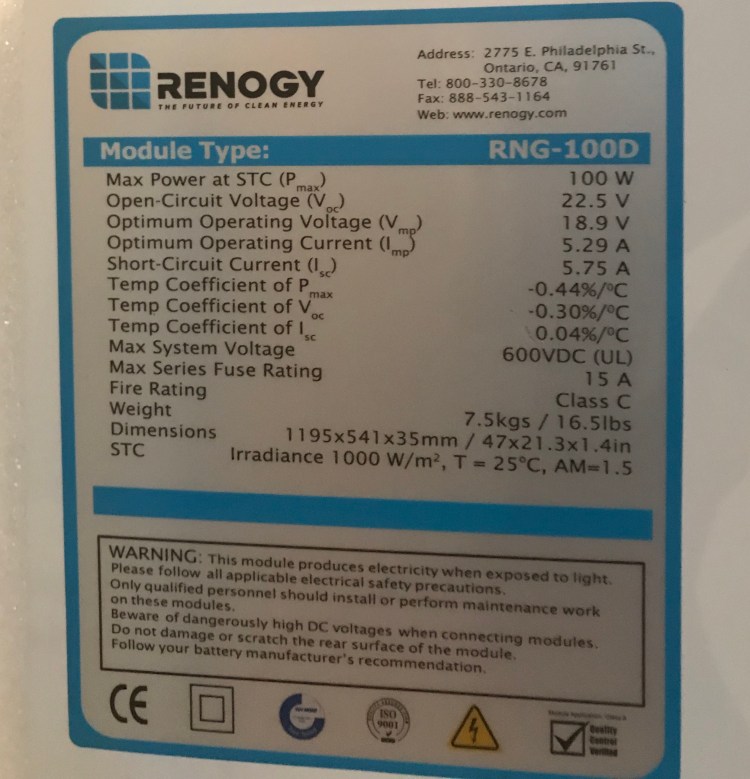
I had envisioned having the fan and fridge going – I just needed to add connectors to the fan wires and the fridge has a simple 12V cable, and then I’d just plug them into my power station (Goal Zero’s Yeti 1400 Lithium). I was bringing my solar panels (2 x 100W monocrystalline) with me in the van with the option of setting them up outside – all I would need to do is prop them up to face the sun and connect the wires (I had brought the appropriate cables + fuse to do so), plugging them in to the power station to charge its battery. I also had the option, while driving, to charge the power station directly from the van by plugging in to the accessory outlet on the dash (with a special cable from Goal Zero). Other than that I had brought string lights that I could plug in at night, and I would use the power station to charge my phone.

What I ended up doing – was none of that. The power station I did use to charge my phone (otherwise I used a USB converter in the van’s accessory outlet while driving). The power station had been fully charged when I hit the road, and got down to maybe 70% charged after 2.5 months – I didn’t recharge it once.

I was gradually getting used to vanlife and my priorities on this road trip ended up being more social and activity based, when not making the most of sunlight hours to drive. I concerned myself with the bigger issues of being on the road, like where to sleep at night, where to shower, where to do laundry. I also was staying in one destination for an extended period, not doing a whole lot of driving and parking at Walmarts a lot of the time – which didn’t give me much opportunity to recharge my power station with the aforementioned methods.

So I opted for simplicity:

  • I had been prepared by bringing my fridge, but instead did not store any food in the van that needed refrigeration.
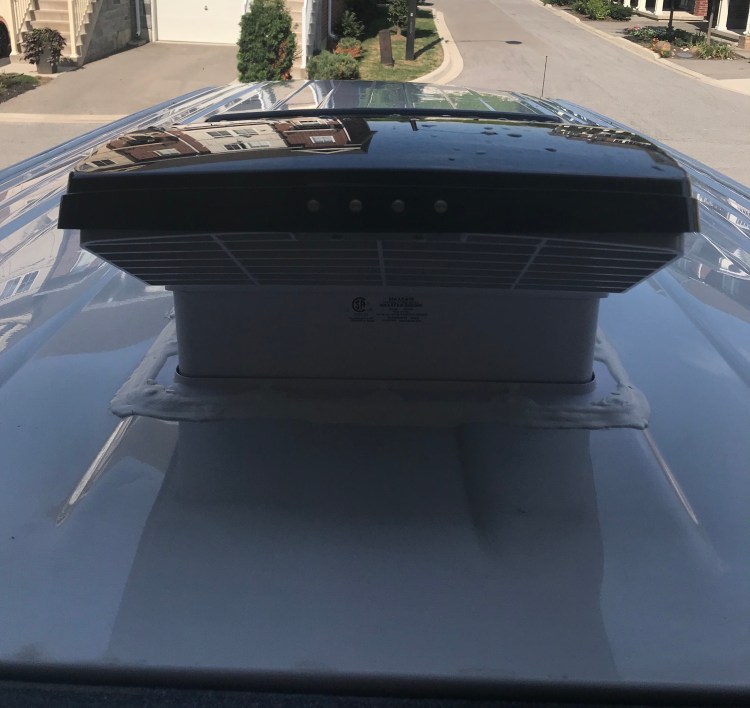
  • I used only passive ventilation – cracking a window and opening the fan on the roof at night. In terms of concern over humidity, condensation within the van, mold or rust formation – in the future having the fan hooked up will be a huge plus. I used a mini wireless dehumidifier (though it is meant for smaller spaces), cat litter in panty hose (a DIY trick I’d read online, but I’m not sure how much of a difference it makes), and whenever I drove the van I’d make sure the AC setting was on recirculation mode so that I wasn’t continually bringing in humid air from outside. It was typical after a day of driving, when parked, to see a puddle of water form under the van – which was the removal of humid air from inside the van. I could tell after a day of driving how dry the air would feel in the van, too. Fun fact: the heating system in vehicles uses dry air. I had also ordered  a thermometer/ humidity monitor to have in the van, but it didn’t get delivered before my departure.
  • If I needed to charge anything from a USB source (mostly my phone) I would try to do so from the van accessory outlet instead of the power station.
  • The solar panels ended up just coming along for the ride.
  • I used a battery powered lantern for illumination in the van at night – though I liked to attune to the cycles of the sun – going to bed near sunset and waking up around sunrise if possible.
Lack of Furniture

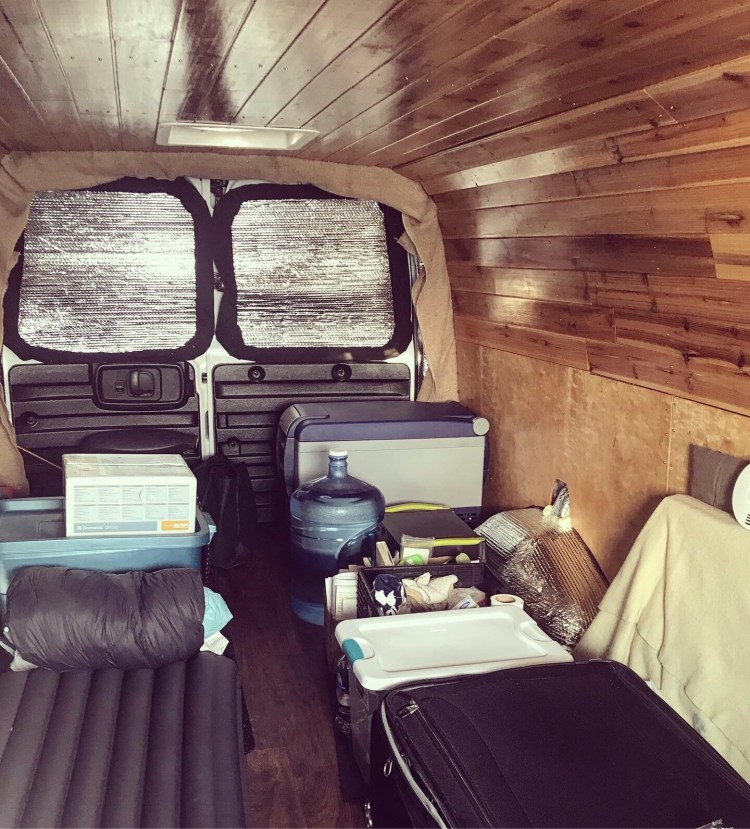
Because all of my belongings were in containers for the most part (my clothes were in a suit case, plus the fridge, power station, and bucket for bathroom emergencies), I had put mats under them. My hope was that the mats would protect my beautiful vinyl floor from scratches as well as keep things from sliding. I drove carefully, trying not to brake too hard and taking turns slowly, but things still moved. I ended up using a bungee cord, which I tethered to the van walls and wrapped around the smaller objects – this did a great job up preventing things from moving around too much while driving.
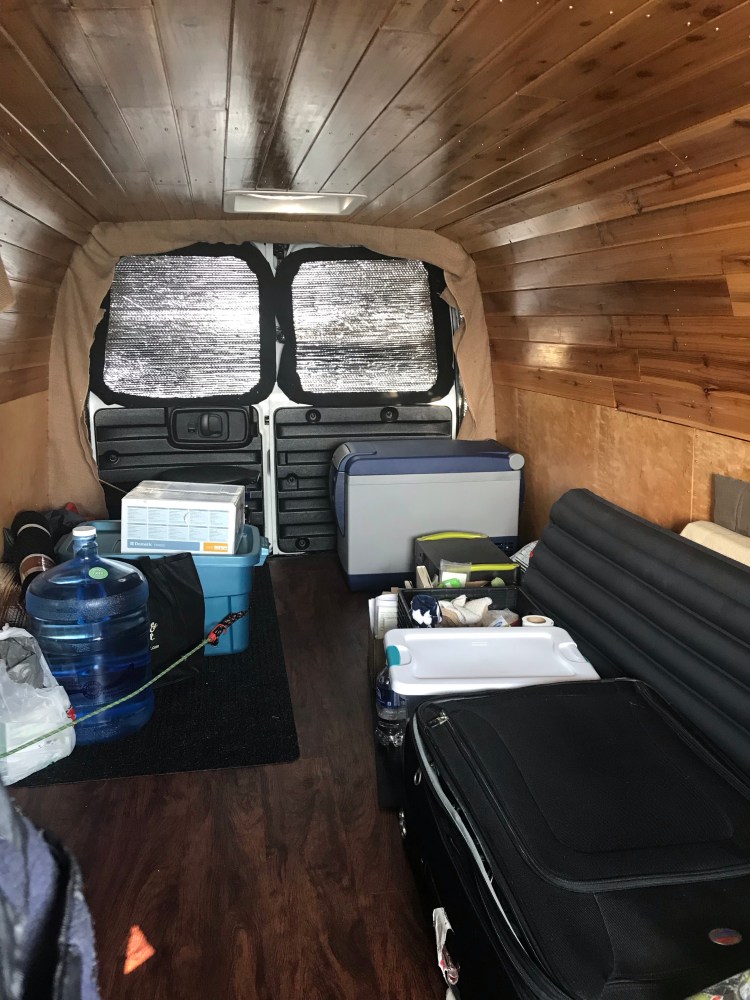
An important consideration while packing up the van was weight distribution. I aimed to keep things as even as possible on either side of the van so that handling while driving would not be affected.

Mechanic

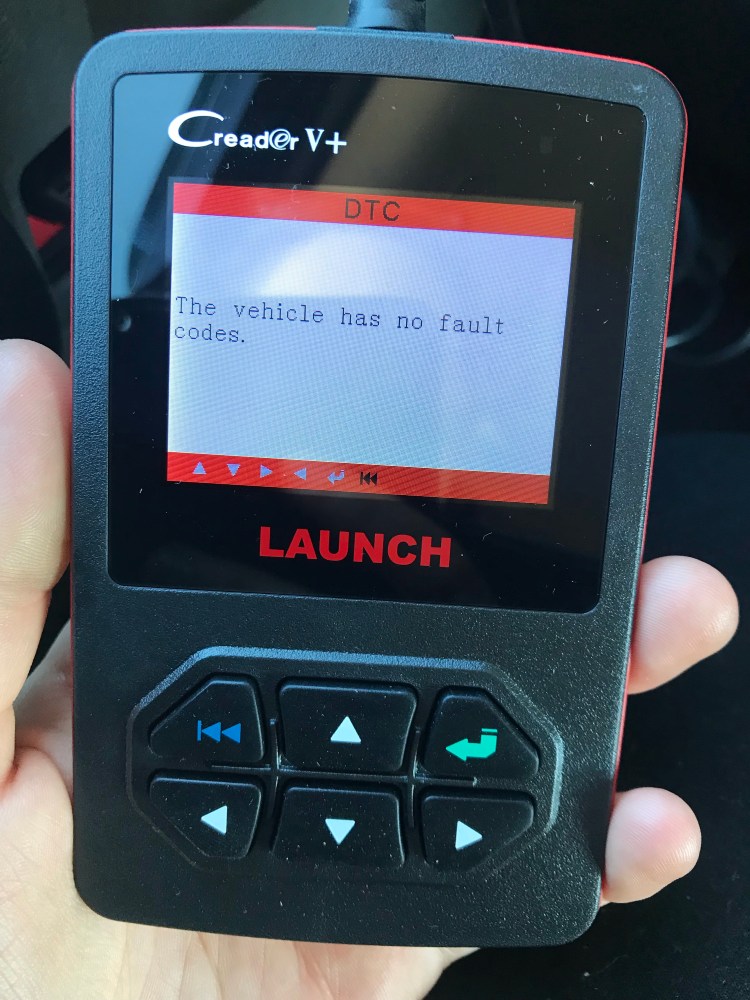
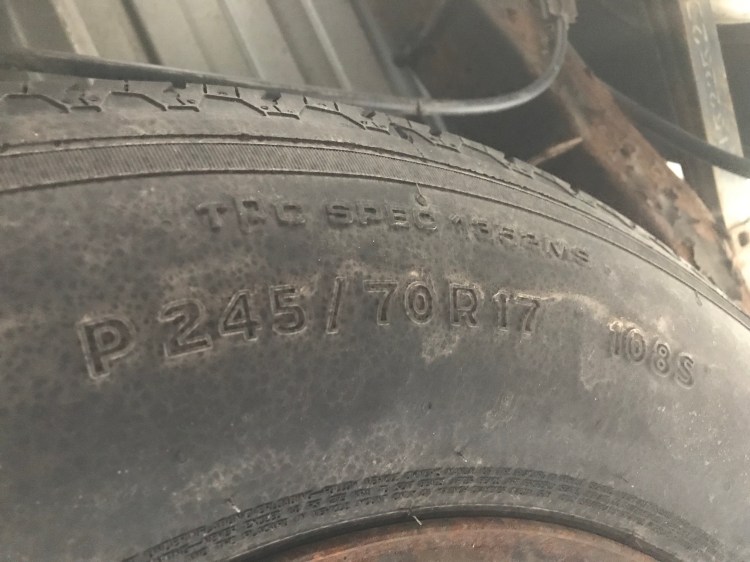
I had made an appointment with my mechanic to service the van prior to leaving. I had an oil and filter change, tire rotation, brakes checked, fluids checked, inspection for faults, tire pressure topped up (including the spare). It was suggested to me that I get an OBD2 scanner to bring on the road with me – which I did and was great for checking for fault codes and putting my mind at ease if I suspected any issues. I was also shown the fuse box under the hood and where the fuse (20A) for the accessory outlet was located, just in case I was to blow a fuse by charging my power station from the van.
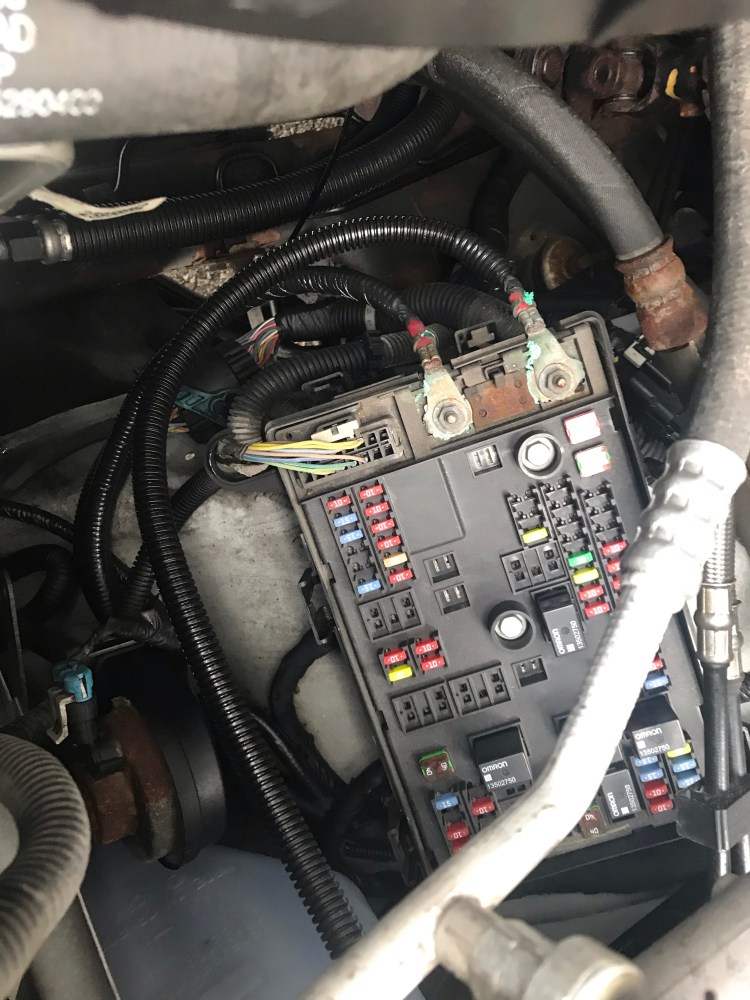
Mini blade fuses/ van fuse box under the hood.
Security

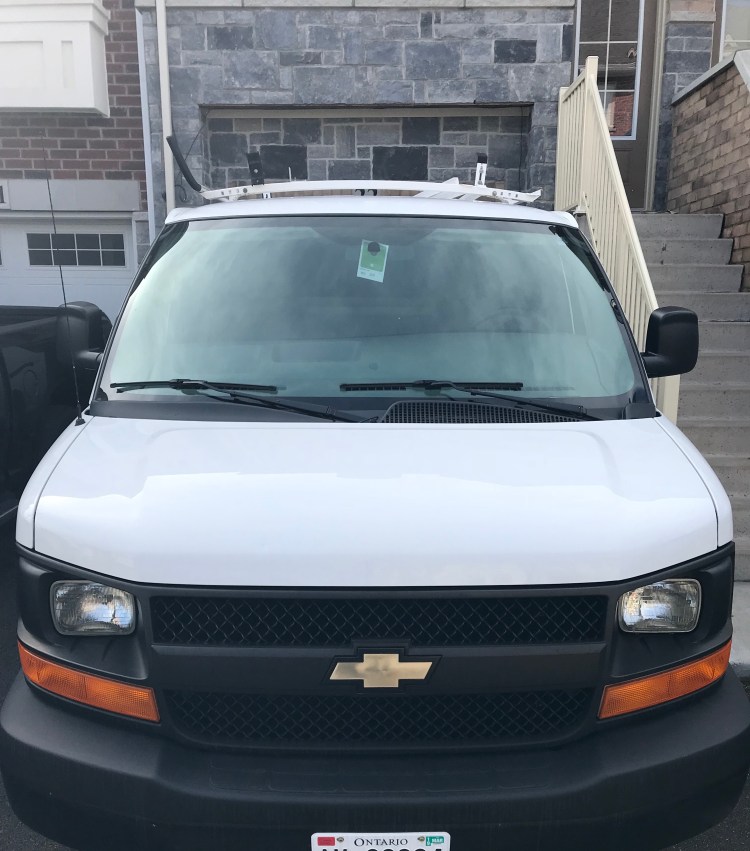
I also looked heavily into security. My van came as a base model cargo van – with very few features (manual locks). Other than that it came with metal screens on the windows that were installed by one of the previous owners, and the rear and side windows are deeply tinted.

There is a plethora of ways to protect your van and everyone’s got an opinion on and preference for what works best. My personal preference would be to install extra deadbolts on all the doors, but I could only find this service being offered in the UK. I think if someone wants to break in or steal your van – they can find a way (like the peel and steal” thefts). Even with a car alarm – if I’m spending a lot of time in the middle of nowhere, who’s going to hear the alarm? And in terms of slick locks – they don’t go on the front doors (in which case it would be helpful to keep the divider permanently installed behind the front seats) and would they just signal to potential thieves that there’s something worth stealing inside? You can get GPS trackers to keep in your van – though I’ve heard some thieves have ways of detecting and dismantling these. And a hidden lockbox may be useful for valuables that you aren’t carrying on your person.

A neat option is getting Sherlock anti-theft marking applied to your van. This can get you a small discount on your insurance and is a deterrent for theft. And who knows, maybe if potential thieves see the markings they’ll make the assumption that you have other forms of security as well and not bother to target you.

I also considered more makeshift/ DIY options. Such as just getting some bike locks/ combination locks and putting them between the back doors and the passenger doors. Sure, it could be a slight nuisance to not be able to open those doors without undoing the locks, but it would be an accessible budget method. Then there are items to defend yourself. Some people just have a big dog to guard their vans. It’s technically illegal to use pepper spray in Canada, but I keep bear spray for hiking in certain areas so that could be seen as a backup. Though it is important to note that if you use it on a person you can be charged with using a weapon – but it at least may help you sleep easier. I’ve also heard of people leaving music or a podcast playing while they’re out of their van so that if anyone comes snooping around they might be fooled into thinking someone is still in the van.

I think, when it comes to security, half the battle is street smarts. Thinking about the areas you’re passing through and avoiding high crime areas. Where you’re parking. If you’re going to stay in big cities. Having a stealth van is an advantage. And also only posting to social media about a place you visited after leaving it – who knows these days if there are people out there who might follow you!

I will probably revisit security options prior to leaving on the next leg of my travels.
Window Coverings

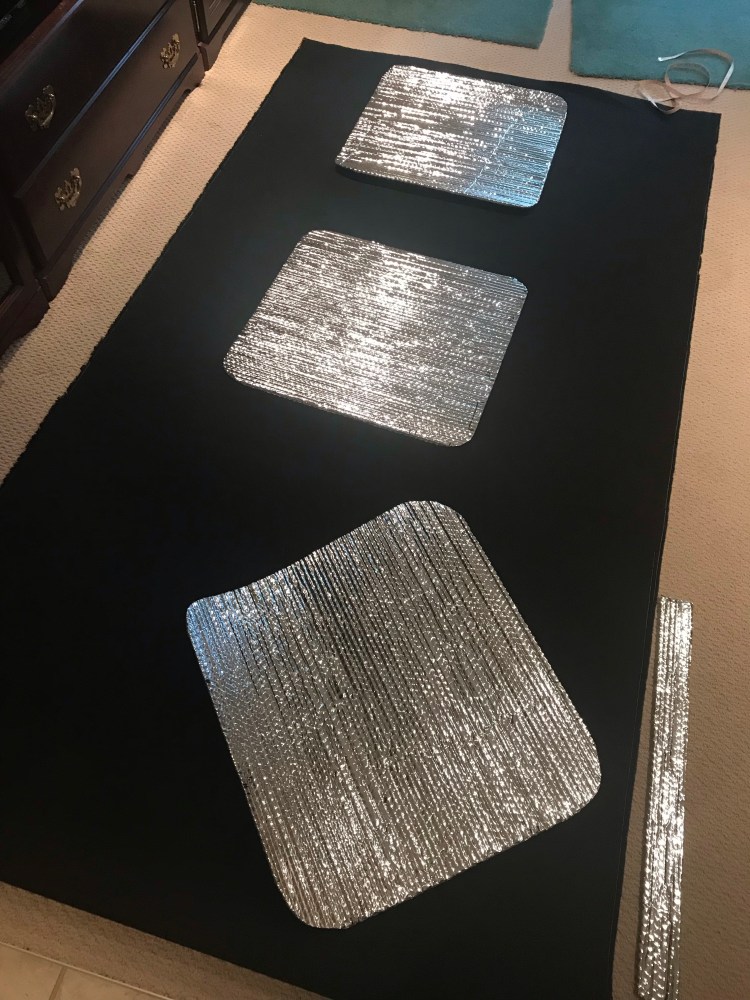
Using Reflectix, rare earth magnets, and black weather-resistant upholstery, I made coverings for my four cargo bay windows – two on the sliding door and 2 at the back.

I measured each window and cut pieces of Reflectix to fit. The Reflectix pieces were adhered to the upholstery with hot glue, which was also used to adhere the magnets around the edges of the Reflectix. The upholstery was cut around the magnets, folded over, and adhered.

Since I was in a rush to hit the road, this was a rush job. The window coverings worked fine for a while but the glue did begin to fail in some spots (I’m guessing due to being heated up by the sun), and the coverings would fall every so often, making me realize that I should have used more magnets for more strength (the ones I have are super strong, but tiny). Re-doing the window coverings will be a project for the future!
Curtains

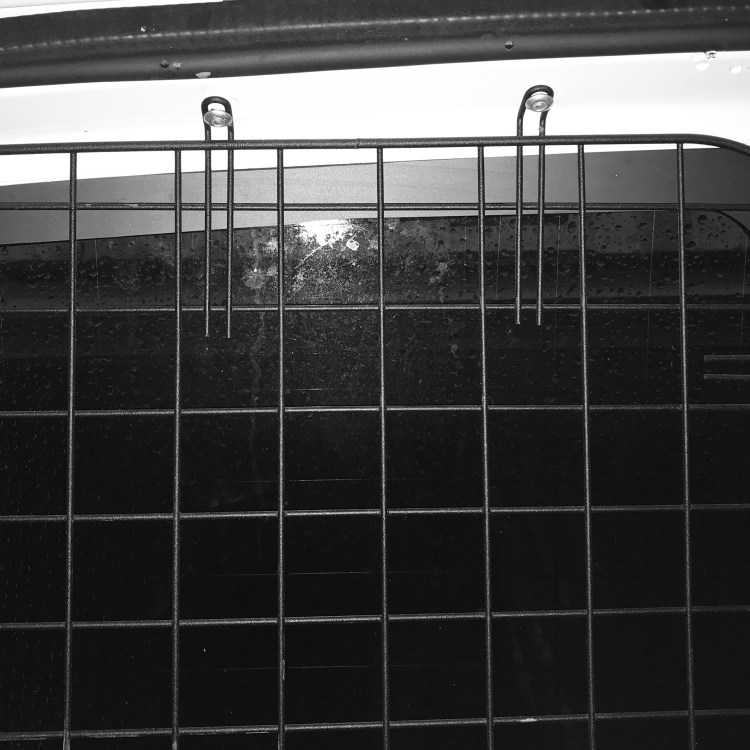
I had purchased thermal insulated blackout curtains to put up behind the front seats. These were really handy in terms of both privacy and keeping the cargo area cool. Each morning it took a few hours after the sun had risen for the cargo bay to warm up, and there was a noticeable temperature change when I stepped into the front cab (yay – the insulation was working!).

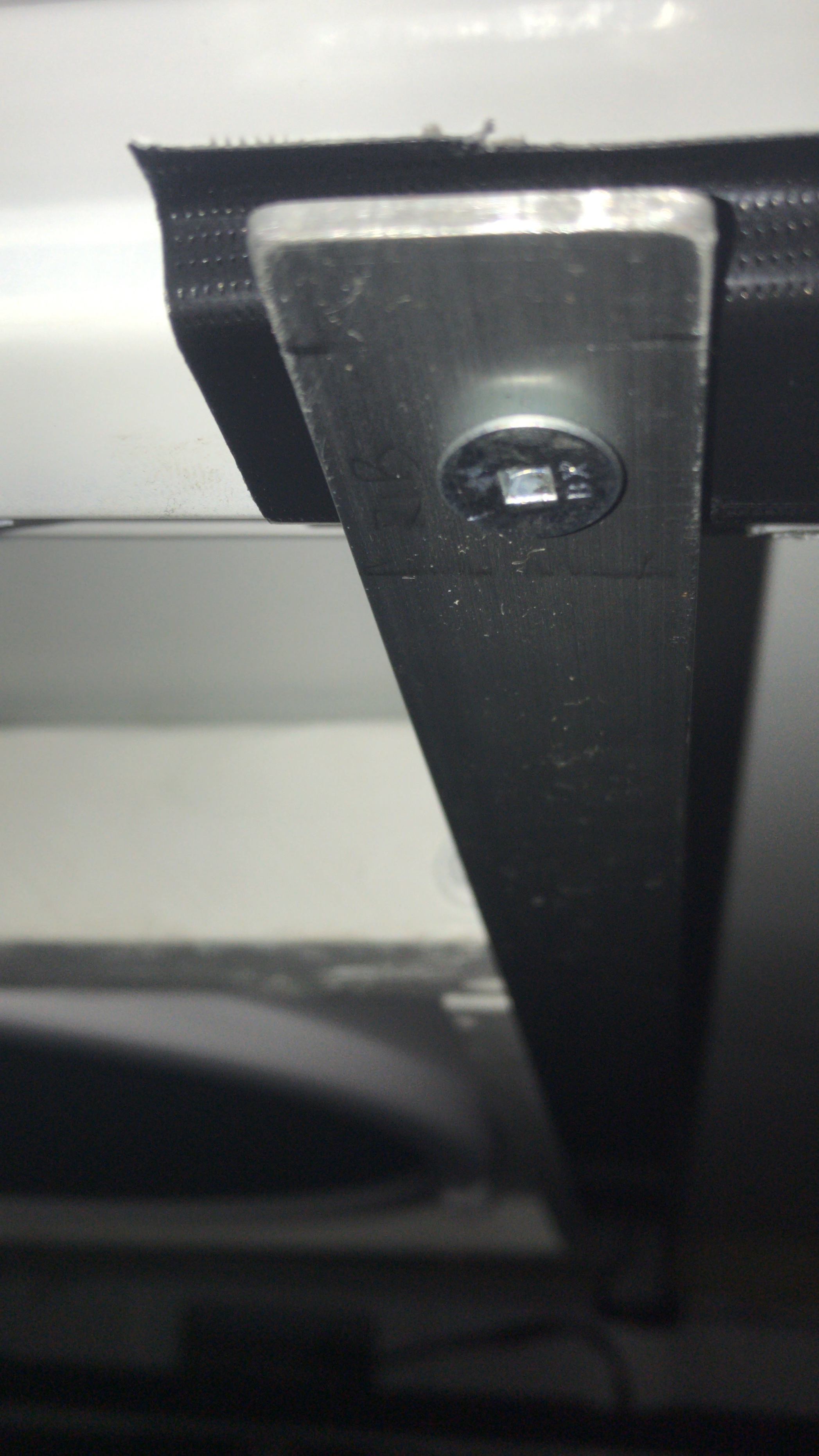
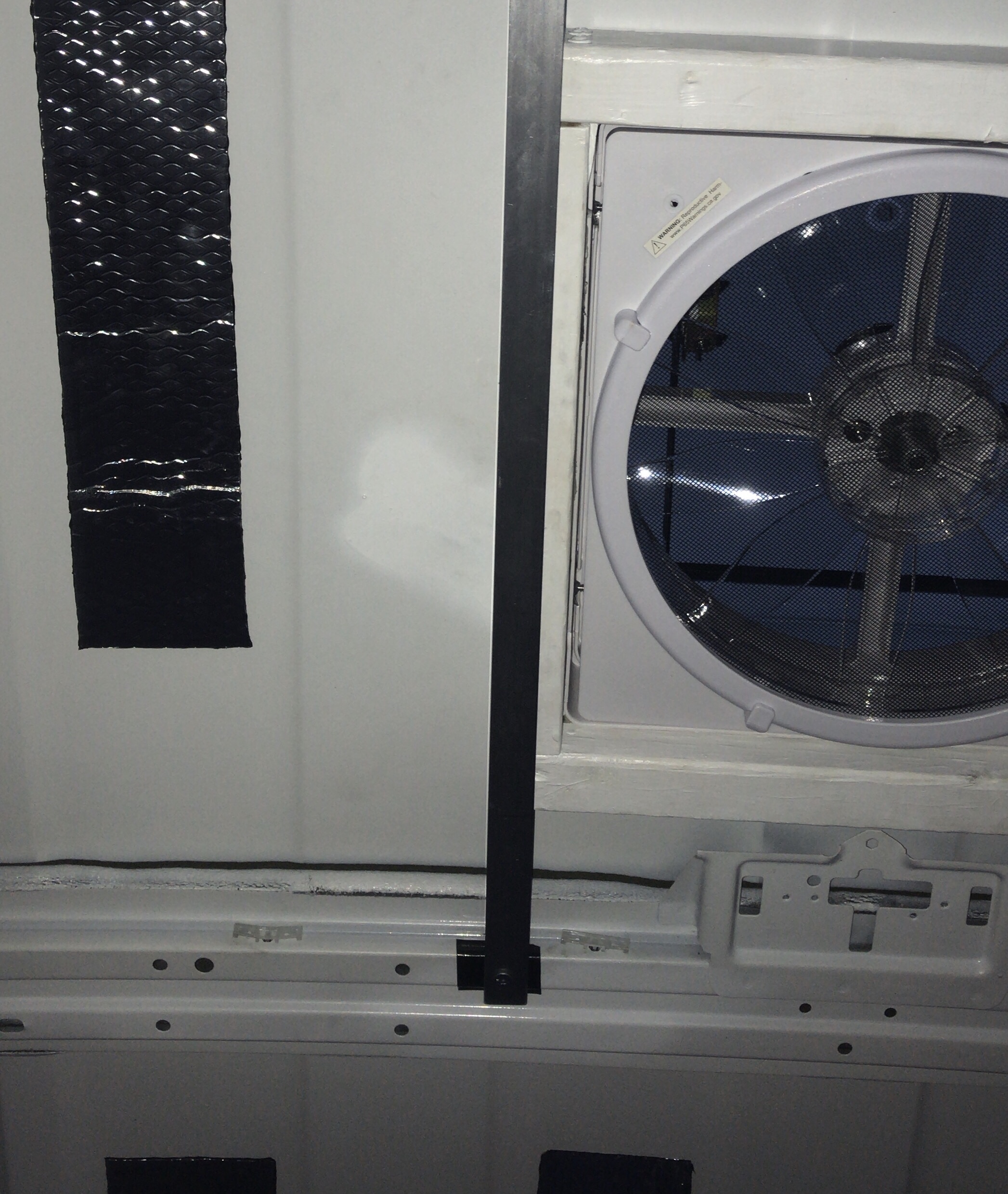
For installation I got a 1″ diameter aluminum rod and some cup hooks, which I screwed into the studs just in front of the ceiling edge. I placed the curtains on the rod and secured the rod into the cup hooks.

Window Deflectors

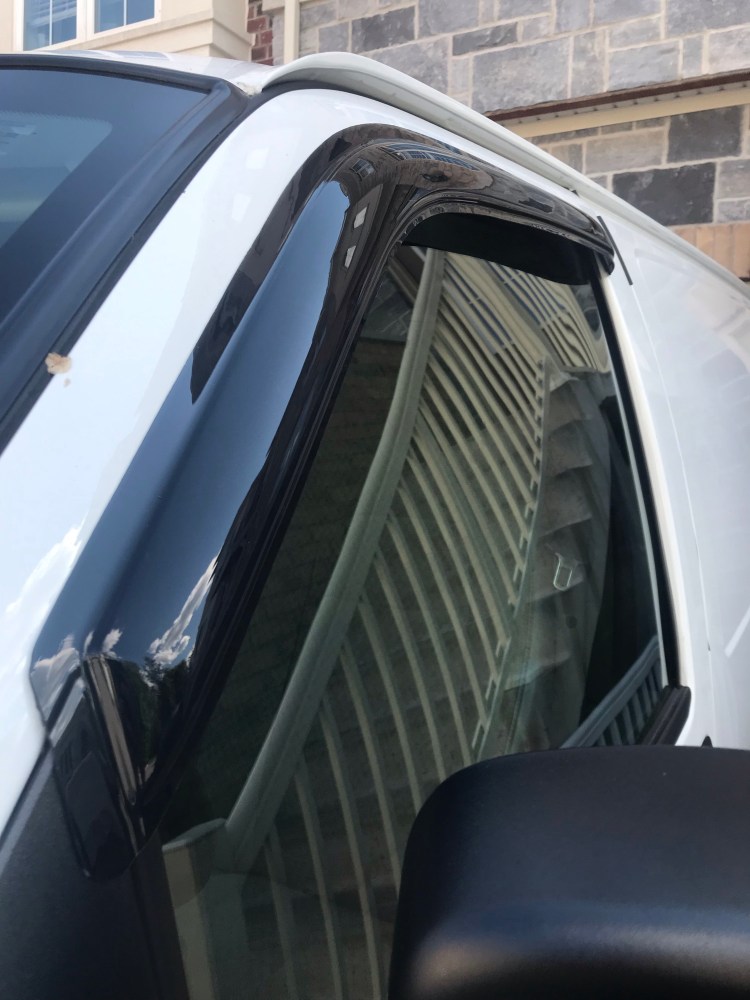
Before hitting the road I had weather deflectors installed over my two front windows. Adhered with 3M double-sided tape, these haven’t moved. I really wanted these so I could still crack my windows even if it was raining, and it provided some stealth to conceal cracked windows to onlookers.
Research

I had done A LOT of research in the year or so prior to hitting the road. Anytime I discovered useful information I would add it to a document on my computer for future reference. The document covers three general sections: the van (mechanics, maintenance, specs), the build, and the travel (places and activities to keep in mind), with all sorts of links and useful tidbits. I printed this document off and also emailed it to myself so I would always have access to the info if I needed it while on the road.

What’s In The Van

I had a list of things to bring with me on the road and things I needed to buy, either before leaving or while on the road:

  • Sleeping pad + Inflator
  • Sleeping bag
  • Water jug + pump
  • Food (snacks)
  • Clothes – note that merino wool is a great option as it is naturally antimicrobial and has moisture management. Every time I changed I would hang my clothes up somewhere in the van to air out (hot and sticky summer days) before putting them into my suit case. I didn’t want them holding moisture! Also – hats! You can get away with any kind of hair when you have a good hat.
  • Shoes (running shoes – indoor for gyms and outdoor, sandals, hiking boots, heels for wedding, walking shoes).
  • Toiletries (including but not limited to: toilet paper, paper towel, ziploc bags, natural all-purpose cleaner [water, vinegar, rubbing alcohol, essential oils], DRY SHAMPOO, basic makeup, WET WIPES, sunscreen, toothbrush, toothpaste, floss, shampoo/conditioner/body wash, hand sanitizer, nail clippers, pain killers, brush, compact mirror, aloe vera, essential oils, deodorant).
  • First Aid Kit (rubbing alcohol/ hydrogen peroxide, tick removal kit, bandages, antimicrobial salve – I had made one with St. John’s Wort infused oil and beeswax)
  • Books, Manuals (van manual, appliances like the fridge, power station, solar panels, fan), National Geographic on Parks, Research Document, Journal
  • Herbs and Supplements (It certainly was not as easy to drink herbal teas in an unfinished van, and tea makes up a lot of my liquid intake, but I carried several herbs with me for practical reasons in case I really did need them, and I had some pre-made tinctures with me, as well as elderberry syrup, echinacea, and garlic capsules to stave off any sickness – and I didn’t get sick once on the road! I had also pre-made capsules with powdered ginger root in case of nausea – though I never got road sick, but was good to have on the ferry just in case – and if my stomach got upset as eating different foods all the time could take it’s toll).
  • Fridge
  • Power Station + 12V Car Charging Cable
  • Solar Panels + Cables + In-Line MC4 Fuse Holder with Fuse
  • Bucket + Laundry Detergent Container + Funnel (Back up bathroom, though I didn’t end up using it if I could help it)
  • Flat Tire Tools + Torque wrench and socket set
  • Window Covers
  • Windshield Shade
  • Gas Can
  • Origo 1500 Single Burner Alcohol StoveFuel (Denatured alcohol) + lighter
  • Spare tire
  • Extra engine oil
  • Tire pressure gauge
  • Wheel chock
  • Smoke and CO alarm
  • Fire extinguisher
  • Dehumidifier
  • Cedar pouches (to put at doors to deter bugs)
  • Carabiners (great for hanging damp clothing, whether it be sweaty, wet from rain, or spot washed)
  • Thru-hike supplies (see my thru-hike post for details)
  • Windshield repair kit
  • Scissors
  • Gorilla tape
  • Mats to protect the floor
  • Crates and containers for storage and organization
  • String Lights
  • Lantern/ puck lights (used as I hadn’t hooked up the string lights; did find that they dimmed fairly quickly)
  • Speakers (since my van is a base model, it has no way to play music from my phone – no bluetooth, no USB, and no satellite radio – just plain old AM/FM. Which I didn’t mind when I dipped down through the states and I could channel surf and actually came across some stations I liked. But for those drives where nothing was satisfying me sonically, I brought a speaker to hook my phone up to so that I could either listen to my own music or podcasts).
  • Optional: air compressor to top up tire pressure (or just do so at gas stations)
  • Phone holder/ car mount for phone on dash
  • Extra fuses (van accessory outlet, fan, solar panels, power station car charging cable)
  • Mosquito netting (windows/doors)
  • Heater (I haven’t invested in one yet – looking at a buddy heater for the future – since I was travelling during the summer. There were only a handful of nights where it got chilly, the coldest being 6C one night when I first got to NL – but I just put on layers and zipped my sleeping bag up [rated to 0C and a mummy bag so covers everything but your face when fully done up] all the way and I was fine). I might try and get away without a heater (which makes me a little nervous having the propane burning in the van plus giving off extra condensation) by sticking to warmer climes as much as possible, using a hot water bottle I can sleep with, and long johns and a hat!
  • Extra fasteners/ basic tools in case anything needs repairing in the van; tool pouch
  • Optional: NOAA radio
  • Shovel/traction mats in case get stuck
  • Garbage bags (I mostly used ziploc bags or any plastic bags I got from Walmarts)
  • Laundry bag and detergent
  • Microfibre towels
  • Camping chair
  • Cutlery and dishes (though I really didn’t use them on this trip)
  • Kettle (I had my camp stove)
  • Optional: yoga mat (I might get one for my next trip)
  • Mini broom/ dust pan
  • Tow strap
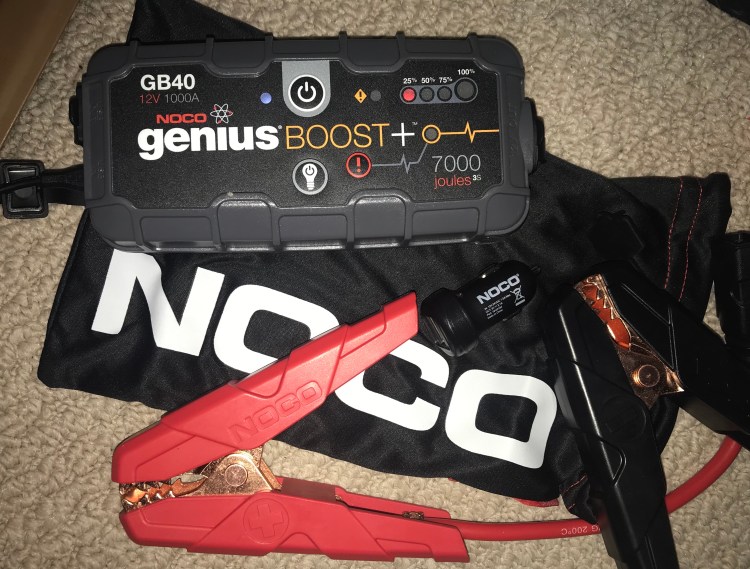
  • Jump starter or booster cables
Remember to charge before leaving!
  • Recycling bag/ container/ area
  • Passport, registration, insurance, ID, possibly an international driving permit
  • Optional: ear plugs. Some people can’t sleep with road noise, but I had no trouble even when I was parked overnight next to a highway – but that’s just me. I also want to remain alert in case someone knocks on the van or there is a disturbance of some kind – so I wasn’t comfortable with the idea of ear plugs.
  • Book bag/ gym bag
  • Lint roller
  • Bike lock/ combination lock
  • OBD2 Scanner

  • Bungee cords
  • Pillow
  • Glasses/ Sunglasses/ Contacts
  • Batteries
  • Canada and US Park Passes
  • Gym Membership (?)

I shoved all my stuff in the van and hit the road. I was in such a rush that I almost forgot my flat tire tools… luckily I remembered last minute, and didn’t get a flat on the road (knock on wood).

I didn’t feel fully prepared to be on the road, but I had prioritized the most important stuff to get done, and I think sometimes you just have to do it – or you never will.
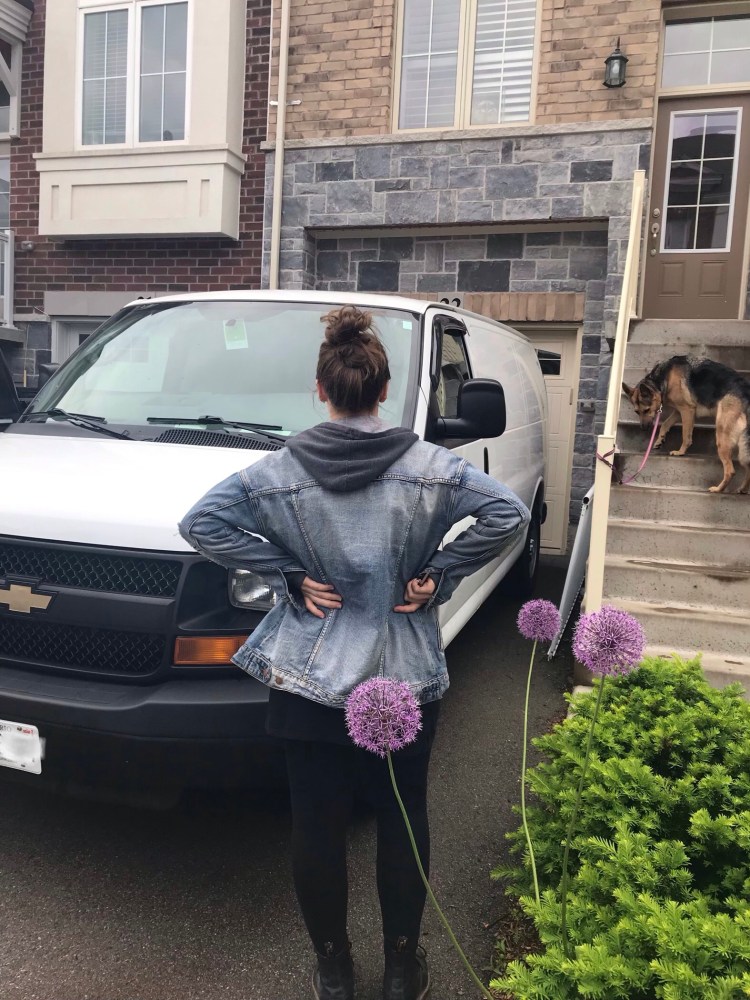
Ready to hit the open road!

Driving/ Overnight Parking

Ontario has “ON Routes” along the 401 and I had called ahead to ask about overnight parking – which they had no problem with. That was about it for my “planning” of the drive to Newfoundland – everything else I figured out as I went – with the exception of the ferry (from North Sydney, NS to Port Aux Basques, NL, which I had purchased my ticket for in advance).

Day 1 saw me stop into Kingston, which was one of the only places where I could find the alcohol stove I wanted (and at a decent price). I picked up the stove then went for a walk along the waterfront, before heading to a nearby ON Route for the night.
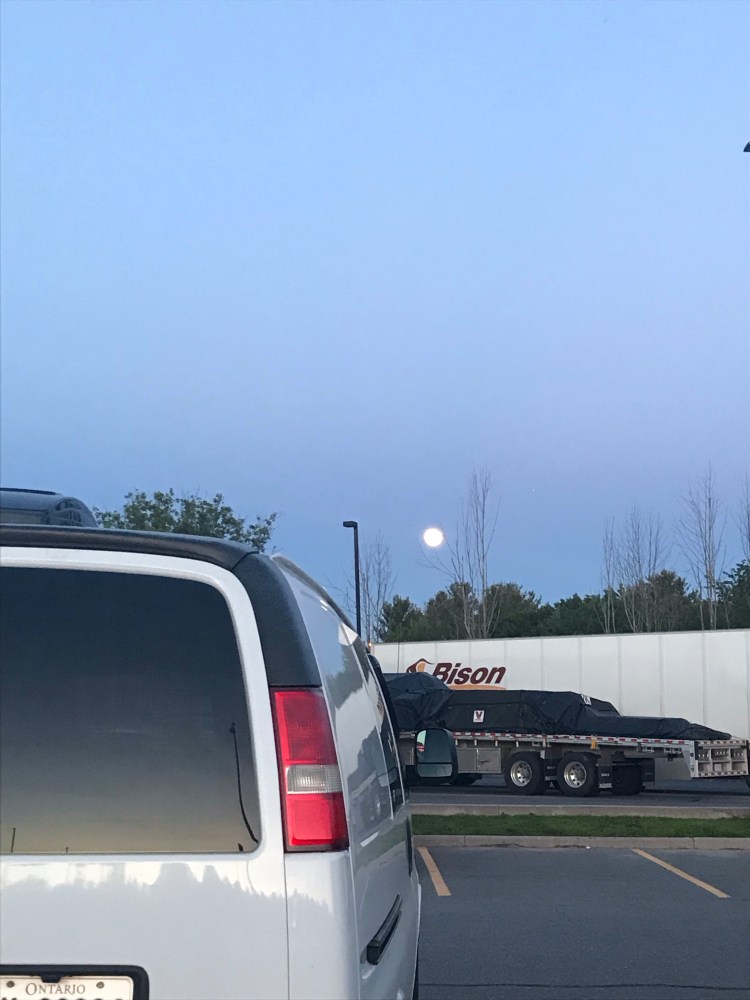
Mallorytown ON Route

Day 2 was a high stress day – I had no idea where I was going to sleep that night. I function best when I’m organized, so the thought of not knowing where I was headed or what I was going to do when the sun went down was a bit overwhelming as I tried to keep to my road trip schedule and adjust to this new way of life. I sat myself down in a Tim Hortons in Ottawa and checked my “research document” for answers. I had looked into this in the past, but hadn’t looked into it recently. As time was of the essence and I wanted to hit the road, I settled on Walmarts being the best option for now. I downloaded the All Stays App and began looking for options. I called a few locations to ask permission, noted the ones that were a yes, and hit the road to see how far I could get before dark.

While a lot of people may not be a fan of overnight parking in Walmart parking lots, it can truly be a lifesaver if you need a last minute place to park. I found it was a good place to ease myself into the van life lifestyle. It was familiar. There were washrooms and food and any supplies I might need to pick up along the way. It was convenient and I was grateful. Plus there were often other RVers around, which made me feel not so alone

With that major stress out of the way, I could now focus on getting to Newfoundland. I put in some long drive days, but didn’t get tired or bored as I listened to music and was exhilarated at being on the road. Triumphs like figuring out where to sleep boosted my confidence. Night 2 was spent in Drummondville, QC. Night 3 I was in Fredericton.
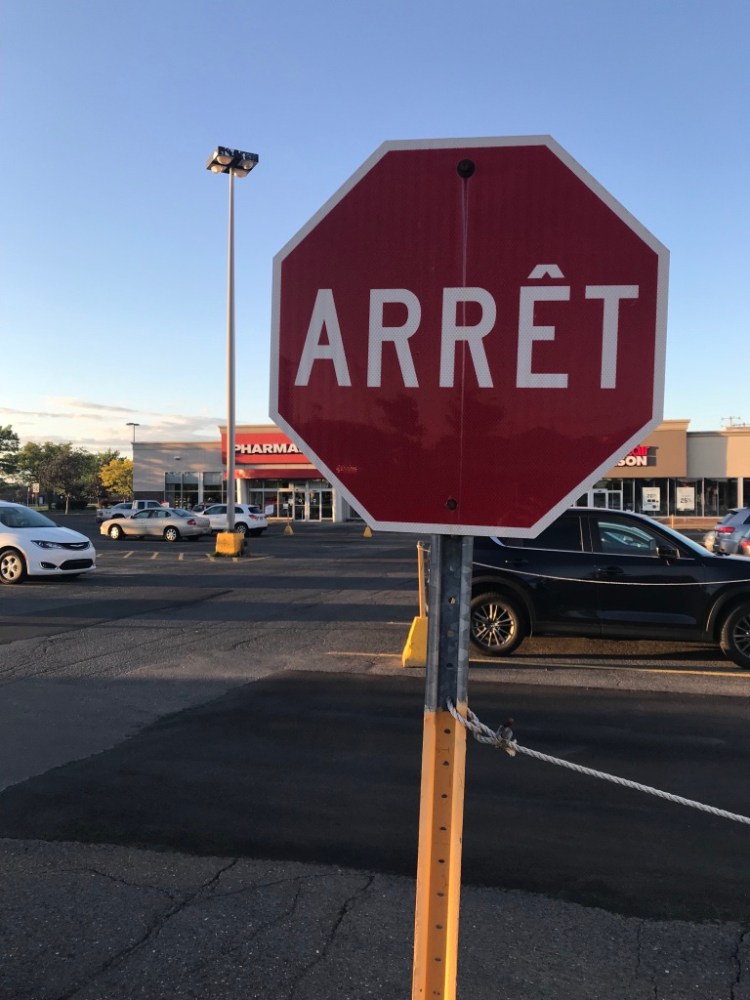
Quebec

Night 4 I was on the overnight ferry to NL (I had tried to get a room so I could have a bed and shower, but the overnight cabins sold out well in advance). I would have preferred sleeping in my van to the reserved seating (like first class plane seating) I tried to sleep in – and let me tell you it was freezing. After a few hours of sleep I drove to Corner Brook for some breakfast and to fill up on gas, then headed to Gander for the night.
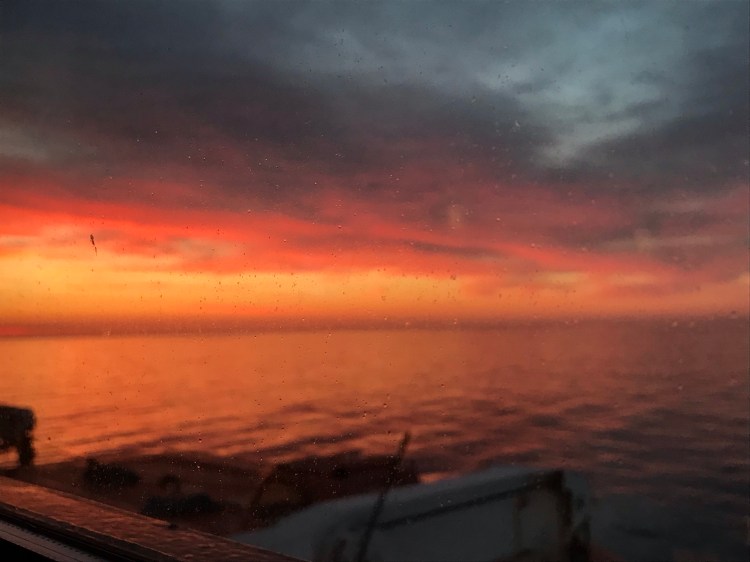
Arriving in Port Aux Basques

The next day I made my way to the east coast – Mount Pearl, where I grew up. There were three Walmarts between St. John’s and Mount Pearl that I would end up rotating between (along with a campground now and then as well as a beach). Despite having grown up in Mount Pearl, I felt least comfortable at the Mount Pearl Walmart (I had seen broken glass on the pavement and there weren’t any other RVs or campers there while I was there). I loved the Walmart on Kelsey Drive. The one off Stavanger was further but still nice.

Arriving in Mount Pearl and it felt very strange to be back.

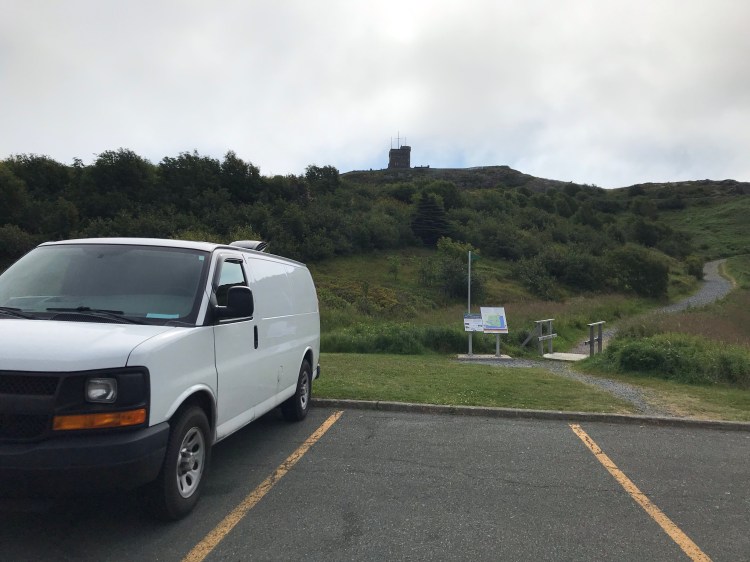
I was comfortable with having Walmarts as a constant option. I opted for campgrounds every now and then, which provided access to a shower and laundry and the sounds of nature to fall asleep to. As I got to know a place I would eventually figure out alternative spots to park overnight, such as Middle Cove Beach, and the Visitor Centre parking lot on Signal Hill – both of which I had no issues with (though the beach could be pretty crowded on weekends as people would come to have bonfires, or while the capelin were rolling).
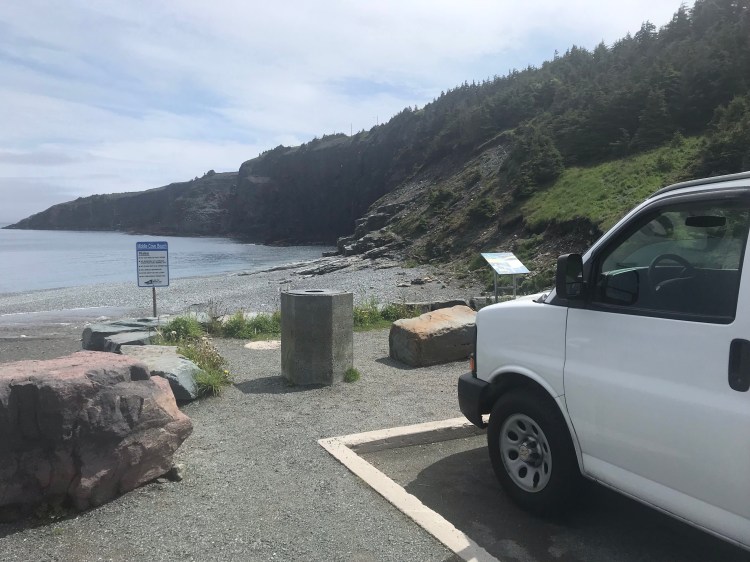
On my drive off the island I stayed at the Walmart in Grand Falls-Windsor as well as the one in Corner Brook.
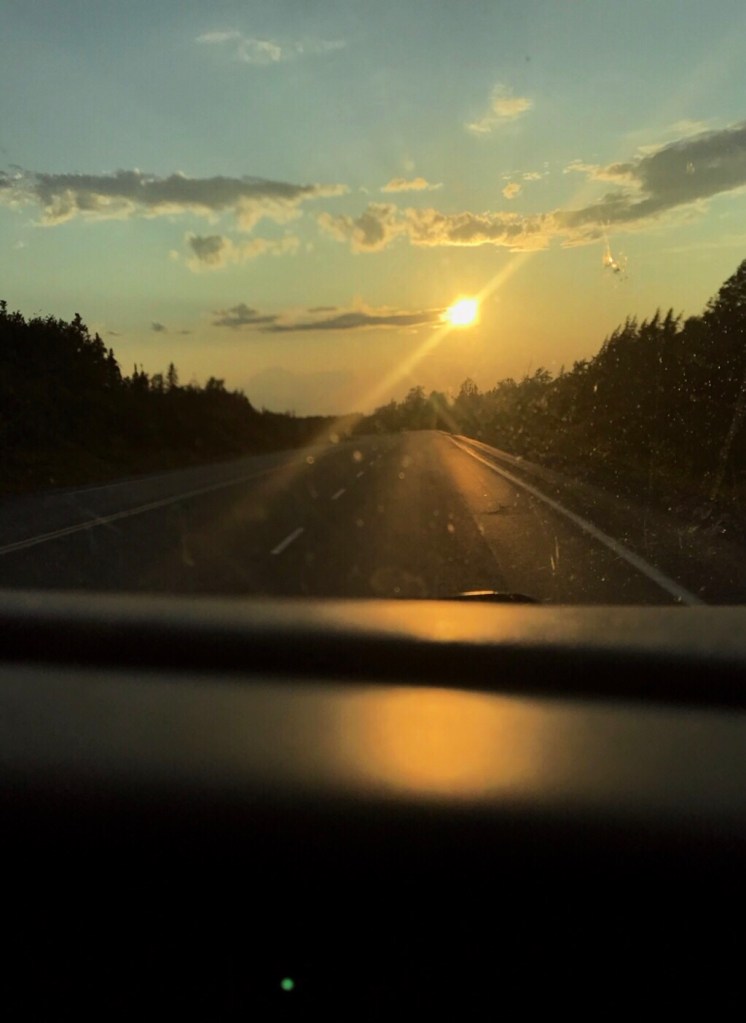
On the road again… leaving Newfoundland’s east coast after a 7 week stay.

I had decided to take the day ferry to North Sydney as they still had cabins available.
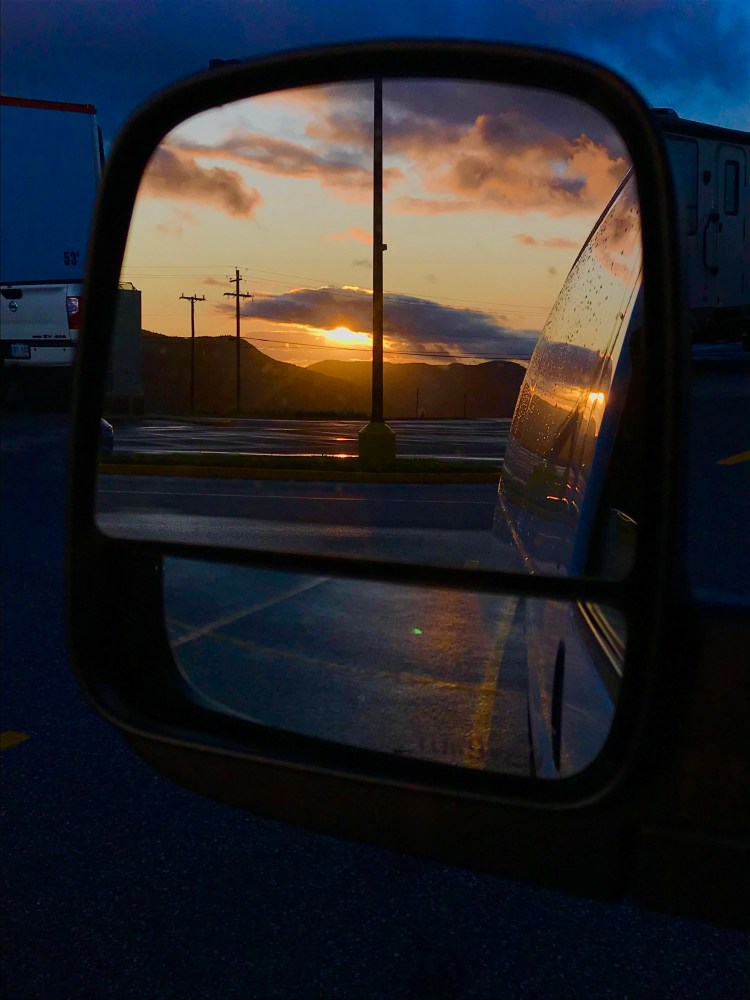
Up bright and early and off to catch the ferry back to the mainland.

I basked in the luxury of a room to myself – a bed, a shower, and a couple beers and TV!

*Luxury*

That night I drove to New Glasgow, NS, and gazed at the moon from their Walmart parking lot, which would be full a few night later in Moncton…

As I made my way through Nova Scotia, New Brunswick, Maine, New Hampshire, Massachusetts, Vermont, Quebec, and Ontario, I stayed overnight at Walmarts, campgrounds, and one street parking space that had been recommended to me.

Other Overnight Parking Options & Info

Over the course of this first bout of vanlife I went about the transition by doing one new thing at a time and slowly adding to my repertoire. There are many options for overnight parking, and which ones you choose really depend on your comfort level, preferences, and unique situations – which change on the daily. I started with Walmarts due to comfort and being mostly in urban areas. Campgrounds were a nice way to be a little more in nature and have access to a shower and laundry. Other spots revealed themselves as options when I stayed for an extended period in one place and got to know the area. Eventually, I will try new types of places to park overnight and develop favourites.

Pippy Park Campground, St. John’s, NL.

I have yet to try stealth street parking, and it’s not at the top of my list, but it seems to be an option when in a pinch.

I know some people rave about casinos, and this is certainly something I would consider when in a city centre.

Park and Rides are another option. I’m not sure if it’s technically allowed, so I would definitely aim to be stealthy.

I think dispersed camping in National Forests and on BLM land in the states will be something I really enjoy. Finding your own little spot with ever-changing views sounds magical, with privacy and the sounds of nature as a big bonus. The nature of dispersed camping means little to no services/ facilities. Generally, National Parks do not allow it, but it differs across parks. This is free camping. While each national forest has different rules, generally you are allowed to camp anywhere outside of designated campgrounds and recreation areas. Usually there is a 14 day limit and regulations vary regarding fires. It is encouraged to set up camp at least 200ft from water sources, and Leave No Trace!

Rest stops and truck stops are additional options. But again, things (laws, vibes) vary.

There are also a lot of things to keep an eye out for when considering a place to park and sleep overnight. One is checking signage – if it says no overnight parking – move on (unless it’s a Walmart that has given you permission to park overnight – which I have experienced and had no issue). A well-lit area is also a bonus as it is less likely to attract suspicious characters. Busy places or even near police stations can provide extra reassurance when choosing a spot. And if leaving your van for an extended period, using a lot with security like gates or cameras is a good idea in the event that you can’t leave it with someone you know!

There are many apps out there that can be used to locate spots for the night. I used the Allstays Walmart/ Camps & RV apps.

If you’re trying to be stealth or aren’t sure of the safety of an area, it’s prudent to not get out of your vehicle after parking and avoid drawing any attention to yourself. As a solo female van dweller I think this is a super important point in terms of safety. I also made a point of “dressing down” sometimes if I was feeling on edge. Specifically, there was one night where I pulled in late to a Walmart in New Hampshire and felt a little sketched out. I put on some baggy clothes and my glasses before heading in to the store to use the bathroom and buy some supplies. Can’t hurt, right? You never know who’s watching. Luckily, I was not disturbed that night.

On that note, I also tend to read the reviews on each Walmart I check out on my app – people sometimes describe the area and feel of the place. Generally I feel safer when I pull into a Walmart and there are several other campers there already.

It’s also a good idea to have a plan in place or quick exit strategy if you get “the knock” or are disturbed.

Here are some more resources re: overnight parking:

Fresh Off The Grid – Free Camping USA / Canada

Rubber Tramp Artist – Fundamentals for Boondockers

Into The Mystery 13 – Top 5 Boondocking Apps / Sites

Recreation.gov

FreeCampsites.net

Interstate Rest Areas – Overnight Parking Rules

Gnomad Home – Sleeping, Camping, and Overnight Parking

Cheap RV Living – Stealth Parking in the City

Cheap RV Living – Where to Stealth Park

The Vanual – Sleeping and Safety

RV-Camping.org – Boondocking

Frugal RV Travel – Overnight Parking at Rest Stops

Treehugger – Free Campsites in Canada and the US

Allstays

The Routine

After spending some time in the van, you develop some routines, especially morning and nighttime routines, and other ways of doing things.

Night 1 in the van was interesting. The sounds of the highway were close by. Since I was at an ON Route there were people coming and going all throughout the night. This made me feel somewhat at ease, though at one point I could hear a couple of men whispering next to my window, which freaked me out for a minute, but eventually they moved on. Nights were still cool as this was only mid June. I had a wool blanket and two thermarests, which delivered an uncomfortable and cold “sleep”. I ended up investing in a sleeping pad and sleeping bag from MEC, which made a world of difference and resulted in a wonderful sleep on night 2.

Eventually, I got my nighttime routine down pat. First, I’d make sure the front cab was clean and bring my belongings back into the cargo bay. Then I’d draw my curtains and put up my window covers. If the next day was going to be hot I would put up my windshield shade. I’d crack the front windows and raise the roof fan for passive ventilation. If it was already dark I’d take out my lantern for lighting. Next, I would rearrange my belongings to make room for my “bed”.

Many nights encompassed a late dinner in the van so I would gather my food (I might pick up Subway or something from a grocery store if I was going to stay at a Walmart, or use my camp stove if I was at a campground) and drink and put Netflix on my phone as my phone charged from the power station. Whenever I was connected to wifi on the road I would download shows to the Netflix app so that I could watch them when I wasn’t connected. If I felt the need to be super stealth I could use headphones and keep lighting in the van to a minimum.

I usually kept all garbage together and disposed of it daily (especially if there was food as I didn’t want to stink up the van or attract bugs).

I used my lantern and a compact mirror while getting ready for bed. In the beginning I would go into Walmart to brush my teeth, being as discreet as possible… but I quickly learned that I didn’t like to do this (can’t wait to have my own sink in the van)! Instead, I started using a ziploc bag and a water bottle in the van which would go out with the garbage in the morning. I’m aware of the issue with single use plastic and this is definitely an area for improvement. I used the bathroom as close as possible to going to bed. Since I was without sink I also used makeup remover wipes to clean my face. I had privacy to change my clothes before settling in to my cozy down sleeping bag.

I would also take out my smoke/ CO detector at night (which will be screwed into the wall in the future).

Mornings usually began with considering bathroom options. Usually if I went in to a Walmart I would buy something as I never felt okay about using their facilities and parking overnight and not buying anything. But this worked out as I could grab breakfast there, which might consist of a smoothie, fruit, veggies, and/or mini croissants (the cheese and jalopeno ones made fresh in their bakery were pretty good).

After the sun rose I knew I only had a few hours before it would start to get warm in the cargo bay, so I tried to get ready for the day before it got too warm. This often included some form of meditation to start the day. I would get changed, put my bed away and put everything back in their “day positions”, secured with bungee cords for driving. I would make myself presentable – clean myself up and “put on my face”. The last thing I did was take down the window covers and put down the fan/ roll up the windows.

Then I would start my day – or decide where I was going or what I was going to do. A lot of my “plans” on the road were born of a “go with the flow” attitude. Being on the road was teaching me to get away from super rigid plans – to have malleable plans and be willing to change directions with a shift in the wind so as not to miss any opportunities that presented themselves. I, myself, became fluid.

Some habits I developed on the road included parking where I could see my van easily (for example if I was spending some time in a Starbucks I would park near the windows and sit where I could keep an eye on my van).

I also drew the curtains when parked so that people would not be able to see into the back of the van.

I was meticulous in checking that I had my car key whenever I was getting out of the van and locking up. I would double- and triple-check, often holding the key in my hand, as getting locked out was not something I wanted to endure.

Funny story: I did lock the key in the van once on this trip. Luckily it was outside a friend’s house. I was flustered and in a rush since it was my last night in St. John’s. This friend happened to have a friend with a sort of “slim jim” tool – he came right over and got me into the van in no time and I bought him a beer in return.

Lessons

The first couple of weeks in the van were an adjustment period. Humans naturally struggle with change – we are creatures of habit. And there was no easing into it for me, I was suddenly all in, so it was a shock to the system. Especially as I was figuring things out as I went. That being said, there’s nothing like getting out of your comfort zone to push you to learn new things.

Bugs

Since I was cracking the front windows every night for passive ventilation, I found out the hard way that even in Walmart parking lots  – mosquitoes would find me. I purchased some mosquito netting from Walmart, placed it over the passenger side cracked window, and sealed the edges with tape. It wasn’t perfect, it didn’t look pretty, and I will certainly update it with a better method in the future – but in the moment it was a quick fix that did the trick!

Overheating

After one of my long driving days, I noticed some black residue all along the edges of the hood of the van. When I propped up the hood this residue was also around the inside of the hood. It felt dusty. I did some googling and the next morning called my mechanic. After sending him some pictures he said it looked like the undercoating I’d recently gotten done as rust protection.
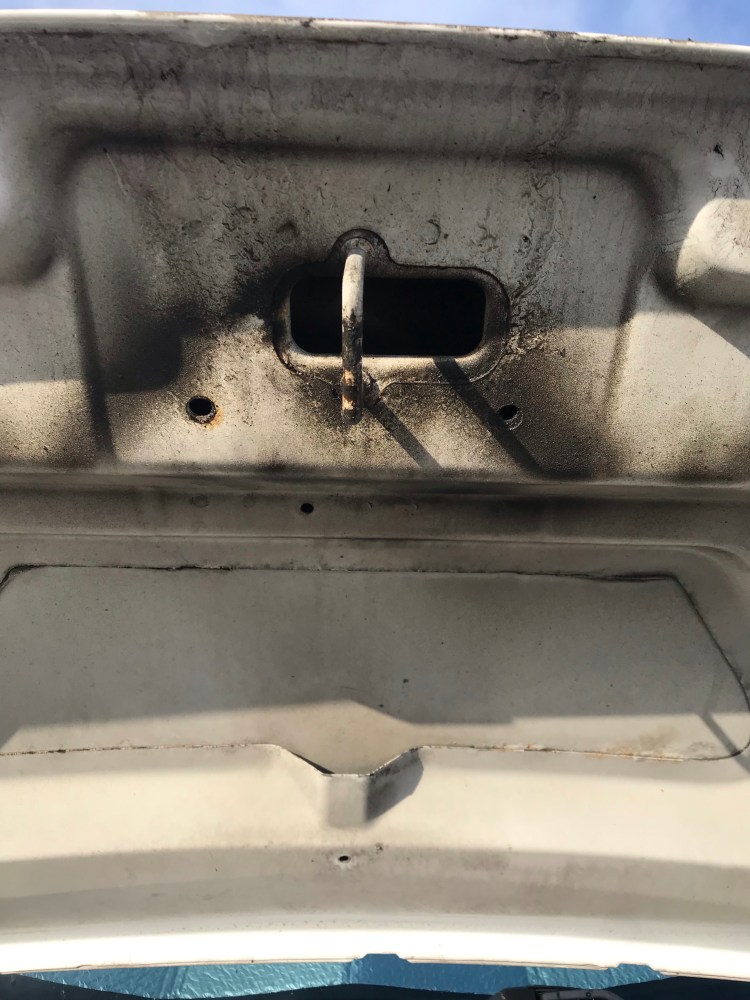
Undercoating residue.

I was relieved to know that the van wasn’t overheating. Coolant level was good. But since I was doing a lot of driving I figured it was good that I’d learned a few things to prevent overheating. Since it was summer, having the AC on all the time could put a strain on the van and lead to overheating. Limiting AC can help, as well as turning on the heat, which redirects heat away from the engine (though not a desirable remedy in the summer sun). Also having the AC on recirculation mode to improve efficiency helps in that the van is not constantly cooling warm outdoor air. Taking breaks from driving is another trick. Keeping an eye on the coolant level and engine coolant temperature gauge. Not pushing the van too hard up hills. Keeping an eye on the engine oil level/life. And obviously pulling over if engine temperature continues to rise.

Bathrooms

I had heard of other vanlifers using liquid tight containers/ funnels if they really had to use the bathroom in the van. I usually have to use the bathroom in the middle of the night and always like to have a backup plan. This is certainly an option if needed and you can wash out the container with bleach or vinegar and water (though the plastic does seem to hold onto some of the smell). Personally, I’d rather not use the bathroom in the van if I can help it. I did use double bagged large ziploc bags a few times. You get creative in a van. After thru-hiking for two weeks, I am perfectly fine with relieving myself in nature. Campgrounds were great in the sense that you have access to a bathroom 24/7. More civilized overnight parking spots, like Walmarts, require timed visits to the bathroom or covert methods. I also stopped in to visitor centres, malls, coffee shops, rest stops. A friend mentioned that hotels are a cleaner option, too, where staff will most likely assume you are a guest.

Showering

I was fortunate to have friends offer me their facilities should I need them while in Newfoundland. I took a few of them up on this, but since I was in town for a while my go-to became an indoor track on MUN campus called the Field House. For $3 I could use their indoor track and then shower in their change rooms afterward. I used a combination lock for my belongings and needed to have indoor running shoes. It was economical, a place I was familiar with, and a nice facility.

If I stayed in a campground I made sure to use their showers during my stay.

I also looked into gym memberships. I went in to speak with a Good Life associate. Their day pass is $15, so for this trip I mostly stuck with the Field House. But for future reference, since I would be travelling I would need a membership that covers all provinces – the Atlantic membership does this, ringing in at $70 for one month. Towels cost extra. In terms of travelling through the states I might look into Planet Fitness (lots of locations) depending on how much time I’ll be spending in remote areas/ parks vs urban areas.

Another option could be some truck stops, like Flying J. I have yet to try the ‘Trucker Path” app, but it’s something to look into.

Prior to leaving on my travels I had ordered a solar/camp shower. Unfortunately it didn’t arrive in time, so I didn’t get a chance to use it, but this would definitely be something I would use on the road, especially when boondocking in a remote area on public lands in the states.

And to keep things fresh in between real showers – wipes can certainly help. Even a cloth and water. And don’t be afraid to get creative. If thru-hiking taught me anything, it’s that showering everyday is a damn luxury and there are some neat tricks to keeping clean when doing without running water. There might be some instances where it’s not a priority (like in the middle of nowhere with no one else around) or accessible when on the road. Often I just needed a water bottle and soap – which I later realized was something Where’s My Office Now does, too!

Having good quality (natural) deodorant and dry shampoo were also great. So far in my explorations I’ve been using and love Pit Ninja by St. John’s Soap Works (NL) as well as Lunah Natural Deodorant. And I make my own dry shampoo for dark hair. Here’s the recipe in case you’re interested:

  • 1/4 cup arrowroot powder
  • 1/4 cup cocoa powder (cacao or carob work, too, though I find carob to have a strong scent)
  • 1/8 cup baking soda (optional – some people are sensitive to baking soda, can leave out or substitute bentonite or kaolin clay)
  • 1/2 Tbsp powdered horsetail (optional – silica helps keep hair healthy)
  • 1/2 Tbsp powdered lavender (optional – smells nice, calming, antimicrobial)
  • 10 drops essential oil(s) of choice (Optional; I like lavender and orange, rosemary is also a great option with many benefits for hair and scalp)

For more ideas on keeping clean on the road, I found this article really informative.

Laundry

On this particular trip I was able to use my friends’ washer/dryers, and also did laundry at campgrounds.

Laundromats are always an option, too.

Since I like to keep active with running and hiking – aka sweating often – having clean clothes is a frequent consideration. Another great lesson I learned on my thru-hike was “spot washing”. All I need is a little water and soap and I can wash the pit or crotch area of my active wear and it really helps keep things fresh longer. Having naturally antimicrobial fabrics is another plus (e.g., merino wool).

Is it Legal to Sleep in Your Car?

To me, a campervan seems to be grey area between a car and an RV. That being said, if I’m passing through a state that deems it illegal to sleep in your car, then I am going to be super careful and probably avoid parking overnight on city streets (though that hasn’t been an appealing option to me so far). I know that there was a lot of push back to making it illegal in California as people viewed it as discrimination against the homeless.

While I was in Massachusetts, it seemed that all Walmarts in my area did not allow overnight parking due to town bylaws, so I looked into the legality of sleeping in your vehicle, and sure enough, Massachusetts does not allow it. While reading up on this it seemed to me that the reasoning for these laws was to preserve parking spots and avoid issues with people parking in residential areas. So I simply strive to be cognizant of where I am and how laws may differ, remain stealth, don’t do anything to attract attention or disrupt those around me, and choose my parking spots carefully. Moving around and not being in one spot all the time also helps to not draw too much attention.

Talking to locals can also help – when I was in Salem and staying at a campground, one of the employees shared with me a location where people park their RVs, even overnight, for free without issue. Or you can call the local police non-emergency line.

This, this, and this are great articles that go over sleeping in your car. Pros and cons to sleeping in your car, why people do it, and tips like not parking on city land, near schools or parks, or close to residences, as well as where it is legal to sleep in your car.

Mail on the Road

In my haste to get on the road, I forgot to bring a few vital things (like my hiking boots!). I had the option of having these things mailed to me. So how do you receive mail when you’re mobile? I used Canada Post’s Flex Delivery. Simply sign up for an account, add post office locations, and use the address given (P.O. BOX) for shipping. You’ll be notified once your package arrives.

Gnomad Home also has an in depth post on this topic!

Gas Station Zip Codes

Okay, so this had puzzled me on several trips in the past, but I’d just bypassed the issue by paying in-store before fuelling my vehicle. This time around I decided to ask the gas station attendant – what do you do when asked for a zip code at the self-serve pumps but you don’t live in the US/ have a Canadian postal code? I had tried random zip codes (like 90210…) but it didn’t work, and wouldn’t let me pump gas. I was told that I just have to use the three numbers in my postal code followed by two zeros. So, for example, with a postal code of A1N 4V2, I would enter 14200. Sure enough – it worked!

Things to Keep in Mind

My research document has a LOT of info in it. Almost too much to keep track of. But here are some things I liked to keep in the back of my mind while on the road.

Keeping high crime or sketchy areas in mind. This could take the form of research prior to visiting locales, like researching high crime areas (e.g., Oakland, North LA, Anaheim). Or being mindful of reviews re: potential overnight parking spots. And trusting your intuition. You can often tell if a place has an unsafe feel to it. If your gut is saying no it’s time to go.

Being careful not to transport hazardous materials (fuel, propane, etc.). There have been incidents where leaks occur inside a vehicle while someone is sleeping inside and they have died from carbon monoxide poisoning. Combustion may also be a consideration. This is why it would be nice to have some storage outside the van in the future (though the trade off would be stealth).

Weather. Prior to getting to Newfoundland I was aware of how windy it might be (especially driving along the coast and through the “wreckhouse” area) and how this might affect handling of the van. Surprisingly, I had no issues with wind on this trip. But it’s important to be aware of your surroundings and the risks for certain types of weather and natural catastrophes. Other considerations include hurricane and tornado season, flash flooding, earthquakes, and forest fires. It’s a good idea to listen to local weather reports and know the risks for each phenomenon in the area you’re passing through.

Putting stress on the van. I was cognizant of not putting pedal to metal up hills so as to not ramp up the RPM or put too much stress on the engine, especially with a load.

Alcohol. Be careful if you’ve been drinking and plan on sleeping in a vehicle, or if you have alcohol in the vehicle. Definitely stay out of the front seats with the car keys if you’ve had anything to drink. Avoid having open alcohol in the vehicle. Avoid any situation where it could be construed that you might drive under the influence. You can be prosecuted if police think there is any intention to drive. Laws may differ by location.

Safety checks. Keep an eye on tire pressure and top up when needed. Monitor for tire wear. Periodically check fluid levels (engine oil, coolant, windshield washer fluid) and top up if needed. Keep an eye on all your lights (signal, brake, night, high and low beams) to make sure they’re all working. Get your vehicle serviced regularly. Also periodically check fasteners to make sure they are still secure and sealants (e.g., around rooftop fan) to ensure no leaks. These two things are especially important for any installations outside of the van.

Van weight. My van is only permitted to weigh a certain amount. The vehicle weight is 2201kg/ 4842lbs and gross weight allowed is 3000kg/ 6600lbs. So I can add (pack the van with) up to 799kg/ 1758lbs (which would still be 600lbs less than it’s capacity). I had calculated a rough estimate of weight added to the van in the build as well as from what I’d pack it with on my travels to ensure I was within this range. But you can also go to a weigh station to see what your load is.

Nature. Different locales have different native species. This includes moose and deer to be vigilant of on roads. How to properly store food so as not to attract bears in national parks, provincial or state parks, national forests, or any wilderness area that has bears. What are the proper practices if you encounter a bear in the wild? Where might you encounter snakes, scorpions, tarantulas, ticks? What insects or plants should you watch for (e.g., poison ivy)? How can you keep ants, mosquitoes, or other critters out of your van? I’ve heard of places where there are critters that like to snack on rubber under your vehicle and people actually have to barricade the base of their vehicles to keep these animals out!

Preventing Condensation/ Mold/ Rust. I think ventilation is the best prevention. So I’ll definitely have the fan hooked up to pull air through the van and moisture out on my next stint. I think having the AC or heater on recirculation mode while driving is also helpful. Avoid bringing wet clothes or towels into the van. Use quick drying fabrics as much as possible (e.g., microfibre towel). If using a heater, dry heat is ideal, though maybe harder to have (e.g., wood stove). I’ll be building my bed with slats so the mattress can air out. Here is an informative article on the topic.

WiFi. Public WiFi – that’s all I did!

Sights & Experience

It was absolutely surreal to be back in Mount Pearl, NL, after having left for what I deemed the final time three years prior. It’s amazing the memories and emotions that begin to flood back.

Upon my arrival I met up with some friends who were staying at a downtown St. John’s Airbnb and they let me use their shower – which felt magical. We caught up over a beer and I scouted out a Walmart for the night.

The next day was my friend’s wedding, and basically a high school reunion. It had been a long time since I’d seen some of my best friends and it was great to see them all.

The first week in Newfoundland was a bit odd as I adjusted to being there. I had known going in that there would be a lot of emotions bubbling up. Childhood and teenage memories, baggage from the past, and being in the place where my Dad had passed away.

Bowring Park: I ran my old running route, traversing familiar land and memories, working through my emotions by way of exertion, meditation on the riverside, and communion with nature.

The only reason I’d been in NL three years earlier was to get closure, be with family, and help my mom sell my childhood home and move. When we left I knew that I would need some space. If I’m being honest, I wasn’t sure if I’d ever come back. But at the very least I knew I needed time and space so I could heal and get perspective.

I did that. And now I needed to be back so I could dig up the remaining vestiges of a life long gone. I needed to see what still hurt, what was still holding me down, so I could explore “why”, work through it, let it go, and move forward.

Through meditation and time in nature, I was able to do this.

My happy place: Middle Cove Beach. A morning meditation.

My first week or so on the island was spent seeing friends, who I am so grateful to have been able to reconnect with. I feel like I strengthened a lot of bonds.

Following the wedding and socializing, I decided to thru hike Newfoundland’s East Coast Trail (I have a blog post that goes into detail on that). I took a week or so to plan it out. I bought maps, organized my route and schedule, researched best practices on the trail, made a list of supplies, and then went out and bought everything I would need.

I had one amazing friend offer to drive me to the southern trailhead at the start of my trek. I had another amazing friend who offered me a place to park my van while I was on the trail. And I had a third amazing friend who picked me up at the end of my hike.

The thru-hike spanned 15 days, followed by several recovery days. As my body healed, I slowly reintegrated and made plans to see my friends one more time before leaving the island. I frequented Starbucks for their wifi as I made plans for my route and activities on the road trip west.

I hadn’t planned on being in NL for 7 weeks, but time flies. My motto on this trip had become “go with the flow”. And I started jumping at every opportunity that presented itself and trusting my gut on where I needed to be. I even made it out to George Street Festival and Quidi Vidi for the Regatta!

In the end, I got what I needed and more from being in Newfoundland. One morning, after sleeping at Middle Cove Beach, I did a meditation on the beach.
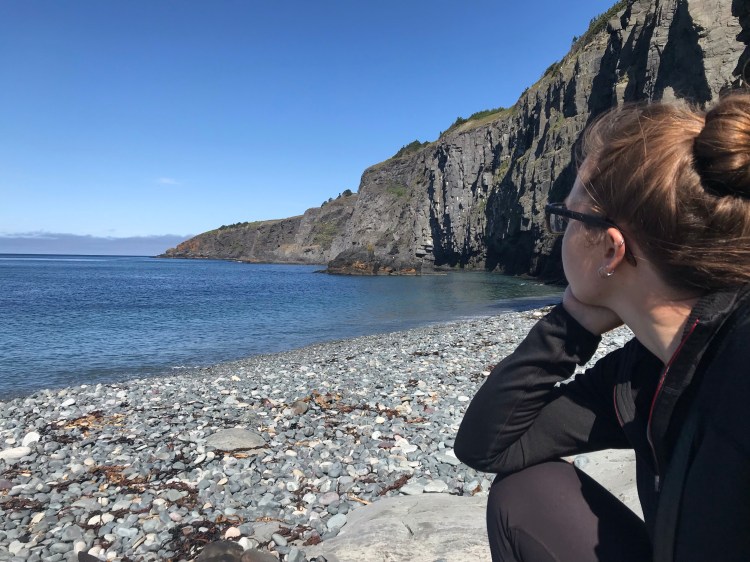
I realized that this trip back to a place that means so many things to me, was about reclaiming its meaning – defining it in a way that served me, rather than making me shudder. I could let the memory of my Dad dying colour things, or I could focus on the good memories of him and celebrate the opportunity to connect with those vibrations of his life that the land still holds. I could hold on to teenage baggage, or I could let it go and decide what part of the island makes me happy (namely, the coastal hiking and some special people).

So what does NL mean to me? It’s a place that had a hand in my formative years. It’s a harsh environment that conditions you to be stronger and able to weather the storm. It’s rugged beauty that is appreciated because of what it’s been through. It’s the ocean – ancient wisdom and cleansing waters and refreshing salty air. It’s the trees and the crows and the whales. It’s the handful of people who will always have a special place in my heart. It’s the place where I found myself when I had lost everything, embarking on a spiritual journey. And it’s a place that will forever resonate with echoes of my dad’s life. And I have to be so grateful to be able to visit this place.

The impact that nature had on me on this trip was undeniably palpable. The thru-hike showed me what it was to be at peace. And getting out onto the ocean had the power to completely transform my demeanor. I was in NL on the anniversary of my dad’s death, feeling pretty low, so I decided to go out onto the ocean to watch the sun set – and I swear I was not the same person afterward. It was like all my pain had simply melted away – everything was okay again.

Prior to starting my drive off the island, there was one thing I’d chickened out of doing. The urgency that fills you when you realize it might be your only chance to do something (which happens often on the road, always moving place to place) pushed me to “just do it”. I was really nervous, but also exhilarated. I never want to regret the things I don’t do. And this experience taught me the importance of going for every opportunity that presents itself. To put yourself out there – because what do you have to lose? Van life taught me this lesson and I am so grateful for it. It’s how I want to live my life.

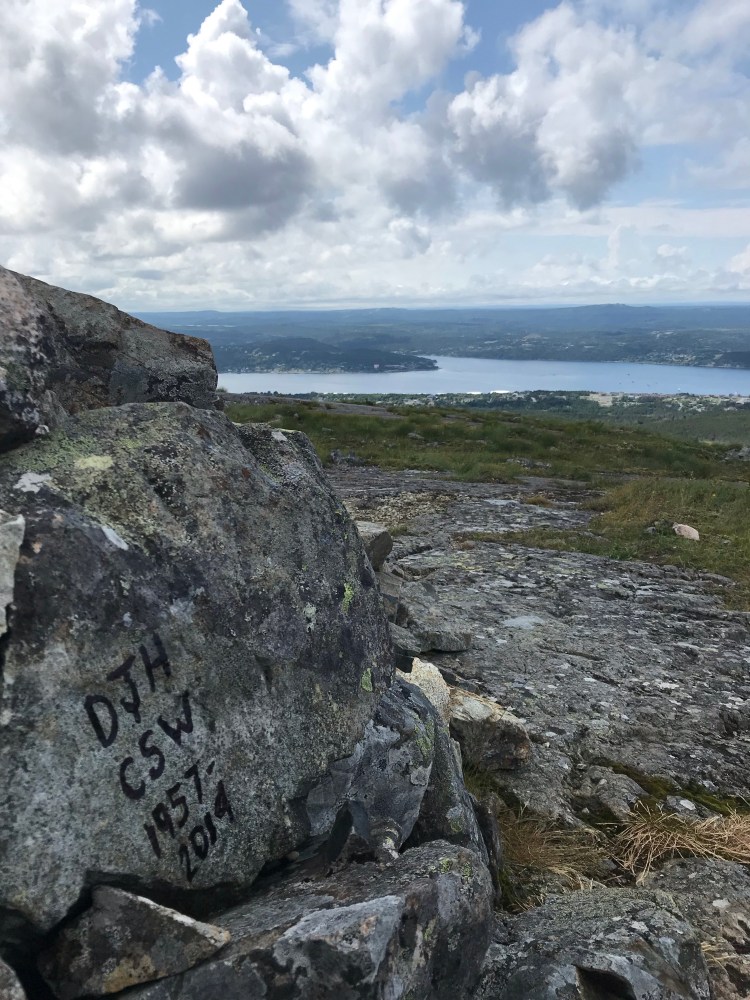
Finally, I started driving west. Before leaving the island I had a couple of choice hikes to get under my belt. The first was to Butterpot Hill – a hike I used to do with my dad.

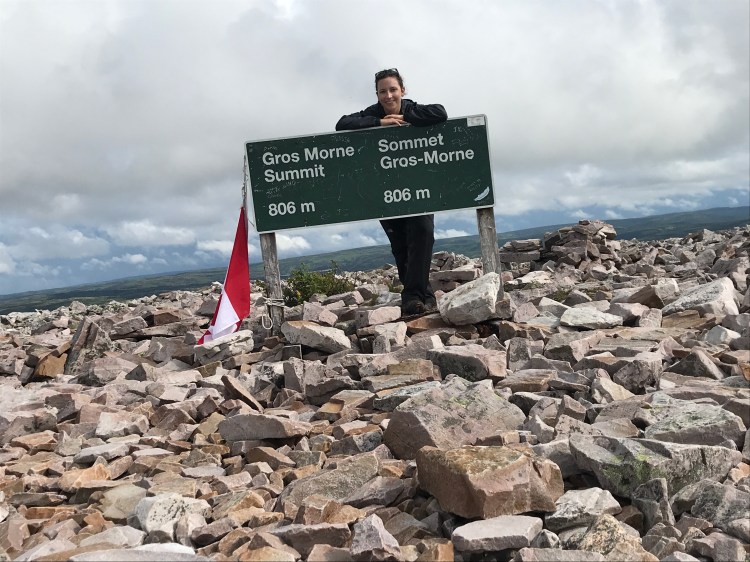
The next stop, and you could call it unfinished business, was to hike the Gros Morne Mountain Trail. As a kid we did a family vacation to the area and while my Dad did the hike to the summit, I had not been allowed due to inappropriate footwear. As an avid hiker, this had always stuck with me. Having come back to NL in large part for closure, it was important to me that I get to do this.

But it wasn’t looking good on the drive up. The skies were ominous and they opened up with thunder, lightning, and torrential rain. I had to pull the van off the road due to impossible visibility and a fear of hydroplaning. It wasn’t looking good for my hike – which was 16km. I didn;t want to give up, so I kept driving till I got to the trailhead. I had seen flashes of blue sky here and there and the rain seemed to have gotten lighter. I decided to dawn my rain gear and start the hike. It was 4km (about an hour) to the base of the mountain, so I figured I could get to the base and make the final decision there.

It kept raining, with intermittent downpours and thunder and lightning. The trail became a river and I must have passed about 20 people going in the opposite direction, one yelling out to me that I was “going the wrong way”.

But by some miracle, as I reached the base of the mountain, the sun came out. The rain had stopped. Things were actually drying out a bit. Signs warned that if you could not see the top of the mountain that you should not proceed. I could see it. While I could hear the thunder in the distance, I went for it. And by some other miracle the rain held off until I was within a kilometre of my van – only starting to pour again once I’d gotten safely inside! I did it! And it was well worth it. My heart was full and I was ready to leave the island…

Following the ferry ride to North Sydney, I decided to head down to Nova Scotia to explore and visit a friend.

Halifax Public Gardens

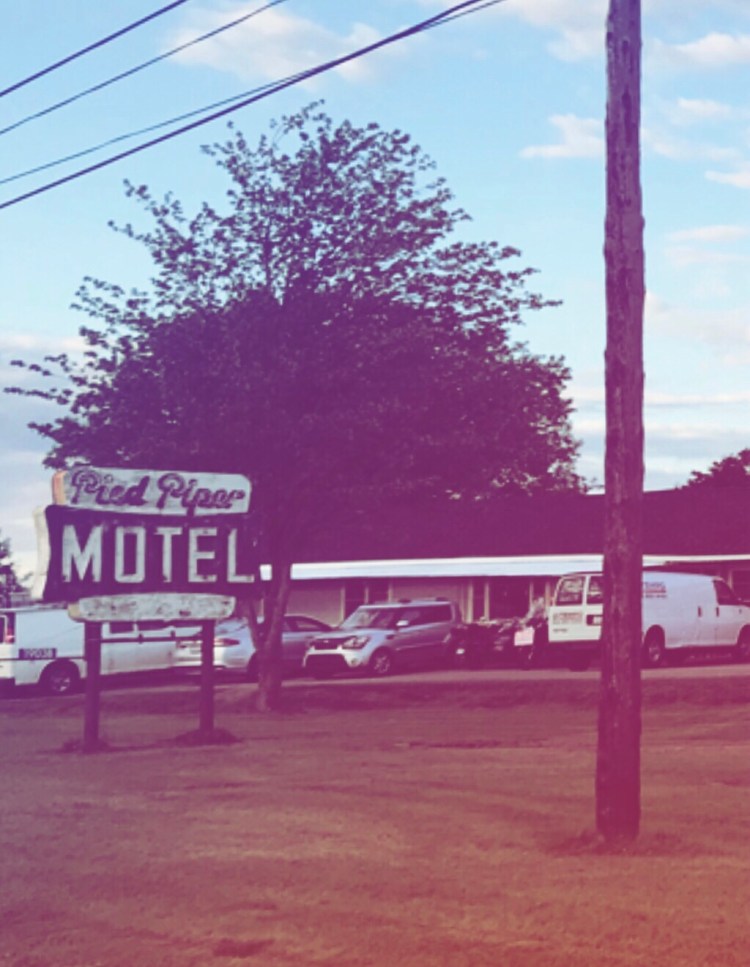
On my way north from Halifax I made a quick put stop in to Amherst, Nova Scotia. Years ago I’d stayed at a motel and had a paranormal experience. I’d always regretted not asking the attendant if there were any corroborating stories about the place being haunted, so I figured, what the heck? I was passing through anyways. Unfortunately this attendant just looked at me like I was crazy… Oh well.
Then I was off to Moncton, Fundy National Park (where I hiked and saw the Hopewell Rocks), and Fredericton to plan a week in the states. I spiced things up by going to see movies some nights.

Crossing the border into the states is always nerve-racking for me. I made sure I was presentable and the van was tidy. I had booked a campground in Massachusetts so I had a destination to reference. I have nothing to hide and pure intentions, but my heart always starts to race as I approach the agent on duty. This time around the guy seemed friendly, but then out of nowhere asked, ”so what have you been arrested for?”, followed by, “give me one reason why I shouldn’t think you’re going to stay in the US”. I was dumbfounded. I’d never been arrested in my life. And since I’d been on the road and living in a van I didn’t exactly have roots, like a job, to show I had something holding me in Canada. It was just my word. I think it was purely a judgment call, and thankfully he let me through.

It took about an hour of feeling guilty, as if I’d done something wrong, before I shook the feeling and felt grateful for the opportunity to explore new land.

I headed to Bangor, Maine to explore some Stephen King landmarks, starting with the Mount Hope Cemetery. This is where part of Pet Sematary was filmed, and it is said Stephen King likes to go for walks here. Truly, a beautiful place.


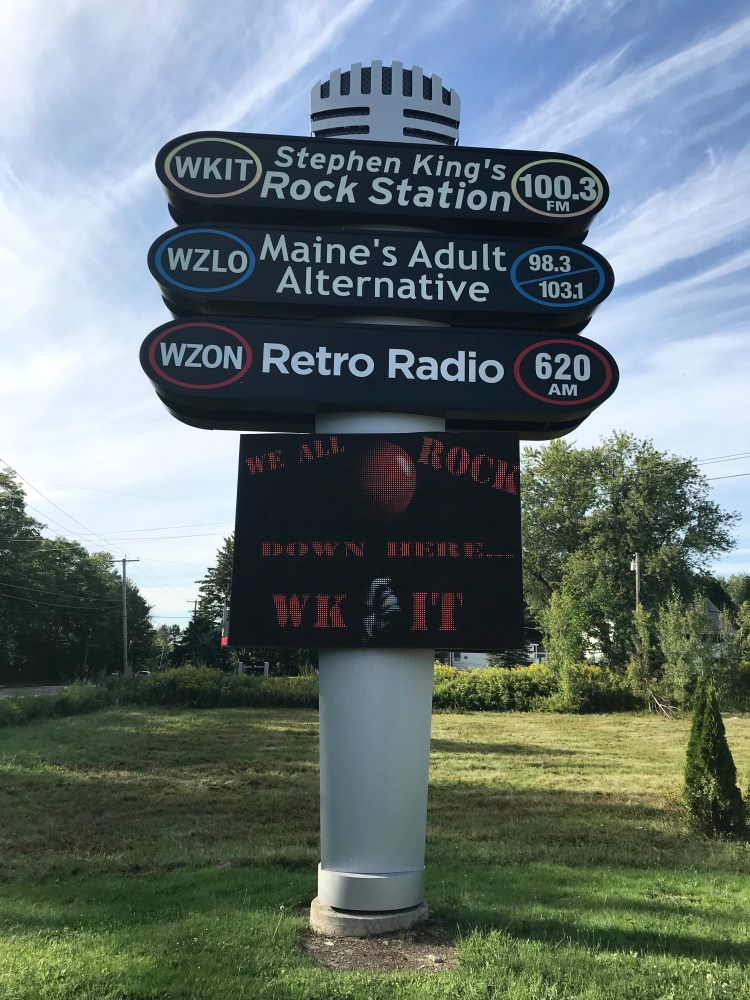
I then drove to the radio station that Stephen King owns… yes, he’s that cool. And it’s a rock radio station – I was listening to it as I drove through the area and it was pretty good! The sign for the station, 100.3 WKIT (sounds like wicked, the K is for King, the IT is for… well, you know) showcases a red balloon and their slogan, “We all rock down here”.
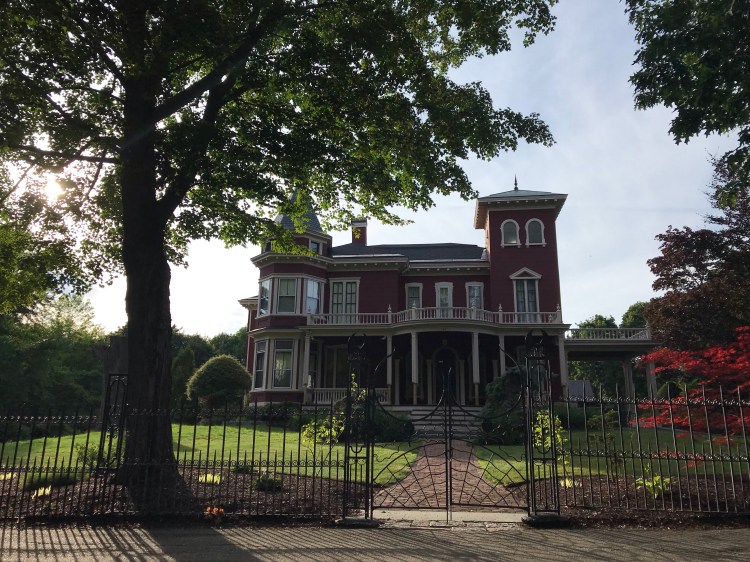
Finally, I drove by King’s 19th century red Victorian mansion, enclosed with wrought iron fencing that takes on the shapes of bats, spiders, dragons… my dream home really.
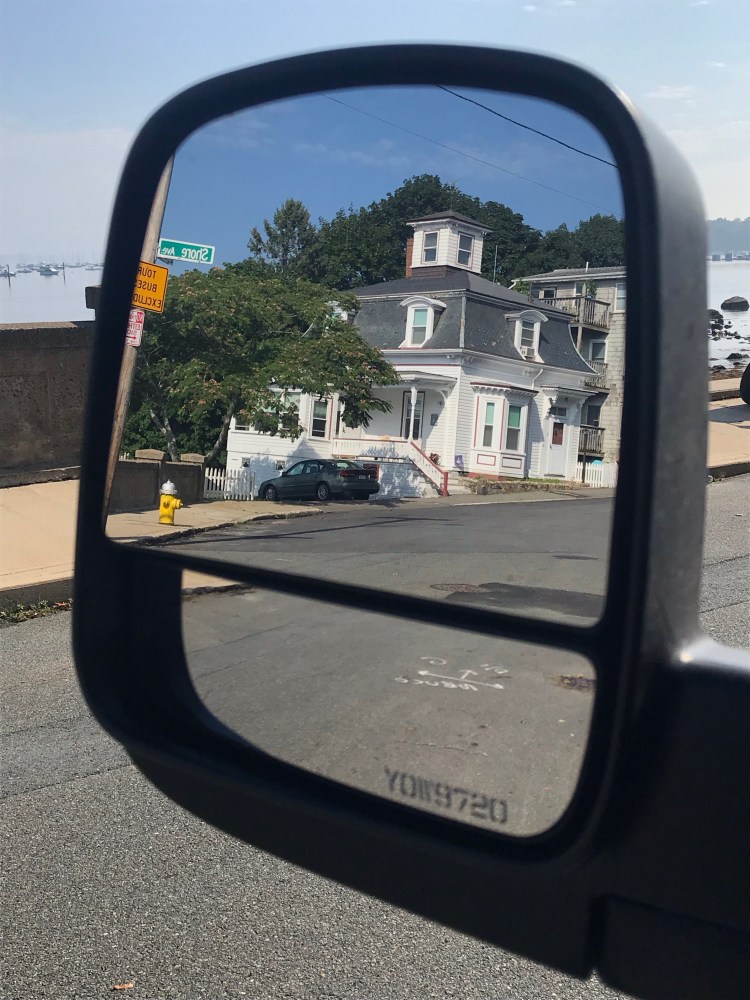
I proceeded to spend the next week exploring Salem, MA and the surrounding areas, including Boston. There is such a rich history here, whether it be the 1692 Witch Trials, maritime history, colonialism, or architecture, there is sure to be something of interest for anyone visiting.

Prior to arriving in Salem, I did a tour of the beautiful Hammond Castle in Gloucester.
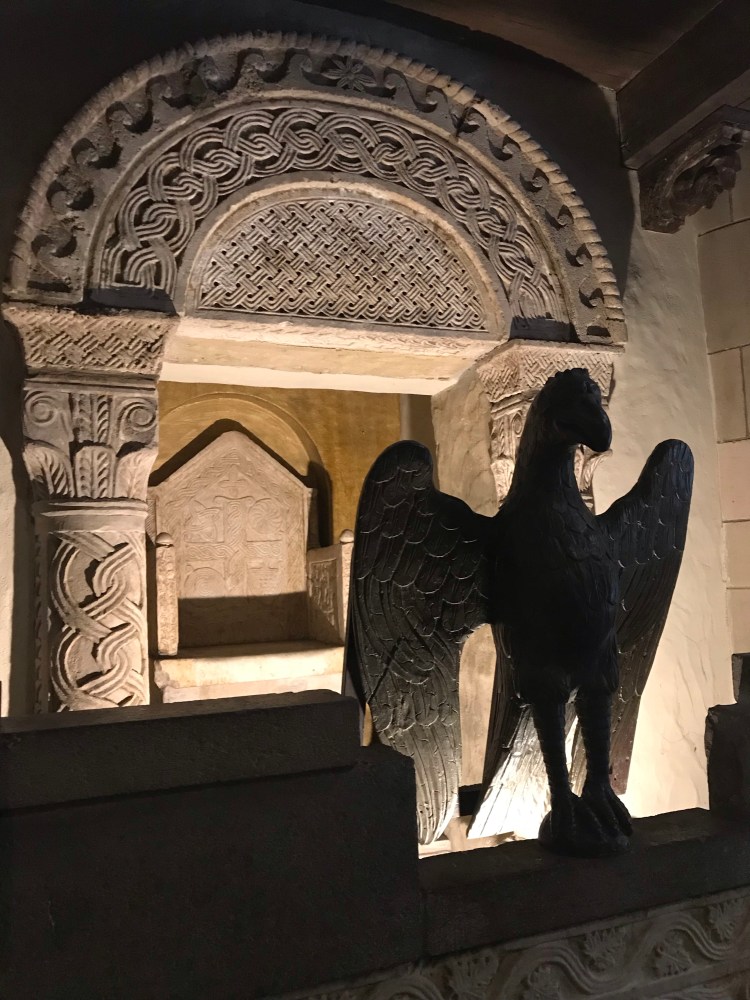
I stayed a few nights at Winter Island campground, which is a 15-20 minute walk from downtown Salem (with trolley available) and close by the ferry to Boston.
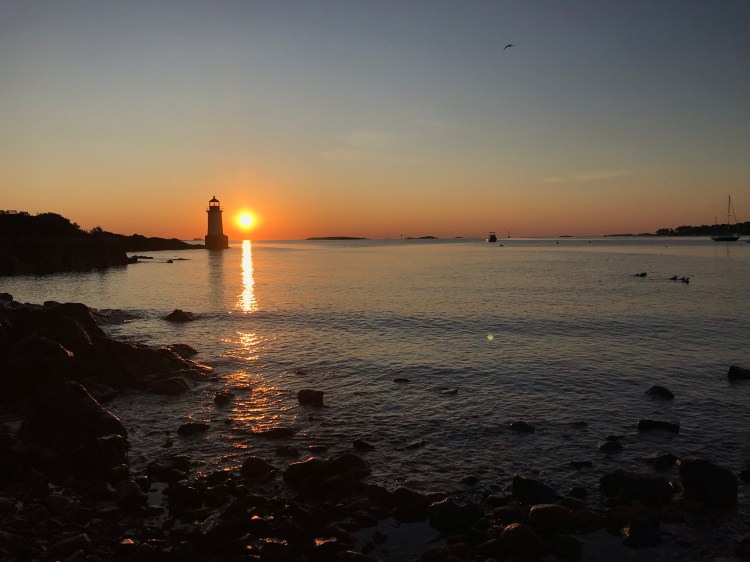
Sunrise at Winter Island

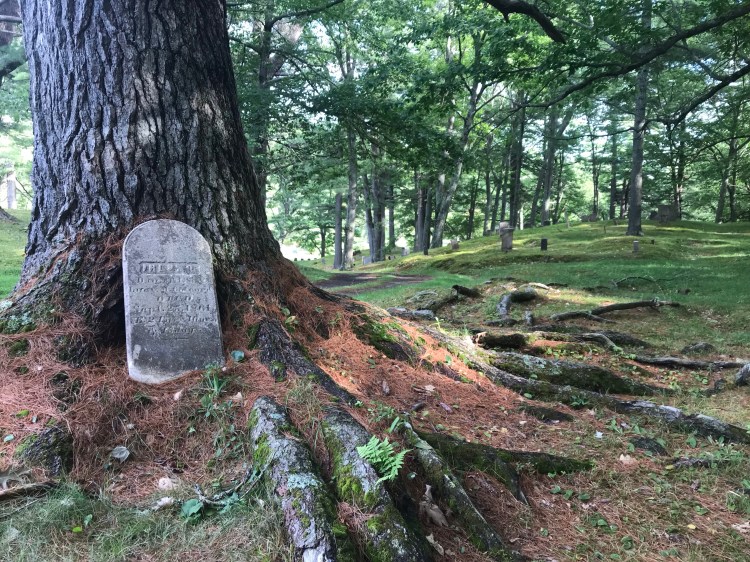
I did a day trip to Boston, taking the ferry. I explored King Chapel Burying Ground (est. 1630) and Granary Burying Ground (est. 1660) where the likes of Paul Revere and Samuel Adams are buried.
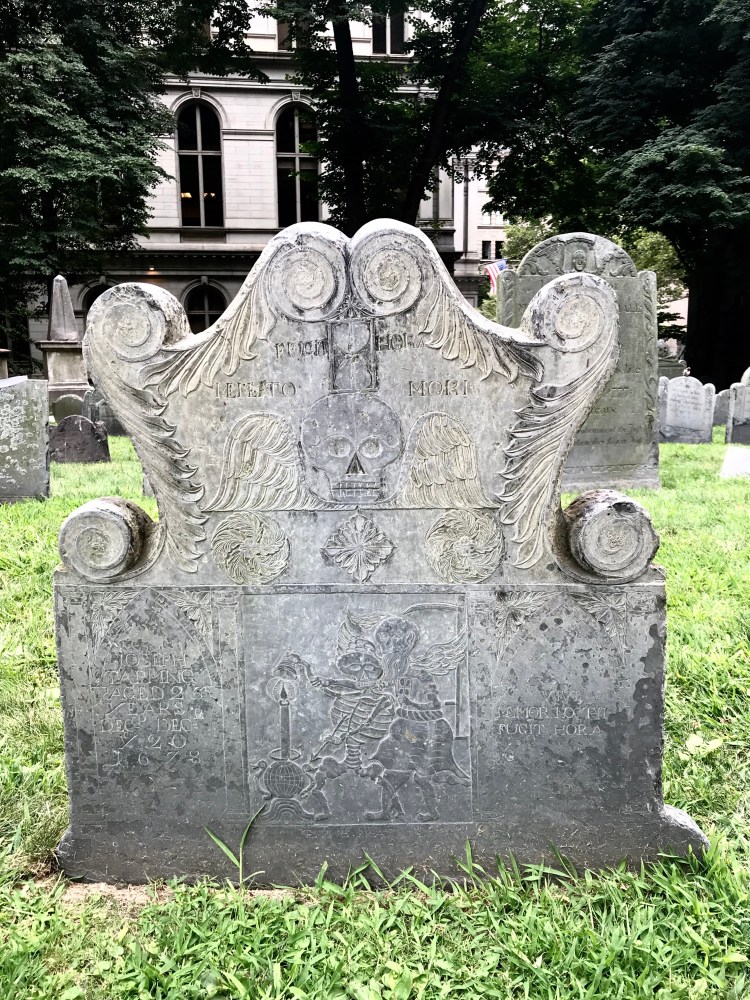
Captivating New England headstone engravings.

I then took the subway to the Sam Adams Boston Brewery, where I took a free tour and sampled some wonderful beers.

Finally, I visited the Isabella Stewart Gardner Museum, which was very beautiful.

Salem is one of my favourite places to visit, so I savoured my time here (and had a hard time leaving). Here are a few of my favourite memories from this trip:
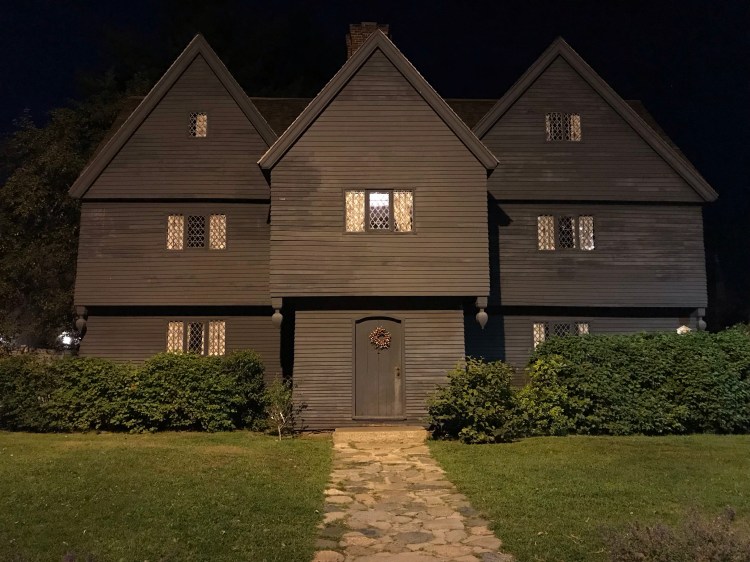
It was a beautiful drive back to Canada. The border crossing was quick and painless (hoorah!).

I visited Kingston, where I’d gone to University, and met up with a friend for beers.

I then made a pit stop into Ajax to see some family, where we had a special scavenger visitor…
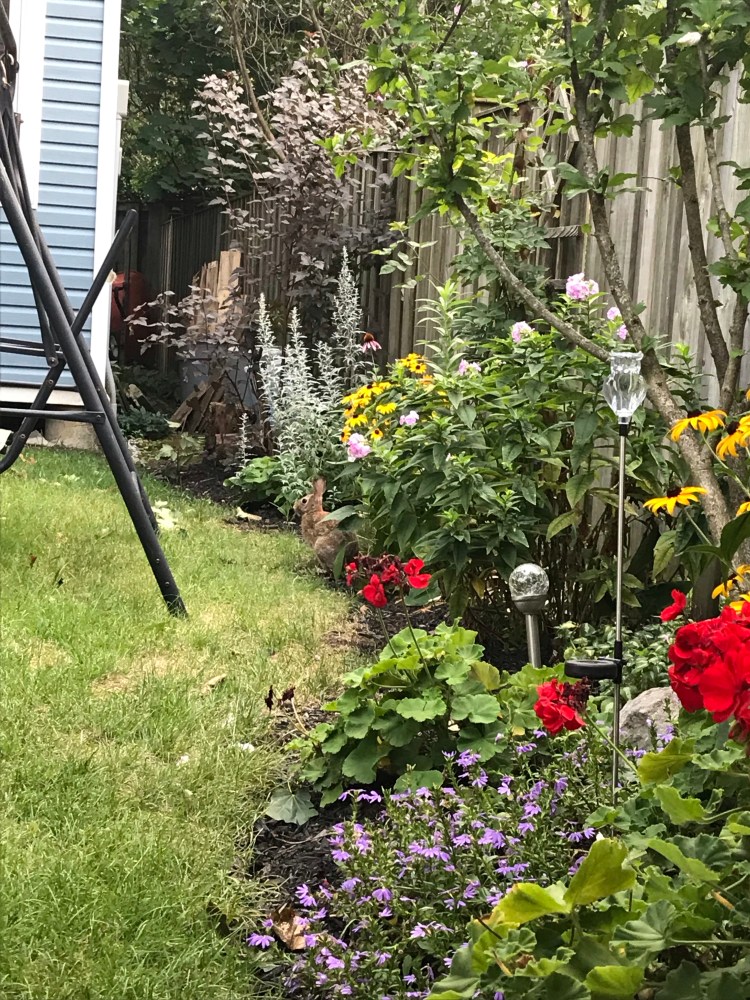
I finally returned to Burlington. Although I had access to a bed for the first time in a long time, I stubbornly spent one more night in the van – not wanting this leg of the trip to come to an end (how things change!).

Highlights

This trip was an amazing experience. I was fortunate to be able to visit some magical places. Here are some of my favourite things…

Strider in the wild:
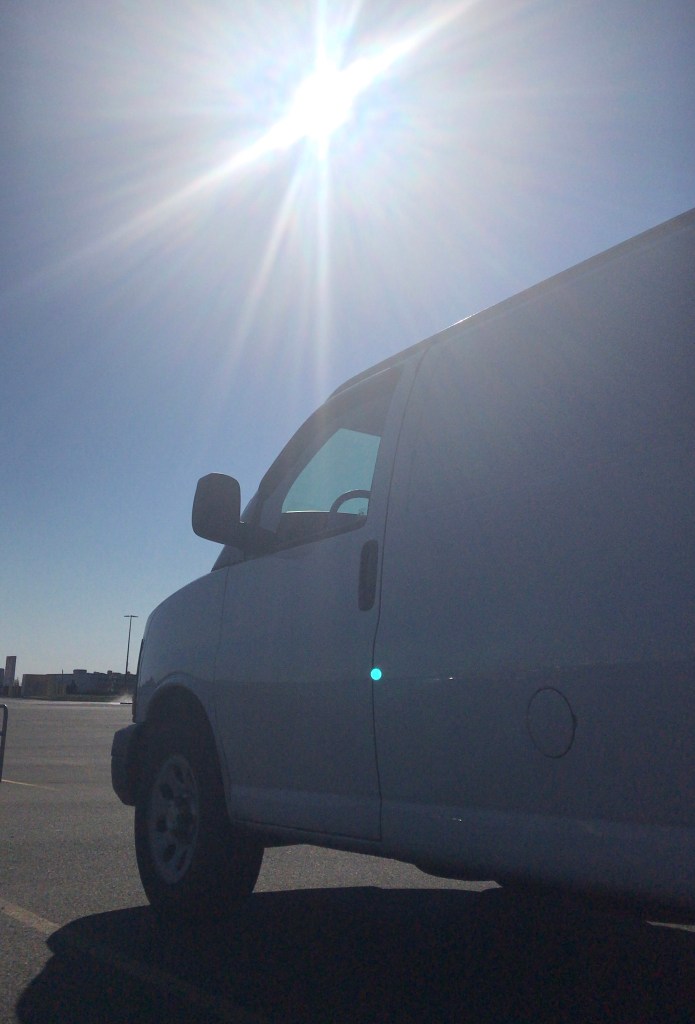
All of the places I’ve already mentioned above were amazing and beautiful in their own ways. It’s been such a healing journey and one I will never forget.

And finally, this trip would not have been the same without the presence of some amazing people in my life who I am so grateful for. I didn’t get a picture with everyone, but you know who you are!

Married friends, Soul Sista friends, best friends, new friends, positive friends, mystical friends/ mentors, groupie friends, reunited friends.

Future Directions

For now I am on hiatus with the travelling in the van. The plan is to set out again mid-winter – beeline it south, work my way west, then make my way up the coast (California/Oregon/Washington/BC) as the weather warms up – hopefully timing it so that things are warm by the time I get back into Canada.

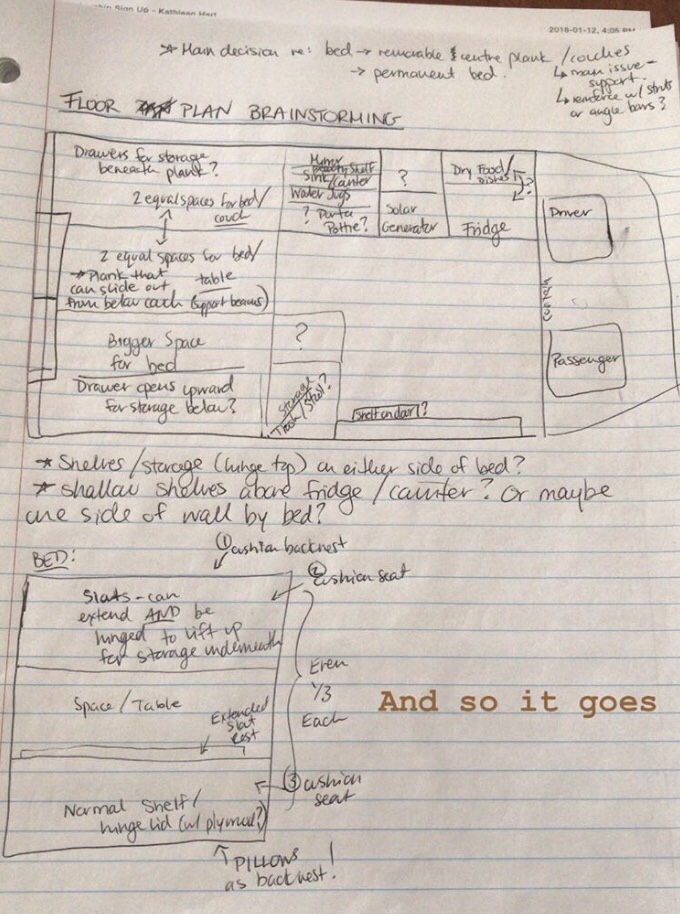
In the meantime I have some other goals that I’ll be working on, including work on the van. The bulk of this work will be fleshing out the furniture. There will also be little knick knacks and details and decor to clue up. This will all be covered in future blog posts.

There are also things to keep in mind when I hit the road next. Since I hope to be in the states for a little while I’ll want to switch my phone plan to a Canada + US plan. And I’ll want to get travel insurance. Getting a wifi hot spot is something I am considering looking into since I want to be in more remote locations (though I do like the thought of being intentionally disconnected). I also might look into insuring some of the items that will be in the van with me – which my broker said might be able to go under home insurance.

I’ve also had in the back of my mind to experiment with driving in cruise control or neutral and see if either increase fuel efficiency.

And there you have it. It’s hard to believe that I did it – I hit the open road in my own self-made campervan. And you can, too…

As always, I end my post with a song.

Later,

Kat

Copyright © Chronic X-Roads 2020

Van Build #7: Ceiling & Walls

*This post was originally written October 2, 2019

_______________________________

There are many ways to do a van build. I’ve seen some miraculously finished in a week. Even a one month timeframe baffles me. Because I am at the other end of that timeframe spectrum.

In saying that, there may be pros and cons to both sides – the grass is not always greener. But I believe how long a build takes is reflective of a complexity of factors. And one thing I’ve learned a lot about is my process. I am attentive to detail. I take my time because I want to make sure I do things right. And as this is my first foray into “construction”, there has been a learning curve. Finally, this phrase has become a sort of mantra:

Do not let perfect become the enemy of really good

Because life waits for no one.

Because my build timeframe is a longer one, it’s been important to learn how to “tend the flame”. A van build is a project born out of passion. It lit a fire beneath me. But fire burns bright and it burns fast, and if not tended to carefully it will burn out. I’ve been learning how to have patience while keeping motivation levels up – not an easy task, especially when working solo.

That being said, it’s important to stop along the way and recognize progress. This is harder to do when the progress is in an “invisible” form – like research, decision making, purchasing materials, or prep work – when the van doesn’t look much different. But the ceiling and walls is one of those phases of the build where things transform before your eyes. The whole van interior looks different! So you can bet I took a moment to soak in how far I’ve come since the inception of this van build idea.

On to the documenting…

Materials

I used cedar tongue and groove (T&G), birch plywood, and burlap as my ceiling, wall, and odd rib/ joint coverings.

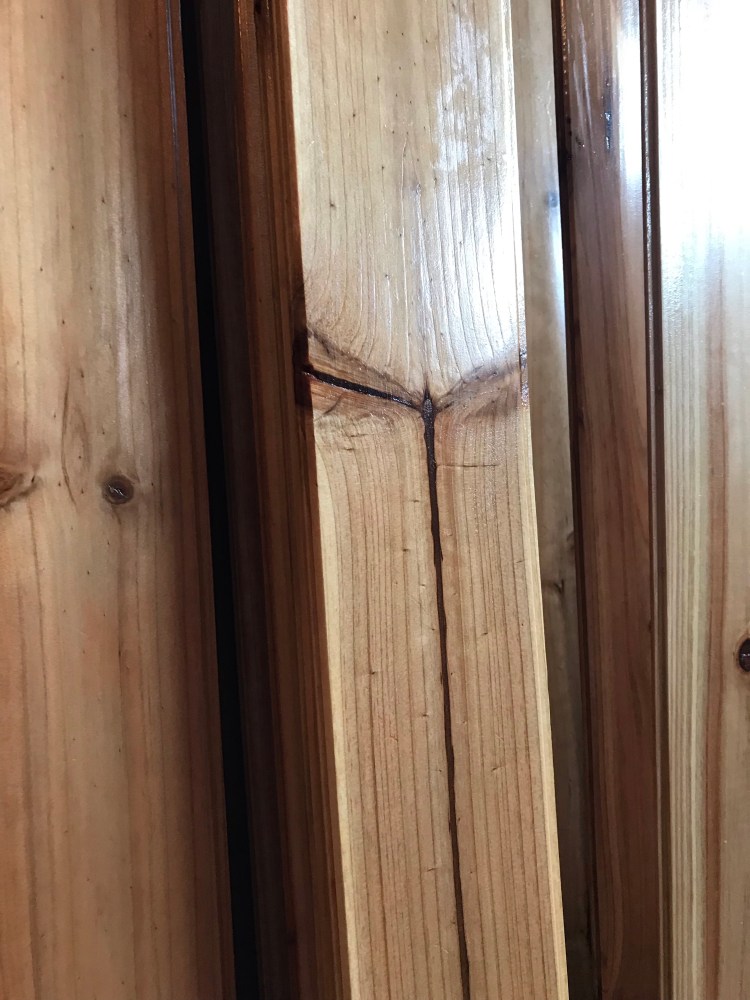
Why tongue and groove? First, I like the look. I also found it in 5/16″ thickness, which means it will keep the weight of my cargo to a minimum. That being said, with it being so thin it is more prone to splitting (and cedar is said to be prone to splitting) and the tongues and grooves are extra thin. So I had to be careful while handling the planks, but for how thin the pieces were, I only had a few tongues/grooves crack off on me – and nothing that hindered my installation or had me scrap any pieces.

I’ve seen the 1″ thick T&G used in van builds and like most choices for a build there’s usually a trade off. The way I see it, it’s a choice between sturdy or lightweight. I can’t speak for the 1″ as I haven’t worked with it, but the 5/16″ does have some flexibility to it,  which is useful in the event of slight curves (like my Chevy Express has). Time will tell how it holds up long term with the vibration of the van on the road (UPDATE: after 2.5 months on the road the T&G held up with no issues!). I also have the Chevy Express 1500 – if I was working with the 2500 or 3500 (more load/ towing capability/ V8 engine), I might not consider weight as a key factor in material choice.

Why cedar? I initially chose cedar because its aromatic oils are rot-resistant and act as an insect repellant. It smells divine and has a really nice grain pattern. Unfortunately, since I sealed my cedar I won’t get much of the insect repellant property, which acts through scent. But cedar wood chips can be used for this effect, and apparently they also dehumidify by absorbing moisture, in case I decide to place some around the van later (maybe near doors to discourage ants or other insects from entering the van – yes, I am brainstorming as I write this).

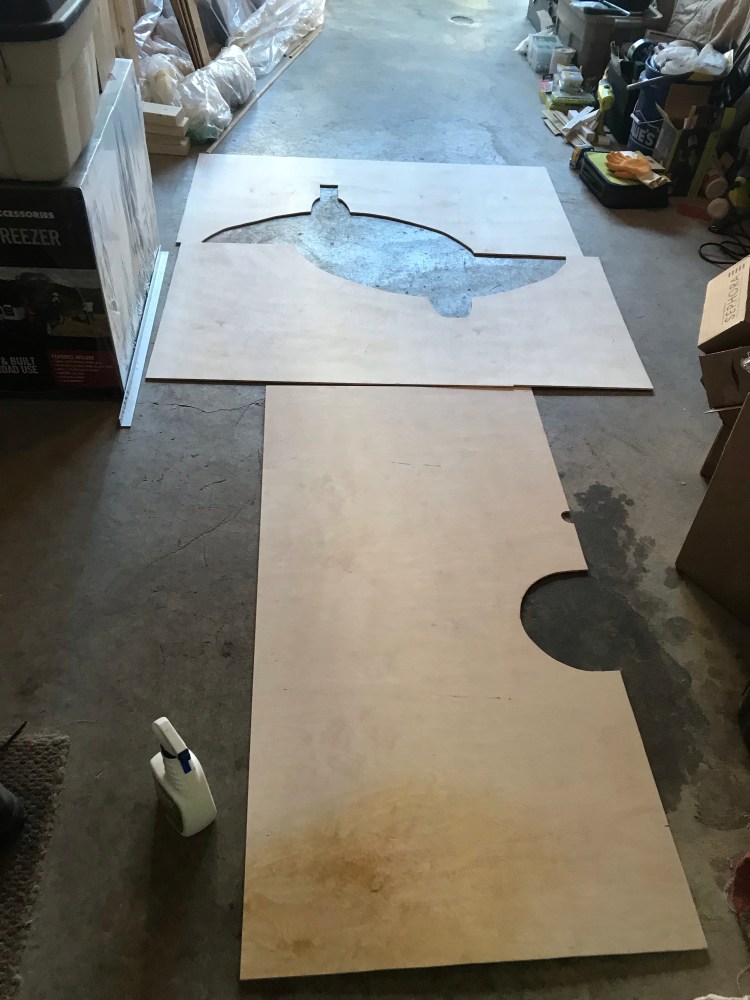
Why plywood? I got enough cedar T&G to cover my ceiling and the top half of my walls. Since the lower half of the walls have the wheel wells, fuel pump, and uneven metal ribs, it isn’t a level surface, which makes it more difficult to install T&G. That’s why I went with plywood for the lower half of the walls.

Why birch? It’s a durable hardwood and good quality.

Why burlap? This might seem like an odd choice. Basically, I was sitting in my van, T&G all installed and prepping the plywood. I’d previously planned on making plywood covers for the metal ribs lining the back and side doors. These were to also bridge the gaps at the ends of the walls to create a seamless appearance. But these makeshift pieces would need to fit neatly over curves, bends, and brake light wires. No matter how I visualized it – it seemed messy and like a big hassle.

A case for the path of least resistance.

So – I decided on burlap. It would be much easier to work with and I could use adhesive/ screws to keep it in place and pin it behind the wall and ceiling edges to create my seamless blending of materials. I tried to find used burlap bags to repurpose – but had no luck with the local coffee shops or grocery stores.

The Tongue & Groove

Measure & Cut

The first step was to take measurements of the van and strategically plan my cuts. Now – I realize there is an easier way. But let me explain why I chose this route.

I’ve seen many a build cut their wood as they install. This would be so much easier as you are less likely to make mistakes with length and you can do custom cuts (like around the fan) as you go, undoubtedly delivering more accuracy. After installation the wood is stained and sealed (visible side only – which also preserves a wood/ log cabin smell). You don’t need to seal (or “finish”) both sides of wood because water vapour will still pass through – a finish cannot completely stop moisture exchange, but may slow it down. But since preventing mold and mildew is another priority for me in this build – I wanted to take every precaution – and the back side of the wood is where it will have the least ventilation. It is also advised to finish wood before installation in terms of T&G due to seasonal expansion and contraction in order to avoid visibility of streaks of unfinished wood when it shrinks and separates in cold and dry winter weather.

My plan was to make my cuts (based on ceiling and wall measurements, going around the fan, and staggering butt joints), label them for future reference, sand, pre-treat with concrobium, stain, and seal (on both sides). I also chose a finish that was rated for outdoor use – which means protecting from fading by UV rays, minimizing expansion and contraction from temperature changes, and protecting from water (check the can for specifications as you can get some finishes that contain mildewcides).

So – did I choose the labour intensive route? Yes. Was it 100% necessary? Maybe, maybe not. But I like to plan for the worst and hope for the best. Play it safe.

Back to the process.

I took measurements at various points length- and width-wise on the ceiling, making sure my T&G planks would lie over the wood studs I had previously put in (see my insulation post). I was aiming to have as much T&G over the studs as possible at the edges in order to avoid putting screws too close to the ends – which can increase the probability of splitting. Since my walls curved at the back edge I would have gradually lengthening planks that would need to be cut at an angle (which I waited to do during installation for accuracy). I also measured the distances around the fan to the ceiling edges in all directions in order to plan where I would need to make custom cuts. I took into account that I wanted each plank to be secured to at least two studs. I did not plan for butt edges to meet over studs, as I wanted to minimize screws being driven near T&G edges in order to lessen the chance of splitting. I also did not need to have butt edges over studs since consecutive rows would keep all butt joints level. One place in which having butt joints over studs would be handy is the first or  last rows of each T&G section where there is not a row on both sides to keep things level.

In all honesty, planning the staggered butt joints in advance as opposed to during installation was a pain in the ass. Especially as I was trying to waste as little wood as possible (thus strategically planning everything).

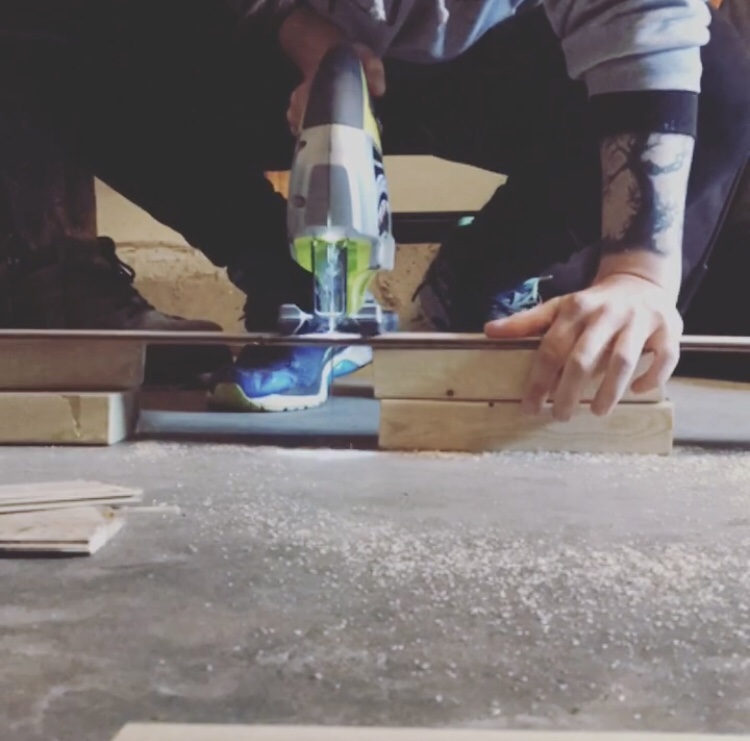
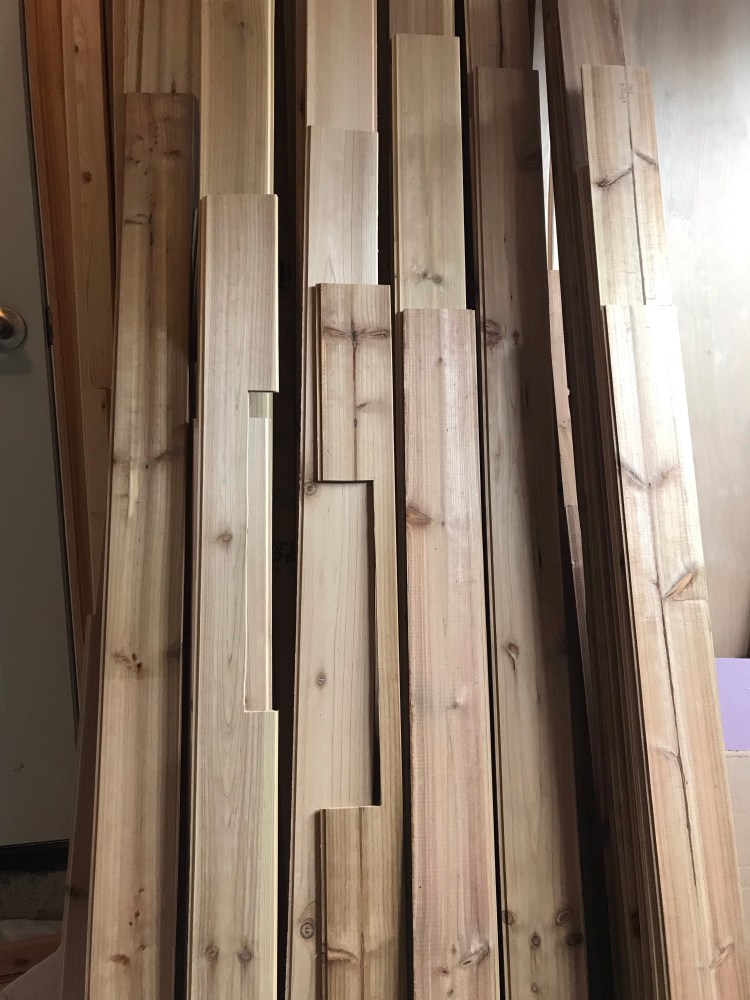
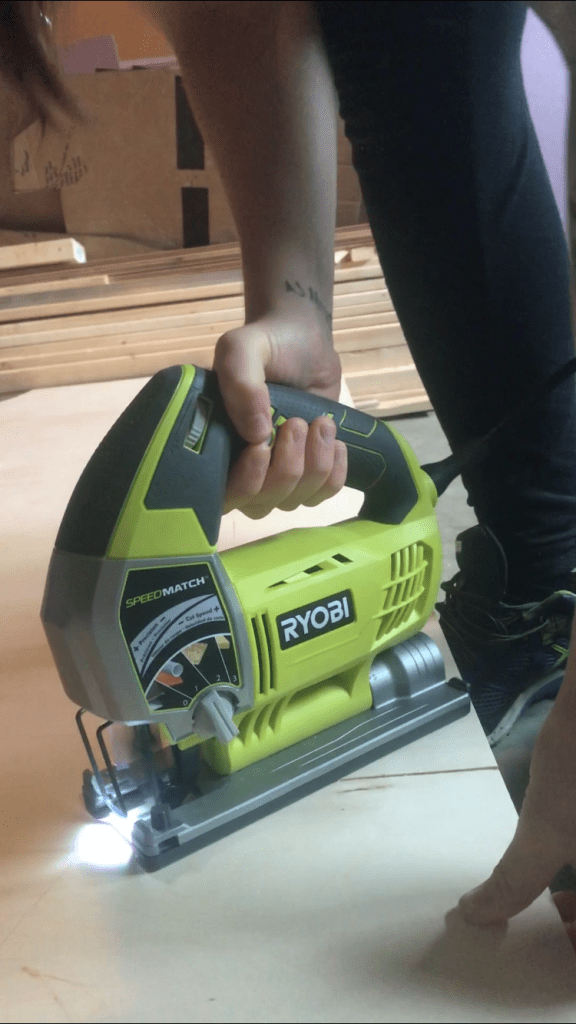
Once I had all my cuts planned, I got going with the jigsaw (wearing a dust mask and safety glasses). I made sure to cut the planks face down to ensure a smooth cut on the visible side (it’s more likely to have splitting/ a rough edge on top because the teeth on my jig saw blades cut on the up-stroke). Where I could I also tried to use the factory edges as my butt edges to keep them as straight as possible. I used pencil to label each plank (back side) with its length and a number for later reference.

Mold Prevention

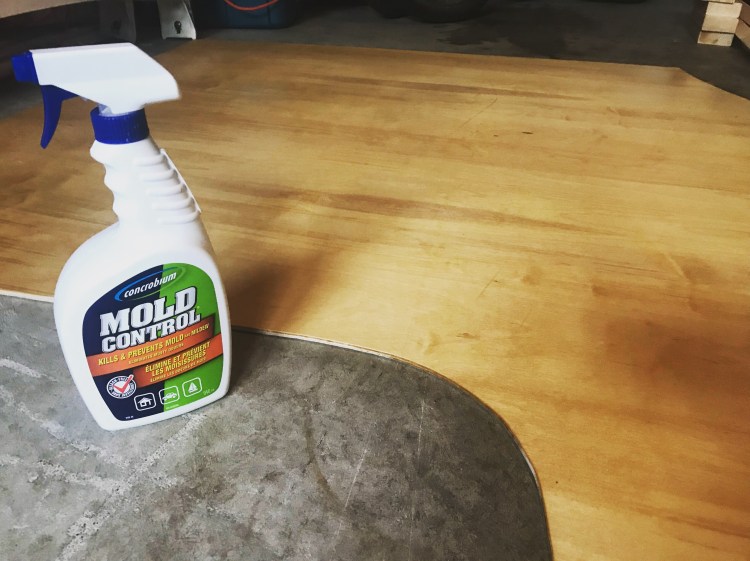
I then lay all the pieces out and treated them with Concrobium. I stood them up and gave them 24 hours to dry. Note: treating the wood with Concrobium does change/ darken the wood’s colour.

Sanding

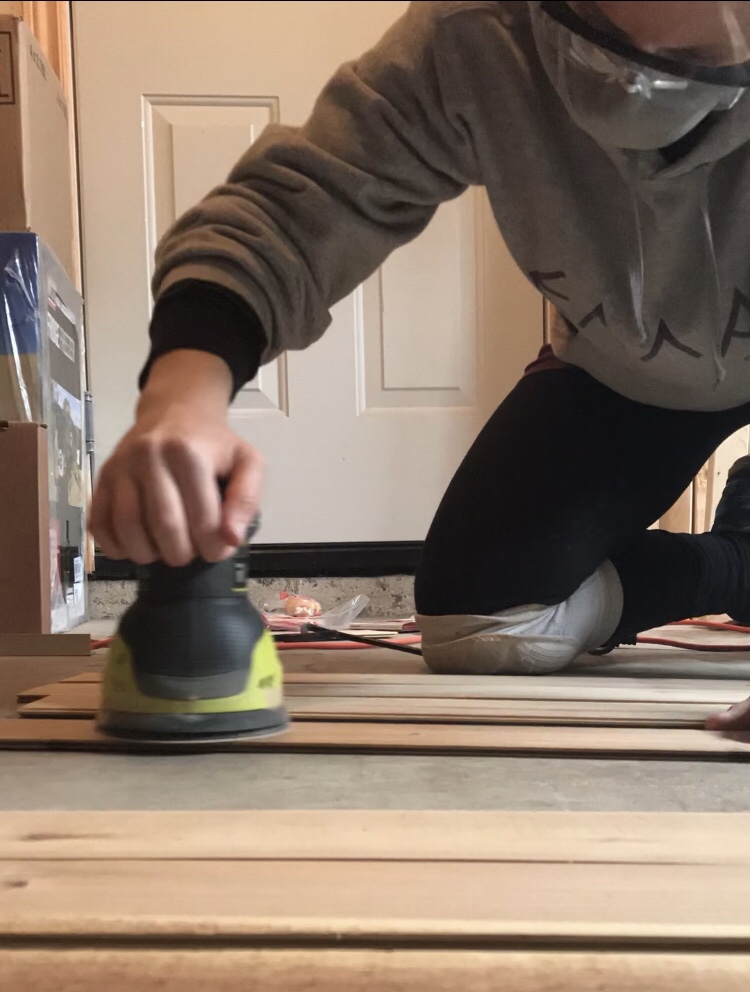
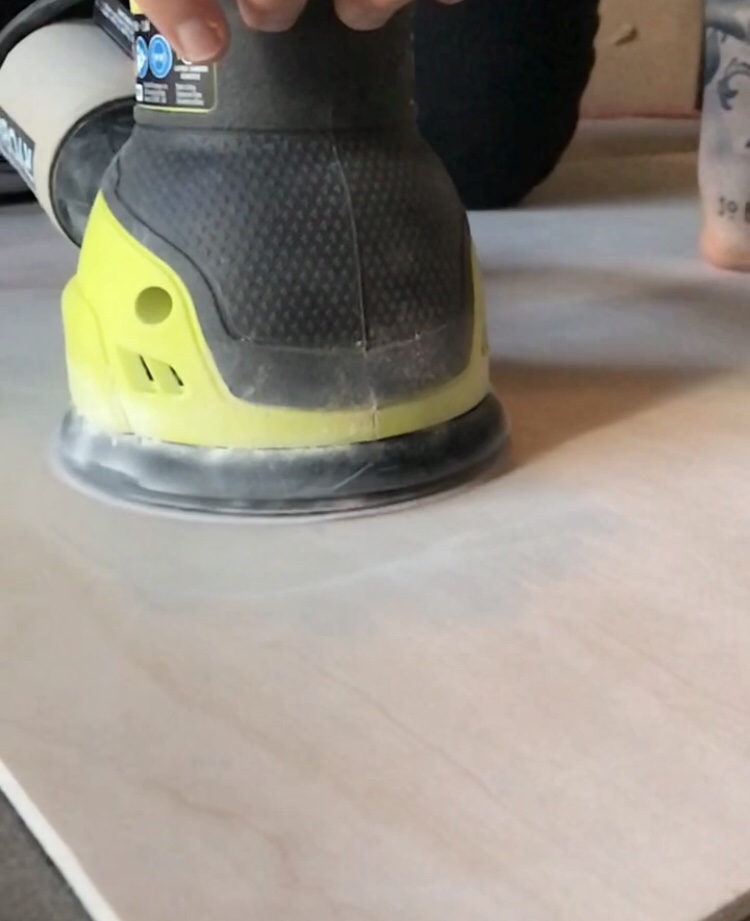
I sanded the edges by hand. Then I did both sides with a random orbit power sander and fine grit (220) sanding disc. If the wood had old finish or scratches I would have started the sanding with medium grit sand paper, but it was new wood. I used a tack cloth to wipe the wood dust off (folded, folding to new side once full of wood dust, storing any cloths with some use left in them in a sealed bag to prevent drying out).

Staining

Now the exciting part!

A few notes on stain. Why stain? It helps to bring out the grain pattern of the wood, and you can choose preferred colours. Stains consist of pigments, dyes, and carriers – the carrier may be water or oil based. It is important to stir stain as you use it as heavier pigments can settle to the bottom (not as critical with gel stain, though I did stir mine at the outset of use to even out consistency and eliminate globs). Stain permanently changes the appearance of wood, so test pieces are a good idea, especially as the same stain can appear different on different types of wood. This is due to the natural colour of the wood and the size of wood pores that accept the stain. I found it helpful to go to the manufacturer’s website where they often give advise on types of wood and stain compatibility. If a test area looks blotchy it is advised to use a wood conditioner 15 minutes prior to staining (with same water/oil base as the stain to be used; wipe on with wood grain, let soak in 15 minutes, wipe off excess). Apparently pine is known for being blotchy. If you want a darker stain you can leave on longer or apply additional coats. Water based stains have more colour options, no dangerous fumes (vs. oil or gel based stains which take 24-48 hours to evaporate, longer if cool or damp environment), clean up with soap and water, and will evaporate more quickly than oil based while applying. But, while I’ve never used water based stain before, my impression is that it would be more likely to drip and I’ve heard that it dries so fast that it is prone to leaving streaks and not blending well. Stains add colour, but they don’t protect the wood – this is why we use a sealant/ finish. 

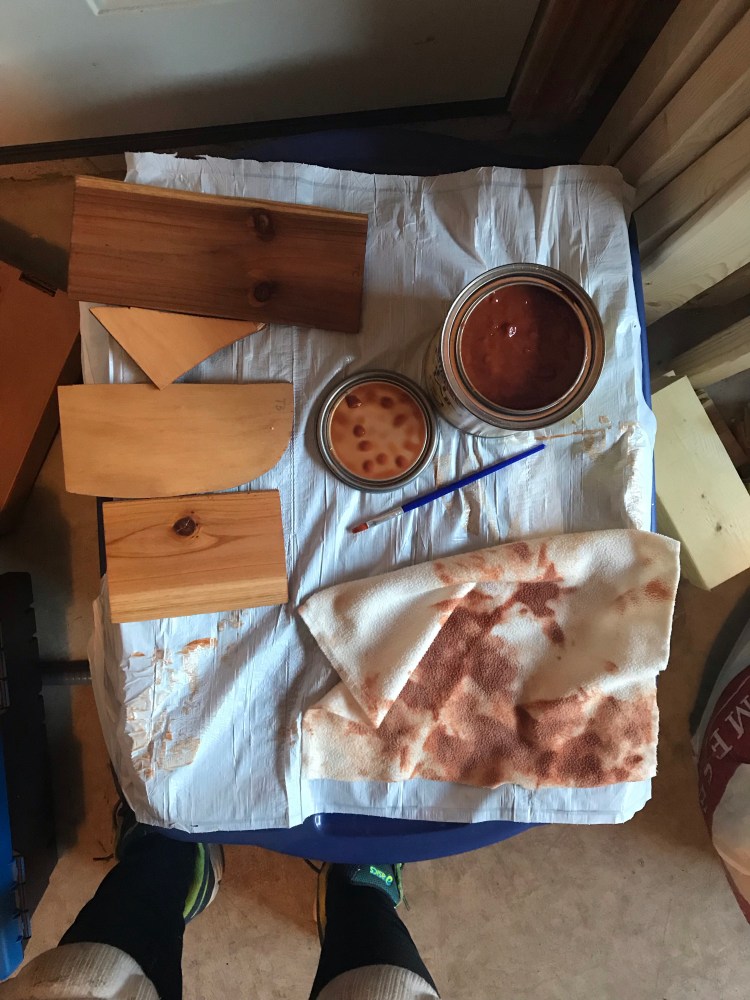
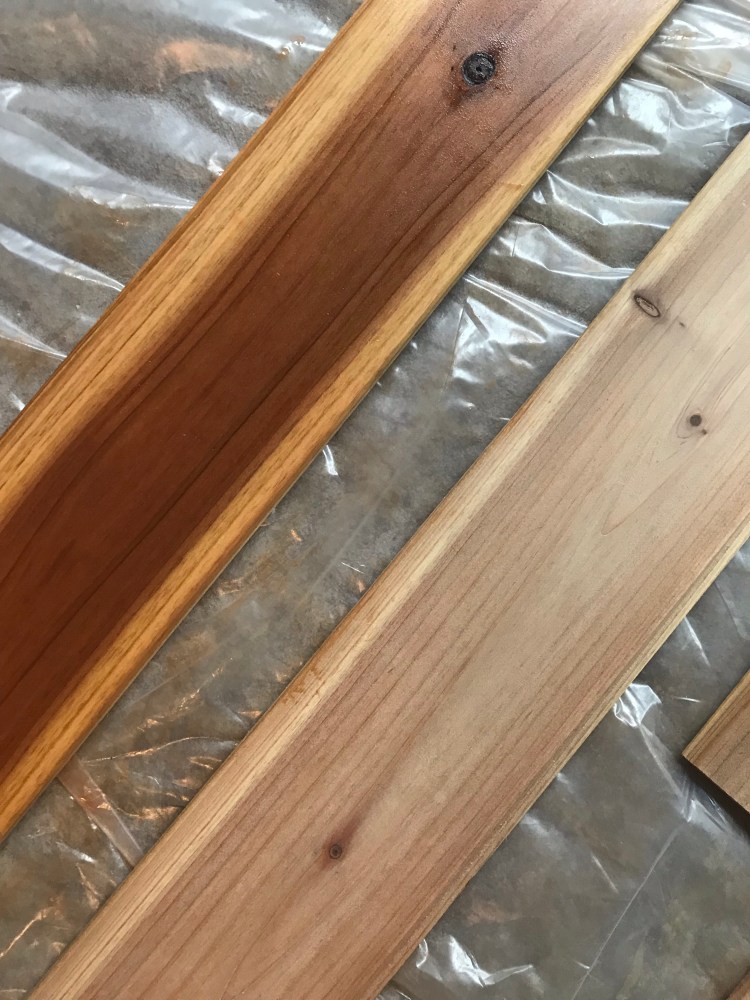
I chose to work with gel stain. This is an easy type of stain to work with especially if you are staining ceiling/walls after installation as it is thick and will not drip. Gel stain is also useful for woods that tend to come out blotchy – often eliminating the need for wood conditioner. I did some test pieces to make sure I liked the colour I’d gotten (Honey Maple) and to see if the wood looked blotchy when stained (pointing to the need for wood conditioner). I saw no blotches, but as it turned out – I wasn’t super thrilled with the colour. I had expected a very light beige, but the colour I had turned out pretty orange. When I’d opened the lid on the container I was surprised to find that the gel stain was a reddish colour, too.

Top and bottom wood pieces are cedar T&G, middle pieces are birch plywood. Lightly sanded before testing stain. Top cedar T&G pre-treated with concrobium.

I went back to the local hardware stores and looked for other options. When it comes to gel stains there are a lot less colour options than there are with water based stains. Regardless, I had the lightest colour available across a variety of brands (keeping it light to contrast my dark red floor was the goal), and I did not want to use a water based stain.

At the end of the day, I stuck with what I had. I could get my panties in a bunch about colour, or I could move forward. I chose the latter. (Not to minimize the importance of colour choice – which can set the whole tone to your environment and decor – but for me personally I was on the clock).

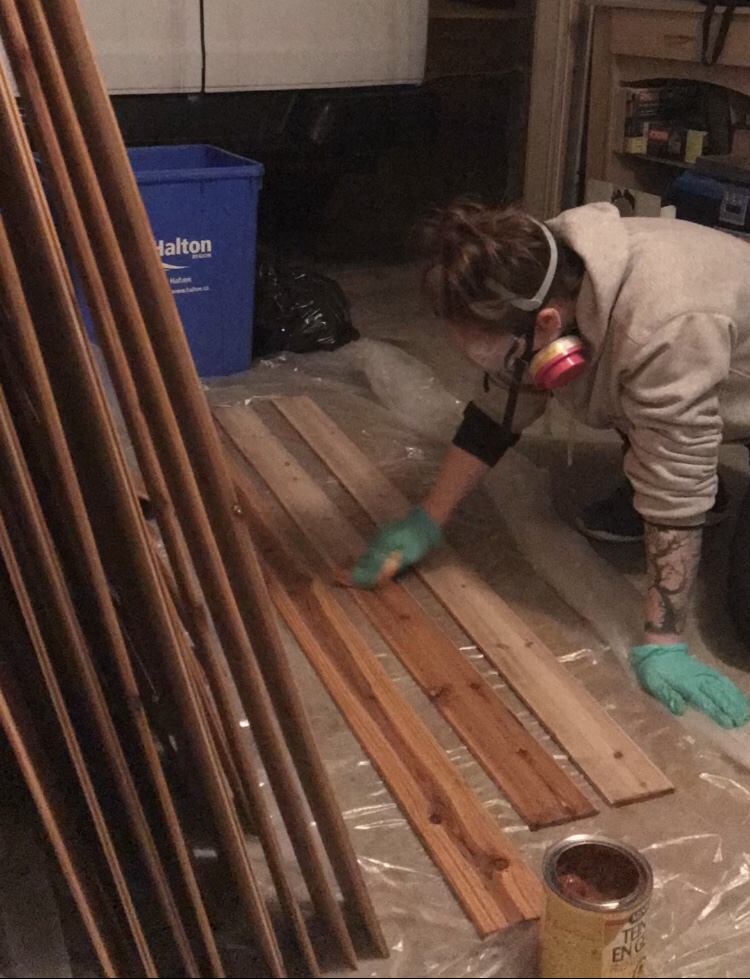
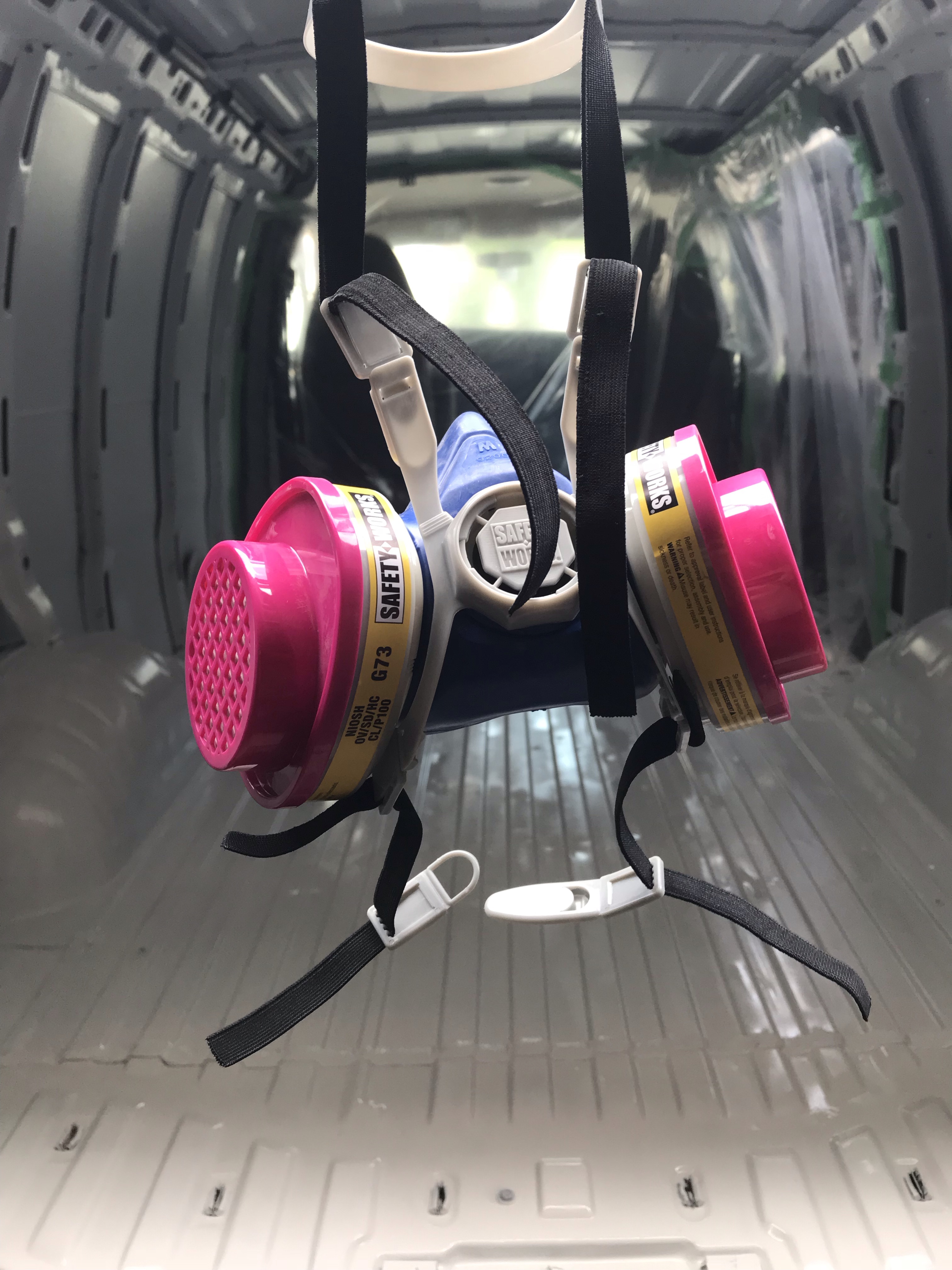
For the staining process I made sure I was in a well ventilated work space (garage door open) and I wore gloves, goggles, and a respirator. I put a drop sheet down under my work space. I stirred the stain before use. I cut up an old band tee to use as rags (RIP) – as opposed to applying with a brush. And I proceeded to apply a liberal amount of stain – wiping in a circular motion cross-grain to fill the wood pores first, then with the grain to even things out, making sure to cover the whole face side of the planks as well as the top portions of the tongues and grooves to ensure that if the wood were to contract in cold temperatures there would be no noticeable streaks showing that were not stained. I also made sure to stain the butt edges. After a few minutes of letting the stain sink in (see manufacturer instructions – I wanted to keep the colour light) I used a separate rag to wipe off excess stain with the grain of the wood. I then propped the planks up to dry at least 24 hours before sealing with a finish.

Sealing/ Finishing

The finishing process was similar, but without the need to wipe off excess, and I applied the finish to both sides of the T&G planks, on the butt ends, as well as in the grooves. I used spar urethane, formulated for outdoor use. It was important to stir occasionally during use to make sure the mineral spirits were evenly mixed throughout as they tend to sink to the bottom. I used a small paint brush to seal inside the T&G grooves – making sure to keep this coat light and prevent drips here as I did not want to inhibit the space needed for the tongues and grooves to fit together. I then used the rag to apply the finish to both sides, circular then with the grain, and in and around the tongues. I tried not to use too much finish as I found that after standing the planks up to dry there could be some pooling at the bottom edges or drips – which I had to later carefully scrape off (which took a while, and was sticky).

This step was time consuming (because I had so many individual planks and was going in and around the tongues and grooves) – so much so that I vowed this would be the only coat of finish I applied. But… I’m stubborn… and I always say “quality over quantity”. So I did a second coat (it is recommended to do 2-3 coats). This time I didn’t worry about the Ts and Gs – I just did the front, back, and ends of the planks – which cut the work time in half. And I have to say, the second coat did make a big difference in the appearance of the wood. There was a definite sheen.

While it is suggested to lightly sand between coats of finish, I was not pleased with this step. I understand that sanding helps additional coats to adhere. But my experience was that wood dust found its way into knots and crevices, leaving a white dust that was hard to remove even with tack cloth, and any uneven spots (edges, knots) were prone to being over-sanded – even removing some of the stain! Obviously a power sander is not gentle, so I sanded gently by hand (fine grit wrapped around a block of wood for even pressure), with the grain of the wood to avoid unsightly scratches, and no matter how light my touch, I still had some scratches and stain being removed. While I read that a finish can bring out such blemishes on the wood, I was lucky in that the urethane seemed to lessen the appearance of the spots where stain was lifted, and the scratches seemed to disappear (perhaps it was just light scratches in the first layer of finish).

Note: some tack cloths contain chemicals that can prevent good adhesion with polyurethane. A microfibre towel or wet cloth is an alternative – in which case you would need to wait for the wood to dry before finishing.

Oh and I wore a dust mask and glasses while sanding – I certainly did not want to breathe in any wood/ stain/ finish dust.

I will say that I did not test the finish prior to application. It’s important to note that polyurethanes tend to add an amber colour to the wood. They come in satin, semi-gloss, and gloss. I didn’t particularly want things to be too shiny, so gloss was out for me. I figured semi-gloss would be a nice middle ground, so that’s what I went with. But after using it, I would say it’s still pretty damn glossy. If I were to do it again I might give the satin a go.

A note on Concrobium: Concrobium recommends pre-treating wood, but if another substance is then applied to the wood (e.g., paint) they advise applying an additional layer of Concrobium. I tried this out with a test piece, and as you might guess, during application the liquid simply sat on top of the wood finish – because finish resists moisture. The point here is not absorption, I already covered that, but to have a top layer of this substance that resists mold or mildew (the particular finish I had on hand did not specifically state that it contained mildewcides). I also noticed that once dry the Concrobium left white residue where drops had been – I assume these are the food grade inorganic salts. I’m not sure how effective it will be, but I decided to apply a small amount of concrobium to the backs of my T&G planks only with a cloth. The front sides of these planks will have better ventilation and I wouldn’t want to ruin the finish.

Installation

Now that the wood prep was done, it was time for installation!

I decided to use screws instead of nails for a few reasons. First, screws are stronger in terms of withdrawal force (for the ceiling). Second, because I was using such thin T&G planks with such tiny Ts and Gs, I figured blind nailing would be more difficult in terms of accuracy and risk of breaking the Ts and Gs. I also do not own a brad nailer.

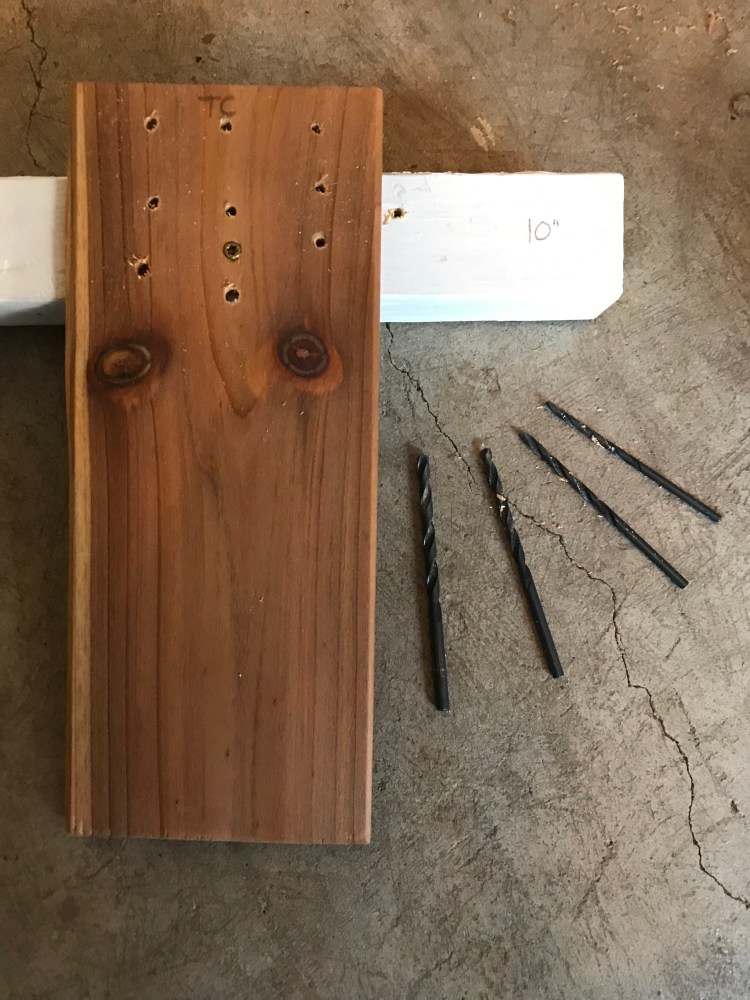
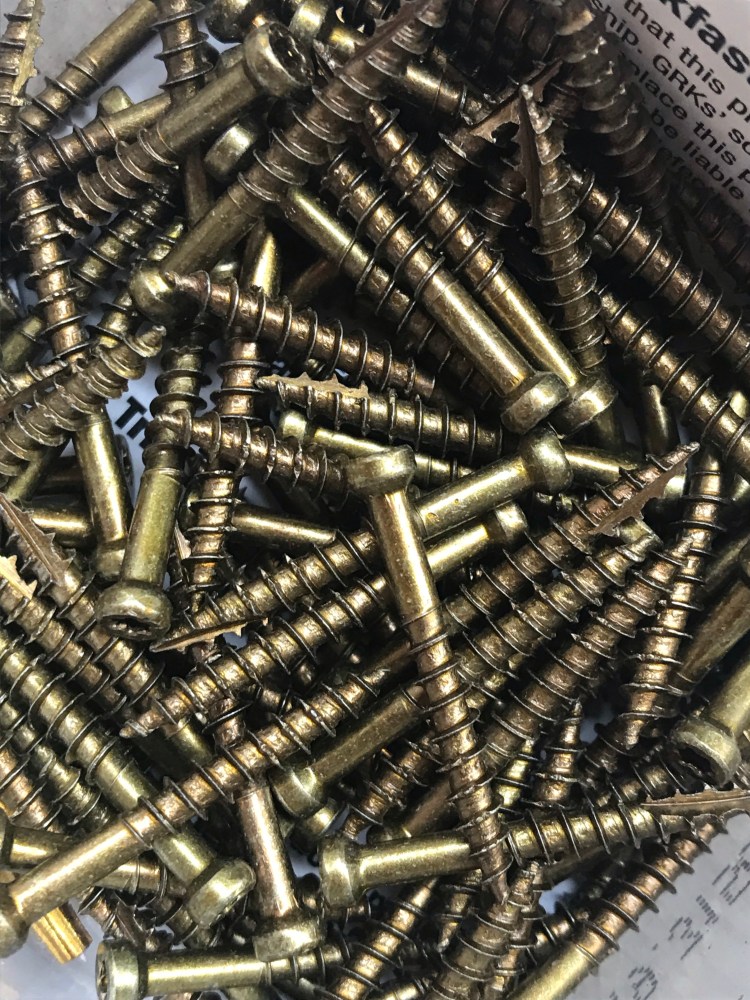
Since I knew that cedar could be prone to splitting, I used a test piece to decide on pilot holes. I used various sized drill bits and drilled at various distances from the T&G test piece’s edges. There was no splitting as long as the T&G plank had a sturdy backing support – even if no pilot hole was used and I simply drove the screws (self-drilling/tapping). I still chose to do pilot holes just to be on the safe side. I didn’t use clearance holes (to prevent the screw threads from grabbing the T&G) because the top portion of these screw shanks do not have threads, which allowed for the T&G and backing material (studs) to be pulled together. Also, since I was using trim head screws I worried clearance holes might allow for the screws to go right through the wood. I ended up using a 1/8″ drill bit for my #8 1-1/4″ trim head GRK screws.

Side note: I found out later during installation that in spots where the planks were not touching the studs behind them (due to uneven ribs, curve of the van, or raised insulation), or were raised by the screw heads from the studs, there was more strain placed on the T&G planks as I drove the screws – especially as I tried to drive the screw head to be level with the wood surface. I tried using a countersink, but it didn’t help much with this particular screw head shape. I also tried using shims to temporarily provide backing support as I drove the screws, but this was only slightly helpful, and a little time consuming.

Side side note: when choosing screws, I wanted to go for quality, and GRKs are great – I really enjoyed working with them! During planning, I calculated that I had about 1/4″ T&G and 1″ backing studs to drive my screws through, so 1-1/4″ screws would be perfect. But then I learned the hard way that a “2×1″ is not actually an exact one inch in thickness – more like 3/4”. So, take about 1/4″ + 3/4″ and you get 1″, if the two pieces are touching, before hitting the metal van rib. Crap! 1-1/4″ GRKs are the shortest you can get and I’d already purchased them. I would have to screw in at an angle… (and I did a bunch of research into whether this would affect the integrity of my fasteners – as screws have the most strength against withdrawal force, but can snap from sheer/ lateral force. Note: when using screws with sheer force a larger gauge screw is advisable). Turns out – things worked out perfectly since my T&Gs would not be lying flush to the studs (for the variety of reasons mentioned above).

Last note here I promise: Had I truly been working with screws that threatened hitting the steel van ribs behind my 2×1 studs, there was another solution. Many of the metal ribs have holes in them. I had made  “rib templates” out of cardboard prior to attaching my studs (I have Reflectix over the van ribs so I needed the templates to make sure I was screwing around the holes), so I got out these templates and drew these spaces on top of the studs. This way I knew where I could screw straight in without worry about hitting metal! I also updated the templates to show where the studs begin and end so that at a later date I know where I can screw into (furniture, wall hangings, carabiners, etc.).

See rib holes drawn onto the studs.

Okay I lied: Another pro to working with thin T&G, and it being lightweight, is that you don’t need to worry as much about the strength of the fasteners. Of course, I still wanted to know that I was using good quality, but length of threads into the backing material and size of the screw determines strength (though larger gauge screws create a higher possibility of splitting the wood, especially if used too close to the ends of boards). If using thin, shorter screws, drive a higher number of screws to increase strength. I was going to drive a lot of screws for this purpose, but once I began installation I realized it wasn’t necessary to go overboard with such lightweight planks.

I began on the ceiling on the driver’s side, tongue to driver so I could push tongues into grooves as I went. The first row was the hardest. I had to make sure it was straight, which was a task considering the length of the ceiling is about 9ft, I was the only one holding up the planks, and there are multiple planks per row to keep straight. I also needed the first row of T&G to be placed at an exact distance from the fan to ensure that my cuts around the fan would lie accurate and symmetrical.

Note: leave 1/8″ to 1/4″ at edges of installation to allow for expansion/contraction of wood.

Once I got the first row in, things got rolling.

I had all my planks arranged in order for easy access as I worked (my labelling came in super handy). I dry fit each row as I went to make sure the edges had enough overlap with the studs they were to be screwed into and so that I could configure as straight an edge as possible with all the planks.

I then used pencil to mark where each plank rested on a stud, followed by marking where stud screws or gaps or holes were so that I could plan the placement of the screws I would be driving (so they wouldn’t hit underlying screws or air…).

Once I made the marks for my pilot holes, I got to drilling. I did do a slight countersink (all the help I can get). Then I placed the planks in their spot, ensuring the butt edges were as close as possible and tongues and grooves were married as best as possible before finally driving the screws.

When Ts and Gs don’t want to marry some people lightly tap on the plank edges (e.g., with a mallet or hammer covered in cloth), but I didn’t want to risk damaging my thin planks, so I just pushed. I used low torque and speed settings on my drill and took it slowly (don’t want screws to go all the way through the wood!). There were a few instances when I could hear a plank begin to buckle/ “split” under the pressure, but I got no visible splitting on the surface.

It worked out so that the last plank on the ceiling had to be cut length-wise in order to fit, which I had expected. Often there may be difficulty in getting the last piece to fit, in which case you can remove the back of the groove by breaking off the flange with a few hammer raps, making it easier to put the last plank in place and then screw in (can’t be blind nailed).

On to the walls. Again, the first pieces were the most important, especially considering the van’s curves and anomalies, in order to keep things looking level. I did tongues UP because in my head I figured any moisture could pool in the grooves if they were face up. There were some spots where I needed a makeshift shim between the ends of planks and their backing studs (spaces up to an inch or so created by the curve of the van walls/ uneven ribs). While I had cedar shims, pre-treated with Concrobium for this purpose, I decided to use some leftover XPS rigid foam insulation instead. I simply cut the appropriate size and maneuvered it between the T&G and stud, where the screw would go through it to keep it in place, and it worked like a charm – with the added benefit that XPS is inherently water proof. In these spots I used longer GRKs.

A few challenges arose during the T&G installation. One being that despite the incentive of factory cuts being straight edges, not all tongues and grooves were straight. On a few planks there were uneven tongues, which meant that while the Ts and Gs were pushed together as far as possible, there were parts of the planks that were not even touching! This tended to happen (twice) with longer planks, in which case I cut them to make them more manageable. Longer planks were also more difficult to seat as they were more prone to warping.

The other challenge was the point at which the ceiling and walls joined. With an odd structural rib here, I had to be creative. This turned out to entail one row of planks on each side of the van that lay on said structural rib, parallel to the wall planks, and overhanging the metal rib by an inch or so. If you stick your head under this rib and look up, you will see the Reflectix underneath. But my current plan is to hang rope lights in this little groove – so they will be hidden and have a reflective surface to shine against!

I also put in a plank on a diagonal on the driver’s side to cover the space between this overhanging row and the ceiling, which goes over the brake light wiring running from the driver’s seat to the rear doors.

Here is the “diagonal” plank between the driver wall and ceiling. The white part is a ceiling stud – you can see the screw going into it. The smooth plastic black piece in the top right corner houses the brake light wiring. The black corrugated tubing houses the fan wiring.

Finally, a makeshift strip of T&G, less than an inch wide, was put into the corner of the “diagonal” on the passenger side with finishing nails to cover a mere sliver of space between the adjoining planks (creativity!).

T&G strip and finishing nails on passenger side diagonal rib.

Each plank that was cut during installation was later sealed on the cut edge. I also made sneaky markings along the edges of the T&G walls and ceiling to show the alignment of the ribs/studs – yes, I can estimate by the screws, but this is more accurate.

More Resources

The Plywood

I prepared the plywood in much the same way as the cedar T&G.

I used 1/4″ birch to maintain thickness with the 5/16″ T&G. I took measurements for the walls to ensure adequate overlap on “edge studs” (at the ends of the walls). On the long driver wall I made sure the two plywood pieces would meet in the middle of a stud since I had no tongues and grooves to keep things level. I used trial and error/ careful and conservative measurements to make cuts that would fit around the wheel wells, fuel pipe, and tubing for the fan wires.

When making my cuts I made sure to cut face down so no splitting would occur (as tends to happen when cutting cross-grain with birch plywood) on the side that would be visible in the van. I used my jigsaw and a scrolling blade.

I pre-treated the plywood with concrobium, allowing 24 hours dry time, and noting the deepening in colour of the wood.

I sanded the edges by hand and the rest of the plywood with my power sander. Plywood needs to be worked more in order to open its pores to accept stain. I noticed this on my test piece, which I had only lightly sanded with fine grit sandpaper by hand, as it seemed the stain had very much remained on the surface. So I sanded my plywood walls with medium grit sandpaper first, followed by fine grit for a smooth finish, and finally wiped with tack cloth to remove the wood dust.

I followed similar steps for staining. I will say, take a close look at the plywood you choose. If you look closely you can see that some pieces are a bit blotchy, while others have a beautiful, natural looking grain pattern. While tracing my wall pieces I had made the effort to choose the sides that looked the best to be visible – and even then I could see that some pieces looked a little blotchy – the sort of pre-existing blotchiness that I’m not sure wood conditioner would help with. While staining, one of my pieces came out absolutely beautifully, while the others did look a little blotchy (luckily these will mostly be covered by furniture). This tells me that it’s not necessarily the birch that is the problem in absorbing the stain evenly, but the individual plywood pieces that simply differ.

A note on staining plywood: because plywood is a mix of veneer, wood chips, and glue, the staining process may differ slightly. I used medium grit sandpaper to help open up pores (to better accept stain), followed by fine grit sanding and a tack cloth wipe down. My research showed that special gel stains may be your best bet with plywood, but if you use a wood conditioner any stain can be used.

I also followed the same steps for sealing the plywood – applying to both sides and edges, and a very light sanding (gentle, with the grain of the wood) prior to a second coat.

Once everything had time to dry and air out I installed the plywood pieces in the van. I used GRK screws of varying lengths, depending on the spacing between the plywood and studs (in some cases this was almost 2 inches). This difference in spacing was due to the curve of the walls and angle of the ribs relative to the straight wall I was trying to create. I dry fit the plywood and marked my pilot holes (extra important with hardwoods like birch, which are more prone to splitting than softwoods) in line with studs and avoiding backing screws or spaces.

I used extra XPS insulation to keep things level. And in terms of adding extra XPS, I added more insulation on the walls as I noticed that if I put any weight on the walls where there was space behind, the wood would bend inward. Having more insulation behind to take up that space ensured that I could lean on the walls and not have to worry about the wood splitting. Instead I had more backing to support any pressure.

More Resources

The Burlap

Working with burlap worked out well – I really like the look of it on the door frames and it does a wonderful job of creating a seamless transition where you otherwise would have seen the tongue and groove/ plywood meet studs and metal ribs. The burlap covers open spaces, Reflectix, and even the brake light wiring which was an eye sore. Not to mention it is flexible.

I was able to order a “table runner” form of burlap which meant that all edges had a seam and would not fray or unravel. Where I had to cut I used adhesive to preserve the edges.

First thing’s first – I of course pre-treated the burlap with Concrobium (what’s new).

Once dry, I worked one edge of the burlap behind the walls and held it in place with the screws that were holding the wall edge to studs behind. I made sure that the burlap was lined up to create a straight line on its other edge where it would lie on the door rib before screwing in.

Finally, I adhered the burlap to the outside edge with 3M 90 Spray adhesive between the burlap and the Reflectix behind.

And there you have it!

*Notice final piece of the fan added over ceiling

So, there it is. Strider is really coming together. As per usual, a song closes out my post. This one’s catchy, not to mention has some pretty relevant lyrics if I do say so myself…

“Blood, sweat, and tears of joy”

“We got gas in the tank to go all night”

“Relentless”

Later,

Kat

Copyright © Chronic X-Roads 2020
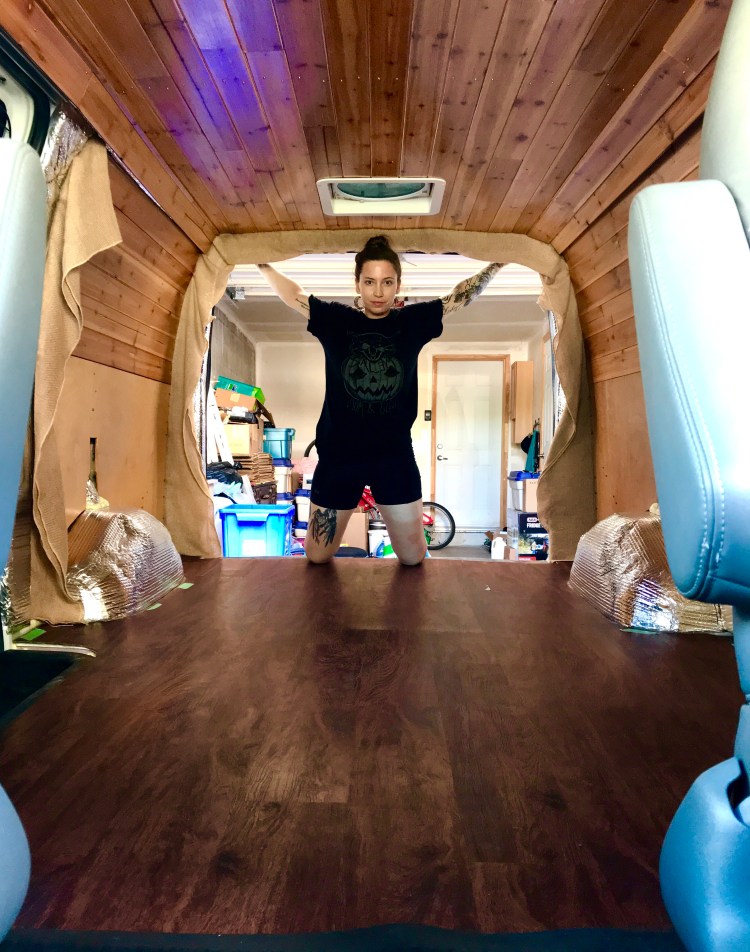
Van Build #6: Solar

*This post was originally written April 12, 2019

_______________________________

Solar! The concept itself is exciting and empowering. And I had a plan.

But – that plan changed – several times. In this blog post I describe the many iterations of my planned solar install, the size of my set up, materials, and other considerations.

To be clear: I am not an electrician. I spent an enormous amount of time researching this phase of my build, until I felt comfortable with my plan, and if you are looking to do something like this I encourage you to research the hell out of electrical! I’ve found it helpful to accumulate several sources for info, as experiences, materials, and opinions vary.

Layout

When I first sat down to research my van build and prepare for the journey that it has become, I figured I would do what many seemed to do and bolt solar panels directly to my van’s roof (or a version of this) – if it worked for other people it could work for me! I based my plans on this decision – the panels, the supplies I would need to purchase (including length and gauge of wiring, mounting brackets for attaching to the roof, and hardware), and the general layout. 

I bought the things and I started the build. Solar wasn’t first on my agenda, so the things sat and I compartmentalized, forgetting about them for the moment (though goggling at them in awe – mostly the panels – when they arrived in the mail).

But as I worked on the van, and after installing the fan (aka cutting a big hole in my roof) – I decided I was not keen on the idea of putting more holes in my roof in order to attach solar panels. In the back of my mind I wondered if a day would come when I would like to sell my van (I don’t know that I will be able to part with it after putting all this work in and travelling in it, but I like to keep my options open) – and lots of holes in the roof could certainly be a deterrent. Plus, I would have to continually monitor for leaks and touch up sealant (related: many people swear by cable entry housing). It could work – and I am sure it has worked well for many out there – but it was quickly becoming a “no go” for me.

Side note: If I had gone ahead with this installation, I was planning to perform a “leak test” afterward (ideally after both solar and the fan were installed) to ensure that everything was fully sealed.

My next plan incorporated the roof rack that my van had come with when I bought it. It was a good quality stainless steel rack. 

But when I tried to dry fit the panels to it I ran into an issue I could not overcome – the proportions and design of the rack. The support rails that crossed the van body were thick steel and sturdy – ideal for placing the weight of my panels (16.5 lbs each) on – but they had a slight curve to them, meaning my panels would not lie flat. I could probably work around this, but the rails that attached lengthwise between these support bars only attached in a way that had the support arms about 6 feet apart – and my panels were only 4 feet long. I considered placing the panels on angle bars and fastening these angle bars to the support rails. Or I could potentially only use the support racks in my configuration – but then I got put off by the idea of wind resistance. 

This roof rack is about 6 inches above my roof, creating a space for air to flow under the panels, which could create lift (the image of panels being ripped off a moving van on the highway flit through my mind). And also drag, which would ultimately impact my mpg. 

I considered creating a make-shift attachment that I could put in front of the rack on a 45 degree angle that would direct air over the rack and create a more aerodynamic structure – but I thought there must be a better (simpler) way. I researched online for the perfect roof rack for my van, and while I fell in love with the Aluminess racks and accessories, I couldn’t justify the price at this time. I’d seen a few people who made similar racks themselves for way cheaper. In the future this might be something I consider (the van build is never finished – upgrades and fixes are imminent!). Especially because there are other upsides to having a roof rack. It gives you more space to carry belongings and can be used to attach an awning!

Another option was using gutter mount racks the way Bob of Cheap RV Living did (making a wood platform to screw panels into), or how Adventure Van Man did (using angle bars and U-bolts). Above all else reliability and quality were my number one concerns here as these things were going to be riding outside the van at high speeds. There was another option though…

Adhesive. Predominantly, VHB tape. From all accounts, if installed correctly, VHB (Very High Bond) tape can work wonders. It is replacing the need for conventional fasteners in many applications. It holds up skyscraper windows. And I’ve seen reviews online of van lifers and RVers who had used only VHB tape to attach their solar panels to their vehicle roofs, updating as time passed, to conclude that their panels remained secure. It would be tricky with my slightly curved Chevy Express roof, but I could make it work if I placed my two panels along the centre of my roof like a van mohawk… Though another consideration is the flexible nature of my roof – the panels may not be fully supported by the ribs inside the van, depending on where the mounting brackets are placed – support is meant to provided by a rack secured to the gutter mounts of this van. 

I have also seen people use other forms of adhesive, including Jed of Into The Mystery 13, who used Sikaflex in one of his installations. In the end I was a little too nervous to use an adhesive, but it was definitely a contender in my war on panel installation.

Note: it is recommended that if you are going to adhere your panels using a form of adhesive that you follow all manufacturer instructions (for example sanding your surface, cleaning it with rubbing alcohol, and installing at optimal temperatures). It is also a good idea to have a back up in place – such as the panels secured to something with a UV protected safety rope in case your adhesive does fail. Many people also put Eternabond tape over their mounting feet.

If I were to go the adhesive route, I would probably use the mounting brackets from Renogy, VHB tape (4950), Eternabond tape placed over the mounting bracket feet and Dicor self-levelling lap sealant on the inner edges to create a barrier between any moisture and the VHB tape. Plus put the support rails of my roof rack up and secure my panels together as well as to the roof rack with weather resistant rope.

All of this back and forth got me pretty frustrated, which led to my fourth and final solution for my power set up…

I wasn’t going to install solar panels at all…

Now, this kind of goes against my perceived aesthetic of a true van-life van. But, roof fan aside, not putting panels or a rack on my roof would somewhat aid in stealth, certainly cut down on wind resistance (preserving what little fuel efficiency I do have), and at the end of the day attract less attention to my van (including from that of thieves) and eliminate any fear of the panels coming loose.

*Now my plan is to get portable panels (like a solar suitcase) and use them to charge my battery whenever I am parked for long periods (like at a campground or on BLM land). This will allow me to park in the shade, place the panels in the sun, and angle them however I like. If I’m not with my van (e.g., hiking) I want to make mounts on my roof where I can lock my panels on to prevent theft and charge my battery while I’m out for the day. To make this charging option even better, I want to charge my power station’s battery from my van while driving from place to place. 

For some, the thought of putting panels out and taking them in all the time might be a downer  – having them permanently installed on your roof means you can (almost) forget about them. I completely understand that point of view. But for me – this is my favourite option at this point in time. Who knows, maybe in the future I’ll save up and get myself an Aluminess rack. But for now, this is what I’ll be doing.

Phew! I don’t think I can possibly convey adequately how many hours of research and rethinking and frustration and consideration and changing my mind and just wanting a solution – went into this plan. Glad that’s finally sorted!

*Fun fact: If I were to one day put panels on my roof, there’s a neat trick I learned for avoiding damage to electronics if a leak should occur. Offset the hole into the van and wiring so that they are not directly above any electronics and create a “drip loop” bend in the wire so that if there is a leak it will drip off the wire before getting to your attached electrical appliances. This won’t save your roofing from possible rust or mold that might result from a long term leak, but it will save some expensive equipment from untimely damage or death.

Configuring My Solar Power System

This was the first thing I did – before I continually changed my mind about my layout. While researching the build and compiling a list of supplies I would need to buy, I needed to figure out my electrical needs, which would determine the size of my power set up and what materials I should purchase. 

Energy Consumption

So how much energy could I reasonably expect to consume daily? Knowing this would set the foundation for what components my system would need in terms of size and capacity. To determine this I had to know exactly what I was planning to have in my van.

I figured I would probably fall in the mid-range of consumption from what I’ve seen online. Some people use their campervans similar to a tent – preferring to remain disconnected and go the more natural route. Others are nomadic entrepreneurs who make a living on the road or just enjoy more comforts that can only be provided with electricity. To each their own!

So what will I be packing? My main sources of energy consumption will be my fan, fridge, lights, phone, computer, and possibly a small toaster oven. That being said, I can stick to natural lighting (I also really want to get a lantern, and may use candles – with extra care), and I want to limit my use of electronics. The toaster oven was an idea at the outset of my research but I am not sure I’ll actually go with it now.

The next step in designing my set up was using these loads to calculate how much power I could reasonably expect to use daily, which in turn would inform me of what size battery I would need to buy. To do this I followed a nifty calculation that I found (Renogy and Gnomad Home also walk you through some calculations):

(W)(hrs) = Wh, Wh/12V = Ah

The first step was to figure out the wattage on which each item operates. This will typically be labelled on each item, but since I was doing preliminary calculations and didn’t have everything yet, I looked for these values online –  in online manuals, product descriptions, and even the Amazon “questions” section.

Next up, I estimated how many hours per day I thought each item would be hooked up/ drawing power/ charging. Keeping in mind that I’ll be operating on a 12V system, I plugged all these values into my calculation to attain Amp hours (Ah). Basically, this is how much battery capacity I’ll be using in a day. And a good general rule is that whatever you think you’ll use, double it to get an idea of what size battery you’ll need in your system.

Why? Because you never want to fully drain your battery or you can cause permanent damage to it. Most lead acid batteries should only be discharged by 50% at most. You can get deep-cycle batteries and lithium-ion that allow for a larger discharge before possibly damaging the battery, but to be safe, 50% discharge is a good goal to have. If you’d like to read more about batteries, here is an article I found extremely informative. And in the case of creating my power set up, I would rather overestimate my needs than underestimate them (though on the bright side if I do underestimate, it’s a learning experience and can push me to learn how to be conservative, which is certainly a good skill to have!) 

Here’s what my initial calculations looked like:

  • MaxxFan 6200K    – (24W)(18hrs) = 432Wh/ 12V = 36Ah
  • ARB Fridge 50Qt   – (24W)(24hrs) = 576Wh/ 12V = 48Ah
  • LED Rope Lights    – (8.5W)(12hrs) = 102Wh/12V = 8.5Ah
  • Phone                        – (5W)(1hr) = 5Wh/ 12V = 0.42Ah
  • Computer                 – (16.5V)(3.65A) = (60.225W)(1hr) = 60Wh/12V = 5Ah
  • Toaster Oven           – (500W)(0.5hr) = 250Wh/12V = 20.83Ah
  • Total Daily Consumption: 118.75Ah x 2 = 237.5Ah goal battery capacity.

That’s a big battery!

But here are some comments on those first calculations. They’re not going to be fully accurate because they are an estimation. I also did not take into consideration losses that would be incurred through the inverter used to charge my AC devices like my phone and computer. Also, I do not have my lights yet, so I can’t say for sure what their draw will be. I may not get a toaster oven. And the fan and fridge calculations are likely overestimations. I found a page that breaks down the (Deluxe) MaxxFan’s consumption based on what speed you’re using it at, and it looks like this:

  • Speed    Amp
  • 1             0.1
  • 2             0.2
  • 3             0.3
  • 4             0.4
  • 5             0.6
  • 6             0.9
  • 7             1.1
  • 8             1.5
  • 9             2.0
  • 10           2.8

*As you can see, based on my initial calculations I am assuming the fan would be running at 2Ah – equal to speed 9, which I doubt will be the case! 

In terms of my fridge, different studies have quoted different consumptions. Apparently, the stated power draw ranges from 0.7 – 2.3Ah, with an average tested power draw of 0.87Ah. (Check out Gnomad Home’s amazing spread sheet for specs on all sorts of fridges!)

So with these considerations in mind, a more reasonable calculation (taking variations into account and making arbitrary estimates to account for error) might look like this:

  • MaxxFan 6200K    – (1A)(18hrs) = 18Ah
  • ARB Fridge 50Qt   – (1A)(24hrs) = 24Ah
  • LED Rope Lights    – (8.5W)(12hrs) = 102Wh/12V = 8.5Ah
  • Phone                        – (5W)(1hr) = 5Wh/ 12V = 0.42Ah
  • Computer                – (16.5V)(3.65A) = (60.225W)(1hr) = 60Wh/12V = 5Ah
  • Toaster Oven          – (500W)(0.25hr) = 125Wh/12V = 10.42Ah
  • Total Daily Consumption: 66.34Ah x 2 = 132.68Ah goal battery capacity.

I will also mention that I’ve read that the fridge cycles between “on” and “off”. References to power consumption studies I’ve read don’t state whether their “average” power consumptions take this into account (though I’m thinking that’s why they give a range and that is indeed what they mean by average). How much energy is being drawn would also be based on the ambient temperature – more energy draw in warmer climes.

*All in all, I am happy with this second round of calculations. For me, I still think they are an overestimation and that should account for any error. Plus – with a lithium-ion battery I will be able to discharge at about 80% rather than 50%, giving me another 30% extra wiggle room. And in the event that I do need to conserve energy I can easily set the fan to a lower setting, not use my lights as much, only charge my phone while I’m driving, restrict computer use to cafes, and I’m not even sure I’ll get the toaster oven!

Materials

So now that I had an idea of my energy consumption, I was aiming for a battery size of about 133Ah. And this was my starting point for figuring out the rest. 

I could go the route of building my own system from scratch – buying each component separately (battery, inverter, charge controller, isolator) and wiring everything myself. When it comes to a van build, the concept of DIY is central, and the electrical set up is probably the most demanding and “brag-worthy” component. I would love to be able to say that I built my whole electrical system from scratch. BUT I think there is no shame in admitting when you are out of your league – and electrical is not something I want to take any chances with. That being said, I think if I really wanted to do it – I could. Especially now that some time has passed since I researched all of this and I have some of the build under my belt. But I am not an electrician and have minimal experience in the electrical world. So I aired on the safe side and went with a “plug and play” power station – battery, wiring, charge controller, inverter all included in one neat box. 

Goal Zero vs. Inergy Kodiak

From what I can tell – there are two big players on the power station market: Goal Zero and Inergy (Kodiak). I hadn’t heard of the Kodiak (now Apex) until after purchasing Goal Zero’s Yeti 1400 Lithium Power Station

Fresh out of the box and enjoying its first charge!

I stumbled across a couple of in depth reviews by some guys I consider well versed in the mobile living/ solar world (here and here). And their conclusions were the same: Kodiak was the better option. Typical of a van build – I was second guessing my decision after the fact. 

The stand out reasons for choosing the Kodiak are that charge time is much faster and the battery is rated for 2,000 lifecycles (or 10 years), while the Yeti by comparison only has 500 cycles to 80%. I dug in and did my research and the Kodiak really did look like a winner – if I were to do it again I would probably go with Inergy! 

Apart from why others’ reviews claimed Kodiak to be better, I wanted to be able to charge my battery from my van while driving. Kodiak allows you to do this – but Goal Zero did not. And this really set the two apart for me. 

It was too late for me to return the Yeti, so I had two options. I could either try and sell the Yeti, likely lose a bit of money, and then buy the Kodiak. Or I could suck it up, stick with the Yeti, and find a way to install solar panels on my roof. 

*Then something magical happened. I got an email from Goal Zero recently informing me that they had just released a new 12V car charging cable (February 2019) that allowed for charging the Yeti from your vehicle. 

I emailed Goal Zero to get more information. I’d read that it’s not a good idea to charge a lithium battery from a lead acid battery, and my Yeti manual says, “IMPORTANT NOTE: The Goal Zero Yeti Lithium is not compatible recharging from a 12V source, it can result in damage to the unit, cable, as well as your vehicle.” Needless to say, I was curious as to how this cable differed. Here’s the response I got: 

The whole reason we advertised the Yeti lithiums not being able to charge from a 12v source was because of the old car charger we had available. This old car charger is what caused the danger, not the Yeti. The old car charger was not able to handle the amount of power the Yeti lithiums would pull from your car. This would result in the car charger cable melting or fuses blowing within your vehicle. This new car charger is made to handle the correct voltages and also has fuse protection built in. You can safely charge your Yeti lithium unit with this cable without any worries of damaging your Yeti or your vehicle.” 

Other info about charging that I received: “If your car outputs more than 120 watts, the car charger will simply step down the power going into the Yeti,” and “With the 1000 charging from this car charger, you will recharge the 1000 in about 8 hours. (1000capacity/120watts of input= 8.3 hours of charging).” Thus my Yeti 1400 would reasonably be believed to charge in 1400/120 = 11.7 hours.

Side note: here is a little article that talks about car accessory outlets. Typically, car cigarette lighters have a 15 amp fuse. With a 12V system and (V)(A) = W, the vehicle’s fuse would blow at 180W. Since Goal Zero’s car charger pulls 120W (12v and up to 10A; also the max input rating on the Yeti’s 8mm input ports), this should be compatible. I consulted my mechanic and he was able to pull up a schematic of my specific van’s electrical system, which showed that I have a 20A fuse on my accessory outlet (he also showed me where the fuse box is under the hood, which labels what each fuse is for and you can see their amp rating). Therefore, I would have to hit 12V x 20A = 240W to blow it.

Side by side, the Kodiak might still have been my first choice, but having a car charging cable now made the prospect of selling my Yeti a hassle that just didn’t feel worth it anymore. Goal Zero does sell replacement batteries for their power stations, though no price is listed on their website. There was also the battery capacity to take into consideration. Kodiak sells their power stations with 90Ah batteries, while the Yeti 1400 is at 132Ah. The Kodiak/Apex are chainable, so you can attach batteries (external Lithium-Ion, 12V lead acid or AGM deep cycle) for more capacity. But I would do more research into expanding with external batteries before settling on that method (and if I were to chain, I would use lithium ion). Here’s a blurb from my research notes explaining why (source unknown):

  • Note that the issue with chaining AGM batteries to a Kodiak is that the Kodiak has no built in protections to make sure the AGM does not get too low – and you are not supposed to go below 50% charge or risk permanent damage… The Kodiak shows charge in Volts on the display screen – A fully charged Kodiak will be between 12.3 – 12.6 Volts. A completely discharged Kodiak will be between 9.3 – 9.6 Volts. So about 11V is 50% charged. The Kodiak software will equalize the internal battery voltage with any external batteries that are connected.  AGM manufacturers state not to let the battery go below 50% – this is if using the battery for its intended function, i.e., starting a motor ECT. However since the Kodiak is only using the battery as a power cell, and not needing to draw high cranking AMPS this will only shorten the AGM’s life by a few charge cycles. This does mean however that the external battery will only be good to be used with the Kodiak. Also to take into account that if you can only use half the battery power… 80% of the Kodiak’s 90Ah = 72Ah you can safely use, while 50% of 90Ah + 100Ah external AGM = 95Ah total.

If this is true, what concerns me here is that if you chain one 100Ah AGM you would have to continually monitor to make sure both batteries do not go below a 50% charge (11V on the Kodiak) – which means that you are not using the full Kodiak potential, and you end up with only 23Ah extra than with the Kodiak alone.

While I think I could manage on a 90Ah battery if I conserved energy, the larger 132Ah Yeti battery that I already own is more attractive now. 

*In the end, the new Goal Zero car charging cable seems to be a god(dess)-send and I am happy sticking with what I’ve got. 

Solar Panels

I did a lot of research into solar panels – type and brand. Ultimately, Renogy was the brand I felt to be most reliable, rigid panels came ahead of flexible, and monocrystalline beat polycrystalline. 

I chose Renogy because of reviews, they came up a lot when I explored what other van lifers or bloggers were using, and they have a 25 year warranty on their rigid panels – which I think speaks for itself. To me, this all spelled out quality.

While I really wanted to love flexible panels (they’re so convenient!), I just couldn’t ignore the cons to using them. First off, they’re more expensive than their rigid panel counterparts. Because of their flexible construction, they don’t have as much protection as the rigid panels (e.g., if you bend them too far you may hear a crunch – which has damaged the cells). The big pro to using them is for their sleek design which is a huge advantage for those who want to be stealth – and preserve aerodynamics. With this in mind the ideal installation entails having the panels flat against another surface (like your roof top) – but solar panels need about an inch of air space below them to prevent overheating (which decreases efficiency and can cause damage). People have documented experiences with flexible panels where they stop working efficiently after only a year (or less), and develop hot spots, damaging the cells. Rigid panels do not display these problems – and in fact that’s why their warranty period is so long! 

I heard that in the past Renogy had run into problems with their flexible panels – they handled it well, replacing panels for their customers at no cost, but it ultimately caused them to take their flexible panels off the market. They currently do sell flexible panels and I was surprised to see that the warranty on these are also at 25 years. So if I were to try any flexible panels – these would be the ones I’d go with, knowing that a reputable company is backing them.

While polycrystalline panels are often cheaper, monocrystalline panels are of better quality. You can read more here (along with some solar panel reviews). 

Other than that I had to consider how many panels I would need. I settled on 2 x 100W rigid panels from Renogy. I read that a good general guideline is to match your solar panel wattage to your battery capacity – so for a 132Ah battery I would want at least 132W in solar panels. 

Of note is that the Yeti has two 8mm input ports that can handle 120W each (for a maximum of 240W; one of these ports is located under the lid) and one Anderson PowerPole input port that can handle a max of 360W input itself, which is also the max input across all input ports. So I would not be able to exceed 360W with my solar panels. The more solar panels you have, the quicker the charge time of your battery, and the more you can charge in weather that is not ideal – like on cloudy days (where panels generate electricity at about 20% of direct sunlight output). 

Also important to note is what max voltage input your system can handle. This ties into what charge controller you have. Because my Yeti has a PWM controller, the manual states that it can only handle a max solar input of 22V, either from a single panel or if wired in series. This information is written in bold in my Yeti manual. When I took a closer look at my panels’ specifications I saw that the Optimum Operating Voltage (Vmp) is 18.9V and the Open-Circuit Voltage (Voc) is 22.5V – exceeding Goal Zero’s max 22V rated input.

Side note on Voc: I contacted my cousin, who works as an electrician to ask about this. He recommended having a power station with a higher voltage rating to ensure it is not overloaded. So with these particular panels I’d want a power station able to handle a Voc of at least 28.125V. “Any electrical device that is subject to continuous use such as a panel charging station being charged by solar panels during the day should be rated so the load, or in this case the source, will only use 80% of its capacity. Your panels have an open circuit voltage of 22.5V so your charger needs to be rated for 22.5 x 1/0.80 = 28.125V minimum.” He explained that optimum voltage (18.9V here) is the voltage you would see when your power station is under full load, whereas open-circuit voltage is what would be observed when charging but no load is being used.

According to the manual for my Renogy 100W panels: “Under normal conditions, a photovoltaic module is likely to experience more current and/or voltage than its Standard Test Condition’s rated output. Accordingly, the values of Isc and Voc marked on this module should be multiplied by a factor of 1.25 when determining component voltage ratings, conductor ampacities, fuse sizes, and size of controls connected to the PV output.” Thus we would look at 22.5Voc x 1.25 = 28.125 – the same as my cousin suggested.

I spoke with a few Goal Zero reps who stated that I do not need to be concerned with the Voc, that it is the optimum operating voltage that is important. I’m the kind of person who needs to know why, so I mulled it over some more. My thought process was that if the optimum operating voltage occurs when there is a load and the Yeti, when recharging, is a load on the panels, then the set up should always be operating at the optimum voltage. And in terms of when the Yeti is fully charged (which if I’m being honest will probably be rare on the road), I believe the Yeti has overcharge protection – it will stop charging input when full. I called Goal Zero to confirm this, and I was right. The Yeti stops power flow once fully charged – so in theory the panels should never charge the Yeti at their Voc of 22.5V. I also called Renogy and they explained it as the panels only measuring at 22.5V (Voc) when the circuit is open, but once you close the circuit (connect to the Yeti) the voltage will drop down to it optimum operating value (in this case 18.9V).

It always pays to be safe, and if I was putting together my own system from scratch I would factor in the 1.25 safety calculation when choosing my components. But with a consensus from the technical support reps from both companies, I am comfortable with my set up.

Connections

Parallel vs. Series Wiring

In terms of how the panels are wired, there are two options: in parallel or in series (some people may do a combination but that’s typically for larger systems). Basically, when you wire in parallel you are connecting all positive terminals together and all negative terminals together which keeps the circuit at 12V and has an additive effect on amperage. This means that charging remains at 12V for your 12V system. The downside to parallel seems to be in the case of running long lengths of wire – in which case you would need a larger gauge wire which can get expensive. Also, needing special connectors. Wiring in series instead connects positive to negative terminals and preserves amperage while adding together voltage (in which case an MPPT charge controller would best a PWM charge controller). The downside to series is that all panels sort of “think as one” – which can create an issue if any of the panels are in shade as it will affect the whole system – an issue that does not exist with parallel wiring.

For me, the Goal Zero Yeti specifies that solar panels connected to it must be wired in parallel in order to keep the voltage at 12V – if I were to wire in series the voltage of the circuit would increase beyond the capabilities of the Yeti. More information on parallel vs. series wiring can be found here and here.

Charge Controllers: MPPT vs. PWM

Even if, like me, you’re not building your own system from scratch, your power station should have a charge controller in it, and this might affect your decision on which component to invest in. Charge controllers regulate the energy going from solar panels to your battery. According to Renogy, MPPT (Maximum Power Point Tracking) charge controllers can handle a higher voltage, and therefore can handle in series wiring of solar panels, while still being able to charge 12V batteries. But my Yeti has a PWM (Pulse Width Modulation) charge controller, which can’t handle higher voltages, thus accounting for the required parallel wiring. Inergy on the other hand makes their solar generators with MPPT charge controllers. For a breakdown of PWM vs. MPPT you can go here.

Connecting The Dots

All that’s left to do now is connect everything up. I needed to figure out specifically what kinds of cords/ cables/ wires, fuses, and connectors I’d need to bring everything together.

With my plug and play set up, I didn’t need to do as much here as those who built their electrical systems from scratch. But I did still need to acquire a general understanding of wire gauge, fuses and connectors.

Wires

I used this website to calculate my wire needs based on wire length, volts, and (max) amps for each component of my system. This is also an informative page. For example, when taking into account wiring for my MaxxFan I estimated I would need 22 feet of wire (if the fan is about 11 feet from where I’ll connect it to my power station, factoring in the positive and negative wires – I have to double the distance). Voltage is easy as it’s a 12V system. And max amperage is 5 amps. When I plugged this into the above linked calculator I got a result of 14 AWG wire.

Note that the Circuit Wizard calculator allows you to specify the voltage drop (losses due to resistance of current flowing through a conductor) – which you want to aim to be equal to or less than 3%. I’ve read that up to 5% voltage drop is okay, and I’ve read that 2% is the goal. Opinions vary. But my understanding is that voltage drop holds more weight in a 12V DC system than it does with AC. Also, the more voltage drop you have, the less efficient your system will be for charging your battery. And finally, voltage drop can cause overheating due to the friction/ resistance – and preventing an electrical fire is a top priority.  If you want less voltage drop use a higher gauge wire. Shorter cables also reduce losses.

*In terms of the wiring from my solar panels to power station, because of the parallel wiring I needed to purchase special connectors. Renogy uses MC4 connectors on their panels. Since I bought two of their panels I got two MC4 branch connectors. This takes the two positive wires (one from each panel) and two negative wires and turns them into one positive and one negative. I got two extension cords to attach here – each 10ft and 10AWG.

Ideally, I would have liked to get 8AWG cables as my current set up requires longer cable runs between the solar panels and battery. Even 6AWG was suggested by the calculator in longer runs. Unfortunately, since I am using MC4 connectors (Renogy uses these), wire gauge is limited to 10 or 12AWG – something about MC4s only being compatible with these sizes. Ten and 12AWG are the only options on Renogy’s website for extensions and while I searched Amazon and found an 8AWG option, they were more expensive and had variable reviews (mostly good, but some issues hard to ignore). I ended up compromising – opting to shorten my cables, which will give me less flexibility and slightly increase my voltage drop (probably 4%), and stuck with Renogy. In an ideal world I would always go bigger on wire gauge, but a van build is filled with tough decisions.

All of this being said, calculations can vary out there. To use the Circuit Wizard Calculator, you need system volts, max amperage, and length of wire run.

Voltage = 12V.

Max amperage One way of estimating is by taking the total Watts and dividing by 12V. For me, 2 x 100W solar panels = 200W/12V = 16.67A. Another way of doing this is to take the short-circuit current (Isc) of the panels (for the Renogy 100W this is 5.75A x 2 panels = 11.5), add 25% to this value to account for possible exceeded standard test values (factory ratings can be exceeded in real life situations) – this is an industry standard (11.5 x 1.25 = 14.375), and add another 25% to account for a continuous load as required by the National Electrical Code (NEC), giving us a total of about 18A. . But I have also seen calculations where it is not this max amperage used, but the typical/ expected/ normal operating amperage. In this case 2 x Optimum Operating Current (Imp) of 5.29A = 10.58A. Could using this value work? Honestly, I like to play it safe, so i used the highest calculation for max amperage.

Length of wire: This step I found a little tricky since I have multiple wires going from the panels to the battery. First are the 12AWG wires connected to the panels already. The there is the MC4 to Anderson Power Pole adapter cable that will connect my solar cables to the Yeti. Then, finally in between these are my extension cables. So – which ones do I use in my calculations? I opted to leave out the 12AWG cables coming off the panels. Especially since my calculations are taking into account both panels’ amperage – after the four 12AWG cables (a positive and negative per panel) are combined using the MC4 branch connectors. I did add the Yeti adapter to my calculations as it’s only a 1ft so it wouldn’t make a huge difference, it will be carrying the combined current, and it doesn’t hurt to be safe. Remember to multiply the cable length by 2 for the negative and positive.

For example, if I use 12V, 18A, and 10ft Renogy extension cables (10 x 2 = 20 plus the one foot adapter x 2 = 22), and 3% voltage drop – Circuit Wizard suggests an 8AWG cable. Up the extensions to 15ft and I get a 6AWG cable. Now, if I use 16.67A in this calculation, I get 10AWG for a 10ft extension/ 8AWG for a 15ft extension. Using the 10.58A gives me 12AWG and 10AWG respectively.

As you can see, 6AWG for a long run would be the safest bet, but the higher the gauge the harder the cable will be to work with (as another consideration – not that that should trump safety!). 8AWG would be a great choice.

If I’m okay with a 4% voltage drop a 10AWG cable would be recommended up to 12ft extensions. With a 5% voltage drop I could use 10AWG up to 15ft. Something to play around with.

Fuses

*In terms of adding a fuse to my fan wiring, I want to have a fuse above the max amperage of the load (5A) and below the rating of the wire being used (14 AWG wires have a max safe carrying capacity of 15 amps). So I bought 10A blade fuses, which can easily be found in the automotive section of Canadian Tire. It makes sense to aim to have the normal current draw of the load not exceed about 75% of the rating on the fuse to allow for momentary surges which could otherwise cause the fuse to fatigue over time or blow unnecessarily (see this page). I will be using an in-line fuse holder for the fan. And with the solar panels Renogy has a super simple in-line fuse option available that has MC4 connectors on both ends, so all I have to do to install the fuse is connect it to the positive wire when I hook up all the cables – no splicing required! I went with a 20A fuse for my solar wiring (above the max 18A and below the 10AWG wire rating of 30A) that will be connected to the positive 10AWG extension cable. I could also put in a 10A fuse on each positive wire coming from the panels (aiming for a fuse rating between the max 9A per panel and 20A rating of their 12AWG wires).

Connectors

As mentioned above, due to parallel wiring of the panels I would need to using MC4 branch connectors.

The Goal Zero Yeti has an Anderson Power Pole port for charging from solar panels and I was able to find an MC4 to Anderson Power Pole adapter by Goal Zero on Amazon in order to connect the extension cords to the Yeti.

Side note: when working with MC4 connectors it’s useful to have the Renogy MC4 Assembly Tool.

*In terms of wiring the MaxxFan, I used 1/4″ quick disconnects (a form of crimp connector) between the fan’s wires and 14AWG wires (the MaxxFan also came with some of these for this purpose). I have a tool for crimping/ stripping/ cutting wire.

While I initially looked into more heavy duty conduit for the wiring, the type I got – although advertised as flexible – was definitely not as flexible as I needed it to be (it’s main purpose is probably for use underground). So I opted for some simple corrugated split tubing found in the car section of Canadian Tire.

I used permanent marker to label my positive and negative fan wires and then fed them through this “conduit”. Then I snaked the wires and tubing between the rigid foam insulation and van ribs, keeping it above the level at which the ceiling would be installed, and securing it with Gorilla tape (plenty strong considering the lightweight nature of the conduit and wires).

 Some conduit tips include using it to secure wires to reduce excessive vibration which could damage wires and loosen connectors, and to fill the inner diameter of the conduit a maximum of 40%.

I purchased some heat shrink tubing in case of any exposed wire. To connect the wiring to the Yeti I will be using Anderson PowerPole connectors. I also plan on using a 10A fuse for the fan with an in-line fuse holder, installed near the battery (Yeti).

*Since I am thinking of changing panels and may want my set up to be mutable, I will likely re-do calculations to determine wire lengths, gauge, fuses, and connectors for the solar. I will update here when that happens.

Other Nifty Info

  1. Just out of curiosity, at some point in my research I was looking into what a solar panel (rigid) can handle, weather-wise. And apparently they can withstand hail – just not tennis or baseball sized hail!
  2. There is always more info on how to mount your panels, and everyone’s method tends to vary a little. Here is another article I found informative (including a blurb on tilt mounts so you can angle your panels toward the sun to get the most out of daylight hours). 
  3. Speaking of weather – when it comes to solar panels one might think the more sun the better – but rain has advantages, too, in that it will clean your panels for you, removing dust and debris, in turn helping them function at their best. 
  4. The Goal Zero Yeti has some built in surge protection. This is useful and also something I don’t have to worry about as much since I won’t be plugging into external power sources (like some RVs do), where I might be thinking about quality of the source or storms.
  5. I briefly mentioned cable entry housing above. One reason why this is a great addition to a solar set up is that if the cables from solar panels are left loose between the panels and roof (where they enter into the vehicle), they will be more prone to movement – vibration from the vehicle and wind. With this movement they could pull at your sealant and create a leak. The entry housing gives a second layer or protection from leaks and keeps the cables stationary where they enter the roof. Another option would be to use Eternabond tape to hold the cables against the roof – but not everyone wants such a permanent installation (though there are ways to remove Eternabond). 
  6. Something else to consider with any external van application is weather resistance. Do materials hold up against water and UV rays? As well as theft deterrents – perhaps metal zip ties or locks on the panels.

All in all, I’ve got a few things left to research and then I just need to “connect the dots”. Once I do, I will update this post!

As always, I leave you with some music relevant to the build…

Later,

K

Copyright © Chronic X-Roads 2020

Van Build #5: Insulation & Studs

*This post was originally written January 11, 2019

_______________________________

This part of the build feels like the turning point, where the van goes from being a van, to being closer to a camper. Where the tides are changing and you can almost smell the sweet scent of the road in the air…

Part of that is that I am finally seeing the van transform before my eyes as a whole. It is looking so different these days!

The other part is that, while my departure date has been a moving target thus far, I now have a deadline. And having just crossed the threshold into a new year, everything feels fresh and re-energized.

The past few months have, in retrospect, been slow on the physical van front, but a lot has been discovered and decided behind the scenes. Progress is always being made.

Things have also been interesting as I’ve been adapting the build to the colder temperatures and shorter daylight hours of winter.

Below you will find information on the materials used, process, and challenges experienced as I installed various types of insulation and the wood studs.

An organized mess

Insulation

To insulate my van I chose to use a combination of XPS Rigid Foamboard, Reflectix, Havelock Sheep’s Wool, and Gaps and Cracks Spray Foam Insulation.

Extruded Polystyrene (XPS)

The bulk of the insulation was the Extruded Polystyrene (XPS) Rigid Foamboard Insulation (R-5.0 per inch). If you’d like to read in detail why I chose XPS you can visit my previous post on the floor installation. The gist is that I chose it for its compressive strength, resistance to moisture, and superior insulating performance over polyiso in cold weather. Plus, it’s easy to find in stores.

I used 2″ XPS for the walls and ceiling (also see flooring post for process of putting down 1/2″ XPS on the floor). This might seem like a lot of insulation, but I figured I might as well since I had 2-3 inches of room from the walls/ceiling to where the top of the studs would lie on the van ribs.

One downside to the thickness of the foam board was that it is not flexible. With the curves of the van, this was something I had to work around. One way to incorporate flexibility would be to stack 1/2″ sheets of XPS on top of each other. That way you could potentially use single pieces per whole sections between ribs. Once you get to the 1″ thickness of the XPS you lose flexibility of the foam board. In my case I cut the 2″ XPS into small pieces.

I didn’t do any templates for the XPS. Instead, I took measurements for each section, wrote them down, then measured/ cut everything at once with a tape measure and utility knife. I will say, cutting through 2″ XPS with a utility knife was a bit of a pain. The knife did not cut all the way through so I had to measure and cut on both sides as opposed to just one side – twice the work.

I kept track of where each piece went by writing the dimensions and placement on each piece of foam board. I then did a dry fit and adjusted any pieces that weren’t fitting. Once I was satisfied with the dry fit I stacked all of the pieces next to their placements and got to work on securing them.

I used Gorilla Construction Adhesive here. It would have been easier and less time consuming could I have used 3M 90 Spray Adhesive (which I could have used with polyiso) because it cures much quicker – but unfortunately the acetone content eats away at the foam. I had done a test with Gorilla Construction Adhesive and found it was very strong and so I didn’t need to use much to adhere the XPS to the van walls and ceiling. If you’re curious about adhesive options for rigid foam insulation, heres a great video.

Also of note is that at the time of application the temperatures here in Canada were in the single digits. I did my best to work with the season and use the warmer days to apply any adhesives. While I did have a heater inside the van to warm up the internal temperature, the metal temperature was dictated by the outdoor temperatures and I was uncertain as to how that would affect the curing of my adhesive. Luckily when I checked the Gorilla website the tech specs on their construction adhesive stated an application temperature range of -40 to 38 degrees Celsius (ideally above 10 degrees).

The construction adhesive comes out in a caulk gun and takes hours to fully cure. This was another reason why having smaller pieces of XPS was beneficial, because the bigger the piece, the more weight pulling it away from the metal surface. I had a few larger wall pieces sliding out of place on me and had to keep checking on them as I went, pushing in on them to make sure they were tight to the wall.

The spaces are where the van walls have ridges or bends and will be filled in later with another form of (flexible) insulation.

For the ceiling I used makeshift props to hold each piece in place. After leaving the XPS overnight to cure I found everything was staying, and felt very secure!

A balancing act.

Once all of the XPS was secured in place I went around to any pieces with butt edges and taped the seams with Gorilla tape.

Havelock Sheep’s Wool

I needed some form of insulation that I could get into small spaces. I wanted to get into the van ribs and desired an alternative to fiberglass. Enter: sheep’s wool.

There are several reasons why I shied away from using fiberglass. While it’s cheap and popular (used in building houses), there are downsides. Mainly, it’s annoying to work with (makes your skin itch and airborne particles are easily inhaled and cause issues in the respiratory tract), you would need to contain it so that it’s sealed off (e.g.,put it in garbage bags – tough to stuff into van ribs – as over time and with the vibration of the van it would degrade and release particles into the air) – which adds more work, and it absorbs moisture which means you could have moisture sitting in your walls contributing to mold or rust.

Sheep’s wool is a natural alternative to fiberglass that can be used in hard to reach nooks, with a comparable R-3.6 (batt) to R-4.3 (loose fill) per inch. It is natural and non-toxic, does not off-gas, and actually acts as an air filter. It doesn’t mold (natural keratin suppresses mold and mildew) and helps to reduce moisture and condensation by absorbing it. Sheep’s wool also serves as a sound barrier, absorbing sound and converting it to heat (which in turn can act against water condensation). And it does not support a flame below 590 degrees Celsius. You can find more information here.

I’ve heard that some people have a hard time getting their hands on sheep’s wool, and it is more expensive. I was lucky in that I only needed a small amount and Jamie at Performance Haus was extremely helpful!

I ended up sticking the sheep’s wool into all the ribs except the ceiling ribs – those had no holes big enough for me to stick the wool into – being careful not to overstuff which can decrease the R-value. It also went into the horizontal spaces between the XPS on the walls and in any spaces in the ceiling (between XPS and ribs and around the edges).

Sheep’s wool in horizontal spaces only – vertical spaces to be filled with spray foam. Butt edges of XPS covered with Gorilla tape.

Since it is currently winter here in Canada, the metal in the van is cold to the touch. I was adjusting some of the sheep’s wool and was fascinated to find that the side of the wool touching the metal was cool to the touch, whereas the opposite/ inner side was not – insulation in action!

Why not just use spray foam in all remaining crevices, you ask? Well, I have a theory surrounding condensation. Like I always say – plan for the worst, hope for the best. So – my theory concerns whether or not condensation will form on the inside of the van walls or ceiling/ behind the insulation. My thought process is that when I’m in a hot climate and the inside of the van warms up, then the temperatures drop overnight (say I’m in the desert) – the metal walls will quickly become cold while the air in the van may still be warm. What if this warm air condenses on the van walls inside the van and behind the insulation? I certainly do not want this moisture getting trapped (one reason why I did not use a vapour barrier).

So – what if I leave paths for any possible moisture to drain? I’ve sealed off the edges of the floor so that water would drain onto the floor and not get trapped under it. The adhesive on the XPS is spaced out (dots) so as to not block drainage (with the curves of the van the XPS does not always lie flat). I used spray foam in the vertical spaces up and down the walls between XPS and ribs. Then I used the sheep’s wool in the horizontal spaces between XPS pieces so that any condensation can pass through – or be absorbed, pulled away from the metal wall (preventing rust), and later released.

All four types of insulation at work.

There are several ways that moisture could get behind the walls and insulation – ventilation is going to be my main combative strategy, but just in case – I came up with a way that I think the insulation might cope.

Next, I thought about using the sheep’s wool inside of the van doors, but I get the van treated with Krown rust control annually and they spray inside the doors so I am going to opt for using Reflectix on the doors instead.

Reflectix

It is very important that if you want optimal performance out of your Reflectix – you use it correctly.

Basically, Reflectix (R-3.7) is bubble wrap painted with a reflective coating which acts as a radiant heat barrier, and it needs air space in order to do its job. This means that if you’re putting it directly between two materials (e.g., van metal wall and foam board) – you’re no longer dealing with radiant heat, you’re dealing with conduction. You will only get about R-1.0 out of your Reflectix with no air space, which probably isn’t worth the money paid for it.

As long as you have air space, Reflectix works great! It’s perfect for use as window covers (which I will be doing later on in the build). It would also be great inside door cavities (which I will also be doing later).

I used 3M 90 spray adhesive to adhere Reflectix to the wheel wells and fuel pipe (it really is a shame I couldn’t use the 3M more – it works so well! Maybe too well if you plan on disassembling at some point… as it will pull up the paint in your van).

I also used foil tape to attach Reflectix over the van ribs. While the ribs will be partially covered when I attach the studs, there will be spaces around the studs where air space will remain. And I’ll still have about an R-1.0 from the Reflectix and R-1.0 from the studs. If I had put the wood directly on the metal ribs I am certain there would be thermal bridging. Even if I put spray foam between the studs, I’d have to cut away excess foam and there would be a lesser R-value at the studs.

Prior to taping the Reflectix to the ribs, I made templates for the ribs. As the ribs have holes all over the place, I would need a way to know where I can drill and screw in the studs.

I also put Reflectix around the van ribs that lined the doors. I had to be especially precise on the rear door ribs as this is where the brake light wiring is. I made templates here, too, to indicate where there are holes and wires.

Here are some more uses for Reflectix:

Cools interior, prevents RV wheels from cracking/ splitting/ rotting, cushions body and provides thermal break from ground, blocks heat from the engine, increase ice life, sound and heat barrier for generators, provides protection from the elements, cushions while reflecting back body heat, prevents food spoilage.

Spray Foam

You can use spray foam for your entire van with a professional spray kit or by hiring a professional for the application. This would be neat, but is more pricey. Spray foam purchased by the can and used in conjunction with other forms of insulation is a more economical route.

Closed cell spray foam has an R-value up to R-6.5, is waterproof, has an elasticity to it which allows for movement, acts as a sound dampener, and can also work as a (light) adhesive.

Side note – closed cell vs. open cell spray foam. Open cell spray foam is lightweight, pliable, has higher expansion, is moisture permeable (actually a plus in houses near roofing as it will become discoloured and tell you where a leak is, whereas closed cell might allow a leak to build up and cause more damage before it is detected), and has better sound dampening abilities. Closed cell spray foam is dense, rigid, has less expansion, is waterproof, and has a higher R-value per inch.

I actually waited to apply the spray foam until after I had attached the studs to the ribs, since I was mainly going to be putting it in between the ribs and XPS. I figured the spray foam might expand so much that it could obscure the spaces where the studs were going to go if I did it first.

This step was pretty easy – and I always find spray foam to be fun to use! My inner child loves it. I donned my protective glasses, respirator and gloves, and got to work. I went over the gaps twice as they were wider than the recommended 1 inch by Great Stuff Gaps and Cracks. I focused on the vertical gaps on the walls between the ribs and XPS.

I also considered how the looming winter temperatures might affect this application. I couldn’t find any information on application temperatures, not on the canisters or the Great Stuff website. So I went for it, again taking advantage of warmer days and using my portable heater in the van. I feel that it worked out fine. The only concern might be if the foam continues to expand once we hit summer with the warmer temperatures, but I’ve got a good amount of clearance to where the walls will be, so I’m not worried about it coming out of the woodwork.

Note: if you can, get the Gaps and Cracks with the “smart dispenser”. They’re just releasing this now as I post this, so when I bought my spray foam it was just the regular dispenser, which turned out to be a royal pain. I avoided using the foam whenever I needed it, instead waiting to try and use it for all applications at once – otherwise the dispenser would become sealed with the foam and you’d waste whatever was left in the canister. Covering the dispenser in cling wrap didn’t make a difference either. I had purchased in bulk, so a few times I took a new dispenser from an unopened can and put it on a used can with product still in it. In total I probably used 3 or 4  cans (for the floor and walls), but I still have a few left over – without dispensers.

Studs

This section of the build was a lot more time consuming than anticipated (I could say that about pretty much every part of the build… but this phase moreso!).

After making my cardboard templates for each of the van ribs I measured out the appropriate lengths of wood needed for each rib. Because the ribs were slightly curved I needed to use several shorter lengths of wood for each rib instead of one long stud per rib. I measured out these lengths on 1×3 lumber and got to cutting with my jig saw (wearing gloves, glasses, and dust mask). I sanded down the ends of each stud, then treated the wood with Concrobium mold control. This was left to dry for 24 hours and followed by a coat of mold resistant paint.

I had written the lengths on each stud and used this to group the studs with their related template so I could keep track of where they belonged. I then lined the studs up next to their templates and marked the placements for screws (around all those holes in the ribs). I drilled clearance holes here as I did not want my screw threads to bite into the wood. I also countersunk the holes.

Some of these studs only have two holes because I had just cut longer pieces in half to accommodate the rib curvature. More clearance holes were added.

Trial and error and learning are all part of the process, so there were holes that didn’t line up and studs that needed to be cut down to better accommodate the curve of the ribs (which also meant more mold proof painting).

Another issue I had was with the Tek screws I was using. These are great structural screws but they have flanges right before the threads. These are wood to metal so the idea is that the flanges will create a clearance hole in the wood and when the flanges hit the metal they will snap off, the drill head will create a pilot hole in the metal, and then the screw will cut its own threads. Which is wonderful in theory – but they didn’t work as advertised and the flanges did not break off. In fact, they widened the pilot holes in the metal so that the threads had nothing to bite into!

I was frustrated. But this was another opportunity to get creative and resourceful. What I ended up doing was drilling a bunch of pilot holes into an extra aluminum angle bar I had lying around. I found that by drilling the Teks into the holes at an angle I could snap off the flanges. The process widened the holes until they no longer worked, at which point I’d move on to the next hole.

I also had to reconfigure my plans for the ceiling screws. I was using 2″ Teks for the wall ribs, which gave plenty of clearance between the tip of the screws and the outer van walls. But the ceiling ribs were narrower, so I needed to use a shorter screw. Initially I had planned on using the 1.5″ Teks, but this was before I had decided on adding the Reflectix layer to the ribs. This thin layer of insulation was enough to make it so that the threads of the 1.5″ Teks would not reach the backing metal. I also could not use the 2″ Teks because they were still too long. What I really needed was a 1.5″ screw that was threaded to the end instead of having a drill piece like the Teks.

Fasteners are intricate little devices. I spent hours researching this. I think it’s one of those things you could never stop learning about. I decided on what I needed: 12-24 x 1.5″ flat head thread cutting screws. So that’s a 12 gauge, 24 TPI (threads per inch), 1.5″ long screw that cuts its own threads into your material. I learned that there is a difference between thread-forming (in softer materials when the fastener displaces the material to form threads) and thread-cutting (in harder materials when the fastener actually removes / cuts out part of the material in order to form threads). 12 gauge was what I’d been using on the walls and felt strong to me. Based on my research I wanted finer threads, such as the Teks I’d been using, so about 24 TPI. 1.5″ was long enough to get through to the metal rib, without hitting the exterior van roof. And of course a flat head that would sit flush since walls and ceiling would go on top.

Unfortunately – almost nobody carries these screws. Typical hardware stores carry sheet metal screws, which are thread-cutting but have coarse threads, and machine screws, which have finer threads, but are not thread-cutting. Even the specialty construction store I called didn’t have these screws – except in a hex head, which wouldn’t work since I need the screws to sit flush. My last resort was Amazon. And I found what I was looking for – but there were no reviews, which is usually what I base my Amazon purchases on. Were there no reviews because it wasn’t a good product or because it was so specific that not many people use it? I was wary.

But I did have another option… I could cut off the ends of my 2″ Teks. These Teks were too thick to cut with a crimping tool, but I could potentially use a hack saw. Not wanting to invest in a new tool (that I might only use once) if I didn’t have to, I tried using some of the tools I already had. But nothing worked, so I gave in and bought a hack saw. It was back breaking work – but it was a success! Since I didn’t own a vise to hold the screws, I drilled a hole into a 2×4, stuck each screw into the hole, sat on the 2×4, and got to sawing. And if you’re having trouble picturing what that looked like – it was awkward. Fifty screws later…

First I attached the studs to the wall ribs. I held each stud in place and got a start on the metal pilot holes by drilling through the existing stud clearance holes, which helped keep the drill from wandering along the metal surface. Since I was also drilling through Reflectix I found that a few seconds into drilling a piece of Reflectix would wrap around the tip of the drill bit, “dulling” it, so I’d have to pull the plastic off before continuing to drill.

It was through this experience of drilling through hard steel that I learned a very important lesson – the value in a good drill bit. Black oxide is what came with the drill bit/driver kit I had initially purchased before starting the build. And while the black oxide bits can be used for metal drilling, they are not great with hard metals. Cobalt on the other hand is wonderful! And I can definitely attest to the difference between black oxide and cobalt. That being said, any bit dulls with use. There’s nothing like a brand new cobalt drill bit… and I went through a few of them during this process.

Drilling through metal and attaching the studs was a serious test of patience. It was also pretty rough on the body, especially when drilling into the ceiling.

Once I finished drilling a pilot hole I applied medium strength threadlocker to my screw and drove it in. I actually forgot about this until I was about halfway through attaching studs, so I went back, carefully took out these screws, applied the threadlocker, and gently drove them back in. A few screws did strip their threads on extraction, so a few new screw holes were made. I wanted to have the added stability of threadlocker to keep the screws from coming loose under the constant vibration of the van, but I only used the blue compound – which can be removed – for added security, not the red which is considered a permanent adhesive.

To finish off the stud installation, I also made some 2×1 studs for the “lips” of metal on the edges of the walls – behind the driver seat, surrounding the back door, and beside the side door – as well as for the ends of the roof. These will serve as end-piece attachments for the walls and ceiling.

2×1 studs on the lips to the side of the rear doors and in line with the wall studs.

I also altered the studs that went below the wiring for brake lights along the driver side ceiling. The holders for the wiring were connect to the ribs in a way that made it so the wood would not lie flat, so I cut out some “half moons” to go around, as you can see below.

In total, I drilled about 180 holes through hard steel, placing studs on wall and ceiling ribs as well as on the lips at the ends of the roof and walls, doing my best to work with the curve of the van and make things as level as possible (though I’m sure I’ll need to use shims in some areas).

Et voila! Another phase of the build down and another step closer to the finish line.

As per usual, I’m ending this post with some music. Ever since embarking on this van life journey I’m always noticing cargo vans. Here’s a record that features a van on the album cover. It’s also a kick ass band from Ontario.

Later,

Kat

Copyright © Chronic X-Roads 2020
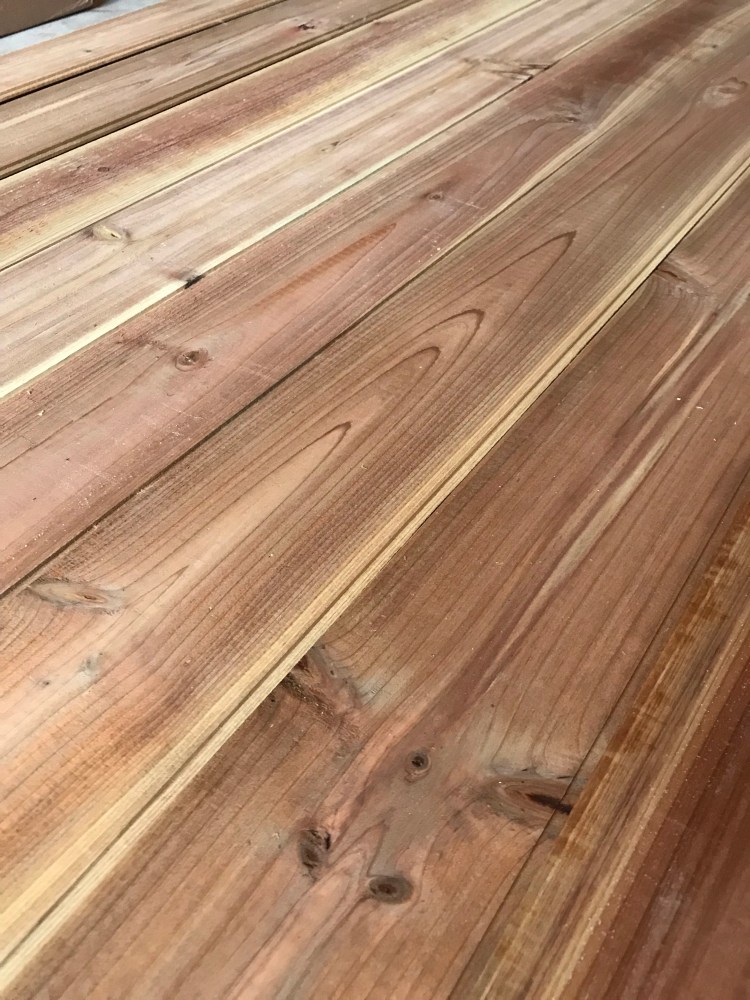
Van Build #4: Flooring

*This post was originally written October 1, 2018

_______________________________

Putting in the floor was a long but rewarding step in the van build. It is quite literally the foundation. There were several considerations that I put a lot of thought and research into. I’ll talk about these as I describe each part of the process.

Templates

The very first thing to do was create templates to go around the wheel wells, fuel pipe, ribs, and curved walls of a Chevy Express.

The template phase is not a difficult one, but it is fairly time consuming. I understand why many van lifers aren’t a fan! My patience was tried, but I turned on some good music or a good podcast (currently listening to And That’s Why We Drink) and got to work.

I probably used the slowest method for making templates, though I felt it would be most accurate (I’m a perfectionist and this project is teaching me the pros and cons to that). I had some left over moving boxes and cut them into quarters. I placed the straight edges against the wall anomalies (e.g., wheel well), took a tape measure, and measured at various points the “mirrored” distance from edge of cardboard to wall, etc. then applied those to the cardboard and connected the dots to create my cut lines. In retrospect it’s definitely the more complicated way! Oh well.

I’ve seen others eyeball their floor components and gradually perfect them as they go. I’ve also seen people who use a sort of compass or scribing tool to trace where they want to cut (or if you’re really DIY make your own scribing tool). Whatever method you choose, there will be fine tuning along the way.

I planned to use my cardboard templates for each layer of my floor: insulation, subfloor, and vinyl.

Floor Insulation

This was one of those things I was talking about that I put a lot of thought into. But I am learning more and more that there is often no one right way of doing things (though there can be not so good ways) and you can spend hours debating – you just have to make a choice and stick with it and trust that you did the research – or learn from your decisions.

Ultimately, I went with Extruded Polystyrene (XPS) Rigid Foamboard Insulation (R-5.0 per inch). XPS has a high compression value, which is beneficial in a floor as it contributes to a sturdy surface – especially with a corrugated surface. It does not absorb moisture and is not affected adversely by it. The downside to XPS being that it will off gas and the hydrofluorocarbons (HFCs) used have a higher global warming potential (GWP) than other rigid foam insulations.

I was temporarily considering expanded polystyrene (EPS; R-4.0 per inch) when I saw someone using it because it compressed more easily. Their thought process was that it would compress on top of the raised ridges in the van’s corrugated floor and fill in the lower ridges. This meant less height taken away in the van, and for me filling in those lower ridges would be a big plus since I still wonder if those pockets of air could create space for condensation and water to become trapped, creating a potential for rust or mold (If anyone has experience with this or info re: moisture and air gaps in a sealed van floor please comment below!). I ended up deciding against EPS due to its moisture permeability and degradation under constant vibration – which would not be good in a van.

The other rigid foam option is polyisocyanurate (polyiso), which has a higher R-value (R-6.0 per inch) and is better for the environment. The kicker is that polyiso actually performs worse in cold weather! It does not have as much compressive strength either.

You can find more info on insulation choices from Gnomad Home and Cheap RV Living.

I’ll also note that I chose to do the full floor first for a reason. I could have insulated the whole van before putting in the subfloor and vinyl, arguably decreasing the material used on the floor. But I’ve been factoring in the possibility of moisture and condensation. I chose not to use a vapour barrier as the climate I am in will change with my travels and based on my research prefer to rely on ventilation. Especially when I think about the possibility of messing up a barrier and then trapping the moisture behind the walls…

So my theory is that in the event of any moisture condensing behind the walls, if my floor extends to meet the van’s walls (as opposed to just meeting wall insulation or panels) then any moisture on the van’s walls will drip down onto the waterproof vinyl floor where it can evaporate or I’ll notice it and wipe it up. If the wall insulation or panelling had access to the van’s metal floor then water could get trapped under there and cause rust or mold. Hopefully that won’t be an issue with a fan installed, but I like to hope for the best and prepare for the worst.

Once I settled on XPS and had my templates ready to go, I got to tracing and cutting! Two 2′ x 8′ 1/2″ XPS foam boards fit into the van themselves and once I had them placed I used their positions plus the templates to cut the remaining pieces. Since I had some screw heads sticking up on some of the raised van floor ridges, I also cut holes in the foam boards to fit around those.

Cutting XPS can be tricky without good technique – using a utility knife and sawing it will produce rough edges. Steady single strokes at a 45 degree angle is the best bet for a clean cut. I also came across the suggestion of using a hot wire foam cutter after I’d already completed this step – something worth a google search (it’s pretty neat to watch it cut)!

I aimed to have all of the foam to foam pieces fit tightly at their seams and was happy with a 1/8″ – 1/4″ space at the outside edges of foam to metal.

Acetone eats foam!

In terms of adhering the XPS insulation to the van floor I was initially going to use 3M Hi-Strength 90 Spray Adhesive. But here’s the issue: it eats rigid foam! I had seen many other van lifers use 3M 90 and felt that it was a good quality product (which I have no doubt that it is if you use it correctly). The label went on and on with its list of materials you can use it with, so I didn’t think twice about it not being compatible with foam insulation. And it didn’t take long for me to notice the reaction once I started to spray – the adhesive sizzled and my foam insulation disappeared before my eyes! I learned that the high acetone content in this (and most) spray adhesive(s) is the culprit. I did have to pull up some XPS from the van floor, but it wasn’t too hard considering the foam’s deterioration, meaning it hadn’t adhered well. My beautiful clean floor now had adhesive and pink foam residue – but since I would be gluing again I didn’t bother to clean that off.

With some research (and this awesome video) I narrowed my options down to Gorilla Construction Adhesive or 3M 78 – a spray adhesive specially formulated for use with polystyrene. Fun fact – around 2002 3M changed their spray adhesive formulas to have a much higher acetone content, after which people could no longer use most of these on foam board.

Armed with experience and knowledge I moved forward with the Gorilla construction adhesive, using it relatively sparingly. This time I did a test between pieces of foam using the construction adhesive (and Great Stuff Gaps And Cracks for comparison). Gorilla was a much stronger hold (I couldn’t get the pieces apart!) and less messy. The Great Stuff pushed the foam pieces apart despite a light weight on them while drying and expanded beyond the edges.

Before adhering anything, I also made some special foam pieces to put where there were no ridges in the van floor. I had noticed during the dry fit that wherever there were no raised ridges the rigid foamboard bent down under weight. To fix this and keep everything strong and level, I altered some 1/2″ XPS into 1/4″ pieces. I did another dry fit and everything felt much more sturdy.

These pieces were glued down first and then I lay down the adhesive on the raised floor ridges, placed my XPS puzzle pieces down, and lay weights on top during the curing process. Once cured, I taped the inner seams between XPS pieces with Gorilla tape. I also used Gaps and Cracks to fill the holes in the foam board for the screw heads. It’s always a good idea to weigh down the flooring when applying Gaps and Cracks spray foam insulation as when it expands it can actually lift areas of the floor. I then trimmed the excess spray foam once it cured to make the whole floor level and Gorilla taped over the screw head hole areas.

Et voila! Floor insulation complete.

Subfloor

I chose to use 1/4″ birch plywood for my subfloor. Birch because it is a hard wood and 1/4″ because it would still provide a strong, flat surface, but would not take away too much from the height of the van. The usual suspects (hardware stores) didn’t carry birch so I went to a specialty wood distributor.

Just as with the insulation, I used my templates to trace my pieces of subfloor. I kept in mind to vary the seams of the insulation and plywood. I also planned out my pieces so that the subfloor seams would lie where there would be the least foot traffic. Factory edges formed the inner seams so that I would retain perfectly straight edges where each piece met. I then carefully used my jigsaw, with scrolling blade, to cut. I found it best to cut with the grain of the wood as much as possible in order to minimize split edges. I then sanded all cut edges of plywood and dry fit the pieces of subfloor in the van, making adjustments where necessary and ensuring I had at least a 1/8″ space at the edges for expansion.

With mold being a concern for organic materials, especially those in dark confined spaces, I treated my subfloor to prevent any future mold. I got the idea to spray my subfloor with Concrobium Mold Control and then paint with a mold-proof paint from Gnomad Home. The process was pretty straightforward: I sprayed all subfloor puzzle pieces with the Concrobium, allowed it to dry for 24 hours, then painted all wood surfaces with the Zinsser Bulls Eye primer. I used two 946mL cans to paint all sides of wood meant for about 50sq/ft of floor space in the van (I did two coats, one right after the other).

After some drying time, I adhered the subfloor to the XPS insulation in the van, once again using Gorilla’s construction adhesive. A couple of the birch pieces were a little warped so I weighed them down heavily during the curing phase. I used flexible, waterproof  silicone sealant between all of the wood seams. Then filled the XPS/ subfloor to van wall gaps with Gaps and Cracks spray foam insulation and trimmed the excess the next day.

Finally – the FUN part – I could now start on my vinyl flooring! But first, I left a little piece of me…

Vinyl Floor

I chose vinyl floor because it is thin (4mm) and waterproof. I managed to only need two boxes (24sq/ft per box) and a couple of sample planks to get the job done (thanks to the amazing home depot lady who generously gave me two “samples”!). They say to plan for about 10% scrap but I kept my scraps to a bare minimum with strategic cuts. I would have liked to use the click-lock style planks, but those were all much more expensive and I didn’t like the colours. Instead I used the grip-strip style planks, which were easy enough to install.

I started by putting double-sided tape along the edges of the floor. Technically this is a “floating floor” but I liked the added security. I then began the floor along the straight edge of the side door step, working my way across until I would have to start cutting the planks to fit around the wheel wells and odd edges. This went pretty quickly. The most important thing here is precision- making sure the seams fit tightly together.

I actually didn’t use my templates at all for the vinyl – the cardboard was a little worn and bendy and hadn’t been perfectly accurate throughout the other layers of the floor so I took my chances (and time) with my measuring tape, crafting each piece individually around the edges. For the curved edge of floor at the rear doors I left each plank a little longer than needed when first laying the planks and at the end of the install scored the edges on the curve. I used a pencil to mark my cut lines and a utility knife to score the lines a few times before breaking off the excess off.

There were a few seams that did not fit together properly where I had cut make shift pieces so I used the clear silicone sealant to carefully and discreetly seal these spots. They were all at the sides and where I will have shelves or my bed so they shouldn’t be noticeable.

The final touch was to seal the edges of the vinyl floor (again with clear silicone, and where a 1/8″ gap to the wall was left) to the steel van walls. This would create a waterproof barrier so that any moisture that may drain down the walls will not go underneath my floor.

I also sealed the gaps under/ between layers at the rear and side door edges with silicone for small spaces and spray foam for the larger spaces between the corrugated floor ridges. Just to cover my bases in terms of any liquids getting under there. The only thing left to do is to add trim. It’s proven a little tough to find something that will curve, but I’m sure I’ll find something, even if it has to be repurposed.

I have a floor!

And on that note, I’ll leave you with a song from a band I’ve been listening to a lot lately while working on the van. They’re fun to listen to and possibly even more fun to watch!

Later,

Kat

WARNING: This video has been identified by Epilepsy Action to potentially trigger seizures for people with photosensitive epilepsy. Viewer discretion is advised.

Copyright © Chronic X-Roads 2020

Van Build #3: Fan Installation

*This post was originally written September 5, 2018

_______________________________

Initially I had a hard time placing when would be the best time to do the fan installation. But it ended up being one of the first big alterations I tackled. Which suits me just fine as I am of the mindset that you’ve got to get through it to get past it and you might as well get the worst over with.

By worst, I mean I was a little terrified to cut a big hole in my van’s roof. But… I did it! This post covers my choice of fan and the steps I took for installation.

Here’s what the van roof looked like initially. It came with a ladder rack and a Flettner vent.

MaxxAir vs Fan-Tastic Fan

If you’re going to invest in a good vent/ fan, two names you’ll often hear are MaxxAir MaxxFan and Fan-Tastic Vent (now sold under the Dometic brand). There are cheaper methods of getting air circulation through a van, but here’s a case where I would argue that you get what you pay for.

While having a fan will feel nice when you’re travelling through hot climates, it’s not the only reason to get a fan. Some can cool the air coming in. And most importantly, a fan will help to remove humid air and moisture, targeting condensation that can lead to mold or rust problems in your small living space. Especially if you will be cooking – a fan can suck out any smoke or fumes. Cracking a window or having two fans – one for intake and one for exhaust – will improve air circulation and when it’s hot having a fan to pull out the hot air that;s risen to the ceiling will really help.

When researching which fan to get, I was stuck between the MaxxFan and Fan-Tastic Vent. Reviews were fairly similar on Amazon. What ultimately swayed me was the impression that MaxxAir was of slightly better quality (subjective opinion) and you could get it with a built in rain cover. This way you can keep it open even when it’s raining (which you can’t with a Fan-Tastic fan). Other fans give you the option of buying a separate rain cover – which is often bulky, or you have to keep your vent closed in the rain, which means no ventilation in wet weather (and I want to spend a good amount of time in the Pacific Northwest!). The Maxxfan can also be kept open while driving, even on the highway. It has two support arms for the fan that make it sturdy.

Both Into The Mystery 13 and Gnomad Home provide great points as to why they prefer the MaxxFan.

This is the MaxxFan Deluxe 6200K – Smoke (5100K is the exact same but in White) with 10 speeds, manual lid opening, thermostat, intake/ exhaust, ceiling fan mode, and rain cover.

I chose the smoked lid for aesthetic reasons and thinking it might blend in more if I get a black roof rack. It lets in more light, but also more heat – which would be one reason to get the white lid.

Bumps In The Road

One thing I did not take into account when I bought the MaxxAir Fan was the size and weight. It’s really big! And it weighs about 16.5 lbs compared to a Fan-Tastic Fan which is smaller (with no rain cover), thus can be more stealthy, and weighs more like 5 lbs.

This only mattered to me because the roof on a Chevy Express van is actually pretty thin. So on the day when I was gearing myself up to cut a 14″ x 14″ hole in my van roof, I had what felt like an existential crisis because I started to question if it would be okay to install the fan at the back of the van roof, my ideal location. The issue here is that it is a larger space between the interior van ribs that support the roof – and the roof bends in when weight is placed here. Actually – the whole roof bends and moves around when I am walking around up there, but it is more evident between the back two ribs.

So, no problem, I thought, maybe I can install the fan between then next section of ribs, which are closer together and would just fit the fan, giving more support. Unfortunately the van came with a Flettner vent already installed between the last two ribs, meaning there was already a hole in the roof there. So it made more sense to put the fan where there was already a hole.

I probably could have still moved the fan up and gotten somebody to weld over the Flettner hole… but that would likely be expensive and ugly. Plus the solar panel configuration I had in mind might not work with the fan in the middle of the van. I rationalized the decision to keep the fan at the back by coming up with a plan to make braces (using metal angle bars) to place under the fan’s wooden support frame, which would screw into the adjacent ceiling ribs, to help support the fan from beneath. Boy, does this van build call for a lot of improvisation!

The Install: Wooden Frame

Before I even touched the van, I made a wooden frame that would go inside the van for the fan to screw into. According to MaxxAir the fan needs at least a 1 1/8″ roof thickness to be secured to. Using the fan’s flange I made measurements and cut four lengths of 2x2s. Then I simply screwed them together. I know people will tell you not to screw straight into the end grain of wood because you won’t get as strong a hold, but this isn’t exactly a structural piece and doing so was easier.

Here’s a look at the wood frame in action. Notice the space underneath to the sides where the roof ridges are. I carefully tightened the screws here – not too tight which would bend in the plastic flange, bend in the metal roof, and probably stress the screws along with those aforementioned surfaces. Also this is with only one of the two supports installed I will have a second support, I just need a different size screw in one corner!

Following a load of research into mold prevention, I decided to spray the wood frame with Concrobium Mold Control as well as with mold resistant paint. This frame would be one of the first surfaces to get wet in the event of a leak so I figured I might as well play it safe.

Existing Vent

Next I removed the Flettner Vent already in the roof. A simple google search of the model on my van led to an installation video, which I executed in reverse to take it apart. This was pretty simple once I was familiarized with the parts – pop out a piece of plastic from the inside, unscrew a bolt, release the inside parts, then climb onto the roof to gently cut through the old sealant with a putty knife – done!

Measure The Hole

A 14″ x 14″ hole is typical of RVs and fans/ vents like the MaxxFan and Fan-Tastic Vent. While some fans come with a template for tracing your hole, MaxxFan suggests using the flange (base) to trace your hole. I did neither, instead making my 14″ x 14″ measurements relative to the roof ridges, side gutters, existing hole, and supporting interior ribs. I made sure there was enough room for the wood frame next to one rib on the interior and at least 8 inches of roof space behind the fan on the exterior (for the overhang). I used pencil so I could easily correct any mistakes. Then inspected my work carefully before prepping to make the cut.

It was nice to be able to take care of one rusting hole by cutting an even larger hole…

Once I was confident about my measurements I put down painter’s tape around the hole. This not only provided a better visual for the cut but also protected the van’s paint job from the jigsaw that would be sliding across it. I also taped down some paper towel around the area so that the metal scraps and dust expelled by the jigsaw would not damage the roof.

Unfortunately, there was a slight wind that blew the metal bits down the length of my roof anyways. When it was time to clean up I did my best to get all the metal pieces I could (an oily rag is recommended, but I was still afraid of scratching the roof and running the risk of slipping) – I picked up any larger pieces by hand and used a handheld vacuum for the dust. I kept an eye on the roof over the next several days and to my dismay found that some rusty spots had appeared. My theory is that after some time in the sun and after a rainy day, the remaining bits of metal had adhered to the roof and rusted. It took a surprising amount of effort to wash off these spots – which really were stuck!

Make The Cut

The moment had arrived – time to take the plunge and cut!

I put down some garbage bags in the van beneath where the hole would be to catch metal scraps. You can tape a garbage bag to the ceiling, which I did, but the jigsaw caught on it a couple of times, creating a hole through which scraps fell anyways. So bags on the floor should be fine.

I began with drilling pilot holes in the square’s corners. I used a centre punch, applied lubricating oil to the drill bit to prevent overheating, and went to work.

I donned my protective eyewear, dust mask, and ear plugs (gloves are a good idea, too). Once the starting points for the jigsaw were drilled out I started cutting with the jigsaw, once again lubricating the metal blade.

Another downside to the roof bending around was that once I got to the fourth and final side of the cut things got tough. The roof was moving around a substantial amount and cutting on a moving surface is pretty difficult. I ended up pushing the metal down while cutting, which was the best way to make the surface more stable.

Congratulations – you now have a big hole in your roof. And the scariest part of the build is behind you!

Perfect the Cut

Following the cut I test fit the flange. It was a bit too tight on one side so I used the jigsaw to cut a bit more and go over any uneven edges. Once the flange fit I deburred and smoothed out the edges with some medium grit sandpaper. I proceeded to clean the edges with rubbing alcohol and then painted the exposed metal with a rust inhibitor (I’d be interested to try this, too). I allowed this to dry overnight before continuing the installation process, taping a small garbage bag over the hole to keep bugs and leaves out of the van.

Butyl Tape

The next day I began by cleaning a two inch perimeter around the hole with rubbing alcohol. Once clean I started laying down butyl tape. This stuff is a great waterproof rubber adhesive that is thick so I could layer it in order to level the centre ridge that dips below the others. I used a few extra layers of butyl tape on the lower ridge and then covered all ridges with another layer to create a flat surface on which to put the flange.

After placing the flange into the hole (metal clips on the sides) and onto the butyl tape I carefully trimmed any excess butyl tape from around the flange’s edges (making sure not to scratch the roof).

Flange Pilot Holes

Next up was drilling 16 pilot holes through the flange holes and roof. I used a drill bit the same size as the threads of the screws provided with the fan – so technically I drilled clearance holes. If I had used a drill bit the size of the screw shank this would have made a pilot hole because the threads would still bite into the metal (don’t mind my newbie musings – I’ve learned so much on this build!) . But I did wonder if the threads really would have threaded into the metal since it was so damn thin… There are pros and cons to both pilot and clearance holes (here’s a good article).

Drive Screws And Seal

Once complete I clamped the wooden frame I’d made previously to the inside of the van roof and flange. Time to put in the screws! This was easy and fun. I made sure not to screw them in too tightly, which could stress the screws as well as make them lose their bite in the wood, push the flange down, possibly stressing the plastic, pushing out the butyl tape beneath, and bending in the roof’s metal edges where the ridge naturally created a small space between the metal and wood.

My favourite part of the install was applying the Dicor Self-Levelling Lap Sealant around the flange and screw heads. I don’t know why, it was just highly satisfying.

Attach Fan

Now I could place the actual fan into the hole and flange! Making sure the wires were tucked in and the vent was facing the back of the van, I lowered it. At first I had some difficulty when it came to screwing the fan into the flange. The four metal clips on the flange with holes that the screws were to secure into weren’t quite lined up with the holes in the fan. It was a matter of adjusting the metal clips on the flange, pulling them up a little (but not too much or it could compromise the seal at the base of the fan), that fixed the problem here.

The MaxxFan instructions don’t mention this and it might not have been necessary, but I took the liberty of putting dab of sealant on these screw threads to create a watertight seal here as well.

Ta Da! Fan installation complete!!

Well, almost…

Remember how I said my roof bends? Well one side seemed to bend more than the other and it decided to bend inward after the installation. This meant that the fan looked lopsided on my roof and I wondered if rain would pool here since a lower ridge lined the sides of the fan.

Improvising: Fan Supports

This is where my idea about making supports for inside the van and under the wooden frame came in. I got an 8 foot / one inch aluminum (light weight) angle bar and cut it into the appropriate lengths to span the distance between the two ceiling ribs that bordered the fan. I had to make some creative cuts to get these supports to fit just right.

Since the two sides of the fan were not perfectly level, it meant that the supports did not line up perfectly. On one corner I needed to use a small piece of plywood to fill the gap between the support and the rib (it didn’t make sense to push the roof up here as it seemed like it might strain the roof and the support). I made clearance holes in the angle bars and pilot holes in the van ribs and used self-tapping teks metal to metal screws (I know I could have skipped the pilot hole step with these screws but chose to do it anyway as my mind liked the idea of it giving the threads a more controlled bite in the metal – this could be completely wrong but I went with it).

Now I have more support for my fan, a more stable roof, and the fan is more level than it was before, with the major dip lifted so that rain water does not pool as much!

The only thing left to do is install the interior garnish trim ring of the fan once my ceiling is up. I haven’t decided if I want to go the extra mile and put Eternabond tape over the dicor once it is 100% cured (30 days) for even more peace of mind regarding leaks (Eternabond is considered permanent, which is why I am hesitant to use it. Though you can remove it by applying heat, but it would likely be a pain. Bob of Cheap RV Living used it in his fan installation).

Phew! Having completed what I expect to be the most stressful part of the build I feel like a weight has been lifted. I learned a lot and feel more confident going into the rest of the build.

I’ll leave you with what feels like is becoming my theme song surrounding the build and my foray into vanlife. I can just hear some people addressing my project with a, “young lady, you’re scaring me” …

Until next time,

Kat

Copyright © Chronic X-Roads 2020
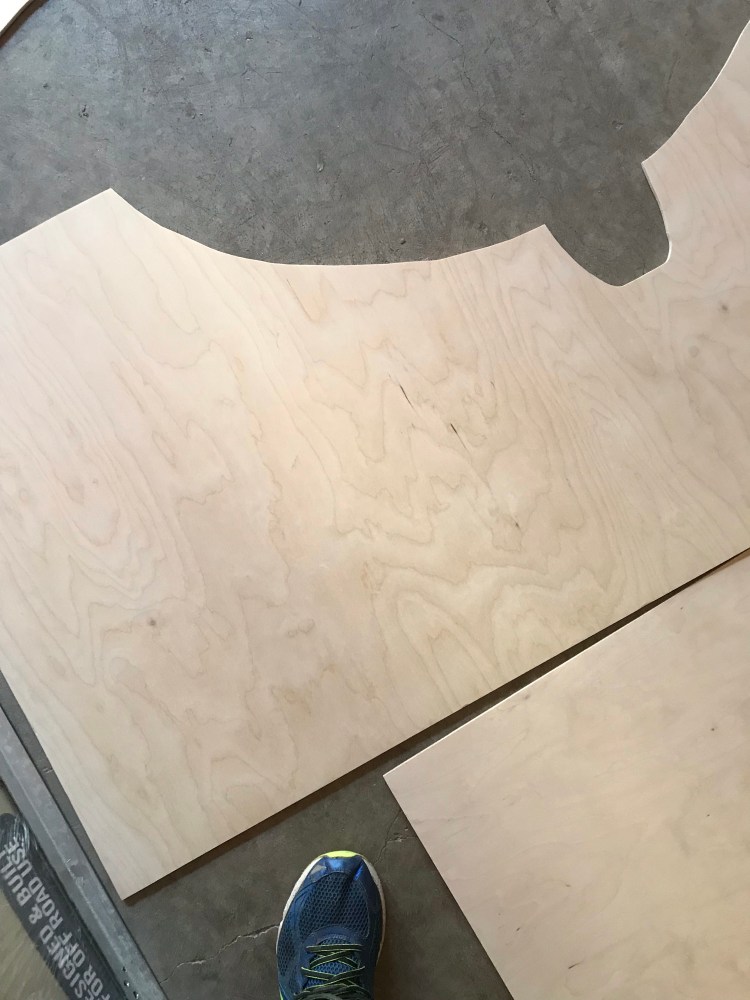
Van Build #2: Getting to Clean Slate Status

*This post was originally written August 18, 2018

_______________________________

I predict that this stage of the build ends up taking the most time. It’s a lot of little things that add up and things I didn’t anticipate. It’s settling into a groove of hands on work, changing my mind, more research, and learning new skills (like how to use all these power tools).

This post chronicles Strider’s journey from untouched to clean slate – when I will begin the more concrete stages of the build, like solar, fan installation, insulation, etc.

Taking Care of Appearances

First, I addressed my van’s exterior. As with any vehicle, this is mainly regular maintenance to increase the longevity of the body. To get to clean slate status, and not knowing the full history of the van, I wanted to cover all my bases. One of the first things I did after bringing the van home was to have a Krown rust protection application. They coat the underbody as well as inside the doors to prevent rust advancement and lubricate. My mechanic told me that this had never been done with my van. It’s a beneficial step in a climate that uses road salt in the winters.

I had noticed some minor paint chipping (around doors, hood, lower paint job) and a few small spots with surface rust forming (mainly on the roof). To restore these areas and stall future deterioration I went ahead and found the paint code for my van from the sticker on my passenger door then headed to my local GM dealer – though they had a database with the correct paint, too. It was a 2 in 1 paint and top coat with pen, brush, and sponge applicators. All I had to do was remove any rust (fine grit sandpaper or scraper), clean (rubbing alcohol in case of grease), paint a couple of coats, let dry, sand until it blended with the old paint, then add the topcoat. It’s good to wash before and after this process.

Once I’d fixed up my van’s body I had the van washed and waxed. While I was told cargo vans rarely get this done, my van won’t be just another work van, and I may want to sell the van someday, so I want to take care of it. In the future I will do the wash and wax myself, clay bar detailing and all, but this time around I did also finish with a paint sealant myself to extend the length of time of protection – allowing me to wax and seal once a year instead of multiple times a year.

Sidenote: Cargo vans won’t fit in typical automatic or touchless car washes. You can take them to a truck wash or do it manually.

Strider’s Strip Tease: Pulling Out Factory and Aftermarket Parts

My van had several components that I would not be needing, including the roof rack, divider, grey metal box, rubber mat, and cargo bay light. While I planned to remove each part on my own, there were some instances in which I was not equipped to do so.

 I planned on selling the roof rack and my auto shop offered to take it off for me, so they took it apart and I stored it. In retrospect, barring any bolts that might have corroded together, it would have been a simple enough task to do myself, but at the time I was unsure and didn’t want to risk scratching or denting my roof by accident.

 I was going to sell for two reasons. First, because I contacted the manufacturer (Adrian Steel) of this particular rack, and based on photos I was told that this model’s MSRP was about $1,200 before tax and installation fee! So I could probably sell it for a decent price. Second, I was going to bolt my solar panels to the roof, so I wouldn’t need the roof rack and it only added weight and wind resistance to my van, decreasing my mpg. But over the course of a few months I only had two people interested in the rack, one who never got back to me, and the other with an offer I wasn’t ready to take. So I still had the rack… when I decided that rather than put more holes in my roof, I might prefer to attach the solar panels to the roof rack and put it back on my roof. I had gotten installation instructions from the manufacturer and found that it was really pretty simple reassemble!

Next up was the divider, separating the front seats from the cargo bay. When I went to take it out it proved to be a huge headache. I got most of the bolts and screws out that were holding it together and to the van’s floor (I treated myself to a wrench set and it kind of felt like Christmas), but several were rusted and stuck, and the two sides of the divider were riveted in behind the van’s interior panelling. I tried a couple of methods to remove the blind rivets (hammer a steel chisel under the edge of the rivets or drill into the rivets) – but with no avail. I needed to bring the van to a Chevy certified body shop – people who new the make of the van, how to remove and re-attach the panelling, and who would have better luck with the rivets.

I also asked the body shop to remove the grey metal cabinet by the side door, which was fastened to the floor and had an orange rubber tube connected to the side wall. While I had dismantled the wall tube and gotten a couple of the screws out from the floor, the cabinet had a larger metal tube going down through the floor and a couple of bolts with wing nuts on the exterior of the floor that had rusted badly.

  You can see the rusty spots around screw holes where water got in.

Next was the rubber mat. THIS was easy! I simply had to pull it up and out of the van. Some edges were wedged under rubber trim on the steps at the side and back of the van, and it was somewhat heavy, but simple enough. There was some sort of fabric under the mat that had a weird smell to it… but otherwise an enjoyably efficient process. I will likely end up bringing the mat to the junkyard, but for now I am considering using it as a floor template – not all the edges were accurate, going under or extending over the edges of where my floor will be, so when the time comes I will probably put it back in the van and score or trace the edges to a more accurate template. I’ve also seen some vanlifers keep the rubber mat as part of their flooring. Into The Mystery used it in his Chevy Express build to aid in insulating the floor. The fabric evidently comes off if you soak it under a hose.

Lastly, there is a light on the cargo bay ceiling that I removed. Chevy had a piece of metal welded to a van rib and then a plastic holder for the light attached to that. There is wiring that lines the cargo bay on the driver side extending from the front of the van to the rear lights which will stay in place and another wire extends from here to the middle of the ceiling where the light is. It took a bit of fiddling, but I finally figured it out. So in the event that anyone else had an issue with this, here’s what to do. For the wiring there is a connection midway between the light and the main wiring along the side ceiling rib (branching off what’s headed to the brake lights). I pulled out the two grey tabs and then bent the plastic on one side to separate the two parts/ wiring to the light. There were two small wires held to plastic clips in the ceiling rib with electrical tape. I couldn’t pull the clips out so I took the tape off instead and might cut the clips out later. For the light, I first took the white covering off by pushing in on the edges at each end. This revealed two screws underneath. I removed these and the other parts followed. I was left with the metal holder that is welded to the ceiling rib.

I decided against pulling out the front seats and front mat. I was able to pull up the back of the front mat and it seemed okay underneath, with just a bit of surface rust around four screw holes – which I was able to reform without pulling up the whole mat. The fasteners holding the seats down are a bit rusty and there is wiring under the seats as well – I figured it might be tough to remove and I felt out of my depth with the wiring. But I may still decide to do this at a later date.

Sidenote: Into The Mystery 13 did a conversion on a long base 1997 Chevy Express last year and inside the lower centre dash panel was a huge mound of leaves! Check out the video here to see him cleaning out the van and possibly finding a surprise among those leaves… (I have no affiliation with his channel, I just find the videos enjoyable to watch and informational)!

Cleaning

Once everything was out, it was time to deep clean this mean machine. To do so I also took off the rubber mats on the side step and at the back (just pull up – they are fastened into metal clips – but be careful not to step on the clips – it can hurt!).

First, I used a scrub brush to loosen any packed down dirt – there was a lot of what looked like soil under the rear mat. Then I used a hand-vac, followed by wiping down every surface of the van’s interior with a gentle soap/ something to cut through any grease. In retrospect, I probably could have done the mass cleaning after I ground off rust, but this way I had a better view of any subtle anomalies and bubbles concealed by the paint indicating rust.

Rust Removal

The thing about dealing with rust is – there is always more! Even when I thought I had meticulously singled out every spot (and I am a perfectionist), I still stumbled across more that had been hiding. As The Vanual puts it – rust is no joke.

I had already addressed the van’s exterior and underbody, now it was the cargo bay’s turn. I was actually pretty pleased with the state of my van. If you google rust reforming or how to deal with holes in your van’s floor, you find people with huge holes in their van floors that had been eaten away by rust. For me it was just surface rust. You can see in the close up picture of the rusted screw hole above some of the bubbling under the paint.

If there is any flaking paint you can use a putty knife to scrape it away. I liked the handheld wire brush I had, with metal scraper on top (in the future I would get a mini wire brush as well for hard to reach nooks). Then I ground off as much rust as I could get to with an angle grinder and metal grinding disc (you can also use a twist or crimped wire wheel brush). Very important is to wear protection – ear plugs (or ear muffs), protective eyewear (or these), an organic vapour respirator, gloves, and clothes that provide some protection. Once the grinding was done I went back and got any spots that the angle grinder couldn’t reach with my handheld wire brush.

With bits of paint and metal dust spread throughout the van interior I vacuumed and gave the floor and walls another good wipe down.

Later I noticed by chance a couple of spots that looked like rust on the back step of the van. I figured out how to remove the plastic cover – it was on there pretty good and I’m assuming not necessarily supposed to come off as I broke a couple of the rubber plug type things holding it down. But I’m glad I did because I found more serious rust, not just surface. So I whipped out my handy angle grinder and got cracking. With this more advanced rust, there was a lot of red dust that flew up as I ground and it got all over the interior of the van. In the future I would put up some plastic to keep  to shield the rest of the van.

There were also a few rusting spots, though tiny, on the front bumper, but when I looked at how the cover was attached to the metal here from beneath I decided to leave it in place and just sand the visible rust. I finished (hopefully) the rust escapades by wiping down the front bumper and back step with rubbing alcohol.

Rust Inhibitor and Paint

In preparation for painting I used painter’s tape, some plastic mattress covers I had handy, and garbage bags to cover any areas of the van on which I did not want to get paint.

First up was using a rust inhibitor to cover any bare metal (or rust) in the cargo bay. I made sure to wear a respirator, eye protection, gloves, and clothes I didn’t mind staining during the painting process. Disposable booties/ old socks/ plastic bags are also good to have on your feet so you keep the painting surface clean. This step was pretty straight forward. I used several cans of rust reformer spray paint and waited 24 hours to allow drying before painting white on top.

I chose to use Rust Oleum’s white gloss spray paint. Application was easy and quick, but there were a couple of drawbacks. I didn’t find the spray application to be even and after one coat I could still see the black rust reformer underneath, so I needed a second coat (I probably used at least 6 cans to cover the floor and some spots on the ribs, walls, wheel wells, and ceiling). I also found out that this paint may be conducive to at least staining, at worst mold and mildew. I hadn’t fixed my rear door rubber seals yet and they leak so when it rains I put towels down in the back of the van. One night more water got in than usual, and although these were microfibre towels, they were wet long enough that the paint underneath turned pink in spots. Google said that this could be mildew. I washed the spots with rubbing alcohol and even Concrobium mold control, but the stain was in good. I do wonder if it was just dirt from the towels sinking in to the paint. To be safe, if I were to do the painting again I would use a paint that is explicitly marketed as mold-resistant, which the Rust Oleum paint is not, and potentially waterproof. Although the Rust Oleum paint does say it can be used as indoor and outdoor.

The wait time for the white top coat to dry was 48 hours so this was a process that tested my patience!

After the interior was all painted, I did the front and back bumpers. I first applied the rust reformer. Since I wanted to avoid any misting paint getting on the white body paint, I sprayed the inhibitor into a plastic container an applied it with a paint brush. When dry, I opted to use a weather and abrasion-resistant truck bed paint as the top coat.

Filling Holes in the Van Interior

Most of the holes in my van floor were screw holes fitting 1/4 x 1/2″ hex bolts. I had some of these from taking apart the divider (zinc), but I wanted stainless steel (more expensive but corrosion resistant) since you could see the pavement below through most of these holes. Zinc plated fasteners are the cheapest, but they will rust when exposed to the elements. Galvanized fasteners are a step up in both price and corrosion resistance. Stainless steel is the best for corrosion resistance and most expensive. Weigh your options and priorities – I don’t want to have to worry about the bolts rusting under the insulation and flooring I’ll be putting down – I want longevity.

I used a socket and ratchet to tighten the bolts and once they were half way down I applied a medium threadlocker to help keep them in place during constant vibration of the van while driving, then tightened all the way down. I then cleaned around and on top of the bolt heads and sealed them. While I initially used a silicone caulk for it’s waterproof and flexible properties, I was unable to find any explicit information regarding how this would hold up with vibration. I’ve since decided that Dicor self-levelling lap sealant is the gold standard (well known in the RV world). Though I would also look into Sikaflex (polyurethane-based, flexible, shock-absorbent, high strength) or an automotive grade sealant. Gloves, eye protection, and respirator were worn during this process.

Unfortunately these were not the only holes to be sealed. The metal cabinet that had been removed from the van left two 1/2″ holes in the floor and a one inch hole in the side wall beside my sliding door. I weighed my options – from fibreglass resin, to bondo, to epoxy putty, to welding, to rubber sheetmetal plugs, to sealant only. I ended up sealing the 1/2″ floor holes with 1/2×1″ hex head bolts. I had some polyurethane adhesive (I would have bought 3M if it wasn’t so expensive) lying around and so I used this to coat the upper threads and bottom of the bolt head and applied to the holes. Only one of the holes was accessible from below the van and on this bolt I placed a nut underneath, also adhering with the polyurethane. After curing, these babies have held up nicely.

The hole in the sidewall had housed something that still remains a mystery to me (if anyone knows what it is I’d love to know!) I decided to go with it. I cut off the excess rubber tubing, took it apart, rust reformed and painted the outer shell, and filled the inside with polyurethane, also adding a little adhesive under the nuts.

Yay – my van has no more holes! Now to make it fully self-contained by addressing the leaky rear door seals…

Leak Test and Fixing Rubber Seals

Doing a leak test should be one of the first things done in preparation for a van build. This is a critical step in preventing mold from taking root in your tiny home on wheels.

I incorporated the test into a pre-existing plan to wash the van. I simply took a hose and held the running water over every window and door seal, then hopped in the van and made note of any locations where water was getting inside. Initially, I used high water pressure with a hose nozzle, directing it straight at the seals – this was probably overkill and not a realistic representation of what rain would do. But I also checked the van interior after heavy rainfall and there were a few spots along the back door’s seals, and a minor spot on the side door where water was getting in and I could see that the rubber seals were a bit worn.

Addressing rubber seals and weatherstripping

Replacing seals and weatherstripping with the correct OEM parts can be pretty expensive. I decided to order rubber seals on Amazon and adopted a hack I found online where you use a length of 1/4″ rope, threaded along or into the seals to make a tighter fit. In theory, the latter is a good idea, but I found that it may or may not work. Depending on the door and state of the seals, the rope could make it harder to close your door, causing more of a leak or wind noise when highway driving. I liked adding rubber seals, the ones I ordered being smaller, allowing for subtle adjustments, but they also had limits for where they could be placed. While these seals had their own adhesive strip, I reinforced them with additional weatherstrip adhesive.

  I was able to unscrew this rear door latch and move it back a bit.

This is an ongoing process and I am still adjusting and testing each time I drive on the highway (wind and road noise through the side door) and when it rains (back door only now). My current theory is that where the two back doors meet there is a rubber attachment between the doors at the top corners that depresses the inner seals and allows water in, so I may need to add a sealant in there somehow as it is not a spot where rope or a rubber seal would fit.

I was also able to adjust the rear door latches back a bit to help make a tighter seal.

So we will see!

Sound Deadening

I was going to skip this step. But I figured if I’m doing all this work, what’s one more thing? I might as well.

There are loads of options for sound deadener on the market – with two main categories. Some use butyl rubber adhesive (Noico, Dynamat, Fat Mat) and others use a rubberized asphalt adhesive (Peel and Seal, Cofair Aluminum Roof Tape). The former category is typical of sound deadener specifically designed for sound deadening purposes, often for use in conjunction with a sound system or vehicle. The latter is designed for roof repair – aka it is designed with outdoor use in mind. What many people are concerned with when it comes to the asphalt based products is the toxicity of asphalt. Manufacturers have stated that this only applies when asphalt is heated and releases fumes, but there are those who wonder if it will off-gas. And if applying directly to the metal vehicle body – how hot would the vehicle need to get to create fumes? I did a bunch of research and while the roofing tape was the cheaper option, I lucked into getting Noico at a discount and felt comforted that I played it safe.

Installation was pretty easy, though a bit sticky at times. Noico’s sound deadener came with straightforward instructions. Heating the sheets is recommended to improve adhesion, but I figure installing in 30 degree weather (celcius) was sufficient. I mostly wanted to cover my floors and then use the excess on the wheel wells, walls, ceiling (for when it rains!). Make sure your surfaces are clean. Measure each piece according to where you’re placing it, cut, use your fingers to carefully flatten to avoid air bubbles, then use a roller to flatten and adhere. I made the mistake of ignoring the instructions to wear gloves when I started this and ended up with paper-cut-like-slits on half my fingertips..

Blood – check. Sweat – check. Tears – TBD. 

Onward and Upward

Writing this post and looking at all of the pictures so far, I am starting to realize the transformation that is taking place. It’s a good feeling to see your work pay off. I am also learning a lot about myself and my process, and part of knowing that I am a perfectionist is having patience with myself and balancing the urge for perfection with time management and being realistic about what is needed. Next up – fan installation!

I think I’m going to start ending (there’s an oxymoron) these posts on a musical note (redundant?)… So with that in mind, I’ll ask you this: is there a lien on your dreams?

Not dead yet,

Kat

Copyright © Chronic X-Roads 2020
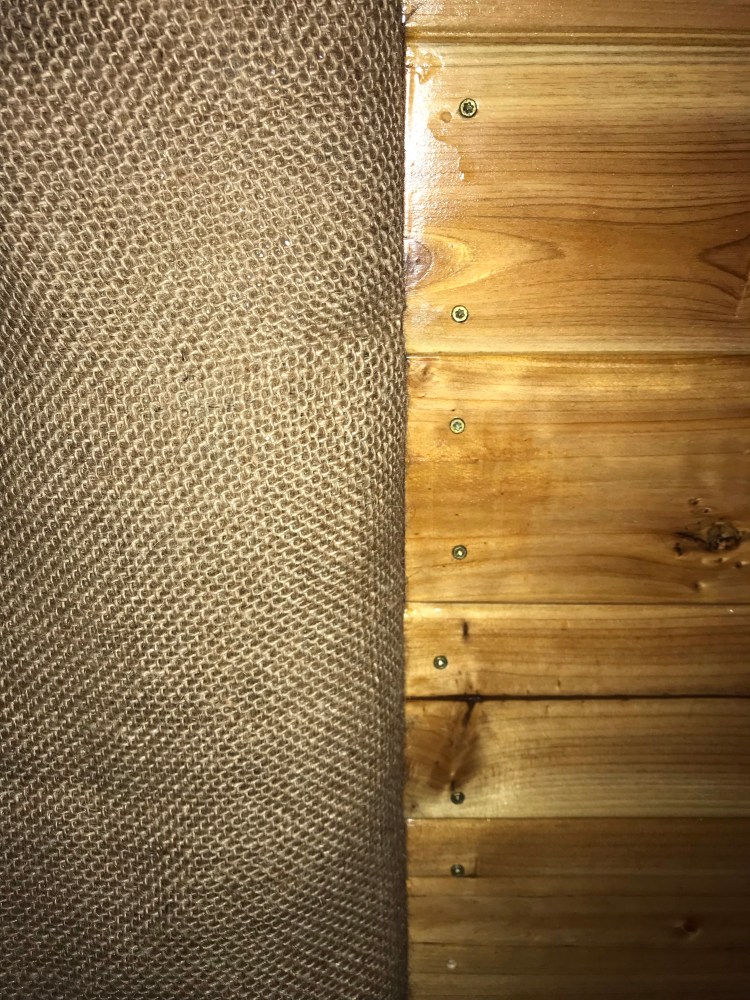
Van Build #1: The Road So Far (Pre-Build)

*This post was originally written July 19, 2018

_____________________________

Brownie points to those who got the Supernatural reference…

Also, the extent of the road has been my driveway. Or to and from the mechanic and hardware stores if we want to be technical.

As I wait for a fresh coat of paint to dry on the cargo’s interior I thought this would be the perfect time to contribute to my documentation of the process. My priority right now is to get the van build done. But I figure if I wait till I’m done to chronicle each stage in the process, I’ll more than likely forget crucial details. This way I control my anxiety levels which invariably rise when I feel like I am not accomplishing anything and I can use my down time productively. Win/ win. Plus, it gets exhausting to be doing that kind of physical labour all day every day. Balance is key.

You know when people are bored and compare it to watching grass grow or paint dry? This is me. Watching paint dry. Quite literally. Blogging it is. 

So, in this post I want to cover some of the things you don’t think about when committing to a van build. Some of the things that popped up unexpectedly, that I haven’t seen addressed on many other blogs, or that took more time than I thought. The road to the van build and what is done from the moment you bring your new van home to the moment you finally begin work on her!

Naming Your Van: Making It Feel Like Your Own

Obviously – this step is optional.  It may sound silly, after all – it’s a VAN. But it’s also more than that. My van will be my home, my shelter, my protection, and my companion on the road. You might have a name picked out before you even buy your van.  If you’re like me, it will take a while to decide – it took me two months after buying my van to settle on a name. I had to get to know my van first. Initially, I thought it would be a girl’s name. Girl power and all that! But as time passed I realized that my van felt more like a male. And that feels right to me. After all, while part of solo van life for me is about proving to myself that I can do anything on my own – and there is a level of feminism in it for me, I believe that feminism is synonymous with EQUALITY.

The naming stage was not just about naming, but getting to know my van. That included what shape he was in physically, getting serviced, and doing ongoing maintenance. It was also about transitioning to being the new owner. And I don’t mean just on paper. It took a while to really feel like this was my van. To feel like the previous owners and dealership no longer laid claim to it.

After two months, I finally felt like this van was MY van. Meet Strider.

Insurance: Commercial or Rv? How Modifications and Travel Can Complicate Things

After buying the van, I could not bring him home until I had insurance. This was an aspect of the process that I did not foresee being so painstakingly excruciating. It took a few weeks for me to get coverage. Yup. Weeks. Why?

From what I’d read and from those van lifers I’d contacted in the states (where most of my research sources were from) – most people doing van life have regular personal auto insurance. I live in Ontario and apparently we have hoops to jump through.

Some companies simply do not cover “commercial” vehicles. While I would be using my Chevy Express for personal use, the manufacturer classifies this van as a commercial vehicle. You get into some bureaucratic semantics here. I even have commercial plates and according to Service Ontario I cannot have personal plates – instead I have to get a red sticker to put on my plates along with my registration stickers. This is the same for big trucks.

I ran into several insurance agents who seemed to think I was trying to pull some sort of fraud, too. A young, single female wanting to insure a typically commercial vehicle for personal use? No way!

Some told me I should get RV coverage, but upon speaking with an RV insurer and doing my own research I learned that you have to meet specific criteria to be classified as an RV (think stove, toilet, fridge, shower, heater, plumbing, etc.) and I was keeping my conversion basic.

Sidenote: many people plan their conversions with these RV specifications in mind because registering and insuring as an RV is cheaper. As an RV you will also be allowed into “RV only” campgrounds. On the flip side, remaining registered as a commercial vehicle with commercial plates may boost your stealth factor in the wild of the concrete jungle as people will assume you are a contractor or business – less likely to assume you are living in your van! So the decision of how to register your van has several implications. Personally I think the Ontario system is wonky as it caused major headaches and I wish I could just register with personal use plates, but it is what it is and I’ll take the stealth factor.

So when I went back to personal auto insurance, I either had people telling me they don’t cover “RVs” (my conversion van was in a grey area that confused them) or they immediately declined me because of the horror that is “modifications” in the insurance world. Apparently travel out of the country was another risk factor.

After running around like a chicken with its head cut off I finally found a broker who worked some magic. Personal auto insurance with mods on the contract. I just have to send them copies of receipts and pictures once I finish the conversion.

It’s important to mention that I also spoke with some people who outright advised me to not tell insurers about the modifications. My advise: be honest. If you make a claim and they see modifications on the vehicle that you did not tell them about they can deny your claim. It’s a big risk.

I got to the point in the insurance process where I felt like I would never find a solution. But know that you cannot be denied auto insurance. If voluntary/ private market insurers reject you,  try non-standard auto insurance. Your last resort would be “high risk” insurance (residual market) or Facility Association – luckily I was determined and did not have to resort to more expensive options.

Another consideration is where your insurance will cover you. If you’re planning a trip throughout North America, most companies will cover you in Canada and the US (up to 6 months or the alotted time you can visit as a tourist and without a VISA), but you will need separate insurance to drive in Mexico.

Vehicle Maintenance: Adjustment, History, Repairs, Upkeep, New Tires

This is where I got into the nitty gritty of Strider’s history, feeling comfortable with him, and determining my own maintenance regime.

I suppose the very first aspect here was getting comfortable driving a big cargo van. I  used to drive a Honda Civic, so this was an adjustment.

Strider did not come with a detailed service history, other than what showed up on the Car History when I bought him. So I knew when a new owner took over, when registrations took place, and when the van was serviced – but no details of exactly what was done. Luckily, one of the past owners had written dates and details of servicing (like brake repair) on the driver side sun visor…

A few repairs had been required from the dealership as part of the conditional sale and I also got those repairs double checked by the mechanic who’d done my pre-purchase inspection. Other than a cheap oil filter, Strider got the thumbs up (phew)!

I also did not have a manual for my van and had to order one online. I combed through the manual and got to know my van better. I made a schedule of when certain components would need to be replaced, when I would need to get serviced again, and maintenance I could do and when.

I have to say – I am learning quite a lot. From checking the oil, changing windshield wipers, how to properly wash, wax, and seal paint, monitoring tire pressure and adding air, reading tire sidewalls, and more. Some of these things may seem like common sense, but I was never taught any of it and it feels good when you take the initiative to teach yourself.

Strider only had winter tires when I got him so I researched and invested in a new set for foreseeable excursions down south, into deserts, along forest roads, and on highways. This was a big decision. While my OEM tires were passenger tires I decided to go with LT (light truck) tires for a tougher sidewall. Passenger tires are good for city driving, but LTs are more durable, used for heavier loads, off road, towing, have deeper tread, better tread wear on gravel, and a thicker sidewall. This was my compromise between passenger all seasons and all terrains. I see many vans with all terrain tires, but I knew I would be doing a lot of highway driving and was concerned about road noise and a rougher ride. I knew I would also see some rougher terrain on occasion and did not want to leave Strider vulnerable to a flat, so the LT All Seasons seemed like a good middle man.

Life Goes On: Time Management, Cutting Yourself Slack, Take Things In Stride

As ambitious as this project is and as high as my expectations are of myself, it’s important to be realistic and cut yourself some slack along the way.

It seems like it’s been forever since I brought Strider home, and sometimes I feel like I haven’t accomplished enough in that time. But life goes on. By this I mean two things.

First, everyone works in their own time and has their own process. I’ve learned that I am a perfectionist and this can be time consuming. All I can do is vow to better myself in this regard (I guess that qualifies as perfecting perfectionism…  didn’t mean to bring that to the next level…). It’s hard not to compare myself to the pros on Instagram who convert a van in the span of a single week. But usually, they are the ones who’ve done it before, have a background in construction, and/or have other people to help them! I am working on this completely alone. And that’s the way I want it – I want to finish this project and be able to say that I did it all on my own (with some exceptions of asking a few people for advise or taking the van to a professional if needed)! I have absolutely no background in construction – so I have to learn as I go, which adds time to the process as some days are spent behind the computer watching how-to YouTube videos, perusing manuals, or trying to make an informed decision about what kind of material I should use. I’ve never done something like this before, so there is a learning curve.

Second, life goes on – as in there are other aspects of my life that require attention. I am not and can not put all of my time into this. In an ideal world, yes, but a healthy life is one of balance. Sleep, exercise, food, self-care, health, socialization, personal issues, errands, etc. Taking on a project of this magnitude really makes you realize that there are rarely enough hours in the day! It teaches you about time management, discipline, motivation, determination, perspective, balance, boundaries, and especially how to take curve balls in stride!

PS: Part of why I named my van Strider was inspired by LOTR’s Aragorn – the lone ranger, warrior, and loyal protector. But maybe it also resonates with taking life in stride. We cannot control everything. There will always be unexpected factors. We can only control how we react to these things. Going with the flow. Taking it in stride. These are much healthier alternatives to the anxiety and overwhelm I am susceptible to. And on that note…

Research: Blueprint, Vanlifer Resources, Decision Making, Learning

Once I felt comfortable with my van and that all vehicle maintenance had been taken care of, it was time to prepare for the conversion. I spent a lot more time researching the process than I’d expected.

Since I’d been gradually accumulating vanlife pages to my “follow” list on social media, I had a few favourites and used their blogs as resources to wrap my head around what it was that I was about to do.

First, I wanted to figure out my blueprint. With only 60 sq/ft to work with, you’d think it would be an easy decision, but alas, it was not. Did I want a permanent bed or a pull out couch? Sink or no sink? How would I even out the weight distribution? There were times when I would have to snap myself out of a trance as I internally struggled to plan the perfect campervan interior.

Instagram. Instagram. Instagram. Just search #VanLife and you will have a sea of photos to sift through for inspiration! Though at this point I’m not sure if having so many options helps or hinders the decision-making process…

Here are some of my favourite vanlifers, their pages and how I used them:

  • The Vanual: Zach Both’s website is a staple for anyone getting into vanlife. It is organized, easy to follow, and covers pretty much everything. I read every page and clicked on every link. It was my starting point for figuring out my own process. It goes over all the steps he took and links to supplies used. Check out his instagram for pro photography.
  • Spin The Globe Project: Anna French was the first person who made me feel like doing vanlife solo wasn’t such a crazy, inconceivable idea. Her linked website has a great post about a budget friendly conversion, which also includes a list of supplies used. Her website also has a shop and talks about many other forms of travel – it’s really well rounded and not just for the vanlife traveller. Her instagram depicts worldly photos with captions that capture the deeper meaning of travel.
  • Gnomad Home: This was possibly the most comprehensive site I found. Jayme and John not only give you step by step instructions on how they did their conversion, but they also break down various options for your build. They compare product options, explain why they used what they did, provide links to supplies, and tell you exactly what they used down to the screw length, type, and material. Find their Instagram here.
  • Into The Mystery 13: I found out about Jed later in my research stage and I’m so glad I did because he’s got a really great YouTube Channel – and props to that intro (accompanied by his energetic greeting, which sounds besides the point but he’s a fun guy to watch). He’s converted a van several times and not only posts about conversions but has a neat playlist that takes you on a tour of the vans of people he’s met on the road.
  • Cheap RV Living: I haven’t read Bob’s blog, but his YouTube channel has been handy. If I couldn’t find the answer to something or wanted another perspective, Cheap RV Living was a reliable resource to turn to. There are some questions about vanlife that just left me scratching my head, the answers to which seemed nowhere to be found, even with google at my fingertips! There is a wealth of information to be found here.
  • Wild Bonde: Jess Bonde is a photographer from Tasmania and has several van conversions under his belt. His feed fills you with positivity and may leave you drooling over vanlife and nature. Scroll through his photos and highlights for inspiration.
  • Vandog Traveller: It wasn’t my most visited site – but that doesn’t mean it won’t be yours. This guy comes highly recommended!

For every task that comes with a van build, there are as many ways to do said task (or so it seems). So, while decisions rely partly on your knowledge of best practices (for example I learned that rivets are best used with shear loads while screws and bolts are better with tension loads) – the decisions you make also come down to preference and accessibility (for example I could weld over the holes in my van floor but I don’t have the tools and am wary to attempt what seems like a more advanced application, so I am instead using screws – though I could also use fibreglass resin and a mechanic suggested to me windshield urethane – LOTS of options). The van build will ask you to be flexible and willing to improvise!

I highly recommend finding several main resources that you jive with – don’t use just one. Everyone has different opinions, and different experience and knowledge levels. Therefore one source may do something one way while another site does it a different way – both methods will work, but you’ll be able to decide for yourself which method you prefer. Also, you will find that some parts to a build are optional and following several blogs can give you insight into reasons why you should or shouldn’t do something or the benefits of doing something or leaving it out. Take everything with a grain of salt, think critically, get multiple opinions, and (as Into The Mystery 13 said) be ready for trial and error – but there is no such thing as failure because you will always learn something!

With chosen resources in tow, I still turned to google, forums, youtube, and professionals in my area when I was unsure about something. I am even lucky enough to have a cousin who works in construction who I could reach out to if I needed another opinion! Use what you have available to you. Be resourceful. Google and YouTube were especially handy for “how to” instruction (power tools, tongue and groove ceiling, insulation, etc).

Eventually my blueprint took form as I integrated bits and pieces of advise from varying sources. My supplies list continually morphed as items were added or crossed out as I changed my mind about things. I am an organized person (to a fault), so I also had a notebook with …notes… and a step by step plan of how to do my conversion. Spoiler alert: now that I am actually in the hands-on process of the build I am not following that list chronologically. But it’s good to have for reference. And I have a computer document, too, with saved links and my research findings, from how to use an angle grinder or pocket hole jig, to doing a leak test, to screws vs. nails.

I am now mostly finished with the research stage. But as I embark on each new hands-on stage in the conversion I find myself referencing back to my research and new things pop up that incite new research to be done. Be wary of the rabbit hole that is deciphering the best products and practices to use – it can really drain your time if you let it.

Amassing Supplies: The Hunt

I’ve seen some vanlifers who went out to get their supplies on several hardware store runs throughout their conversion. For me, I tried to amass everything I could beforehand.

Starting with big ticket items I knew I would not find locally. This included my solar panels, solar generator, DC fridge, air vent, and little knick knacks that were just random (like rubber seals for the doors). As the sale price of the item went up, so did the amount of research that went into the decision of what to buy. Amazon was my friend. One of the delivery guys asked if I’d be keeping him busy this summer… yes, the answer was yes.

With list in tow, I hit up the local Home Depot, Lowes, and Rona, as well as specialty stores like HD Brafasco and independent lumber yards. I even went to Canadian Tire and Home Hardware on occasion. You quickly get to know the layout of each store and will find that some are better than others for certain products and wider selections (like fasteners, wood stain, insulation, flooring, lumber, and plywood). This will vary by city. I visited each location several times, had to really hunt down certain products, and anything I couldn’t find in town I ordered on Amazon (I recommend the trial Prime membership to get quicker and cheaper shipping options as well as access to more products).

Once I started work on the van there were certain supplies I did not have enough of or things I hadn’t anticipated – so hardware store visits are ongoing.

At first this stage was a little daunting as many of the materials were completely new to me, but by the end of this process I felt confident and knowledgeable!

Finally Starting Work On Your Van!

Finally,  FINALLY, it was time to start converting my van! With all of the unexpected tolls on my time, this day seemed like it would never come.

The first thing to do was to make my van into a clean slate. Those who buy a new or almost new van won’t need to worry about this step so much. But for me it entailed taking out previous owner aftermarket modifications to the van (roof rack, divider, flooring, cabinet), addressing rust, perfecting and protecting the paint, and reinforcing leaking rubber door seals.

I’ll be addressing this “clean slate” stage of my conversion in my next post. But what I want to mention about starting work on your van is that you should expect the unexpected (Big Brother anyone?). I wasn’t expecting to have to fix the rubber door seals. But I also only learned that doing a leak test (in an effort to prevent future mold in your living space) is a crucial step after starting work on the van – Gnomad Home had just sent out a newsletter on the topic and Into The Mystery 13 mentions this in a couple of YouTube videos, but I hadn’t come across this topic in any of my other research (and I did a lot of research). It is likely that you will be faced with aspects of the build that you hadn’t anticipated until starting your work.

Now, the real fun begins!

Committing to van life is a big decision. Committing to van life is terrifying – as such, I know that it is worth doing. Committing to van life is a lot of work, which will make the finished product the accomplishment that it is. Committing to vanlife has a lot of aspects to it – and some are unexpected!

To recap: picking a name, pinning down insurance, vehicle maintenance, balance with (real?) life, RESEARCH, and getting supplies are all aspects of getting into van life that led up to my build.

The process will invariably differ for everyone, and issues one vanlifer faces may be non-existent for others. But it never hurts to learn all you can. Never stop learning!

This is what my road has looked like so far and I can’t wait to keep the transformation going!

Kat

Copyright © Chronic X-Roads 2020
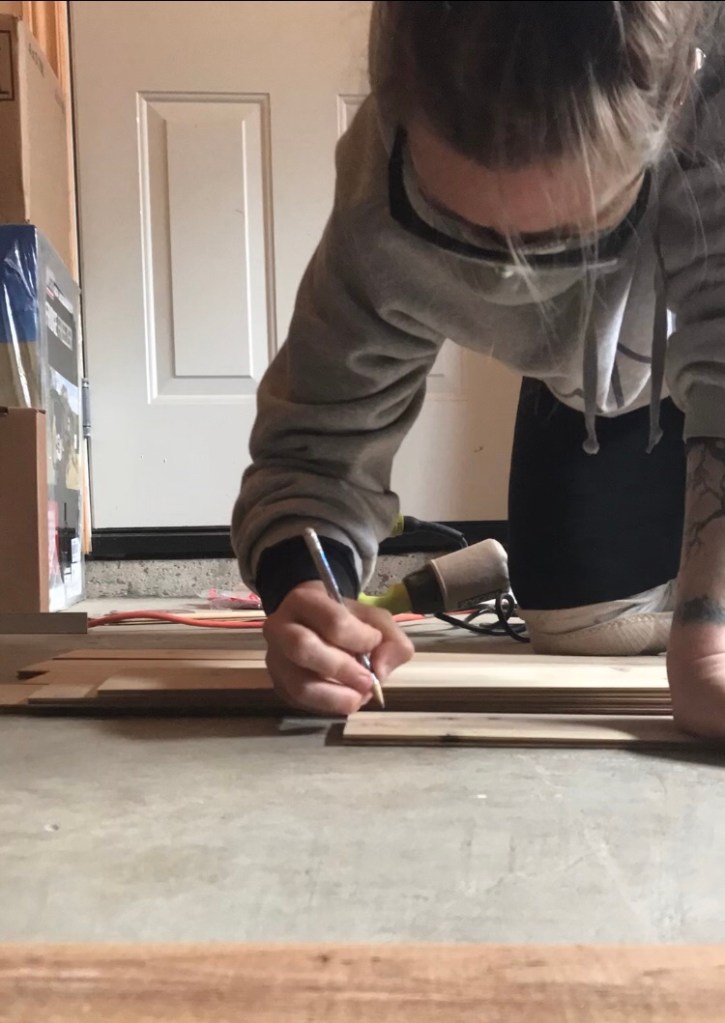
Van Life Here I Come!

*This post was originally written February 25, 2018

________________________________

Van life….

VAN LIFE!

I still can’t believe it.

A few months ago, a crazy idea was presented to me. I was already planning on doing an extensive roadtrip in 2018, I even had a general road map figured out. But before I could do anything else I needed to get myself a vehicle. Having just moved out of the city (Toronto), where I used public transit, I did not have a car. I rented now and again, but now I would need something to take on the road. Ideally something I could sleep in if I had to, but camping was going to be a big part of the trip.

Enter: camper vans.

This is a trip I am embarking on alone, and as a single twenty-something female, safety is a priority. I’m not one to shy away from doing something just because I don’t have a partner in crime, but there’s a difference between being brave or independent and tempting fate.

A friend mentioned the camper van trend and my plans immediately began to morph. I perused Instagram accounts and blogs and the more I thought about it, the more it seemed like the best thing to do.

Then, in a miraculously fateful moment, I stumbled upon a blogger named Anna (Spin the Globe Project). She had just uploaded a YouTube video telling her story and experiences of solo van life! She even addressed the safety concerns, stating that it was not nearly as bad as she was expecting. Typically she has not been disturbed or run into any trouble. BOY was that a relief to hear! And probably the turning point for me that transformed this idea into a plan.

Queue Bryan Adams: Open Road

While it might sound like the decision to get a van was an easy or spontaneous one, I put a lot of thought into it. This is a commitment. It’s a big decision. It’s crazy… right? It seemed so surreal to me, so out of the realm of possibility. But at the same time it felt right.

Growing up, one of my idols was Christopher McCandless. The young man who gave his $24,000 in savings to charity and hit the road after graduating university. His goal was to live off the land. It’s a tragic story, as he eventually did just that, but it also led to his death in Alaska. It teaches about the perils of nature and how fleeting life is. But it also teaches about the strength, and bravery, and independence, and getting back to the land and our connection to it, which has been so lost in our age of technology and concrete jungles.
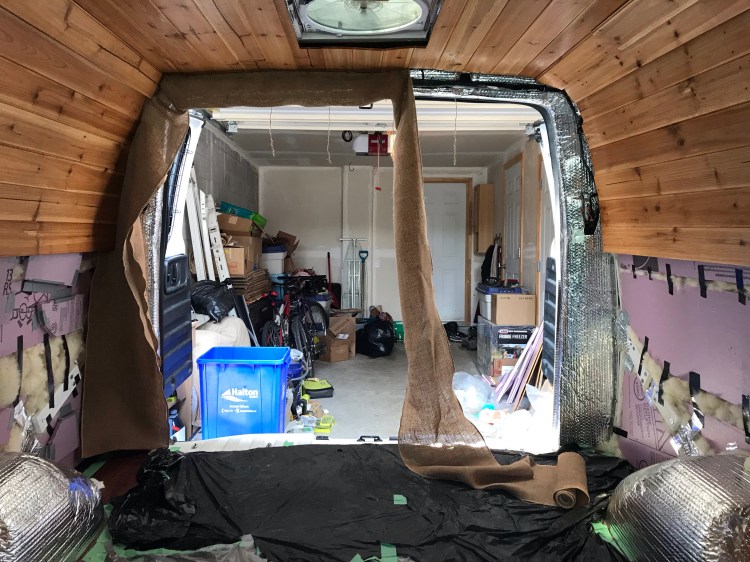
I suppose you could say that Chris is one of the people to thank for my decision to embark on such a trip.

But it’s not that simple either.

My Dad also had an impact on this path. He died suddenly a few years ago. He was the epitome of a man you could look up to. He set the bar high. He went straight through school to get a PhD in physics, worked with NASA, was a talented runner and pianist… and he always had his family’s best interests at heart. But one of the heartbreaking aspects of his story is that he spent his whole life working toward retirement. He had his money saved so he could start living his dream. And just a couple of years shy of this goal, it was all taken away from him. He never got to live out his dream.

I learned from that. Life is short. I could die tomorrow. What if I never get this chance again? Why wait? If not now, when? And won’t I enjoy the travel more while I’m still young? While I am still open to new things and not yet set in my ways?

Beyond that, there is a fire within me that has something to prove. I want to prove to myself that I can do anything on my own.

I thought to myself, as I teetered on the fence between van life or no van life, that this decision may very well impact how I live the rest of my life. This is a crucial juncture. It’s going to set the tone. And how do I want to live my life? Doing crazy things I’ll always remember? Or chickening out and regretting the things I never did? I do not want to get to my death bed and be able to think about the things I didn’t do.

And with that, the decision was made.

I even have a theme song…

Back story: Josh Homme technically died. He was having knee surgery and his heart stopped. It affected him deeply and you can see the darker side of the experience in the album …Like Clockwork. But their latest release, Villains, to me at least, speaks to all the things in life you want to take advantage of while you can. Doing what YOU want and not giving a damn what anyone thinks of it. All the little moments to appreciate. And above all, to go out and GET THEM. The great things in life are not going to fall into our laps. And we can’t let fear keep us from our dreams, or at least trying to reach them. …Like Clockwork came at a time in my life when I was also facing death. Villains came when I was feeling ready to start living again. Talk about synchronicity.

Next up: getting the van.

This was a gruelling process. While I used to share a family car with my sister, this is my very first vehicle that I can call my own (I know I know – never in a million years would I have thought that my first car would be a cargo van that I used to envision creepy old men looking to abduct children in… no offence to the business and construction guys who drive these beasts). I had never purchased a vehicle, never gotten my own auto insurance, never cared for a vehicle, and didn’t know the first thing about telling whether a used vehicle was in good shape or what features I wanted (like engine type, rear wheel drive, etc.). So I spent hours looking into everything I might need to know. I also called on a couple of family and friends for advice.

I chose the Chevy Express because it has a long history of reliability and they are literally everywhere – so it has a level of stealth built in for when I don’t want to draw attention to myself.

On a sidenote – while it takes some getting used to to drive, it really isn’t any bigger than those Ram trucks that are everywhere – length and width is the same, only difference would be that I have a covered cargo bay. Also, the seats are high up and I feel like a kid on a carnival ride…

There were a few frustrating hurdles to the process, especially getting insurance when I plan to do modifications, travel, and use a commercial vehicle for personal use. But in the end it all worked out and I now have myself a cargo van, soon to be camper van.

Honestly, it still hasn’t fully sunk in that I own this van and I am going to remodel the interior cargo bay and take it out on an international road trip. There is still a lot of work to be done. For now I am getting to know my new vehicle, waiting for inspiration to strike so I can give her a name, and continuing to research about vehicles, camper vans, van life, and travels.

I estimate that when April hits and the temperatures have risen it will be the perfect time for the reno to begin.

And for now the trip is set to begin this summer…

Lots to come…

I’ll leave you with another song that speaks to me. TPR is definitely a favourite band and Who You Selling For? is a great question to ask. What part of yourself have you sacrificed? Are you doing what you want? Are you being true to yourself? These are all questions that were directly relevant to my decision to embark on van life. If you’re not living your life, who’s life are you living? Who are you selling for? Bands aren’t the only ones who can be sell outs. And I am going to make sure I don’t sell out my life.

“Time is the coin of your life. It is the only coin you have, and only you can determine how it will be spent. Be careful lest you let other people spend it for you.”

– Carl Sandburg

Copyright © Chronic X-Roads 2020