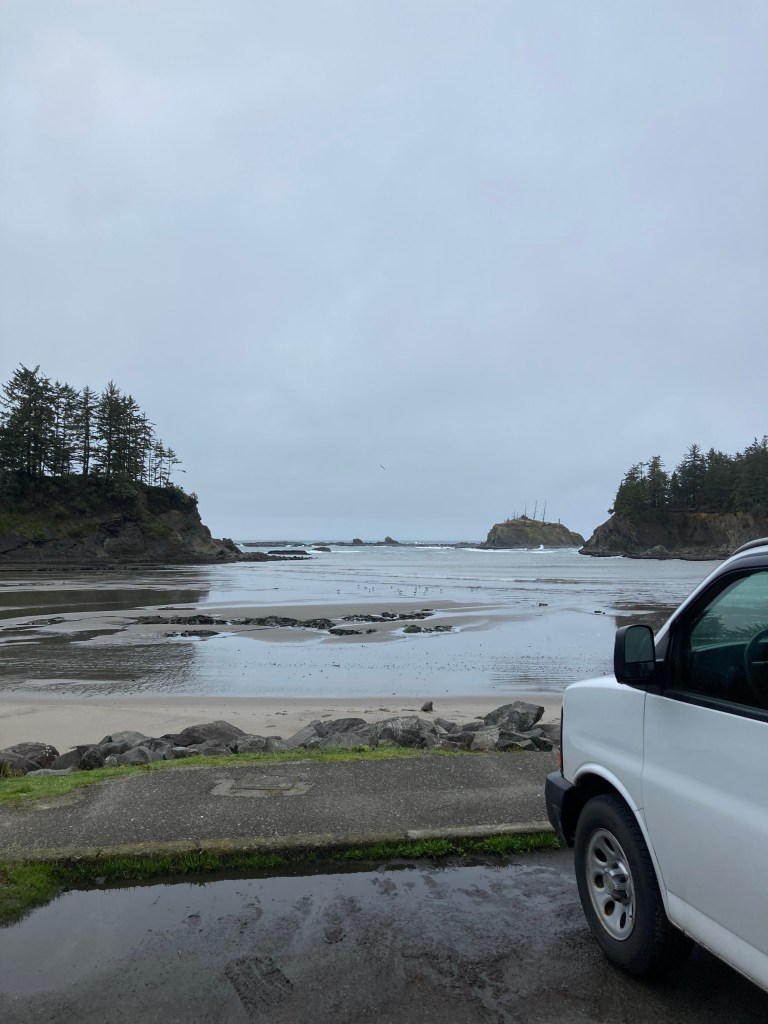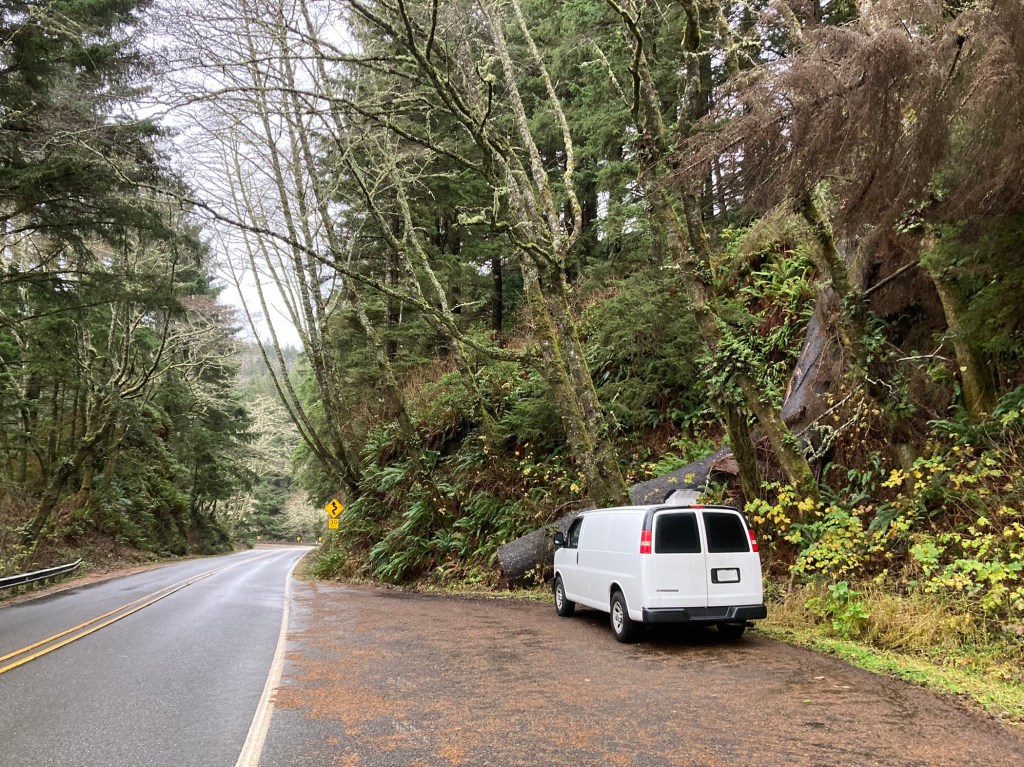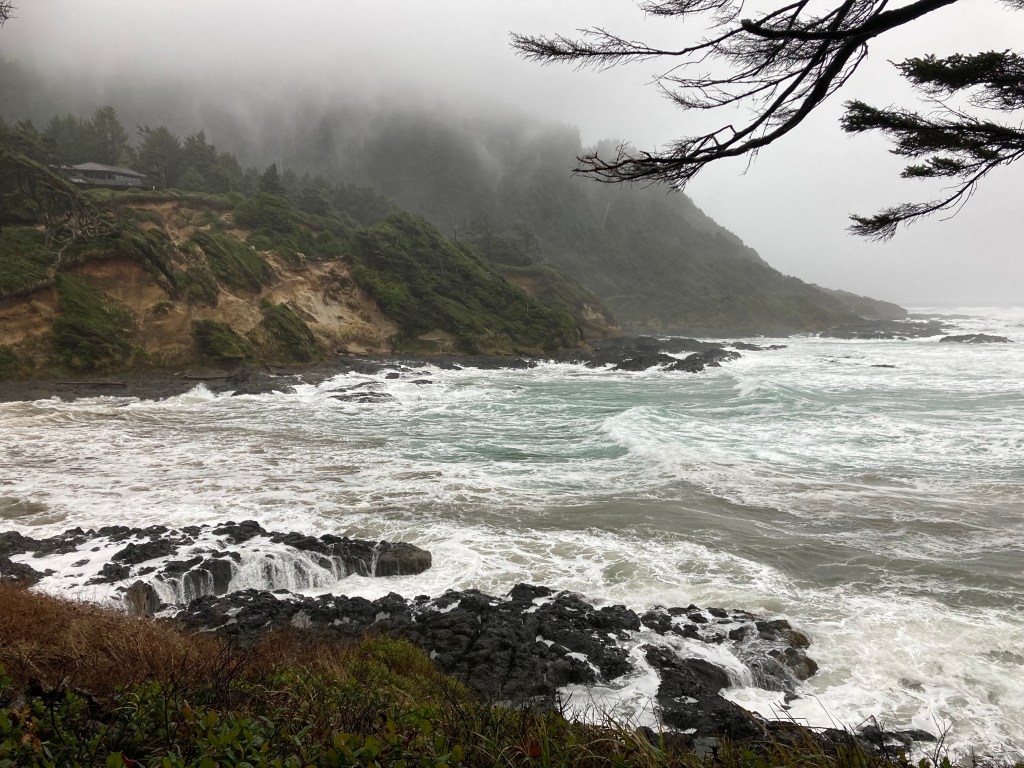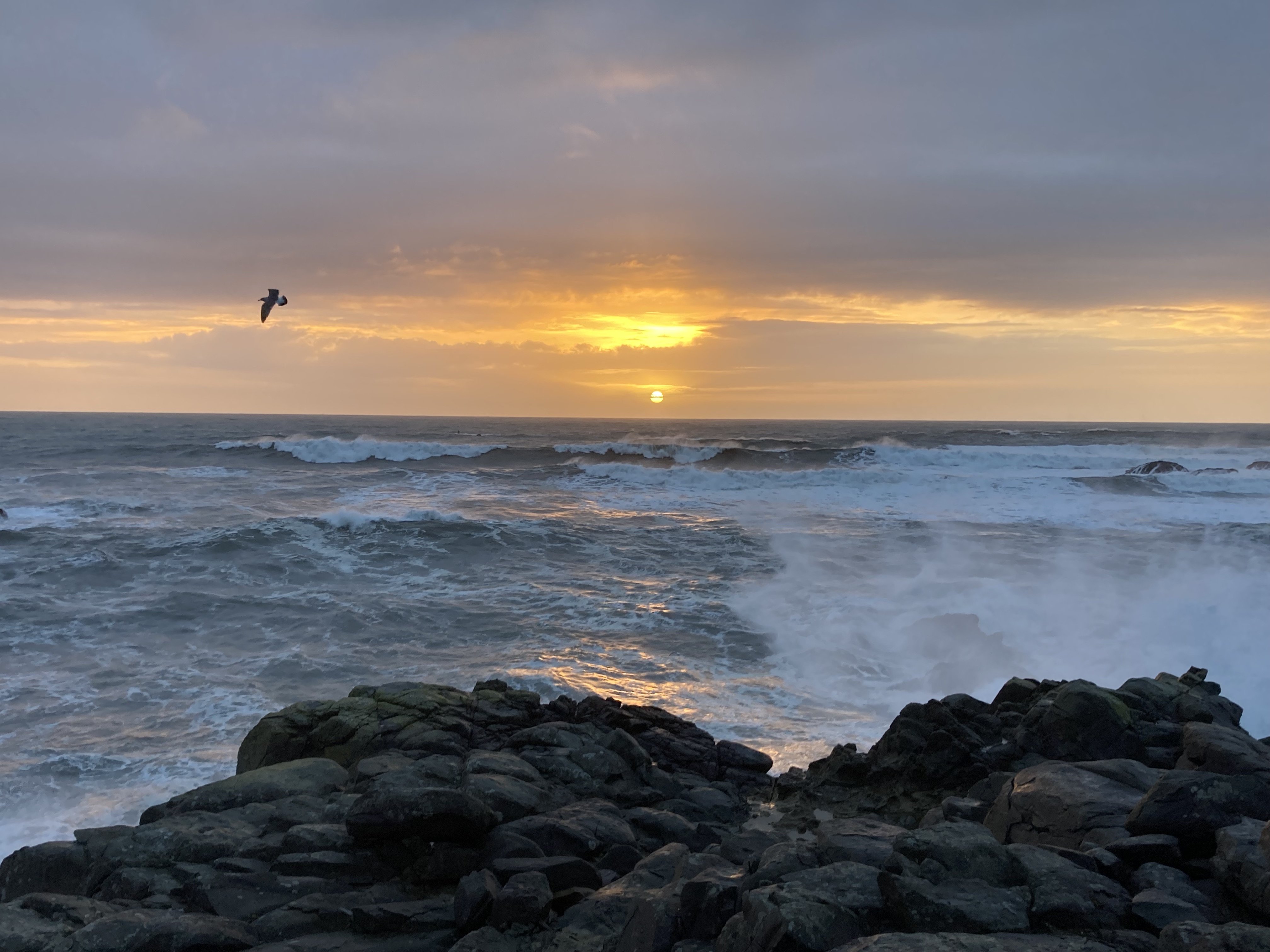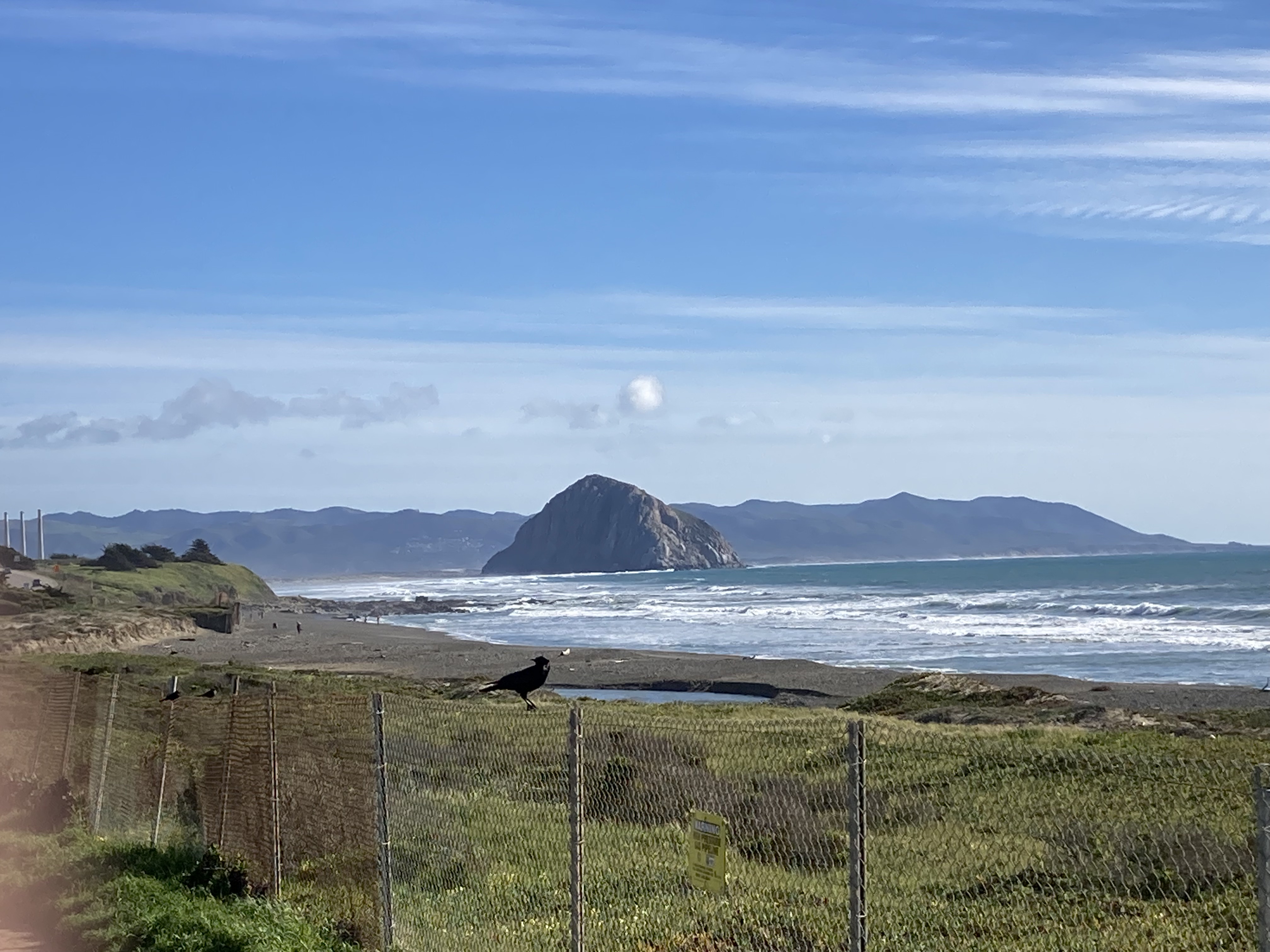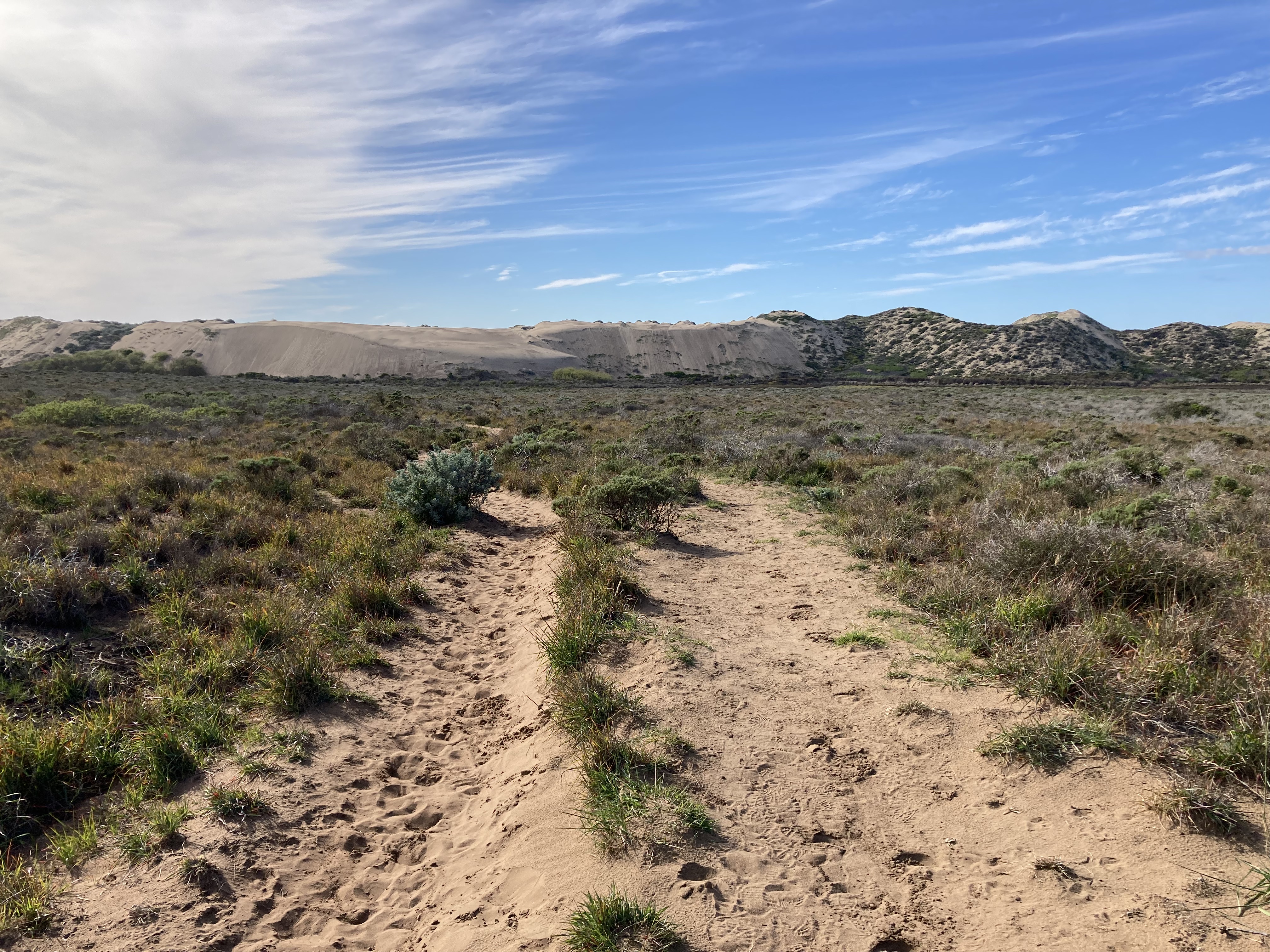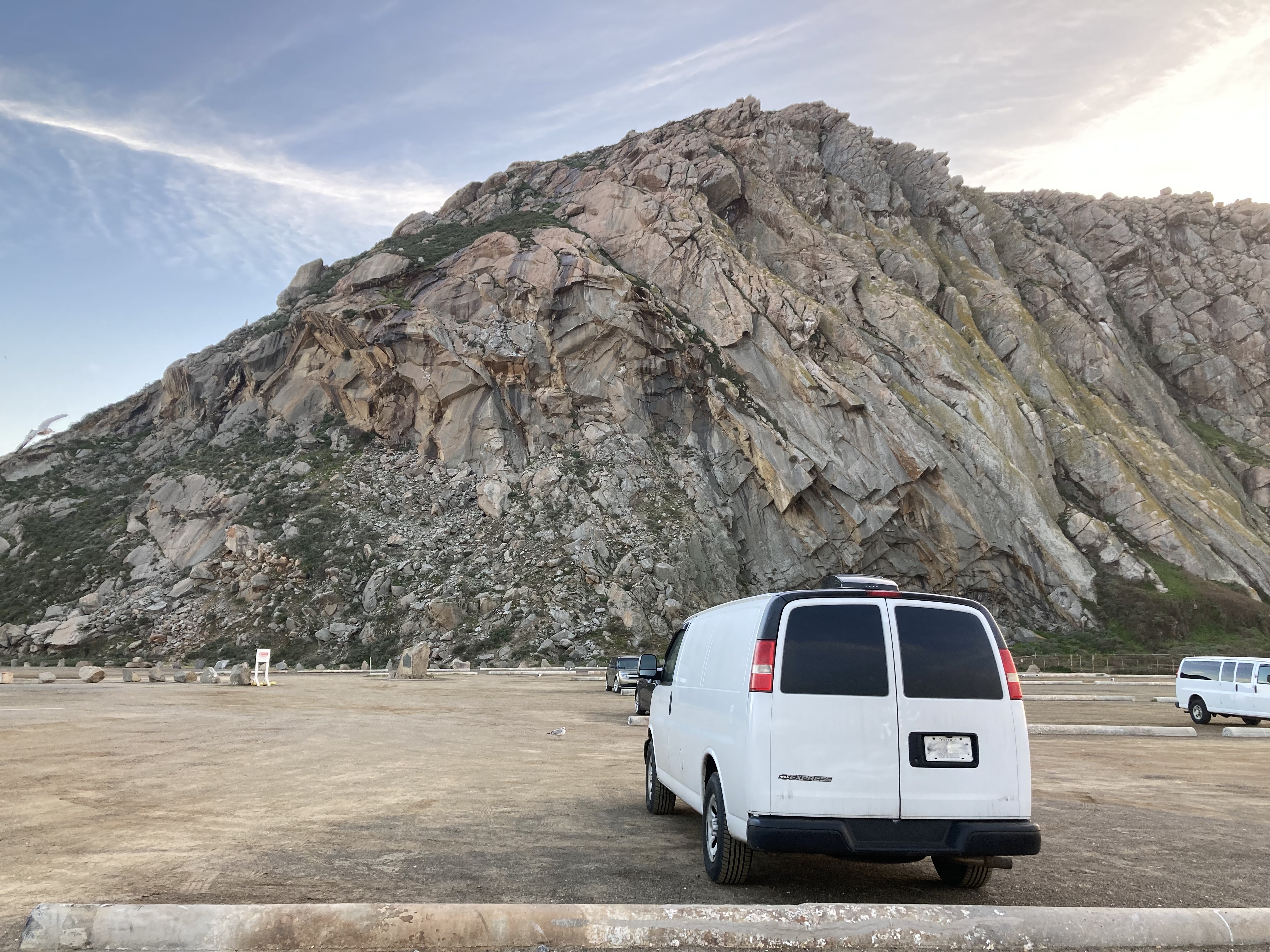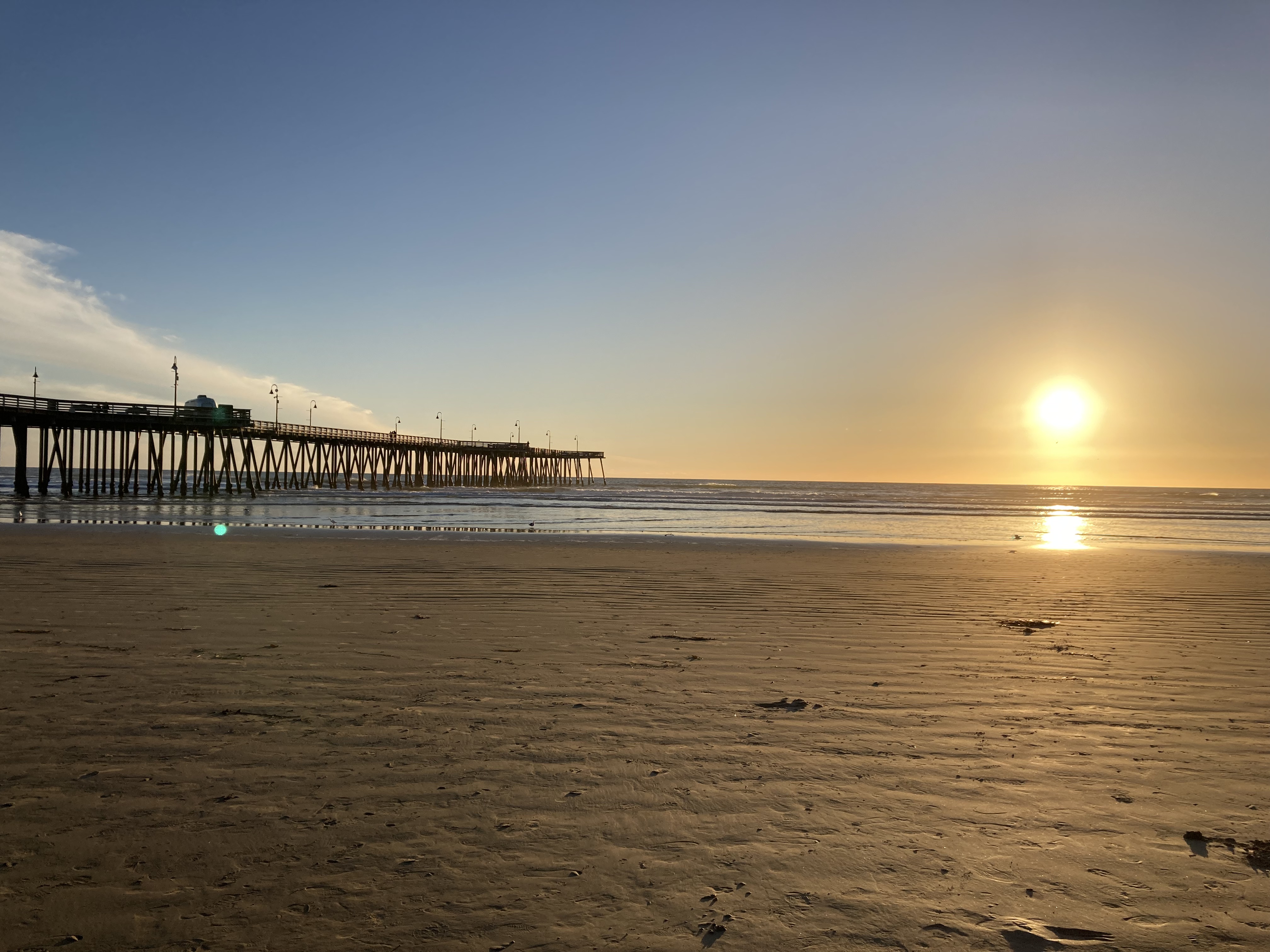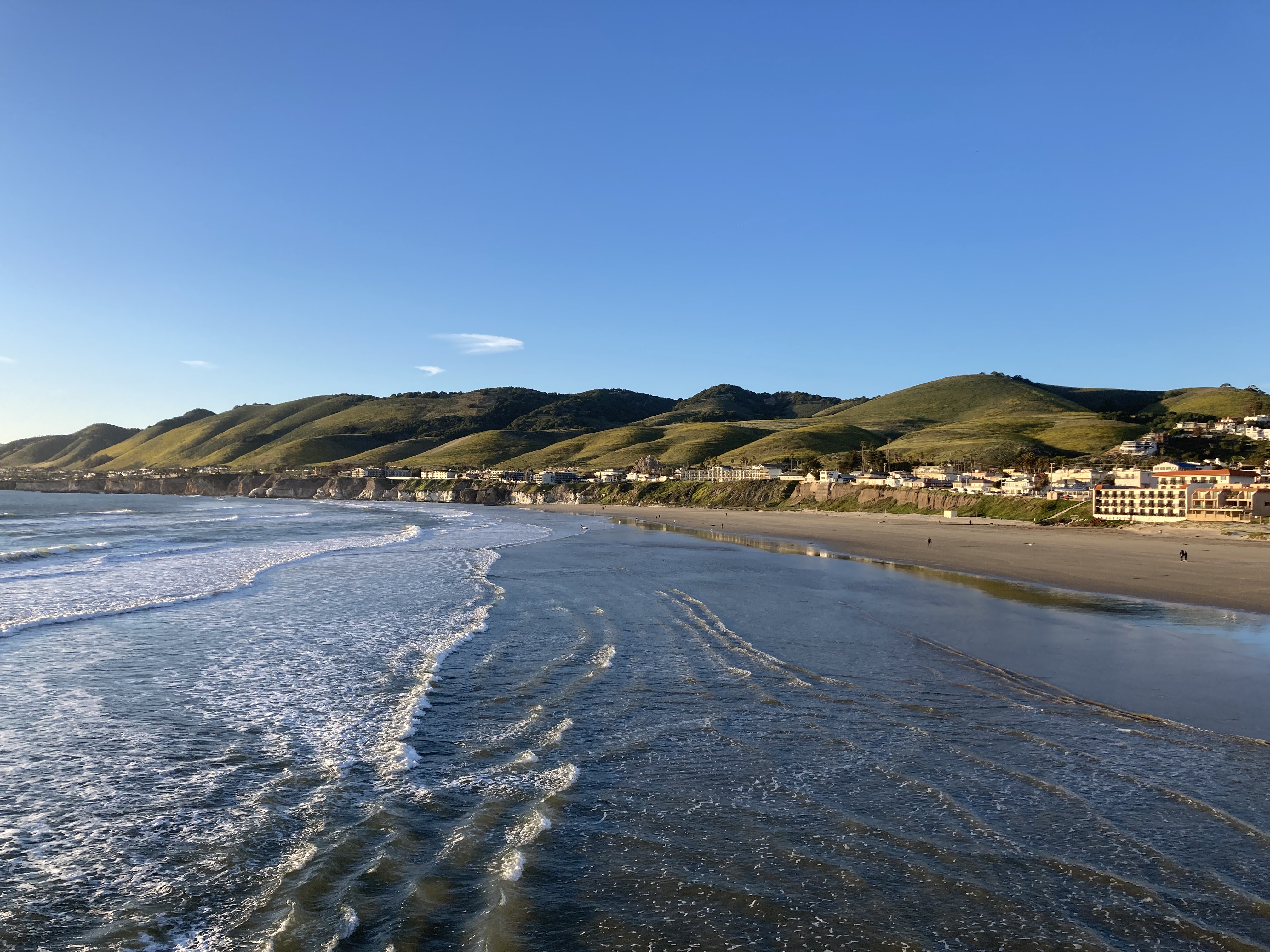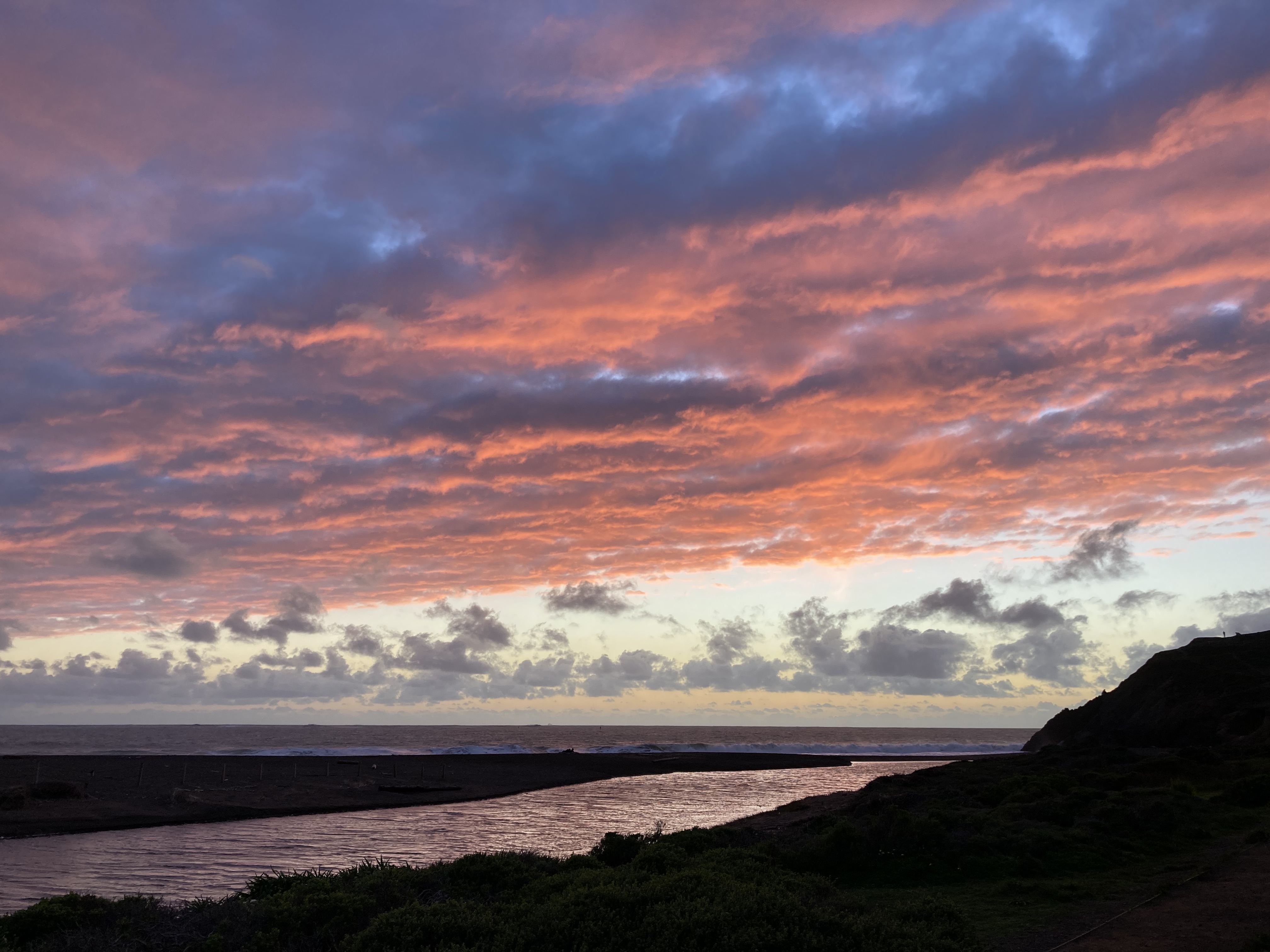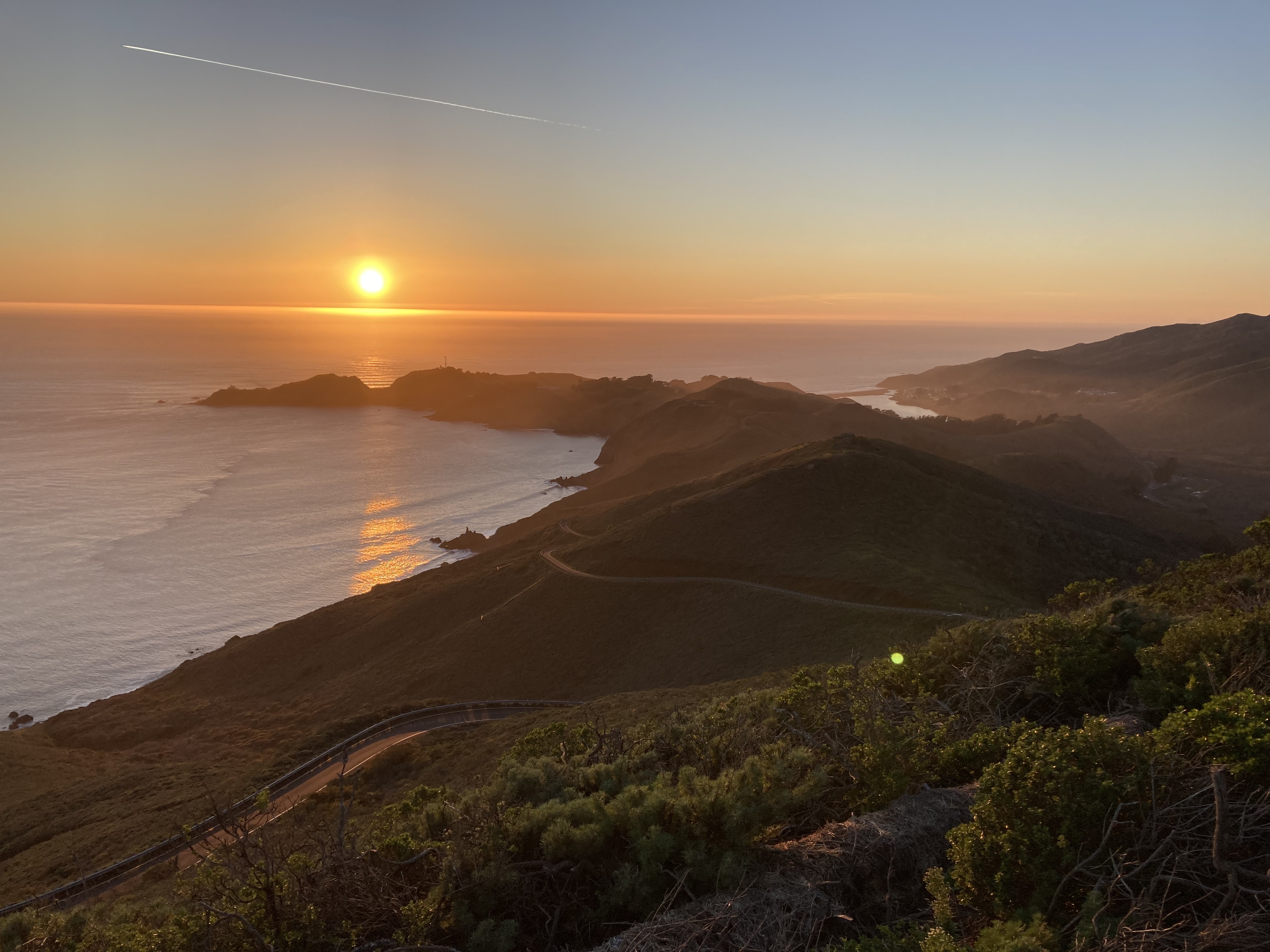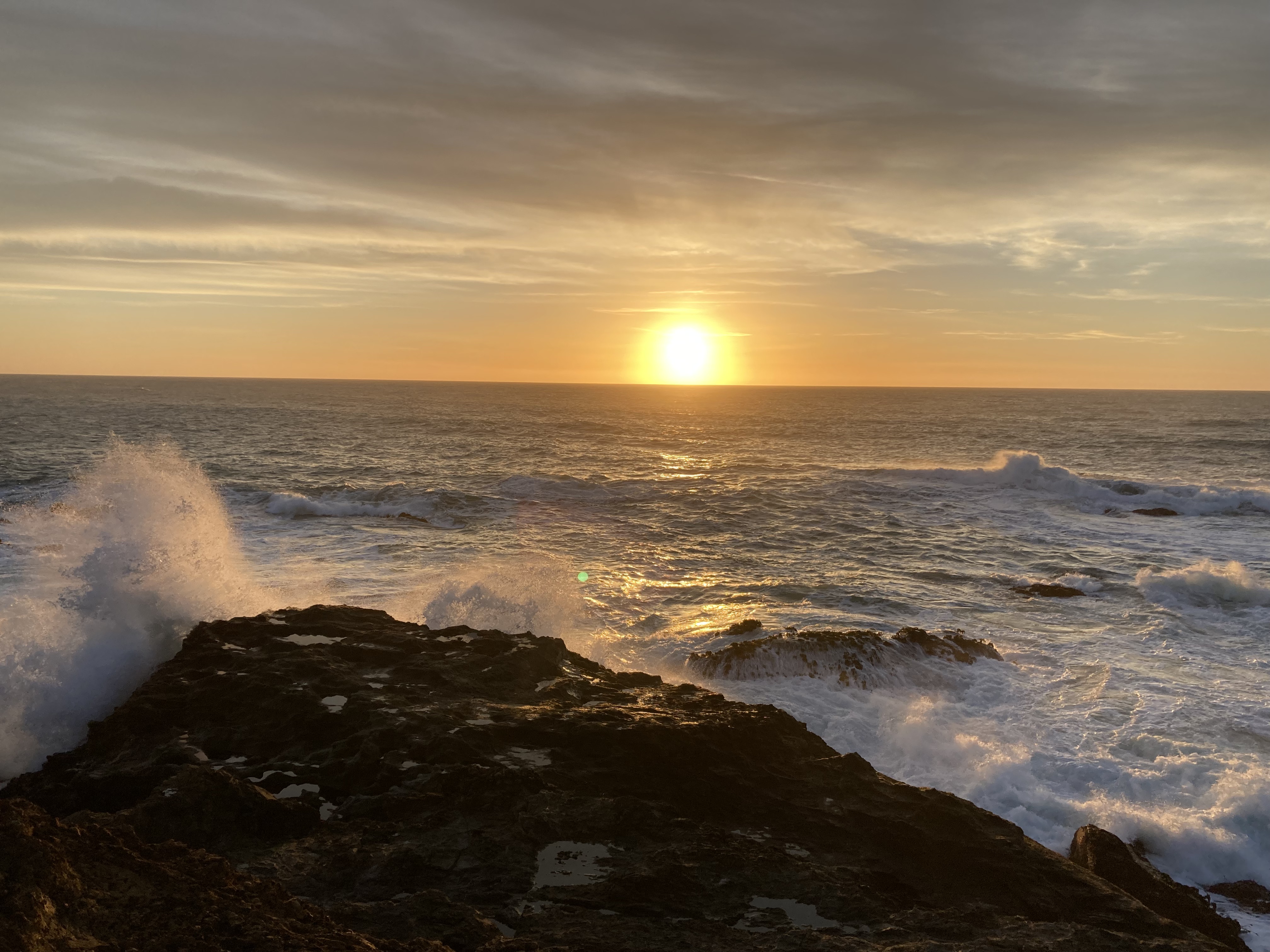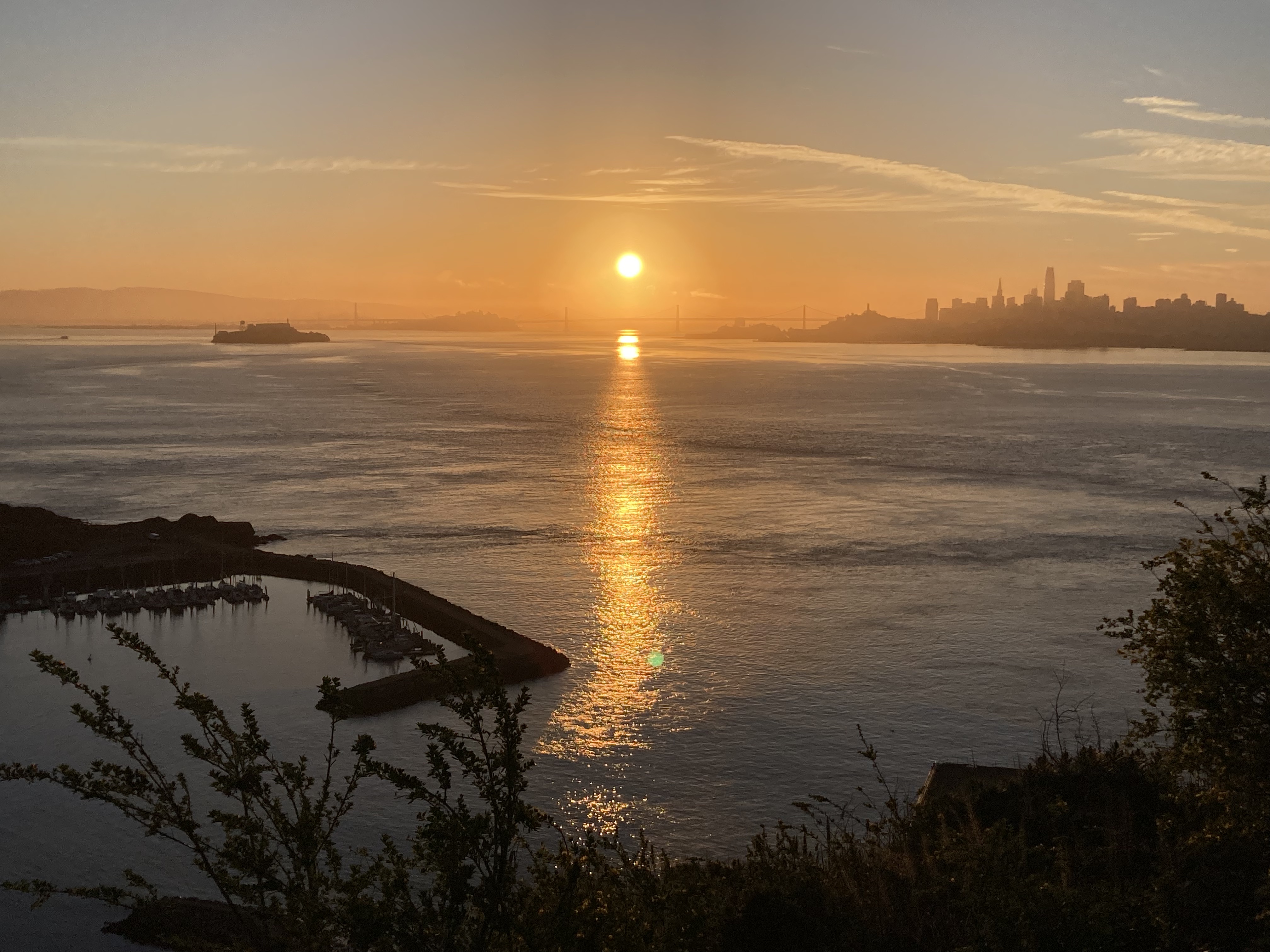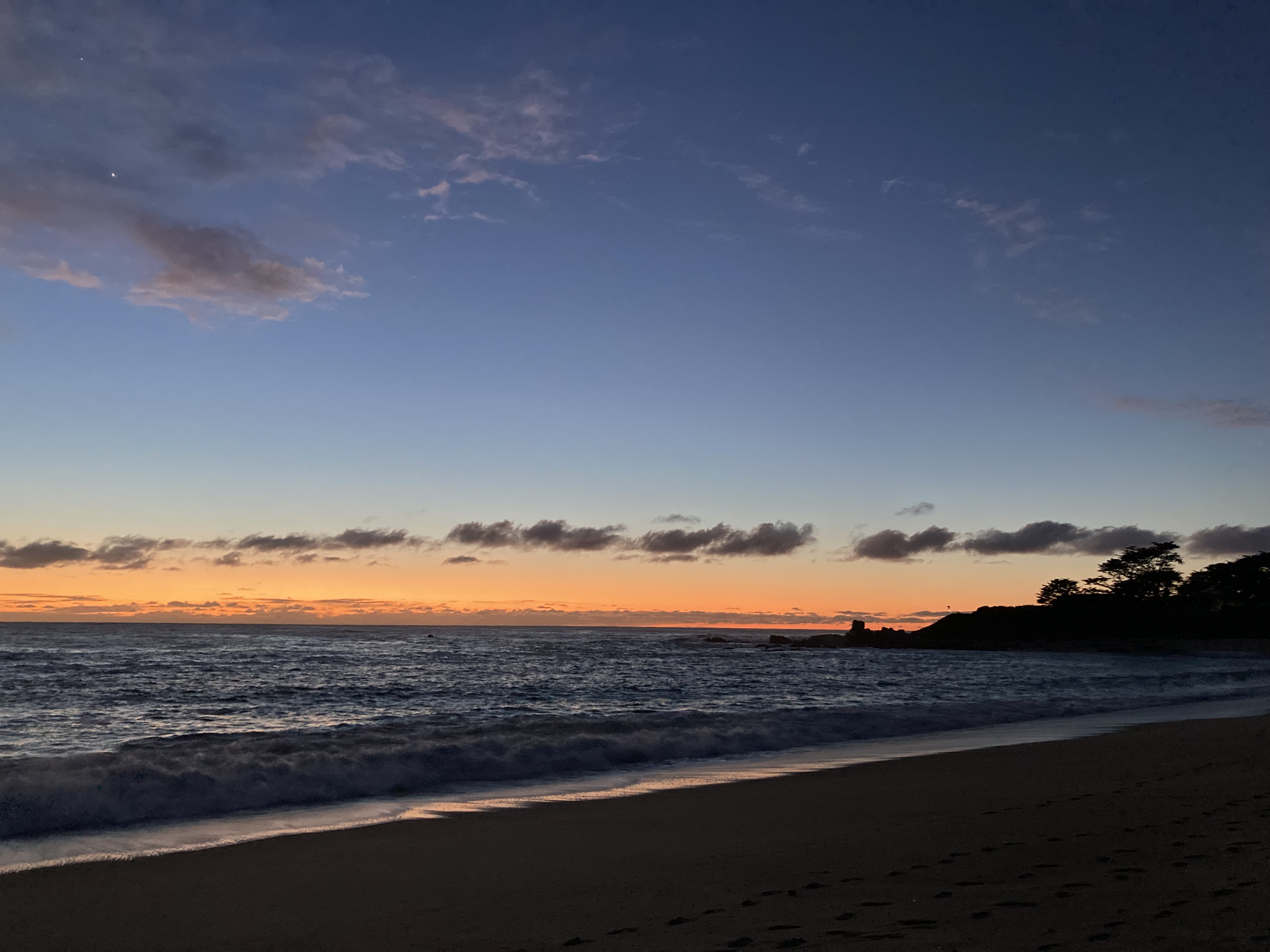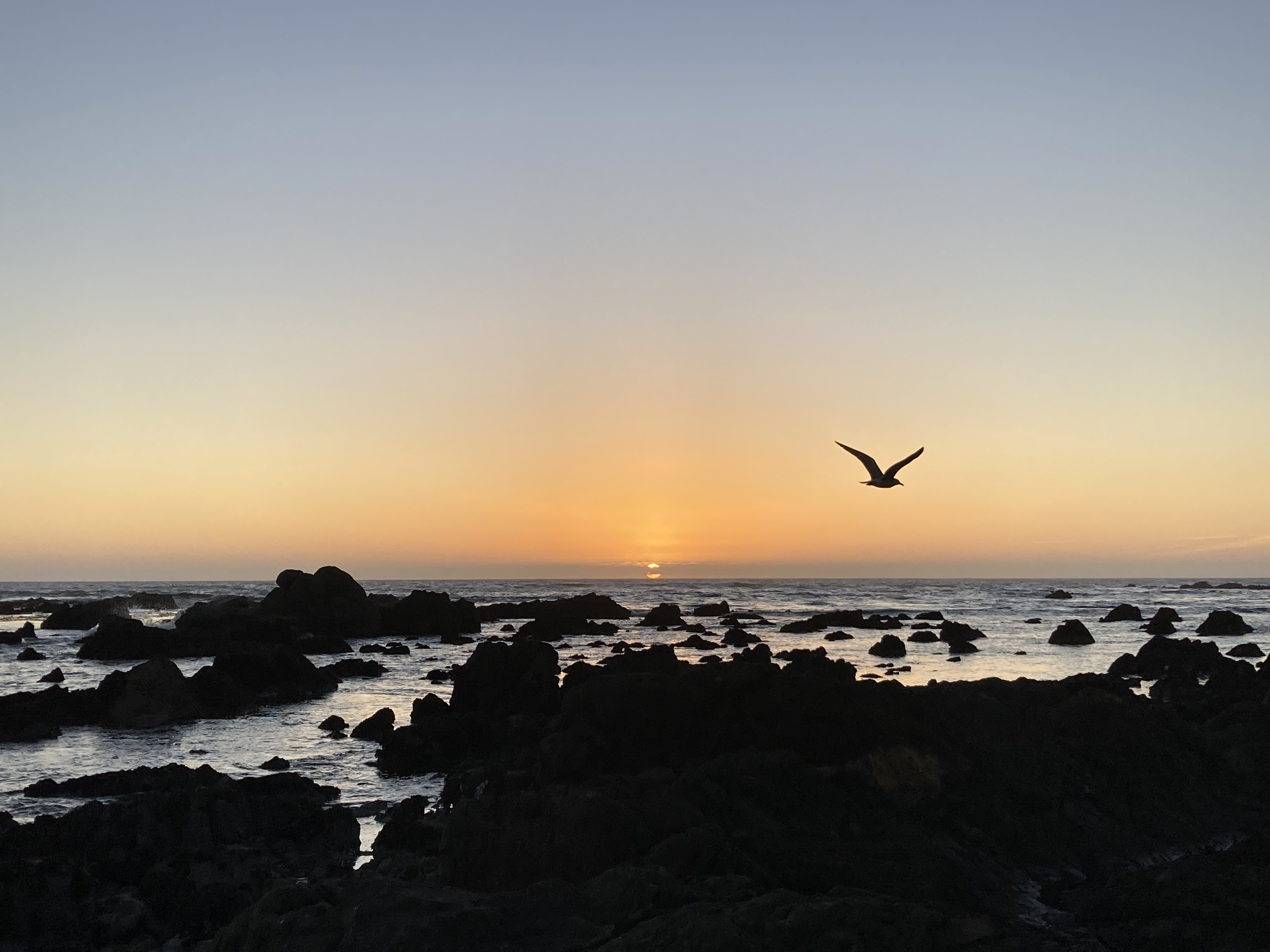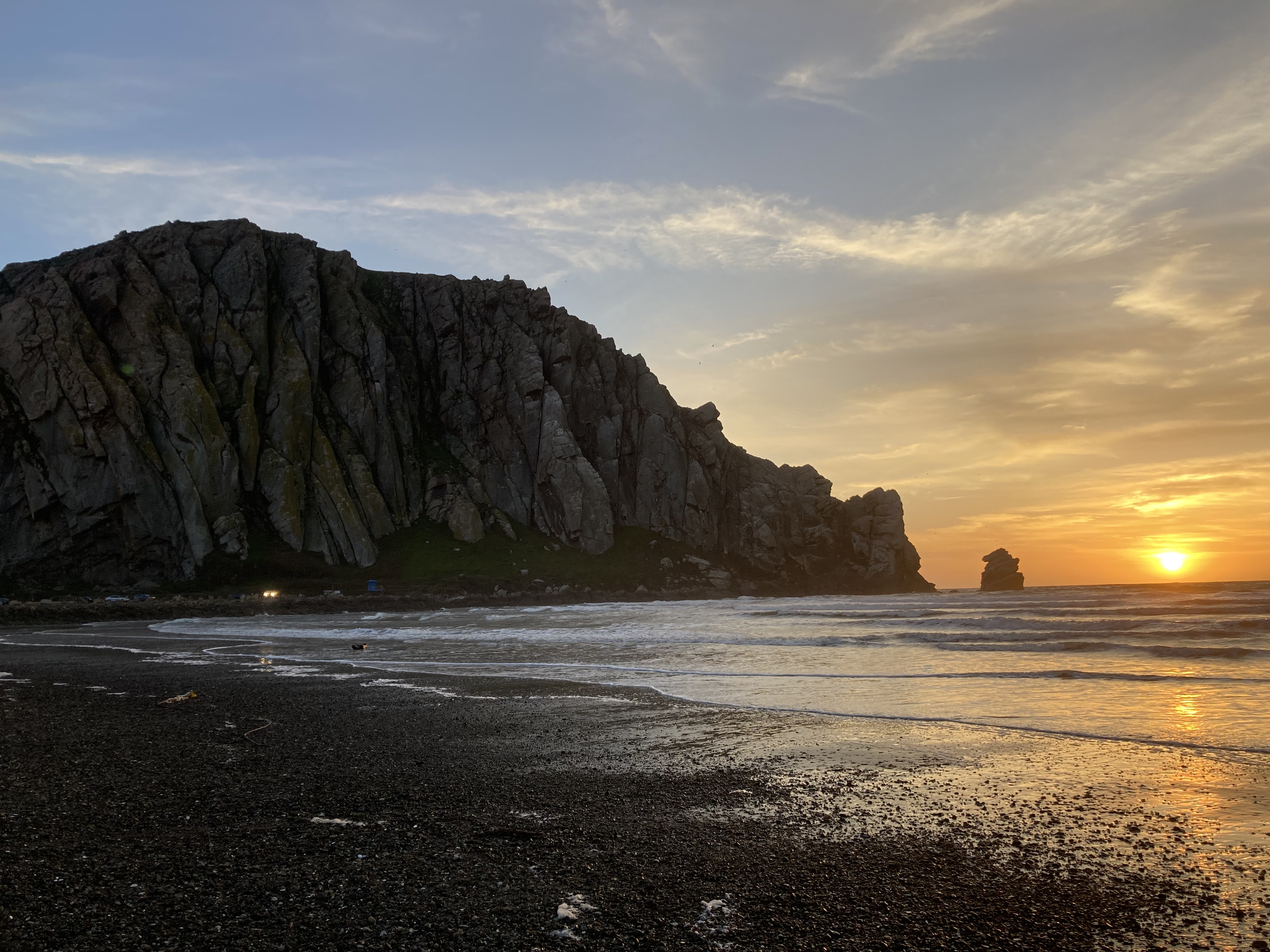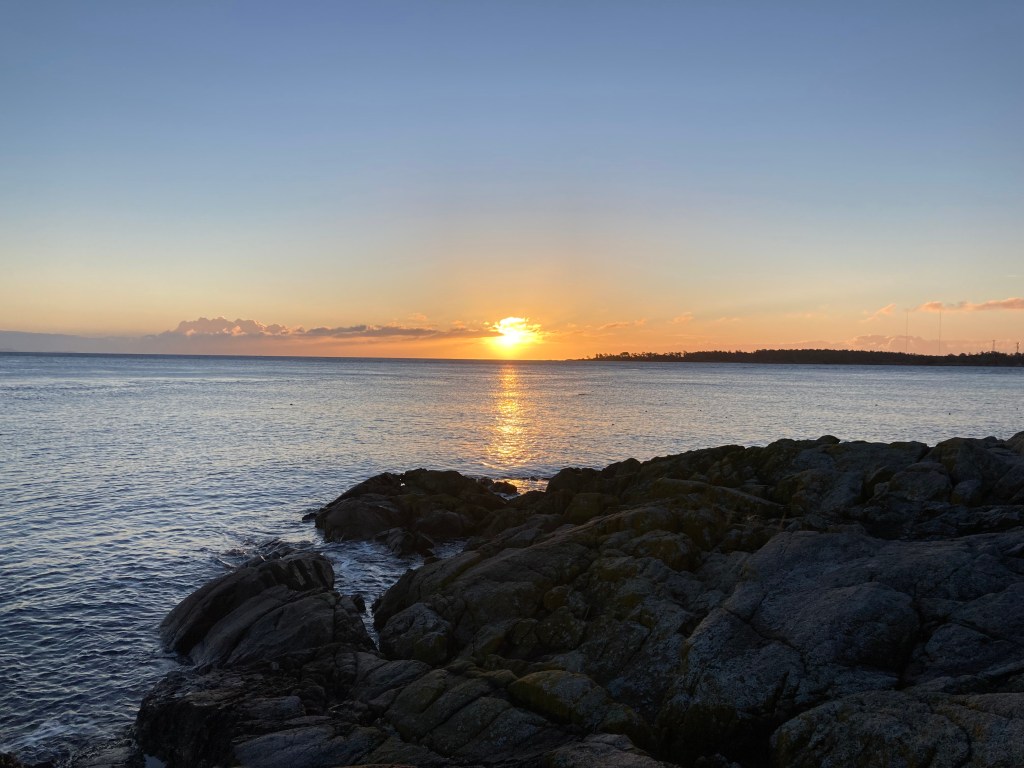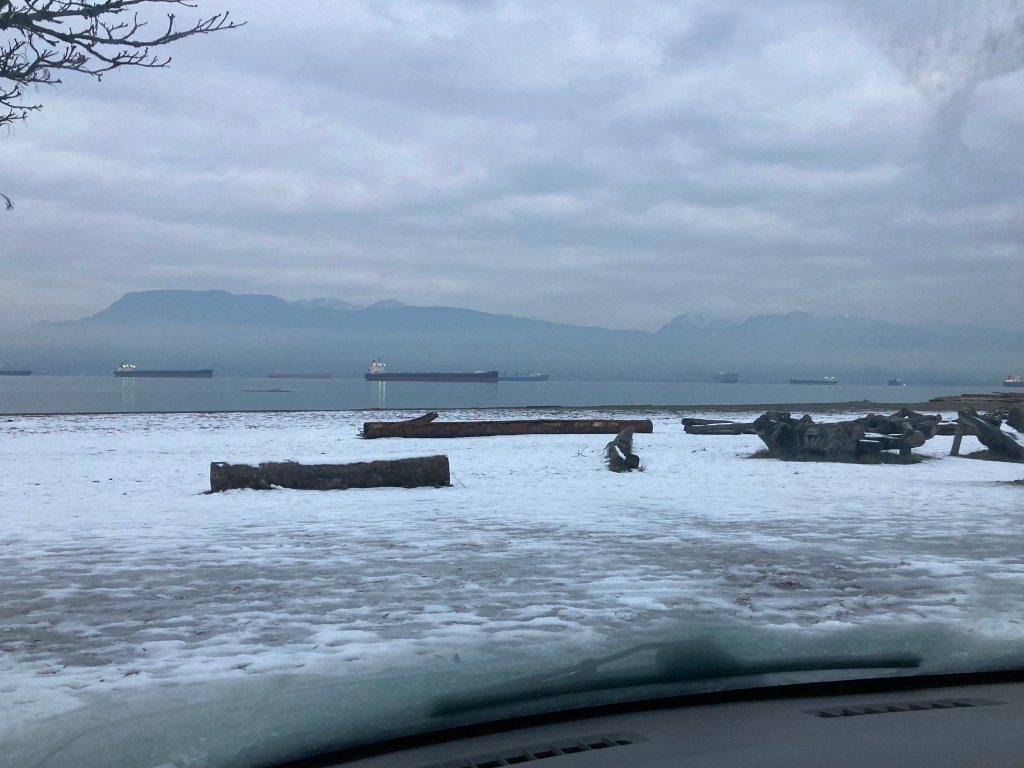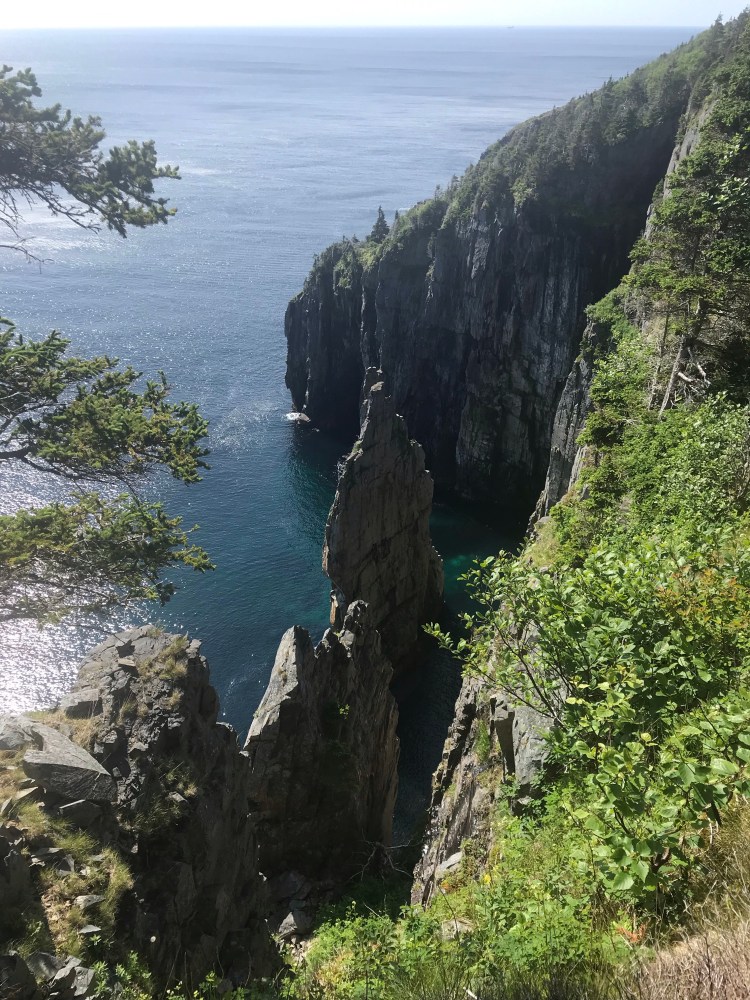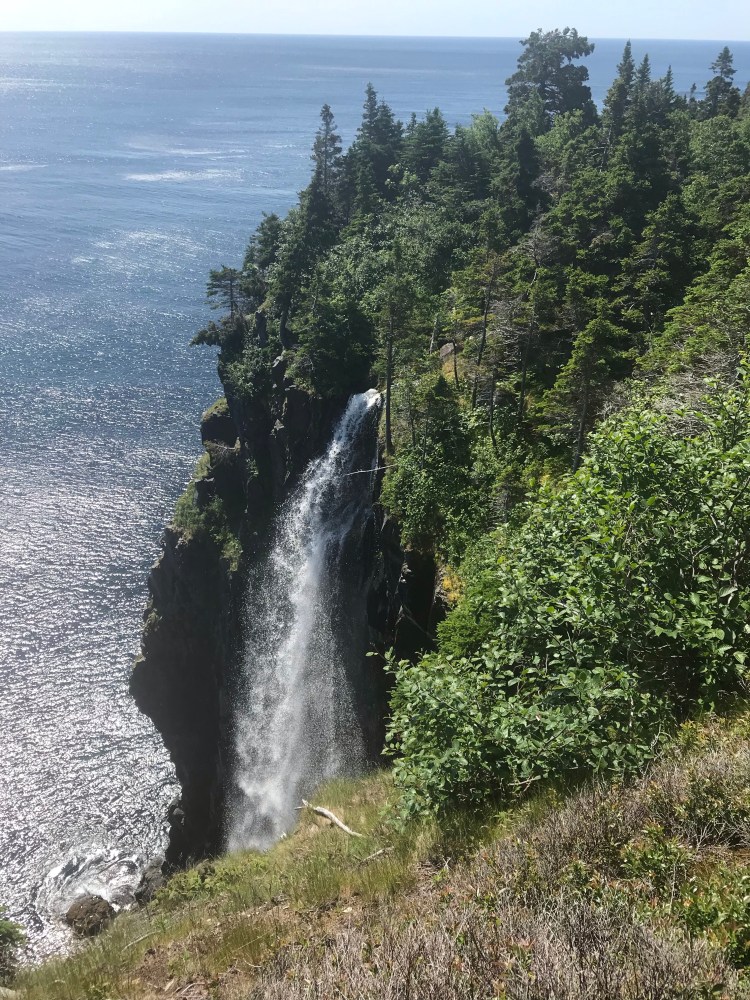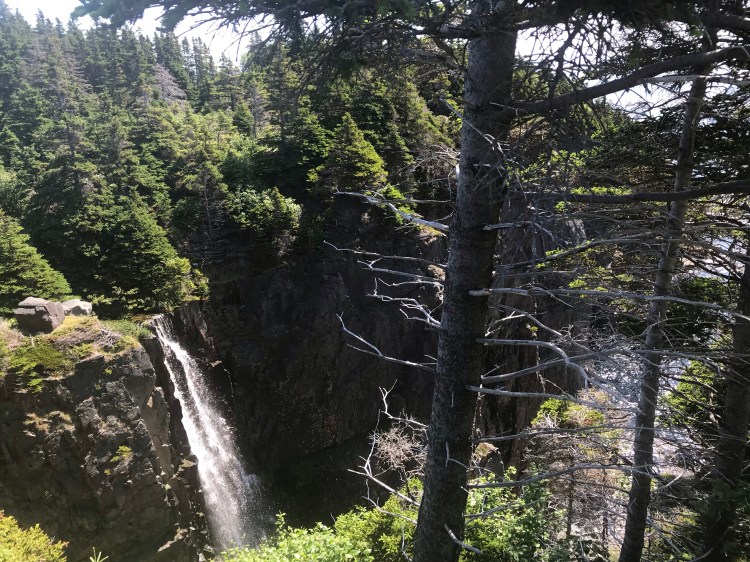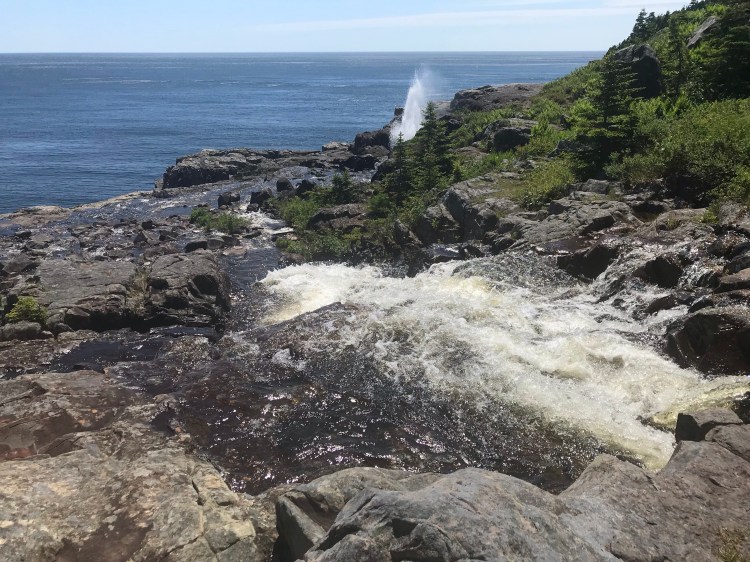
Nice To Feel The Sun: California’s Northern & Central Coast

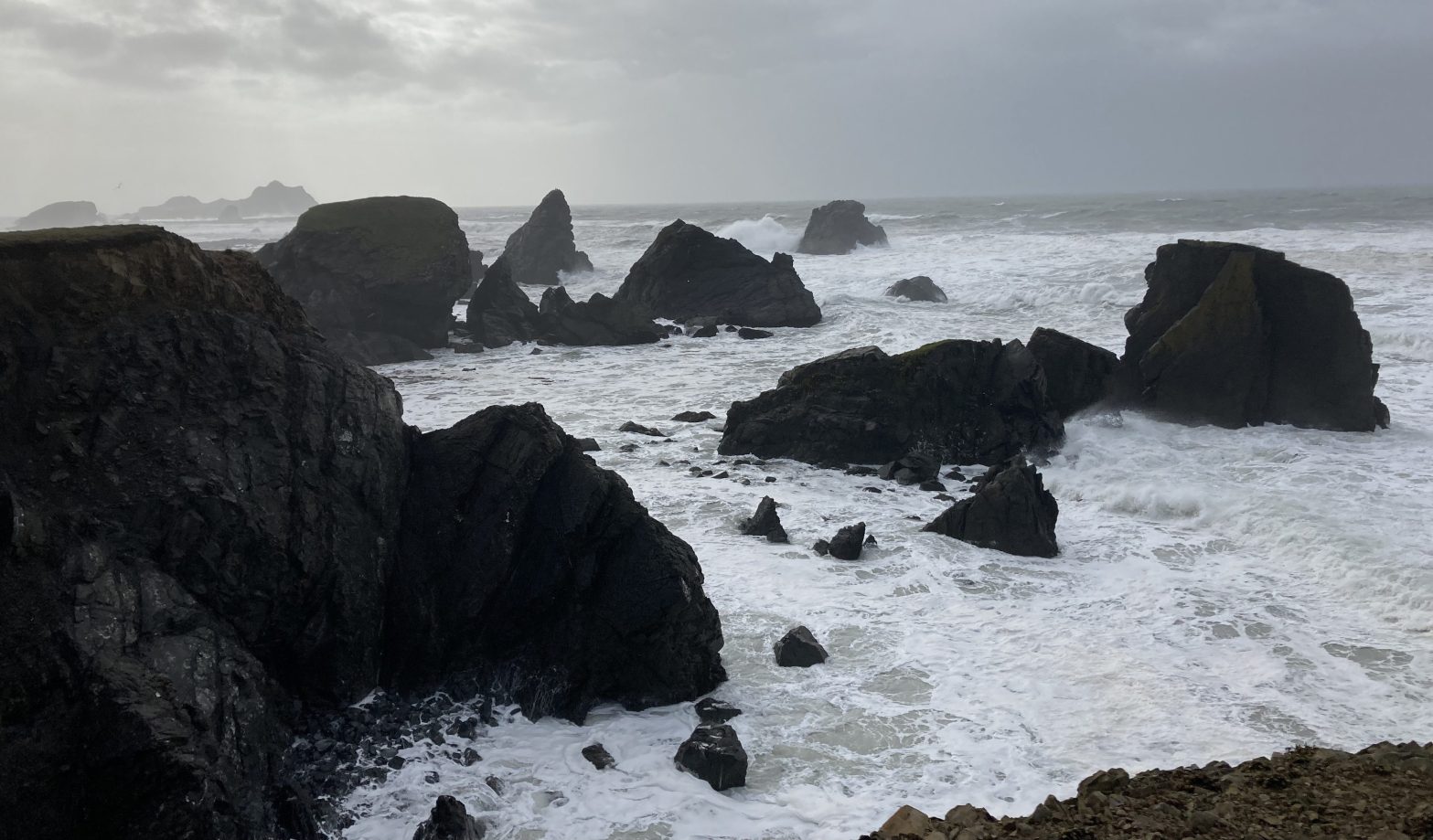
It is a little ironic to talk about how nice it was to feel the sun, when I got to California in the dead of winter, and the reality is that there were a lot of gloomy rainy days and flood advisories. But the more time I spent here, and the further south I got, the more sun I saw, which was extra appreciated after the winter I’d spent in the van in BC and the PNW.

California was the dream. Okay, Seattle was, and always is, the dream. But California was a also a dream. I think California is a dream for a lot of people. The Golden State.

I had a lot of doubts that I’d even get here. But with a little luck and a little will and a little reckless abandon, it happened.

Table of Contents

There is so much to see in California, from NorCal to SoCal, along the pacific coast, to the desert and mountain interior, big cities and small towns.

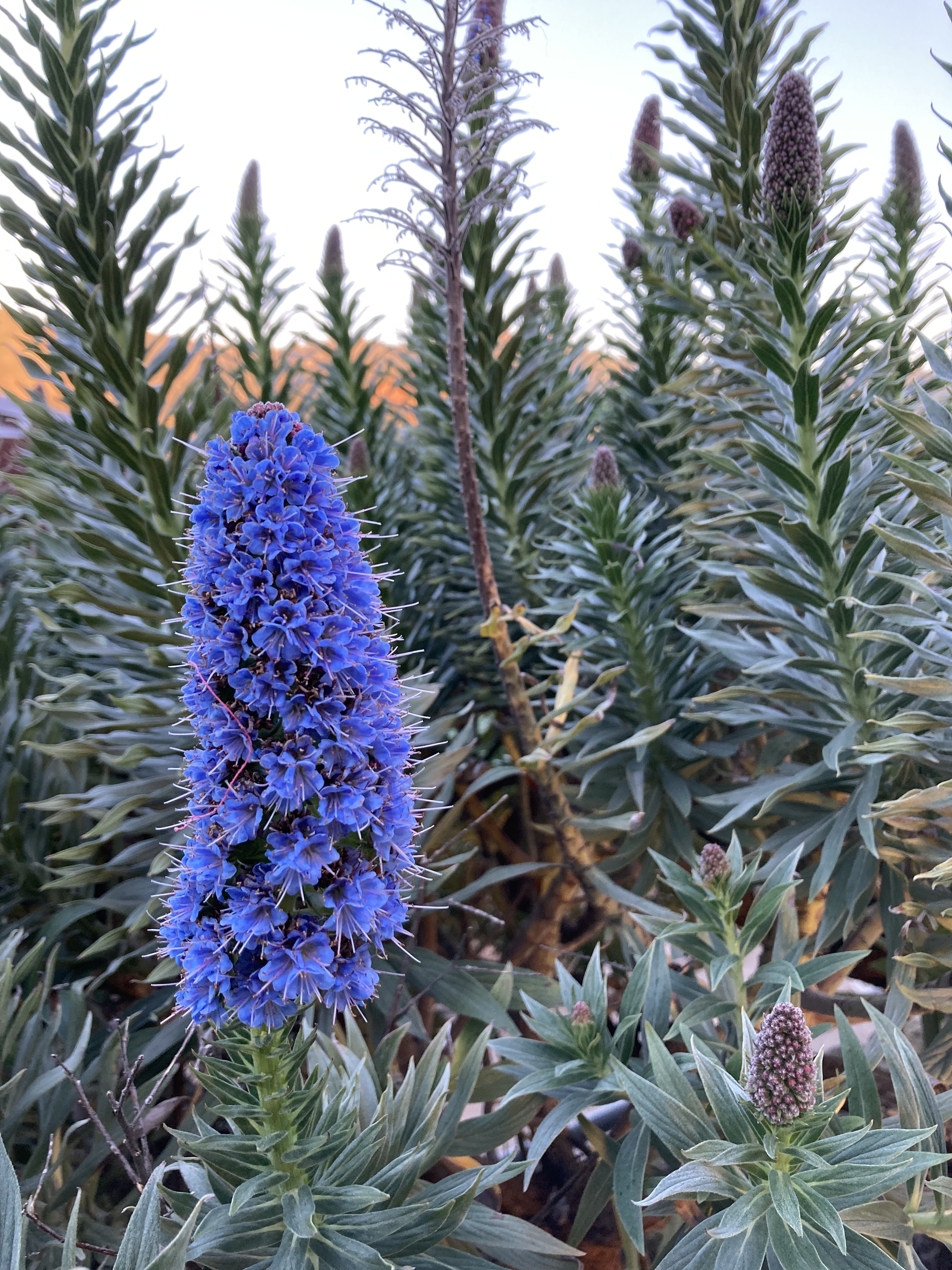
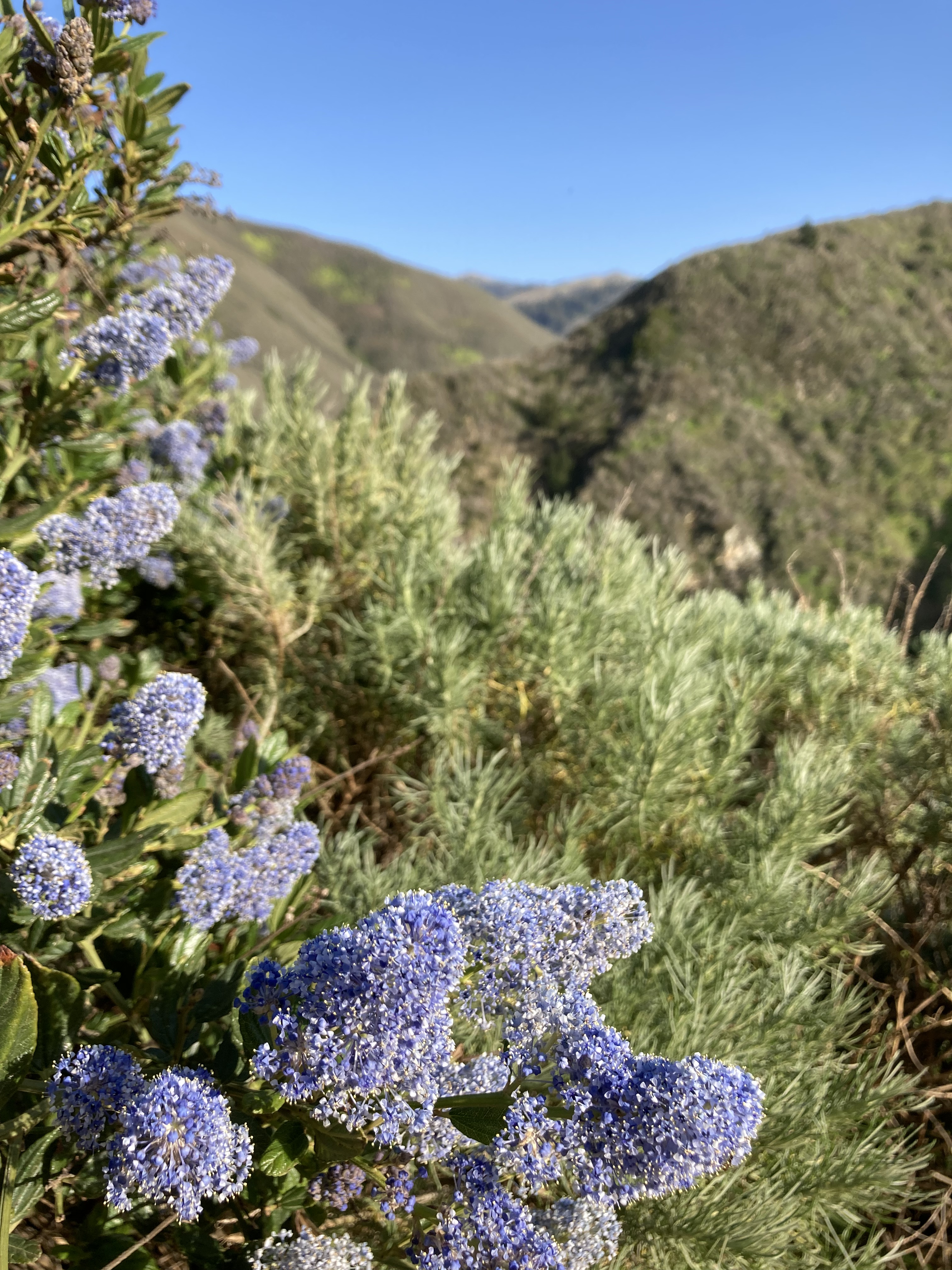
One of my favourite things was watching how the landscape and vegetation slowly shifted the further south I got.
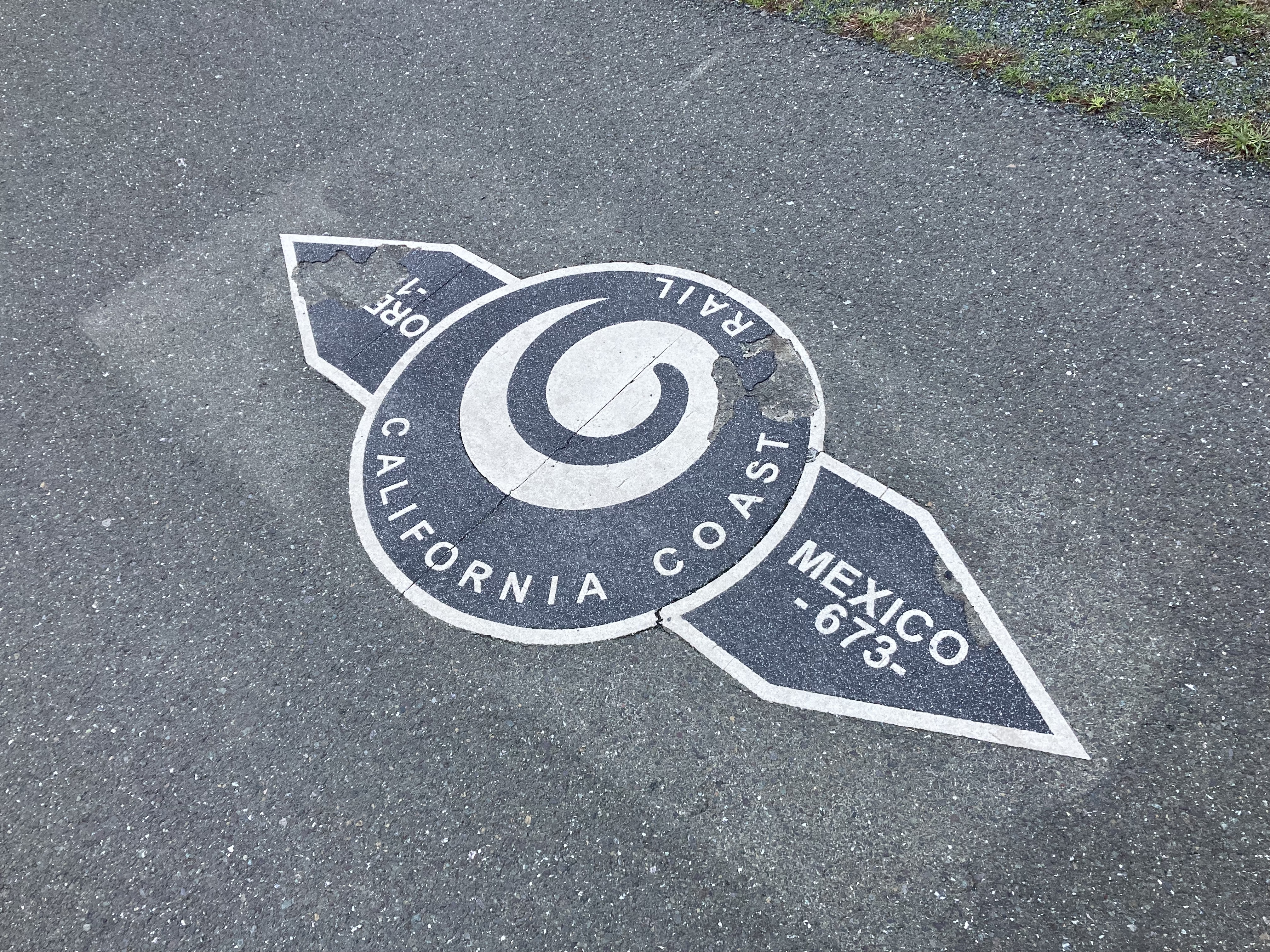
California holds a special place in my heart now. I feel we got pretty well acquainted and it held me during some transformational times.

I originally tried to write about everything I did in California in one post. The length of that post became ridiculous. So I broke it up into two posts. I could have, and maybe should have, broken it up more. But I didn’t want to. These posts are documentation, references, storytelling. They are long, because I saw a lot. They have a wealth of information. I don’t expect anyone to read it all. The table of contents breaks it down for jumping to points of interest.

This post covers the transitional period after crossing into the states and then focuses on the northern and central coast of California. My next post will cover California’s southern coast and interior.

  1. Table of Contents
  2. Crossing The Border
    1. Issues With Remote Work
    2. The Boring Stuff
    3. Adjusting
  3. A Blurb On Washington & Oregon
  4. Northern California
    1. Crescent City
      1. A Scary Encounter
    2. Eureka
    3. Redwoods
    4. Ukiah
    5. Fort Bragg
    6. Bodega Bay
    7. Santa Rosa
    8. Sonoma
    9. Sausalito
      1. The Dreaded Knock
    10. Marin Headlands (Golden Gate National Recreation Area)
    11. Olema & Half Moon Bay
      1. Shootings
    12. Mill Valley
    13. San Francisco
      1. An Unexpected Visit
      2. Golden Gate Rest Area
      3. Golden Gate Bridge Tolls
      4. The Ferry From Sausalito
      5. Day 1
      6. Day 2
      7. Last Day In SF
      8. Next Time
      9. Miscellaneous
      10. Most Dangerous Neighbourhoods In SF
  5. Central California Coast
    1. Santa Cruz
      1. The Elephant Seal at Greyhound Rock
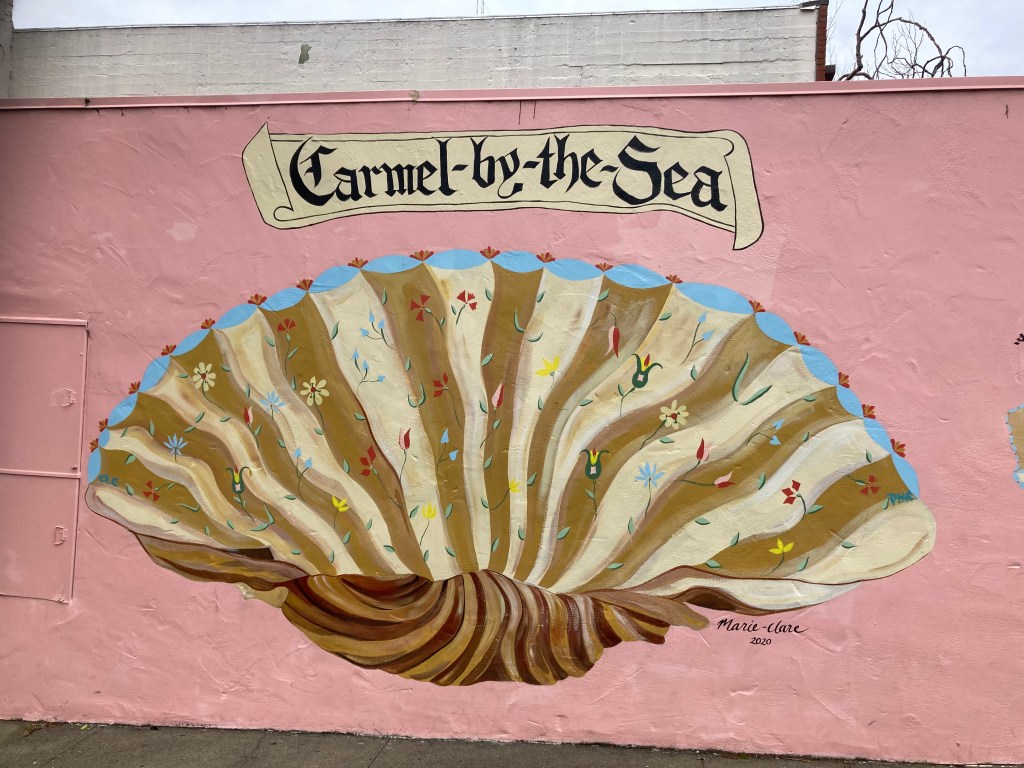
    2. Monterey & Carmel By The Sea
      1. Misc
    3. Big Sur
    4. Cambria, San Simeon, & Ragged Point
      1. Homeless Encounters, Venomous Spiders, & Toxic Air Pollution
    5. Morro Bay / Morro Rock
    6. Pismo Beach
  6. Other
    1. Safety
    2. Weather
    3. Best Sunsets

Crossing The Border

I abhor crossing the border. I wish I had a thicker skin, but every time I am a ball of nerves.

This was the first time I’d ever been sent to secondary inspection. To be fair, while the first guy I engaged with was intimidating, the second guy was kind.

Living an alternative lifestyle can make crossing the border more difficult. I had recently heard about another vanlifer who’d prepared extensively for their trip south for the winter, only to be turned back at the border. You can do everything right, but if you work for yourself or don’t have a permanent residence (are nomadic), they might think you plan to stay in their country. They want to see ties to Canada so they can feel confident that you will return to Canada. And driving a white cargo van probably doesn’t do one many favours.

I sat in the secondary inspection area as they went through my van. They said there was nothing bad in my van (I thought, I know). And by some miracle they let me through.

It’s not lost on me that I’m a young white woman. And that when I am stressed I can go into fawn mode (as opposed to fight or flight) – which I find mortifying, as a recovering people pleaser, but perhaps it appeases those in power.

Maybe a bit of luck was also on my side.

As I write this, it’s 2026, and this was a few years ago. I don’t I’d even try to cross the border in my van at the moment. Not to mention the increase in National Park fees for non-residents.

Issues With Remote Work

One of the key takeaways from my border crossing was the CBP officer telling me that I could not do remote work while in the states. That was huge.

Of course I knew that I couldn’t work in the states. I knew that you needed a specific visa to work in the states. And I was there primarily for pleasure, not business. But I thought I could not be employed in the states, by a US employer. I did not think that it applied to a an Etsy Canada shop, which operated in Canadian funds, and would function the same whether I was in Canada or another country.

Essentially, I was told that I could not work, period. At the time I had a few people who’d made orders with me the week prior, while I was in Canada, and I was told I could not even fulfill those orders.

I was told that there were recently changed regulations, that I’d have to report income taxes to the US, and something about a $2,000 limit, so I didn’t know if there was an income threshold.

To be honest, I’m still not clear on this. You hear about people doing remote work all the time, travel is often why people do remote work, and remote work is often foundational to being able to travel. So my mind was a bit blown that remote work was off the table. And I did a bunch of research and called several people – I still did not get any definitive answers.

I figure I’ll have to go to an embassy one day to get answers – because it would certainly be helpful to be able to operate your own online business while travelling! I can see how it might be seen as a grey area though.

Some things that felt like pertinent considerations were:

  • I was encouraged to talk to border control, an accountant, someone from Etsy, someone from an embassy, or even an immigration lawyer, for answers.
  • What is a working vacation?
  • My reason for visiting the US was not employment or business related – it was purely for pleasure. I was a tourist passing through, not looking to relocate. I had no intentions of doing meetings or in person sales. But the burden falls on me to prove on entry that I am not planning to do business.
  • My Etsy shop venture was small, almost more like a hobby, I was not a registered business (I did not meet the requirements).
  • US work visas seem to require being hired by a US employer and them sponsoring you. There are no visas for self-employment.
  • I couldn’t identify which visa I was given (B1 is business travel & B2 is tourism/visitor travel ) when I crossed the border. While it’s probably obvious, they didn’t stamp my passport. But I found out that with the B1 Visa you can take orders, you just cannot deliver the goods.
  • Was there a difference between whether a customer was American or Canadian?
  • I remember thinking how a lot of the time people find my Etsy shop and make a purchase without me having any direct interaction with them. And the purchases I’d received around that time were mostly a result of a feature I’d had on a podcast – which aired while I was in Canada. Any work that I’d put in that resulted in those purchases had been done in Canada.
  • Is responding to emails or sending messages considerd work? What a bout posting to social media?

It just felt confusing to me – I’m no legal pro, maybe I’m missing something. But I searched for answers and couldn’t get any clarity and that was really frustrating.

The Boring Stuff

Listen, I can be painfully detail-oriented. Feel free to skip this section. I’m just laying it all out to be thorough in documenting my experiences and creating a reference.

I do my fair share of prep. Here’s what info was on my prep list:

  • In 2022 you were required to be fully vaccinated  (boosters not included- just primary series) and show proof upon request/ verbally attest. Testing not required.
  • Have passport.
  • Demonstrate significant ties to home country, including proof of employment, residency, etc. (I had my sister’s upcoming wedding, a ferry booked back to Victoria, and belongings in storage in ON).
  • Border Wait times.
  • May be asked for an address in states where you are headed, proof that the trip is for a legitimate purpose and is of a reasonable length, proof of sufficient funds to cover your stay.
  • Declare length of stay/ get authorization if want to extend. *An I-94 form is not necessarily required, but can check the I-94 website using “Get Most Recent I-94” to see if one was filed electronically and to see if there is an authorized stay/ departure date (not sure how the 6 months max for Canadians factors in).
  • Don’t wear a hat or obstruct face.
  • Doors unlocked.
  • Van tidy
  • Last time in the US?
  • Food: No meat; know what you have on hand and any restrictions.

As of 2026 it looks like if Canadians plan to stay more than 30 days in the US they must register with the US government, and there are limits placed on entry of foreign nationals.

Adjusting

I find any time I cross a border, whether provincial, state, national, I need some time to adjust to being in a new place. Everything felt a little surreal at this point.

My immediate concerns were:

  • A) How can I make sure I know my rights and am operating within them during my time in the states?
  • B) How do I operate without a credit card (since I’d lost mine the day before)?
  • C) There was a cold front coming through promising -11 degrees C and snow.

Any plans I’d had for my time in the states sort of lost form with the uncertainty I felt about whether they could go ahead. I tended to the most pressing issues in front of me. And part of that meant simply driving south to get away from the wintry conditions.

Not having a physical credit card certainly presented some challenges, but somehow after cancelling the last card, the updated card information automatically appeared in my Apple Wallet and I was able to use my phone to pay in some cases. I wouldn’t get a card again until I was back in Canada (due to moving around and my bank not having the same chains in the states as it does in Canada).

Then there’s just adjusting to everything being different (for example Walmarts checking your receipts as you exit the store) and being out of your element. The road requires constant adjustment!

A Blurb On Washington & Oregon

I’m going to talk more at length on my time southbound through Washington and Oregon in their respective posts, but I do want to touch briefly on this part of my travels and getting to California.

I truly bee-lined it south through Washington, shedding a tear as I bypassed Seattle. It should tell you how much of a priority escaping the winter conditions was if I was willing to delay Seattle – one of my favourite places in the world. I remember viscerally driving at night with the space needle in view and No Excuses by Alice In Chains playing on the radio.

Also the fact that I woke up to snow in the van after my first night in the states propelled me.

Just getting to Oregon made a big difference in temperature.

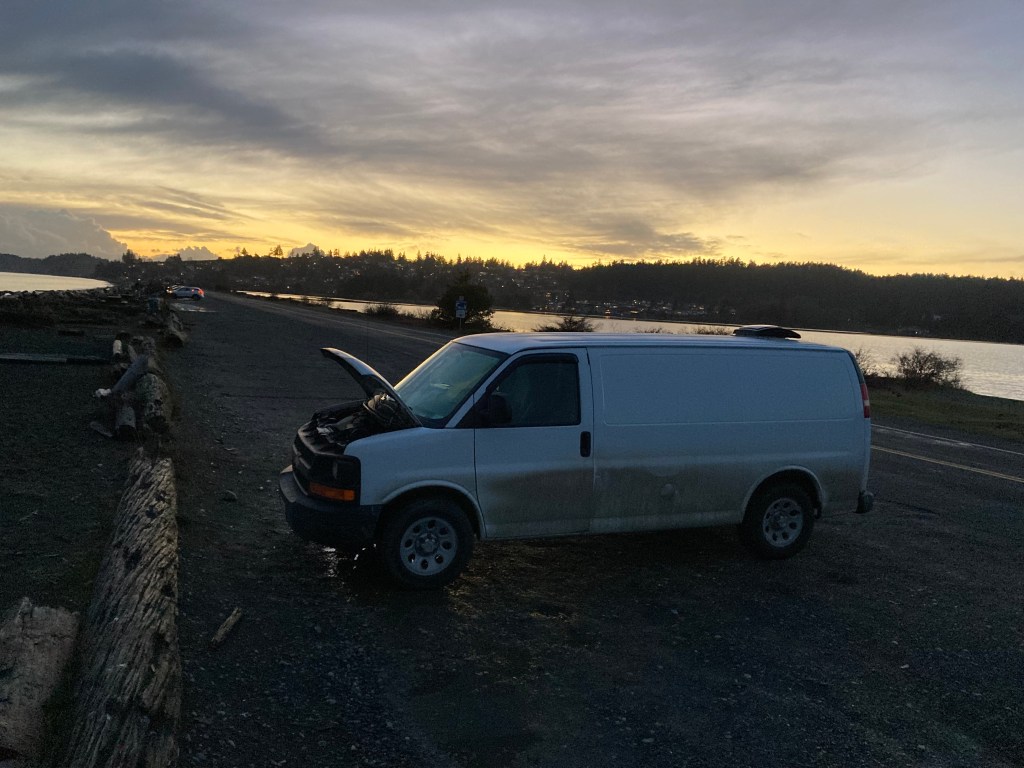
Oregon was a bit more eventful as I explored the rainy wintry Oregon Coast and had an issue with the van crop up, again. I had to visit a mechanic in Eugene for another hefty repair (on the plus side – Oregon has no sales tax).

From the Pacific Coast in BC to the Oregon Coast, it felt like I hadn’t seen sun for a solid month. And I wouldn’t until a small town in Northern California.
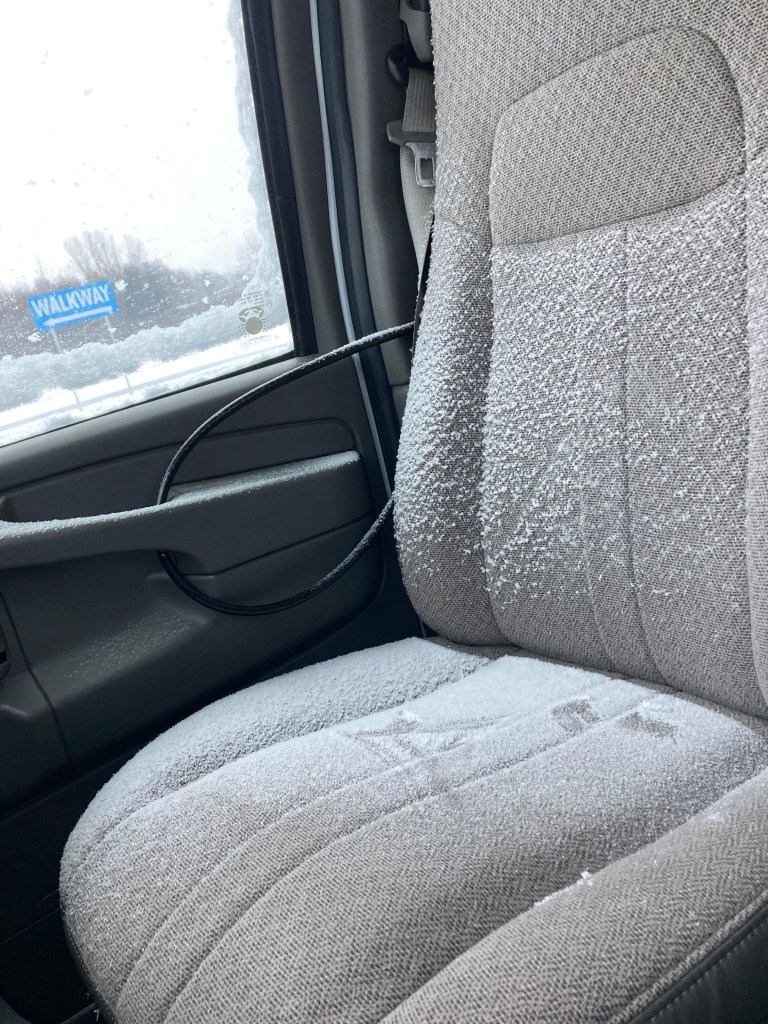
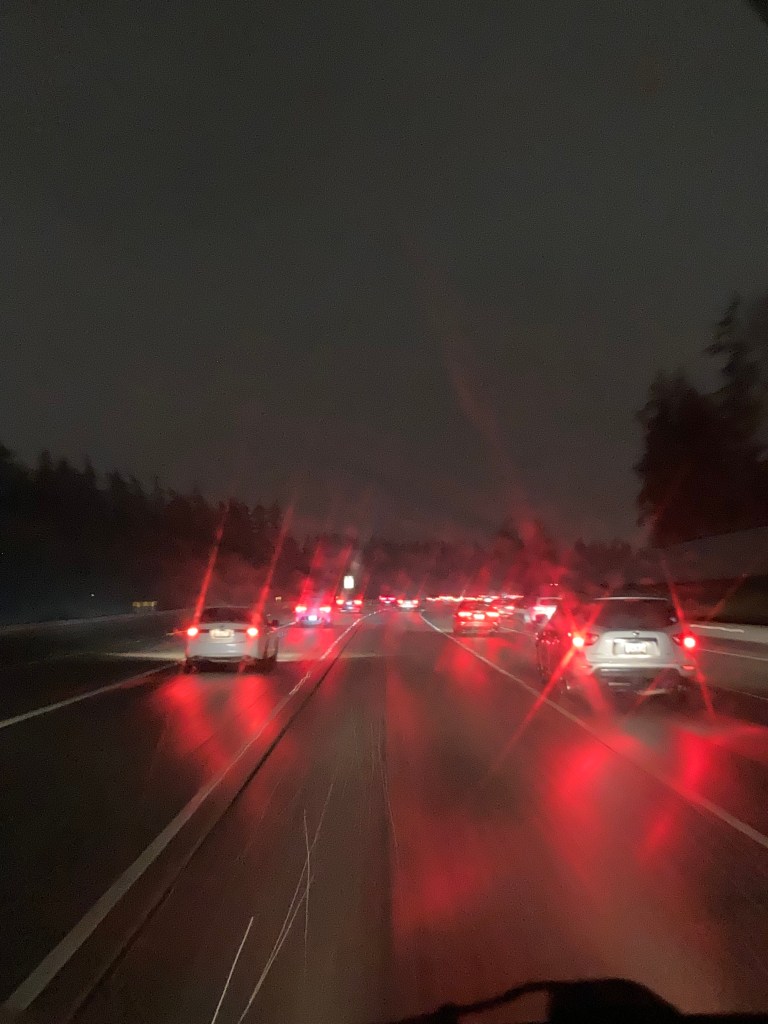
I think my time between Canada and California was very liminal. I was getting used to being in a new country and I was trying to decide on a plan. I was stressed by the cold, the van repair, the border crossing, and the unknown. But I think things started to take a turn when I got to the Golden State.

Northern California

Crossing into California from Oregon there was a border checkpoint. They asked if I had plants or produce before crossing state lines.

Getting to California was surreal. Because I’d had my doubts about whether I’d get here at all. And I had been dreaming about this road trip for years. It was the trip I had in mind while building out my van. And while I’d never made any hard plans, and the border and a multitude of other factors had me discouraged – here I was. This was it.

I have a habit of not getting excited for things until they’re happening. Like they don’t feel real until they’re happening. But I think it’s also a bit of a self-defense thing, protecting myself from disappointment in case something goes wrong. I had plenty of reasons to believe I wouldn’t get here. Even when I crossed into California I was telling myself I just wanted to get a taste before turning around. But looking back now, as I type this, knowing that I did it all – it’s just this big experience that I’ll hold onto for the rest of my life.

There was still lots of rain. But I could feel the vibe shift. It shouldn’t feel that different, the landscape doesn’t shift abruptly. But I felt like I’d “made it”. And I was glad to have self-serve gas stations again (Oregon had attendants pump your gas). Although I wouldn’t be a fan of the gas prices the farther south I got.

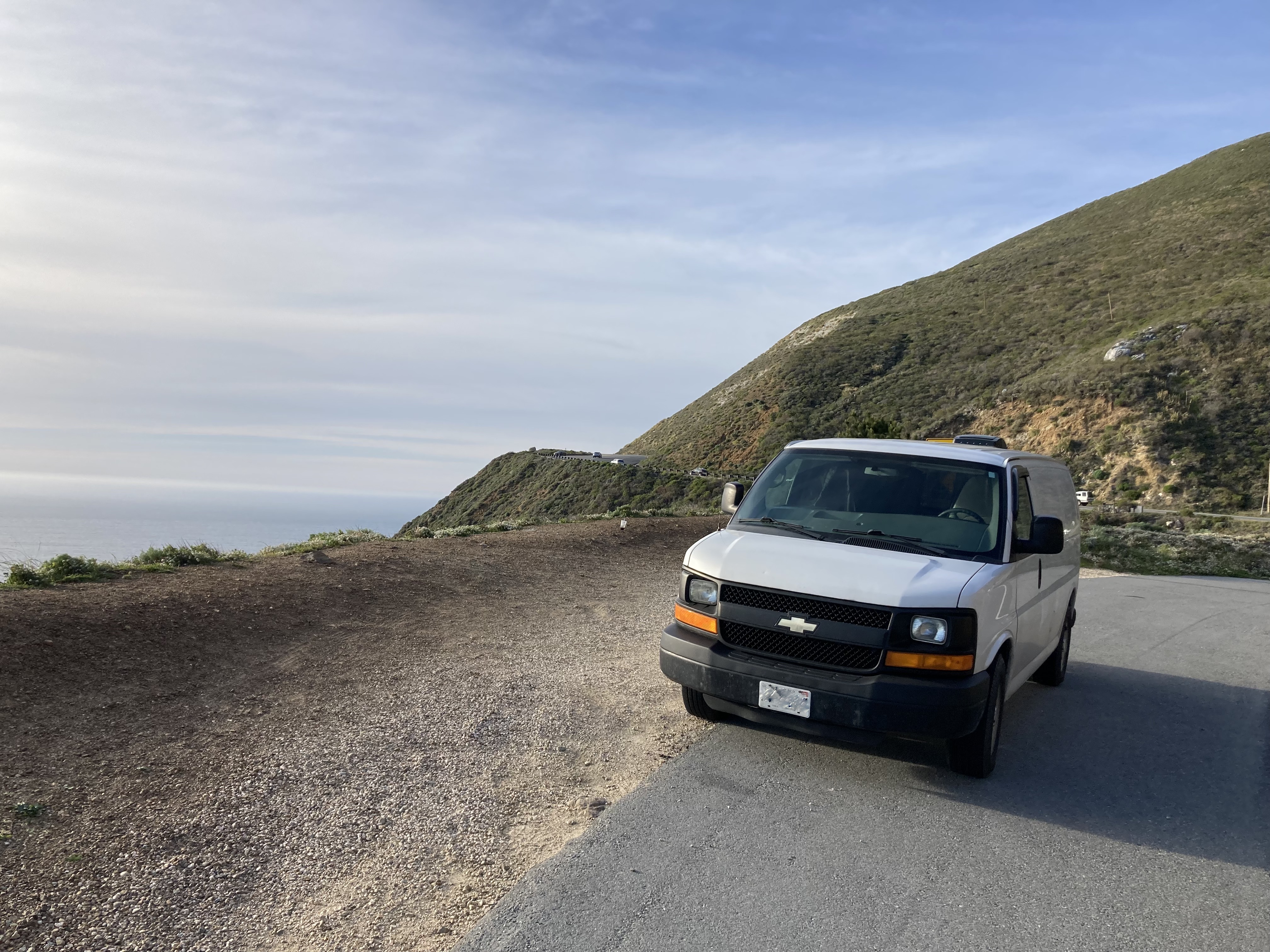
My home for the next while would be Highways 1 & 101. Don’t get me started on the iconic nature of being on this particular road – I was counting down till I could play songs like Pacific Coast Highway and Malibu by Hole. Pinch me! I’d been here before, on a stretch of highway near San Francisco – but I was young then and hadn’t appreciated it fully.

Crescent City

Crescent City has a population of around 7,000 and is home to the Redwood National Park headquarters. It has lots of fishing, is susceptible to tsunamis, and is home to Pelican Bay State Prison (of which I was not aware at the time, but I never felt sketched out too much here).

I remember the night I arrived in Crescent City. There were red flares lining the road, creating an eerie glow in the dark of night and smokey conditions as I passed through dense forest. I’m not sure what had happened but there were officials directing traffic.

I probably chose Crescent City as it was the first major coastal city in the upper corner of the state.

I headed to the Crescent City Walmart to lay my head for the night. It’s unfortunate, arriving in a new place at night, because you can’t take it in as you arrive and have to wait till morning to feast your eyes on your surroundings. This is one reason why I avoid nighttime driving, other than for safety reasons. I would rather get to see the sights.

Technically, you weren’t allowed to park overnight at the Crescent City Walmart, but I called them and was told it was fine if just overnight and you keep it clean. If you stay more than 24 hours they issue a warning.

I tried to find a campground in the area, but as would become a pattern, I found that many campgrounds were closed due to coastal flooding advisories, high rain and strong winds forecasted – a winter thing.

If memory serves, I stayed a few nights at the Walmart, leaving during the day to do travel research and explore the area.

I also came down with a cold while here. That was unpleasant. I had some home tests for Covid – they came back negative. So at least there was that. I suppose it was impressive that this was my first time getting sick after a couple of months travelling in the van through wintry conditions. Perhaps this is why I spent a few days in this small town – moving at a slow pace and giving myself time to recover.

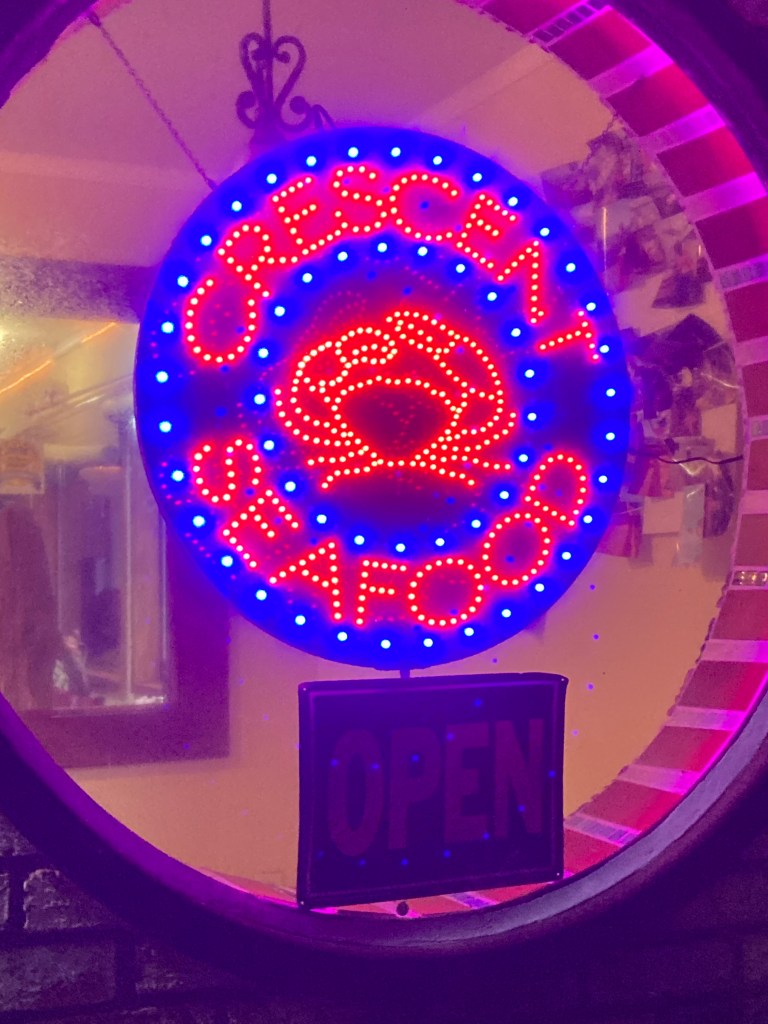
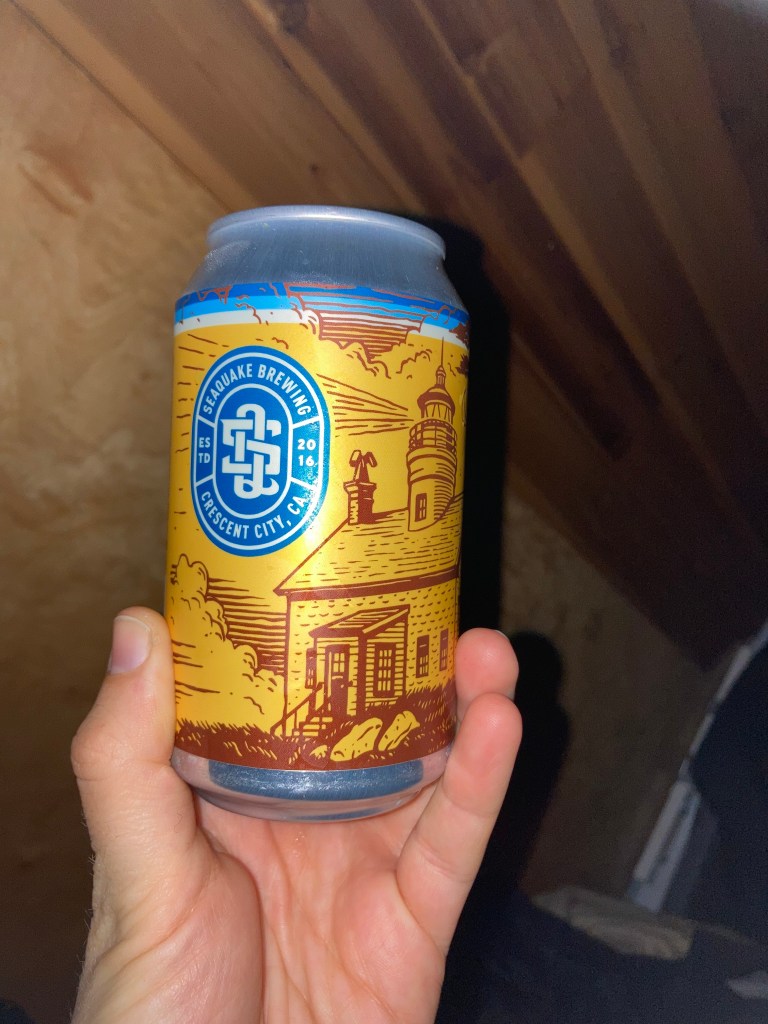
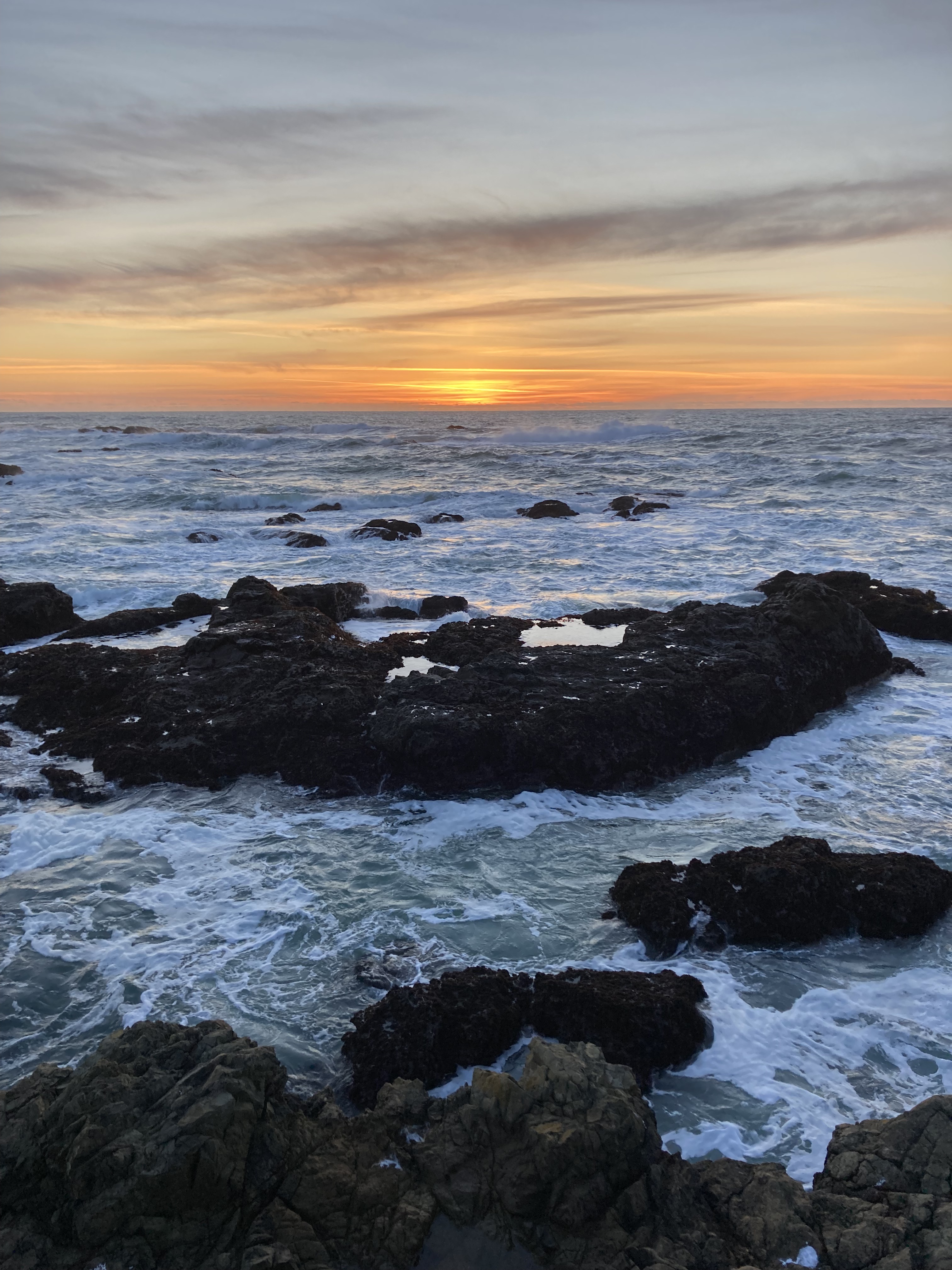
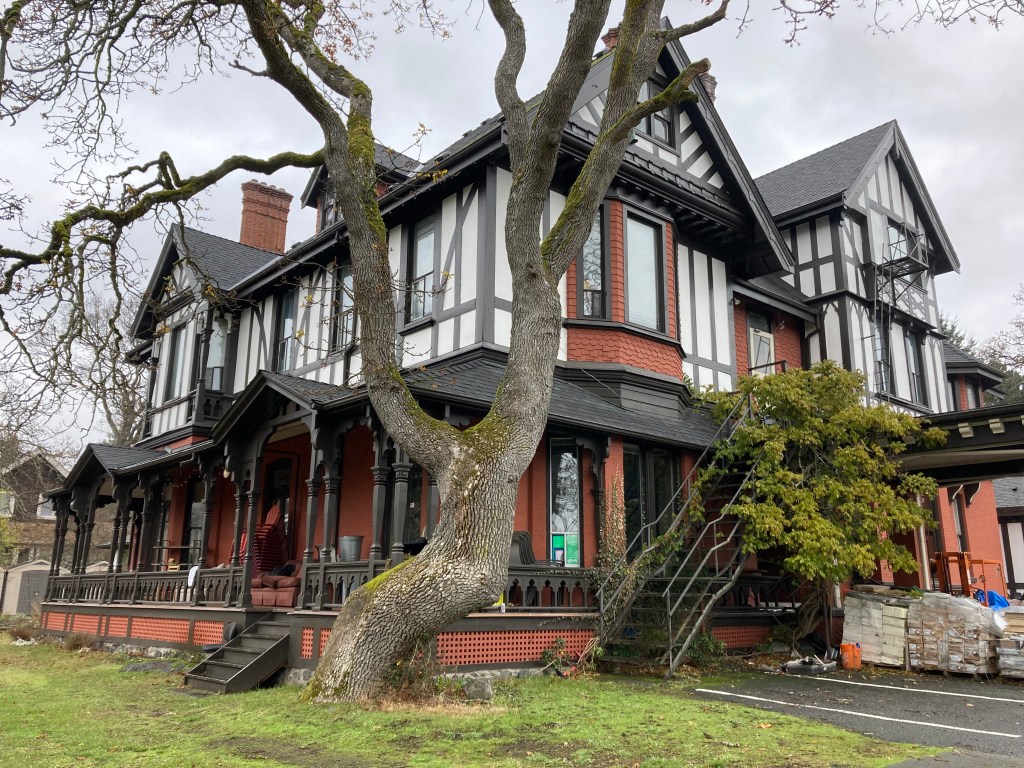
After doing my research, I set out to explore. I visited Castle Rock National Wildlife Refuge (island off the coast, can park across from it) and Crescent Seafood (I had the crab melt, and could hear sea lions calling out from a nearby wharf). I walked by the Anna Wulf House on the corner of J & 6th (a stately Victorian-style home built in 1896, now a bed & breakfast) and went to the Battery Point Lighthouse (at the end of A St., you can explore tide pools at low tide and watch the sunset from here). I also did a historic walk through the downtown (murals, memorials), and picked up some beer at Sea Quake Brewing (they mostly had IPAs, I liked the blonde ale).
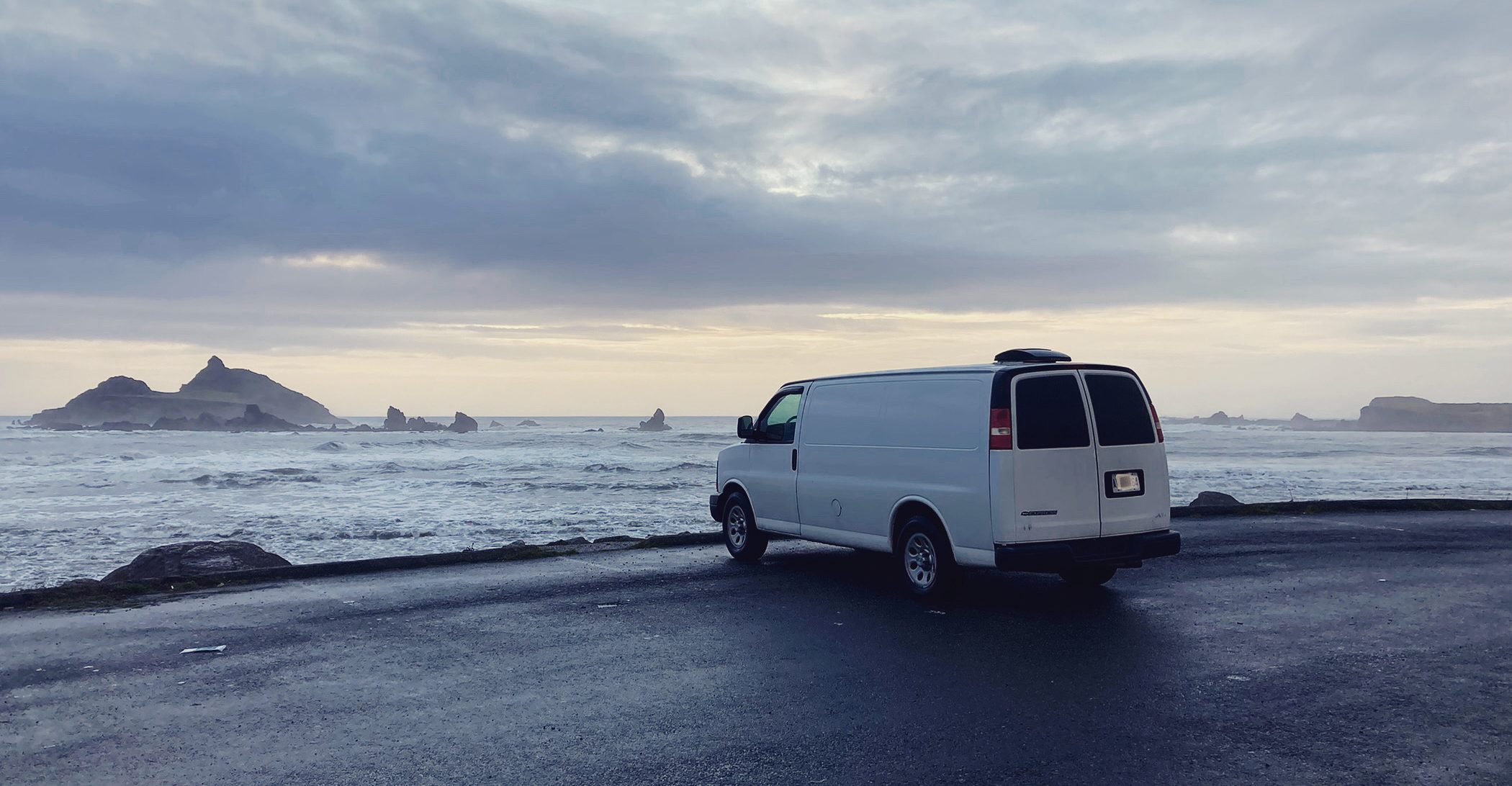
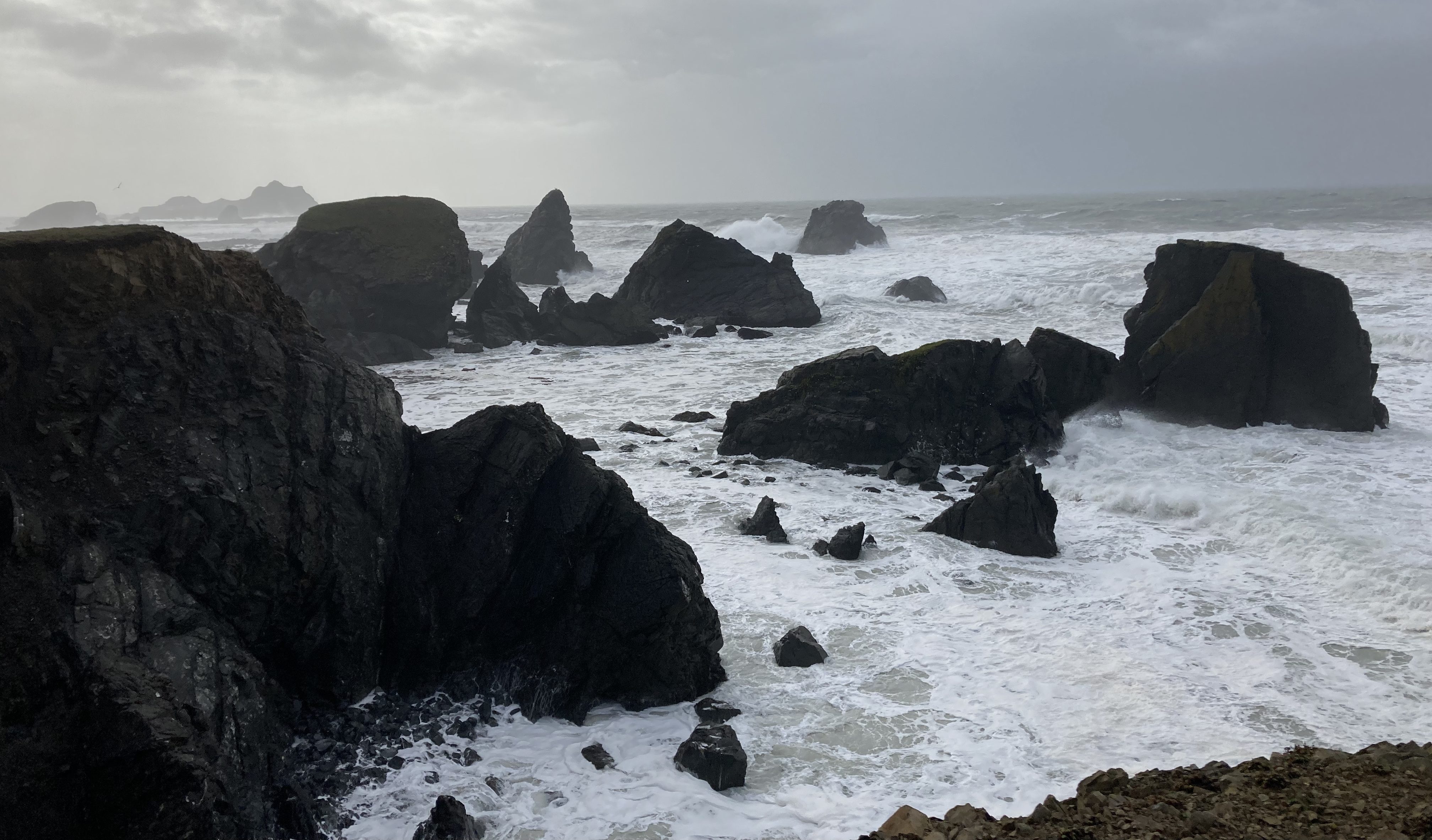
If I’m ever in the area again I might try Port O’Pints Brewing, North Coast Marine Mammal Centre (rehab), or Damnation Creek Trail – part of the California Coastal Trail (CCT) – a redwood grove & rocky cove overlooking the Pacific.

A Scary Encounter

On my final morning in Crescent City, I was organizing the van in preparation to hit the road. I already had my purse in the front passenger seat and was grabbing something from the back cargo bay when I heard banging on the front passenger side window. I looked out the tinted side windows from the back to see a homeless man banging on the van, peering in, and yelling. Luckily, my curtains between the front cab and cargo bay were drawn, so he couldn’t see me. But I’m sure he knew I was there since my purse was visible. I had half a mind to quickly get into the driver’s seat and drive away. But I feared he might do something erratic. So I stayed put and hoped he would just go away. This was the Walmart parking lot – there were lots of cars around. There were other vans and RVs parked nearby. I think my phone was up front, too, so I couldn’t have called authorities without revealing myself. I just remained frozen. And he did walk away – several times – but would turn around and come back. It must have been about ten minutes before he left for good and I high-tailed it out of there. It could have been worse, but it was certainly jarring.

Eureka

About 1.5hrs south of Crescent City I made a stop at a mall in Eureka. I really just passed through Eureka, but this pit stop was enough to give me the impression that Eureka is sketchy. And when I googled the crime rates – they backed me up. I’d hate to write a place off, I’m sure it has redeeming qualities. But that impression is all I’ve got to remember it by at the moment.

Based on some light research, Eureka is the largest coastal city between San Francisco and Portland, OR (26,000-27,000 people). It is known for Victorian houses in its Old Town district as well as its location on the coast and among the redwoods. It seems to be rundown due to declining economic conditions over the last many decades, has a high homeless population, and has a history as a sundown town.

Redwoods

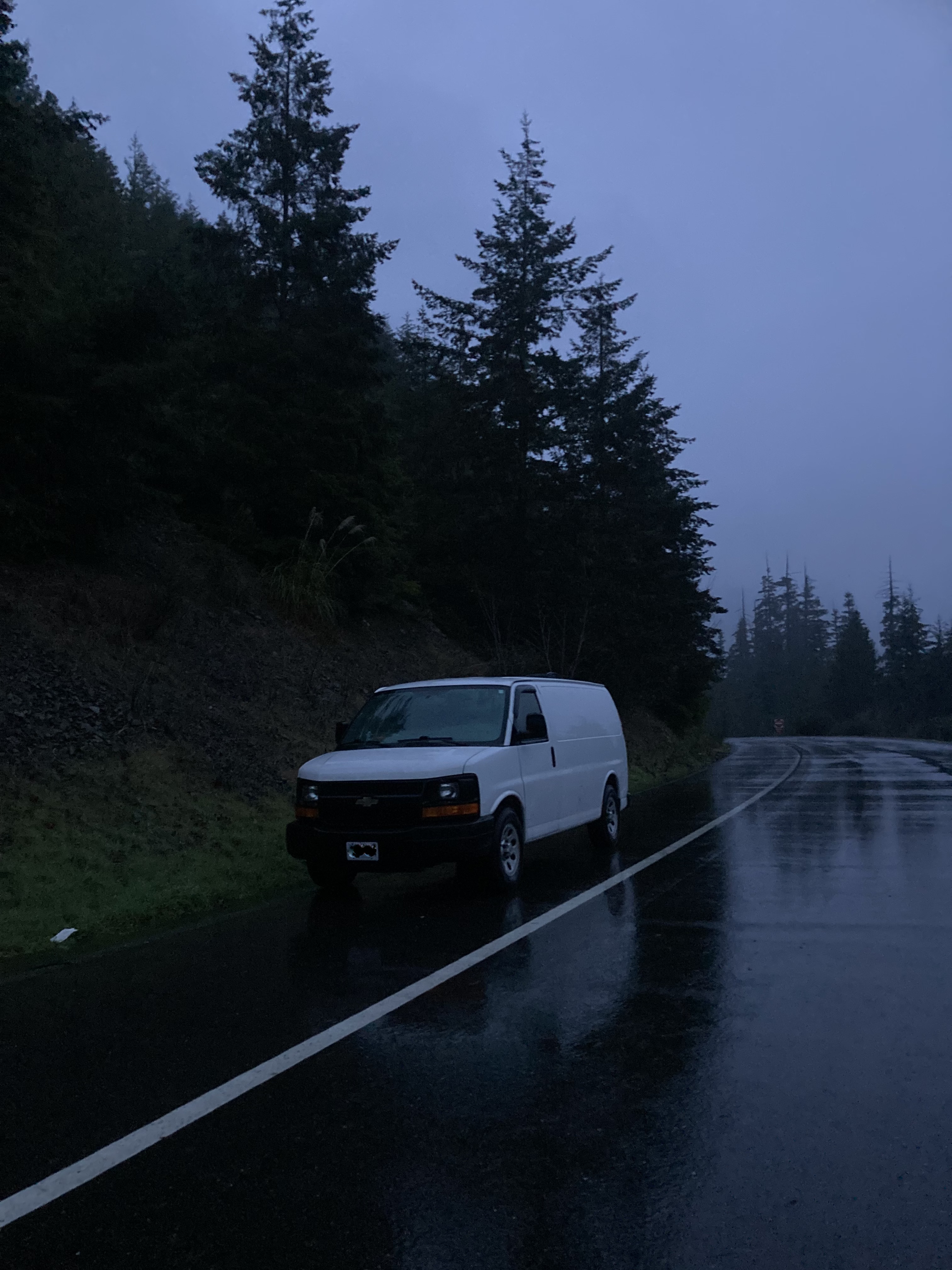
I took the 101 south and about 40 minutes out from Eureka ended up at a “vista point” (little turnouts or parking areas just off the highways, sometimes with a view) that allowed stays up to 8 hours. It was a moody night. I watched clouds quickly drift across the moon, above the silhouette of evergreen trees. I had the area to myself, hidden from view of the highway.

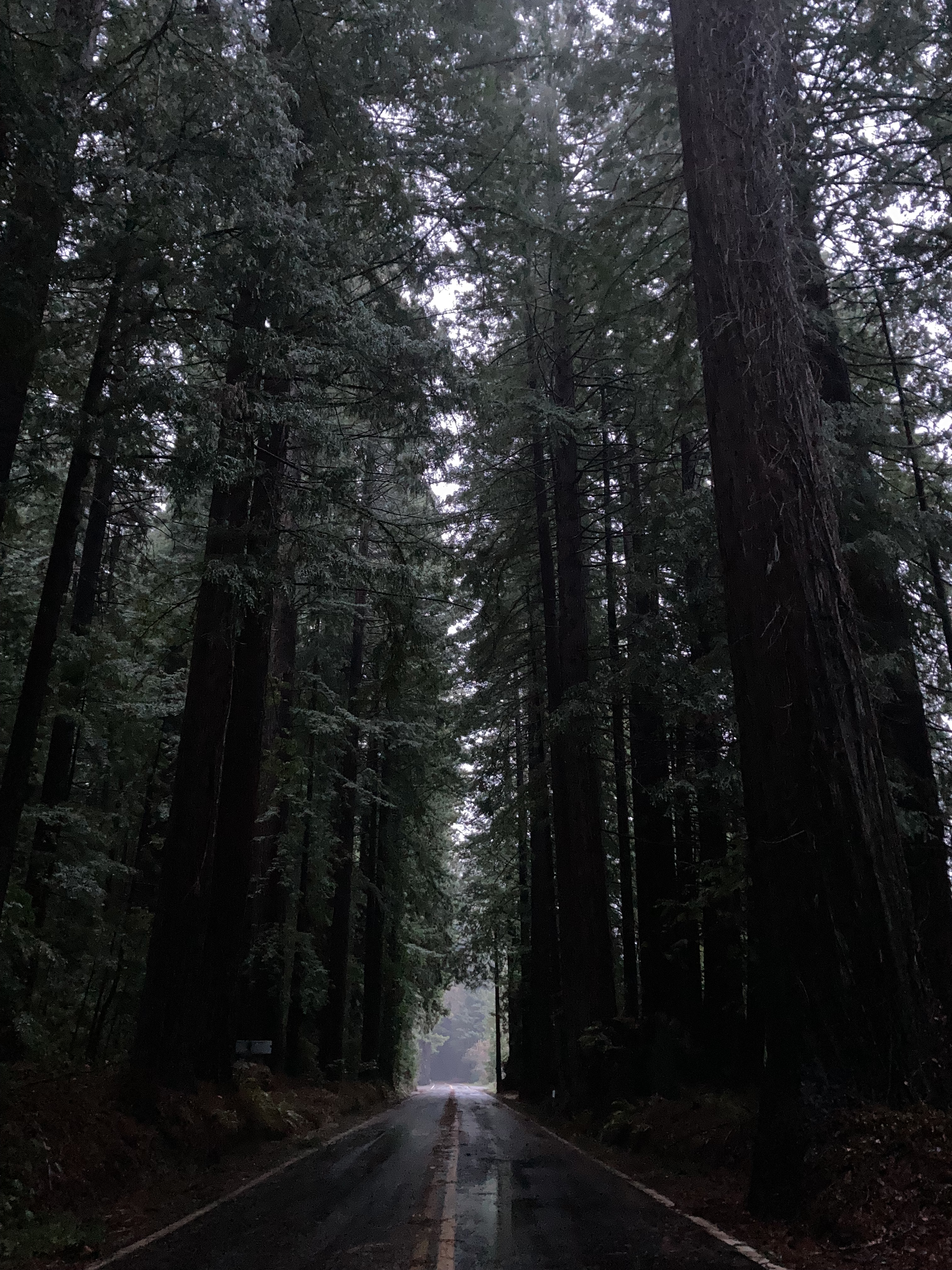
The next morning I found myself to be close to Humboldt Redwoods State Park and decided to go for a hike, as I had not gotten to see the redwoods up close yet.
Ukiah

It was proving difficult to find a campground on the coast. There was no shortage of campgrounds in Northern California, it was just that so many of them were closed because of the flood warnings. I finally settled on one a 2 hour drive south of where I was, diverging more inland where the highway split into the 1 (coastal) and 101 (a little more inland) in Ukiah.

I liked to stay at a campground every once in a while because they were convenient for having laundry, showers, comfort stations, and just the comfort of knowing where you’re spending the night, alongside others doing the same. No last minute scurry to find a spot and no worries about being asked to move.

I took refuge at the Redwood Empire Fairgrounds, just 100 miles north of San Francisco (!). I wondered if the grounds would have flooding, but it ended up being fine. And I got a bunch or my chores accomplished.
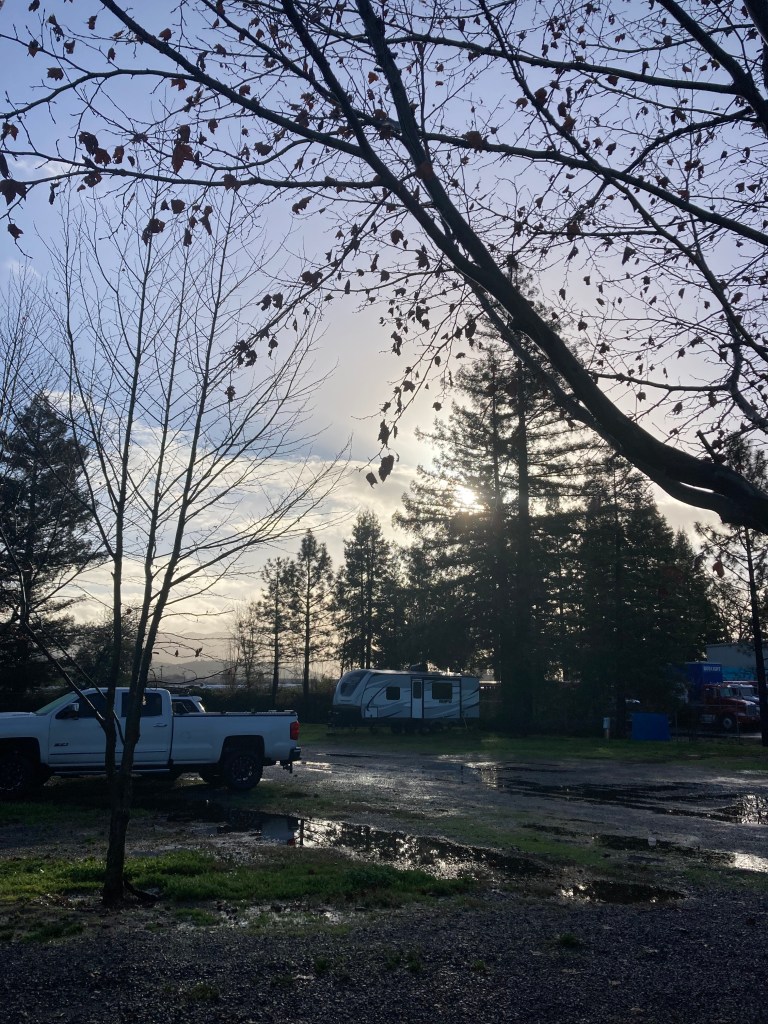
Beautiful morning in the RV Park.

It’s towns like this that are unforeseen stops along the way, in places you never would have otherwise heard of, and might not have paid much attention to, that can be just what you need to rest your weary traveller’s head.

Apparently Ukiah is part of Northern California’s wine country. They have a population around 16,000, are the largest city in Mendocino County, are near the redwoods, and are know for Pomo Indian heritage.

Fort Bragg

From Ukiah I backtracked a little, heading northwest to get back on the coast. I wanted to drive more along the ocean, and I wanted to see Fort Bragg – a little town of 7,000 on the Mendocino coast. I don’t know why, I hadn’t heard of Fort Bragg, and I hadn’t looked it up. But maybe it called to me, as it became one of my favourite spots.

As I usually do in new locations, I looked up a place where I could park and get my bearings. This is often a park of some sort and I landed on Noyo Headlands. It was perfect – it had a paved parking lot as well as a long dirt extension where you could park further away from people. It had paths along the coast to walk along. I took my time, taking in the coast, and specifically the distinctly different vegetation. As dusk grew closer I listened to a chorus of frogs.
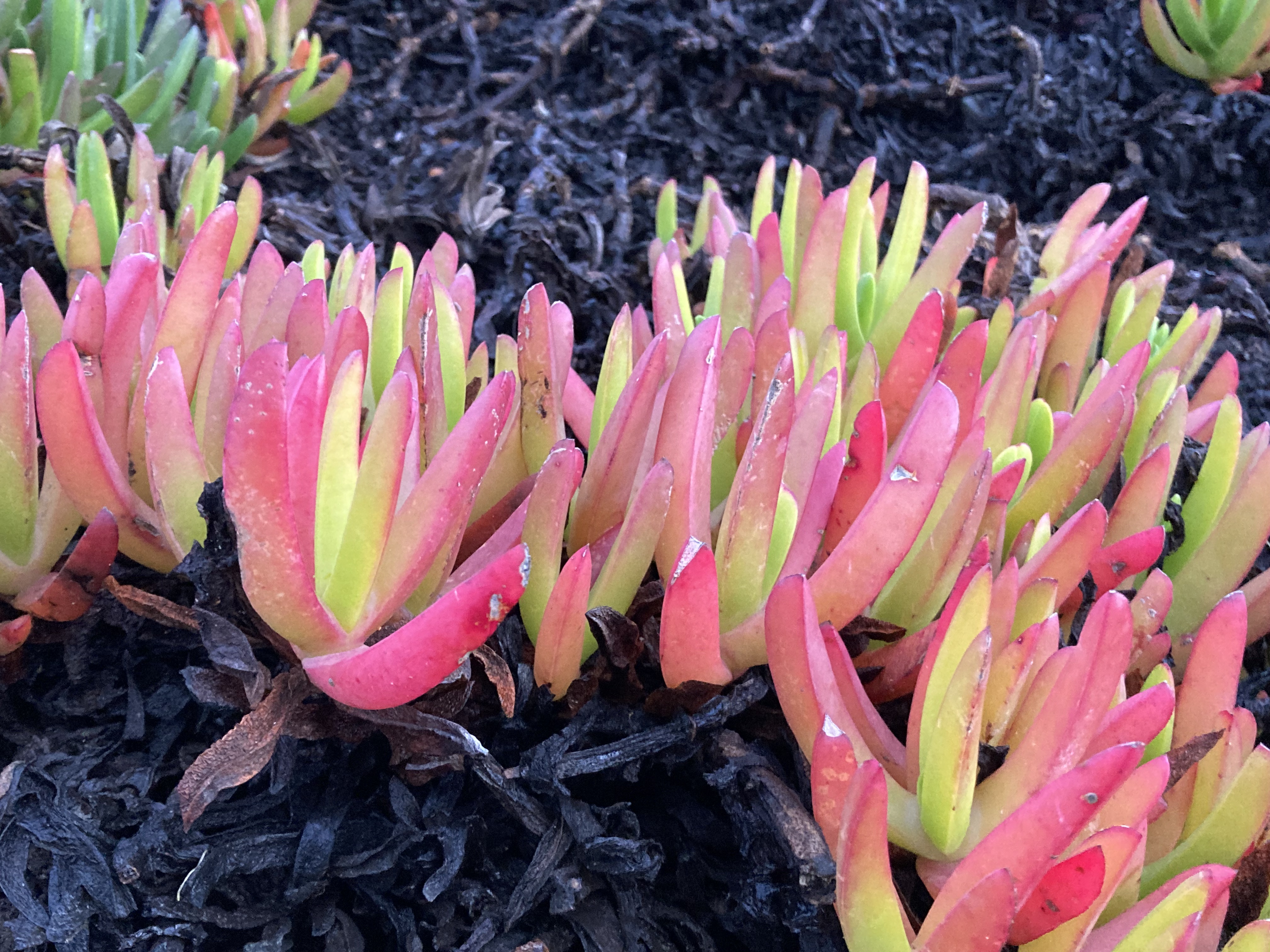
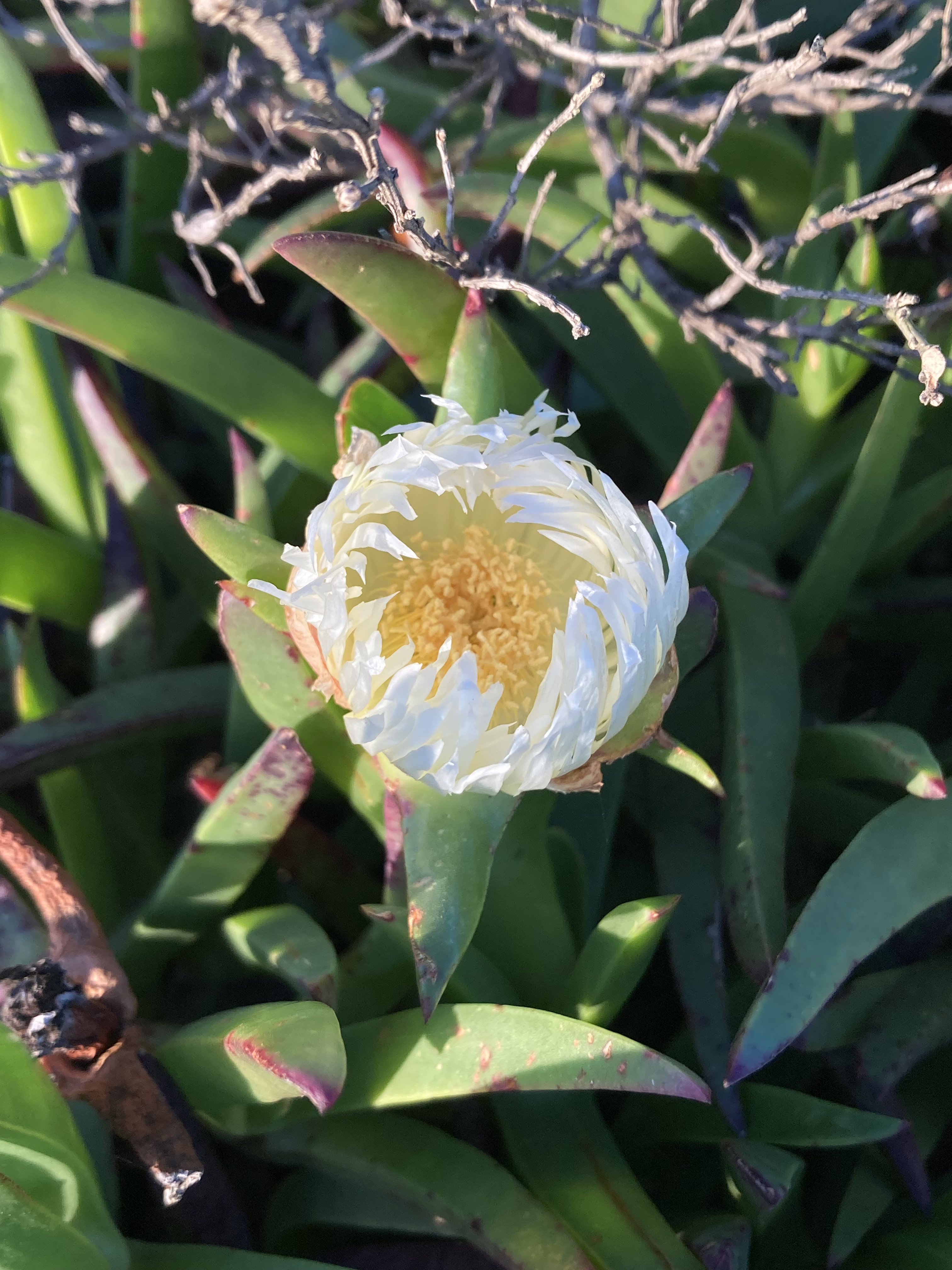
Hottentot Fig, a species of succulent, ornamental, ground cover, stabilizes dunes and bluffs.

I made my way to a Safeway for some provisions (mostly dinner, and I remember paper towel being an insane price). Then looked up my overnight spot. It seemed Safeway allowed one night of overnight parking, but it was a pretty busy area. And while I was doing research on Fort Bragg I found that it was said to have a high crime rate. I can say now after having been in Fort Bragg that I never felt unsafe while there. But I also had found a crime rate map and made note of the worst areas – aiming to not park in these overnight. I stumbled across information that said street parking was pretty easy in Fort Bragg, and found myself a street in a lower crime area (there were other campervans when I arrived). This was not a residential area, which was good, but it could get busy in the mornings as it was near a lumber yard. I’d spend a couple of nights here before finding a new favoured spot on a road beside a field and the ocean, near Glass Beach and the California Coastal Trail.

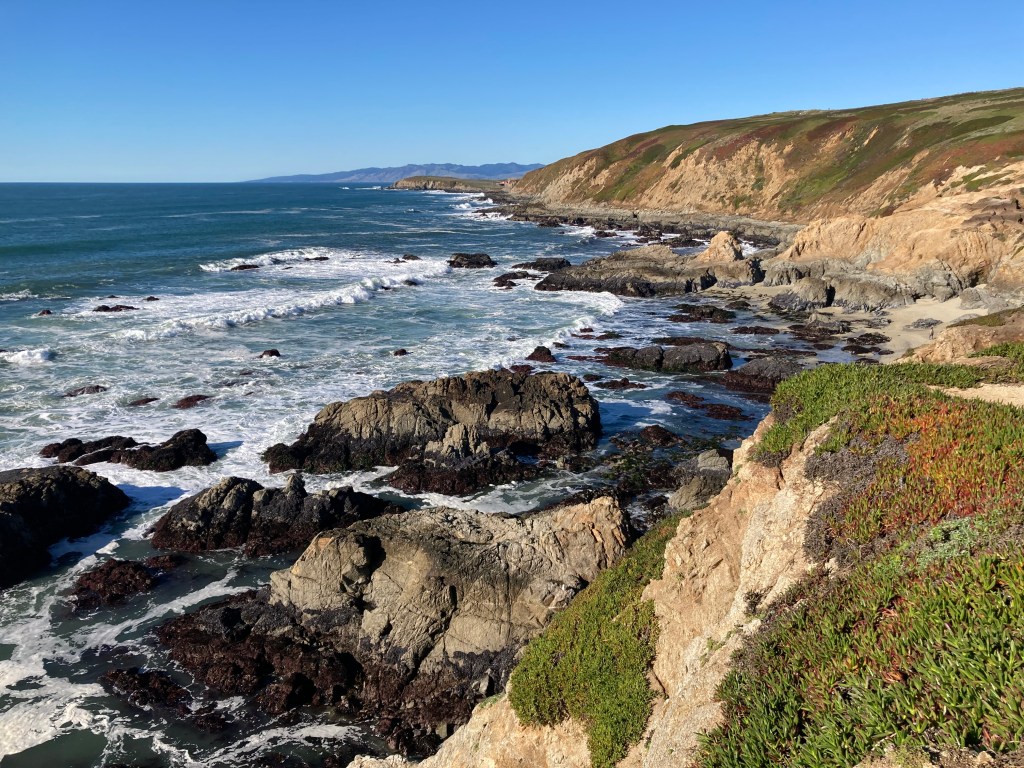
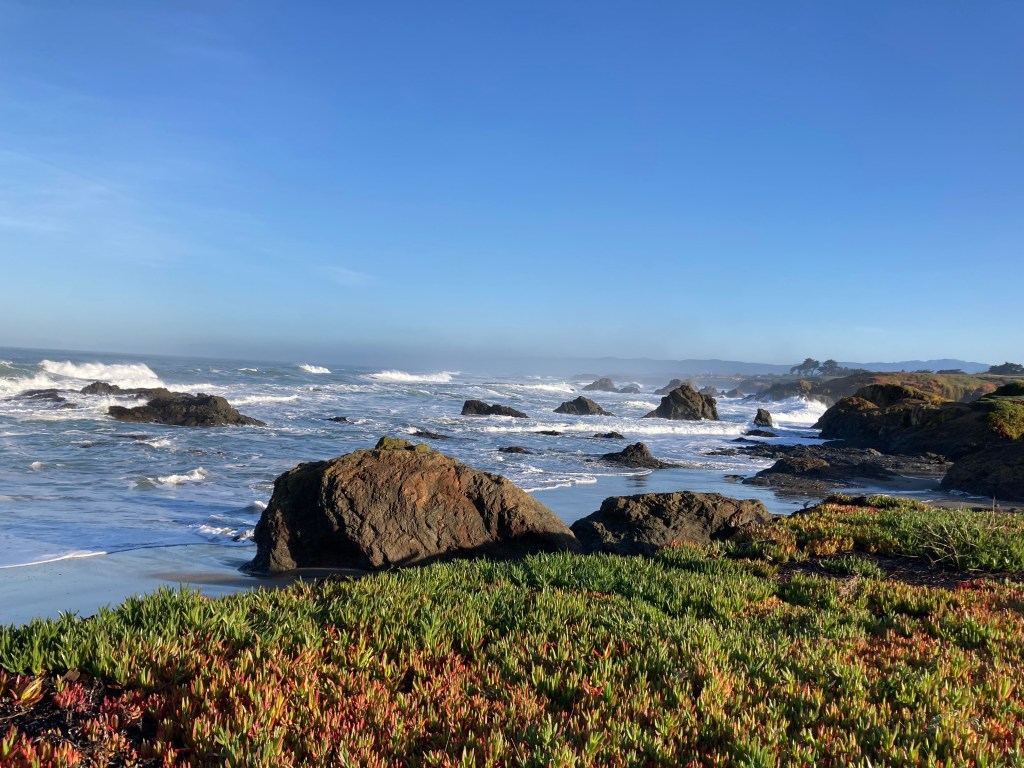
The next morning I parked at Glass Beach to explore and plan what to see in Fort Bragg. Glass Beach was definitely a favourite. I collected some glass. The coastline is stunning – it had green, yellow, and red coloured succulent plants, and on a windy day I watched huge winter waves roll in. Plus the sunsets were beautiful and I saw a white seal laying on the rocks!
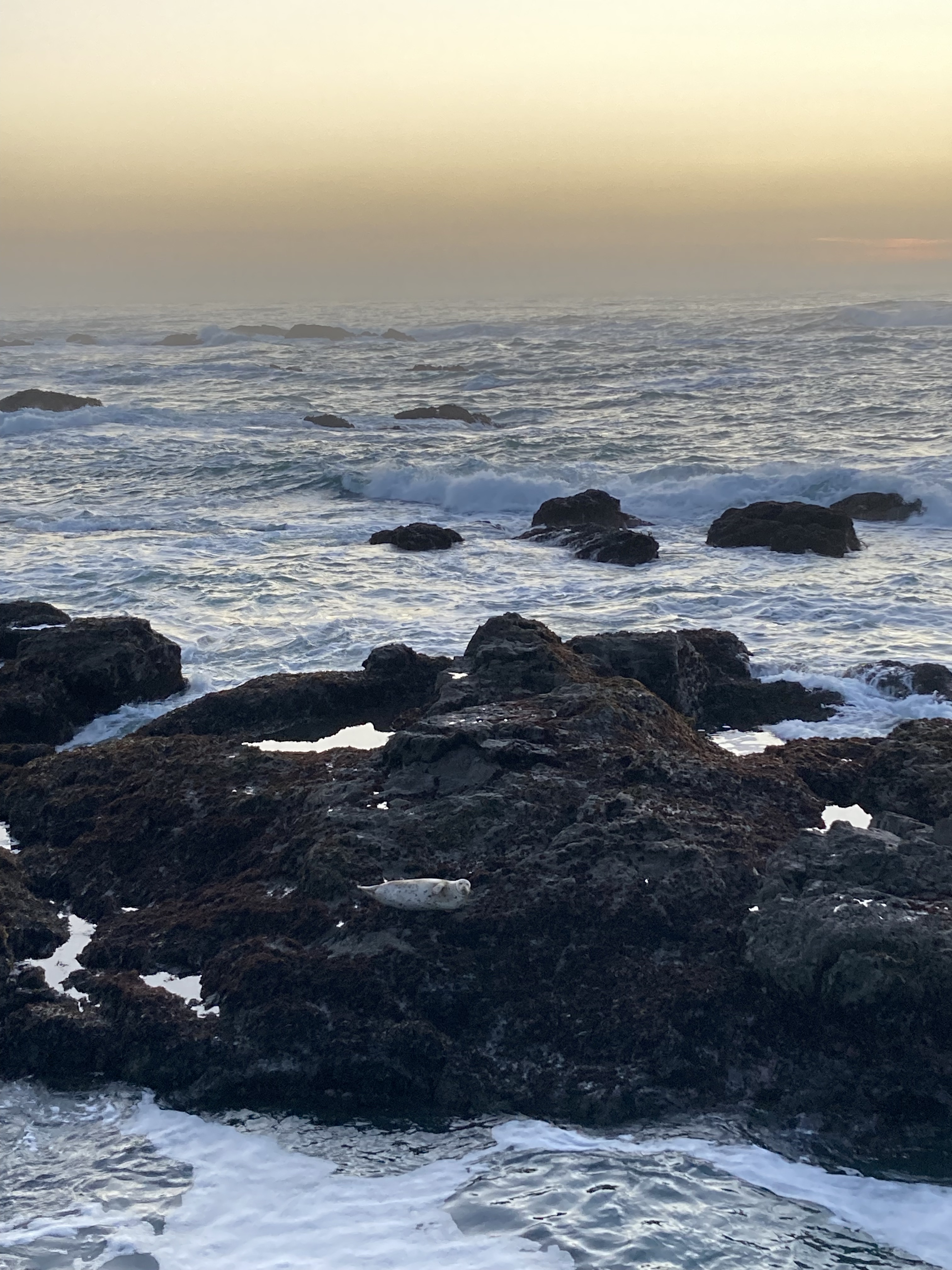
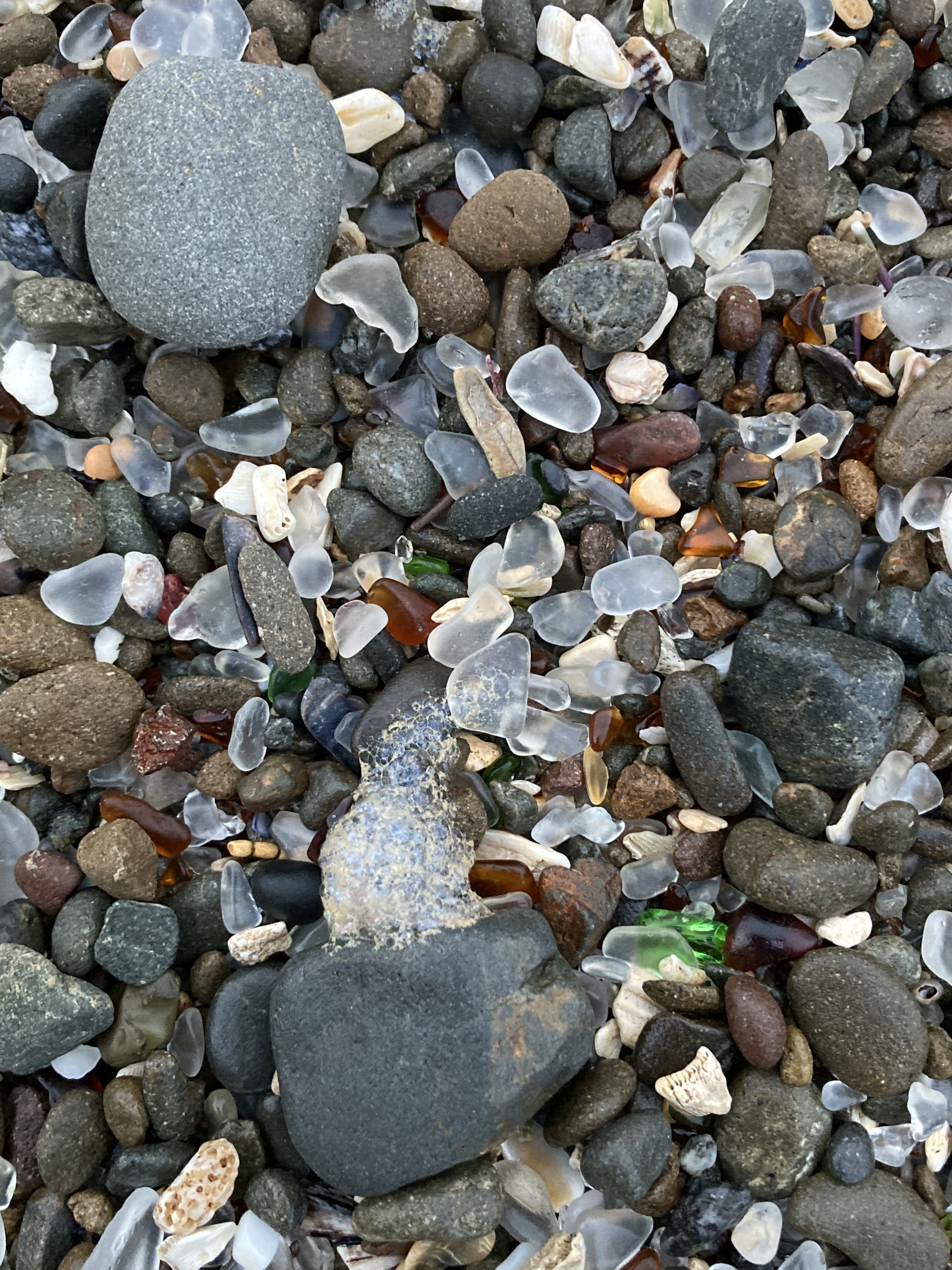
This was also a sunny day with a high of 14 degrees C. After months of winter in the van – I was in heaven. It had felt like a straight month of cloud and rain up to this point. And I had been so used to cold being the norm after months of it on the road. It was nice to feel the sun. I actually got overheated sitting in the van as the sun warmed it up! It was only early January, but I’d paid my winter dues, and it made me disproportionately happy to reap these rewards of being in California.
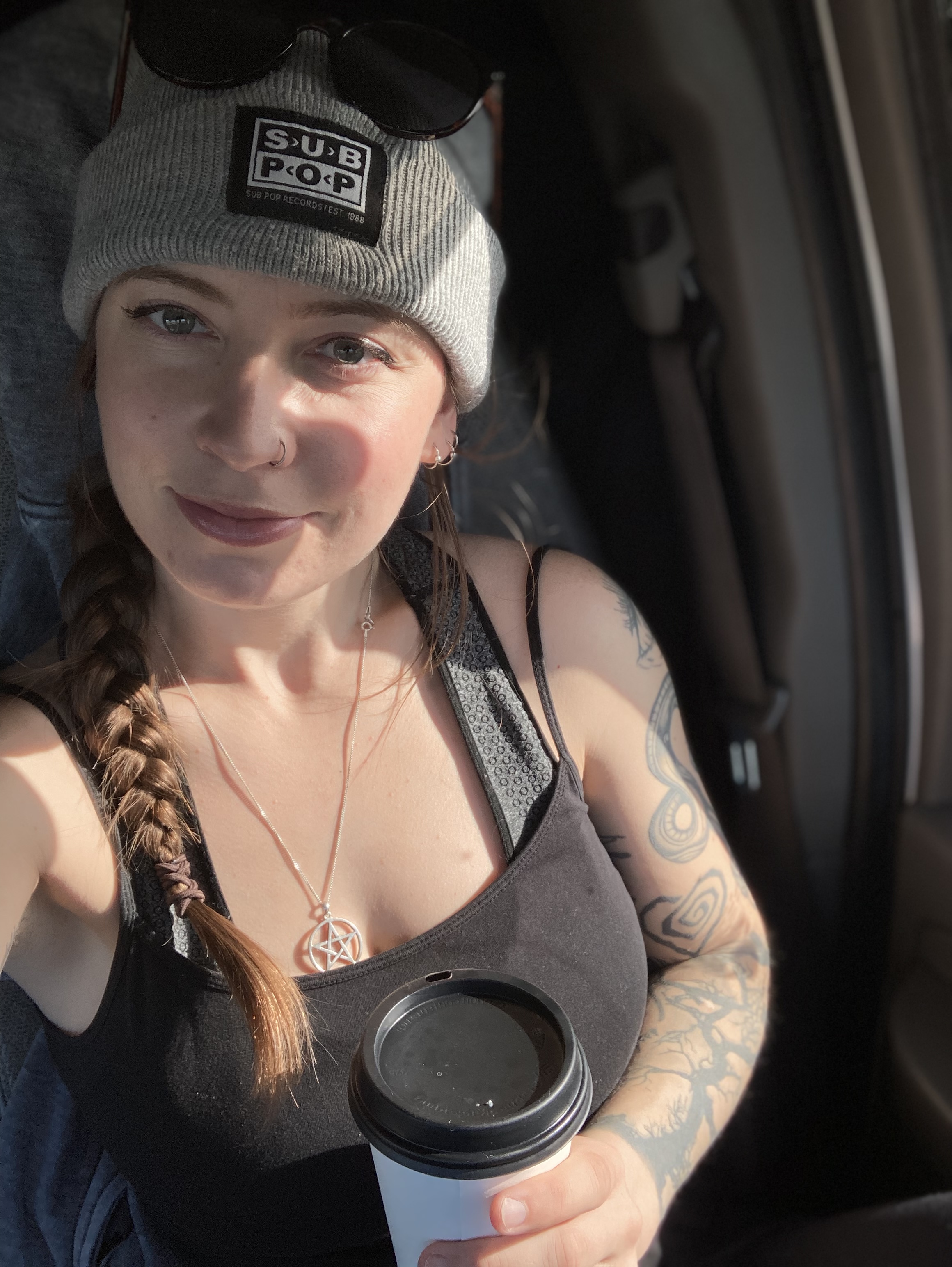
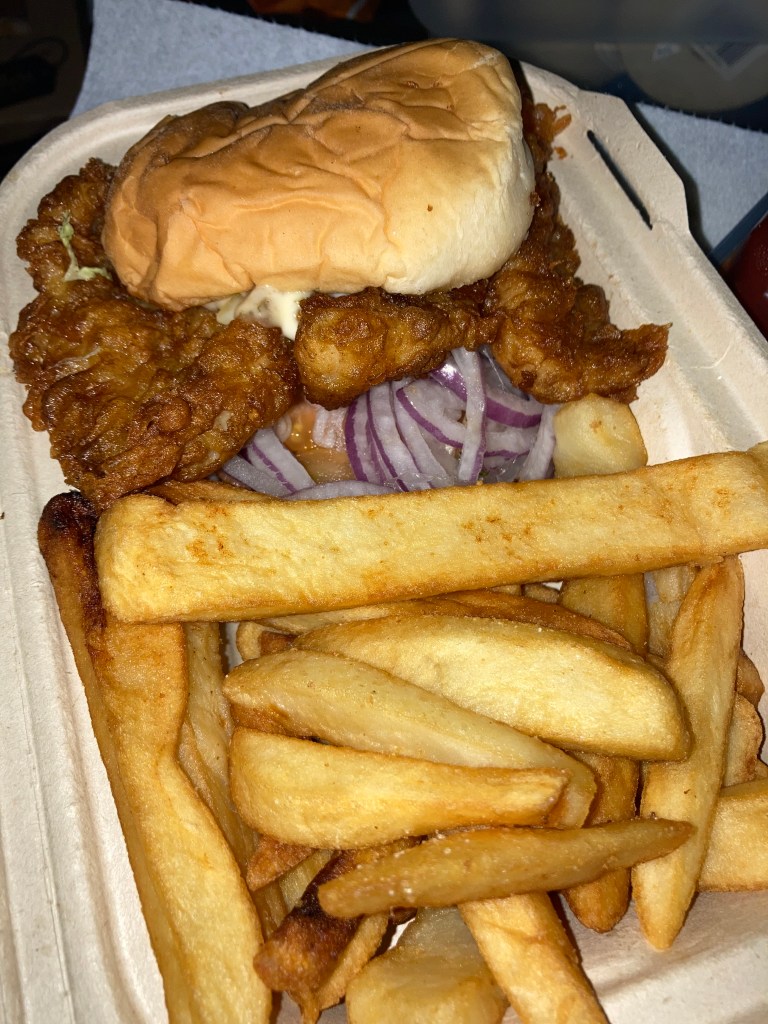
Safeway was often a go to for dinner, but I had to indulge in the local cuisine here and there. In Fort Bragg there was an area with a few seafood joints to check out. One that I frequented was Sea Pal Cove – I’d get the fish sandwich. I also checked out Princess Seafood (got the lobster bisque and some salmon jerky). Noyo Fish Company is also in this area.

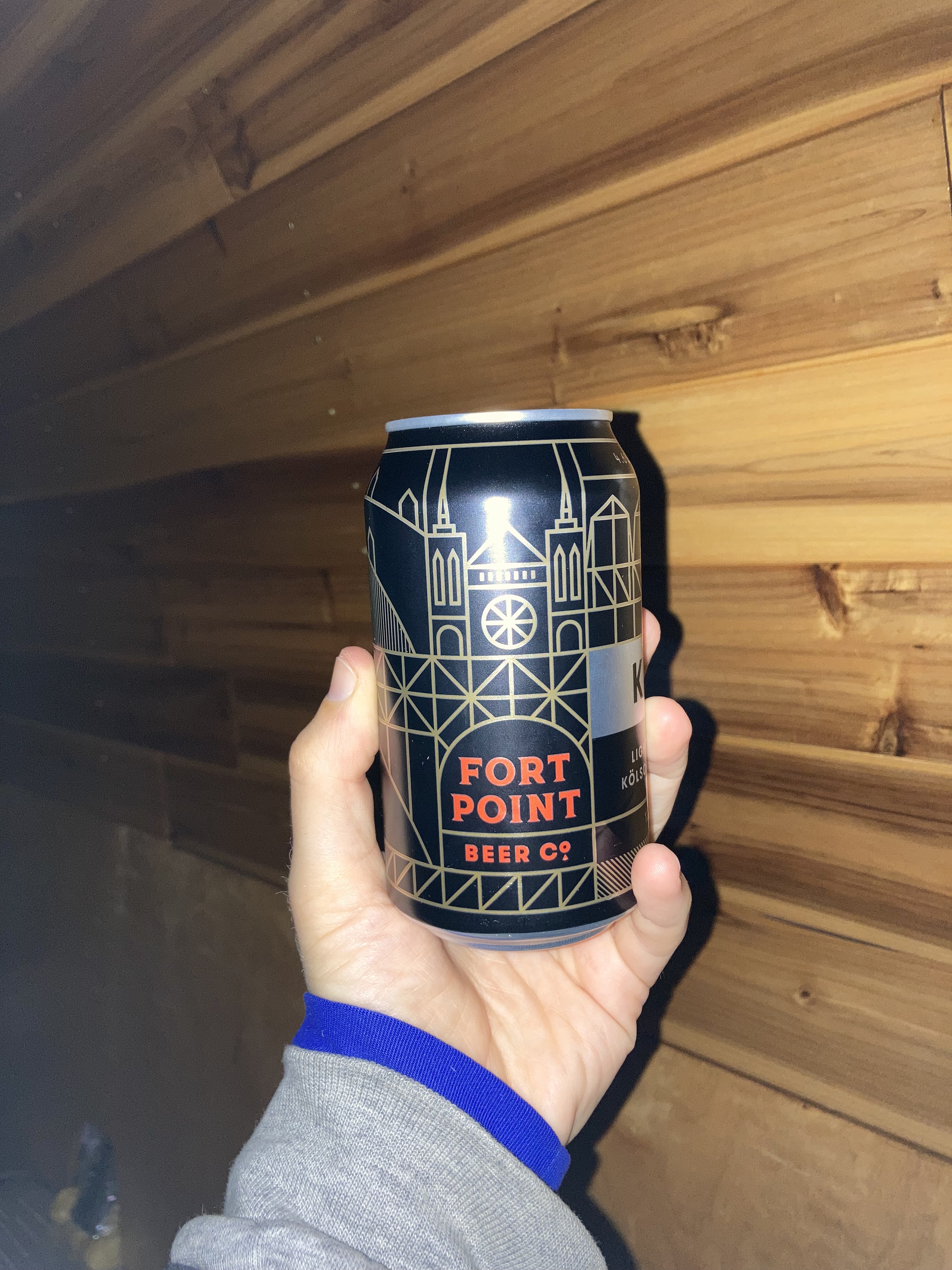
And can I get a moment of silence for this beer? It was amazing.
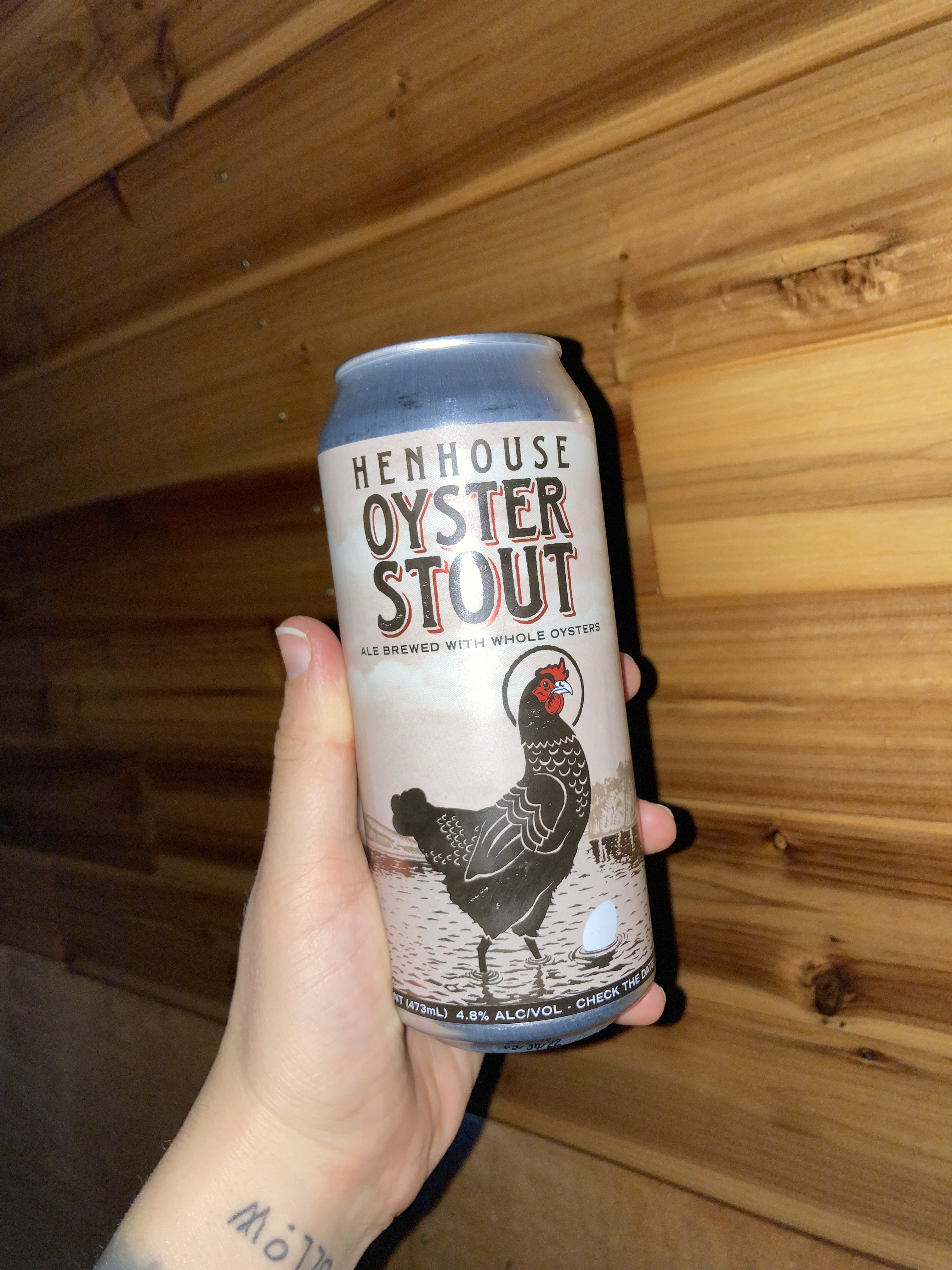
From Henhouse Brewing Company, based in Santa Rosa, local ingredients.

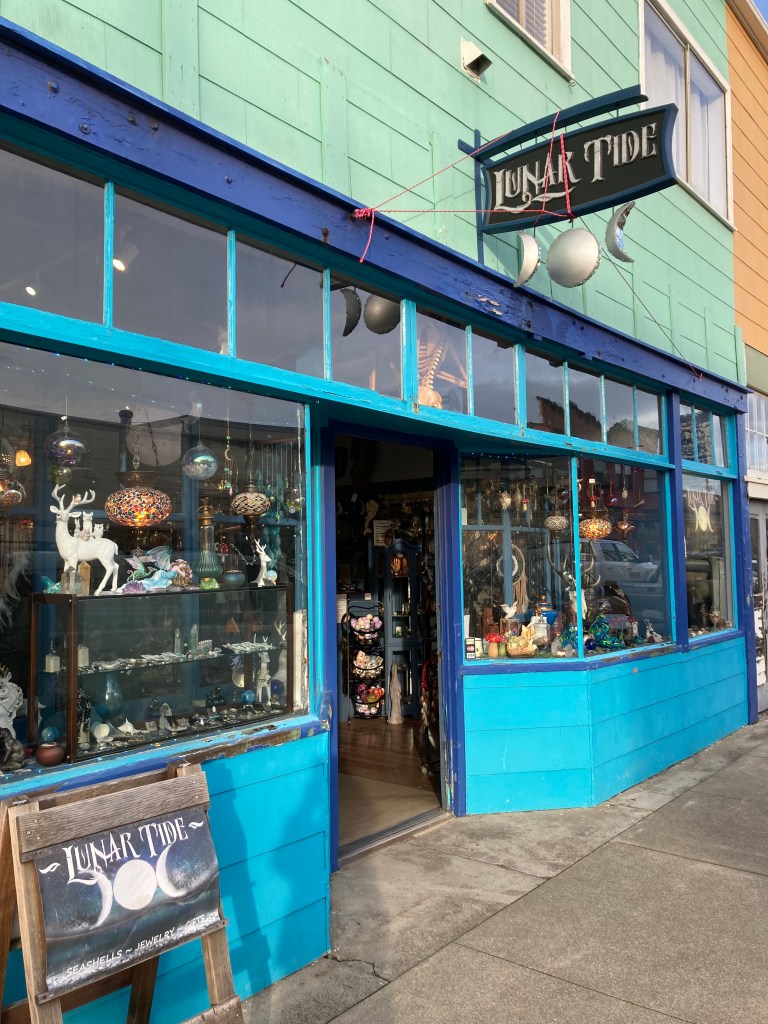
I spent an afternoon exploring the downtown area. There was a cute little shop called Lunar Tide. There’s the Sea Glass Museum. The Skunk Train. A huge cross section of a tree. And historical plaques.
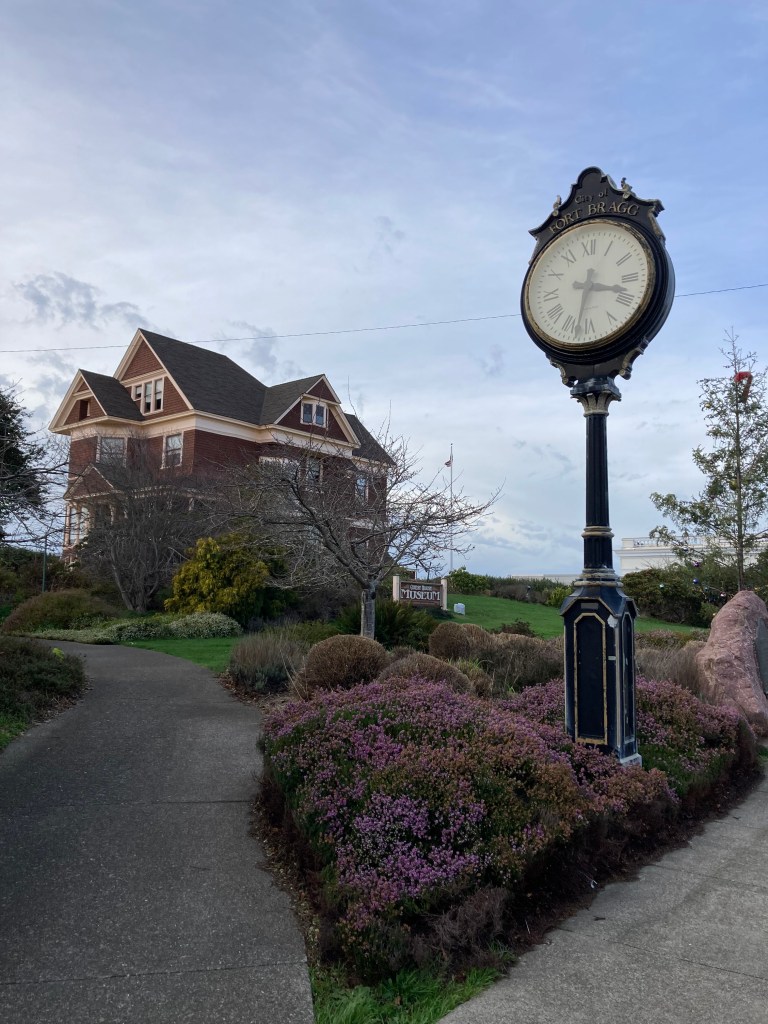
There are several coastal areas to see, including Noyo Headlands, Glass Beach, Pudding Creek Beach (a little north of Glass Beach, with a sandy beach and trestle bridge), and Pomo Bluffs Park (smaller, to the south). Each have their own charm.
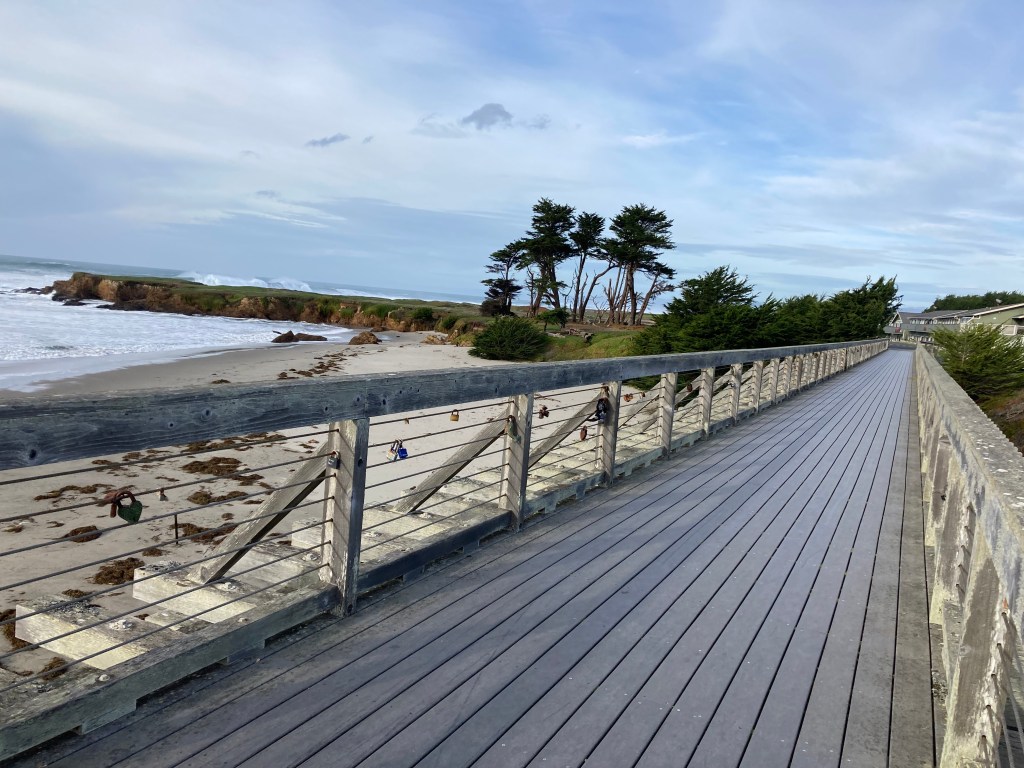
I was sad to leave Fort Bragg. It was a gem. Some spots I missed out on were the Mendocino Coast Botanical Gardens and Point Cabrillo Lighthouse. If I were to come back here (and I would) I’d probably like to take a ride on the Skunk Train into the redwoods, check out at least one of the local breweries, and visit Ten Mile Beach to the north.

As I drove south out of Fort Bragg I did a quick visit to Russian Gulch State Park. Devil’s Punchbowl was okay, but the coastline during sunset was really pretty.
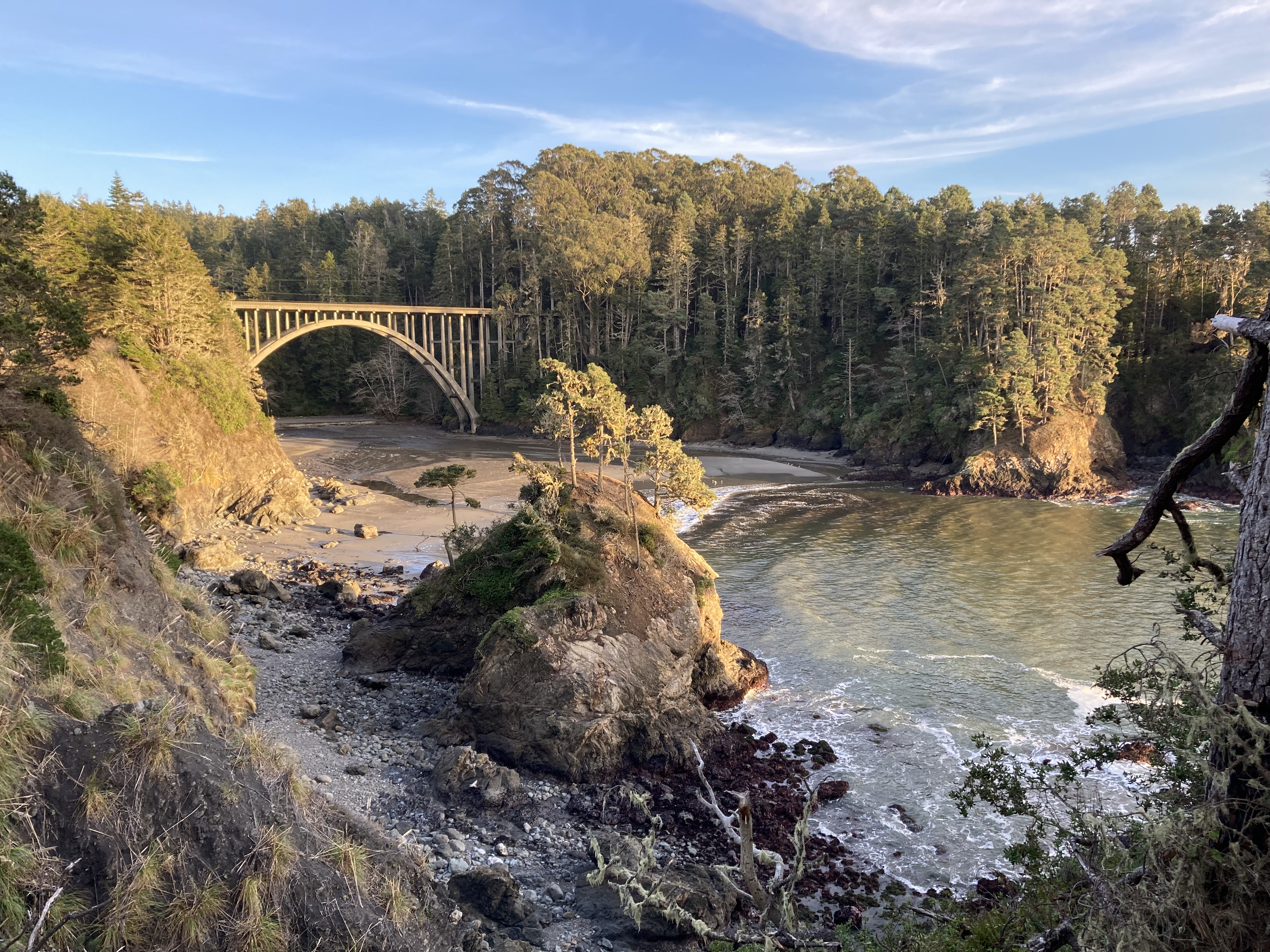
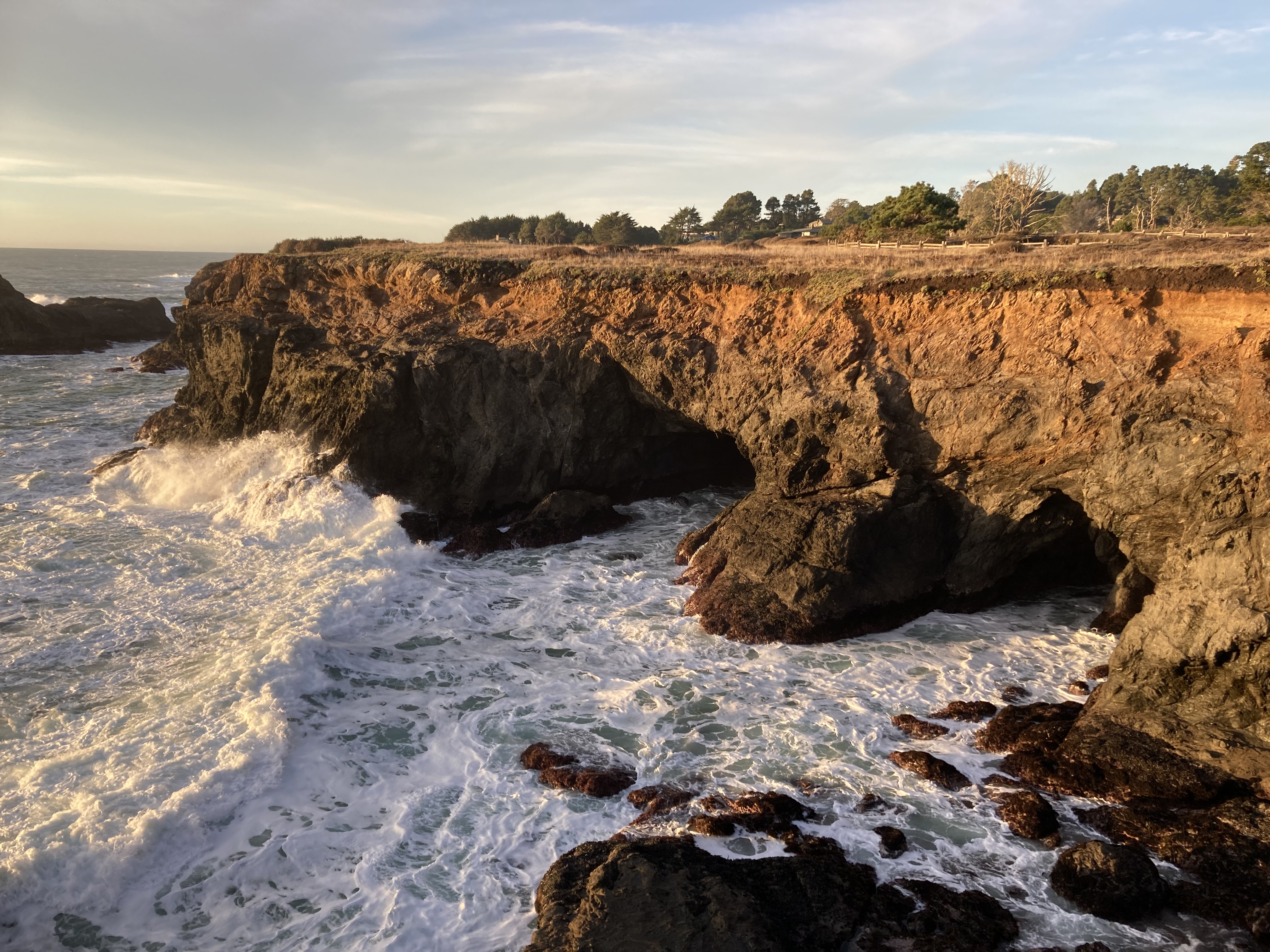
I drove past Mendocino, which seemed nice, then did a very winding drive about 30 miles south to a vista point for the night, just off the highway, perched up above the ocean. I woke up to a beautiful cotton candy horizon.
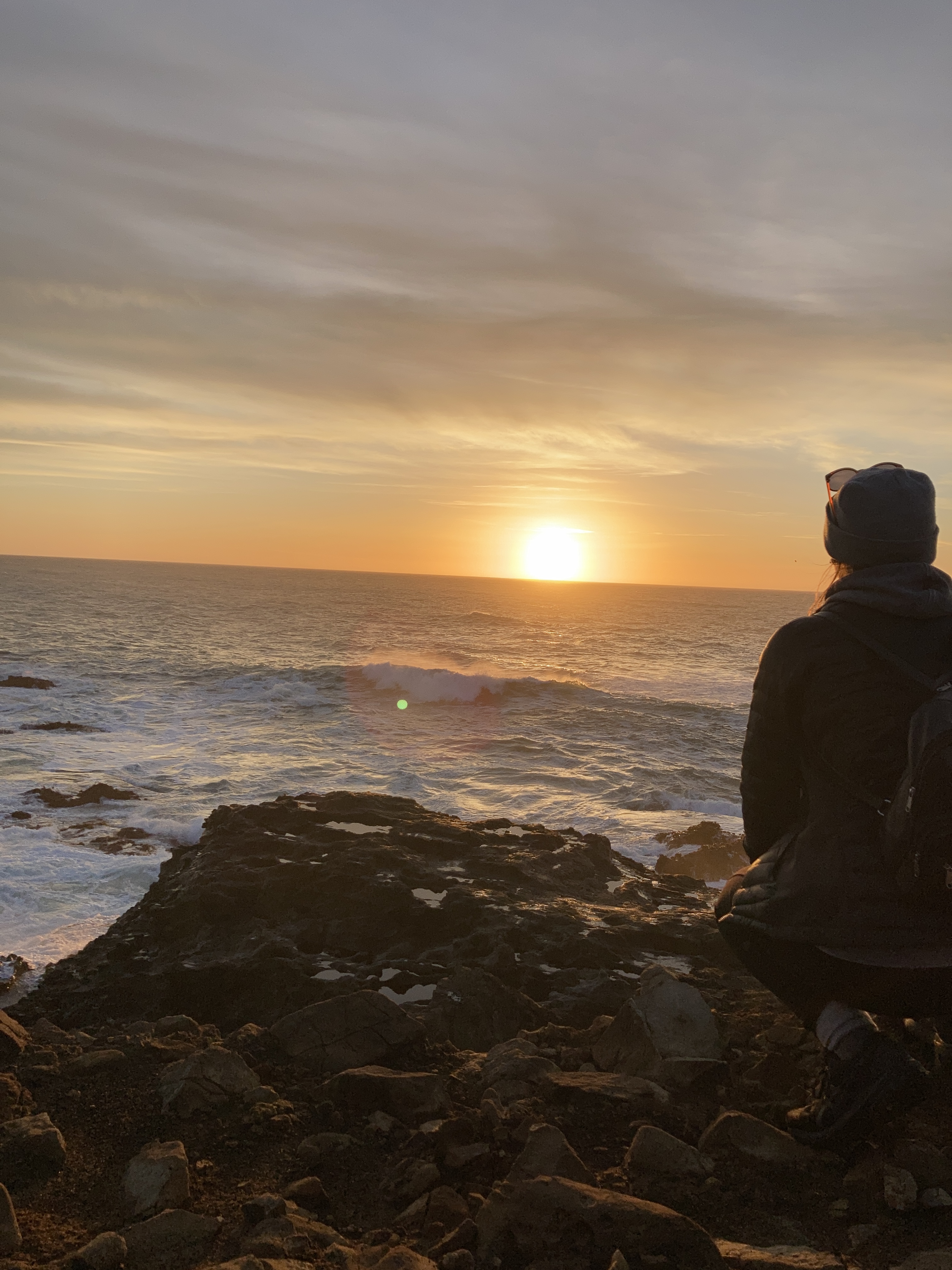
Bodega Bay

I don’t know when it sunk in. I don’t know when a decision was made. I don’t think a decision was ever made. But by now a pattern was emerging – my continual movement in the direction of south.

There was a perpetual cloud looming in my mind of all the ways this trip could tank. All the reasons why I shouldn’t even be doing it. Maybe my subconscious thought that if I didn’t plan anything, then nothing could fall through. Having a big plan felt like jinxing myself. It felt taboo. Out of mind – out of failure?

There are certain circumstances in which I have a habit of avoiding commitment. Such as in my thru hikes, where I won’t post about the thru hike in real time (partly because I’m in nature to disconnect) or until I’m almost finished. Because what if I have to bail? It’s like the expectation sets you up to trip you up. It also feels daunting to declare a big goal – it feels less daunting to take things a day at a time. It’s a mental game.

I told myself that I would just go a little further south. Just a little further, every time I left a place. Until eventually I ended up at the Mexico border (ha).

I followed the PCH south, for the most part, stopping at most noteworthy places, or places I’d never heard for curiosity’s sake.

And the next noteworthy stop was Bodega Bay.

The word bodega comes from the Spanish word for wine cellar. It can be a small grocery store, wine shop, or wine cellar in Spanish speaking areas. So it’s fitting that I got a wine flight here.

The drive to Bodega Bay along the PCH was slow and winding (with some construction stops). It was also done just after sunrise with the sun blaring into my eyes. But I was rewarded with one of the most stunning coastal views yet.
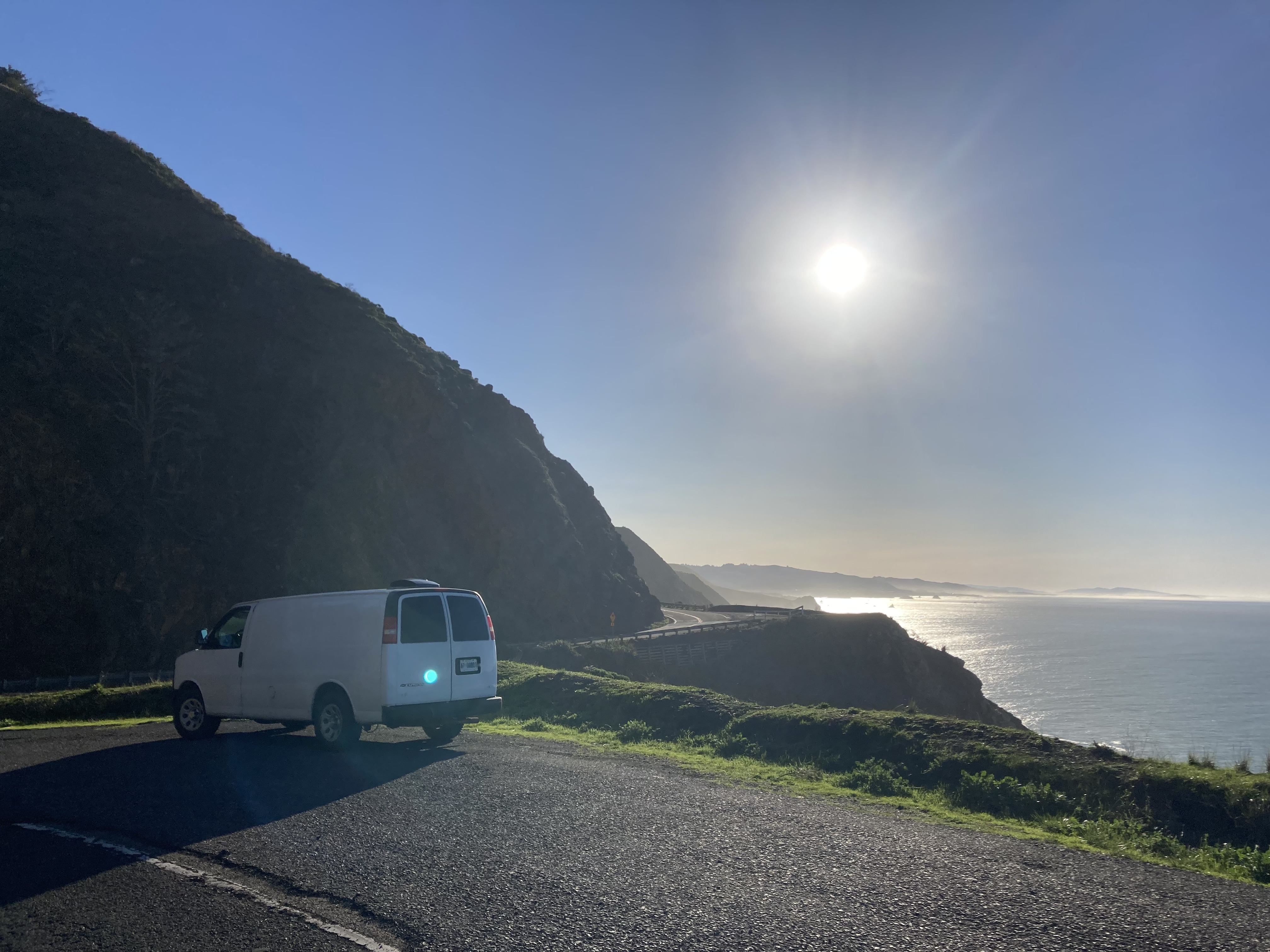
Once I got to Bodega Bay it really started to feel like I was in California – more Cali, much less PNW. I’m sure the rain stopping and sunshine helped. 
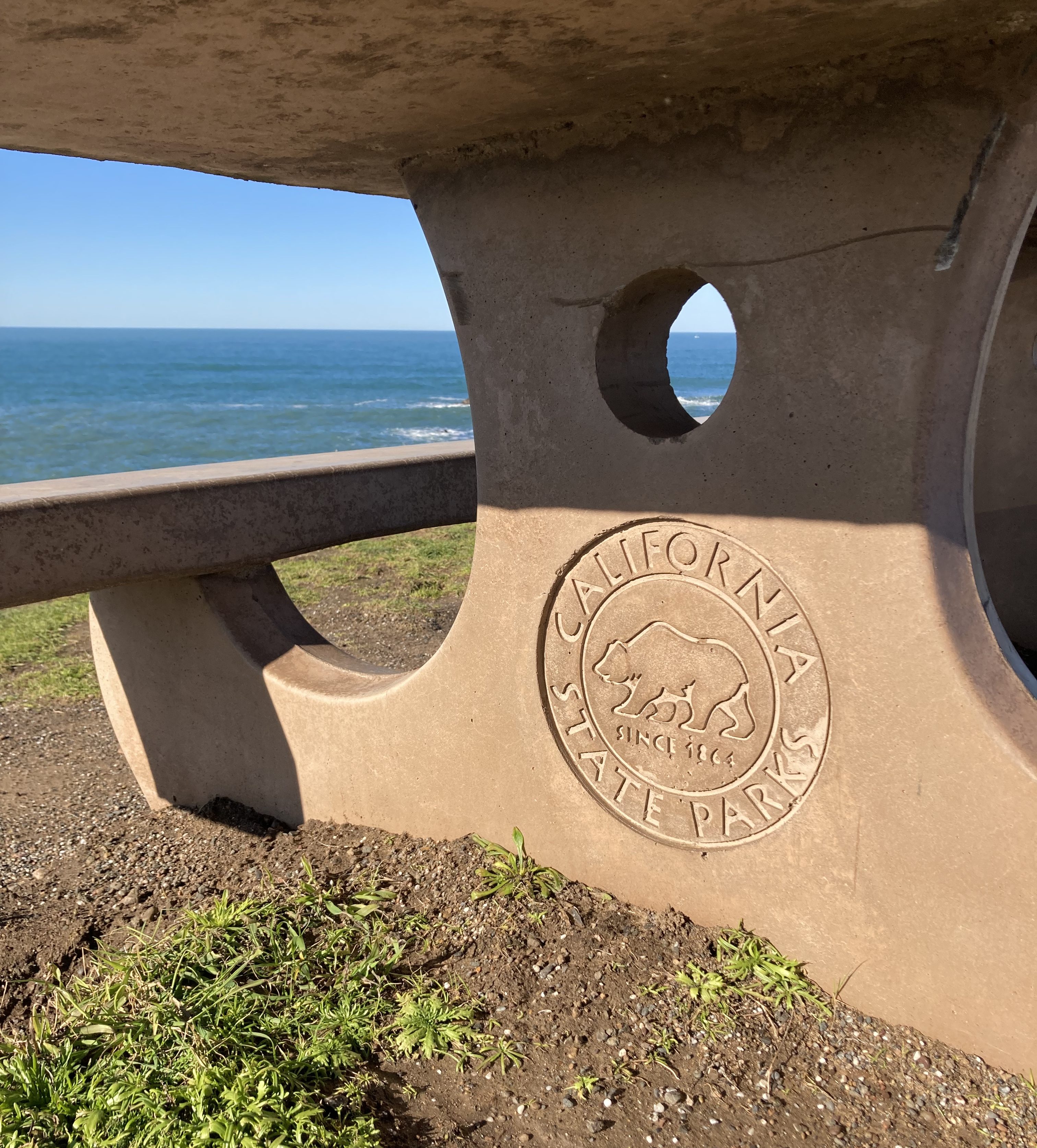
Taking in the ever shifting coastline was a treat.
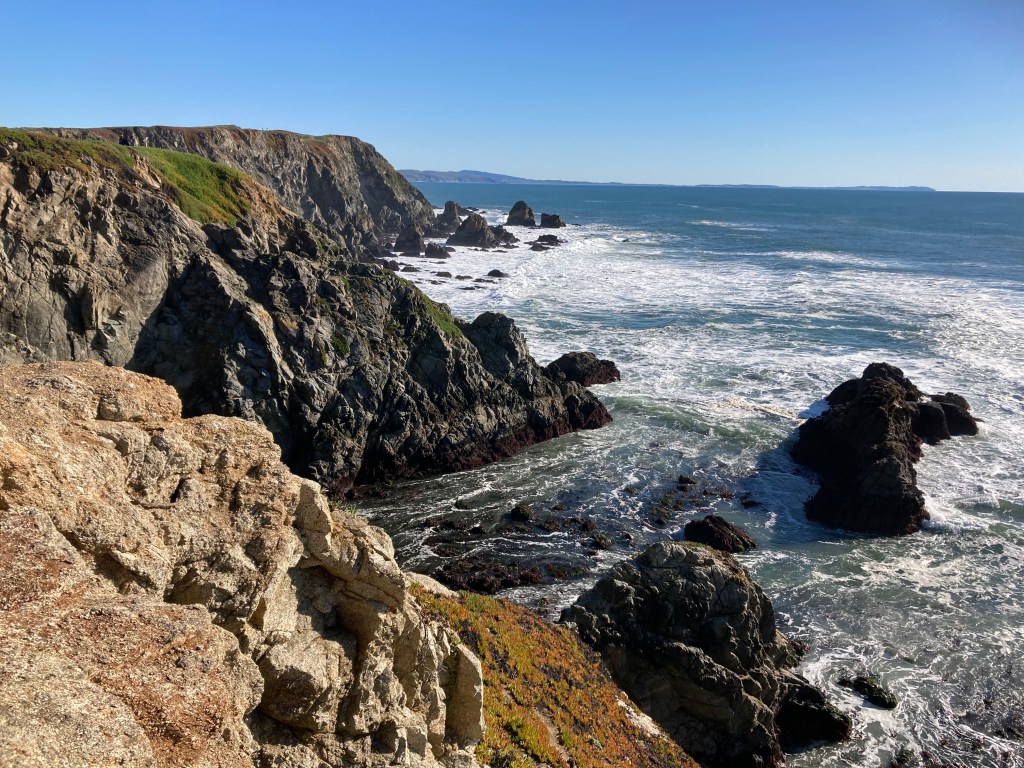
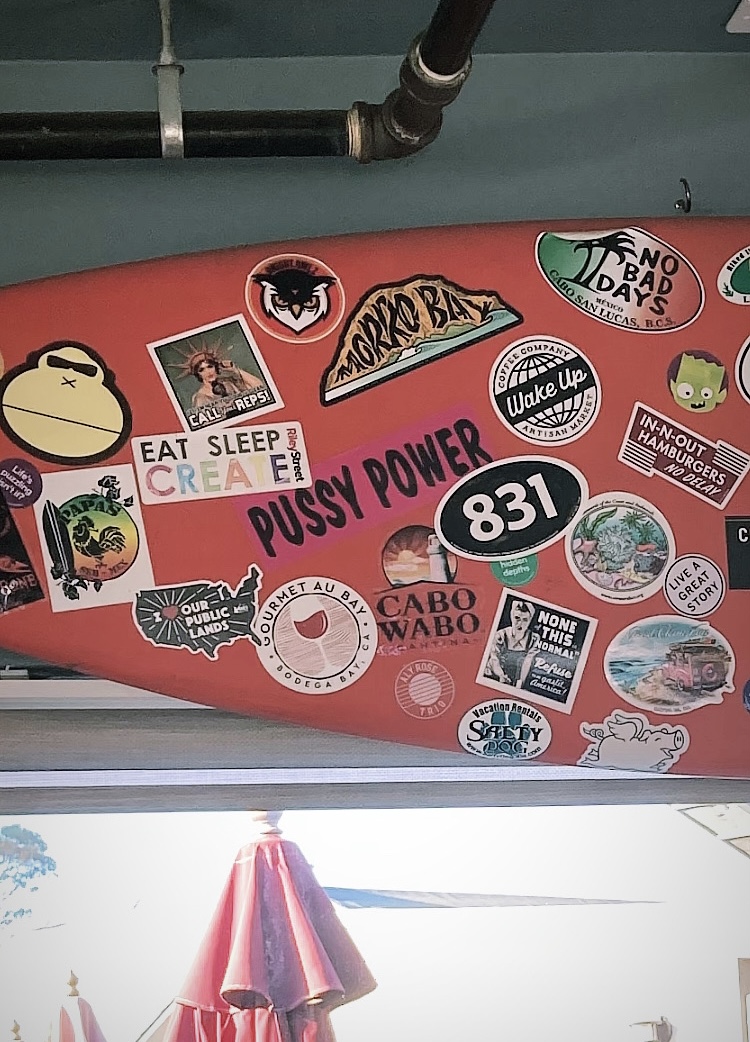
I walked around Bodega Head to take in the coastal views. I got some fresh seafood at Spud Point Crab Company, right on the marina. Then I headed to Gourmet Au Bay, a cute little restaurant, and got a wine tasting flight.
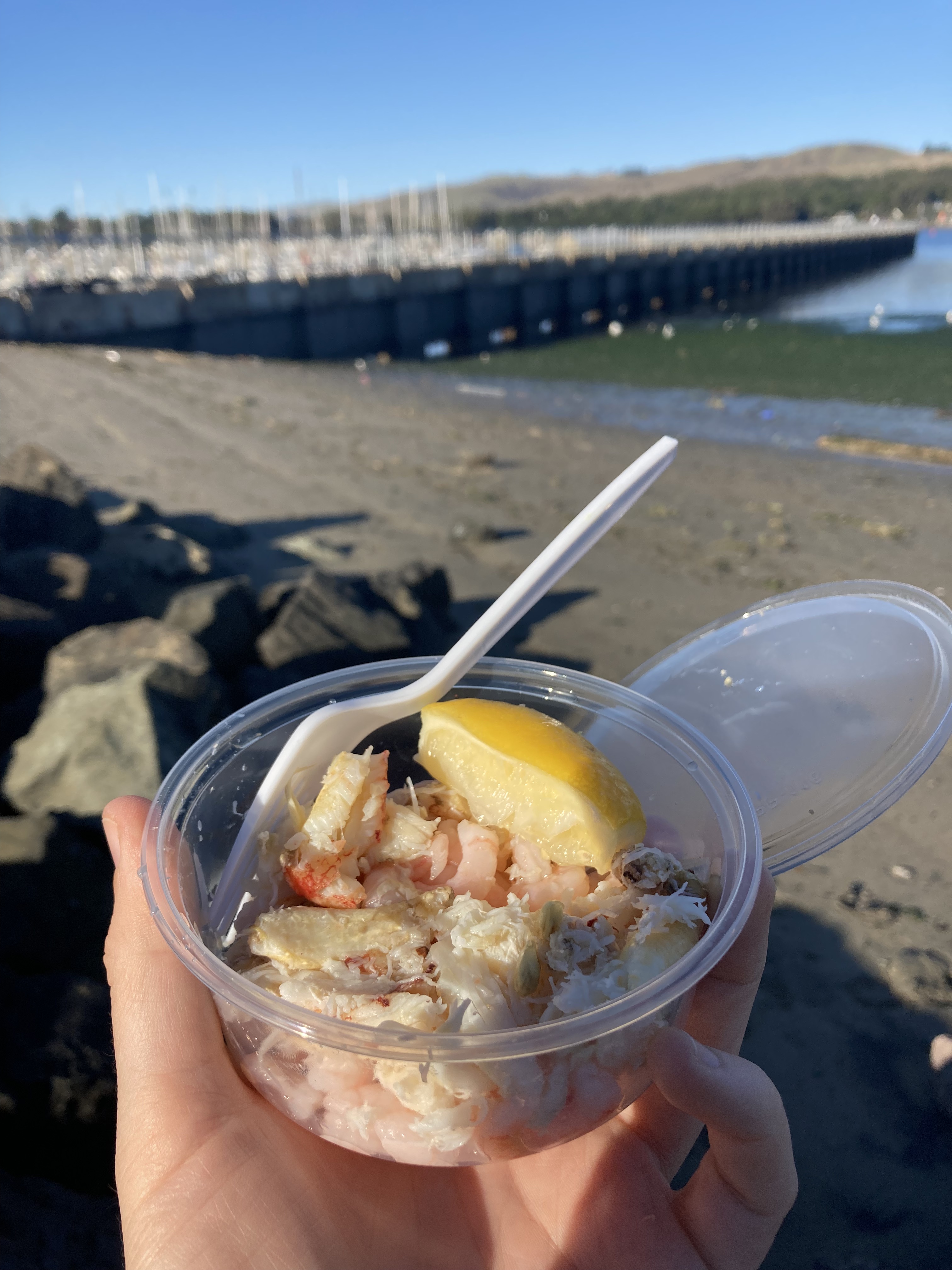
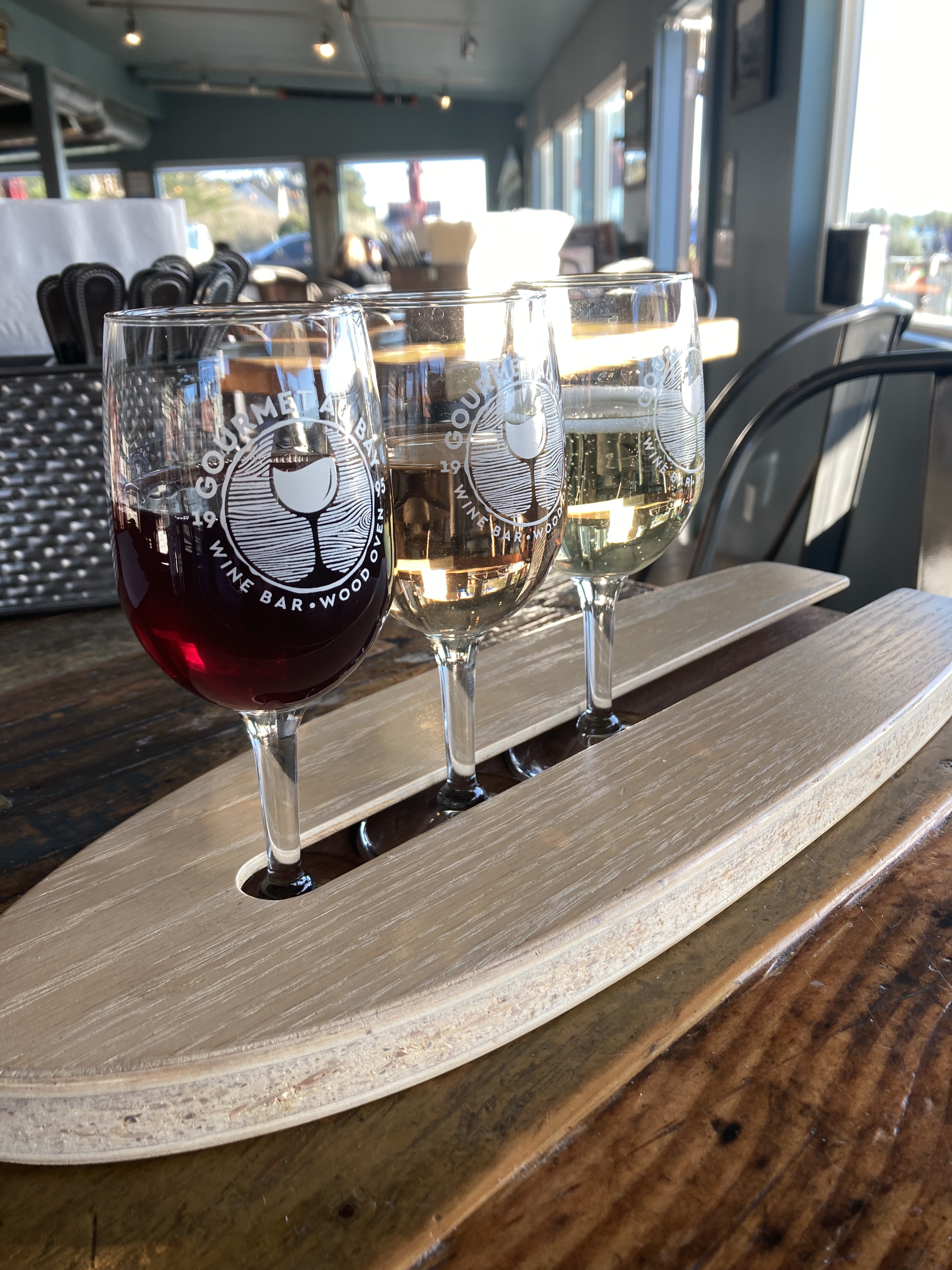
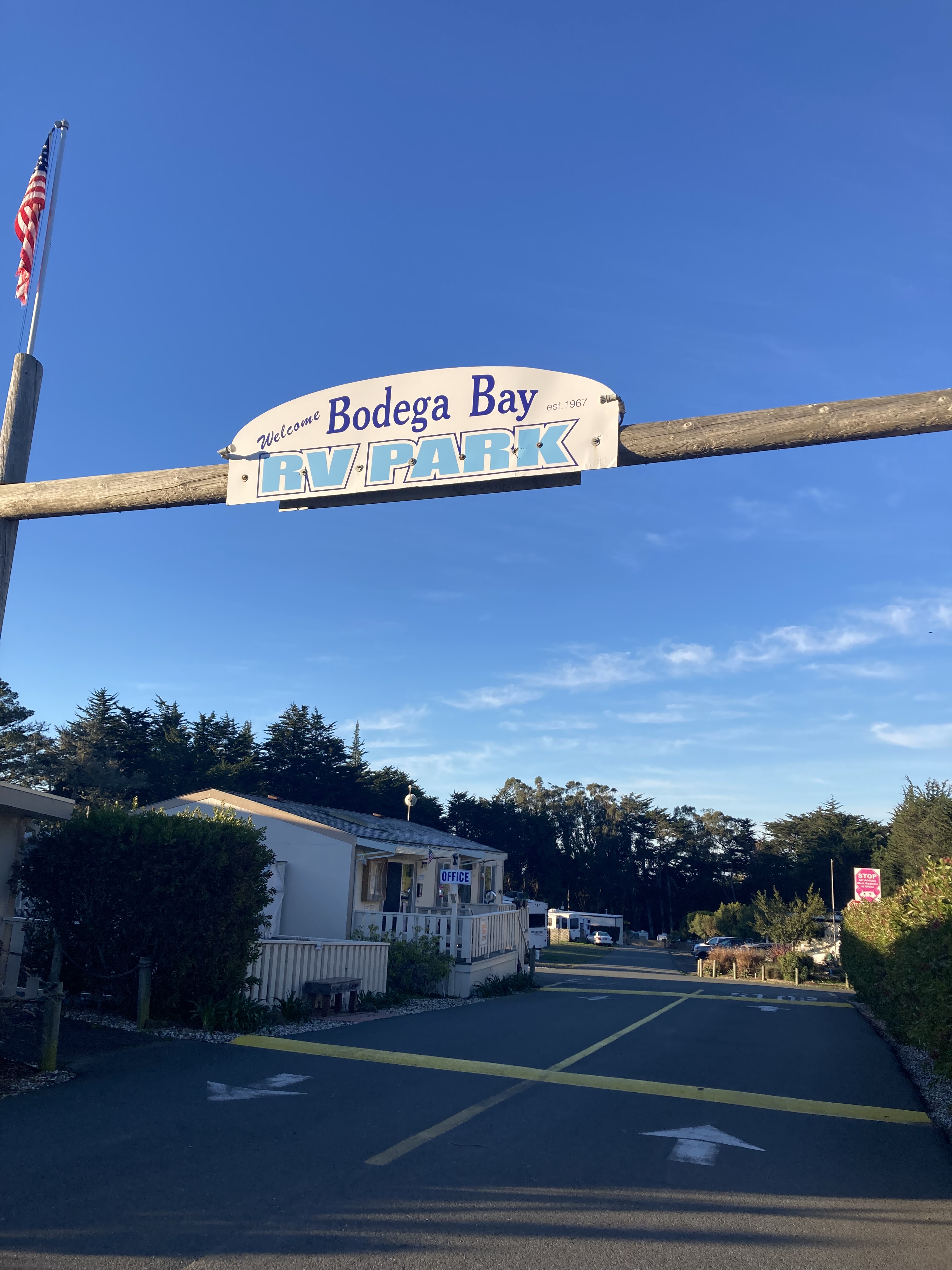
Bodega Bay is exceptionally small, with a census of less than 1,000 residents. But it is quite beautiful. I stayed at the Bodega Bay RV Park, which I would rank as one of my higher rated RV Parks/ campgrounds.
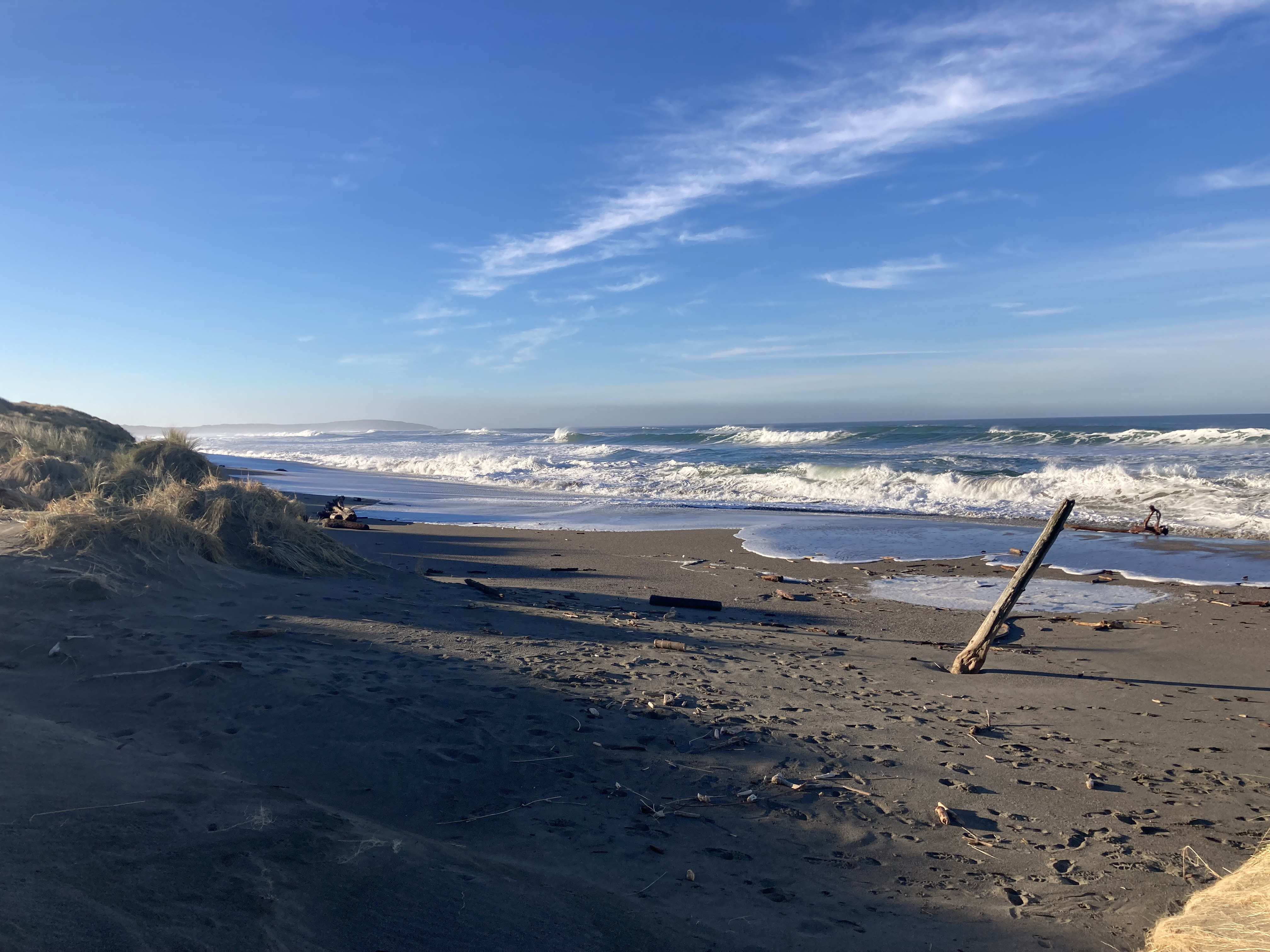
I decided to go for a run in the morning, which took me along a trail, through dunes, and along a beach – where waves almost took me out as they crashed into the dunes due to high tide (my wipeout is funny in retrospect). I then basked in the glory of showering and doing laundry before hitting the road. These stays are always a nice little reset.
Salmon Creek Beach to Bodega Dunes Beach

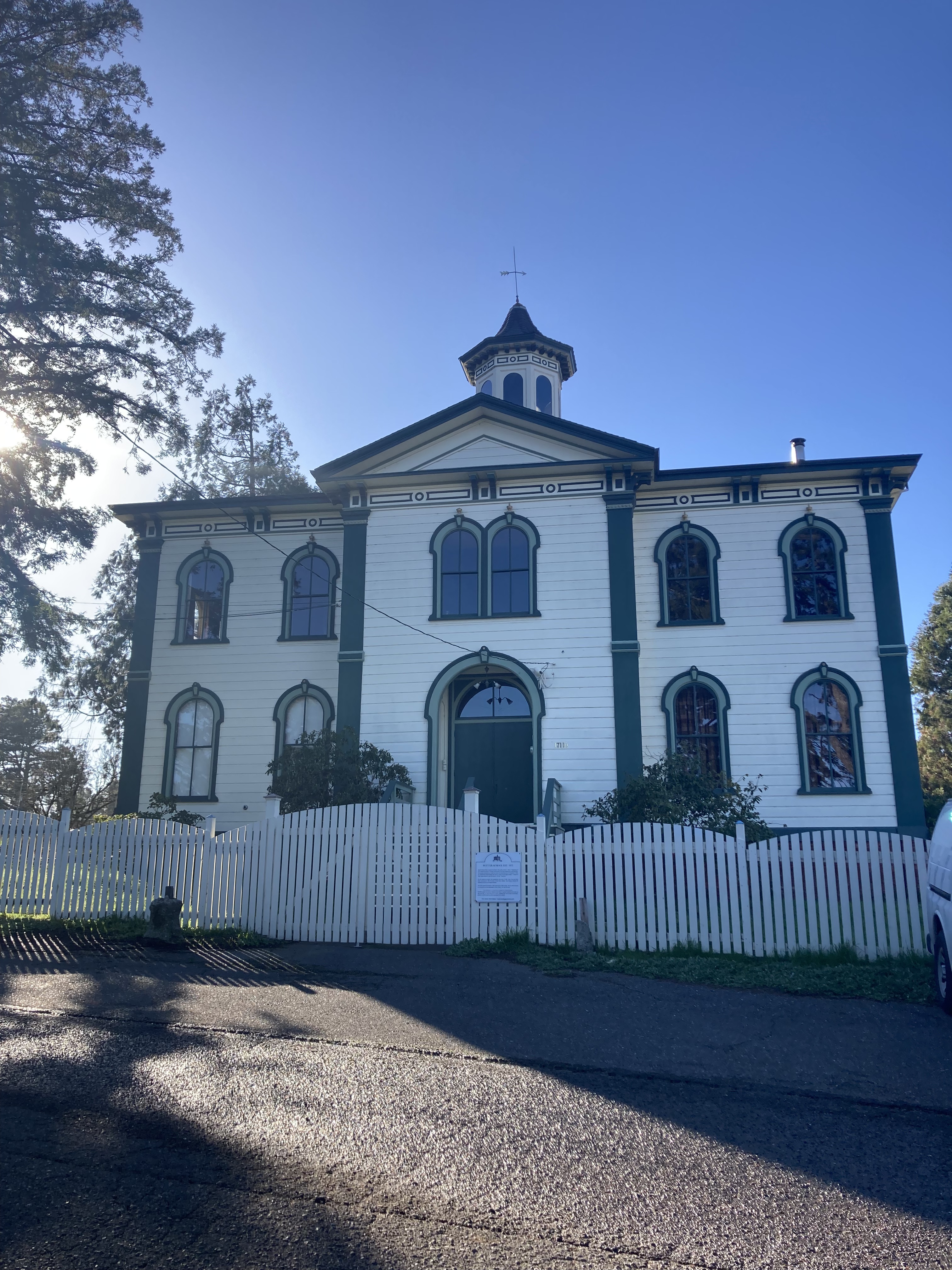
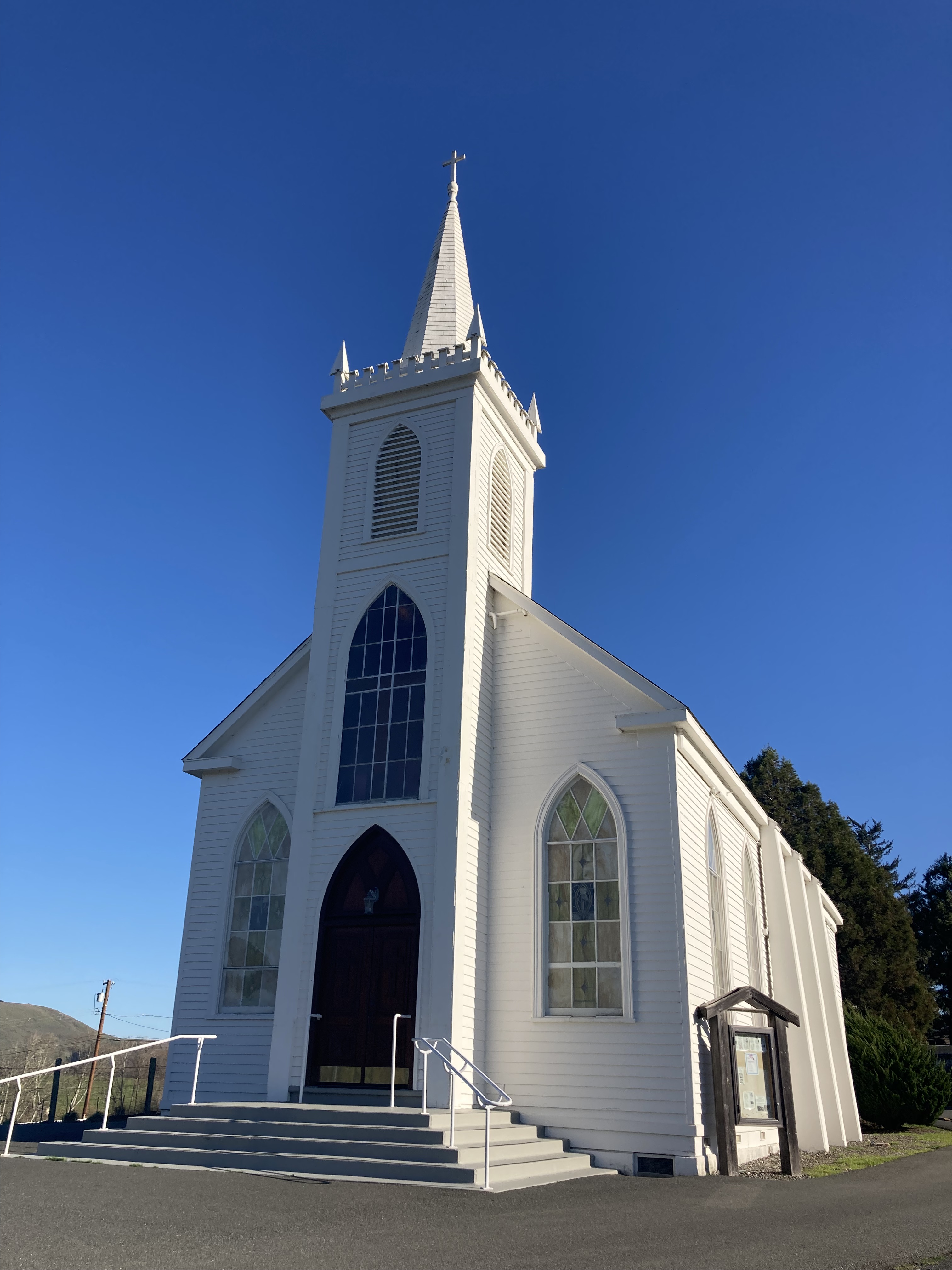
Bodega Bay has an interesting connection to the filming of Alfred Hitchcock’s movie The Birds, hosting filming locations, including Bodega Head. I headed a few miles inland to the tiny village of Bodega to see the Birds House / Potter schoolhouse and the St. Teresa of Avila Church, both featured in the film.
Santa Rosa

I continued inland to Santa Rosa. There might have been construction on the PCH, or maybe I wanted to get back on the 101 for a more direct (less winding) route to San Francisco. Or maybe I’d heard about the Charles M. Schulz Museum.

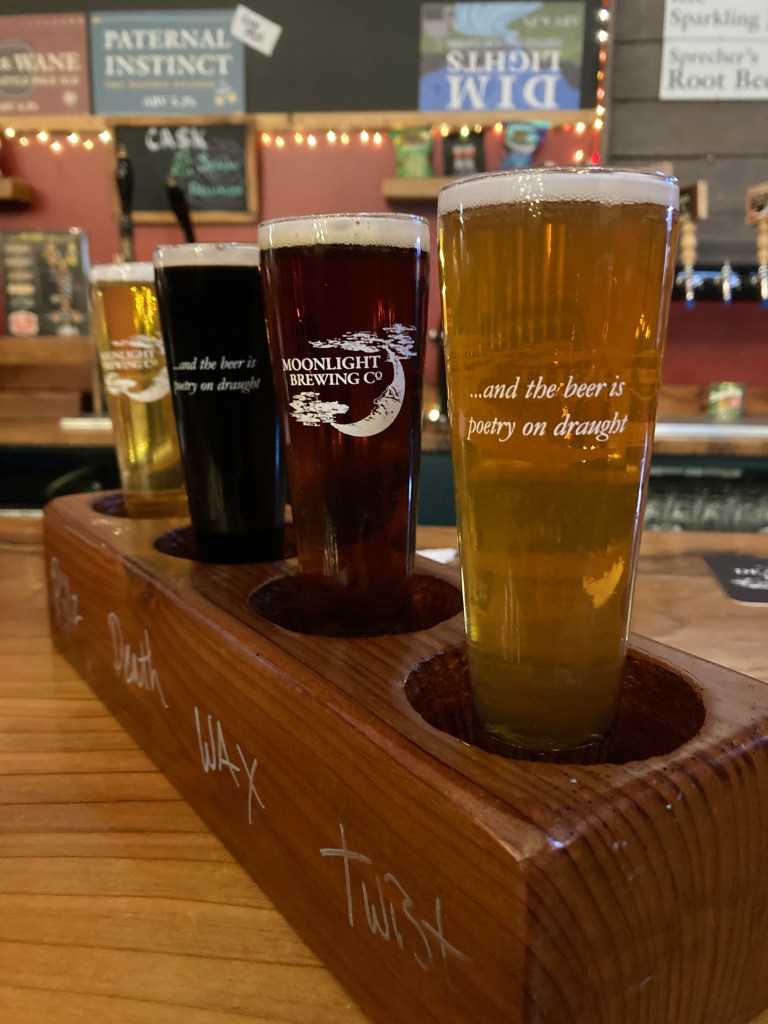
It was about a half hour drive inland, and as the sun went down I popped in to Moonlight Brewing. I’d seen their black beer called “Death and Taxes” in a grocery store and was intrigued – for personal reasons, as my Dad used to say that the only sure things in life were death and taxes (in a dry, dark humour kind of way).

The bartender was super nice and generous – gave me a sample of a can of beer that technically wasn’t supposed to be opened for a flight, then threw in an extra glass with the merch I bought (they had t-shirts for Death and Taxes!). The glasses were stand outs, with an inscription that read: and the beer is poetry on draft. And the brewery’s logo had a crescent moon – all of which was nice on the eyes.
I’m not a particularly outgoing person, but being on the road solo, you have an abundance of time to yourself, and I think that creates a social deficit, which I think made me more outgoing when around people than I otherwise would be. So I sat at the bar and asked the bartender how he’d describe Santa Rosa to someone passing through. He asked where I’m from, I said Ontario (not to be confused with the Ontario in California), and he said no wonder I’m so nice (Canadian stereotype?) and keep going – it’s a bit “hickville” here. I had hoped for a bit more information, but you get what you get.

Since it was getting late I tried to find street parking nearby for the night, and I ended up on a busy road by a marina in San Rafael. The spots were tight, the speed limit was high (and this spot was on a bend), and the only way in was parallel parking. I somehow amazed myself with my parallel parking skills – in a cargo van – on multiple occasions. It was a spot chosen for proximity and convenience at the time, somewhat close to San Francisco.

The Charles M. Schulz Museum was delightful. My Dad was a fan and it felt like being close to him. I would recommend visiting!
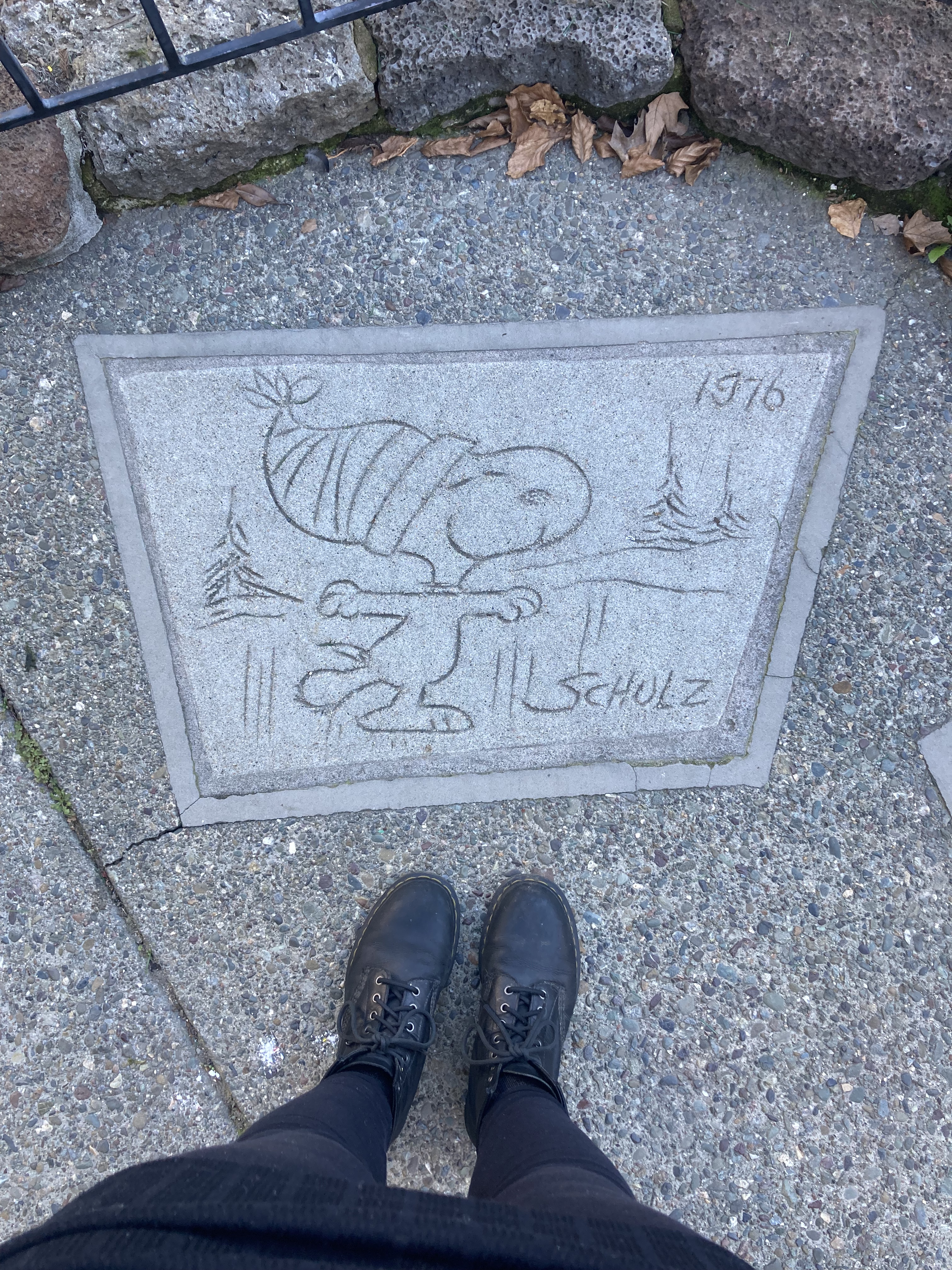
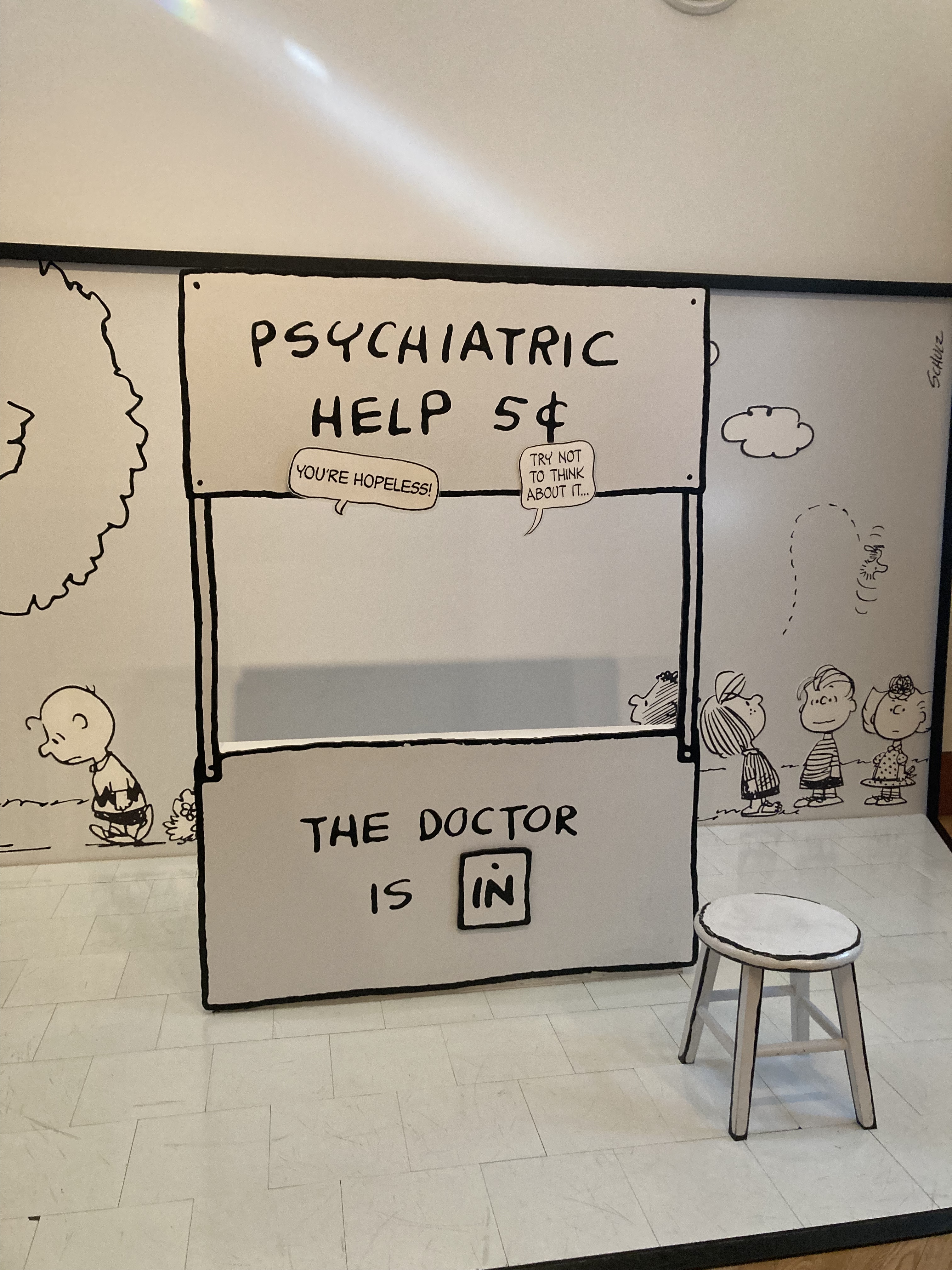
Santa Rosa, Spanish for Saint Rose, has a population of about 180,000, is the seat of Sonoma County, and is the biggest city that I hit on the northern California coast before getting to San Francisco.

Sonoma

Sonoma Valley (along with nearby Napa Valley to the east), famed wine region, is part of California’s world renowned wine country in the northern San Francisco Bay Area. I will probably talk more about this when I make a post on beer in California. Sonoma itself has just 11,000 residents and lies about 45 minutes (40 miles) north of San Francisco.

Somewhat fresh off the heels of exploring BC’s wine country in the Okanagan Valley, I couldn’t pass through the northern Bay Area without exploring a sliver of their wineries. I did a pit stop at Sears Point, a little marshland wildlife refuge and public use area, did some research, then headed to Buena Vista Winery.

The winery was really stunning. I did a wine tasting and took in the buildings and all the historical information.
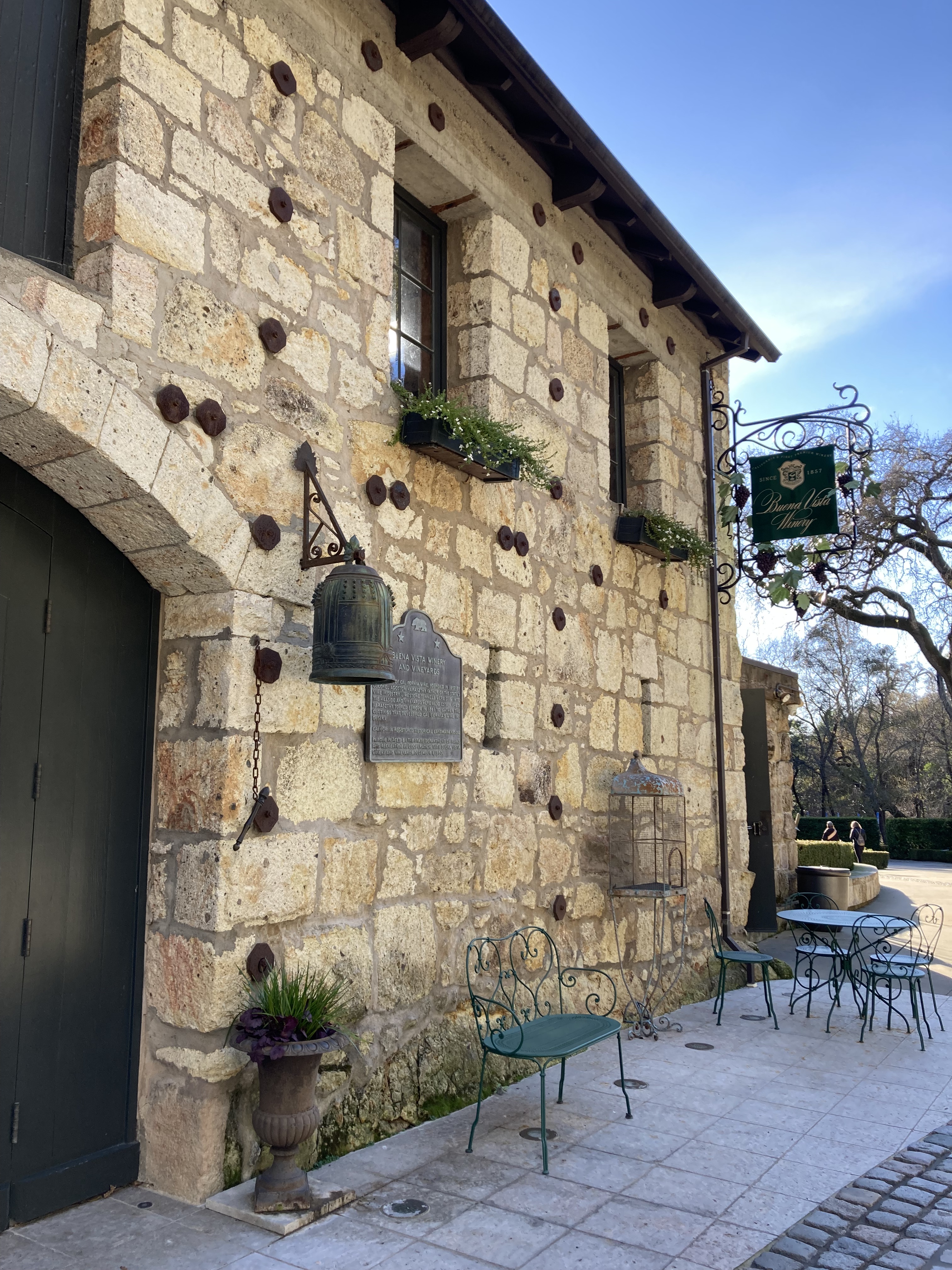
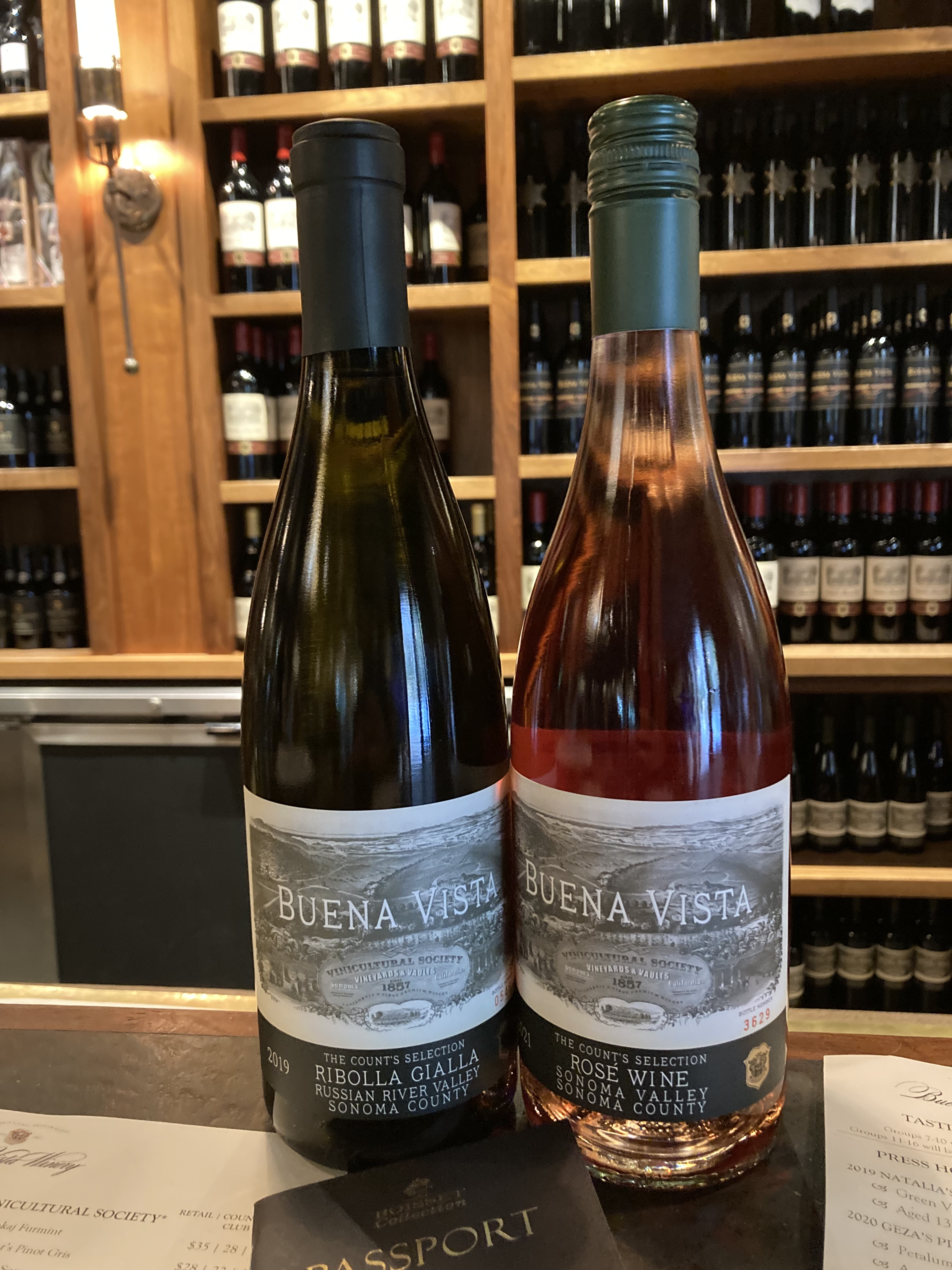
Later that afternoon I headed to Sonoma / Sonoma Plaza. This plaza was once a Mexican military station and Spanish mission village. There’s an 8 acre park surrounded by shops, eateries, and tasting rooms. It’s a really nice place to explore.

I grabbed a Croque Monsieur (shout out to a special family trip to Paris when I was younger) to go from a trendy and bustling establishment on the street, then snuck into a street parking spot for the night as intoxicated partiers meandered by into the wee hours.

While I don’t make a habit of residential parking, sometimes you get the vibe that a spot will be fine (and are pressed for time or convenience), and it was. These can also be some really pretty mornings (I aim to leave early) where you get a feel for the inner workings and vibe of towns – you don’t feel quite as on the fringes of society for a moment.

I remember Sonoma for its palm tree with string lights, its upscale, artsy shops, its popularity, its history, its wine, the pristine westfalia on the street, and the little coffee cart where I got my morning coffee.
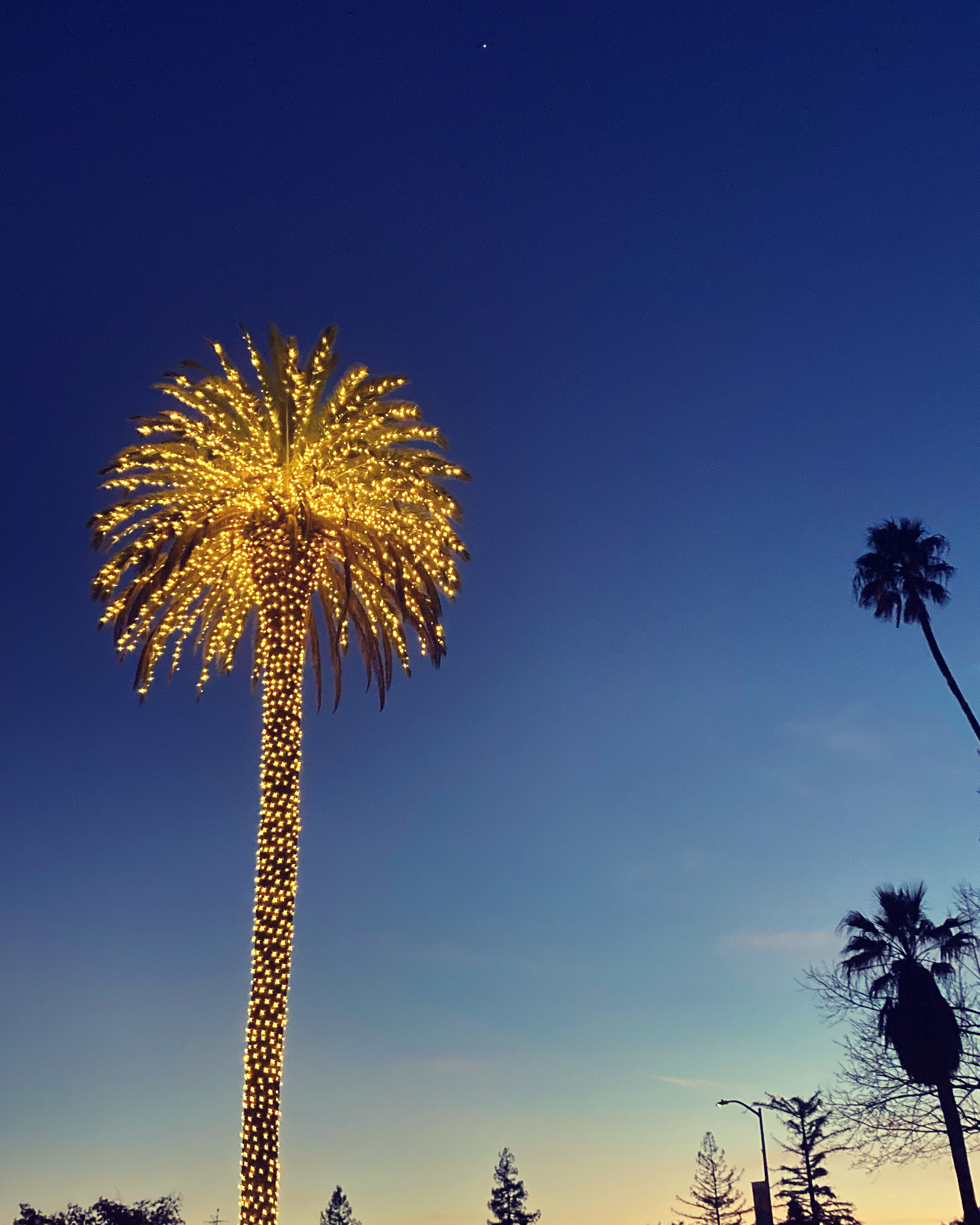
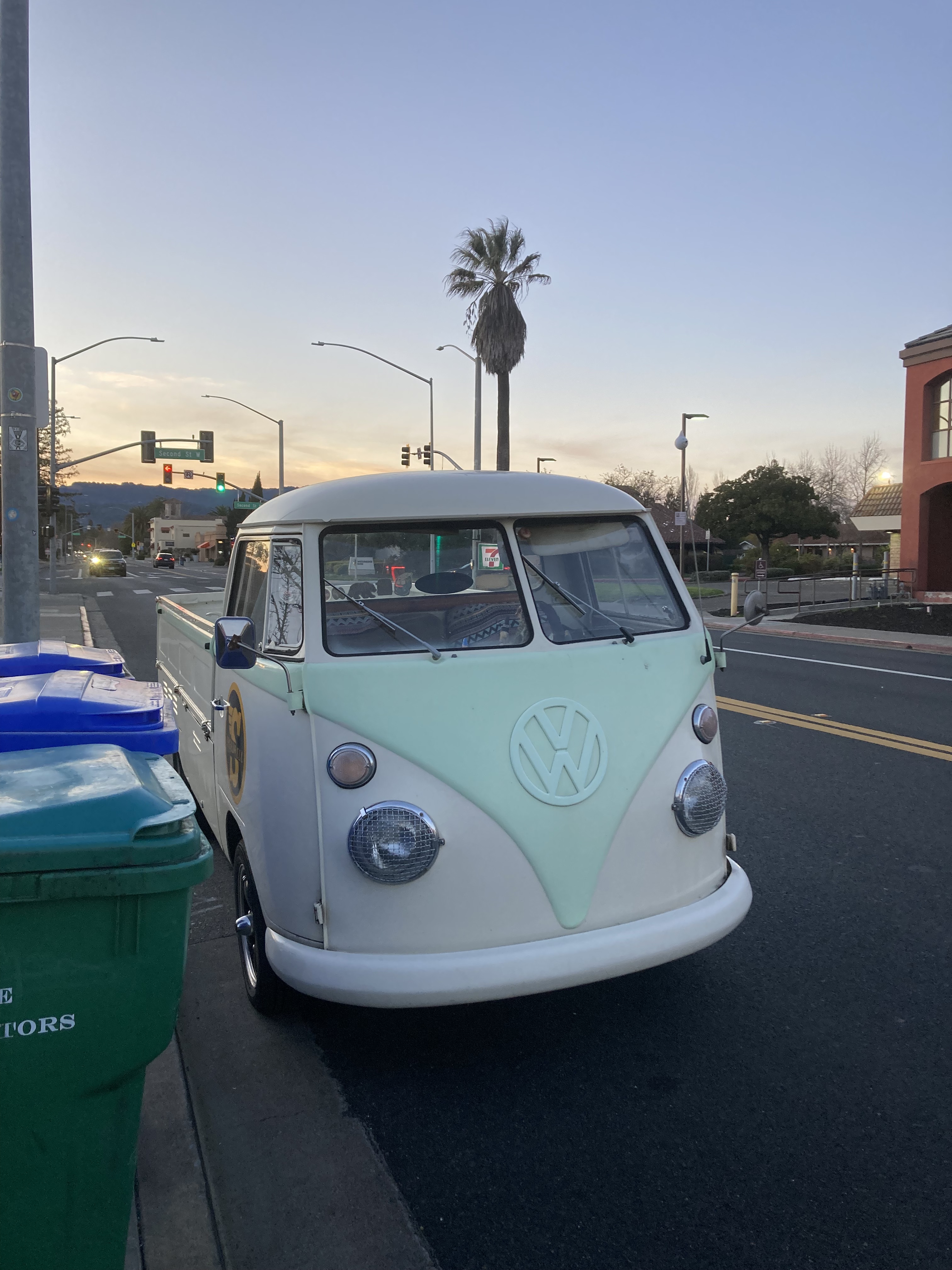
I would definitely come back to Sonoma, to the plaza, to explore other wineries, and stop in to the Jack London State Historic Park (house, grave, trails).

Sausalito

Put a bit of time between you and your travels and you are left with a feeling about the places you’ve been. Sausalito (along with Fort Bragg) incite a lovely feeling.

Sausalito has been described as a chic Mediterranean-feeling coastal town, just north of San Francisco. It has about 7,300 residents and a reputation for being wealthy, artistic, picturesque, and a tourist destination. It has a delightful little downtown area, the architecture of some of the homes gives San Francisco painted ladies, and you get a view of San Francisco across the water.
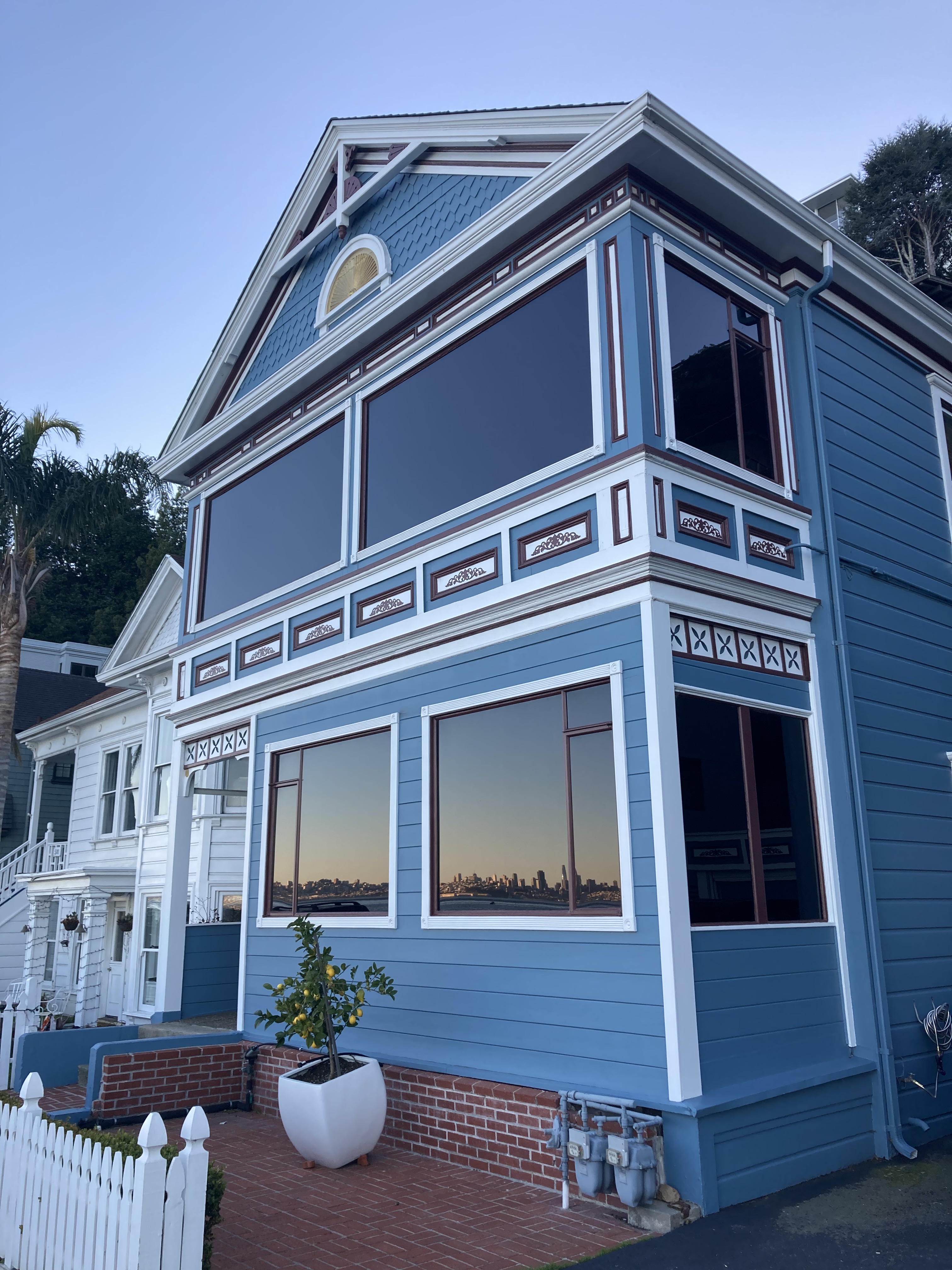
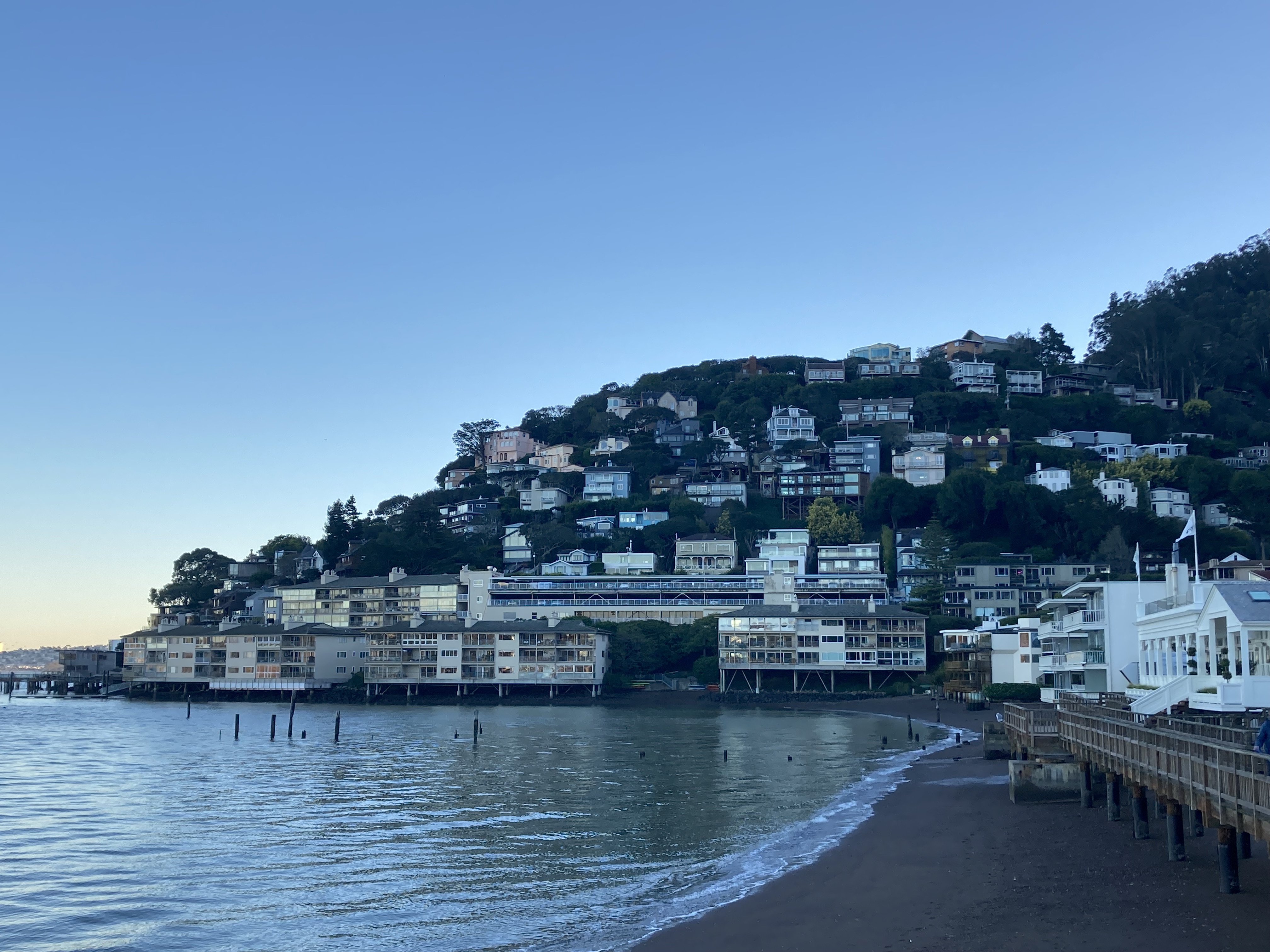
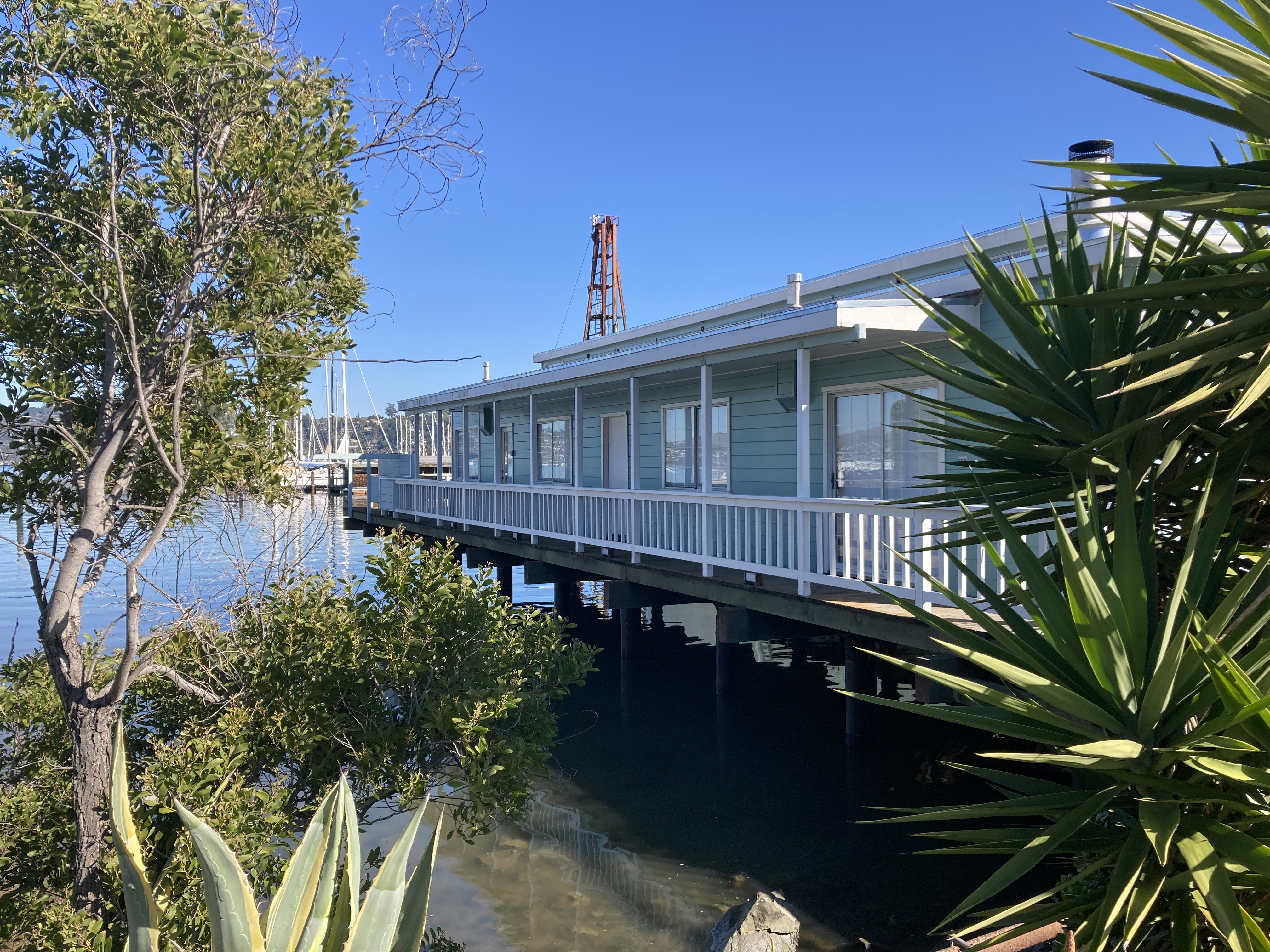
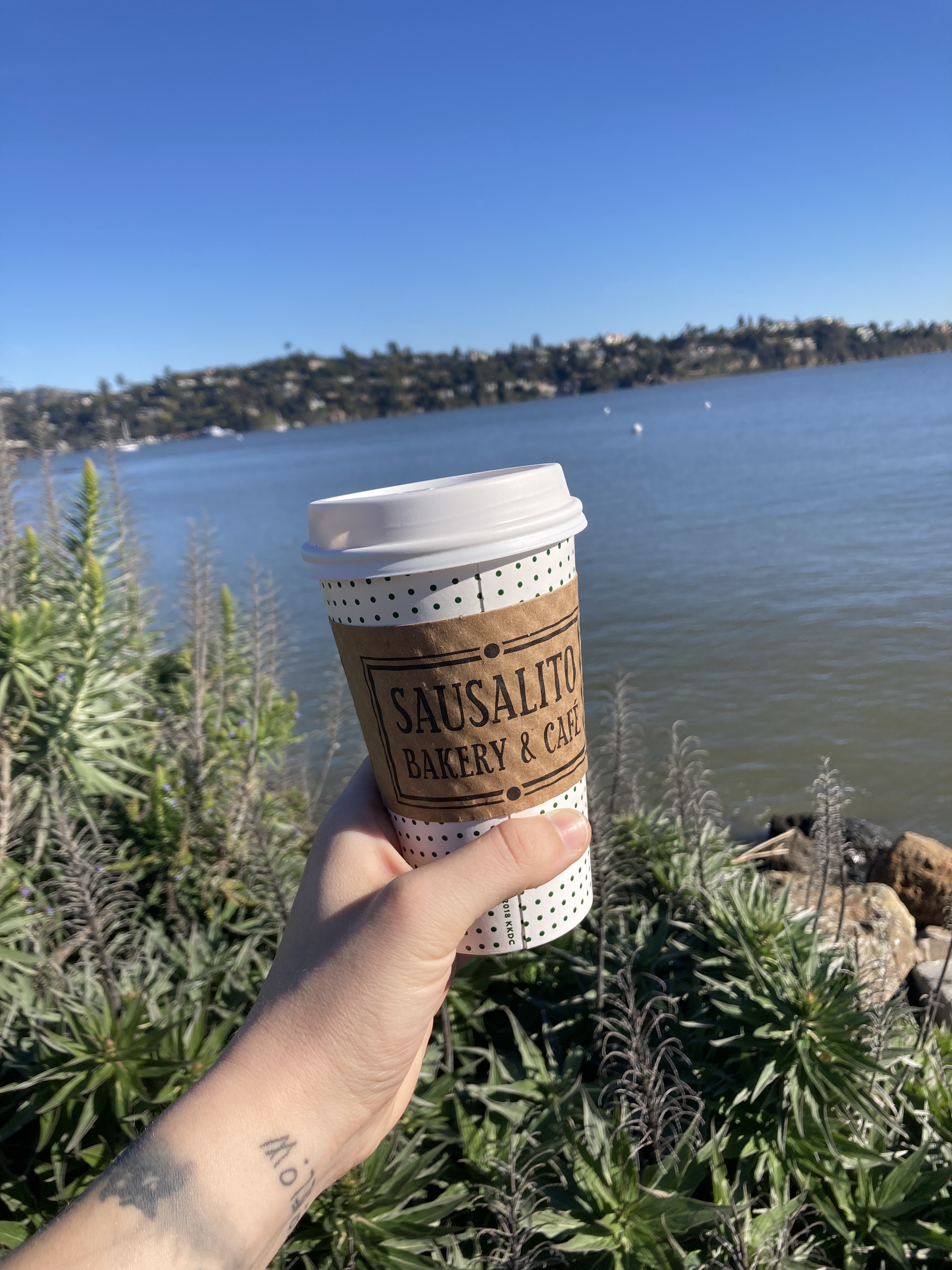
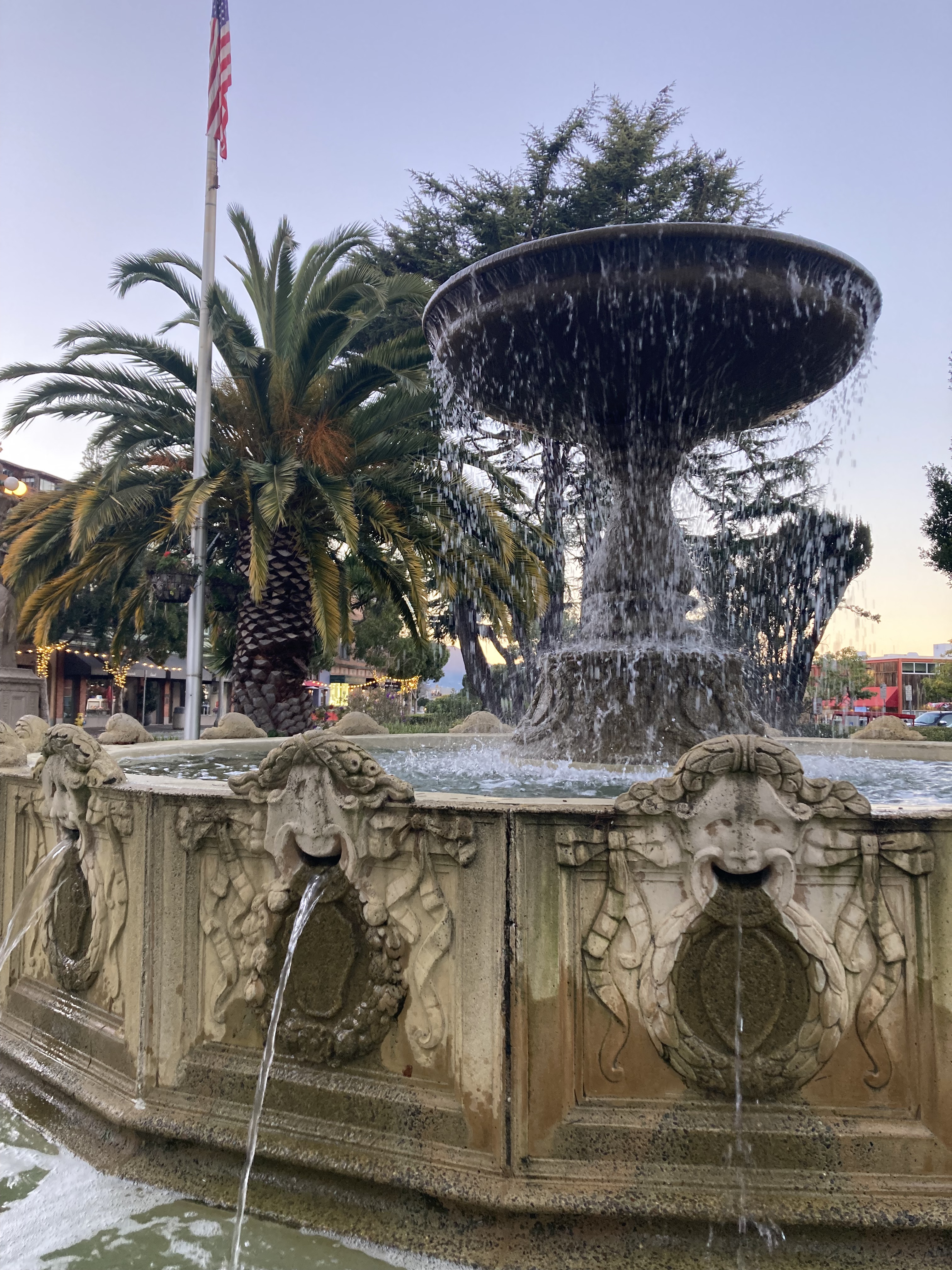
I really enjoyed my time in Sausalito. I came back here several times while exploring the surrounding areas – San Francisco and Golden Gate National Recreation Area. It felt safe and it was well kept. I particularly enjoyed walking along the boardwalk on the water’s edge, taking in San Francisco’s sky line and Angel Island, as well as the houses on the hills. You can actually take a ferry over to Angel Island for hiking, though I did not. Lappert’s has a reputation for great ice cream, which I did try (I’m not a huge ice cream person so I can’t gauge, but I enjoyed). There are waterfront restaurants and seafood. There are gift shops and floating houses. And there’s Plaza Viña Del Mar fountain and park (small but pretty) and Dunphy Park (bigger).
The Dreaded Knock

As nice as Sausalito is, expect police presence and parking enforcement to be stricter. Of all my time on the road – Sausalito is the only place I got “the knock”, and I got it twice.

I suppose this was an initiatory experience of sorts.

The first time was my own dumb fault. I was street parking for the night and it was dark when I arrived and I guess I missed the lines on the pavement. Just before going to sleep I saw lights shining in through my windows and heard voices. At first I was spooked, until they announced themselves as police and I went to the front cab. They had been pointing flashlights into the van, to see if anyone was inside. I will say – the officer I spoke to was really nice. They just told me I had to move up a space.

The second encounter was not so nice. I had parked at Gabrielson Park while getting ready for the day. I was in the back of the van putting my hair into braids and suddenly I see a man press his face up to the side windows. No announcement that they were police officers at first and I couldn’t see their uniforms so I genuinely thought some weirdos were sizing up my van for theft or something. Then I get a knock on the front window. They essentially tell me that I can’t park there (it was free parking and I assume they want people in Sausalito to pay for parking). They say they’d also notified the RV owners a few spots down. I told them I was planning on leaving soon. Then one of the officers starts questioning me based on my license plate being Canadian, asking about my travels, and says, “you’re going to leave though right?” She meant leave the country. I said of course and smiled. But on the inside I was upset. I get where it was coming from, but way to make people feel unwelcome, even criminal.

Marin Headlands (Golden Gate National Recreation Area)

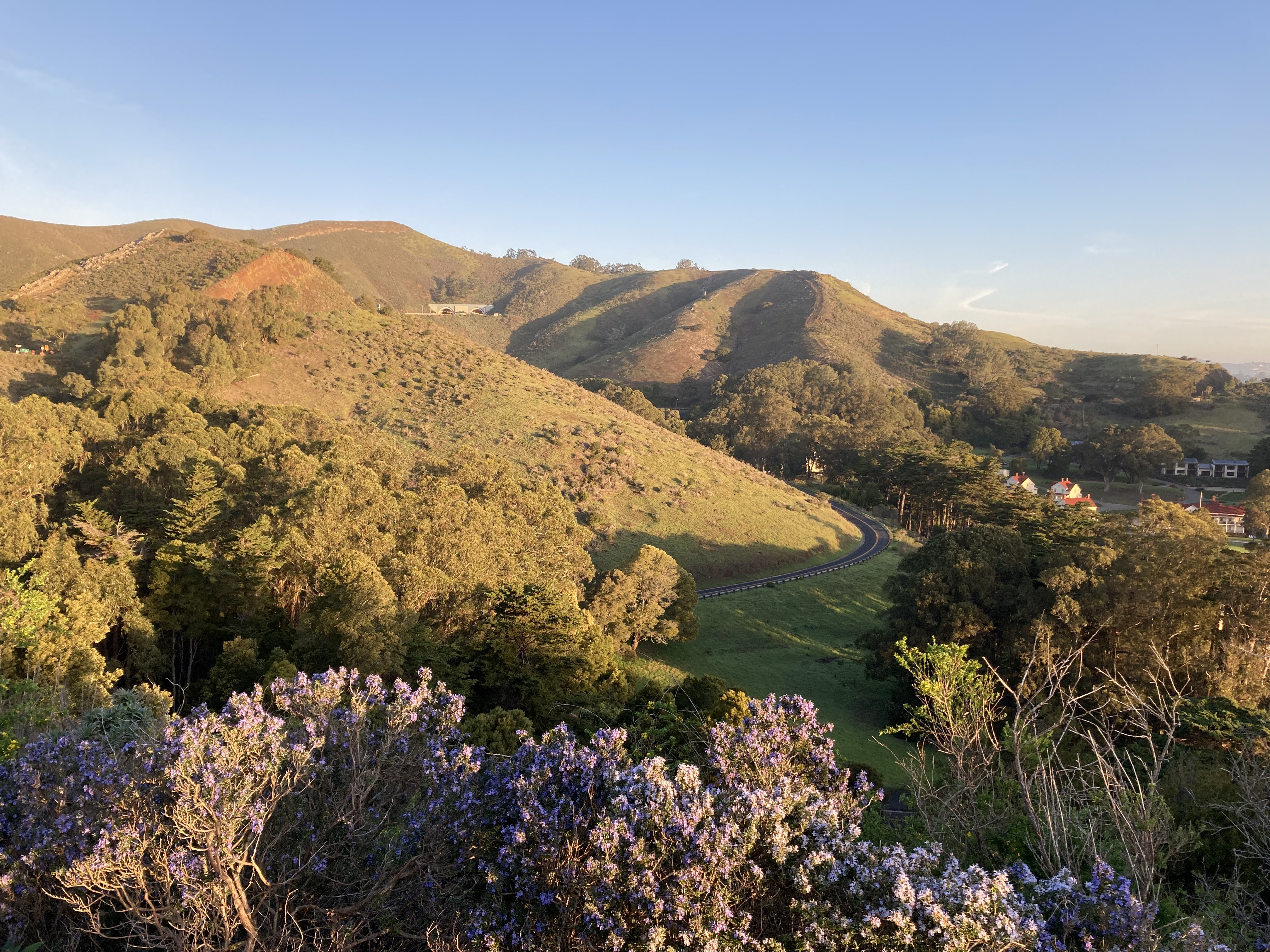
Continuing my exploration of the Bay Area north of San Francisco – Marin Headlands was a must see for coastal and Golden Gate Bridge views.

Golden Gate National Recreation Area encompasses many areas both north and south of Golden Gate Bridge, including (but not limited to):

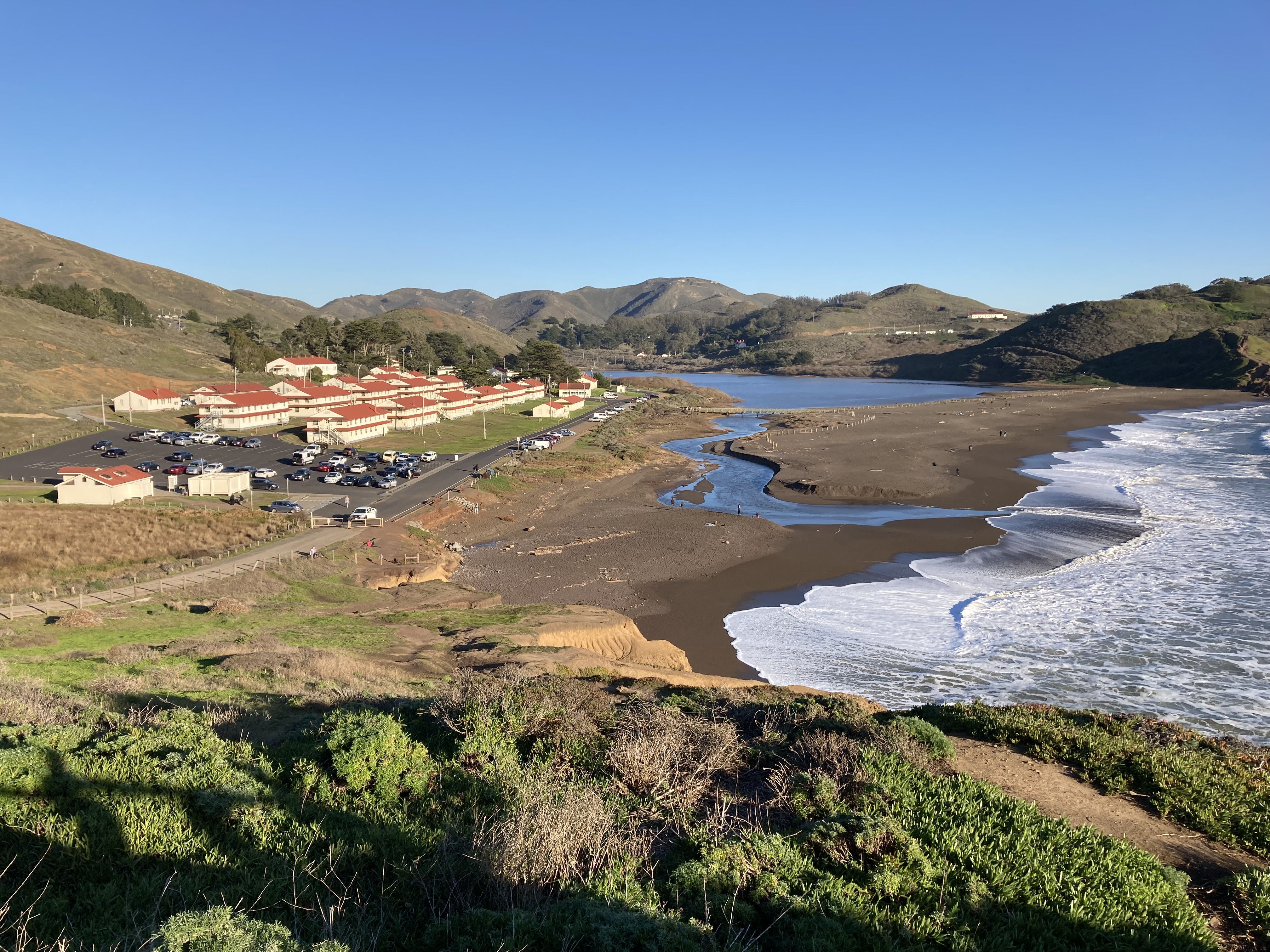
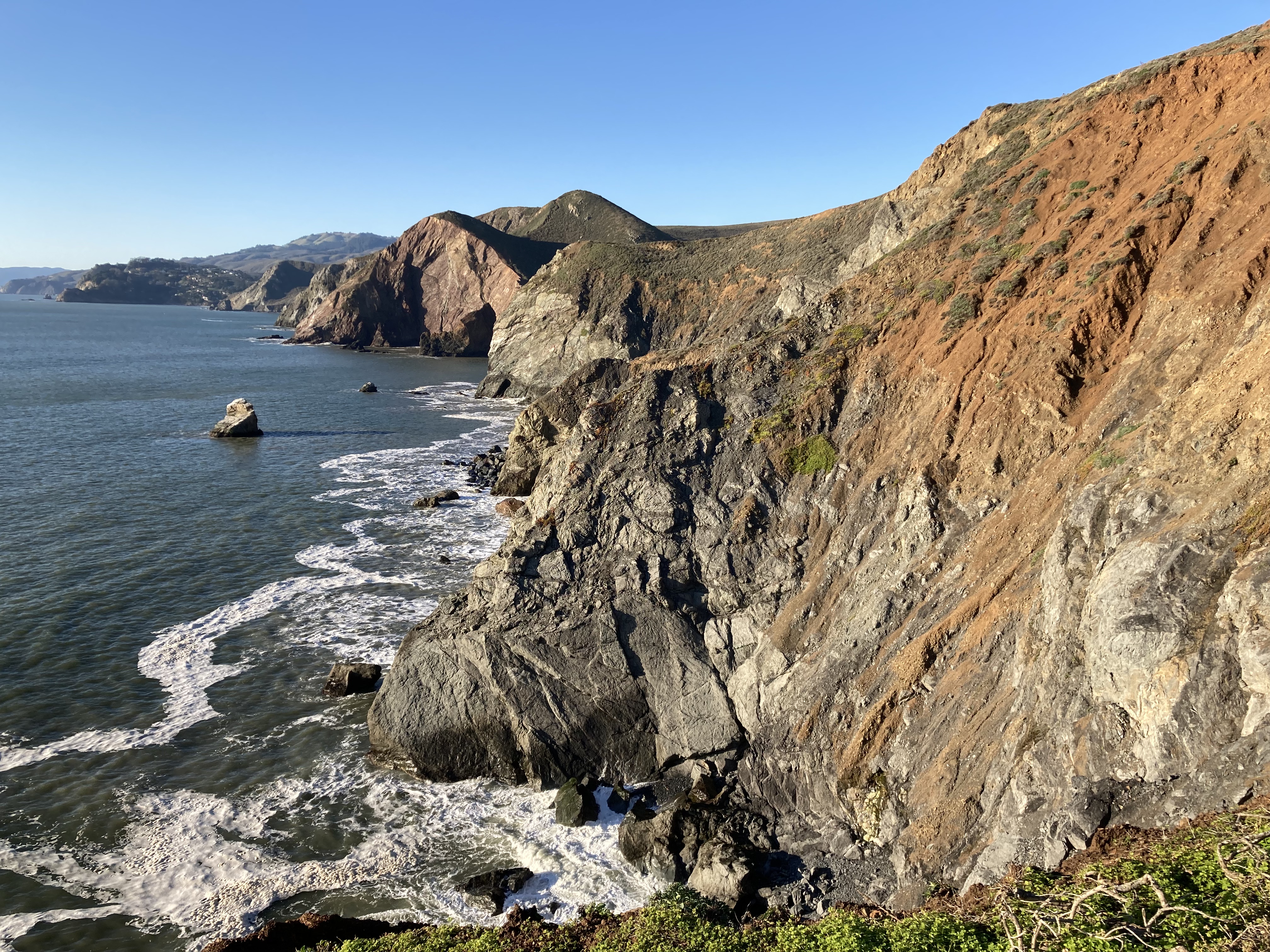
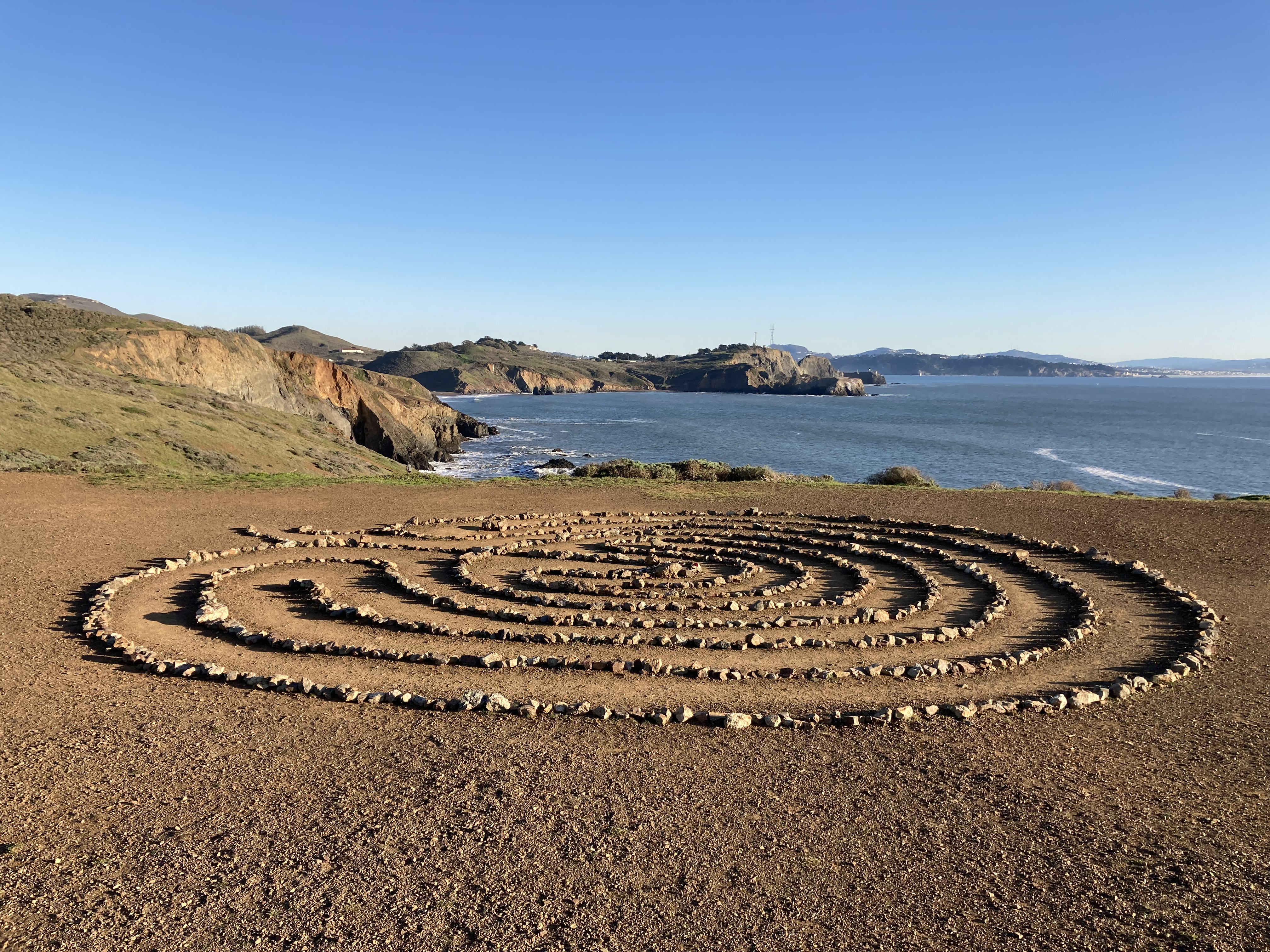
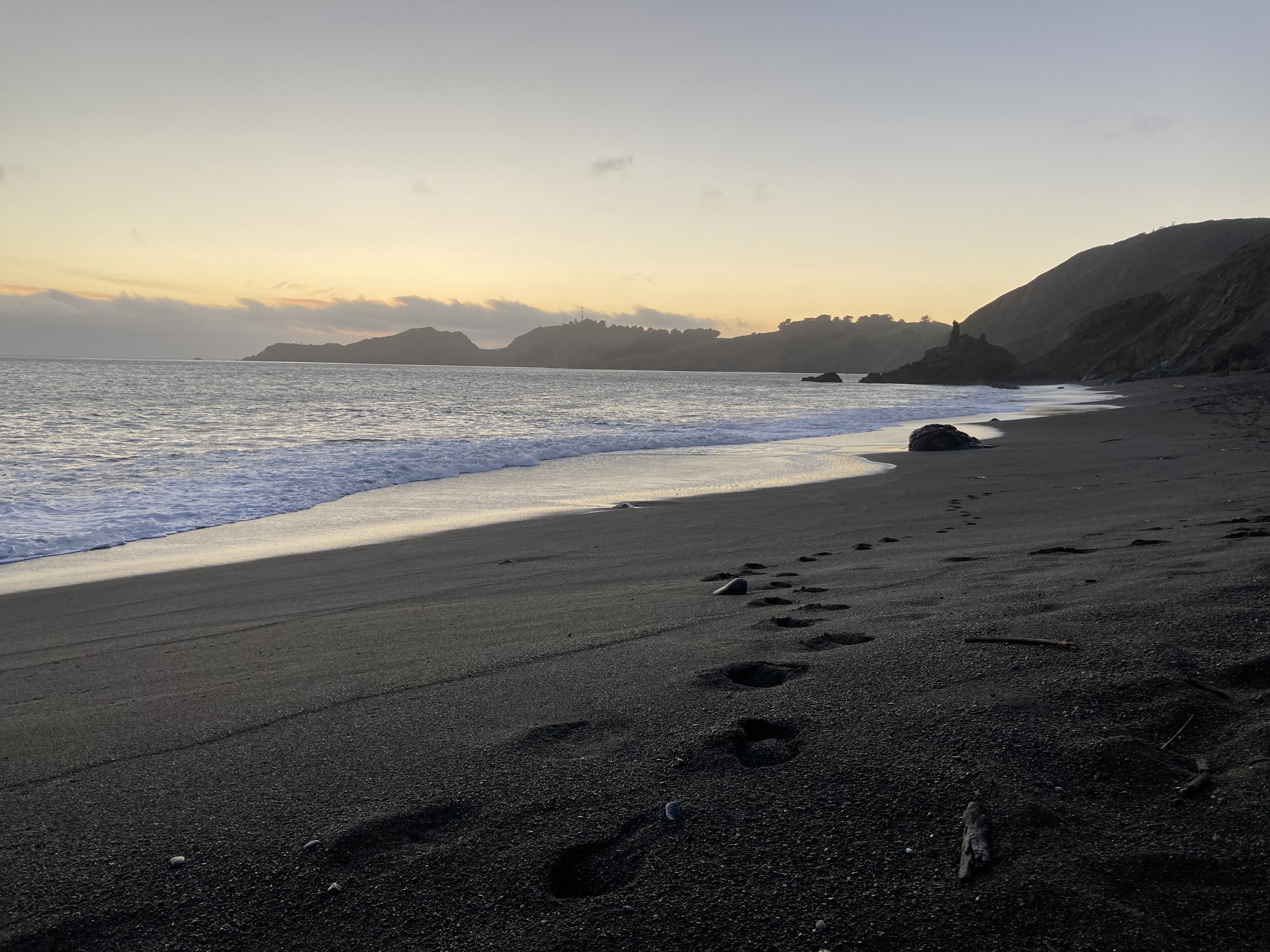
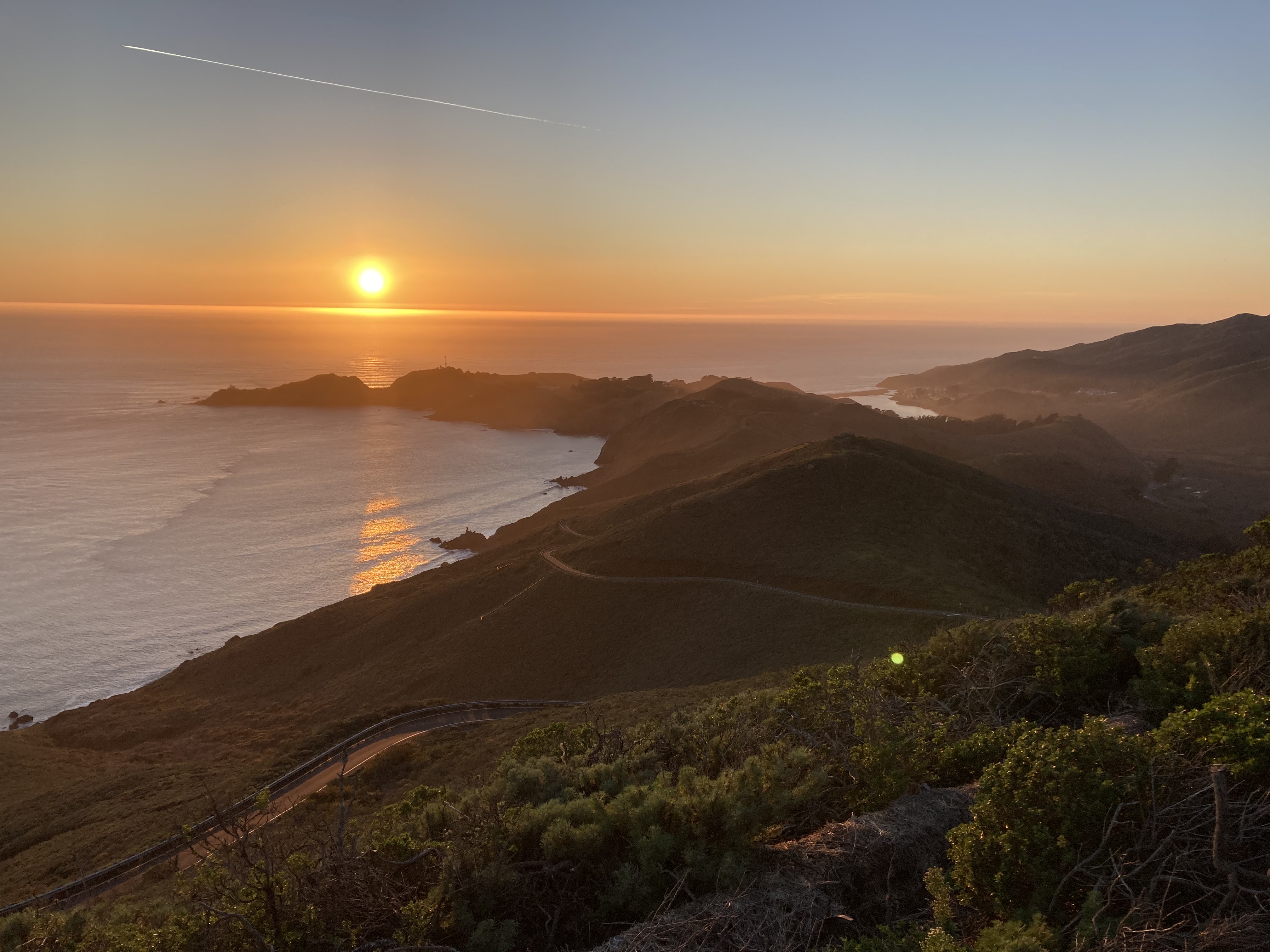
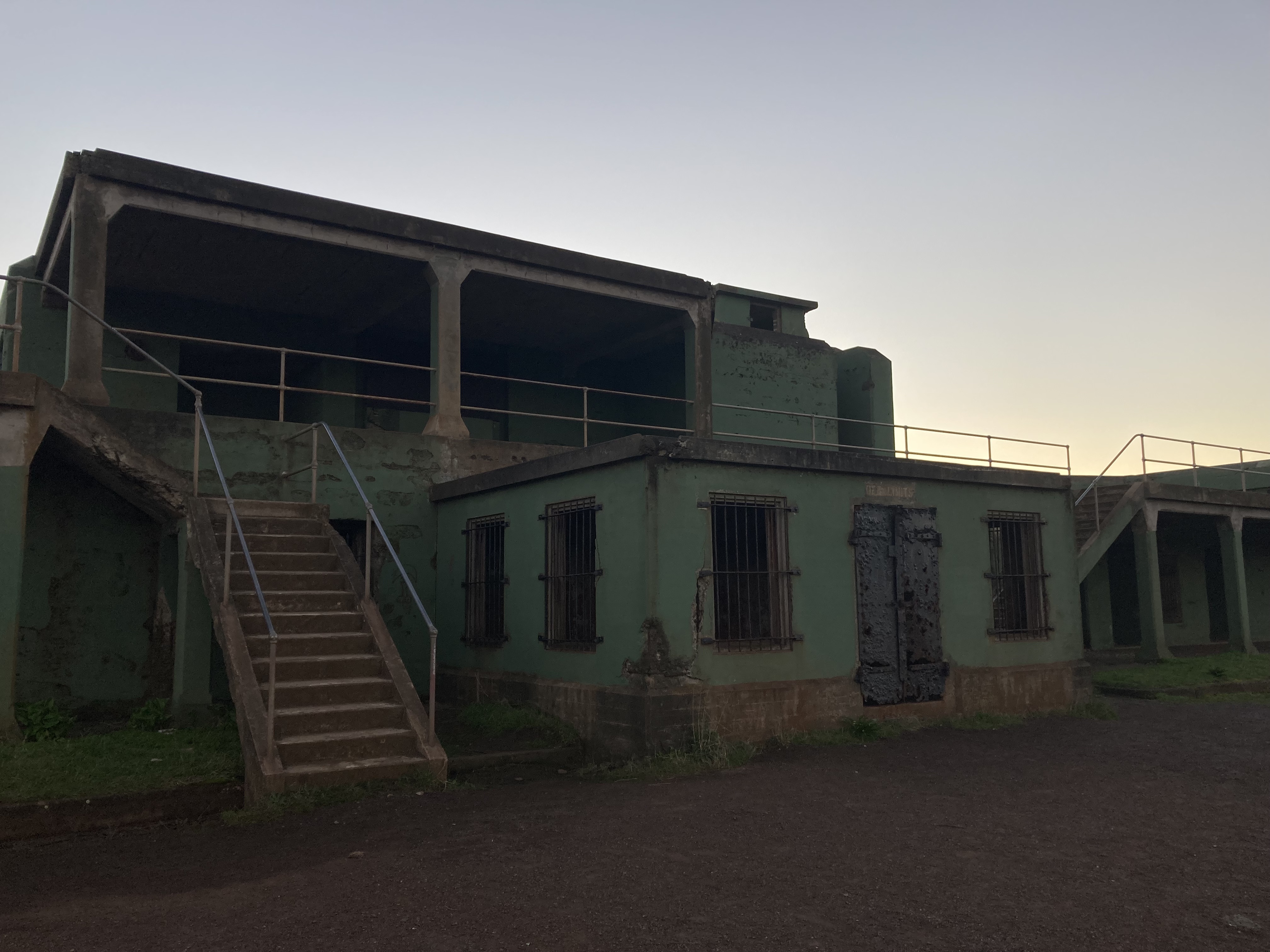
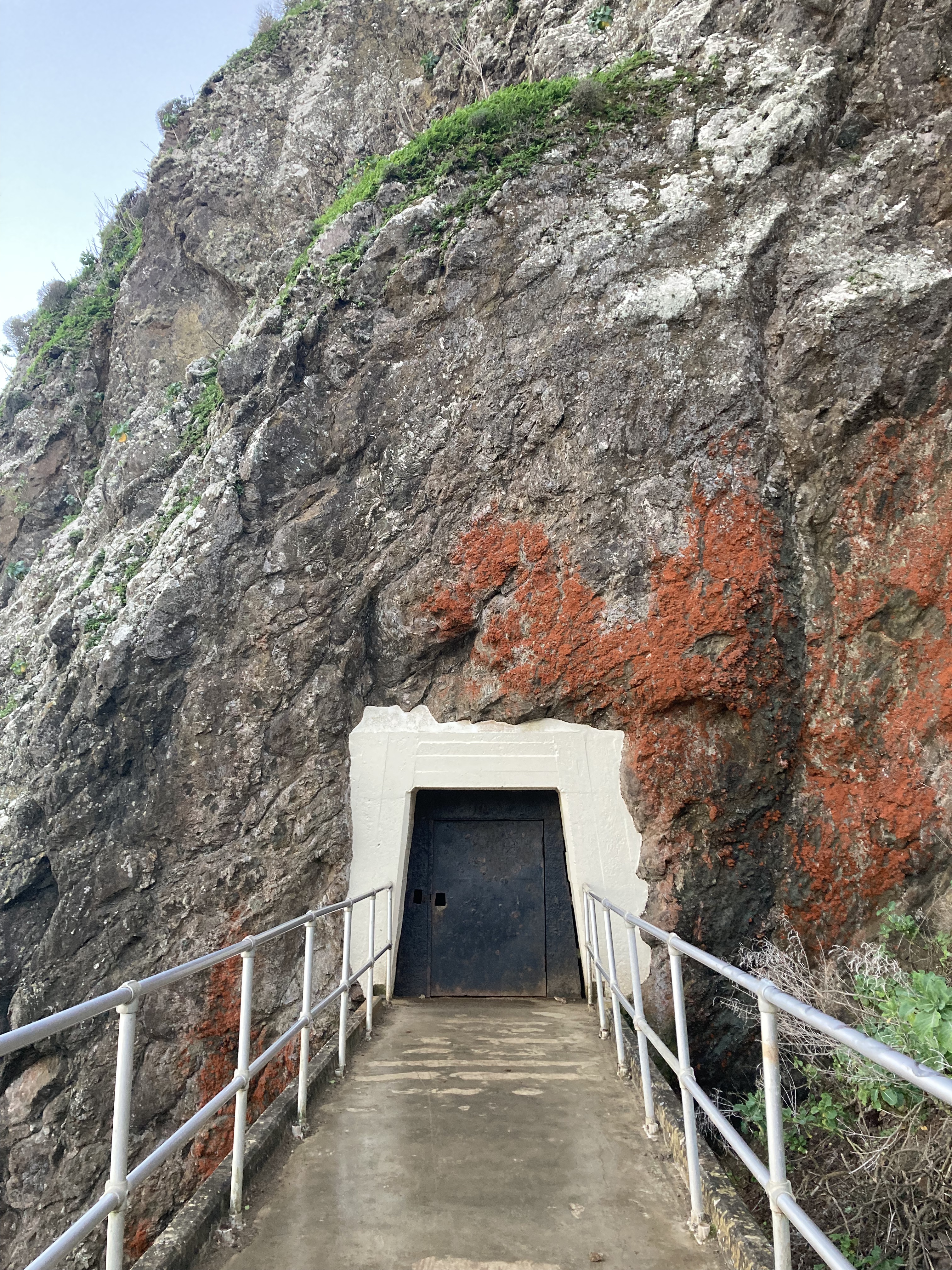
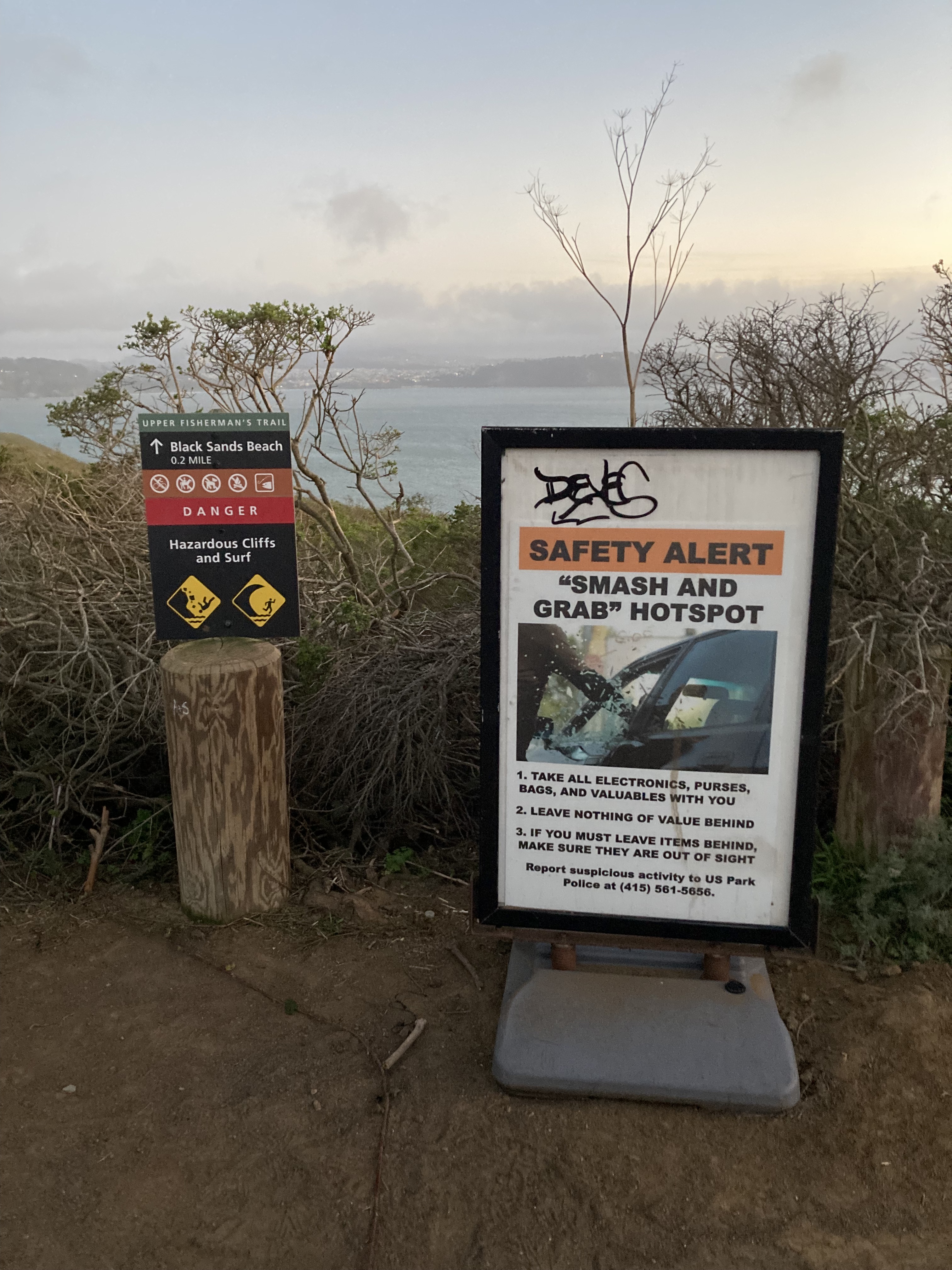
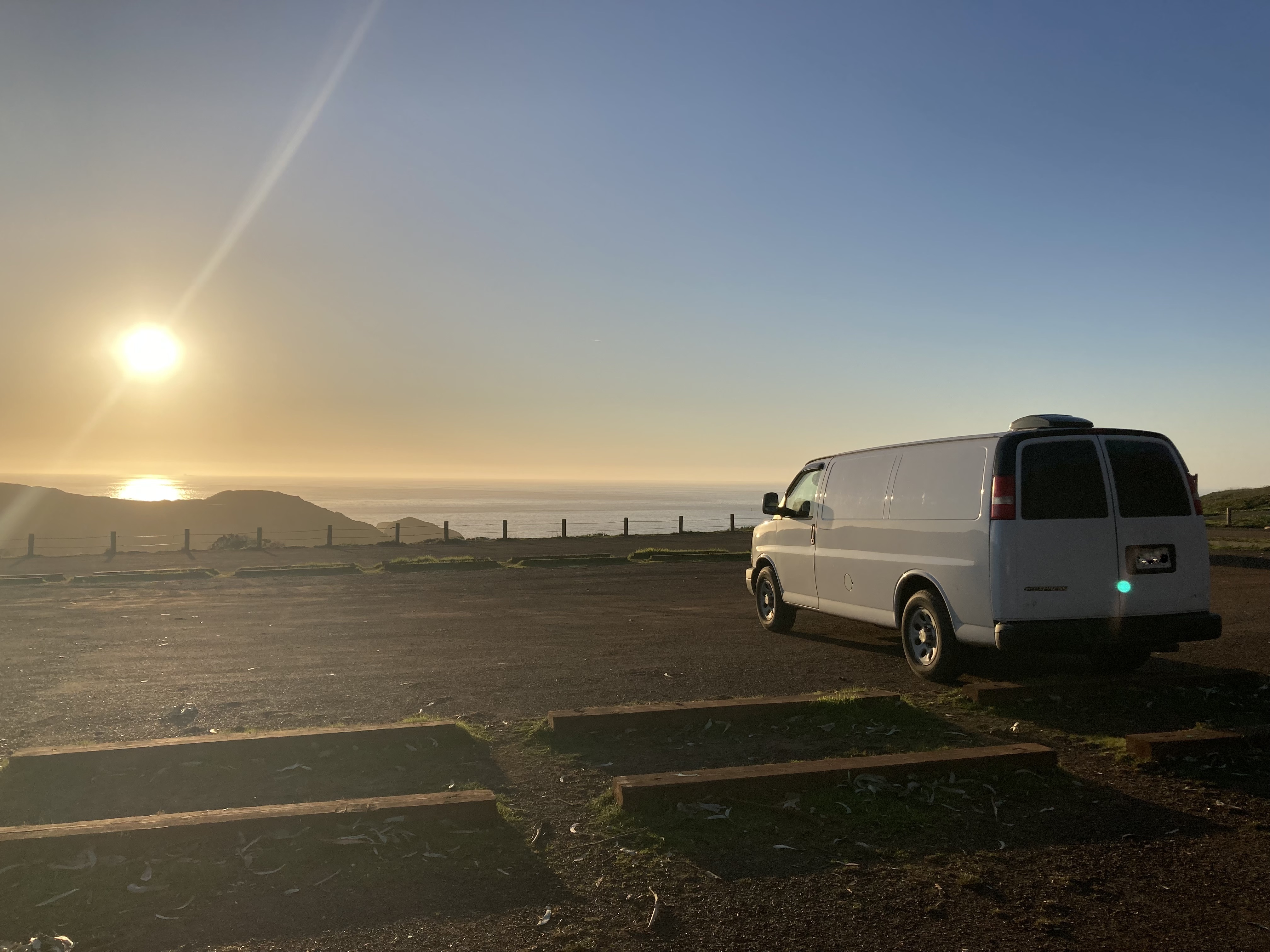
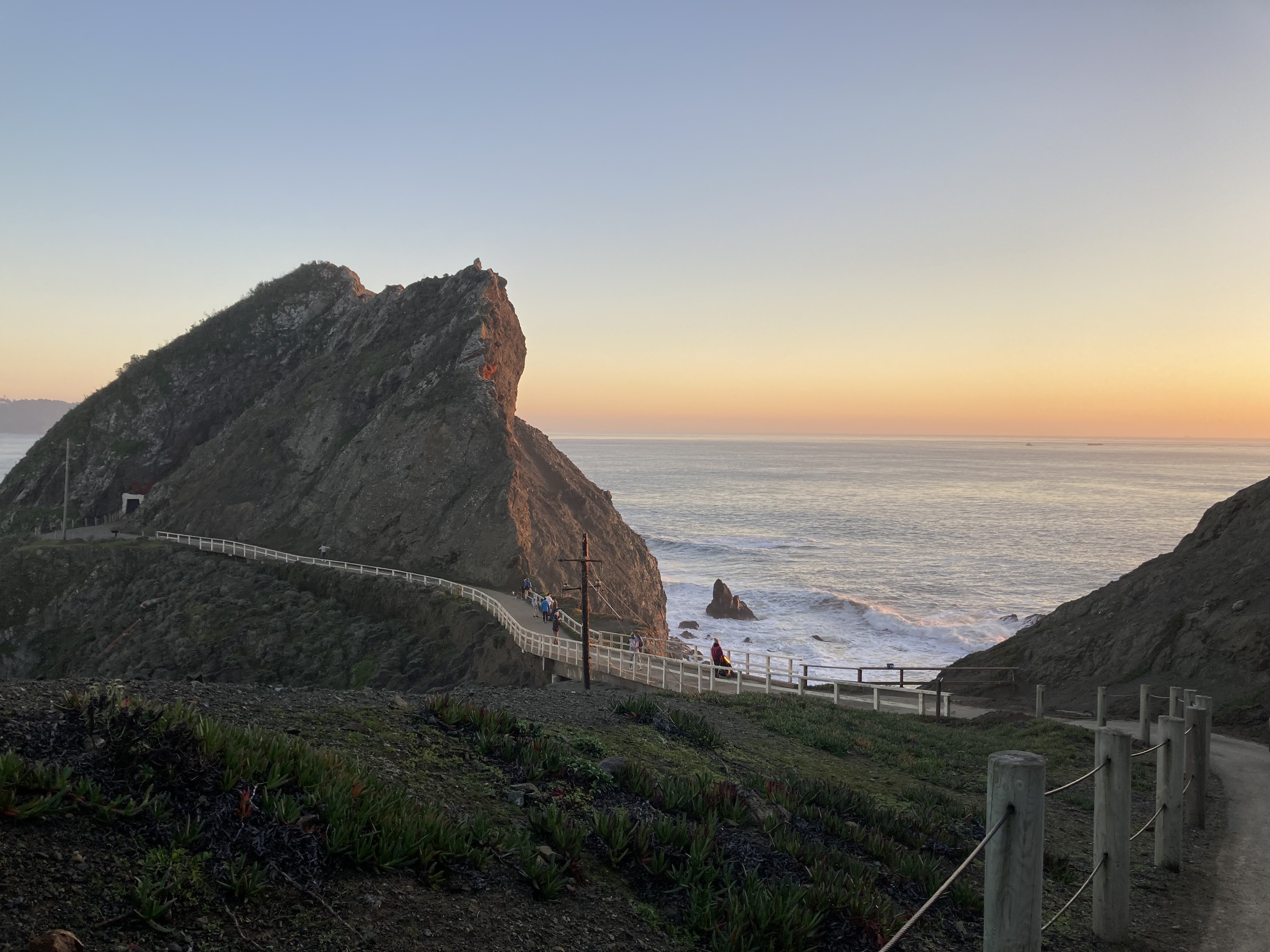
I spent a good chunk of time around Marin Headlands. There are various parking lots and trails (like Batteries Loop Trail). There are old army bunkers. People go surfing at Rodeo Beach and I followed a trail from here to some lovely elevated views of the shoreline and a labyrinth that served as a replacement for the one I had hoped to see at Land’s End. I tried to see Point Bonita Lighthouse, but the entrance was locked – there was still a cool rock formation and I watched a beautiful sunset here. I found a beach with black sand – I dubbed it Goth Beach, though it was aptly named Black Sands Beach. And I drove the winding roads to the most amazing view points (like Battery Spencer and Hawk Hill) of the Golden Gate Bridge and San Francisco across the bay.
Olema & Half Moon Bay

I have a habit of “leaving the best for last”, and this habit is reflected in the way that I circled San Francisco like a raptor before going in for the kill. Not that the surrounding areas didn’t have their own draws, but I can look back and find it a bit comical how I was so close to SF for so long before actually exploring the city.

After enough street parking in San Rafael and Sausalito, the itch for a campground started creeping in. And it was really nice to get out of the greater city hub.

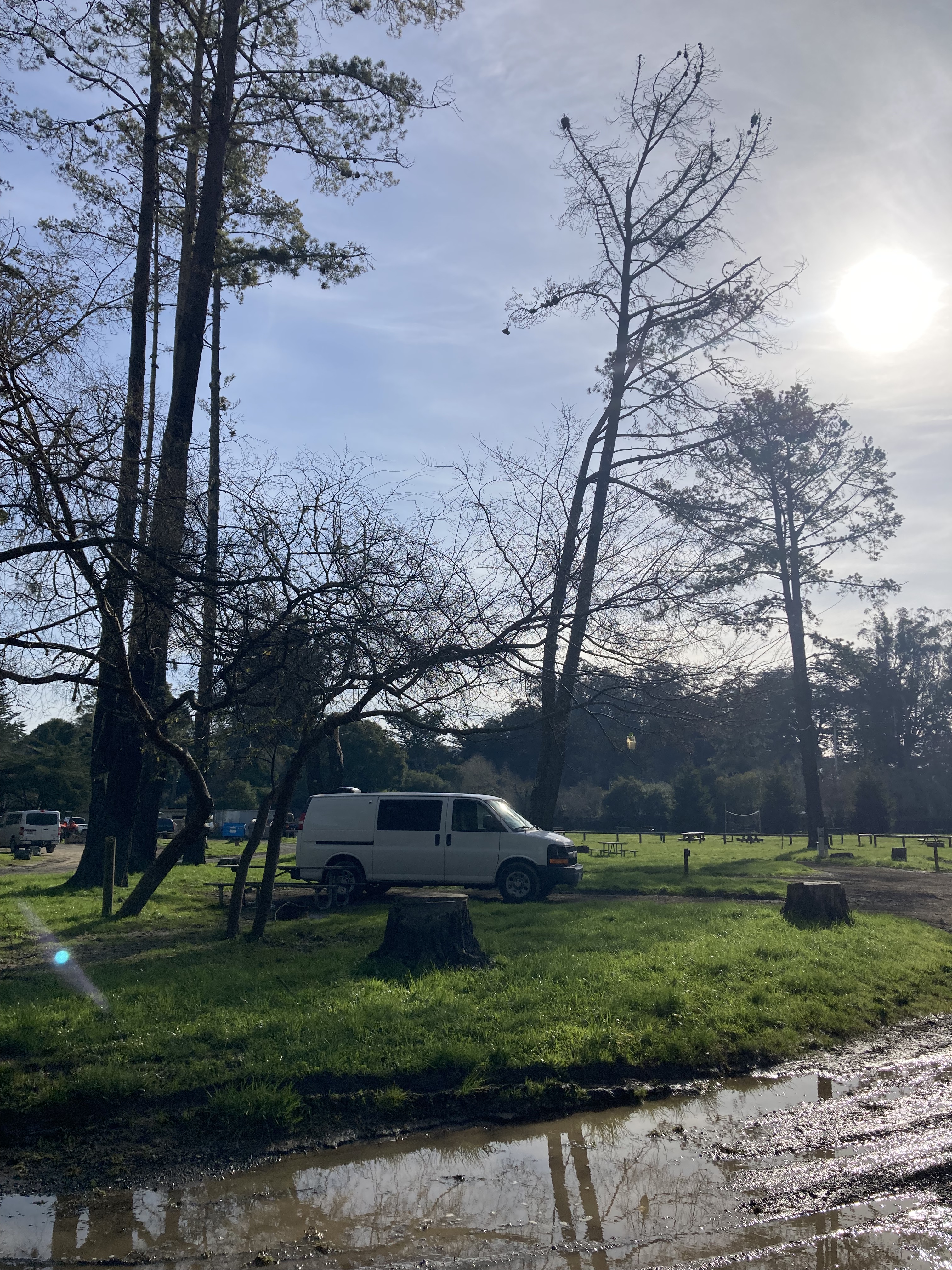
First, I stayed a night at Olema Campground, which is in Marin County, northwest of SF, by Point Reyes National Seashore. This was about an hour’s drive on slow, winding roads, and if I remember correctly there were downed trees and some flooding on those roads at the time. The campground had a lot of standing water and mud, and it was pretty deserted – unsurprising, as it was chilly and the wet winter season. I do remember there being private bathroom/shower rooms which was a plus, and their laundry facility was nice (these are the things you come to appreciate and remember on the road). Looking back, or more accurately – looking at the website – I wish I’d explored Point Reyes National Seashore. It looks stunning.
A few days later I stayed at Half Moon Bay (Francis Beach) State Campground, which is about 45 minutes south of San Francisco, and borders the Monterey Bay National Marine Sanctuary. While Olema was inland, Half Moon Bay and their campground were right on the ocean.

Half Moon Bay is a small coastal town of about 11,000 people. I went for a run here along the California Coastal Trail and some beaches, which was so nice. But I have to say – state campground washroom and shower situations are not my favourite. Usually the showers are token or coin operated, they don’t provide hand soap in the washrooms (I’d bring in my own little bottle of soap), and these are not heated comfort stations.
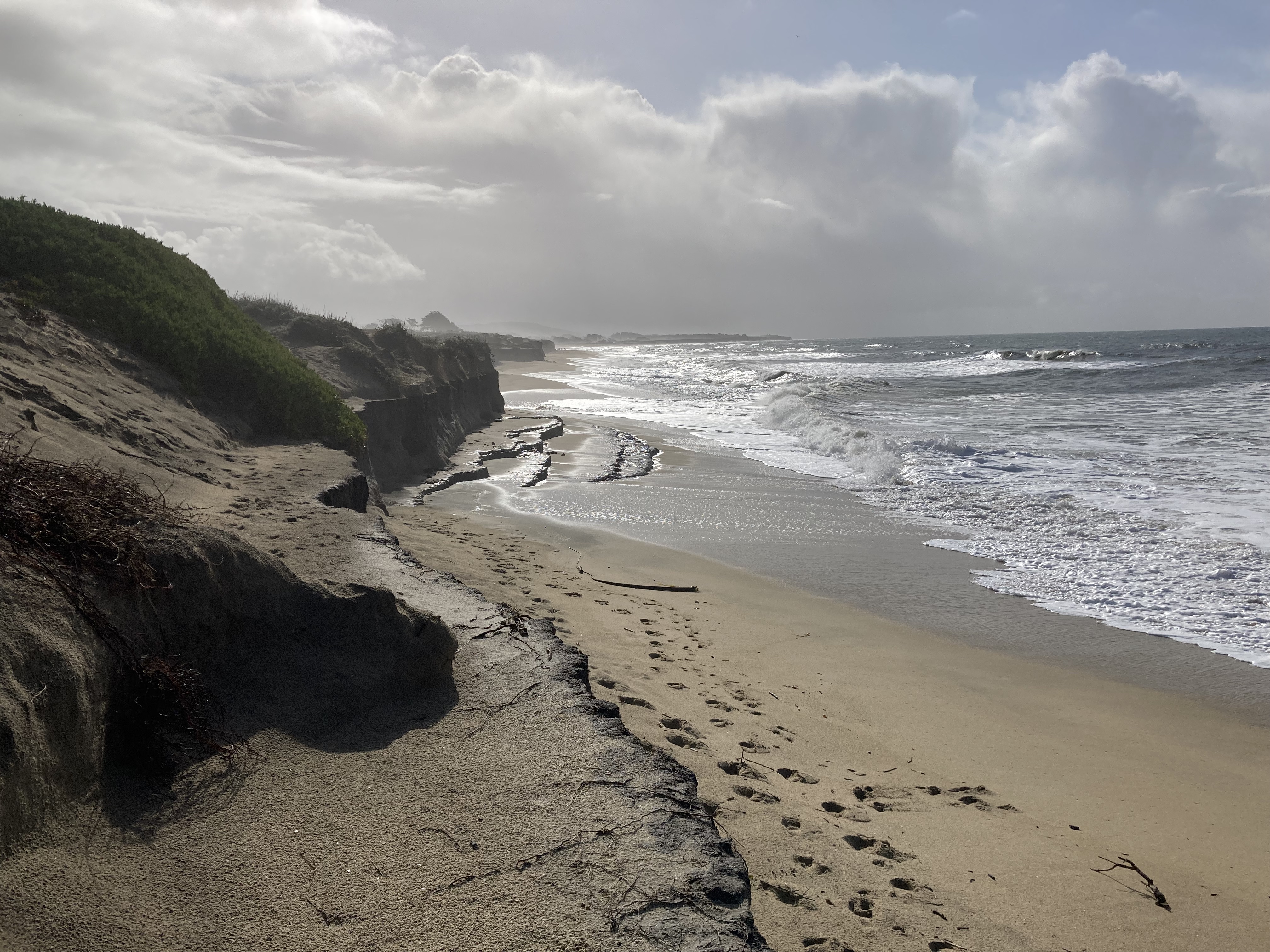
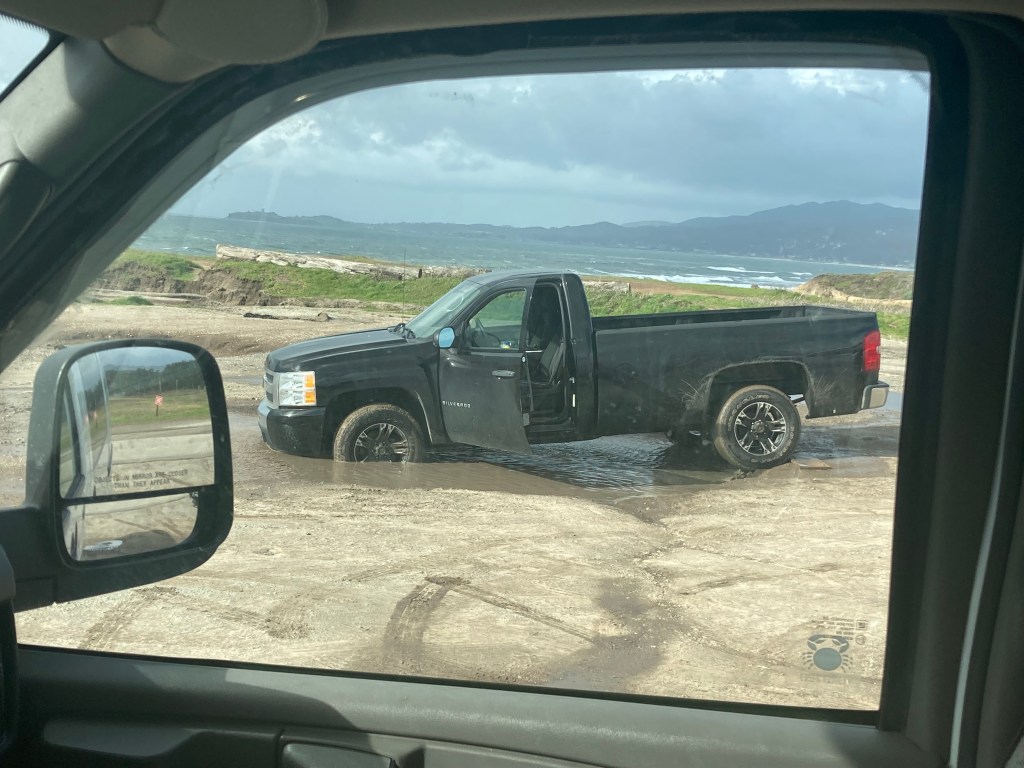
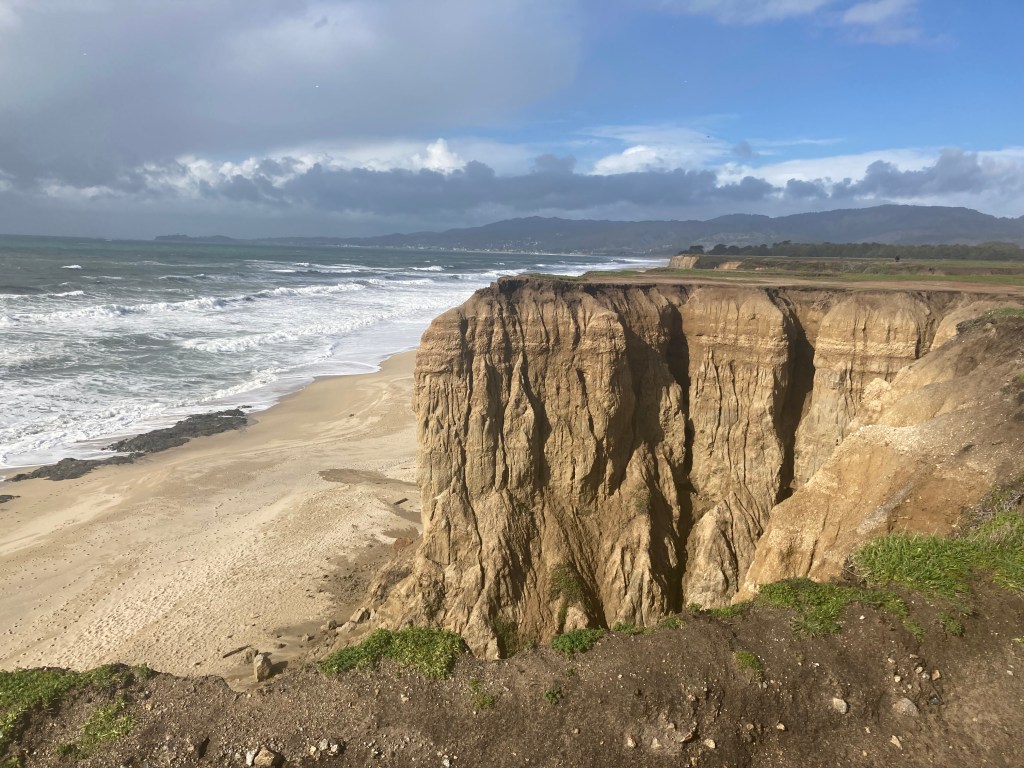
In the afternoon I visited Redondo Beach in Half Moon Bay – parking was atrocious, to the point that two cars got stuck in mud puddles in the short time I was there. I gingerly drove around, trying to figure out where to park the van, as any sane, level spot was taken. Then this truck comes in and just goes for it directly towards one of the potholes – I watched incredulously as this man, who clearly thought nature would not win, took a hit to his ego. Eventually cops showed up, and I assume at some point a tow truck. I settled on parking between potholes and took in the coastal views. It was quite beautiful, with the cliffs reminiscent of Alberta’s badlands. When I left I posted a google review to warn others.
Shootings

A few weeks before passing through Half Moon Bay I had heard about a mass shooting that had happened here.

Hearing about mass shootings in the state you’re in can certainly be rattling. Especially, I think, because as a Canadian we rarely have any. And I heard about a few that happened in California while I was there. Half Moon Bay was the closest though, just about 40 miles from me at the time.

Driving to Half Moon Bay, it was on my mind. I can’t remember why I didn’t avoid the area, or what landed me there. It was just one of those things, where you happen to pass through a place. My impression being there was that, had I not heard about the shooting, I wouldn’t have felt uncomfortable. And indeed, Half Moon Bay has a low crime rate. Which goes to show – violence can happen anywhere. You just have to be aware and prepared the best you can. Be in the know, be observant of your surroundings, and trust your gut.

I was in the habit of looking up the crime rates for places before passing through, and if the rates were exceptionally high I would steer clear. For example, in San Francisco I knew that my biggest concern was a smash and grab on the van. And I had made note of the worst neighbourhoods, and made a point of not walking through them when. The touristy areas all felt pretty safe.

Mill Valley

Mill Valley was nice. Located 14 miles north of SF, with a population of about 14,000. I ended up there to see a mechanic.

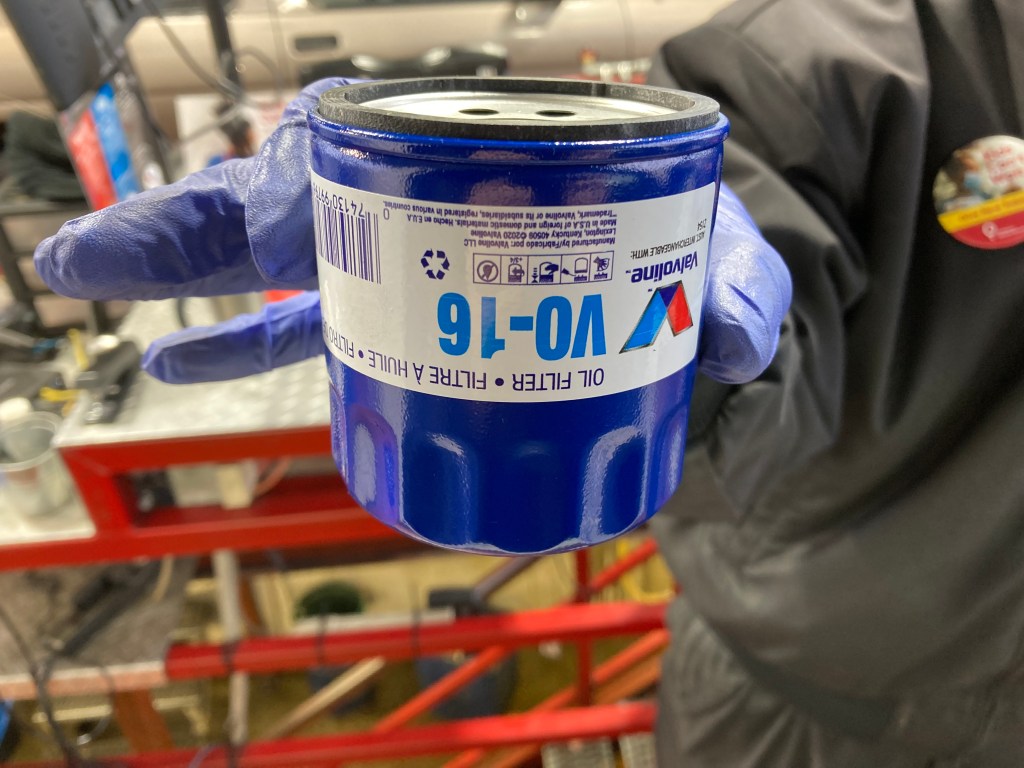
Back in Oregon when I’d gotten a repair done on the van, I was told that they thought I had a slow leak in my oil pan gasket. I’d been keeping an eye on any drips under the van, which happened here and there. I was keeping an eye on my oil level and oil pressure, which had been fine. A lady in a grocery store parking lot saw me looking under the van one day and recommended a mechanic in the area. I looked them up and they seemed good, so I gave them a shot. Now that I think about it, they said they couldn’t get me in for a while, and that was why I had stayed in the San Francisco area for an extended amount of time.

The day finally came and I dropped off the van and went for a walk around Mill Valley to explore while I waited. I grabbed a coffee and walked around a little “outdoor mall”, then found a trail in a nearby park. I remember the trees had steam coming off of them as the morning sun heated their coat of frost.

To my delight, the mechanic said I did not have an oil pan gasket leak. He showed me some photos and told me eventually I would need to have an involved repair done – but I would be fine for now and he didn’t charge me a cent. I could see why that lady at the grocery store recommended him. He also told me that mechanics get more expensive the further south you go (as did the gas prices). I kept an eye on things, and a few years later I still haven’t had any major issues (knock on wood). My theory is that there are some gaskets with cracks. I see a few drips usually in the winter – but not in the summer. So I believe that when the rubber expands in warm weather it effectively seals up any cracks, and in winter when the rubber contracts a few drips get through. I’ve since asked additional mechanics to take a look, and I always get a different answer, or that they don’t see an issue, so it seems like something that won’t get fixed until the problem gets bigger (again, knock on wood).

Now that the mechanic visit was out of the way, I could tackle SF! I felt liberated. And also more free from the gnawing van stress.

Side note: a little north of Mill Valley is an outdoor mall – Town Centre Corte Madera. I fan-girled here over visiting my first ever REI, went into my first Barnes & Noble, and just generally had a chill afternoon exploring some neat shops.
San Francisco

The “jewel of northern California“. Finally!

I spent two full days and an additional afternoon in San Francisco. Considering how much there was to see, I got a lot done in that time. But my very first venture into the city was less than spectacular…

An Unexpected Visit

The dentist. I had a toothache.

It was a nightmare looking up someone to allow to poke around my mouth. The office I settled on was right in the middle of the city. I’d heard bad things about above ground/ open air parking lots (one local said they’d never park in one because you were almost guaranteed to be broken into). So I street-parked and hoped for the best.

I have notes of my travel experiences, like a daily log. And on this day I wrote that I was so stressed that I didn’t eat anything until 9pm. Geez.

I was relieved to get things sorted. It’s definitely not fun to have something like this crop up in another country, and it’s always good to be prepared.

After the appointment I went to Twin Peaks, which had great views of the city. You drive through some cool neighbourhoods to get there. At least ending a stressful day here gave me my first taste of SF. I started to feel more excited. It started to feel more real.
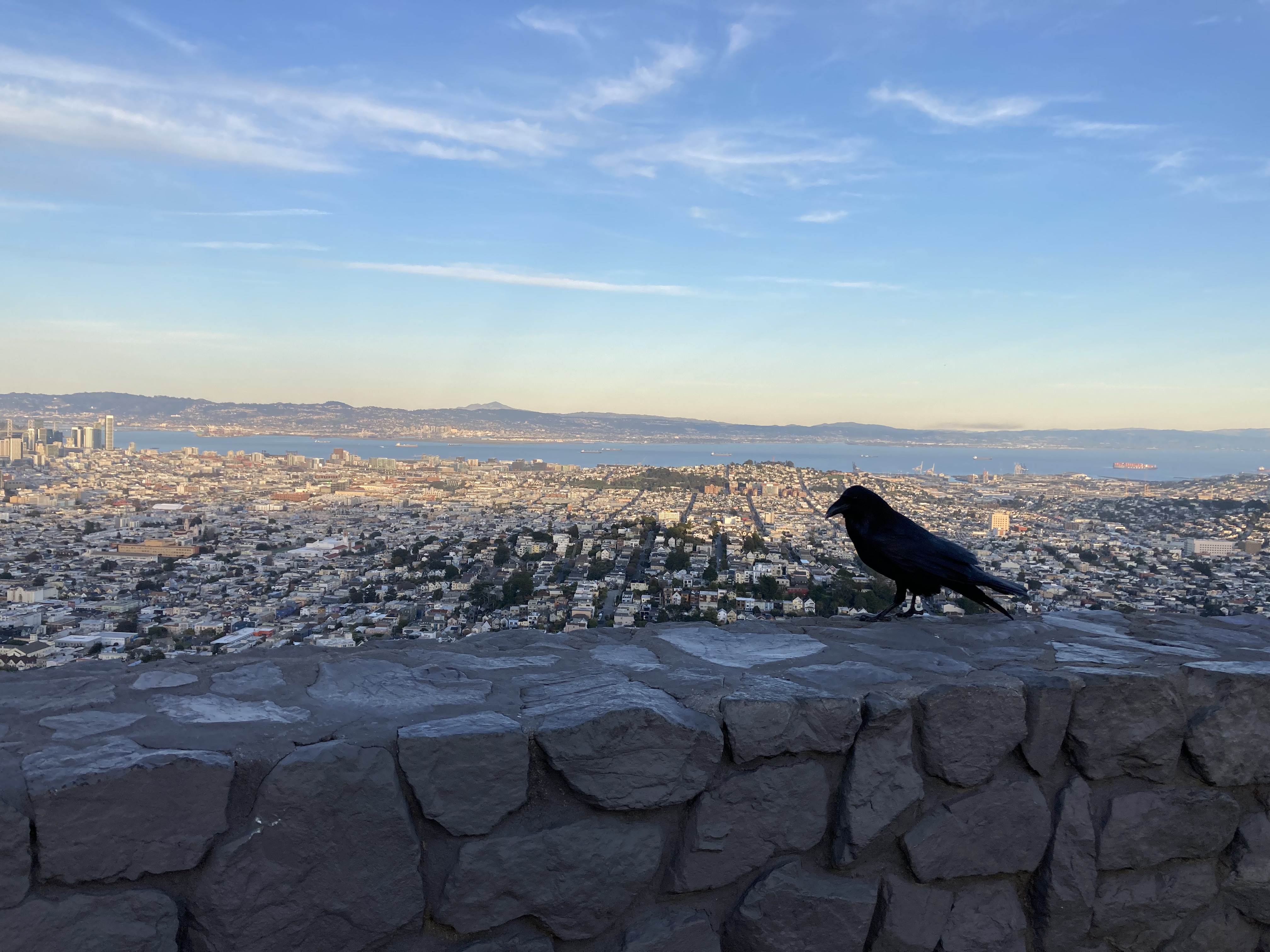
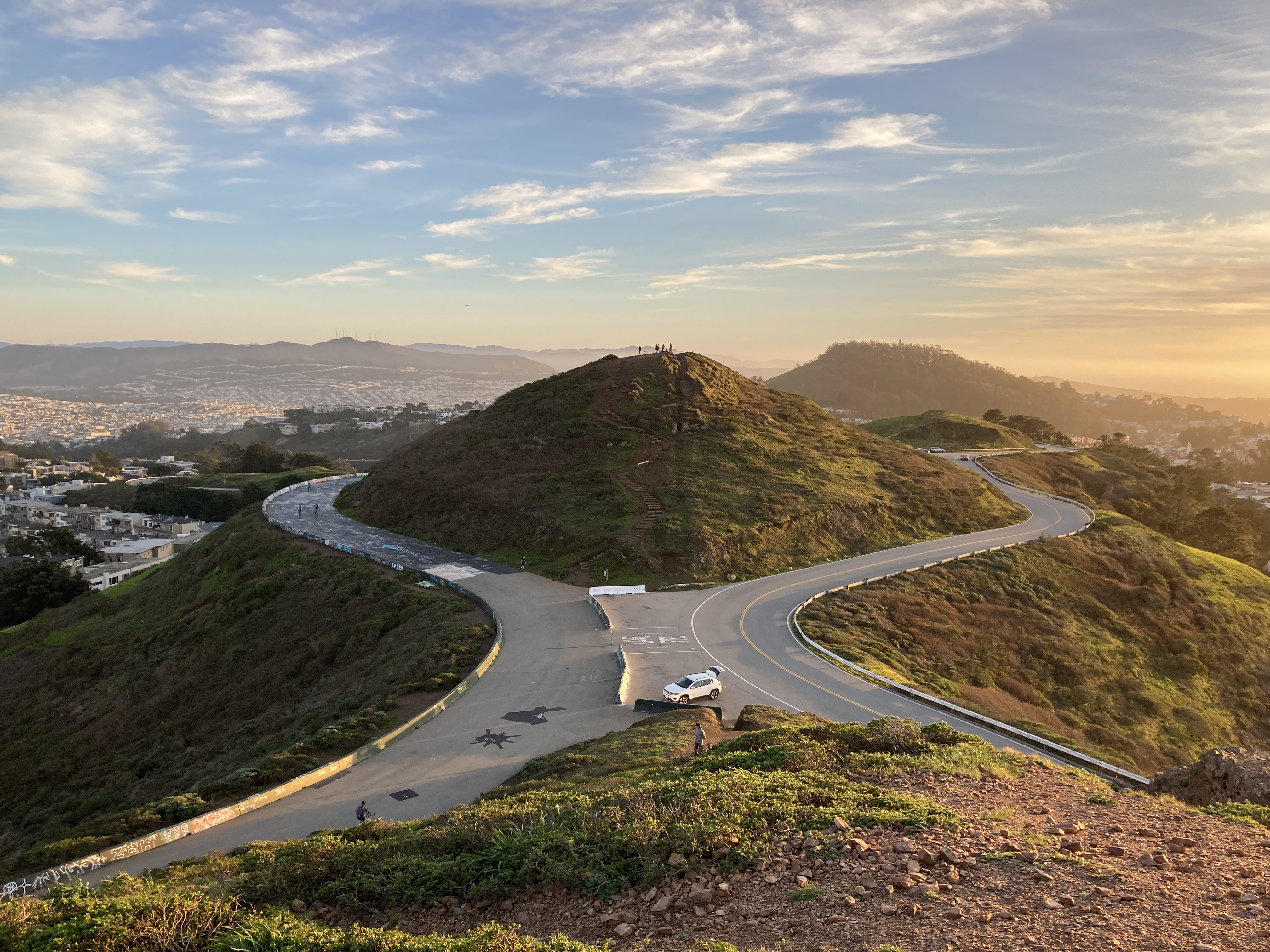
I’ve never seen the show Twin Peaks, but I was familiar enough with the name to think of it when I was here. That said, this place is two hills of about 925ft in height, located pretty much right in the middle of the city. It’s free to visit, there are trails, and there are panoramic views – of the city, the ocean, Golden Gate Bridge. The parking lot at the top can be busy, and when I went it seemed like a hangout for a few rowdy kids. I wouldn’t be surprised if this is a hookup spot, like Signal Hill in Newfoundland.

Golden Gate Rest Area

If you pass through SF in a van or a vehicle – stay here overnight (if still permitted).

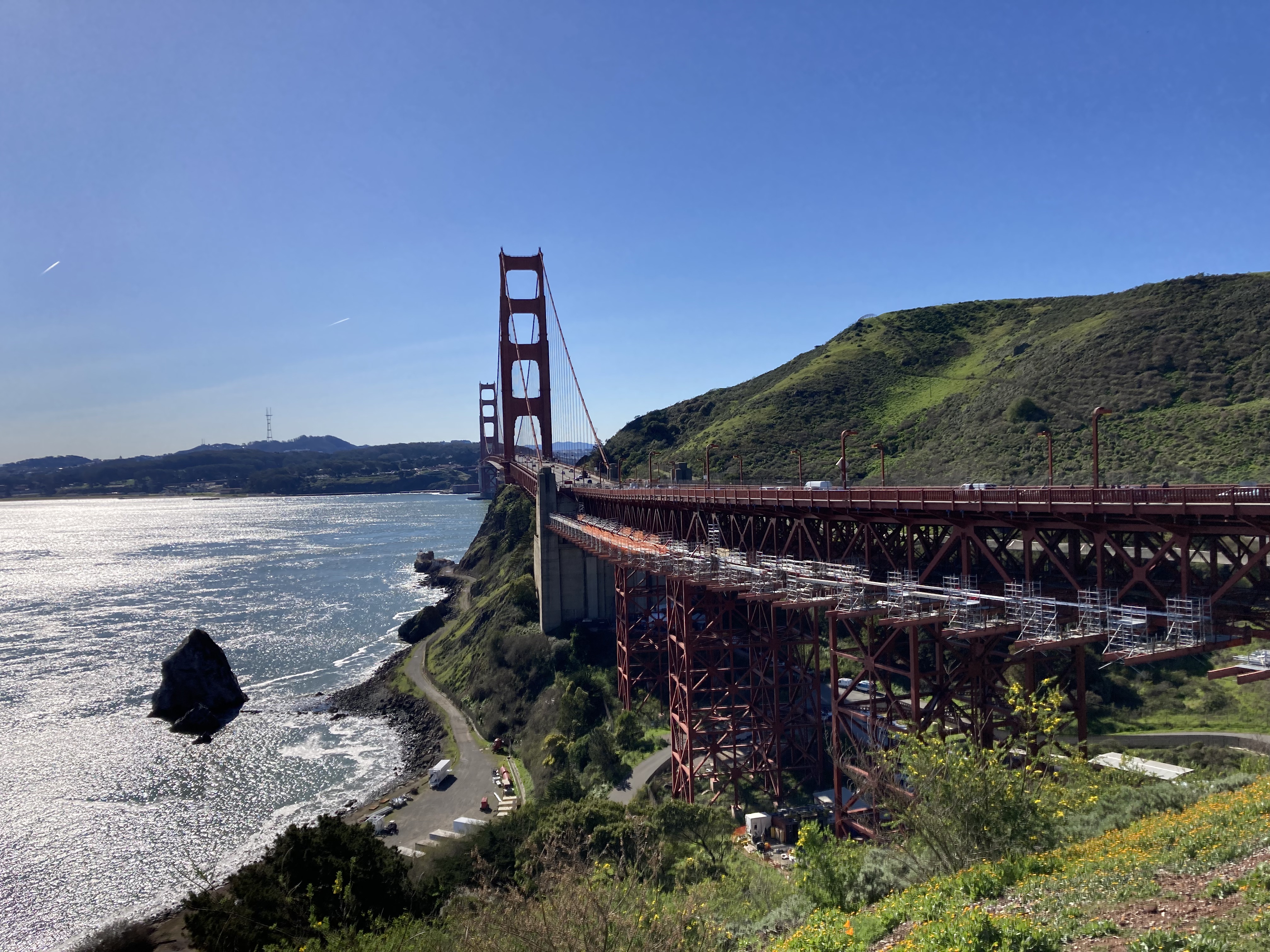
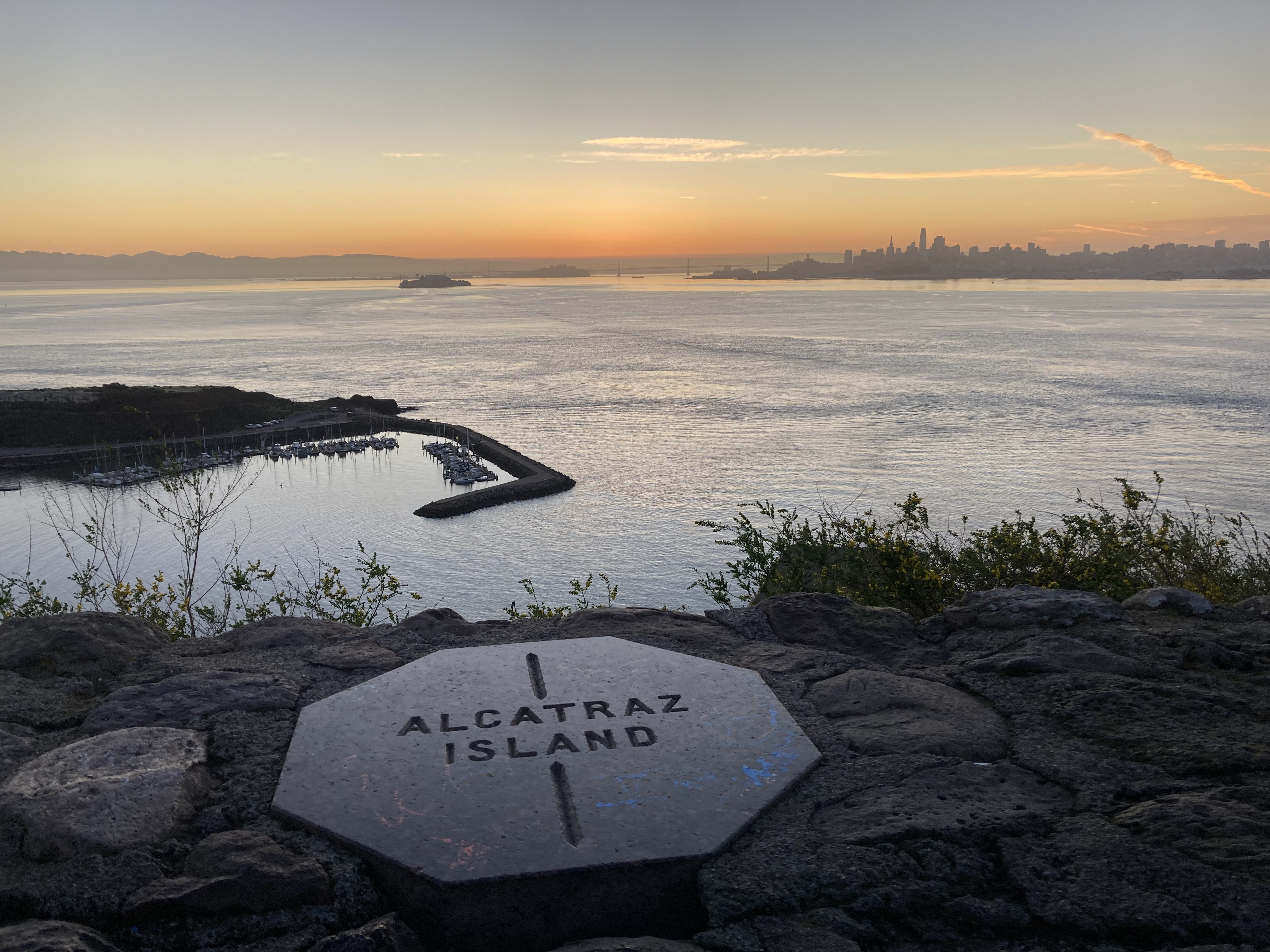
At the time it was called the H. Dana Bowers Memorial Vista Point. It looks like now it’s called the Golden Gate Bridge North Vista Point. It was effectively a rest area which permitted you to stay up to 8 hours. The only catch was that you could only enter the parking lot while heading north from the Golden Gate Bridge. So if you’re coming from the north you’re either out of luck or you need to cross the bridge and then double back.

The trick with this is – you have to pay tolls every time you cross the Golden Gate Bridge southbound. Your mileage may vary (pun intended), but I decided I wanted to make the sacrifice. So I did the loop, going back and forth across the bridge, several times, in order to stay here overnight. I personally felt it was worth it.

It wasn’t only the convenience (I realize that might sound ironic) of the location, but the location itself, that kept me choosing it over and over. While I usually try to limit frequenting the same spots, sometimes a spot is just too good, and I also staggered my stays with other locations.

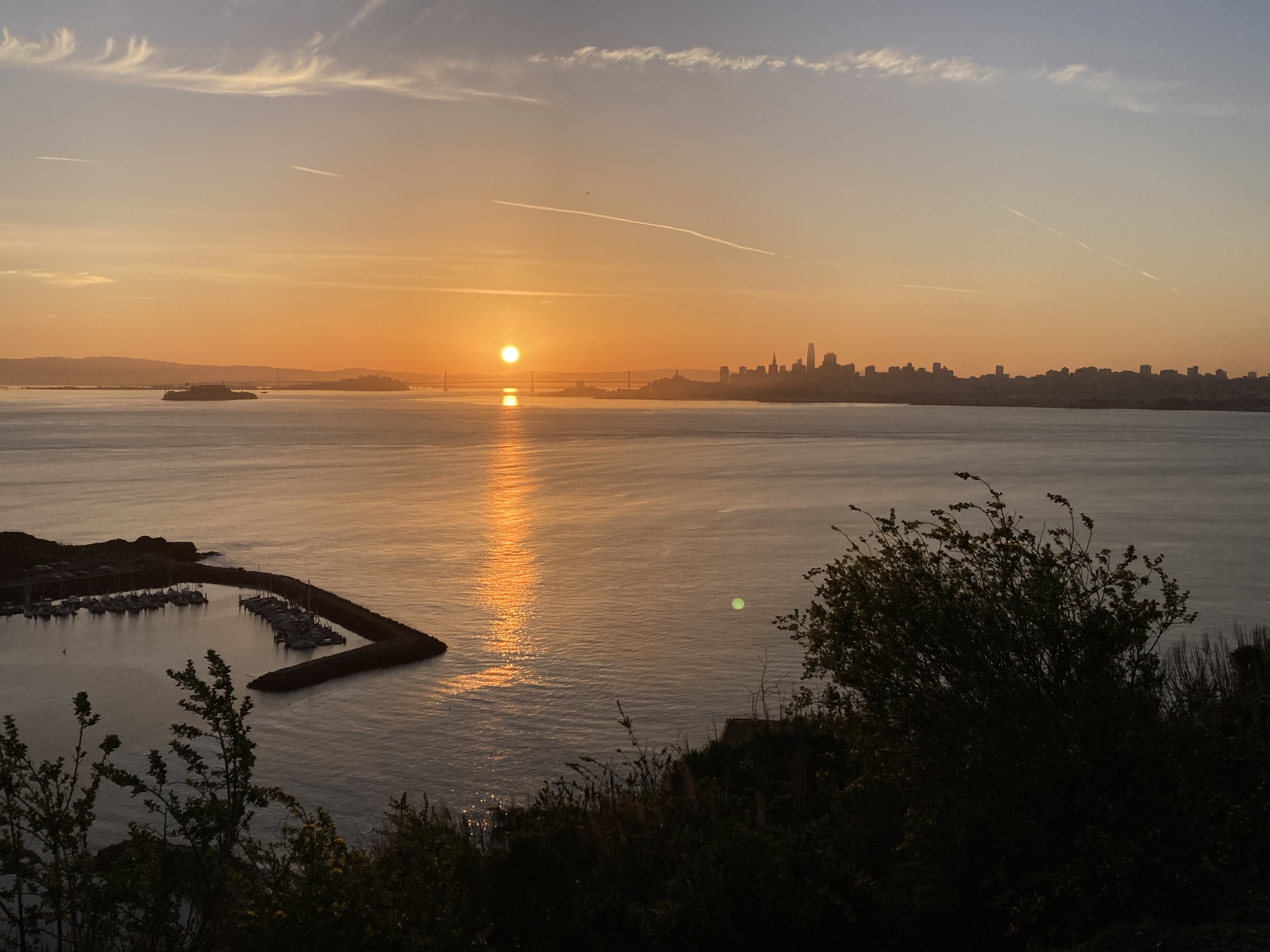
This spot felt safe enough, though it could be busy. It had large, clean bathrooms, which I believe are open 24hrs. I got to wake up to the sun rising over Alcatraz, the bay, and the San Francisco skyline (truly stunning), as well as get another close up and unique viewpoint of the Golden Gate Bridge. There are informational and historical plaques. And this was the perfect overnight spot for the nights prior to my day trips into the city – as I would be taking the ferry from Sausalito, and this was very close to Sausalito. I was here when the moon was full and got to watch the moon rise over the city, too.
Golden Gate Bridge Tolls

TLDR: vehicles with out of country license plates are not charged tolls for crossing the Golden Gate Bridge (though I’d suggest checking for up to date information).

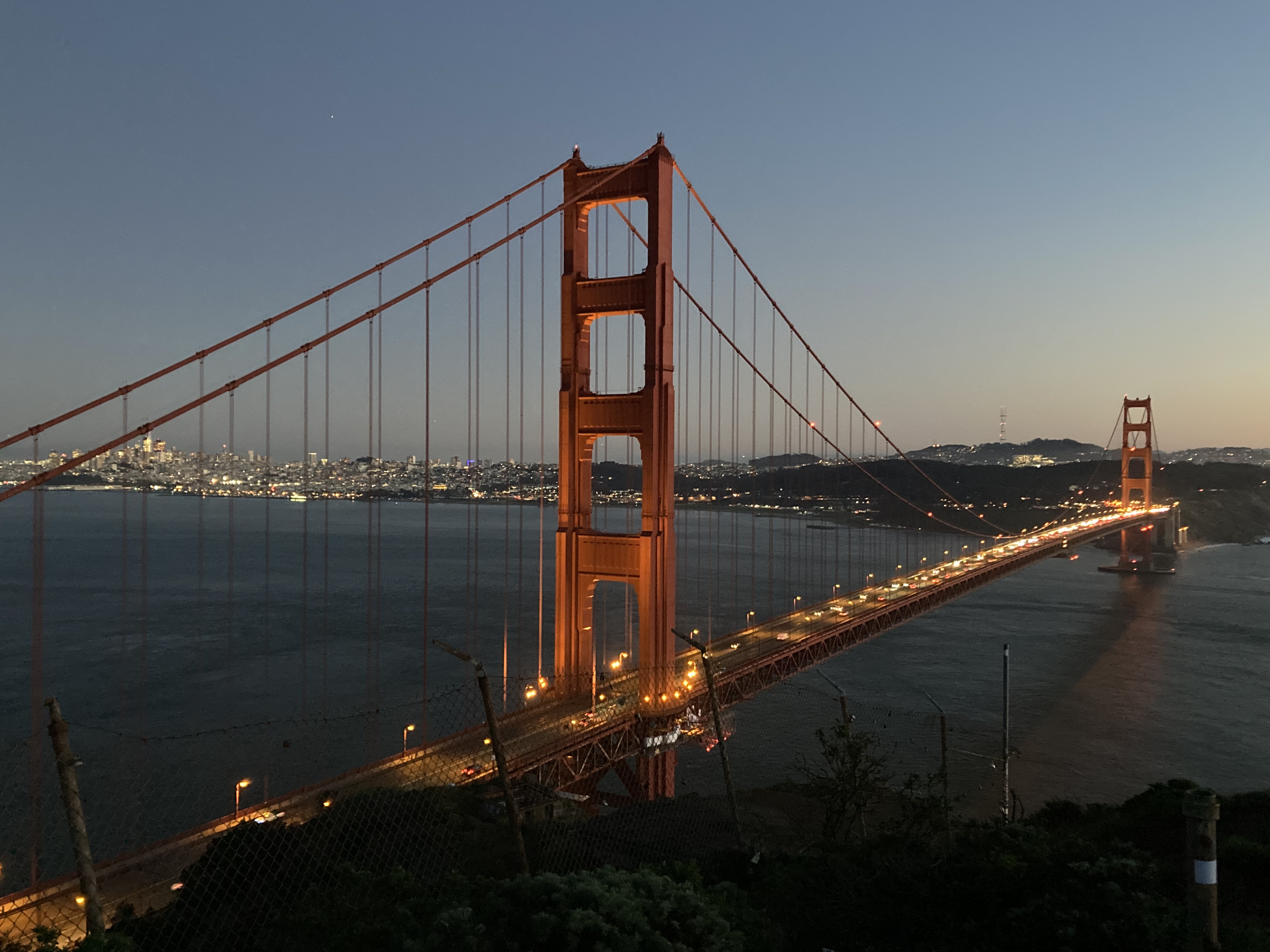
The Golden Gate Bridge is an iconic landmark. A 1.7 mile long suspension bridge built in 1937. There is a visitor centre with souvenirs on the south side. One thing that struck me was the informational plaque at the rest area on the north end of the bridge that spoke about adding to the bridge’s structure to dissuade suicide attempts with a suicide deterrent net system.

My plan was to pay the tolls right before leaving SF, so I could pay them in one go, knowing exactly what I owed, and not guessing at how many times I’d cross (you can also pre-pay). But it was pretty frustrating to find that as someone from out of country, driving a vehicle with out-of-country plates, I could neither pay online or pay by phone – I had to go to an in person location, or else wait a month or more for them to mail an invoice to the address my vehicle was registered to (which I did not prefer, as I didn’t know when I’d be back there and there are deadlines and interest and penalties if you are late to pay).

When I went in to SF, I went to the Bay Area FasTrak Customer Service Center to pay. I was told that they had no record of my license plate. I figured I’d get an invoice in the mail at some point. It’s been several years now, and I’ve never received an invoice.

Now, I presume that a lot of folks would probably leave it at that and forget about it. But I’d calculated that I could rack up hundreds of dollars for toll violations, and I am aware that toll evasion can have some severe consequences (being reported to insurance companies, license suspension, or if you try to re-enter the US – federal marshalls could have a warrant for your arrest – at least that’s what I’ve read online).

But I couldn’t pay for tolls if I couldn’t locate the records.

After a bunch of research, I found some anecdotal accounts where Canadians said they were told by a FasTrack supervisor that out of country plates do not get registered in the automated system, therefore crossing the bridge is essentially free. I dug deep to get a definitive answer regarding tolls and how to pay – and I couldn’t find squat – other than these anecdotes. Here’s a screenshot and link to a reddit thread on the topic:
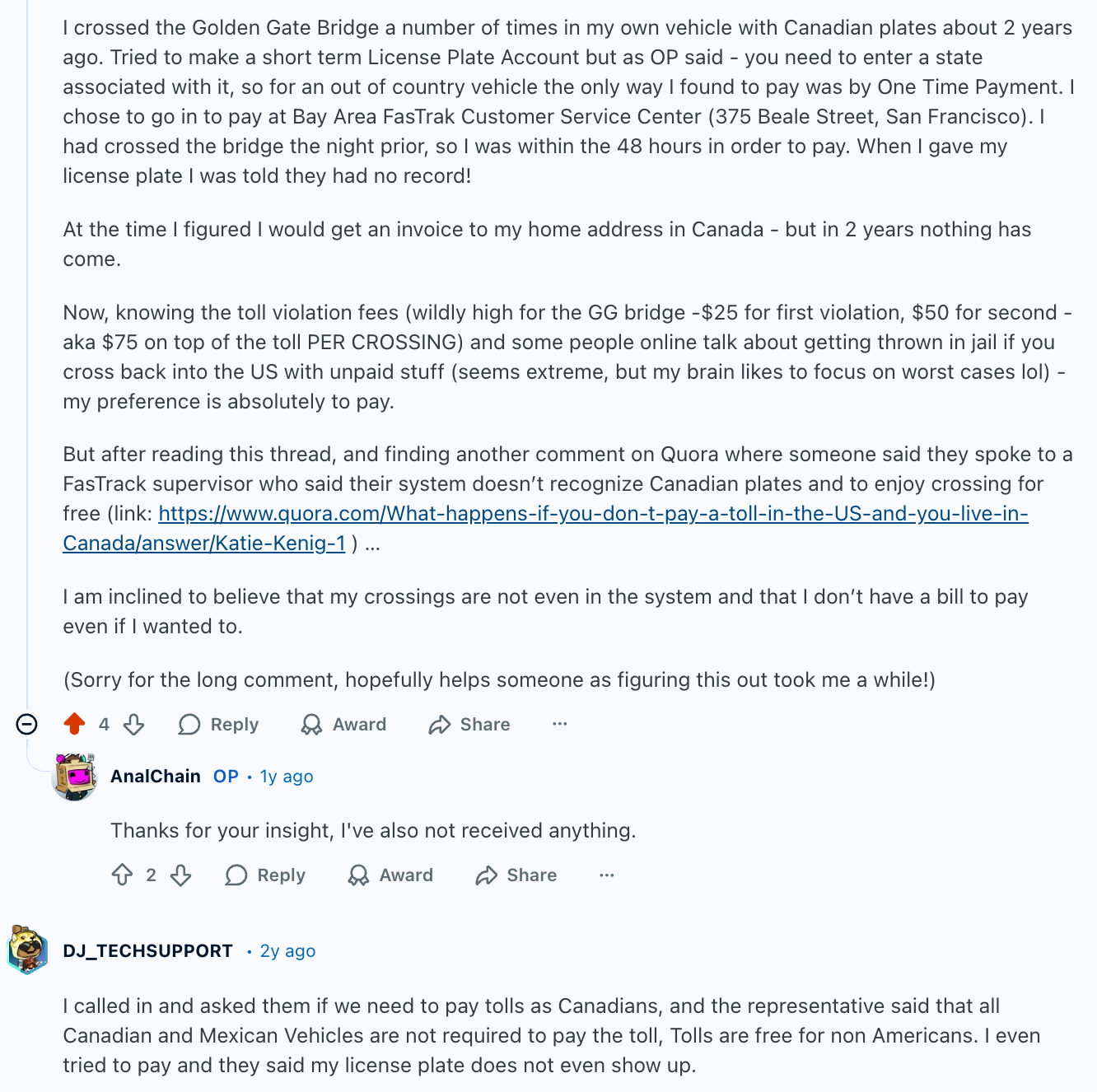
This is GGB-specific – as I’ve seen people say that there are agreements for cross-border sharing of information between states and provinces that border each other – aka, if you rack up tolls in a neighbouring state they are recorded, and you will receive an invoice in the mail.

Nobody can tell me I am not thorough to a fault or that I didn’t try!

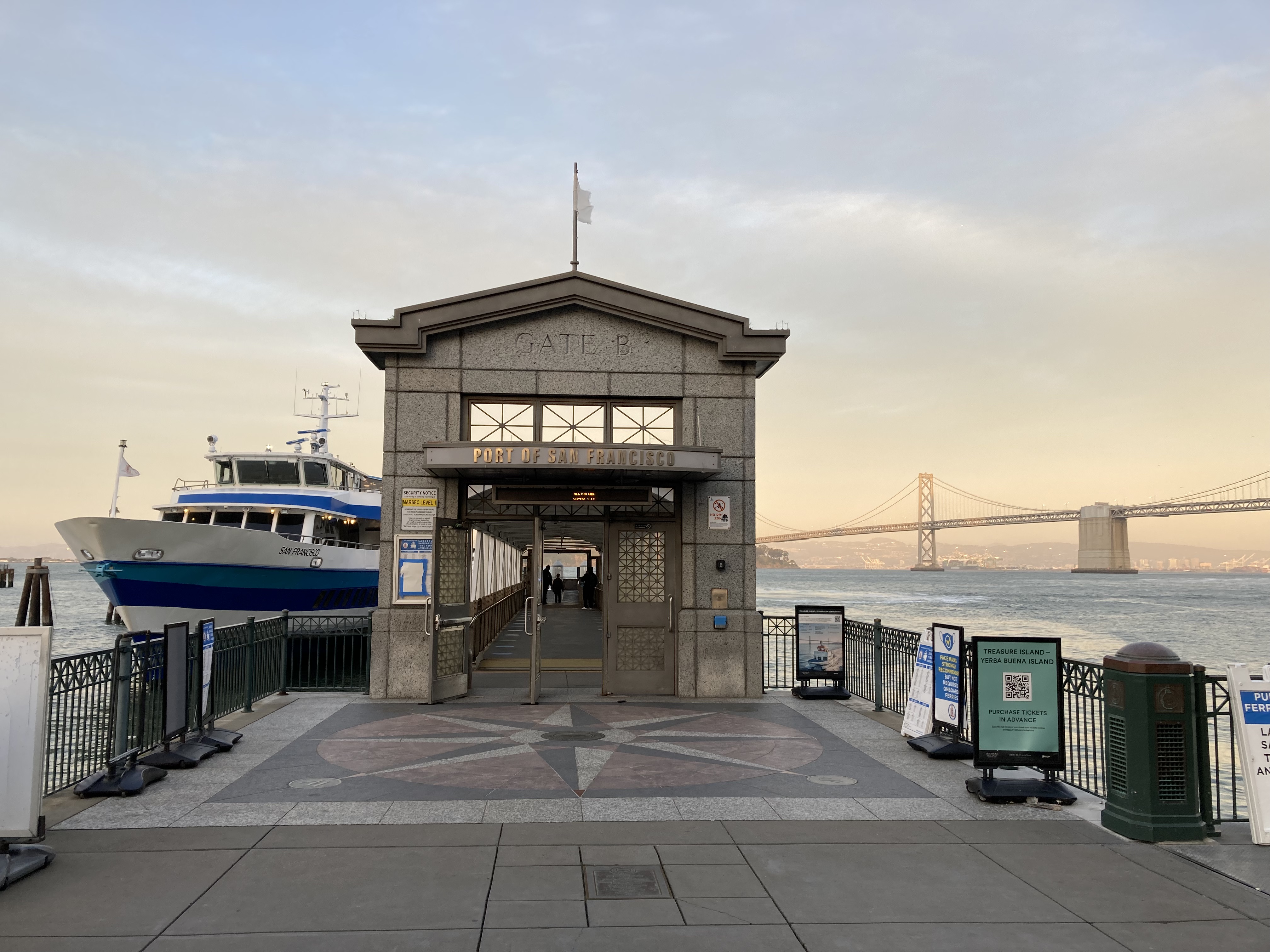
The Ferry From Sausalito

Sausalito proved very useful in my strategy for visiting San Francisco. You get to the SF area and the impression is that above ground parking almost certainly ensures that your windows will be smashed and your belongings or vehicle will be stolen. But failure was not an option.

I was nervous to leave the van somewhere all day, but my approach tends to be that knowledge is power – be smart and prepare rather than not do something out of fear. So rather than drive in to San Francisco, I parked the van at the ferry terminal parking lot in Sausalito and took the ferry to San Francisco. It’s actually super convenient, and you get to ride the ferry past Golden Gate Bridge and Alcatraz.

But I didn’t just park in the parking lot – I parked in the spot closest to the terminal, by the boardwalk, right next to the machine where you pay for parking. Essentially, I parked in the most visible parking space that would have people walking by the most, so that it would be less likely for someone to try to break in due it being so conspicuous. I left the van here across two full days and no break in!

Honestly, I was kind of proud of this strategy. I did get a parking ticket on one of the days, as I had forgotten to extend the parking. I was in Haight-Ashbury! I was having fun! It slipped my mind! It was a bummer. But certainly not the worst thing that could have happened.

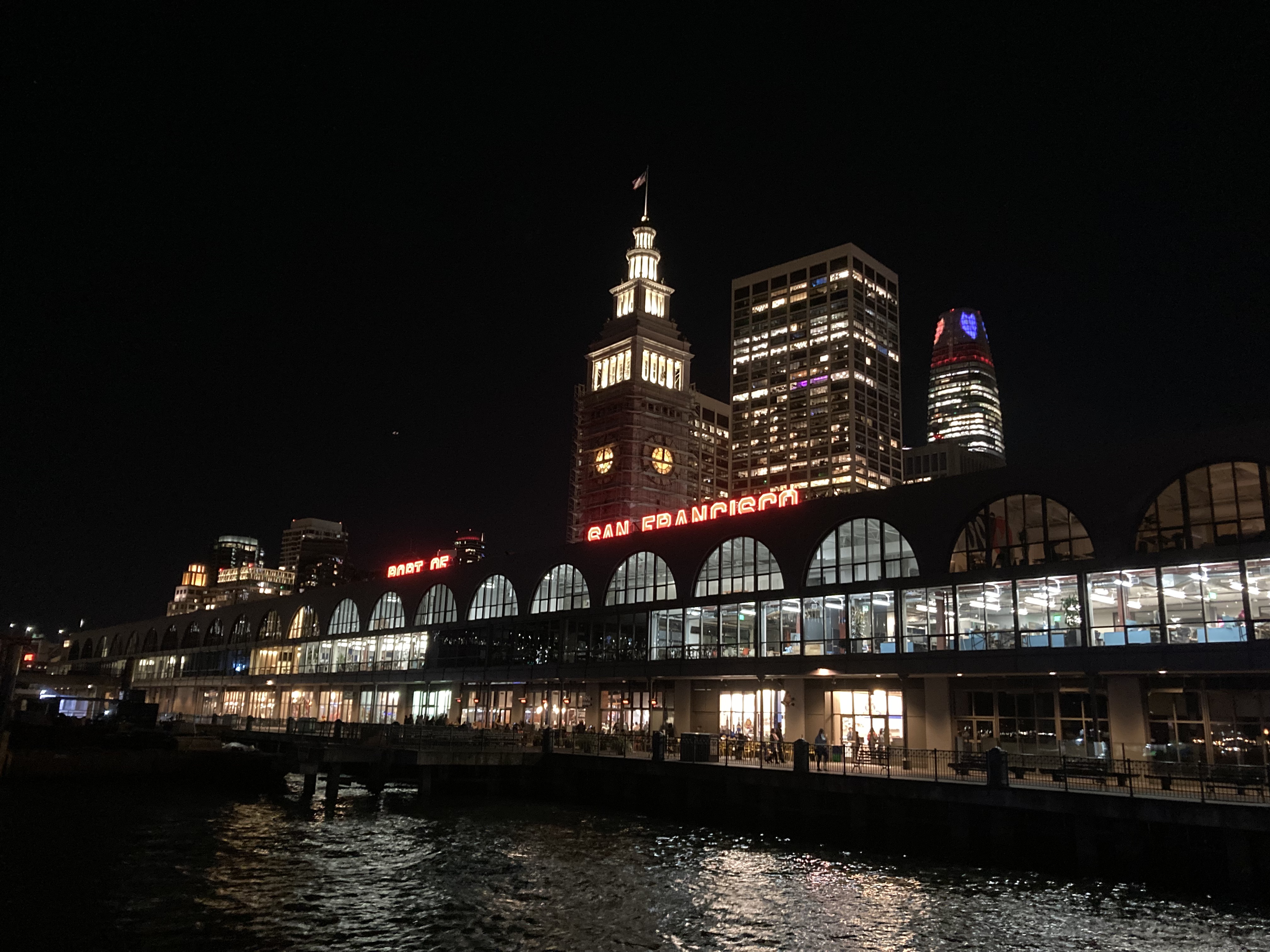
The ferry terminal / Ferry Building in San Francisco is centrally located, part of a touristy area, and has food and shops, so it’s a good checkpoint.
Day 1

Have I mentioned that I am not a morning person?

It worked out in my favour that I had mostly sunsets to watch over the ocean on the Pacific coast (as opposed to sunrises). But a San Francisco skyline vista point sunrise and a jam packed city day are two things that demand getting up early (while it was still dark outside). The mission demanded it!

It’s also funny to look back at how I thought I could get everything done in one day…

I slept at the vista point rest area, got up, got ready, drove to Sausalito (10 minutes), and caught one of the first ferries out.

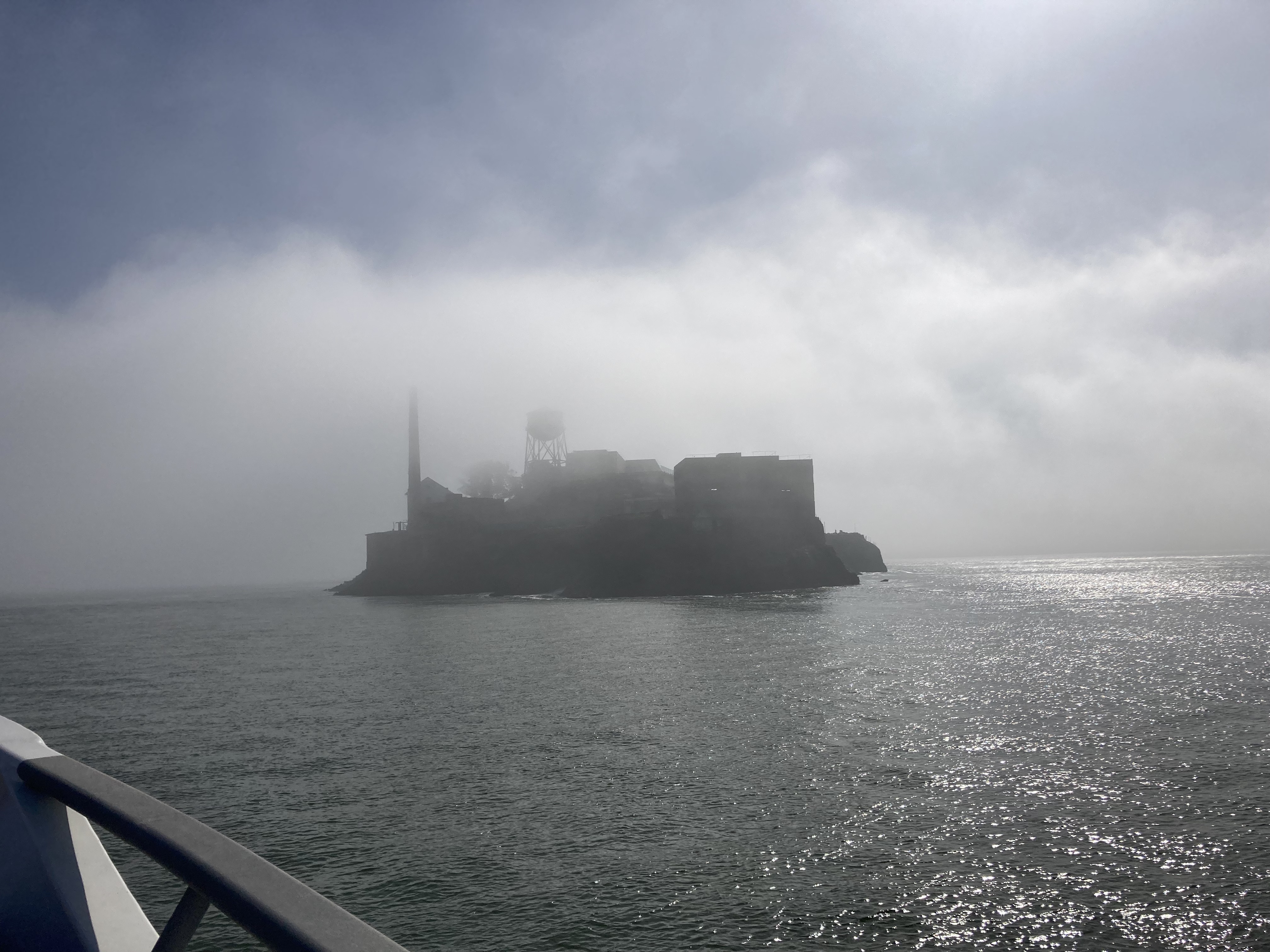
The ferry ride was beautiful, with characteristic fog hovering over the Golden Gait Strait. The fog cloaked Alcatraz in perfect moody fashion.
After arriving at the Ferry Building I walked south along the water with views of the San Francisco-Oakland Bay Bridge.
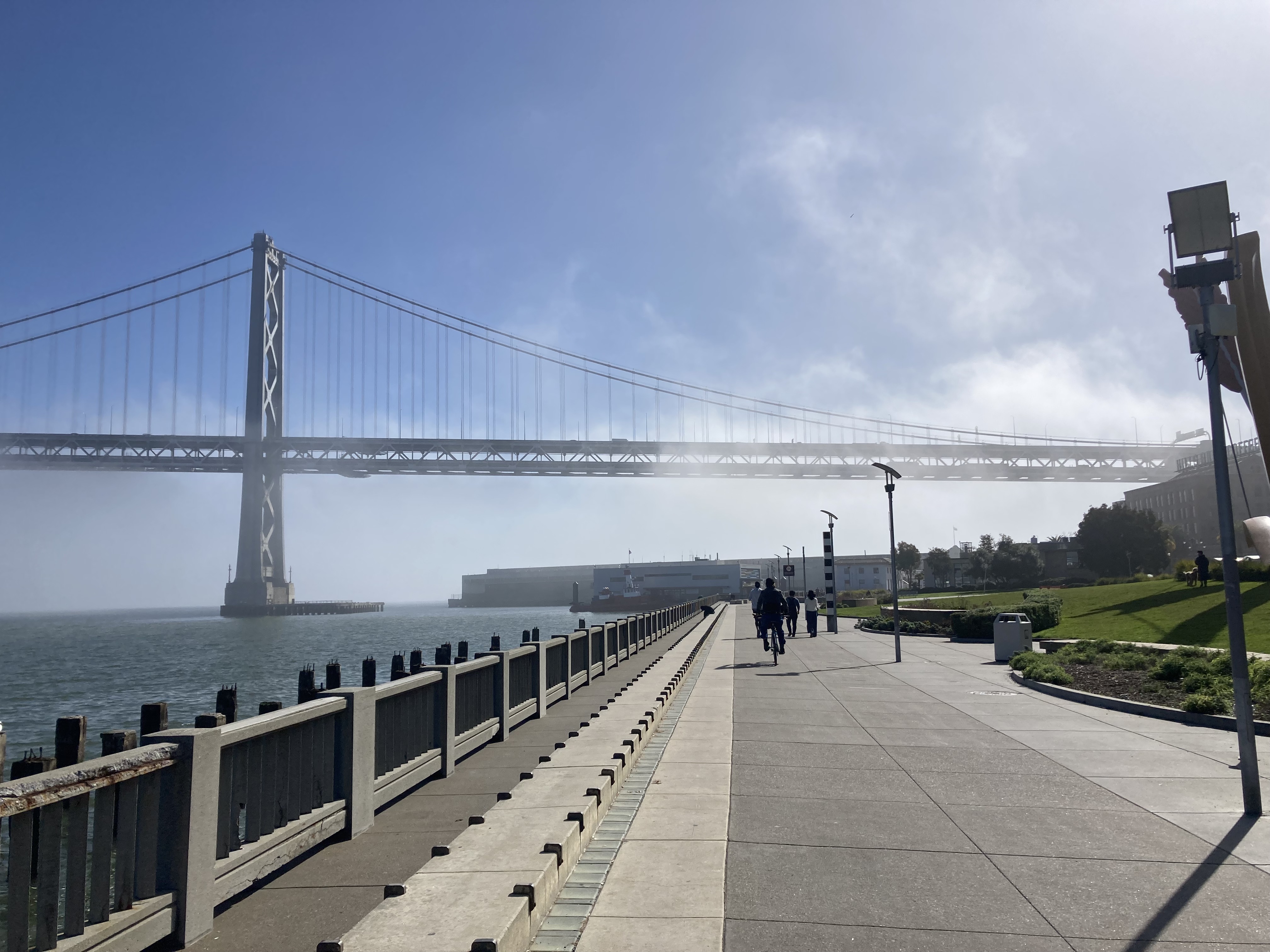
I’m an eat my vegetables first (save the best for last) kind of gal, so my first line of business was to try and pay my bridge tolls. While walking I took in my surroundings with glee.

From there, my destinations were chosen sequentially based on proximity. The next logical stop was Black Hammer Brewing. It was still early in the day, luckily they were open. It had been such a busy morning that I realized while sampling a flight that I had not yet eaten and I was having beer for breakfast!
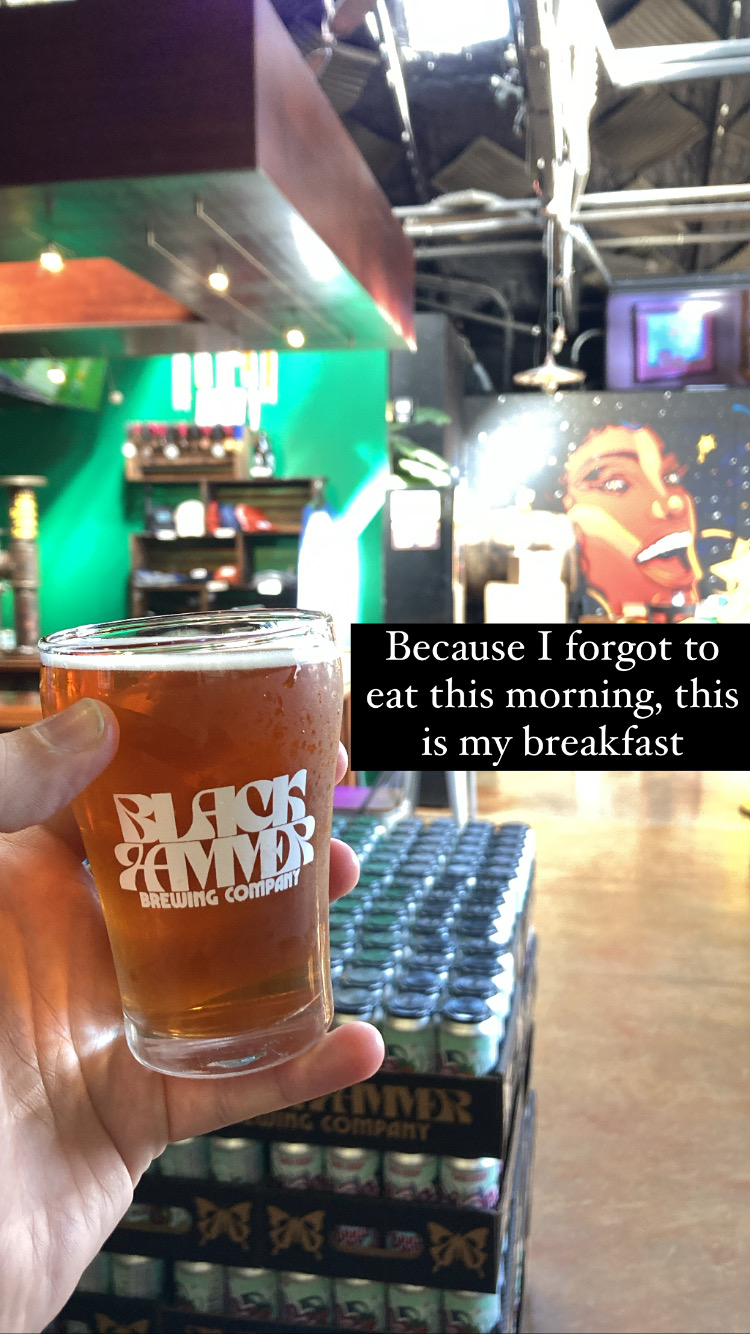
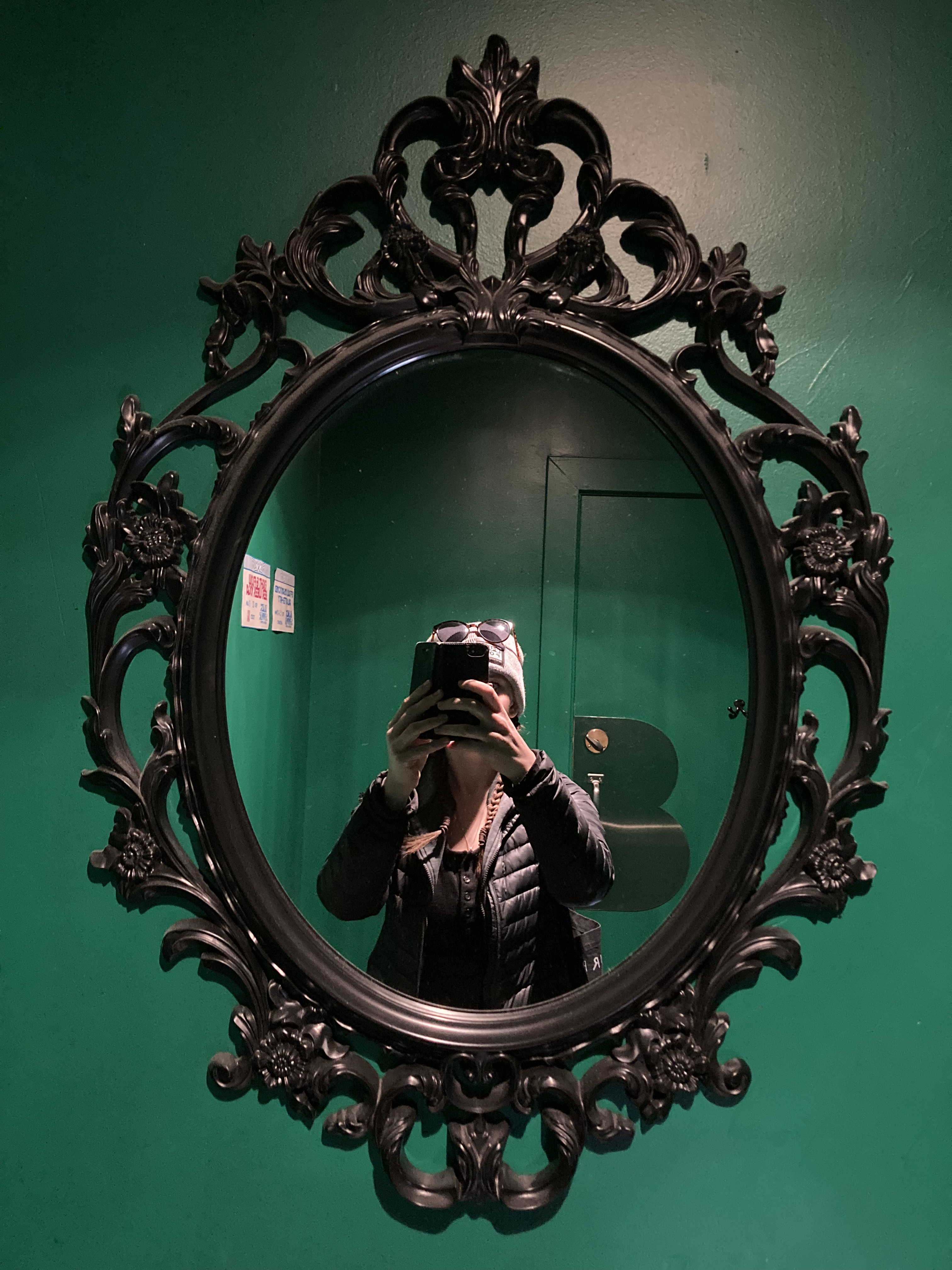
I had a nice little convo with the bartender about my travels, a trip she did to Canada, and her time living in LA. I told her how stunning San Francisco was, how much I was enjoying it.

The beer was interesting – which is right up my alley – with gluten free options, a barleywine, a barrel aged apricot beer, and a hefeweizen. A good hefeweizen is up there with my favourite styles, and this brewery does claim to give German beer a run for its money.

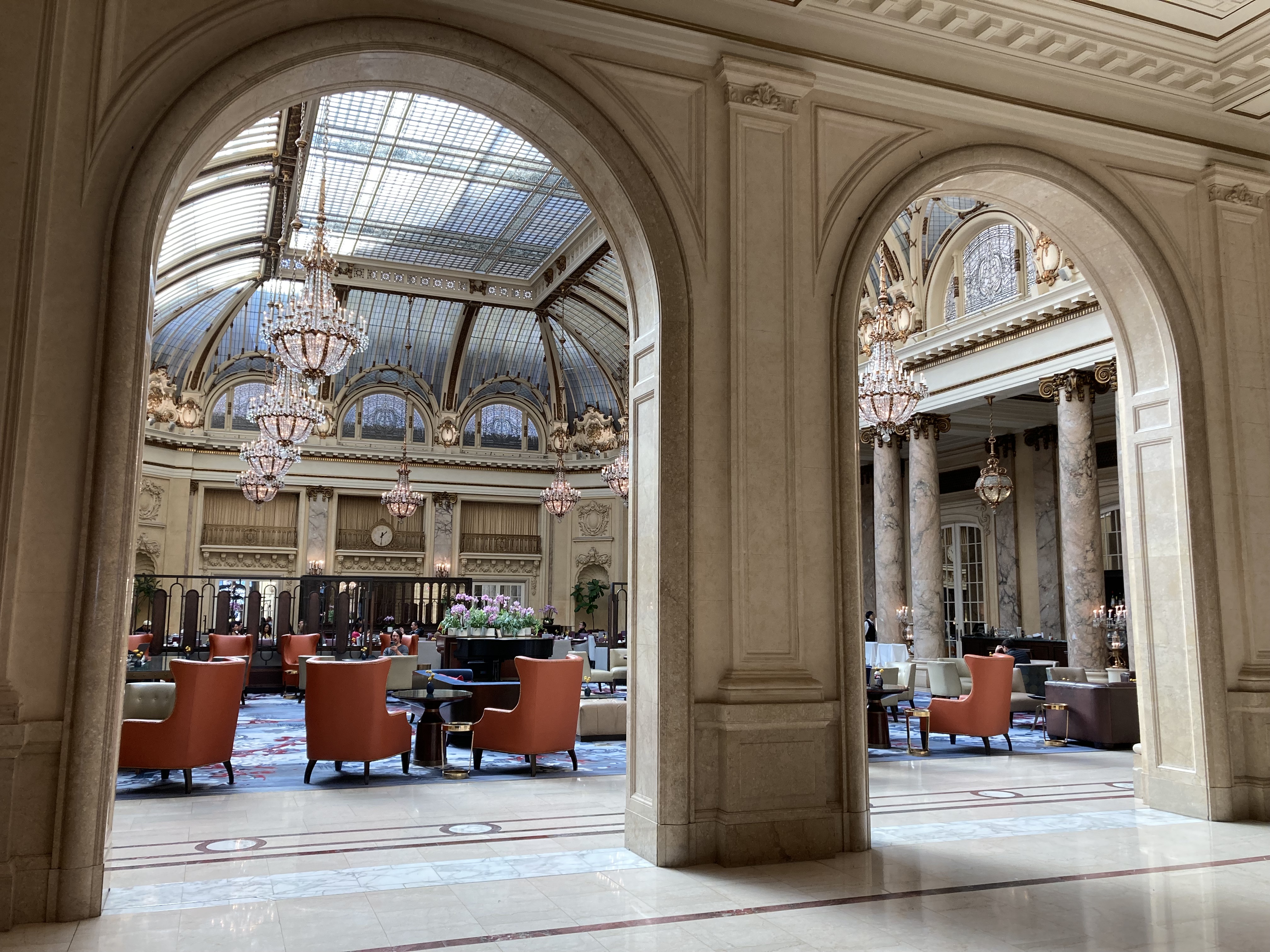
On my way to Chinatown I walked through the Financial District and checked out the Palace Hotel, a historic luxury hotel in the city built in 1875. Its Garden Court, where they serve traditional afternoon tea, did not disappoint.
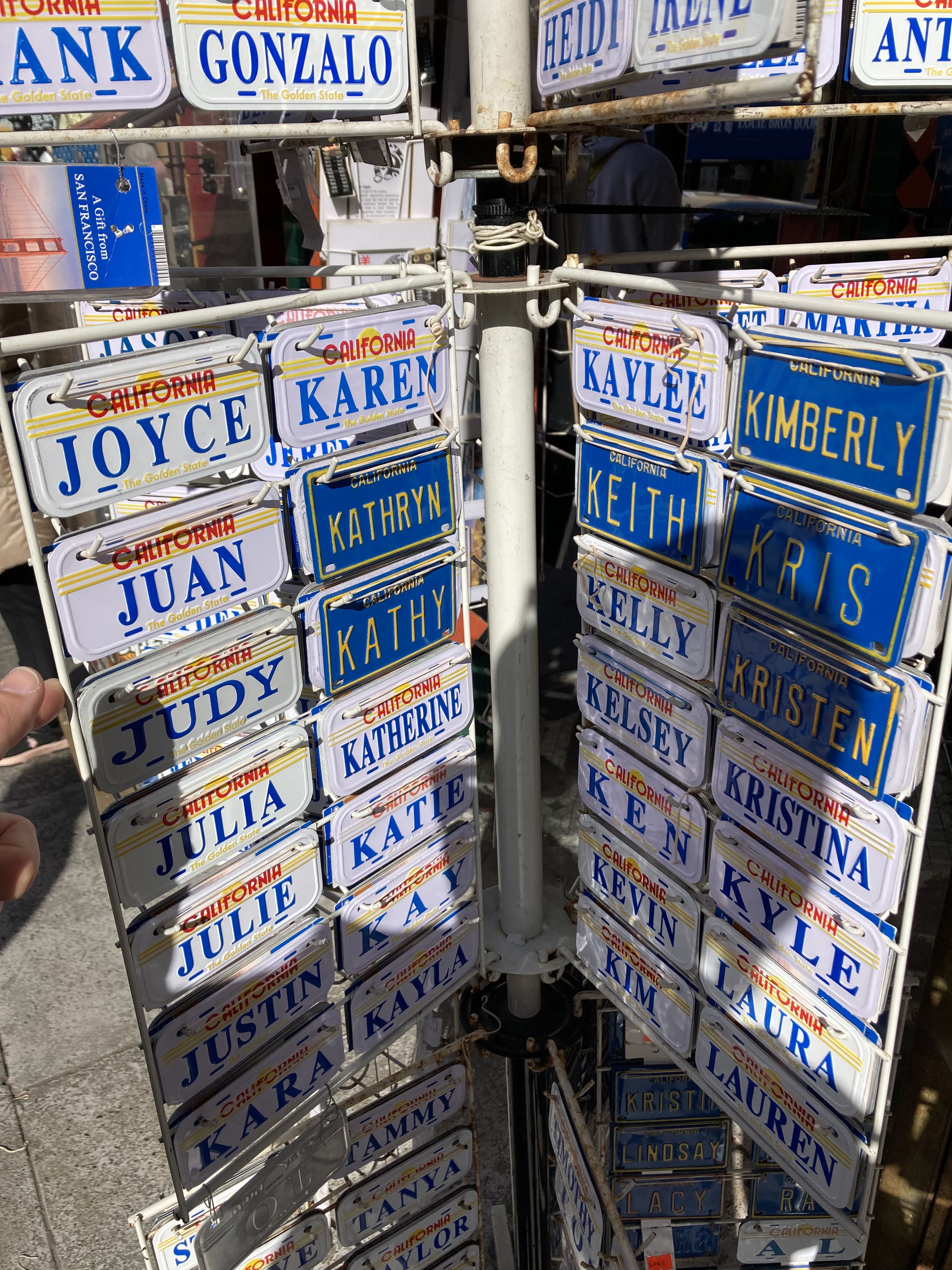
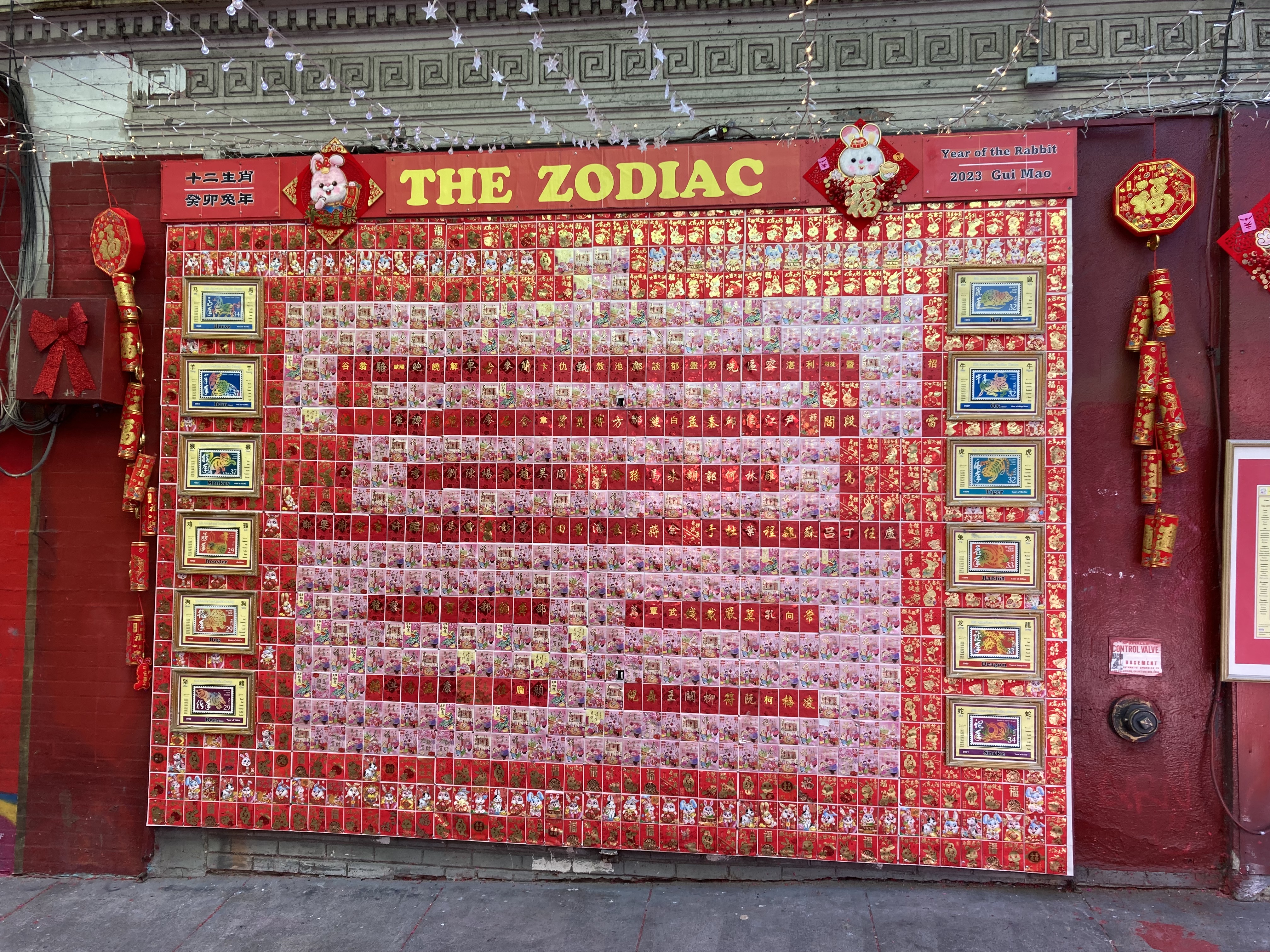
I arrived at the Chinatown gateway at Grant Avenue and Bush Street, and walked along Grant Avenue – the main street in Chinatown for tourists. San Francisco’s Chinatown, established in 1848, is the oldest and largest of its kind in North America. There are some very interesting shops. I picked up a pair of sodalite dice. And I lamented the fact that my name is never part of those souvenir stands (you know the ones)…
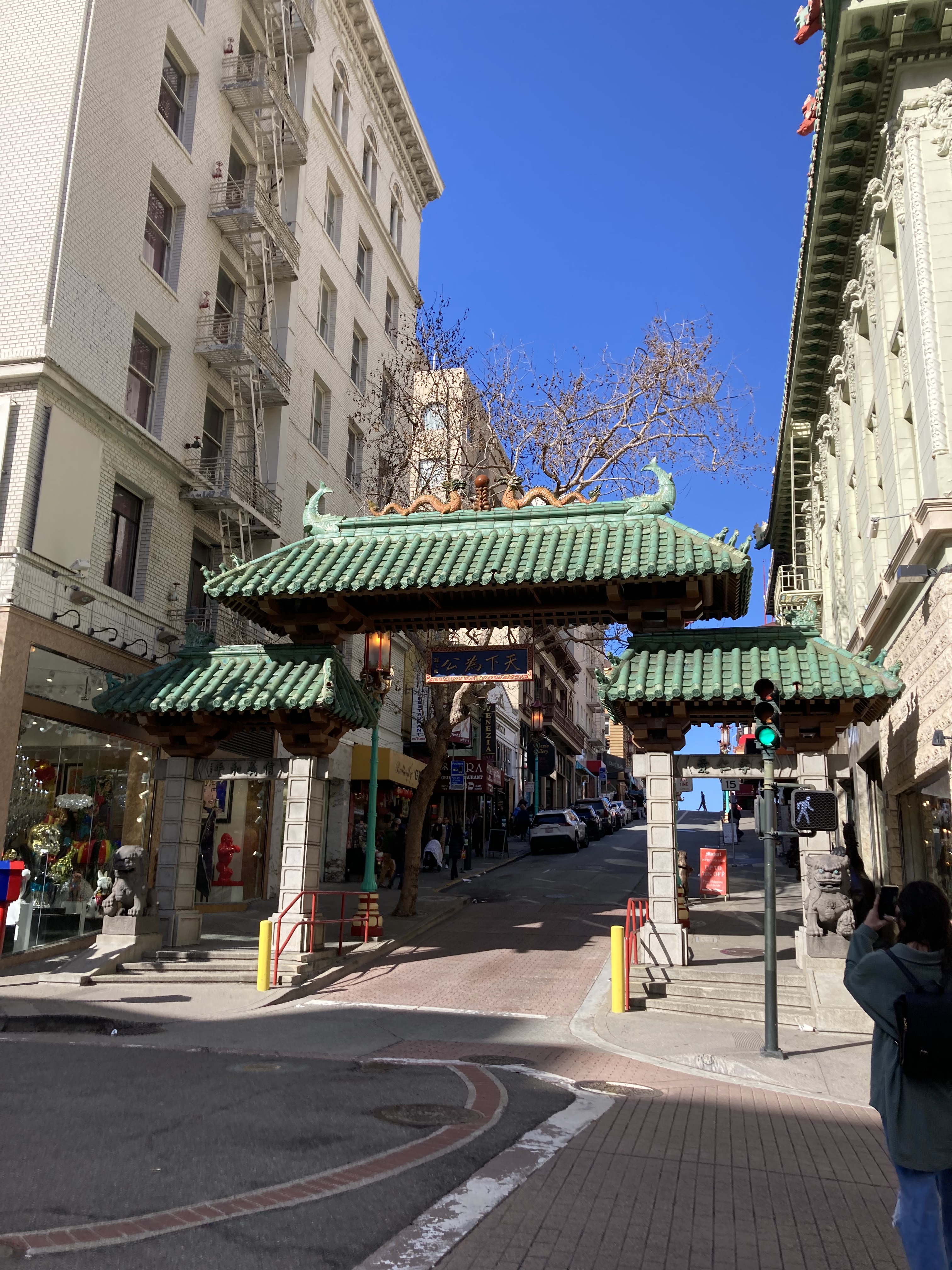
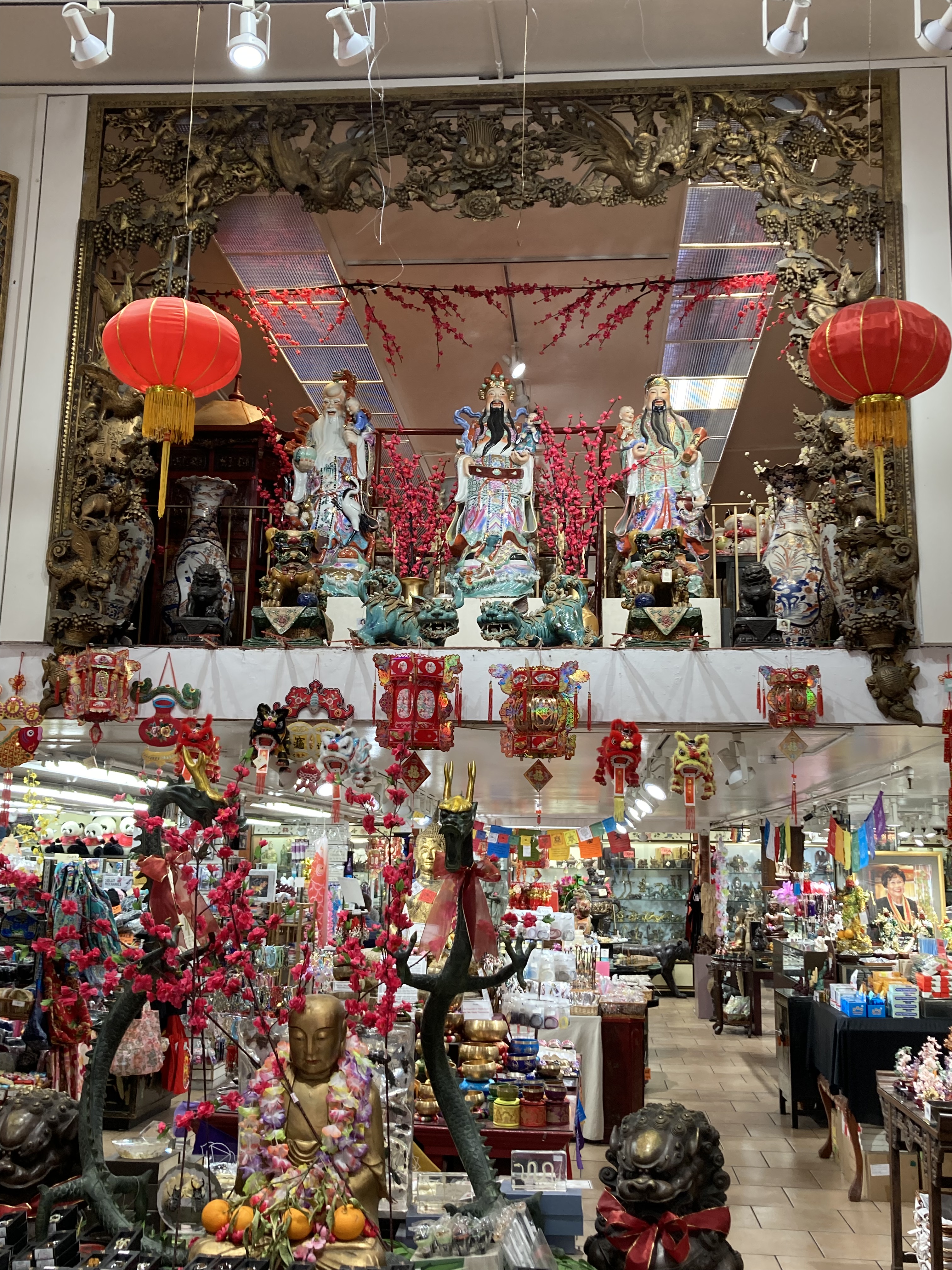
I should have done more research about Chinatown. Looking back, I had made note of the destination and only planned to walk through. And that’s fine, I think some travel is best left to minimal planning. But I just read about the Golden Gate Fortune Cookie Company?! Apparently Stockton Street is the “real” Chinatown. There’s Tin How Temple, one of the oldest Taoist temples in the US. Along with many authentic restaurants and bakeries. And walking tours seem to be highly suggested.

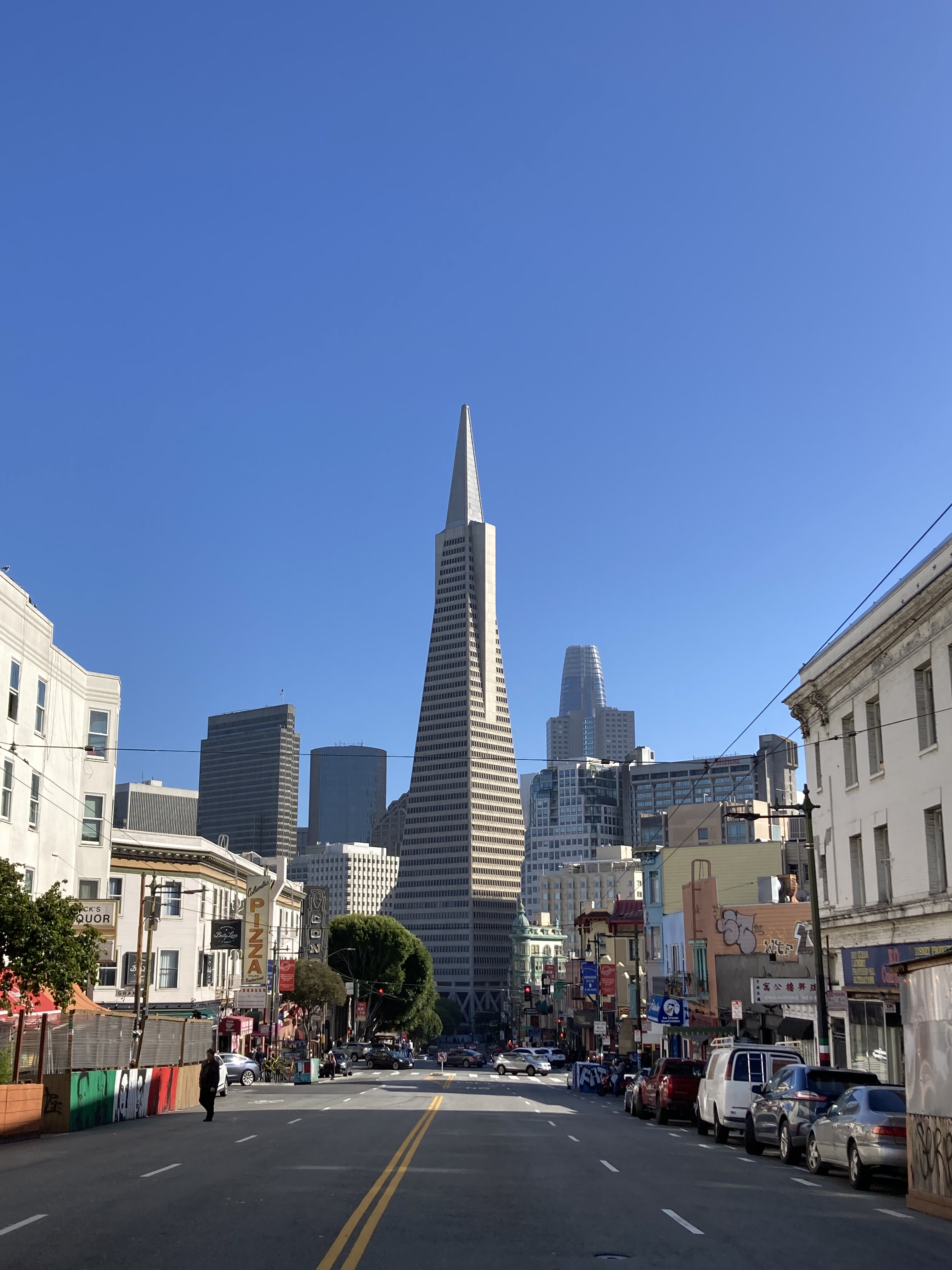
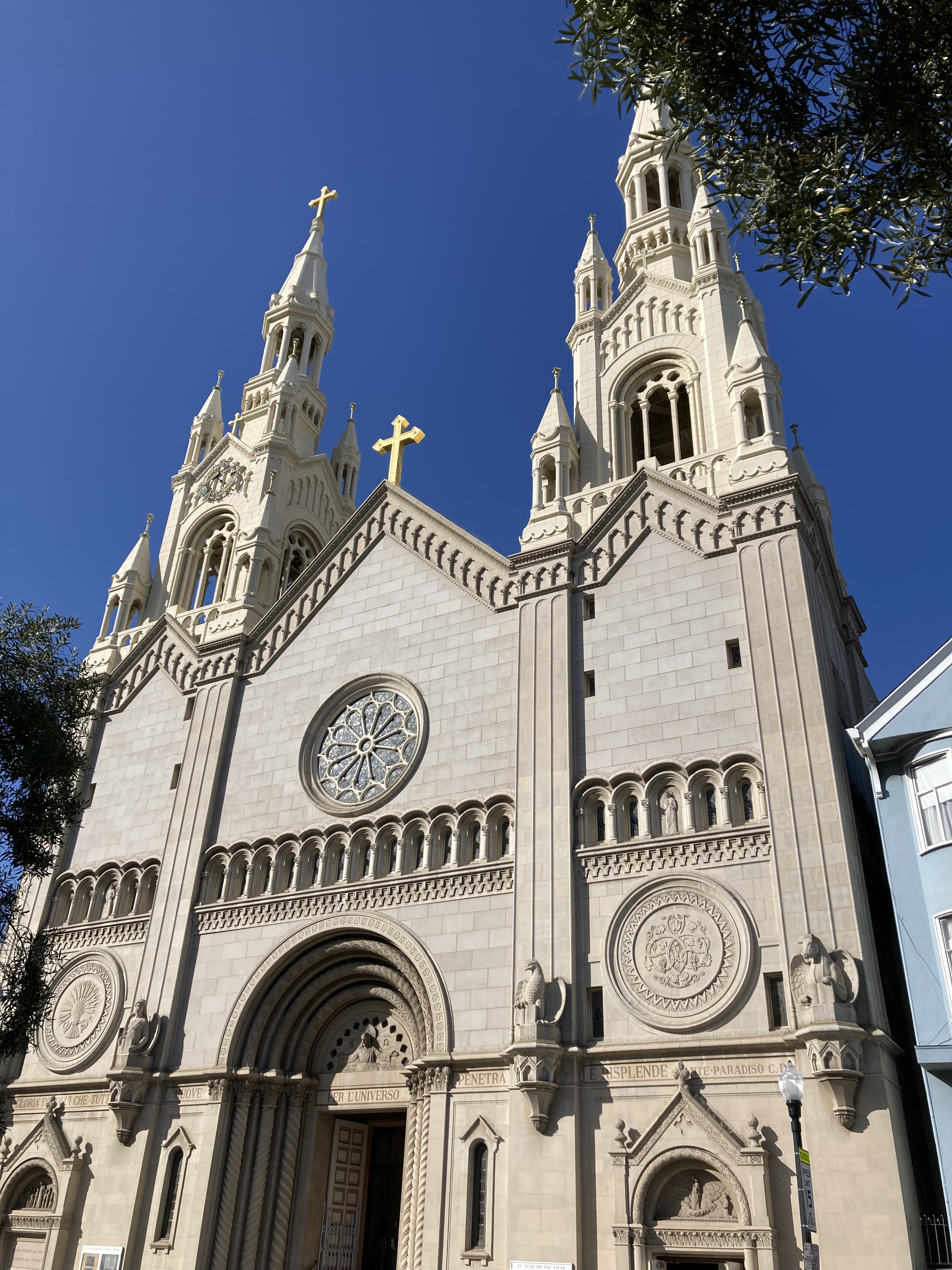
Walking north through Chinatown I arrived at the North Beach neighbourhood (Italian community), at the foot of Telegraph Hill. I got a view of the Transamerica pyramid (modernist skyscraper, second tallest building in SF) and took in Saints Peter & Paul Church. Fun fact, Marilyn Monroe and Joe DiMaggio took photos in front of this church after their wedding in 1954. This church has also been featured in movies, including Clint Eastwood’s Dirty Harry. It is ironically located at 666 Filbert Street.
Then came the slog up Telegraph Hill, which reminded me of walking in downtown St. John’s, NL. Which also reminds me how many times I mentioned Newfoundland to Americans and they had never heard of it – like I was from another world.

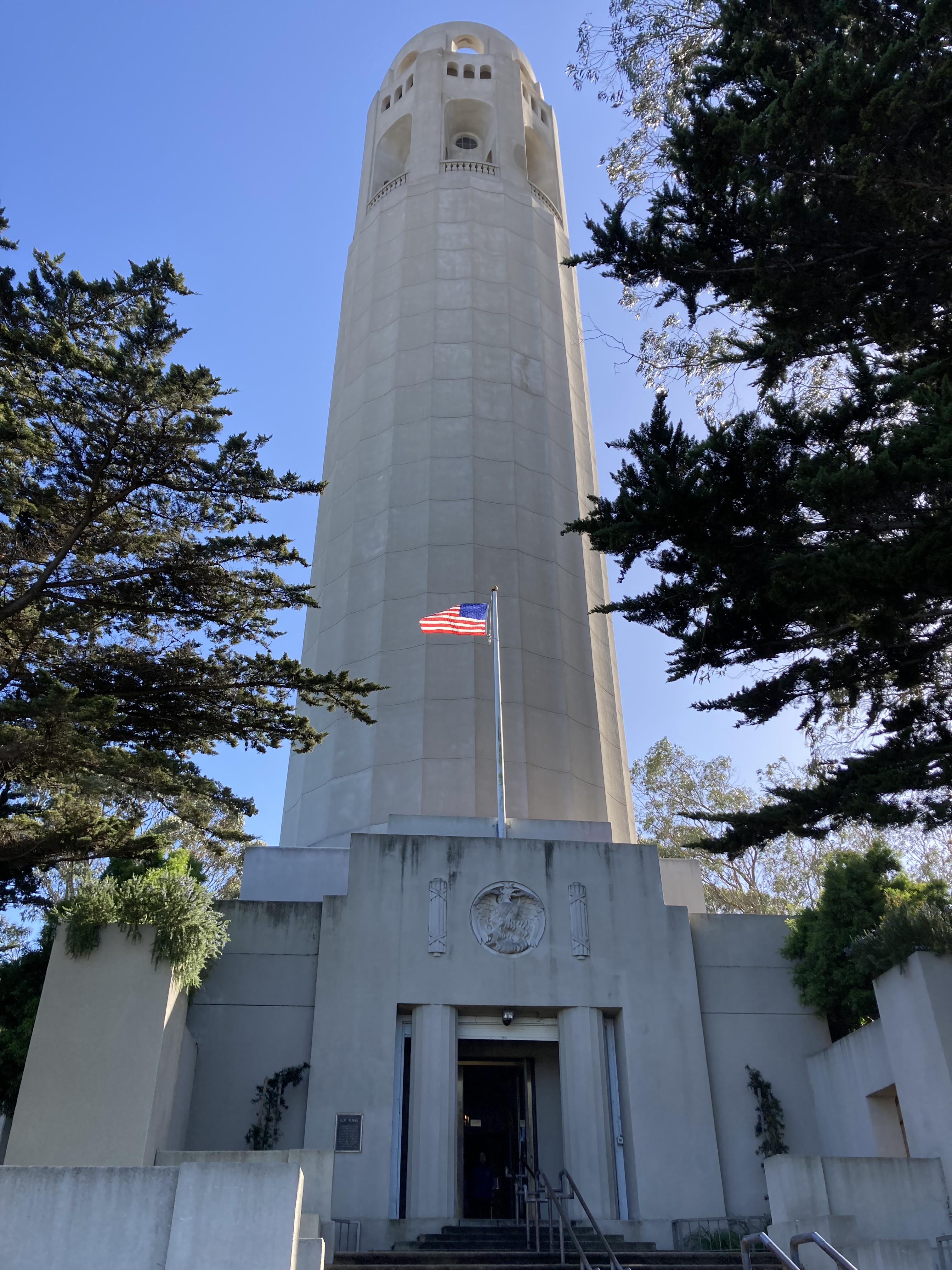
Telegraph Hill is a neighbourhood, but also one of the first seven hills to be named in SF (there are now 44 or more). It hosts a flock of parrots (I should have kept my eyes peeled, because I didn’t see any – but apparently they move around the city). Arguably the hill’s main attraction is Coit Tower, a 210ft ivory-coloured tower, built in 1933, at the apex of the hill. From here you get some wonderful views of the city, including the famous Lombard Street – the “crookedest street in the world” (I also fumbled taking this in). Inside the tower are murals painted in the early 1930s depicting daily life during the Depression (or the previous communist, anti-capitalist scandal version). And you can take an old elevator to the top. I mostly walked along streets to get here because I was coming from the west side, but you can take the famous 400+ Filbert Street steps if you’re coming from the other (east) side of the hill or the Embarcadero / waterfront area. These steps are surrounded by gardens and views!
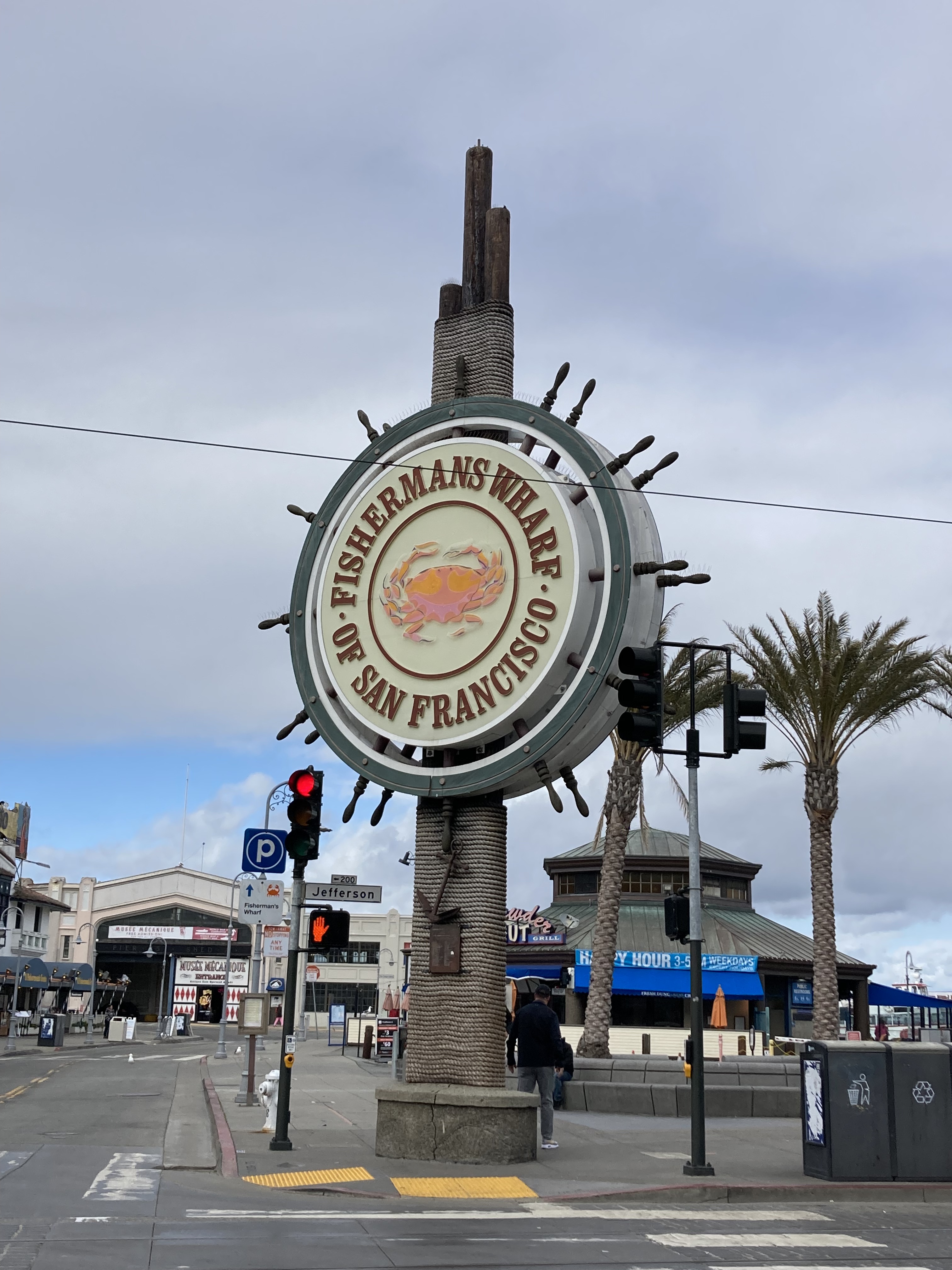
From here I made my way back to the waterfront, to the Embarcadero – which is essentially the stretch of roadway along the piers of the city’s northeastern shoreline, from the Ferry Building (south end, before Pier 1) to Fisherman’s Wharf (roughly Pier 39 to Fort Mason).

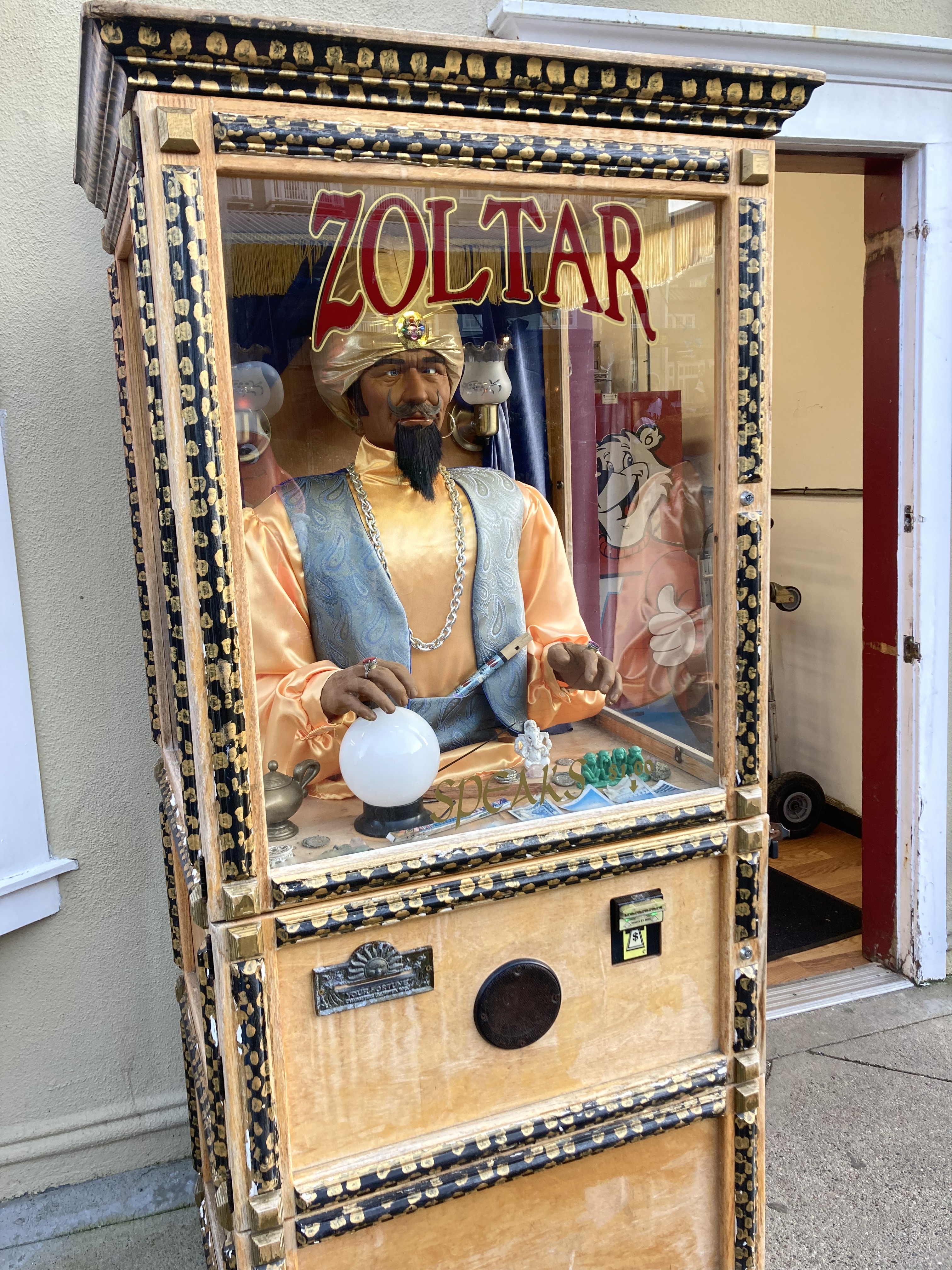
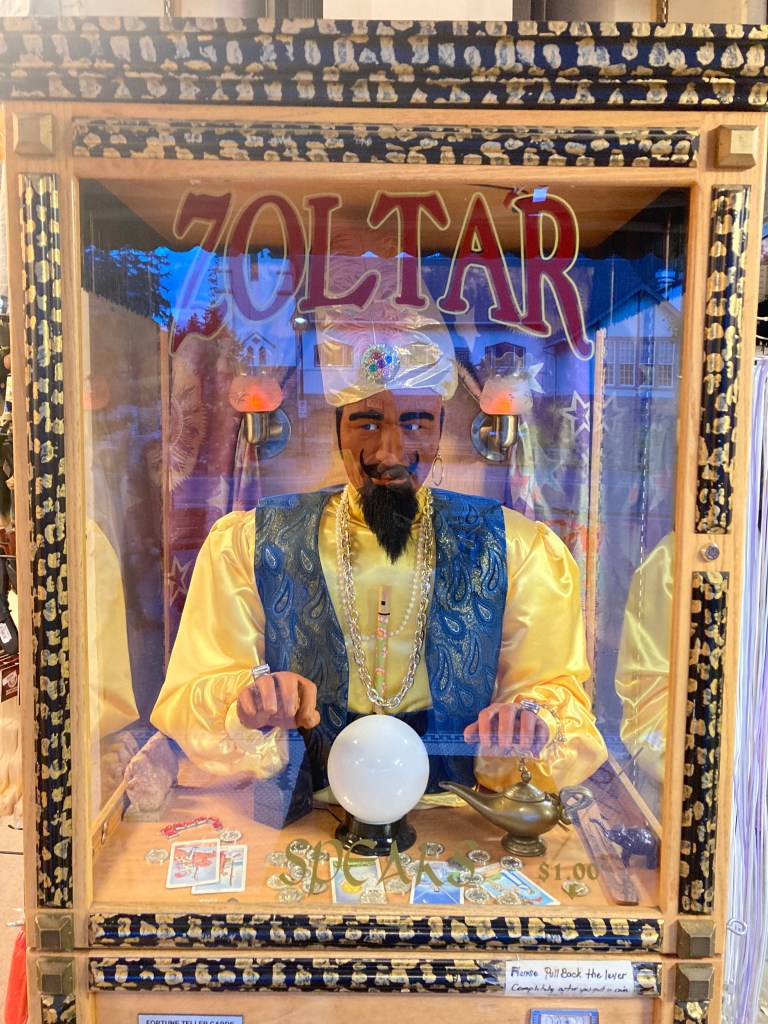
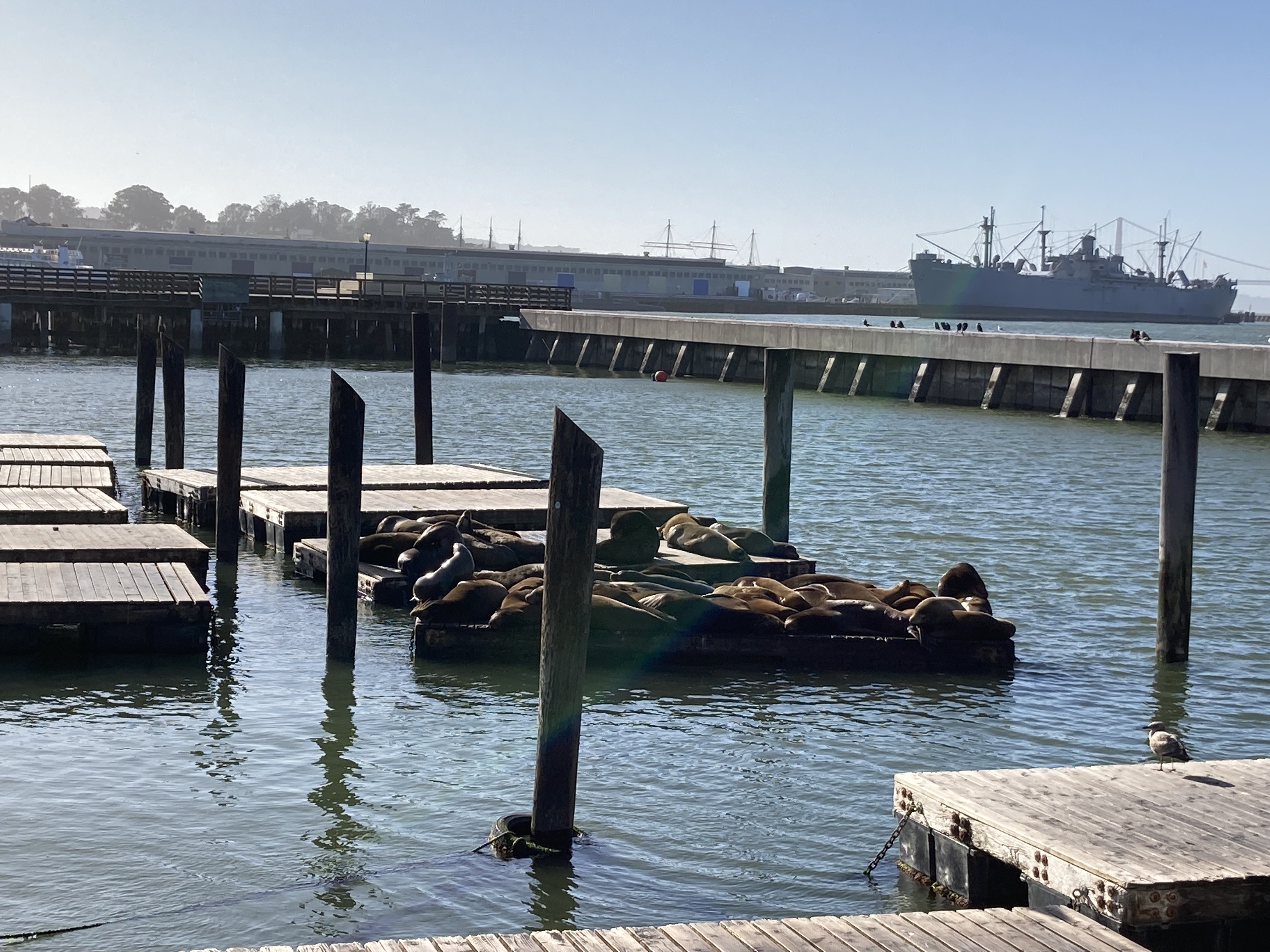
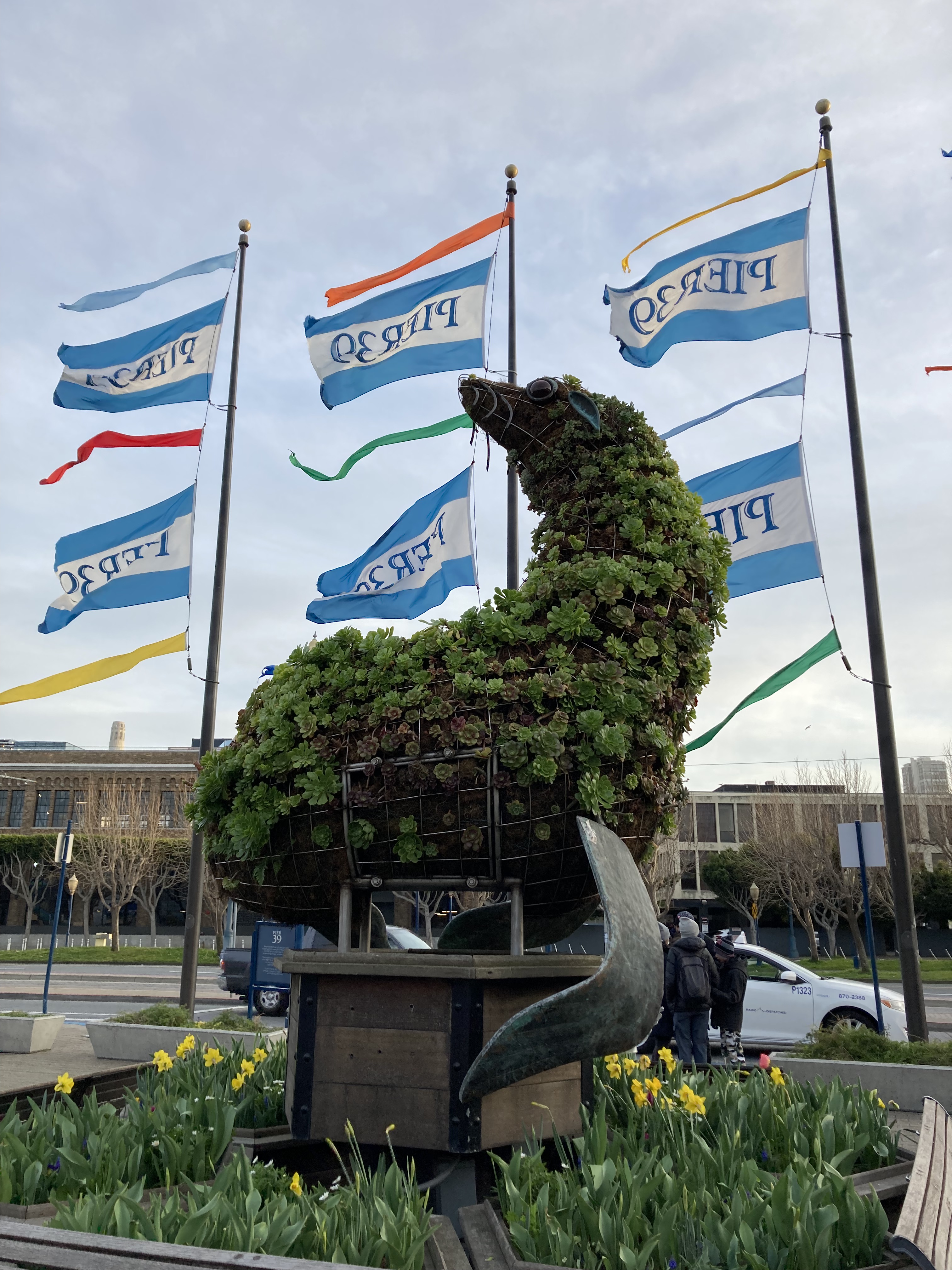
I walked around Pier 39, saw the sea lions lying on the docks, explored the shops. It’s a very touristy spot, but worth it in my opinion. And there are some elevated spots where the views back towards the city are nice. This was also the first place in California where I had a Zoltar sighting (and inevitably bought a fortune).
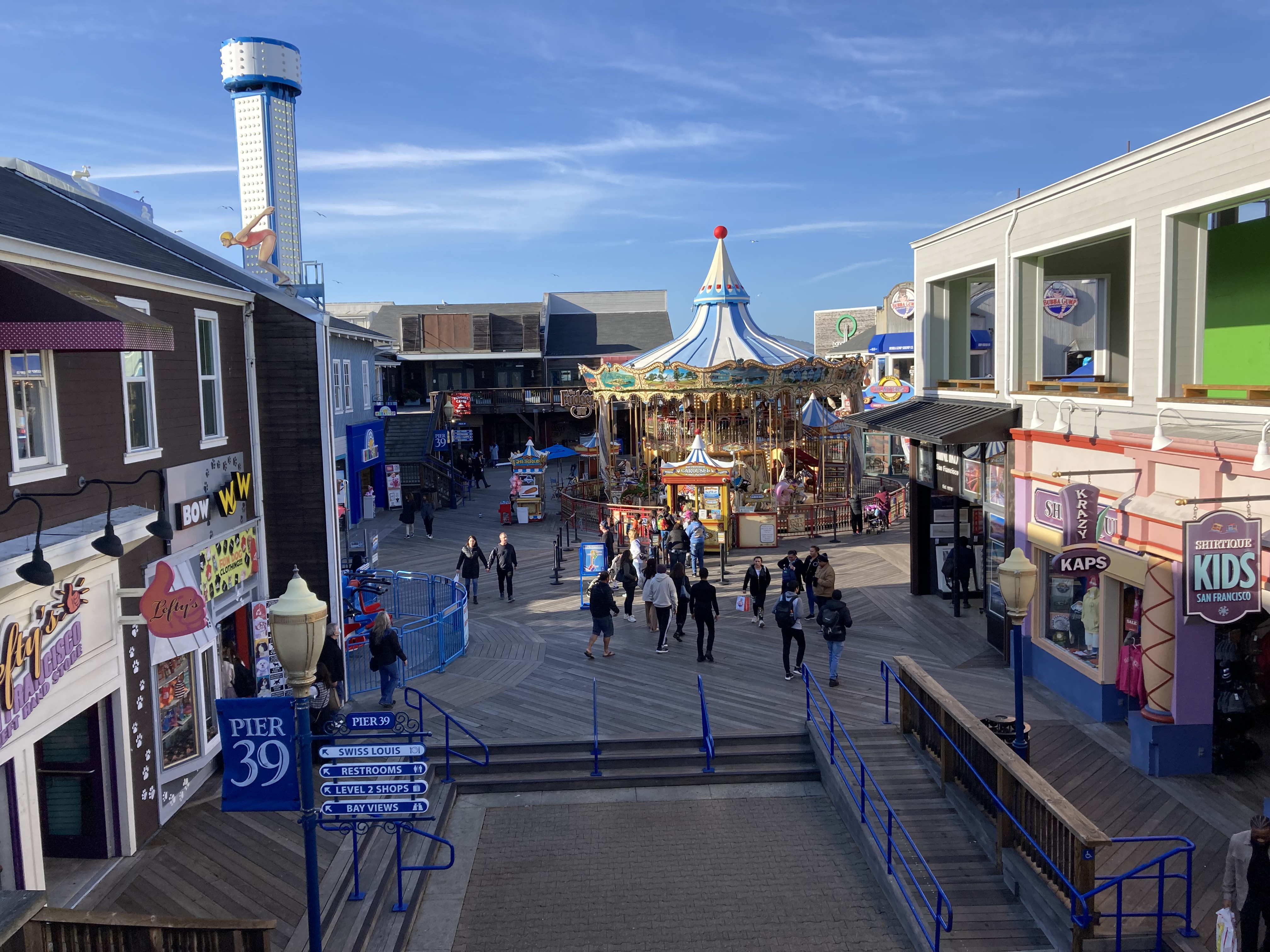
After the pier I walked through Fisherman’s Wharf and got some seafood to fuel me. The chowder in sourdough rolls are a classic here, though I opted for a fish sandwich. I will say, it wasn’t the best fish I’d had on the west coast – don’t believe every sign that tells you their’s is the “world’s best” (I think you’re more likely to find the best at a little no name joint off the beaten path).

I passed by the Pier 43 Ferry Arch, through which I could see the USS Pampanito, a WWII naval submarine, that has a museum and memorial.
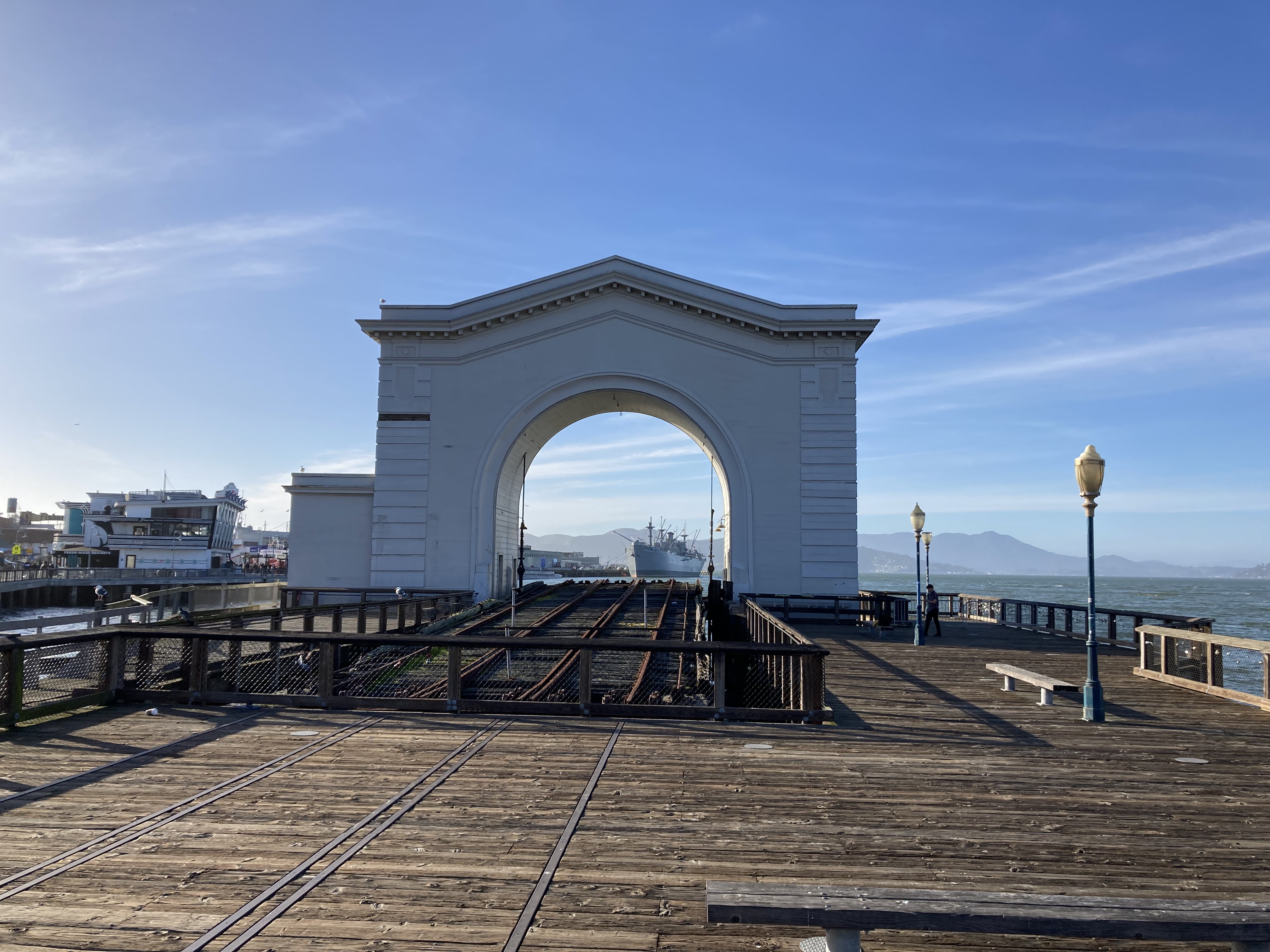
Beyond this is the San Francisco Maritime National Historic Park, where restored 19th and 20th century ships line Hyde Street Pier, along with a Visitor Center and Maritime Museum.

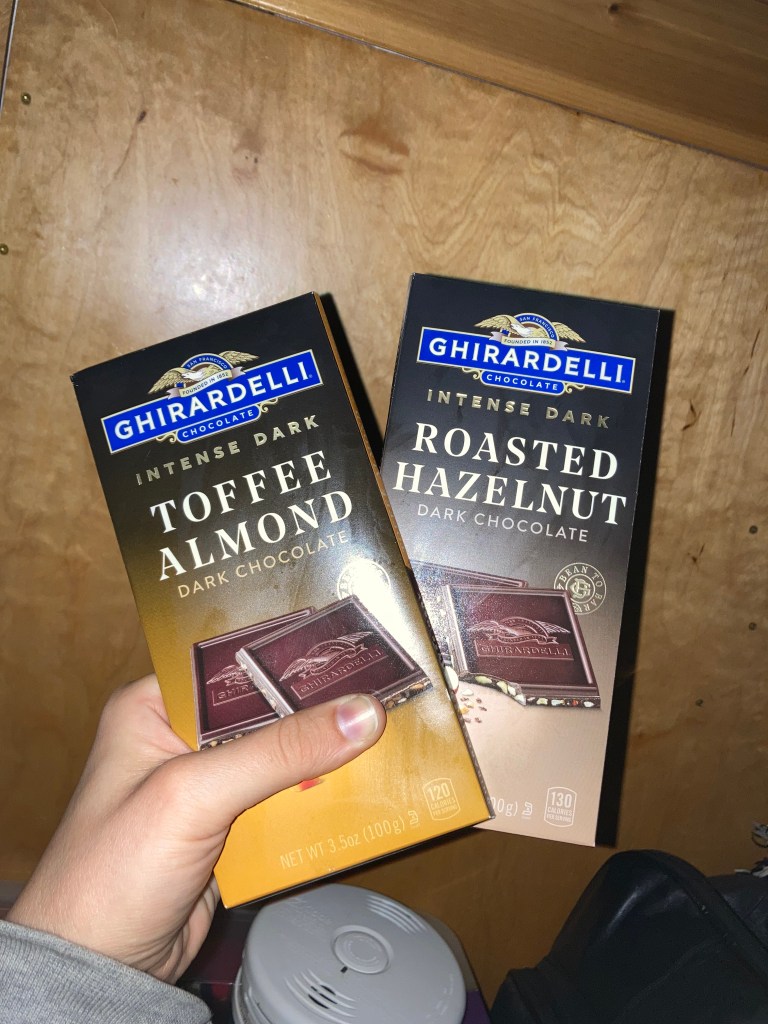
I kind of just took a look at the boats – I was more interested in Ghirardelli Square.
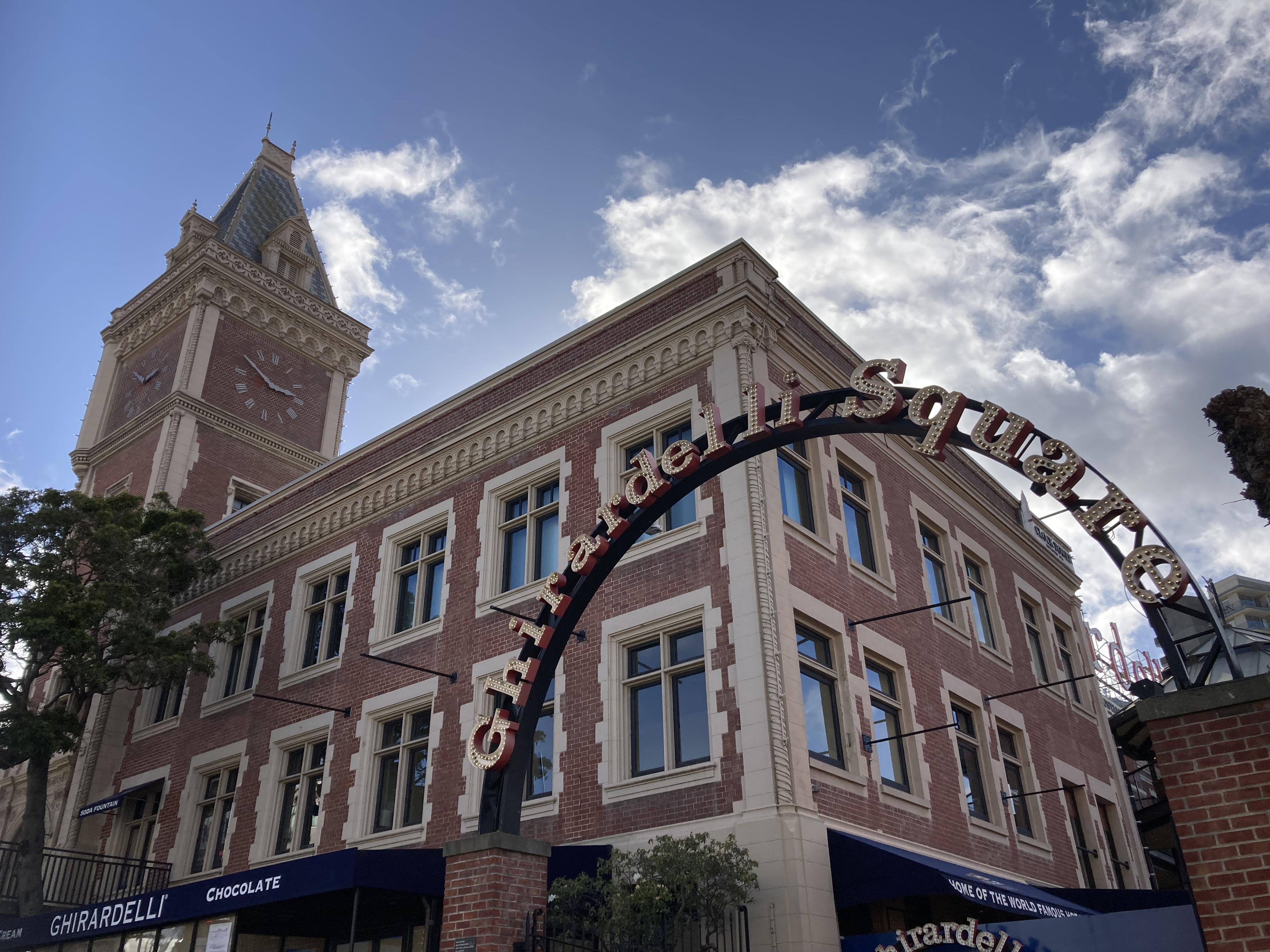
I got some chocolate and explored the area. There are lots of shops to check out.

There’s also Del Monte Square nearby, where the historic buildings were built as a food cannery and warehouse by the California Fruit Canners Association, which became Del Monte as we know it today. It was the largest fruit and vegetable cannery in the world and contributed to San Francisco’s waterfront development. You’ll find The Cannery here, one of the old buildings that now houses various shops. I love to learn history like this, and now I know Del Monte and Ghirardelli are from SF!

I even got a glimpse of one of the cable cars.
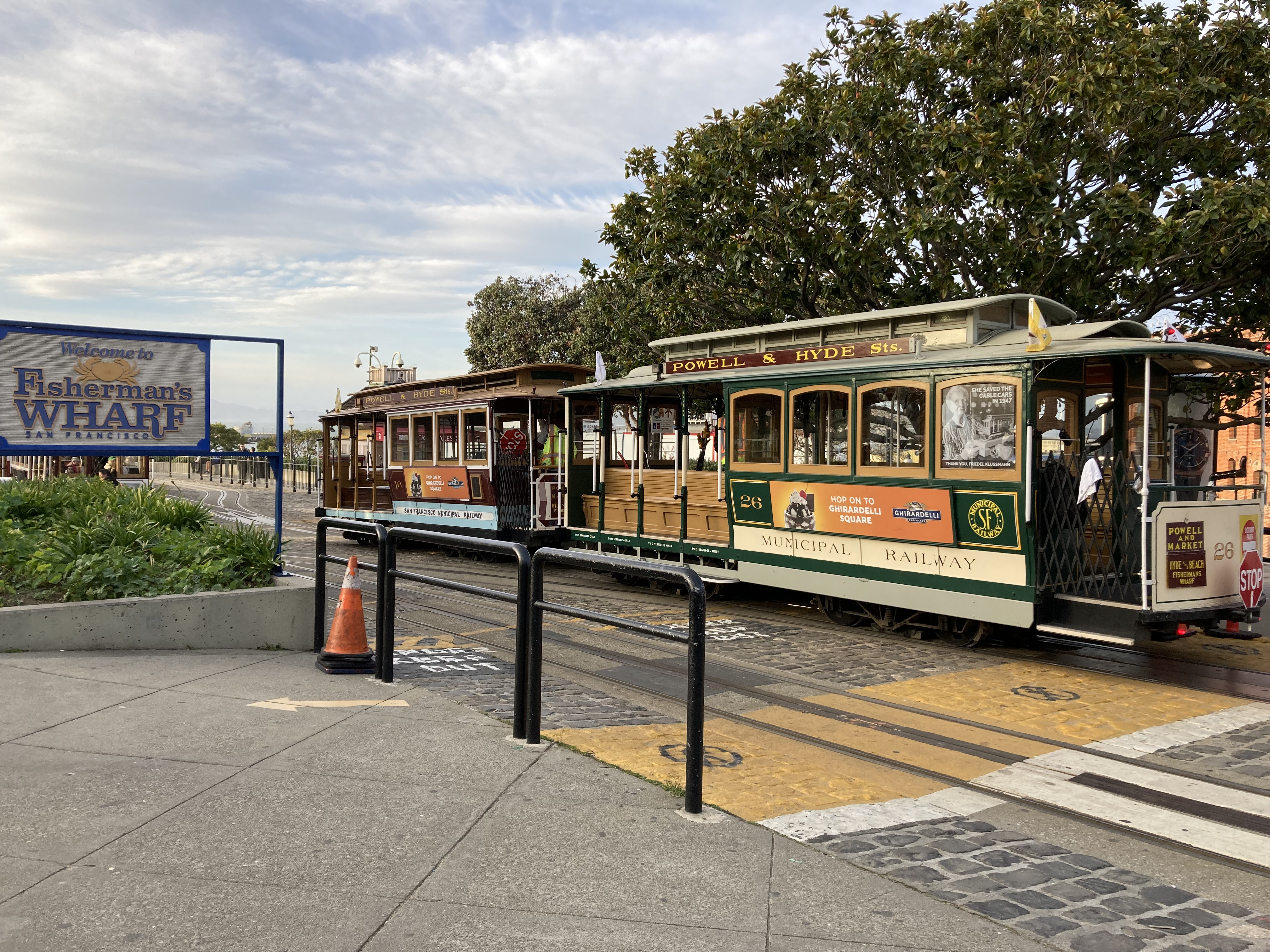
It was starting to get dark and I was dead tired, even getting blisters, so I headed back to the ferry terminal, walking back through Fisherman’s Wharf and along the Embarcadero.
The van was good when I got back, which brought great relief. I headed to my GGB vista point overnight, knowing I needed another full day to tackle some very important places that I hadn’t gotten to yet. It was a great feeling, after a successful day, relaxing, with another jam packed exciting day ahead.

Day 2

I woke up early again, to find that the van parked next to me was from Quebec! If I hadn’t been in a rush to catch the ferry to SF I might have struck up a convo with the owner – it’s exciting to see people from your neck of the woods in foreign lands.

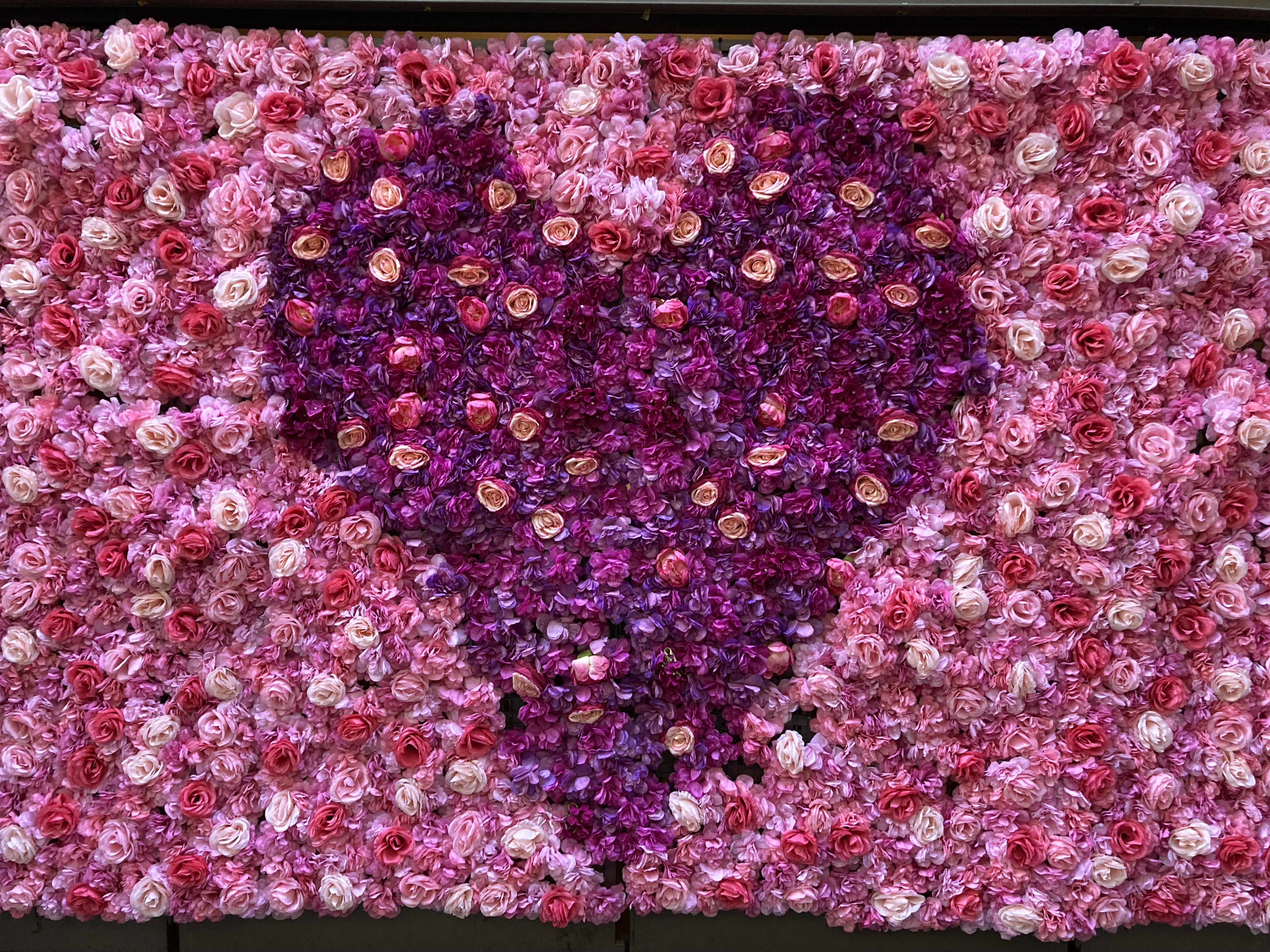
It didn’t actually dawn on me that it was Valentine’s Day until I got off the ferry at the Ferry Building and there were art installations of hearts on display everywhere.
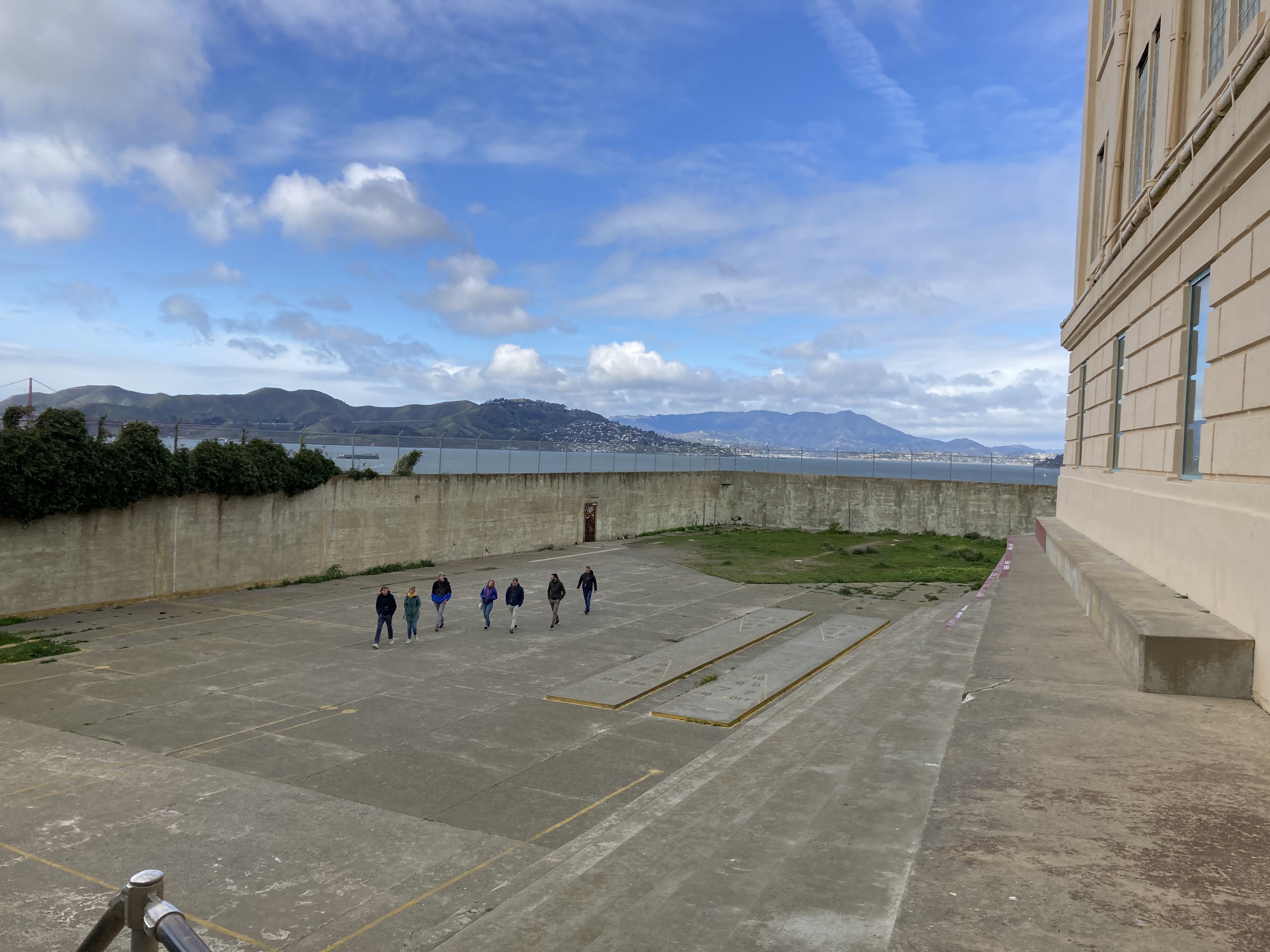
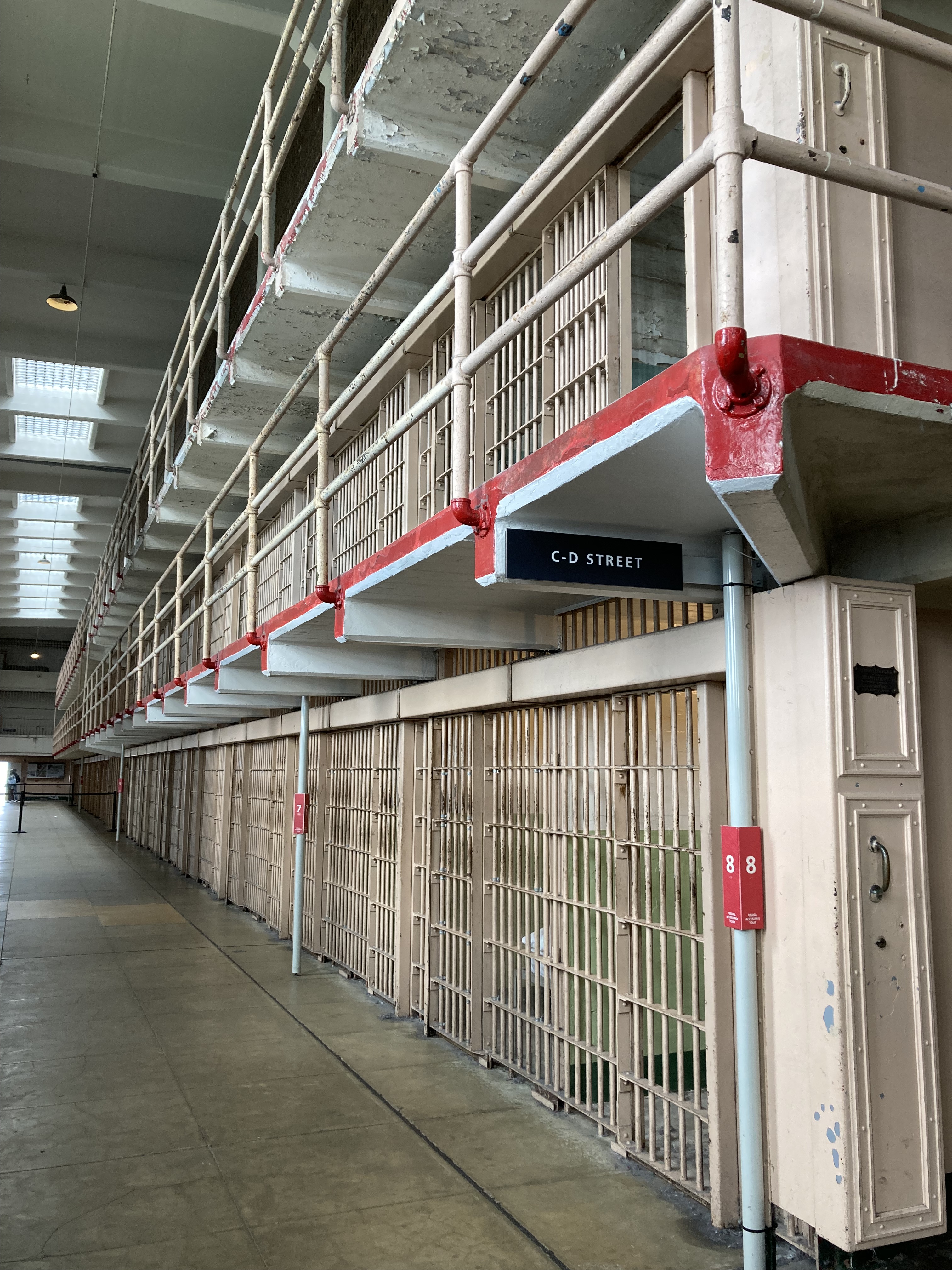
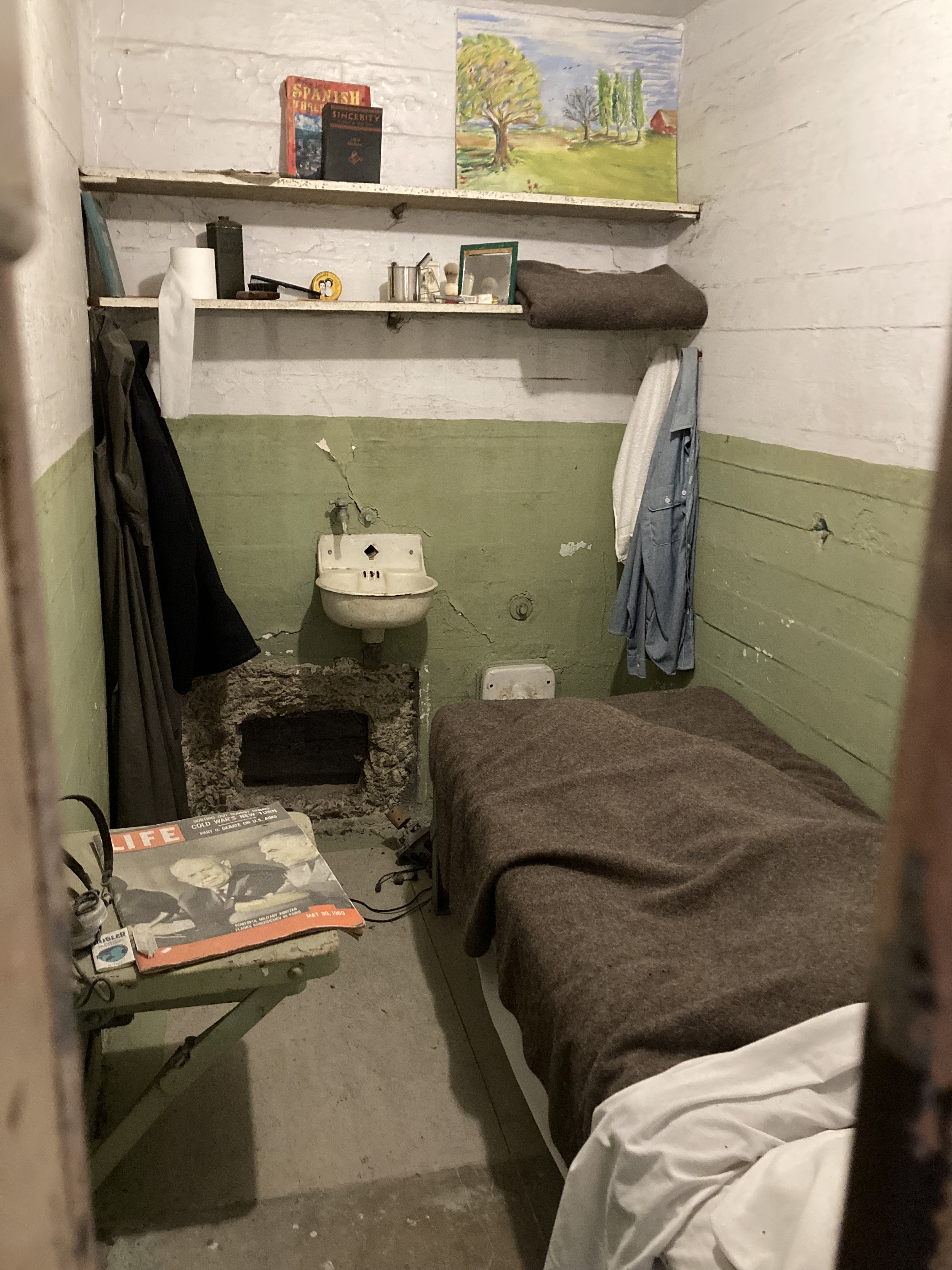
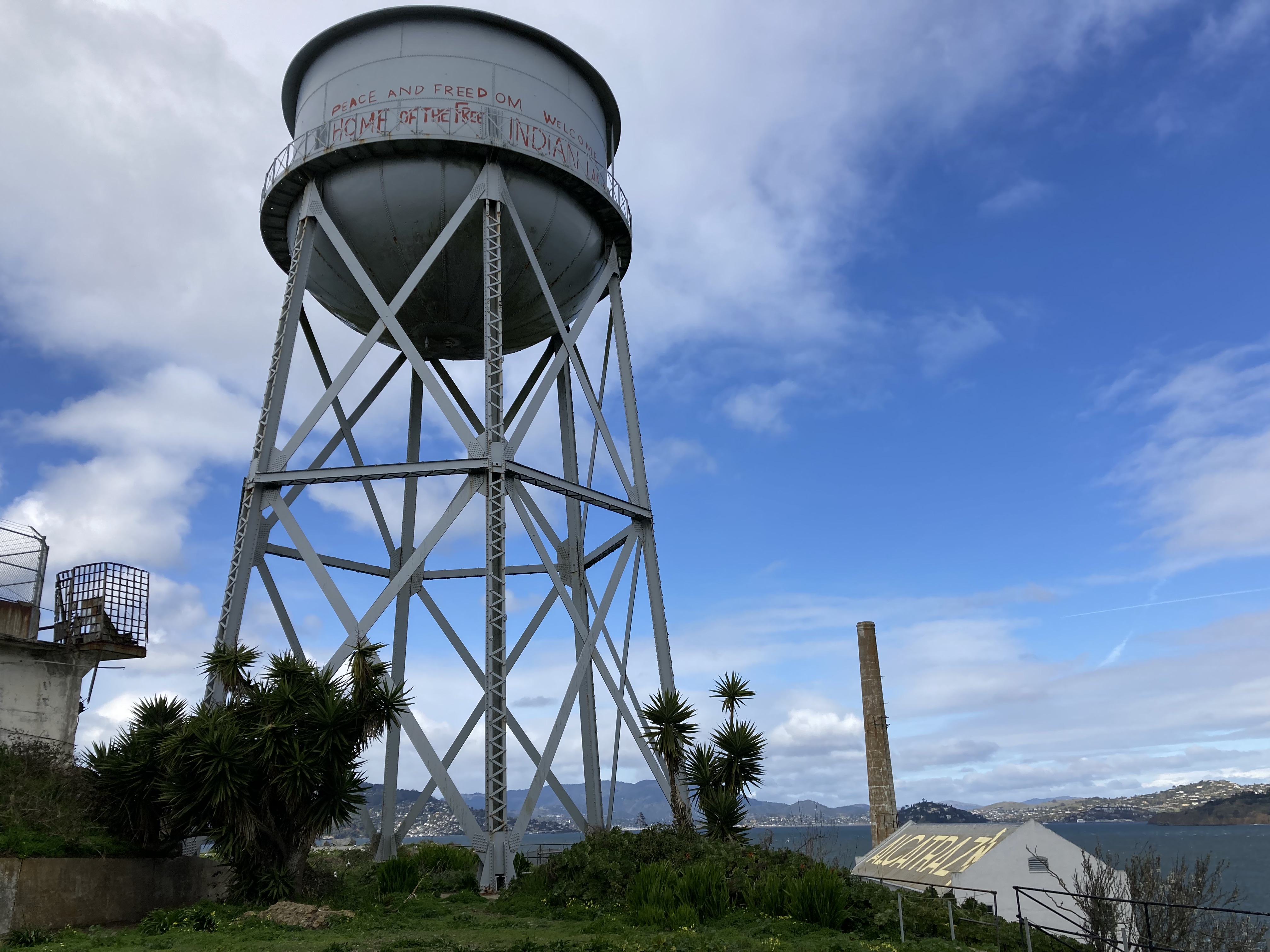
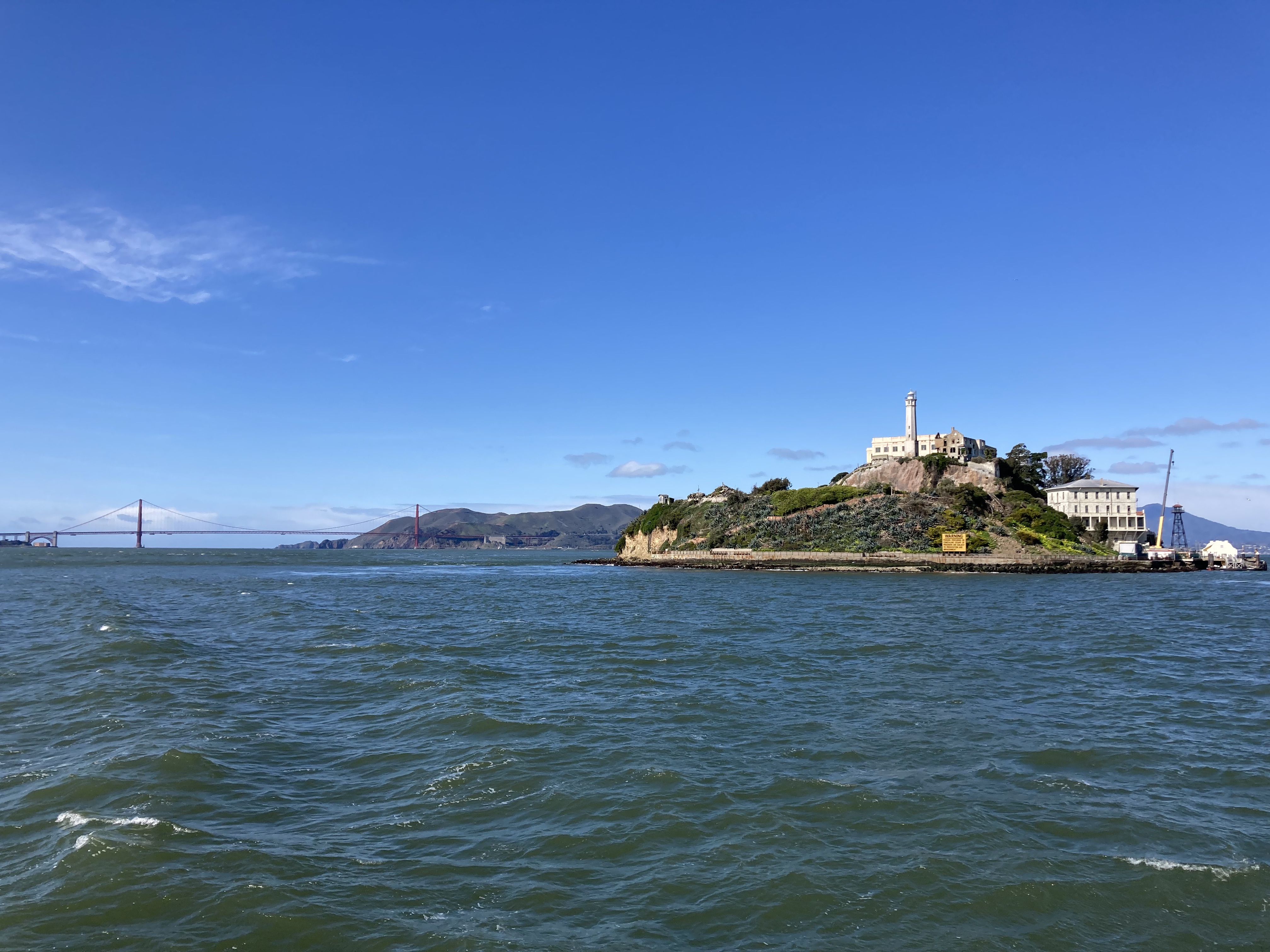
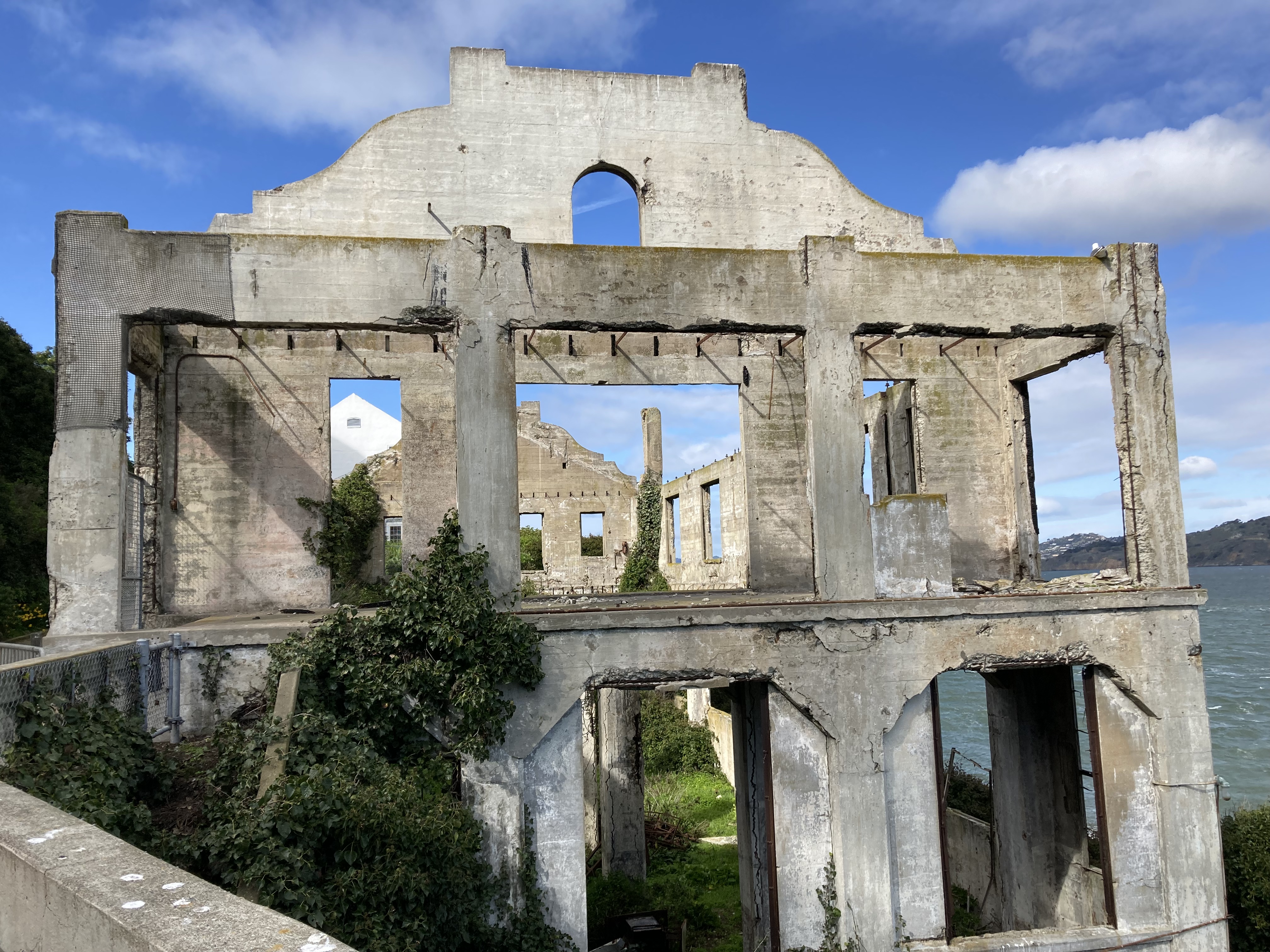
I picked up a coffee and a samosa in the Ferry Building and headed to Pier 33 to catch the ferry to Alcatraz Island! I love exploring old historic buildings anyways, preferably haunted mansions, but a notorious jail hits the mark, too. Famous prisoners, escape plans, Native American presence. Not to mention displays that get you thinking about the ethics and functionality of the prison industrial complex, and how incarceration has been viewed as modern day slavery.
Once back at Pier 33 I started walking west. I passed through Fisherman’s Wharf again, past Ghirardelli Square, and past Fort Mason. Fort Mason is a former US Army post, now a historic district within Golden Gate National Recreation area. It has some buildings still used by the army, other buildings used as rentals, parks, gardens, and the Fort Mason Center for Arts & Culture.

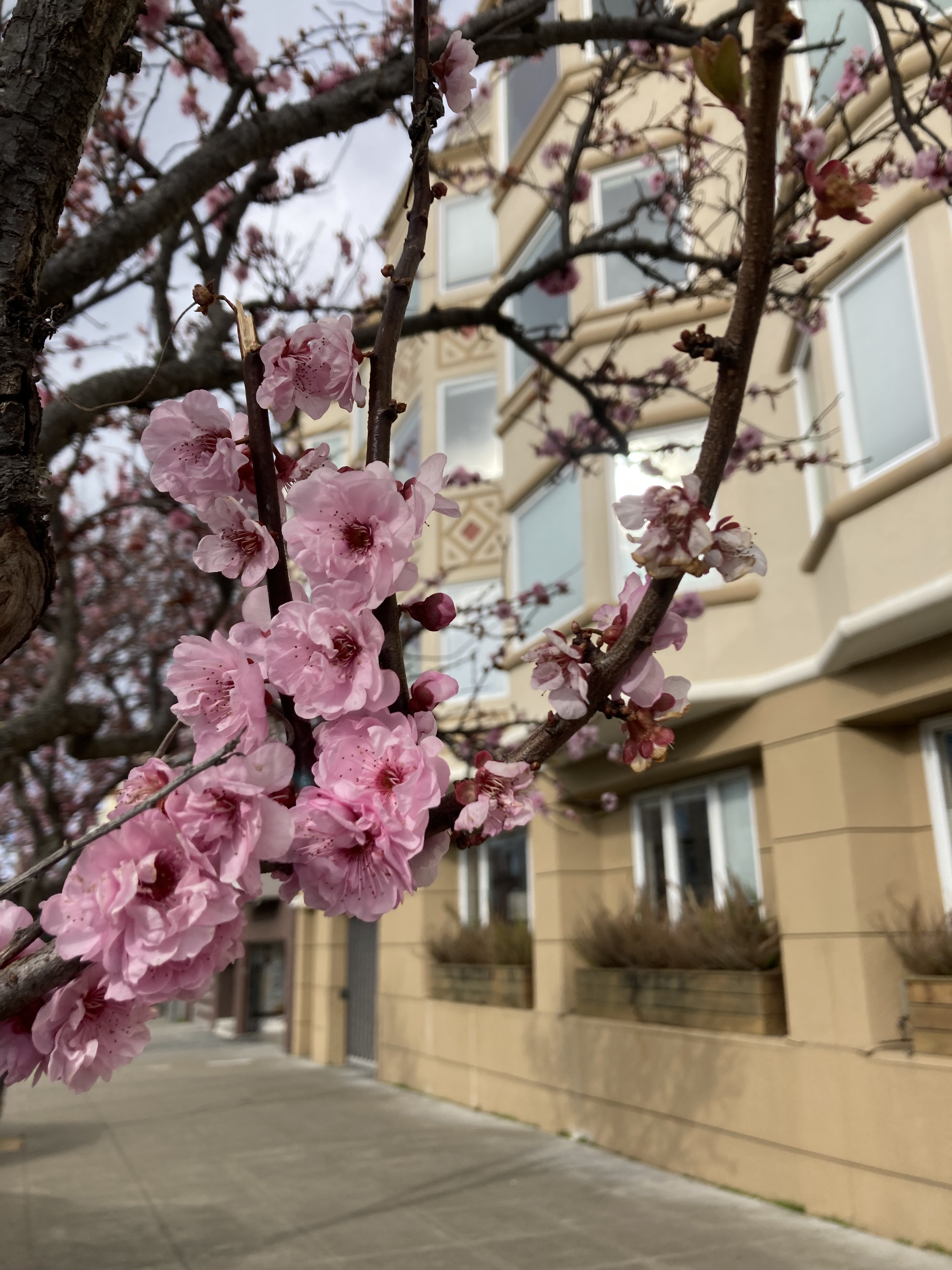
It started to rain on me as I walked through some pretty neighbourhoods on my way to the Palace of Fine Arts.
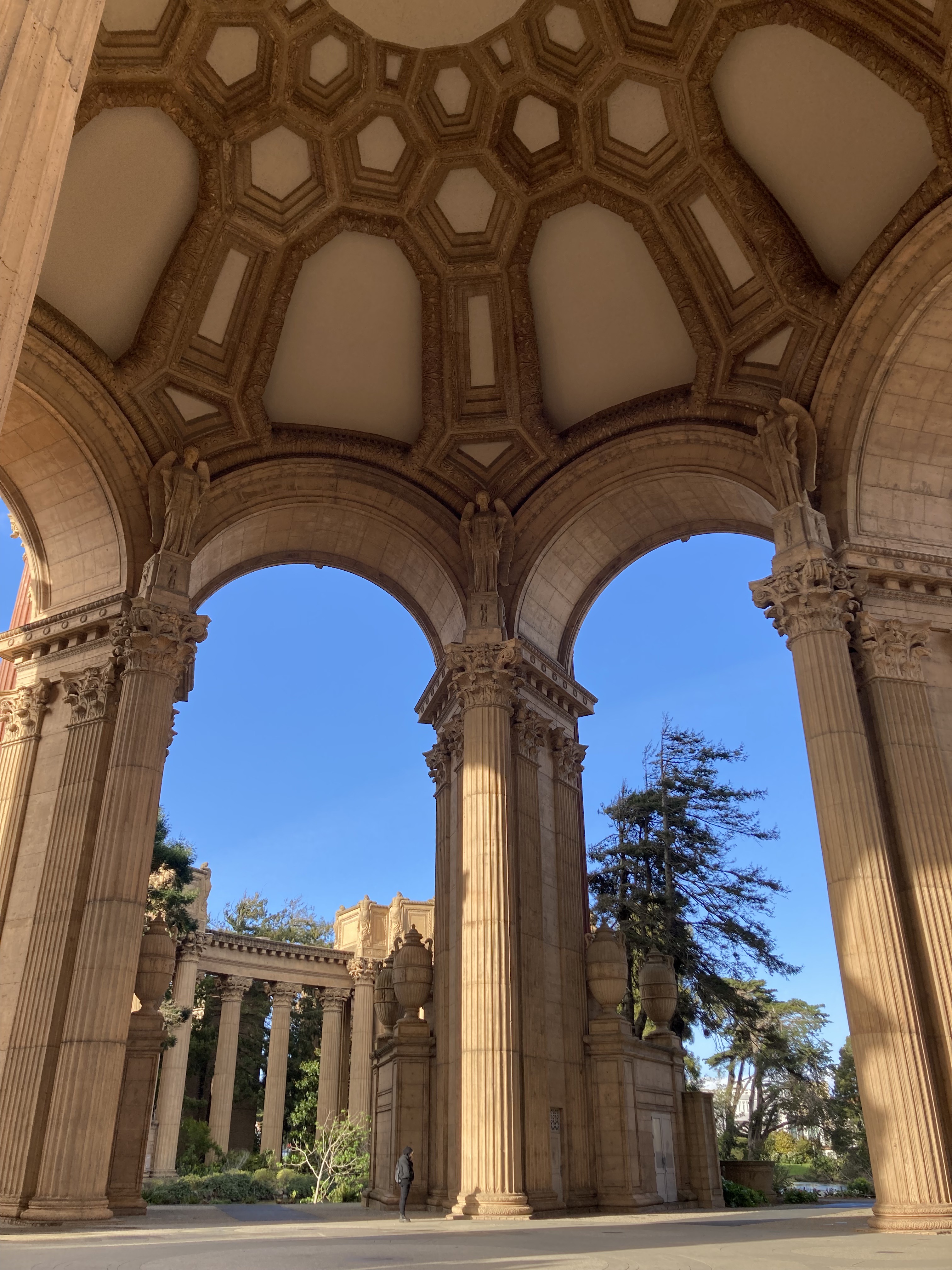
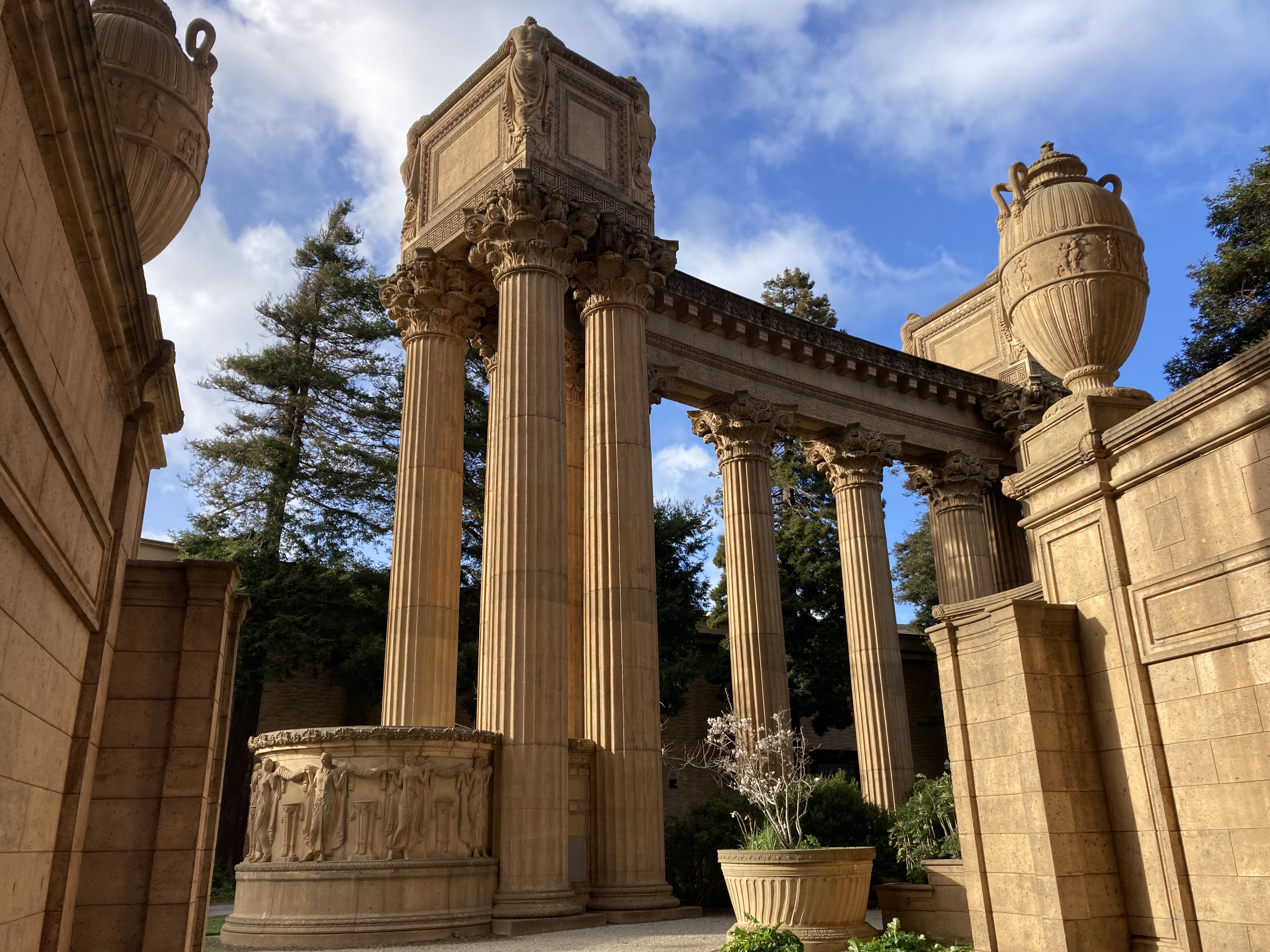
The Palace of Fine Arts is absolutely stunning and I loved it. A popular destination for wedding photos, it is an architectural landmark in Greco-Roman style alongside a lagoon on the western edge of the Marina district, bordering the eastern side of the Presidio.
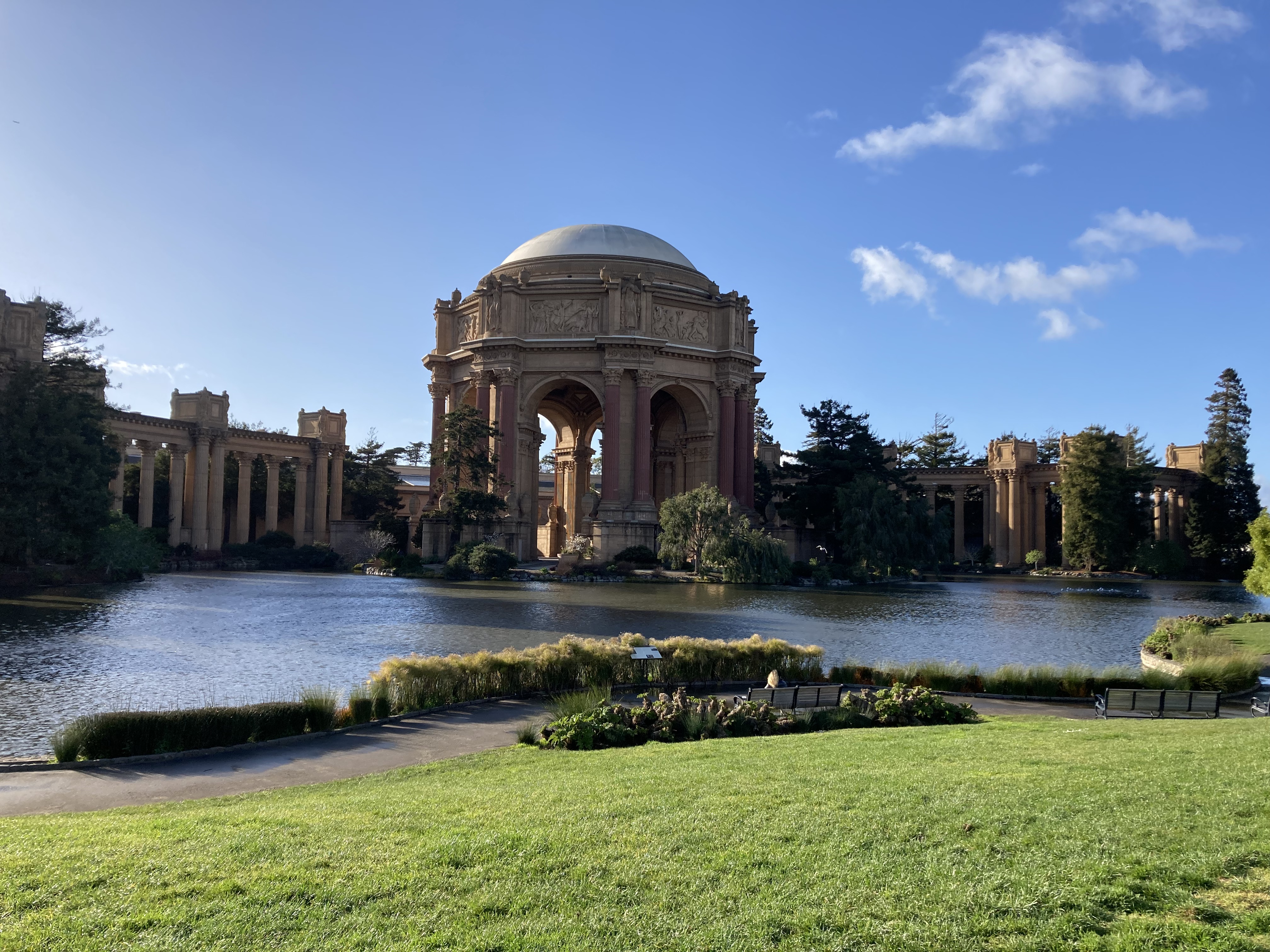
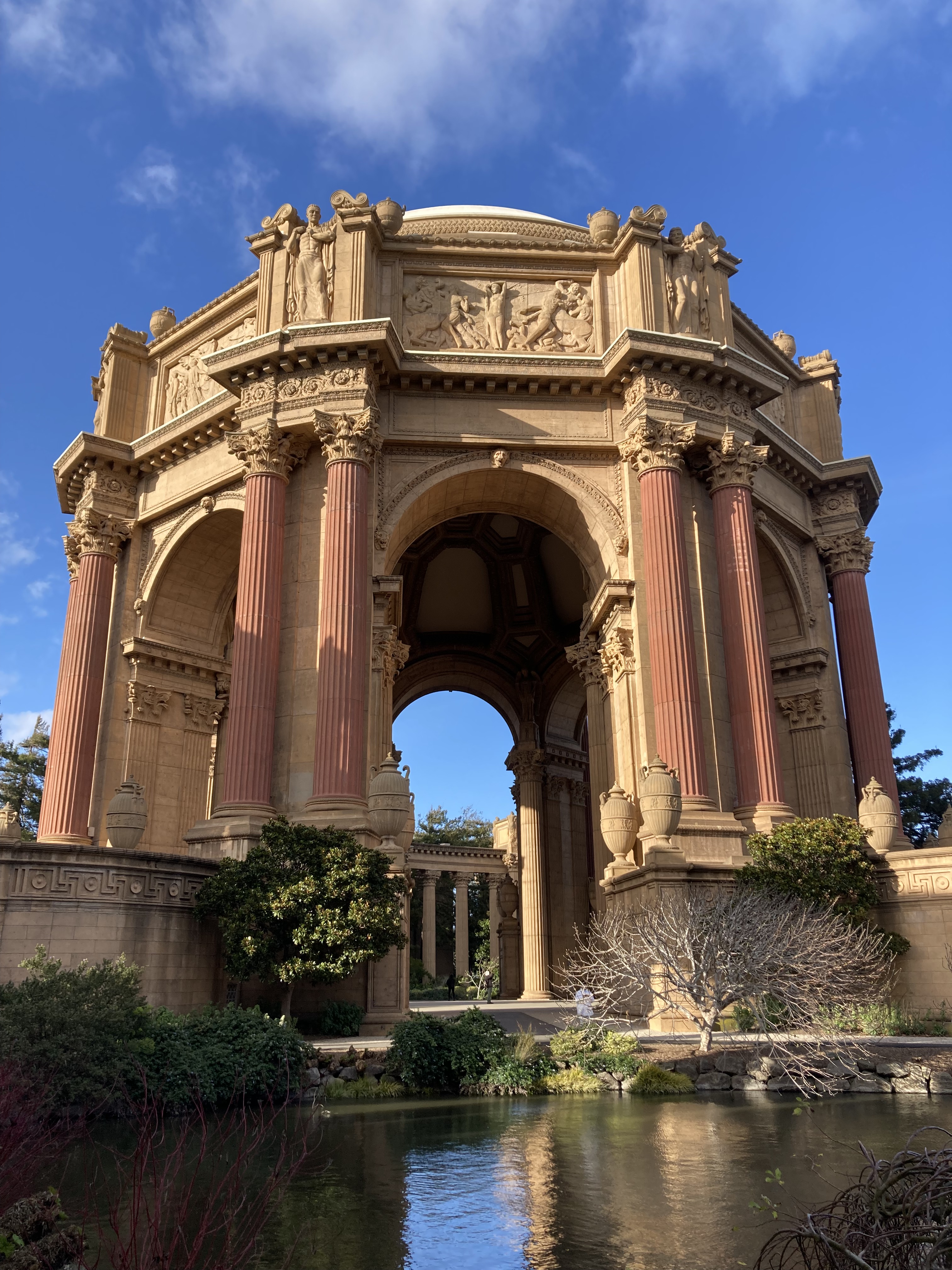
While I did not explore the Presidio in depth, I took an uber through it and thought it quite pretty. “Presidio” means fortified base, and the Presidio of San Francisco is a park, formerly an army base. It was established as a fortified location in 1776 and is located on the tip of the San Francisco peninsula, at the southern base of the Golden Gate Bridge. It switched from military use to commercial and public use in 1994. Here you will find beaches, hiking trails, Golden Gate Bridge viewpoints (I missed these and will definitely have to go here for those next time), Fort Point National Historic Site, Walt Disney Family Museum, and a Yoda Fountain.

I took the uber because my next stop was Haight-Ashbury, which would have taken an hour to get to on foot. I wanted to make the most of my time sight seeing, and the route by foot would have taken me through some of SF’s worst (unsafe) neighbourhoods.

Haight. Ashbury.

This was by far one of the most exciting places that I visited in San Francisco. The history – the hippies, the music, the Victorian style homes. Visiting places that are steeped in something of personal interest to you is a recipe for the most impactful trips.

South of the Presidio is Golden Gate Park. East of this park is Haight Street (Ashbury intersecting Haight a few blocks over).

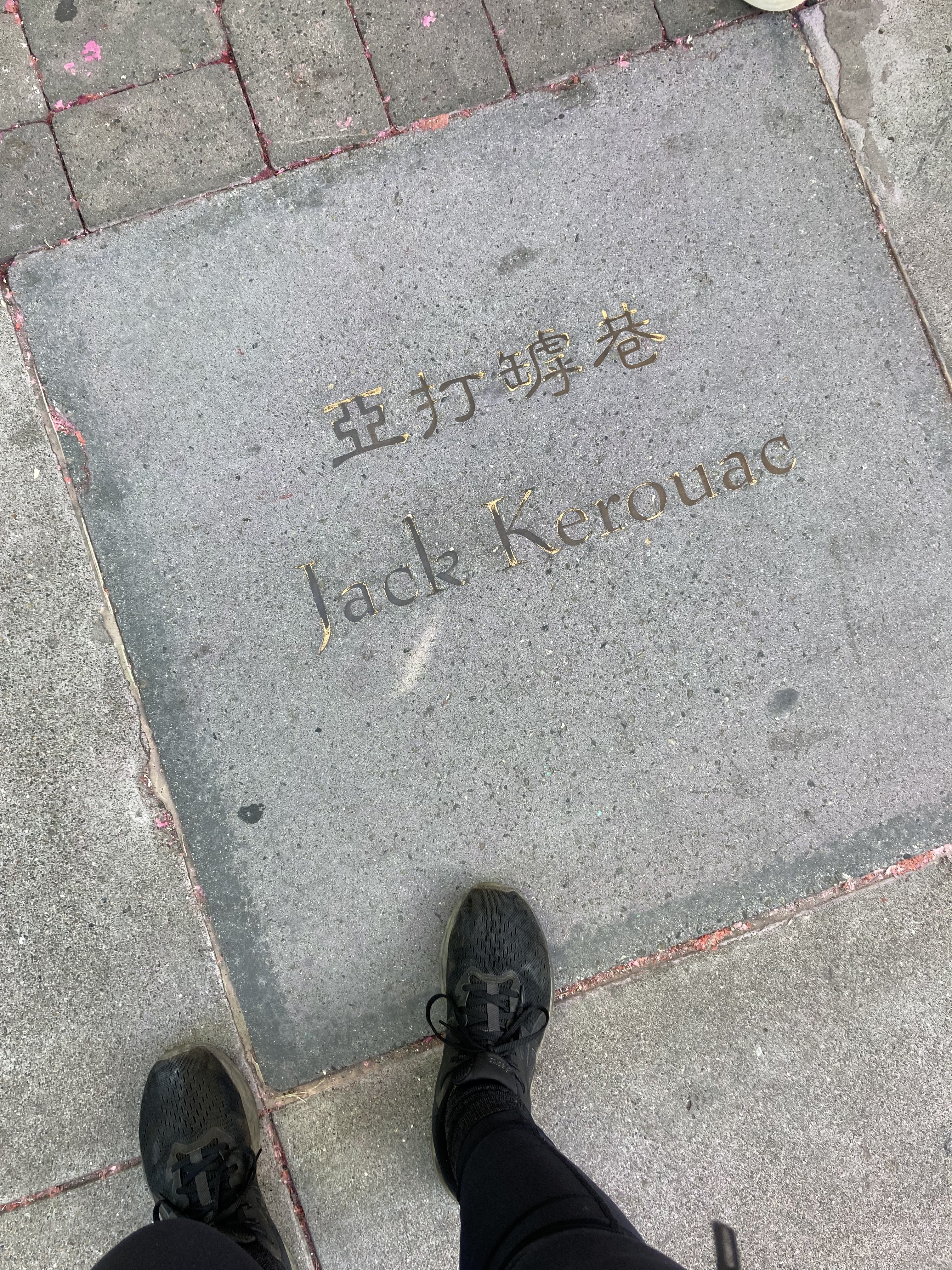
To understand Haight-Ashbury becoming hippie central, we can go back to the ‘Beat Generation” or “beatniks” of the 1950s and ’60s. These were people that were part of a counterculture, who rejected materialism, consumerism, conformity, and traditional social norms, like a work-focused suburban life. They were considered intellectuals who sought liberation through art, travel, existentialism, eastern philosophy, and spiritual exploration. They gathered in urban hubs, coffee shops, where jazz was played or poetry read aloud. Authors like Jack Kerouac were influential, though early figures were a bit different from those who adopted their views through pop culture expansion.

The Haight-Ashbury neighbourhood was low-rent in the ’50s and ’60s. And in 1967, the Summer of Love, it was an ideal place for youth to descend. There were multiple factors that drew people here. Jack Kerouac (On The Road) and other Beat Generation authors had flourished in San Francisco. A precursor to the Summer of Love was a celebration in January of 1967 called the Human Be-In, at Golden Gate Park. At this event, the phrase “turn on, tune in, drop out” was coined, which shaped the hippie counterculture and 1960s rebellion. It played into ideas of political decentralization and dropping out of society, leading to the popularization of the term “drop out” among high school and college students. The Human Be-In saw around 30,000 attendees, drew attention to hippie fashion, and touted values of compassion, awareness, love, and unity.

Media coverage of the hippie influx to the SF area drew even more attention, on a national scale. So did some music festivals in the area, leading to around 100,000 flocking to Haight-Ashbury. The song San Francisco (Be Sure To Wear Flowers In Your Hair), performed by Scott McKenzie, was also a hit (released in May of 1967) – essentially an invitation (and anthem) for the Summer of Love.

Haight-Ashbury could not handle this number of people, and the area became overrun and seedy, with many homeless youth left wandering the streets, and drug problems developing.

Locals avoided the area in the ’70s, but in the ’80s people started buying the Victorian homes and restoring them. Now the neighbourhood is a colourful, historical attraction, an ode to a very interesting period of history.

There is a lot about these beatnik and hippie counterculture movements that I personally relate to. But having some friends involved in punk scenes, I had come across the punk dislike of hippies. I didn’t understand it initially, but my time in Haight-Ashbury peaked my interest and pushed me to search for an answer. This was the best explanation I found:
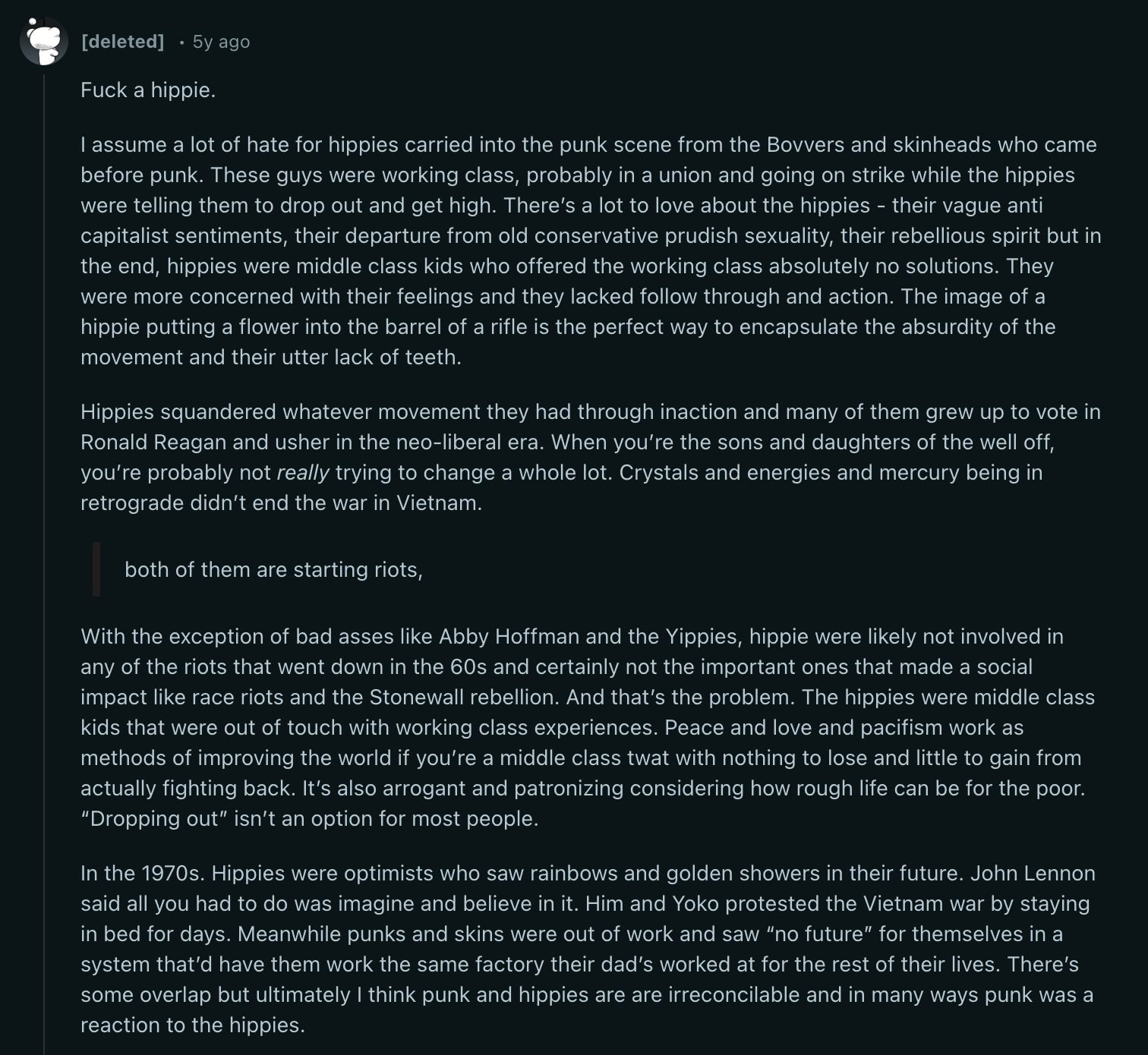
Via Reddit

While I was walking Haight Street and taking in the rich hippie history, I was blissfully ignorant to the above perspective. Now that I am aware – I respect it. I still have a special place in my heart for these counterculture movements and Haight-Ashbury, but I see the other side, too. And I think both have merit – bits and pieces anyways (it’s hard to argue with the punk take). I guess they’re both counterculture in their own way, but one should consider how class, privilege, and disconnect from society actually affect those around us (especially where hippies preached unity). Honestly – this pitting of two groups against each other deepens my interest even further, as it offers some very interesting and philosophical questions.

Now that the history lesson is out of the way – what is there to see in the Haight-Ashbury neighbourhood?

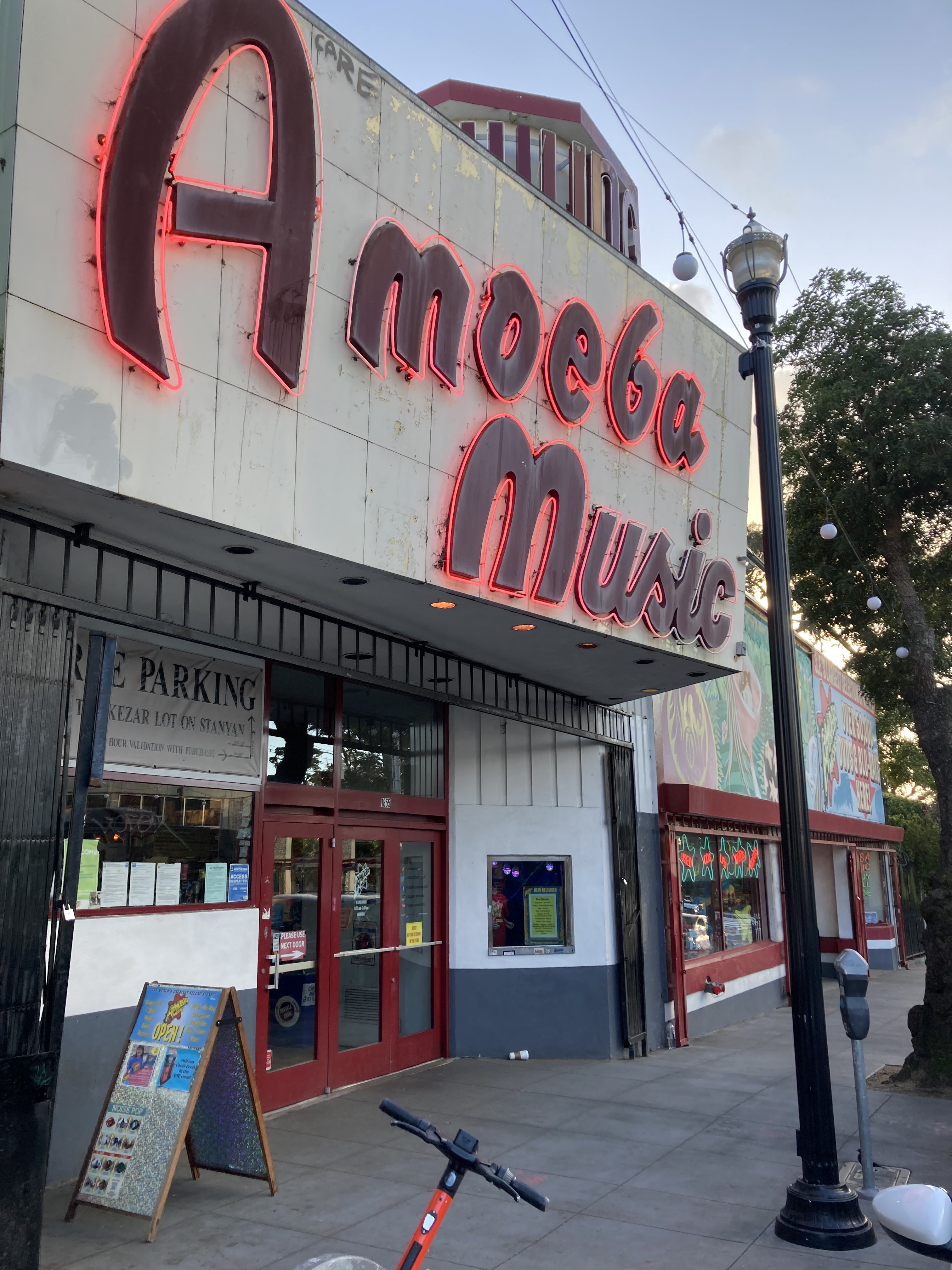
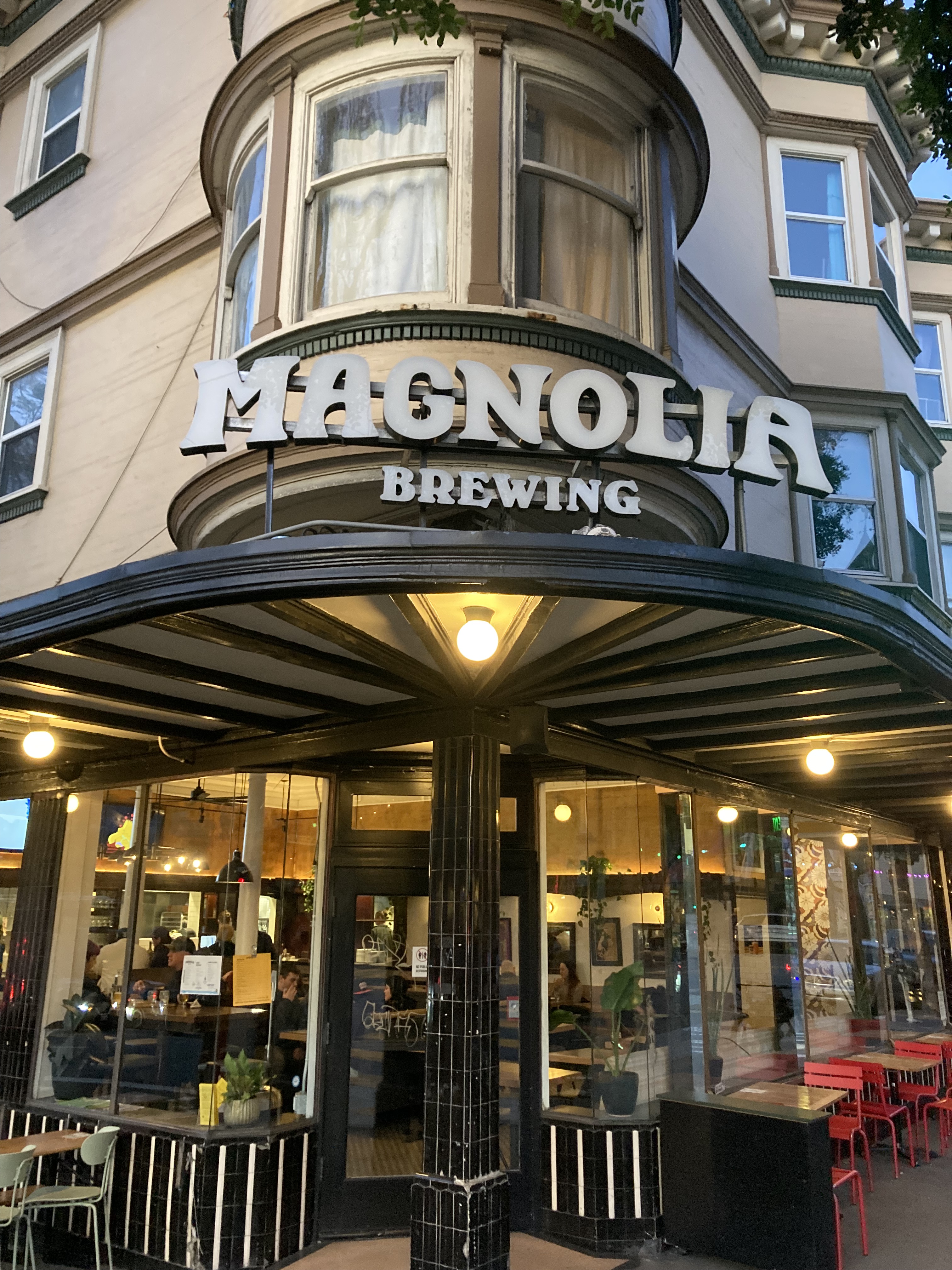
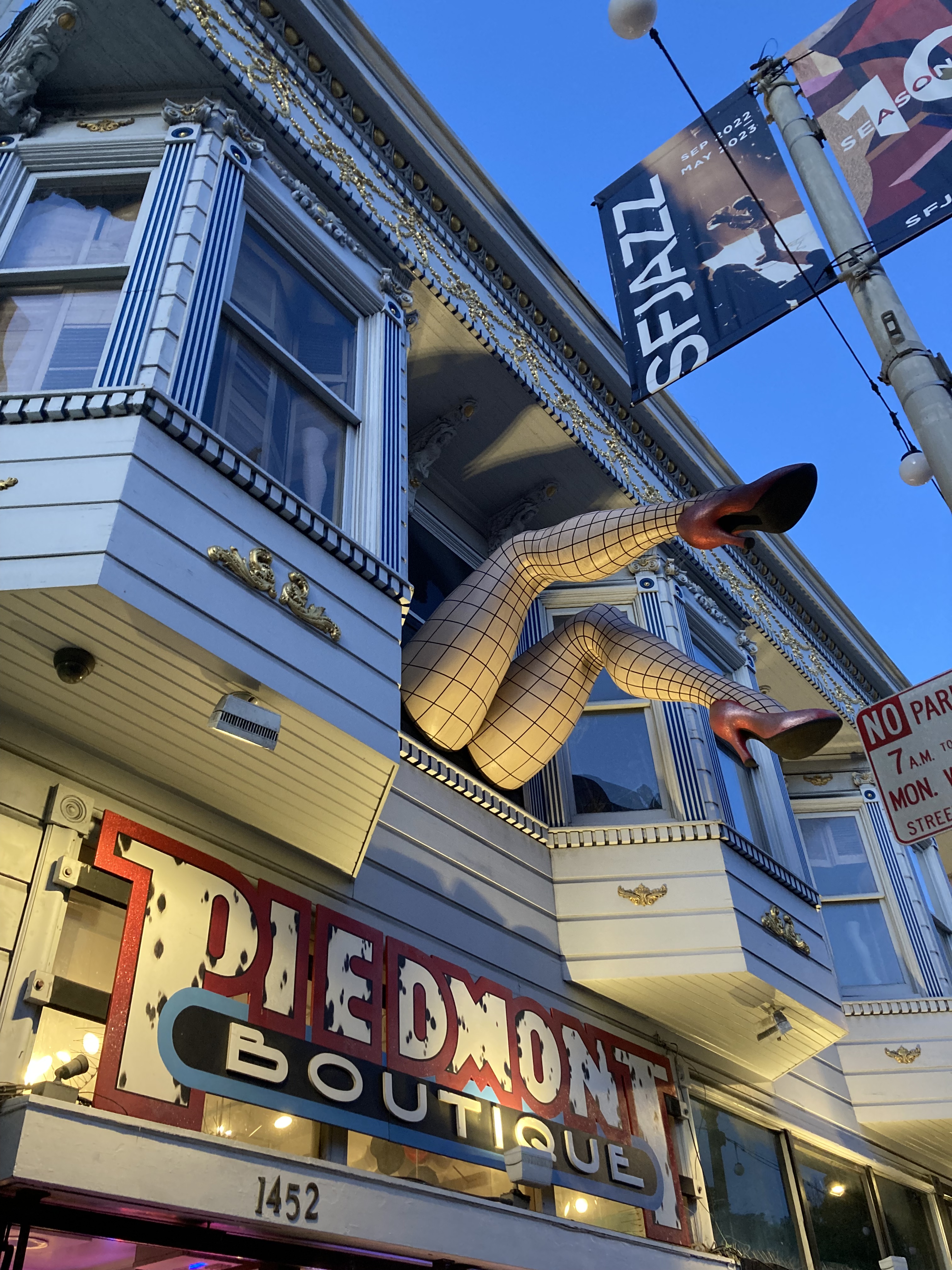
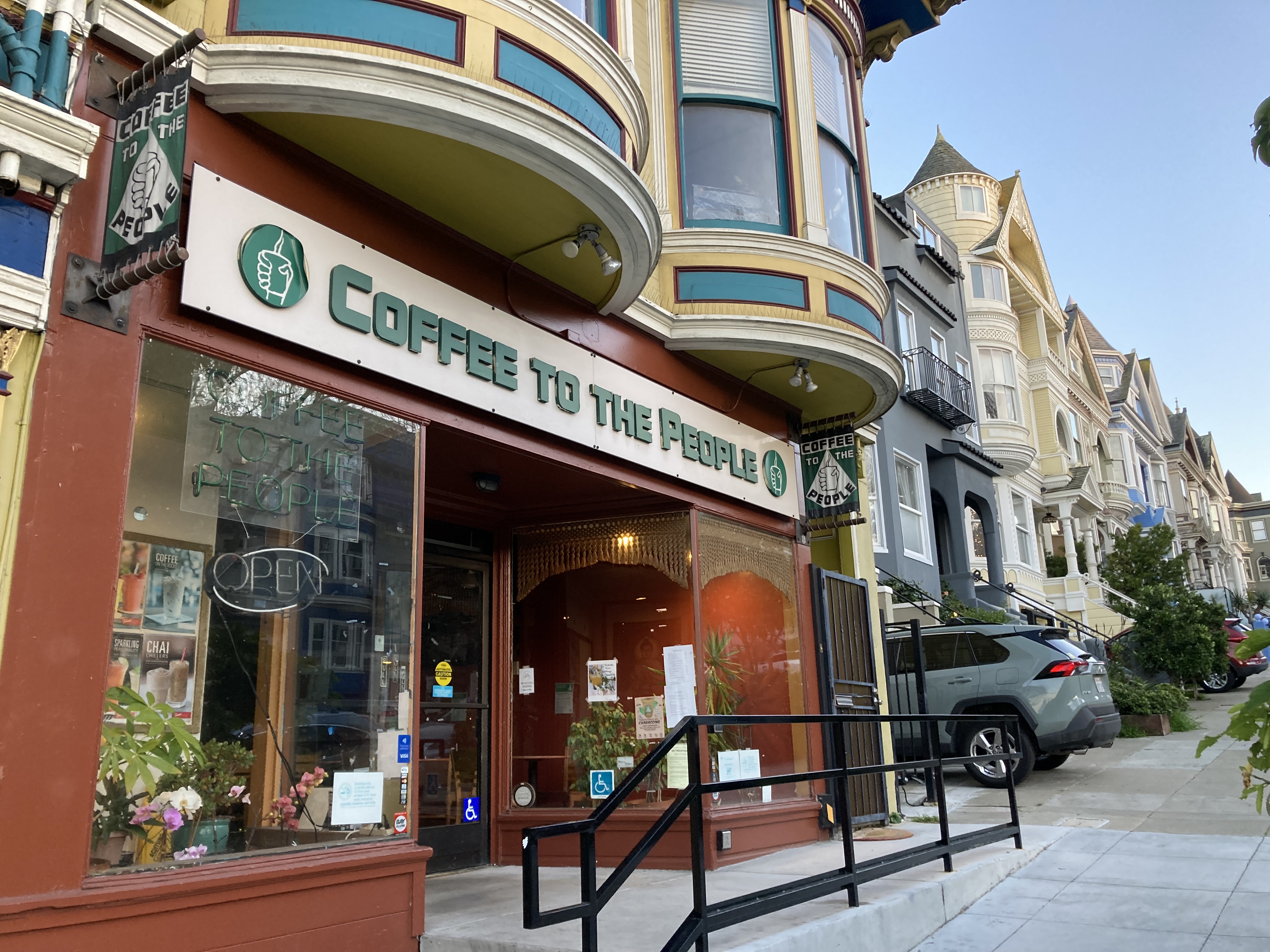
In general, Haight-Ashbury has all of the kinds of shops you would expect. It has the iconic record store Amoeba Music. It has a coffee shop in Coffee to the People. Magnolia Brewing, which has a past as the Drogstore Cafe, a hippie hangout in the ’60s, as well as a restaurant owned by burlesque queen Magnolia Thunderpussy, and a hippie holdout through the ’70s. Love On Haight – the most hippie store you could imagine. A costume shop in Piedmont Boutique (which is notable alone for the legs coming out the front of the store) and vintage clothing in Decades of Fashion. Twisted Thistle Apothecary (a crystal and herb type shop). Psychedelic SF, a gallery. And a nice little shop on the corner of Haight and Ashbury called Haight & Ashbury.
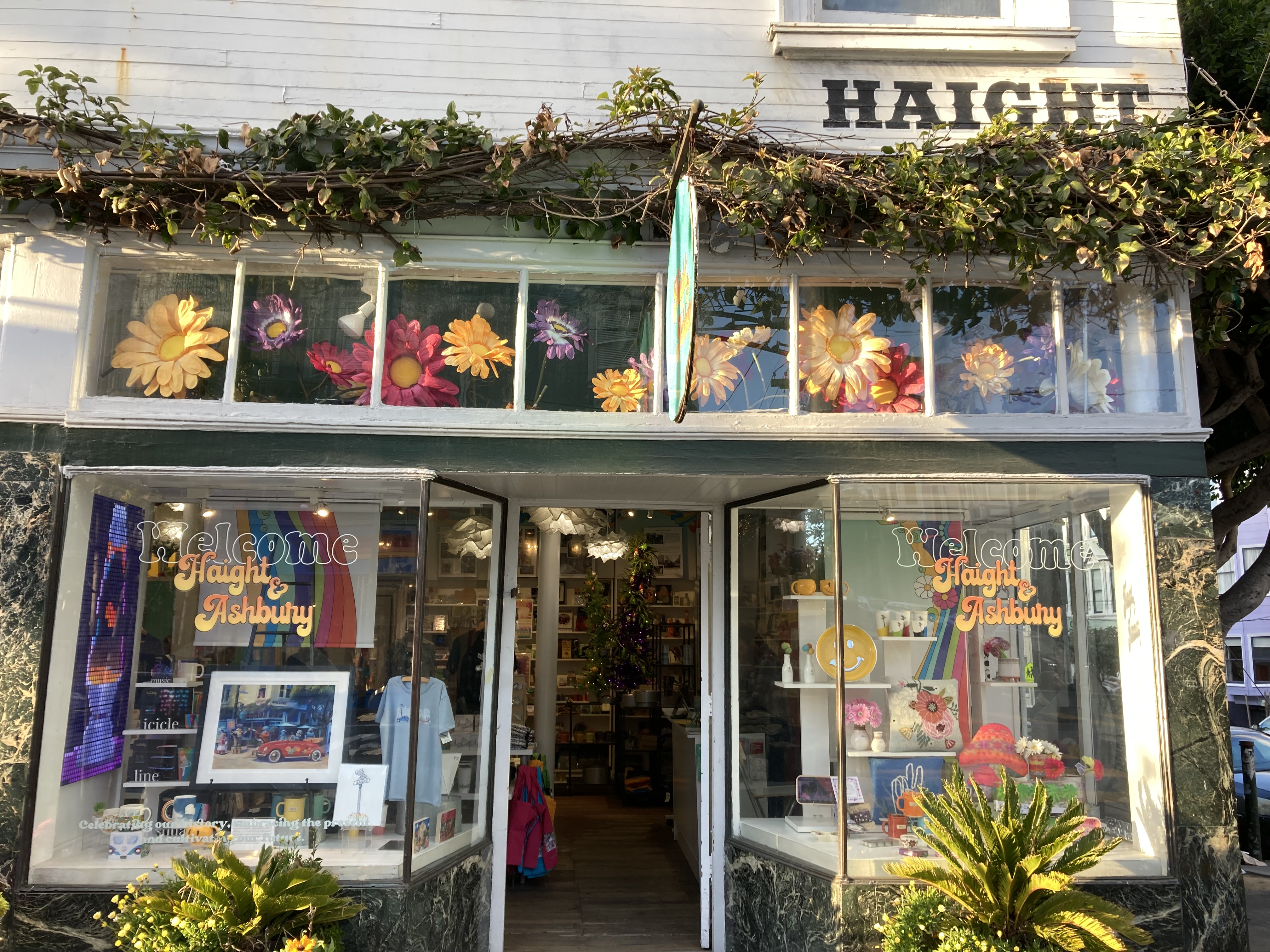
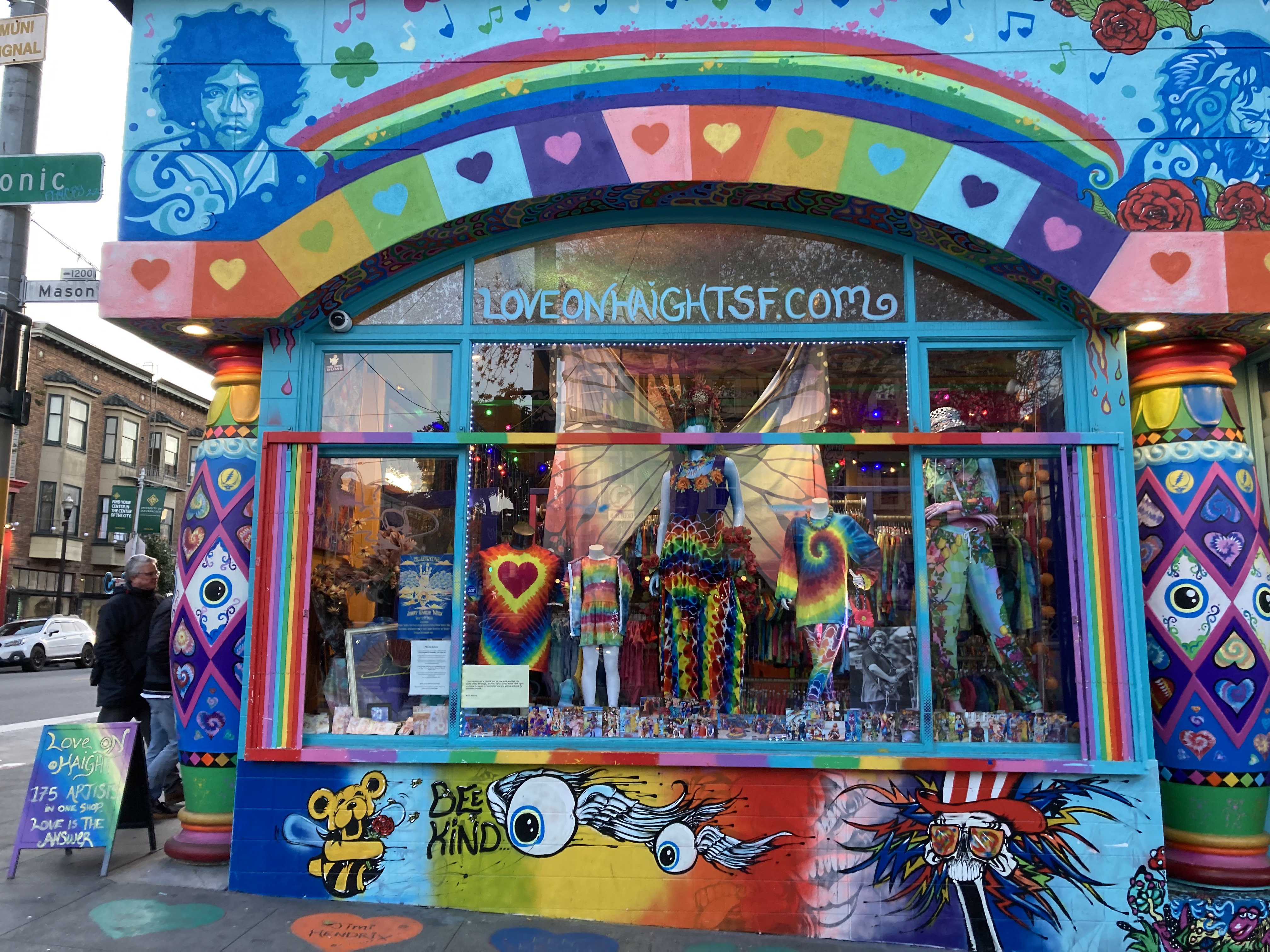
Just standing on the corner of Haight and Ashbury was a bit surreal. Fittingly, there was a crowd of homeless people hanging out here. I picked up some fun souvenirs at the store on this corner called Haight & Ashbury. Sadly Coffee To The People was closed by the time I got there – I would have liked to try one of their signature drinks, like Flower Power, Golden Gate, or Chocolate to the People. Love On Haight is just cool. A must see, tie-dye emporium, with hippie tenets on the walls, and employees that embodied the hippie spirit (very kind, uplifting, a bit airy-fairy). Amoeba just always excites me – as a famed record store would. And Magnolia was the perfect place to end my day, steeping in the history, and relaxing with some beers to sample.
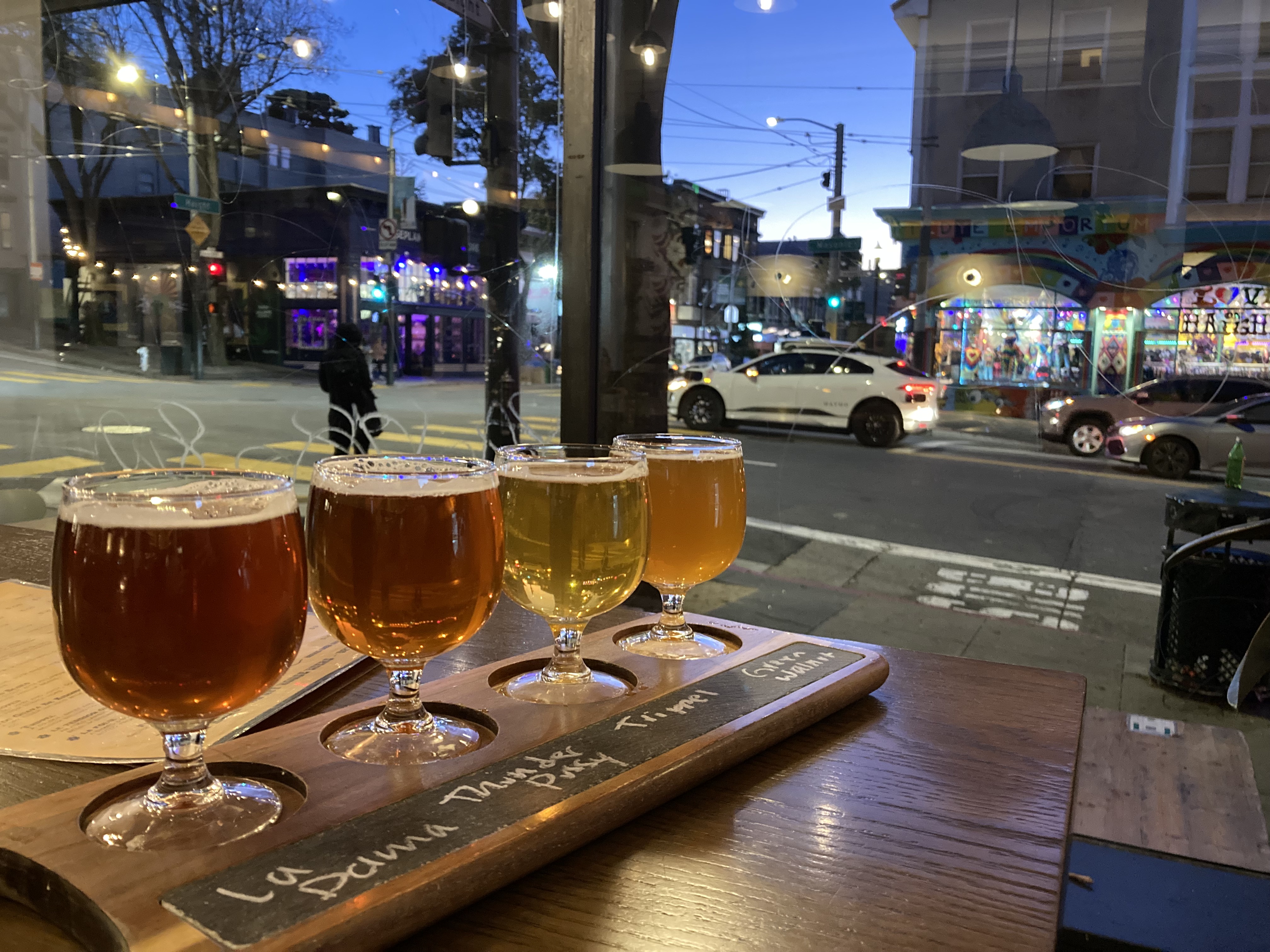
Yes that beer is called Thunder Pussy

Then there was the architecture and history of famous residents.

The first thing I actually did when I got to Haight-Ashbury was go for a walk through Golden Gate Park. The Grateful Dead, Janis Joplin and Jefferson Airplane, who had lived in the area, used to give free concerts in this park and at the Panhandle. There is a spot dubbed Hippie Hill and a tree where Janis played. Naturally, I wanted to see these locations.
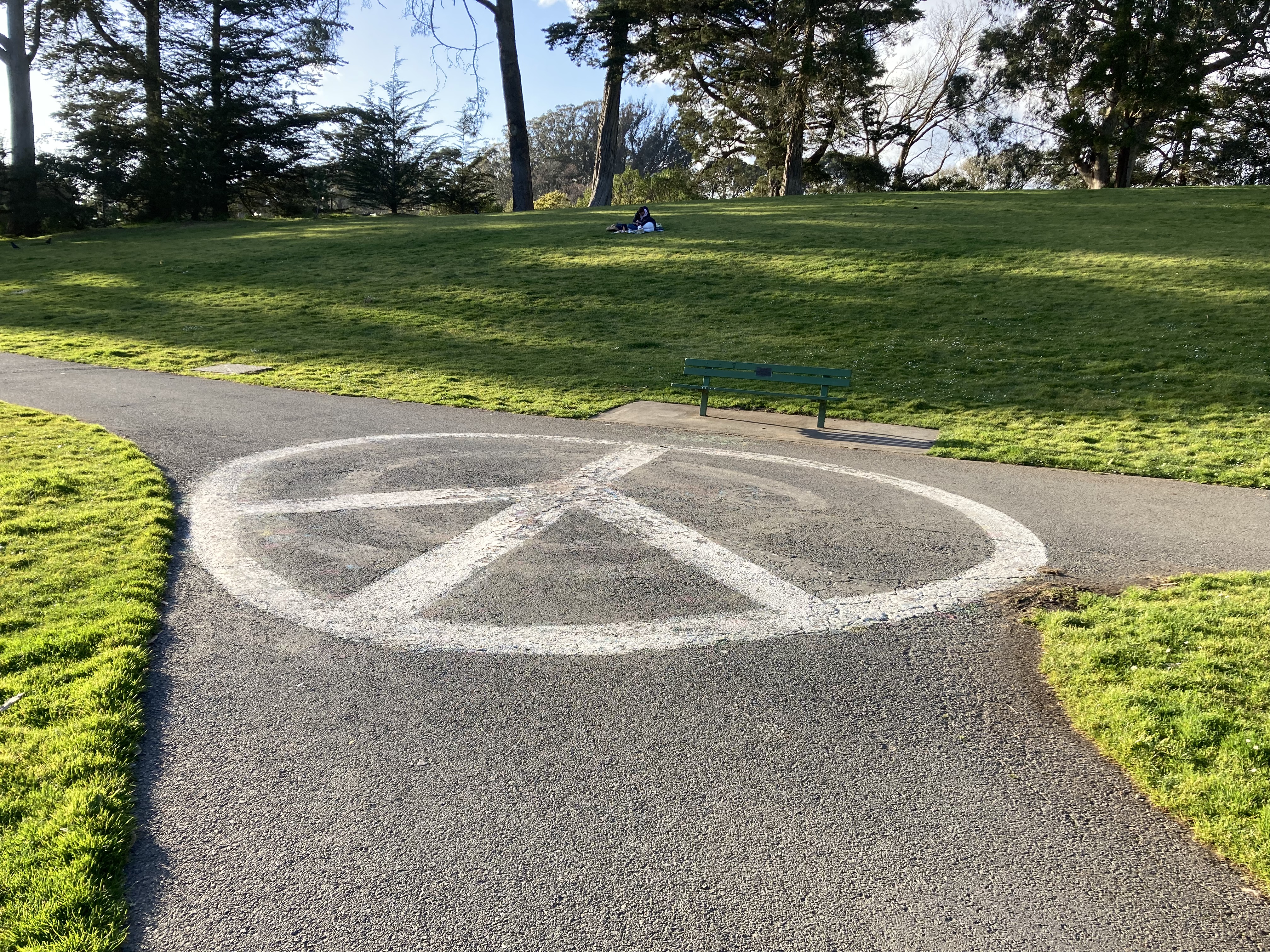
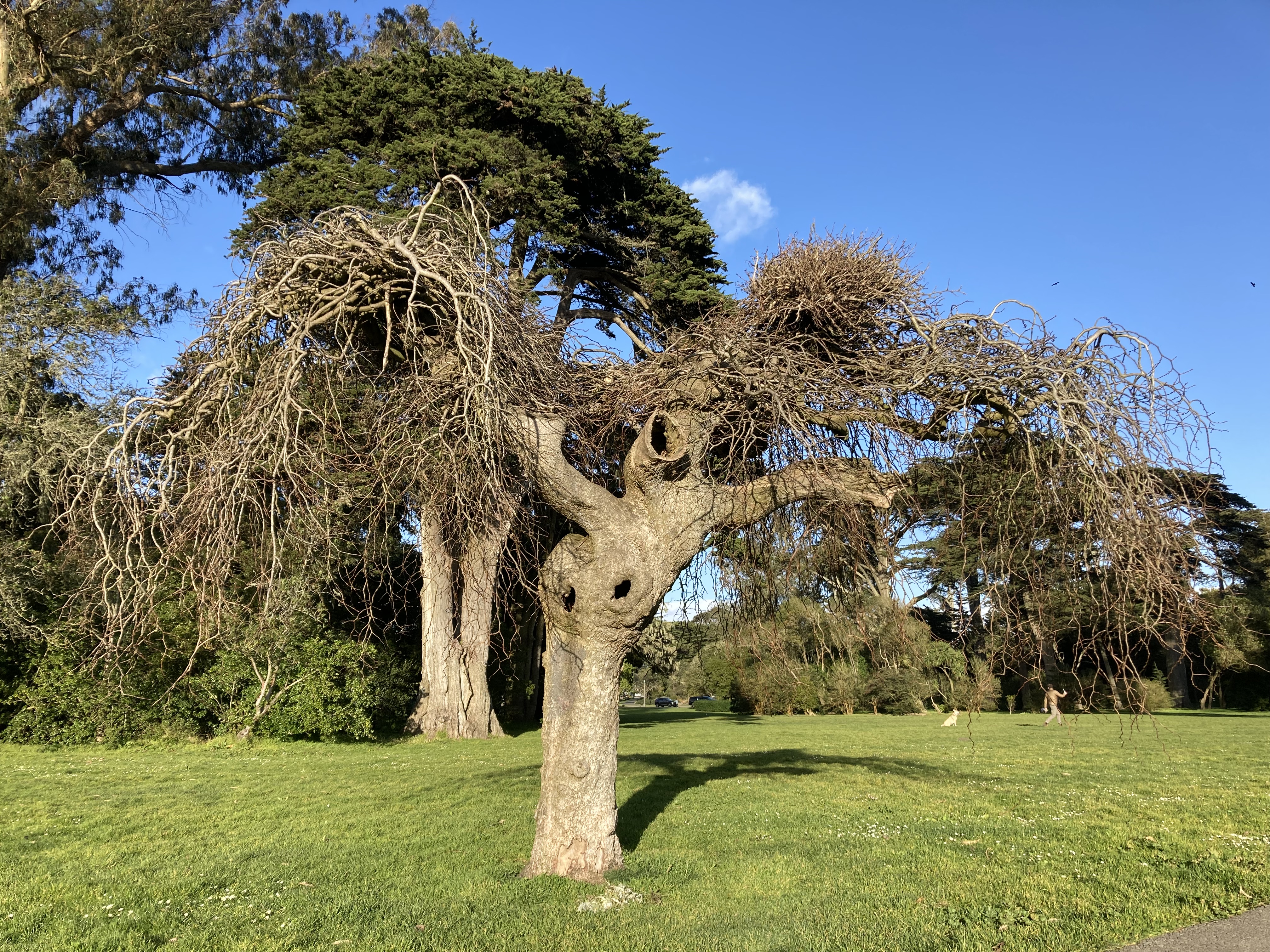
As with any sight-seeing that includes residential homes and neighbourhoods, I tried to keep it lowkey and respectful – people still live here, even if they might be used to it, or knew what they were getting into when they purchased the buildings.

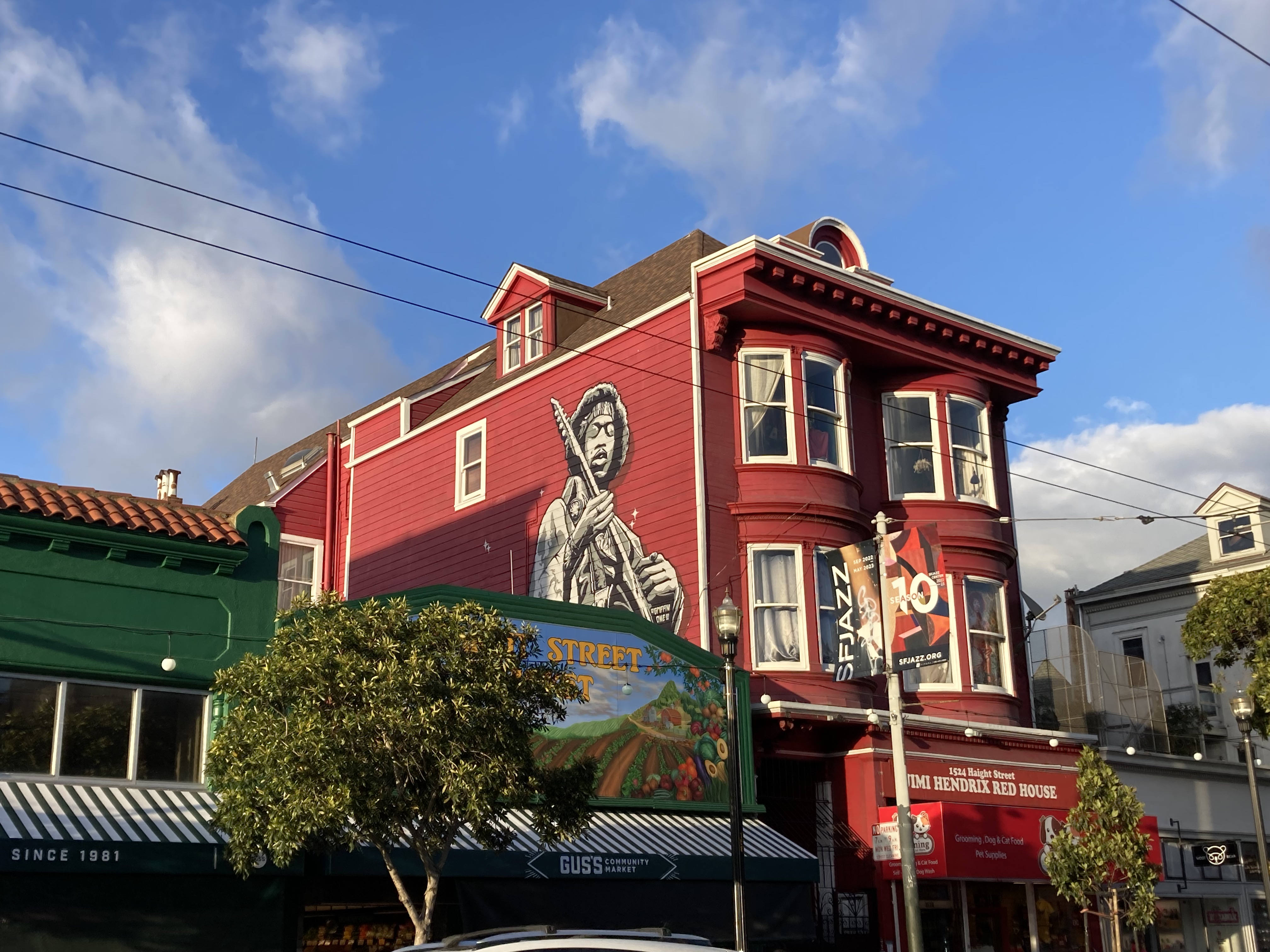
The first notable building I passed by was the Red Jimi Hendrix House at 1524A Haight Street. While rumours swirl unrelentingly saying that Hendrix lived in this apartment, it seems like this has been proven to be false. And the whole red house thing could just be alluding to the song of the same name. It’s a cool building though.
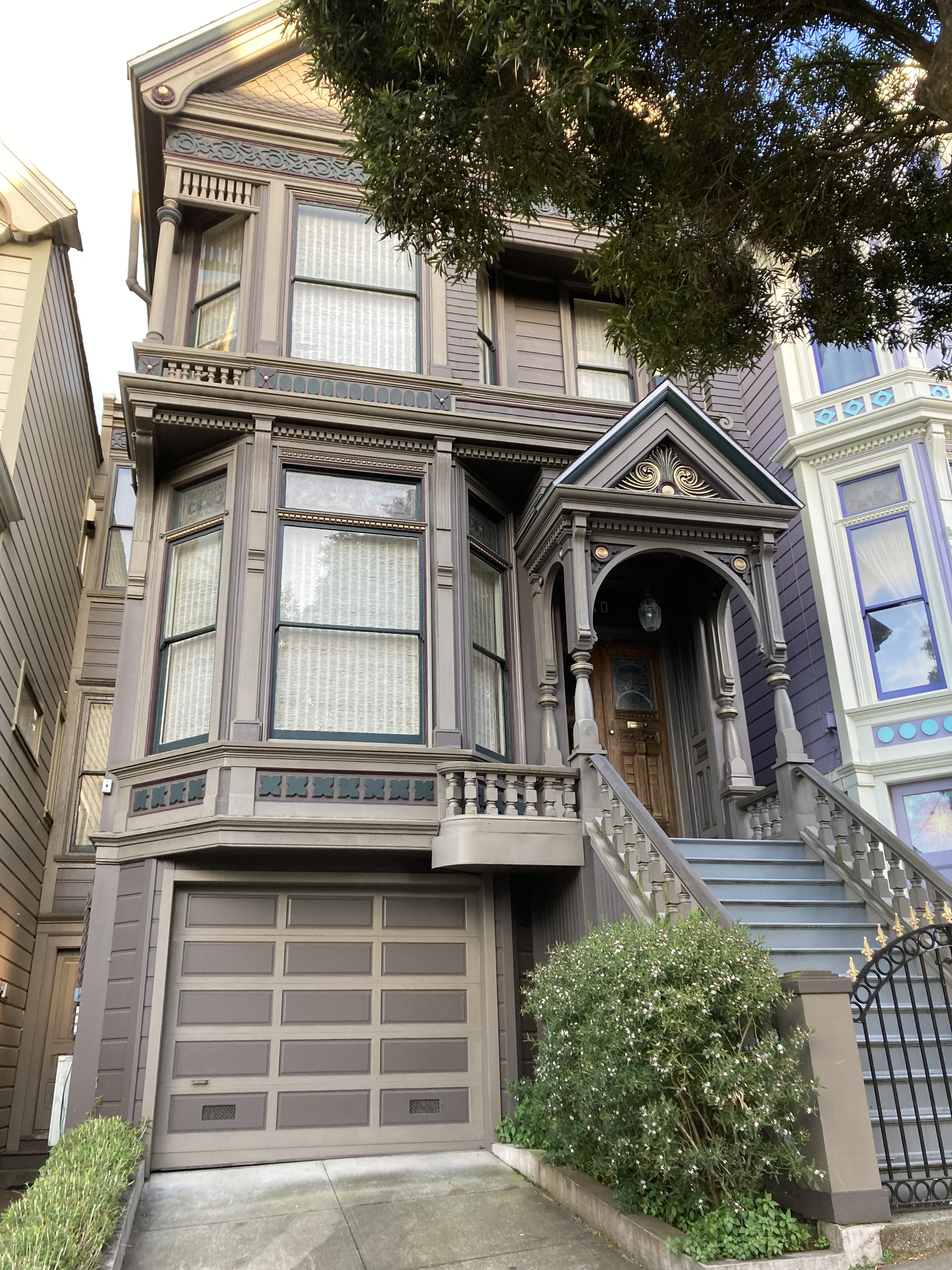
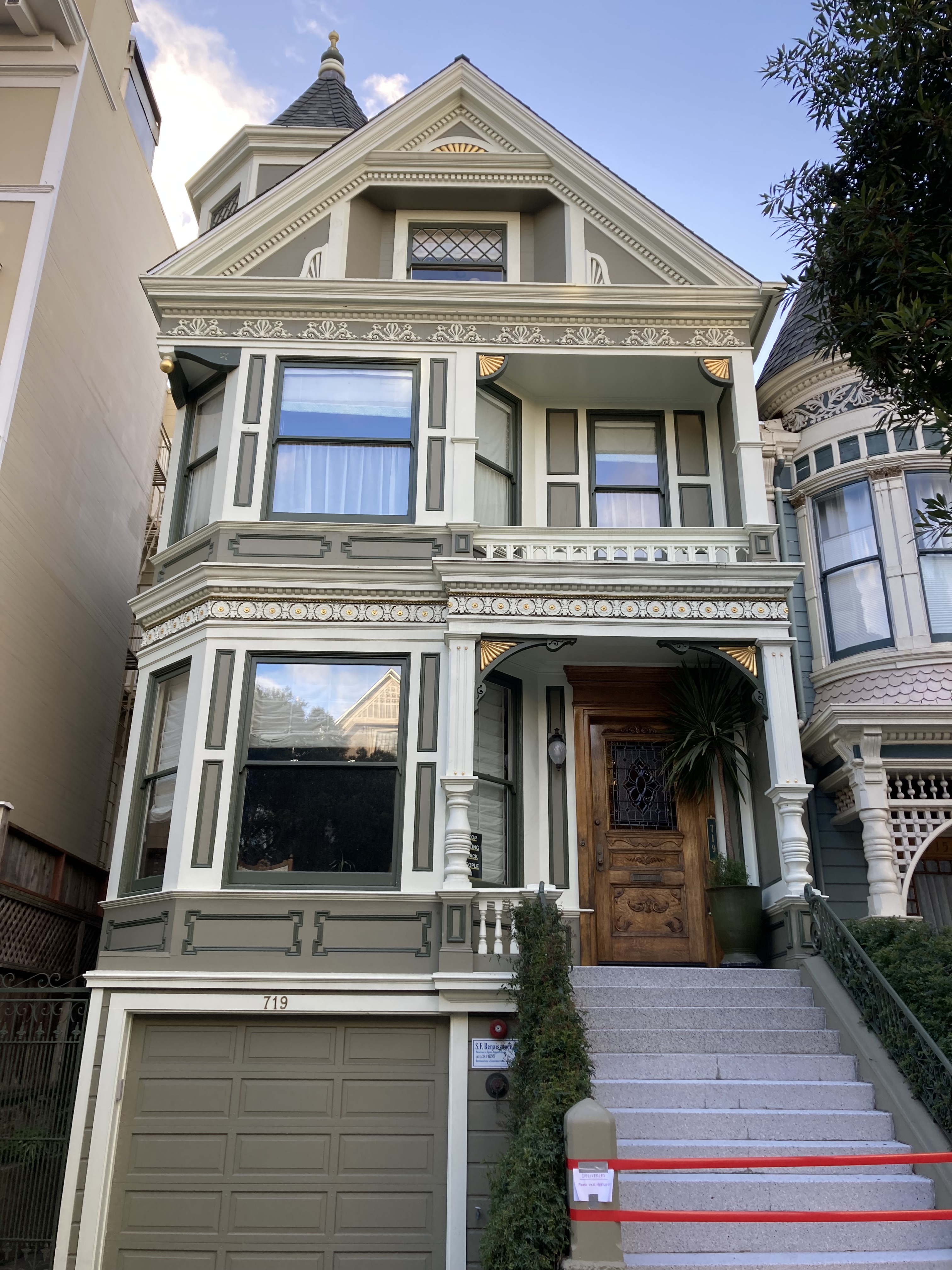
The Grateful Dead lived in the house at 710 Ashbury Street. Hell’s Angels’ headquarters was right across the street, at 719 Ashbury.
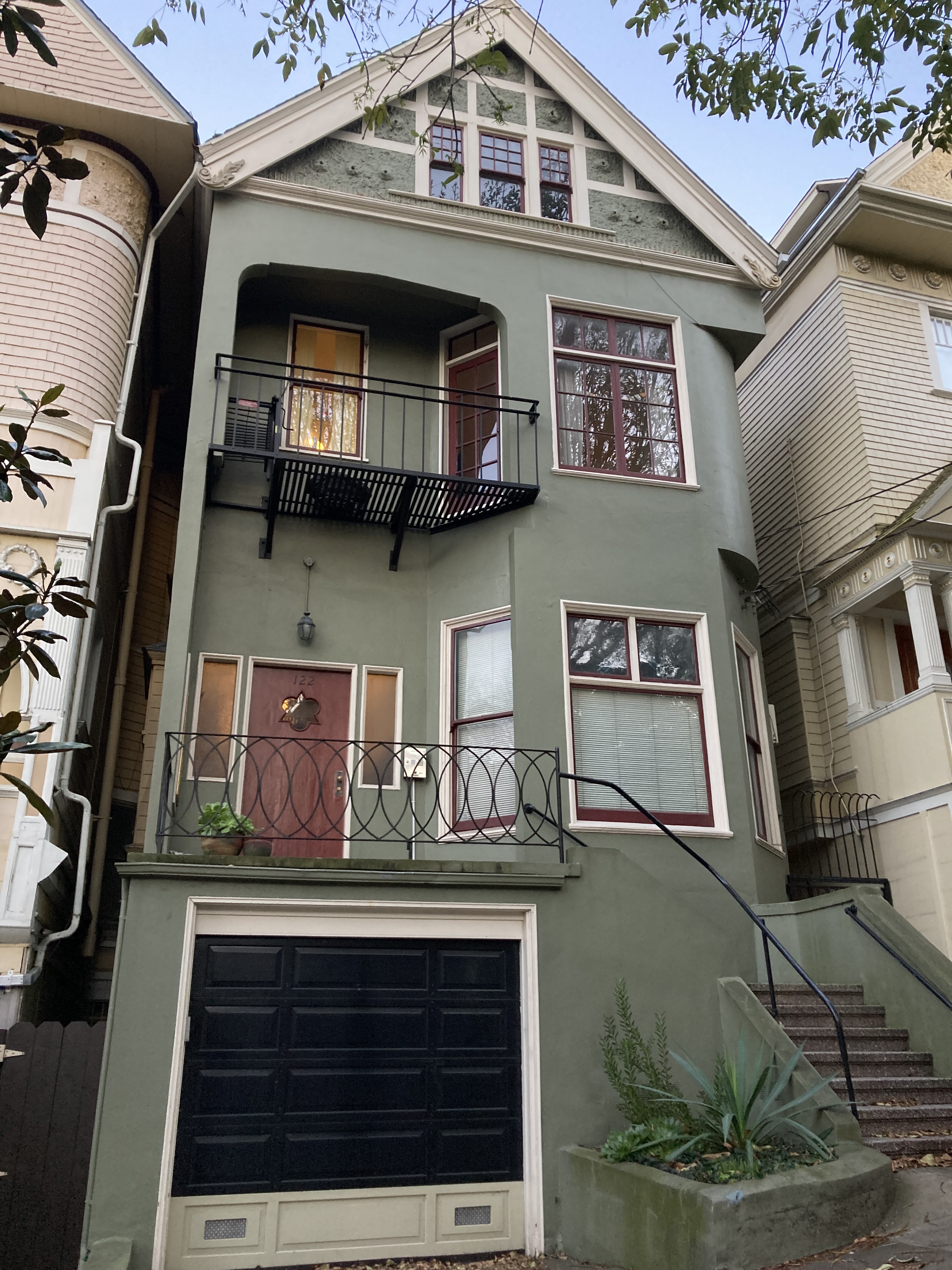
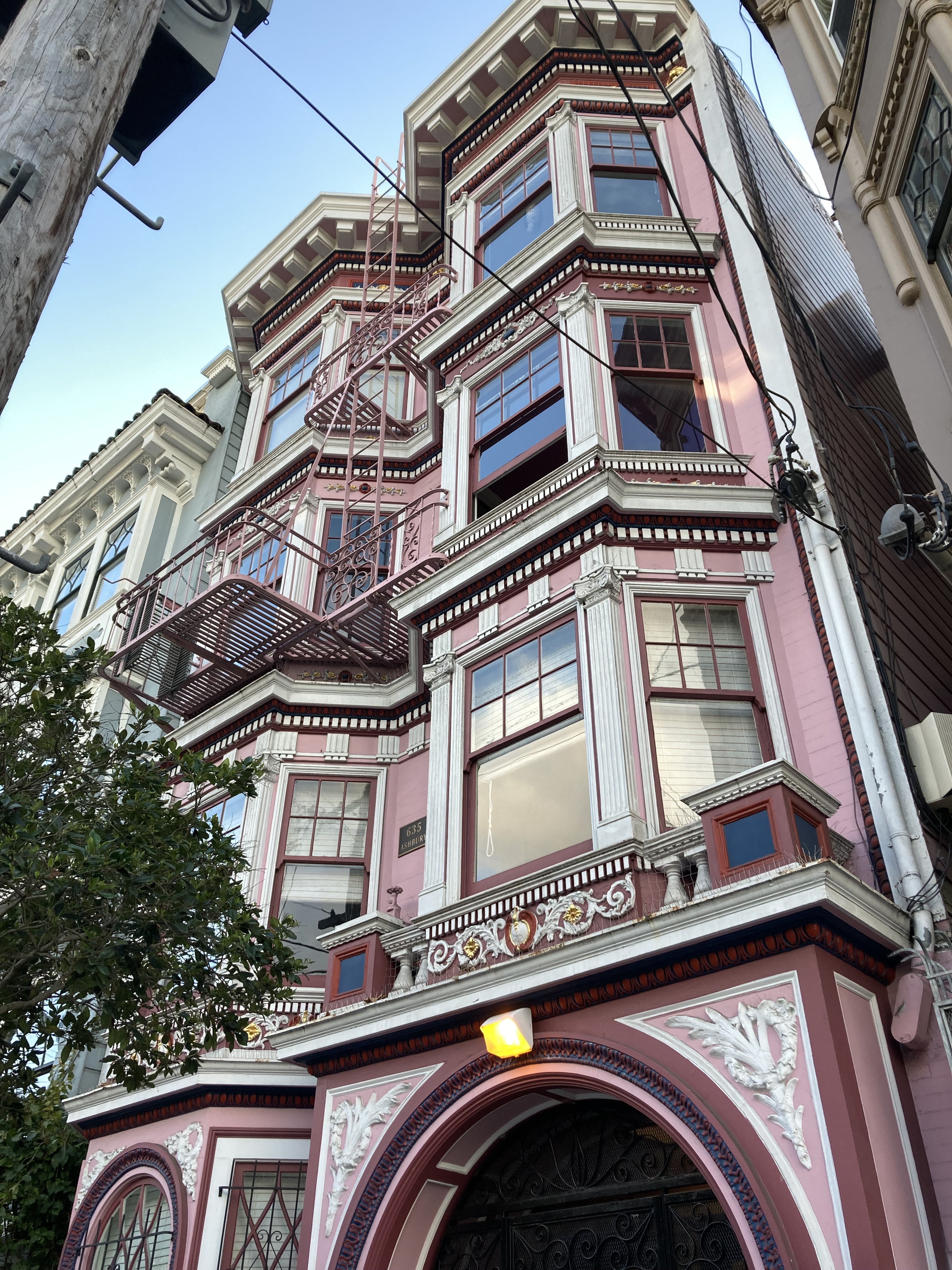
Janis Joplin lived at a few locations, including 635 Ashbury (nicer, pink) and 122 Lyon Street.
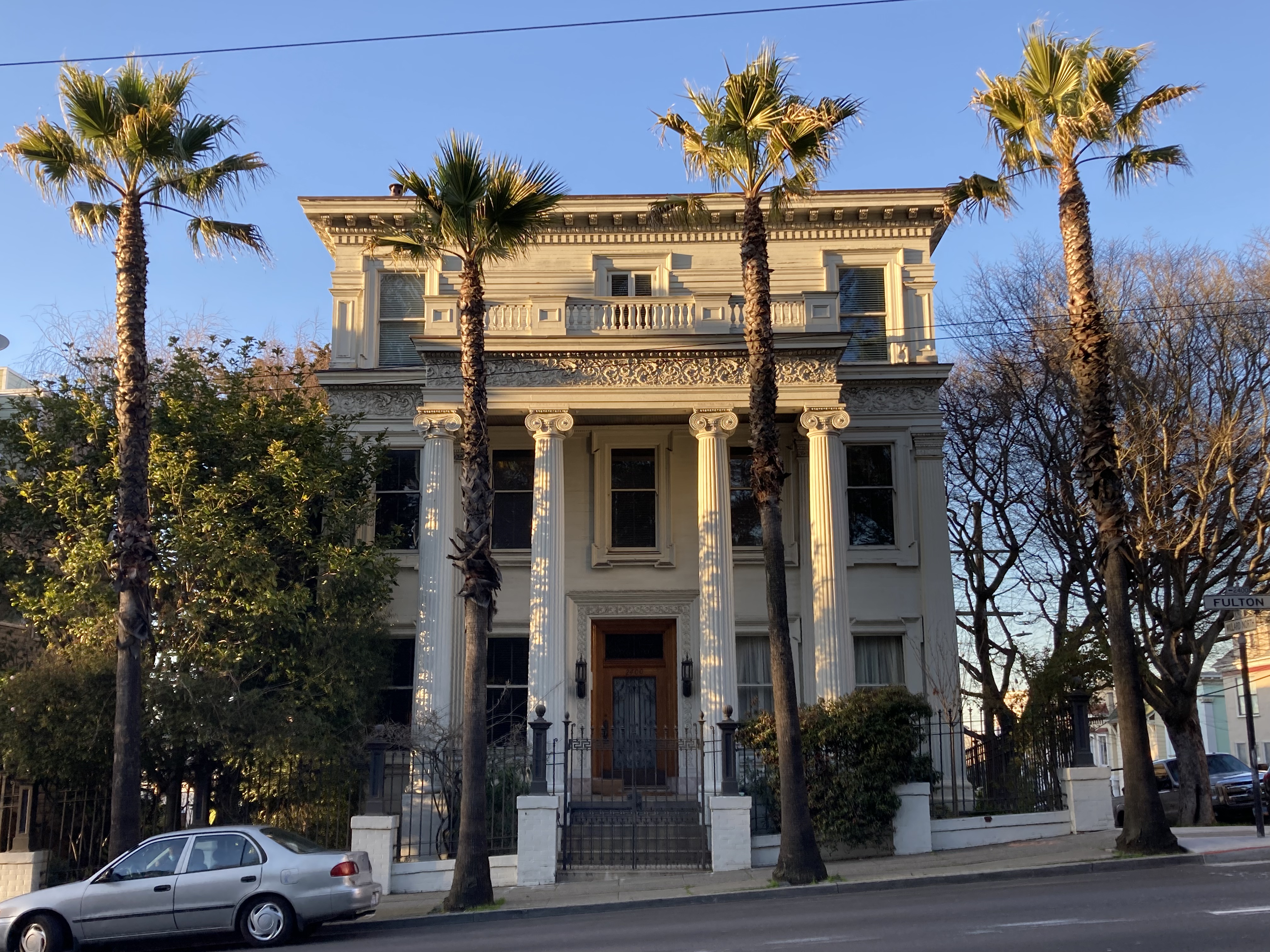
Jefferson Airplane bought the house at 2400 Fulton Street in 1968. While it is currently a cream colour, they painted it black (tell me you didn’t immediately hear the Rolling Stones), and it was known as a party house. It’s really pretty, with its large pillars, and is located further north of Haight, bordering Golden Gate Park.
Perhaps most disturbing of all is the fact that Charles Manson moved to the Haight after being released from prison and lived at 636 Cole Street from April to November of 1967. It is said that he recruited some of his followers from among the “disaffected flower children” who flocked to Haight-Ashbury during the Summer of Love.
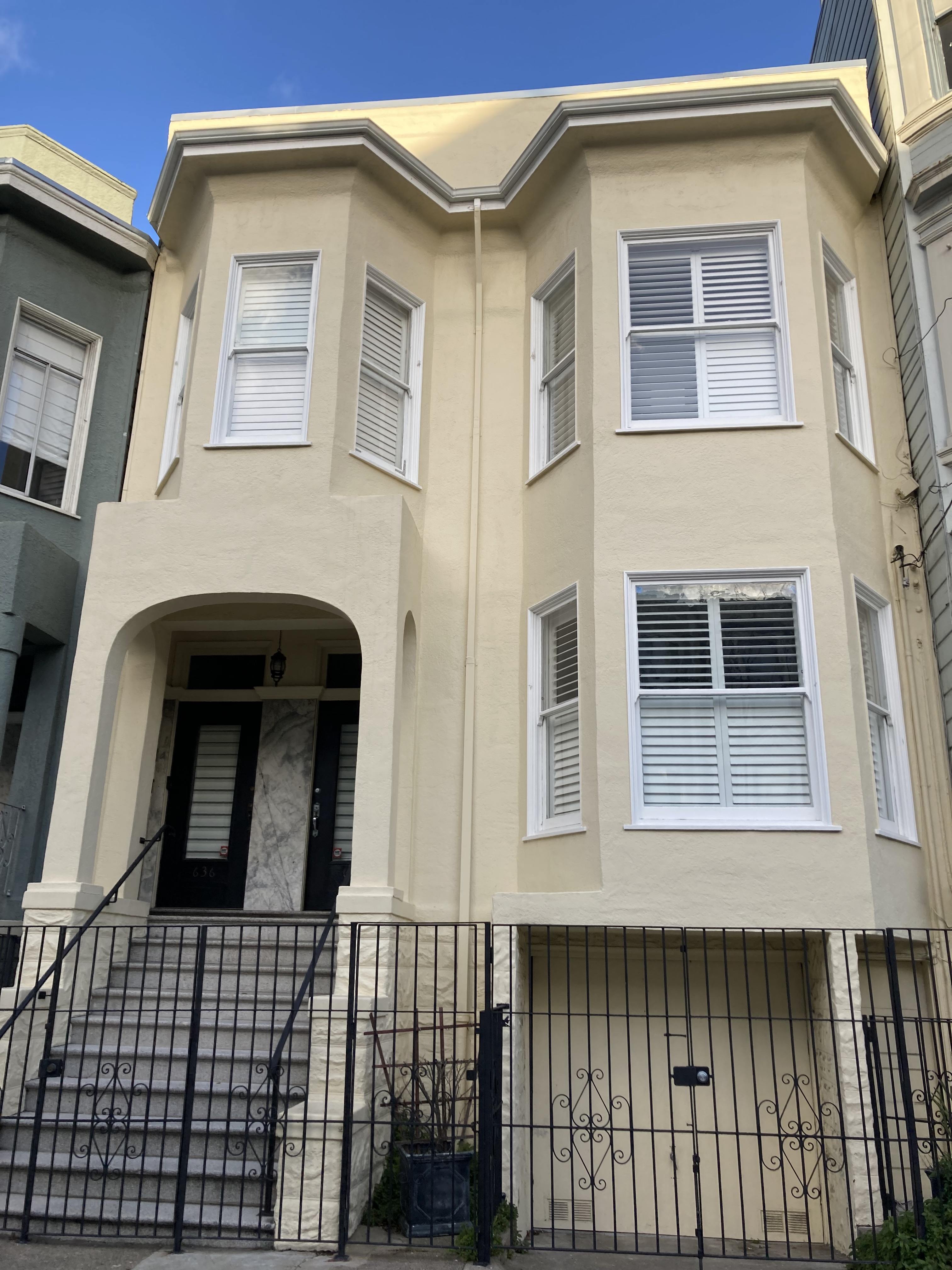
Creepy, and certainly adds to the dark side of the neighbourhood.

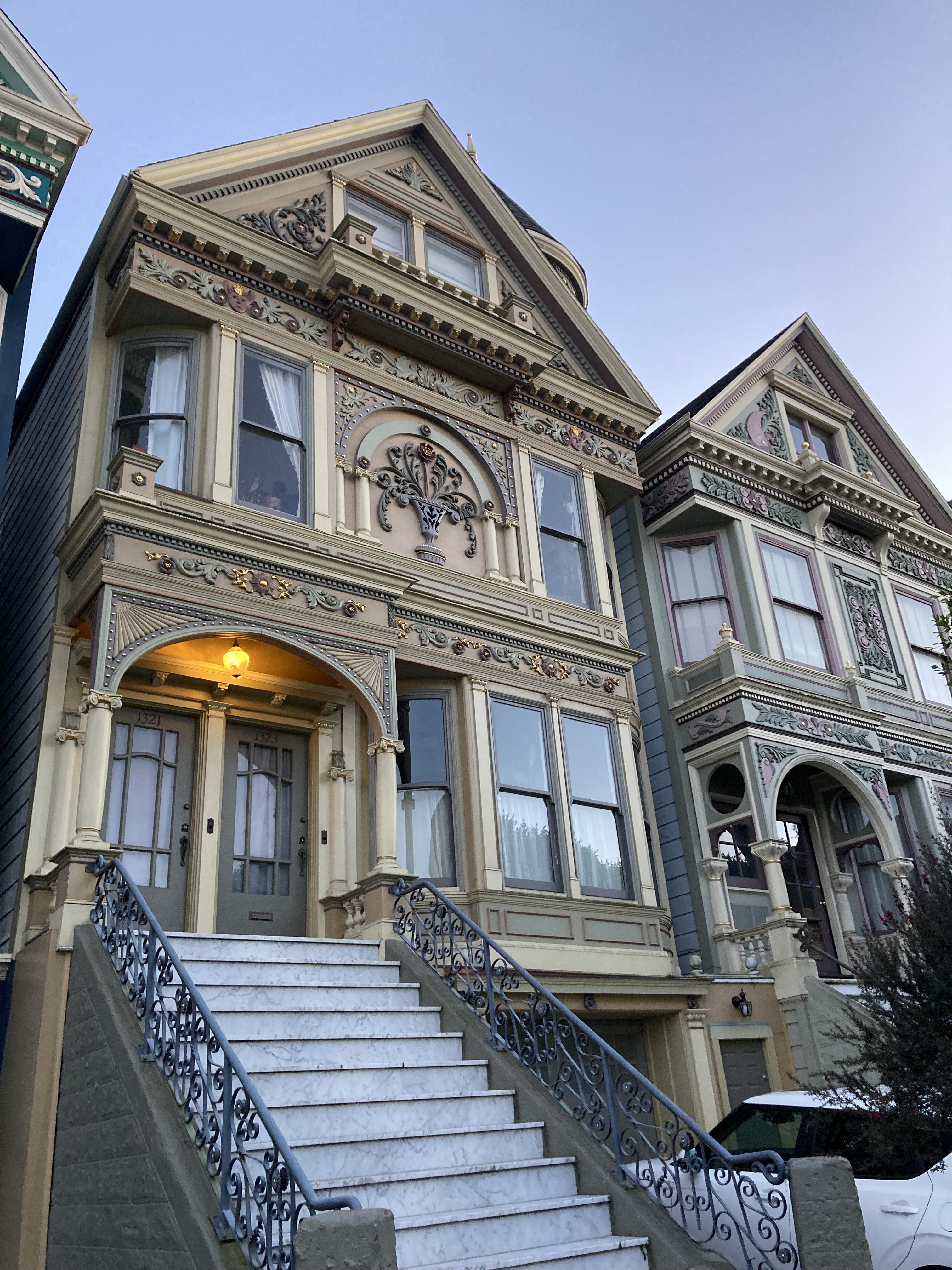
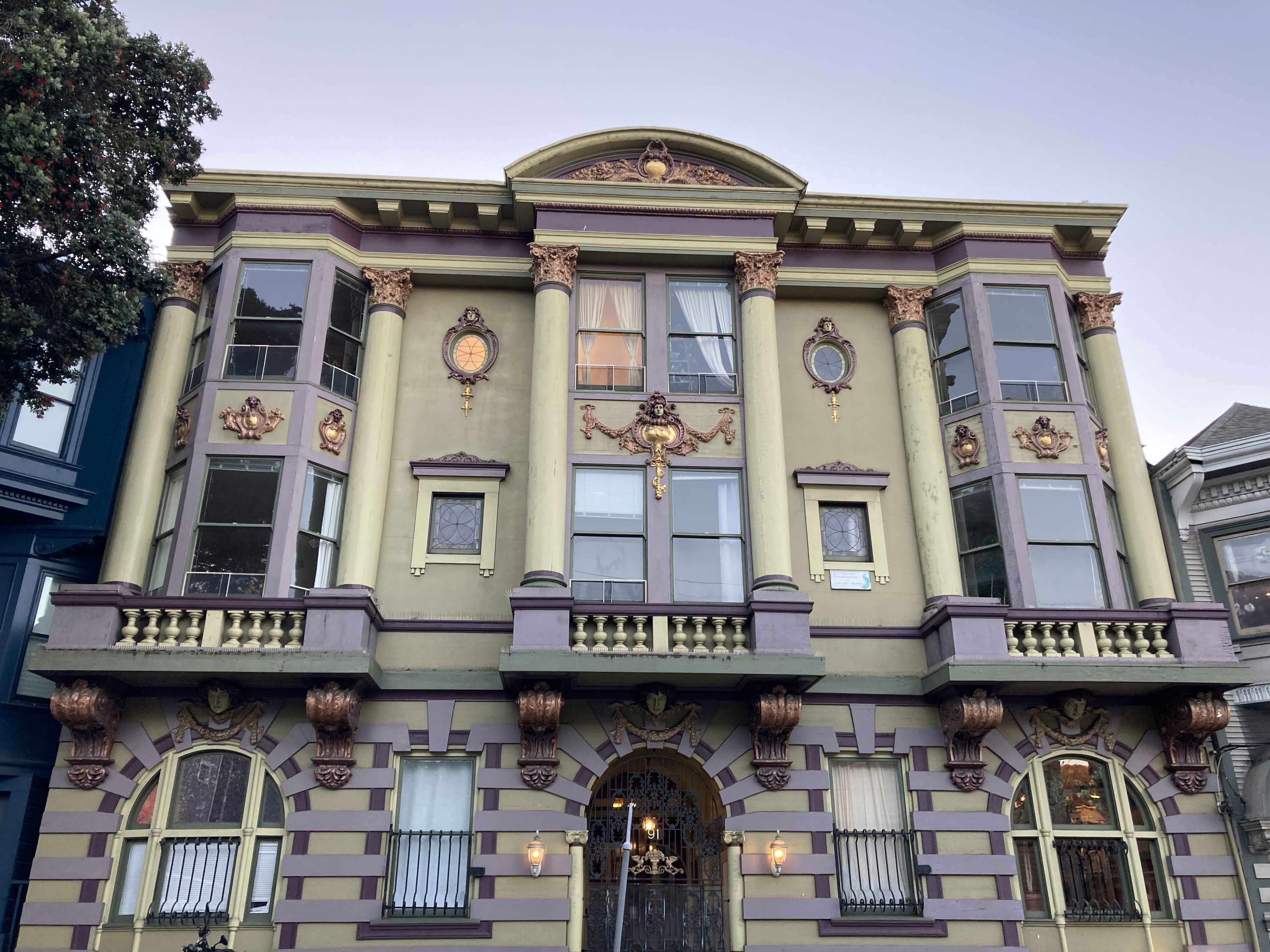
There are plenty of beautiful Victorian homes to take in along the way that didn’t necessarily have famous former residents. One example is the homes on Waller Street called the Four Seasons.
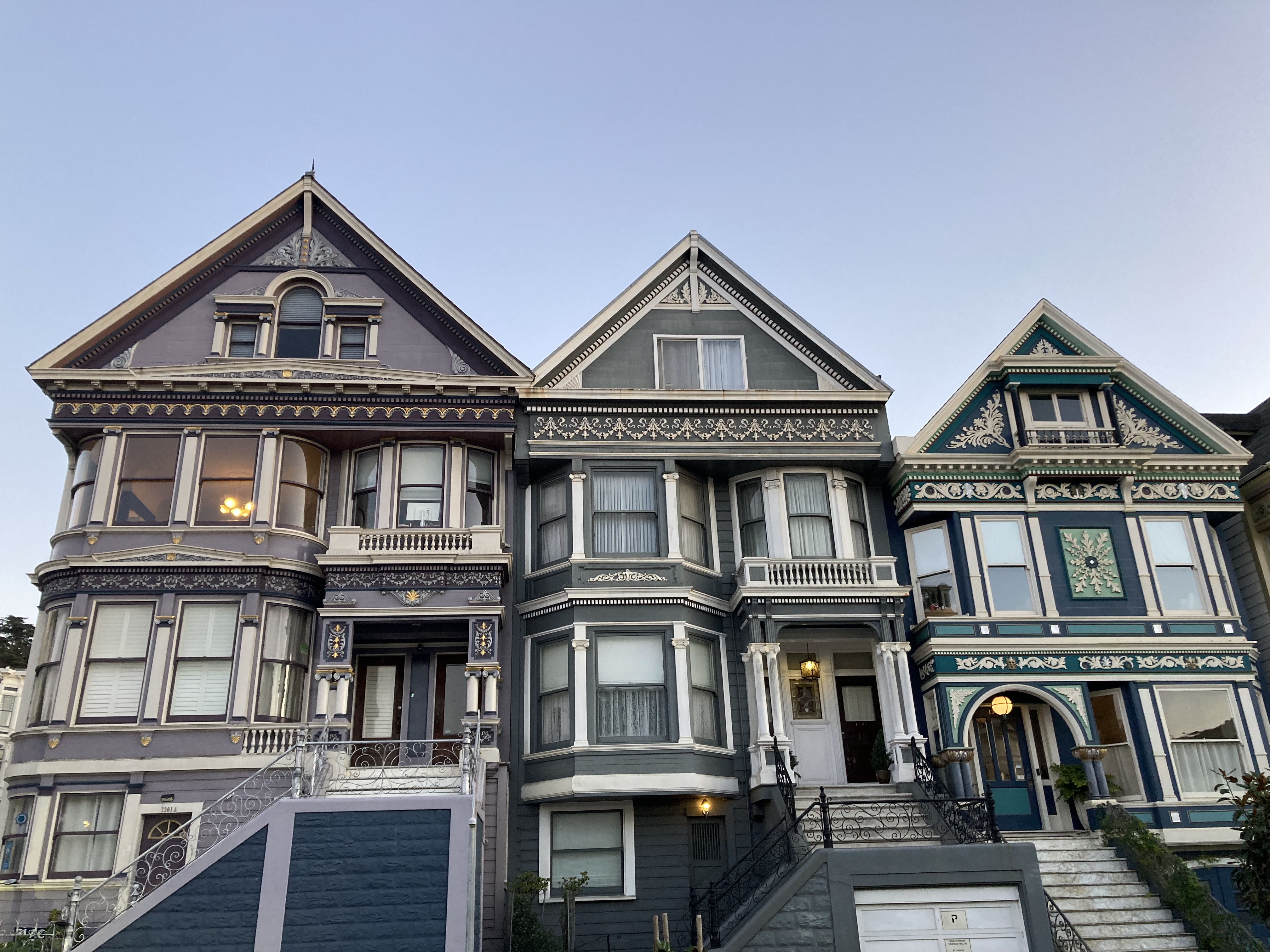
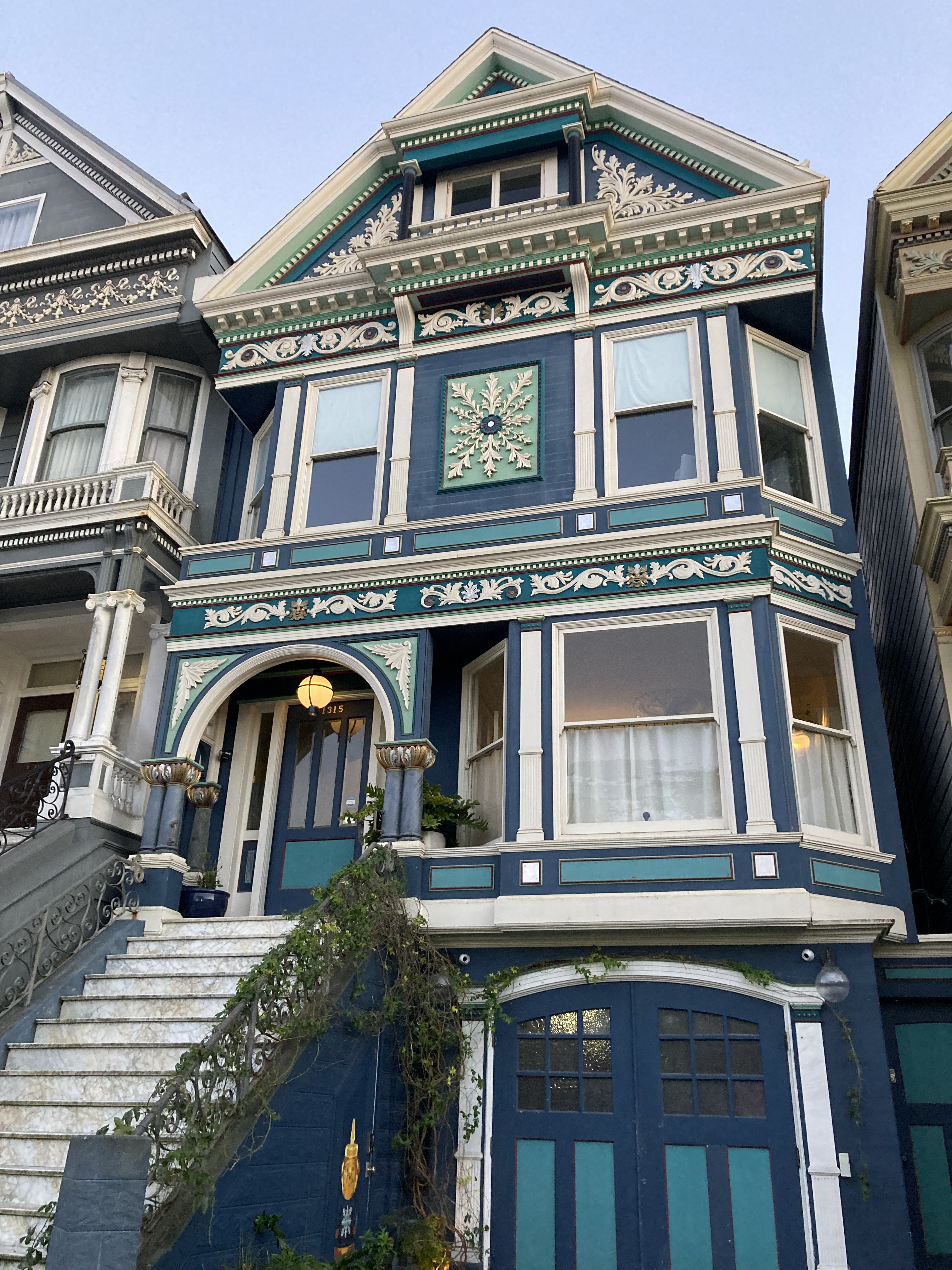
Also look at this one?! I could gawk all day at these homes (I won’t).
A final, non-residential, building of note is The Red Victorian, located at 1665 Haight Street.
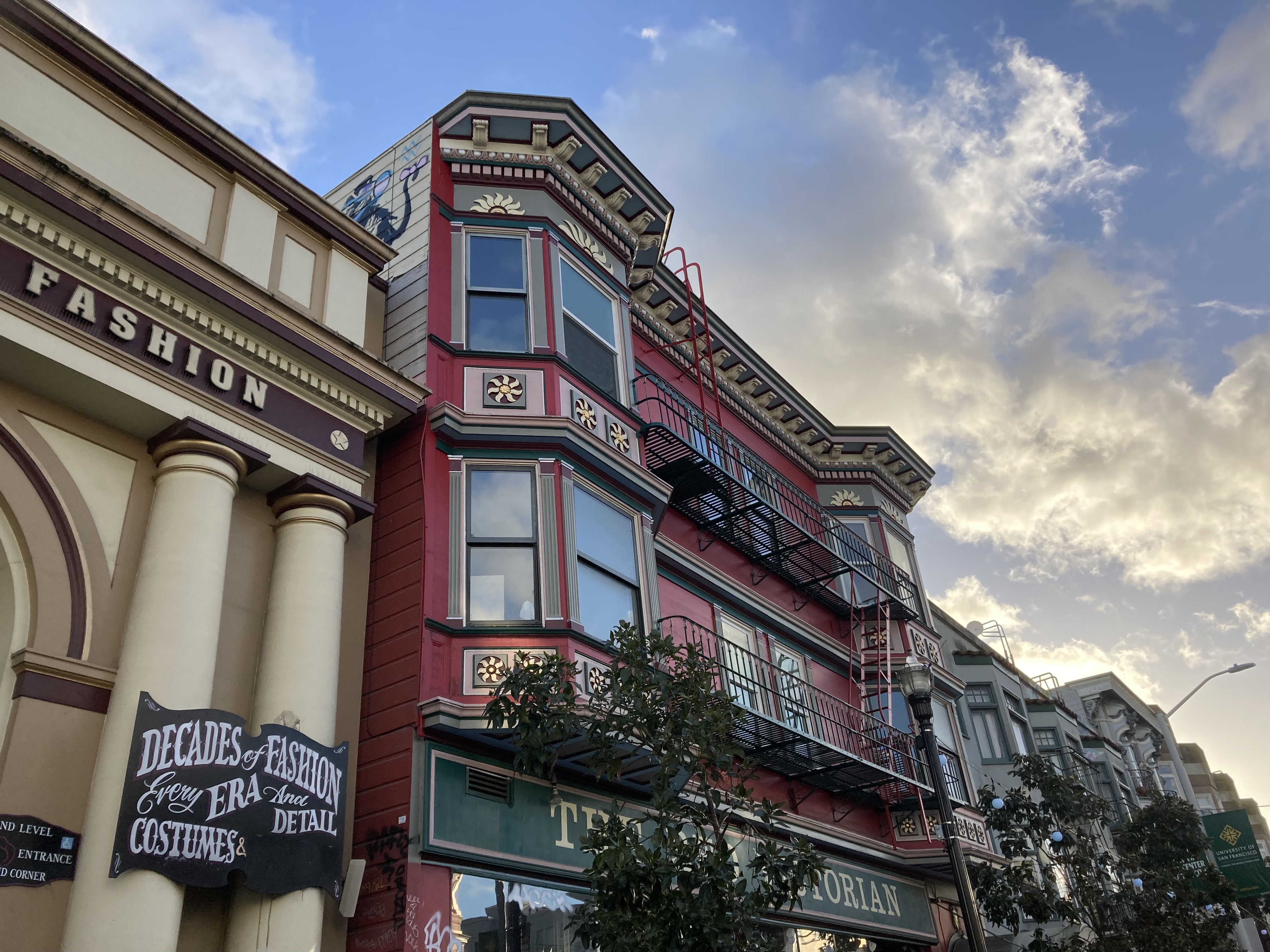
Beautiful in itself, it is one of the only remaining Haight-Ashbury businesses that has continued to operate relatively as it did during the Summer of Love (lodgings). Built in 1904, called the Jeffrey-Haight in 1967, hippies gathered to sleep, plan protests, discuss new ideas, and build community here. It has maintained the same spirit by offering shared meals, activities and conversation with guests. Although recently it has come under new ownership and is in the process of being revitalized and slightly reimagined as a more upscale hotel.

I had read about murals in Haight-Ashbury, big ones of Jimi Hendrix and Janis Joplin, but I didn’t see many. So that’s something I’d keep my eyes more peeled for on a future visit.

I’ll also mention Buena Vista Park, another hangout for hippies, offering a climb to good views at the top.

I could have spent a full day just in this neighbourhood – easily.

I took another uber from Haight-Ashbury back to the Ferry Building and just caught the last ferry back to Sausalito. My van was still there, unscathed.

Last Day In SF

Once again, I woke up at the Golden Gate Bridge Vista Point Rest Area – and it was glorious. As my last day in SF, I might as well soak up my favourite spots, and that sunrise over the city skyline was unmatched.

This day was about tying up loose ends, and seeing the last few things I hadn’t gotten to.

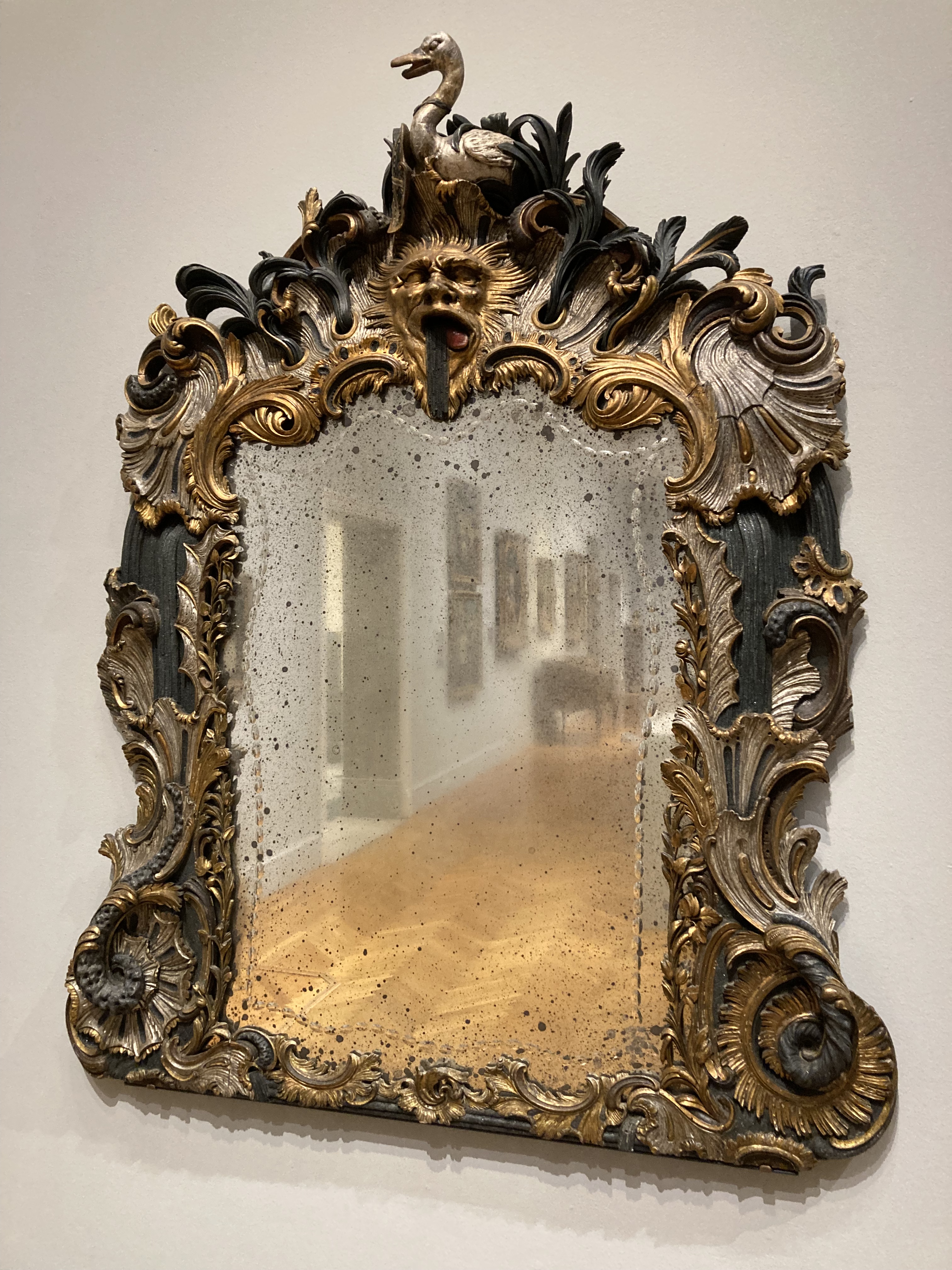
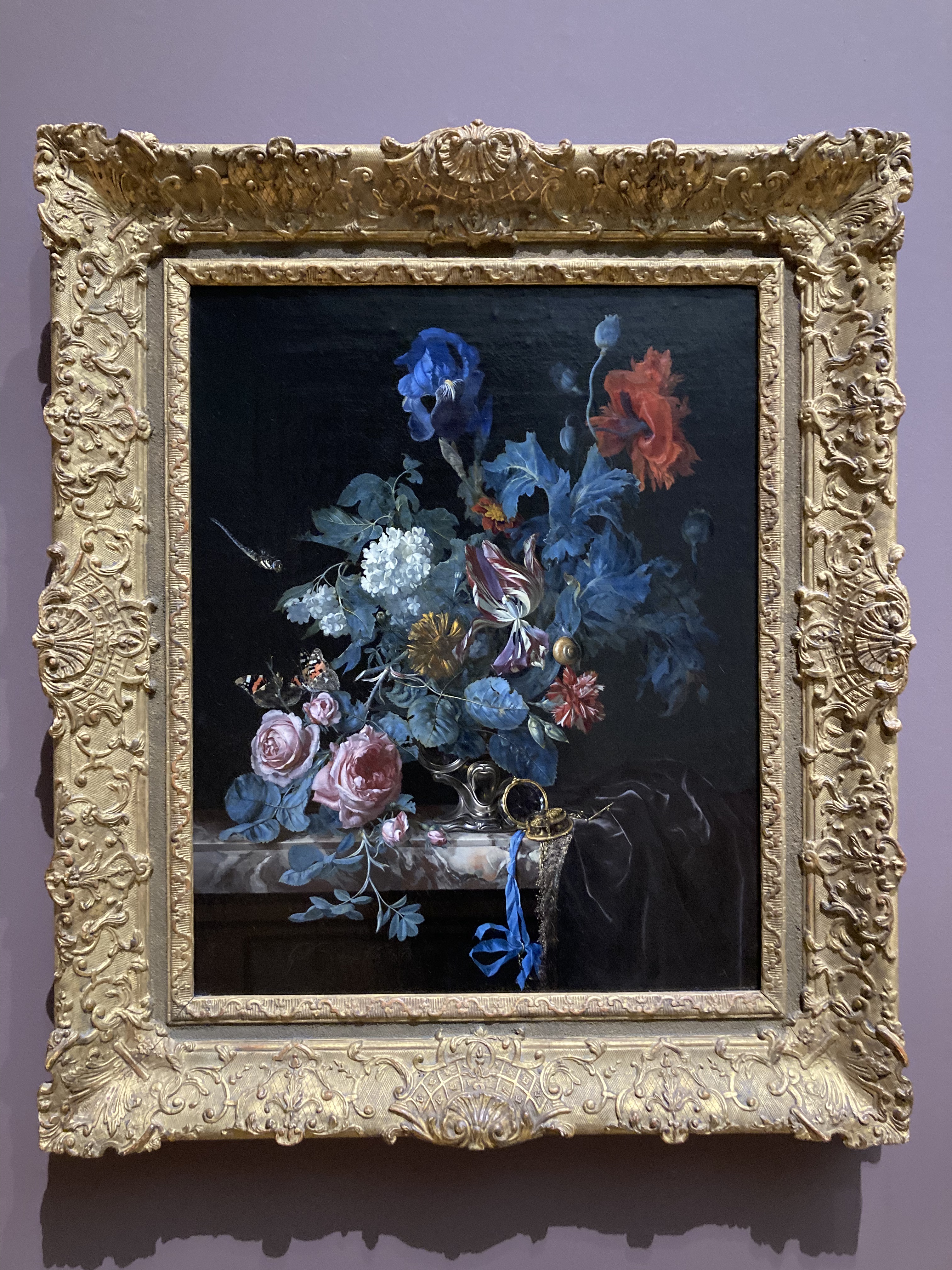
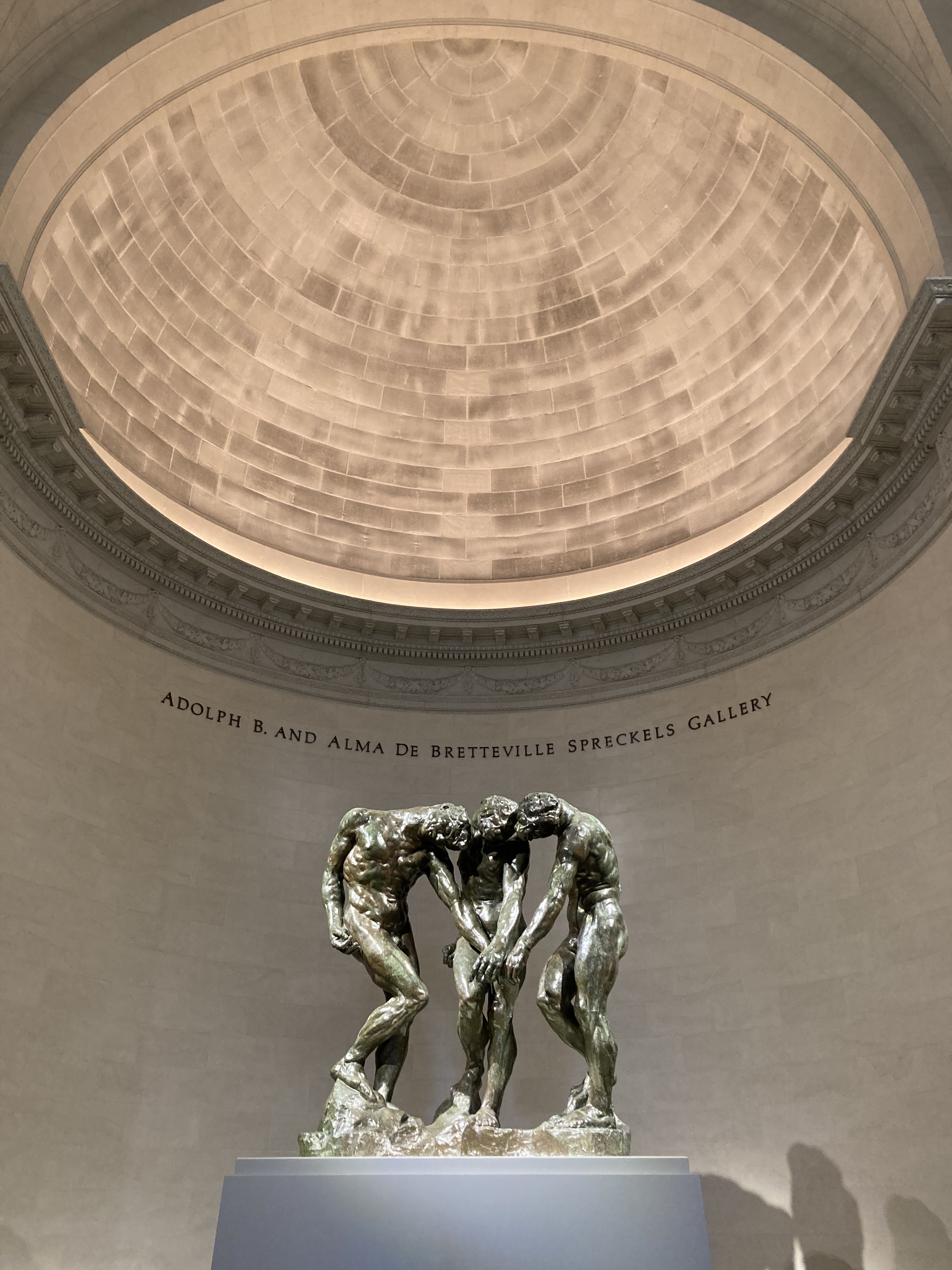
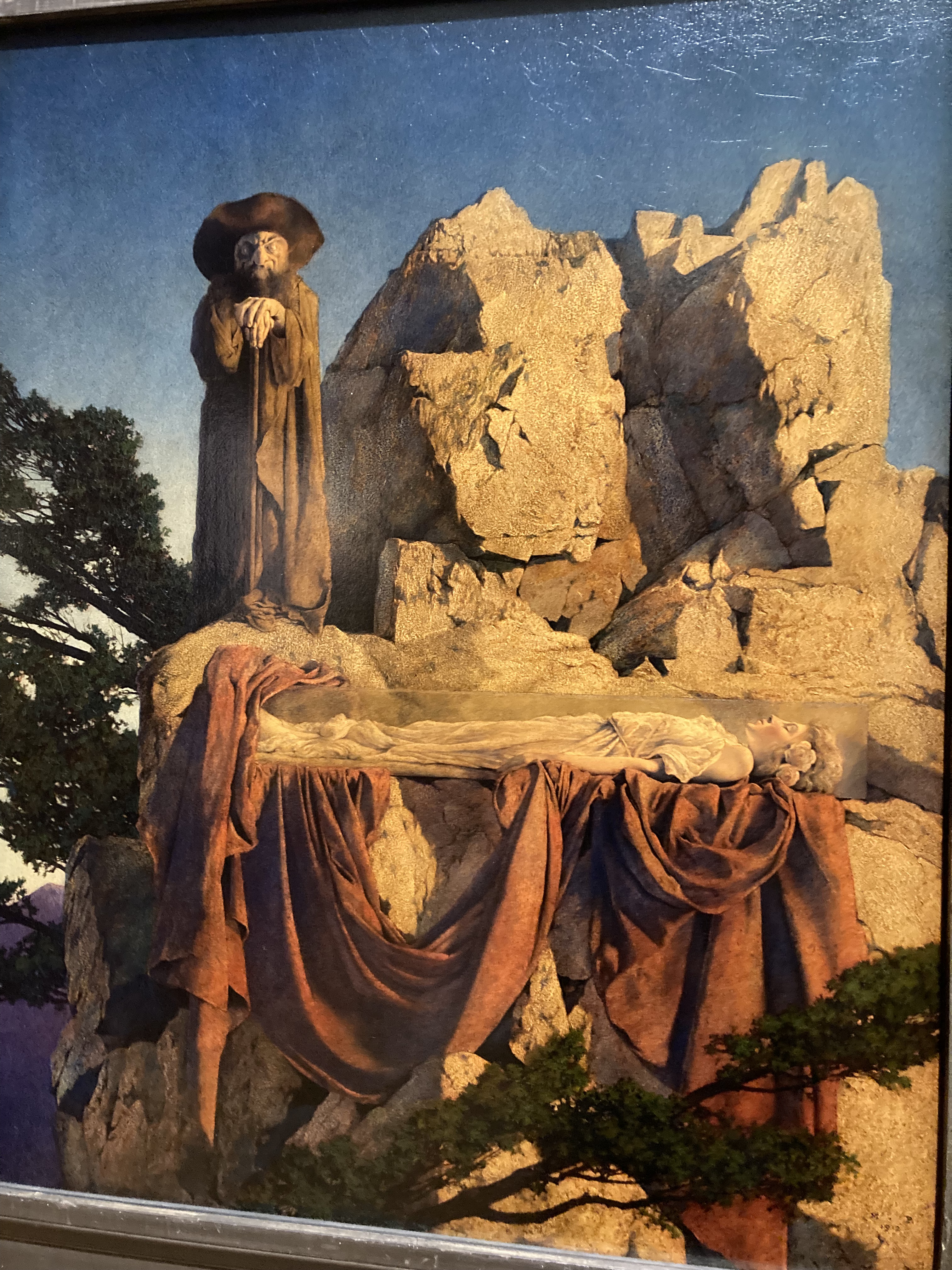
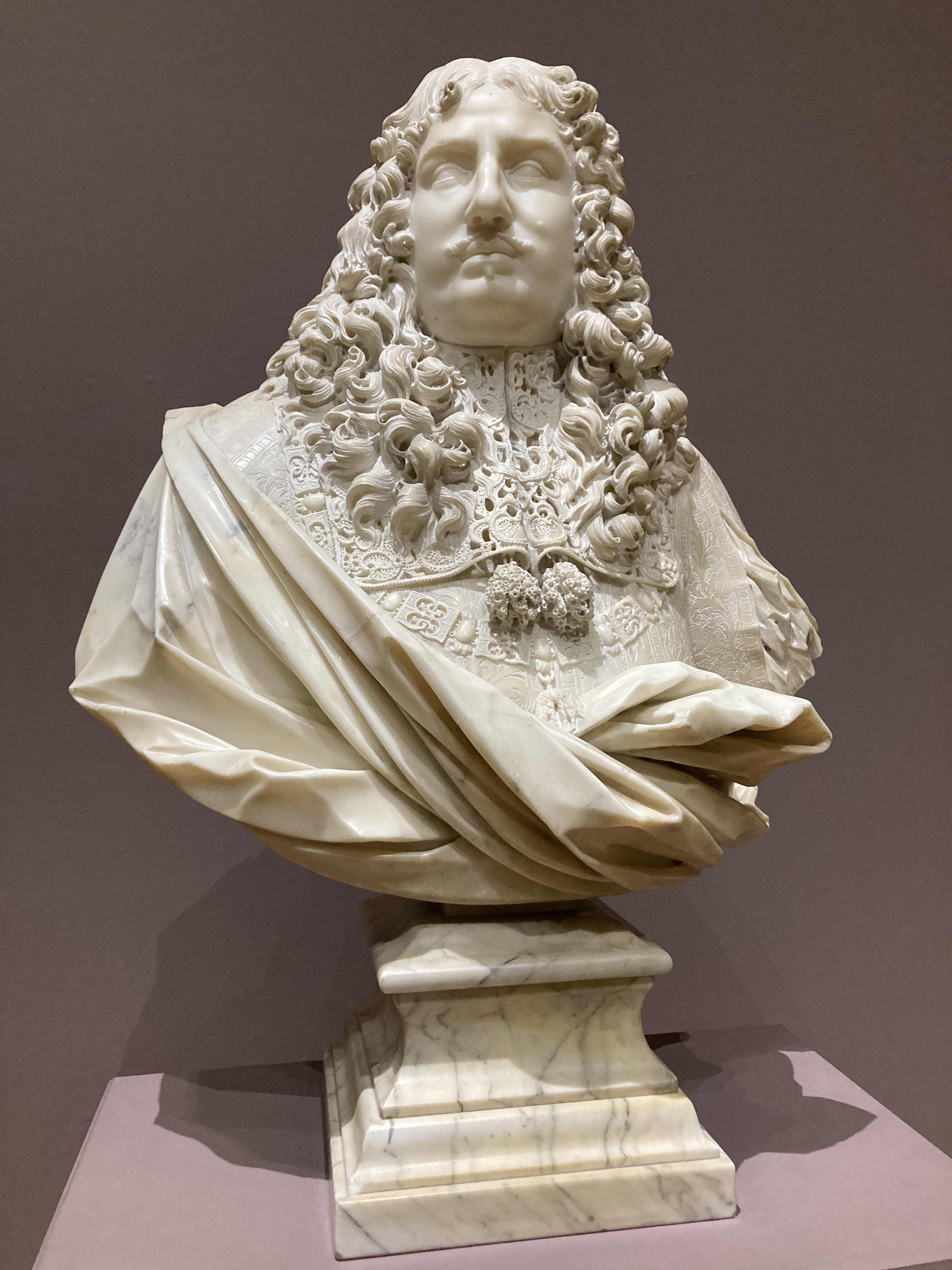
First up – the California Palace of the Legion of Honor, touted as San Francisco’s most exquisite museum. Along with the de Young museum (in Golden Gate Park), these are fine arts museums, with de Young focusing on American art from the 17th century onward, while the Legion of Honor showcases European, ancient, and contemporary art. “An impressive Neoclassical Beaux-Arts building, designed as a replica of the Palais de la Légion d’Honneur in Paris”. The Legion of Honor is beautiful inside and out, located in Lincoln Park, near Land’s End, at the northwest corner of the SF peninsula.
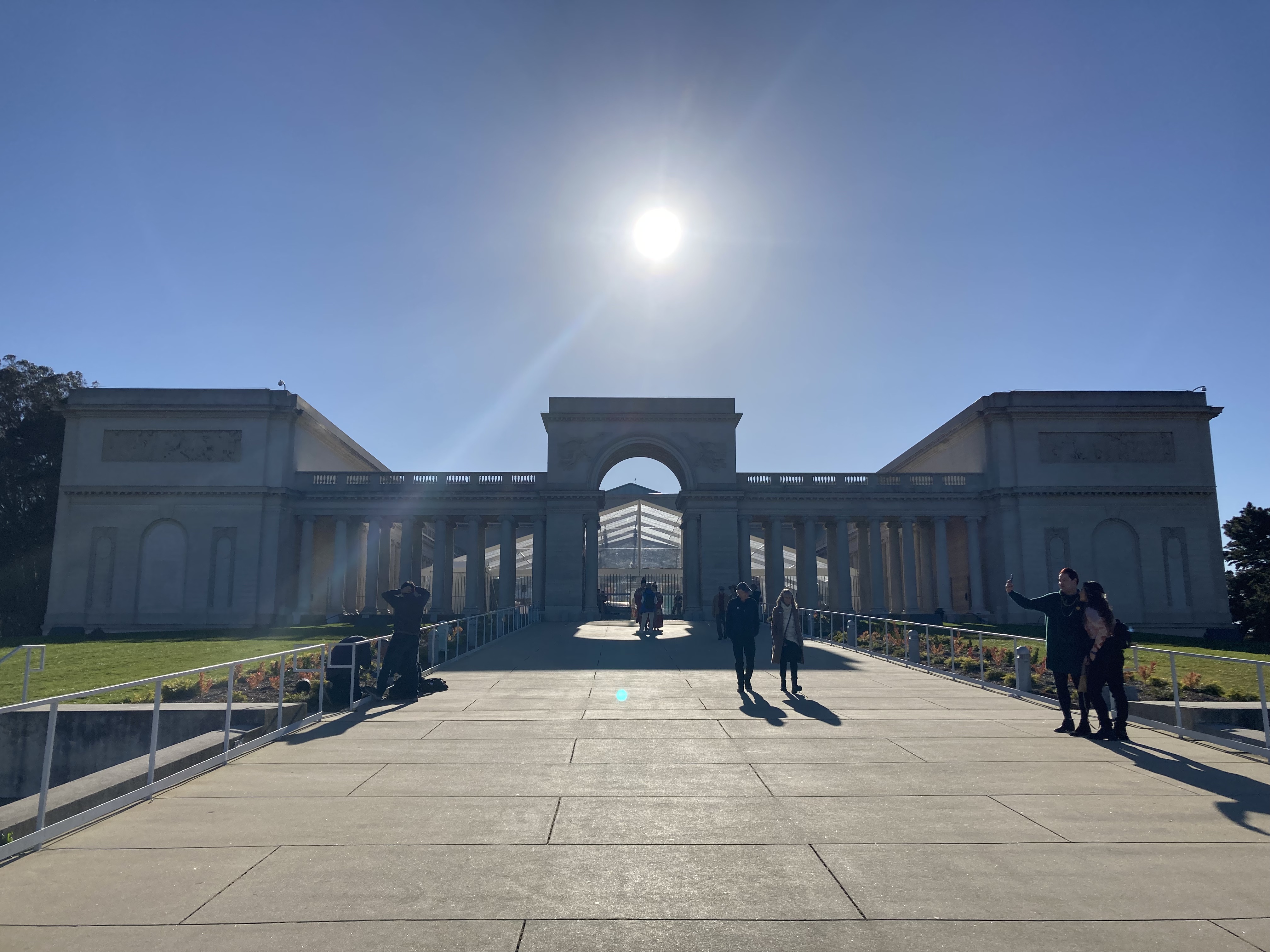
As I am writing this one of their feature exhibits is Manet. While I was there they had Rodin.

I remember being a bit hesitant about parking in their parking lot, as I had read that it could be a hotspot for break ins. Any tourist attraction is likely to be a hotspot. But I chanced it, and luckily had no issues. And I’m so glad I went.
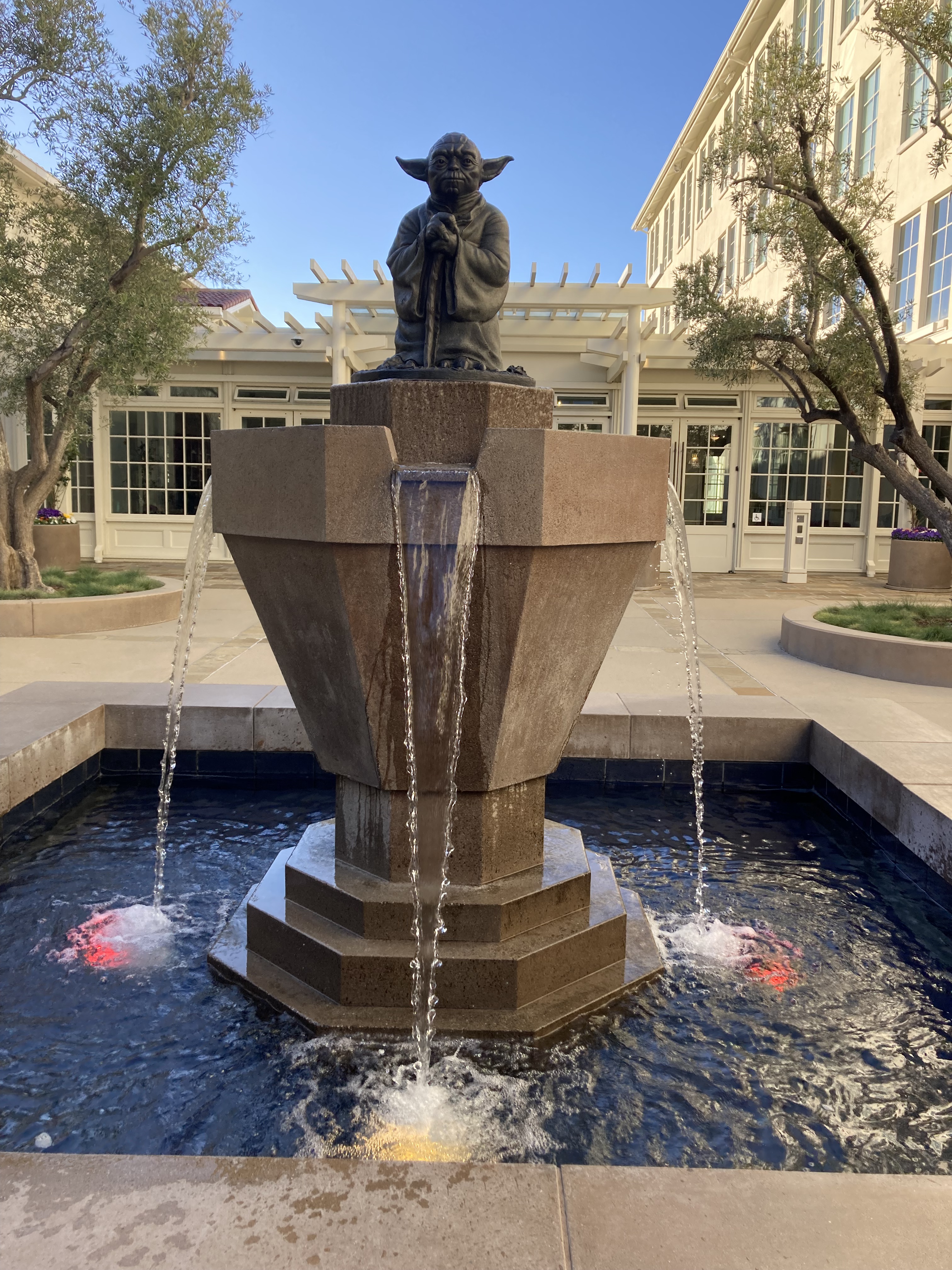
Following the museum, I thought – why not see the Yoda Fountain in the Presidio? I think I was just curious, because I’m not a huge Star Wars fan. It’s located in the Letterman Digital Arts Center (named for a medical doctor of the former Army base here), outside of the Industrial Light & Magic Offices, a division of the film production company Lucasfilm. It is also in front of Building B, which is open to the public, where you can view various Lucasfilm (Star Wars) memorabilia.
I did actually head back to the Haight-Ashbury neighbourhood, as there were some houses I hadn’t seen yet. I tried to go by The Painted Ladies, the colourful Victorian houses nicknamed “postcard row” at Alamo Park, with a view of the city behind them. But there was construction, the road was closed, and for the life of me I couldn’t find street parking nearby, so I missed them. I had seen them several years ago, but I always think that I probably didn’t fully appreciate these things when I was younger, and you never know if or when you’ll get another chance.

I popped in to Love on Haight one more time to soak up the hippie vibes.

I picked up a couple of cans of beer from Magnolia Brewing to take with me. 

Then I drove south, out of the city, to Crystal Springs rest stop near San Mateo. For some reason my driving directions took me along the beaches on the west side of the SF peninsula and there was some construction. I had to back track and when I turned into a beach parking lot there was some sort of gathering. The people gave me weird looks and I got a sketchy feeling. I got out of there pretty quick.

Next Time

Some things I didn’t get to and would consider in the future:

  • Nob Hill, with its posh old mansions and views of Golden Gate Bridge. This neighbourhood is described as one of wealth and privilege, with swanky hotels. There is the ornate Gothic-style Grace Cathedral, Huntington Park, and the Fairmont, which opened in 1907, and is renowned for its elegance and opulent lobby. Steep streets, classy restaurants, nightspots, and the Cable Car Museum.
  • More breweries. Like Anchor Brewing, which is famous for their steam beer, and Laughing Monk, which produces Belgian styles and California heritage beer. I’ll talk more about this in my next post on beer in California!
  • Cool shops like Sword & Rose, The Scarlett Sage Herb Co.
  • Fort Point Historic Site at the south end of Golden Gate Bridge.
  • Lombard Street, where eight sharp turns make it the most crooked street in the world.
  • Ride one of the historic cable cars and tour the city. The Powell-Mason and Powell-Hyde are said to be the most scenic routes.
  • The de Young Museum (fine arts).
  • San Francisco Museum of Modern Art
  • Asian Art Museum
  • SF City Hall
  • California Academy of Sciences (rainforest, aquarium, natural history museum).
  • City Lights Booksellers & Publishers
  • Angel Island State Park, hiking, ferry from Tiburon or Pier 41.
  • BRMC/ Motor Oil Whisky collab with Few Spirits. As an avid fan of Black Rebel Motorcycle Club, I knew that the band got their start in SF. You know I put them on while driving. And I tried to find their Motor Oil Whisky while in California (to no avail).

Miscellaneous
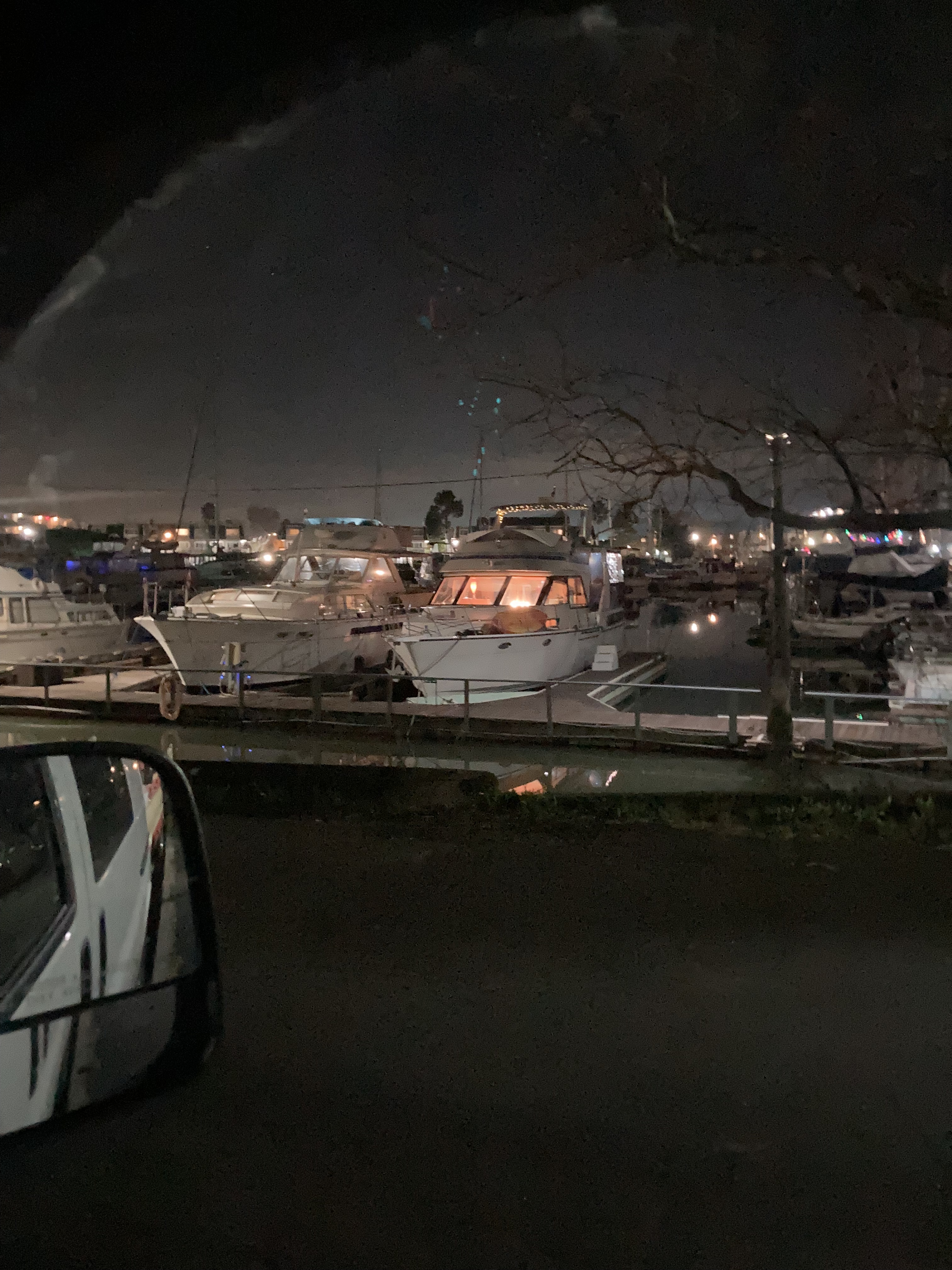
There was one day in the van where I parked at Rodeo Beach and moved absolutely everything around in the van. I’d spilled something on the floor and it had gotten under the rug and it needed to dry out.

But I’d also been monitoring for wet spots and mold since noticing condensation in the van over the winter, from BC to Oregon. The good thing about California, even on the coast, was that the temperatures were rising, so there wasn’t as much of a temperature difference to create condensation. But also, when I eventually did go inland, things were so dry that the whole van dried out and condensation wasn’t a worry (not to mention dry heat and cold are way better than humid heat and cold).

Anyway, I did some checks and found what looked like it could be mold in one of the door panels, so I cleaned it and sprayed it down with Concrobium. I let things air out while I did a hike. Then put everything back. It’s good to periodically do a big cleaning and organizing session. It also seems to calm me.

Most Dangerous Neighbourhoods In SF

I did not feel unsafe for the most part while exploring San Francisco. That said, I was mostly in touristy areas. And I felt prepared. Based on my research, these were areas I made an effort to avoid:

  1. Tenderloin District (just west of Union)
  2. Hunters Point (SE coastal)
  3. Mission District (SE)
  4. Outer Mission (south, toward Daly City)
  5. Western Addition (not far from Haight-Ashbury, would want to walk around it from Presidio)
  6. South of Market SOMA

Central California Coast

There was a lightness that came with leaving San Francisco. It was sad to leave, but there was a relief from having executed all the planning and getting a big city under my belt. I could relax a little and be more free rein with my lack of plans.

Now that I was south of the Bay Area and the jewel of northern California – I had entered Central California.

I left the rest area I’d stayed at south of SF and headed back to the coast, driving through Half Moon Bay again, and going about an hour south on the PCH. The coastal highway wasn’t as winding here. I found a quiet little beach parking lot to stop at, take in the views, stretch my legs, and plan my day.
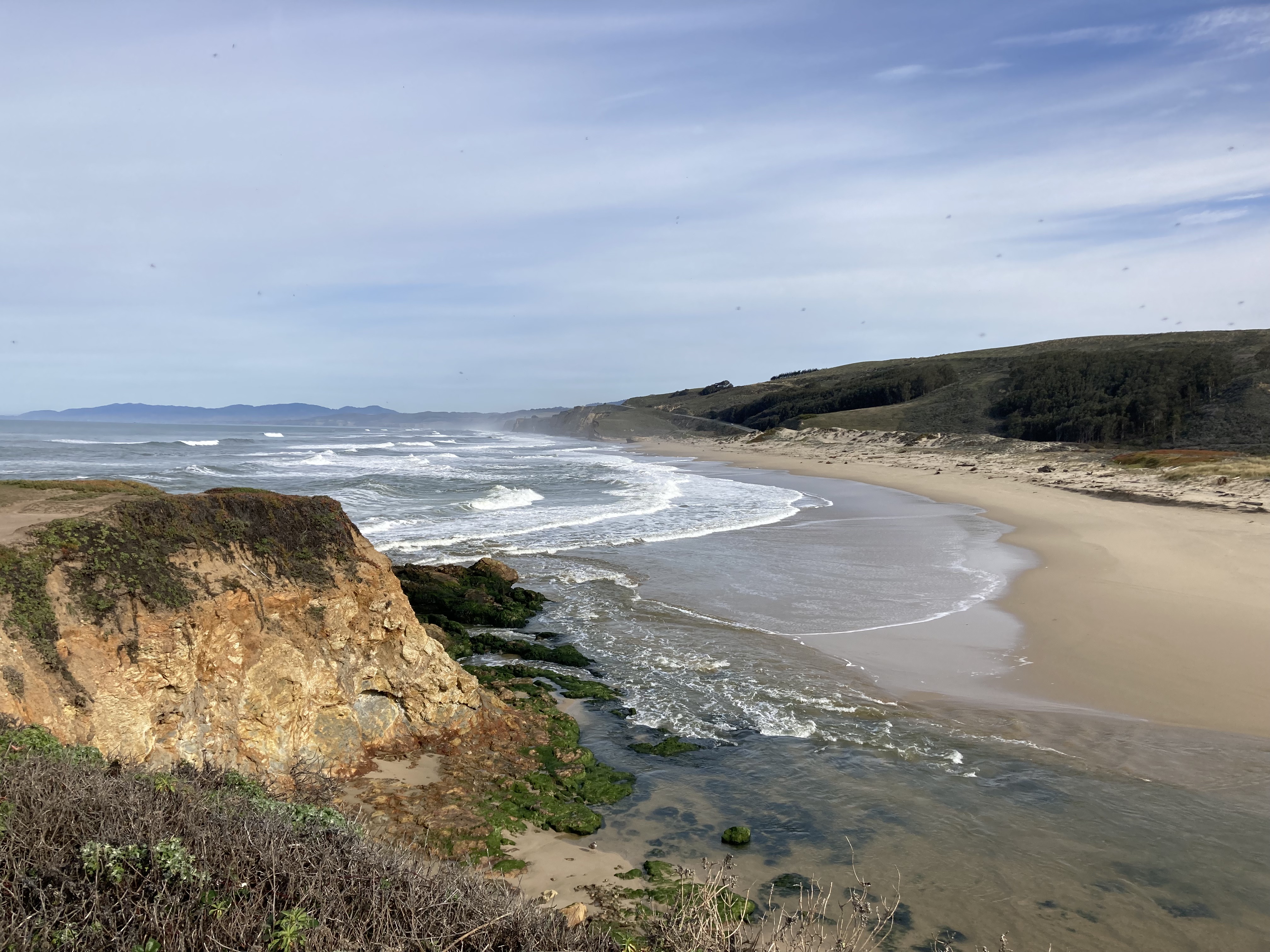
Pescadero State Beach

Santa Cruz

The Elephant Seal at Greyhound Rock

Santa Cruz was my next stop, but on the way I stopped at Greyhound Rock. I was always open to checking out random places as I passed through areas. You never know when you’ll stumble on an unknown gem.
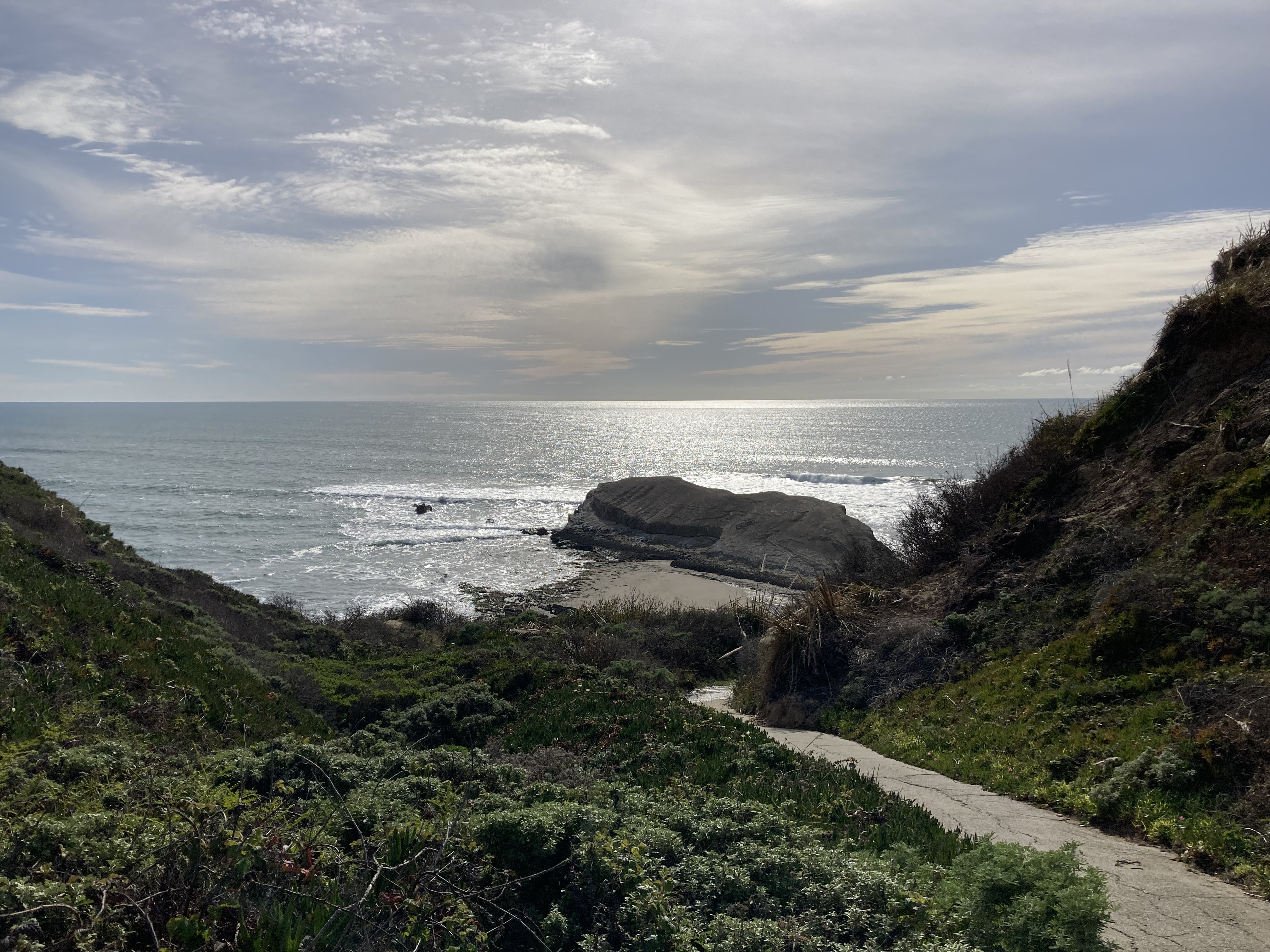
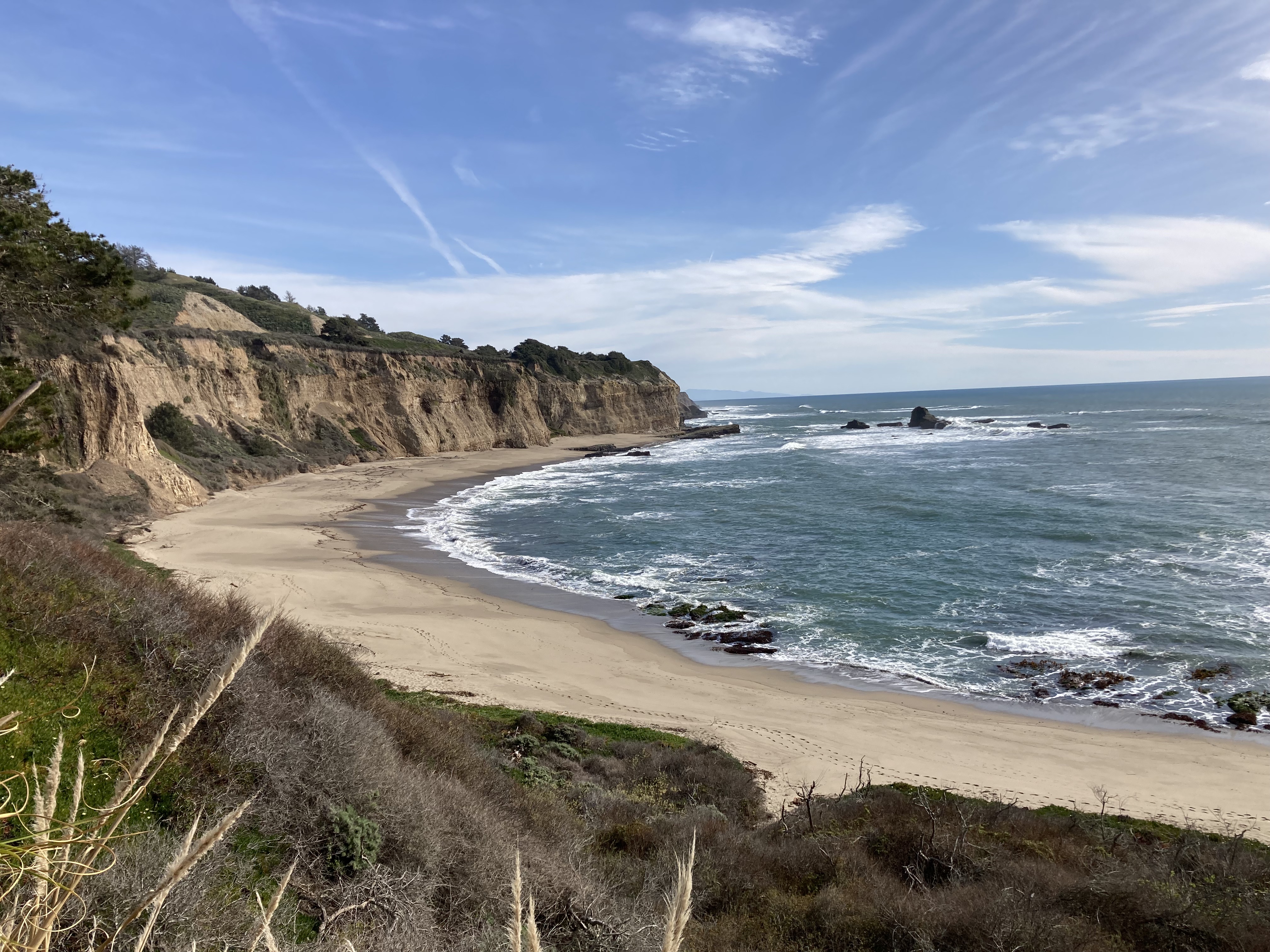
I walked down an incline to beach level and as I got to the sand I noticed an Elephant Seal laying on the beach. Not being from the area, and unfamiliar with these animals, my first thought was that this elephant seal was beached and unwell. I pondered calling wildlife services. I sincerely thought he was dying.

I was hesitant on what to do so I kept an eye on him as I explored the area. I took a wide path around him as I headed closer to Greyhound Rock. There were other people walking around, climbing to the top of Greyhound Rock, seemingly unconcerned about the seal.

On my way back, the seal opened its eyes and looked at me, unbothered, like he was just napping. And I felt some relief, maybe he was okay. I wouldn’t realize until a little later on my travels along the coast that this was absolutely normal elephant seal behaviour, and I was lucky this guy was so chill, because – according to signage – these seals can be aggressive, and they can be fast, and you shouldn’t get too close. I’d been blissfully ignorant. It just goes to show that as your surroundings change it’s good to be aware of the changes and get to know local plants, animals, and ways.
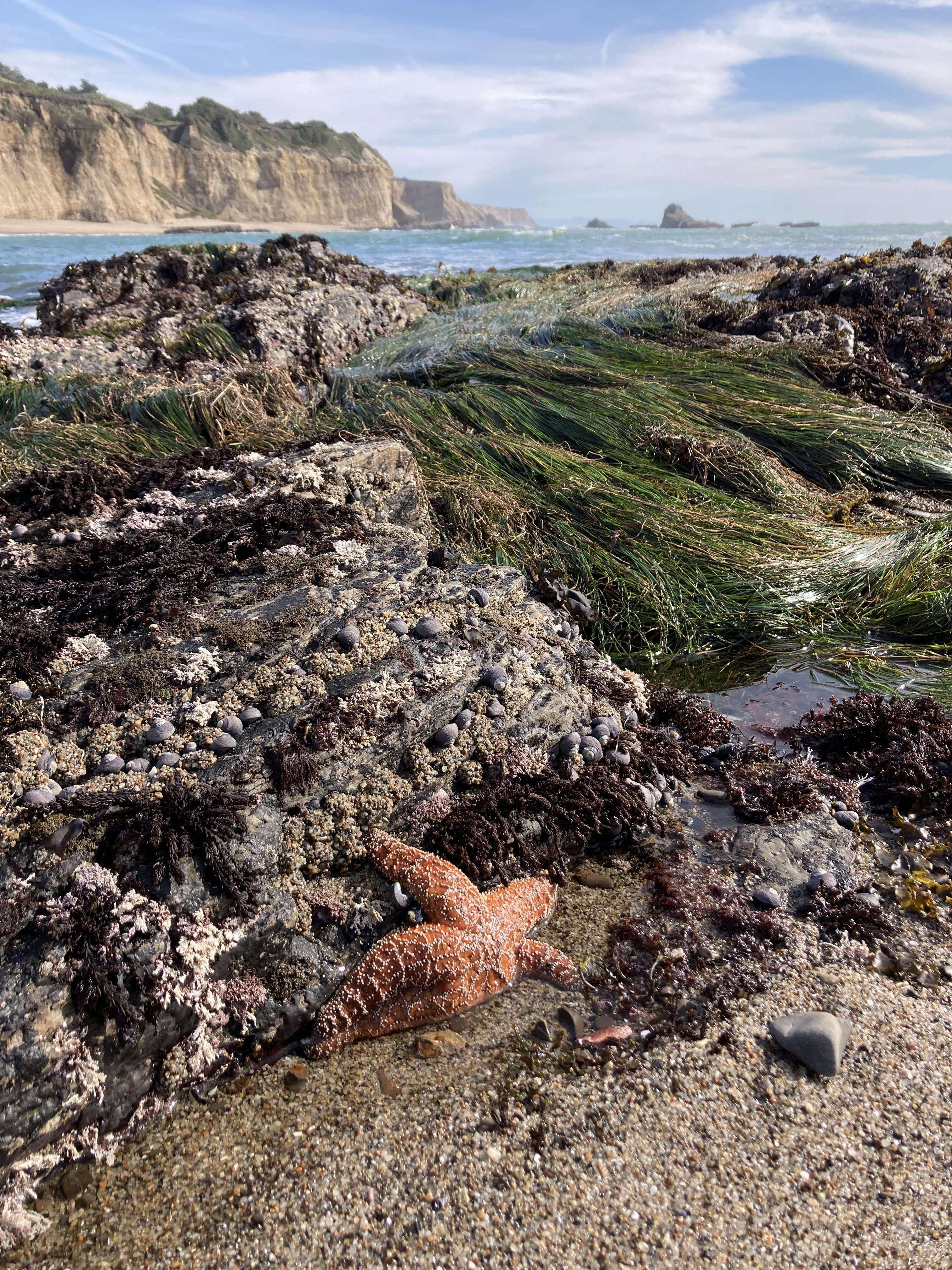
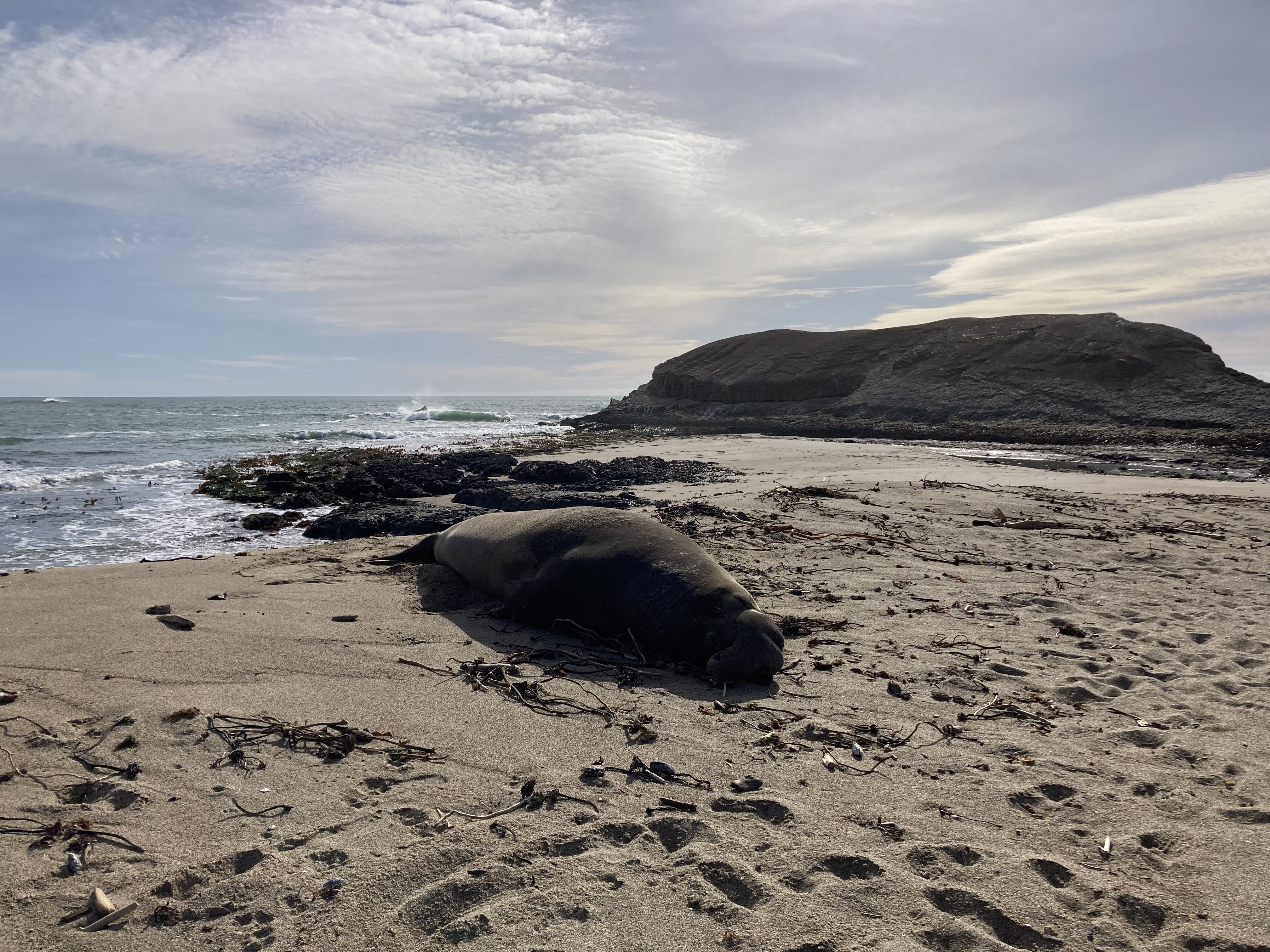
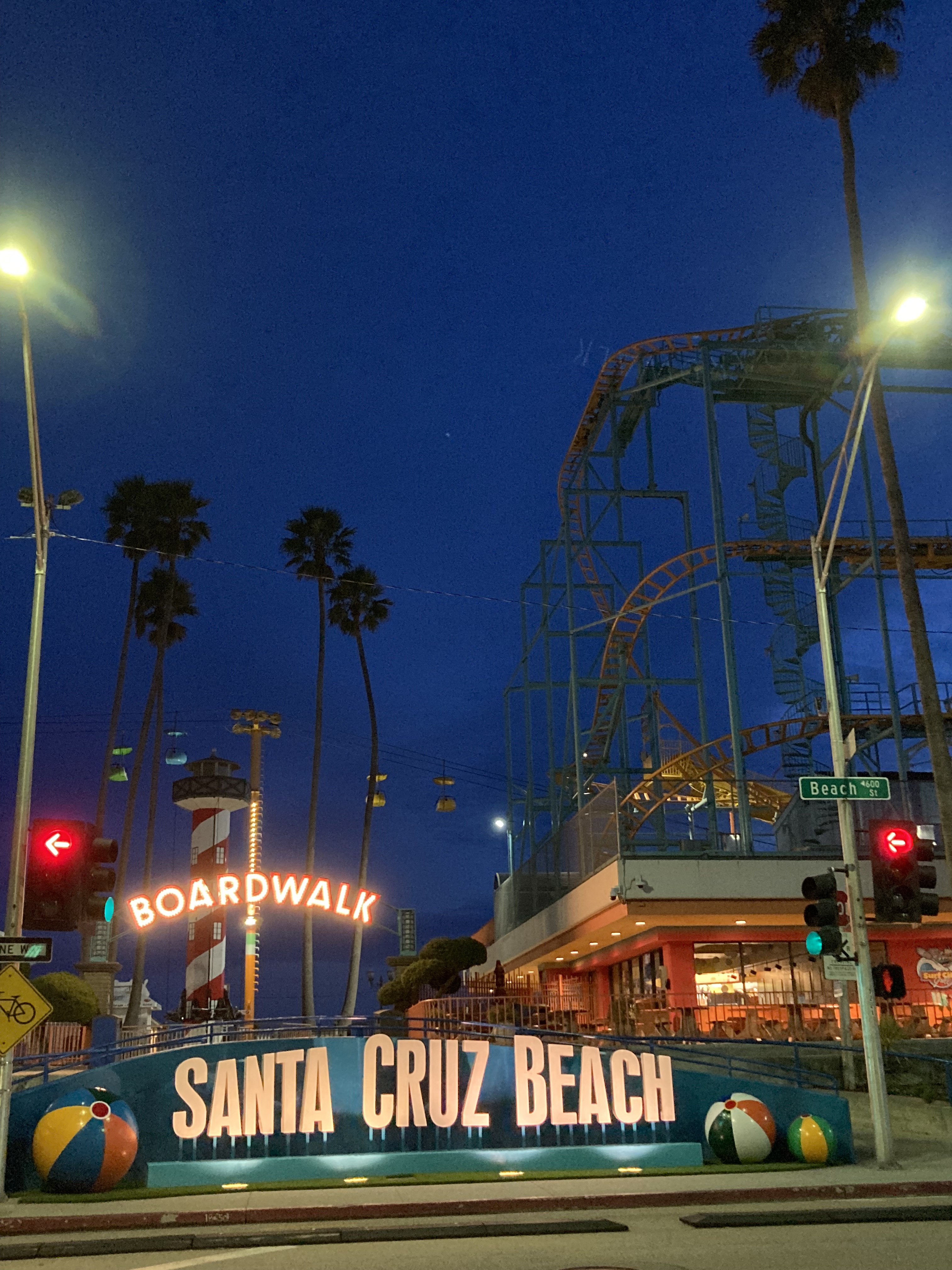
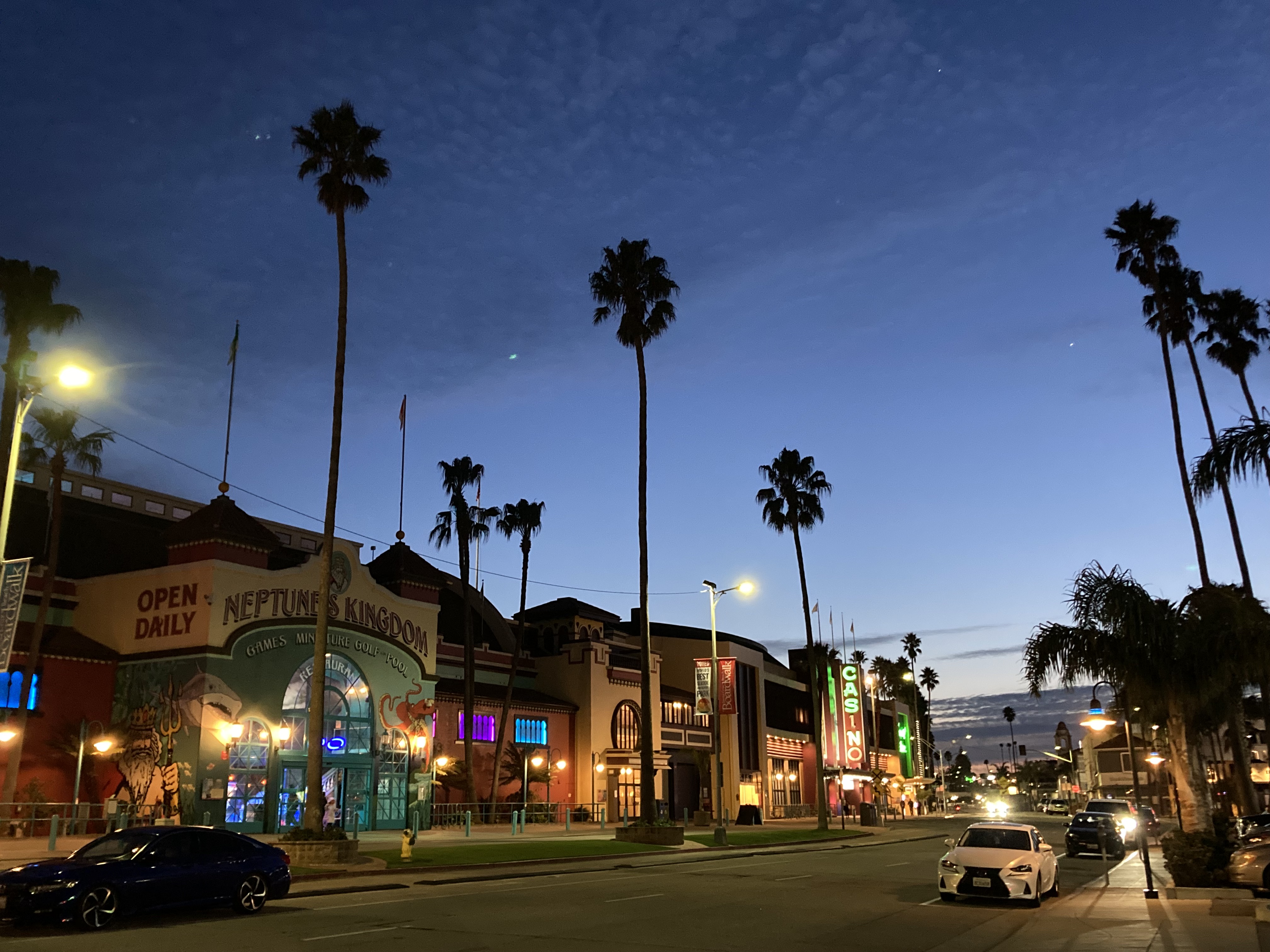
There was something about Santa Cruz that made me feel like I was really in California. It just felt different. Perhaps it felt more stereotypcal in terms of the beach and wharf and surf culture. But I could definitely feel a shift from Northern California.

Santa Cruz is located just north of Monterey Bay and has a population of about 63,000. It is known for its surf culture. While it didn’t feel unsafe to me (not like Eureka), I did feel like it could be a bit sketchy to hang around at night (which is why I chose to get out of the downtown area for my overnight spot).

First, I went to Natural Bridges State Beach, which is essentially a bridge-shaped rock formation by the shore, which was okay. What stood out to me in Santa Cruz were the pier and the Beach Boardwalk. The wharf is said to be the longest wooden wharf on the west coast. It has shops and seafood restaurants and there were a bunch of sea lions lazing around, swimming, and barking underneath the wharf. Nearby the Beach Boardwalk is like a vintage beachside amusement park. There were people playing beach volleyball. There was an arcade. And there was a big parking lot with paid parking nearby.
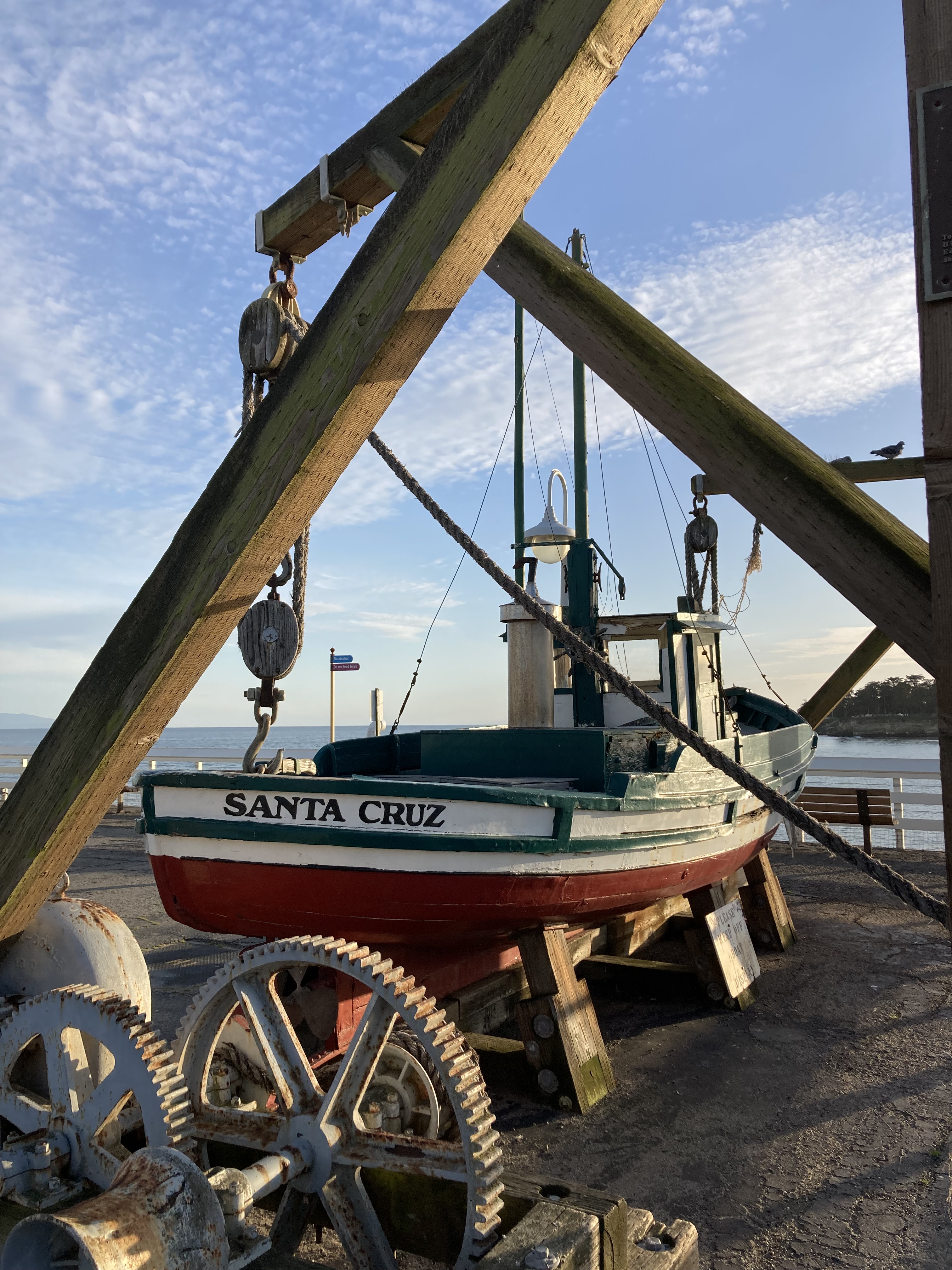
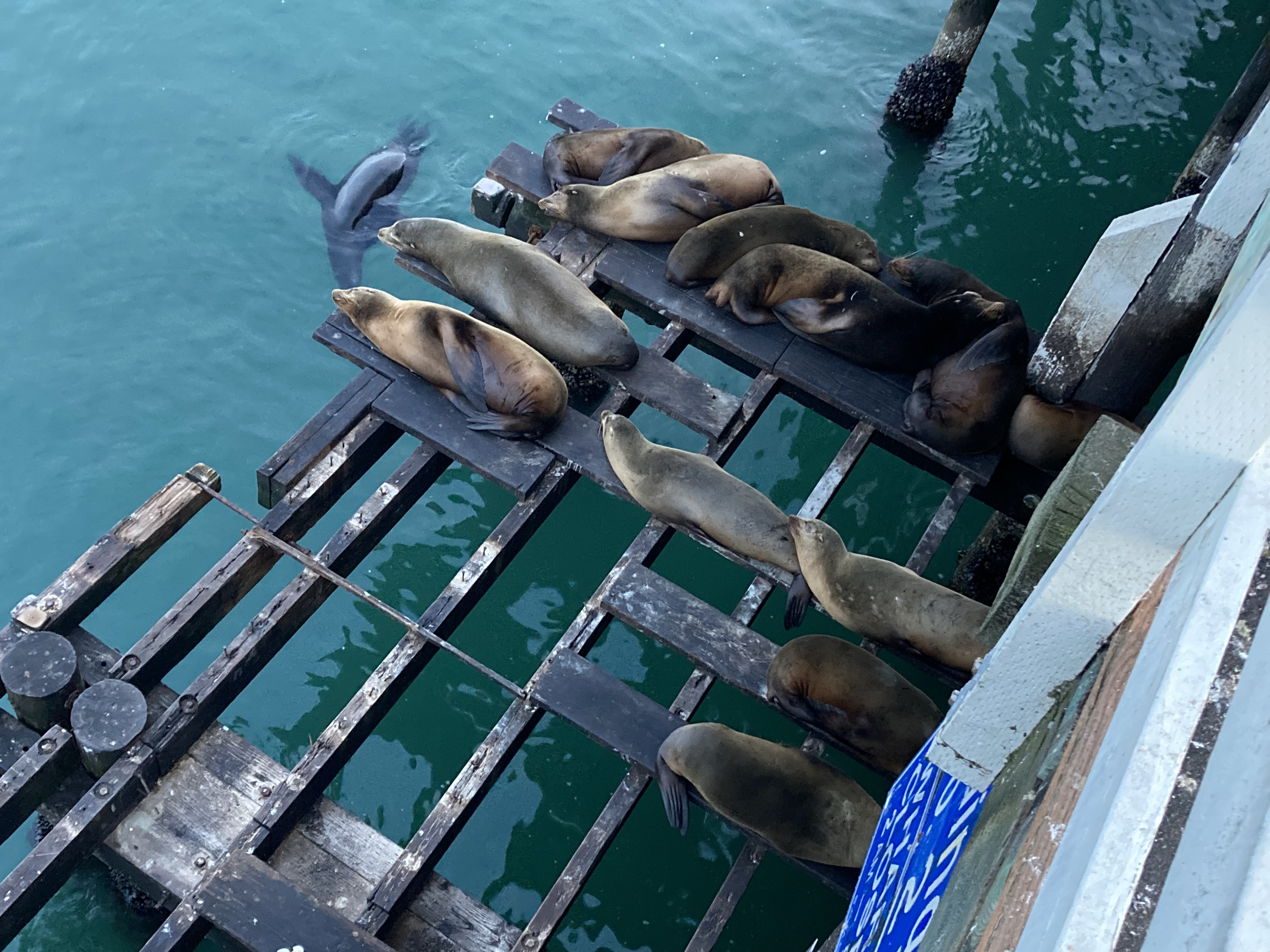
I figured I could probably find street parking in the core, but I opted to look for an area with a lower crime rate. I ended up on a residential street, based on some suggestions I found online. I felt a bit exposed, but had no issues. Sometimes you wonder if residents might call authorities to report unknown vehicles or vans (which never happened to me in the states, but did happen in Canada later on – while at a hiking trailhead in the afternoon no less, where I had just been hiking).

If I get back to Santa Cruz I might visit The Mystery Spot – a gravitational anomaly in the redwoods.

Next morning I walked along nearby Rio Del Mar beach as the sun rose. There was a shipwreck and a sunken pier. And I grabbed coffee and breakfast at a café whose name (Venus Pie Trap) I appreciated.
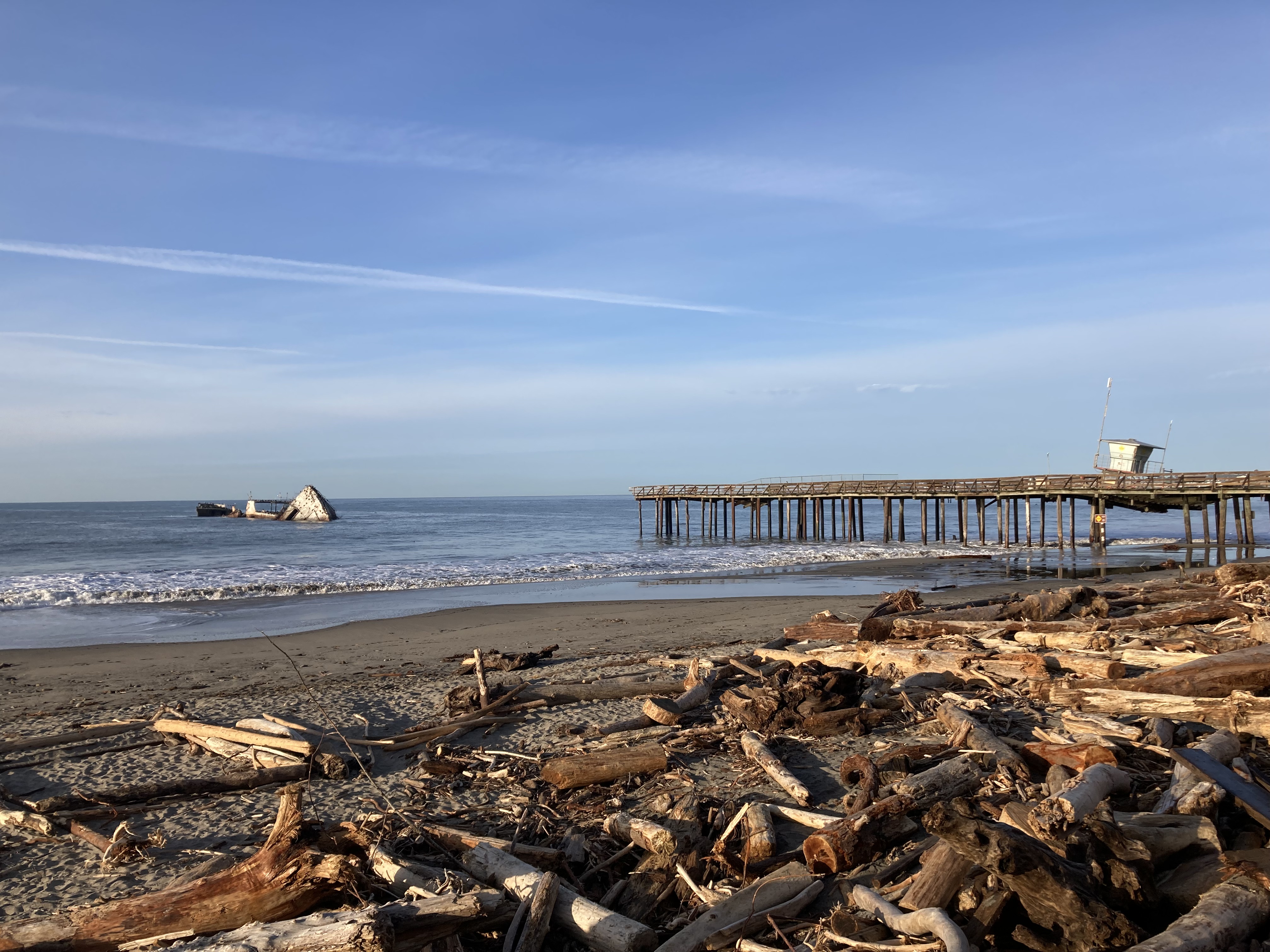
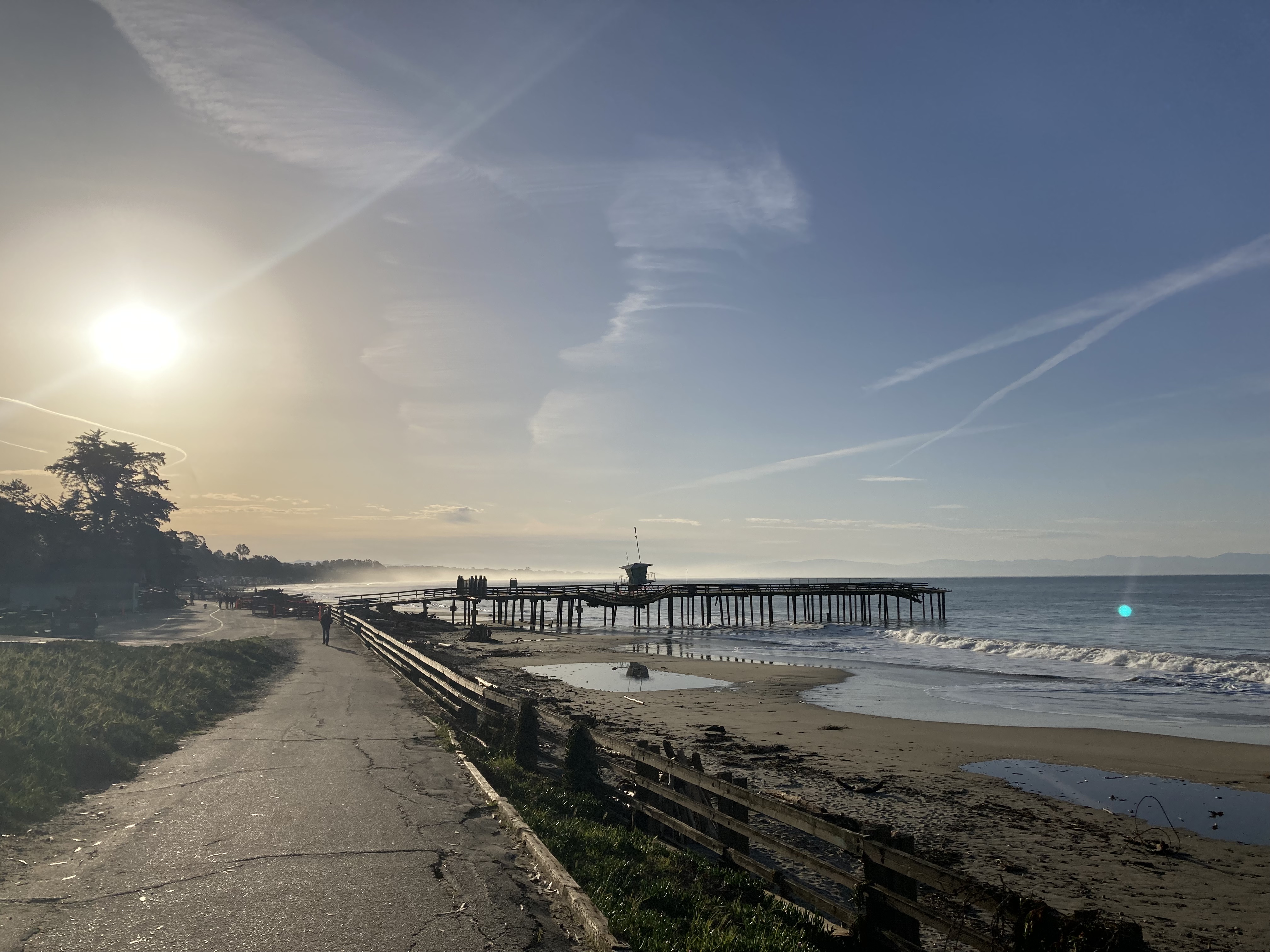
Monterey & Carmel By The Sea

While Santa Cruz lies at the northern edge of Monterey Bay, the city of Monterey lies at the southern edge of the bay. It has a population of about 30,000, and is known for its aquarium and Cannery Row (once a sardine canning industry, now filled with shops and restaurants, made famous by John Steinbeck). Being on the edge of the Monterey Bay National Marine Sanctuary, this is an area where the coast and marine life are at the forefront. But it’s also where I started to see considerable Spanish and Mexican influence, presence, and history.

As per usual, I found another beach to stop at, just before Monterey, while I took some time to research, plan where I was going, and of course walk along the beach.

My first stop was San Carlos Cathedral, which is the oldest building in Monterey (construction completed in 1794) and longest continuously active church in California (established in 1770, founded by Junipero Serra). It is the only remaining original chapel among the four Spanish Presidios that were once in California. Junipero Serra is a big name in these parts. He would move his mission to Carmel by the Sea, which I visited later.

There seemed to be a wedding happening when I arrived, so I couldn’t look around that much, and certainly couldn’t go inside, but I took in the architecture and history from the outside. This is also the part of my travels where I started to see bushes of rosemary, which I love, thanks to the mediterranean climate.
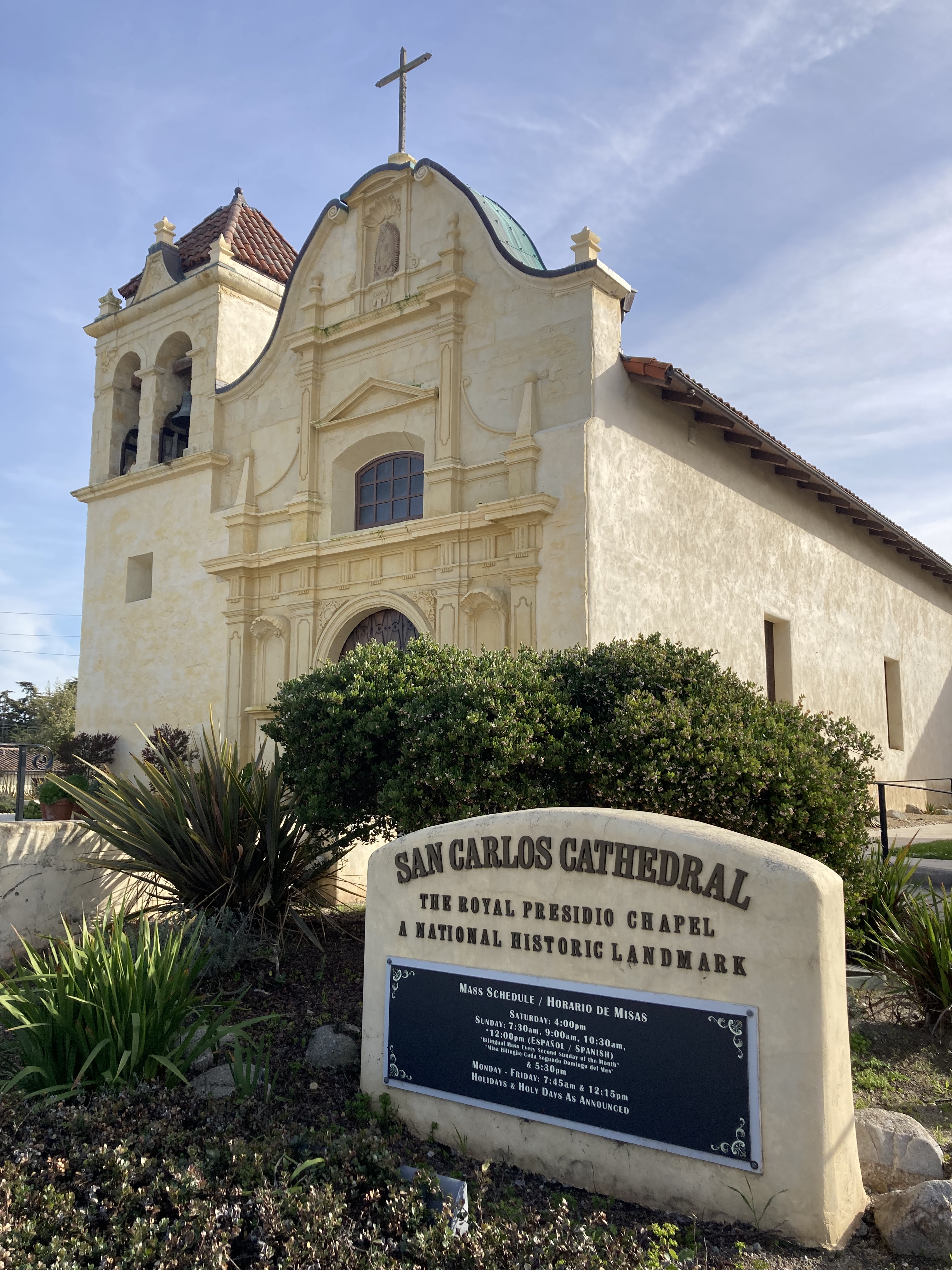
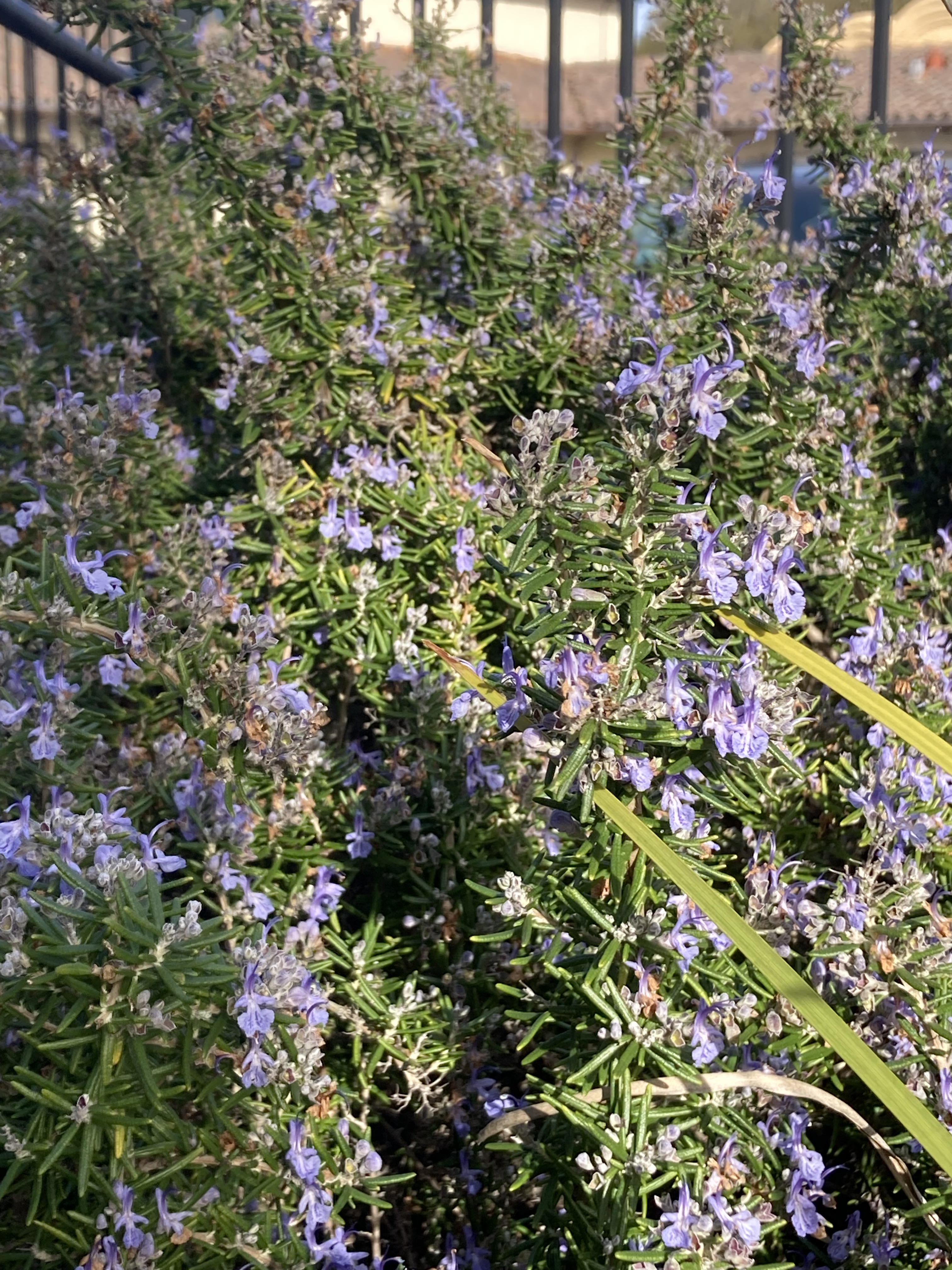
The chapel reminded me a bit of Kill Bill, except it wasn’t in the middle of nowhere.

From here I headed downtown and meandered around Old Town Monterey (Alvarado Street, historic sites along the “Path of History”), Monterey State Historic Park (Customs House, adobe style buildings, informational plaques), and Old Fisherman’s Wharf (restaurants, souvenir shops). Then I walked along the waterfront, where I saw otters in the ocean, to Cannery Row, exploring the many shops (spying my next Zoltar and getting a fortune), to Monterey Bay Aquarium and beyond, where there were paths and seals basking on the shore at Hopkins State Marine Reserve.
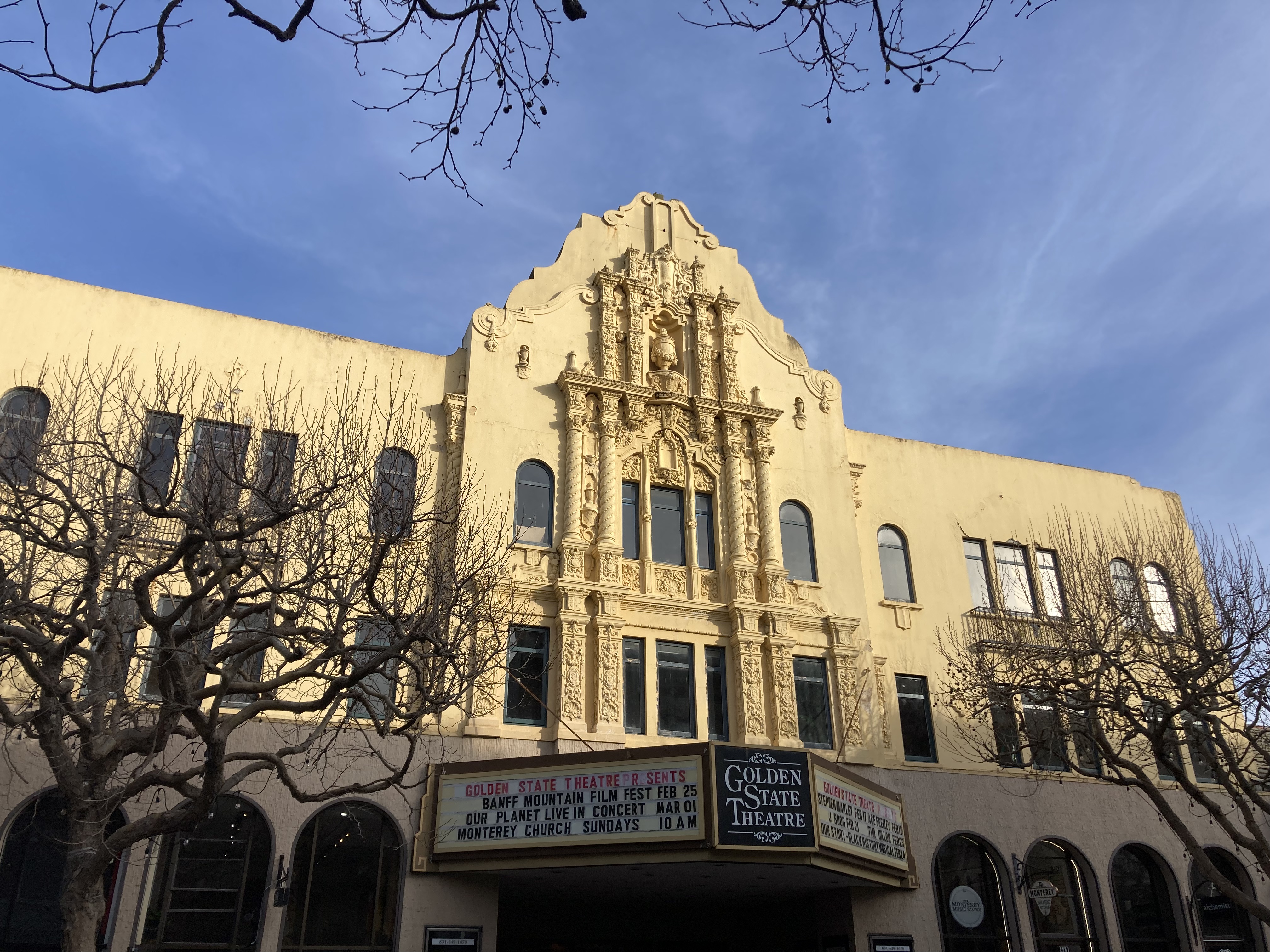
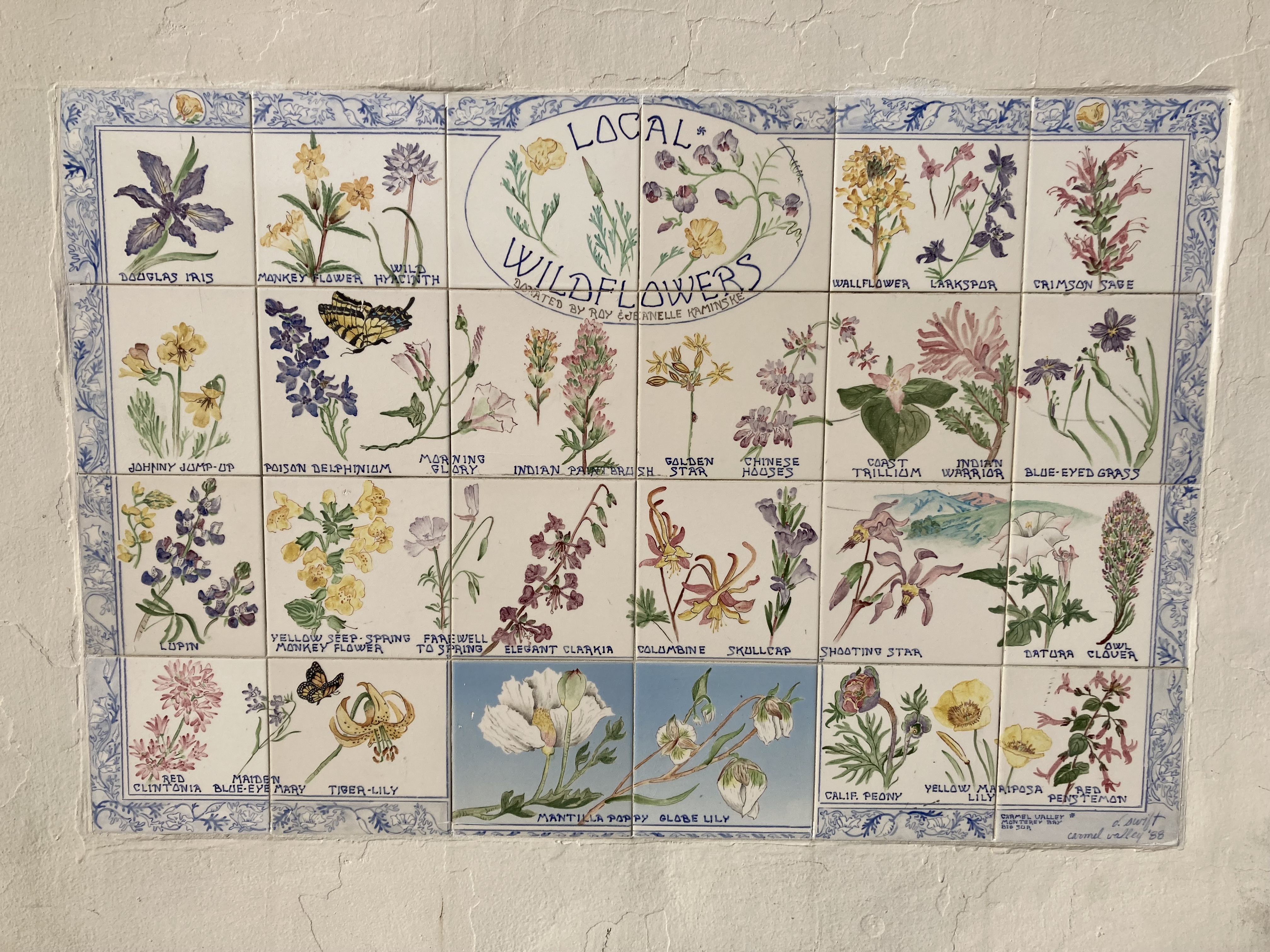
These were definitely high traffic touristy areas, some parts with an upscale feel, and nice to explore.

When I got back to the van around dusk and started looking up an overnight spot, I discovered that sleeping in your vehicle in Monterey was not allowed and that cops regularly did rounds patrolling for this. One person said that some cops told them to go to the Park and Ride in Carmel, Carmel being just about 15 minutes south of Monterey. So I headed there. I wasn’t keen on that particular lot, which felt busy and was right behind a Starbucks. But I saw some vans parked nearby, in a larger lot near a grocery store, and I decided to park there for the night. This is the fluidity and adaptability often asked of you when it comes to sleep spots in vanlife. It was quieter here, save for some yelling youth around midnight which did sketch me out a bit, but otherwise I was not disturbed or asked to move, and this became a favourite spot while in the area.
The grocery store here would prove to be where I picked up a new friend:
I’d originally planned to gift Lamb Chop to my family dog, Bailey. But at some point Lamb Chop became like a comfort companion for me on the road. I remember Lamb Chop on TV from childhood. And as silly as it may be, somewhere along the way I adopted Lamb Chop and couldn’t bare the thought of Bailey ripping into her. I would have to find Bailey another gift.

I spent another afternoon exploring Monterey Bay Aquarium. I may or may not have had an intimate moment with the Octopus, where they came out of hiding in the corner while I was the only one there, scooted across their tank, then settled near the glass and I swear looked into my soul.
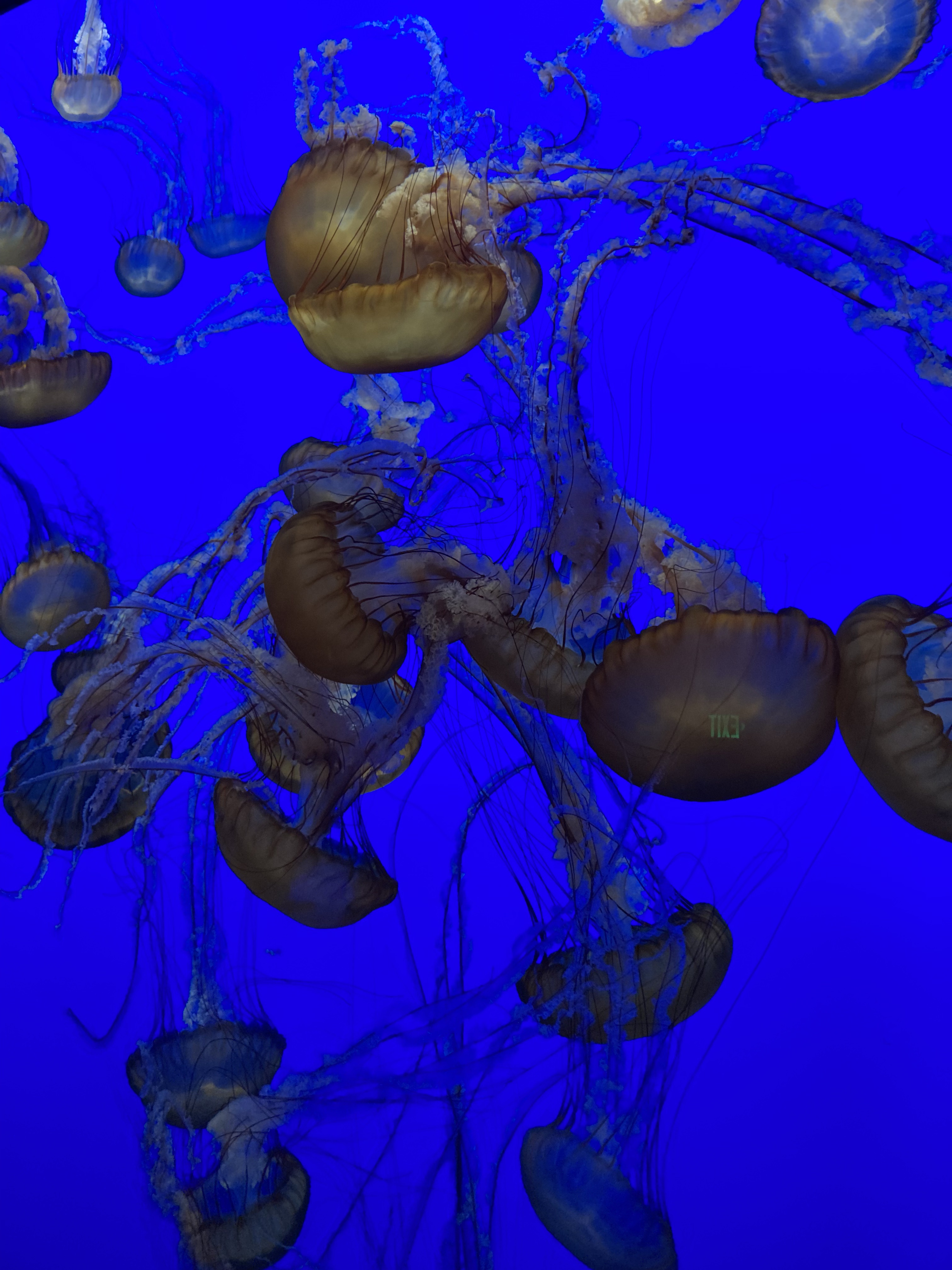
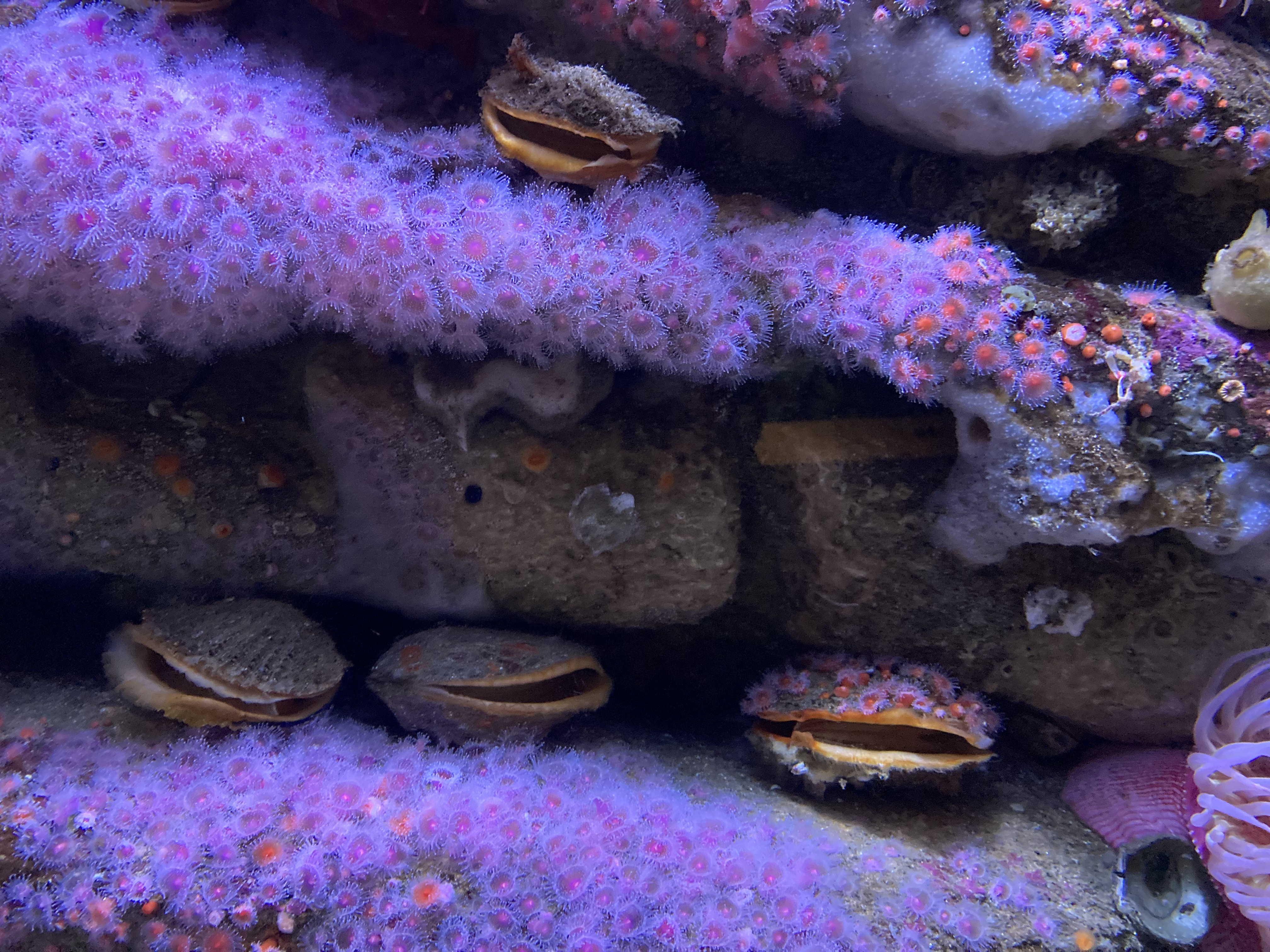
Between Monterey and Carmel is 17-Mile Drive, a scenic toll route along the ocean with many view points to stop at along the way. The area boasts dazzling azure blue waters, pupping habitats for harbour seals, and the only naturally occurring Monterey Cypress trees, including a grove of the oldest (nearly 300 years old) and the famous Lone Cypress, which stands alone and exposed on the coast. The rolling waves and smell of ocean was magnificent – made me so happy!
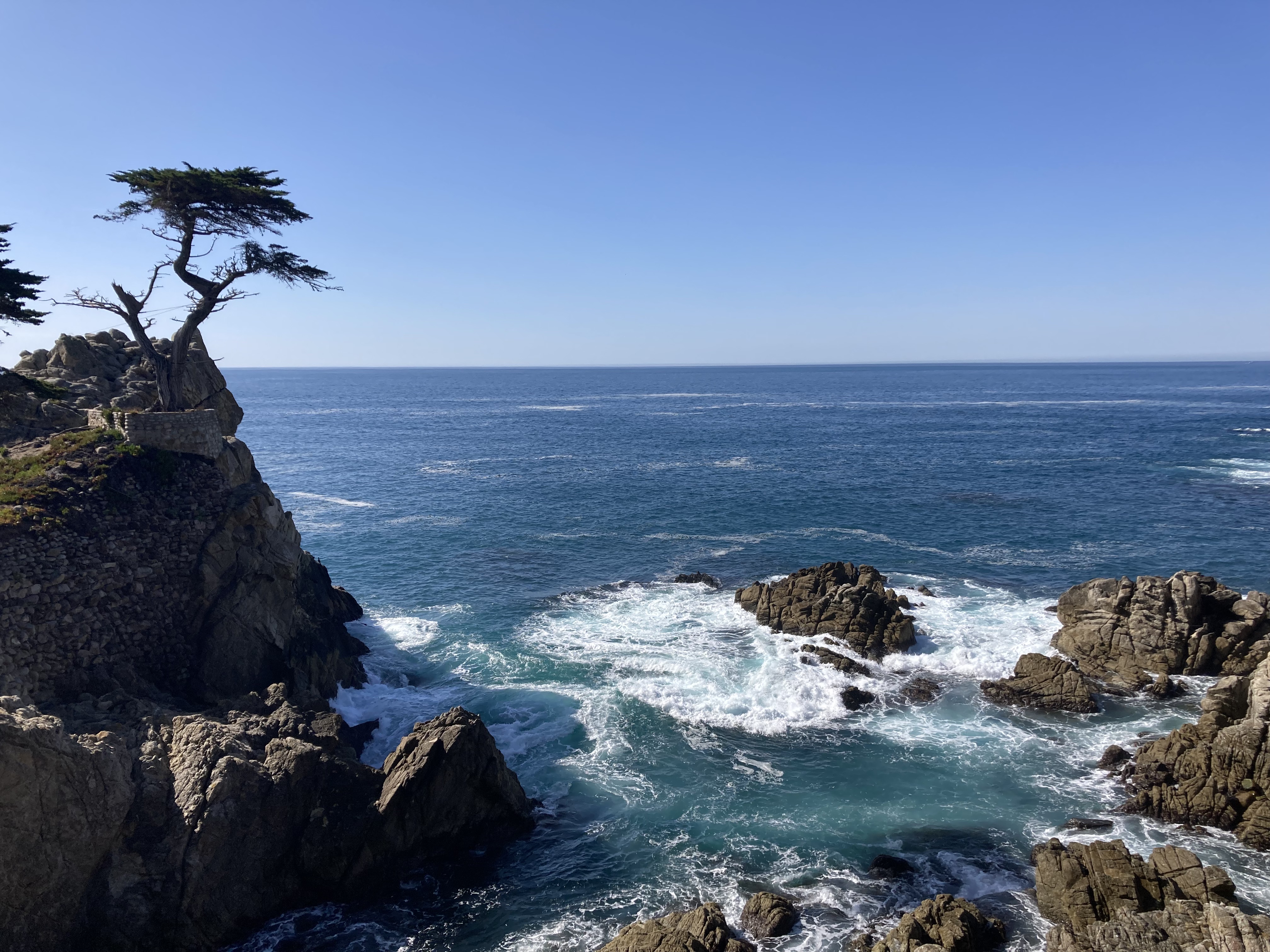
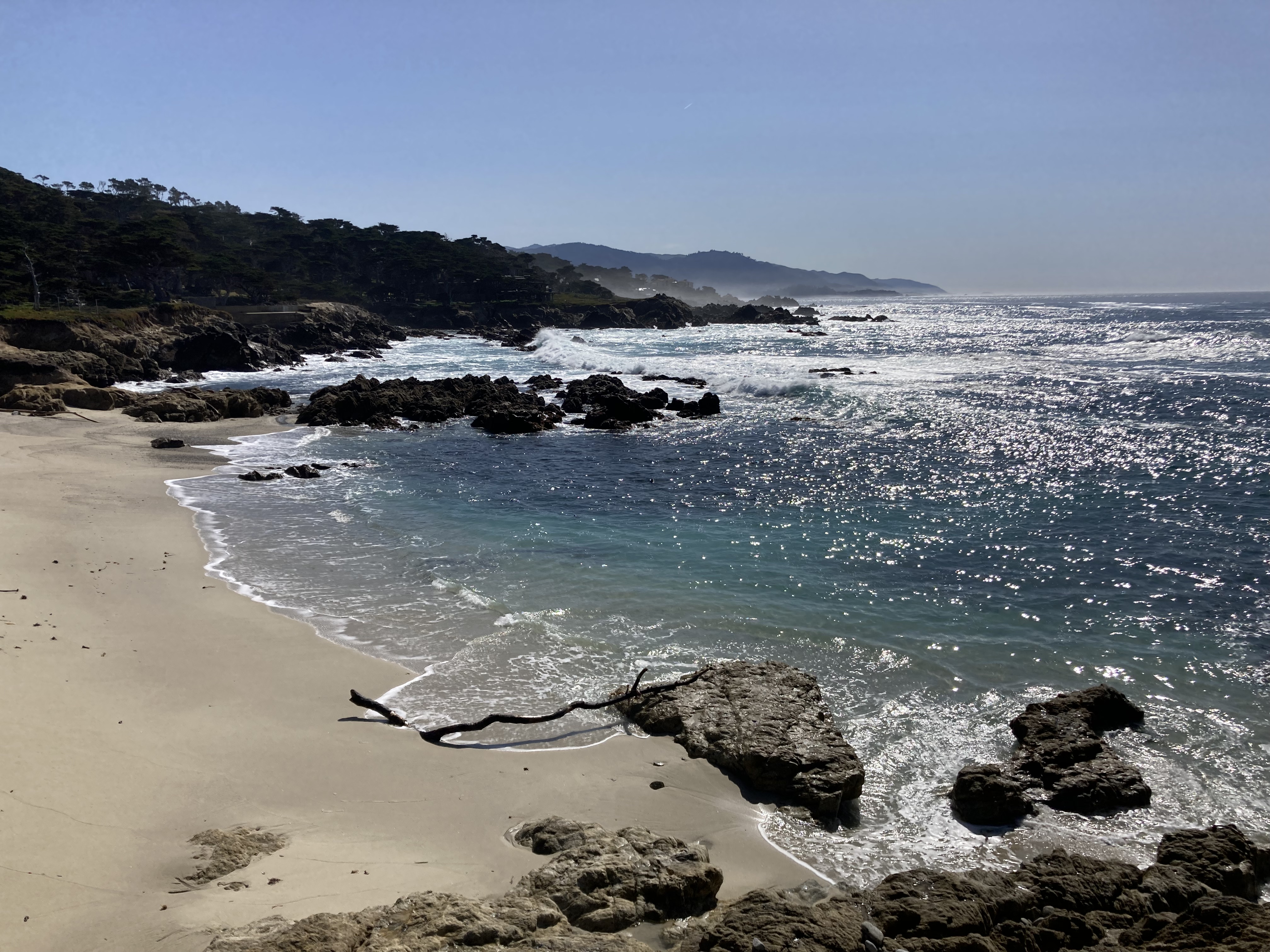
If I were to compare Carmel By The Sea to Monterey, I would say that Carmel feels a bit quieter, a bit sweeter. It still has a downtown area that is quite popular, but it feels a bit less industrial, a bit less touristy in the kitschy sense. Carmel is a tiny town of just over 3,000 residents on the Monterey Peninsula, with artistic, storybook charm.

Ocean Avenue is the main strip in Carmel. I parked near the bottom of the street by Carmel Beach (hard to find a spot), then walked up Ocean Avenue, taking my time exploring the shops (like Cottage of Sweets). Get your souvenirs, get a coffee, keep your eyes peeled for unique finds.
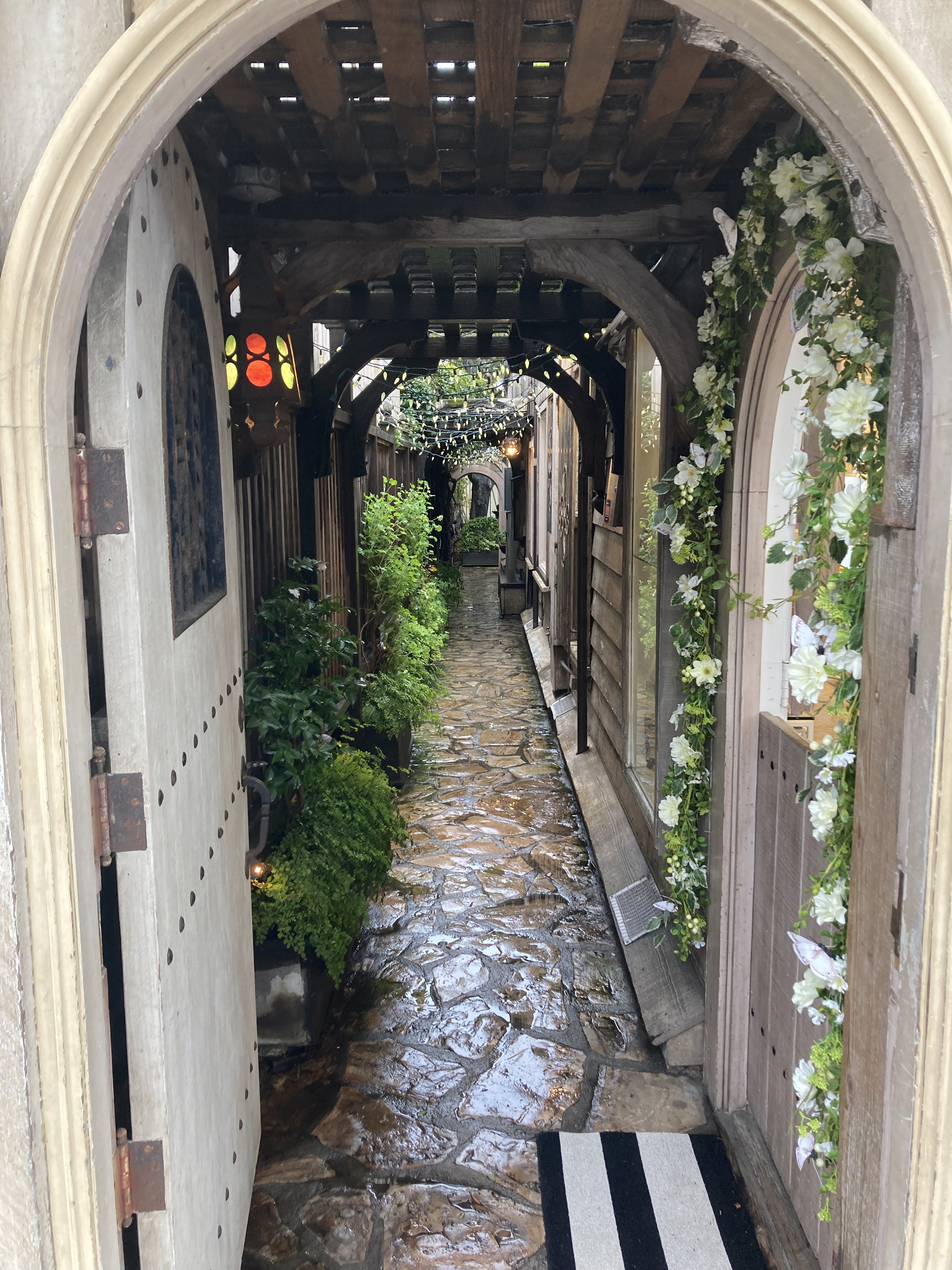
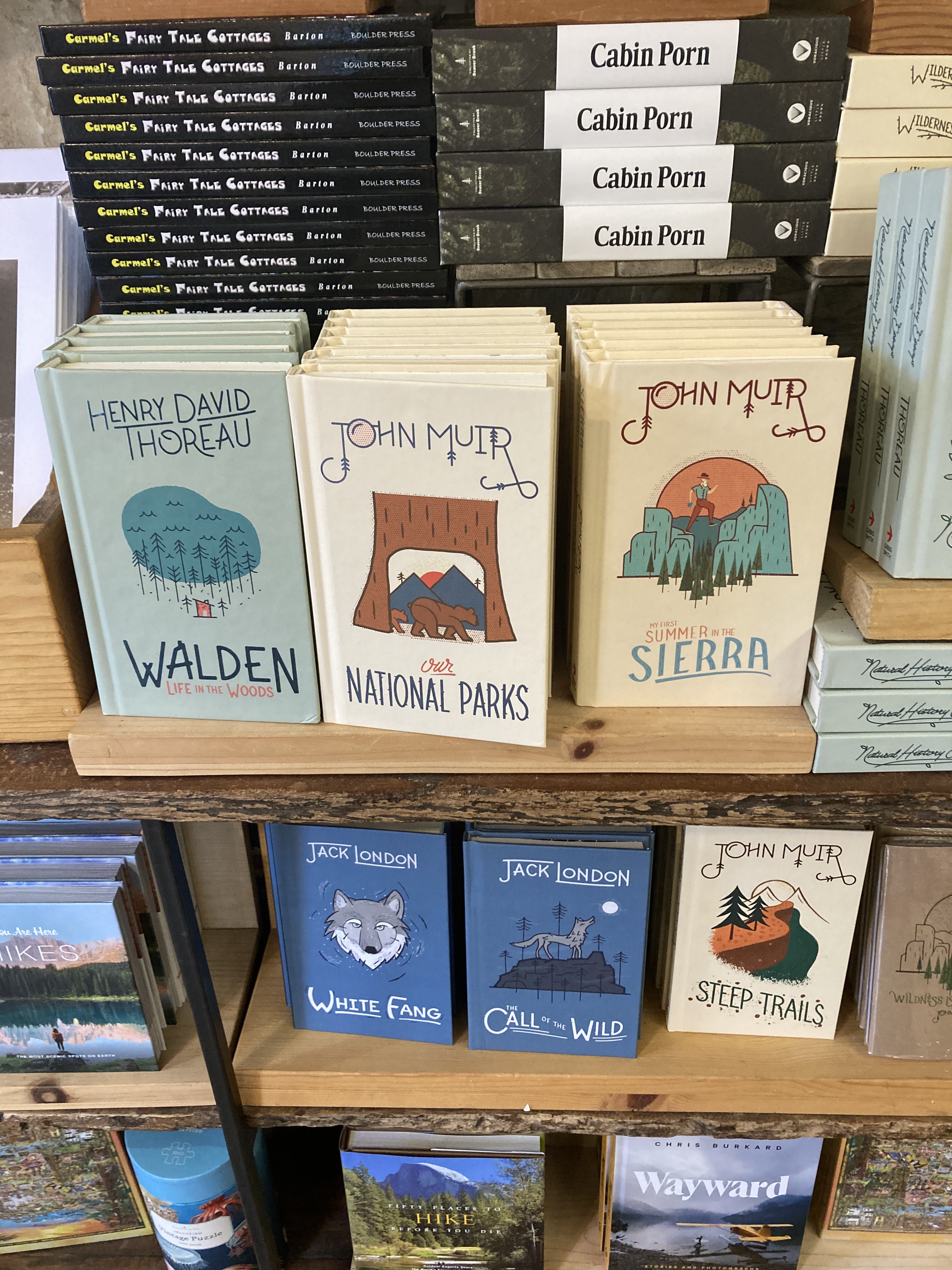
A staple of the area is its “fairy tale cottages” – you can get a map at the visitor centre, and you know I wandered around taking in the whimsical little homes.
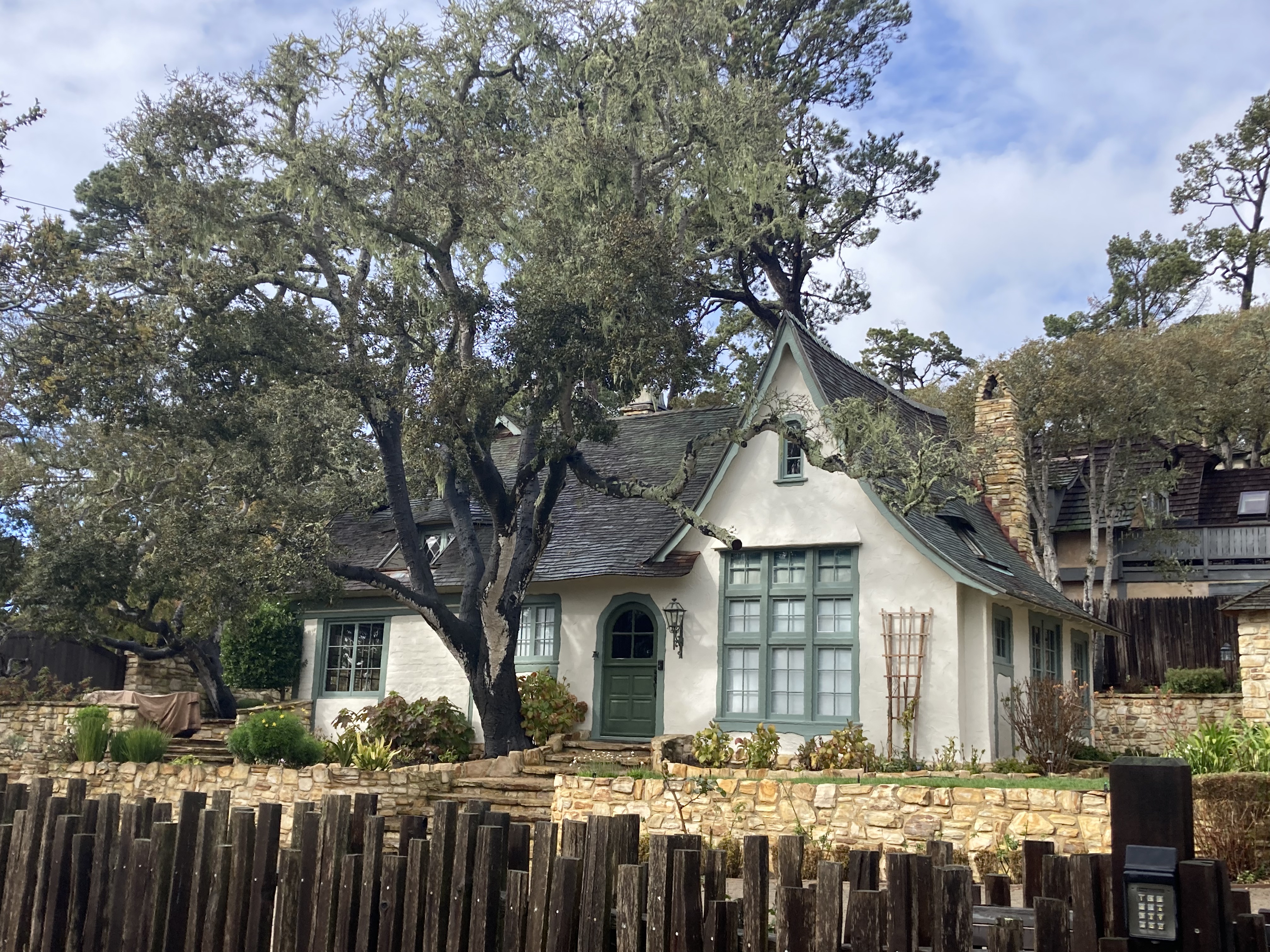
I took a stroll along Carmel Beach.
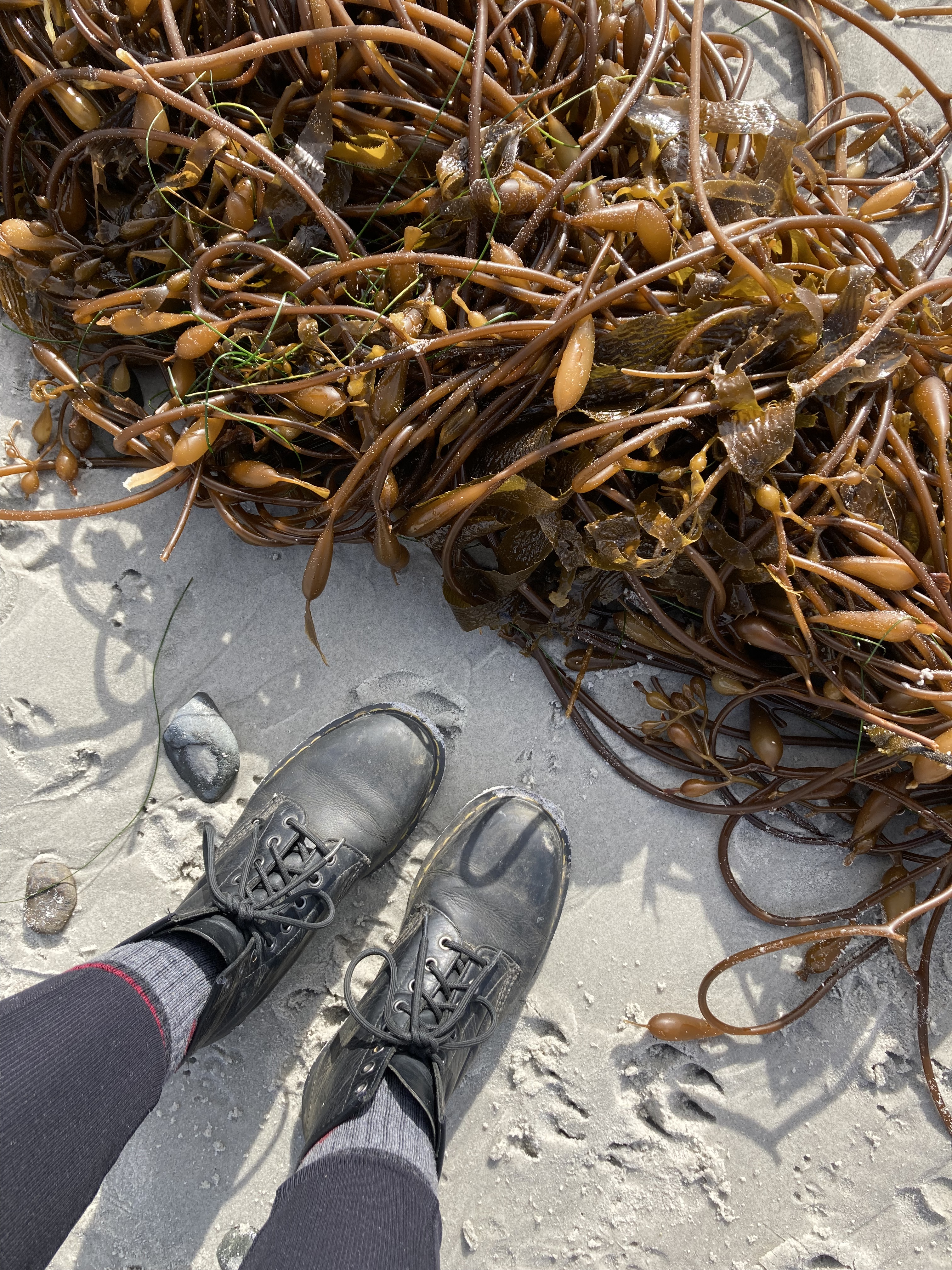
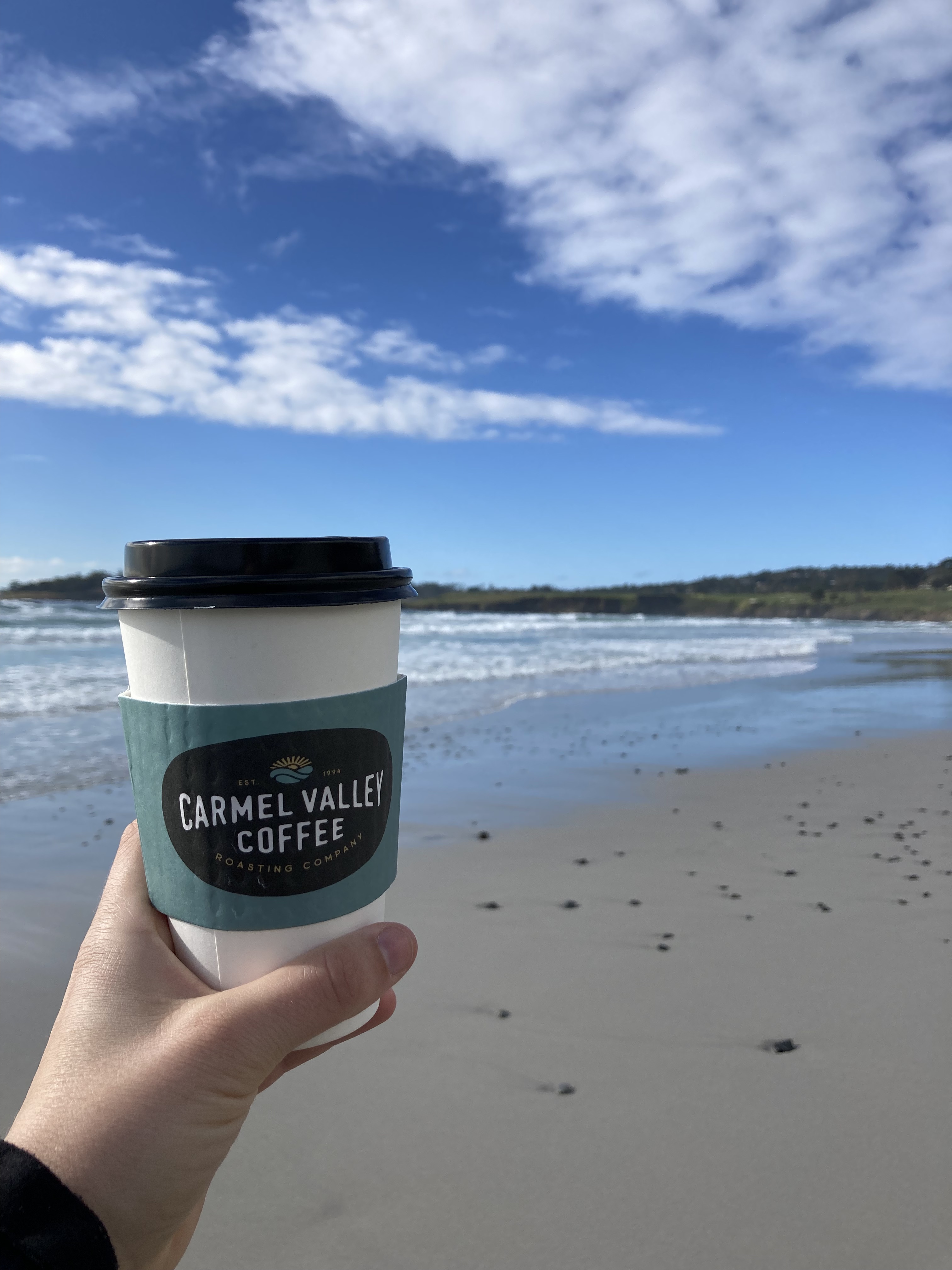
Then I headed to Mission Ranch for dinner. Fun fact: Clint Eastwood owns Mission Ranch, is a longtime resident of Carmel By The Sea, and was once the town’s mayor. It’s a really beautiful, quiet spot, with sheep grazing in open fields and views of the ocean and Pacific coast. Sadly – I did not see Clint.
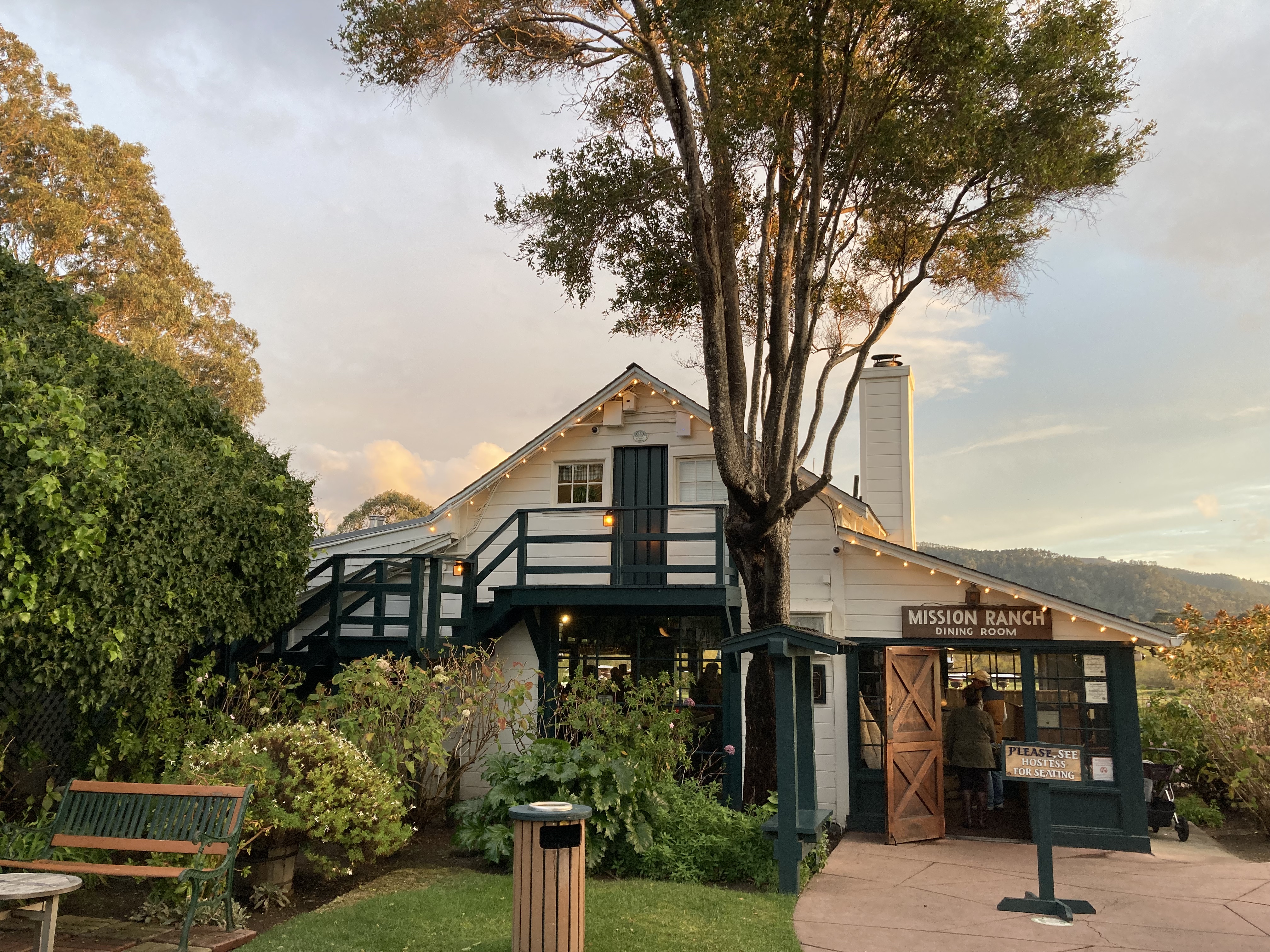
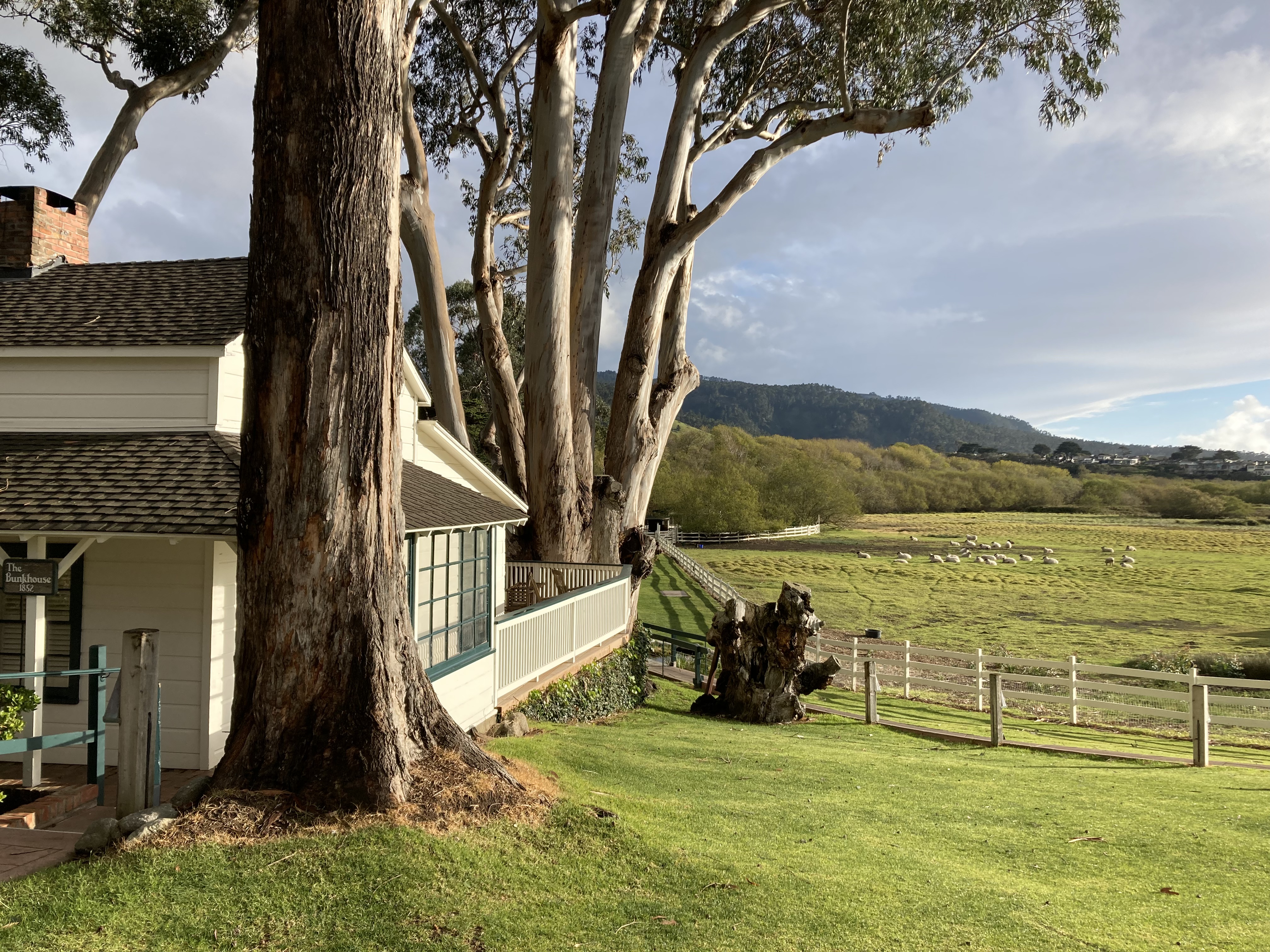
I left Mission Ranch a little before dusk and headed to Carmel River State Beach. You can drive along Scenic Road from Carmel Beach to Carmel River State Beach for – you got it – scenic views. I joined Scenic Road near Mission Ranch and there were plenty of people pulling off to the side of the road to take in the sunset. I parked near the beach and went for an evening stroll.
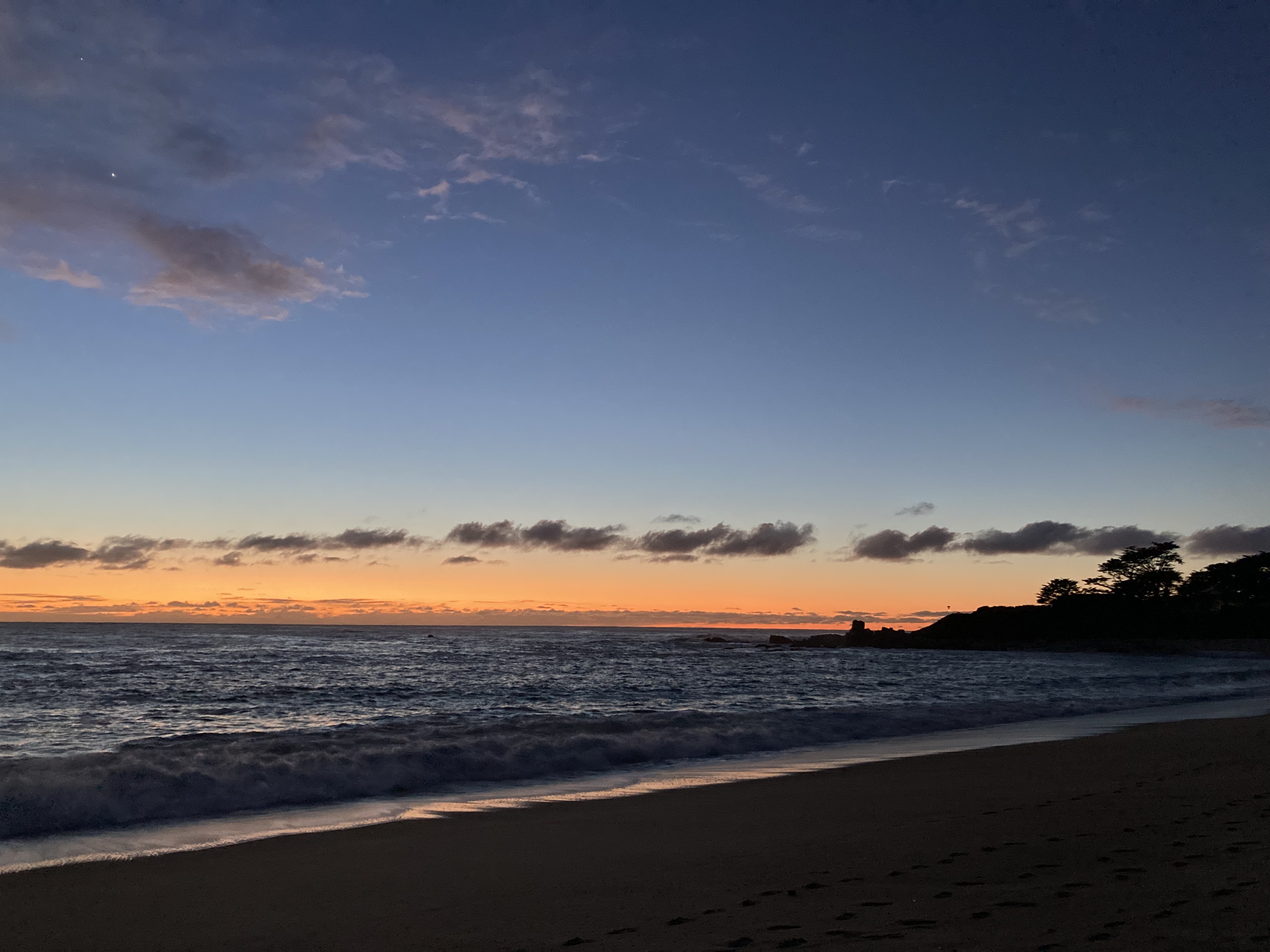
A little further south is Point Lobos State Natural Reserve. There really are endless destinations along the west coast to take in the shoreline. Does it ever get monotonous? You certainly don’t need to see them all. But they each have unique features and shift in appearance progressively as you move further north or south. I adore the ocean. And I liked watching the coast evolve. I spent an afternoon hiking here.
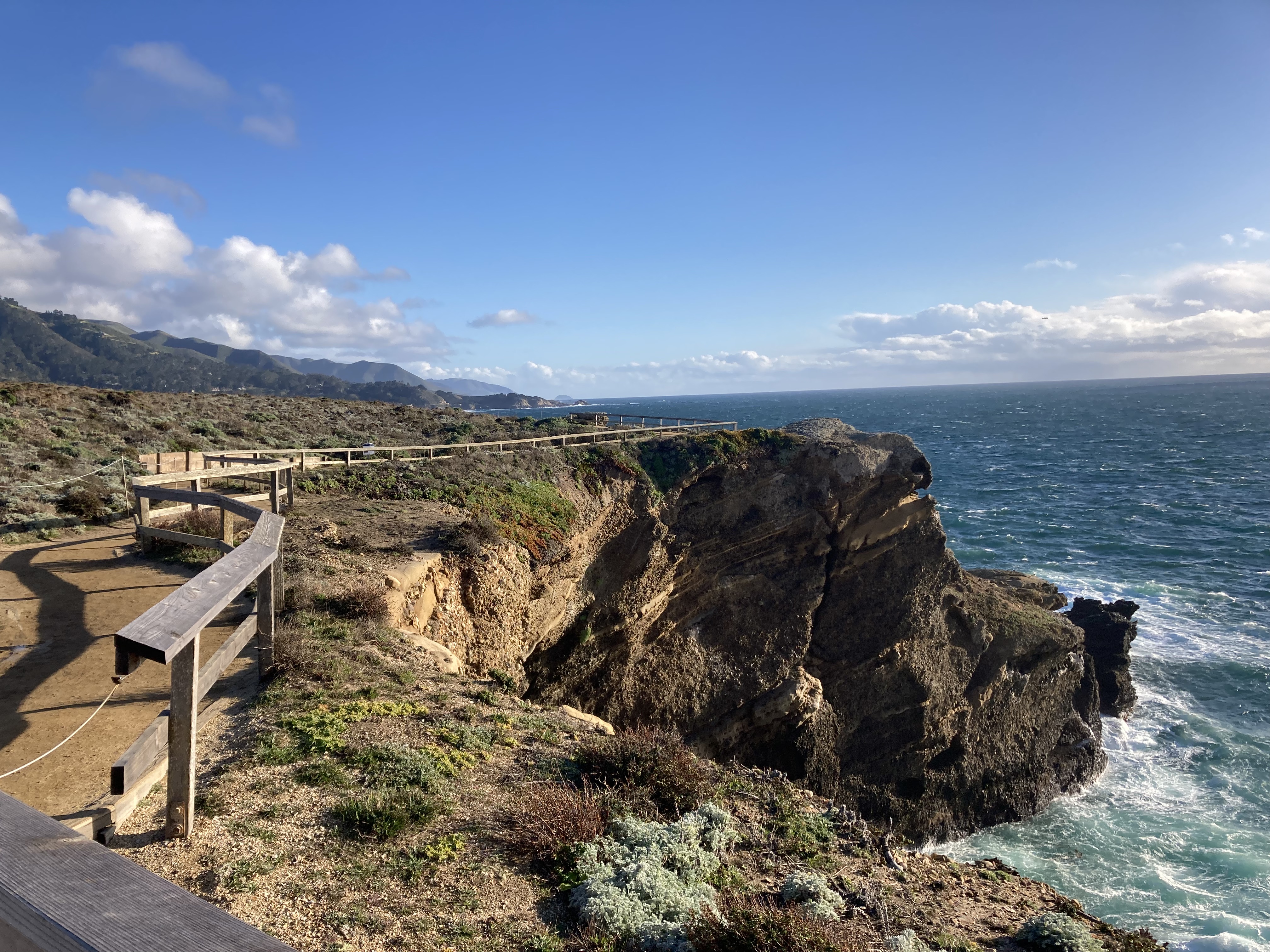
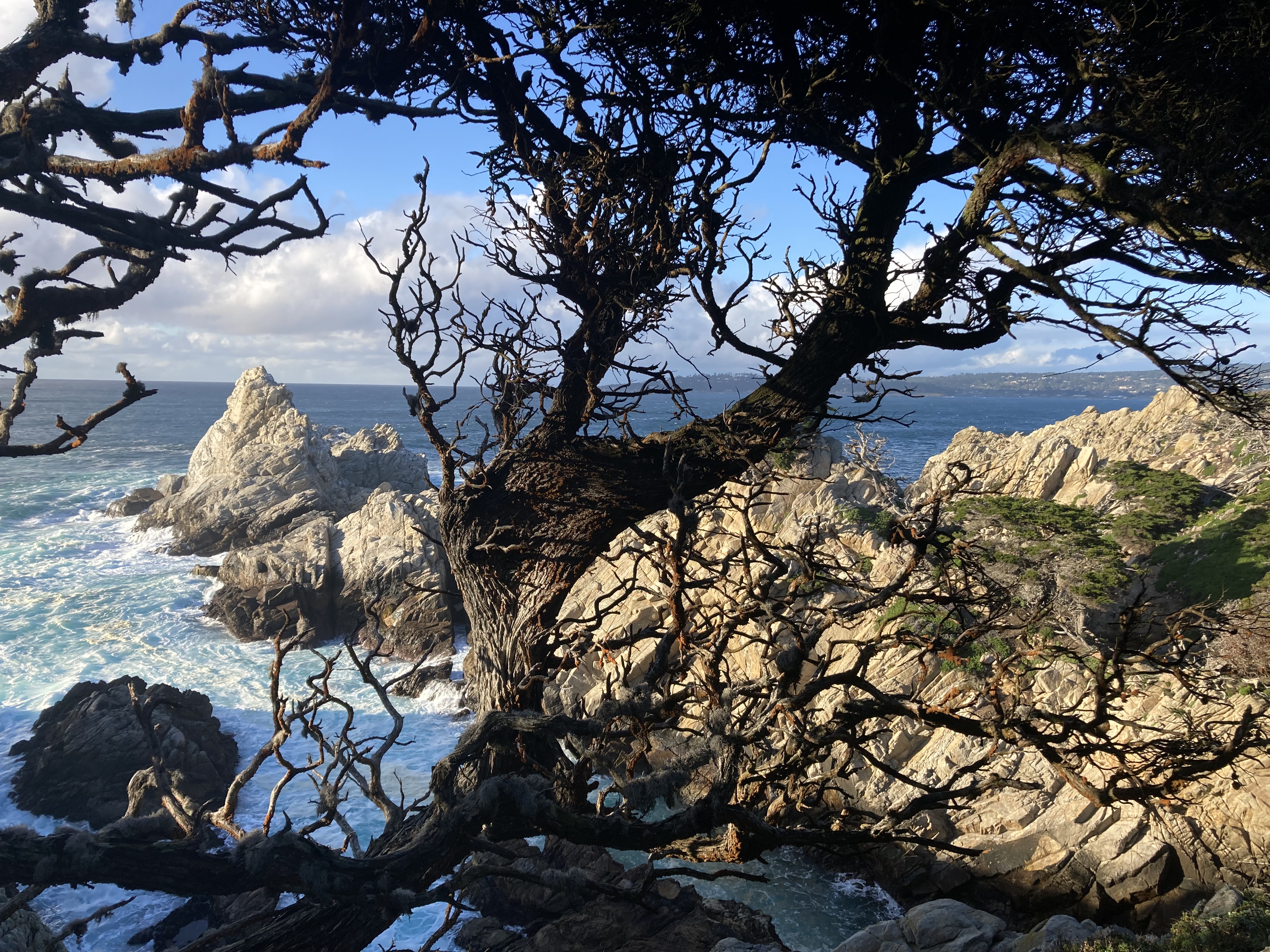
It’s funny what you remember about places. I was constantly listening to music on the road, and around Monterey and Carmel I had gotten back into Limp Bizkit. Music is my soundtrack and becomes attached to times, places, and memories. So if there was any artist to embody this point in time and part of California’a coast for me – it was Limp Bizkit.

My final destination in Carmel was the Carmel Mission Basilica Museum. There are an abundance of missions sprinkled across cities on the SoCal coast that tell cultural and historical tales of these areas. While I’m not a fan of evangelism, it was a different time, and I like to learn about the history of the places I’m visiting, which informs the culture, and as we well know by now – I enjoy bearing witness to historical architecture.

This mission was founded in 1771 by Father Junipero Serra, the second mission in “Alta California”, with the aim of expanding Spain’s influence by converting Indigenous folks to Christianity. It was interesting to learn that Alta California was the territory of New Spain in the early 1800s, and it was part of Mexico after Mexico gained independence from Spain in 1821. Then in 1848 California became part of the US after the Mexican-American war.
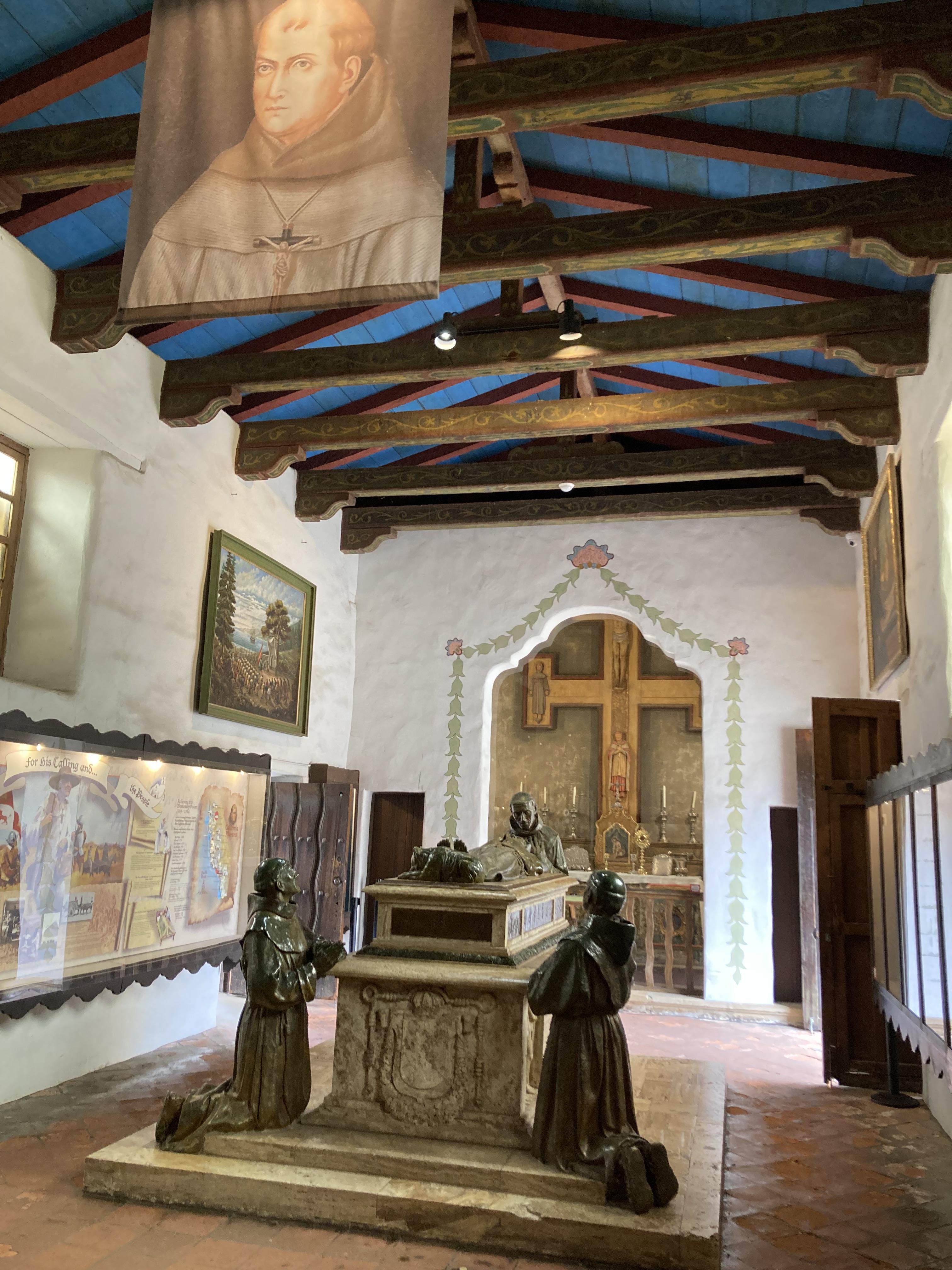
Misc
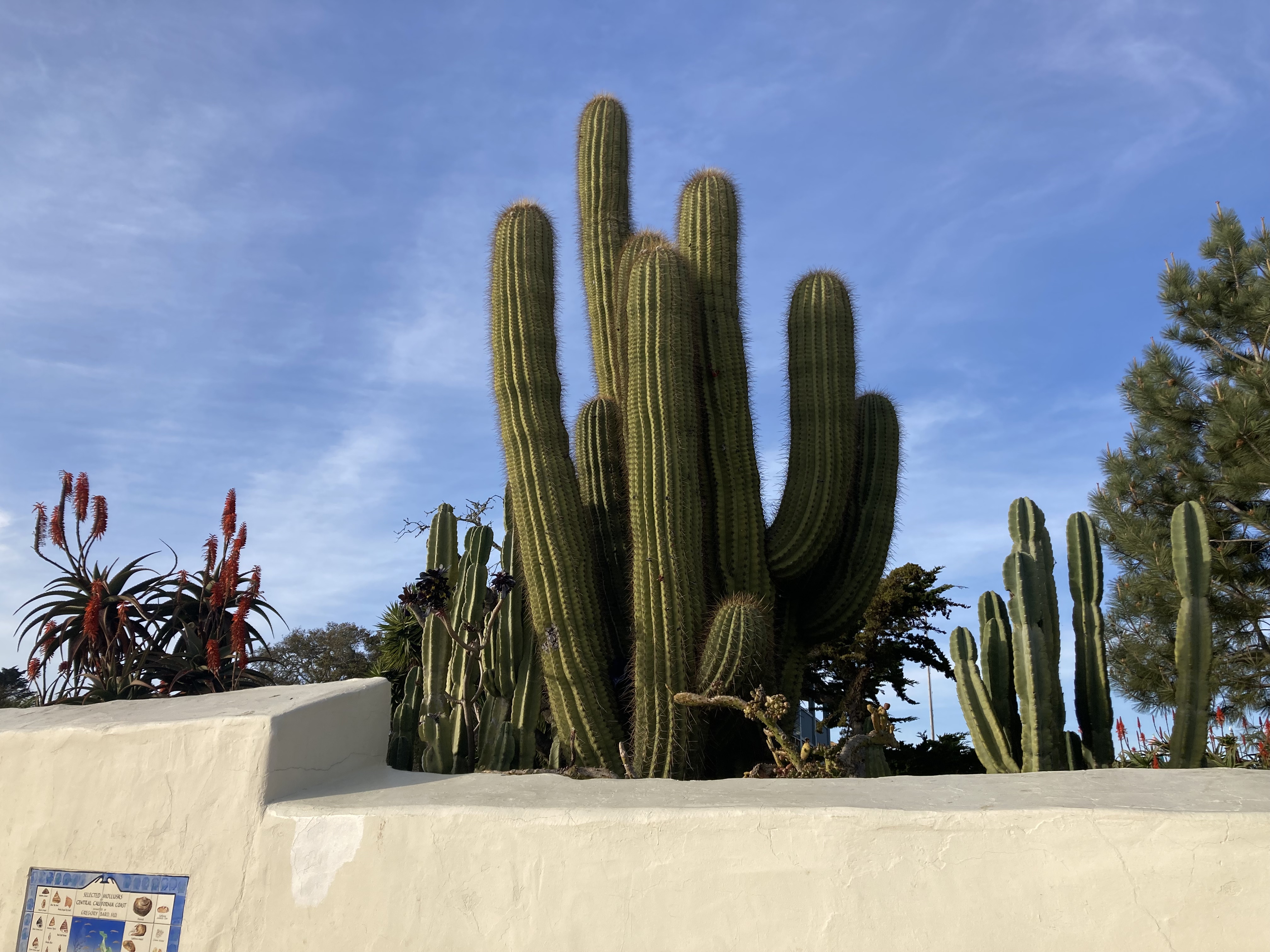
Big Sur

I’ll be honest, I’d heard of Big Sur, heard rave reviews, but didn’t really know what it was until I got there. And if I’m being even more honest – it didn’t blow my mind like it seemed to do for others. Now, just because that’s my experience, obviously it doesn’t mean it will be others’ experience or perception. I’ve heard people talk about places I’m in love with, saying how they were just okay or how they didn’t enjoy them. So don’t take my word for it – make up your own mind. It was beautiful, but maybe the hype toyed with my mind. And we’re all called to different things!

That said, Big Sur is a landmark area on California’s central coast. It covers about 90 miles of rugged coastline from Carmel to San Simeon. Here, the Santa Lucia Mountains meet the Pacific Ocean and you’re among redwood forests.

At the time of my visit, you could not drive the whole length of highway through Big Sur. There was roadwork being done, repairing areas that had suffered landslides, which are not uncommon here. As of January 2026, the whole road is open for the first time in the last three years. Given the road closure, I could not access all of the area, and I would have to back track to Carmel and then drive over to highway 101 in order continue south.

One of the most popular areas in Big Sur, Pfeiffer Beach (sea stacks, keyhole rock, great sunsets), was closed during my visit, as were a few areas. Not being able to access much of what Big Sur had to offer could certainly have contributed to my impression.

Driving south on Highway 1 from Carmel, my favourite part of the area was easily Bixby Creek Bridge. It was a treacherous endeavour to find parking (and I mean I was on the edge of sandy cliffs and could have easily gotten stuck on a one way road, with people crowding the area with their vehicles). I don’t really know how I maneuvered my van in there. But I’m glad it worked out.
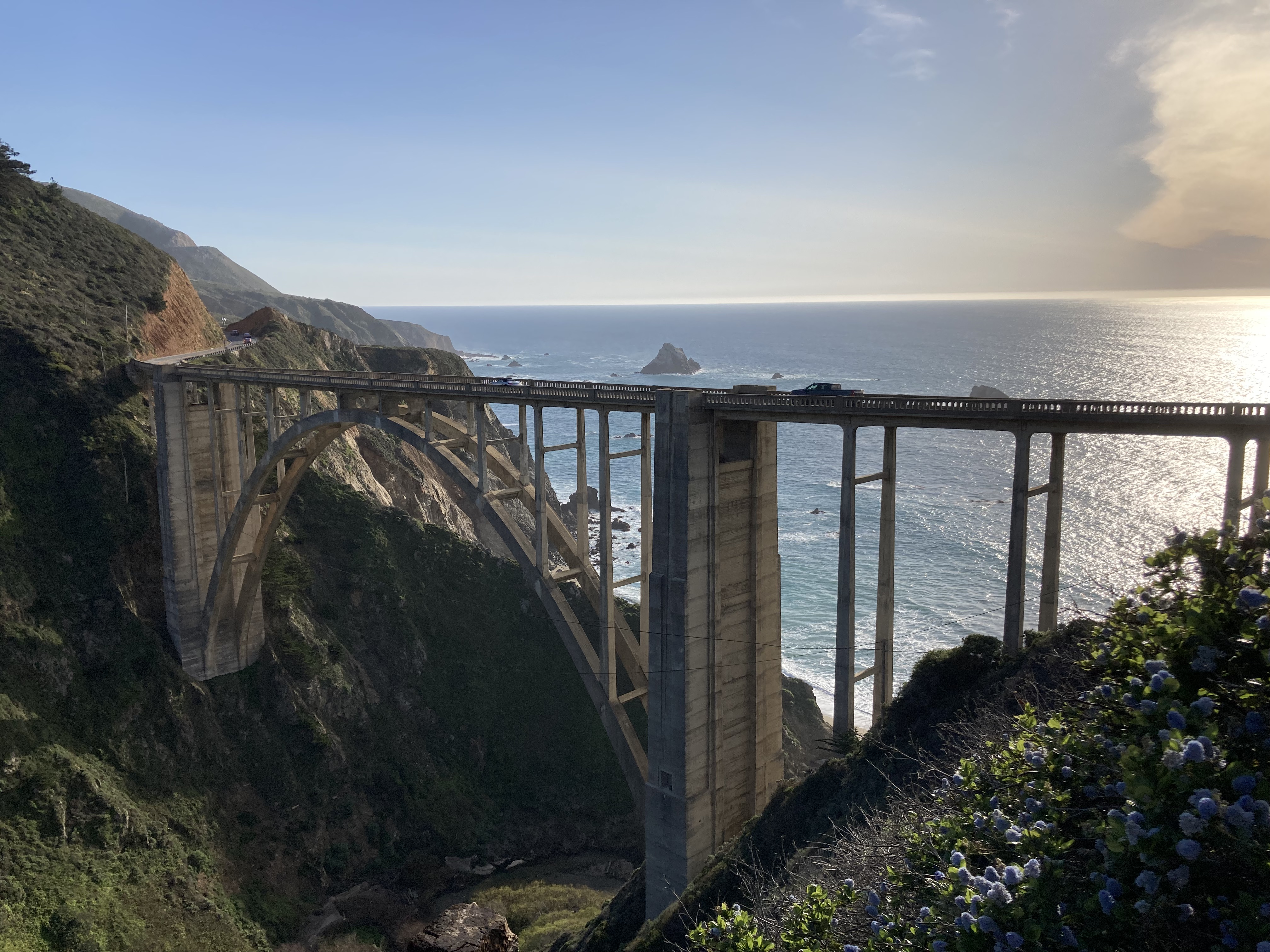
The coastline just south of the bridge (there are several turnouts to pull off the road), looking back north, were also stunning.
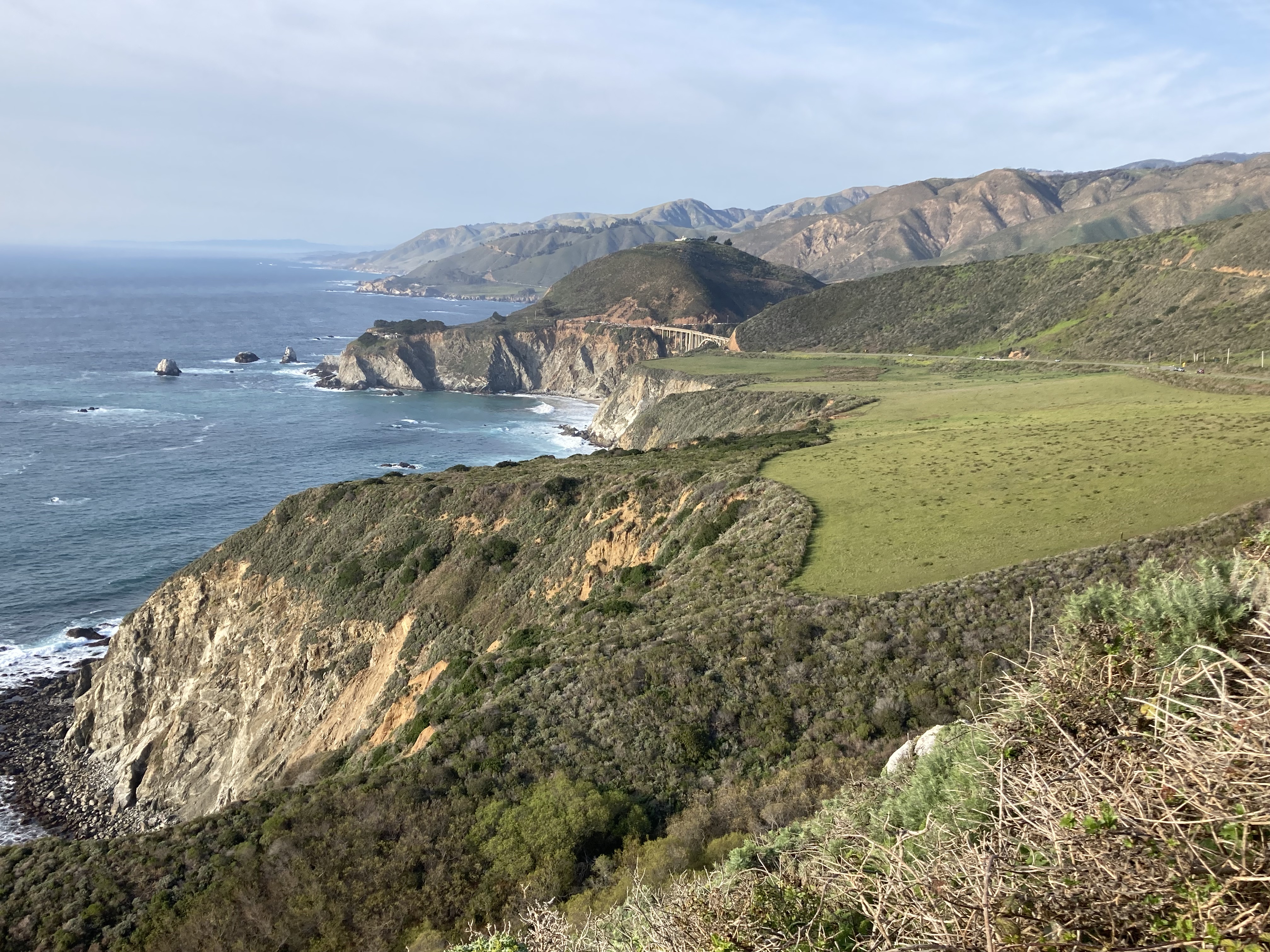
The narrow, winding PCH definitely provided the quintessential coastal California experience as I made my way to Big Sur Campground & Cabins for two nights.
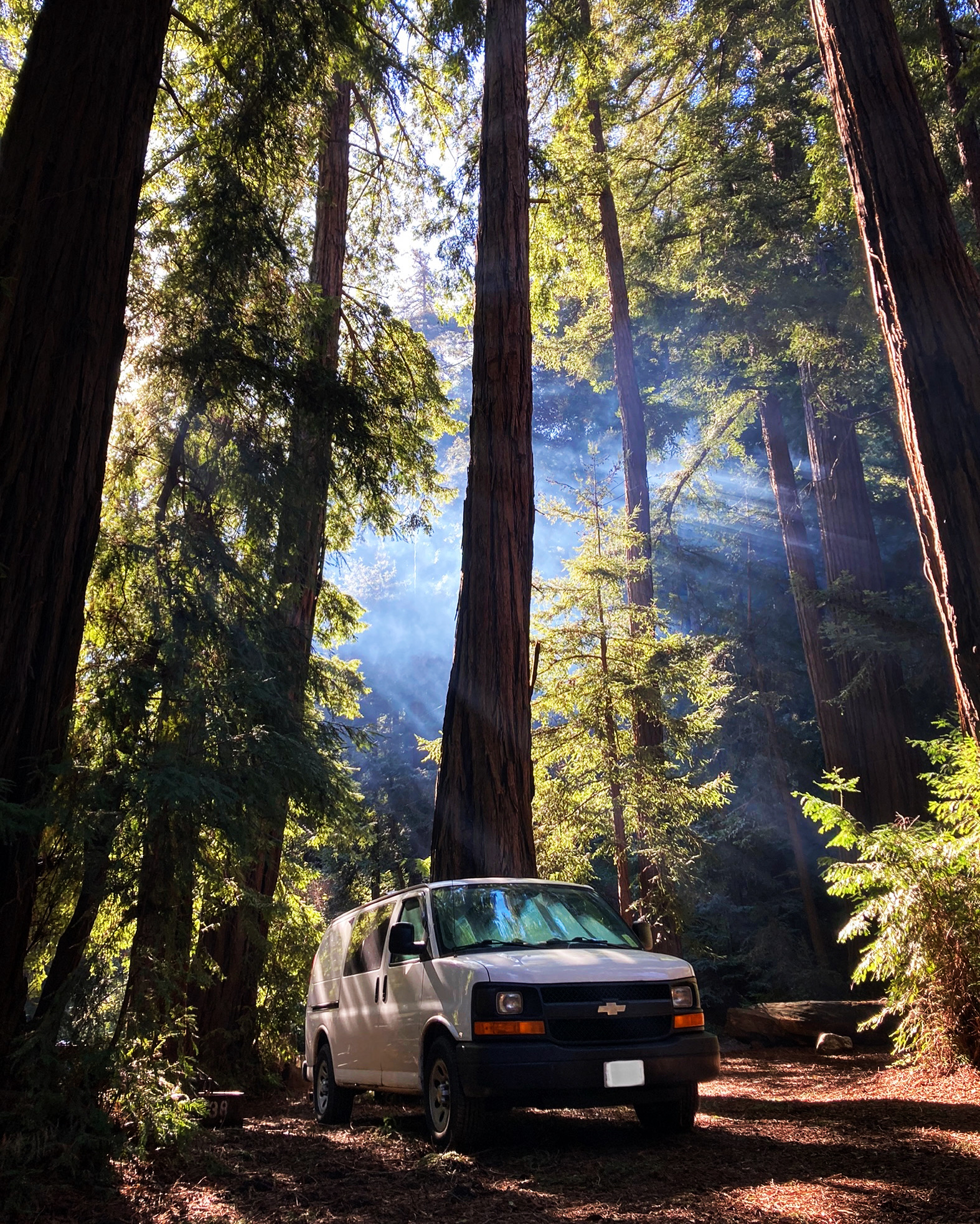
One of my favourite pictures ever from the road.

It was markedly colder in the forest than it had been at sea level on the open coast. The elevation and shelter among the giant redwoods, in addition to the environment’s penchant for fog, likely had something to do with that.

I spent my time here exploring as well as doing laundry and getting a run in. I got to McWay Falls, and also found a little area with some shops and a restaurant (the popular Nepenthe).
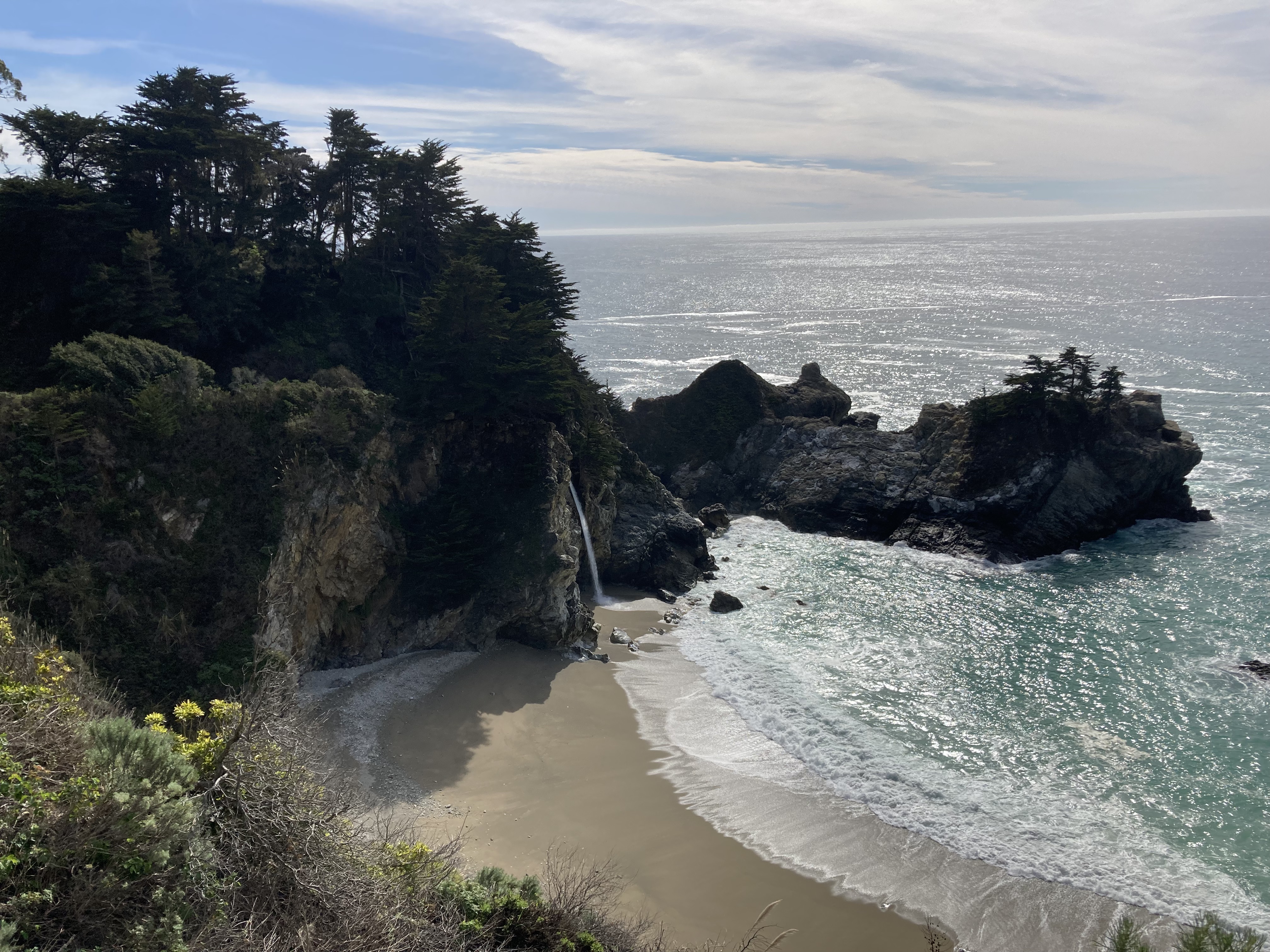
And sometimes you’ve got to treat yourself while you enjoy your digs…
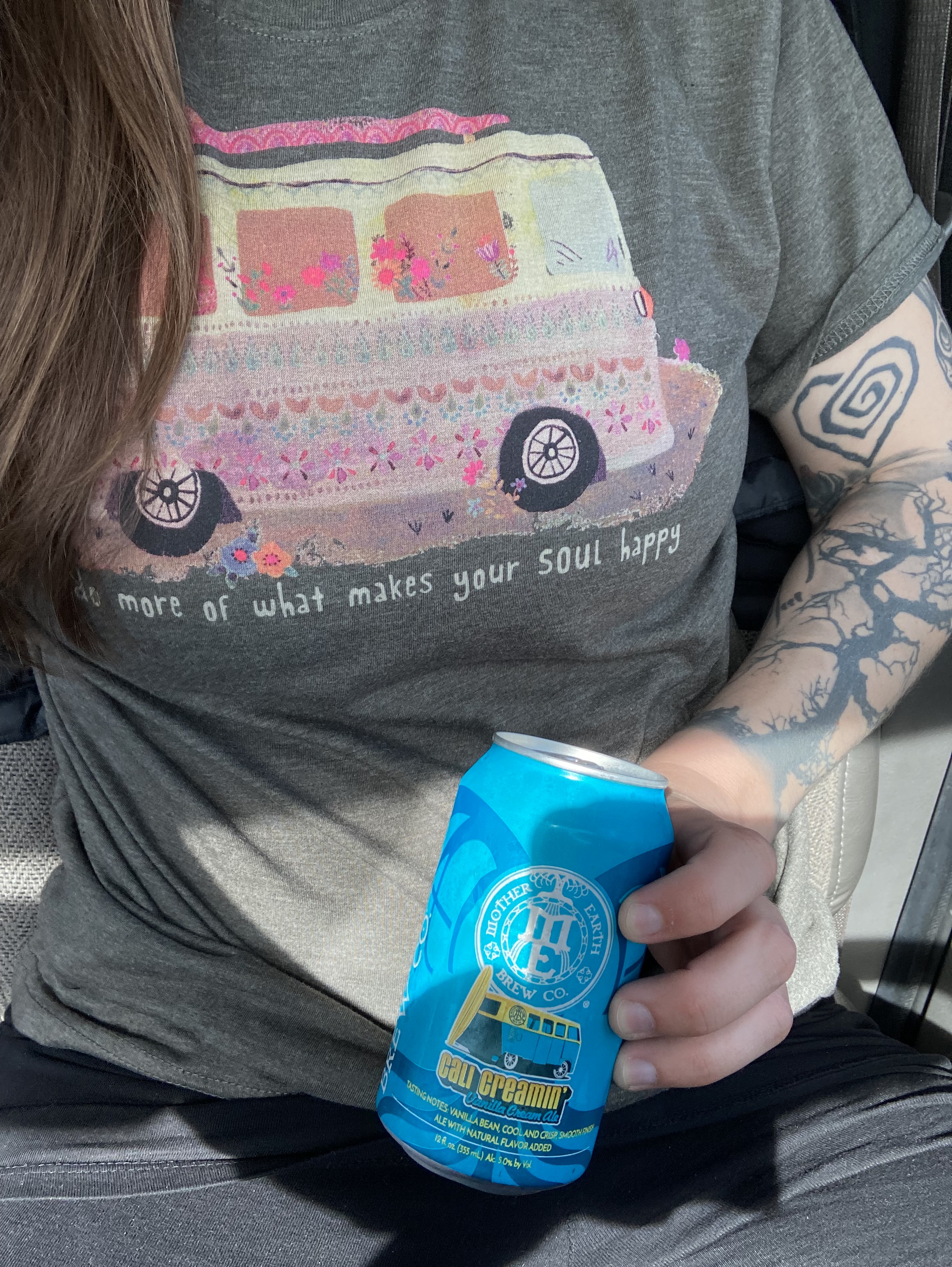
Visit Big Sur Station for information about the area (closures), hiking/camping guidelines, and to see the visitor centre.

Finally, on my way out of Big Sur and back towards Carmel I stopped at Garrapata State Park, which is essentially a little portion of the coast just off the highway.
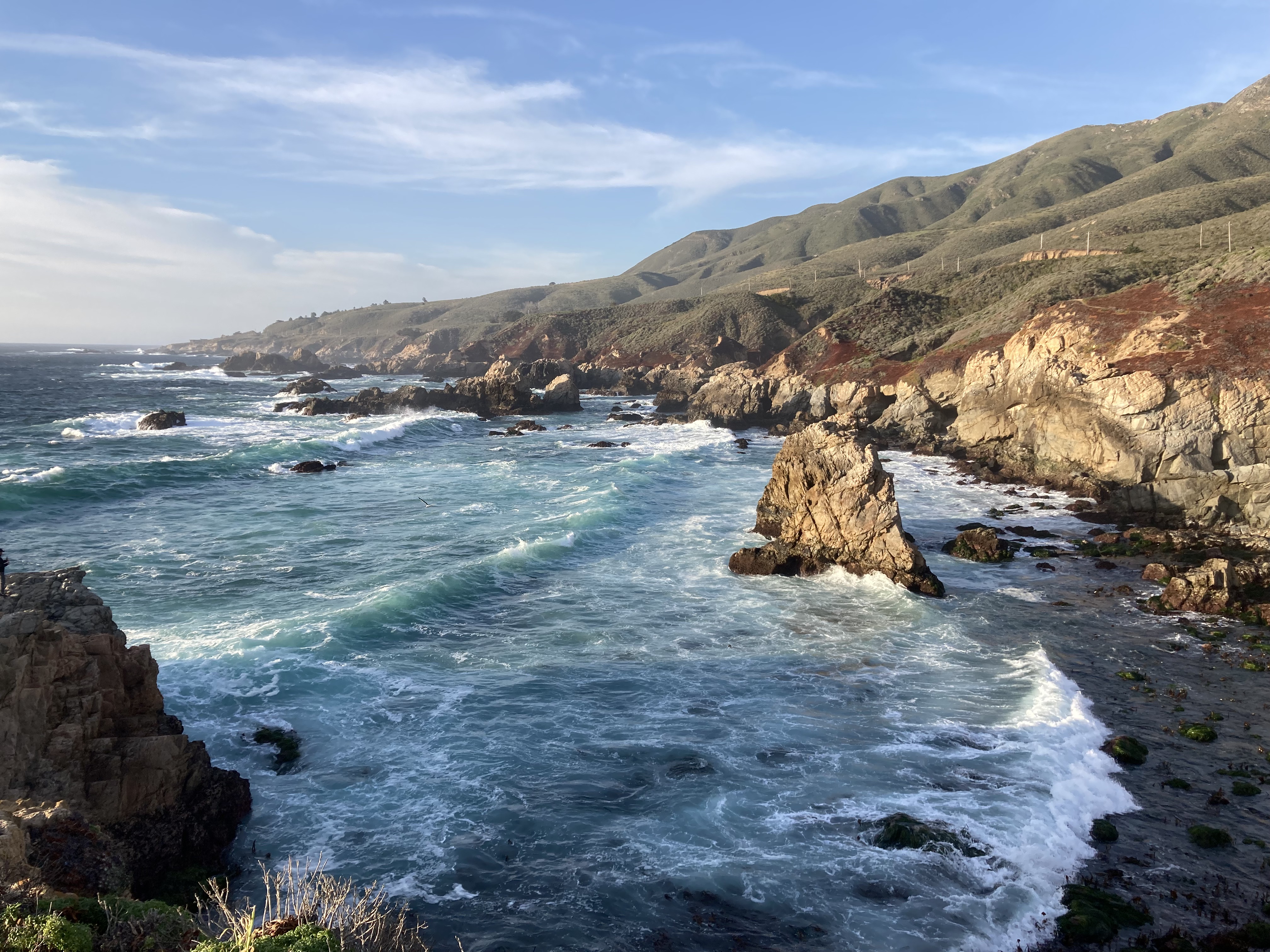
Cambria, San Simeon, & Ragged Point

I didn’t know it yet, but I was about to discover another gem.

I headed inland from the Monterey Peninsula to the 101 and then south to get around Big Sur. I would have preferred driving the length of the coast through Big Sur – to take in all of the views and utilize the most direct route. But landslides will landslide, and at least bigger highways offer the convenience of rest areas as built in overnight options. I took Route 46 back to the coast, arriving just south of a little town called Cambria.

There are several areas to pull off Route 46 to take in the surrounding views of rolling hills – take them. Bright green grass, grazing cows, and views of the ocean and Morro Rock. I would eventually discover that I could overnight at some of these pullout viewpoints and it remains one of my most cherished locations.
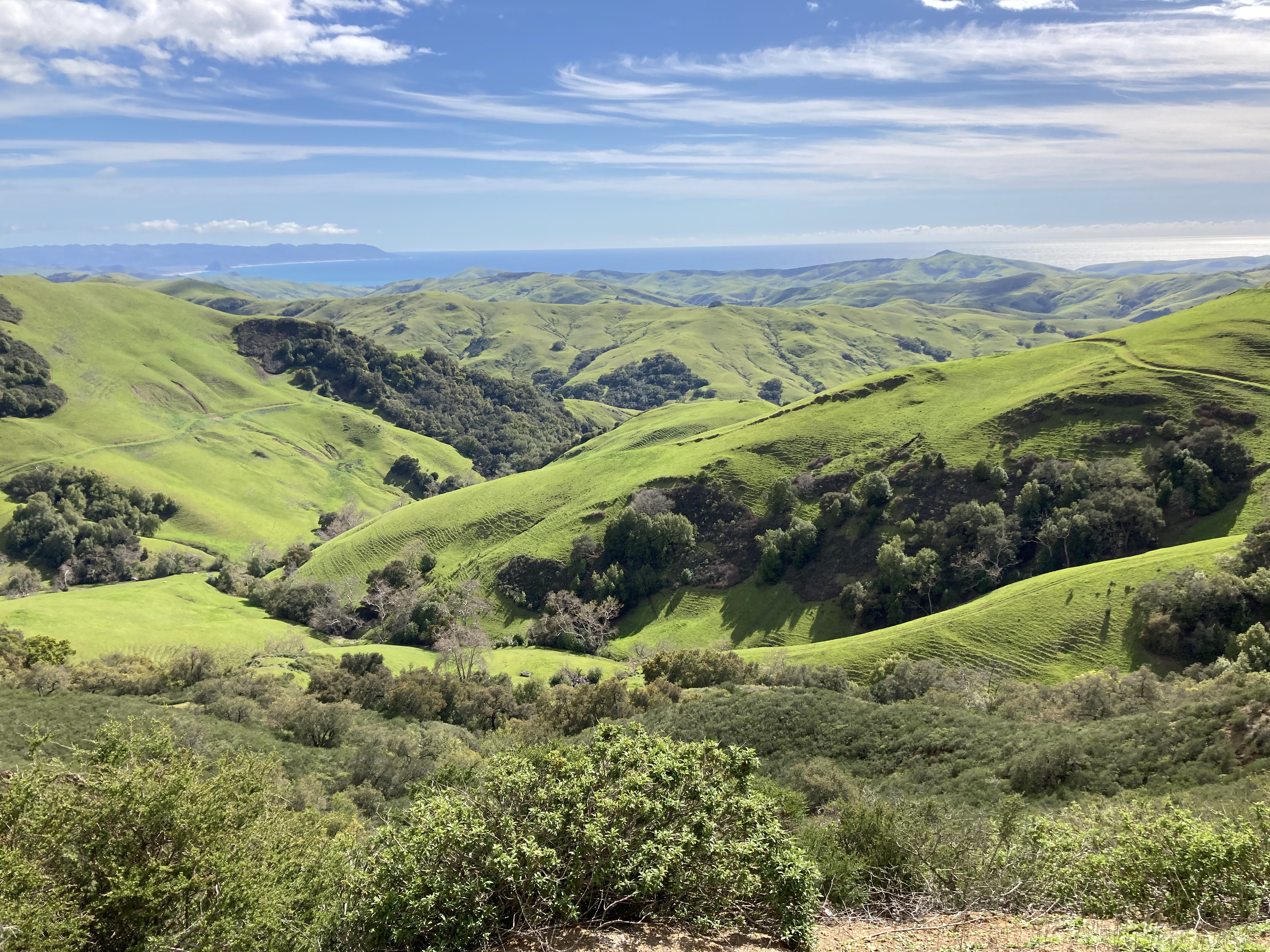
Cambria is a small seaside village just south of Big Sur, about midway between San Francisco and Los Angeles, within San Luis Obispo County. It has a population of about 6,000 people. It is also just south of San Simeon (an unincorporated community with only about 300 residents) and the popular attraction: Hearst Castle.

I first checked out downtown Cambria as I got my bearings. There is a cute little stretch of shops, including those with antiques, wellness products, and even a psychic. It’s fun to explore shops, but like I’ve said, it’s also a nice way to support the areas you’re visiting, and strike up conversation with locals.
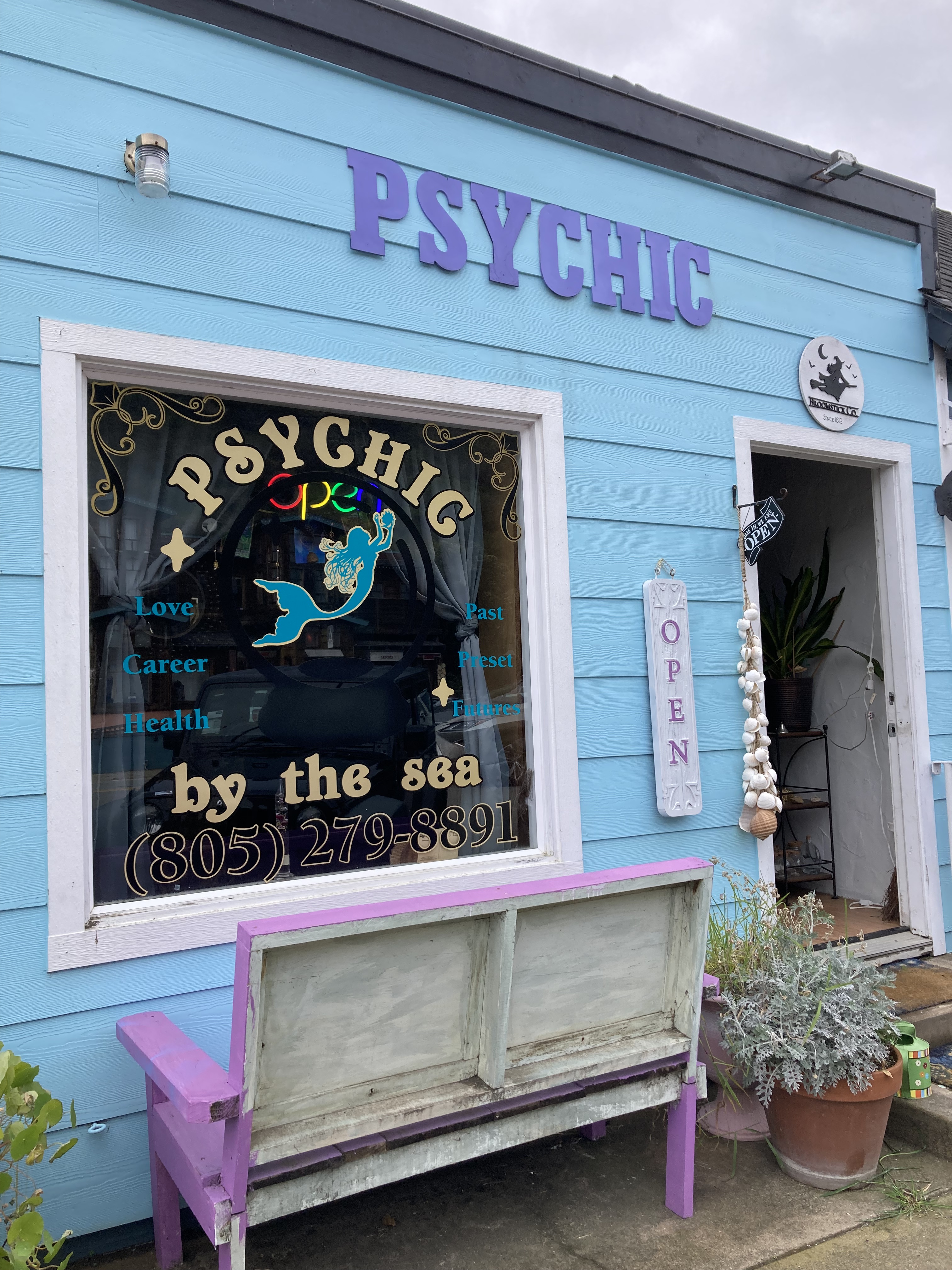
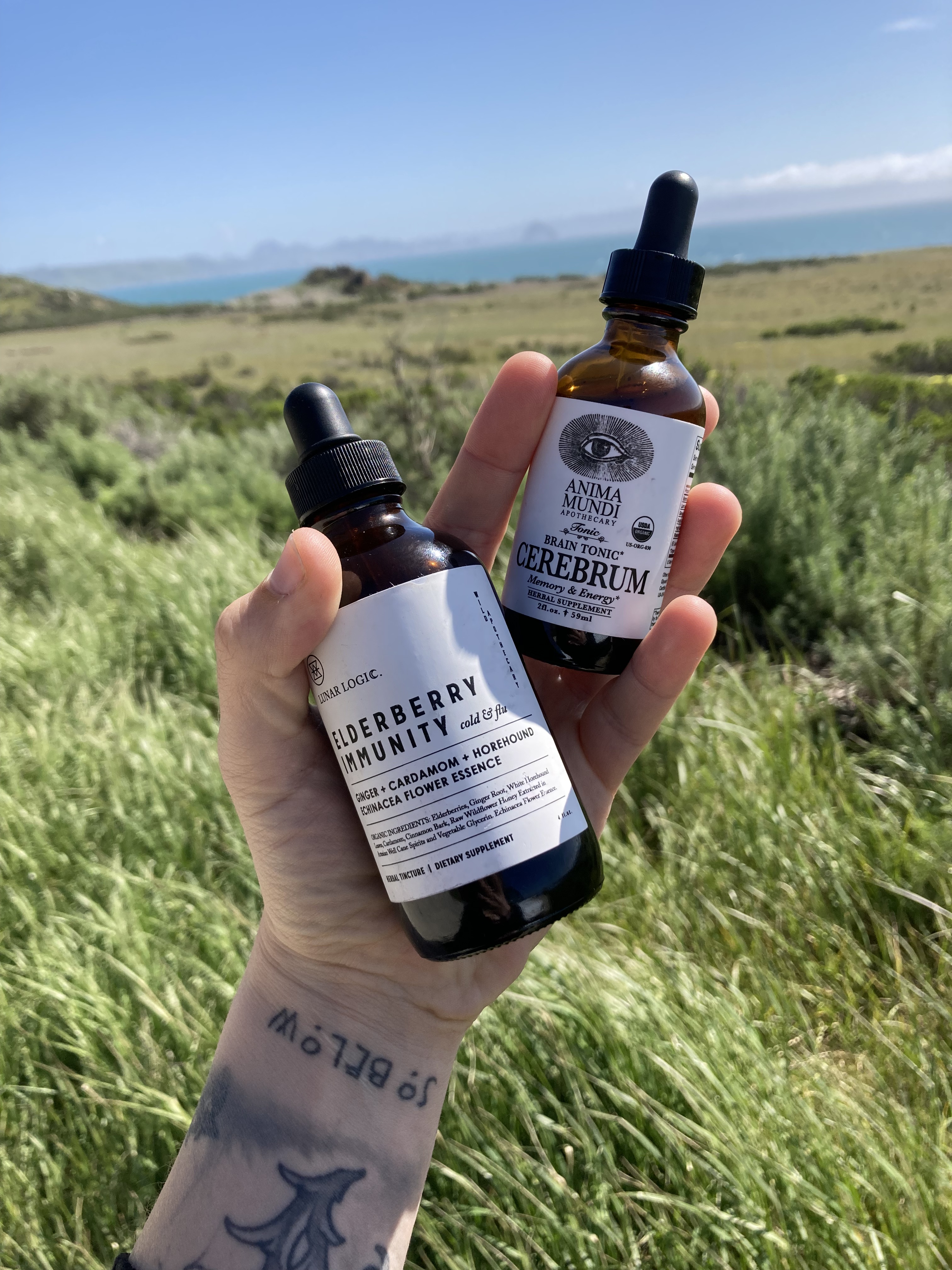
I found an overnight spot a little further north of Cambria and San Simeon, at Ragged Point, in a small dirt pullout above the ocean. There’s something really special about falling asleep and waking up to the sounds of the ocean.
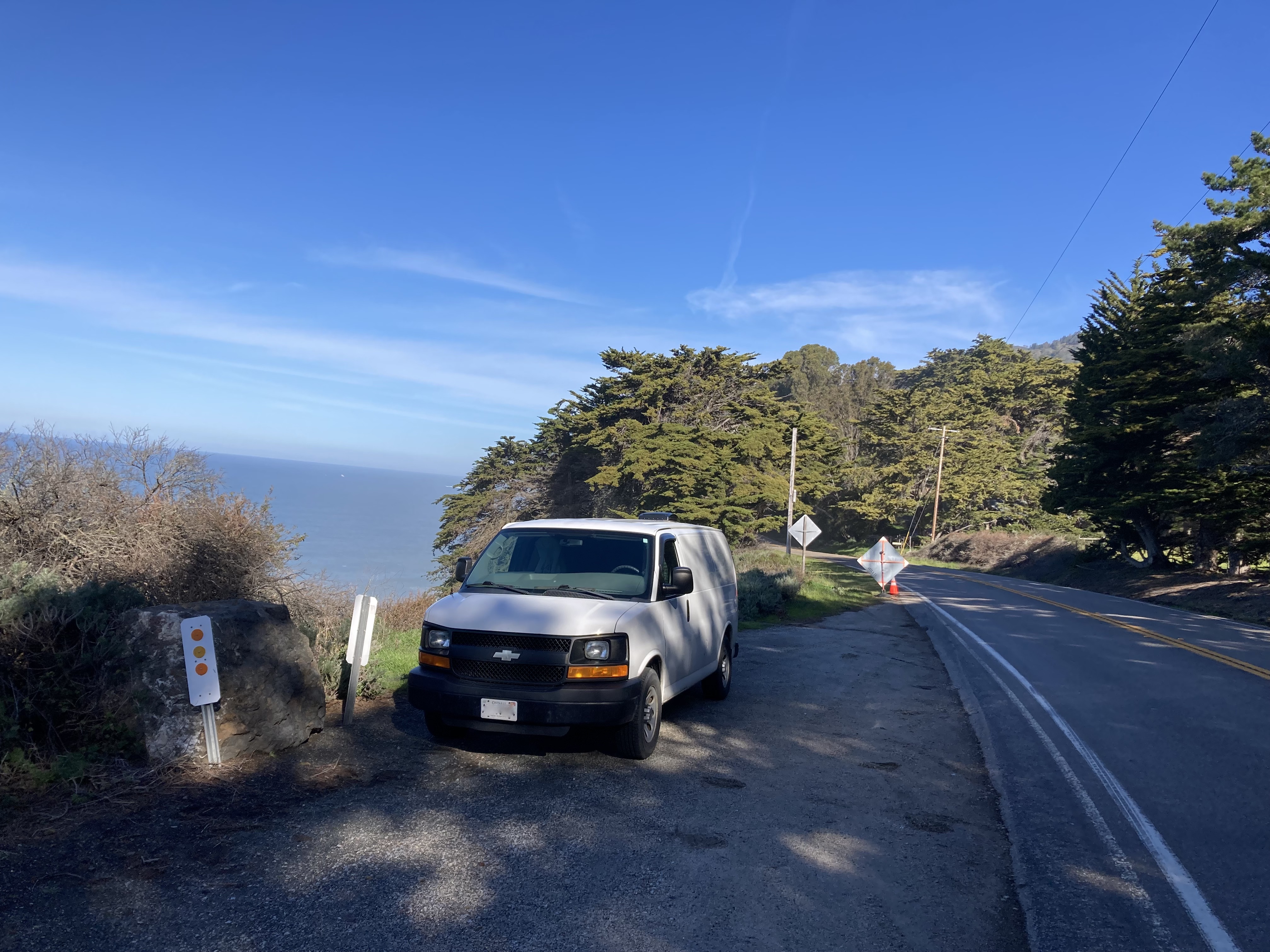
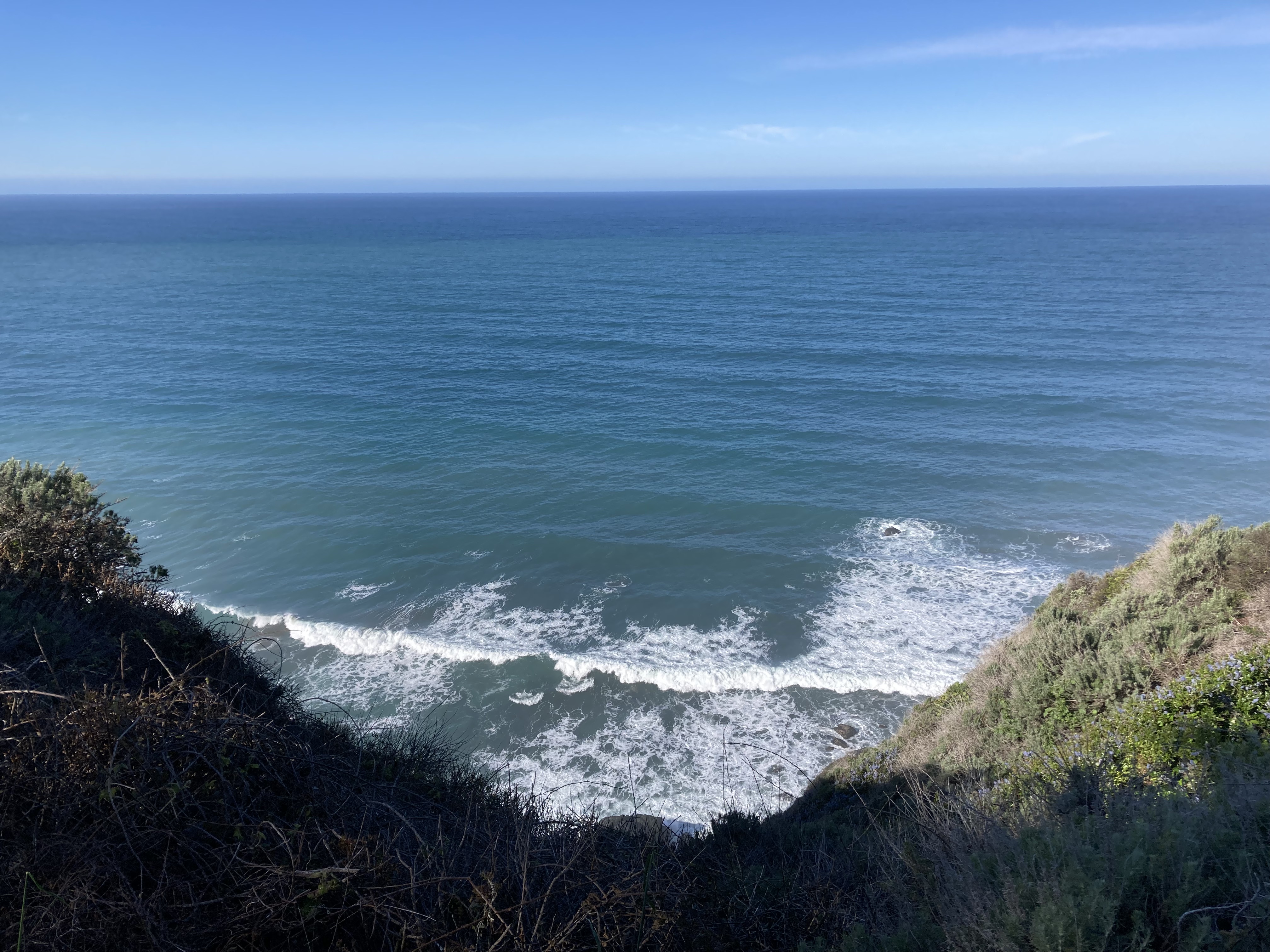
I went for a stroll at nearby San Carpoforo Creek Beach the next morning. This was actually where I’d heard that overnighting was a thing, but that didn’t pan out and I had to improvise.
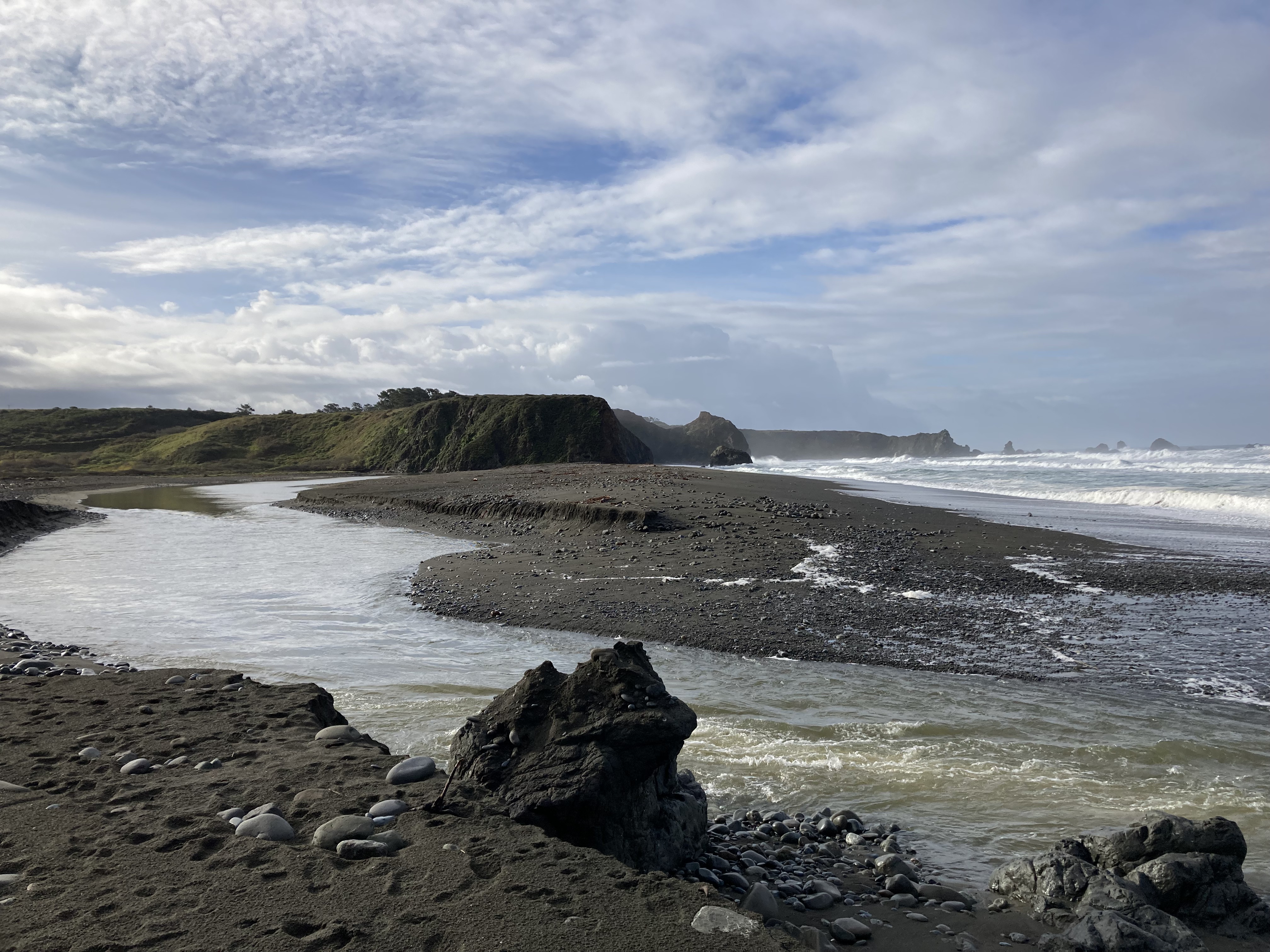
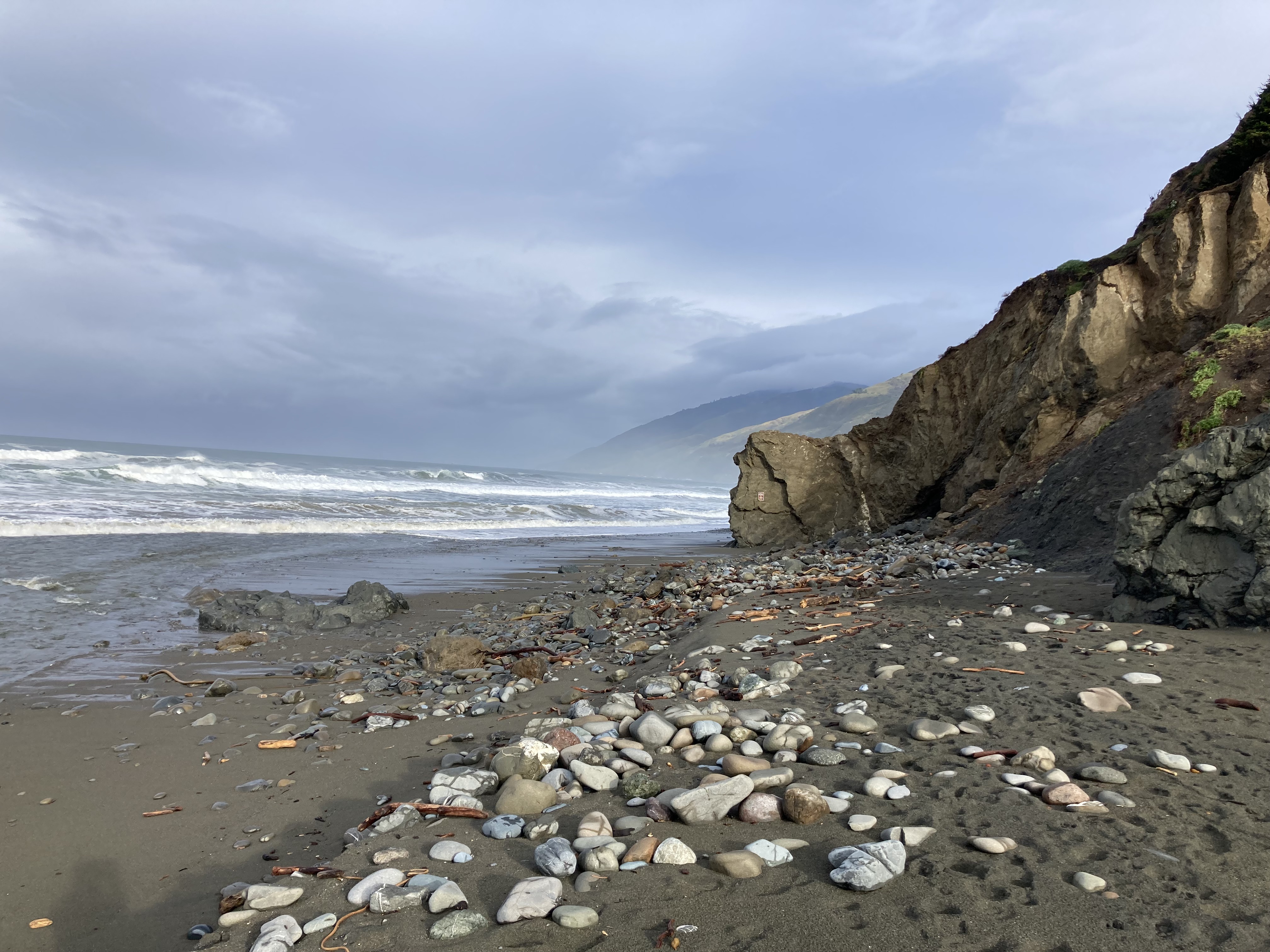
I paid a visit to Elephant Seal Vista Point, which is a stretch of beach where elephant seals come to mate and rest for a few months during the winter. If you’re lucky you might catch males sparring. And there were plenty of pups. You can see this at many stretches of beach along the coast, but they were plentiful here, and there were informational signs as well as volunteers present to answer questions or chat. It’s here that I gained a better understanding of these animals and that they’re not beached and dying, and you don’t want to get too close.
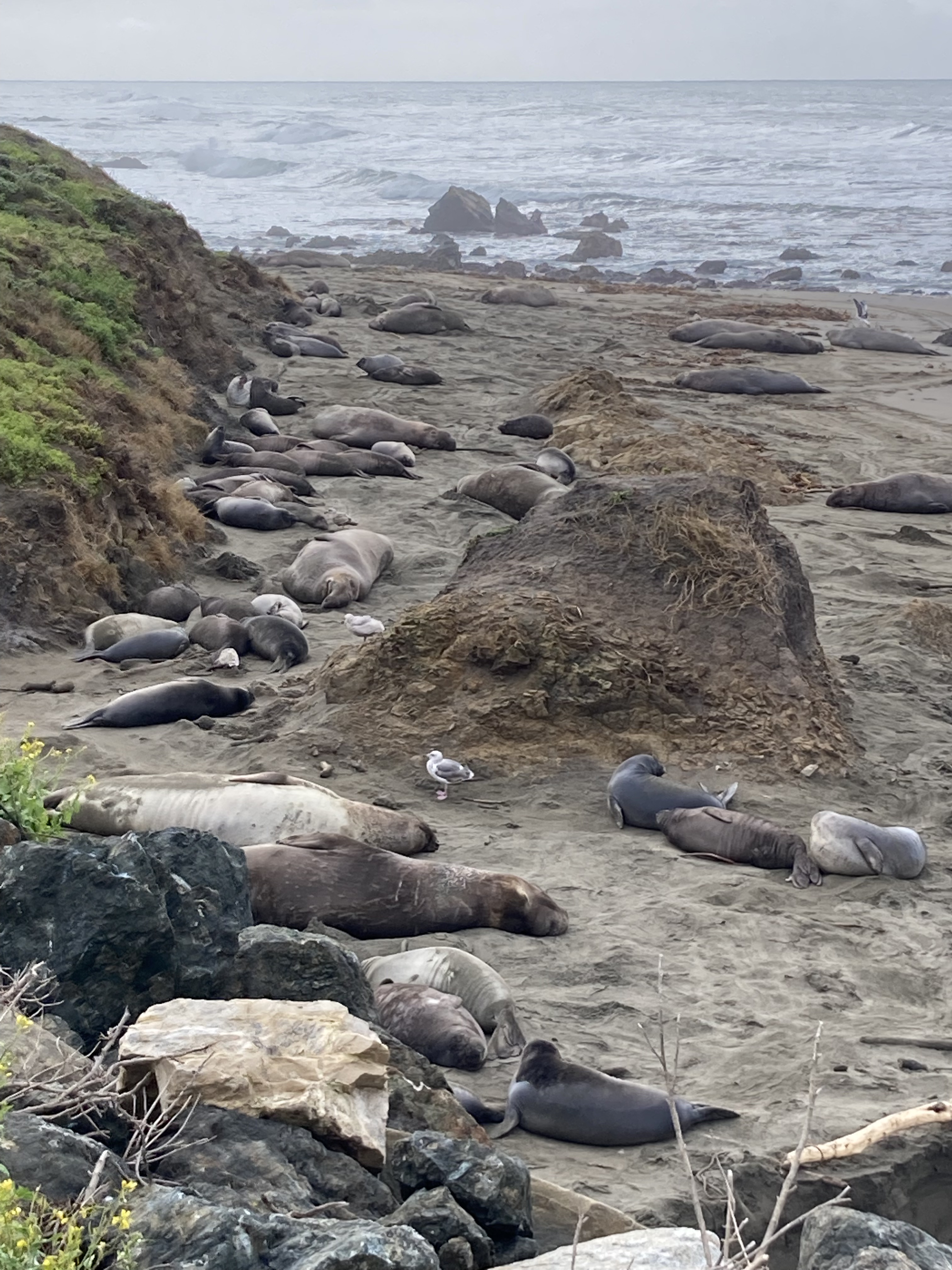
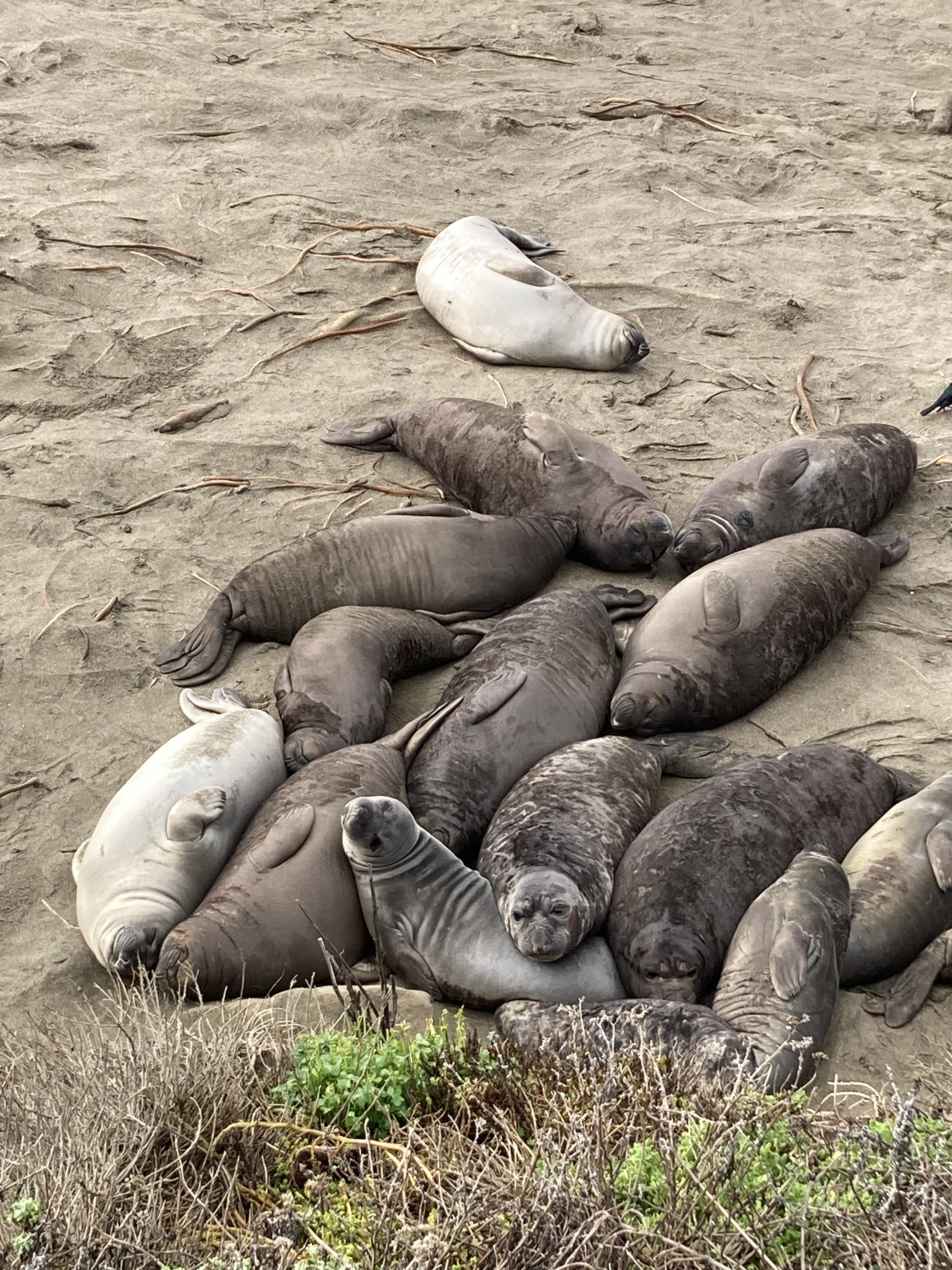
There was a collection of shops in Ragged Point – Ragged Point Inn, a coffee shop, gift shop, and little gas station with items worth exploring (like National Park candles). The owner of the gas station struck up a conversation with me, sharing that gas is cheaper in Morro Bay, Montecito is where a lot of celebrities live, Santa Barbara is a rich area, land slides are common on Big Sur, and definitely go to Yosemite.
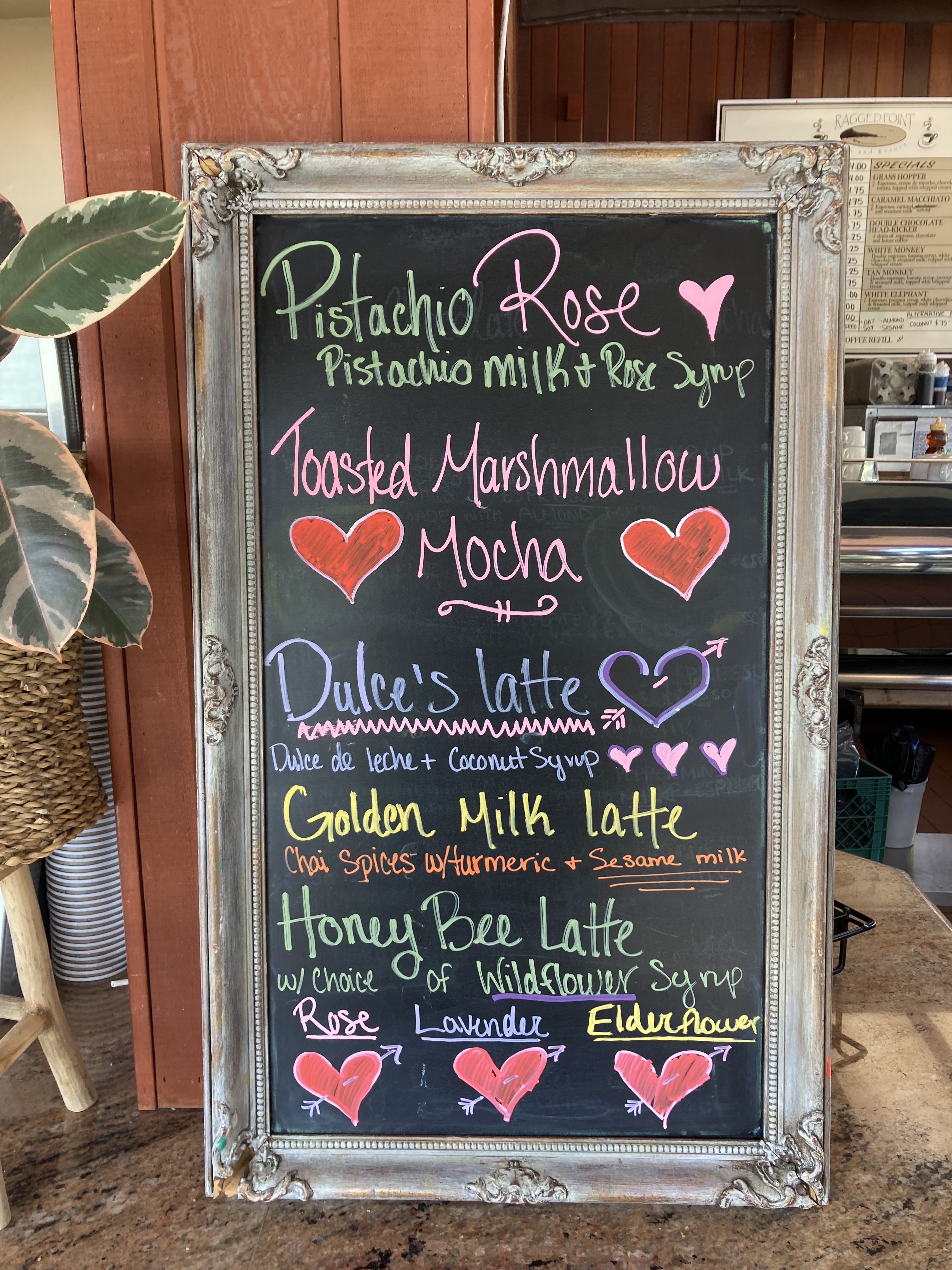
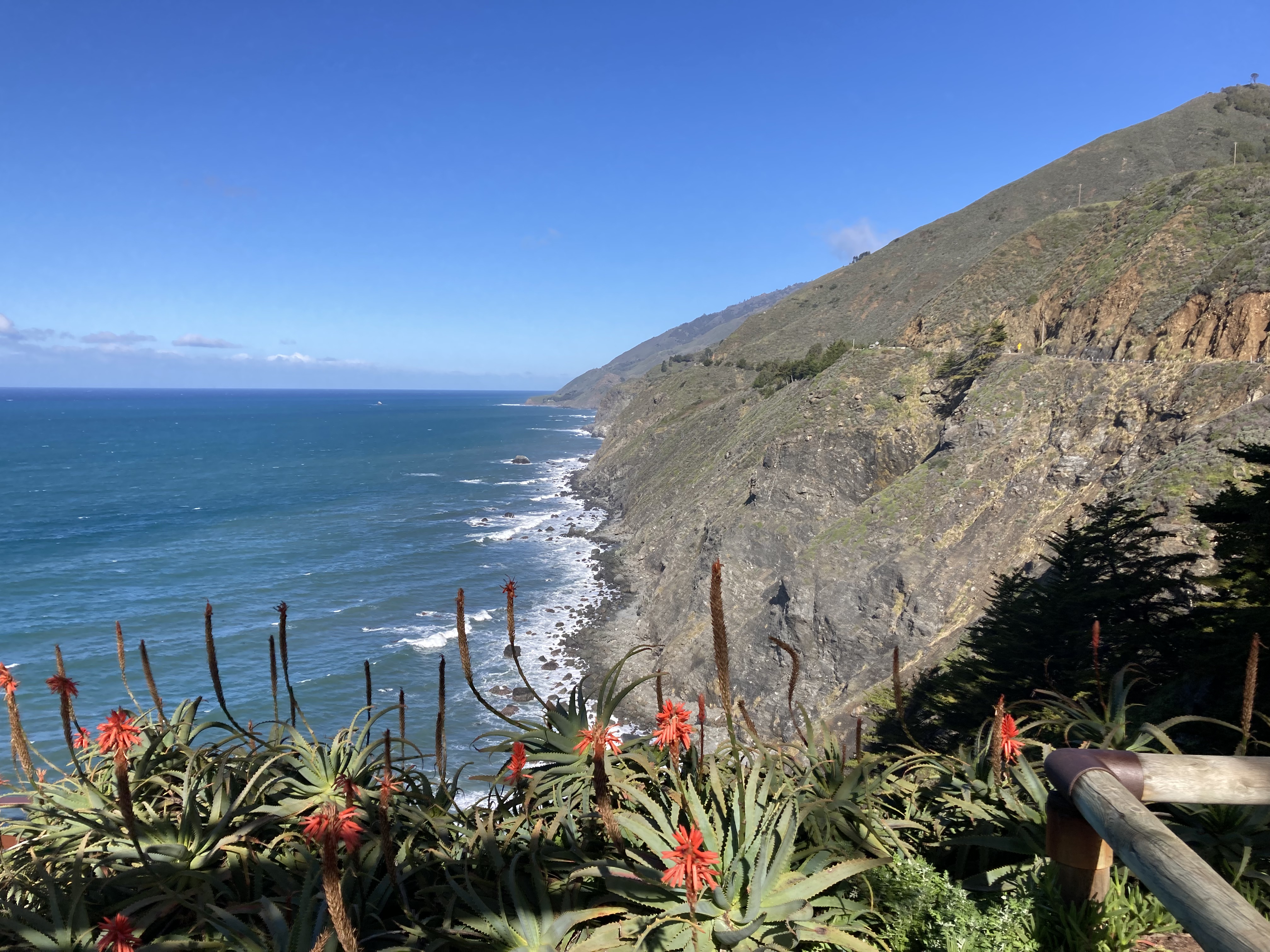
That afternoon I went to Hearst Castle. If you are in the area – definitely go here. It is absolutely amazing. Not only is it atop the area’s beautiful rolling hills – you are taken on a bus up through the vast property’s ranch land – but the architecture is immaculate and the castle is dripping with art.

The castle was owned by media mogul William Randolph Hearst. Along with architect Julia Morgan they designed and built the castle over a period of 28 years in the Renaissance style of southern Spain. Celebrities have stayed here, and Citizen Cane filmed here.

Somehow I lucked out, catching the last tour of the day, with nobody else having booked the same time slot – so I inadvertently got a private tour (which you usually pay more for).

I think this was easily the most stunning and beautiful castle I have ever visited and I would go back in a heartbeat.
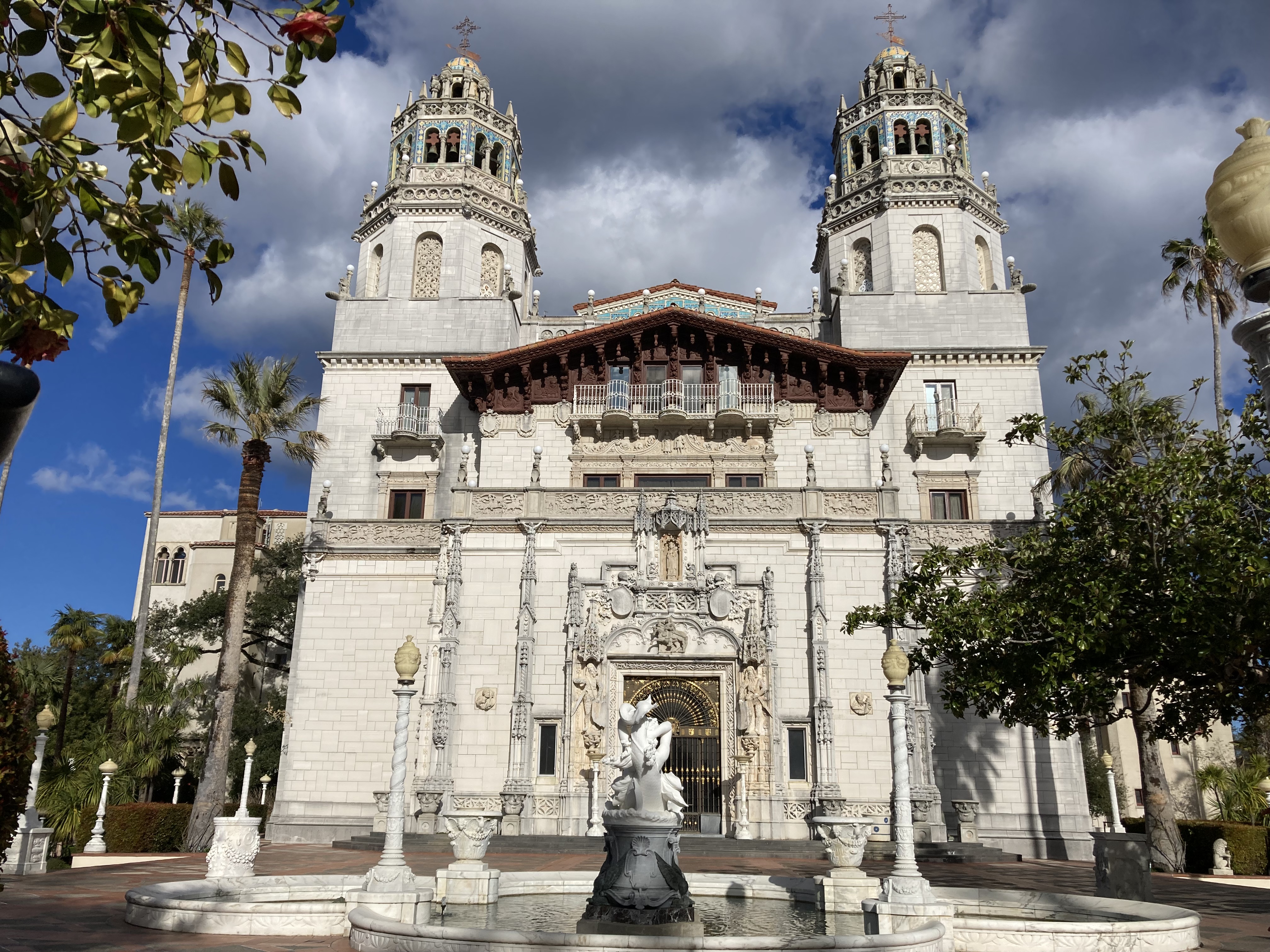
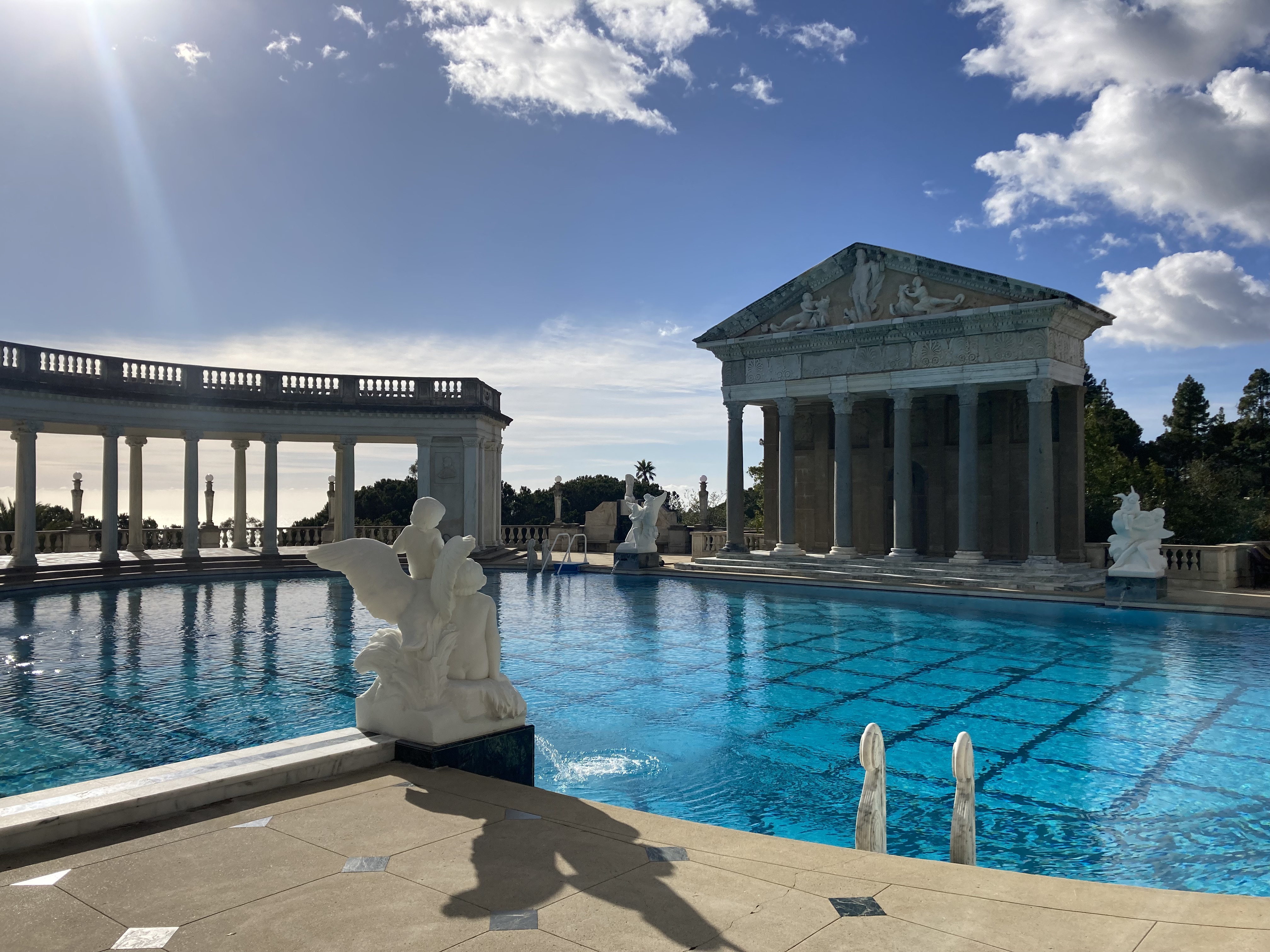
I ended this day by watching the sunset at San Simeon Pier/ William Randolph Hearst Memorial Beach. There was a wooden pier that I walked out on, watching the waves roll in from the unique vantage point of above. Watching waves roll never got old for me. Just like watching the sun set over the Pacific ocean never got old.
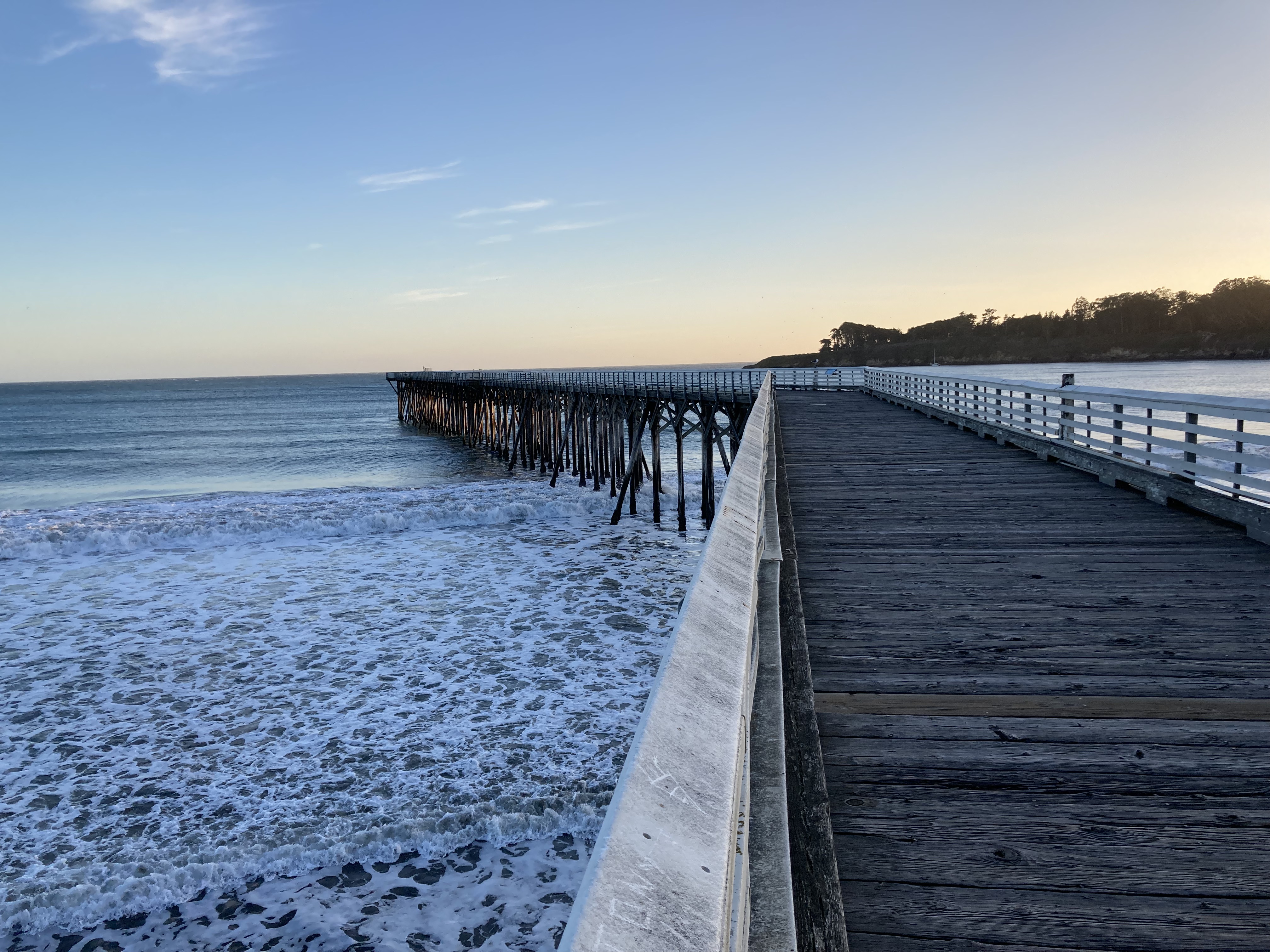
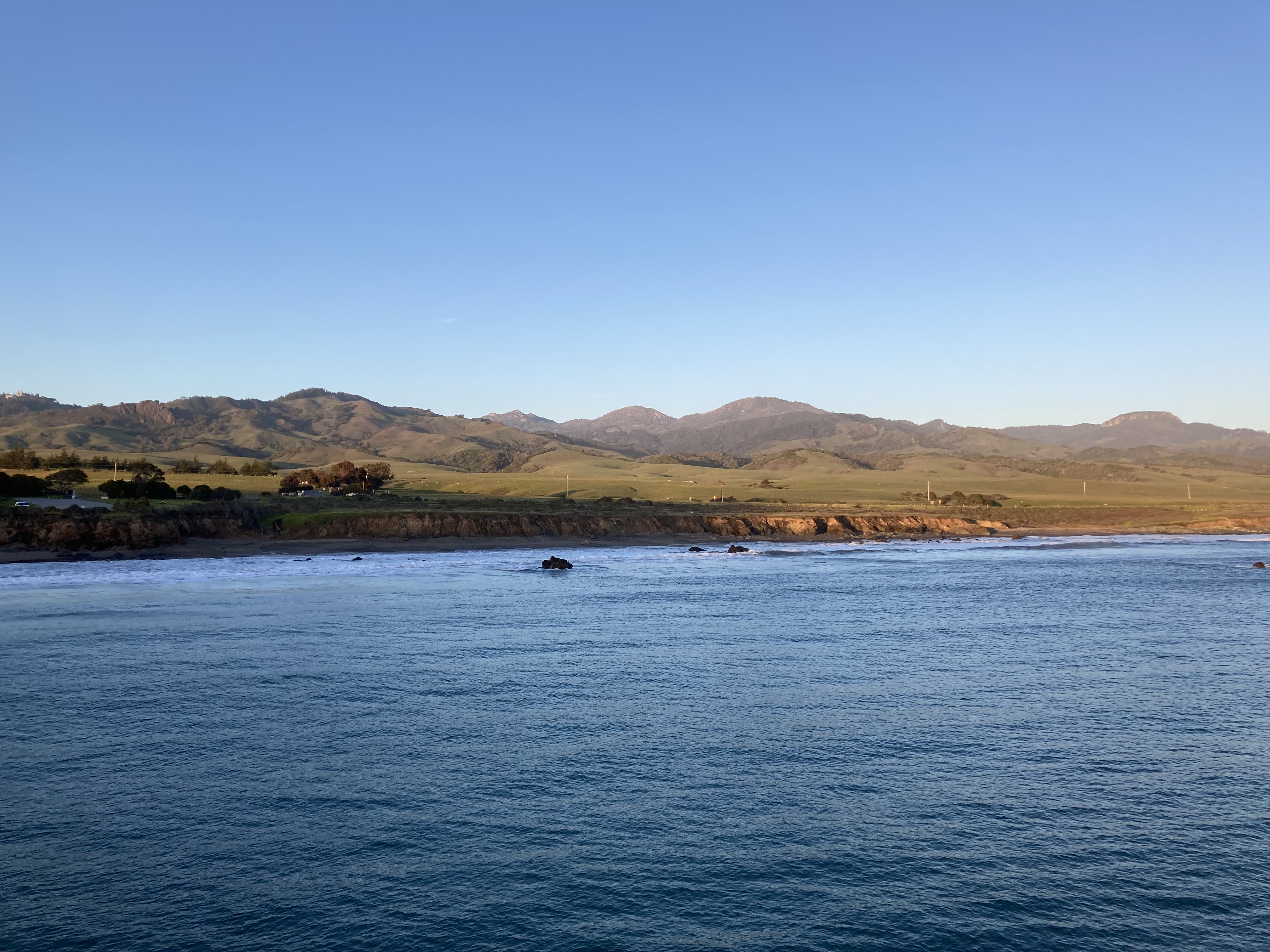
I had another spot where I was able to spend some downtime, do planning, walk along the coast, watch elephant seals, and watch sunsets. Just an unmarked dirt parking lot.
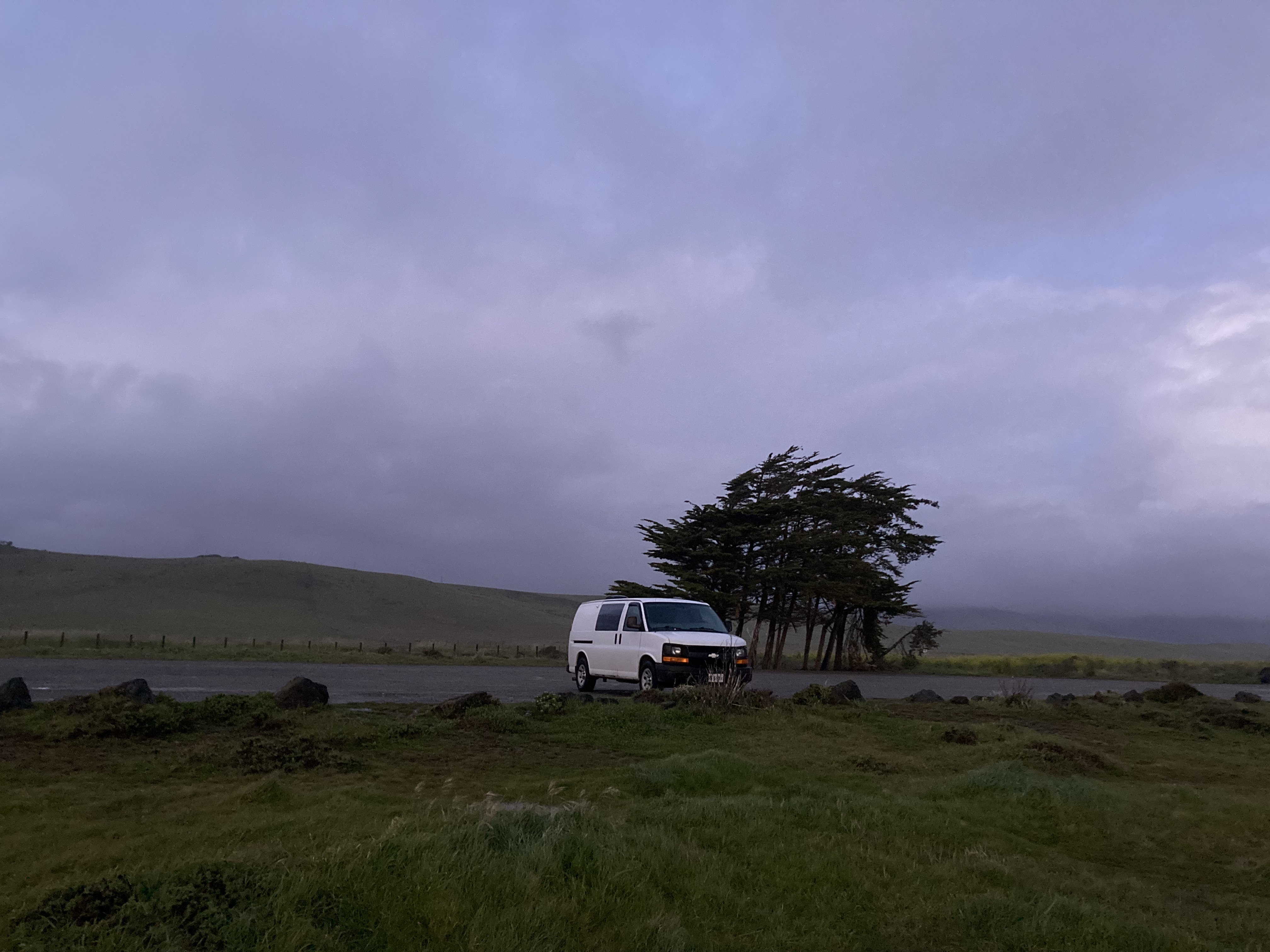
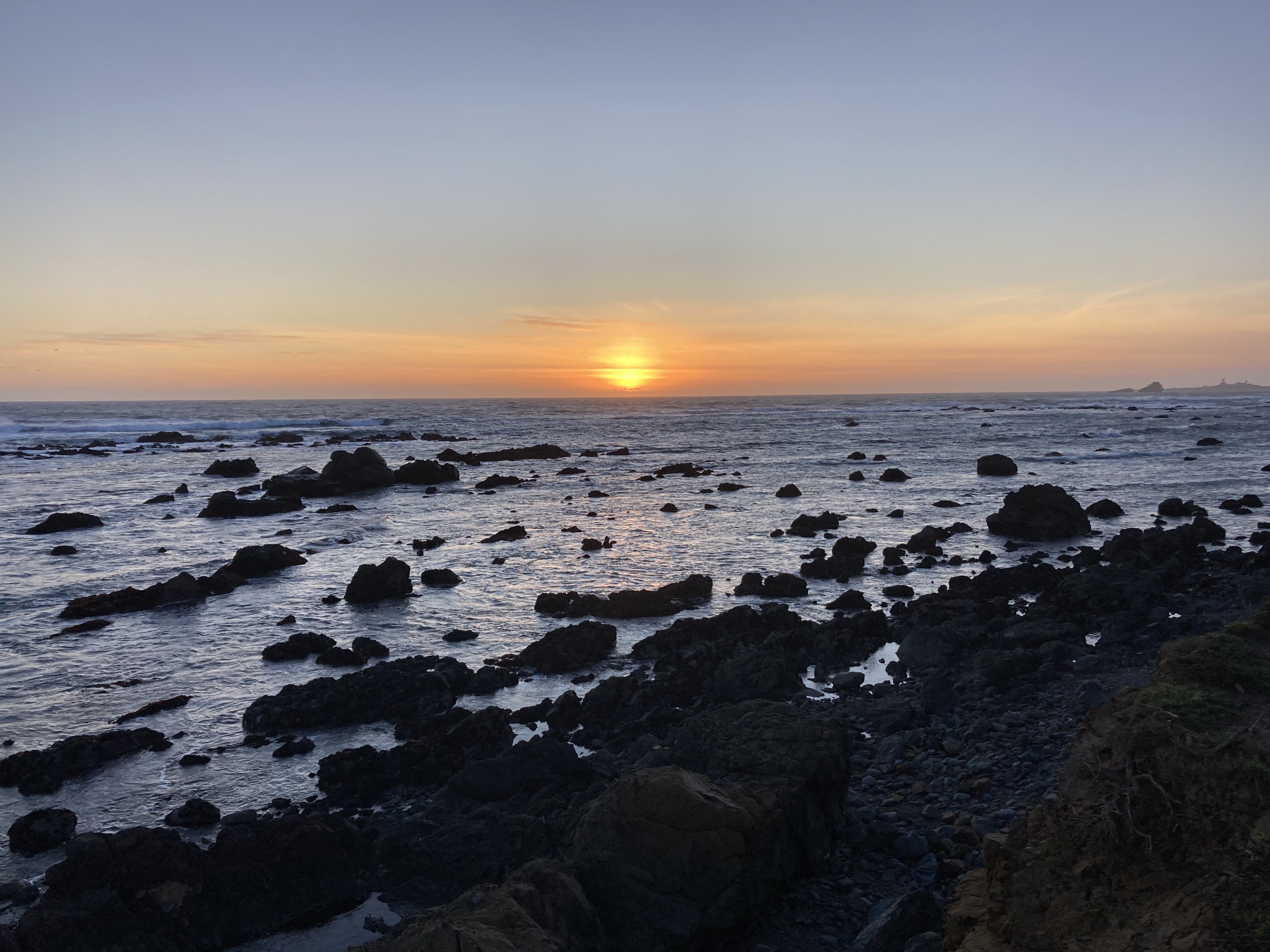
Route 46’s views and Hearst Castle are two standout experiences for me from my time in California. This area is teeming with beauty. In addition to the elephant seals I saw otters in the water, a group of Pelicans flew over me, and I woke up early one morning to wolves or coyotes howling. All of it was magical.
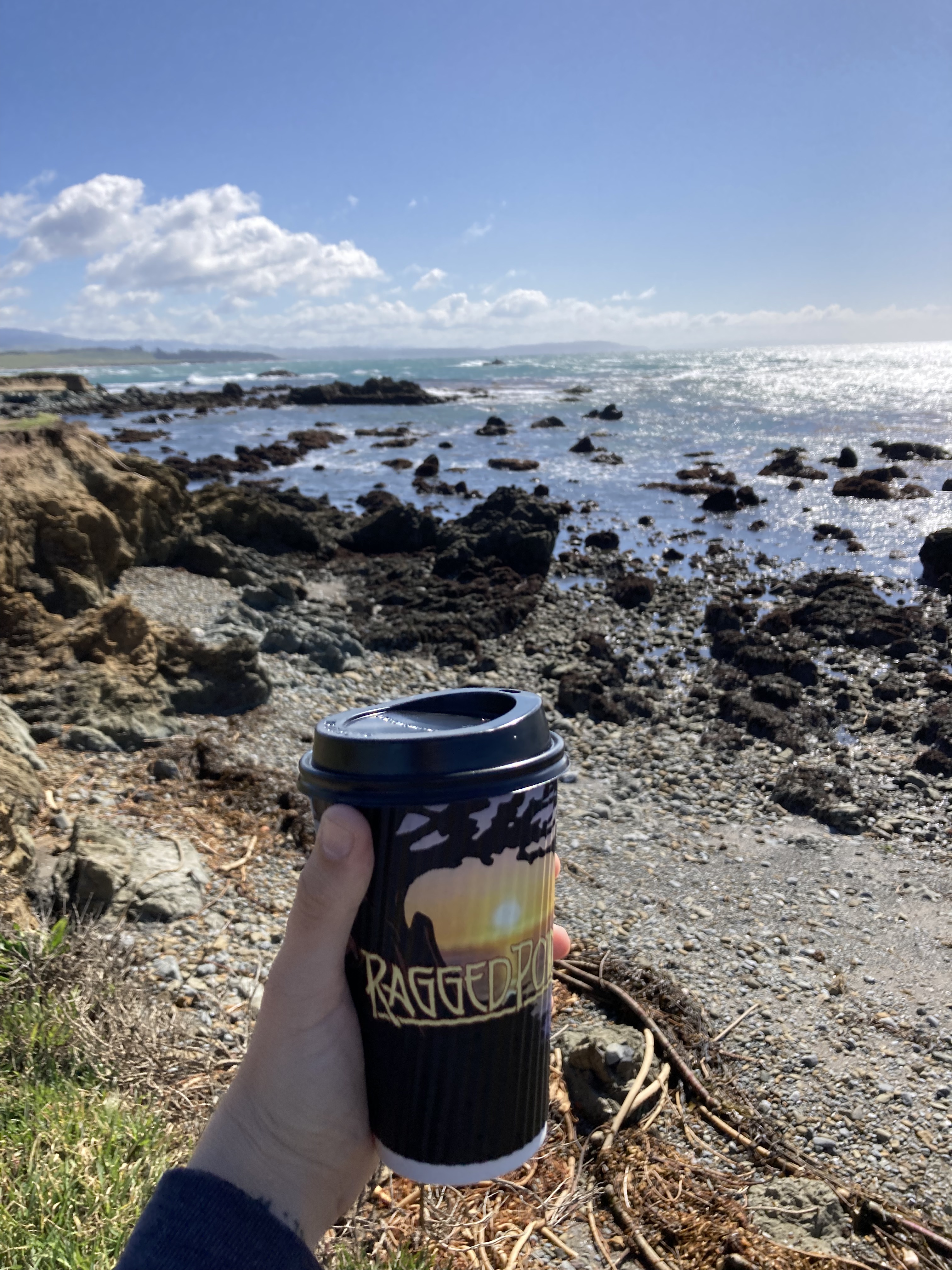
Homeless Encounters, Venomous Spiders, & Toxic Air Pollution

One day at the dirt parking area I frequented near Cambria and San Simeon a homeless man came up to the van and asked me for a ride to Orange County. As much as I felt for him, I wasn’t headed that way yet. But I also couldn’t take the risk of letting a stranger into the van. As a solo female on the road I had to consider worst case scenarios – which is that a person who is likely desperate for things they don’t have could easily take what they wanted when given access. Losing my transport and home on the road would leave me stranded in another country. Though that’s not the worst a man could do to me. I felt for this person. Arguably, he could have been a good person who wouldn’t have done anything to me or tried to take anything from me. But the world isn’t always (or often) that fair or innocent, as much as we may want to believe it.

I told him I wasn’t headed in the direction he was going. He asked me for some water (which was the least I could do), so I grabbed a bottle of water from the back of the van (and made sure the van doors were locked when I did). I hate the thought of how I might have made him feel. I hate that he probably gets treated poorly by others. I hate that I couldn’t help him more. But I do believe I made the only choice I could. I felt a little on edge as I watched him leave, but I didn’t see him again.
Another interesting saga that began in this area was finding a spider in the van. Now, if I’m in Canada, I don’t really bat an eye at spiders. Sure, we can have the brown recluse or black widow in some areas, but I’ve never seen either. I knew that California had more venomous spiders, especially as I was getting further south. So I thought – let’s try to identify this bugger. I’m no spider expert, so I was never going to positively identify this guy with 100% certainty. But I looked up lists of the venomous spiders that can be found in California – and one of them did look pretty similar to the spider I’d seen in my van. He was a fast little guy, and I’d only seen him once, at night, when I’d gotten up to pee. I learned that spiders tend to come out at night, and can be attracted to light… I had to accept that there were a bazillion little nooks and crannies where he could hide in the van and I might never find him. Until three weeks later, while I was lying down watching a show after dinner. I usually keep the lights low after I arrive at my overnight spots, so that cars that go by won’t see a light coming from my windows. I have a little lamp, and I spotted the spider crawling down the wooden wall of my van right next to me near the lamp! I was ready with a container, caught him, and let him out, far from the van. What a relief! In all likelihood, he wasn’t the kind of spider that could hurt me with its venom. Either way, I co-habitated with a spider for three weeks.

The third notable thing from this area was the air pollution that made me feel ill. For maybe a week I’d been feeling unwell. Symptoms included brain fog, nausea, fatigue, headache, aggravated throat and nostrils, pressure in my eyes. I’d noticed the air blowing from the AC/ Heat vents smelled musty in the mornings, and I had assumed it could be a mold problem. It seemed like my symptoms were worse while driving/ the air was blowing in at me. Then, after a week of this, the symptoms started to subside, which seemed to coincide with a change of location. Mold doesn’t just magically go away. Then I remembered a weather bulletin I’d seen on air quality – about sulfur dioxide. It said that healthy people likely wouldn’t be affected, so I didn’t think much of it. But being in a van – I have no shelter or break from breathing in whatever is in the atmosphere. Imagine travelling here when there were forest fires! I had also noticed a reddish brown dust on my windshield one day – while sulfur dioxide is colourless, nitrogen dioxide, another air pollutant, is reddish brown… so I concluded that air pollutants (poisons) were adversely affecting my health. It was kind of a relief to be honest that the cause was not coming from inside the van. 

Morro Bay / Morro Rock

Having gotten my first view of Morro Rock from the elevation on Route 46, I knew I had to visit this landmark. Morro Bay is a small city of about 11,000, known for Morro Rock, an ancient volcanic mound. Morro Bay State Park encompasses the rock, a long beach, lagoon, and bay habitat. I saw otters playfully twisting around in the water when I visited. But the highlight for me was watching the sunset over the ocean, beside Morro Rock.
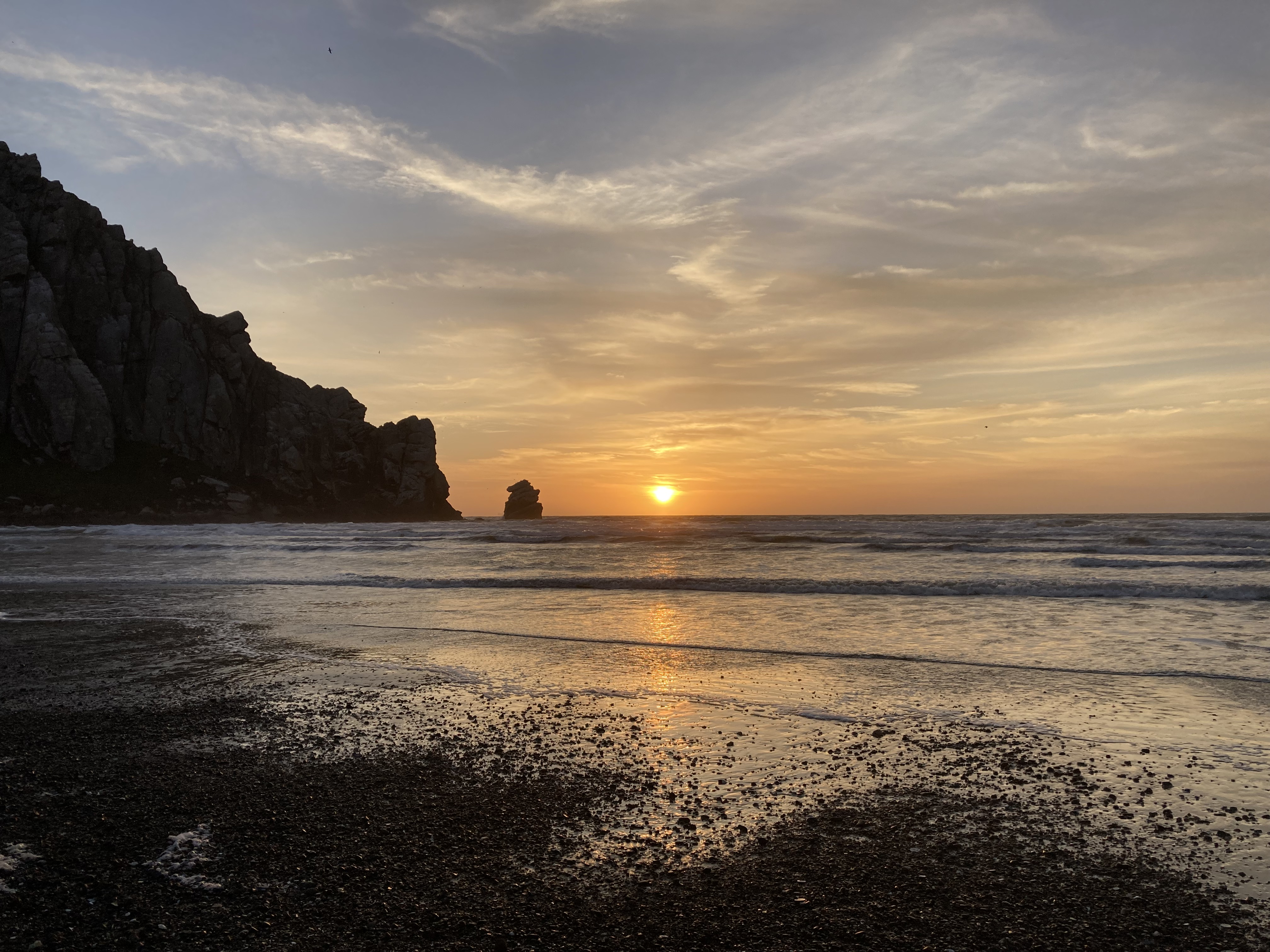
A couple of cool signs from the area:
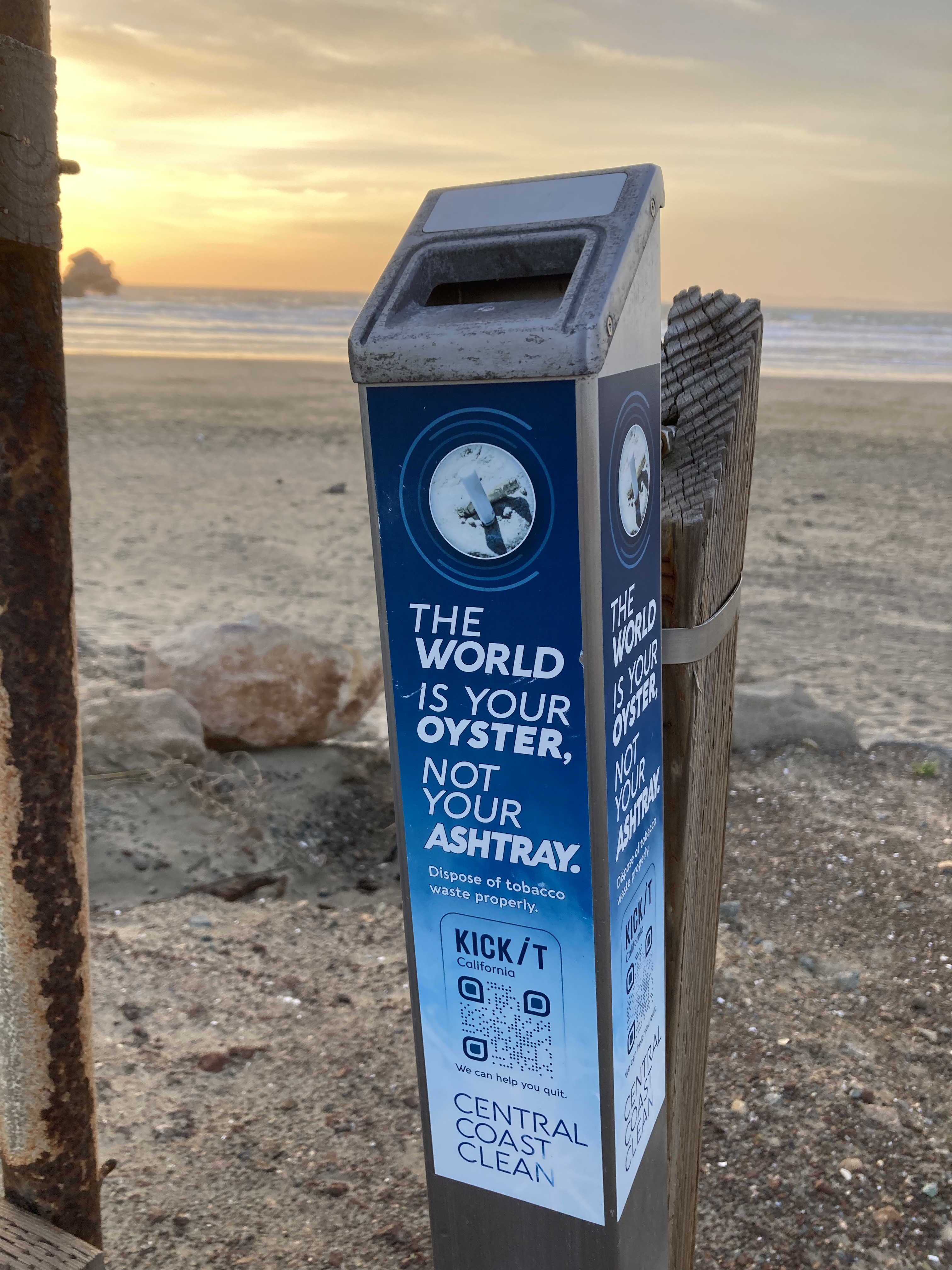
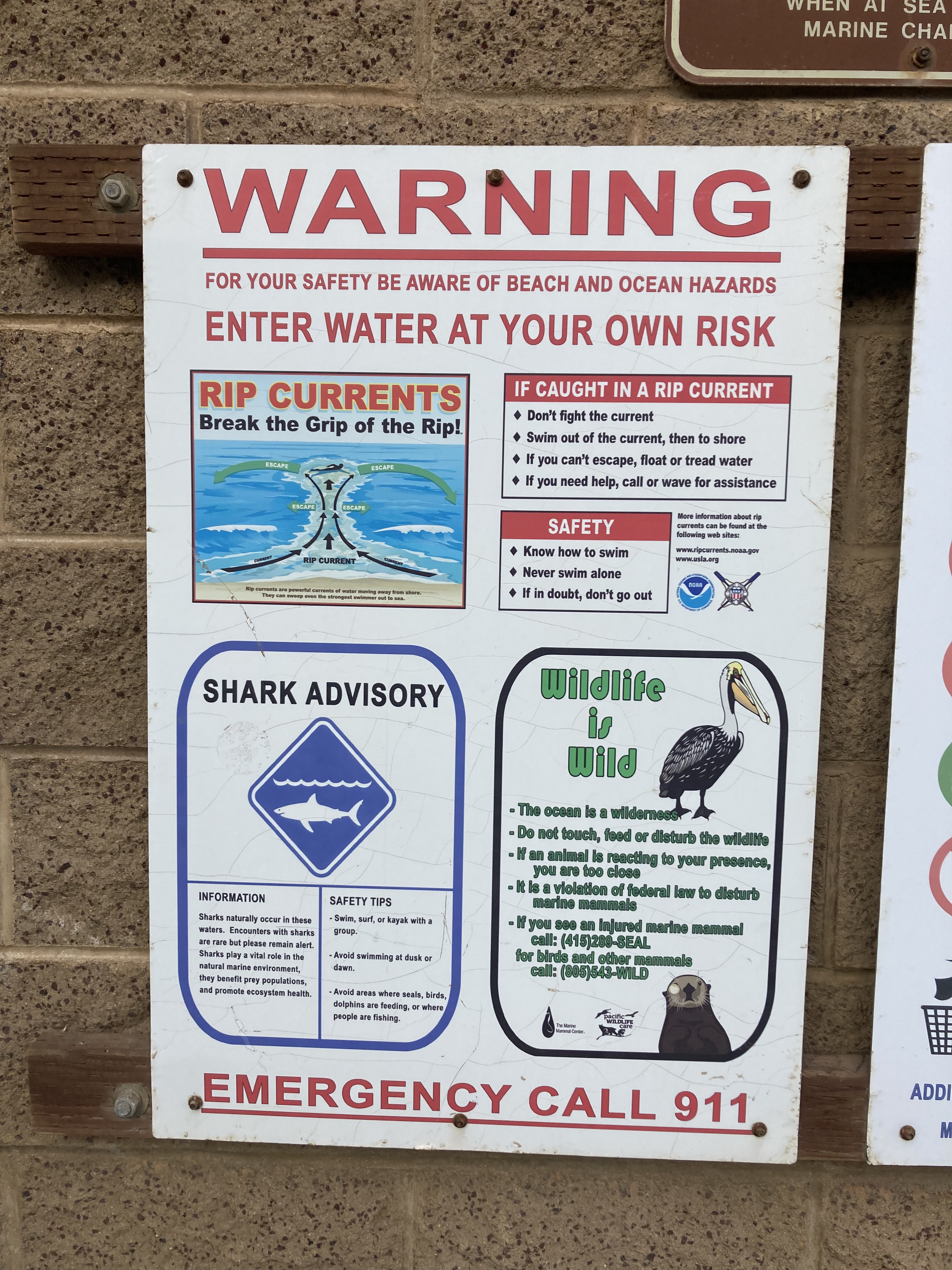
The way I remember it, there were city ordinances that did not allow you to sleep in your vehicle on public streets in Morro Bay. But reading back a screenshot from my time in the area this actually applies to all of San Luis Obispo County. Either way, I did not sleep in Morro Bay. It’s always good to check out local bylaws though.

A couple of spots that I stopped into surrounding Morro Bay were Estero Bluffs State Park (just north of Morro Bay, mostly a convenient place to park, some cools bluffs to take in) and a viewing area for Monarch Butterflies a little to the south in Los Osos. There are various sanctuaries where you can witness Monarchs during the migrations, especially from October to March, in this area. Unfortunately, there were no Monarchs when I was here. But it was worth a shot.
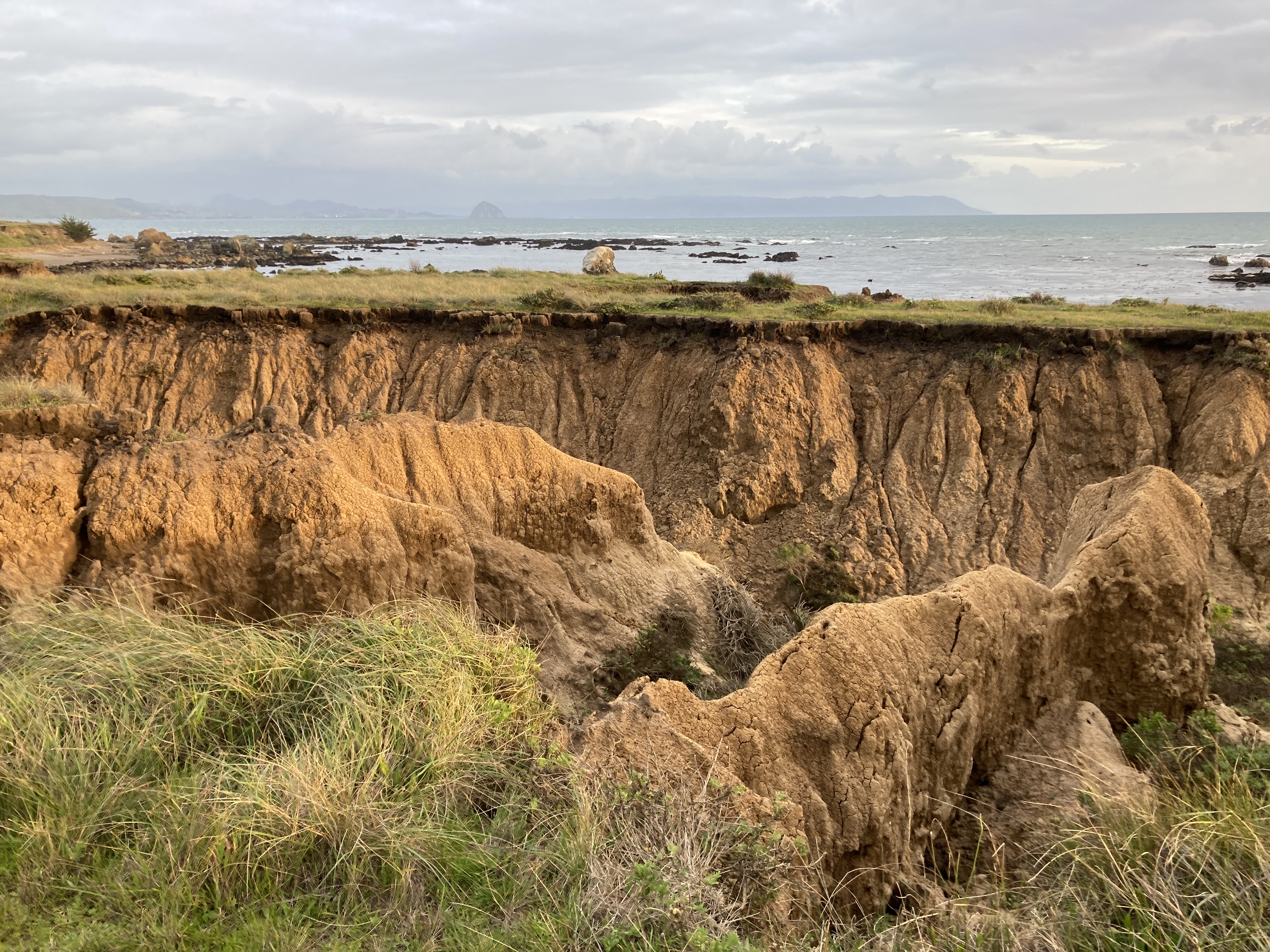
Pismo Beach

“Not LA. Not The Bay.”

Pismo Beach is a small beachtown of about 8,000 people, about a half hour south of Morro Bay. On my way there I made a few stops.

First up: Avila Beach, an unincorporated community of about 1,400 residents. I visited the pier, which is a small area with a beach, shops, and bars. I wish I’d factored in more time to chill here, as it made an impression.
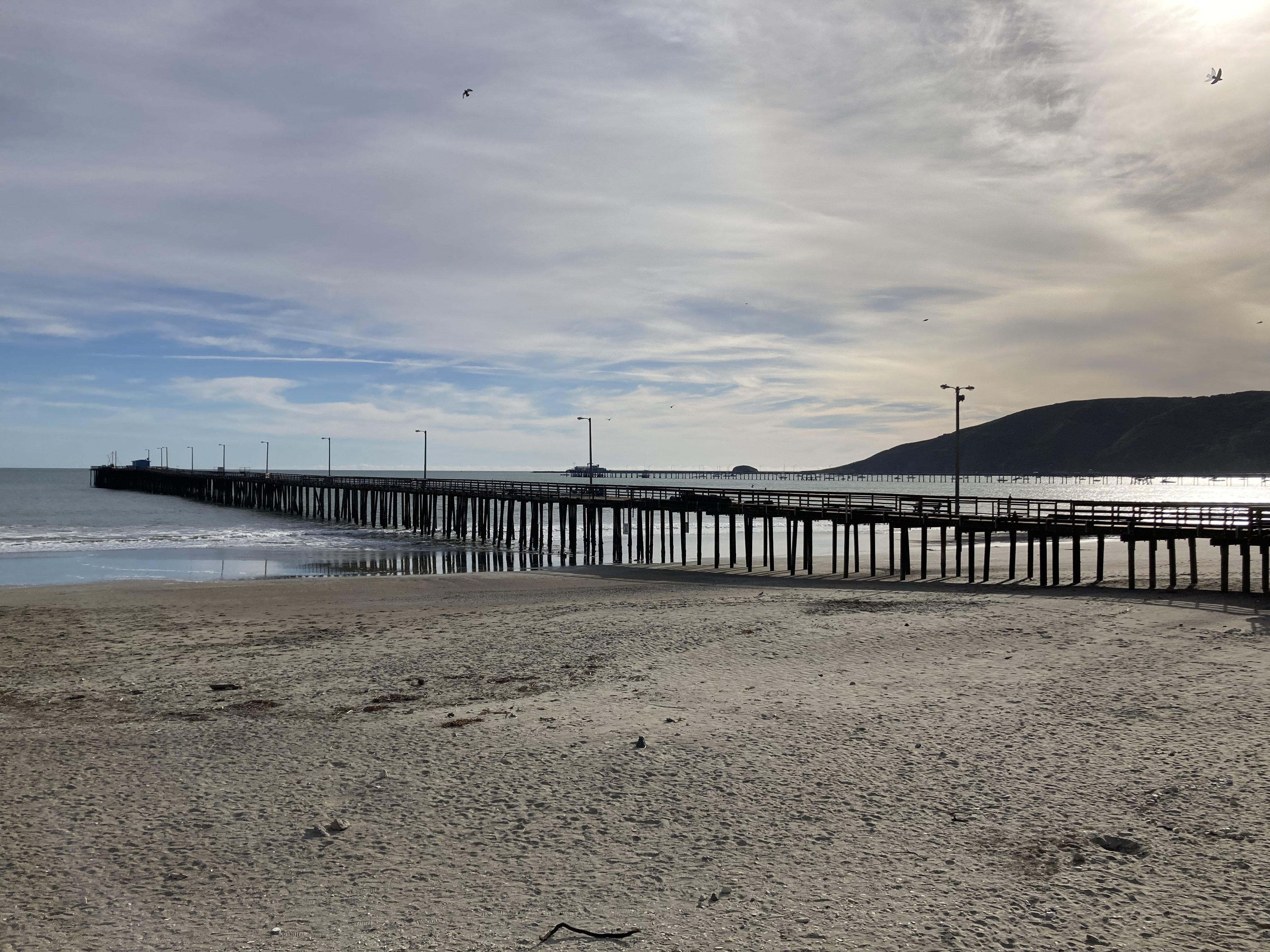
Behind me were some nice shops and bars

Close to here is Smuggler’s Cave, which has a history of smuggled alcohol during the Prohibition era. The dirt lot seemed to be a hangout spot and was crowded when I arrived. You take a trail down to an ocean overlook, then behind you is a rock arch that you can walk through to get a view of the northern coastline. Little did I know, there was also a hidden, clothing optional beach here, too, at Pirate’s Cove (probably explains the crowd).
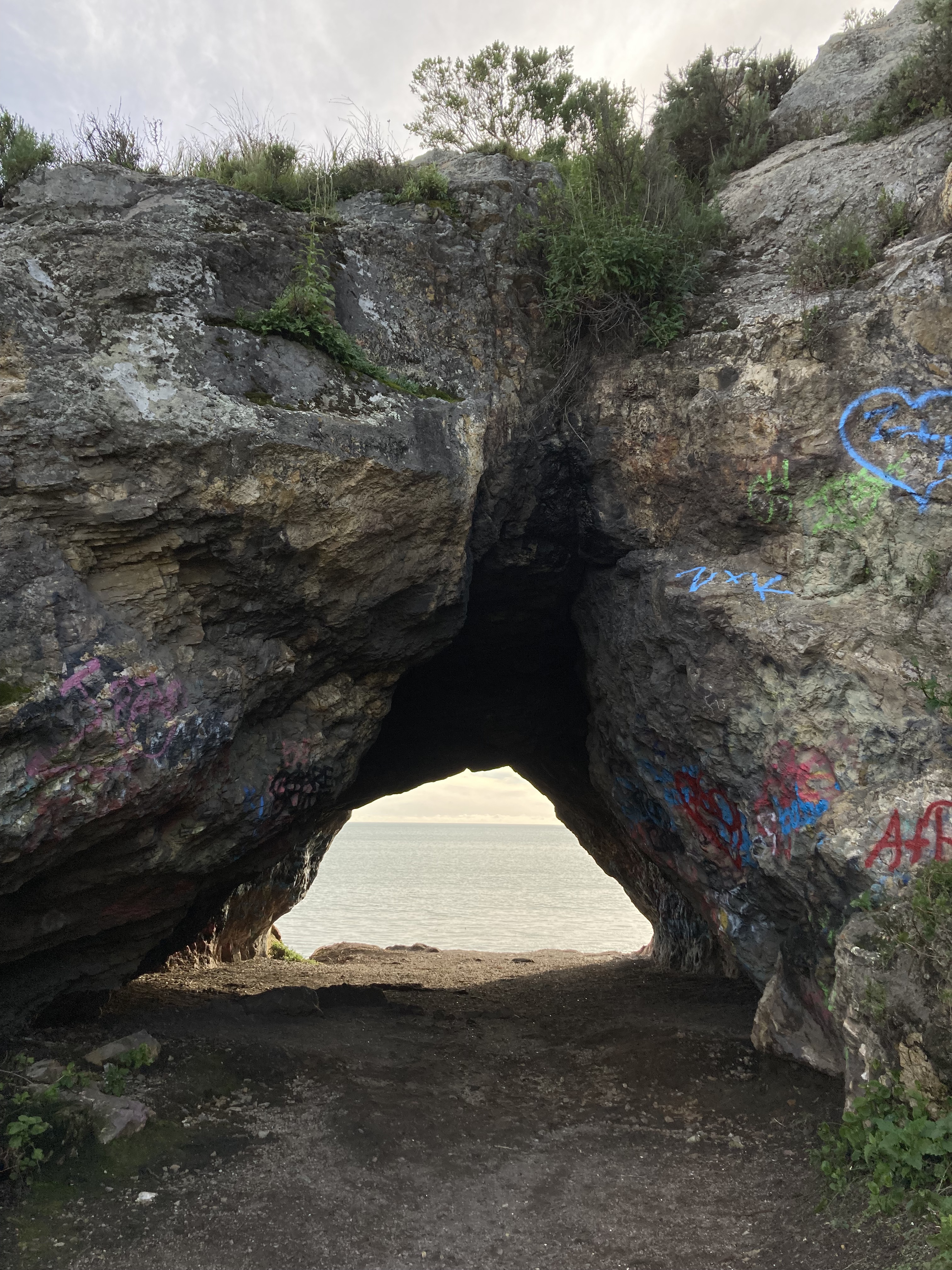
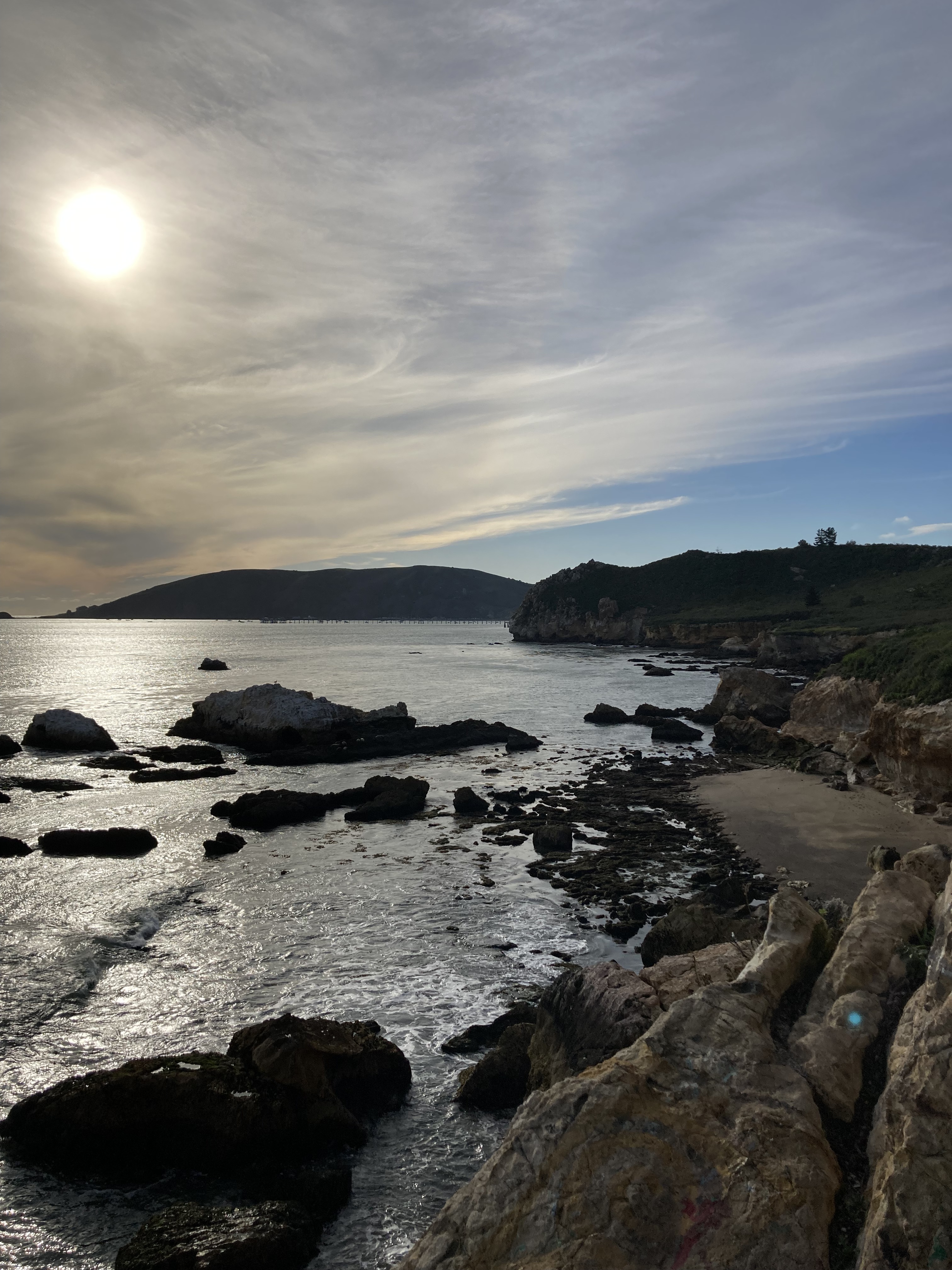
Just before Pismo Beach I stopped at Dinosaur Caves Park. I’m not sure what convinced me to go here, as it was mostly just a park – complete with playground, kids, parents, dogs. But it did have trails along the waterfront where I got more bluff views. I probably wouldn’t stop here again.
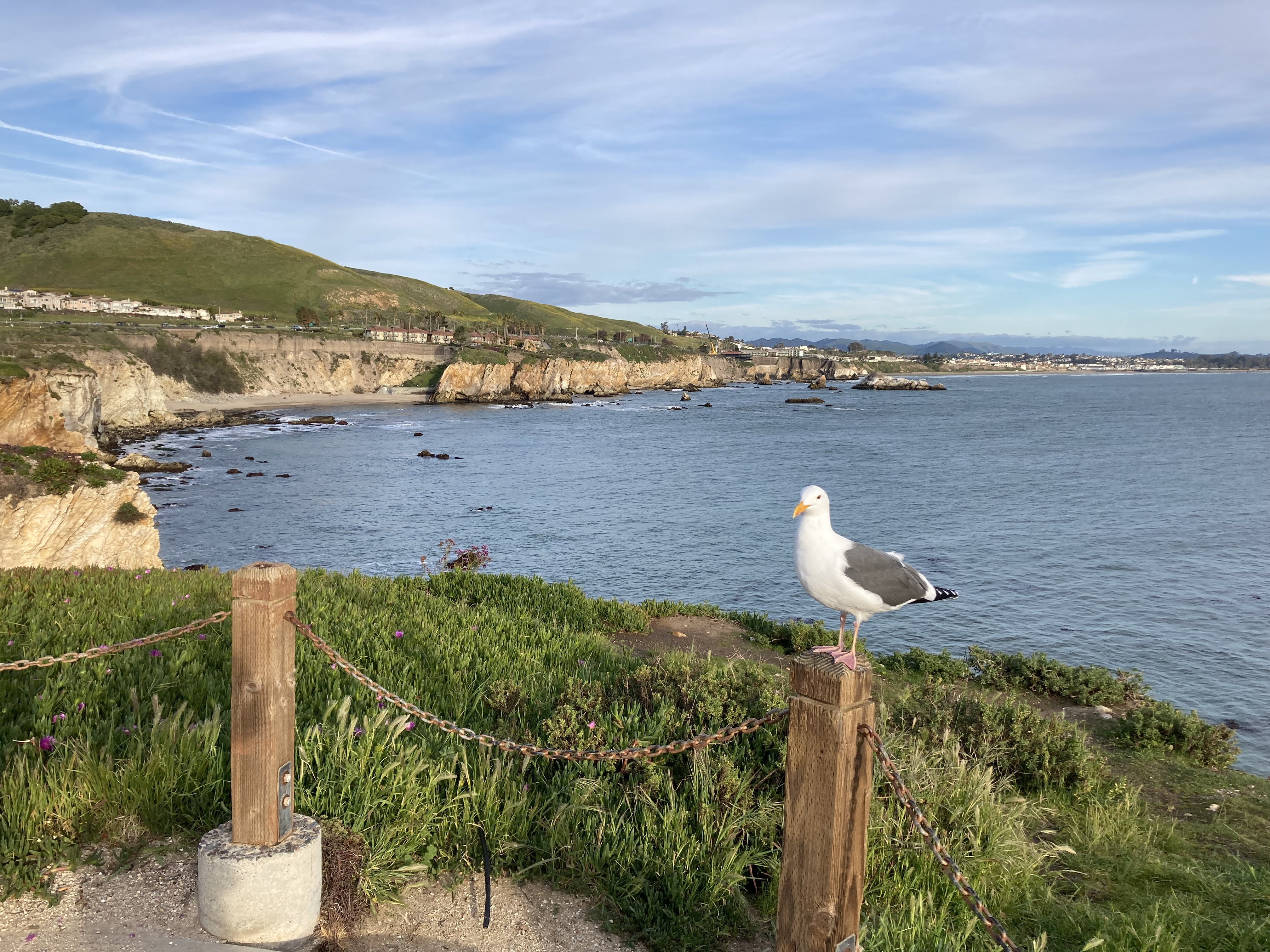
I found street parking in Pismo Beach right near the pier and downtown promenade. I walked along the pier, which juts out pretty far and was one of the bigger/ nicer piers that I’d seen. I walked along the beach. The area, the pier especially, made me think of shows and movies that take place in California – there was something quintessential, stereotypical, about it. There were also buskers, and maybe some sketchy folk, though I didn’t necessarily feel unsafe.

I then walked around Pismo Beach Promenade, which is essentially a very small street downtown with shops. I got here in the late afternoon and it seemed like some of the nicer tourist shops had already closed.
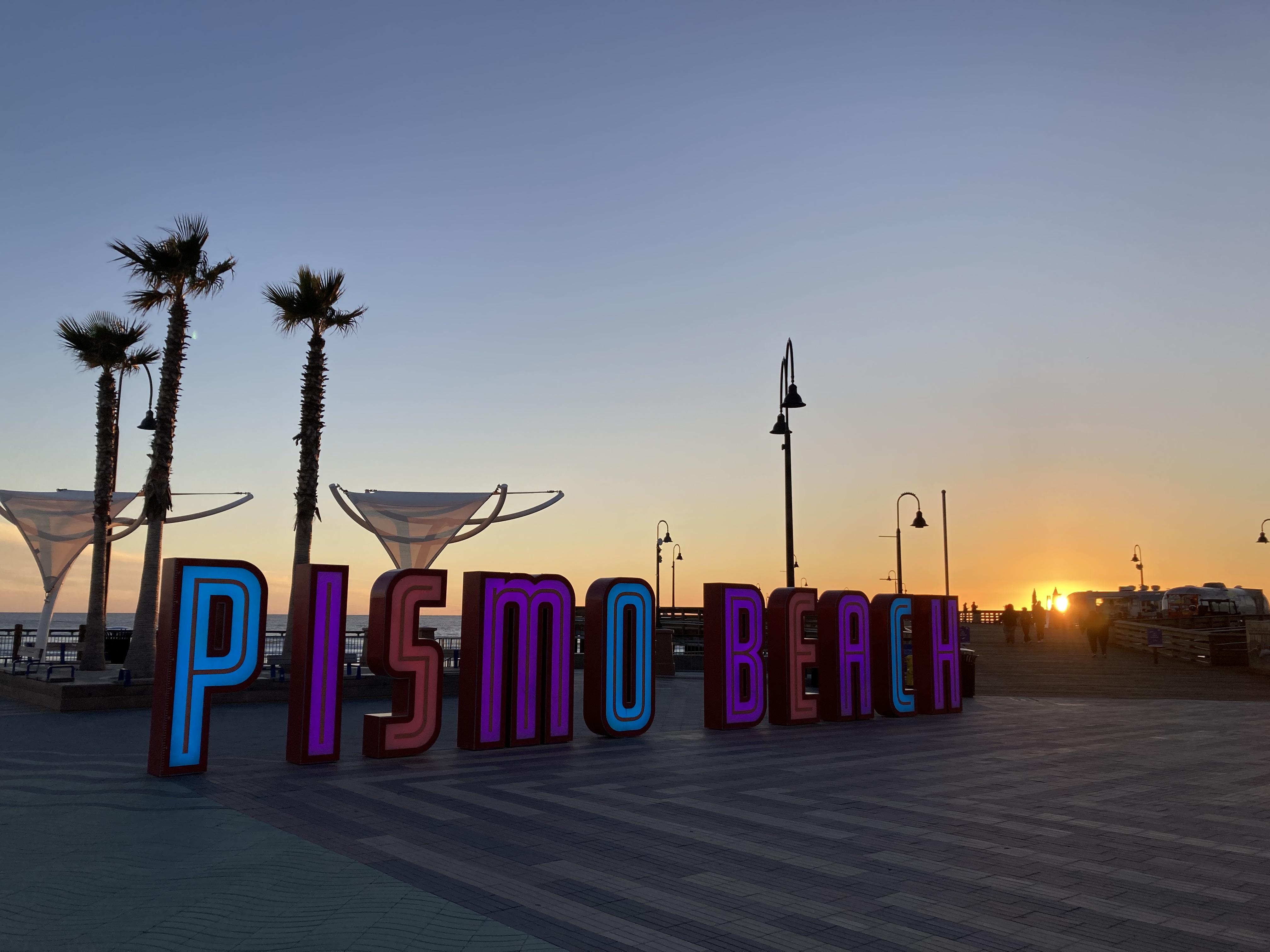
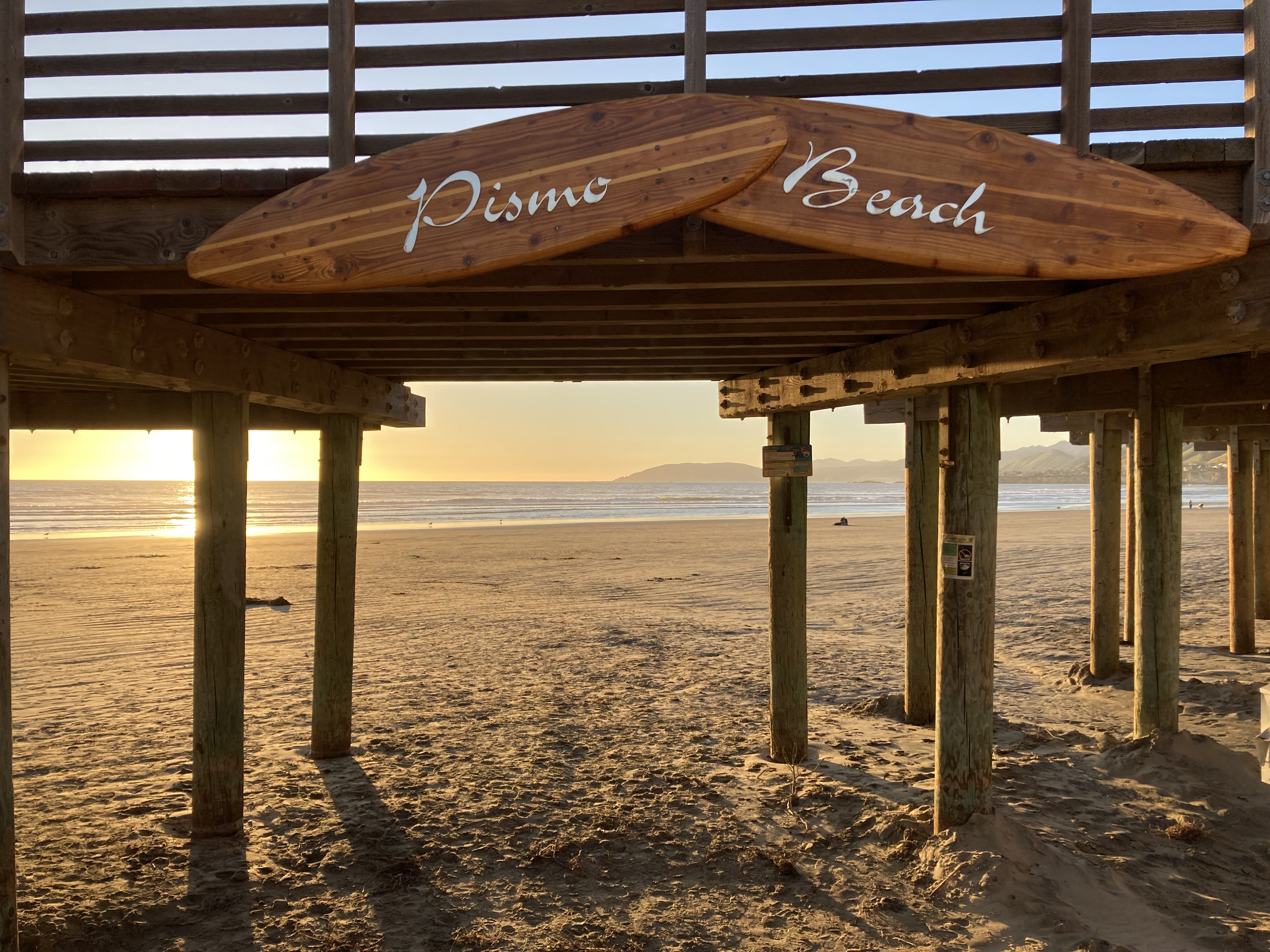
One cool thing I saw here was a sign on the side of a business that said “Not LA, Not The Bay.” It stuck with me.

I also saw some towels in a tourist shop window that laid out pretty well all of the sights you’d want to see in California – in retrospect, I can say I got to almost all of them.
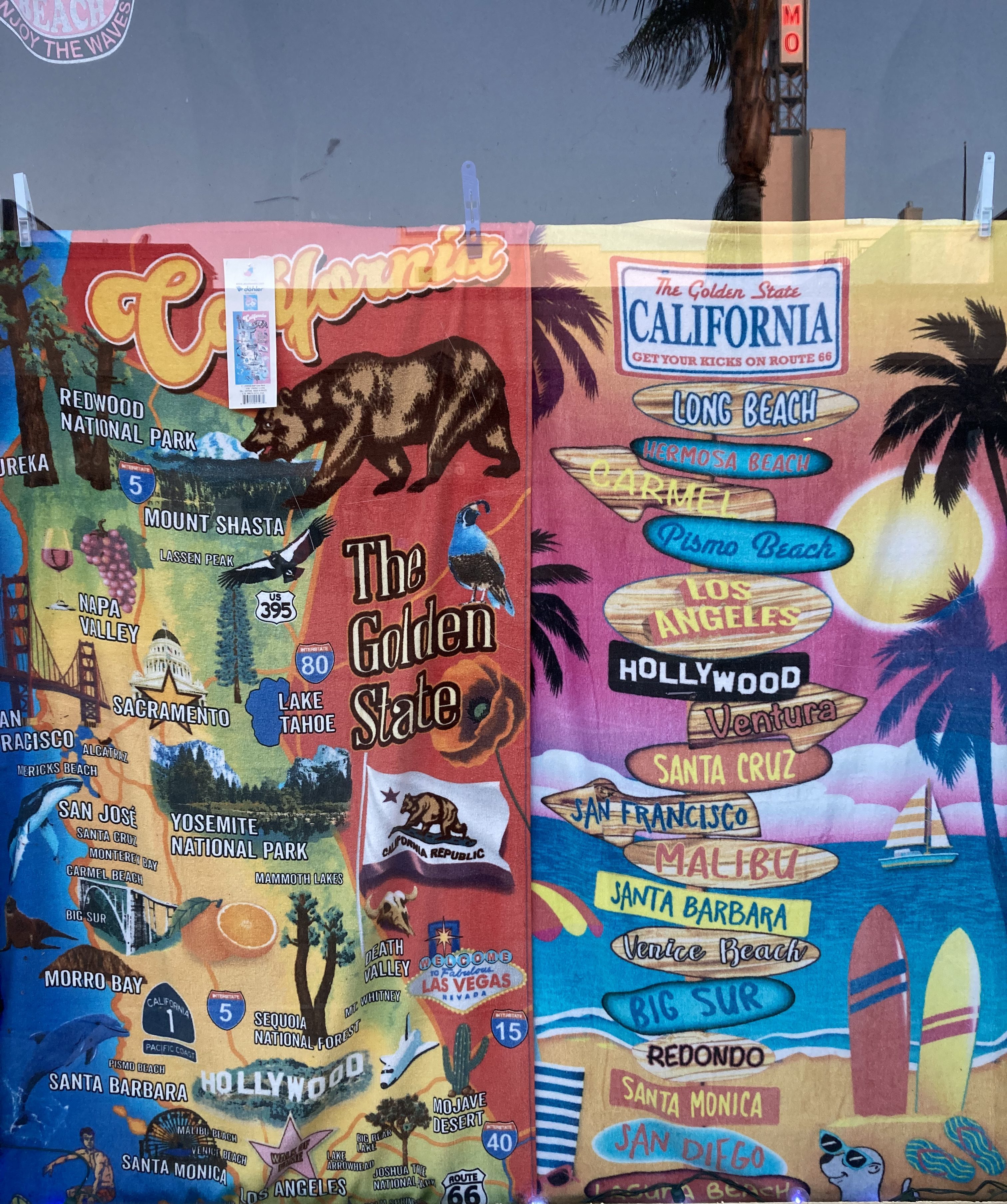
My search for an overnight spot brought me to a Walmart in Lompoc (which for some reason I only remember as a place with an air force base), about an hour south of Pismo Beach, in Santa Barbara County. I made a note that a sketchy guy was staring me down in the parking lot, which reading back is unsettling.

From here I planned my next destination and booked a couple of nights at an RV park in Santa Barbara!

The exact place where SoCal begins may be up for debate, with some saying that San Luis Obispo County (covers Ragged Point to Pismo Beach) is the transition area from central to southern California. To me, it felt like Pismo Beach was where things first started to feel like SoCal. But Santa Barbara is definitely SoCal – and that’s where I’ll start my next blog post, which will cover California’s southern coast and interior!

Other

Safety

When I got to California I was in the habit of checking crime rates for the areas I would be visiting or passing through. I found a convenient resource that provided information for the whole state, by county, and by city, including population, population density, reported crimes, rate of crimes per 1,000 people, and broke the crimes down into violent and property crimes. I mainly paid attention to the violent and property crime rates.

It is important to mention that this particular resource is from 2014 and rates have probably shifted, though I felt it was a good enough source to give me an idea.

After a while, with my own impressions of certain cities and areas in addition to the crime rates, I got a good grasp on what the numbers actually reflected. As in, my gut feeling on places would often reflect and be confirmed by the numbers. For example, a violent crime rate of 3 or 4 or less did not feel too worrisome. But I would see big cities with violent crime rates around 8 or 9, and that or higher felt like something to pay attention to. With property crime rates anything in the low 20s or less felt pretty good. The 30s felt like a middle ground where you would want to be more aware. With big cities I often saw a property crime rate around 50 (per 1,000), which felt high, and anything above that I might want to steer clear.

Here is a roundup of crime rates for some of the cities I visited in northern and central California:

LocationViolent crimes per 1,000 peopleProperty Crimes per 1,000 people
California3.9624.41
Crescent City8.8926.94
Eureka5.4081.06
Fort Bragg3.7335.33
Santa Rosa3.6822.26
Sausalito2.9432.51
San Francisco7.9553.03
Santa Cruz8.2651.54
Monterey4.0335.84
Carmel By The Sea3.3626.87
Pismo Beach3.2948.93

For comparison, Oakland’s rates were 16.85 violent and 59.43 property. Crescent City’s violent crime rate surprises me, and I wonder if that has to do with the prison or homeless population. As you can see, Eureka’s property crime rate is super high, which proves the sketchy feeling I had there correct. Santa Cruz is on par with San Francisco, which does surprise me a bit, but there was a reason I left the downtown area to park overnight. And I did get a bit of a sketchy vibe with regards to theft in Pismo Beach, so that checks out.

As well, rates can fluctuate by neighbourhood. You could have a very dangerous city centre but its suburb might be quite safe. When I was in Fort Bragg I remember looking at a crime rate map that told me crime rates were high in certain areas – but I never felt unsafe in Fort Bragg. I guess the impression you have can be subjective or depend on types of crime, and maybe by population/ density, too (a big city and small city may have similar rates, but there’s a higher occurrence in the larger population).

When it came to safety I also thought about the trade offs between sleeping in remote vs urban areas. You may feel that crime rates are higher in populated areas. But if something happens in a remote area you may not have service, or no one would hear you if you yelled out for help.

I also liked to keep hidden when pulling into an overnight area, not get out of the van if I could help it. Because I figured that a lot of people might expect a guy to be driving a cargo van, maybe a big burly guy, rather than a girl who is alone. And that stereotype could work in my favour to discourage being a target.

Finally, with shootings happening, it was good to be aware of gun laws, which were conceal carry (as opposed to open carry) for the most part in California. Another thing I don’t even think about in Canada.

Weather

Obviously, you go to California, you expect sun and warmth. But winter offers something different.

On the west coast you would also be keeping tabs on forest fires during warmer months, though this is increasingly an issue affecting wider spread areas of the continent.

Other than forest fires, I wasn’t really thinking about special weather on the west coast, but I learned pretty fast about the treachery that winter rain can create. Coastal flooding, landslides. It was new territory for me. While I did encounter some flooding and muddy areas, I didn’t have too much trouble other than campground closures and the highway though Big Sur being closed.

But it was surprising to see how big the impact was for weather that I didn’t think was that bad. I remember seeing the way water gushed down inclines – when it didn’t even seem like a hard rain to me. The land is different, and it seemed like the sandy soil could not absorb the water, and there was more erosion. Reading articles like this, where there were extensive closures, downed trees, and car accidents. I wondered if part of the issue could be that people aren’t used to the conditions and how to handle them, and also when extreme conditions aren’t common there may not be the infrastructure to deal with it (like snow removal or salting the roads in the mountains). I didn’t even think California got snow (my bad). But this is something I’ve noticed even with growing up in Newfoundland and then living in Ontario – Ontario is not as well equipped to deal with heavy snowfall and people are wowed by conditions that Newfoundlanders don’t think are that bad (I grew up with snow accumulations up to my roof).

It was also just cool to watch the big winter waves.
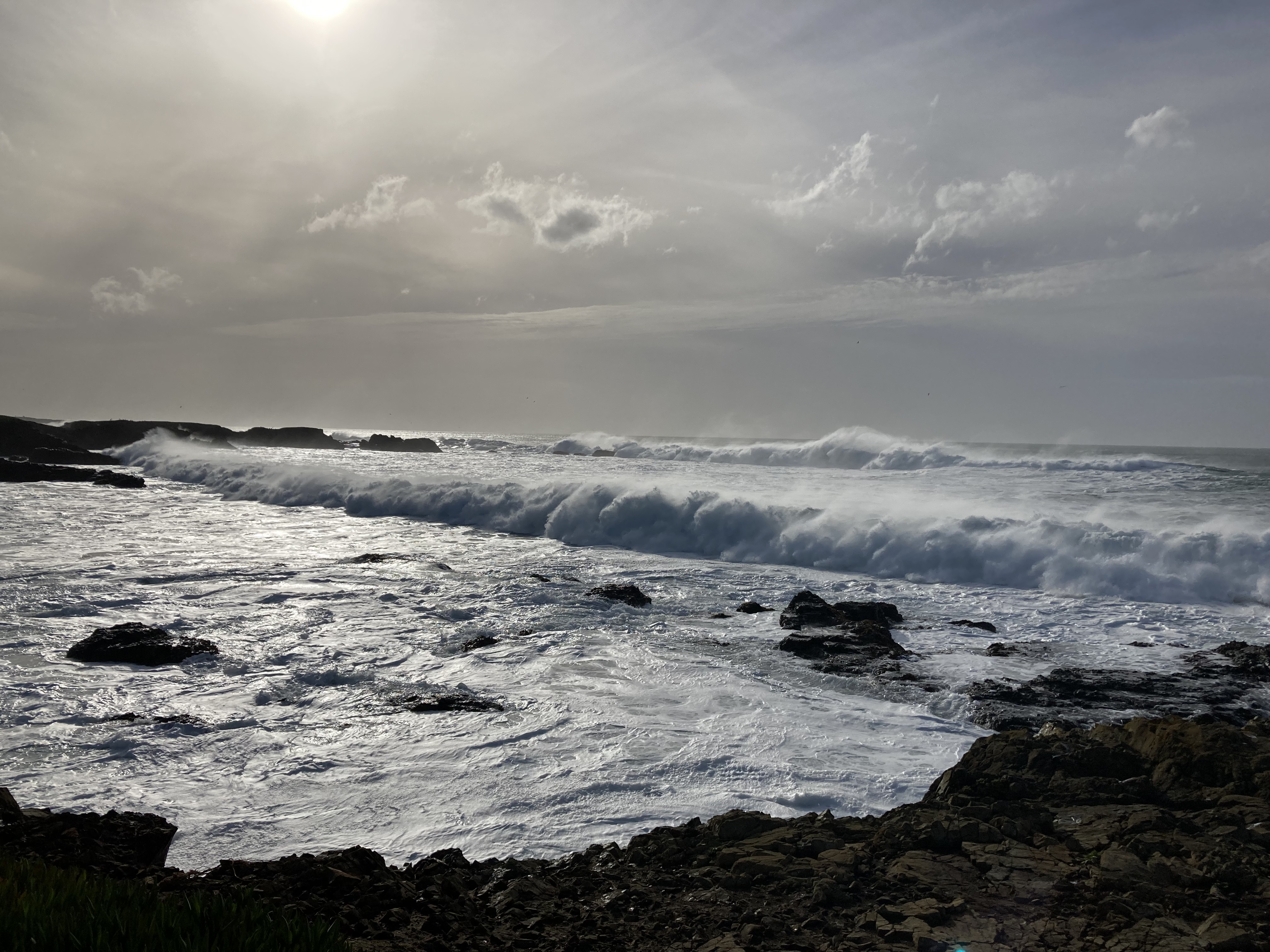
The Pacific Ocean feels different from the Atlantic somehow.

Best Sunsets
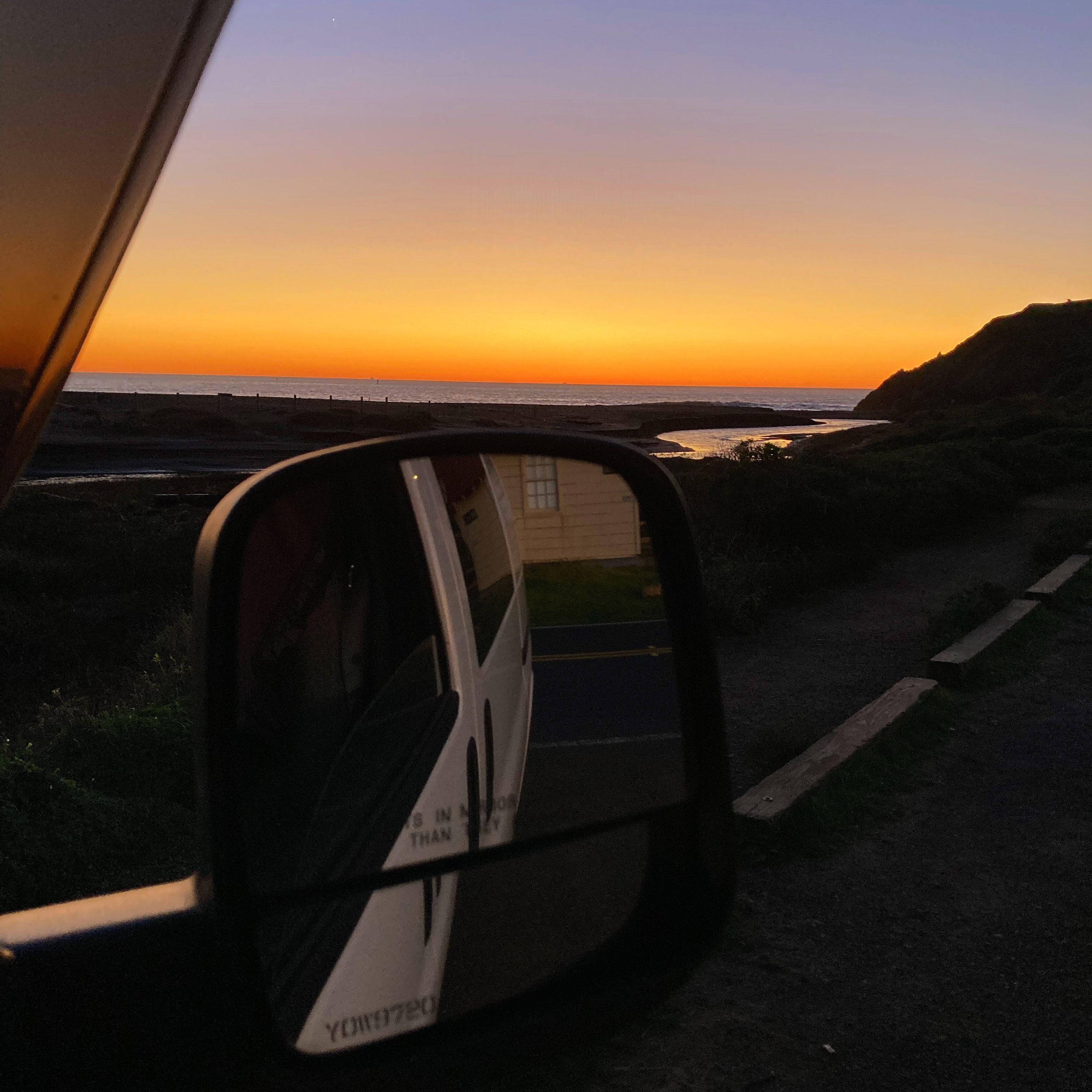
*And an honourary sunrise.

That’s it for California’s northern and central coast! (Did I miss anything?)

Till next time,

Kat

ChronicXRoads on Instagram

Copyright © 2026 Chronic X-Roads. All Rights Reserved.
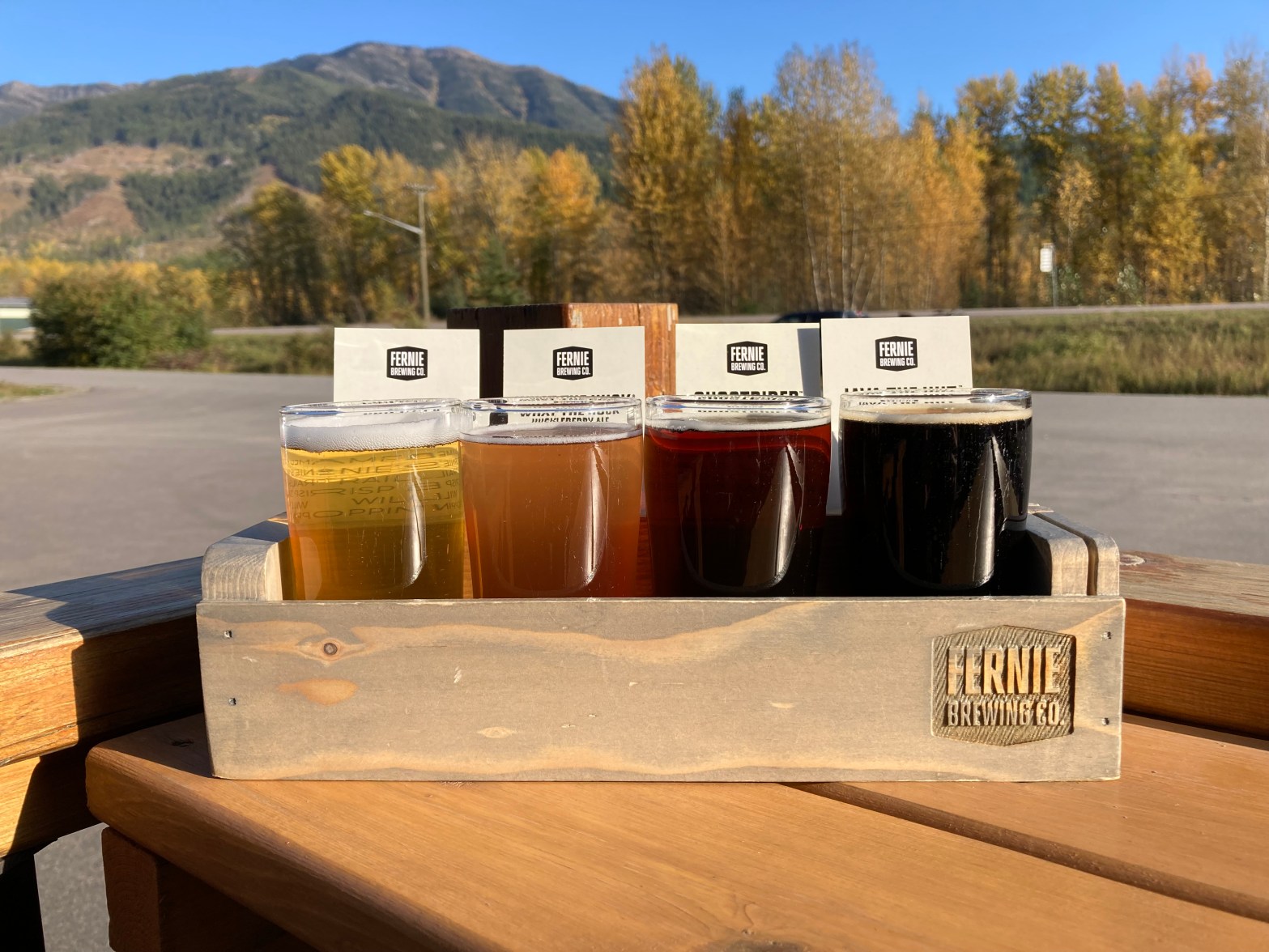
BC Beer

I tackled the British Columbia beer scene in a much different way than the Alberta scene.

Because I was in one place (Calgary) for an extended period of time prior to branching out from the city, I did my homework. I looked into the best breweries in town. I sourced impressions from my local friends.

But when it came to BC, where I ended up was more a product of where I was – convenience, circumstance, or prior recommendation.

This would be the process for much of my travels to come. If I was passing through a town, I’d do a quick google search on breweries in the area. I might only look at google reviews or glance at the meu, or maybe a town only had one brewery (if any). Some cities had gone through brewery booms – Calgary, Vancouver. Other places either weren’t interested or weren’t on the same level.

Some places are known for beer and do beer well (like Portland and Bend, Oregon, aka Beervana). Other places are known for other things. And while it seems like BC is known to have some of the best breweries in Canada (they seem to win a lot of beer awards) – where I went this time was more by chance.

Since being on the road full time and my extensive travels through BC, my passion for beer has deepened. I’m more of a beer nerd now than I was back then. I’ve joined beer reddit groups. I continue to sample as many new beers and beer styles as I can in my pursuit of getting to know them better.

That is to say, I wasn’t as intentional or informed as I might be now when visiting breweries in BC back then. Although that isn’t to say that I didn’t appreciate what I did experience or that I didn’t encounter some good finds. And while researching for my Alberta beer post I did find a resource that ranked beer in southwest BC, which I’ll be touching on in this post and referencing for future visits I’m sure!

But in the spirit of those carefree explorations – this will be a lighter post that documents what I had the pleasure of indulging in, with some resources and beer facts mixed in. And perhaps some retrospective wisdom/ research for good measure.

Side note: While in Alberta there was usually some BC beer available at bottle shops. Memory does not serve, but I would assume BC would also have Alberta beer available in cans. Which is nice, since I rarely see craft beer from western Canada where I am in Ontario.

Table of Contents

  1. Table of Contents
  2. Breweries
    1. Fernie
    2. Kelowna
    3. Squamish
    4. Whistler
    5. Tofino
    6. Victoria
    7. Port Moody
    8. Vancouver
  3. Cans Along The Way
  4. Mead
  5. Wine
  6. Resources
  7. For The Future
  8. Fin

Breweries

Fernie

What is better than driving through mountains, maybe tackling a hike, then stopping to enjoy the scenery and relax with good beer?

Fernie Brewing Co. is located in southeastern BC along Crowsnest Pass, near the Alberta border. Lucky for me, it was on my way from Waterton to Cranbrook.

This brewery is a definite stand out for me. Their What The Huck huckleberry ale is memorable and unique, and I enjoyed it so much that I would pick up packs of the cans while on the road.

It was October when I visited and they had their seasonals on tap – which I’m always a sucker for. So my flight consisted of their Project 9 Pilsner, What The Huck Huckleberry Ale, Ghostrider Pumpkin Brown Ale, and Java The Hut Coffee Milk Stout.

I wish I could remember more about my specific impressions of these beers at the time. All I’ve got is my general impression of “this is good stuff” and what a gorgeous day in the mountains it was, as well as how I can’t wait to go back.

But I think that’s the thing about sampling – it’s good to sample multiple times on different occasions to see if your impressions change, and maybe you and your palette has changed, and what stands the test of time!

Kelowna

On my way from Alberta, through the BC interior, I suppose beer was not front of mind. I was on a mission to get through the mountains before the winter conditions got too bad, and I was passing through small towns – not that there aren’t small town breweries to be enjoyed, but I think I just didn’t dig deep into options.

From Golden, to Revelstoke, Salmon Arm, Kamloops, and Vernon – I just sailed on through (though I do remember looking into breweries in Vernon but not being sold on any).

Once I got to Lake Country (just north of Kelowna), in the Okanagan Valley, and slowed down while staying with friends, I finally got out to a couple of local breweries.

It wasn’t my typical taste testing, as it was a night out with friends. I think when I’m chilling solo on the road I am more focused on my inner bubble – paying more attention to the beer, doing research on my phone, taking in my surroundings. My attention with company gets divided somewhat.

We drove in to Kelowna and went to Red Bird Brewing first. It was a snowy night. There was live music inside and the place was packed, but we managed to snag a booth outside next to a fire pit. They also gave us blankets to keep us warm. We could hear the band playing from outside, too. They had non-alcoholic beer for my friends (one was DD and the other no longer drinks). I’m not sure why I didn’t get a flight here – they have flights on their menu. Part of me wonders if they weren’t offering them outdoors because of the band playing. I don’t have a positive or negative memory of the beer, so take that as you will that it didn’t leave a lasting impression. But since that’s the case I would probably go back and give it another shot. It was a pretty big venue.

Next Up: Bad Tattoo Brewing Company (now closed). A smaller joint with an open kitchen layout. I’m a sucker for tattoo artistry. And based on the photo of my flight it looks like they had guest taps. Again – no memorable impression – but from the photo a french toast porter sounds pretty good.

I did a few wine tastings in the valley (more on those below), but mostly bee-lined it to Vancouver – through the rest of the interior, Abbotsford, a quick stop through Vancouver, then up the Sea To Sky Highway.

Squamish

Oh Squamish, how lovely you are.

I stopped in for a flight at Howe Sound Brewing, located in downtown Squamish – with its trendy shops that look up at the face of Stawamus Chief, at the tip of Howe Sound. The brewery is located in the Howe Sound Inn and has a spacious rustic feel, wood panels and large windows. It was a warm, lived in atmosphere that I enjoyed.

Once again, I am hazy (pun intended) on the impression of the beer specifically. But looking through my photos I can see a lot of variety on their tap menu that would have interested me – a nut brown, cherry porter, pumpkineater imperial ale, abbey dubbel, and hefeweizen. They also seem to have an extensive history in the BC craft beer world. Would go back!

Whistler

As I trekked further north on the Sea to Sky I made a stop at Whistler Brewing Co. It had been an extra cold day as I hiked the train wreck trail and explored the ski village and Olympic Park. So it was nice to warm by buns and relax with a flight. This was a smaller establishment and felt like a local hangout.

I have a decently good impression of this brewery. I took a case of their honey lager with me (I like how breweries in the mountains have various honey lagers with bears on the cans – which are also tasty). And I remember the Chestnut Ale (though perhaps a bit sweet/ heavy on the flavour).

Tofino

Back down the Sea to Sky, a ferry from Horseshoe Bay to Nanaimo, and the drive through Port Alberni to the Pacific Rim later – and I got to Tofino Brewing Company.

Something I really love in a brewery is when they are infused with elements of their locale. You can tell that Tofino Brewing is part of a community, steeped in surfer ethos, and in touch with the environment. Take their Kelp Stout for example. Another standout to me was the Spruce Tree Ale.

It was packed when I arrived, and while there wasn’t an overwhelming number of beers that I wanted to try, there were just enough, and they were good – the Kelp Stout (didn’t taste like kelp), Spruce Tree Ale (lovely!), a coffee porter (very good), and the Tofino Lager (tasted like beer – in the good, classic way – a beer’s beer). You know I liked a place when I make a purchase from their merch/bottle shop, and I brought home a 4oz glass as a souvenir and a mix pack of tall boys. 

Victoria

I didn’t really look into breweries to visit on my travels from Tofino to Victoria – not in Port Alberni, not in Nanaimo. Although I did stop in to a liquor store to try and get my hands on this Nanaimo Bar Porter by Vancouver Island Brewing while in Nanaimo (naturally). Sadly, they didn’t have it (blasphemy). Note: Vancouver Island Brewing, which used to be located in Vancouver, has since closed their taproom and brewery and only outsource their beer production. Also note: Muskoka Brewery, on the edge of Algonquin in Ontario, used to make a Nanaimo Bar Porter.

The brewery that I decided to test out in Victoria was Phillip’s Brewing & Malting Co. – “inspiration through fermentation”. I enjoyed it, and they played decent music.

They gave me a print out with the name of the beers I chose for my flight, including a detailed description of each beer – which I took a photo of – so I actually have a record of what I indulged in. I found their menu to be IPA/ pale ale and sour heavy, but they have a decently large menu of beers on tap, so I found some that satisfied and to my recollection were good. The atmosphere was fun and laid back.

Port Moody

A friend of mine recommended Port Moody so after I got back to the mainland I decided to pay it a visit. I was only passing through, and being on the road I tended to limit my breweries per day to one – since I was always my own designated driver. But having learned that Port Moody has its own Brewers Row / the Port Moody Ale Trail, I certainly would visit again.

I considered visiting Moody Ales, but it seemed loud and crowded at the time, so I opted for Fraser Fermentation – a little further off the beaten path, and ending up being a more chill vibe (other than me almost getting hit by a car on the walk there). They had a bunch of unique experimental brews on their menu, which I tend to appreciate.

My curiosity was particularly peaked with their Gin & Juice Hefeweizen. I was pleased to see they had a Pumpkin Spice Ale. And they just seemed to have a lot of styles that I usually enjoy: a farmhouse ale, brown ale, Belgian dubbel, dark lager, oatmeal stout, some sort of champagne beer, and even a mead! Along with a cerveza and rosehip hibiscus wheat.

I’ve learned that beer can look amazing on paper and end up disappointing you – you really never know until you taste it. But if memory serves I do believe this spot earned a favourable impression.

Next time I go to Port Moody I’ll be heading to Moody Ales and the other breweries on Brewers Row.

Vancouver

Granville Island Brewing earned its place as one of my favourites. The location is stunning and fun, they had exciting seasonals, it was a lovely rustic setting, and the beer was good. I went with the Lions Winter Ale, Sunshine Coast Hefeweizen, Hexenbier Marzen, and Winter Ale Chocolate Orange. Like – a chocolate orange beer? Come on! I wish I could describe in more detail the taste of the beer, but I didn’t make any notes. I took home a tasting glass as a souvenir. And I look forward to going back.

Following a day of exploring downtown Vancouver, I ended my day at Steamworks Brew Pub, on the edge of Gastown, across from the supposedly haunted Waterfront Train Station. My flight included a Kolsch, Pilsner, Lager, Red Ale, and Imperial Breakfast Stout (pretty standard). It was busy in there and there were dimmed lights to create a vibe. I do like my taproom experiences to be a bit more chill, and I don’t think I have the most favourable memory of the beer itself. It’s in a central location, overlooking the Vancouver Harbour, and it has more of a restaurant with beer feel. A quick look at their website confirms that their brewery taproom is in Burnaby, while this location is a steam-powered brew pub, which apparently is known for its 10 Tap Taster paddle.

Cans Along The Way

From the pictured beer above, Fernie’s What The Huck and Granville’s Lions Winter Ale are my top picks, followed by Whistler’s Honey Lager.

Bad Tattoo’s Cerveza Negra was a medium-dark Mexican-inspired lager, which was interesting to try (the can suggested adding a twist of lime).

I don’t remember the taste or impression of the Wolf Brewing (Nanaimo) Black & Tan, but it’s described as a “traditional British blend of dark and light”, featuring both their Golden Honey Ale and Dark Malt Porter. After doing some digging, I found that a “black and tan” is made by adding a pale ale (or lager) to a glass first, followed by slowly pouring a dark beer (stout or porter) over an inverted spoon, resulting in two separate layers of beer. But the name Black and Tan has historically offensive roots in Ireland – which is why Half and Half is the preferred name for the Irish and one may want to think about what they call this drink depending on what company you’re in.

I also don’t remember the taste or impression of the Dageraad Brewing Burnabarian Belgian-Style Table Beer – but according to their site this is a highly awarded beer. I also tend to love Belgian beer, so I’m inclined to say this was a good one. Dageraad Brewing is located in Burnaby, describes themselves as an artisan brewery, and specializes in Belgian beer culture.

Mead

Yeah I know this is a beer blog, but I’m talking wine in this one too, so what’s another addition?

I have never in my life encountered mead as many times as I did in BC. And what a treat. Essentially, mead is fermented honey and water. But there can be added ingredients, such as fruit, spices, grains, hops.

I encountered mead at a farmer’s market in Cranbrook. I found mead at Planet Bee in Vernon. And there was mead on the menu at Fraser’s Fermentation in Port Moody.

I have come across mead in Ontario. And I think it’s becoming more popular. I love to see it. I love anything bees contribute to.

Fun fact: the term Honeymoon comes from the Norse tradition of consuming mead for one full moon cycle following marriage.

Wine

You simply cannot talk about taste testing beverages when you’re in one of the best wine countries in the world without talking about wine tasting.

While I do prefer beer to wine, I do enjoy the occasional wine. And as someone who has come to enjoy sampling beer and paying attention to the flavours and ingredients (and brewing processes) – wine tastings can feel quite similar. Except you usually have a sommelier or the like guiding you through each sample, and it feels more fancy. If drink of choice informs personality, I, like beer, am definitely more laid back. Dank even. Though jury’s out on my approachability.

I visited my first winery in BC near Kamloops – Monte Creek in the Thompson Valley region. It was beautiful there. I picked up their blueberry wine. This was also around the time I’d picked up wine gummies as a treat.

Next, while staying with my friend in Lake Country, she brought me on a little tour of three local wineries. This included Gray Monk (classy), Arrowleaf (small, chill, simple, funny server), and Ex Nihilo (nice, accommodating, resident dog). I absolutely still nerded out. I think it’s fun to learn about these things and get a feel for what you like – as well as learn about the land and the people in the place where the wine comes from.

Since I passed through Kelowna and the surrounding wine country quite quickly, I did not take the time to explore more of what is on offer. But in my research I’ve made note of a few more wineries that seem revered. These include Quail’s Gate winery, Mission Hill winery (Canada’s winery of the year on many occasions), The Hatch winery (looks like a truly unique and creative experience), and Frind winery (located on a beach!).

Also, south of Kelowna, approaching Penticton, is Naramata Bench, a scenic area with many acclaimed wineries.

The best wine I’ve ever had.

In my short time in Osoyoos I chose to visit Nk’Mip Cellars Winery. Nk’Mip is the first indigenous owned winery in North America, located in the hottest and driest area of Canada. And it was so so lovely! My sommelier was kind, informative, and generous. He gave me an extra sample – and it was so good and so up my alley that I had to take a bottle with me! I thought I wouldn’t like a dry wine, but it was super refreshing, and would be lovely chilled on a hot day. It was the 2021 Mer’r’iym White Meritage, considered a white Bordeaux. My host gave me a lot of wine facts, which I appreciated. I don’t think my palette is super distinguished (yet), but I enjoyed learning and sampling.

I’d like to visit Moon Curser Vineyards next time I’m in Osoyoos.

The Okanagan is one of the best places for wine in Canada, so it would be a disservice to pass through and not indulge in something the area is known for (in my opinion).

BC (alongside Ontario) is of course one of the best wine producers in Canada, with nine official wine regions to explore.

Resources

I discovered the BC Ale Trail, an appropriate companion, response, mirror, to Alberta’s Ale Trail. If you need a place to start, or just want to know what’s available and the areas that have a concentration of breweries to explore – this is a good guide. They tout 220+ breweries over 22 ale trails – that’s a lot! And it’s organized by location so you can search your destination. I kind of wish they just listed the breweries in each ale trail – instead they have things divided up into separate lists, including various other activities available in an area.

If you’re looking for the best beer, judged by professionals – you can always consult the Canadian Brewing Awards results, along with the BC Beer Awards. For example, Camp Beer Co. in Langley won the 2025 Brewery of the Year in the BC Beer Awards – so I’d definitely look them up (and I did – I’ll say it again, you never know if you’ll like it unless you taste it, though my first impression is that their menu is too IPA/Pale/Sour heavy for me). But perusing these award lists is a place to start!

Then of course you can crowd source impressions from Reddit.

And finally – while combing through the Calgary Brew Review website that I mentioned in my Alberta Beer post (sadly the site has since expired) – I found mention of a resource for BC, namely Justin McElroy’s Southwest BC ranking, which includes 114 breweries in what I would essentially call the greater Vancouver area (a little past it, doesn’t include the interior, does include Abbotsford and Victoria). The rankings are divided into tiers: mediocre (part 1, 114-100, +intro), adequate (part 2, 99-69), average (part 3, 68-51), good (part 4, 50-31), great (part 5, 30-11), and Top 10 (the winner? Brassneck).

The above southwest BC breweries ranking is great for scouting new places to check out. But it’s also interesting to see how my impressions stack up against theirs. Of course there is subjectivity involved, and my experience level in beer tasting may not yet be at their calibre (working on it!). Dageraad was in their top 10, which was nice to see, along with 33 Acres (specifically 33B/EXP – the experimental location – 33A was ranked as adequate), Strange Fellows, and Yellow Dog. In the great section was Phillips, and Persephone – which I’ve not tried but sounds intriguing. In the good tier was Howe Sound and Moody Ales. In the average tier was Steamworks (would agree) and Fraser Mills/ Fraser Fermentation – which made me realize that I may value unique and experimental beers more than the average person, and this could sway my perception of a place. Also, I had valued the quiet here when I visited, while those doing the rankings were taking various categories for scoring under consideration.

As I peruse their lower rankings, I become a little nervous that I had liked what they consider to be bad beer… In the adequate tier is Spinnaker’s, overlooking the water in Victoria, which is said to have inconsistent quality, but rich history (Canada’s first brewpub) – for which I would still consider going. Also in the adequate list is Whistler Brewing (sad!) and Vancouver Island Brewing. Interesting that the beer one may be familiar with based on wide can distribution may also be the brewery that is ranked lower on the list.

Which brings us to the final, worst, mediocre tier. This section featured Yaletown – which I passed by while exploring Vancouver. But my heart hurt to see that it also listed Granville Island. Did I fall for a tourist trap? I genuinely enjoyed my experience there. But as the ranking expounds – they may be one of BC’s oldest breweries, but they are owned by a subsidiary of Molson. I suppose I can take solace (read: comfort my ego) in the fact that I partook in a mainstay and slice of history – as Granville Island Brewing was Canada’s first microbrewery, opening in 1984. Plus, shouldn’t one experience it all, in order to gain perspective? I think I would like to visit the breweries with history, even if they don’t rank quite as high as newer craft breweries.

For The Future

For my Alberta beer post I really dug in to the research and looked at what breweries had good reputations and which put out the styles of beer I favour. But it’s extremely time-consuming to pour into that rabbit hole when there are hundreds of breweries around. So I’m noting here the breweries that I’ve already made note of, or that stood out in the research I’ve done (maybe taking a closer look at the southwest BC ranking’s top 10). And in the future, when passing through areas, I’ll look at my options then, consulting the above resources as I need them, or maybe even wandering into new places by happy accident – sometimes it’s nice to go in blind.

So here’s a list so far of BC breweries I’d like to visit in the future:

  • Jackknife Brewing (punk/metal?!) in Kelowna (they have a dark lithuanian farmhouse lager – I like a good farmhouse, and my maternal ancestry is from Lithuania, so you know I need to try this beer).
  • Port Moody’s Brewers Row: *Twin Sails and Yellow Dog.
  • *Dageraad Brewing in Burnaby for the renowned Belgian style beer and culture.
  • 33 Acres’ experimental location – 33 Brewing Experiment, Vancouver.
  • Persephone Brewing (it looks like you would have to take a ferry from Horseshoe Bay to get here) – maybe for the setting.
  • Spinnaker’s in Victoria – maybe for the history and view.
  • Strange Fellows in Vancouver.
  • *Brassneck in Vancouver – best brewery?

And I’ll definitely be exploring the Top 10 and “Great” sections of the southwest BC rankings for more places to try.

Fin

I don’t have another beer themed song, but this seems a fitting one for the draw to the mountains and rivers of the west coast:

Till next time,

Kat

ChronicXRoads on Instagram

Copyright © 2025 Chronic X-Roads. All Rights Reserved.
British Columbia: Into The Void

Entering British Columbia was like entering a void of unknown territory.

I’d made a spontaneous leap to leave Ontario and go to Calgary. But I had friends in Calgary. I had an “in”. I was anchored. Not that I’m someone who needs that, or leans heavily on others. But there is a comfort in having it. To be honest, I had been overwhelmed by the social network I’d been welcomed into when I first got to Calgary. This time, I was leaving with no set destination in mind. No purpose but to wander. Winter looming. Alone.

It’s funny how the circumstances of your life can colour how you remember where you were at the time. I don’t mean to sound drab, but this is how I remember entering BC. Crossing the border I was met with a snow squall. The skies seemed to be perpetually gloomy at first. And I truly did not know what was next for me.

Table of Contents

*This post is long and covers a lot – feel free to jump to specific points of interest.

  1. Table of Contents
  2. Cranbrook
  3. Yoho National Park
  4. The BC Interior
    1. Radium Hot Springs
    2. Golden
    3. Glacier National Park
    4. Revelstoke
    5. Salmon Arm
    6. Kamloops
    7. Vernon
    8. Lake Country
    9. Kelowna
    10. Osoyoos
    11. Abbotsford Area
  5. Vancouver Area Part 1
    1. The City
    2. Sea to Sky Highway
    3. Squamish
    4. Whistler
  6. Vancouver Island
    1. From Nanaimo to Tofino
    2. Ucluelet, Pacific Rim National Park, & Tofino
    3. Nanaimo
    4. Chemainus
    5. Kinsol Trestle
    6. Goldstream Provincial Park
    7. Colwood
    8. Victoria
      1. UVic
      2. Craigdarroch Castle
      3. Gonzales Observatory
      4. Clover Point Park, Ogden Point, Beacon Hill Park
      5. Downtown Victoria
      6. Mount Douglas Park
      7. Other
      8. Next Time
  7. Back To Vancouver
    1. UBC Area
    2. Langley
    3. Port Moody
    4. Burnaby
    5. Deep Cove
    6. North Vancouver
    7. Granville Island
    8. Stanley Park
    9. Downtown Vancouver
    10. Next Time in Vancouver
    11. Border Prep
  8. Other Information
    1. BC Crown Land Camping (Recreation Sites)
    2. Road Conditions & Tires
    3. Warmest Winter Cities
    4. Safety
    5. Discrimination on the Road
    6. Public Washrooms
    7. Haunted Places
    8. Beer
    9. Future BC Destinations
  9. Land Acknowledgement
  10. Conclusion

Cranbrook

I flirted with BC before I committed, making two small trips over the border before taking the final plunge.

During my time in Waterton and along Crowsnest Pass, I took Highway 3 a little further west to Cranbrook. As I touched on in my post on Alberta, my Dad wrote a book, and in that book the main character (who reminds me of my Dad) lived in Cranbrook.

The drive to Cranbrook was not so fun, as it had gotten dark, and there were no lines marking the roads (presumably worn away). Even with my high beams, it was difficult to see. This is the type of driving situation I try to avoid, but if I’m in it then I try to tuck in behind another vehicle, preferably a transport truck.

While the Walmart in Cranbrook did not allow overnight parking, I was pleased to find a welcoming sign at Home Hardware next door.

I spent one full day exploring parts of Cranbrook. I happened across a farmer’s market where I picked up my first ever bottle of mead (!). I walked past a couple of deer sprawled out on someone’s lawn. And I headed to Cranbrook Community Forest for a leisurely hike, as I imagined how my dad’s character would have done.

Most of the places mentioned in my Dad’s writing were real. The street the main character lived on, the school he taught at, and Cranbrook Community Forest, where he prepared for hiking the Great Divide Trail.

In the late afternoon I hit the road and headed towards Fernie. I remember the road going through a mountainside tunnel, which was a treat. And I stopped in at Fernie Brewing Co., which was quite crowded, and in a beautiful area. The beer was fantastic – my favourite was the What The Huck huckleberry ale.

Note to future self: stop in to The Spiral Path next time you’re in Cranbrook (I’m always on the lookout for spooky shops). And definitely revisit Fernie Brewing Co.!

Yoho National Park

My second flirtation with BC was also a destination that my Dad wrote about. But in addition, coming here was an excuse to get at least partway down the TCH, a section of which was closed at the time – making it impossible to get to Golden / the BC interior / Highway 95 (the Columbia Valley). I would have to later take Highway 93 (the Banff-Windermere Highway), which would take me further south, from Castle Junction to Radium Hot Springs.

The main draw to Yoho NP was Emerald Lake, just 35 minutes from Lake Louise. True to form, my Dad had superior taste, as exemplified by his characters staying at the Emerald Lake Lodge, a mountain lodge situated right on the lake, whose waters were stunning hues of turquoise, nestled among the mountains.

I hiked the Emerald Lake loop, taking in the many peaks, including Emerald Peak (wondering if they call it Emerald Peak because it’s covered in trees, unlike the other mountains around Emerald Lake). I didn’t have a lot of time, so I didn’t tackle any of the longer hikes, just a stroll around the lakeshore. But it was still breathtaking, with the mountains reflected in the waters. After being in Alberta for so long (so dry!), I had almost forgotten what mud was like – I was now used to dust – but this lakeshore reminded me.

On the way to or from Emerald Lake you can make a stop to see the Natural Bridge, which is a rock formation across Kicking Horse River.

East of here is the town of Field, which also has the Yoho NP Visitor Centre. Unfortunately Truffle Pigs was closed when I passed through.

Heading back along the TCH to Alberta I stopped to take in the Spiral Tunnels, a really cool display of train tracks that run through the mountains. These tracks created gentle winding grades for trains as an alternative to previously treacherous steep grades which could lead to runaway trains. This area is near the border between AB and BC, known as Kicking Horse Pass, the highest point on the TCH. It’s places like this in the Rockies where you get a real sense for the rich railway history in Canada.

I would have liked to visit Takakkaw Falls, but the access road – Yoho Valley Road – was already closed for the season (this was October). Yoho Valley Road is also the road you would take to see the Upper Spiral Tunnel viewpoint, while the Lower Spiral Tunnel viewpoint is right on the TCH.

For future visits, I have Wapta Falls, Lake O’Hara (a bit more planning to access), and Lake McArthur (near Lake O’Hara) in my sights.

The BC Interior

Hazzah – commitment!

Radium Hot Springs

Getting towards the end of October, I finally crossed the Alberta / British Columbia border for good. I mean, not forever, but I had no plans on when I might get back to Alberta.

The TCH from Lake Louise to Golden was closed, so my next best choice was Highway 93 (which runs through Kootenay National Park) from Castle Junction, Banff, to Radium Hot Springs, taking me on a detour further south in the Columbia Valley.

A someone who tries to do as much as I can when taking in places, and is more often late than early, I left the trek through the mountains too late. On a larger scale – I would probably generally avoid late October treks through the mountains in the future. I was not a fan of driving in the snow at all. But also acutely – the night I drove into BC I left at dusk and got hit by a snow squall. That was not a fun time. I like to avoid driving in the dark and in snow, especially while on winding roads, in mountains with a lot of wildlife.

So I tucked in behind a transport truck and white-knuckled it for an hour and a half.

I had a crown land spot lined up (so much relief was felt upon arrival), and found my way there in the dark (several other groups were there when I arrived, with a fire going, so I tried to park at a respectful distance, while unable to see much). I woke up to a dusting of snow on the roads.

After running around the Rockies non-stop for the last while, I took a slower “catch up” day on my first day in BC. It’s good to have pressure-free days, to adjust to your surroundings, process the things you’ve experienced (including the stress of the previous night’s drive), rest, or plan.

I drove over to the actual Radium hot springs, where there were plenty of people in the steamy waters. There is a cool cliff corridor that the highway runs through (I believe this is Sinclair Canyon) just before you get to the hot springs from town. Next time I’m in the area I’d like to take my time on Highway 93 and see a bit more of Kootenay NP.

Isn’t it beautiful?

I popped in to the Radium visitor centre. And I also drove down to Invermere to run some errands. I then headed north up to Golden and found a laundromat (okay so it wasn’t really a rest day – but you can never really do nothing on the road, you have to keep moving), before heading to my next overnight spot.

Golden

I just passed through Golden, so I don’t have a huge impression to share, other than it feeling like a small town in the mountains. I was pleased to see Halloween decorations at the laundromat. I remember feeling fairly creeped out in the forested area where I slept. You get this sometimes – some areas you don’t think twice, other places you get a weird feeling. The question is, are you bugging out, or picking up on something? I am typically inclined to trust my gut. But then you also consider what time of night it is that you’re arriving and whether you have another place to go (and then maybe sleep with your bear spray and car keys nearby if you decide to stay). I stuck around and woke up to a beautiful sunny morning and dirt/mountain bikers passing by.

Glacier National Park

Glacier National Park (not to be confused with the one in Montana, south of Waterton) lies between Golden and Revelstoke on the TCH. While I didn’t have set plans on where I was headed long term at this point, I was acutely aware that I didn’t have time to do a lot of exploring in the mountains of the BC interior. Winter was setting in quickly at higher elevations, so I was bee-lining it through a lot of places that I would have loved to explore more.

I only drove through Glacier National Park, but the views from the road (Rogers Pass) gave quite an impression, with immense rock faces towering above. I’d definitely love to hike here.

Time also changed back an hour after leaving Golden, and entering Glacier NP.

Revelstoke

Two days after entering BC, I arrived in Revelstoke.

The whole time I was here it was rainy and cloudy and I couldn’t see the mountain scenery that was surrounding me. I took the switchbacks of Meadows in the Sky Parkway partway up Mount Revelstoke (National Park) to a higher elevation, but the views just were not visible so I turned back (it’s also slow going up that winding road). Next time I’m in the area I’d love to take the parkway all 26km to Balsam Lake parking area and hike the 1km to the Mount Revelstoke summit – on a clear day!

When researching, I found a cool place just west of Revelstoke called Three Valley Gap Ghost Town – but it was also sadly closed for the season (too bad, with Halloween just around the corner).

Some places are more convenient (or not hostile) than others for sticking around, and Revelstoke was this for me. There was a rest stop just adjacent to Revelstoke off the TCH where I could stay at night. And Centennial Park was a great spot for me to park in the day and research my BC plans as well as walk along the Columbia River and take in my surroundings. I even did a run along the trails here! I try not to make a habit of “loitering” – I think it’s good vanlife etiquette to not stick around the same places too long. That can be inconvenient, but it’s an unfortunate reality that locals can turn hostile if you stand out. Sometimes I want to do things like research from the comfort of my van – but this is also why it’s good to stop in to coffee shops or breweries and research there while sipping on a beverage and supporting local.

Another way to support the places we pass through is by exploring their downtown hubs and picking up some souvenirs (I can’t tell you how many stickers, postcards, magnets, mugs, shot glasses, and candles I amassed). And I quite liked downtown Revelstoke. I came across a kindred spirit in van form, as well as a car that had me looking for Dean Winchester. I visited some shops and even stumbled upon an outdoors store called Eagle Pass – which was also something from my Dad’s book. It was an outdoor store in Cranbrook in my Dad’s book, but didn’t exist there in real life (I looked!) – so finding it by chance in a different small BC town was a pleasant surprise.

Salmon Arm

“When you start being able to drive around a town without the use of maps – it might be time to leave”. That was a thought that occurred to me on my last day in Revelstoke. So I continued on along the TCH, hitting Salmon Arm a little over an hour later.

I can’t remember if I had any other reasons for stopping in to Salmon Arm, but there was a store here that I really wanted to visit called Wild Craft. I’d followed the owner’s independent business on Instagram for a while, and was excited to see their brick and mortar. It was absolutely lovely.

While in town I took a stroll around the downtown area (definitely some cute shops) and mailed some postcards to friends. I also checked out the Wharf on Shuswap Lake (apparently the longest wooden wharf in North America?), which was enjoyable. And a couple of days later, after checking out Kamloops, I stopped in to DeMille’s Farm Market.

If ever I explore the Salmon Arm area again, I might try to see Margaret Falls in Harold Provincial Park, Barley Station Brew Pub, R.J. Hanley Heritage Village & Museum, Shuswap Cider Co., or Canoe Beach.

While driving from Salmon Arm towards Kamloops and scouting an overnight spot, I had one of those nights where plans fall through and you’re scrambling to find something nearby. Those nights are always frustrating. My chosen spot turned out to be a no-go, so I had to drive further and in the dark. The next morning I woke up to find that I was in a beautiful area – on a beach, near a train and bridge, with rolling hills and sun shining – so what was inconvenient and stressful in the moment had a good ending (this time).

Kamloops

I would say that an ethos I’ve had on the road has definitely been – if I’m in the area, why not visit? I didn’t have anything specific in Kamloops that I wanted to see, but why not explore? I also remember my mom telling me that there was a point in time when my Dad had considered retiring in Kamloops, Kelowna, or Osoyoos – somewhere in the Okanagan Valley.

It was just a quick day trip to Kamloops. I walked in Riverside Park and explored the downtown hub. I was kind of reminded of Owen Sound, ON, if I was to compare the city to another (based on vibe). It’s known as Canada’s Tournament Capital – having an extensive history of hosting sporting events. It has a semi-arid landscape. And it has wineries and breweries to explore – I chose to visit Monte Creek winery for a wine tasting, which was lovely.

If I were to return to the Kamloops area I would love to hike among their hoodoos. I’d also like to visit the BC Wildlife Park (closed when I was there). As well as Kamloops Lake Viewpoint and maybe Sun Peaks Village (mountain resort with shops, hiking, etc.).

Vernon

Heading south from Salmon Arm, there were two main stops that I made in Vernon.

First, was a little hiking trail at BX Falls. I parked at a little lot at the trailhead on Tillicum Road, which was just a short walk from the falls if you just want to see the falls without doing the whole trail. It was a nice, shaded trail along a creek. Pretty laid back, with a beautiful waterfall – great if you’re pressed for time or just want an easy outing.

Then I headed to Planet Bee Honey Farm. I am a huge lover of bees and honey and beeswax (candles!) and farm stores, and this place did not disappoint. They had mead, salves, bath and body products… and a contained hive where you could watch the bees.

I was in this area around Halloween, too, and decided to go for a walk in a couple of cemeteries. To me Halloween is not just a day of costumes and candy and horror movies, it is a time of remembering the dead, mine included. And there is something about cemeteries that brings a sense of proximity and peace for me, if also sombre. I am something of a graveyard wanderer – I love to see the designs and symbols on old tombstones and tombs, indicative of aesthetic and beliefs from various historical periods.

Next time I’m in the area I’d love to visit Dave’s Goat Walk and the Log Barn 1912, about midway between Salmon Arm and Vernon. Canadian Opals is the only Canadian opal mine where you can pay to dig yourself, located a little outside of Vernon. There is also O’Keefe Ranch, a heritage site. And I’d probably look up the main downtown hub and things to do around Kalamalka Lake.

Lake Country

About midway between Vernon and Kelowna in the Okanagan Valley is Lake Country, which lies among Okanagan/Wood/Kalamalka Lakes. I was invited to spend some time here at a friend’s, getting to slow down and reconnect. That’s one of the great perks of being on the road – getting to see people who usually live far away from you!

I got to do a couple of runs in the neighbourhood (amid hills, lakes, and vineyards), catch up on laundry, and relax. My friend also took me to a hiking spot that overlooks the valley and lakes (Spion Kop trail to 4 Lakes Lookout), which her and her partner and two pups frequent.

I celebrated Halloween here. I made mulled apple cider on the stove. We gave out candy. Then we walked the dogs while taking in the neighbourhood decorations, and watched a movie.

My friend took me to a few local wineries to do wine tastings. This included Gray Monk (classy), Arrowleaf (small, chill, simple, funny server), and Ex Nihilo (nice, accommodating, resident dog). I’m not as big on wine as I am on beer, but with my passion for sampling beer – wine tasting feels quite similar. So I absolutely still nerded out. Plus, the Okanagan is one of the best places for wine in Canada, so it would be a disservice to pass through and not indulge in something the area is known for (in my opinion).

A lady at one of the wineries described BC as God’s country. I had to look this up, and apparently the term refers to untouched or astounding nature. Which, you do wonder about the culture of the places you’re visiting, and I did wonder initially if god’s country was a nod to religion. As another cheeky friend of mine said – which god?

We also went in to Kelowna on my last night to check out a couple of breweries. First was Red Bird, where we sat outside around a fire with a blanket and listened to the live band that way playing indoors. This was when I had the revelation that it’s not just Alberta that has a lot of country music fans (I suppose I’d never really thought about BC’s relation to cowboy culture). We then headed to Bad Tattoo Brewing (now closed), where I enjoyed a flight, including a yummy pecan pie beer and a coffee lager.

It was in Lake Country that I saw my first big snow fall of the year (ominous weather foreshadowing).

But my favourite part of being in Lake Country was the chats, catching up, and time spent with my dear friend.

Kelowna

I hit the road again on a late afternoon in early November. I learned the hard way that the risk for poor/winter weather is too great for my liking at this time of year in the mountains/ BC interior. While I am the type of person who would rather spend more time somewhere in order to experience it fully, instead of rush to the next destination or keep to a schedule – at this point I was more on a mission to get to the coast. So I only spent the afternoon in Kelowna, stopping in to the visitor centre, walking along the waterfront on the edge of Okanagan Lake (Kerry Park, City Park), and through a portion of the downtown streets.

Ogopogo, a common motif in waterfront parks.

Obviously Kelowna has a lot more to offer, with provincial parks, beaches, vineyards, orchards, and mountains. Some standouts that I would like to come back to are Myra Canyon (trestles), Paul’s Tomb trail/Knox Mountain Park, Mount Boucherie, Bear Creek PP, beaches, Quail’s Gate winery, Mission Hill winery (Canada’s winery of the year on many occasions), The Hatch winery (looks like a truly unique and creative experience), Frind winery (located on a beach!), Jackknife Brewing (punk/metal?!), Kangaroo Creek Farm, and Kelowna Farmers & Craft Market.

South of Kelowna, approaching Penticton, is Naramata Bench, a scenic area with many acclaimed wineries.

Osoyoos

Other than my stop in to Nk’Mip (pronounced Inka Meep) Cellars Winery in Osoyoos, the next couple of days were among my least favourite on the road.

The overnight following Kelowna brought a decent accumulation of snow. I’d stayed at a Walmart and in the morning I was clearing off the windshield and van roof. The snow was still coming down and it was early enough that the city hadn’t been able to do much snow removal or safety precautions on the roads (plowing, salt/dirt).

I was no stranger to cold nights in the van. But BC was a wet cold, which is much worse than Alberta’s dry cold. I’m pretty good at powering through discomfort though, and I kept telling myself that it would be warmer near Vancouver.

I took Highway 97 south. I can’t remember why I headed south rather than west from Kelowna. I want to say there might have been an obstruction on the highway at the time, but it is also possible that I simply wanted to see Osoyoos. Being a desert-like semi-arid environment, Osoyoos is the kind of place that calls to me. The joke was on me though as everything was covered in snow. I’ll just have to go back sometime.

The roads were fairly atrocious out of Kelowna and through Penticton. They got better later in the day when the plows finally came through. But there was very poor visibility, so I didn’t get to take in views as I drove or do much in the towns. 

Lucky for me, despite the weather, Nk’Mip Cellars Winery was still open and offering wine tastings (I was the only one there, but they were nice enough to indulge me). Nk’Mip is the first indigenous owned winery in North America. Located in the hottest and driest area of Canada. And it was so so lovely!

Into storage for a special occasion she goes.

The gentleman who did my tasting was friendly but not overbearing and let me try an extra wine – which I ended up buying (best wine I have ever had). I thought I wouldn’t like a dry wine, but it was super refreshing, and would be lovely chilled on a hot day. It was the 2021 Mer’r’iym White Meritage, considered a white Bordeaux. My host gave me a lot of wine facts, which I appreciated. I don’t think my palette is very distinguished (yet), but I enjoyed learning and sampling.

Following this bright spot within the 48 hours of hell… it was time to sort out where I would overnight in Osoyoos. There was a fantastic looking crown land area that I found – but that was out of the question due to the snowfall. I had even tested the track going into this spot, which was up an incline (covered in snow), and it wasn’t long before I lost traction. Luckily I didn’t get stuck. But I should have known better than to even try. This turned into a great teaching moment, which hammered home the importance of knowing your vehicle’s limits, keeping an eye on weather, and not risking being in a remote overland location if the forecast is calling for snow (you might not be able to get out), or even lots of rain (depending on the terrain, for example areas prone to mud/mudslides). The roads were bad enough, with snow and black ice. I saw a few vehicles stuck/ in a ditch off the road the next day. My mantra for such situations became: don’t be an idiot.

I was down to my last resort – street parking. So I drove around town, which felt a bit like a ghost town in these winter conditions, until I settled on a spot.

At this point in my vanlife experience, I was still new to stealth “city” parking. I would check local parking restrictions/bylaws/signage, and avoid residential streets. Had I been referencing iOverlander I might have come across more crowd-sourced options. But I was left to my own devices, fending for myself the old school way. I was grateful that my van was not immediately identifiable as a campervan (save the MaxxFan, but I like to think not everyone knows what that is). While there are definitely times that I wish I had a more alluring exterior to my van – roof rack, ladder to the roof, permanently affixed solar panels, extra carriers for various items like bikes or gas… this is why I kept my van super plain – to keep my stealth factor up.

Shoutout to towns who are not insanely strict with their parking and signage – I did not get a knock overnight.

I left this spot before sunrise, basked in the glory that is my van’s heating system (fun fact: a van’s heat, and especially the recirculation air setting, takes moisture out of the air – which helps in humid environments). It was -8C with the windchill. I headed to the Osoyoos visitor centre before starting my trek west – back on Highway 3 / Crowsnest Highway.

I spent three hours white knuckling it through mountain passes to get to Abbotsford. Most of the highway had snow buildup on it. There were areas where I got caught in a lineup behind other cars and transport trucks that were sliding around. I was super cautious and tense. And I can’t tell you how relieving it was to come out of the mountains near Abbotsford. It was like the sun came out as soon as I got there, the roads became clear and dry, and the temperature was much warmer. It was like I’d entered another world! I was so happy.

Next time I visit Osoyoos I definitely want to experience it in warmer weather and take in as much of that desert-like landscape as I can. I’d really love to check out the Osoyoos Desert Centre, Anarchist Mountain Lookout, Spotted Lake, and Moon Curser Vineyards.

Abbotsford Area

I didn’t really do anything in Abbotsford, but I did stay in the Mission area (about 15 minutes north) for a few days. It just happened to be one of those convenient areas with a good overnight spot and daytime spot.

You could see the mountains all around the area, and I figured the hiking could be good, although I knew the season had passed, and I had no desire to venture into the mountains again after just escaping. I was more focused on what was ahead – namely Vancouver and the island.

I did visit Matsqui Park (along Fraser River in Mission), Lepp Farm Market (show me a farm market and I will probably go there), and Keeping Road – which some have called the most haunted road in Canada…

For the future I would love to visit Maan Farms & Winery – I came across their pumpkin spice wine recently in Ontario and when I looked them up I was in awe of their autumn set up – sooo many pumpkins and Halloween events! Also, I think Lakeland Flowers could be a lovely place to visit. And of course if I was in the area I would look into hiking, breweries, and best wineries in Fraser Valley.

Vancouver Area Part 1

The City

I made it! My first time in Vancouver!

The only time I’d been in BC before this adventure was as a kid on a family trip. We went to Vancouver Island and spent most of our time near Victoria. So I’d never been in mainland BC or to Vancouver City.

I drove into the city to meet up with an old high school friend. We walked along Commercial Drive in East Vancouver and then I checked out the shop Raven’s Veil, which I’d been wanting to visit for a long time, and was a treat!

I then found an overnight spot in North Vancouver, which was a street near Capilano Mall that had a bunch of RVs and other vans lining it. I drove through downtown, through Stanley Park, and over the Lions Gate Bridge, then settled in for the night.

Sea to Sky Highway

A deeper exploration of Vancouver City would come later. The next morning I headed up Highway 99, the Sea To Sky Highway, which runs 160km from Vancouver to Pemberton via Squamish and Whistler. There are many destinations to check out along the way as you drive along Howe Sound into the Coast Mountains.

I suppose I did just say that I was avoiding going back into the mountains… but the Sea to Sky felt like something I just couldn’t pass up.

On my way to Squamish I did the loop hike in Murrin Provincial Park. It was a great day for it and it was nice to get back into the forest. I followed this up with a stop at Shannon Falls, which was beautiful.

Spots I’ll be adding to my list of places to visit next time I’m on the Sea to Sky include (south to north) Tunnel Bluffs hike (maybe), the Sea to Sky Gondola (maybe), *hiking Stawamus Chief peaks, hiking to Garibaldi Lake (my preference would be to go to *Panorama Ridge as a day hike for what look like the best views of the lake from above, though it is a long slog at 28km and 1,623m elevation gain – an alternative would be to hike to Garibaldi Lake and stay at the campground then hike to Panorama Ridge the next day); and taking in *Brandywine Falls.

Squamish

After Shannon Falls I headed to downtown Squamish (it’s truly amazing how much you can see and do in one day!). I walked along the main street, Cleveland Avenue, exploring various lovely shops, and taking in the views of Stawamus Chief. I then stopped in for a flight at Howe Sound Brewing.

Stawamus Chief

My overnight spot was a little out of the way, on account of learning that a certain portion of Squamish (including the Walmart) had a new bylaw that prohibited sleeping in vehicles. I found a recreation site on Squamish River and made my way there. It was a bit eerie arriving after dark, and it seemed a little messy in some sites (giving the impression that some homeless stayed here), but I had no issues. The reviews on Free Campsites speak to mice getting into vehicles, but I had no issue with this either – perhaps because it was the off season and not as many people were there/ attracting mice, and my food storage was good. I woke up to a frigid morning and took a walk along the river, with mountain views, frozen water, and frosted leaves. There were wild salmon and bald eagles flying overhead – not surprising as Brackendale, north of Squamish, is dubbed the eagle capital of the world.


I actually did chance sleeping at the Squamish Walmart the next night. I can’t remember why, but probably because I saw plenty of other RVs and vans there, and I didn’t want to do the long drive to the Squamish River site again. I ended up sleeping two nights here without issue.

I also visited the Squamish Adventure Centre, which had a gift shop and cute little coffee shop. Apparently Squamish is the “adventure capital of Canada”. And I have to say, I quite enjoyed Squamish. You know when you just have a feeling about a place – you are either drawn to it or not? Well, Squamish is a place I would look forward to visiting again.

Somehow I came across info on Duffy Lake Road, an extension of Highway 99 from Pemberton to Lillooet, with the option of continuing on to complete a loop called the Coast Mountain Circle Tour, which extends from the Sea to Sky and loops through the mountains back to Vancouver, totalling about 700km. This would be a summer adventure for me, should I ever feel called. Gold rush towns do sound fascinating, like Lillooet and Cache Creek (with Hat Creek Ranch and an 1862 roadhouse). There is even a town named D’Arcy… Something to chew on. (Note to self: there is also something called Hell’s Gate on this loop… it’s the narrowest point of the cliffs on Fraser Canyon).

Finally, a fun fact. The Netflix show Virgin River filmed scenes near Squamish.

Whistler

Less than an hour north of Squamish on the Sea to Sky highway is Whistler, home to a ski resort and Olympic Park, having hosted events for the 2010 Winter Olympics.

I’m not big on winter sports, but it was neat to take the place in, and it can be fun to explore ski resort villages with their fancy shops. But boy – was it cold!

The best parts of my visit to the Whistler area happened on either side of exploring the ski village.

On the way there I hiked the Train Wreck trail. It’s an easy trail through the forest to the site of an old train wreck, where train cars are scattered, decorated in graffiti.

I ended my day at Whistler Brewing Co. (taking a case of their honey lager with me) before driving back towards Squamish for the night. On the way, I stopped at the Tantalus lookout, taking in Tantalus Range with its jagged snow-capped peaks at dusk.

I’d made note of Joffre Lakes being super blue and quite a popular spot (though it is northeast of Pemberton on Highway 99) – so I’m adding that hike to my list of future destinations.

Vancouver Island

From Nanaimo to Tofino

I got up early the next morning and drove south from Squamish to Horseshoe Bay to take the ferry to Nanaimo. I managed to squeeze on the 10:40am ferry and not have to wait till 1pm for the next one. Upon arrival in Nanaimo I found a park to stop at to do some planning (even if you have an overnight spot lined up, you never know if you’ll have service once you get there). I was going to drive north and west across Vancouver Island, heading to Tofino, with a few stops along the way.

I drove about an hour, and about 15 minutes before Port Alberni I stopped at a turnout for the night.

I was up early the next morning and headed straight to Cathedral Grove in MacMillan Provincial Park. I’d been here with my family as a kid, and by now you know I’m going to retrace those footsteps. The trees here make you feel humbled and small and peaceful. There are giant Douglas Firs, some around 800 years old. Why go to BC if not to be dwarved by the trees? And I was able to find the exact tree that we had taken pictures with last time. This is definitely a special place.

Next I went on a little hike to the Hole in the Wall (also just before Port Alberni). It was easy to get to, and being adventurous I decided to climb through the hole to see the other side. I could see this being a popular swimming hole in the summers.

I headed to Port Alberni, stopped in at a park, explored a little local shop, then spent the night at the Walmart. Port Alberni is located at the head of the Alberni Inlet and is know for Salmon fishing. I’ve also seen that crime can be high here, though I made a note that violent crime was usually between people who knew each other.

Days were getting noticeably shorter now, as it was mid-November, so I had less daylight to work with while visiting places. I’m certainly not a morning person, but I was waking up well before sunrise in order to maximize time and experience. I try to avoid driving after dark, so I was usually heading to my overnight spots as the sun went down. You really are on the sun’s schedule on the road – and I kind of like that.

Any future visits to the Port Alberni area, I might consider hiking to some waterfalls, like Qualicum Falls.

Ucluelet, Pacific Rim National Park, & Tofino

Next stop: Vancouver Island’s west coast – the Pacific Rim.

It takes about 1hr20mins from Port Alberni to the Pacific Rim Visitor Centre (for reference it’s 2.5hrs from Nanaimo and ~3.5hrs from Victoria), which sits at the intersection of Highway 4/ Pacific Rim Highway. You can either turn right here towards Tofino or left towards Ucluelet. It’s another half hour to Tofino, through Pacific Rim National Park Reserve. Or about 15 minutes to Ucluelet along the peninsula.

I got a serious amount of things done here on day one. First, I headed to Ucluelet and the Wild Pacific Trail, an 8km coastal trail near the end of the peninsula. I tackled the Lighthouse Loop (2.6km) that takes you along the shore right at the tip of the peninsula. Just being on the ocean and smelling the briny air made me so happy. I’ve always had a weird relationship to the concept of “home”. I’ve never felt like I had a hometown. I think sometimes we have to go out and find home. But there is something about the ocean that feels like home for me. Next I did the Ancient Cedars Loop (1km), which had some pretty big trees.

Then I headed into Pacific Rim NP Reserve and hiked the Rainforest Trail, which comprises two 1km loops, one on either side of the highway. There were sections of boardwalk that had a thin layer of ice – wood is already slippery when wet, so this was another level. But it was really lovely to witness these huge trees and the moss hanging from everything.

With the giant trees and the plethora of hanging moss – these rainforests are more magical than I could capture on camera, trust me.

I stopped in to the Tofino visitor centre (note that there is a Tofino visitor centre and a Pacific Rim NP visitor centre). I find Visitor Centres can be a neat place for souvenirs. Followed by Chocolate Tofino – I’d heard good things about their Salted Caramel Gelato. While I’m not a big foodie, I do like to indulge in local claims to fame or whatever is seasonal or local that a region is known for. Chocolate Tofino is a cute little shop off the highway, part of a small hub of other shops, including the Tofitian Coffee House, a surf shop, a little grocer, and Tacofino – while I was on the west coast fresh fish tacos became a staple for me for sure!

And then the time came… for Tofino Brewing Company.

It was quite busy at the brewery. Standouts from Tofino Brewing Co. were the Kelp Stout and the Spruce Tree Ale!

My overnight Tofino spot was a bit out of the way, and not in Tofino at all, but reliable. Being shoulder season, I didn’t have to worry about anyone else beating me here. It was crown land, down a dirt road, in the woods, off Highway 4.

Tofino prohibits overnight parking. As a small tourist destination, they try to limit vehicle congestion. I also understand the incentive to have campers, campervans, and RVs putting money into local campgrounds and accommodations. I did stay a night at one of the local campgrounds, but when you’re full time on the road it’s obviously economical to park for free much of the time. That said, there has been a crack down here on unauthorized / dispersed camping in the last few years – such as on this backroad near Kennedy Lake – due to illegal camping and people not packing out what they pack in. Crown Land camping is permitted – and hopefully will remain available – as long as people observe the regulations and know where that land is (it borders on national and provincial park lands).

Peaceful morning. Strider in need of a bath.

I look at the above picture now, and think of how I have since learned that Vancouver Island has the highest concentration of mountain lions in North America. You could say I was blissfully ignorant of that fact at the time.

Over the next few days I checked out several of the beaches. I visited the 16km long Long Beach on several occasions, doing some long beach walks, taking in the waves, the sea shells, and Incinerator Rock.

Cox Bay Beach was smaller, nice, had lots of surfers. Chesterman Beach had more views of the land forms visible from downtown, more dry fine sand, and felt more exposed and windy. Tonquin Park/Beach is accessible from town and has a five minute trail hike to the beach. It’s a lovely trail, small beach, with private houses bordering it. The rocks had luscious seaweed and anemone, loads of mussels and starfish visible at low tide… bright orange and purple ones, which made me so happy to see. For this reason Tonquin became a favourite spot.

I spent an afternoon exploring downtown Tofino, wandering from shop to shop. House of Himwitsa had beautiful native gifts. Roy Henry Vickers Gallery was lovely to take in. Two Trees Home & Gift was probably my favourite shop. Caravan Beach Shop was small and friendly, with the lady behind the counter from NL – small world indeed! Driftwood Gifts was a bigger touristy store. Storm Surf Shop had a cool design on a hoodie that said “And The Sea Shall Give Up Its Dead”, which I kicked myself for not buying. Salt was pricey but had some cool stuff. 

I parked the van behind the Tofino municipal office at Main and Third. Just behind here is a lovely lookout to the many little islands that border Meares Island and create the characteristic views surrounding Tofino.

I got to go for a run along a bike path that parallels the main road through the national park, from Long Beach out, and then I ran back along the beach.

In my search for some good local fish tacos I checked out Surf Side Grill (which is part of a resort and has designated parking spots) off Cox Beach. They use local fish and had great salmon and cod fish tacos!

I stayed a night at Surf Grove Campground, which is on Cox Bay Beach and you can walk a short way from your site right to the water. I watched the sun set here, and took care of business (laundry).

And finally, I learned that Ucluelet is nicknamed Ukee and Tofino is nicknamed Tuff City (supposedly due its past of fishing and logging industries, as well as the rugged environment and weather – making it tough).

It would be cool to visit Tofino and Ucluelet in winter for wave watching, with winter waves up to 20ft, though big waves can happen in late fall through early spring. And it is good to keep in mind accessibility and the effects of storm watch and winter conditions (as well as forest fires in summer).

Good to know – there are wolves in this area, as well as bears, who can sometimes be seen along the coast looking for food at low tide.

For the future I would love to tackle Big Tree Trail, a 4km loop trail on Meares Island, accessible only by water taxi from Tofino, and host to some of the biggest and oldest trees in BC. There are also whale watching tours. And exploring further Clayoquot Sound.

There were road closures on Highway 4 in and out of Tofino and I remember the day I left making a mad dash to get there in time to be let through. Luckily, I just caught the tail end of the line of cars. But it seems construction can be an ongoing thing here. And of course wildfire considerations, which can impact highway accessibility, and whether one should be in the area anyway.

Nanaimo

I spent another night at the Port Alberni Walmart, and visited Cathedral Grove one more time, before heading to Old Country Market / Goats on the Roof, which is about halfway to Nanaimo. Unfortunately, there were no goats on the roof. I suppose it was either bad timing or too late in the season. But the market was nice to check out.

My foray into Nanaimo began with Neck Point Park, which is a not-too-big seaside park with trails along the water and the possibility for sea animal viewing. Across the Strait of Georgia you can catch glimpses of mountains (don’t ask me which) on a clear day!

Nanaimo is known as the Harbour City, previously the Hub City. But my mind goes directly to nanaimo bars, the city’s signature sweet. And wouldn’t you know it – they have a Nanaimo Bar Trail! I of course had to buy a locally made nanaimo bar. Sadly, many of the cafes closed early in the day, but I did get my hands on one.

I had also heard about a Nanaimo Bar Porter, which I tried to find at a liquor store, but they didn’t have it in stock – go figure. Turns out, this beer is made by Vancouver Island Brewing, located in Victoria (but it still seems blasphemous to not have it in absolutely every liquor store in Nanaimo). What’s even more silly is that the only time I’ve come across this beer since was in Ontario (given, that one is made by Muskoka Brewery).

Other than food and drink, I walked along the Nanaimo harbourfront walkway and some of the downtown streets, simply wandering. I stumbled upon Vault Cafe, which was just a really cool spot, from its pink exterior, to the stuff on the walls, to the music playing (NWA when I walked in). A definite vibe.

Should I return to Nanaimo I would for sure hunt for more Nanaimo bars to try. I might also like to head to Ammonite Falls (4.4km round trip). And I made note of Living Forest Oceanside Campground, which looked nice.

Chemainus

Chemainus, City of Murals, was one of those places I ended up simply out of circumstance. It was already dark and I just needed a spot to park for the night. But it ended up being a delightful experience.

There was an RV already parked when I arrived, which I tend to take as a good sign (but my gut always gets the final decision). The street was very quiet, peaceful. I had no problems, and took time the next morning to explore. The parking spot was right next to the small downtown area, which had a lot of cute shops, and the many murals that Chemainus is known for. There is a visitor’s centre (with parking area and public washrooms). I also walked down to the water, taking in the Salish Sea and architecture of the local homes (there were some interesting ones).


Twenty minutes south of Chemainus, for anyone interested, is Pacific Northwest Raptors, where you can view and interact with big birds.

Kinsol Trestle

About a 45 minute drive south of Chemainus, on the way to Victoria, is the Kinsol Trestle. Built in 1920, and in use until 1979, it is a stunning example of one of the tallest free-standing timber railway bridges in the world.

Goldstream Provincial Park

Another 45 minute drive south (getting ever closer to Victoria) is Goldstream Provincial Park. Perhaps not a stand out stop for many, but I have childhood memories here, too, and I never seem to tire of chasing ghosts of my past (at least ghosts I care about).

Stand out features include the Niagara River waterfall, spawning salmon in autumn, and hiking trails among big trees covered in moss. There is also camping and an interpretive centre that’s good for kids.

Colwood

I arrived in Colwood (just west of Victoria) with the intention of touring Hatley Castle, in Hatley Park National Historic Site. While it was too late in the season to partake in a guided tour, exploring the gardens and grounds was permitted until dusk. Part of Royal Roads University, this building is still in use. There were peacocks on the property. Fun Fact: Hatley Castle was in X-Men! But honestly, I just love a castle.

Colwood became my unofficial home base while in the Victoria area. I found a few street parking spots for overnights. These developed with some trial and error as well as flukes while getting to know the area. I took a chance on a carpool lot, despite there being signage (but also evidence of others doing it) – just one night as it was a last minute spot and I found better options afterward. Plus, you don’t want to make a habit of areas you shouldn’t technically be in. I also don’t like to stay in one spot too long. So I will cycle through different spots if possible if I’m staying for a while in the same area.

I found a street where I saw one other van but otherwise it was mostly empty. I stumbled across another street, which was more packed, and had several other vans and RVs. Then I took a chance on a turnout on a wooded road, after seeing another van there, which I would guess I shouldn’t have been parking at, but I had no issues (I also arrived after dark and left before sunrise) – and it was peaceful there. There were tall trees lit up by moonlight, and then early in the morning I was close to the waterfront for sunrise.

I don’t particularly like to park in larger cities overnight, and I was aware of Victoria’s higher crime index (with people expressing they did not feel safe there at night), so Colwood was a good option for staying out of Victoria.

The crime rates were quite low here, with Colwood being rated one of the safest cities in BC. It was right in the middle of various areas I would frequent. And the Colwood waterfront by Esquimalt Lagoon, overlooking Juan de Fuca Strait, where many locals would park in the day, was a beautiful spot where you could see boats and mountains (presumably Port Angeles, WA). I even saw seals here. And I could spend down days or planning days – one afternoon even doing some work under the hood of the van to replace the blower motor resistor.

The second fan setting for air/heat in the van stopped working. I learned that this can be a common occurrence and that the blower motor resistor needed replacing. I had consulted my mechanic and he was nice enough to suggest that it could be something I could manage myself and sent me a youtube video on how to do it (aka it was nice to not be treated like a girl who couldn’t do anything mechanical). I then found the part I needed at a local auto parts shop and proceeded to make the switch. It felt good to turn on the fan afterward and have the problem fixed.

I also learned that this part can overheat and even cause fires, and that I should periodically check the pins on the wire harness to make sure they’re not blackened (mine looked good).

It was in nearby Langford that I experienced my first Great Canadian Oil Change. Which was convenient. And I would use such a service again in the US for my next oil change. I have seen mixed reviews about these drive thru oil change service centres, but it truly is the most convenient option on the road.

It’s places like Colwood, which are convenient for you to stay a little while, where you can slow down and catch up on getting some personal things done. Whether that’s servicing your van, researching your next moves, slowing down to relax and not feel rushed through an area, or for personal reasons – places like this are truly appreciated on the road.

Victoria

There was so much to see, both in the heart of Victoria, and in the surrounding areas. Luckily, I’m quite good at seeing a lot in a short period of time.

UVic

I have a curiosity of campuses (coming from an academic background, pondering a future that may entail going back to school, and enjoying the architecture), so I spent a little time walking around the University of Victoria campus. Mostly, I walked through some trails and gardens on the outskirts, and then did a little loop among the campus buildings. It was okay. They do offer graduate programs in psychology (my background), so it was a relevant exploration for me.

Craigdarroch Castle

Another castle! Completed in 1890, commissioned by wealthy business man Robert Dunsmuir, who did not live to see its completion. I absolutely loved taking in the architecture and decor, as well as hearing the history of the family.

Gonzales Observatory

Through narrow, crowded, hilly streets, to a little hilltop park, is Gonzales Observatory. There are views, with a little plaque telling what mountains were where on Washington’s coast and in what direction Seattle lay! It was by no means the most stunning thing I witnessed in Victoria, and yet, it might have been the most magical. I felt close to Seattle. I was close to Seattle. Even the vibe in some of the streets in Victoria reminded me of Seattle. I was in the Pacific Northwest. The PNW. And I could almost see one of my favourite places on earth.

Clover Point Park, Ogden Point, Beacon Hill Park

Along the southern coast of Victoria, along Dallas Road, are some points of interest, all of which offer views across the Salish sea to Port Angeles and the mountains in Olympic National Park.

Clover Point Park is a little outcropping of land where you will find the Point Zero monument, marking the start of the Trans Canada Trail.

West of here is Ogden Point, where you will find a sundial, restaurants, and a wharf that takes you out to Breakwater Lighthouse.

Between Clover Point and Ogden Point, along Dallas Road, is Beacon Hill Park, which I meandered through on my way to downtown Victoria. Beacon Hill Park is pretty. There are trees with roosting peacocks. There is the Mile Zero monument, marking the beginning of the TCH. There is a terry Fox statue. And there is the world’s tallest totem pole.

Dallas Road was actually quite convenient as it had plenty of parking, and it was a nice area, so I preferred to leave the van here and didn’t mind walking from here to downtown. 

Downtown Victoria

Just about a kilometre from Ogden Point is Fisherman’s Wharf Park. Here you will find shops (though many were closed when I went), cool floating houses, and seafood restaurants. I got an oyster taco and to this day it is the best fish taco I’ve ever had (fish tacos became my go-to on the coast – I love indulging in local fare).

Another kilometre walk takes you to Inner Harbour, which is the waterfront hub, and a great central starting point for exploring the surrounding areas. I remember visiting a souvenir shop here as a kid. Nearby is the Legislative Assembly and the Fairmont Empress (said to be haunted!), both very pretty, both lit up at night (it was almost December, after all).

Someone even asked me directions while I was touring downtown – which meant that I might have looked local, and also – I was able to answer, which felt good.

I kind of just walked around Victoria. I had an errand to run at an MEC. And I eventually wanted to make my way to a brewery. But I mapped out some notable places and made a point of walking through them.

On a friend’s recommendation I stopped by Red Fish Blue Fish for more fish tacos, but they were closed. There was Bastion Square (historic old Fort Victoria, lots of pubs and restaurants) and Market Square (brick courtyard with various shops). Fan Tan Alley, the very narrow and long brick alleyway in Chinatown, which was probably one of my favourite spots, has some really cool shops, but used to house gambling clubs (popular in the 1940s and commonly raided by police) and opium factories (before opium was made illegal in Canada in 1908). Finally, I got to Phillip’s Brewing & Malting Co. – “inspiration through fermentation” – for a flight and to warm up and relax after walking around out in the cold for hours. I enjoyed it, and they played decent music.

Special shout outs to Fluevog (I adore their shoes) and the all black goth house I came across.

Mount Douglas Park

Hiking up Mount Douglas (north of downtown Victoria) was another nostalgic endeavour. You get lovely views at the top, and it’s always nice to take a break from roads and cities with nature.

Other

If it was a nice day I would often try to catch the sunrise over the water, like one morning at Ten Mile Point.

It was during my time in the Victoria area that I first noticed wet spots and condensation in the van, which is worse in winter, in a humid climate like on the coast. I had Concrobium with me, sprayed for prevention, and kept an eye on things. I mostly found these wet spots where the van’s metal wasn’t thoroughly insulated (by the back doors and wheel wells), on windows, and on liquid containers.

Some water would drip down onto the floor from the metal wall behind the plywood.

On my final morning on the island I checked out the Rockland neighbourhood. I was trying to remember where my family stayed when I was a kid. And while the area felt familiar, I couldn’t be sure. The homes here are historic and beautiful- many are mansions that have been turned into apartments. I also roamed the Government House grounds.


Next Time

The first time you tour a place is often for seeing the main attractions. The next visit is for things you missed the first time, and branching out to more obscure holes in the wall. Here are some spots I made note of but never got to:

Back To Vancouver

UBC Area

I took the ferry from Victoria this time, back to Vancouver. I had a package to pick up from a Canada Post near UBC (the traffic was horrendous). Then found some last minute street parking for the night. I was near Spanish Banks Beach, which has signs prohibiting parking overnight (as most parks do), although that didn’t seem to stop people. This beach has views that look out over Burrard Inlet to ships, the Vancouver City skyline, and mountains.

I decided to do a quick little walk through of the UBC campus nearby. This campus is definitely bigger and more impressive than UVic. I walked down to Wreck Beach – it’s pretty, but note the 370 stairs you need to climb to get to and from.

Langley

I drove an hour back east to make a quick pit stop into Langley to visit a specific shop (Phoenix Rising Emporium). So I couldn’t tell you what Langley is like, but I can tell you I avoided nearby Surrey (I hate to stereotype, but I had no reason to visit, and I’d heard of the high crime and gangs).

It was another last minute difficult night of looking for parking. Lots of suburbs in BC have bylaws restricting “overnight camping” and RV parking. I usually avoid residential areas as a rule, but ended up street parking somewhere in Coquitlam out of necessity – sometimes you have to work with what you’ve got and you just want to go to bed. It was along a stretch of curb with other vehicles that was at least not in front of any residential homes. It was a busy area in the morning and I left early.

I’m sure hearing about finding parking is not the most interesting thing to read, but it does contribute to a lot of vanlife, and sometimes is the bane of your existence.

Port Moody

I ended up in Coquitlam because my next stop was Port Moody. A friend had suggested it, so I thought I’d check it out. I tend to make note of places and then when I research them I organize the spots I want to visit geographically so I can hit them in an order that makes sense.

Port Moody was interesting. As a general vibe, I liked it. Not least of which is the fact that it has a “Brewers Row” – aka a street with several breweries. But also because it had a rustic moodiness, and some interesting things happened here.

First, where did I go? Well, I did a bit of hiking at Mundy Park. It was pretty, with fresh snow on the trees and a frozen pond.

I walked by Port Moody Station Museum – it was closed so I couldn’t go in, but it was lit up with string lights outside, and if memory serves there were informational plaques around. This museum is said to be haunted, so of course I was interested in it.

I walked along Brewers Row, and while I considered going in to Moody Ales, it seemed to be hosting quite a boisterous crowd, so I walked over to Fraser Fermentation instead.

On my way to Fraser Fermentation, while in the middle of a cross walk, a turning vehicle almost hit me. It was a girl on her phone and she slammed on the brakes maybe a foot or two from me. It definitely gave me a jolt.

I got a flight, as I do, and appreciated the experimental options at Fraser Fermentation.

Then I had an experience in the brewery that got me thinking about whether I’d become “feral”. A girl had come over to me and asked how I was doing. I’m not good with thinking on my feet anyway, but because of the ambiguity, not knowing their intentions, I responded a bit abruptly – I didn’t think I was rude, but I wasn’t overly friendly. It’s probably how I would react to a random guy hitting on me in the wild – my guard goes up – I’m not rude, because you fawn for self-protection, but not openly inviting engagement either. This girl throws her hands up in the air and sort of goes, “whoah, okay”. As if I was being rude and had offended her. I felt bad. That’s when I realized it was just another employee – not my original server, no clarification that they were taking over my table or checking if I wanted another round or the bill. It was a misunderstanding. But it got me wondering about how the social isolation of being on the road solo longterm might affect one’s social skills. Was I becoming “feral”? We saw how society’s social battery was affected during the isolation of the pandemic, and people talked about being rusty in social situations. And I’ve always been a bit socially awkward. I’ve also lived in Toronto – where people aren’t overly friendly. Which doesn’t condone being rude, but I understand the various factors that contribute to me being a shy person who usually keeps to themselves. Plus, stranger danger is a real thing. I think being solitary offers many perks, I like my alone time, I need a good bit of it, but there are downsides, too – cynicism, social anxiety. All in all, I think I just misread the situation, I don’t actually think I’m feral. But I do think a solitary lifestyle can change you in ways.

Port Moody felt like a little small town bubble on the outskirts of a big city. It was foggy and moody. I liked it. I would go back. It was also where I made some strides with my little small business that I do on the side. All in all, a mostly good, interesting experience!

Burnaby

The final installation of my higher education exploration: Simon Fraser University. Up on a big hill in Burnaby, ten minutes from Port Moody.

I had another reason to come here though – when I was 15 I ran in a national track and field meet here. My Dad came on that trip. And while the experience of running in that meet is not one of my fondest memories, running in general and my Dad are the parts that matter. I actually decided to go for a run here, through campus, on some trails, and a few laps on the track. It’s a really nice facility, and it definitely brought back memories.

Deep Cove

Another friend told me of their visit to Deep Cove, featuring seal and starfish sightings, so I decided to check it out. While I didn’t see any seals or starfish, I will say that this was a very nice little area. I would love to live in a place like this. There’s just a feeling. And it does also have a little street with cute shops.

North Vancouver

When it came to Vancouver, like Colwood near Victoria, North Vancouver became a bit of a home base for me. I did my laundry here, had a convenient facility for showers, and had a reliable overnight parking spot.

The unsavoury memory attached to North Vancouver was that this is where I needed a big repair done on my van. I had brought the van in for regular servicing, and they found issues with the steering rack and tie rods that needed to be addressed. It’s never fun to need repairs like this on the road, but it’s something you should be prepared for the possibility of. I was a ball of stress, it was unfortunate, but it felt good to know things were being taken care of.

Is this what leaving your child in others’ care feels like?

After dropping off the van I decided to walk to Capilano Suspension Bridge. I can’t remember why I didn’t end up buying tickets, but I remember being disappointed to find that they have the area completely walled off and I think the ticket prices seemed steep to me so I bailed.

The auto mall where I’d dropped the van off was pretty close to Capilano Mall near my overnight spot, so I returned to the mall to pass time while I waited for the van to be ready. The part needed for the repair had to be ordered in, so the repair would need to happen the following day. Luckily the van was driveable and I was able to pick it up for the night rather than book a hotel. I’m also wary of leaving my van in the hands of strangers with all of my possessions in the cargo bay – but to an extent, sometimes, what can you do?

Day two of repairs I decided to walk to the downtown area of North Vancouver and explore. You could look south to the Vancouver skyline. And I popped into a shop called Earth & Sol.

Looking toward downtown Vancouver from North Vancouver.

After getting the van back for good, I visited Lynn Canyon Suspension Bridge. So I got my suspension bridge fix – and this one was free. I think I just paid for parking. I crossed the bridge (which was icy), took in waterfalls, and hiked a loop through the forest. It was beautiful.

Oh and – Strider finally got a wash:

Doesn’t he look dashing?

Granville Island

This was a favourite. I made my way to Kitsilano Beach, walked along the water, then headed to Granville Island.

Kitsilano Beach and Vanier Park (within walking distance of each other and very close to Granville Island), in view of Sunset Beach, comprise a pretty area. I don’t think I could tire of viewing the Vancouver skyline against the backdrop of mountains, especially on a clear day.

Granville Island was just fun to walk around and explore. Of course you’ve got the Public Market, where I picked up some treats – like salmon jerky! There are a bunch of cool shops around (a broom shop, The Crystal Ark). And a stop in to Granville Island Brewing was a non-negotiable, which I quite enjoyed. I went mostly for seasonals, with the Lions Winter Ale, Sunshine Coast Heifeweizen, Hexenbier Marzen, and Winter Ale Chocolate Orange. I even bought a little tasting glass as a souvenir! A good impression was made.

Stanley Park

Stanley Park sits between downtown Vancouver and the Lions Gate Bridge / North Vancouver. There is a large parking area next to Coal Harbour between the park and downtown. So this was a good spot for me to leave the van while exploring.

I spent a leisurely, sunny afternoon wandering the park. I walked along the seawall, the stone wall and walkway that runs along the border of the park and harbour, taking in the views of the Vancouver skyline, Deadman’s Island (an old burial ground, now home to a naval base, and said to be very haunted), North Vancouver, the mountains, and Lions Gate Bridge. There are totem poles (Stanley Park is on the unceded territories of the Musqueam, Squamish and Tsleil-Waututh peoples), there’s a gift shop, and trails that run through forest. I saw a starfish on the seawall. And at night the boats in the harbour were lit up with string lights.

Downtown Vancouver

I suppose I worked my way from the outside in – leaving downtown Vancouver for last on my travels through the area.

I spent a full day walking around downtown. It was a short and enjoyable walk from Stanley Park, where I parked again, to the downtown core. I walked along Alberni Street with its luxury shops (Prada, Saint Laurent, Jimmy Choo, Coach, Louis Vuitton). I took in Fairmont Hotel Vancouver and the Marine Building (an art deco building “designed to resemble a huge, ornate crag, encrusted with starfish, crabs and other marine life”). I walked down Granville Street, where nightlife is centred, known generally as the Granville Entertainment District, and past the Commodore Ballroom, where so many bands I’ve loved have played (including Nirvana in 1991, before and after Nevermind blew up). I went past Robson Square (which had an outdoor skating rink) and through Yaletown (a trendy neighbourhood – dining, nightlife, dress to impress, OPUS, celebs, best seafood, e.g., Blue Water Cafe). I walked by the Hamilton Street Victorian Houses and over to BC Place Stadium, where there are statues of Canadian athletes, including Terry Fox, and from which I got a view of Science World (the big silver orb). I marvelled at the architecture of the Vancouver Public Library on my way to Gastown, where I waited to watch the Steam Clock chime. Here I visited shops like eccentric Canadian shoe designer John Fluevog’s flagship store and design studio, with its “art deco-inspired footwear”. Gastown is another area of Vancouver said to be haunted. And next time I’m here I really want to visit the new Arcana Spirit Lounge. I walked past Harbour Centre, where you can ascend to do the Vancouver Lookout. I walked through the Waterfront Train Station, which was an interesting mix of pink and ornate white trim. I took a break at Steamworks Brew Pub with a flight (Kolsch, Pilsner, Lager, Red Ale, and an Imperial Breakfast Stout – which I definitely earned with all that walking). On my walk back to the van I explored Canada Place and its Canadian Trail, a walkway which has sections like tributes to the cities of Canada, and I made a point of walking past the Olympic cauldron from the 2010 Winter Games.

As I said – I can see a lot in a short period.

Next Time in Vancouver

I like to do my research before exploring a place. I like to know what the main attractions are so I can rest assured that I’ve made informed decisions when choosing what to see. Or so I can prioritize what I’m most drawn to in whatever window of time I have.

After a long time on the road, you start to realize that most places consist of a similar basic foundational structure – riverside parks, the downtown core, financial districts, entertainment districts, industrial areas, an arena, etc. I like to try and see the “tourist attractions”, even if they’re not fully my cup of tea, because they are popular for a reason and usually inform the history of a place. I appreciate architecture and old things. But it’s usually the people, culture, unique landscapes, and history that are most colourful and set a place apart. I try to see as much as I can the first time I visit, this allows me to focus on things I’ve missed or my favourites on subsequent visits. And I’ve learned that not everything is worth seeing, but you also don’t usually know that without trying (beware blogs that amp things up without due cause).

With Vancouver – Granville Island, Stanley Park, and Gastown stand out for me.

But you really only scratch the surface when passing through.

Next time I’m in Vancouver I’d like to revisit my favourite spots. I’d like to discover some lesser known haunts. As mentioned, Arcana Spirit Lounge. I want to get tickets to see a band at Commodore Ballroom. Maybe I’ll go to Science World. I’d love to hike up Grouse Mountain. There’s Pacific Spirit Regional Park near UBC and Sunset Beach/English Bay Beach on the other side of the water from Vanier Park.

And are there more castles?

Van window in the wild.

Border Prep

The time had finally come – I was going to cross into the United States.

My time in BC really was like driving into a void. I had no final destination. I was just wandering. And I wasn’t going to go back, only forward. I’d hit the coast, winter was looming, and I’d always dreamed of this road trip – down the west coast.

I get quite nervous crossing the border, so I was dreading this. I don’t know why – I’m like the least likely person to be a criminal. Though I suppose that’s what a criminal would say. I have had not so fun border crossing experiences. And I don’t think the white van and alternative lifestyle elicit the best impression. Plus I’d recently heard that a friend of a friend had been turned back at the border. So I was nervous. But I couldn’t not try.

Of course I lost my Visa card at some point while walking around Vancouver the day before. I cancelled it. And went into the states without a credit card, which would prove to be frustrating.

But I’d serviced the van. I’d tidied the van. I’d done my research to make sure I was prepared. I threw out a can of tuna. I got gas.

All that was left to do was drive south and hope for the best.

Other Information

BC Crown Land Camping (Recreation Sites)

When I crossed into BC I found that their information on crown land camping, or what they call recreation sites, is a lot clearer than what I had found in Alberta. They have a website, and maybe it’s just me, but I found it to be well laid out and easy to navigate.

I still like to primarily find spots using iOverlander. But I do like to also check local regulations (whether that’s crown land or municipal bylaws). Often there are signs at the entrance to crown land areas that let you know what is allowed. There are places, like Tofino, where you want to know the borders to provincial or national parks – BC has interactive maps for their recreation campsites, too. And while many sites are free, some have fees ($10-$15).

While recreation sites like these are convenient, they are likely not accessible in the winter (depending on the area and how much snow or mud there is). I made the silly mistake of thinking I could get into a spot after snowfall in Osoyoos (never again – quick way to get stuck). So an alternative might be checking out winter camping sites that are open (I found a site for that) – for those crazy enough (or prepared enough) to do vanlife in the Canadian winter!

I know not everyone does campgrounds – YMMV – I myself did them every so often for the amenities and experience and to switch up my overnight routine. But I’ll include here a link to an article on top rated campgrounds on Vancouver Island anyway, as I’d made note of it.

On route to my first crown land overnight spot after arriving in BC.

Road Conditions & Tires

Seeing as how I was travelling through BC and the mountains as winter loomed, keeping an eye on road condition reports and knowing local tire regulations were important.

Drive BC is a good resource for checking current road conditions. Since one of the main highways through the rockies from Alberta to the BC interior was closed, this would have been a good site to check. Also with the onslaught of the snowy season, and possibility of avalanches. Though map apps are pretty good at diverting your course if roads are closed.

Tire requirements for winter driving in BC are enforced on select highways from October 1 to April 30. Larger commercial vehicle require winter tires or chains. Passenger vehicles require winter tires, which can include studded winter tires, plain winter tires, (mountain peak symbol), all weather, or all season (mud and snow tires with the M+S symbol).

When you’re travelling in a van and all your possessions are in said van, you’re probably not going to be carrying four massive tires with you to change over once the seasons turn. Safety should never come at the expense of convenience, but I imagine you can add this to the list of reasons why vanlifers move locations in alignment with the seasons. That and I think most nomads prefer warmer temperatures. Not all – I know there are many who enjoy winter sports and tough it out through Canadian winters in their vehicles (all the more power to you). But I am not a winter person, or a winter sports person. I am also more of a low maintenance person – and warmer weather is both less messy, and more enjoyable (to me).

Warmest Winter Cities

I was kind of just going with the flow at this time – going where I wanted to go, while the weather still permitted it. And I managed to keep to some of the milder areas of Canada (before fleeing when the coldest months descended). Don’t get me wrong – it was still cold. I toughed it out. That said – in the future, if I can’t go south, I would either upgrade to a quality heater, or destination hop while staying in longer term accommodations. Just because you can survive unsavoury conditions, doesn’t mean you should.

Plus, being cold can be dangerous. Hypothermia should be on people’s radar.

I did some research into the warmest cities in Canada during winter. The results are overwhelmingly southwestern BC (Victoria being the winner, followed by Vancouver, and Abbotsford) then southwestern Ontario.

I will also say that humid sub zero temps have a different bite to the dry cold of the prairies. The same way that humid heat is much more unbearable than dry heat. While I love the ocean and being on the coast – humidity offers up several nuisances and discomforts.

Safety

As stated above – the cold can pose a threat to your health and safety. Hypothermia should be a consideration in the fall and winter. But there’s also the possibility of carbon monoxide poisoning should anything go wrong if using a portable propane heater – this is why I decided not to use one. I had bought one, but I was nervous about it and ended up returning it. The cold was the lesser of two evils in my mind. Also, propane heaters add to the moisture in the air, and I was battling to prevent mold in the van – another thing that can make you sick and another reason I love dry climates. Winter being especially inconvenient for getting condensation in the van as I would heat the interior and any cold metal of the van’s body, which was cold from outside, created the perfect dynamic for condensation against the warm air inside. Over the years diesel heaters have become the more popular option (vented to the outside and creating dry heat), but I was on the road and planning to go south so I never got to the point of an installation. I suppose there are also electric socks, heated blankets (depending on your electrical energy reserves), or the analog hot water bottle.

The other side of safety is being aware of crime rates.

I got into the habit on the road of looking up crime indexes of the areas I was passing through. These were often categorized by types of crime – largely violent crime vs theft. If I was in a big city – such as Vancouver – I would look up which were the most dangerous neighbourhoods and avoid those. Victoria and Surrey stood out as having higher crime rates in BC, although I didn’t go to Surrey, and I felt fine in Victoria (I read that people didn’t feel safe in the downtown area at night, in part because of homelessness).

The more time I spent on the road, the more I would look up crime rates, and be able to compare them to my personal experience. So I got a feel for what the crime indexes actually meant – I could look at the numbers and have a good feel for what to expect. I’ll get deeper into this in my post on California.

If going to places with high crime rates, it just pays to be informed (this is how I later felt when in San Francisco, with its very high rates of vehicle theft, and where I was nervous about a break in to the van). You don’t have to let fear stop you, just be prepared. And Canadian cities would prove to feel a lot safer than some of the notorious US cities.

Discrimination on the Road

I want to touch on this, because it was shared with me: racism on the road.

As a white woman, it’s not something I see as often. Sure, I experience some discomforts as a solo female on the road, I need to be more aware of my safety than men on the road, I get some misogynistic remarks – perhaps on my ability to navigate beer or the van. But I am also extremely privileged and sheltered from the realities that many others face.

I was reunited with a dear friend during my travels through BC, and naturally we had all of the chats to catch up. She’d done the drive from Ontario to BC a few years prior when she moved out west. And so we were comparing some of our experiences on those travels. I spoke of how I was adjusting to BC, some of the expectations I’d had, how some of those lined up and some did not. Having lived here for a while, my friend had more insight to share. She is a woman of colour, her partner is a man of colour, and they’ve had a lot of unsavoury experiences.

Now, Canada gives off this impression that it’s our neighbour to the south that has issues with racism, that we’re the “nice” country – but that’s bull. We have the same issues, we’re just more passive aggressive about it.

My friend’s stories reminded me of how I feel when crossing the border into the states – I am made to feel like a criminal. It feels horrible. Now think about being made to feel that way all the time. In stores, in your neighbourhood – being grimaced at, not greeted, followed, questioned, ostracized. Think about what that does to your psyche.

I think about destinations where my impression may be that the people are nice and friendly – and I have no idea if they might treat the next person like shit because of the colour of their skin. That their niceness is prejudiced. I may be lucky to not experience that first hand, but I sure as hell don’t want that kind of inauthenticity.

My friend had starkly different experiences in some of the same places I had just been. And let me tell you – she is a damn near angel on earth.

Canada – you’ve got serious work to do.

Public Washrooms

Fun fact: did you know that you can just google public washrooms? Some cities provide lists and even hours of operation.

TMI? Oh well, I like to keep it real.

Haunted Places

Searching out haunted places is definitely a pastime I enjoy. So here’s a roundup of some of the haunted BC locations that I mentioned throughout this post.

In Vancouver you’ve got Deadman’s Island in Stanley Park, as well as the Waterfront Train Station and Gastown in the downtown area.

Near Abbotsford you’ve got Keeping Road.

There’s Port Moody.

And in Victoria you’ve got the Fairmont Empress Hotel.

I’m sure there are way more, but these are the one’s I came across in my (light) research and travels.

I ended up buying the book on the right.

Beer

I enjoyed the beer in BC. Standouts were Fernie, Granville Island, and Tofino. But I feel like I just scratched the surface. I’ll be covering my experiences in more detail and exploring what else is on offer in my next post, which will specifically be about BC’s craft beer!

Future BC Destinations

A list of some destinations I made note of, but was not able to visit, and would like to in the future (more are mentioned throughout this post):

  • Mount Robson – just west of Jasper across the BC border
  • Takakkaw Falls in Yoho. Plus the town of Field + Truffle Pigs.
  • Mount Assiniboine – just west of Banff as you drive toward Kootenay.
  • Kootenay National Park
  • Glacier National Park
  • Revelstoke. Giant Cedars Boardwalk Trail.
  • Nelson BC – on the southern border (it was out of the way as I was further north on my way to Kelowna).
  • Wells Gray PP – 2hrs north of Kamloops.
  • Penticton
  • Joffre Lakes – north of Whistler
  • Coast Mountain Circle Tour (from the Sea To Sky highway).
  • Hike up Grouse Mountain – Vancouver.
  • Horseshoe Bay (where you get the ferry to Vancouver island) / Troll’s restaurant oyster burger/ clam chowder.
  • Port Renfrew.
  • I want to thru hike the West Coast Trail one day!
  • Juan de Fuca Trail
  • Butchart Gardens – Victoria
  • Salt Spring Island
Me, in candle form.

Land Acknowledgement

It is important to acknowledge the origins of these lands and those who have cared for them. The lands now known as British Columbia, the areas that I’ve spoken about in this post, reside on the ancestral and present-day territories of many indigenous nations.

The Columbia Valley, powerful valley of rivers and mountains, is on the traditional territories of the Ktunaxa and Secwépemc peoples.

The Okanagan Valley, land of lakes and valleys, is on ancestral and unceded territories of the Syilx Okanagan Nation.

Fraser Valley and Abbotsford, with its rich soil and flowing rivers, are the traditional and unceded lands of the Stó:lō people, “the people of the river.”

Squamish, land of mountains, forest, and the Squamish River, is on the unceded and traditional territory of the Sḵwx̱wú7mesh Úxwumixw (Squamish Nation).

Whistler, ancient mountains, forests, and waters, is on the shared, unceded, traditional territories of the Lil’wat Nation and the Squamish Nation, the Lil’wat7úl and Sḵwx̱wú7mesh peoples.

Nanaimo, coastal land of harbours, islands, and ancient forests, is on the traditional and unceded territory of the Snuneymuxw First Nation.

Port Alberni, at the head of the Alberni Inlet, with its deep waters and surrounding mountains, is on the traditional and unceded territory of the Tseshaht and Hupacasath First Nations.

Tofino and Ucluelet, with their ancient rainforests, rugged shores, and powerful Pacific waters, are on the traditional and unceded territories of the Tla-o-qui-aht First Nation in Tofino and the Yuułuʔiłʔatḥ (Ucluelet) First Nation in Ucluelet, the Nuu-chah-nulth peoples.

Victoria, coastal city with its gentle climate and surrounding waters, is on the traditional and unceded territories of the lək̓ʷəŋən peoples, represented today by the Songhees and Esquimalt Nations.

Vancouver, coastal city of mountains and sea, is on the traditional, ancestral, and unceded territories of the Coast Salish peoples: the xʷməθkʷəy̓əm (Musqueam), Sḵwx̱wú7mesh (Squamish), and səlilwətaɬ (Tsleil-Waututh) Nations.

As someone who finds great joy, purpose, and healing when I spend time among natural wonders, I feel a responsibility to respect and honour those who steward and know this land best. These lands are inextricable from their indigenous origins. Being in relationship to the land demands that we recognize this truth. May our explorations be guided by care and reverence. May we be committed to respecting, protecting, and stewarding these places and their keepers, and honouring deep and wise Indigenous knowledge.

Conclusion

I don’t know if it was the time of year and the cold, or the gloom of the weather on the coast (lots of cloud and rain), compared to Alberta’s plethora of sunshine, but there was definitely a moodiness about being in BC. I’m sure this impression might also have been coloured by the fact that I was roaming with no set destination, a leaf in the wind, and the unknown can put a hamper on things (or be filled with possibility, depending on circumstances and how you look at it).

It was definitely a period of transition for me. Things felt a little foreboding.

But they were also beautiful.

There is a lot more to BC that I would like to explore. But as winter crept in, my attention turned towards the south.

Would I get to cross the border? Where would I go? Even I didn’t know at the time. I’ll cover that in my next posts.

Till next time,

Kat

ChronicXRoads on Instagram

Copyright © 2025 Chronic X-Roads. All Rights Reserved.
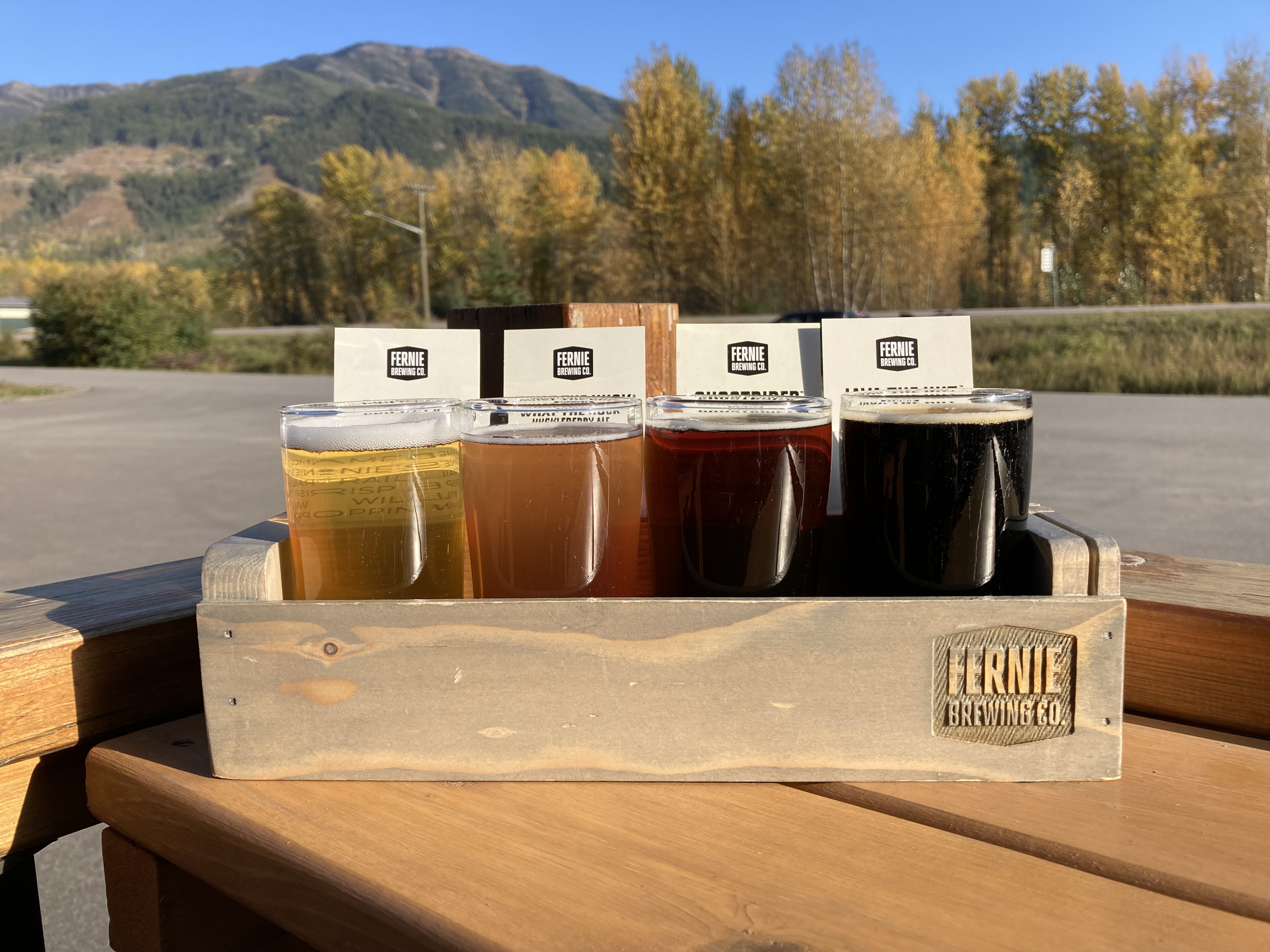
Beer In ‘Berta

For The Love of Beer

Welcome to my first beer post, a series where I will be talking about the beer I encounter in the various places I pass through on the road. This post is dedicated to Albeerta.

I can’t remember when I first got into craft beer. I’ve always enjoyed beer. But sometime in the last five to ten years (I’d imagine the craft and micro brewery boom factors in) it crystallized that I really like to sample craft brews. Pair this with travel and it’s a perfect hobby and reason to check out local establishments.

But be warned – once you go craft, it’s hard to go back. My taste buds are a little snobby now. I’ve elevated my palette, honed in on subtleties. I don’t know how I used to drink domestic. Draught tastes so much better than cans. I love the creativity and artwork that accompanies a release. I spring for a flight, even though it’s more expensive, because it’s worth it to experience as many flavours as possible. After all, I could encounter my next favourite around any corner!

But beer still affords a laid back experience – I’m not at the level of Fraser and Niles Crane with their wine tasting shenanigans. Though no shade to wine tasting, I’ve had my fun in the Okanagan Valley. I’m just saying, beer and wine personified would be like someone looking to chill vs exude an air of class (not always, I’m stereotyping).

I think back to my van build days, teaching myself how to do things, getting to know something inside out, and I draw a parallel. There is something about learning that I quite enjoy. I like learning about beer. I remember loving my first brewery tour in Boston in 2018. Learning the differences between ales and lagers, hops and malts. Every time I try a new beer, I read the description, and it helps to expand and solidify my knowledge base.

If you haven’t realized yet – these beer posts are going to get nerdy.

So what makes a good beer, and what makes a favourite brewery? The beer part can be somewhat subjective. Your taste buds will have different preferences than mine (don’t get mad at me if I don’t love the same brews as you!) Of course there are also best practices. A favourite brewery needs to have beer you love – but what’s the space like? What’s the vibe? What kind of people go there? What kind of music do they play? What do they stand for? What events do they hold?

And are we talking strictly breweries, that might have the occasional guest taps? Or do we include restaurants that also serve craft beer (but maybe don’t brew it on location), or places that offer a large variety of local craft beer – supporting local – but don’t make their own? And where are the best places to get cans or bottles to take home – from the brewery? From the liquor store? From a beer store? That likely depends on location.

How does one choose the best summit beer? I don’t want a heavy, strong beer, or a stout, when I’m active. I’ll probably reach for something simple, light, and refreshing like a lager or pilsner. And in case you were wondering – there are no electrolytes in beer, so if it’s a hot day make sure you’ve got water and a salty snack!

Finally, who am I to speak on beer? I think it’s always good to consider your sources. First, I’m not in the industry, I’m not an expert. I’m a beer enthusiast who is independently learning on the ground and passionately nerding out. I’m someone who travels a lot and likes to explore as many places as I can and support local. In terms of my personal preferences – if IPAs and sours are like the popular kids, I’m the misfit who likes the obscure beers on tap. I love an experimental recipe, I love European style beers. And no matter the flavours – I like my beer to taste like beer. I’m also not keen on too much bitterness. This blog is a documentation of my experiences and informational resource. Because of my love of beer and the way that visiting local breweries became a hobby of mine on the road, I wanted to carve out a space for this topic here on my blog.

As you can see, there is much to consider, and much that goes into beer choice. So let’s break it down in the context of Alberta. This won’t be an exhaustive discussion, as I was only in AB for a few months, but I tried to experience as much as I could, I’ve done a good bit of research, and these are my impressions so far.

Breweries

Tried & Tested

Craft Beer Market: not a brewery but a restaurant with a wide selection of local craft beer on tap. They have locations in seven cities in Canada. There is a location in downtown Calgary and in Southcentre Mall. You won’t get the brewery experience, but they do have an impressive selection. This is where I found and fell in love with Medicine Hat Brewing Company’s Creamsicle beer (I would call this a dessert beer).

Cold Garden: home of CakeFace, the Birthday Cake beer! Easy drinking, with a gourmand twist (but not overpowering). The taproom is decorated to feel homey and artsy, with a large patio in the summer. Located in the historic neighbourhood of Inglewood, close to downtown (just southeast).

Wild Rose: located in an old airplane hangar, this brewery gets its namesake from Alberta being known as Wild Rose Country. When I first arrived in Calgary I was offered a can of Wild Rose’s Velvet Fog, and got the impression that this was a staple. I also got to visit the brewery, where a phenomenal lightning show happened nearby. I hate to say it, but none Wild Rose’s beers really did it for me. But I like to keep an open mind – I’d give them another shot, and everyone has their own tastes (just because I wasn’t a fan, doesn’t mean it’s not good beer). Wild Rose does do beer tours. They’re located a little southwest of downtown Calgary.

Prairie Dog: This brewpub is an example of looking enticing based on paper – but you really never know what you’ll think of a beer until you taste it. The beer descriptions hit all the marks for me (I’m partial to Belgian and German style beers, and love an oat stout or vanilla/coffee porter) and propped up my first impression – they had the kinds of beer I like and a bunch of experimental ones (I love a unique beer). But when I got there and sampled a flight I found that the flavours were quite bold, and for me personally, I don’t like flavours to overpower the taste of beer too much. Again, I keep an open mind, and I would try Prairie Dog again – it’s also been three years since my first and last experience with them. The taproom is a large open-concept room. They’re known for their BBQ. And they offer beer workshops! Located slightly south of downtown Calgary.

Tailgunner: This is one I would for sure go back to, if only because the night I visited I was on a mini brewery crawl and I don’t feel like I got a good enough sense of the place and the beer. But it is spoken highly of by my friends, and it was a chill setting, with dimpled beer mugs – which for some reason bring me comfort (here’s an article that speaks to the reasoning for different shaped beer glasses). Their beerhall is a lovely setting, touted as a space for community and tradition. The brewery has a history tying back to World War II. Their beer menu is (Czech) lager, pilsner, and IPA focused. Located in the west end of downtown Calgary.

Annex: For shame – I don’t remember my impression of the beer at Annex (it was three years ago! And I visited three breweries that day). But – their mission seems to be a focus on experimental brews and constantly releasing small batches of something new. So I would 100% go here again, because curiosity, creativity, and experimentation are keywords that sing to my soul when it comes to beer. One of their slogans is even “no gods, no masters” – have I found my people? The only way I could be more impressed is if I like the music they play. They also have a soda shop. The taproom had a clean, fresh, modern vibe. Located a bit south of downtown Calgary.

Establishment: Many times named the Alberta Brewery of the Year, and once even the Canadian Brewery of the Year, The Establishment aims to impress. While I do remember being excited that they had a Rauchbier (smokey autumn seasonal), theirs was only 3% ABV and I found it to taste a bit watery. That said, I enjoyed their My Best Friend’s Girl kölsch, and I am intrigued by their table beer. They also do barrel-aged beer and experiment with different styles, and have a variety of IPAs for the pale ale lovers. They’re located right next to Annex (slightly south of downtown Calgary).

The Pass Beer Company: Located in Blairmore, this brewery is a little newer (established in 2020) and one to go to on the Alberta side of Highway 3 (Crowsnest Pass). Their beer menu is different now from when I visited. When I was there a few Octobers ago I had a coffee vanilla cream ale and a rye festbier. But looking at their menu now, I see options that catch my eye (a ginger infused ale, Czech pilsner, Cerveza, brown ale). This is a great spot to break up a Crowsnest Pass drive (after you cross into BC Fernie is a great brewery to stop into on the Crowsnest highway- but I’ll touch on that in my BC beer post!).

Grizzly Paw Brewing Company: with two main locations in Canmore – a pub on Main Street (downtown Canmore) and the brewery which has the taproom on the main floor and what they call Tank 310 in the upstairs of the brewery (where you will get beautiful views of the surrounding mountains, including the Three Sisters). Grizzly Paw offers brewery tours + tastings! On their current menu what stands out to me is a festbier, nut brown, red ale – with chocolate notes, and honey wheat. A solid choice when visiting the Canmore area in my opinion.

Jasper Brewing Co.: Canada’s first National Park brewery, located in the heart of Jasper town, with a patio and mountain views. Luckily the brewery was not harmed by last summer’s forest fires that wreaked havoc on Jasper. I’m leaning towards saying that the location and taproom are more of a draw for me here than the beers themselves. That said, they have a few that catch my eye, one being a “honey beer” – which seems to be a recurring style among some of the mountain town breweries – a honey beer with a bear on the can!

Inner City Brewing: As I write this I am seeing that this brewery has permanently closed. True to their name, they were smack dab in the middle of downtown Calgary. What had caught my attention with them was that they commented on staying true to the way beer is made in the various cities that inspired what they made. I also remember liking their tap list, it had variety, like a Belgian tripel. That said, I do remember experiencing a tinge of misogyny from our server. I had asked a question about one of the beers, and the male server directed his answer to the guy friend I was with. It’s unfortunate, but misogyny can be a problem in the beer world, with beer having a reputation of being a guy’s thing.

High Line Brewing: Located east of downtown Calgary, in Inglewood. This brewery impressed me with their tap list. They had a cucumber ale, a smokey scotch ale, a jalapeño pineapple cider, and ginger beer, with gluten free and non-alcoholic options. It was a nice space. And they also have events like trivia throughout the week.

Cans

If you can’t get to the brewery a good beer source opens up a whole new world of sampling – and will give you an idea of what breweries you want to visit.

Alley Kat was one of the first cases I brought home. I’d be lying if I said I wasn’t pulled in because of the shared name, but I quite liked their variety and thought they had some good beers for what felt like a kind of standard brewery. They do call themselves a craft brewery though, Edmonton’s oldest, and have recently rebranded. You’ll find typical staples and various fruited beer. I really enjoyed their seasonal pumpkin pie spiced ale – I am always on the hunt for a good pumpkin beer in the fall!

Big Rock was another brewery that felt kind of standard. Established in 1985, before craft breweries came out swinging with experimentation. “Pioneers of Alberta Beer”, they have their brewery located in southeast Calgary. I enjoyed these beer and would get variety packs from the liquor stores. A solid choice.

Medicine Hat Brewing Company’s Creamsicle beer is a stellar dessert beer that I indulged in.

Fahr hefeweizen – I love a good hefeweizen.

Greta Van Fleet played in Calgary the summer I was there, and I went to their show. I’d seen them before, and was mostly there to see the opener – The Pretty Reckless – who was a longtime favourite. But it was neat to see that GVF had released a specialty beer alongside their tour (I love when bands do this – like the Black Rebel Motorcycle Club whiskey, Alice In Chains whiskey, and Deftones beer). I came across the can in store, so naturally wanted to give it a try! I don’t remember it that well, so I assume it was pretty standard, but boy was the can pretty. This beer was made in partnership with Farm League Brewing, which is from Cambridge, ON, but I wanted to include it here as I associate it with my time in Calgary.

When I visited the Rosedeer Hotel and Last Chance Saloon in the badlands, they had Valley Brewing’s Devils Row Coffee Lager – brewed in Drumheller with Alberta-grown craft malts. It was yummy!

In Banff I stopped into a store to pick up some beer (can’t remember which). I love to pick up things I’ve never tried before and I stumbled across the Canmore Brewing Georgetown Brown, the Rapid Ascent Brewing Hefeweizen, and an ultimate impression-maker – the Longslice Brewery Cake It ‘Til You Make It. The Canmore brown came with a ghost story of an old coal mining town – you can follow the Georgetown Trail just west of Canmore to discover an old ghost town area. Caramel and chocolate malts made this a tasty treat. The Rapid Ascent Hefeweizen – I don’t remember specifically, but like I said – I love a good hefeweizen. This brewery has since closed down, though. Finally, the crown jewel. I don’t know what it is with Alberta and cake beers, but damn do they work. I loved the Longslice pastry blonde. I would buy crates of this beer. It is described as adding milk sugar and vanilla to a blonde ale. The beer equivalent of licking the spatula after icing a birthday cake. Longslice was actually located in Toronto, and has sadly since closed, but I associate this beer with being in Banff, so here we are!

Sources

Here’s a roundup of some options for picking up cans around Calgary:

  • Collective Craft Beer Shop – south of Calgary near Canyon Meadows, a small family business curating a large selection of craft beer. They also carry craft wine and spirits, gluten free, non-alcoholic, cider, mead, and more.
  • Willow Park Wines & Spirits – located in Willow Park near Southcentre mall. This is your typical liquor store, but I found they had a pretty good selection of beer to sample.
  • Oak & Vine – east end downtown Calgary, in Inglewood, boasting a large selection of craft beer, wine, and spirits.
  • Alberta Beer Exchange (ABX) – described as a boutique liquor store, which may have higher prices, but I read has a large selection. They carry craft beer, wine, spirits, mead, and more. Located in the west end of downtown Calgary in Sunalta.
  • 5 Vines – There are five locations around Calgary (four around downtown and one a ways south). They offer free tastings in store and tout curated craft beer, fine wines, and premium spirits.
  • Wine and Beyond – with some spaced out locations around Calgary, a standard liquor store carrying beer, wine, spirits.
  • Co-op Liquor – liquor store with various locations, next to the grocery stores of the same name.
  • Real Canadian Liquor Store – essentially a liquor store extension located next to Real Canadian Superstore (grocery store chain in AB).
  • Straight from the source – pop in to your favourite brewery to pick up cans or order online!

Since I was in the Canyon Meadows area of south Calgary when I was in the area, I frequented Willow Park Wines & Spirits. Then friends let me in on the Collective Craft Beer Shop, which seems like the place to go for an on-the-pulse source of craft beer.

Collective Craft Beer Shop (look at those categories!)

I have to say, this shopping experience is way different from what I’m used to in Ontario. If I happen to be at a brewery and really like a beer, I might take a few cans home from the bottle shop. Otherwise I usually just pop into the LCBO (Ontario’s chain liquor store) and head to the beer cooler. We have a section for local craft beer and I often look for new kinds that I haven’t tried yet. Selection really depends on location. I don’t really frequent the Beer Store, but last time I was in there it seemed like they had quite a small selection and the only craft beer was a few of the largest Ontario breweries – so you’re not really getting any niche craft / micro / nano breweries.

For The Future

Breweries and beer that I’ve looked into and want to visit!

In Calgary

*Stonyslope: SIGN ME UP. A newer brewery in southwest Calgary not far from Heritage Park, and apparently one to watch. They were pretty well rated by Calgary Brew Review, and I am instantly drawn to places that boast unique beers, especially in the style of “obscure” countries… Like, they’ve got a Japanese rice lager, Finnish & Norwegian farmhouse ales, a Danish table beer, a golden roggenbier (I don’t even know what that is, and that is precisely why I want to try it)! Not to mention a spruce tip soda (I am now itching to go here). They may still be working out some kinks of being a small scale new brewery (like running out of beer) – but it sounds like they serve quality that is in demand (a good sign!) – and right up my alley.

*33 Acres/33C: hailing from Vancouver, this brewery sources locally. It is said to have an immaculate tasting room. Some beer on their current menu that catch my eye include a French blanche, lemongrass lager, Italian spritz (yes, a beer!), sparkling lager, schwarzbier, Belgian tripel, and a mezcal gose! Just reading their menu, they seem refined and little more fancy than your typical brewery. As if someone who enjoys champagne would like their beer. I definitely appreciate the unique recipes, and the international styles. Located in central downtown Calgary.

Ol’ Beautiful: *previous neighbour to Cold Garden in Inglewood. Recommended to me by local friends. They’ve got an old school, tarnished leather, worn wood, worn in, stylish kind of vibe. Unfortunately, their taproom burned down in June 2024 and they are directing people to their new bar Sound Room. It’s located in downtown Calgary, not far from the Calgary Tower. And it looks like they’re a bar that offers Ol’ Beautiful beers, and have music themed nights where they spin vinyl. From the photos online it looks really cozy and retro! Now I’m imagining a grunge vinyl night… Imagination – don’t tempt me with a good time!

Tool Shed: Calgary Brew Review ranked them highly, and said they make dad beers that can win over even the snobbiest of palettes. CBR also boasts that their red ale is the best red they’ve ever tasted and that their non-alcoholic beer is very tasty. I’ve had their Red Rage in a can and it made a big impression. With both beer and tasting room giving off Dad vibes, anyone with daddy issues might want to check this place out (ha…). They also offer tours! Located a little northeast of downtown Calgary.

Last Best: pub-style brewery with “yummy” diverse beers. Menu stand-outs for me include their black lager, Vienna lager, Marzen, and green tea rice lager (!). Located in central downtown Calgary.

Two Pillars: with a focus on Belgian style beers, winning awards at the 2025 Canadian Brewing Awards. Located a little north of downtown, across the Bow River.

Vacay Brew Co: sounds like a solid spot to visit, with experimental and creative beers, including a salted black lager, a rice lager, and a Parisian blanc. Located in west Calgary, near Wild Rose, their space is the historic 1936 Stables at Currie Barracks (previous Canadian Forces Base), shared with Burwood Distillery.

Village Brewery: southeast of downtown Calgary. Village Brewery focuses on community and highlighting community members with their beer. Several beer on their current menu stand out to me (a botanical lager, honey brown ale, cerveza, black ale). They’ve got pale ales and a selection of non-alcoholic. And their space looks cozy.

Common Crown is a brewery that seems to have a great reputation for their beer, but their location closed down and as of now they don’t have a taproom. It seems you can still get their cans in store, and some restaurants like Craft Beer Market serve their beer on tap (their website has a map of suppliers).

Cabin Brewing: They mostly have pale ales, but it seems that if you aren’t a fan of IPAs this could be the place to win you over. This, coupled with interesting rotating seasonal taps and great reputation, would make me open to a visit. Their can pours have some interesting looking options (a barrel-aged eggnog stout, a dunkels bock, and more) and the tasting room looks like a beautiful setting. Apparently their New Zealand style meat pies are great, too. Located not too far from Establishment and Annex, south of downtown and Inglewood.

Railyard Brewing: right next to the airport. Inspired by malt freight cars and graffiti art. I would go for the setting and art, but the Ghost Pepper Hefeweizen and Apricot Cream Ale look good, too.

Big Rock Brewery: as mentioned already in this post. Located further southeast from downtown Calgary. Standard feel, would visit. From the photos, the taproom is spacious and has an enticing look (wooden barrels, rocky fireplace chimney).

Dandy: I had flagged this brewery because when I was looking into breweries in Calgary I saw that they were one of the few places with a seasonal Rauchbier. They are also a hop, skip, and jump away from Cold Garden in Inglewood, so it would be convenient to check out if you’re in that area, which seems to have a decent concentration of breweries. Their space has a modern vibe, while their website expresses punk ethos.

Eighty-Eight: paying homage to the 80s and the Calgary Olympics. I’m more of a 90s gal myself, but I can’t deny that this looks like a fun spot. While I’m not much of an IPA fan, Calgary Brew Review describe East Coast IPAs – North East, New England, Hazy – as having a “sweet and cloudy body imparted by oat or wheat malts and an emphasis on dry hopping for more flavour and less bitterness,” which doesn’t sound too bad to me. Eighty-Eight is IPA and fruit beer heavy. They have two floors, the upstairs apparently being where it’s at, with pink neon lights and music (is it 80s music..?). I believe this is a solid brewery, but I would put it lower on my personal list simply due to personal beer style preferences. Located in Inglewood.

Bow River: Located in the Manchester neighbourhood in south central Calgary. While I’m a bit iffy on this one due to the low ranking on Calgary Brew Review (due to some alleged sub par beer making technique). The German and Belgian styles and staff enthusiasm for beer still have me curious.

Citizen: north of downtown Calgary, towards nose Hill Park. Citizen is forthright about supporting several charities on its website.

Evil Corporation: *closed as of writing this. But in case they make an evil comeback… I’m a sucker for something sinister. Calgary Brew Review were not fans of their tasting room setup, though I might disagree with them on the black walls being an issue – some of us like a grim setting. I would be inclined to agree that glass choice could affect the pour and experience of the beer (test tubes for flights). And maybe they had some recipe hiccups. It seems like there were some qualms with them. Located in the Inglewood area, this would have been an easy addition to any crawl.

Zero Issue: *closed as of writing this. But I want to mention them here just in case they re-open in the future as it seems they had a reputation for solid beer and the best can artwork in town. Video game themes.

*Note to Future Self: in the past seasonal Rauchbiers were released by Wild Rose (Whole Nein Yards Smoked Rauchbier), Brewsters Brewing Company (Holy Smoke Rauchweizen), and Village Brewery (Village Father Rauchbier).

Update!

As of October, 2025, three years after making most of my visits to the above breweries, I visited Calgary again and crammed in as many breweries as I could (within reason for the timeframe).

One of my first stops after arriving at Calgary International Airport was a 5 Vines downtown. It was a lovely place with a friendly owner and a beer room to gawk at – stocking mostly both Alberta and BC beer (though even a Blood Brothers from Toronto). I picked up more than I would be able to drink on the trip, including most of their seasonal pumpkin ales and some other styles that caught my eye.

Unfortunately, I didn’t get to try all of the pumpkin ales. It would have been fun to split them with my friends and have a makeshift pumpkin ale beer flight to sample.

In terms of the dark lagers, I found the Annex dark lager to be robust – reminding me more of stout, while the Revelstoke dark lager was a bit more subtle. This is kind of counter intuitive, as the Annex lager is 4.5% while the Revelstoke lager is 5.5% (although stouts are typically lower in ABV). I feel like I could use more time with the drinks I tried, as one try can be affected by many things (are you really focusing on what you’re tasting, are you eating food that alters the taste, did you have enough to really get well acquainted).

From Town Square Brewing, in Edmonton.

Side note: what is the difference between a stout and a dark lager? While they both have roasted malts (not to be confused with the smoked malts in rauchbier) and are geared towards flavour profiles of coffee, chocolate, and the like – one is an ale (stout) and one is a lager – so the main difference comes down to the method of fermentation, aka the general difference between ales and lagers. Ales use top fermenting yeasts at warmer temperatures which brings out stronger flavours, while lagers are bottom fermented at cooler temperatures for longer, giving crisp, clean finishes. Lagers should be easy drinking – and for me personally at least, I like a dark lager to remain somewhat on the light side.

Special shout out to the white pastry stout (a white stout has the colour of a pale ale by using pale malts and adds ingredients like coffee beans, vanilla beans, cocoa nibs to achieve some of the characteristic stout flavours). This beer was amazing. It reminds me of the Cold Garden Cake Face or the Longslice Cake It ‘Til You Make It pastry blonde. Something about cake and beer that I just really enjoy.

I was able to visit five different breweries while in Calgary.

First up was Stoneyslope. I had high expectations for the unique beer here, and sadly, I was disappointed. I do wonder if this comes down to personal palette, because on the morning of the day I visited I saw on their socials that they had just won an award for their Roggenbier (a style originating in medieval Bavaria, south Germany, using rye malt – roggen means rye, and the same yeasts used in Hefeweizens, creating banana or clove flavours, as well as often using wheat and being a dark hazy ale, similar to a dunkelweizen – but with more pronounced rye). My palette is probably not refined enough to know if this is a quality thing – and I have heard good things about this brewery. Essentially, I got a flight. The Japanese lager, a rice lager, was my favourite – palatable, easy drinking. Runner up was the Roggenbier, an ale with spicy rye and banana and caramel notes. You definitely get the banana, reminiscent of a hefeweizen that is heavy on the banana (I love hefeweizens, minus any prominent banana). This was full in flavour, and it was nice to try, but I probably wouldn’t order it again. They did not have the Danish Table Beer, which I was sad about – but knew they ran out of things here. My other two choices were the Finnish (Sahti – notes of juniper) and Norwegian Farmhouse Ales. These were certainly unique, and while they had high ABVs, they actually tasted watery to me. All in all, even the Japanese lager was not enough of a stand out to make me want to go back here (although I have a soft rule that I’ll give any place a second shot).

Next up, Sound Room to try Ol’ Beautiful‘s beer! Located downtown, this is a small spot that can fill up during the post-work rush. It’s super warm and cozy. And you can tell that they literally designed the place to enhance sound. The walls had corkboard and the ceilings had foam. There were shelves chock full of vinyl records. It was quite the ambiance. The beer is what I would call easy drink across the board. You didn’t really get a robust beer flavour in my opinion. But I am open to the idea that my taste buds could have been overwhelmed by all the taste testing I was doing (also any excuse to return here). I had four samples, including their Japanese ale (super easy drinking, almost didn’t taste it); their Mexican lager (more of a bite, but still goes down easy); the Eternal Twilight dark lager (subtle roasted malt, seemingly the lightest dark lager I tried on this trip – and I tried about four); and their California Common (possibly had the most flavour of all that I tried). I was also convinced by a friend to try an IPA – I’m game to try new things, even though I typically avoid pale ales. And to me, it tasted like your typical IPA (spoken like someone who doesn’t enjoy them, and so hasn’t invested in getting to know them that well).

Fun fact: a California common is a hybrid beer, also known as a steam beer (think Anchor Brewing, San Francisco), which uses lager yeasts fermented at ale temperatures, and is known for amber colours, malty sweetness and caramel notes, as well as hop flavours.

The third brewery we visited was Last Best. While Sound Room is smaller and more intimate, Last Best is more spacious. It felt like they really revered beer, with phrases on the walls like “drink beer, live forever”, and touting the term Albeerta. I would describe Last Best as a larger restaurant vibe, but beer is made on site, they have brewery merch, and there is a rustic Albertan feel. I would absolutely come here again. The flight had six beer. Unfortunately, I truly think my taste buds might have been a bit overwhelmed at this point (I guess I’ve learned to space out my beer adventures and take them slow). I was also eating spicy fries, which didn’t help. I tried the Marzen (odd, almost sour); Green Tea lager (I found this to be sweet, with a distinct flavour, and I’m not sure I would want to drink a lot of it); the Vienna lager (my only note says “weird”); Black Lager (subtle, good); Tokyo Drift (their IPA that they are known for – tasted like IPA to me); and the Jasper Pilsner (my favourite of the lot – crisp, with a distinct beer taste – I love a beer that tastes like beer). The only downside to Last Best is that it would probably get pretty loud and people-y when busy.

Next up: 33 Acres. My impression going in was that this was more of an upscale spot. I had high hopes for the beer, but I felt a bit let down as they don’t allow you to choose your own flight. They have two pre-selected flight options, with four drinks in each. Unfortunately, both flights had two pale ales on the list. I did get a tiny sample of the French Blanche. And my friend let me taste their lemongrass lager. Both I would describe as light and bright. I myself got the Mezcal Gose. I don’t usually spring for a sour, but a salty sour is nice once in a while, and I am partial to mezcal following my time in Joshua Tree, CA. It was good! And what a perfect pairing, to have salt and sour fruit flavours alongside mezcal (like smoked tequila) to mimic how one would shoot tequila. The brewery smelled of campfire, as they had a wood stove upstairs and a fire pit on their patio. The interior was white and beige with plants, giving a modern feel. They were playing chill music, which had me wanting a nap (5pm on a Saturday). I would have liked to try their Schwarzbier, sparkling lager, and Belgian tripel… All in all, nice to try, but I was a little disappointed by the set up.

The above were my main breweries that I wanted to try – shout out to my friends who humoured me and my choices! As a bonus, my friends took me to Four Dogs. If you like dogs, this is your place. Their website About section will pull on your heart strings. And they host adoption events. Their merch has character. And this is a lovely place to go and relax while not having to leave your pup home alone. Bonus – the pups can socialize and get lots of pats, too. I was trying to limit my beer intake in one day, so I just got a sample size of their Oktoberfest beer – not my favourite Oktoberfest beer. My friends let me sip their pilsners (two different ones). I can’t remember which one I liked more, but one of them was quite good. I would probably go back here to try more of their beer. But I think the setting might be the deciding factor on whether I would go back longterm.

Elsewhere In Alberta

*Valley Brewing in Drumheller really wowed me when I checked out their tap list. Not that I need persuading to want to go back to the badlands, because I fell in love with that area, but they’ve got a farmhouse ale, winter ale, schwarzbier (German-style dark lager), porter, smoked lager (rauchbier), white chocolate stout, along with a bunch of your classics. I know that you never know until you taste it – but prospects look very good to me. Note to future self: don’t just look at their tap list, look at their cans, too (drool).

Fahr creates authentic German style beers. They are located about an hour south of Calgary in Diamond Valley. I really enjoyed the hefeweizen from Fahr and generally enjoy German beer, so I would love to visit this brewery. The owner has an impressive background. And I would imagine that this would be a great spot to go for Oktoberfest!

Medicine Hat Brewing Company (with the one and only Creamsicle beer) is absolutely one that I want to visit – maybe I’ll hit it up on my next cross-Canada drive! They market themselves as timeless brewing with a splash of creativity – and based on their current tap list, I am inclined to agree. Their variety definitely speaks to me. Some beer that catch my eye include a hefeweizen, Oktoberfest lager, Munich dunkel, porter, various lagers, and a blueberry vanilla ale. You have a lot of choices. This brewery is steeped in tradition, going back to 1912, when one of Medicine Hat’s first breweries was serving old fashioned lager, ale, and stout.

Canmore Brewing: Canmore or Grizzly Paw? I obviously need to try Canmore Brewing before I can decide. Ideally heading over to Grizzly Paw right after to compare (isn’t having a beer hobby fun?) This is a place that expresses a love for beer and the great outdoors.

Banff Ave Brewing Co.: “Banff’s living room”, where you get locals, tourists, and possibly world class athletes.

With so many breweries in Alberta, and many in areas I’ve yet to visit, it’s a bit overwhelming to try and gauge where would be worth a visit. At a certain point it’s best to throw your hands up in the air and go with the flow. If life brings me through some new areas, I’ll look into what breweries they have then.

I started looking into the best breweries outside of Calgary – and it’s just too much information – but here are a few places I’ve seen mentioned:

  • Blindman Brewing in Lacombe, just a little north of Red Deer (exciting experimental practices).
  • Folding Mountain Brewing, near Hinton, at the edge of Jasper NP (the views are worth it).
  • Fallentimber Meadery, an hour northwest of Calgary, about halfway up towards Red Deer. This looks to be a store and not a sit down taproom. I do love bees, honey, and mead.
  • Beer Street in Edmonton (10 craft breweries and counting).
  • Stronghold Brewing, Fort McLeod, between Lethbridge and Pincher Creek along Highway 3

Resources

Calgary Brew Review

I stumbled across this fabulous resource. A ranking of all the breweries in Calgary, from folks with experience, who use a thorough points system. I’m not sure how long this site will stay up, so I’ll also link the reddit thread where I found it. Hopefully it remains active, as it gives great overviews and descriptions!

Calgary Brew Review Rankings

One thing they point out that I couldn’t agree more with is their reasoning for ranking breweries and not just beer. Because beer is best enjoyed where it is brewed, and the setting can add so much (or detract) from the experience! Not to mention the beer is fresher, and you might get to chat with the staff or other beer lovers or locals.

Just keep in mind that their rankings are not solely based on the quality of the beer – though they do give those individual scores.

I would definitely recommend checking out the individual write ups for each brewery, which go over the ratings and impressions.

The Alberta Ale Trail

I’m not sure when this guide was created (looks like 2023), as I didn’t come across it in 2022 when I was looking into breweries in Alberta. But it’s certainly wonderful to see now. It really shines a light on Alberta as a craft beer destination. And it lays out over 140 breweries across the province (there’s a map!) as well as “ale trails” for the different areas (including several areas of Calgary, the Rockies/mountain towns, the foothills, several areas of Edmonton, Crowsnest highway, Red Deer, and more). This helps you to conceptualize things and tune up your mental map. As well as hear about breweries you might have otherwise missed (keeping in mind that not every brewery is worth visiting).

Awards

If you want to know who’s out there winning awards – you can check out the Canadian Brewing Awards and the Alberta Beer Awards. The Alberta Small Brewers Association puts off the Alberta Craft Brewing Convention and Alberta Beer Awards annually.

Alberta Beer Reddit

Hear me out. I know reddit is reddit and not an objective or reliable source of information. But I think there is value in hearing impressions and having a place to check for releases or events. As well as unfiltered (pun intended) honesty.

Final Thoughts

Alberta has an impressive craft brewery scene. It’s so big that you would likely never get bored if you lived there.

I’m heading to Calgary next month and I plan to hit some breweries that I haven’t been to yet – I’m super excited, and hope to update this post as I get more breweries under my belt!

Have I made any glaring omissions? What breweries do I need to check out? Let me know!

I leave you with my current beer theme song:

Till next time,

Kat

ChronicXRoads on Instagram

Copyright © 2025 Chronic X-Roads. All Rights Reserved.
Chasing Ghosts in Alberta

Introduction / Moving Forward

It’s been over three years since I’ve written here.

In a way, I became my own ghost. Sometimes you take detours in life. But I’m looking to do more writing now, and I want this blog to be a sort of portfolio and container. I want to archive my experiences, as I close a chapter and begin a new page.

Nobody tells you that you might need a period of decompression after constantly moving from place to place, constantly adjusting, constantly committing new things to memory.

Thinking back to 2022, I hiked the Rideau Trail, spontaneously drove halfway across Canada to spend a summer in Calgary, and proceeded to follow the road wherever it could take me. I saw a lot. A lot happened.

When I think about the places I’ve been, every memory is coloured by my personal lens. Anyone can write about or share pictures of places. But those places mean different things to different people – that’s what makes them special, that’s why you may or may not want to read what I have to say. A place that sings to one person’s soul, might bore another. And sometimes our experiences of places are simply shaped by the luck of the draw – having a good or bad day, the weather, life. One thing I’ve learned passing through countless cities is that they all share a similar structure. They start to blend together after a while. But what sets them apart is the people, culture, history, landscape – and especially our personal connection to them.

This blog has always been an extension of myself. In part, it’s informational. It’s a documentation and something I (and maybe you) can reference for information, links, or just nostalgia. But I also see it as a form of storytelling. I want to share photos and information. But I also am going to share my interests, the connections I feel to places, and the thematic through lines that I was navigating that coloured my experiences.

Life doesn’t happen in a vacuum – there are layers and context. And I’m not one for shiny, superficial, influencer-style portrayals of perfection. These places have grit, and they get that grit from their history, and history can be messy. Our lives and our selves can be messy. There is a kind of perfection to imperfection, the uniqueness that only organic once in a lifetime moments and individual things can provide. As someone once said:

“good judgement comes from experience, and experience – well, that comes from poor judgement”.

The theme I’m starting with for this first blog back is ghosts. Three years out from being in Alberta, I know that this theme has deepened for me. I also just love anything Halloween-related and spooky. So it’s an on-brand place to start.

I’m bringing my blog up to date. Should anyone like to see a more visual presentation of these places you can check out my instagram, where I have already shared photos, captions, and reels.

Table of Contents

*This post is long and covers a lot – scroll for specific points of interest!

  1. Introduction / Moving Forward
  2. Table of Contents
  3. Calgary
    1. First Impressions
    2. The Stampede
    3. Nature
    4. Elevation
    5. Hiking
    6. Hail
    7. Beer
    8. Downtown Calgary
    9. Other Locations
    10. Other Info
  4. The Badlands
    1. Dinosaur Provincial Park
    2. The Last Chance Saloon & Rosedeer Hotel
  5. Waterton
    1. Transitions
    2. GDT Ghosts & The Carthew-Alderson Trail
    3. Crypt Lake
    4. Bertha Falls/Lake Hike
    5. Prince of Wales Hotel
    6. Scenic Parkways
  6. Lethbridge
  7. Crowsnest Pass
    1. The Burmis Tree
    2. Bellevue
    3. Frank Slide
    4. Blairmore
    5. Coleman
  8. Canmore
  9. Icefields Parkway
  10. Jasper
  11. Banff
    1. Lake Louise
    2. Banff Townsite
      1. Sulphur Mountain Hike & The Banff Gondola
      2. Banff Springs Hotel
      3. Downtown Banff
    3. Tunnel Mountain
    4. Lake Minnewanka
  12. Goodbye Alberta
  13. For Future Visits
    1. Kananaskis Country
    2. Hot Springs
    3. Edmonton
  14. Important Information
    1. Passes
    2. Planning
    3. Hiking
    4. Safety
    5. Wildlife
    6. Overnight Spots
    7. Land Acknowledgment
  15. The End

Calgary

During my time in Calgary I was fairly laidback on sight seeing. I was staying at my friends’ place, dog and house sitting for part of the summer. It took me a bit of time to adjust to being here – there was some culture shock, plus a total lifestyle overhaul. I spent some time researching – learning about Alberta, figuring out what I wanted to see (there’s a lot), and preparing for what the fall would bring. I didn’t have any set plans at the time, I just knew that I would hit the road again.

First Impressions

Calgary Tower

Welcome to Cow Town! Or Berta if you prefer.

My first impression of Calgary was that it was small. It does have a sprawling suburban area, but the city core is nothing like Toronto. It felt pretty chill to me.

Someone asked me what differences I noticed in Alberta, having come from Ontario. Other than the obvious (cowboys and mountains) I said the street lights. They hung horizontal, instead of the vertical I was used to. Striking. But it’s something you notice when you drive as much as I do.

I suppose also – all the grocery stores were different.

The Stampede

Having arrived in July, I was able to check out the Stampede. I was told about the free pancake breakfasts. Heading downtown for such a busy event gave me the opportunity to get to know the transit system (as Anthony Bourdain would say – be a traveller, not a tourist). I roamed the grounds and was glad to have the opportunity to take it all in. But in the future I would probably only go back for bands or the rodeo. Otherwise it was mostly like a crowded amusement park (no shade if that’s your speed!).

Nature

My friends’ place is on the edge of Fish Creek Provincial Park, so it wasn’t uncommon to get deer or even the occasional bear or lynx on local streets. The wild really overlapped with civilization. Neighbourhoods had facebook groups to alert each other to animal sightings or crime. And it was strange to me to be walking or running on paved paths in Fish Creek with signs warning of possible mountain lion presence. I had my head on a swivel as I walked my friends’ puppy in the park – small prey for a predator. Their pup was about 6 months old when I got there, but luckily he grew quickly (less likely to be picked off from some threat in the bushes).


Elevation

The biggest adjustment to this prairie province for me, I think, was the elevation and dry air. I had come from southwestern Ontario, swamp country as I’ve come to call it, where you live on lakes (okay, it’s actually lake country, but it feels pretty swampy at times), humidity soars in the summer, and your elevation is just 75m above sea level. Calgary sits at 1,045m above sea level. So when I went for a run or a hike I felt like I couldn’t catch my breath. I’d never experienced that before. I was in decent shape at the time, too – fresh off the heels of a thru hike. The air was super dry and would grate at my throat. Dry air is great for being in a van (combatting condensation) and makes heat more bearable, but it definitely took some adjusting to.

It took about six weeks to feel like I’d acclimatized to the elevation on runs and hikes.

Hiking

Hiking here felt like a whole new ball game. I would consider myself a seasoned hiker – but my hiking has been done in the eastern Canadian provinces. And mountain hiking is very different. You’ve got dry sandy trails, switchbacks, scree, summitting ( and summit beers). Not to mention different wildlife – grizzlies, mountain lions, mountain goats. An endless number of mountains to explore. Vehicles suited to overlanding are recommended for getting to some of the more remote and beautiful hikes. All Trails was a great companion app. As well as the facebook groups Alberta Hiking Association and Hike Alberta.

Side note: one must visit a saloon when in Berta. My friends took me to the Powderhorn Saloon in Bragg Creek after we hiked Powderface in Kananaskis Country. You definitely get a dose of colourful culture here.

Hail

If you’re not worried about hail in mountain country… don’t let me hail on your parade! I always say, hope for the best, prepare for the worst. But my brain’s focus favours the latter, and I wish its worries on no one.

That said, it was not uncommon for me to see car bodies dimpled from hail or with cracked windshields. I was told stories of golf ball sized hail taking the siding off houses.

Luckily, I found an outdoor covered parking garage that I could actually get my van into (it had a higher than usual height restriction) at Southcentre Mall. If thunderstorms were in the forecast I would monitor the Weather Network’s radar maps for ice, and if hail was expected I would drive Strider to the mall to take cover. #ABStorm on “X” also had real time updates.

During this process I also learned that Southcentre mall had an RV reservations service for parking. At the time I didn’t need it. I was sleeping under a roof. And otherwise I was using freecampsites.net, not yet onto iOverlander (silly me). But it never hurts to add to your options.

Other advice on hail that I found (when I obviously researched the topic) included:

  • Parking in your garage (duh).
  • Parking to the side of a building (potentially helpful if hail is coming down at an angle).
  • Getting a car cover
  • A carport, inflatable car cover, or mobile car tent.
  • Using a blanket.
  • I had some people suggest cardboard or plywood placed over your vehicle. Or “strap an air mattress over him”.
  • You could seek overhead protection at a gas station, under a bridge, or even under a tree if desperate (might slow the hail’s speed).
  • A car’s speed could compound damage, or endure less damage, depending on your direction relative to the hail.

It’s a good idea to check if your car insurance would cover hail damage (it should with comprehensive coverage / all perils – mine covers falling or flying objects). But it might make sense to compare the cost of repair to your policy’s deductible as fixing a few minor dings might cost less. Take pictures (damage and weather) and keep receipts for repairs if damage occurs and you’re planning to file a claim.

Beer

One of my favourite things to do on the road is check out local craft breweries. I’m planning to write companion posts for destinations that go over the breweries I checked out and which were my favourite breweries and beers.

But here’s a list of beers and breweries I checked out:

  • Craft Beer Market (more standardized, locations around Canada)
  • Cold Garden (Birthday Cake beer!)
  • Wild Rose (Alberta being Wild Rose Country)
  • Prairie Dog
  • Medicine Hat Brewing Company’s Creamsicle beer (hits a sweet spot)
  • Greta Van Fleet specialty beer (they played in Calgary that summer)
  • Tailgunner
  • Annex
  • The Establishment
  • The Pass Beer Company (Crowsnest Pass)
  • Grizzly Paw Brewing Co. in Canmore, overlooking the Three Sisters
  • Jasper Brewing Co.

I mostly picked up cans from the local liquor store (Willow Park Wines & Spirits). But a friend let me in on the Collective Craft Beer Shop, which seems like the place to go for an on-the-pulse source of craft beer.

Downtown Calgary

It’s striking me now, that I might not have done Calgary a tourist’s justice. I know, I know – be a traveller, not a tourist. But I didn’t explore or immerse myself as much as I could have. When you’re living somewhere for an extended period, you really don’t have as much urgency to tour around. Every destination I hit on the road solo, when I knew I was just passing through, I always did research to learn what was available and worth seeing, and then tried to see as much as I could. I could see quite a bit in only a day or two. But having a couple of months in Calgary, and friends who lived there to advise on things worth seeing – I think I dropped the ball a little bit! I did a bit of research, sure, but I really didn’t treat it the same way as I did other places. It comes down to the whole “tourist in your hometown” thing. You can take a place a bit for granted when you think you’ve got time.

Or maybe I was just more focused on hiking and breweries…

Likely of little interest to you (but I’m a hiker nerd), was the presence of an MEC downtown. I’ll one-up my hiker nerd status by telling you that I also intentionally paid REI a visit, on multiple occasions, while in the states, as if it was a tourist destination.

I also found a cool little witchy shop downtown called Rite of Ritual (I told you I like spooky things).

I got to experience the Saddledome by attending a concert for The Pretty Reckless and Greta Van Fleet.

I discovered The Rose and Crown Pub on 17th Avenue, an old funeral home, now a pub, and said to be haunted. Although it has since closed.

I couldn’t tell you much about the nightlife, but I can say that bars scan your ID in Calgary and that’s the first time I’ve ever experienced that. 

The Peace Bridge is a nice spot downtown and runs across the Bow River.

Peace Bridge

And speaking of the Bow River, the following summer I passed back through Calgary and got to paddle down the Bow River, something that seems to be a quintessential Calgary must do.

Other Locations

Nose Hill Park has grassland hikes in the city with views of the mountains and Bow River valley. I walked here at dusk and it was really pretty, especially being able to see the mountains.

I never got to Heritage Park (western living history museum) & Gasoline Alley Museum (old cars). But that was on my list.

Other Info

If by some obscure chance you are Calgary bound, still listen to the radio, and have similar music tastes to me – I clocked 97.7 as a 90s radio station and X92.9 has Black Hole Sundays (no, I don’t know what that means, but it’s a Soundgarden reference, so…). 

Autumn is quite strange in Alberta when you’re used to having Maple trees around. Instead, people go crazy for the subalpine Larch, which turns bright yellow ’round about mid-September to early October. It’s a sight I’ve yet to zero in on.

The Badlands

Come September, I knew my time in Calgary was waning. To ease back in to road life again, I did a little weekend trip back to the badlands. After all, Dinosaur PP had made a deep impression on me, and I didn’t want to leave Alberta without bidding it farewell. I also had been told about a haunted saloon near Drumheller, and with Halloween around the corner (who am I kidding, I’d check out a haunted place anytime of year) – I had to go!

Dinosaur Provincial Park

There is something about a desert that just really sings to my soul. (See more about this place in my previous post).

The Last Chance Saloon & Rosedeer Hotel

You might say that my chasing of ghosts in Alberta began with the Rosedeer Hotel.

The hotel and saloon can be found in an old mining town not far from Drumheller. There is rich history here, nestled in the badlands. It’s considered a ghost town, with only 28 people living in Wayne, AB now. Established in 1913, this building used to host miners, and now hosts bikers, musicians, and paranormal investigators. The area has 11 bridges. And in the 1920s the KKK burned crosses on the hills.

I happened to be the only guest in the hotel on the night I visited – and I was informed that no employees stay on the premises overnight, so I had the whole place to myself. I was told that they had a neighbour nearby who would be available should I need anything. They said they would tell him I was there. To be honest, I was a little nervous that a stranger knew I was there alone. And after the staff had gone, before the sun went down, I had wanted to take a photo of the building with the colourful skies behind it at dusk. So I went downstairs – and found the front door unlocked. That also made me nervous, to know that anyone could come in while I was sleeping. I know small towns are often thought of as safe – but I like to take precautions.

I might have been staying all alone in a place that had a reputation for being haunted – but it was the living and the unlocked door that scared me more.

But all in all, it was a great night. I can’t believe my luck, to have the place to myself. It was such a unique experience.

I highly recommend sitting down in their restaurant / saloon, too. They’ve got some good local beers (I enjoyed the Devils Row Coffee Lager – brewed in Drumheller with Alberta-grown craft malts), great food, and so many fascinating artifacts on the walls – including the bullet holes where an old bartender scared off some men trying to skip the bill.

And yes – I think the place is haunted.

Waterton

Transitions

The weird thing about being on and off with vanlife is the transitions in and out of the van. There is always an adjustment period, at least for me. When I go into a house, the ease of everyday luxuries like a shower and laundry machine at my fingertips is not lost on me. It’s nice to not have to plan where to sleep every night. But I miss the road, I miss waking up at an earlier hour, or to see the sunrise – vanlife aligns me with the sun’s schedule. When I transition into the van, it’s exciting, but creature comforts evaporate, the unknown settles back in. And human beings often fear, or at least feel somewhat uncomfortable with, the unknown.

So the day I drove to Waterton I was a bit emotional. This might sound ludicrous to some people – I was going to visit amazing places after all. And you’re not wrong. But there were some of those layers of complexity. Shifts in social relations, abrupt change, and the following day was my Dad’s birthday. My Dad passed in 2014.

This is where we meet the next facet of chasing ghosts in Alberta.

GDT Ghosts & The Carthew-Alderson Trail

The year before my Dad died, he wrote a book. I had no idea he’d been writing, but when I found that book it was a priceless gift – his words and thoughts, something he could no longer share with me, that I had not yet seen. It was almost like trumping reality.

In that book, which was a work of fiction but felt like the main character was an extension of my Dad, a man and a woman set out to thru hike the Great Divide Trail (GDT). A trail that begins in Waterton.

The GDT is a dream trail for me to thru hike in Canada. Not only because my Dad wrote about it, but because it is an extension of the Continental Divide Trail (CDT), one of the triple crown trails in the US. This somehow makes it seem more legit, more high calibre. It runs along the continental divide, criss-crossing the Alberta-British Columbia border, through the Rockies for about 1,100km.

My Dad, to my knowledge, had not been to Waterton in his life. He had not been to many of the towns along the GDT. But his mind had. The fictional version of himself had. There was comfort in reading his words describe these places, then visiting those places myself. It did feel like chasing his ghost. It also felt like going to places that he never will, for him. As if he could see through my eyes and experience them through me.

So I left Calgary for Waterton Lakes National Park and on my Dad’s birthday I hiked the Carthew-Alderson Trail to Alderson Lake (13.4km, 701m elevation gain) – where the characters in the book spent their first night on trail. It was a stunning hike, starting from Cameron Falls and climbing along the side of a valley (in which I later saw a Grizzly running as I hiked back down) between mountain peaks. I had brought a beer with me and my “Dad’s cookies” – a special family recipe that he used to make all the time, that is essentially GORP in cookie form. I sat at the lake, with the mountains around me and not another soul around, and gave a cheers to my Dad. It truly felt like he was there with me, even if it was only the ghost of his characters, or his own.

I’ll always think of this song when I remember this hike.

I think doing this hike, and feeling closer to my Dad, comforted me and helped me through the emotions of transition. I think also the gruelling hike boosted my morale, as well as being on the road and braving the wildlife. You’ve got to push yourself out of your comfort zone in life – it shows you what you’re made of.

Over the next few days I headed to Lethbridge, AB and then Cranbrook, BC via Crowsnest Pass. But I came back to Waterton afterward on a mission to complete the infamous Crypt Lake hike.

Crypt Lake

The night before tackling this legendary hike I slept in the van at the Pincher Creek Walmart – which was actually an enjoyable Walmart with lots of space. Although it was here that I saw a truck with a license plate plastered with “Good Ol’ Boys” over a confederate flag. That sight was made up for by the sunrise I witnessed as I drove the 45 minutes into Waterton NP and the mountains glowing red.

As someone on the road, I am always hypervigilant of where I can find public washrooms. As I hadn’t stayed at a hotel or campground that night, it was very convenient to find that there were heated washrooms next to Cameron Falls that were open 24/7 – so I could put them to use early before embarking on the full day Crypt Lake hike.

You have to take a ferry across Upper Waterton Lake to the Crypt Lake trailhead at Crypt Landing – tickets are first come, first serve, and the ferry runs a tight schedule. So while I am not the kind of person who is ever early for things, I made damn sure I got here with time to spare.

Crypt Lake is a highly rated trail, rated one of the best in the world, with waterfalls, a cliff scale, and tunnel crawl. There seems to be conflicting information about its features though – Parks Canada says it is 17.2km with a 675m elevation gain, while All Trails says it is 18.5km with an 881m elevation gain. It is possible that All Trails is taking into account walking around the the perimeter of Crypt Lake (which not everyone does) and taking the Hell Roaring Falls side trail. Not sure why the elevation discrepancy.

I both walked around Crypt Lake and did Hell Roaring Falls side trail. My total hike time was 5hrs, and I spent about 1.5hrs additional just sitting at Crypt Lake and taking it all in, for a total trip of 6.5 hrs, giving me another hour or so wait time when I got back to the docks for the boat.

While sitting at the lake, it just felt like pure nature, unadulterated. And that’s the point – it’s quiet, that’s why people find peace here. It’s space and void and reset. It’s nature at its finest, and where humanity really realizes that vast importance of untouched nature and how and why we need to preserve the earth and limit our impact. It felt right.

On the way back down, near the end of the Hell Roaring Falls side trail, an animal growled at me. It was coming from some very dense and tall bushes that I had just passed, maybe 10-20ft away. I stopped and looked back, but I couldn’t see anything. It let out another low growl – it sounded big. Bear? Mountain lion? It was like a low growl from the throat, a warning. I consulted the Visitor Centre the next day and they said bears can growl, could also be a mountain lion, so I’m guessing one of the two. Maybe I would have been more scared if I had seen it. I just stood there for a few seconds, then slowly began moving away. I only had sound to go off, but it seemed like this animal did not want me around, and I was happy to oblige.

This was definitely an epic hike, and one I would do again in a heartbeat.

I decided to stay at the townsite campground for a couple of nights, which was cheap and close to everything. Waterton Village is small enough, and you can get around town and to trails with a short walk from this campground. Though be warned, in the shoulder seasons it is first come first serve, and if you pay for a site and then leave it during the day – you could come back to find someone who has self-registered has taken it (yup, that happened to me).

Bertha Falls/Lake Hike

The day after Crypt Lake I hiked to Bertha Falls and Bertha Lake (about 12km, 600m elevation gain). It’s a great open trail on the way up with lots of switchbacks and some great views. A bit overgrown once you get to the lake – if you attempt to hike around the lake, which is 4km around. The way the sun was shining (in the afternoon) it was hard to see the mountain wall at the back of the lake and views weren’t that much better closer up. Couple that with the overgrown trail, a bunch of bear scat, and seemingly no one else around – I wasn’t too keen on sticking around. I had made my way partially around the lake, but it was just not enjoyable, so I decided to turn back.

While there were no restrictions for hiking in groups, it was not lost on me that I was more exposed being alone here, and with the dense brush around the lake it felt more likely that I could come up on a bear without warning (I also hadn’t seen scat on the way up).

View south towards Glacier National Park in Montana (where the CDT ends and the GDT begins!).
Beginning of the Bertha trail.

My night ritual at the end of a day in Waterton / a hike became walking from the campground to the bay and watching the sunset light on the mountains, with the moon on the horizon. It was autumn, I had a pumpkin beer, and just took it all in. My heart felt full, and maybe it was the endorphins from the hike, the beer, being freshly showered, feeling closer to my Dad… But it was wonderful.

There is over 200km of hiking in Waterton. I discovered a little too late about the Triple Crown of Waterton – which is now on my bucket list. I’d also like to tackle the Bear’s Hump hike, as one of the more popular hikes in the area.

Prince of Wales Hotel

I’d also like to go back and explore Prince of Wales Hotel. It was closed for the season when I was in Waterton, but they offer high tea from 12-4pm and even ghost stories (this was an offering daily at 8pm when I was in Waterton, but it may not be the same now). I did walk the grounds, and you get a nice view of the bay and mountains, with a walkway that points to the mountains, and gives their names and elevation.

Scenic Parkways

I of course walked through Waterton village and explored some stores. And on my way out of the park I drove a small portion of one of the scenic drives (I actually can’t remember if it was Red Rock Parkway or Akamina Parkway).

Lethbridge

This was a random and impromptu detour that came about only because a band I loved was passing through AB, and while I already had tickets to see them in Calgary, I knew I wanted to stay longer in Waterton and didn’t want to drive the 2.5hrs to go back to Calgary, so instead I bought tickets to a closer destination – Lethbridge. Bonus: I’d never been, and I do love to explore new territory.

What band was worth the trouble, you might ask? None other than Canada’s The Pack A.D., hailing from BC. I discovered them when I was in university, and if you don’t know them, I highly recommend them as one of Canada’s best.

I didn’t invest a lot of time researching and exploring Lethbridge. I made mental notes of the Oldman River Observatory and Fort Whoop-Up (an old trading post that hosted an illegal whisky trade in the 1800s). Lethbridge seems to have a small downtown, low buildings, an artsy area near Galt Gardens park. The Lethbridge Viaduct is a big bridge by the highway, apparently with trails accessible at Indian Battle Park (but my phone’s maps took me to places that were not straightforward to access, so I just looked from afar). It was kind of a miserable rainy day, so I didn’t stay long and drove back to Pincher Creek Walmart (just an hour away) to sleep for the night before exploring Crowsnest Pass.

Lethbridge Viaduct

Crowsnest Pass

Crowsnest Pass is an area in southwestern Alberta that runs along Highway 3, west of Highway 22, towards the BC border. It is characterized by its location among the Rocky Mountains and its rich coal mining history. You can take this scenic drive, find various hiking trails, and take in the history of the amalgamated communities of Crowsnest Pass (Hillcrest, Bellevue, Frank, Blairmore, Coleman).

The Burmis Tree

Travelling from east to west one of the first landmarks you’ll come across is the Burmis Tree. The Burmis Tree is a limber pine that is estimated to be about 700 years old. It is considered a symbol of endurance for the people of the Pass, able to grow and prosper in harsh conditions. While this tree died in the 1970s, and toppled in 1998, the community raised and secured the tree so it could remain standing on its sandstone pedestal, greeting and welcoming visitors and residents to Crowsnest Pass. It is found just off the highway in Burmis.

Bellevue

There is a mini church, reminiscent of the one in Drumheller, called the Back to God Chapel (or Wayside Chapel on maps).

Bellevue also has an Underground Mine Tour.

Frank Slide

The town of Frank is known for Frank Slide, Canada’s deadliest rockslide, which occurred in 1903 and killed 70-90 people (out of the town’s population of 600). The landslide came from Turtle Mountain. You can stop along the side of the highway here, where you will find an informational sign. You can also visit the Interpretive Centre and Frank Slide Trail, which takes you through the rubble.

Many remain buried in the rubble, but some were found and moved to Frank Slide Memorial Cemetery.

Near Frank you can also hike the Lille Ghost Town Trail if eerie areas are up your alley.

Blairmore

Blairmore used to be a lumber and coal mining town, and is now the primary commercial hub of Crowsnest Pass. This is where you will find The Pass Beer Co., a perfect spot to take a break on your travels.

I of course got a flight, and since it was October I had the pleasure of sampling some seasonal delights, including a coffee vanilla cream ale and a rye festbier.

Coleman

While Frank was sombre and reflective, and Blairmore offered a convergence of convenient amenities, I found Coleman to house a unique charm. There was just something charming about the Miners’ Path hike – a leisurely trail through the woods where miners used to walk to the mines – and the quaint downtown area. There were historical buildings and art on brick walls that exhibited character. There were old model cars in the streets. And it lies on the Canadian Pacific Railway. Coleman is a National Historic Site, and the GDT passes through it.

It was also a town that my Dad wrote about. The characters in his book stayed at A Safe Haven B&B – a real place, as it turns out. They sat down to a meal at Chris’ Restaurant – a “working man’s restaurant” (I would have, too, had it been open when I was passing through). Perhaps there is nothing like word of mouth to warm you up to a place. Or the nostalgia and familiarity that counter-intuitively come from the storytelling of a dear loved one.

Canmore

Canmore is one of Alberta’s best mountainside tourist towns, and you’ll know it by its iconic landmark – the Three Sisters mountains.

The Three Sisters

Personally, I’d take Canmore over Banff any day. I find myself to be less inclined towards tourist hot spots. I’m also the kind of person who would much prefer going somewhere in an off- or shoulder-season. Unfortunately, if you are wanting to tackle certain hikes in the mountains you do only have a specific seasonal window. So I will brave the popular seasons to get the experiences I want. And these towns offer more than their core downtown areas and most popular hikes.

Canmore has a lovely downtown area with many shops to explore. There are trails around town along rivers (Bow River Loop) and through fields (Policeman’s Creek Boardwalk), giving views of the Three Sisters and the log cabin style homes. You might even see elk like I did.

One of the first things I did in Canmore was stop in to the Grizzly Paw taproom (not to be confused with the pub and restaurant location) – not just because I love breweries – but I needed to plan out some of my travels. Breweries are a great place to multitask. I got to sit on the balcony with a view of the Three Sisters as I sipped on a flight and looked up things to do (I planned my travels very much on the fly).

While you cannot park overnight in Canmore (last I checked), there is free daytime parking downtown behind Home Hardware. So I headed here after Grizzly Paw to check out the downtown area – Main Street / 8th street. It was fun to explore the shops and pick up a few souvenirs. I then walked along local trails to take everything in.

Since you can’t park overnight in Canmore or in the Parks, I stayed overnight in the Stoney Nakoda Casino lot. You just register with the front desk, and I found several other vanlifers and RVers doing the same. Wild horses would come through the parking lot. And I had no issues. At the time I was not yet using the iOverlander app, so if I was back in the area I might find a different spot to overnight.

It’s good to keep in mind in this area whether you need some sort of pass – you don’t need a pass in the municipality of Canmore, but you would if you were hiking and parking at, say, Ha Ling Peak or Grassi Lakes (day pass or Kananaskis Conservation Pass). On that note, you do need a pass in the town of Banff (day pass or Parks Canada Discovery Pass). I would also recommend checking trail advisories.

Looking back, my time in Canmore was brief. I would love to spend more time there. And I did get to pass through again the following year to tackle the Ha Ling Peak hike with a friend!

I am sure there is no shortage of hikes to do in the future. And I will say – I am not a winter sport type of person (I know, I know, this is where mountain areas shine) – but if you’re into cross-country skiing, check out the Nordic Centre.

Icefields Parkway

Banff would be your next logical destination following Canmore. But for reasons I can no longer remember, I decided to bypass Banff (for now) and head to Jasper. This meant exploring two beautiful parkways on my way there.

First, the Bow Valley Parkway, Highway 1A, which essentially is a smaller road that runs parallel to the TCH from Banff to Lake Louise, just south of where highway 93/ the Icefields Parkway begins. The Bow Valley Parkway offers some scenic views, like Morant’s Curve viewpoint, Castle Mountain lookout and trail (I quite enjoyed simply looking at Castle Mountain), and Johnston Canyon (an easy hike along the edge of a canyon to waterfalls and caves). Be prepared for slower driving and a winding road. I would only drive the Bow Valley Parkway again if I had a destination along it in mind, otherwise the TCH (highway 1) is faster and still offers beautiful mountain views.

Next up, I took the Icefields Parkway (Highway 93 North) from Lake Louise in Banff NP, to Jasper/ Jasper NP. This drive was absolutely stunning, taking you up close and personal with the Rockies. There are more than one hundred glaciers along this road.

I pulled over at various turnouts on a whim to take in the views. But one of the places I intentionally stopped at was Peyto Lake, the famous fox-shaped, turquoise blue, mountain lake that will dazzle you.

Peyto Lake, Icefields Parkway

Getting to Peyto Lake from the parking lot is a short uphill walk along a paved trail. There is a viewing platform here, but it was extremely crowded. So I decided to keep walking. I ended up hiking on the Bow Summit trail, which had additional beautiful views and less tourists. On the way back I found a side trail and took it down to water level of Peyto Lake. It was a decently steep incline and gave me a workout on the way back up. But then I came across an alternative view point of Peyto Lake – with zero people around – and I got to take some photos and enjoy the view all to myself.

The second major stop I made along the Icefields Parkway was Athabasca Glacier, part of the Columbia Icefield – the largest icefield in the Canadian Rockies. There is parking off highway 93, and you can hike about a kilometre to the “toe” of the glacier. For a more in depth experience there are also tours that drive you up onto the glacier, and you can walk along the Columbia Icefield Skywalk – a structure with a glass floor that hangs off the edge of a cliff.

Athabasca Glacier, late afternoon.

I made a few more stops along the Icefields Parkway following a week spent in Jasper. I earnestly took it in, not knowing if or when I might get back here. I stopped at Athabasca Falls and Sunwapta Falls

I was pressed for time as I started the trek back from Jasper to Banff. As is not uncommon for me – I was racing sundown – seeing as much as I can tends to take priority over getting to an overnight spot at a reasonable hour. So as it was getting increasingly dark I finally surrendered to the fact that I wasn’t going to make it to my intended overnight spot. I both was not comfortable driving mountain roads after dark (winding, wildlife, getting tired) and actually wanted to see the views, so I started looking for alternative overnight options.

I’m someone who likes to have a plan for where I’m going to park for the night – but vanlife teaches you (or forces you) to be flexible and figure things out on the fly. Ideally, I wanted to look up overnight spots to plug into my phone maps for navigation. But it probably wouldn’t have mattered if I’d found a turnout to pull over in because much of the Icefields Parkway doesn’t have cell service. So I had to figure things out the old fashioned way. That meant keeping my eyes peeled.

You can’t legally park overnight in turnouts. Fortunately, my headlights caught some cars ahead in what seemed to be a small parking lot. I pulled over to find that it was a hostel. I asked someone if I could park there and lucked out, catching some shut eye until the sun came up.

While this was a bit of a stressful experience in the moment, it’s also the kind of experience that shows you that you can hack it on the road and that you can be resourceful when you need to be.

I wouldn’t have gotten to enjoy this if I’d kept driving after dark! But seriously, safety first, I do not recommend driving after dark in the mountains.

There are definitely more spots for me to explore on the Icefields Parkway, like the Weeping Wall and checking out the ice bubbles in Abraham Lake during winter (despite me not relishing driving through the mountains in the winter months). And I do hope I can get back there – it’s just an amazing drive.

Jasper

Jasper has a special place in my heart. But it’s hard to say it’s my favourite (in Alberta), because I feel that Waterton and the Badlands also speak to me.

As I completed my trek along the Icefields Parkway, witnessing a family of black bears to the side of the road, I arrived at Whistlers Campground, which is just outside of Jasper. It was October at this point and I just nabbed a site before the campground closed for the season (as I came to find a lot of things closed for the season in the mountains in October – like access to certain trailheads and Moraine Lake). I really enjoyed this campground. I’ve seen my fair share of campgrounds after being on the road full time – from private campgrounds to provincial / state campgrounds – and I can say that this was one of my favourites. It was clean, well organized, spacious, and the comfort stations were top tier. It probably didn’t hurt that there weren’t that many people around, it being the end of the season.

The next day I explored downtown Jasper. I went to some shops, the visitor centre (which had one of the best gift shops in town I thought), the old railway station and train, and of course Jasper Brewing Company for a flight.

As Jasper is in Jasper National Park, you do need a pass to park anywhere, and overnight parking is prohibited. The campgrounds were closing, but I also don’t fancy paying for accommodations every night when on the road full time. The closest crown land spot I found was about 50km north of downtown Jasper at a spot called Brulé Lake. And to be honest, while it was a bit of a slog to get to and from each day, it was also worth it because I had quiet nights and got to take in the mountains repeatedly – and how could you get sick of those views!? I saw elk along the way, and witnessed smoke from wildfires (not too close to Jasper or my overnight spot).

I found a few random spots off the highway north of Jasper where I stopped to explore. One was a little hike that gave great views of the surrounding area:

I also visited the Fairmont Jasper Park Lodge. Now you might think that visiting hotels is an odd thing to do – but they can be in beautiful locations, have rich history, and exhibit stunning architecture. Like Banff Springs Hotel, which is one of Canada’s grand railway hotels and said to be haunted, or Hotel del Coronado in San Diego which has Top Gun merch and photos of celebrities and presidents on the walls. These types of hotels also often have shops on the bottom level – I picked up a fuzzy sweater at the gift shop here in Jasper.

But one of the main reasons I wanted to check out the Fairmont Jasper Park Lodge was because my Dad had written about it. The GDT runs right by it, so naturally the characters in my Dad’s book stayed here. My dad was both frugal and smart with money, as well as someone with good taste who would splurge on quality, on special occasions, with only the best. I took in the places where the ghosts of my Dad’s imagination might have roamed. And I took a stroll along a portion of the GDT next to the hotel.

While the trail to Edith Cavell meadows (7.4km, 555m elevation), which I really wanted to do, was closed for the season, I did another popular hike instead: Maligne Canyon (3.7km loop, 128m elevation gain). It was an easy hike, a bit crowded for my liking, but had views of the mountains, took you along mountain rivers with turquoise waters, and through the canyon with waterfalls.

Finally, I visited Pyramid Lake boardwalk and Island, which is a little area to walk around at the “base” (up close) of Pyramid Mountain, which was one of my favourite peaks around Jasper. Pyramid Mountain gets its pink and orange hues from the weathered iron pyrite or “fool’s gold” in the rock, along with quartz.

Pyramid Lake and Mountain

While Jasper was beautiful in mid-October, the unfortunate part was that some of the best areas were closed for the season. In addition to hiking at Mount Edith Cavell, I would have loved to see Spirit Island on Maligne Lake. This iconic island is only accessible by boat. You can paddle yourself, which is said to take around eight hours roundtrip, or take the Maligne Lake Cruise (closes for the season October 12th).

There were of course things that I just didn’t get to. I’ve heard the Bald Hills hike is a great one. There’s also the Jasper SkyTram, which offers aerial views of the national park, taking you to the summit of Whistlers Mountain.

Finally, the forest fires in Jasper during the summer of 2024 left a lot of destruction and the town and park are still dealing with the after effects – something to keep in mind for future visits.

Banff

Banff – Canada’s first national park. Nestled among the Canadian Rockies, about 130km west of Calgary, just west of Canmore.

After travelling beyond Alberta the following year, and having driven through Oregon and along the Cascade mountain range, I can now say that the Canadian Rockies are in a class of their own – at least compared to the Cascades. The Cascade Mountains are one-off peaks, spaced out from each other. They’re beautiful in their own right, but the rockies are a range – you’re surrounded by peak after peak.

Lake Louise

The first thing I did within Banff NP after returning from Jasper was go to Lake Louise. It wasn’t my first time here, but it was my first opportunity to hike around the lake. And I didn’t skimp. I took in the well known (and crowded) foreshore view, then what started out as a short walk around the edge of the lake quickly turned into a hike up Plain of Six Glaciers, followed by Big Beehive and Lake Agnes/Tea House. Since I’d only planned on a leisurely stroll, I hadn’t brought water with me… always bring water. You never know how plans might change, whether of your choosing or not. I ended up hiking for 5.5hrs! Other than the dehydration, it was glorious. And that’s me for you – I might not commit, but once I’m there I’m likely to push my limits.

I heard one person during my hike say that they never wanted to see mountains again – I had to chuckle (incredulously).

Lake Louise is one of the top attractions in the area, and as such snagging a parking spot requires arriving early. As a night owl, that is akin to the bane of my existence. But with the right motivation I make it happen. As it was getting late in the season, I believe I arrived a little before 10am and there were spots to spare. Though I would say within a half hour of that they were all full. In the summer it is advised that spots can be gone by 8am on weekends and 9am on weekdays (some even say by sunrise).

I would be remiss if I did not mention Moraine Lake here – but sadly by the time I looked into visiting – it was closed for the season. Known for its turquoise waters, in the Valley of the Ten Peaks, Moraine Lake rivals Lake Louise for most popular Banff destination. I think I’ll be adding the Paradise Valley hike (19.5km, 1,134m elevation gain) from Lake Louise to Moraine Lake to my bucket list! And based on this article, probably Eiffel Lake Trail (11.9km, 591m elevation gain) – which extends to Wenkchemna Pass (17.7km, 919m elevation gain), *Sentinel Pass (11.1km, 798m elevation gain) – via *Larch Valley (8.9km, 564m elevation gain, ideally late September), possibly Tower of Babel (2.7km, 496m elevation gain, scramble, helmet recommended), and maybe work up to Eiffel Peak (10.6km, 1,265m elevation gain, difficult) or Mount Temple (15.4km, 1,703m elevation gain, extends from the Sentinel Pass trail).

When I had been in Alberta there had been hiking restrictions in place for some of the trails around Moraine Lake, requiring that you hike in groups of at least four due to bear activity. As I write this it looks like those restrictions are not in place currently – so it’s good to keep on top of various closures and restrictions. But Moraine Lake is closed during the winter (other than cross-country skiing to a lookout), and you can only access it via shuttle and reservation in the summer.

Banff Townsite

Sulphur Mountain Hike & The Banff Gondola

There are obviously a lot of hikes to choose from in the Banff area, but the one I tackled was Sulphur Mountain (about 30 switchbacks, 11km, 756m elevation gain). You can take the Banff gondola to the top – and I had some kids yell out to me from that in a semi-mocking tone, as if they had somehow won by being carried to the summit. But I had the last laugh in my books because I got a workout, earned my way to the top, and didn’t spend a dime to get there (they paid about $70 – the price has increased since then). It took me about 1hr20mins on the way up and one hour on the way down, and I spent about 40 minutes exploring the observation decks, views, and gift shop up top. It was quite frigid on the summit, with a strong wind, but a comfortable hike on the switchbacks.

Banff Springs Hotel

Following my hike I headed over to the Fairmont Banff Springs Hotel, Canada’s “castle in the Rockies” (and I am always down for a castle). The draw was the architecture, the history, the luxury, and the hauntings. The hotel was opened in 1888 by the Canadian Pacific Railway and was one of the first of Canada’s grand railway hotels.

Side note: Canada’s grand railway hotels are described as local and national landmarks that represent Canadian history and architecture. Each was originally built by Canada’s railway companies and served passengers on Canada’s expanding railway network, promoting travel in style. Architecture was commonly in the Château style. Some hotels of this style include the Royal York in Toronto, Château Frontenac in Québec City, Windsor Hotel in Montreal, The Empress in Victoria, Château Lake Louise, and Château Laurier in Ottawa.

Since I was here in October, the ghost stories were even more appropriate, as gloomy skies hovered overhead and golden leaves blew around me on chilled winds that day. I walked through the lobby of Fairmont Banff Springs where you can see the staircase – it is said that there resides a doomed bride in the cascade ballroom, who caught fire on an open torch and fell down the stairs to her death. I walked past the elevators – where Sam the Scottish bellman is said to open and close the elevator doors still, helping people, or extending a silent hello. My Dad wrote about this hotel, calling it the Canadian version of the hotel from the Shining.

I then walked down to the Bow River and took a look at Bow Falls.

Bow River

If I were to return to this area I would definitely check out Surprise Corner viewpoint for the iconic view of Banff Springs Hotel over Bow River and against the mountain backdrop.

Downtown Banff

I truly just walked up and down Banff Avenue and explored to my heart’s content. I parked near the train station, walked over to Mount Norquay Road to take some photos alongside the Banff sign (apparently the sign is going to be moved in the near future). Then walked to Banff Avenue. Sometimes the best way to travel is to just explore with no set destination and no pressure, just doing what calls to you.

That said – I missed checking out Banff Ave Brewing Co. (but I did pick up some cans from store where I found a “Cake It Till You Make It” ale from Longslice Brewery, and let me tell you – it was scrumptious).

There were informational plaques, Cascade and Rundle Mountains looming above, beautiful storefronts. And here began a tradition that would continue on the road with me – getting my Zoltar fortune. There is a Zoltar on Banff Ave., and many of them along the west coast, and somewhere along the way I decided that if I were to come across a Zoltar I had to get my fortune.

Tunnel Mountain

While I didn’t hike Tunnel Mountain (it’s on my list of hikes to tackle in the future), I did stay at Tunnel Mountain Village 2 Campground, which is open year-round! I enjoyed this campground. It was pretty open-concept, and I imagine the fact that there were very few people around contributed to my impression. But it’s nice to know that there are campgrounds open in the mountains all year.

The next morning was beautiful as I drove to my next destination and saw just how close the clouds can feel in the mountains.

Lake Minnewanka

Lake Minnewanka is the biggest lake in Banff NP at 21km long. The Stoney Nakoda First Nations people called it Lake Minn-waki or Lake of the Spirits, and had both respect and fear for the resident spirits here. There is an underwater ghost town at Lake Minnewanka, and you’ll see scuba divers checking out this submerged resort town, which was covered by water in 1941 after a dam gave way. The lake’s shores are also archaeological sites where artifacts up to 14,000 years old have been found.

One of the most popular activities here is taking a cruise on the lake where you can take in the sights and learn about the area. Add to my list of things to do: the Lake Minnewanka Beer Voyage Cruise!

Hiking is also of course a great option, whether it’s strolling along the lake’s shore, or taking the Lakeside Trail (16.3km, 544m elevation gain), Stewart Canyon (6km, 236m elevation gain) trail, or Aylmer Lookout (23.2km, 1,040m elevation gain) trail. Of note – beyond the bridge at the mouth of the canyon restrictions seem to come into effect where hikers must be in groups of at least four and carry bear spray. There is also C Level Cirque (9.8km, 781m elevation gain) which takes you along the side of Cascade Mountain and gives views of Lake Minnewanka at the top.

Lake Minnewanka

Goodbye Alberta

After spending time in the Rockies, I started to become enamoured of learning the names of the mountains. There was something about it that was like making friends, or perhaps the familiarity felt like building a kinship with the area. It gave the place character and helped me to learn about the area and get my bearings.

As I set out to leave Banff and Alberta, dusk approached. In retrospect, I should have just waited until the next day to drive out so I had daylight. My luck was that as soon as I got into the mountain pass I got hit with a snow squall. Not only was I navigating winding roads and darkness, but I was also battling even worse visibility and road conditions. Luckily, I tucked myself in behind a transport truck and tailed it until I reached Radium Hot Springs an hour and a half later, where I had a crown land spot lined up nearby.

Trailing trucks is something I started doing years ago for safety when on highways and conditions are not ideal (usually if I end up driving after dark). I can follow their lights – which can be easier to see than the road lines, I know that they are experienced drivers, and if a moose is on the highway it won’t take me out…

Unfortunately, this drive would be a bit of foreshadowing for my travels through BC’s interior, but I’ll get to that in my next post. Most of the time I try to avoid driving after dark, especially in the mountains and areas with a lot of wildlife. And I will certainly avoid driving through the mountains during “winter” in the future.

For Future Visits

Kananaskis Country

Kananaskis Country is described as a multi-use recreational area west of Calgary in the foothills of the Rockies bordering on Banff NP and the AB/BC border. It is a less crowded alternative to Banff with plenty of hiking, camping, and other outdoor opportunities. Kananaskis is inclusive of several Provincial Parks including Peter Lougheed, Spray Valley, and Bow Valley, as well as destinations like Bragg Creek, Kananaskis Village (tourist town, resort community, no residential houses) – hikes nearby include Troll Falls (4.7km, 227 elevation gain) and King Creek Ridge trail (6.9km, 792m elevation gain), and Barrier Lake.

While I did visit Kananaskis on a few occasions, it still feels like a bit of a mystery to me, so it’s an area that I would like to explore further and get to know better.

For my first hike in Alberta, a friend took me to do Prairie Mountain (Kananaskis Country Public Land Use Zone or PLUZ), which was a good introduction to hiking in the province. We also hiked at Barrier Lake (I can’t remember the name of the trail – it might have been this one; Bow Valley PP). And I did Tent Ridge (Spray Valley PP) on my own.

Up above Barrier Lake on a perfect October day

A friend mentioned to me that Smutwood Peak (17.9km, 929m elevation gain) was a good hike, so that would probably be on my list to do. But it’s near Tent Ridge and I found the gravel roads getting here to be hard on a vehicle not build for overlanding.

I’m sure there are endless hikes to choose from within Kananaskis Country. Another friend also advised me that you can do a longer, more scenic drive from Calgary to the Canmore area by starting in Longview (south of Calgary), which takes you along all paved highway through Kananaskis instead of through the city and on the TCH.

Hot Springs

What makes hot springs special is the hot waters, mountain views, and unique minerals present in the waters. Every hot spring has its own signature mineral content, as the waters emerge from different underground systems. They are said to carry healing properties, such as sulphur being anti-inflammatory and magnesium being muscle relaxing and stress-relieving.

Cave & Basin National Historic Site is a thermal spring located on Sulphur Mountain in Banff where you can learn of its indigenous history going back millennia and how it became the birthplace of Canada’s national parks. Cave and Basin is great to pair with a visit to Banff Hot Springs (save on both with the thermal waters pass) , where you can take a dip in the rich mineral waters of the rockies.

Other popular hot springs in the Canadian Rockies include Miette Hot Springs in Jasper NP and Radium Hot Springs in Kootenay NP (BC), and you can also choose to explore natural hot springs.

Edmonton

Edmonton, and Red Deer – my curiosity propels me to visit any and all major cities in Canada, and I have yet to visit these two. While I’m not a big tourist trap kind of person, it would be silly not to experience West Edmonton Mall at least once in my lifetime!

Important Information

Passes

As far as passes go, I think the Parks Canada Discovery Pass ($75; unavailable for the 2025 summer season as admission was temporarily made free by the federal government) for National Parks and Historic Sites in Canada pays for itself if you’re planning to visit even just a handful of parks. It also gives you peace of mind, flexibility, and one less thing to worry about every time you decide to enter a park.

While the Kananaskis Conservation Pass ($90 annual) seems to run a little steep in price (perhaps because it applies to the vehicle and not just the individual – license plates are scanned) – I think it is still well worth it if you live in the area and plan to hike or visit the area a lot.

If you’re a vanlifer or just like to camp on crown land, the public lands camping pass ($30 annual) is a requirement in Alberta for areas along the eastern slopes of the Rockies – not all of Alberta and not including Kananaskis Country, but if you have the Kananaskis pass then you can camp on the public lands there (the KC-PLUZ).

I’m not sure how much this applies to Canadian parks, as I still consider Canada to be safer than the United States. But when I was in the U.S. I was warned by a park warden that in many of the national parks it is not advisable to hang your pass (I had the annual pass) in your vehicle because it can encourage theft. Smashed windows and theft of both belongings and passes is rampant in some locations (they used Washington as an example). So I like that for Kananaskis license plates are scanned instead of needing to hang a pass. It might be something to look into should you have the discovery pass (make sure you won’t risk being ticketed – but I assume a ticket could be disputed).

Planning

Check trail advisories!

Plan for parking and book shuttles to busy areas like Lake Louise or Moraine Lake.

Know the best times of year for seasonal activities. Like the best time to witness fall foliage – the Larch season craze (late September seems to be the common best bet). Also which hikes are considered the best for Larch viewing – I’ve seen Larch Valley (Moraine Lake) & Pocaterra Ridge (Kananaskis) mentioned. I’m sure there are more!

Know when areas close – many mountain trails and access roads close in October (avalanche risk). Like Edith Cavell in Jasper and Moraine Lake in Banff (mid-October).

Winter driving in the mountains – Alberta does not require winter tires by law, but there are some strong recommendations for mountain highways from November 1 to March 31 annually. From what I can see it looks like there are some conflicting ideas on what suffices as a winter tire – specifically “all weather” vs. “all-season” (where all season is marked by M+S and can lose traction below 7 degrees C). Although it looks like all seasons are considered snow tires. This article seems to clarify. Technicalities aside, a winter tire that has the mountain peak with snowflake symbol will be safer than an all season M+S (mud and snow) tire, but M+S aka all season are legal. BC does legally enforce tires between October 1 and April 30, with a minimum of M+S tires with at least 3.5mm tread depth, which is important to know should you be driving in the mountains and crossing the border.

Hiking

Unfortunately, the hiking window in the mountains is quite short. July and August being peak hiking months. Most alpine passes are snow-free by mid-July (but that doesn’t mean you won’t see snow!) Avalanche hazards remain until June. And you might start seeing snow at high elevations in September. Seasons and elevation should always be considerations.

As mentioned above, it is advisable to always check trail conditions before your hike. There could be a closure or group restriction, and it always pays to be in the know.

Weather is another important consideration, as things can change quickly in the mountains, and thunderstorms are no joke, especially with lightning and hail.

Be prepared in gear and knowledge:

  • Weather can be unpredictable and it is colder and windier at higher elevations.
  • Bring layers.
  • Sunglasses and sunscreen are important as UV rays are stronger at higher elevations, and ice and snow reflection can damage eyes. 
  • Have the right shoes for the terrain. I love La Sportiva! Specifically the Ultra Raptors, which are not available as I write this, but there are plans for a new release. I’ve done multiple thru hikes in these and I love them. I’m a big fan of trail runners, not so much boots (heavy, clunky).
  • Carry bear spray (if you are staying at a hotel you might be able to consult the front desk, as guests sometimes leave behind unused canisters).
  • Bring extra food and water.
  • A satellite device is not a bad idea in case of emergency.
  • Trekking poles and helmets are advised for some scrambles (I know a lot of people use poles anyway, I’ve never really gotten into them, but I can see how they’d help on scree).
  • Microspikes if navigating icy areas in winter months.
  • Know-how and gear for first aid, spending a night, or emergency.
  • It’s the law in Alberta Parks to have dogs on leash. Avoid walking dogs through wooded areas at dawn/dusk/night. 

As I’ve mentioned before, there are certain areas that will carry group restrictions for hiking/ activity. This seems to be dependent on bear activity and season (bears are most active in the fall and around food sources like Buffalo Berry bushes). Apparently Grizzlies can keep black bears at bay, and restrictions start to come more into effect come August, with bears being most active in September and October.

I did most of my hiking solo, so it pays to know about any restrictions and to be educated on best practices for the terrain and wildlife.

I almost forgot to mention this, as it is something I just tend to consider depending on location anyway and didn’t necessarily feel was specific to Alberta – but be aware of ticks (identifying them, checking for them, removing them) and any local toxic plants (poison ivy, poison oak, etc.) To my knowledge, ticks are less of a problem in Alberta than they are in Ontario, but ticks seem to be getting worse every year.

Safety

It is actually illegal to hike in groups of less than four in some areas.

With the wildfire seasons becoming more prominent and common in Canada, check for advisories and fire bans, as well as fire and smoke forecasts.

Be aware of mountain conditions and areas with avalanche hazard. Bulletins and area closures can come into effect November to May. It pays to be educated. Since I’m not a big winter / winter sport person and prefer hiking when there is no snow – I likely won’t need to employ most knowledge on avalanches, except for paying attention to advisories and forecasts and keeping to the summer season in the mountains.

Use hazard lights if pulling over to take a photo or if animals are on the road.

And in general – I like to check the safety of towns while researching them. I’ve done this for pretty much all places I’ve travelled through. Specifically, I’ll look up crime rates, for both violent crime and theft. But also trust your gut – you get a pretty good idea for what feels sketchy or unsafe after a while on the road (I tend to joke that I grew up with book smarts – not street smarts, some people may have a better gauge, but you do learn in time).

Wildlife

If you’re going to be in the backcountry, you need to be prepared for animal encounters. After all, you are in their home. Places like Banff have all sorts of wildlife – bears, mountain lions, mountain goats, bighorn sheep, wolves, coyotes, foxes, lynx, elk, deer, and more.

The first animal that comes to my mind when it comes to the Rockies is bear (not far behind is mountain lion). Alberta has two types of bears – black bears and grizzly bears. How to react to an encounter with each differs. Here is some info for spending time in bear country:

  • Avoid encounters by making noise. Bear bells are useless. Keep conversation going in a group. Hum (or talk to yourself… as I have done and felt awkward doing), clear your throat. This is especially important in densely wooded areas or coming around corners, where bears would not see you coming. Also around rivers or waterfalls where the sound of the water could drown out any sound you are making – you don’t want to sneak up on a bear. Take into account the wind direction – if it is at your back then a bear will likely smell you coming, if it is blowing towards you then you could catch a bear off guard and bear spray would be out of commission.
  • Know the signs of bear presence – and how fresh it is. Know what tracks look like. Know what scat looks like – for each type of bear and season (depends on diet). Take note of torn up trees or logs, or rocks that have been turned over. If you come across a large dead animal you are advised to leave the area and report it. And know what habitats are likely to have a higher bear concentration (mountains, forest, berry bushes).
  • Bear behaviour: A standing bear is usually curious, not threatening; a bear could bluff charge, could make noises/paw the ground; ears back if defensive.
  • If you encounter a bear: speak calmly and in low tones to identify yourself as human and not prey; slowly wave your arms above your head and make yourself look big; do not make sudden movements; avoid eye contact – bears see this as an act of aggression; keep your pack on as it can provide protection (and makes you look bigger); if the bear is stationary move away slowly, if a bear follows – stop & stand your ground; do not climb a tree – both grizzlies and black bears can climb; leave bears an escape route.
  • If you are attacked by a black bear: fight back! Do not play dead; if you cannot escape to a car or building fight back using any object available; concentrate kicks/ blows to the bear’s face/ muzzle.
  • If you are attacked by a grizzly or brown bear: play dead! Leave your pack on, lay flat on your stomach with hands clasped behind your neck, spread your legs to make it harder for the bear to turn you over, and remain still until the bear leaves the area. Fighting back usually increases the intensity of these attacks, but if the attack persists, fight back, hard, and use anything you have to hit the bear in the face.
  • If any bear is stalking you: this is rare but can be serious because the bear may see you as prey. Do not play dead.
  • A fed bear is a dead bear. Feeding bears leads to them losing fear of humans and seeking humans out, which usually leads to these bears being put down.
  • Report all bear incidents to rangers.
  • Carry bear spray – and know how to use it. Don’t have it out of reach in your pack – have it somewhere you can access it in a second’s notice. I’ve sometimes even carried mine in my hands (usually a side pocket though). If the wind is blowing towards you bear spray is useless.
  • Take pointers from the “bear-muda triangle” method if camping in bear country / backcountry. With this, your tent, cooking area, and food storage are arranged at a distance from each other and in a triangle shape, with your tent ideally upwind of the other locations.
  • Bears are potentially more aggressive in the fall or if they have cubs with them.

You can also heed my Dad’s advice and ensure that you only have to outrun your hiking partners – that way you don’t have to outrun the bear… (Ha).

Next up, the mountain lion. I’m still not over the fact that something about ten feet away from me growled at me on the Crypt Lake hike. I don’t know if a mountain lion would growl, or if it’s more likely it was a bear. I just know that it sounded big. But mountain lions can stalk, and you are less likely to know they’re around you. A key difference from bears is that you do want to look at a mountain lion. Maintain eye contact. Do not turn your back. And you absolutely do not want to run, which triggers their chase instinct. Make noise like you would to avoid bears. And if you run into one, make yourself look big. If one attacks – fight back. Do not corner them. Keep kids or dogs close – pick kids up if you have an encounter.

When it comes to elk (or deer or moose) – females may be aggressive during calving season (May and June) while males may be aggressive and territorial during rutting (mating) season (autumn). Keep at a distance. If you have an encounter the best thing to do is to make yourself look big, back away slowly, and maintain eye contact. Climbing a tree or keeping a large object between you may also help.

You’ve also got mountain goats! Now, I’ve only seen bighorn sheep on the roads in the Rockies (safety protocol is similar to that of elk). Mountain goats like to keep to steep rocky terrain or peaks (part of keeping away from predators). It is advised to make your presence known, look big, speak to them. If need be you may throw rocks at them to deter them. Mountain goats are attracted to salt (to supplement their diet of greens with minerals), especially in spring and summer. To keep them wild and people safe, don’t let them lick you or your gear (sweat). Obviously – do not feed them. And in the fall, keeping your distance, especially with male (billy) goats is best – as they could be more aggressive or see you as a competitor for mates. Also, pee off trail, so goats aren’t drawn to trails.

To be honest – I would be absolutely thrilled to see a wolf in the wild. A lone wolf is an archetype I’ve always connected to. I’m not ignorant to the realities of wild animals. A pack would strike more fear in me. But on my list of animals I prefer not to see – bears and cougars are at the top, not so much wolves. Wolves are wary of humans and usually will keep themselves hidden. There are about 7000 in Alberta, living in the mountains, foothills, and boreal regions. Weighing up to 130lbs, usually in packs, wolves howl to communicate across long distances and establish territories. Never feed a wolf. If encountered, leave an escape route, do not approach, and if they approach or growl/ snarl – wave your arms overhead, make yourself look bigger, make noise, throw rocks, back away slowly, do not turn your back. Report encounters. This advice can also be applied to coyotes (pick up small children and pets to protect them; coyotes will usually keep away, but if they approach heed the advice above).  

Overnight Spots

One of the exciting things for me about heading to western Canada was that options for nights in the van would be different and I could expand my options and experiences. When I started out with vanlife I felt most comfortable in Walmart parking lots, at ON Routes or rest areas, and the occasional campground. Vanlife is a unique lifestyle, and when you jump in there can be a learning curve and a lot to adjust to. One of my biggest fears was having the cops knock on my window in the middle of the night (which happened later on, I’ll talk about that in my blog on California). So I started with a few things, and gradually branched out. Western Canada was a prime opportunity to get to know crown and public land random camping.

Southern Ontario, I find, is a bit horrendous. So many Walmarts have stopped allowing overnight parking – whether it’s a bylaw of the city, or a privately owned store where managers have decided not to allow overnight parking. I always call ahead and look for signs in a lot. ON Routes (Ontario rest stops) are actually a pretty safe bet. But they will be busy and noisy. Casinos are also an option. Other than this I’ve found options can be sparse. I once arrived at car pool lot, in an area I had considered to be relatively safe, to have a man stare me down – I promptly left, because it was one of the most unsettling experiences I’d had even after being on the road for the past year. I’ve also had locals call the cops on me – for being parked in the daytime in a gravel trailhead parking area. I was genuinely there hiking the trails, and I could tell the officer felt sheepish but had to do his duty – but people stereotype and don’t want anyone they assume to be homeless or sleeping in a car in their area. It made me quite angry, to be made to feel like a criminal when I’d done nothing wrong – and don’t get me started on how poorly the actual homeless are treated (actually if this is an issue that irks you I suggest checking out Tiny Tiny Homes, a Toronto based initiative providing support to the homeless). There is stigma that follows living in a vehicle, and this can extend to vanlifers – which is probably why vanlife influencers are sure to promote more of a fancy build.

But back to my point – I find Southern Ontario to be more difficult when it comes to vanlife. I’m not someone who enjoys hunkering down at night in busy areas. And you always have to be aware of bylaws in the area you’re in. Northern Ontario has more options – which can be quite beautiful on the edge of the great lakes.

Up until this trip west, I had been mostly using freecampsites.net and AllStays ONP Walmart – I’m not sure why I didn’t branch out from these sources sooner to be honest. But once I started using iOverlander, things got a lot easier. I was able to find a lot more spots.

I found that navigating any websites specific to crown land camping in Alberta, or consulting something like the Backroads Mapbook, was ultimately more confusing to me than simply using iOverlander. But I still think Backroads Mapbook looks like a quality guide.

As mentioned before, a public lands camping pass is required for crown land camping in Alberta, which you would need to show to enforcement officers upon request. It’s important to know where crown land camping is permitted and whether you will need permission – for example you must contact lease holders before camping on agriculturally leased land (recreation should be allowed, can be denied for camping). In a PLUZ (public land use zone) you cannot camp within 1km of a Public Land Recreation Area, Provincial Park or Provincial Recreation Area – and camping within these areas is only permitted in designated campgrounds or campsites. PLUZs are where random camping is allowed, with a pass. And there is a 14 day limit for random camping in one area in Alberta. Check for public land closures or advisories. And if in doubt about restrictions – check for signage in the area (because there seems to be a lot of rules from the websites)!

General dos and don’ts on public lands include the basics of backcountry camping, like pack in / pack out and leave no trace. Always know if there are fire bans – if campfires are allowed you want to soak/stir/soak and make sure the fire area has cooled before leaving. Be prepared for limited cell service. Check for location-specific regulations. Camp in open areas away from berry bushes, game trails, streams, and lakeshores to limit wildlife encounters and effects on the environment. Camp 30m from water bodies, on surfaces resistant to impact, away from gas lines. Know that spots cannot be reserved and access is usually from rural or gravel roads.

Land Acknowledgment

It is important to acknowledge those who have cared for these mountains, rivers, and forests since time immemorial. The lands now known as Alberta, and specifically the areas that I’ve spoken about in this post (Calgary, Waterton, Crowsnest Pass, Banff, and Jasper) reside on the ancestral and present-day territories of many nations. This includes the Îyârhe Nakoda (Stoney), the Siksikaitsitapi (Blackfoot Confederacy: Kainai, Piikani, and Siksika), the Tsuut’ina, and the Nehiyawak (Cree) peoples, including the Plains Cree and Woodland Cree, and the Métis Nation of Alberta, with its distinct Michif culture and history, as vital rights-holders and caretakers of these lands.

As someone who finds great joy, purpose, and healing when I spend time among natural wonders, I feel a responsibility to respect and honour those who steward and know this land best. These lands are inextricable from their indigenous origins. Being in relationship to the land demands that we recognize this truth. May our explorations be guided by care. May we be committed to respecting, protecting, and stewarding these places, and honouring the deep Indigenous knowledge embedded here.

The End

There’s something special about the Rockies. It teases the part of me that wants to push my limits, take advantage of living, push past fear, accomplish, and bear witness to something great. The Rockies can make you feel alive.

Even if you’re not a spiritual person, it’s hard not to feel some sort of awe when you’re in the thick of this landscape.

It is interesting to me how life and death are so intertwined. You cannot have one without the other, and one is what gives the other meaning. I chased ghosts in Alberta, and in a way that proximity was a balm for the losses. That proximity could elicit a feeling of gratitude, excitement, wonder, or fear – but what all of these have in common is how alive they can make you feel. I see a parallel from this to the dangers of hiking in mountain country. There are risks to this terrain – and yet everyday people go exploring because what is life without experiencing?

We all have things that haunt us. I’ve come to the conclusion that what matters is whether we can keep living despite those ghosts (or because of them). The human condition carries the past forward with us. And that can be a beautiful thing, as long as we are not dragged down by it.

Just a song I was listening to while passing through the Rockies, that now makes me think of Lake Louise.

I’m not from Alberta – just a visitor passing through. If I’ve made any glaring omissions – feel free to comment or get in touch on what should be added to the list of things to see in AB.

Next up: BC.

ChronicXRoads on Instagram

Copyright © 2025 Chronic X-Roads. All Rights Reserved.
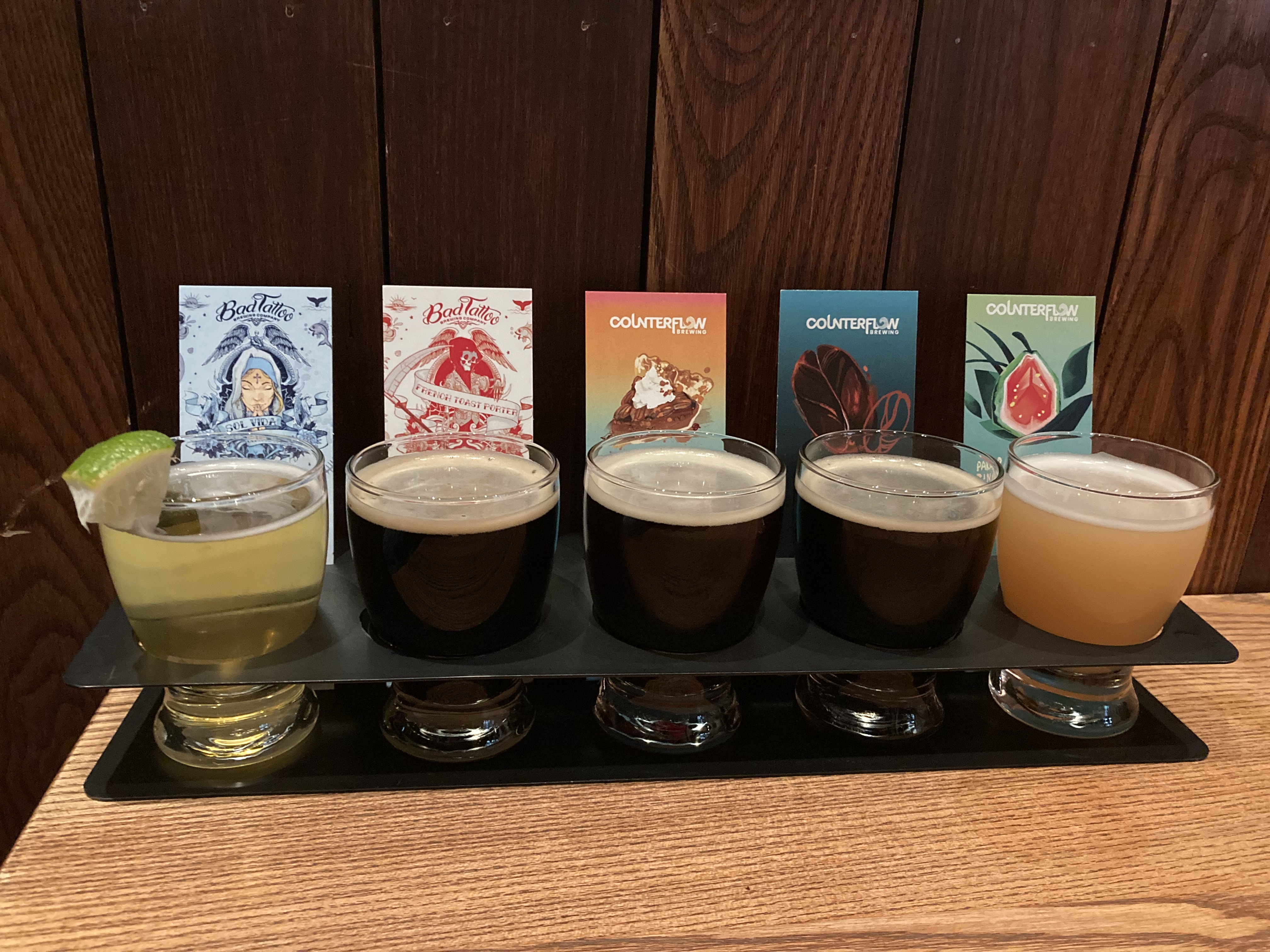
Through the Heart of Canada: A Vanlife Rite of Passage

An unfolding theme to my 2022 has been rapid, big changes. While I tend to have a “general” sense of direction in my life (now, finally, sort of), I am also like a leaf in the wind. So when opportunity knocked, and inspiration struck, I went for the chance to spend the summer in Calgary.

While my first ever vanlife trek took me from Ontario to Newfoundland, this would be my first time driving west. I had no idea what to expect beyond a general impression given by what others had said in passing. I was told that it took forever to get out of Ontario, that Manitoba and Saskatchewan were flat and boring, Alberta could be a culture shock, and that I’d love BC.

As I looked up sights to see along the way, I saw that this portion of the country was called “the Heart of Canada”. And not long before heading out, I happened across the movie One Week on Netflix. It’s got Joshua Jackson and a guest appearance by Gord Downie, and chronicles the story of a young man who, in the face of a severe diagnosis, decides to drive from Toronto to the BC coast by motorcycle. It’s a very “Canadian” movie, and as I passed motorcycles on my own drive, I thought of it often, making sure to stop off at some of the “World’s Largest” pit stops. Similar to my own outlook on life, this movie reminds us to do the things that are worthwhile in life while we can, to not take time for granted, and to be honest about who and what matter to us.

As a Canadian vanlifer, doing this drive (3,500km) felt like a right of passage.

DAY 1

I clued up some things before hitting the road – refining the packing/ storage process, visiting a couple of key locations to say my goodbyes (trail and cemetery), and then I did a short drive to Parry Sound, where I spent my first night. The further north I got, the nicer the highway became, as the terrain shifted just east of Georgian Bay. (One of the great things about exploring Ontario in my van via thru hikes is that I’ve gotten to know the geography a lot better).

Side note: I’d been getting a bit of “spark knock” / engine knock with my van, so I decided to try premium fuel on this drive. It was painful what with the gas prices… but the knock has since disappeared.

DAY 2

I wanted to hike The Crack at Killarney Provincial Park, so I went 50km out of my way off the main highway. It’s a popular destination, lots of people and a crowded parking lot. While it is described as one of Ontario’s toughest hikes and a 12km (total) there-and-back, I’m not sure I would agree with those assessments. Then again, perhaps that’s partially due to my experience level. Even at a good clip, a 5km/hr hiking pace is what I would expect from myself. This trail took me two hours – including taking a bit of time to take in the views at the top. With the sections of rock climbing, I wouldn’t think I’d have been getting in more than 4km/hr.

One thing that was nice about this hike was that there really weren’t that many bugs – in stark contrast to the Rideau Trail. You also kind of get a sense for what type of hiker you are when around others doing the same, and I guess I’m the “on a mission” type. One guy did not seem to like it when I passed him and had to attempt to get the upper hand afterward. I also seem to enjoy rocky terrain – maybe the East Coast Trail and Bruce Trail have influenced me in that regard (but give me rocks over swamps any day).

All in all, the rock climbing was fun and the view was a nice reward. I would definitely recommend this hike.

Following the hike I drove to Sudbury to grab dinner, and out of curiosity, to get a feel for the city. I couldn’t put my finger on the vibe, but noticeable were the quarries and lakes. Evidently Sudbury is known for rocks and mining.

While it was getting late (relative to sundown), and I could have spent the night in Sudbury, I wanted to get more miles in, so I kept driving. I immediately regretted this decision, as my next planned overnight spot was Sault Ste Marie, which was still 300km away, and I was losing light. I was not keen on driving in the dark in moose country. My go to in the dark is to tail a truck, but I was on the lookout for somewhere to stop. In a little place called Spanish I spied a truck, a trailer, and a campervan all looking like they’d stopped for the night, so I pulled over into this little gravel area off the road and chanced it. No signs, no disturbances.

DAY 3

The drive to Sault Ste Marie, which lies on the US border with Michigan, took me along the waters off Lake Huron. I saw a fox just off the highway, as well as signage alerting me to the fact that Sault Ste Marie is home to the first female Canadian astronaut, Roberta Bondar, who flew aboard NASA Space Shuttle Discovery in 1992.

After some errands and planning in Sault Ste Marie, I headed to Lake Superior Provincial Park to see the Agawa Pictographs. It was a very short hike and some treacherous footing along an outcropping of rock above the lake in order to see some very cool images in ochre.

Then I headed to Pukaskwa National Park. I had just enough time for a couple of short hikes before sun down. The terrain reminded me a lot of Newfoundland.

On the way out of the park I had a baby black bear run across the road in front of me. I ended up chancing another turnout for my overnight stay – it was fairly dark when I got there, but come morning – once again graced with no disturbances – I found that I was actually in a really serene spot, surrounded by forest and across from a small lake. The stars were innumerable in such a remote area, too.

DAY 4

My first stop as I headed toward Thunder Bay was Ouimet Canyon, the biggest canyon in Canada, and it took my breath away. It’s the kind of place that makes you feel small, and in turn makes your troubles feel inconsequential.

The picture does not do it justice.

Next I headed to a Thunder Bay amethyst mine (Diamond Willows) where you get to fill a bucket with pieces of amethyst you find yourself around the mines for a very reasonable price considering what amethyst goes for in stores (you also pay in the coin of the realm with many a mosquito bite).

Of the cities I was to pass through, Thunder Bay and Winnipeg were the ones I was warned about, and upon checking, they do have higher crime rates. So I kept my time in Thunder Bay to a minimum and just filled up on gas and grabbed a snack for the road.

I proceeded to Kakabeka Falls, about 20 minutes north of Thunder Bay, which is also definitely worth the stop – it’s literally right off the highway and a sight to behold.

I saw an adult and young moose as I continued my drive north. While driving around Lake Superior had been extremely picturesque with rolling coastline and the water, north of Thunder Bay is where things petered out and became straight and flat. And I found it strange that the speed limit here, despite being straight and flat, remained at 90km/hr – maybe because of wildlife?

Once again, I kept my eyes peeled for a suitable overnight spot off the highway and ended up turning into an asphalt area near Upsala. The van was mostly hidden behind tree line here, and despite it looking like it could be the kind of place teenagers came to hang out, I had no issues. A road worker drove through around 8am – there may not have been signage, but I didn’t know if there were bylaws in the area, so I hit the road shortly after. This was probably the worst spot for mosquitoes. It was also where my clock first went back an hour – which was a welcome change as I tried to jam pack my days.

DAY 5

I stopped at the Walmart in Dryden, ON to break up my drive and plan my day. It’s a very small town, but has everything you need for the road.

As I drove through small rocky “cliffs” on either side of the highway, lakes and forest, the northern Ontario landscape blended as I finally crossed the border into Manitoba. I wasn’t in Kansas anymore.

I had been considering stopping in to Winnipeg, but was a little nervous after a friend told me of their “welcoming party” where the windshield of vehicles from out of province get smashed in. I don’t like to let fear stop me, but there is also a fine line between bravery and stupidity. I decided to chance it as there were a couple of things I genuinely wanted to see – and who knows when I might ever be here again.

The first thing I stopped to see was Saint Boniface Cathedral. This felt like a safe area and I had no qualms about leaving my van to explore. There was a little cemetery and a view across Red River of some prominent Winnipeg landmarks. The Cathedral ruins were lovely.

I had really wanted to attend the Hermetic Code Tour at the Manitoba Legislative Building, an architectural tour on hidden hieroglyphic inscriptions, numerological codes, and Freemasonic symbols within the building’s structure. But I found out after I got there that it was not currently being offered. I toured the building grounds and luckily Strider was right where I left him upon my return.

I drove to a Brandon Manitoba Walmart for the night. As usual, there were other RVs there, which is always a comfort. I saw what I’m guessing was an elk or caribou off the highway.

DAY 6

I wanted to stop somewhere in Saskatchewan and Regina was on my route. But I’d be lying if I said this ad didn’t play a crucial part in my wanting to visit:

You’re welcome.

I looked into what there was to see here and I came across a castle – right up my alley! Stone Hall Castle is a stone fortress housing the owner’s collection of medieval historical artifacts, the oldest being a chest from the 1400s. The tour gives history of the original owners and then takes you room by room, describing the history of various furniture, customs, paintings, and other uniquely acquired historical items. There are a lot of beeswax candles here (the owner makes and sells them) – I love beeswax candles.

Next I hit up the Queen City legislative building, which I’d heard was the biggest in Canada. It lies on the waterfront of Wascana Lake, and has beautiful gardens before it, which were dedicated to Queen Elizabeth II.

Driving through Saskatchewan, there was something expansive and charming about it. I didn’t feel the same as others – I thoroughly enjoyed the landscape. Sure, it was flat in areas, but there were also rolling hills, farmland, lakes, and something about a sunset on a horizon as far as the eye could see. I also found that, Regina at least, felt safe and clean.

I made it to Moose Jaw to see Mac the Moose as well, where I was introduced to prairie dogs for the first time, before driving to Swift Current Walmart for the night.

Mac The Moose, Moose Jaw Saskatchewan

Looking up at my first “World’s Largest” (or in this case, tallest) structure – I couldn’t help but think about the movie One Week. There was a definite inspiration within that film that was lifting me up on parts of my own trek across western Canada.

While Walmarts are fine overnight spots, I missed the little turnouts along the Ontario TCH that I’d grown accustomed to seeking out – the prairie highways are not conducive to this in quite the same way. But unfamiliarity simply requires exploration to broaden our skill set and knowledge base. I happened to see a couple with a small trailer who looked to be spending the night beside Mac the Moose. I also saw an RV on a strip of land running through a lake off the highway, and figured they were camping there, too. Southern Ontario doesn’t have much of any crown land, so I’m looking forward to expanding my vanlife overnight repertoire in that regard out here.

DAY 7

I began my day by driving to Medicine Hat – I’d made it to Alberta! Another “World’s Largest” – the Saamis Tepee.

Then I was headed to a destination I was really looking forward to – Dinosaur Provincial Park. It wasn’t so much the proximity to dino fossils that captivated me, but the badlands landscape.

View from the park entrance

Dinosaur PP has several trails for hiking (I hiked them all, some of them twice), but access to the natural preserve is only by guided tours, so I booked one for the following morning – I was staying the night at the campground. My favourite trails were Coulee Trail (which gave great panoramic views) and the Badlands Trail (which brought you close up within the hoodoos).

One reason I loved the badlands so much was because it reminded me of Joshua Tree – one of those places that calls to my soul. JT also happens to be home to a musician who created a song which to me is the epitome of how the desert would sound in musical form:

There’s also something about the desert that I just love. Who knew there was a place like this in Canada (hailing from the east coast – I sure didn’t). Rattlesnakes, scorpions, black widow spiders, and cacti can all be found here. I only saw the cacti. The biggest annoyance was for sure the mosquitoes. And the sagebrush was a defining feature of the land – I rubbed the leaves between my fingers any chance I got to smell those distinctive volatile oils.

DAY 8

After a lovely stay in the campground (bonus – you can view photos of sites when booking and choose ones with shade), I took a guided tour through the preserve. I learned how “hoodoos” are pillars of sandstone with ironstone caps and the name comes from the NOLA / hoodoo practice due to the impression of being “bad magic” or with regards to “bad spirits” (even the landforms here were considered to be beings because they cast shadows), likely for the same reason these are called “bad lands” – because of the harsh terrain. Vision quests occurred on these lands (not everyone was successful in receiving a vision from the creator). There is a dinosaur named after Draco Malfoy (the Dracorex hogwartsia). And it is 3 degrees hotter in the badlands than in nearby areas due to the rocks. We even got to look for fossils (something I was not very good at) and people actually found them.

Side note: I couldn’t help but think of the bands Dinosaur Bones and Dinosaur Pile-Up while in this park…

I did my hiking and took advantage of the camp showers, then was on my way to Drumheller. The Walmart once again had several RVers, and the parking lot was right at the base of some of that quintessential badlands terrain. Before dark I hit up the World’s Largest Dinosaur before picking up dinner and winding down for the night.

Day 9

First stop of the day was Drumheller’s Little Church. It is very small.

I then headed to the Royal Tyrrell Museum of Palaeontology, which houses one of the world’s largest displays of dinosaurs.

Black Beauty – Tyrannosaurus rex, 67 million years. The remains were blackened by manganese in the water during fossilization.

I sort of lucked into seeing Horsethief Canyon:

And then the time had come for Calgary!

Conclusion

It’s looking like I’ll be in Cowtown for the summer, but beyond that, who knows. I’ve got some ideas, but anything could happen. I’m definitely leaving room for serendipity on the road to my goals.

I usually close out my blog posts with a song, but there are two songs that struck me this time. The first was sort of the unofficial theme song for my drive – I played it on repeat:

Do you want to live? Do you want to die?

The second is one that was featured in the movie One Week, and the lyrics, well, I think they’re pretty self-explanatory:

Until next time,

Kat

Copyright © 2022 Chronic X-Roads. All Rights Reserved.
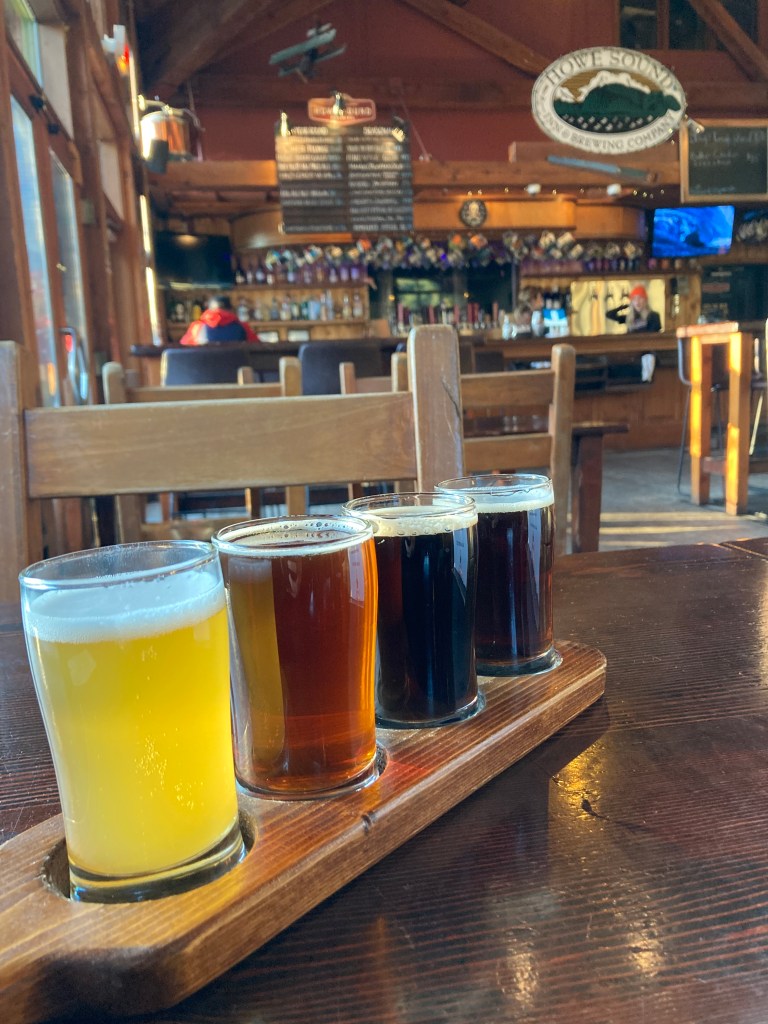
Rideau Trail 2022: Choose Your Own Adventure

The Hike

For my 2022 edition of a thru hike, I decided to tackle the Rideau Trail, which consists of about 327km of main trail, taking you from downtown Kingston, to downtown Ottawa (Ontario, Canada) along the Rideau Canal.

This choice of trail was born basically when I noticed another hiker was going to be attempting it. Before then, I hadn’t really heard of the RT, or at least I wasn’t paying attention. Just hearing about it, of course, is not enough of a motivator to commit to a trail. But I happened to have gone to the University in Kingston (where, evidently, I lived in a bubble and had not seen much of the area beyond campus, downtown, and the student ghetto). I was also born in Ottawa (though my parents moved when I was still a baby, so you could say there’s always been that curiosity). And I suppose a touch of nostalgia or wanting to connect with the past played a role, as I knew that my Dad had hiked in the Frontenac area – and as my mother would later tell me – owned a Rideau Trail Guidebook from 1987. Bonus: I had some friends in the area I could visit along the way.

The prep for this trail was pretty similar to the prep I’d done for previous trails, so I won’t be reiterating that here (see past blog posts). I did comb through the Rideau Trail Association’s (RTA) website and printed off their maps and trail descriptions.

Although I’d sworn off the whole hiking AND cycling method following the Bruce Trail – I ate my words on that one and indeed launched into that old familiar routine on the RT. By now, the routine quickly becomes natural. 

Somewhere along the way I came across an old newspaper clipping of my Dad and his words on marathon running – and they’re right on the money for thru hiking, too.

I do get asked quite a bit to explain how I thru hike with a campervan and bike, so here it is: I drive to one trailhead, cycle on roads to another trailhead, lock up my bike and hike back to the van. (Outside of that, I go and pick up the bike at the end of the day and then drive to an overnight spot. I’ve found that many trailheads are not feasible for staying overnight).

Among my pre-/start of trail traditions, has emerged the desire to disconnect. For the first week of this hike – I was not active on social media. In fact, I don’t believe I explicitly shared that I was doing this hike until more than two weeks in. One of my best friends said she didn’t realize I was doing it until I was about finished! The thing is, the beginning of a trail is where you have to work out any kinks. You have to get used to the trail, get to know it, discover what you’re in for. Your mind needs to adjust. And your body is going to tell you its weak spots, too – and you have to hope (I use that word loosely) that whatever pops up won’t be a deal breaker. I’ve had one of those – last summer on the Bruce Trail. I got achilles tendonitis and had to heal it for 3 months before setting out on another attempt. So I get cagey at the start of trails now, I keep it close to the chest. This is in stark contrast to advice given by Zach Davis in the wonderful book “Appalachian Trials: A psychological and emotional guide to successfully thru-hiking the Appalachian Trail”. Davis advises to post about the endeavour ahead of time – because others knowing will keep you accountable and that much more determined to succeed.

And with that preamble out of the way – let’s get to it! This hike was completed over a three week period in May of 2022 – my first Spring hike! My aim was to beat the heat and the bugs, while also starting after there would be likelihood of nights below freezing.

DAY 1

⁃ 23.2km hiked

Overlooking Lake Ontario

Based solely on personal preference, I did not cycle on day 1 (or day 2), opting to avoid cycling on busy downtown streets. I parked at Lake Ontario Park, around km 7, and did a there and back on foot to the start of trail marker, which is located across from city hall. I also took the liberty of adding in some side trail. Being the first week of May, I wasn’t wearing any sunscreen, and paid for that with a sunburn to the face (could have been worse). This portion of the RT I was intimately familiar with, as it had been a running route of mine when I was at Queen’s. It takes you along the waterfront, by the old psychiatric hospital (a favourite), by the old penitentiary, through parks, and to the downtown core at the base of Princess Street. The side trail (blue markers) was a tad more bleak, and did go through what I would call sketchier areas. Overall, it was a beautiful day, crowned by swarms of mayflies at dusk as I returned to the van.

The evening in the van brought a sobering wave of melancholy. I know it’s commonplace for people who talk about treks like this to simply rave about how amazing it was – but the truth is – it’s not all sunshine and rainbows. All my prior excitement for this hike just suddenly went out the window. The beginning of a hike like this is always the hardest I find – it’s the most painful, the most uncertain, the most daunting. An uphill battle until you get momentum, which only comes by taking things day by day. I decided to do what I can each day and keep telling myself positive things. Perspective can make all the difference. And on that note – it truly is the adversity of a thru hike that makes the end feel like you accomplished something.

DAY 2

⁃ 22.4km hiked

As it turns out, a good night’s sleep and a new day can do wonders for clearing up those doom and gloom clouds around your head. I figured – I don’t know when I’ll be able to take the time to do something like this again, so let’s enjoy it!

Another there and back day, mostly on roads, which I find to be extra hard on the body. Your feet ache a lot more, the surface is harder, and the lack of alternating between hiking up and downhill means you aren’t switching between which muscles your body is using – therefore not giving any muscle group a break. This left me feeling extra exhausted by the end of the day. Maybe it’s just me, but I actually wish the RT hadn’t been so flat – there’s something about challenging terrain that really makes you feel like you’ve done something.

One highlight of the day was that the RT took me through Cataraqui Cemetery – a beautiful cemetery in Kingston, which houses the resting place of Sir John A. Macdonald (if that interests you).

The RT joins up with the K&P trail (Kingston & Pembroke), a multi use trail, which heads north to join with the Cataraqui Trail (another multi use which heads east and ends in Smiths Falls). A portion of this trail was washed out by an adjoining swamp. Though only ankle deep, and as I had no open wounds on my feet yet, I decided to take off my socks and shoes and wade through barefoot. It was kind of nice, if I didn’t think about the geese in the area and their droppings. I do clean my feet thoroughly every night though.

DAY 3

– 14.3km hiked

– 13.5km cycled

Day 3 took me largely along the K&P trail, with the RT veering onto my first taste of actual “hiking trail”. I even saw a stile. Just prior to arriving at the van (around 6pm), I was swarmed by black flies dive bombing my head. I was able to lose them, but they surrounded my van not long after I got in. I’ve developed the theory that they will gather around an idling vehicle due to emission of CO2. That’s why black flies and mosquitos are attracted to us – our breath. So it would make sense that a vehicle’s exhaust would attract them also – they’d gather around the van just after I park, and slowly dissipate in time. I could be wrong – but it’s a hypothesis.

Stile

DAY 4

⁃ 15.6km hiked

⁃ 10km cycled

I can’t remember why… but I was on a mission this day to finish my hike quickly. And I did – taking just 3hrs to complete over 15km (to me, 5km/hr hiking is a pretty good clip).

I suppose after the previous evening’s swarm of black flies, I had bugs on the brain. I thought to myself – every hike has its villain – last fall was my foot injury and bear country, this time it’s bugs? If there’s one thing I feel can ruin the enjoyment of a hike – it’s those bloodsuckers (I like bugs that mind their own business). I told myself – if I ever want to attempt the AT – I’m going to have to deal with bugs. So think of this as training. (Ironically, I almost got used to the mosquitoes by the end of the trail). On the flip side – this is another reason that supports my conclusion that fall hiking is the best.

Near the end of the day, I experience a novel sensation on one of my heels – the sensation of a blister popping. Which has never happened to me like this before, and felt very peculiar. I had several blisters by this point (what’s new).

I also was experiencing rubbing on the back of my right heel, and some pain – I worried that this could lead to my right Achilles becoming a problem. I continued to do eccentric heel drops throughout this hike, and was diligent about stretching. Luckily neither Achilles flared up to the point of no return.

DAY 5

⁃ 27.8km hiked

⁃ 18km cycled

My longest day yet was born out of the desire to avoid paid parking. With the close proximity of Gould Lake Conservation Area and Frontenac Provincial Park, and with no parking between them, I set out to hike them both.

It was a fairly hot and sunny day. I thoroughly enjoyed the trail near point 04A. I got to see a porcupine climb a tree, many snakes sunning themselves, a turtle crossing the road, a few deer in the distance, and lots of dragonflies. At one point two geese waddled away from me, one in front and one behind their group of fuzzy children – I thought that was neat how they guarded them. This was probably the most scenic day of the entire hike! The shade of forest and wind helped with the heat. Proximity to water level brought on the mosquitos. There were several sections of trail – mostly the northern part of Gould lake and private land – that I found to be somewhat overgrown and easier to lose the trail. Also with Poison Ivy. I was grateful that Frontenac had a machine dispensing Gatorade, as I was making my way through the 2L of water I was carrying too quickly for such a long day (I do still carry a filter and tabs in the event I find myself in a pinch). The mosquitoes were still young, with a few adults pestering me – I decided to call them skeets (mo-skeet-os). I also had another swarm of black flies descend when I got back to my bike. I had to race the sun a bit on my bike ride back to the van (I usually cycle first, but on the odd day I’ll switch it up), but I made it, and it was a lovely ride – running from the black flies and viewing the lakes.

DAY 6

⁃ 20.5km hiked

⁃ 17km cycled

By this point I was becoming accustomed to the fact that I really needed to battle my aversion to being a morning person because the earlier I started my day, the more I could avoid the hottest part of the day and dusk – when the bugs were the worst.

This morning bike ride exhibited some pretty big spiders on the side of the road.

The hike began with a portion of private land, then joined the Cataraqui Trail for about 7km, before entering forest that meandered through dry elevations, low bogs, and around lakes.

The final stretch of the day was particularly jarring. Navigating quite a boggy section (wet mud you would sink in) – my solution was to step from tuft of grass to tuft of grass. I tend to do quick tick checks throughout hikes as it is – and boy am I glad I did after this section – because I pulled five ticks off my legs from that crossing alone. The thought sends shivers down my spine and contorts my face into a perpetual grimace. Needless to say – there was another super in depth tick check once I got back to the van.

Lesson: avoid tall grasses in wet areas. Also, post hike, I learned that – while I had not seen a single tick over the span of 900km of the Bruce Trail – others have reported experiences like mine above on the BT. If I were to guess – I’d say that it might be due to the season, as I hiked the BT in the Fall, and I believe Spring is the worst season for ticks (winter being the best, summer second best as they avoid dry areas – sun dries things out). Then again – the Rideau Trail is a heck of a lot more boggy, swampy, and wet, with a lot more overgrown long grasses. And Kingston is known as a hot spot.

I took a rest day after this experience to consider some things. Ultimately, to my disappointment, I decided to alternate my route to Ottawa. I would detour an 80km stretch of the main RT, which, based on the maps, contained the worst terrain for mosquitoes and ticks (later confirmed by resident hikers). Instead, I followed the Cataraqui Trail (also part of the Trans Canada Trail) to Smiths Falls to rejoin the RT there, and was able to maintain a continuous route from Kingston to Ottawa. “Choose your own adventure”, as they say about the CDT. It was hard to not feel like I was failing, but I could still do something, and do it my way… That’s something the trail tends to do though – it grinds you down to your core, and the essence of what motivates you or what you value. The key for me was to enjoy what I was doing – not to just do it because I think I “should”.

Side note: during my time in Kingston I developed an affinity for this little spot by the airport where you can park right on the lake. You get a breeze off the water, which was much appreciated as most of the hike saw hot weather. And parking in shade made all the difference for the van not overheating.

DAY 7

⁃ 17km hiked

⁃ 17km cycled

The day began with a pinched nerve in my neck. Because I was picking the trail up where it had left the Cataraqui Trail to go into woods, I cycled from a trailhead to this spot, then walked the bike back. The Cataraqui Trail goes through lots of forest and standing water, so that paired with temperatures in the mid to high twenties, was a recipe for mosquitoes continually getting worse. On the other hand, I got to see more fuzzy baby geese and duelling dragonflies.

DAY 8

⁃ 17km hiked

⁃ 13km cycled

This was the day I hiked through Smiths Falls. Because of a forecasted thunderstorm in the afternoon, I did my best to start early – I ended up getting on my bike at 8:45am, which just might be my earliest day ever? This night owl was proud of that – considering it’s not just get up and go, there are a bunch of things to do in the mornings.

It turned out to be fairly sunny, and I got another sunburn, despite putting sunscreen on midway through the hike. On a stretch of road walk through farmland there was a turtle in the middle of the road, so I gently picked him up and moved him to the side he was headed for. Back at the van, it was not enticing to boil water to make a hot freeze dried meal when the weather was towards 30 degrees C. I also witnessed some black birds chasing off a crow. And my blister count had come in at seven.

DAY 9

⁃ 24km by foot (ran ~17km)

⁃ 16.5km cycled

The mosquitoes were getting so annoying at this point that I had come up with another novel idea – what if I outrun them? People do trail running all the time. I could scrap my pack, carry only the essentials, keep a water bottle on the bike… Not only would this keep the mosquitoes away for the most part, it would also shorten my days. Rather than 24km taking roughly 6 hours of hiking (my average pace is 4km/hr) – it took me 3 hours. The only downside being that when you’re moving fast you don’t have as much time to take in the scenery… I alternated running and hiking – hiking where there wasn’t much standing water, or it was open with a breeze – hence less mosquitoes. Running was harder on the knees, but it worked. The main risk being if I had an issue with my bike – I wouldn’t have my repair tools with me (I could have used one of those little runner backpacks). This day happened to be cooler as well, which also helped with mosquitoes being slightly less (though not as much as one would hope).

DAY 10

⁃ 21.3km hiked

⁃ 21km cycled

Today’s hike was from Smiths Falls to Perth (I backtracked a bit). The bike ride was great – I did a 16km stretch of road in 50 minutes, which I was proud of (it’s usually pretty slow going on my mountain bike). I knew that a couple sections would be iffy regarding ticks – and I was right – long grasses – and I pulled one tick off me. But otherwise it was a good day. Perfect conditions – sunny and high teens. Poonamalie Side Road was the worst for mosquitos – though dragonflies graced me with their presence and ate some of the skeets around me. Near Poonamalie is where I found the tick. A good chunk of the day was on roads (where black flies swarmed until I sprayed my homemade lemon eucalyptus repellant and walked fast), and then along the Tay River into Perth, which was lovely. 

I ran into three section hikers from Kingston near the end of the day, and they invited me to join them for a beer at Laketown Beer Co in Perth.

DAY 11

⁃ 15.7km by foot (8 miles/ ~13km running)

⁃ 15.7km cycled

Day 11 saw the completion of the Cataraqui Trail to link up with the RT in Smiths Falls. This was also an outlier of a day temperature wise, with the high being only 13 (mosquitoes a little less) – I actually was pretty cold by the end of the day, but can’t complain – I’d rather things on the cooler side than the hot side. It was a rainy, gloomy day – I loved it.

DAY 12

⁃ 22km hiked

⁃ 16km cycled

As it would turn out, this day presented another mishap. But it started out well enough, cycling to Nicholson’s Lock Station. I then visited McGuigan Cemetery, one of the oldest burying grounds in Eastern Ontario (from 1800). On through Merrickville – which is a charming little town, with its own locks, a great little campground on the canal, and some lovely shops.

The trail takes you past some ruins, and then along roads, joining up to 9km of old dirt tracks. 

Lily of the Valley

The mishap encompassed a bunch of areas of trail that were completely washed out. At first this was ankle and shin deep – which was fine. But then there got to be areas where the water was getting deeper. 

It was slow going wading through the water, so the mosquitoes would descend. The worst part was where a swamp had taken over the trail and I had to wade up to my thighs. The footing was soft, uneven, and unstable. Long story short, I saw what looked to be a beaver dam, and beaver water can be contaminated with giardia. In my mindless rush to get through the water and get away from the mosquitoes – there was splashing, my hands got wet, I absentmindedly brushed my lips with my fingers, and there you have it – I wondered if I might get giardia. It didn’t help that only a few hours later I became extremely nauseous and my intestines were unsettled. It seemed quick to be from the water – but who knows. I also was keeping an eye on West Nile Virus symptoms (headache, muscle aches, nausea, disorientation/confusion, muscle weakness). Over the next 5-6 days I had bouts of nausea and a rumbling digestive tract, but whatever it was – it seemed to be mild, so I am grateful for that. Back at the van I quarantined my clothes and cleaned myself up. As I’d popped a blister the day prior, I paid extra close attention to disinfecting. I was also grateful for the ginger capsules I’d made for the trek, which are antimicrobial and helped with nausea. I had a few herbal tinctures with me – St. John’s Wort, which is antiviral, and Vervain, which can be anti-parasitic. I figured- in the event that I was battling one of those things (WNV or Giardia respectively), it couldn’t hurt to supplement with these remedies. 

Side note: while I’ve been able to get away with wearing leggings on my previous (autumn) hikes, I need to invest in proper hiking pants that mosquitoes can’t bite through!

Around this time I’d been growing tired of parking at the Smiths Falls Walmart as there was construction going on in the mornings, and I’d discovered a free parking lot under their water tower. At first I thought it could be a sketchy spot, but then I saw another camper van parked there, so I decided to give it a go for a night. And it proved to be great – super quiet, and right next to the canal. There’s something really rewarding about finding your own overnight spots/ not relying on Walmarts/ waking up in the morning undisturbed.

DAY 13

⁃ 20.3km by foot (running & hiking)

⁃ 19km cycled

This day brought me through Marlborough Forest and along roads back to Nicholson’s Locks. Originally I was going to bypass Marlborough, but last minute I decided to go for it. It was definitely overgrown in areas, the relief coming from cedar forests where the ground lacked the long grasses. Luckily, I didn’t find any ticks, but I did have a brush with poison ivy, there were puddles to walk through (just ankle deep), and due to my attention being on the ground as I tried not to touch the poison ivy – I ended up walking straight into a low hanging branch, and got a good smack to the head. The hit landed on my sunglasses – which magically survived unscathed (I remember reading on purchase that they were kind of indestructible – and I concur). At that point you could say I was fed up with the day. Mosquitoes were ever present.

DAY 14

⁃ 20.4km by foot (running & hiking)

⁃ 26km cycled 

I was still feeling a bit under the weather at this point, but not enough to derail my plans for the day. This day was marked by some nice cedar forest trails to start off. I did have two brushes with poison ivy – the first was poking up through a crack in a bridge and I hadn’t noticed it until it was too late. The second came due to the need for bushwhacking around a fallen tree too large to climb over or under (the Ottawa area had been hit hard by a storm recently – lots of downed trees and lots of power outages). The forest was thick with poison ivy in this spot and it was near impossible to avoid. As soon as I stepped into the forest, it was like legions of mosquitoes rose from the depths of the muddy ground… and let me tell you, the whining of mosquito swarms making you want to rush to get away is not ideal when you need to take your time and step precisely through a poison ivy patch…

I tried to tell myself that these are the challenges that will make getting to the end feel so good, that make it worthwhile, that give stories to tell, and that make things interesting… but I was having none of that in the moment.

I’m not sure how I got through the 26km bike ride at the end of the day. Upon arrival at the van – the mosquitoes were ridiculous. I was, after all, parked at the edge of a forest.

That night I drove to the Barrhaven Walmart. But first, I decided to pick up dinner at Metro – they’ve got pretty good wraps, and I wasn’t keen on whipping out my camp stove at dusk where the mosquitoes were that bad. As I waited in the turn lane to enter the Metro parking lot, I witnessed a pedestrian get hit by a car. It was extremely upsetting to say the least. The guy looked to be around 20. I couldn’t find any news about this, but I hope he made it and is able to recover. It’s things like this that provide a stark reminder of how fleeting and fragile life is… tell the people you care about that you care.

DAY 15

⁃ 14.1km hiked

⁃ 15km cycled

If I was in a hell loop, it would potentially be an endless over grown trail with long grass, fallen trees, bushwhacking, fording swamps, mosquito swarms, and ticks. Oh wait, hell is a party, and this was my day on trail.

So basically, the first portion of hiking for the day went through an area that was very overgrown, washed out, and with lots of trees down- which I either found a way around or climbed under/over. 

I was kind of amazed that I didn’t see any ticks, but the force was strong with the skeets, and there was plenty of poison ivy. The rest of the day was spent road walking.

It was a shorter day as I had booked a campground for the night in Merrickville and needed time to shower and do laundry.

DAY 16

⁃ 12.4km on foot (running & hiking)

⁃ 15km cycling

I got a late start to the day, so I planned a shorter hike. Which was fortuitous, as there were, again, a lot of trees down on the trail. I guess I hit these trails in that sweet spot post-storm / prior to clearing. (You can’t predict everything on a hike!) On the bright side, this was my last day before hitting the last stretch of the RT which followed solely multi use trails. I didn’t run into any poison ivy, but I did find one tick. Mosquitoes and black flies were around. My mantra became: worry about not stepping on poison Ivy, check for ticks after. The easiest thing was to climb on top of the tree trunks, but sometimes I had to go under/ through the small branches and leaves, if not around.

DAY 17

⁃ 21.2km on foot (hiking & running)

⁃ 21km cycled

LAST DAY! And it was pretty enjoyable. Most of it followed the Ottawa River Pathway and it ended at the Ottawa Locks behind Parliament.

There was a lot of geese shit (I call it Goose Shit Minefield), but also lots of fuzzy baby geese! The waterfront was windy and open, so barely any bugs.

There was a sign marking the end of the trail at the locks, but the old end of the trail can still be found a few km prior to the locks – by a naval monument, down by the water, a plaque set in stone. (Much nicer in my opinion).

On the last day of each trail I’ve thru hiked, there has been some creature that has seemingly bid me farewell. On the ECT it was whales swimming alongside me as I reached the end. On the BT is was a snake on the path. And for the RT, it was a deer. This deer wasn’t bothered by my presence in the least. It carried on foraging, and when it looked at me, it gave this kind of nod, then wagged its tail. I caught that on video and it brings me much joy to rewatch.

FINAL TALLY

⁃ 329.2km by foot

⁃ 253.7km by bike

This hike was completed over a period of 17 days, with five rest days throughout.

The section I swapped for the Cataraqui Trail consisted of 83.8km from point 06A to 10D. I know this will be gnawing at the back of my mind until I complete it, so I’m keeping it in mind for one day in the future… perhaps a crisp, dry autumn.

Post-Hike Vanlife

OTTAWA

Following the completion of my trek, I stayed a few days in Ottawa. I got to visit with my cousin and visit a couple of breweries.

I also happened to be in town while a friend from Kingston was playing a show with his band – so I got to sneak some live music in as well.

In terms of sight seeing, I walked around Parliament Hill, the locks, past Notre Dame Cathedral and the National Gallery, through Byward Market, and past my Dad’s old work at the National Research Council.

Overnight parking actually worked out quite well as I found a lot right downtown, where parking was free on weekends, and two other campervans were parked overnight as well. I left the van there during the day and had no problems.

On my way out of Ottawa I decided to drive by my parents’ old house in Orleans – where I was born. For future reference, driving by and a quick look is fine, but don’t pull over. I’m pretty sure I creeped the neighbourhood out with my white van… it was short-sighted on my part and I felt so bad.

MERRICKVILLE

I wanted to revisit Merrickville as I hadn’t had time to explore when I was passing through on my hike or stayed at the campground. I really enjoyed this little town on the canal. It didn’t take long to walk around. There are neat old houses, old churches, even a psychic parlour, and a food truck called Witch Chips. I grabbed some candles at Wick Witch, then popped into the Goose & Gridiron for a beer. A very charming place.

KINGSTON

I then made my way to Kingston and got to see a dear friend, where by complete fluke I got to go out on a boat on the canal I’d been hiking along for three weeks – kind of a cherry on top ending to the trip.

GUELPH/ WATERLOO/ CAMBRIDGE

As it would turn out, the month following this hike would be a transitional period as I wrapped up the trip I’d just done and started preparing for the next one. In a semi-spontaneous manner, an idea was born out of a friend’s predicament and long story short I would be heading to Calgary next.

In the meantime, I was headed to Guelph for a family affair, and ended up sticking around the area as I planned things out and got things done (with some exploration of the areas sprinkled in).

Evidently, I seem to enjoy touring university campuses – mainly to get a look at the architecture, but I suppose I might be exploring options as I consider returning to school myself in the next while. So I walked around the Guelph University campus, which I found to be lovely, and learned had its origins in farming (also where Ontario Veterinary School is). They’ve got a statue of a Gryphon that you can’t miss – representing their school mascot (Guelph Gryphons).

I walked around downtown Guelph, where the Basilica of Our Lady Immaculate is a standout. I popped by The John McCrae house and gardens (author of In Flanders Fields). And any day where I was working on things from the van – I parked at Riverside Park (there are some spots shaded under trees that were lifesavers on a few super hot days).

Some makers I knew were vending at a witchy pride market in Kitchener so I popped over. I highly recommend checking out Maiden & Crow, who is super talented & kind, as well as I Got 5 On It Tarot, who gave me a phenomenal reading. 

I also toured the University of Waterloo campus. The Waterloo Warriors. This university is more geared towards engineering. While I didn’t find the campus to be as pretty as the one in Guelph (it’s not as old), I did have a personal connection that made me want to explore here – my Dad had gotten his PhD in physics here. So of course I went looking for the physics building, in front of which I remember seeing pictures of my Dad.

I also decided to go and see the West Montrose Covered Bridge (known locally as the “Kissing Bridge”). It’s the only remaining covered bridge in Ontario, built in 1881 across the Grand River. 

Finally, I walked around downtown Cambridge (Galt) one evening. The stone walkway along the Grand River was lovely as the sun set.

Cambridge
MISC VANLIFE STUFF

The only Walmart in the Guelph/Cambridge/Kitchener-Waterloo area that I found to allow overnight parking was the Walmart in Guelph closest to the University. Several in the KW area that I’d called said no. And while the Cambridge Walmart said yes – when I got there there was a sign clearly visible in the parking lot that said overnight parking was not allowed due to city bylaws. There were trucks parked when I arrived, so I might have been able to chance it, but I decided not to. I had no luck on freecampsites.net or Park4Night or Allstays with finding alternative overnight spots to Walmart. A lot of the streets or municipal lots specifically state that parking is not allowed overnight – and that’s not my favourite way to park anyway.

I did also stay at the ON Route in the area without issue. I think the rule that you can only park max 4 hours at rest stops is for general rest stops – not necessarily ON Routes – because this is the second time I’ve asked an ON Route if I could park overnight and they said yes. Online I found a forum that said people have spent the night at ON Routes without issue, and there was an RV and another campervan that parked overnight next to me. Though it can be busy and loud, I do feel a bit more natural at an ON Route because I’m among other travelers.

Morning at an ON Route

I tried a Flying J’s for the first time for a shower. Basically, you go in, pay at the front cash, your receipt shows your customer number and has a code for the shower keypad, then a screen tells you which shower to use. They clean between each use and provide clean towels. The room has shower, sink, bench, and toilet. I was impressed! Some locations also have laundry.

Flying J’s shower

Side note: when I started this trip at the beginning of May (2022), gas prices were at 183. During my time on trail prices fluctuated between 194 to 199. By early June prices had gone up over $2/L, and by mid June in Guelph the price is around 209 (though I’ve seen 215). Pioneer seems to be one of the cheaper places. Scary to think what gas price trends will continue to be, especially with the trek to Calgary on the horizon.

And a seemingly common sense tidbit that has made all the difference to me as summer looms – is how big of a difference parking in the shade vs the sun makes when I have to be inside the van but not driving. Insulation slows the temperature change inside the van, but not indefinitely. Direct sun is the enemy (unless chilly out)!

My coveted shady spot in Riverside Park, Guelph

Outro 

One journey ends, another begins.

Thru hiking and vanlife always seem to do me good, and this particular trip has been a major turning point. There’s so much up in the air for me now. But it’s absolutely for the best – I operate well (you might say better) under pressure. I also always come back to the notion that what you fear is usually the thing most worth doing. I am headed to Calgary next, for the summer, and from there – who knows. So – here I go, leaping into the void.

Later,

Kat

Copyright © 2022 Chronic X-Roads. All Rights Reserved.
Thru-Hike 2021: The Bruce Trail (Part 2)

Why thru hike?

Well, this year I was finishing what I’d started last year, but also – it was the singular thing that excavated me from a deep mental health funk.

I have also come to the conclusion that my previous description of thru hiking – as being a labour of love and pain that you wonder why you’re putting yourself through while doing, but miss terribly once done… is short-sighted.

It’s the beginning of a thru hike that can be painful, the first three weeks or so from my experience – which just happens to be the average length of time of each of my hikes.

But then? You get strong. Mentally and physically. Your body can handle more and more, and you work out the kinks or weak spots. The first few weeks, I believe, are when you’ll see any possible injuries flare up. And your mind gets used to the new routine. What you may have lamented before, doesn’t phase you anymore. And your brain may inadvertently says to itself, in a forcefully comic voice – I eat kilometres for breakfast!

And this is how I felt at the end of this particular hike – by the end I felt like I was just getting started. But alas, I’ll have to bottle that sentiment up and save it for next time.

Another one bites the dust.

This blog documents the journey and some key issues surrounding this year’s hike.

If you want more information on the prep that goes into a hike like this, you can check out my other thru hike blogs: the ECT and BT Part 1.

What’s In A “Thru Hike”?

To the thru hiker purist, how I hiked the Bruce Trail end to end might not be considered a “true thru hike”. I understand this in the sense that I did not do the whole thing in one trip. The whole campervan + cycling thing in addition to hiking makes it a little different also, and I wasn’t camping on trail or carrying all my supplies on my back. But I would argue that in a lot of the ways that count – each part of this hike looked and felt pretty similar (the whole hiking almost every day thing).

So I consulted various sources to see what they had to say about their trails and thru hiking. Here are some definitions/ perspectives that I found:

REI: “A thru hike is an end-to-end backpacking trip on a long-distance trail”.

Wikipedia: “The act of hiking an established End to End trail or long-distance trail with continuous footsteps in one direction. In the US, the term is most commonly associated with the Appalachian Trail (AT), the Pacific Crest Trail (PCT), and the Continental Divide Trail (CDT), but may also refer to other end-to-end hikes… [such as] the Great Divide Trail (GDT) in Canada.” … “Section hiking, on the other hand, refers to hiking a trail one section at a time, without continuity and not necessarily in sequence with the other sections or within one hiking season.”

AT: “We define a Thru Hike as a hike of the entire A.T. in 12 months or less. These 12 months are not restricted to a calendar year.”

CDT: “3,000 milers: The CDTC recognizes anyone who reports completion of the entire …Trail… a journey between the Mexican and Canadian Border along the Continental Divide. Issues of sequence, direction, speed, length of time or substitutes for the “official” route are not considered.”

Bruce Trail: “An End-to-End is the completion of the entire main Bruce Trail on foot. At 900 km long, this journey can be done over 30 days or several years.”

As you can see, the definition seems to vary depending on who you ask.

All things considered, there were definite trade offs in the way I did things.

I still had a pack on my back, but it was maybe half the size and weight. I got to sleep in my van – which gave more shelter and security, though I missed out on the amazing feeling of sleeping in a tent/outdoors (technically this is prohibited on the BT…). I didn’t have to hang a bear bag or be on guard for poison ivy and ticks when choosing an overnight spot to sleep (again, technically not supposed to do this on the BT, though people do, or stay at motels and B&Bs). And I did not have to rely on natural water sources as my only place to get water – I kept water in my van. I actually found that water sources weren’t that plentiful on the BT, but I’m sure it’s doable.

That said, instead of setting up and tearing down camp, I had to drive to and from trailheads, drive to pick up my bike, and line up overnight spots. That plus the cycling took some good chunks of time out of my day, which was especially significant in the fall when you’ve got less daylight hours to work with, making it tighter to get in big kilometre days. The cycling zapped a good bit of energy, and I believe heightens the risk of injury (last year I strained my groin). Leaving my van and bike while hiking increased the risk of theft. Having my van also afforded me the liberty to explore the areas I was passing through more than I could have otherwise.

All in all – I got from one end to the other and I did a lot of hiking!

False Start

I had originally planned on doing this hike in the Spring, before it got too hot. But I didn’t end up hitting the road until the end of June. I had been training this time around- running, cycling, and hiking in order to strengthen all the ways in which my body would be used, each muscle group. I could really feel the difference it made to be in good shape at the outset of the hike – it felt good. Prior to starting I had experienced some minor twinges of aching here or there in my left achilles, but was not too bothered at that point.

DAY 1

  • 12km cycled
  • 19.6km hiked
  • 6th Line (km 13.7, Map 24) to 9th Sideroad (km 33.3, Map 25) at Duncan Crevice Caves Provincial Nature Reserve.

It was a decently warm, cloudy day, and I was suprised how easy it was to fall back into the routine of the hike. Almost like it was yesterday that I’d been doing the first half of the BT. The forests along this stretch were enjoyable, with a few challenging spots. And there was a “Trail Tales” box with a notebook for hikers to sign.

Day 2

  • 9.4km cycled
  • 21.8km hiked
  • 9th Sideroad (km 33.3, Map 25) at Duncan Crevice Caves Provincial Nature Reserve to km 52.2, Map 26 + 2.5km hiking north along road to roadside parking in Kimberley (km 46.8) + 100m + 300m side trail.

The day began with a killer uphill stretch of cycling on dirt road. I got to pass through an area with huge erratics on my hike, as well as Kimberley, a cute little town (with a cute little pub). Old Baldy provided a good climb. Deer Flies were annoying. This was the day a tornado touched down not far from me (40km northwest, about two hours after I’d finished for the day), and I finished my hike just as some rain and a thunder storm were moving in.

Day 3

  • 11.2km cycled
  • 15km hiked
  • Beaver Valley Ski Club (km 81.1, Map 26) to Sideroad 16C (km 91.9, Map 27) + there and back between km 81.1 and 79.5 + 1km

This was the super hot day (31C) and it made me want nothing more than to stand under a waterfall… Though I’m told that’s a hot spot for sewage and parasites. I was feeling in good spirits and figured endorphins must be kicking in. The ski hills made for quite the steep and long climbs. The end of the day brought a rainbow and some exhaustion and nausea due to the heat. I also had an ingrown toenail begin to cause issues, and developed my first blisters, one of which was under one of my toenails and kept building pressure. Because my hiking boots were old, I had gotten insoles to help with support, but they ended up causing rubbing on the back of my heel.

Day 4

  • 30.7km hiked
  • Parking at Hogg’s Falls (km 67.5, Map 26) I hiked a loop, to km 52.2, Valley Crossover Side Trail to km 79.5, and back to 67.5.

I had woken up feeling pretty hot and a bit nauseous from the previous day. It was an overcast, muggy morning. It was one of those days where you feel emotional on trail – probably because I had a big day planned, was already tired and not feeling well at the outset, and thru hiking just has a way of grinding you down.

Eugenia Falls was beautiful. I got to clear ALL the spider webs with my face. Mosquitoes proved to be a real nuisance – I was eaten alive – promoting the violent musings of my brain in reciting the intro lyrics to Eminem’s classic “Go To Sleep“.

But all in all, it was a memorable and successful day – my first ever 30+ km day! I finally understood why my Dad was not able to move after running marathons.

The end of day drive also proved interesting as I passed through Osprey Township, where I saw a horse-drawn carriage and what I assume were Mennonites.

Postponing

Ultimately, the twinge/ aching in my foot got worse and was developing into an injury, but that wasn’t the only reason I decided to postpone the rest of my hike.

There were a lot of thunderstorms happening – and if I’d learned anything from last year’s hike – it was to not take any chances getting caught in one of those. And that tornado had touched down nearby. Some tornado info: they are born out of thunderstorms, look for yellow/green/black skies, hail may fall, they usually occur in the afternoon/evening, and tornado season is approximately from April to September.

The mosquitoes had become a nightmare – perhaps that makes me sound like a wimp, but so be it – I’d rather be able to stop and take in my surroundings peacefully than be distracted by the incessant swarming of those buggers! It truly took away from the enjoyment of the landscape and hiking, and I wanted to enjoy this. Doing something you’re not enjoying for the sake of results or completion – that’s not enjoying the journey, and that’s the kind of life I want to avoid. It’s doing things for the wrong reasons.

We’d had a lot of rainfall over the Spring and that coupled with the rising temperatures and continued wet weather set the mosquitos up to proliferate quickly. I got a feel for how they tend to hang out in shaded woods, and wearing black clothing/ short clothing/ tight clothing catered to them. Mosquitoes can develop from egg to adult in just ten days in the right conditions (22-27C). And 10C seems to be the critical temperature, above which mosquito activity rises, and below which (consistently) they start to die off. Mosquitoes dislike dry areas, loose clothing, wind, and smoke. They like sweaty skin and sweet smells. Seeing as how I couldn’t shower and launder my clothes after every day of hiking, I wasn’t keen on covering myself in chemical-ridden bug deterrents. I had a natural bug repellant made with essential oils, but that was oily and the deterring scent didn’t last super long.

Finally, the weather had gotten hot. With the humidity the forecast was showing it to feel like it was 30C+. Hiking for long periods in these conditions zapped your energy quickly, could make you feel ill, and was a risk to your health.

But I got in a good chunk of the Beaver Valley section before calling it quits.

SUMMER TOTAL:

  • Cycling: 32.6km
  • Hiking: 87.1km

Foot Injury

A doctor (GP) took a look at my foot, said it was probably achilles tendonitis, and just told me to rest and it would get better. So I did some research of my own.

The conclusion I’ve come to is that it’s been a whole bunch of things wrong with my foot, and they may be chronic. I’ve been dealing with plantar fasciitis on and off since 2019. I seemed to have developed insertional achilles tendonitis – which is harder to get rid of than regular achilles tendonitis. And the area around the top of my heel bone has a pronounced bump – sometimes called a haglund deformity or a pump bump, which who knows – could be influencing bursitis. Because all of these areas are connected, the inflammation or tightness of one can affect the others.

Icing. The first thing I started to do after the false start was ice my foot. I did this 1-2 times a day, for about two months, especially after activities. But honestly, I’m not sure it helped.

Low Impact Exercise. Warm up, stretch before and after. Increase training slowly. Avoid running. I even avoided hiking and was only cycling to keep in shape, as I wanted to keep exercise low impact – and even after a bike ride my foot would flare up and ache. If I had access to a pool/ liked swimming, running in water would have been great.

Stretching with a focus on the plantar fascia, achilles tendons, and calves. It was important that I started my days with stretching so that I wasn’t moving around with tight muscles, straining them. I would bend back my toes and press down on the plantar fascia, the tendon running the length of the foot along the arch. I also have a massage ball that I roll along the bottom of my foot. The best stretch proved to be for the soleus calf muscle. In all my years of sports and running, I had never used this stretch – so it was no wonder my achilles was giving me problems as I surely had tight calves. When I first started this stretch it didn’t seem to being doing anything, but eventually, as I gained flexibility, I started to feel it. And let me tell you – after a day of hiking – stretching that muscle feels super good. Stretching the lower legs and feet were key daily practices to an injury free hike.

Eccentric Heel Drops. The only thing that really seemed to help the healing process and deliver results was eccentric heel drops. These are done to strengthen the area. Typically they are done with the balls of your feet on the edge of a step and you lower your heel below the level of the step you are on. But with insertional achilles tendonitis this can actually aggravate the area, so it is recommended to do a modified flat version – you just don’t do it on a step and lower your heel to the ground. It took about two months before I could do these without pain. At which point it is recommended to add weights (like a backpack). I never did this, but still reaped the benefits.

Basically, to do these heel drops you use your good foot only (this is important) to get on your tip toes, slowly transfer your weight so you are on the tip toes of your injured foot, then slowly lower yourself until you are standing with your heel to the ground. Repeat this in 3 x 15 reps, twice a day (or as much as can be tolerated). Do it with legs straight. Only stop if pain is severe. It is recommended to do these while wearing shoes. And I did find I was more supported and comfortable in shoes, though now that my injury is a lot better (I’d say I’m at 90%) my feet can go shoeless doing these with no problems.

I also added collagen (tendons are made largely of collagen) as a supplement to drinks and smoothies. There are many foods that can be supportive in healing such an injury (protein, omega-3s and vitamin C to help with inflammation, etc.). And I avoided putting any extra pressure on my injured foot.

After almost three months, I finally started to feel like my foot was making progress. Then, the time came for my autumn attempt at finishing the Bruce Trail – it was now or never. I had no idea how my foot would handle things, but I had to try. I decided to really listen to my body and start slow, taking rest days when my foot was feeling off.

Rob Gasbarro of Outdoor 76 along the AT said: “Justifying huge mileage increases is 100% the biggest contribution to hike-ending injuries. Hikers should be looking at nurturing their most vital piece of gear—themselves … I see barefoot hikers kill it every year. They wear no shoes and do fine because they’re respecting their bodies with incredibly low miles to start. Unbeknownst to them, they’re developing and managing proprioceptors, stabilizers, and responsibly building a bulletproof foot. Treat the first month as the beginning.”

Somehow – my foot made it through. I came to the conclusion that ice and rest are not enough to heal an injury – you need to strengthen the area (I’m sure this is well known, but the healing process is fairly new to me). And I believe that the hiking helped me to do this, got the blood flowing through the area, and ultimately did my foot good – as long as I didn’t push too hard.

During the hike I noticed a few things. There would typically be a kilometre I’d hit for the day where my foot would start bothering me – often around km 17. I also got twinges in various places around my foot – not just the achilles or plantar fascia – it could be around the outer base of the heel also. I noticed that going uphill was fine if I kept my heel to the ground, but if I pushed off from the balls of my feet – that strained things. It was really hard for me not to push myself – whether that be how many kilometres I got in in a day or taking rest days – but I listened to my foot, and when it started acting up I listened. It was better to get to the finish line slowly than to push so hard that I caused a re-injury and couldn’t finish at all. Big picture > immediate gratification. My patience was tested, that’s for sure.

Additionally, hiking on rocks or roads was hardest on my feet. And when my injured foot would start hurting before my good foot, I started to think that this was not necessarily warning of re-injury, but simply a sign of that foot tiring quicker, or perhaps being more prone to inflammation.

My daily routine consisted of heel drops and stretching, and I believe this is in large part what allowed me to finish. I also tried lymphatic drainage on my feet and lower legs, though this never became a daily thing.

*I am not a doctor. Everything I did to heal my foot was based on my own research. Please do your own research / consult a professional if you are injured.

New Shoes

Having a foot injury was the kick in the butt I needed to invest in new shoes. And having begun following several thru hikers on social media, all of whom wore trail runners, I decided I wanted to scrap the boot and try trail runners for myself. I did loads of research, narrowed down the specs I liked and what was available in stores near me, and set out to find the right pair.

Specs

Hiking boots or trail runners? A switch more and more people seem to be making. Typically, it is said that trail runners can last up to around 800km, while boots can go up to 1600km. Boots often run more expensive. They are also heavier, and that weight on your feet is estimated to be the equivalent of 4-6 times the weight on your back (e.g., 2lbs on your feet = 8-12lbs on your back). Rigid boots that don’t breathe are more likely to cause blisters.

Heel Drop. High drop or zero drop? Heel Drop is the difference in height of a shoe between the ball of the foot and the heel. Zero drop shoes are flat – they have no difference in height from front to back. So, zero drop = 0mm drop, low drop = 1-4mm, and standard drop = 7-10mm. Stack height is the height of the midsole, so for example, if you have a stack height of 32mm – 28mm, this gives a drop of 4mm. Shoes like Altras are known for zero drops, and they claim that this feature promotes a more natural gait. It is recommended that if you want to try zero drop shoes, you transition slowly from non-zero-drops. So – if you’re used to wearing an 8mm drop shoe, try a 6mm next time, then maybe a 3-4mm, before attempting 0mm. Zero drops are touted for taking pressure off the knees, so they may be good for people with knee problems. But they shift pressure to the lower leg, the calf/achilles. They also have less arch support. Since I was dealing with achilles tendonitis going into this hike, I knew right off the bat that zero drops were out for me. That said, I made a point of trying on the Altra Lone Peaks at my local MEC, and they absolutely felt distinctly different to walk in. My previous running shoes were an 8/9mm drop, so I was looking to stay in that standard drop range.

Trying on the Altra Lone Peaks – comfortable out of the box & colours right up my alley.

Rock Plate. To protect the feet from uneven terrain or sharp/narrow rock surfaces, and keep the foot from bending around these surfaces so much that it tires out.

Sole Traction. The thing about the material used on the sole is that durability and traction are at opposite ends of the same spectrum. It’s like how softer rubber tires on your vehicle grip wet/slippery surfaces better – but a softer rubber is not as durable. I’ve seen reviews on shoes where the soles that boast the best traction have people saying they wore down way too fast.

Cushioning. Some people like to feel the ground they’re walking on, others require a lot of cushioning to offset the effect of impact on the body – such as taking pressure off an achilles injury. I was interested in higher levels of cushioning. Also, some shoes, like the Hoka One One Speedgoat, use a tonne of cushioning instead of a rock plate. Note: too much cushioning may slow you down/ take away energy, like running in sand.

Support. I was looking for a shoe that had an adequate arch to support my plantar fascia. The right kind of support can also keep your foot in place to lessen the chance of rolling an ankle, if that is a concern for choosing trail runners over a robust hiking boot.

Stack Height. The height of the material between your foot and the ground. Minimalist shoes will have ~15mm or less stack height, while more cushioned shoes like Hokas are at ~30mm stack height.

Toe Box Width. Get into thru-hiking and you’re going to hear people talk about toe splay and the holy grail of wide toe boxes – Altras. The Altra Lone Peak is one of the most popular shoes among thru hikers (at least from what I’ve seen in the US), not only for its toe box, but for its zero drop shoes. It is said that the more one hikes, the more one’s feet seem to flatten and get wider. Toe splay, or the spreading of your toes as you walk, is good for balance, too.

Fit. Knowing what you want in the specs of a shoe is great, but that doesn’t mean it’s going to fit well. This was my issue – I knew what shoe I wanted (Brooks Cascadia) – but it just didn’t fit my foot well and I knew that would bite me in the ass. You don’t have to overthink fit too much – if it feels good, then great! But you don’t want your heel to be slipping (can try the heel lock lacing method), any pinching, noticeable seams that might cause rubbing, or your toe to hit the end of the shoe on an incline. You want a thumb’s width between your toes and end of the insole, and if you are laced up tight and still feel space above your foot, the the volume is likely wrong. Make sure the shoe flexes in line with where your foot flexes/bends. And you want to wear the same kind of socks (thickness) you plan on wearing while hiking when trying shoes on. I would be wary of advice to size up for thru hiking. It is commonly recommended to go half a size up from your regular size to allow for swelling of the foot on long hike days. So when I did this with my shoe purchase, I thought I had my bases covered. Turns out – the shoes were too big and I didn’t notice much swelling in my feet to compensate for this. I ended up wearing double & thick socks, but I still noticed my feet slipping inside the shoe on uneven terrain (maybe the volume was off) – a no-no for blister prevention. I also noticed that trying on the wide versions of shoes seemed to increase the volume of the shoes quite a bit. Thru Hikers typically like shoes that don’t need to be broken in and are good to go right out of the box.

Gore-Tex. A lot of trail running shoes offer Gore-Tex versions, which may be simply a liner, for waterproofing. This may sound like a good option for keeping your feet dry, but there are actually several reasons why I wouldn’t spring for this feature. It bumps the price of a shoe up (about $30 on the shoes I was seeing). Gore-Tex makes it likely that your feet overheat/ can’t breathe – because waterproofing tends to not only keep moisture out, but trap it inside as well.

You will see some shoes that note in the specs “drainage“, or someone will note this in the reviews – and this is also a useful feature so that if you do get wet, the water doesn’t just slosh around your foot.

Other specs to consider include dry time, gaiter attachment, weight, toe guard (you will kick the odd rock), upper material/mesh (is it a strong material that can resist tearing, is it a mesh that will let sand in), and getting professionally fitted (foot length, width, and arch measured).

In my research I reached out to an AT thru hiker I follow on Instagram, Sophia Garber, about picking shoes. She recommended getting professionally fitted and said that she used to wear boots but they were heavy and strained her achilles, and she was put into Brooks Cascadias, which solved all her problems.

I ended up going with La Sportiva Ultra Raptors because out of all the shoes I’d tried on, they fit the best. When researching the La Sportiva brand, I came across this article which was immensely helpful in narrowing down (no pun intended) some options that had a wider fit (this brand is known for having narrower shoes). Because La Sportivas are made with technical mountain terrain in mind, they sounded very appropriate for the rocky trails and escarpment of the BT.

La Sportiva Ultra Raptors:

  • Rock guard instead of a rock plate (there were times I could feel the rocks underfoot more than I would have liked and I wonder how a rock plate would have differed).
  • 7mm drop, satisfying my desire for a standard drop shoe (to keep pressure off the calves and achilles), while also having a slightly lower drop than I am used to – getting me a bit closer to zero drop should I want to gradually get there one day.
  • Rubber outsole: I was very satisfied with the grip of the rubber outsole – a marked improvement over my previous Oboz boots. (I did love my Oboz – wore them till they fell apart – great arch support and super comfortable, but the stiffness gave way to blisters on long treks and traction wasn’t great).
  • Absolutely durable: No visible degradation of the tread after 500km, no tears in the upper mesh, no separation of parts or seams.
  • I could have used more arch support (to help support my plantar fascia).
  • Sizing: Sizes run small, which was of no consequence to me as I wear men’s runners anyways. Sizes are also in European, which actually means you get some sizes between North American half sizes, giving a larger range to choose from.
  • Narrow make: I found them to be a little narrower in the toe box than I would have ideally liked, with one seam against my pinky toe that I thought could rub, but this did not end up causing me any problems.
  • Good quality.
  • I didn’t have any issues breaking them in.
  • Not waterproof, but I still found that my feet stayed fairly dry when it rained, and even after being submerged – they dried out fairly quickly.
  • Cushioning: in terms of absorbing impact to take pressure off the PF and achilles – these were not the most cushioned shoes but worked well enough.

Besides having a size shoe that was a bit too big, I felt that the Ultra Raptors held up nicely.

And while it’s easy to get caught up on shoe specs and blame the shoes if we start to have foot or muscle/joint problems – we rarely give credit to the capabilities of our feet. A super strong, properly developed foot, can handle more. Indeed, by the end of my hike, my balance had improved and my feet felt… meatier.

My Experience

Trail runners beat boots for sure. Sophia Garber had said that the weight of her boots has caused her achilles issues, so I wonder if the weight reduction eased stress on my achilles also. From my experience, I liked these shoes. It did feel like they lost some of their cushioning/ support after 300-400km, which is sooner than I’d like. But they held up on the rocky terrain, had much better grip on wet surfaces than my old boots, and while I still got blisters – they were less painful than the ones I typically got in my boots – probably because runners are not as stiff.

Another thing I liked about these shoes was that even in the rain my feet didn’t seem to get wet. And after a couple of dunks under water – these shoes and my feet dried out fairly fast. There is nothing worse than feeling like you’re walking in puddles because your shoes hold water, and that was not the case for these shoes.

Bear Country

As I got closer to Owen Sound, I started to get fairly nervous about hiking solo in bear country. I grew up on the east coast of Newfoundland, where there are no bears. I had very little experience in bear country – let alone being in it alone. So, I was nervous. But when I start something, I finish it.

I talked to a few fellow hikers about bears. One said he hadn’t seen any this year on the Bruce Peninsula, but had come across one a couple of years ago. A pair of guys section hiking said they’d been in the National Park the day prior to meeting me and a bear had run out in front of them on trail. And another thru hiker from this year told me I had nothing to worry about. I was glad for the perspectives, but it didn’t change the fact that there was no predicting what experiences I might have, and I just had to get through it to get past it. I’d done my fair share of research and prep, and all I could do was be as bear wise as possible on trail. (That and not be an idiot – which is a common thought that flits through my mind on such treks).

A couple of people mentioned to me that bears are more of a risk in the Spring when they’ve just come out of hibernation and are pretty hungry. This is when encounters may be more of a risk, whereas in the Fall they’ve gotten several months of foraging under their belts to passify them.

I had bear spray in the side pocket of my pack, which lent some comfort, but I kept thinking that if I had a headwind, it would be of little use, as I wasn’t going to spray mace if it was just going to blow back in my face… That’s when I added a knife to my other side pocket. And honestly – that’s what really comforted me. I didn’t want to have to use it, but if a bear was coming at me and I couldn’t use the bear spray for whatever reason, at least I’d have something more than my useless trimmed fingernails against a bear’s teeth and claws.

I think the best thing I did to avoid an encounter was actually just making noise. I kept an eye out for signs of a bear (scat, prints, overturned rocks, tree wreckage) and would loudly clear my throat or call out if I felt the need. Having a headwind where a bear wouldn’t get your scent, in thick brush where a bear wouldn’t see you, near rivers that drown out the sound of your approach – all times to be vigilant. And while I have a bear bell – I echo what other hikers say – it is supremely annoying, so I didn’t use mine.

I felt pretty safe in open forest – where I could see a long ways around me, and bears would likely see me and have a clear escape route. I learned that even though some say bears are less likely to be found in open areas, they do frequent farmland – especially if there are apple trees nearby (and I passed a lot of apple tress, which were dropping their apples at this time of year – prime bear food).

I also liked how the fallen autumn leaves crunched under my feet, ensuring that I made plenty of noise. And I came to the conclusion that it was actually a plus to not smell fresh or good in bear country – not like freshly laundered clothes, perfume, or shampoo – which might attract a bear. I felt safer when I saw other people on trail, because it was likely that they had already alerted any bears that might have been in the area to human presence. It was the deserted sections that had me more on edge.

I carried a whistle and put pine essential oil on my pack each morning (I’d read that bears don’t like the smell of pine, though that seems odd, doesn’t it, since they live in forests). I put my food in an odour proof bag in my pack. And I used fragrance-free hand sanitizer. I also looked for bear notices regarding the areas I would be passing through.

Overnight Parking

I was worried about finding places to park overnight on this half of trail, but ultimately that uncertainty and discomfort pushed me to be resourceful. The main hurdle was the fact that southern Ontario does not have public/ crown land, and there are no Walmarts north of Owen Sound. Also, the Owen Sound Walmart will tell you that the landowner does not permit overnight parking for campervans and RVs and there are accounts on an app I use where people report being asked to move because of this. That said, I still saw RVs and campers that had clearly stayed the night – so some people do it anyway (I don’t believe there were prohibitive signs in the parking lot).

Walmarts had become a sort of comfort for me on this hike. I liked knowing where I was headed at the end of a long day, I could restock or grab breakfast in the mornings, and they had washrooms. Knowing that this would not be an option for the northern section of trail was a challenge, but one I’m thankful for. Because we do not grow when we are comfortable.

I stayed at a couple of campgrounds, mostly to do laundry and shower. But otherwise I actually “urban camped” most nights. I consulted various forums in the RV community and looked up town bylaws for street parking overnight, then scouted the areas to get a feel for them, check for signs, and make sure they felt safe. I settled on a few choice spots, and had no issues!

While hiking each day I made note of various trailheads that I felt I could get away with parking overnight at as well. Some even had porta-potties. As long as these trailhead lots had no signs that prohibited overnight parking, were somewhat enclosed by trees (to obscure view of my van from passing vehicles), and were not too close to private properties – I noted them as a possibility. Unfortunately, a large number of the BTC designated parking lots have signs prohibiting overnight parking. And there were a lot of signs to be found on the Bruce Peninsula in general that said no camping or overnight parking. This is one reason why I urban camped – and why I’m grateful that my van is pretty stealth – it looks more like a work van that a campervan, and so I feel like less of a target and like it is less likely for passersby to think someone is sleeping inside as opposed to just parking overnight.

Sometimes, van life requires that you take chances – and to be honest, there was always a feeling of pride waking up in the morning undisturbed. The trick to urban camping – be stealth. Make it seem like there is no one inside the van. I kept the front cab very clean, curtain drawn, and lights dim in the cargo area.

The Hike

I now walk into the wild

A Note on Rest Days

I took rest days throughout this hike. I might have taken one if my foot was protesting. Or I might have strategically taken them on days where the weather was bad – especially if it was calling for thunder and lightning. I paid close attention to the forecast and sometimes was able to plan my days around rain to avoid the worst of it, but there was no avoiding rain completely. I also used rest days to scout overnight spots, bathrooms, or to take in a town – like one day where I visited the Tom Thomson Art Gallery in Owen Sound and his resting place in Leith.

DAY 1

  • 12km cycled
  • 23.5km hiked
  • Sideroad 16C (km 91.9, Map 27) to Griersville (km 113.6, Map 28) + 800m
The beginning

I think the first day is the hardest, mentally. It’s nice to have fresh legs, but you also have the whole hike ahead of you, which can feel daunting. Long distance hiking really is a mental game, and so I’ve found that not thinking too far ahead and really trying to be in the present moment is helpful.

The day was sunny and warm (but not too warm), and I saw a praying mantis, snakes, and cleared plenty of spider webs with my body – yup, I was back on trail. I walked through the most serene field lined with wildflowers, and saw many an apple tree as well as other cool old trees.

This first day of the hike also happened to be my late father’s birthday, and I couldn’t think of a better way to start such a journey, as he was also an avid hiker and nature lover.

If you truly love nature, you will find beauty everywhere” – Vincent van Gogh

DAY 2

  • 13km cycled
  • 13.7km hiked
  • Griersville (km 113.6, Map 28) to Rocklyn Creek Management Area (km 7.4 of the Sydenham Section, Map 29)

Another lovely day weather wise – I was getting temperatures hovering around 20C and today was sunny. There were some trees down on the trail from a recent wind storm, so I had to do some bushwacking to get around them and find the trail again. I passed a serene, peaceful waterfall dedicated to “beautiful gentle Anthea”, who’d died at the age of 23. My imagination conjured up a story of two young star-crossed lovers, and a man who visited this spot over the years, remembering the girl he loved.
DAY 3

  • 10km cycled
  • 17.5km hiked
  • Rocklyn Creek Management Area (km 7.4, Map 29) to Massie Hills Management Area (km 24, Map 29) + 0.9km

This is the day it became apparent to me how much I dislike both cycling and driving on dirt roads. I focused on being present, patient, and appreciative of the nature around me. I was molding my mentality, building my working ethic, and fighting depression. Ultimately – this hike helped to break me out of a deep mental health funk this year. What I learned is that, at least for me, you have to force yourself to do the things that you know objectively you want to do, will bring you joy, and are good for you – despite your depressed or anxious brain telling you not to, or when you have zero motivation. Once you start doing, slowly you begin a cycle of positive reinforcement.

The cutest honey bee landed on my pack, which made me smile. And I began my pattern of playing music during sections of road walking. I was carrying a small bluetooth speaker in my pack side pocket, and found that the music, as well as singing along to it (there was usually no one around) – was great for upping motivation and passing the time.

DAY 4

  • 16km cycled
  • 17.8km hiked
  • Massie Hills Management Area (km 24, Map 29) to Woodford (km 41.7, Map 30) + 0.1km

It struck me how lucky I was to spend my favourite season outdoors, in nature, witnessing in real time the changing of colours and falling of leaves.

I enjoyed the boardwalks through Bognor Marsh, and then succumbed to the muddy marshland that had overtaken the trail. The following trek through forest went up in elevation and became progressively more difficult, with more rocks on the trail, inclines, and the path overgrown in areas with some plants that may not have been poison ivy, but looked enough like it for me to be unsure and try my best to avoid touching them.

A habit that returned on this trek was keeping my hikes a “phone free zone”. Besides taking pictures, playing music, or the odd need of maps or something if I had service, I kept my phone on airplane mode and opted to use it as little as possible. Especially in terms of social media. And this boundary was great for mental health.

I met another solo thru hiker who’d started in Tobermory and was headed to Queenston. We chatted for a bit – it’s always nice to chat to fellow hikers. One thing that stuck with me from this convo was when he said that the peninsula section had “sucked”. In retrospect, I think he was just commenting on how it had rained on him a lot. But at the time I had taken it as general foreboding of what was to come. I had heard people say that the Peninsula section was the hardest section of hiking. And that paired with it being bear country and having the Massasauga Rattlesnake – was messing with my head a bit. In the end, I got over my fears and truly enjoyed the views on the Bruce Peninsula. I also had some better weather. So what I learned was: never take others’ words at face value, allow yourself the room to form your own opinions. It was absolutely a challenging section, but I ended up learning something about myself – I like a good challenge.

This was also a day where someone saw me peeing… From a distance at least. I seem to have horrible luck in this department. But it’s fairly funny in retrospect.

Finally, I popped my first blister.

So cool

DAY 5

  • 27.7km hiked
  • Woodford (km 41.7, Map 30) to Irish Block Road (km 64.9, Map 31) + 4.3km road walk back to km 41.7 to make a loop + 0.2km

I woke up with some stomach cramping that was a slight nuisance throughout the day, but did not cause major problems. I passed through a cool cave just north of Woodford Community Hall. And I was convinced that I’d touched poison ivy. While the plant looked like poison ivy, it might have been raspberry. I’m not convinced that there is not a plant that looks like raspberry but is actually poison ivy… as poison ivy can vary in appearance… But in the end I did not develop a rash, so I’ll take the win. I enjoyed Bayview Escarpment Provincial Nature Reserve.

Can you spot the poison ivy / the lookalike? The top right is textbook poison ivy. The bottom right may be raspberry or a lookalike & is what I brushed up against.

This was also the first of many days where I would see something connected to Tom Thomson. I had no idea before now that Tom Thomson had grown up in the area of Owen Sound, and would come across trails named for him, commemorative plaques, signs for the cemetery he’s buried at, the Tom Thomson Art Gallery (I passed by it by mere fluke), and even a bridge and street named for the artist.

When I got back to my van, a guy who lives next to the Community Centre came up to me and we chatted a bit. Apparently hikers used to camp behind the building here, but recently a sign was put up prohibiting it. This guy was super friendly and seemed to go out of his way to help hikers when he could.

DAY 6

  • 17km cycled
  • 15.6km hiked
  • Irish Block Road (km 64.9, Map 31) to 10th Concession Street (km 83, Map 31) *Due to the closure of the KOA property, some improvisation was required.
Despite feeling very tired after the previous day, I felt pretty good on this day’s bike ride. It rained a bit, but I enjoyed these sections of forest and escarpment. Other than cursing KOA for the closure, which put a crimp in my plans – it was an interesting and good day.

DAY 7

  • 11km cycled
  • 21.1km hiked
  • 10th Concession Street (km 83, Map 31) to the Grey Bruce Tourist Info Office (west of km 104.4, Map 32)

This day proved challenging, but scenic, as I entered Owen Sound. I passed through some really great rock crevices and along some wonderful escarpment. Sometimes you’re just walking along the top of the escarpment, which will give you aerial views. But when you’re at the bottom you get a unique rocky experience, albeit the footing is usually more difficult. The section north of Inglis Falls Conservation Area was the most challenging – but the views made it worth it in my books. And Inglis Falls was beautiful.
DAY 8

  • 10km cycled
  • 17.9km hiked
  • Grey Bruce Tourist Info Office (west of km 104.4, Map 32) to The Glen Side Trail (west of km 121.4, Map 33)

This was another enjoyable day of hiking, with a relatively easy bike ride. I got to walk at the base of the escarpment, between rock corridors, thinking about how this would be a prime place for a cougar to stalk me from above and pounce… “Fun” fact: while cougars/ mountain lions are found mostly in Northern Ontario, they have been spotted on the odd occasion south of Georgian Bay – an anecdote that my brain liked to hinge on at times on the trail. But usually, any fear was taken up by the more impending reality of the certain presence of bears.

And on that note – this was the first day where I saw scat that looked suspiciouly like bear. I was a wee bit surprised, as I was still close to the city and in a more densely populated area. But it was tubular, with what looked to be nuts.

I passed a group of four day hikers, one of which commented how she thought they were almost done, but was disappointed to find out they still had 4km left to go – out of a long 24km day. The gentleman passing me behind her, who I presume was her husband, commented under his breath, “nothing but complaints!” I couldn’t help but laugh, but it was a good reminder for me to not complain during my own trek. Perspective is everything.

The Georgian Bluffs Rail Trail was an enjoyable easy few kilometres, and I took the time here and on roads to listen to some podcasts. I finished the day at Jones Falls, which wasn’t fully visible from the main trail, but was lovely nonetheless.

Jumping crevices – don’t fall in!

DAY 9

  • 13km cycled
  • 14.5km hiked
  • The Glen Side Trail (west of km 121.4, Map 33) to Lundy Road (km 135.2, Map 34)

It was one of those days where I had a hard time getting going, though once I did I found I wasn’t too tired. My blisters weren’t bothering me so much as that ingrown toenail. I saw more bear scat. And came across this bird – I believe it’s a dove – that damn near gives you a heart attack when you pass it, because at the last second it suddenly makes a bunch of noise and commotion to get away – probably scaring you more than you scared it. This bird would continue to make me jump out of my skin (as happens when you are already on edge about real predators) for the rest of the hike.

DAY 10

  • 12km cycled
  • 22.9km hiked
  • Lundy Road (km 135.2, Map 34) to Colpoy’s Range Road (km 158.1, Map 34) including a designated re-route at the west side of Kemble Mountain Management Area

This was the day when my safety net of denial about bears was stripped away. A couple of kilometres into my hike I saw bear scat on the trail followed by a sign saying there was a bear in the area (~km 137-8). That’s the sort of thing that makes you feel exposed. There were apples on trail, so it wasn’t that surprising that a bear would frequent the area. I proceeded to call out in close intervals. Luckily, I did not encounter this bear.

Cloud cover gave way to sun, as snakes basked in the warmth of the light. Some of them I didn’t notice until they slithered away. This made me a bit weary as I thought of the possibility of catching the Massasauga by surprise. But I do love encountering garters on trail.

I also came across a very striking tree. It looked like it was stripped of all bark, dead and hollow, but still standing. I dubbed it the Skeleton Tree.

Like clockwork my feet started hurting around 17 km in. Toward the end of the day I came across a red Chevy Express with fan and solar installed on the roof, camped out on a narrow dirt road. I opted not to disturb the owner, but wished I could have chatted them up – having the same cargo van as me and doing the van life thing!

The final few kilometres back to the van were along a washed out road. I tried my best to skirt the edges of the massive puddles, in part bushwacking, but eventually I lost balance and one foot got submerged.

DAY 11

  • 21km cycled
  • 23.9km hiked
  • Colpoy’s Range Road (km 158.1, Map 34) to Colpoy’s Bay (km 6.6, Map 35, Peninsula Section) just north of Wiarton + 1km

It was a hot, sunny day, that began with my bike ride on mostly flat terrain (always a bonus) – 21km cycled in 1hr15mins – which I was very happy with. This was the day I blared Pit of Fire by 3Teeth on repeat while cycling and road walking (the things that stick with you). I was beginning to feel my body hint at getting strong.

The trail took me right along the water, which I loved, down the coolest spiral staircase on the escarpment, by Wiarton Willie, the Wiarton Airport, Bruce Caves, and following the top of the escarpment which had – in my opinion – some of the best coastal views. All around – it was a great day.

As the first day on the coast since Niagara, I realized how much the change of scenery was boosting my excitement to be here, and how – while beautiful – the interior landscape of forest/farm/road for 750km had become a bit monotonous. I was beginning to appreciate how big a part views played in the enjoyment of such a hike. And while I was still fairly nervous about bears (the rattlesnake less so) – I figured, no risk = no reward – the chance of encounters was the price paid to be on this beautiful stretch of trail.

There is something about being on a coastline that just makes my heart sing. Perhaps it has to do with growing up in Newfoundland.

DAY 12

  • 16km cycled
  • 22.1km hiked
  • Coveney’s Road (west of km 22, Map 36) to Hope Bay (km 44.1, Map 37)

Due to weather, I skipped ahead a bit to save a shorter day for a rainy day, as well as to fit the whole section of trail that passes through Neyaashiinigmiing (formerly Cape Croker) – lands of the Chippewas of Nawash Unceded First Nation – into one day. The BT Reference Guide states that vehicles are not permitted to drive through here, so I parked the van at the closest parking spots on either side of the border.

Hot tip: The Hope Bay parking area has a washroom – flush toilet and sink – very civilized. I assume the campground might operate it, as it was locked the second time I parked here, just after the camping season had ended.

I passed a box with a notebook for hikers to sign early in the day and was excited to see that a section hiker had passed through here same day – a guy had just started yesterday, hiking the Peninsula Section solo. I figured I wouldn’t see him as I taking rest days, but it was nice to know someone else was on the trail doing something similar.

There was an intense (and awesome) climb up the escarpment around km 36, after which I passed through fantastic forest. I almost walked up on a porcupine (he was none too pleased with me) and saw a few deer running through the trees. When you get into more secluded and preserved ribbons of wilderness I highly recommend stopping and taking it all in. It can be so quiet that you can hear your heart beat. No cars. No humans. Just you and nature. So peaceful. There is an authenticity to this level of wilderness that is really something, and this is why I would eventually be sad to leave bear country after reaching Tobermory – the bears were like markers that you were really in nature. It’s not your space, and there’s a respect that comes with that. But don’t let fear take over- be prepared, but enjoy the feeling of being part of nature.

Passing through this tougher terrain, my pace dropped below my average 4km/hr. I took this into account as I usually factored this in when planning my days, along with daylight hours. Roads I might be closer to 5kph, moderate terrain was likely around 4kph, and tough terrain perhaps 3.5kph.

Also, Hope Bay was quite pretty.

DAY 13

  • 14km cycled
  • 15.8km hiked
  • Colpoy’s Bay (km 6.6, Map 35) to Coveney’s Road (west of km 22, Map 36)

While it had been calling for rain, it actually didn’t rain on me – which goes to show that you just never know with the forecast.

I had a bit of a scare at the beginning of the day when a cop car was tailing me. I didn’t think I’d been speeding… He was probably just putting the fear in me, as he eventually went another route.

I met two gentlemen who were working on finishing the Bruce Trail, a project they’d been doing for a few years I believe – as many people do. We chatted, and it was nice to connect with like-minded individuals. As we parted, one of them congratulated me – saying “you will finish”. And that was just the nicest thing.

DAY 14

  • 9km cycled
  • 22.9km hiked
  • Hope Bay (km 44.1, Map 37) to Barrow Bay (km 67, Map 38)

One thing I like about the trail being on the coastline – you only have to look for bears to one side.

This was a challenging day. While I’d woken up on the wrong side of the… air mattress… I was in surprisingly good spirits on trail, despite the fact that I usually didn’t like when the trail was made of rocks, and it rained on me for the last half of the day. The rain turned out to be oddly comforting. And I came to realize that I like a challenge – climbing up and down the escarpment rock faces provided that. It provided excitement and a sense of accomplishment.

I could feel my endurance strengthening.

A bird made me involuntarily scream… so if I was to be surprised by a bear – I wondered how I would keep my cool…

DAY 15

  • 10km cycled
  • 21km hiked
  • Barrow Bay (km 67, Map 38) to Forty Hills Road (west of km 87.5, Map 38/39), north of Lion’s Head

Well, it actually rained today. Luckily, it didn’t rain while I was cycling – cycling in the rain is the worst. But it started to pour as I started my hike. Not a problem – I had my rain jacket on and rain cover over my pack. As a wise man once said to me – there is no such thing as bad weather, only inappropriate clothing (or something to that effect). A guy even offered me a ride – but I told him I had to get my kilometres in. It was an on and off rain all day, with the sun coming out in between, and it even hailed for a bit! That freaked me out as I thought it might be signalling a thunderstorm – and I was right on top of the escarpment, on the edge of the cliffs and water, exposed to the high winds. I thought about the possibility of trees falling. The moody weather reminded me of Newfoundland.

At one point I absent-mindedly jumped off a rock, landing on my bad foot – and it handled the landing remarkably well – no pain. So that was a good sign.

I passed by a few glacial potholes, around 10,000 years old – getting a chuckle out of the “side trail” that was just 5m long, and loving the name “Giant’s Cauldron Pothole”.

Lion’s Head Harbour was really pretty, with what I presume was a father and son duo playing acoustic guitar and singing on the beach, with the sun shining after the rain – it was a really lovely thing to witness.

I finished the day on a road walk, into the wind and rain.

DAY 16

  • 17km cycled
  • 20.3km hiked
  • Forty Hills Road (west of km 87.5, Map 38/39) to Borchardt Road (km 111.1, Map 40) + re-route of new main trail in Cape Chin

On my morning drive to the trailhead, I feel I was inducted into a whole new world of car lingo. A car coming toward me flashed their high beams thrice. At first I thought there might be something wrong with my van, and then it vaguely crossed my mind there could be cops in the area, so I drove hesitantly. Sure enough, there was a checkpoint up ahead with a cop car checking motorist speeds. I probably should have known, now I’m curious about other codes of the road…

By this point it was typical to see a lot of bear scat along the sides of the roads on my bike rides. I also started hitting sections of trail that took you onto white rock beaches. The new main trail through Cape Chin was visibly new, with plants recently cut back, but a very enjoyable section. I encountered two raccoons who immediately scurried up some trees upon seeing me, and I just smiled. I also saw fresh bear scat on the trail, and became extra vigilant, as the sun was getting closer to setting.

Another highly enjoyable day on the trail.

DAY 17

  • 18.7km hiked
  • Borchardt Road (km 111.1, Map 40) to Lindsay Road 40 (km 120.4, Map 40) there and back.

For reasons that will soon become obvious, Lindsay Road 40, along with Crane Lake Road, have become highly memorable roads for me.

Originally, the plan on this day had been to hike from Borchardt Road to the southern border of the Bruce Peninsula National Park at the end of Crane Lake Road, at km 127.9. But as I drove up Crane Lake Road that morning, the road narrowed, a sign said “Use At Your Own Risk”, and large patches of the road were completely washed out. Since I was not familiar with this road, I did not know how bad it might be. It was a rocky dirt road, and I’d come too far to risk Strider (my van) getting stuck – especially this far out in the middle of nowhere. Even if I had been comfortable driving in, the road was lined with bog, and there was no way I’d be able to skirt the edges of the washed out road – my feet would get wet (I suppose I could have taken my shoes and socks off). Ultimately, I played it safe and decided to change my plans. I would do there and back hikes moving forward, and I would cycle along this section of Crane Lake Road the next day – so my van wasn’t at risk and my feet would stay dry… This actually backfired in a couple of ways – but more on that later.

This day consisted of maybe one of my least favourite sections of trail – terrain wise. While it was a beautiful sunny day (which really brings out the blues of the water), the terrain was very very rocky, which slows you down and is tough on the body. There were also sections where so many leaves had fallen that you couldn’t tell what you were stepping on and it was like taking steps in the dark.

Devil’s Monument was a cool side trail to explore, with the rock formation, waterfall, and beach. There and backs also provide you with the opportunity to change things up and take some side trails.

DAY 18

  • 15.6km cycled
  • 28.2km hiked
  • Lindsay Road 40 (east of km 120.4, Map 40) to Halfway Dump Side Trail (km 142, Map 41) in the Bruce Peninsula National Park, there and back

This is the day on trail that I will never forget. Things got interesting.

Story time.

So – I parked on Lindsay Road 40 and the plan was to cycle to the end of Crane Lake Road (km 127.9), do a there and back within the park, and then cycle back to the van at the end of the day. While cycling was supposed to keep my feet dry, the washed out areas of road were fairly deep and had big rocks, so with the resistance of the water and uneven ground, I lost balance and had to put a foot down – thus starting my day with a wet foot. Luckily, my shoes seemed to dry out pretty fast. It was also fortuitous that there was a man in a tractor filling the washed out sections of road to make it more passable (something I would be grateful for at the end of the day).

I began my hike with no issues. I was really excited to see a fresh, clear bear track in the mud (I had to check myself about being excited by this, but who am I kidding – it was pretty cool). I made excellent time on the trail leading to High Dump Campground/ the coast, after which the trail got pretty challenging – lots of “rock climbing”. I knew what time I needed to turn around in order to get back to my van before dark, with cushion time factored in, but I ended up pushing myself to go a bit further in order to reach a side trail, which would serve as my landmark for where to turn around the following day. It was a risk – using up my cushion time – but if I kept up the pace and had no unexpected issues, I should still make it back to the van by dark.

I made really good time on the way back, but when I got to my bike – I had a flat tire. Drat! My bike had been fine when I’d locked it up, but I guess it had gotten a slow leak. I didn’t have enough time to walk back to the van (at about 8km that could take almost two hours). So I had no choice but to change the inner tube. I disassembled the bike, but for the life of me could not find the source of the leak. There was no time to waste, so I just put everything back together without replacing the inner tube, pumped up the tire, and hoped for the best… By this time I had wasted most of the remaining daylight. I held my phone to the handlebars with its shitty flashlight on and began peddling (ironically, I had seriously considered getting a headlamp for this trek, but had decided against it).

All of the worst case scenarios flooded my brain, but in a situation like this adrenaline truly takes over – because you have no other choice but to keep going. Before long it was pitch dark. And I mean pitch dark. These were country roads, with houses few and far between. There were no streetlights. I was surrounded by forest. In bear country. I felt extremely vulnerable because I knew that me and my shitty flashlight were visible to anyone or anything nearby – but I couldn’t see beyond a few metres in front of me. A full moon was rising on the horizon, glowing orange as wisps of clouds floated across its face (who needs horror movies or kitschy aesthetics when you have real fear inducing situations like this one in October?). You would think – or hope – that a full moon would provide some illumination, but it was very very pale.

I worried that a bear could be on the road, and I wouldn’t know until I was right on top of it. Every once in a while I checked my faulty tire – it was soft but not flat and somehow holding up. I also periodically directed my shitty phone flashlight towards the woods on either side of me – one time I swear a set of eyes flashed as I did so…

This bike ride took forty minutes. After already having cycled that morning and pushed myself to hike 28km on some of the toughest terrain on the BT – I was tired. But I was going as fast as my body would allow. Forty minutes is a long time when you’re scared.

It occurred to me – what would I do if my van wasn’t where I’d left it? What if it had been stolen or towed? I kept cycling. And finally – finally – my van came into view. Oh, the relief. I quickly loaded up my bike and my pack. And as I was about to get in, I heard a rustling in the forest behind me… I whipped around – to see a fox trotting down the road.

As soon as I got into the van and locked the door, the state of shock and adrenaline began to recede, and I began to feel what I was actually feeling. My body began to shake, and I became emotional. My circuits must have been fried, as I couldn’t even listen to the radio on the drive to my overnight spot – it felt like too much for my senses.

This is the sort of experience you learn from. I wouldn’t want to relive it, but it certainly makes a good story. And as someone said to me – it builds character. Also, maybe it’s how we know we’re alive /feel alive.

Interestingly, I got this flat on the third last day prior to reaching Tobermory – and last year my flat tire occurred on the third last day of my hike also.

After the previous night’s ordeal, I needed a day off. On a previous rest day I had visited the Tom Thomson Art Gallery, so on this one I decided to visit Thomson’s resting place at Leith Historical Church. It felt like the perfect place for Thomson to be laid to rest – I of course did not know him, but it felt like a place such a man would like.

I grew up with prints of The Jack Pine and Northern River framed on my living room walls. A few years ago I visited Canoe Lake and the initial grave of Thomson with a friend. And this hike had brought him to the forefront of my mind.

In my trepidation regarding hiking solo through bear country, I’d come across the song “Courage” by The Tragically Hip (it had come on the radio). It became a song of encouragement for me. The Hip, of course, also have a song about Tom Thomson – Three Pistols. And so Thomson became a figure of inspiration for me throughout bear country also. Here was a man who appreciated nature so much that he dedicated his artistry to it and would go on grand treks through untouched wilderness. If he could do it – so could I. And whenever I felt the fear creep in, I reminded myself of Thomson, who seems to have joined the ranks of Chris McCandless for me in terms of outdoor inspirational figures. That – and I’d tell myself to not be a wimp. Sometimes fear serves a purpose and protects us, but the trick is to decipher when it is in fact holding us back.

DAY 19

  • 26.2km hiked
  • Halfway Log Dump (south of km 142, Map 41) to Sinkhole Side Trail (km 154.2, Map 42), there and back

This day covered the main, most popular attractions within the Bruce Peninsula National Park (BPNP), including The Grotto (a rock arch formation).

The rocky terrain up here, along the escarpment and on several rock beaches, began to wear on my foot, and I was getting twinges, with my foot becoming extra stiff and achy. This terrain also caused my knees to begin protesting.

This was the coldest day so far, at 8C.

DAY 20

  • 14.3km cycled
  • 24.2km hiked
  • Sinkhole Side Trail (km 154.2, Map 42) to Tobermory (km 167, Map 42), some there and backs + tying up loose ends

The last day had come (sort of). It felt surreal that I would be getting to Tobermory today. And as I neared the completion of the Bruce Trail, my mind started mulling everything over. In order to qualify for official End to End recognition by the BTC, you had to have completed the whole trail on foot. And this brings me back to the cycling of Crane Lake Road biting me in the ass. Again.

I’m not one for leaving loose ends, and I certainly wasn’t going to chance disqualification as an end to ender. So I returned to the dreaded Lindsay Road 40… I cycled from east of km 120.4 to the National Park border at the end of Crane Lake Road for the third time, and then I walked my bike back to my van. I actually made great time – I was on a mission and power walking, completing the nearly 8kms in 90mins! I had my music blaring, and encountered a man dropping off his bike at Crane Lake Road – doing a similar trek to mine!

Once back at the van I drove to Tobermory to drop off my bike, then parked at the northern park boundary and did a there and back to Sinkhole Side Trail. This was a reasonably challenging hike, with beautiful views, and an incident that had me just as, if not more, fearful than my recent night bike ride…

Two guys were tailing me on the trail. While I had passed a few hikers on this section, I was getting deeper into the BPNP, and it sounded like the two men were gaining on me. As a female, alone in forest, with multiple males on my tail – I was nervous. Perhaps it was unfair of me to be fearful – they could be perfectly nice guys – but you can never be too careful. I was more nervous about this possible encounter than I had been in a while about potentially encountering a bear. I debated hiding in the woods and waiting for the guys to pass me. I had my bear spray and knife within reach in my pack side pockets. I reached my designated turnaround point, and decided to face these hikers. When it came time to pass them, I stepped to the side of the trail, and to my relief they simply smiled and said hello. I felt a bit bad about what had crossed my mind, while also continuing to put as much distance as I could between me and them. I can’t help but think about what it says about our society that I have such thoughts, and probably most women do.

Upon getting back to the van I then bee-lined it to Tobermory. These last kilometres on trail were lovely, passing through beautiful forests, on easier terrain than the BPNP, and right along the water’s edge. Despite it being chilly, I encountered a garter snake on the trail. He was moving in what seemed like slow motion, which makes sense – being cold-blooded – and it felt like he was bidding me farewell as I neared the completion of my trek ♡.

Reaching the Northern Terminus Cairn was surreal. I took lots of photos and walked around the harbour a bit before retrieving my bike and cycling back to the van.

I washed up and changed and decided to go to Tobermory Brewing Company to have a little celebratory meal. It was just too depressing to think of doing nothing to mark this occasion. While it was nice, I think next time I finish a trail I might camp out and watch the sunset, while enjoying a solitary beer of my own, with the companion that’s been with me all this way – Nature.

At this point, my Autumn trek tallied up at:

  • Cycling: 231 km
  • Hiking: 415.5 km

Because I had done 500km last Fall, I had it in my head that I wanted to reach that distance again this time around. I am pretty competitive with myself. And I think on some level I didn’t want the hike to be over. Plus, it gave me the chance to revisit a few of my favourite stretches of trail on my way back home.

But first – it was time to shower, do laundry, run some errands, and get a bit of rest. Which lined up perfectly with a couple of cold and rainy days – with a rain and flood warning in effect.

EXTRA DAY 1

  • 27.1km hiked
  • Black Bank (km 53.9 to km 47.5, Map 21) there and back
  • Pretty River Valley (north of km 46.8, Map 23) to Nottawasaga Lookout Provincial Nature Reserve (km 42.9, Map 23) including Standing Rock & Caves Side Trail, there and back
  • Pretty River Valley (km 46.8 to km 50, Map 23) there and back

There is a joy in revisiting favourite spots – no unknowns or having to do stretches that are boring or disliked. Being back in the interior, I noticed how the Bruce Peninsula didn’t have as many maple forests or drastic leaf colours. Perhaps it was the warm October that delayed the usual timeline for changing colours. I also realized that while the hills on the peninsula were short rock climbing, the valley sections were long trail climbs. Oh and also – the Blue Mountains had some of the most muddy areas I encountered on the whole BT.

It was a sunny day, and I was truly happy hiking this portion. Being back at some of my favourite spots – it was hard to tear myself away. I also witnessed a deer run across the road as I was driving in to Pretty River Valley – which made me smile.

EXTRA DAY 2

  • 27.1km hiked
  • favourite patch of forest in Pretty River Valley
  • Hockley Valley (east of km 61.3 to km 49, Map 18), there and back

It’s funny how, when traversing the same places, you get memories from other times you were there come back. Even things I’d thought about last year came back to me.

The hills in this section were many and what I liked to call “quad killers”. I was surprised to see what looked like bear scat… And I started to realize what a shame it was that my hike was ending, when I finally felt like my body was strong and I had the desire to really start pushing my limits.

A special tree in Pretty River Valley

EXTRA DAY 3

  • 31.7km hiked
  • Hockley Valley Provincial Nature Reserve (east of km 61.3 to km 68, Map 18), there and back
  • Limehouse (km 21.5 to km 24; km 21.5 to km 15.3, Map 12), there and backs

I had hoped to do my first ever 40km day – but it wasn’t in the cards with my foot, so I was happy to get another 30+ km day under my belt.

The maples are insanely tall in Hockley Valley Nature Reserve. It was quiet and peaceful, with no one around for most of the hike here. I saw a squirrel jump from one side of escarpment crevice to the other – skills.

Not long after starting the Limehouse portion of my hike it started to rain. I ended up getting pretty cold and wet by the end of it (also likely due to using all my energy stores) – so it was a luxury to be able to turn on the heat in my van and dry out/ warm up a bit.

OUTLIERS

Upon reflection, there were two short bits of trail that for whatever reason, I had bypassed last year. So I went back to finish them off:

  1. A loop near Brock University and Glenridge Quarry Naturalization Site, incorporating km 26.3 to km 30, Map 3 (Total: 5.3km)
  2. Twiss Road from km 97.9 to km 102.6, Map 10, there and back (Total: 9.4km)

Autumn Tally

  • 231 km cycled
  • 516.1 km hiked

Overall BT Trek Tally (Fall 2020 + June 2021 + Fall 2021)

  • 562.5 km cycled
  • 1,108.5 km hiked

Thoughts of a Thru Hiker

  • Some of my favourite things: taking my shoes off at the end of the day, dinner, when all cleaned up and hunkered down in clean clothes at night.
  • (From the summer false start) Sweating so much it’s like being in a sauna.
  • It feels good to be strong.
  • Prepare for weather forecasts, but don’t depend on weather forecasts.
  • Spider webs in the eyes are the worst- and I mean web to eyeball. Another plus to autumn hiking – less webs, less bugs.
  • “You pay in the coin of the realm” (mosquitoes as the price to pay for time in nature…).
  • Autumn hiking surpasses summer hiking in that it has less bugs and you don’t sweat as much, which equates to you not feeling as dirty as fast.
  • On a thru hike you realize how important rest, nourishment, and taking the time to take care of yourself means. Clean and bandage your feet so you don’t get an infection. Stretch so you don’t get an injury. Hydrate to prevent lactic acid and keep cool, and snack to keep your body going. Sleep and meals help your body heal and give you energy. Clean yourself and your clothes to boost morale. Socialize to boost morale. Appreciate the little things like a cool breeze or open trail (not bushwhacking), a roaring river or good traction on trail. It really makes you appreciative and grateful in life.
  • Me in the van after a long day: “must move… don’t want to…”
  • Each hike I seem to have a resident fly in the van with me, just the one… (are house flies territorial?)
  • One thing about looking like a dork on a bike or a dirt bag (hiker trash) and not being freshly showered or wearing makeup is that you’re probably less likely to be preyed upon (by people).
  • Noticing a pattern in chipmunks, squeaking and scurrying away when they see me coming. I’m sure it’s instinct, but I probably wouldn’t have noticed them if they hadn’t done that and just froze. I thought about predators- what if this is the chipmunks’ reaction because they are meant to have predators catch them… part of their purpose being to feed other animals.
  • When you’ve been wearing the same clothes hiking for days and then switch to your other set of clean clothes and it makes a world of difference to morale.
  • “I EAT KMs FOR BREAKFAST”.
  • There is something special about the pain and grinding down of you on trail/ a thru hike that irons out your personal problems.
  • Always a treat to find your van and bike haven’t been stolen/ broken into (knock on wood)!
  • Not having hair would make cleanliness much easier.
  • If not now – then when?
  • I guess spooky season (hiking in October) IS a good time to be scared (bears).
  • Not letting fear stop you.
  • Sanitizer is a hiker’s best friend.
  • If I ever started thinking “why am I doing this” (hard mental days on trail) – I reminded myself of how I might not have been able to/ how my Achilles could prevent me from finishing – and how LUCKY I am. I don’t “have to” – I “GET TO”!!!
  • If I’ve learned anything from my injury, it’s that nothing in life is guaranteed, we take a lot for granted, and things can change at the drop of a hat which prevent us from being able to do certain things – so I am very grateful.
  • Play music that gets you pumped up/ amped and remembering who the f*** you are (you got this).
  • You may not have motivation, but just do it – force yourself to do the things you know objectively bring you joy – you’ll be happy you did.
  • When I start something, I finish it.
  • Nake Nula Waun (Lakota phrase: I am always ready, at all times, for anything).
  • Would you rather get bit by a rattlesnake, mauled by a bear, or jumped by a cougar?
  • Pain is inevitable, misery is optional“.
  • The mind quits way before the body“.
  • Ever wonder… when two paths diverge in the woods… if you’d be a different person had you taken the other path? Did your reality just split?
  • “I be the witch of the wood” (The VVitch) and “a witch ought never to be frightened in the darkest forest, because she should be sure in her soul that the most terrifying thing in the forest was her” (Terry Pratchett).
  • Discomfort promotes growth.
  • I could be tired from working a 9-5 job all day/ week – or I could be doing this.
  • It’s a marathon not a sprint.
  • I think maybe those who are rewarded are those who try.
  • Hiking is literally following the path of least resistance.
  • Walking through bear country solo: badass or dumbass?
  • Challenges to overcome on a long hike are what keep it from being boring or monotonous and it makes time go faster.
  • Thought: everything is recycled. Like a mushroom in the forest that is squashed or broken- it will feed the earth; and our mishaps teach us lessons, feeding our own growth.
  • Gosh does sun do morale a world of wonders.
  • Forest smells best after a rain.
  • You don’t get where you’re going by rushing, you get where you’re going by continuing to put one foot in front of the other.
  • You have to get comfortable with being uncomfortable.
  • I think hiking is so peaceful because it is meditative – it busies the mind – you are consumed with footing, looking out for poison ivy/ bears/ snakes, and attending to the basic functions of your body.
  • It is not just the grip of your shoes, but inertia and the angle/ incline of your step, which determines whether you will slip.
  • There is pleasure in the pathless woods (not always looking at your map or watch, which I had been guilty of, and found to promote an “are we there yet” attitude).
  • Don’t hate on creatures in their natural habitat who could harm you – respect them – we are on their land, in their house.
  • Watch the ground, watch the trees, watch for poison leaves… (rattler, bear, poison ivy).
  • You truly have to push yourself out of your comfort zone in order to grow, let go, and embrace the new. Usually things I dreaded at the outset, became things I loved later on.
  • Maybe bears come out at dawn to do their morning poo… maybe they do it on roads and trails because they don’t like brush hitting their bums, so prefer open spaces… (yes, I put thought into this).
  • Me in the forest to everything I see: “you’re beautiful, and you’re beautiful, and you’re beautiful… you’re ALL beautiful!!!!!!”
  • I’ve only myself to rely on out here… and that is a powerful feeling.
  • It always baffles me that it takes 20 minutes by van to do what it takes 5 hours to hike… so why do it? Because of the views, because it’s there, because it means something.
  • “Biomimicry” – when things in nature exhibit parallels to / lessons for humanity.
  • Bears are like ghosts – it’s okay knowing they’re there as long as you don’t see them with your own two eyes, but the moment you actually see one you’re more scared.
  • “Beast mode engage” – me, literally jumping rock to rock.
  • The trail can look markedly different going in the opposite direction. Or in different weather for that matter.
  • Did I see a bear ? No. But I think the real question is: did a bear see me?
  • If you’re not gonna take in the views on a hike, then what are you in it for? (Views also boost morale).
  • I am paradoxical, in that sometimes I seem to cling to comfort, but I also think I do well in adversity – the wet and cold feel like home to me… Probably due to growing up in Newfoundland.. Plus cliffs feel familiar, as if the roughness is relatable.
  • Forcing things ruins things.
  • I feel more at peace with myself with this hike under my belt, like I have worth.
  • Your preferences will change over the course of a hike – e.g., wanting roads or short trails vs long uninterrupted bouts of trail – to support morale and mentality.
  • As a hiker, I have never understood the need for trekking poles… it’s just something else to carry, they’re expensive, and what about rocky climbs?
  • Nothin’ like a good mossy rock to make me swoon.
  • You get to a point where hiking daily just feels natural, like “this is what I do now”.
  • You don’t get strong overnight, but with every single step along the way.
  • How lucky am I to have something that makes saying goodbye so hard“.

Hike Soundtrack

Some of these are self-explanatory, if you listen to the lyrics, as to why they’d be on a hiking playlist. Others were ones I heard on the radio or held personal meaning to me and just stuck as reminders of this journey. I also compiled them all into a Spotify Playlist.

  1. The Chant – Gojira
  2. Pit of Fire – 3Teeth
  3. Go With The Flow – Queens of the Stone Age
  4. Would – Alice In Chains (Grunge Bible on Instagram has a running joke of posting this song all the time, and on a particularly slow morning when I did not want to get up, their post read: “I know some of you are waking up tired and sore. You can do it. Let’s get some AIC blaring and have ourselves a day! Try and see it once my way!!”)
  5. Amazonia – Gojira
  6. Go To Sleep – Eminem (listen to the intro and imagine it talking about swarms of mosquitoes attacking you… gets me every time)
  7. Paralyze – 3Teeth feat. Ho99o9
  8. Hold On – Royal Blood (“Nothing easy’s worth doing”)
  9. All My Favorite Songs – Weezer
  10. Pumped Up Kicks – 3Teeth
  11. I Don’t Mind The Pain – Danzig
  12. 50 Million Year Trip – Kyuss
  13. Hour of Deepest Need – Ezra Furman
  14. Courage – The Tragically Hip (entering bear country…)
  15. My Church Is Black – Me And That Man
  16. Here I Go Again – Whitesnake (“Here I go again on my own, goin’ down the only road I’ve ever known”)
  17. How You Remind Me – Nickelback (forgive me, but this one has personal connotations, and is fitting for a hike: “are we having fun yet“?)
  18. Ty Cobb – Soundgarden
  19. 3’s & 7’s – Queens of the Stone Age
  20. EXXXIT – 3Teeth
  21. Fly Again – Turnstile
  22. Hey Joe – The Jimi Hendrix Experience
  23. The Outlaw Josey Wales – One Bad Son (“sun down on a life before”)
  24. Lovin’ Every Minute Of It – Loverboy (I also need to apologize up front for this one – do yourself a favour and don’t watch the music video – but it had come on the radio while driving and the chorus/ title got stuck in my head, and in the context of boosting morale while long distance hiking – it fit).
  25. Barracuda – Heart (female empowerment)
  26. Boiler – Limp Bizkit
  27. Keep Your Eyes Peeled – Queens of the Stone Age (when you see bear scat)
  28. Ballad of Dwight Fry – Alice Cooper
  29. Bobcaygeon – The Tragically Hip
  30. Ordinary Day – Great Big Sea
  31. Wanted Dead or Alive – Bon Jovi (channelling Dean Winchester on the road)
  32. Don’t Stop Me Now – Queen (This came on the radio post-Tobermory, when revisiting favourite spots, and feeling like I was getting to the point on this hike where I wanted to push my limits, but the hike was ending…)
  33. Middle of Nowhere – Big Wreck (“The middle of nowhere is calling me home” was especially moving as I left the Bruce Peninsula)
  34. End of Me – Billy Talent
  35. Why Do All Good Things Come To An End – Nelly Furtado

Final Thoughts

Bear’s lesson: I dreaded entering bear country, going from the comforts of non-bear country to something new and scary and hard… which I think draws a general parallel to life. In the end I was sad to leave bear country. And I want to hold onto this feeling. I want to DO the hard things, the things I resist, and know that I will be happier for it.

Others’ opinions: It doesn’t matter what anyone else tells you or says – at the end of the day you have to make up your own mind. You are a completely different person, with different experiences, and a different way of seeing the world. And there is no predicting what circumstances you will face. Temper curiosity and reserve discovery for yourself in real time.

And here are some additional articles that I found useful:

Future Directions

It has become apparent to me that this is something I do now. Hiking is a part of me, and thru hiking is something I will continue to pursue. I have been extremely fortunate in the past few years to do the treks that I have. And if my body allows it, I want to do more.

Nothing in my life is ever set in stone, so who knows where I’ll end up next. But I have my eye on the Great Divide Trail. It’s 1,100km along the BC and Alberta border. Due to the presence of Grizzlies and Mountain Lions – I will want to do this in a group. I also want to do it continuously, in one trip, which would make it my longest single trek to date (no cycling this time – hoorah!).

Beyond that, I’m sure there are other trails within Canada I could check out. But I think it would be an amazing long term goal to tackle the US Triple Crown (AT + PCT + CDT). And perhaps check out Europe or New Zealand – where the lack of wildlife dangers is a plus.

Until next time,

Kat

Thru-Hike 2020: The Bruce Trail (Part 1)

Why thru hike? Because it’s there.

The funny thing about thru hiking, is that when you’re not doing it, you are daydreaming about being on the trail. Meanwhile, when you’re on the trail, you’re cursing yourself and wondering why on earth you subjected yourself to the pain (at least I do this).

I had an excuse on my first thru hike (on Newfoundland’s East Coast Trail) – I was unaware of what awaited me. Which I think serves you well in that you are less likely to back out. But this time around there was no excuse – I knew what was to come.

So why thru hike if it’s painful?

Maybe I’m a sucker for pain. No pain no gain, as the saying goes.

I think, though, the pain passes. And in an odd way I’ve come to see pain as a marker for strength (which I don’t necessarily recommend). If you’ve properly trained your body, or you slowly work up your daily mileage – the strain will be less. There’s always risk of injury, and damn blisters, but give your body time and it gets stronger, it adapts. The body really is a beautiful thing. Though it’s not all physical, it’s mental, too – especially if you’re doing it solo.

But back to my point – why thru hike? Thru hiking gifts you with the beauty of the wilderness, it feeds my desire for exploration, and it provides the feeling of accomplishing something… these all contribute to why I came back for more, and why thru hiking will probably be a longterm pastime of mine.

This year, I hit the Bruce Trail. It wasn’t your typical thru hike – but then, one might ask, what is the definition of a thru hike? To me, it is hiking a long portion of trail in a condensed amount of time, with near-daily hiking of long distances. The term often refers to end-to-ends. My thru-hike was unique in that in addition to daily hikes, I was also cycling, and instead of carrying all my supplies on my back and camping in the woods, I carried a day pack and slept in my campervan. Perhaps the trade off for a lighter pack (mine was about 13lbs) was the cycling… I had the liberty of stocking my van with extra provisions, including large jugs of water for drinking and cooking. And I was happy to minimize the possibility of encounters with bears, ticks, or poison ivy by not sleeping in the woods.

I came in at about 500km of hiking and 300km of cycling.

This blog post goes into detail about my experience on the hike itself, as well as components of my research and preparation for the hike. It is lengthy, so feel free to skim over any sections you are not interested in, or just peruse the pictures.

Preparation

Preparation for this hike consisted mainly of research, reading through the Bruce Trail Reference Guide, planning out my days, gathering supplies, and packing up the van.

I consulted my notes from 2019’s thru hike as a refresher for things to keep in mind. I won’t go into detail on that here, but you can check out my blog on that hike here.

Route

I like to have things all planned out. In this regard, I mapped out a daily plan for my hike – daily mileage, overnight parking spots, daytime parking spots, which parks had restrictions or fees or required reservations… And while this got me accustomed to my maps and feeling a bit more prepared, ultimately it was a waste of time. Because I didn’t end up doing 30km of hiking every day. And since my energy levels or injuries fluctuated, it panned out that it was better to plan my days as they came.

Overnight Parking

This can become a complicated topic, but I kept it pretty simple this time around. I either parked overnight at a Walmart or at my house, with the odd trailhead thrown in. I called several Walmarts ahead of time to ask permission, as not all of them allow overnight parking. I use the ALLSTAYS app “ONP Walmart” for this.

Cycling

I don’t cycle that often. So for this trip I prepared with research and a tune up.

I brought my bike in to a local bike shop to make sure it was in working order. This gave me peace of mind. My bike is fairly ancient, but it’s held up. It’s a mountain bike, so while it was pretty heavy, which contributed to more effort and slower bike rides, I was also grateful for it when I hit trails. It’s also definitely too small for me, but hey – it got the job done.

I also researched what I should have with me in case anything went wrong. This included a patch kit, tire levers, spare inner tube, wrench, and air pump.

I looked up how to change a flat. While I should have practiced this, so I could do it quickly and easily in the field, I was in a rush and did not. The linked article was very handy though …when I finally got around to fixing a flat.

I also looked into cycling etiquette, so that I was prepared for the rules of the road.

And I looked into best practices/ locks for locking up your bike and preventing theft. Locking up your bike on racks in high visibility areas is good. Unstable structures or skimpy trees should be avoided. And U-locks are great, especially if used in conjunction with a cable lock. I just used a U-lock and placed it around my bike frame and one tire, keyhole pointing down. Luckily, my bike was always waiting for me at the end of the day.

Cold Soaking Food

In the name of convenience and low maintenance, I looked into cold soaking. After a long and gruelling day, even boiling water can feel like a chore. And not carrying a stove and fuel (if you’re carrying everything on your back) saves space and weight. But is it safe?

Re-hydrating food is faster with boiling water, as the heat breaks down cell walls so that the water can permeate the food quicker. Some people pre-soak their vegetables, which decreases cooking time, in an attempt to save fuel. Others cold soak their meals while hiking so that their food is ready when they get to their destination.

It is not safe to soak perishables like meat at ambient temperatures. Warm water for soaking/ rehydration can breed bacteria, so cold water is recommended, unless you plan to cook your food, which should kill off bacteria.

Apparently, cold soaking rarely tastes as good.

With dehydrated fruits and vegetables, they must be freeze dried for cold soaking to work, as air dried requires heat in order to rehydrate properly. People say that pre-packaged backpacking meals are not intended for cold soaking, that they require heat, and will not be enjoyable otherwise.

There are definitely situations where cold soaking could be ideal, but seeing as how I wasn’t carrying all my belongings on the trail, and most of my hike was in chilly weather – having a hot meal at the end of a long day was a perk I’m glad I had.

Here are some informative articles on the topic:

Electrolytes

Some of the best electrolyte sources include coconut water (low sugar), milk, juice, electrolyte tabs (low sugar, no caffeine), Powerade/Gatorade (high sugar and artificial colours).

Personally, I found coconut water to be gross. I love me some chocolate milk, and I sometimes grabbed a bottle from Walmart to have with breakfast. One of my favourite drinks was V8 – I had those little cans with me in the van and took one with me everyday on my hikes. A great way to get my veggies in – and a wonderful alternative to what seems to be a plethora of sugary snack options for hikers. I did bring Gatorade mix with me and some days mixed it with my water. And juice boxes were a convenient option to have in the van as well.

Boots

I wanted to waterproof my hiking boots, as I hadn’t done this in a while, and my boots were beginning to crack. I found a great video on how to make homemade waterproofing for your boots. All you need is beeswax, petroleum jelly (Vaseline) and essential oil (optional – I went with pine). You basically lightly heat the beeswax and Vaseline on the stove, then remove from heat and add your EO of choice. Clean and dry shoes, then apply. I applied two layers and found that it really did make a difference for me on the trails.

Poison Plants

My main concern was coming across Poison Ivy. Once again, this was something I didn’t see or experience on the ECT, but Ontario has a plethora of it. “Leaves of three, leave them be,” or as I liked to say on the trail: “leaves of goddamn three.”

It seems that there are a lot of plants that have three leaves and look strikingly similar to Poison Ivy, so I made it my mission to avoid any plants with three leaves… with the exception of strawberry leaves, which I could differentiate.

Other identifying factors of Poison Ivy are low growth and occasional climbing, deep green leaves in Summer, reddish leaves in the (Spring? and) Fall, clusters of white to greenish yellow berries, and short, erect, leafless stems which often hold onto some berries over the course of Winter. All parts of the plant are toxic.

A rash usually presents 12-72 hours after exposure, and can last 1-3 weeks. If you touch poison ivy it is best to wash right away. Washing with dish detergent can break up the plant’s oils and it is said that rubbing alcohol can bring said oils back to the surface of the skin.

I made myself aware of Poison Sumac and Poison Oak as well. Though the BT Reference Guide did not mention them. It did, however, mention Giant Hogweed and Wild Parsnip, so I familiarized myself with photos and kept an eye out.

Wildlife

I also had different wildlife to worry about than in Newfoundland. One of the nice things about Newfoundland’s Avalon Peninsula is that you don’t have much dangerous wildlife to contend with. Instead of moose, I had the possibility of coming across bears, ticks, coyotes, wolves, rattlesnakes, and skunks this time around.

Bears

Bears were my biggest concern on this hike, especially as I got further North (it’s bear country north of Owen Sound/ on the Bruce Peninsula). I made sure to do a bunch of research to ensure that I would be prepared in the event of an encounter.

I put anything in my pack with an odour in odour-proof bags. I had pine essential oil with me, which I could put on my pack or person, as apparently bears dislike the smell. I kept a whistle accessible. And I had bear spray in my side pocket, ensuring I was well-versed in the mechanics of using it. For example, making sure to spray downwind so that it does not blow back in my face. I had a bear bell also, though I never wore it while hiking because I thought it would be quite annoying. And I avoided wearing anything with a strong fragrance. Some people warn against bug repellant in bear country (mine had essential oils smelling of lemon eucalyptus/ citronella, though I did not have to use it as the temperatures dropped). Bears have one of, if not the, best noses in the animal kingdom and are able to smell things up to 20 miles away!

While hiking I tried to be mindful of the wind’s direction and how that might affect whether a bear could smell me coming or be surprised by me (you don’t want to sneak up on a bear). I tried to make noise in dense forest, coming around bends in the trail, or near rivers where the water could drown you out – whether this be by my feet on crunching leaves, or singing. I was more comfortable on days when there were other hikers around. I kept my eyes peeled for tracks, droppings, claw marks on trees, and turned over rocks.

I researched bear behaviour and what it means. For example, the noisier the bear the less dangerous it is said to be as it is likely trying to get you to leave. I knew that if I came across a bear that had not seen me, to back away slowly. If the bear had seen me, to back away slowly while speaking to it in a low, monotone voice. If a bear comes toward you, you can yell, blow your whistle, throw rocks, or wave your arms to try and deter it. Avoid eye contact. Do not corner a bear. Usually if a bear rises onto its hind legs, it is getting a better sense of you. They might make noises, salivate, or bluff charge to warn you off. Predatory bears are rare, but may approach you silently. And bear spray is a last resort. If the bear keeps advancing – a black bear – stand your ground, and if it attacks – fight back.

Most bear attacks happen to solo hikers, and hiking in groups is safer. It is also encouraged that people avoid hiking at dawn or dusk, or when bears are most active. In summer and fall bears are busy foraging for food in preparation for winter – up to 20 hours a day! Be careful if hiking with the wind in your face, near noisy streams, and when visibility is limited.

Luckily, black bears are more shy than other species and can typically be scared off with loud noises or throwing rocks. They are also the best climbers and may be seen in trees.

One of my concerns regarding bears was whether eating in my van could attract a bear to me. But this was more of a non-issue this time around since I spent most of my nights at Walmart parking lots rather than trailheads.

These are tips I picked up with my research, but I am not an expert and encourage everyone to do their own research. Being in southern Ontario, my research focused on black bears, and best practices vary by bear species.

Here are a few resources I found to be helpful:

Ticks

Ticks are gross.

It has long confounded me as to what their purpose in the natural world might be. I hypothesized that perhaps they serve to keep humans at bay from forest and natural lands in order for those natural areas to regenerate and give Mama Earth a break. But as a hiker, they are a risk.

When I hiked in Newfoundland I didn’t see one. From what I’ve heard there are a lot more ticks in Ontario than the west coast (BC), and the ticks here carry more disease. The Hamilton area is particularly bad. Ever since moving to Burlington from Toronto, I’ve had several run ins with ticks each year – especially with a dog in the house who can track them indoors. This has led me to do daily tick checks in general, but especially on my thru hike.

Ticks establish themselves in wooded areas, bushes and tall grasses. They wait for you to brush up against these grasses so they can hitch a ride. They seem to be most active in the Spring and Fall, and I assume this is for the same reason that they are most active during periods of high humidity and after it rains – because the sun or dry conditions dehydrate them. I think this is why many ticks can only survive about 24 hours in your house – they dry out and emaciate. But this depends on the species, as some ticks can infest homes. The deer tick, or black-legged tick, is common in Ontario and can carry Lyme Disease, among other diseases. This is why I always do a tick check. And I made sure to tuck in my clothes on my hike.

I actually made a homemade tick spray for this thru hike, as certain smells are repellant to ticks, but I must have forgotten about it as I never used it. My tick spray contained alcohol, vinegar, distilled water, wormwood, lemon eucalyptus, geranium, marjoram, thyme, cedar, and glycerine (makes the scent last longer). Luckily, I didn’t get any embedded ticks (knock on wood).

Mosquitoes

While a mosquito bite is usually just a nuisance, mosquitoes can carry diseases like West Nile Virus (WNV) or Eastern Equine Encephalitis Virus (EEEV). Neither of which have a vaccine or treatment. Mosquitoes and birds in freshwater hardwood swamps carry EEEV and most cases are reported in the Atlantic, gulf coast, and Great Lakes regions (Florida, Massachusetts, New York, North Carolina, Quebec, and Ontario). Fortunately, WNV rarely turns into a serious illness. Unfortunately, EEEV kills 1 in 3 people infected and can leave others with long term effects. These illnesses may be rare, but it’s always good to be aware, take precautions to avoid mosquito bites, and be wary near standing water, as well as around dawn, dusk, and in the early evening.

Snakes

For the most part I really enjoyed seeing snakes on the trail. They were usually harmless common garter snakes or the Dekay’s brown snake.

But once you get to the Bruce Peninsula, you are in the habitat of the Massassauga Rattlesnake (Ontario’s only venomous snake). This snake can grow up to 1m long, is brown with dark splotches, and is a species at risk. They are normally not aggressive, but may strike in self-defense. If threatened, it will emit an insect-like buzz or rattle, in which case you should remain motionless or slowly move away. Be wary in areas where they might be found, like in brush, under rocks or logs, in shady areas, or basking in the sun. If bitten, remain calm, call 911, and reduce activity/ lay down to slow the circulation of venom. The BT maps have a number on them to call / locations with anti-venom if you should get a rattlesnake bite. But these snakes are usually non-aggressive and only bite as a last resort. They also hibernate underground from about October to mid-April.

Coyotes

Coyotes usually avoid people, but can become habituated in urban areas. Best practices include keeping your distance, backing away slowly if you encounter one, do not turn your back or run, and if a coyote seems aggressive – stand tall, wave your arms, and make noise.

I came across one coyote on my hike in the Hamilton area and it immediately ran off the trail and into the trees when it saw me. I kept vigilant after passing the spot where I’d seen it, and caught glimpses of it in the bush, but it stayed scarce and never made a reappearance.

Hunting Season

With the Fall being a popular time of year for hunting (~ October to January for big game – moose, deer, bears), I looked into safety measures while hiking where there could be hunting nearby. And actually, there were several instances, especially in the Niagara region, where guns were going off close to the trail. Though the Bruce Trail Reference Guide states that the three northern-most sections of trail are more common for hunting.

One precaution to take is to wear bright or neon colours – no beige, brown, white, red or green, which can mimic green plants, brown tree trunks, the changing colours of autumn leaves, or animal fur. Having a whistle to communicate with hunters is useful, as well as making noise, like talking, on the trail. Stay on the trail and avoid hiking when visibility is limited (e.g., dawn or dusk).

Hunting season was also important to note in terms of annual trail closures, mostly by private land owners.

Supplies

Most of what I brought on this trip is outlined in my previous blog posts about my ECT thru hike and travelling in my campervan. But there are a few unique items and some other things worth mentioning:

  • Bike repair supplies (see cycling section above), including a helmet
  • Hand sanitizer (Covid)
  • Baby wipes (for in between showers)
  • Halloween mini bags of chips (this was a definite guilty pleasure, far from healthy, but calorie dense, tasty, and I was hiking in October – t’was the season!)
  • V8
  • Apples
  • Spoons
  • Hunter Orange hat for visibility in hunting season
  • Flashlight
  • Emergency blanket
  • Day Pack
  • Bear spray
  • Bear bell
  • Bruce Trail Reference Guide (which is not waterproof or tear-resistant, but does come with a plastic sleeve for individual maps)
  • Homemade Elderberry syrup and fire cider for cold and flu prevention
  • Ginger capsules for nausea and chamomile tincture for upset stomach or in the event of a stomach bug
  • Cranberry supplements and juniper berries as a urinary tract antiseptic (I am prone to UTIs); Uva Ursi in the case of a full blown UTI
  • Tick Removal Kit
  • St. John’s Wort salve for wounds or bug bites
  • St. John’s Wort and Witch Hazel spray
  • Smoke and CO alarm in van
  • GPS (not the navigating kind, but the tracking kind in the event of theft)
  • Contacts, glasses, sunglasses
  • Lip balm with spf
  • Sleeping pad + inflator
  • Sleeping bag
  • Wool blankets (did wonders in addition to my sleeping bag – which is rated to 0 degrees, but I find I get cold when the temperature hits 5 degrees C)
  • Hot water bottle (for cold nights, though I did not use it)
  • Waterproof hat
Van Checks

I always like to make sure that my van is road ready. While I didn’t get my van serviced prior to beginning this thru hike, I did several checks myself. This included checking the oil, coolant, windshield wash level, tire pressure, and doing a scan for faults with my OBD2 scanner.

Soon after starting my hike, though, Strider started making some odd sounds, so I ended up bringing him in to my mechanic anyways on one of my rest days.

Staying Informed

It was all well and good to be prepared before starting my hike, but with so many different trails being covered, and the fact that I was hiking during a pandemic, things could change at any time.

I was lucky with my hike in that Ontario was not in lockdown at the time. But it was important to keep up with the news in case that changed or restrictions on the trails changed.

The Bruce Trail website has a page specifically designated for notices and trail changes, such as closures or re-routes.

While planning my days, if my hike was going to take me through any provincial parks or conservation areas, I would look up their website to see if they were open, charging entrance fees, requiring reservations, or what Covid protocols they had in place (e.g., a few parks required hiking only in one direction).

I always kept an eye on the forecast, so I knew what to expect and could dress or schedule my day accordingly.

The Bruce Trail

The Bruce Trail is located in southern Ontario and follows the Niagara Escarpment from Niagara to Tobermory (tip of the Bruce Peninsula). The main trail is about 900km in length, with over 400km of side trails.

The Niagara Escarpment is the most significant land form in southern Ontario. Several geological processes, including erosion and glacial activity, are responsible for its formation. “Escarpment” is defined as “a long, steep slope, especially one at the edge of a plateau or separating areas of land at different heights”.

The Bruce Trail Conservancy (BTC) has incorporated indigenous history and ties to the land in their reference guide, and there are several markers along the trail with info about indigenous presence. The Niagara Escarpment is referred to in Anishinaabemowin (Anishinaabe language) as Gchi-Bimadinaa (The Great Cliff That Runs Along), or in Kanyen’kehá:ka (Mohawk language) as Kastenhraktátye (Along The Cliffs). Indigenous footsteps landed here about 13,000 years ago as the glaciers were melting and retreating northward. Indigenous communities interacted with this environment in a way that has sustained hundreds of generations.

A third of the land passes through private land. Also about a third of the trail is not currently protected, and is therefore vulnerable to land development. Part of the BTC’s work is in conservation, land acquisition, and preserving a continuous ribbon of nature along the trails of the escarpment.

The Bruce Trail technically does not allow random camping, and doing so is considered trespassing, which can put trail use in jeopardy for everyone. That being said – people do it. The BTC encourages thru hikers to use designated campgrounds or Overnight Rest Areas only, or else stay at B&Bs or inns. This makes it harder to thru hike (and more expensive), and is one reason why I chose to incorporate my van and bike in my own thru hike.

A cairn, or stone mound, marks the start and finish to the trail.

The Routine

After a few days I tend to fall into a daily routine. Because of the way I was doing this hike, and the fact that it was Fall and I had less daylight hours than I would in high summer, my days were jam packed.

A typical day looked like this: morning prep, drive to one trailhead where I could park the van for the day, cycle to another trailhead, hike back to the van, drive to pick up my bike, make dinner, drive to an overnight parking spot (if applicable), wind down for the night.

My morning prep routine began with meditation. When it got really cold overnight I would turn on the van in the mornings to heat the interior. I usually charged my phone from the van dash while driving, but also in the mornings. I checked the weather forecast. Then I would clean any blisters I had and get changed. I would stretch and use my massage/ roller ball on my feet. I usually used a Walmart bathroom in the mornings and was able to pick up any food or supplies I might need. I’d eat breakfast and pack my pack with snacks and liquids for the day. I’d also switch out my maps and plan my route, deciding on trailheads with parking and at appropriate distances from each other. Before locking up the van I’d make sure that I had my keys, bike lock, helmet, watch, pack, bike, phone, maps, and bear spray.

My evening routine began with making dinner (aka boiling water and pouring it into my bag of dehydrated food) when I got back to the van. Since I was often sleeping at Walmarts I preferred whipping out my camp stove at a trailhead rather than a parking lot. On the drive to my overnight parking spots I would turn the heat up so the van would be cozy for a little while before I went to bed. If I wasn’t too lazy or starved I’d change into my sleeping clothes before eating – otherwise I might get even more lazy, or cold. I would put the window covers up in the van, lock the doors (with an added seat belt trick), and turn on my lantern. I would typically do a quick tick check when I’d gotten back to the van, but also checked my clothes and body when changing. I had designated clothes to wear for bed. I “spot washed” my hiking clothes and hung them to dry overnight. They didn’t dry very well when the overnight temps were down to 1 degree C, but while warming the van in the morning I would actually hang my clothes over the air vents and that at least helped and made it so that I wasn’t putting on wet and cold clothes. While eating dinner and hydrating I would watch something I’d previously downloaded to my phone on the Netflix app, sometimes using Walmart’s wifi to do this (I was usually so tired at night that I doubt I could have focused enough to read a book, and it was also dark, and watching something gave me something to enjoy while eating). Then I would finally sleep! I always slept with my valuables, car keys, and glasses next to me in case I had to drive at a moment’s notice.

The Hike

All kilometre markers and map references are based on the Bruce Trail Reference Guide, 30th Edition. I took rest days throughout the hike. Not all kilometres hiked will match up with start and stop kilometre markers due to different sections, re-routes, side trails taken, etc. My overall average pace was likely ~ 4km/hr, but on good days/ easier trails/ when racing the sun, I averaged a 5km/hr pace.

Day 1
  • 20km cycled
  • 27km hiked
  • From the southern terminus, km 0, in Queenston, Niagara Section, to Glenridge Quarry Naturalization Site (south of km 26.3, Map 3)

I think forevermore my slogan for the beginning of a thru hike will be:

“I now walk into the wild”

– Chris McCandless

I began my hike near the end of September, when the temperatures were still in the high twenties (C). Autumn leaves were just starting to turn colour, but most of the forest foliage remained green. The trail was dry and cracked and my boots would be covered in dust by the end of the day. I remember remarking that had I needed to fill up my water bottle from rivers or streams I would have been shit out of luck – most were completely dried up, no doubt due to a long and hot summer. This also meant that I missed out on a lot of waterfalls, seeing mostly rocky backdrops.

The bike ride took me along both trails and busy roads. I passed a lift bridge and a Harley Davidson Motorcycle location.

After arriving at the southern terminus, I was able to use a public washroom and lock up my bike in the park there. I also took time to hydrate and eat a snack to replenish my energy stores following a gruelling cycle, which would become part of my routine. I had to search for the cairn, but eventually spotted it at the edge of a large parking lot. It also took a bit of searching to find where the trail started, but I eventually found my way.

I was starting my hike later in the day than I’d hoped, and in what would become an unfortunate pattern – I was racing the sun to get back to my van before dark. But with fresh feet and a well-rested body, this would be one of my fastest and longest days of the whole thru hike – clocking in at 27km in about 5.5 hours (~5km/hr pace).

I was pretty mindful of Poison Ivy during this hike, and I was careful to watch what I was brushing up against. But in the excitement of Day 1 and rushing to beat the sun back to the van, I brushed up against something that looked suspiciously like Poison Ivy. I washed the area immediately, and again when I got back to the van. It wouldn’t be the last time that I brushed up against potential Poison Ivy, but somehow I never got a rash. Or an embedded tick for that matter (knock on wood).

My hands also ballooned up. Perhaps the heat had caused water retention, though it might have also been partly my rolled up sleeves cutting off circulation.

And as the trail brought me around a golf course, I came up on a man relieving himself through a fence – right onto the trail ahead of me. I stopped and looked away, then quickly carried on, making sure to avoid the puddle he’d made.

All in all though, Day 1 was beautiful.

As I hiked the final kilometre of the day, the sun was setting as the moon was rising above the fields before me. I made my dinner by the van. Then drove to pick up my bike and head to the St. Catharine’s Walmart overnight.

Now I could finally take stock of the carnage that was my body.

My feet, since they weren’t used to such long days, were killing me. But what was more worrisome was that I seemed to have blisters already forming – under my big toe nails. I don’t know if blister is the right word, but there were pockets of fluid (sorry to those who dislike graphics – but I’m documenting the experience here!) underneath my nails that created the sensation of pushing up on my nails. Not a favourite. I predicted that I’d lose some nails on this thru hike. But by some miracle I didn’t. I’m fairly certain both my big toe nails died, but they held on, and I haven’t had the heart to remove them (they are slowly but surely recovering).

In addition, the exertion, which my body was not used to, along with the heat, stressed my body (I have a habit of pushing myself), leading to nausea and the inability to eat a full meal. My groin had rubbed raw from the cycling. This sensitive skin would heal and toughen up within a few days, a process I helped along with my homemade St. John’s Wort salve (which I use as a general salve for wounds as it is antimicrobial and vulnerary, helping to heal, clean, and even stop itching with bug bites).

In retrospect, I should have done some additional training prior to this thru hike. I didn’t have to worry about the weight of a huge pack on my back, since I had my van for storage, so weight didn’t put pressure on my body. But the few runs a week that I had been doing didn’t really cut it. I was in okay shape, but I was now using muscles I didn’t usually use, both with hiking and especially with cycling. And adding two new activities, going basically from zero to a hundred with them, is kind of a recipe for disaster. Which I would soon find out, as the muscles in my groin were already beginning to feel strained.

Day 2
  • 15km cycled
  • 27.5km hiked
  • Glenridge Quarry Naturalization Site, Thorold (south of km 26.3, Map 3) to Glen Road (km 56.6, Map 4) near Ball’s Falls Conservation area

These first few days were really hard on the butt – I definitely need a seat cover on my bike, because let me tell you, it was painful.

I had initially planned to tackle 30km on this day, but the sun was setting and I was extremely tired, so I cut the day short by a few kilometres. Going into this thru hike the initial goal had been 30km/day of hiking which would allow me to complete the whole Bruce Trail – all 900km – in a month. I think this would have been doable had I not also been cycling, and running around between overnight parking, day parking, and picking up my bike. Summer and longer days would have also helped.

I remember this day as killer on the feet – just throbbing – and very sunny, dry, and hot. I guzzled a lot more water on these hot days vs the later, cooler hiking days. I also got to see a couple of deer up close at dusk in the forest near Brock University!

Hiking through the Niagara region meant passing by many a vineyard. I may have plucked a grape or two off the vines…
Day 3
  • 13km cycled
  • 17km hiked
  • Glen Road (km 56.6, Map 4) near Ball’s Falls Conservation area to 4134 Mountainview road parking lot, Mountainview Conservation Area (km 73.5, Maps 4/5)

Day 3 provided another sunny, hot, and windy day. I decided that 30km days were not feasible and settled for a shorter, more enjoyable day – because it should be enjoyable!

I thought of my Dad, whose birthday was today, and how he’d love to be on this hike with me.

I passed by some lamas, who inadvertently made me smile.

My hike began through Ball’s Falls Conservation Area, which had an interesting heritage site, though the falls were not flowing.

The trail continued through wine country and I remarked upon how I was lucky to have avoided thunderstorm season (maybe I jinxed myself, considering the experience that was to come later in the hike).

All in all, another beautiful day, and when I got back to the van I definitely felt an upswing in morale, having given my body a bit of a break compared to my first two days. I was able to eat my first full meal of the hike – since I hadn’t stressed my body as much, I was not as nauseous. Though the fluid build up and pressure under my toenails continued to provide discomfort, and my toes were red and swollen.

Day 4
  • 20km cycled
  • 24km hiked
  • 4134 Mountainview Road parking lot, Mountainview Conservation Area (km 73.5, Map 5) to Jones Road, Stoney Creek (km 14 of the Iroquoia Section, Map 6)

This morning the importance of recovery started to sink in. How it takes sleep, liquid, and food. I felt so much better, and my feet were in less pain after sleep, but even better after food and breakfast. A proper dinner if I could stomach it really helped with energy levels on the trail the next day. And snacks throughout the day helped with noticeable energy boosts. In terms of energy levels, heat definitely makes you sluggish, but it was nice to be out in summer weather.

The trail was once again dusty and dry. As I climbed the access trail from Jones road, I had stopped to admire the view and my progress up the steep incline. When I took my next step, I saw movement out of my peripheral and looked down to see this two-foot snake on my boot! My automatic reaction was to scream… Then as my brain kicked in, I froze because I knew I had probably been about to step on the snake or frightened it and it was slithering away in fear. It got away from me as fast as snakely possible. And I proceeded to die laughing. What a great way to start my day! I suppose I was lucky that this garter did not bite me, as apparently garters can, though it would have been at most an annoying wound rather than dangerous. The trail about 2km on either side of km 14 remains one of my favourite stretches of the BT.

I passed sheep on Ridge Road who gave me a “baaa”, which somehow was hilarious to hear in real life (maybe I was just loopy from exertion). Beamer Memorial Conservation Area had really nice views. And I continued to notice how most of the waterfalls and streams were all dried up (I thought it was really funny when TLC’s song popped in to my head – “don’t go chasing waterfalls” …because they’re all dried up). I also noticed that the squirrels are extra “squirrelly” on the Bruce Trail, presumably because they’re not habituated to humans like those in city, so they drop everything and get out of dodge fast – nearly giving me a heart attack when they did.

Rather than sleep in the van at a Walmart, I was close enough after Day 4 to stay overnight with a regular roof over my head in Burlington. This meant that I could have that coveted shower (running water!), do normal laundry, sleep in a bed, and cook food in an oven/ on a stove. I used my time in the area to also take a few rest days – which ended up doing wonders for delaying the onset of blisters. I also had access to ice, so that I could ice an emerging overuse injury.

It seemed that cycling had caused a strain in my inner thigh/ groin area. I did my stretches every day, careful not to over-stretch, and iced when I could. But this injury would stick with me for the majority of the hike, only subsiding somewhat toward the end of the hike. It could flare up at any time, but the first two weeks of the hike saw me limping quite a bit, with a few days where the pain was so bad that I was unsure if I’d be able to continue. But I pushed through, and was lucky that it didn’t get any worse. I assume that my body did its best to heal and get stronger as I kept pushing it. And this is one major reason why training for a thru hike is important!

Day 5
  • 12km cycled
  • 16km hiked
  • Jones Road, Stoney Creek (km 14, Map 6) to Kimberly Drive, Hamilton (~km 29.4, Map 7)

I woke up with my groin hurting more than usual, so I decided to see how a shorter day would go. I made it through, but I do remember this being a lower morale day. Despite this, I was graced with the presence of a coyote, as well as a cat on the trail. Squirrels made noises at me, as if trying to cheer me up. And the waterfall at Felker’s Falls Conservation Area was a sight to behold. This was around the time the temperatures dipped to normal Autumn ranges – from high twenties to mid teens.

{Rest days}

Day 6
  • 18km cycled
  • 24.5km hiked
  • Kimberly Drive, Hamilton (km 29.4, map 7) to 781 Governor’s Road, near Dundas Valley Conservation Area (km 53.1, Map 8)

The day started off with triumphantly parallel parking my van – a task I try to avoid. But then I absent-mindedly locked my keys in the van… though it was nice to finally use my CAA roadside assistance, who was there in about 15 minutes (one perk to hiking through the city).

Cycling through Hamilton took me through some busy, albeit pretty, streets, but stayed mainly on trails, and I appreciated the google maps app on my phone suggesting trails and knowing typical bike routes. As it was a weekend there were a lot of people out. Dundas Valley and the surrounding areas were particularly crowded, highlighting the need for care in social distancing, and trying to diffuse my annoyance when walking behind slow people… until I could strategically pass them.

Sherman Falls was stunning. And the Chedoke Radial Trail was really nice, with several waterfalls. My groin was a real bitch on this day, and as I’d begun favouring one leg I also started to notice pain in one calf.

{Rest Day}

Day 7
  • 19km cycled
  • 24.5km hiked
  • 781 Governor’s Road, near Dundas Valley Conservation Area (km 53.1, Map 8) to Kerncliff Park (~km 76.3, Map 9)

Having picked up my bike after sunset the previous night, I couldn’t find my bike lock anywhere the next morning and realized that I must have left it at Governor’s Road by accident, in the dark and in my tired state. I’m unsure who would take a locked bike lock without the key, especially during a pandemic (I for one am not touching random items on the ground). So I had to buy a new one (and they don’t make them like they used to).

My bike ride was eventful in that I nearly ran over a squirrel on a downhill coast… once again, those critters almost giving me a heart attack. Luckily, squirrels move damn fast and my front tire just missed it.

I began my hike overlooking a serene pond with goldfish and a turtle resting on a log. It was a sunny day – and it is amazing what sunshine can do for your morale. I meandered through a few lovely neighbourhoods, some houses with Halloween decorations making me happy (for those who don’t know, Halloween is my favourite day of the year).

My annoyance with people was once again peaked when I passed a large family on the trail. A little girl saw me coming and began hollering at everyone to move to the side. I was pleased with this, until actually passing the family – the father didn’t so much as look at me, let alone say hello, and didn’t bother to move over so we could pass with some distance between us, or encourage the rest of the group to do so. Such a simple thing to do in the face of Covid – move over when passing people on the trails. But this wasn’t the first and wouldn’t be the last group who paid no mind to these safety protocols. I tell you – you can really get a feel for who is taking the pandemic seriously and being courteous to their fellow hikers and nature lovers. As such, I usually took it upon myself to move over as much as possible when passing others.

My groin continued to act up.

I also came by a horde of birds in some trees. I had two thoughts: please don’t shit on me, and who’s dying (groups of birds have been depicted as psychopomps)? There were a bunch of caterpillars – orange and black, white, black, yellow – out and about, too.

The autumn colours were really starting to come out and I passed through another favourite section of the Bruce Trail – along Grindstone Creek – which seems to be a hot spot for “influencers” modelling in front of the waterfalls there.

Day 8
  • 13 km cycled
  • 22km hiked
  • Kerncliff Park (~km 76.3, Map 9) to Twiss Road at No. 8 Side Road (~km 97.9, Map 10)

While the Bruce Trail Reference Guide maps say there is roadside parking on Twiss Road, I did not feel it was a good spot to park, instead locking my bike up to a fence at the trailhead.

I started to intentionally cycle on lower gears in order to minimize strain on my groin, which was continuing to give me problems.

I was now entering the vicinity of the Halton Conservation Parks, which meant that most of the parking in these area were paid parking lots limited to two hours (no way for me to park my van all day), and you could only hike through with a reservation. I strategically chose my start and end spots so that I could avoid time restrictions and paid parking, but did have to make online reservations to enter each park, with attendants at the entrances. As my days varied, along with my pace, I tended to make my reservations when I arrived at an attendant stand. Today I paid $6.50 for Mount Nemo, which is very pretty, the kind of forest I like, and showcases old growth cedars growing atop rocks and lookouts above farm country.

There was more walking along roadsides than I would have liked (~7.5km), having to walk on banked surfaces and watch for cars whizzing by. I found the roads to be harder on my body than the trail. And I saw lots of snake roadkill.

South of Guelph Line (km 82.6), for about 2km, took me through private property, which was beautiful, but also gave me the creeps – I wonder if something bad happened in those woods.

{Rest Day}

Day 9
  • 15km cycled
  • 25km hiked
  • Twiss Road (km 102.6, Map 10/11) to 10050 Sixth Line, parking area at km 7.3 of a side trail through Hilton Falls Conservation Area (Map 11)

I chose my start and end points strategically, as mentioned before, in order to avail of free parking while crossing off the rest of the Halton area parks (I hit Hilton Falls, Kelso, Crawford Lake, and Rattlesnake Point Conservation Areas today).

The drive to Twiss Road provided me with a lovely soundtrack. I sang along emphatically to Bohemian Rhapsody and a song about signs reminded me of my Dad. The song spoke of the restrictions that signs enforce, and rebelling against them. In the family history that my dad wrote there is a passage that mirrors this sentiment. Near where his parents’ cottage used to be, my Dad would hike and ski through a network of trails. One day he came across a newly erected sign where the trail passed by a gentleman’s club, which attempted to restrict people from using the trails there. In a flash of fury my dad ripped the sign off the tree and continued his excursion through the forest. This always contributed to my view of him as a “sly rebel”. And I’d be lying if I didn’t take after him in that regard, as this song served as somewhat of a foreshadowing for my day to come…

While it was a beautiful sunny morning, midway through my bike ride it began to downpour on me. I had a raincover for my pack, but I was drenched. Luckily the sun returned later in the day and I was able to dry out.

I hiked south along Sixth line until I met up with the main trail.

Just south of Hilton Falls I was treated to some unique, dark, coniferous forests.

Photos do not do nature justice.

Kelso Conservation Area was complete with beach, camping, and skiing – lifts and all.

Kelso

As was the norm for me at some point during my hiking days, I would relieve myself in the woods. As I made my way through the more remote section of trail through Kelso, I popped a squat. I had not seen anyone in at least an hour, so I figured I was safe. But of course, a man walked up on me… I pulled my pants up so fast, and hoped that he had not been able to see me through the long grasses lining the bend in the trail. But when he said hi I could tell he knew, as we both smiled sheepishly at each other. Not even a kilometre later I passed an outhouse… oh the irony, as if the Universe was having a laugh at me.

I would still prefer to pee in the woods, thank you very much.

This was also one of the worst pain days for my groin/thigh injury. There were moments when I would step a certain way and get a jolt of pain. I seriously wondered if I would get to a point where I would not be able to walk. I figured that with patience, being smart, and tending to my injury – it didn’t have to get worse… ice, rest days, etc.

Unfortunate timing also for my thigh to be problematic, as I was racing the sun to get back to the van again. I finished the hike in the dark – discovering that the flashlight in my pack was next to useless – clocking in at 25km in 5hrs20mins. I must have been quite the sight for anyone who saw me limping.

The drive to pick up my bike was equally as frustrating. My route took me along backroads – with no streetlights. I was both unfamiliar with the roads and had to find the turn off into a gravel parking lot that had no signs or landmarks. To make matters worse, there was fog and I had a dumbass tailgating me. Needless to say, I thanked the powers that be that I did not hit a deer, get run off the road, or get followed.

When I finally got home for the night, I iced my thigh and relaxed with a hearty meal and a warm “golden mylk” beverage (contains turmeric, good for inflammation).

Day 10
  • 15km cycled
  • 21.5km hiked
  • 10050 Sixth Line, parking area at km 7.3 of a side trail through Hilton Falls Conservation Area (Map 11) to the parking lot across from Limehouse Public School near km 21.5 of the Toronto Section (Map 12)

I began the day with the song Hard Sun by Eddie Vedder coming on the radio on my drive up to Limehouse (a song with special meaning to me), followed by a little visitor who landed on my shoe and did not want to be coaxed off:

I once again encountered someone tailgating me, and people not social distancing on the trails. My mind aligned with Red Forman from That ’70s Show… (if you know, you know).

I passed many a tree remains, but one stump in particular that had flourishing fungi all around it, and I thought to myself, death provides life…

As I hiked I could feel how much stronger my body was getting (and how wonderful it feels to feel strong!). The day began with lots of meandering over the escarpment, meaning lots of walking on and around rocks and uneven ground, which slows you down and can be hard on the feet (conducive to rubbing blisters). I passed through marshes (more mosquitos, long grasses which could have ticks, and possible poison ivy seemed to enjoy hanging over the trail). And finished my day through farmland and corn fields, glowing gold with the setting sun, as well as one of my favourite spots – Limehouse Conservation Area, which had old growth cedar and caves!

Day 11
  • 16km cycled
  • 21.5km hiked
  • Parking lot across from Limehouse Public School near km 21.5 of the Toronto Section (Map 12) to Terra Cotta Conservation Area (km 42.8, Map 14)

The previous night I popped my first blister. I had learned on my last thru hike that if you let a blister on the side of your big toe go for too long, it will threaten to take over your whole toe. So, I decided to pop this one straight away. Lo and behold, I had next to no pain when hiking after popping it. Perhaps popping will be my new philosophy… Of course, if popping, you want to be diligent in continually keeping the area clean to make sure you don’t get an infection. I cleaned my blisters daily with hydrogen peroxide (not rubbing alcohol like last time, which hurts like you wouldn’t believe…), my homemade St. John’s Wort salve (which is antimicrobial and speeds the healing), and bandages.

I’ve also come to the conclusion that walking on flat, even ground or roads for a long time hurts my feet and body more than uneven terrain. I think because harder surfaces/ repetitive motion really grinds down the same muscles and body parts. While hiking trails where you go up and down and that have uneven footing can cause rubbing in your boots, the variation in movements exercises multiple parts of the body – e.g., knees downhill vs thighs uphill, and this probably allows you to hike longer while comfortable, by alternating the parts of the body used, thus giving them breaks. So, a 20km hike feels better than a 20km walk on cement or asphalt.

Another weekend meant another crowded day on the trails. People were out despite the forecast calling for rain. I had one couple in particular where the guy looked back at me a couple of times – I’d caught up to them and thought it was obvious that I’d like to pass – and he just kept walking and looking at me rather than move to the side. Me being me, I had hoped he’d move over and save me the awkwardness of having to ask – I dislike greatly having to assert myself …but that’s not exactly worth complaining about, is it?

The rain felt oddly comforting, like a blanket. It must have something to do with growing up in Newfoundland, where rain can feel like home to me. It was a calm, light rain, and the multicoloured landscape became laced with fog. Also – forest smells especially wonderful when wet, along with the colours and contrast being elevated.

The rain did not last long, and the day proved to take me through many beautiful trails. The last stretch of the day, a couple of kilometres before Limehouse, was beautiful. I was greeted by the most magnificent tree, and while I was racing the sun, I decided to take five minutes to meditate with the tree. That’s the thing about being in a rush – you forego the ability to really take in your surroundings and appreciate them – you miss things.

I think there is a lot we can learn from nature. And meditation doesn’t have to be woo woo, it can be as simple as sitting with something or observing. I’ve learned that these lessons we can learn stem from a concept called biomimicry – where the wisdom in nature’s workings lend themselves to mirrored concepts in how we humans live. For example, trees and growth, the way that leaves serve a purpose each season and then fall – we can liken this to our experiences in life and how we need to let go of the old (relationships or habits that no longer serve us) in order to make room for new growth. Letting go not as failure, but once things serve their purpose they may have nothing left to offer and so we evolve. Also, tree roots connect to each other below the earth’s surface, which is like an analogy to human connection – we find connection when we get to know people beneath the surface.

And of course after that peaceful few minutes with a tree, a hawk screeched in the forest nearby, as the woods grew darker, and I just about had another heart attack.

{Rest Days}

Day 12
  • 17km cycled
  • 23.8km hiked
  • Terra Cotta Conservation Area (km 42.8, Map 14) to Willoughby and Escarpment Side Road (km 16.1 of the Caledon Section, Map 15)

My bike ride included one 4km continuous stretch of uphill on Route 10/ Hurontario Street that nearly killed me.

Forks of the Credit Provincial Park was very beautiful. It would have been nice to explore it further, but I stuck to the main Bruce Trail. Just south of the park was the Devil’s Pulpit, a steep ascent, complete with rope to hold onto as you climb, train track crossing, and lookout.

During the ascent of Devil’s Pulpit

With the increasing number of leaves on the ground, as Autumn deepened, I found that the terrain and trail was at times obscured, but the leaves could also aid in traction on mud. Even the noise made by trudging through leaves was welcome in that it could alert nearby bears of your presence and assure that you did not sneak up on one. Also in terms of autumn leaves, I think they can teach us to appreciate the fleeting beauty in life – with such a short window of time where they turn bright, beautiful colours.

This was one of those days where I enjoyed pretty much every trail and conditions were good.

I decided to take a chance at parking overnight at the trailhead. There was a little nook that tucked you away from the roadside parking area and nestled you in amongst the trees. I had looked up whether there were overnight parking restrictions in the township, and could find none. I had no disturbances, which might have simply been luck. Whenever considering a spot for overnight parking it’s important to be smart, take into account city bylaws, if it is a safe area, if you would be too close to people’s homes (who might be uncomfortable with you there and call law enforcement), signage, etc.

This was also one of the first colder nights sleeping in my van. It went down to 3 degrees. But I had my sleeping bag, clothing layers, hat, and two wool blankets – which did the trick in keeping me comfortable!

Day 13
  • 16km cycled
  • 19.1km hiked
  • Willoughby and Escarpment Side Road (km 16.1 of the Caledon Section, Map 15) to Glen Haffy Conservation Area, Coolihans Sideroad at Glen Haffy Road (km 35.2, Map 17)

I have to say, waking up in the van, surrounded by nature, feels extra good. Also, I woke up to the trees looking like they were on fire in the morning sun light.

Arcade Fire’s song Ready to Start came on the radio as I drove to the first trailhead and it felt like the perfect pump up song to start my day.

As I loaded my bike and pack out of the van to start my day I found a cute, fuzzy bumblebee on my van. The days were shifting into colder weather and this little guy was moving very slowly. I didn’t have to do much convincing to get him to climb onto my finger (I assume he was drawn to the heat of my body) so I could transport him to a flower in the sun.

I cycled past a murder of crows perched in a perfectly dead tree.

I began to notice a pattern in my body with regards to warming up. At the beginning of each cycle my muscles would burn, but as my body warmed up the cycling would begin to feel easier and I felt stronger. Similarly, with hiking my muscles would have lactic acid for the first while, but later on in the hike/day I’d feel better – I could even speed-hike at the end of the day. And I think this is also why it was important for me to have the 15min buffer time that I took between cycling and hiking, to give my body a break and refuel with food and water.

I noticed that the area behind my left knee was acting up, but this passed.

There was a lot of walking on roads today. I even had one person slow down in their car and ask if I needed a ride – which seemed considerably generous considering the global pandemic. Unless he was a creep, but he seemed genuine.

I enjoyed trails that skirted farmland. Through one section of private property I was surprised by a dog that ran up to me. I had not seen the sign that told of dogs on this property, warning that they were “exuberant but not vicious”, so I was unprepared when I heard something hurtling toward me from behind. It was clearly a puppy, though big enough, and he jumped on me several times. I could not walk away as it enthusiastically ran figure-eights, ripping up baby trees and wanting me to play. Ironically, I had only been 20ft from the fence and stile that would take me off this property – at which point I saw the sign about the dogs.

On my drive to pick up my bike I saw a deer – it became increasingly evident that I needed to be extremely vigilant of deer while driving on these backcountry roads around dusk. One reason why high beams are so important here.

Day 14
  • 12km cycled
  • 17.7km hiked
  • Glen Haffy Conservation Area, Coolihans Sideroad at Glen Haffy Road (km 35.2, Map 17) to the designated Bruce Trail Conservancy (BTC) Parking Lot, Hockley Road at 5th Line EHS (just north of km 52, Map 18)

I decided to do things a little differently this day. It was calling for rain, which would stop in the late afternoon/ early evening. I’d rather hike than bike in the rain, so I dropped my bike off at one trailhead, drove to another, and did my hike first. It was nice to switch things up, and I did avoid cycling in the rain, but I do prefer getting the cycling out of the way at the start of the day – I found it to be very taxing when I’d already hiked for hours.

On my drive to my starting trailhead (BTC parking lot off 5th Line), I ignored the suggested route on google maps and took the quicker route to get there. This taught me that when google maps suggests a route, even if it is a little longer, it may be for good reason… Prior to arriving at the parking lot, 5th Line turns into the kind of dirt road that you do not want to drive on. It narrows and is extremely rugged. It was a nightmare and I thanked my lucky stars that Strider and I got out of there unscathed. Case and point – at the end of the day when I arrived back at the parking lot by bike, there was a car that was stuck on that road. This parking lot is another spot I’d consider overnight parking at, as I did not see any signs to the contrary and it is enclosed by forest. But there was no phone service here, and I found that having some social contact helps boost morale on these hikes, so I opted not to park here for the night.

This was the first day when I became sensitized to the possibility of running into bears. I was far enough North that this was a real possibility. I made sure I had bear spray and anything in my pack that smelled in odour proof bags. I put pine essential oil on my pack, and I carried a whistle. Because it was raining, the sound of the rain washed out any noise I made, and softened the leaves so that they did not crunch under my footsteps. I was vigilant of not sneaking up on a bear, and did some singing. Which felt silly – but there was no one in their right mind hiking today, so I had the forest to myself. It would have been easier to wear the bear bell that I had – but it was so annoying.

Despite the fear of coming up on a bear around every bend, the rain, and the wet, muddy conditions (which made for slow going), I was hiking through some beautiful sections of trail.

I realized that the rain and my footsteps were helping decompose the leaves.

I came across a network of blue hoses tapped into the trees around me and figured this must be a site for collecting sap to make maple syrup. I was soon greeted by a side trail with my Dad’s name, who also loved real Canadian maple syrup.

It is fascinating to me how the forest can shift and change. The way the whole forest and even the air seems to glow golden under the autumn maple leaves. And how you know you’re in evergreen territory when the forest gets dark.

On my bike ride back to the van it became clear that I was approaching the Dufferin Hi-Lands, as the route took me along lots of hills with some lovely views. The sky glowed red as dusk descended.

Day 15
  • 10km cycled
  • 21.4km hiked
  • BTC Parking Lot, Hockley Road at 5th Line EHS (just north of km 52, Map 18) to Mono Community Centre (southwest of km 1.2 of the Dufferin Hi-Land Section, Map 19)

This was an especially beautiful hiking day. It was sunny, and all of the trails were stunning. I would say that pretty much all of Map 18, Hockley Valley, stands out to me as a favourite on the Bruce Trail, including Hockley Valley Provincial Nature Reserve.

It’s also amazing how much “friendlier” the forest feels when it’s sunny.

I saw a porcupine waddling. I admired certain leaves that looked like old leather. I became enamoured of the way red leaves littered the ground, while yellow maples stood in contrast to deep evergreens. There were patches of forest where I could stand still and it was so quiet that it seemed I could hear my heart beat – no cars or roads or people – how loud we humans are. And I saw what I dubbed an “elbow tree”, with perpendicular growth patterns in the trunk, which made me reminisce on how our paths can drastically change course.

The night brought on a low of 1 degree C.

Day 16
  • 18km cycled
  • 23.1km hiked
  • Mono Community Centre (southwest of km 1.2 of the Dufferin Hi-Land Section, Map 19) to 8 Sideroad at 2nd Line East (km 23.8, Map 20)

The cycling was littered with hills and many of the roads were dirt roads with gravel, which made the cycling even harder.

This was my biggest pain day for blisters. While popping the blisters on my big toes had proved helpful, this was not the case for the two blood blisters I’d developed on my heels. following the popping of one of these blisters, the pain became raw and excruciating. And being in pain all day is exhausting.

Compounding this was the fact that I was once again racing the sun and needed to be hiking at a 5km/hr pace (basically speed walking) in order to get back to the van before dark. It also did not help that Mono Cliffs Provincial Park was absolutely packed with people. I spent the first five kilometres of my day waiting behind people. While I did end up hiking in the dark for perhaps the final kilometre of my day (which is really freaky and I don’t recommend it), I got back to the van safely. It is not a fun time when you have to pass through thick, dark evergreen woods, hardly able to make out the blazes, and thinking you’re being watched by some predator that you cannot see.

I suppose this might have been one of the worst states that my body had been in on the trail, as I was limping due to blisters and my strained groin/thigh. While my thigh was a bit better, there were days at the end of which I could not lift my left leg on its own and instead had to lift it manually with my arms. My two big toe nails were definitely dead at this point, but still hanging on and no longer hurting.

But it’s often mind over matter when it comes to pain. It would take a few days for the blister pain to subside – and it helped when I took a rest day. I decided to leave my other heel blood blister rather than pop it. While it did grow a bit, eventually it stopped and receded, healing on its own. I guess the best way to deal with blisters depends on where the blister is located!

Pain aside, it was a beautiful day of hiking and the crisp autumn air was so refreshing to fill my lungs with. And I saw four deer in the fields as I drove off from my day parking spot.

A Special Rest Day

This rest day was special because I drove to Borden to see my dear friend Jess!

It had been a balmy (ha-ha) 6 degrees in the van overnight. It was also calling for rain, which was why I took this day as one of my rest days.

It was so wonderful to see one of my best friends and of course the day went by too fast. I cannot stress enough how much good some socializing does for you when you’re on a solo thru hike. Not to mention the fact that Jess and I hadn’t lived in the same place for several years.

My drive back to the Orangeville Walmart included seeing baby deer crossing the road in front of me and I wondered about haunted highways in Ontario…

Laughter is the best medicine
Day 17
  • 15km cycled
  • 24.6km hiked
  • 8 Sideroad at 2nd Line East (km 23.8, Map 20) to Centre Road in Black Bank (km 47.5, Map 21)

Back to the grind.

I’ve come to realize that cows freak me out. Whenever I passed a herd of grazing cows, they would stop what they were doing, look at me, and sometimes come toward me. I could tell they were unsettled and did not like me, and one day I had about ten of them come at me in line formation, staring me down and stomping their hooves. Watching…

I realized that my feet had definitely been getting stronger. The general “my feet hurt because I’ve been on them all day” throbbing feeling no longer plagued me. Instead they were a bit tight and I used my massage roller ball on them each morning.

I passed by some blazes that were dripping and they made me think of a horror movie.

I passed by a log book for hikers to sign.

And I got a nosebleed in the van. This is notable because with sleeping in a small space in the cold I am concerned about condensation, which if allowed to build up can lead to problems like mold or rust in my van. So, if the air was dry enough to cause a nosebleed, then heating the van must be counteracting any condensation coming from me. I used my St. John’s Wort for my nose to heal and prevent further nosebleeds.

Day 18
  • 15km cycled
  • 22.9km hiked
  • Centre Road near Black Bank (km 47.5, Map 21) to 9/10 Sideroad Nottawasaga, east of Concession 10 South Nottawasaga (km 14.1 of the Blue Mountains Section, Map 22)

Last night was my last time sleeping at the Orangeville Walmart, which I’d had no issues at. Next up Wasaga Beach/ Collingwood! I ended up staying only one night at the Wasaga Beach Walmart, as the Collingwood Walmart was closer to most of the trailheads. Also, the Collingwood Walmart was nicer, and I saw other RVs parked there overnight.

I ran into only one other person doing a thru hike of the Bruce Trail, and that was around this time. It was nice to chat briefly with someone of like mind, who also happened to be doing the BT in two parts.

It dawned on me that a perfect theme song for this hike could be Stay Away by Nirvana, as every day I was constantly thinking about how I wanted Covid, ticks, poison ivy, bears, and mosquitos to stay away from me…

The day only went up to a high of 6 degrees, and chilly it was. I wondered about the cold making injury more likely, and placed emphasis on stretching and warming up. Days like this led me to wear more layers, gloves, and a hat.

There were several beautiful trails on this day, including through Noisy River Provincial Nature Reserve, which had a beach, lake, cedar, maples, and the signature rock crevices of the escarpment.

On the drive to pick up my bike there was a sign that gave me a laugh: “Grey County: choose your own colour”.

And on the drive back from getting my bike, I was already driving slow because I was on dirt road, and good thing I was because two deer crossed the road in front of my van – must have been only 10-20ft away!

Day 19
  • 15km cycled
  • 25.4km hiked
  • 9/10 Sideroad Nottawasaga, east of Concession 10 South Nottawasaga (km 14.1 of the Blue Mountains Section, Map 22) to Nottawasaga Lookout Provincial Nature Reserve (PNR) at 26/27 Sideroad Nottawasaga, east of Osprey-Clearview Townline (km 39.3, Map 22/23)

The bike experience on this day was particularly notable. On one of the dirt roads I had a truck splash me with muddy water, and it felt like a rock hit my ear (arse hole). I passed by one of those speed metre things for cars, and it seemed to pick me up at 14km/hr! Which is somewhat slow, but I was riding a heavy mountain bike rather than a light road bike. And finally, a dog ran into the road to chase me and almost got hit by a van. Thank goodness the dog was okay – it stopped and stared at the van, which was maybe 10 feet away from it, looked at me as I’d stopped cycling so it wouldn’t have anything to chase, and then was called angrily by its worried owner.

This was also the beginning of a theme for the rest of my thru hike – it was damn muddy. Which meant traction was low and my pace slowed.

Ironically, Devil‘s Glen was one of the worst areas for mud. You could barely get your footing in some spots and others you had to slide down hills like you were skiing. Devil’s Glen is a steep gorge carved by the Mad River, and nearby is the highest location in Southern Ontario, which reaches an elevation of 546m above sea level.

It was a beautiful area though, which passed through ski slopes, and took you along switchbacks to a higher elevation.

Nottawasaga Bluffs Conservation Area is worth mentioning in terms of enjoyable hikes, especially heading south of km 21.9, which took you through a wonderful old growth cedar forest, with lush ferns lining the forest floor and unique rock formations.

By the end of the day I had a new source of pain to worry about: tension in my right calf, which hurt when I bent my leg. I figured it was a result of favouring legs and walking with a limp, but luckily with a rest day it seemed to peter out.

{Rest Day}

Day 20
  • 5km cycled + 5km walking bike
  • 25km hiked
  • Pretty River Valley Provincial Park there-and-backs (spacious dirt parking lot northeast of km 46.8, Map 23)

I had planned on parking my van and cycling from the Blue Mountains parking lot north of km 65.2 on Swiss Meadows Boulevard. To get to this parking lot you drive up a huge hill, at least 3km long, which takes you to the top of the Blue Mountains, known for its ski slopes. So the start of my cycling was simply me coasting down this hill.

But after about 5km I got a flat tire. I had never fixed a flat before, and while I was sure I could do it, I figured learning the ropes would be time consuming, and I needed to make the most of the daylight hours. Since I was closer to my van than the designated trailhead where I’d planned to begin my hike (still 15km away), I decided to walk my bike back to the van. And what a workout that was (up the hill).

I couldn’t help but smile, though – I was getting the full thru hike experience. Plus, it was an unseasonably warm and sunny day – 22 degrees, which was a nice reprieve from the cloud and rain and cold! I also always wonder if our misfortunes sometimes save us from some unknown worse fate…

At this point I made the decision to leave my bike in the van for the rest of my thru hike (3 more days) and simply do there-and-back hikes. I wouldn’t cover as much of the Bruce Trail, but I was in the homestretch of completing my goal of 500km. I figured if I took the time to learn how to fix the flat, I’d be doing a shorter day – which would mean adding another day of hiking in order to reach 500km, which I was hellbent on avoiding.

I must say, those days where I didn’t cycle felt so much easier. The cycling made a big difference and took a lot of energy.

So I drove my van from Blue Mountains to Pretty River Valley. I hiked to Nottawasaga Lookout PNR, back to Pretty River Valley, then did a section in Pretty River Valley. I added the Standing Rock and Caves Side Trail after some folks asked me if I knew where the caves were. I usually kept to the main trails, as I was on a mission with my thru hike, but having my plans change a bit, I took the liberty today, and I’m glad I did. The caves were pretty cool and you could feel the temperature drop noticeably upon entry.

While making my way through the caves, I came up on a family and a bit of a climb to get out of the caves. We struck up a conversation and when it came up that I was thru hiking the Dad said, “oh… you’re one of those,” giving me a look of what I can only imagine was gratitude that he was not thru hiking and utter disbelief as to why anyone would do such a thing. I couldn’t help but find his reaction hilarious.

I respect anyone who takes the time to get out in nature, and I soon came across more like-minded individuals – including a guy exploring the caves who gave me more of “power to you” vibe.

Generally, this was an enjoyable hiking day. It was sunny for the first half of the day, and with the rise in temperatures I got to see one last snake of the season. It was still very muddy, though, and I knew that the forecast was calling for a thunderstorm. On my way back to the van from Nottawasaga Lookout PNR and the caves I could hear thunder rolling in the distance and moody skies were on the horizon. It down-poured on me for a few minutes before the sun re-emerged. I got back to Pretty River Valley, where I had a decision to make – call it a day and avoid the thunderstorm, or continue on to get the kilometres in, hoping that the thunderstorm would miss me…

Me being me, aka stubborn, I opted to continue on. I had about 8km more to get under my belt in order to hit my goal of ~25km for the day. This was in alignment with my goal of reaching 500km within these last three days – otherwise I would have to add another day of hiking. I tend to push myself in these situations.

When I started my thru hike in Newfoundland, there was a phrase, which, for whatever reason, I always associated with my dad, that kept me in check. That phrase was: “don’t be an idiot”. I’m all for tough love, but when it comes to nature, it’s all too easy for humanity to forget how little things can be the difference between life and death.

So when I got caught in the thunderstorm – I knew I’d been an idiot. I think my stubbornness can actually be a beneficial trait, in that I don’t easily back down from a challenge, but in this case I should have played it safe.

About 600m from where I was going to turn around, it started raining. The thunder had been rolling a bit. It so happened that my intended turn around point was near the top of a hill (which just so happens to be the highest point on the Bruce Trail at 540m), so I was feeling very exposed to the skies. Finally, I reached the turn around point and started making my way back. By this point the skies were dark (from cloud, not dusk), it was pouring, and the thunder and lightning were RIGHT on top of me – the flash and crash were simultaneous. A few times the flash of lightning felt so close that I wondered if it was on top of me. I repeated the mantra “please don’t let me get hit by lightning” for the entire 50mins that it took to get back to the van, pleading with Mother Nature. The trail turned into a muddy river – my shoes submerged in water, and I have no idea how I didn’t slip and fall. I wondered about the dangers of standing in water when lightning could strike. I saw a frog hopping along. I felt safer once I got to lower elevation and under cover of deep cedar forest. And then I felt very exposed when I got back onto road. The thunder sounded about 10s after the lightning at this point, but I did not feel in the clear yet. One car slowed down and waved a thumbs-up at me – was I okay? I motioned yes – as I was almost at my van. The nice gesture made me smile and I laughed… nervously. Never again.

I had done a bit of research on what to do if you’re out hiking when a thunderstorm hits prior to my thru hike. The main pointers were to avoid hiking or seek shelter if already out, such as in a low lying area. Avoid open spaces, hills, steep slopes, water, and isolated trees. Assume a safe position crouched down and head tucked, and avoid touching the ground with anything other than your feet. I revisited this topic that night after my own experience.

Perhaps I should have huddled in one place, close to the ground. But I knew that dusk would be approaching and I did not want to get stuck in the forest in the dark. It’s definitely not safe to be out in a thunder and lightning storm and the best thing to do is to stay inside if possible. It’s not a risk you want to take. Here’s an article I found to be informative.

There is nothing like feeling as if you are on death’s doorstep to make you feel (grateful to be) alive …electrified one might say.

But self-induced, avoidable, scary situation aside, Pretty River Valley has one of my all time favourite forests. Around km 48.6, where there is roadside parking, for perhaps a kilometre, is just a stunning old growth cedar forest that lines a picturesque river. I love it there.

Day 21
  • hiked 26.4km
  • Parked at Blue Mountains, off Swiss Meadows Boulevard (north of km 65.2, Map 24)

Parking at the top of Blue Mountains is actually great – it’s free and you are basically on a lookout of Collingwood.

While the weather was calling for a high of 6 degrees and 30% POP, the reality of the day was a high of 4 degrees and flurries on and off. Yes – it snowed. I started my hike in summer weather, 28 degree days, sun, and green foliage on the trees. I ended my hike in near freezing temps, snow, and most trees bare. I got the full seasonal spectrum!

This weather was particularly striking as it had been 22 degrees yesterday, but I was prepared, wearing more layers (including my down jacket), hat, and gloves. I wore my rain coat on top and kept my hood up in the snow. Surprisingly, this weather didn’t phase me. I got a bit of a chill at the end of the day as my energy stores ran low, but a snack and continual movement helped to keep the cold at bay. The mud on the other hand, I could have done with less of.

I was also happy to not be cycling in this weather – cycling does not keep you warm in the cold. And also – a 25km day felt almost easy without the bike ride.

I saw more people out on the trails than I would have expected – but then I remembered that I was in Canada – what’s a bit of winter?

I hiked to Pretty River Valley and back, opting to take a side trail loop to make things a little more interesting than simply retracing my steps.

My phone battery is old and likes to die on me quickly, so I started putting it on airplane mode as well as low power energy mode, and this helped immensely.

My body was feeling okay. My boots were still wet from the previous day’s excitement, which was not pleasant, but the initial discomfort passed. Blister pain was dying down and while my groin was still acting up, it was not as bad as it had been previously. My feet felt a bit tight, so I made sure to stretch and massage them.

When I got to Pretty River Valley a group of hikers asked me for directions, which I found flattering, and I was able to direct them back to their parked cars without the need of my maps.

And as I neared the end of my day, dusk beckoned, turning the sky and the forest a beautiful burning orange.

Day 22
  • 25.4km hiked
  • Parked at Blue Mountains, off Swiss Meadows Boulevard (north of km 65.2, Map 24)

My last day of the thru hike! It felt surreal. The day was crisp and sunny, and still very muddy.

I passed a couple and we started chatting. They said they’d passed me earlier in the day, though I had no recollection of this – which goes to show how in the zone I can be on the trail. They were attempting to do the whole Bruce Trail by doing little trips here and there, mainly on weekends. It made me think of how it might be nice to have a companion on such an adventure, although I do value the many pros to doing it solo.

As my day wound down and I got closer to the van, I stopped by a magnificent waterfall, and in stillness strived to soak up the moment. The beauty that surrounded me, these last moments on the trail, and having hiked 500km and about half of the Bruce Trail. It’s moments like these that the mind seems to balk at reality. Like you can’t quite grasp the moment, and time slips away.

One Last Day

The day after I finished my thru hike I revisited Pretty River Valley and my favourite patch of forest one last time. I stopped in to Wasaga Beach and treated myself to a pumpkin spice latte at Starbucks, before driving home.

Totals
  • 299km cycled + 5km
  • 505.3km hiked

Veni, vidi, vici.

Leaves

One of the most defining features of an Autumn thru hike is the foliage. King among trees with respect to changing colours, in my opinion, is the Sugar Maple. Everything glowed golden. Sumac was also striking in how its leaves displayed a spectrum of green turning bright red. That being said, there were a lot of unique leaves on the trail:

Thoughts of a Thru Hiker

During the hike, my stream of consciousness divulged many a thought that struck me as potentially uniquely relatable to the thru hiker:

  • I can’t wait to shower.
  • Trying to enjoy the present surroundings and nature and not get caught up in “how much longer?” The journey, not the destination. Enjoy nature!
  • The body knows before the mind, the mind quits before the body.
  • “New levels, new devils” (e.g., injuries).
  • You’ll never know your limits till you push them.
  • “I’d drink from that” – seeing any good looking water source.
  • Leaves of goddamn three (poison ivy).
  • “What fresh hell is this” (e.g., dark backroads, fog, tailgating).
  • Foot placement around roots and rocks as meditative – no room for worries or to rhuminate
  • Appreciate the present rather than stress over the future, as thoughts of the future take away from present enjoyment.
  • The beautiful thing about the human body is that if you do something for long enough – it adapts. Push your limits and you will grow and become stronger.
  • Can’t wait to go back to easy ol’ running…
  • We are giants to other animals.
  • I belong to no one… but the earth who will reclaim by body when I die.
  • I do love a good creaking tree in the wind. Like they’re talking to you.
  • Me before hiking: “let’s do this!” Me near the end of hiking: “make it end!”
  • The forest smells SO good.
  • Being around trees and plants all day, my curiosity creates a strong desire to know what all of the flowers, herbs, shrubs, vines, and trees are… I’ve got some plant ID books at home (I recommend Peterson’s field guides), but also found a couple of simple yet informative pages about some trees (here and here).
  • Being alone a lot makes me want to be more friendly and outgoing with others (needing to fill the social void).
  • It’s nice to think of food in terms of utility rather than just because you want it. For energy to warm your body when it’s cold or give you energy for hiking.
  • “You can’t argue with nature”.
  • “Are we having fun yet?” (shot of dead toenails and blistered feet).
  • It’s great peeing in the woods. So easy.
  • When I’m done I look back on a thru hike fondly, when on it I curse myself for putting myself through the pain. This is how you know time heals all wounds…
  • Don’t be an idiot.
  • Toenails as sacrificial offerings to the thru hike gods… You pay in the coin of the realm.
  • You know you’re really in it when you start talking to yourself, out loud, in the woods.
  • I am hiking in an apocalypse (Covid thought).
  • Dinner!!!!!!
  • My ass hurts (biker thoughts).
  • Putting kilometres behind you = “get behind me Satan”.
  • Plan for the worst, hope for the best.
  • Thru hiking has a primal aspect to it, relaying your focus to basic needs – which is good because it keeps my wandering mind from all the anxiety inducing stuff I overthink. It makes you appreciate the little things, all the things we take for granted (shower, laundry, heat, running water).
  • Thru hiking also grinds you down- physically, mentally, and emotionally. There are some amazing highs, but also some low lows.
  • Injury on the trail is like your body working out its kinks.
  • Running is not jogging, just as hiking is not walking.
  • Mind over matter.
  • Forge your own path (I do things uniquely and that’s good).
  • It truly is the little things. The rain letting up. A 12 degree rather than 6 degree day, when you feel like more cold will break you. A bit of sun that makes you smile. The ability of thru hiking to make you appreciate the little things is a beautiful thing.
  • Don’t overthink it. Don’t think about how far you have to go or how long it’s going to take. Stay in the present (the present is a present). Take it one day at a time, one step at a time, and enjoy the ride. Otherwise, you’re probably going to psych yourself out.
  • If not now then when?

Hike Soundtrack

These songs are a variation of things I happened to be listening to at the time of my hike, things that came on the radio and got stuck in my head, and songs that are actually lyrically relevant to an endeavour like this. In a way I feel many of them might forever remind me of this hike:

  1. Add It Up – Violent Femmes
  2. You Can’t Quit Me Baby – Queens of the Stone Age
  3. Help I’m Alive – Metric
  4. Shuffle Your Feet – Black Rebel Motorcycle Club
  5. EXXXIT – 3TEETH
  6. Sweet Dreams – Angel Olsen
  7. 50 Million Year Trip – Kyuss
  8. Waterfalls – TLC
  9. Come On Over – Royal Blood
  10. Back Foot – Dinosaur Pile-Up
  11. Fallen Leaves – Billy Talent
  12. I Don’t Mind The Pain – Danzig
  13. Bohemian Rhapsody – Queen
  14. Signs – Five Man Electrical Band
  15. Red Eyes And Tears – Black Rebel Motorcycle Club
  16. Hard Sun – Eddie Vedder
  17. Reflektor – Arcade Fire
  18. Young Lady, You’re Scaring Me – Ron Gallo
  19. Trouble’s Coming – Royal Blood
  20. Bridge to Nowhere – Sam Roberts
  21. Ready to Start – Arcade Fire
  22. Vision Valley – The Vines
  23. Today – Smashing Pumpkins
  24. I Want You To – Weezer
  25. Shakin’ Off The Rust – The Blue Stones
  26. Stay Away – Nirvana
  27. Patience – Chris Cornell
  28. You Think I Ain’t Worth A Dollar, But I Feel Like A Millionaire – Queens of the Stone Age
  29. Uprising – Muse
  30. From The Pinnacle To The Pit – Ghost
  31. I Disagree – Poppy
  32. I Don’t Need You – Starcrawler
  33. Killin’ The Planet – The Vines
  34. ALTAER – 3TEETH
  35. The End – The Doors

Killin’ The Planet has to do with seeing litter on the trails. The End popped into my head on my last day of the hike. The playlist can also be found here.

Final Thoughts / Future Directions

This trip is another level of me not doing things the way I’m “expected” to – i.e., the typical thru hike – and that’s a lesson I keep learning- that I do things differently and in my own way, and that’s okay and even better!

You learn about yourself on such trips and I’ve been learning that I’m low maintenance – I choose the path of least effort (like only boiling water for dinner and having no dishes to wash).

Doing this hike in the Fall was a unique experience. While it would have been nice to have longer daylight hours and warmer temperatures at times, there are many great things about a fall thru hike. Namely, less bugs and the beautiful colours. Less heat also meant less dehydration and less sweat – so I didn’t feel as gross at the end of the day.

Side note: When I was beginning this hike I had heard of man who was attempting to run the BT in 9 days around that same time. Turns out – he did it, and set a new record at 9 days and 17 hours, beating the previous record by four hours. How wonderful to be able to do something like that! While my body has a lot of endurance, it is not exactly competitively fast. And I can’t help but think that doing the end to end so fast would mean that you wouldn’t be able to soak up all the scenery or the experience in as much detail. But it’s an amazing feat.

You may have noticed that the title of this blog post says “part 1”. I am definitely hoping to get out and finish the northern portion of the Bruce Trail.

I leave you with one song I was listening to on the trail. Although the song as a whole may not seem relevant, these few lines sure did:

Day after day, I will walk and I will play
But the day after today, I will stop and I will start

Day after day, I get angry and I will say
That the day is in my sight when I’ll take a bow and say goodnight

Later,

Kat

***NOTE: THESE ARE NOT AFFILIATE LINKS. THESE POSTS ARE FOR DOCUMENTATIONAL PURPOSES ONLY. PLEASE DO YOUR RESEARCH AND USE ANYTHING SHOWN, DESCRIBED, OR LINKED HERE AT YOUR OWN RISK.

Copyright © Chronic X-Roads 2021

Thru-Hike 2019: A Journey on the East Coast Trail

*This post was originally written September 17, 2019

_______________________________

Thru-hiking has been on my list of goals for a long time now.

Why thru-hike? Because it’s there.

Several years ago (before the movie and its boom in popularity), my Dad sent me an email, which included a passing remark about the book Wild by Cheryl Strayed. I was at university then and didn’t have the time to add to my long list of reading material.

Fast forward a few years, following my Dad’s passing, and I found a copy of a book that my Dad had written just before he died. The book was about an 1,100km thru-hike of the Great Divide Trail, on the border of Alberta and British Columbia. Reading it was like talking to my Dad. Like a part of him was still alive in the pages. The main character, with obvious similarities to my Dad, detailed the preparation for the trail and all the things to think about while on the trail – like blisters, ticks, wildlife encounters – and I felt like in a way I was being guided should I decide to do something like this.

In the book there was also mention of Cheryl Strayed, so I finally decided to read Wild. And there I was, reading about a solo female hiker in her twenties who was hitting the trail to heal her soul following the death of a parent…

In a nutshell, that’s exactly what I was doing when I thru-hiked the East Coast Trail.

I grew up in Newfoundland. But I hadn’t been back there for about three years. It’s where my Dad passed away, and there was a lot of baggage I needed to close the door on for a while when I last left. Going back there was hard. A lot of old emotions came bubbling up to the surface for me to deal with. Shadow work, in essence. And while a part of me had dreaded going back, in the end I was sad to leave. The hike helped me to work through things and change my perspective. It gave me a way of connecting deeply to the land and reclaiming this place for my self – transforming what it’s meant to me in the past. Becoming something new, my own.

I wasn’t sure what I would find on the trail, or how exactly it would heal me. I just knew this thru hike was something I had to do.

Trail Prep

Studying the ECT maps with Strider (my van) in view.

I spent a week or so researching, planning, and prepping to hit the trail.

I had a place to store my van for the planned 15 days. I had a friend willing to drive me to the southern trailhead (about 100km south of town- Mount Pearl/ St. John’s).

I bought the map set from the East Coast Trail Association (ECTA) which covers 24 paths, plus two draft maps for the two paths that are not yet “hardened to ECTA standards” (White Horse and Piccos Ridge). I poured over these maps and calculated total kilometres, distances between trailheads (up to 7km on road in several cases), places to restock, where to sleep (I spaced out one campground and an Airbnb with mostly random camping and a handful of “wilderness campsites”), and even where I would have access to toilets. I planned each day with a goal distance in mind.

I then did a bunch of research pertaining to best practices and gear.

Animals

Luckily, there are no black bears on the Avalon Peninsula, so I didn’t have to worry about bear spray or containers or hanging my food downwind of camp. I did get odour proof bags to keep anything smelly (food, toiletries) in though, to prevent squirrels or other small animals from being tempted to get into my pack or gnaw a hole in my tent overnight. I had chosen to keep my pack in the tent with me overnight, and good thing, too, since whatever was kept under the vestibule (shoes, gaiters, etc.) could be covered in slugs, ants, or carpenters come morning.

Water

I schooled myself in getting water on the trail – picking up a filtration system and treatment, as well as learning the signs to look for that would indicate a good or bad source. For example, moving water is better than still water, clear water is better than water with a hue, avoid water with active growth like algae or scum, avoid water near farmland as it could contain pesticides or fertilizers, avoid water close to roads which could contain oils and pollutants, stay upstream of industrial facilities, and avoid high (human) traffic areas which might contain human waste.

While a water filter is great for filtering out bacteria, protozoa, and parasites, it won’t do anything about viruses. Getting a virus from fresh water is not as big a concern since they are species specific – so being in the wilderness where there aren’t as many people and those who do pass through are hopefully following best practices for relieving themselves about 200 feet from running water – should keep the risk for viral transmission pretty low. But I like to hope for the best/ prepare for the worst, so I treated my water as well – using Aquatabs as an economical option, though you may see people mention a Steripen online (but this is pretty expensive).

You can of course boil water as well. Iodine has been a popular option but there are several drawbacks.

I found some good information here and here.

Hygiene & Health

In terms of not getting sick, hygiene is critical – making sure to ideally wash hands (hand sanitizer is good but not as good) – I used Camp Suds and clean water – after using the washroom, and especially before eating. A concern for many on the trail for long time frames is diarrhea or dysentery. If this were to occur, of course hydration and replacing electrolytes would be a priority. While many bring anti-diarrheal meds, I opted for some herbal remedies in my first aid kit. This included ginger powder in capsules  (antimicrobial, anti-emetic) and chamomile tincture (antimicrobial, relaxing nervine, bitter to aid digestion; in alcohol to also augment the killing of bugs). Here is an article I found extremely informative.

No. 2

Of course – there is a proper way to poop in the woods. I prioritized real toilets/ pit toilets. But in the event that nature called in the middle of nowhere – dig a hole or pack out. I had biodegradable toilet paper with me (which can be buried) and FYI even if you have “biodegradable” wipes – they need to be packed out.

Clothing

“There is no such thing as bad weather, just inappropriate clothing.” 

I found an amazing article on choosing hiking clothes here. It details optimum clothing materials, the genius in layering, and other strategies to keep you comfortable and prepared on the trail. When it came to the ECT, there was a lot of rain, so I was really happy to have my rain jacket and pants. Waterproof boots are key. I loved using gaiters as they protected my legs and clothing from being scratched or covered in mud, as well as keeping rocks, evergreen needles, or pests out of my shoes. A hat was great for shelter from the sun, black flies and mosquitoes, as well as hiding the state of my hair. And having moisture wicking, antimicrobial undergarments made a huge difference. Some recommend wearing bright colours, especially in hunting season, so that you are easily distinguishable to hunters.

I opted for running tights instead of hiking pants due to personal preference – they allowed me to move with more ease and since I was using gaiters anyway I was protected from most brush.
Staying Relatively Clean

This article has some great tips. When you’re sweating every day and don’t have access to a shower – you have to get creative. My favourite tip was rinsing clothes. Every night I hung my hiking clothes on caribiners inside the tent to dry out and in the morning (because I was too tired at night and I usually only set up camp as it was getting dark) I would put 1/2 – 1 cup of water into a little bag mixed with a few drops of Camp Suds. Then I’d swish the smelly areas of my clothing in the water, giving it a good rub, before ringing it out. It was important that I do this in a place far removed from water sources. And it worked like a charm so that I felt fresh as I started each day. It teaches you about conservation of water on the trail, too. I also used wipes on my body at the end of the day and had an outfit that I only wore to bed.

Lactic Acid, Sore Muscles, Overuse Injuries

In the interest of being prepared, I looked into lactic acid. I knew that I had long days on the trail ahead and didn’t want anything to get in my way. I didn’t find this to be an issue in the end, but I was glad to have some strategies up my sleeve. These included staying hydrated, rest (so the body can move lactic acid out), deep breathing (more oxygen to muscles), stretching before and after activity (circulation and relieves tension), taking magnesium, and drinking orange juice before activity (vitamin C and folate are thought to help).

I generally assumed I would have sore muscles and that they would have to strengthen along the trail. They certainly were stiff each morning, so I made sure to stretch.

A few times on the trail it seemed like I was developing an overuse injury. Prior to beginning my thru-hike I had had a bout of plantar fasciitis in my left foot, so I’d picked up a little massage ball to roll out the bottom of my foot – it helped for the muscles in my shoulders and back, too, due to the heavy pack. My right hip started acting up about 6 days into the hike and so I looked up hip flexor stretches – it never developed into anything worse. One of my knees began giving me trouble at about day 12, flaring up randomly and causing me to limp, but that seemed to go away, too. Finally, I had prepared for blisters by bringing a “Blister Medic” kit from the local outdoors store. It didn’t help with prevention as I applied moleskin to hot spots. And I ended up with some pretty nasty blisters that I had to clean and bandage daily. These were caused mostly by the super rough terrain on the ECT. A teacher of mine had shared a method of toughening up the feet with me prior to embarking on my travels, but unfortunately I hadn’t had time to implement it (next time!). Apparently if you soak your feet in tea daily for a few weeks prior to a long hike, and ideally during the hike, the tannins in the tea will toughen up the skin (like tanning leather) making you more resistant to wear and blisters!

Gear

Once I felt like I knew what I needed to prepare for, I got to making a list of all the supplies I would need, and going out to purchase them. Price was certainly a factor, but for the main items quality was really important to me. I also took into consideration weight and durability. Here are some of the key items I had on the trail with me:

  • Tent + Fly + Footprint – I went with the MSR Elixir 1 – while it might have been nice to have a two-person tent for the space, the one-person allowed me to random camp in smaller spaces and was more lightweight (4.76lbs – sure, you can get a 2.5lbs tent but you’re probably going to pay a lot more). Ideally I was eyeing the Hubba NX – but the store that had it was selling it for twice the price of the Elixir! This tent also comes with a footprint (fly not shown below).
I fell asleep under the cover of trees and to the sounds of ocean waves and whales. Wilderness Campground on Cape Broyle Head Path, ECT.
  • Pack – I went with the Osprey Aura AG 50 – This one felt the most comfortable when I tried it on in the store. I had no gauge for whether I might need the 65L instead of the 50L, but went on the advise of an associate who said that 50 should be sufficient, especially since I wasn’t going to be carrying a lot of food (restocking every day or two). And the 50 turned out just right. While I got a medium (4.18lbs), I might have gotten away with a small since I lost a bunch of weight on the trail and by the end the hip strap would be tightened all the way and still not feel tight enough to keep weight down on my shoulders. I liked having the ability to hang things from carabiners off this pack and having pockets in the hip straps was great for easy access to essentials without the need for taking the pack off.
I used Renogy’s 10W portable solar panels to charge my phone on the trail – worked great! Weather resistant.
  • Sleeping Pad + Inflater – The MEC VectAir Insulated Sleeping Pad is wonderful. It keeps you elevated so you don’t realize you’re actually sleeping on rocks or roots or uneven ground, creating an air gap which also keeps you from feeling the cold of the ground. It’s super light (1.7lbs) and folds down pretty small.
  • Sleeping Bag – The MEC Delphinus 0C Down Sleeping Bag was super cozy. It was lightweight (2.1lbs) and affordable. While I grappled with the decision of down or synthetic (knowing NL is prone to wet weather) – down being rendered fairly useless when wet – I vowed to keep my sleeping bag dry, and I succeeded. Though since it is a mummy bag my stiff muscles did yearn to sprawl out at night.
  • Waterproof Hiking Boots
  • Gaiters (scratch resistant, waterproof)
  • Water Filter
  • Water Treatment
  • Nalgene Bottle – what makes these special, you might ask? They’re BPA free so you can pour boiling water into them without worrying about leaching chemicals, they have wide mouths for quick and easy fill ups, they’re virtually indestructible, dishwasher safe, leak proof, and have a measuring cup feature.
  • Toiletries: wipes for face and body, deodorant, toothpaste and brush, toilet paper (coreless! And you can get biodegradable), Camp Suds – wash hands/ body/ dishes, hand sanitizer, compact mirror, lip balm – ideally with sun protection, eye drops, mini containers)
  • First aid: Blister medic, bandages, disinfectant (hydrogen peroxide, rubbing alcohol), antimicrobial ointment (I had made a salve with St. John’s Wort previously, which is antimicrobial, a pain reliever, and helps with itch – which I truly believe helped speed up the recovery of my blisters – also working great on bug bites), tick removal kit (though ticks were hardly an issue on these trails).
  • Sun Protection: Sunscreen, Sun Glasses, Hat, you can also get UV protected clothing.
  • Clothes: quick drying, antimicrobial, UV protected. Highly recommend moisture-wicking/ antimicrobial in all clothing, but the underwear was a great investment. I personally brought enough underwear to get me to each shower, 4 pairs of socks (1 for overnight), 2 sports bras, one long sleeve shirt, one short sleeve shirt, one pair of shorts, one pair of running tights, rain pants, rain jacket, down jacket, t-shirt for bed, leggings for bed, and an extra long-sleeve midlayer when cold.
  • Food: dehydrated/ freeze dried meals, instant smoothies, electrolyte tabs, energy gels, gummies, energy bars, GORP, any liquids you’re okay with carrying/ camelling up at restocks.
  • Maps (waterproof and tear-resistant) + compass (I did use my compass, too, one morning when I took a wrong turn onto a side trail – I found it much more reliable than my phone’s compass).
  • Knife
  • Trowel
  • Microfiber towels (for showers, but this was super useful when I was trying to dry my tent out after rain by wiping it down).
  • Bug repellant – I used Shagg Off, purchased at Hempware in St. John’s, an all natural product that really did wonders on the trail – especially while putting up or tearing down the tent/ using the bathroom in the forest, when the black flies or mosquitoes would descend.
  • Sandals  – for showers or to give your feet a break around camp – or even river crossings (but I didn’t bother/ it wasn’t really necessary on my trek)
  • Bathing suit – optional – can use sports bra/ underwear.
  • Odour Proof bags
  • Ziploc bags to keep various items dry, carry accessible toilet paper, pack out garbage.
  • Waterproof stuff sack for clothes (I used a 13L and strapped it onto the outside of my pack. This and some clothes inside also served as my pillow at night).
  • Pack rain cover
  • Camp Stove and fuel – I had the Fire Maple X3 – similar to the Jet Boil but cheaper. Works well. 
  • Mini waterproof wallet for cash and cards
  • Glasses or contacts if applicable (so you can see those sweet sweet views!) Side note: my glasses fogged up when things got real sweaty so I carried them – and dropped them – and they eventually broke… contacts can be a little tricky in terms of keeping things hygienic. I had eye drops with me to prevent infection, as I was also rubbing my eyes in the mornings.
  • Light/ lantern – this saved my ass one night when I had to set up the tent in pitch black forest and it also is essential for inside the tent once the sun has gone down.
  • Whistle
  • Check to see if you need a wilderness permit where you are going (don’t need for the ECT)
  • Cook set – Optional. I just boiled water and poured it into the dehydrated food packs – no clean up required (and I was so tired at the end of a day, this was a big plus).
  • Tape – for fixing broken equipment or gear
  • Weatherproof, nylon rope
  • Warm hat and gloves
  • Sport watch
  • Carabiners
  • Small bag of laundry detergent (I make my own with grated Dr. Bronner’s bar soap and washing soda).
  • Massage ball
  • Other: emergency space bag/ reflective blanket, day pack, trekking poles (I was glad I didn’t have these as they would have just gotten in the way in my opinion – at least on this trail), poo bags, garbage bags (I used these to keep some stuff dry in my pack, and a small bag for dirty laundry), poncho, anti-diarrheal, phone, utensils, travel candle/ lighter/ matches, usb cord, charger, flashlight, batteries, liner socks.
Other Considerations

Before hitting the trail I posted on social media my anticipated timeline – where I would be and when. By doing this, if I went missing for some reason there would be a record of where I might be found. I also posted updates online most days of my progress (with the exception of when my phone died or I was out of service).

I kept on top of the forecast (rain) in order to plan my days accordingly – if I needed to start earlier in order to get as many miles in before the rain started.

Leave No Trace!

Other Resources

Randy Best – ECT Thru Hike – in depth look at backpacking the ECT.

East Coast Trail Association – Trail and prep info, any trail closures to expect.

Newfoundsander – a blog on NL sightseeing: the ECT, icebergs, capelin, whales, berries.

Iceberg Finder – track the bergs, when and where!

Spin The Globe Project – backpacking: what to bring and things to keep in mind.

Lint Hikes – experienced thru-hiker.

Beardsworld – experienced thru-hiker.

MEC – Backpacking Basics

The Hike

Day 1

{15km}

Cappahayden Trailhead – at the southern end of the East Coast Trail

I now walk into the Wild

-Chris McCandless

Before I knew it, it was time to hit the trail.

Since I was also doing “vanlife”, I had stayed at Pippy Park Campground the night before hitting the trail so I could do laundry and shower and make final preparations.

The morning of Day 1 arrived. I dropped off some valuables at a friend’s, then dropped off the van near another friend’s place. I’d been in such a mad rush to get everything I needed to done that I wasn’t exactly packed by the time my friend picked me up to go to the trailhead. So I basically threw a bunch of stuff into my friend’s car and figured I would pack my pack on the way.
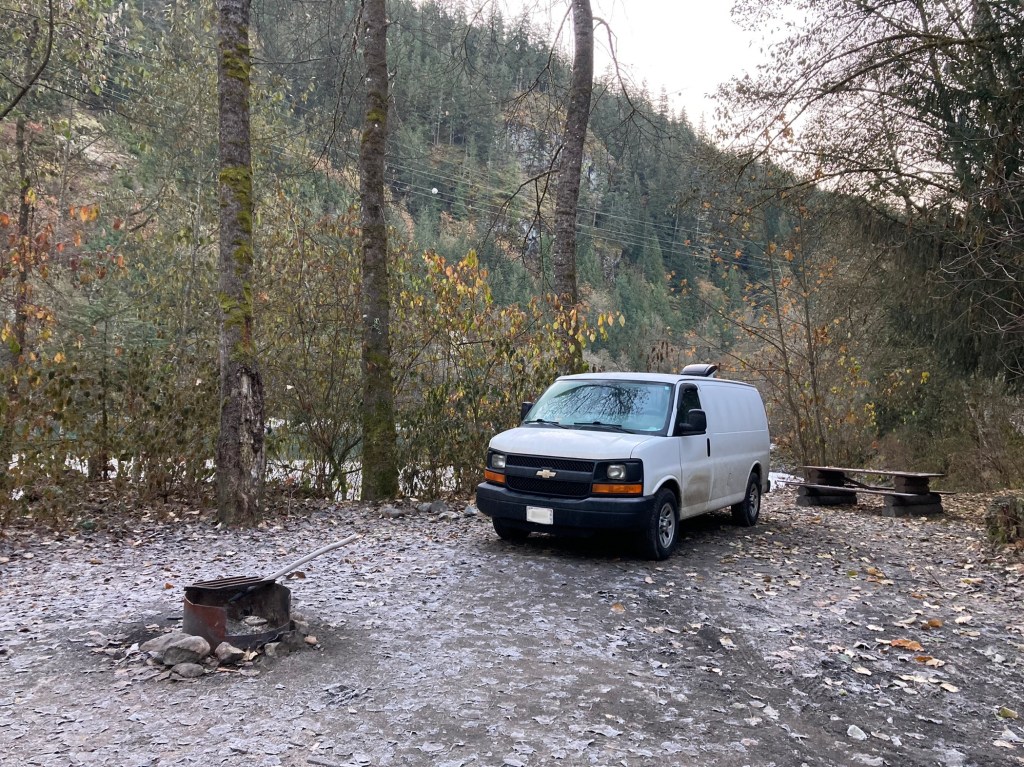
But I also had been in such a rush that I hadn’t eaten a real breakfast and looking down at my pack in the car had me car sick. So I resorted to sorting what I did and did not need, leaving a reject bag with my friend and watching her drive off (she had to speed to work) as I stared down at my overflowing pack on the ground, and the reality of what I had gotten myself into hit me full throttle.

Then the black flies descended.
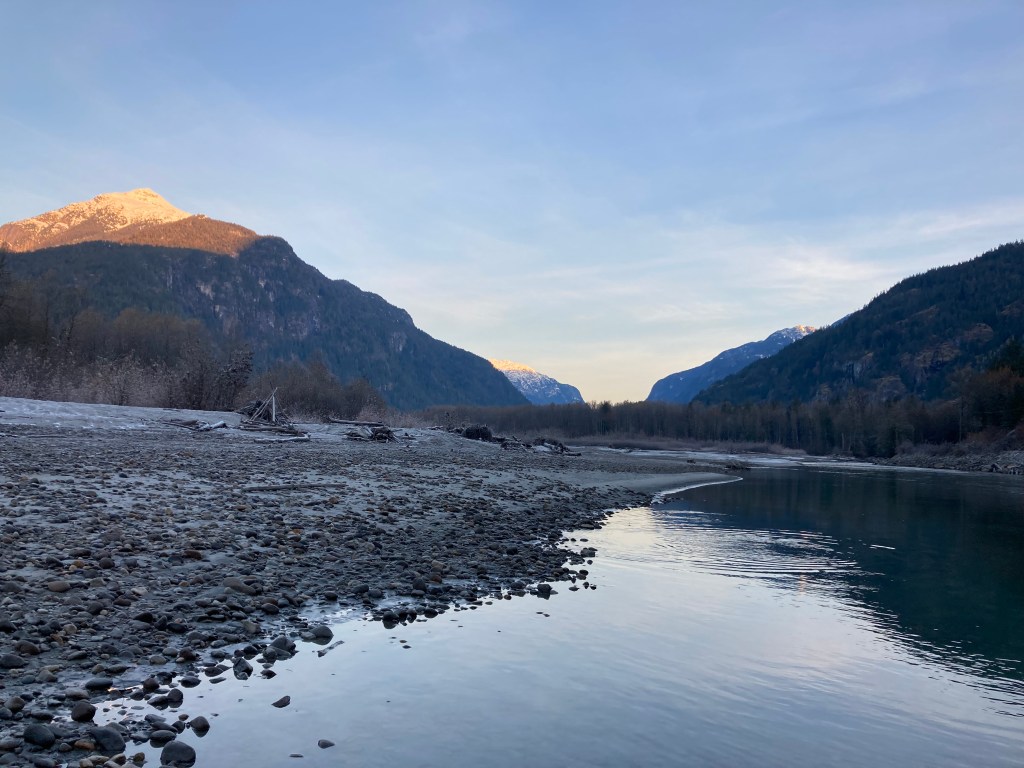
It took about an hour for me to get everything relatively sorted in my pack (swatting flies and frantically applying my bug repellant), get to the trailhead sign, and take some photos. Then I took my first steps of what would be a 15 day journey, rife with pain, gain, blood, sweat, and tears (all worth it).

The first path was Island Meadow Path (10.1km, rated moderate difficulty, going from Cappahayden to Renews). I had no issues on this trail. It was overcast and began to rain and drizzle, giving me the opportunity to break out my rain jacket and waterproof pack cover.

As I hiked a thought popped into my head: “Don’t be an idiot”. It became one of several mantras for me on the trail. It kept me on my toes, made me wary and careful. It somehow felt like something my Dad would say in dry humour.

As I took in the clouds and waves, the exposed land and those who lived here, I thought of the extremes of this environment, of its weather. On the coast you are exposed. But extremes make you stronger, teach you lessons – in nature and in life – of how to weather whatever comes your way.
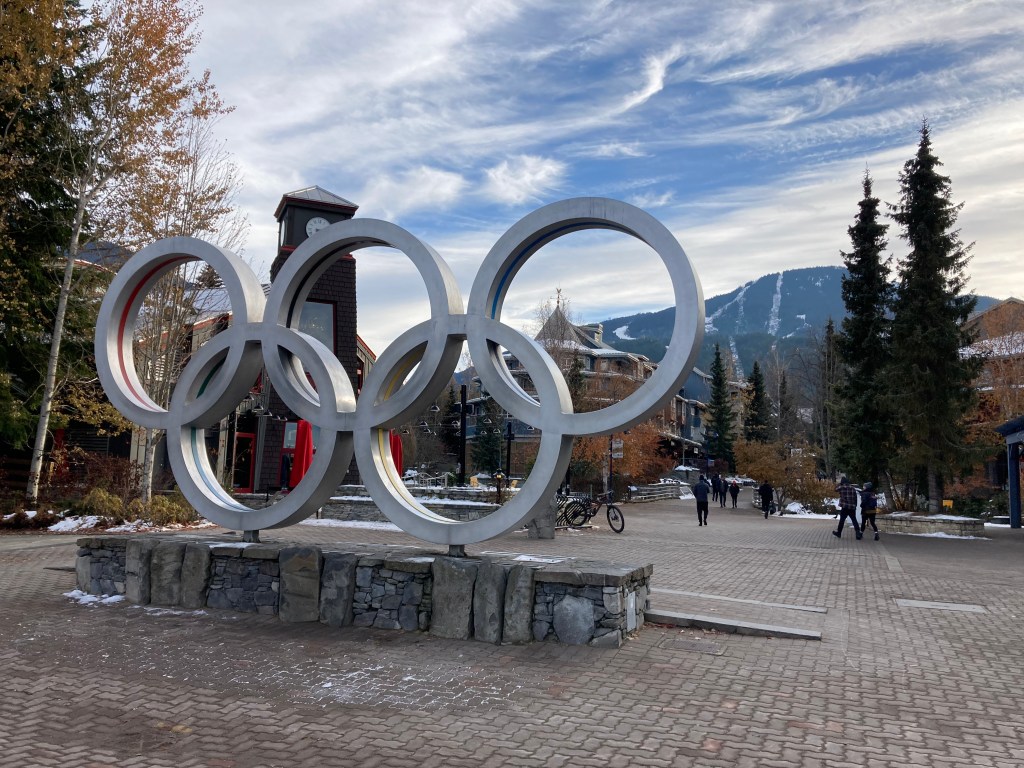
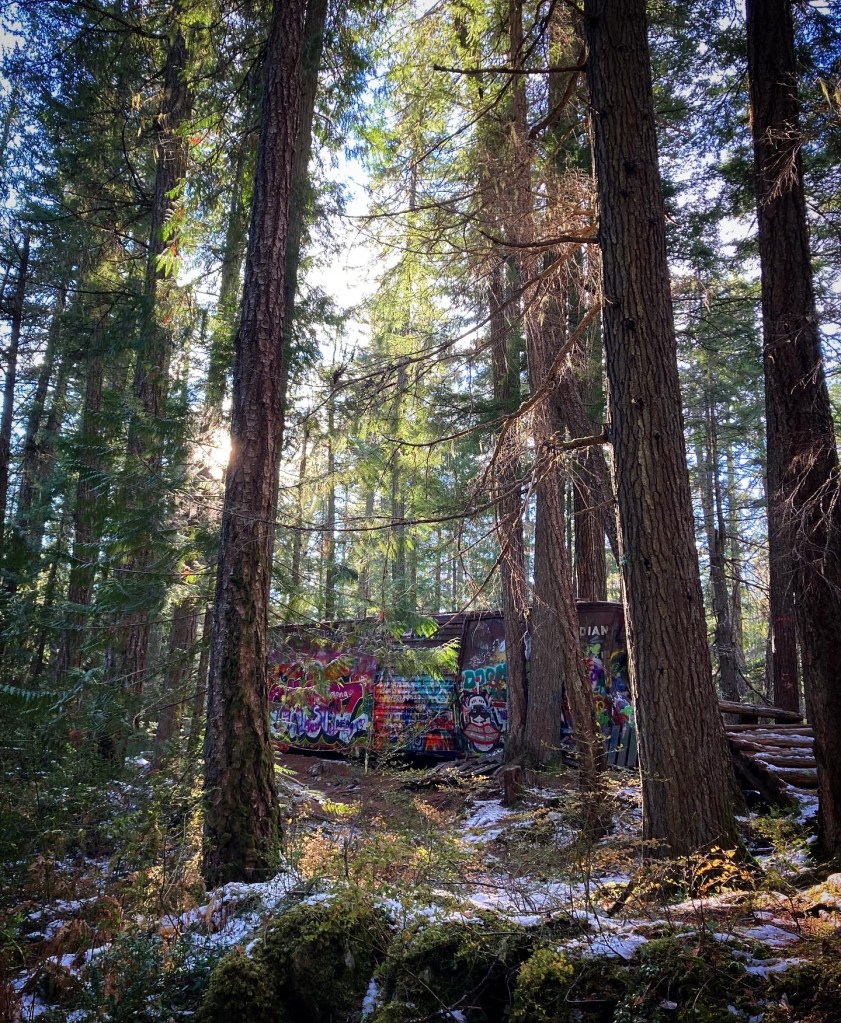
Because I had started my hiking later in the day, I wasn’t able to get as far as I’d planned. As rain threatened and daylight hours began to run out, I finished Island Meadow Path and began to walk the “community link” (roads) to the next trailhead – a 5.1km link. Had it been earlier in the day I could have stopped in to Merrymeeting Cafe (food, drink, souvenirs).

Then a tourist couple offered me a ride. And while I was hesitant (because I hadn’t decided if I wanted to be a stickler – not because of the risk of hitch hiking – they were genuinely nice), ultimately I gave in due to the looming rain and dark. They were a couple from BC who’d just gone out to dinner. We chatted as I directed them, we passed by some goats, and within a few minutes arrived at the next trailhead sign. I thanked them and was on my way.

I was now on Bear Cove Point Path (11.6km, moderate, Renews to Kingman’s Cove). Time to find a decent spot to random camp before it got too dark. I crossed coastal meadows and headed into forest, weaving in and out of the trees to see ocean waves crash on cliff and rock – as I would grow accustom to over the following weeks.

Just in time, a few kilometres in, I settled on a remarkably flat outcropping of ground cover at the edge of the woods and up a small rock ledge, which was to one side of the trail and a bit of rocky beach – just high enough that I wasn’t worried about the tide washing me away. I set my pack down (not yet knowing that this would be a highlight of my days to come) and proceeded to set up camp for the first time!

My first random camp site. Behind me is ocean as far as the eye can see and I got to fall asleep to the sound of waves and whales (which never got old). Plus the trees provided some shelter.
Day 2

{19.2km}

Morning burned off the fog and cloud and it proved to be a beautiful sunny day. I didn’t see (or hear) a soul at this spot and happily began my second day of hiking.

I decided to get creative and put my feet (and fresh socks) into the “poo bags” I’d brought before putting them into my hiking boots. My wet socks from day one smelled of bog water. I knew that my feet would not have ventilation with bags over them, but they were getting wet from rain and plants and puddles anyways. And I discovered that sweaty socks smell much better than bog water socks!

The major adjustment for the first few days on the trail was to carrying the pack – I developed some bruising on my shoulders and hips, as well as sore muscles, but eventually my body got used to it and got stronger. I thought of how muscle fibres rip and heal in order to become stronger.

I looked back at the land I’d traversed so far. Seeing it fade from where I’d come – like where I’d come from in life – there was a sadness in nostalgia, but also a pride in how far I’d come.

The rest of Bear Cove Point Path kept me in the forest quite a bit and there was quite a bit of “bushwacking”. You could say I became one with the trees. I lost count of how many spider webs my body (often face) cleared from the trail.

At one point I remember stopping to look around and there was complete silence. Not even the sound of the ocean was audible, just my own breath and heartbeat. It was a memorable moment.

Following Bear Cove Point was a 7.1km link to the next path. I walked a few km to an Ultramar to restock and camel up and it didn’t take long for a friendly local woman to offer me a ride. I obliged and she told me all about a couple of girls she’d given a lift the previous summer. She was the second person to ask me if I was doing the hike alone, responding with, “you’ve got some nerve!” But if I let doing things alone stop me from doing the things I want – I’d miss out on a hell of a lot in this life. Thanks to her generosity I was able to make up some ground from Day 1 and get to my intended campsite for the night.

I was now on Spurwink Island Path (17.1km, difficult, Port Kirwan to South West River).

I started from the trailhead around 6pm, so I was racing the sun (sunset around 9pm) to get 9.2km to Gallows Cove Campsite (a wilderness campsite). Typically, I was finding that my average hiking pace was 3km/hr. The first 4.5km to Chance Pond River were a breeze and took only 1hr15mins. But the terrain became more difficult after this, with hills and mud and fallen trees. I was excited though, because I knew I had a stunning view coming up at Berry Head (1.3km before the campsite) – and it did not disappoint!

I didn’t want to rush past this view, and I have no regrets, but I did end up having to set up camp in pitch black. I got to the campsite as it was getting dark. There were raised wood platforms for tents and it only dawned on me that my tent would not work on these after wasting time trying to set it up. I gave up and scoured the ground for a relatively flat spot. I found one, muddy, but that’s all I could do. It got to the point where I was setting up my tent by feel instead of sight. I hung my lantern in a nearby tree and looked around, my heart filling with dread at what might be lurking in the dark. I snapped myself out of that train of thought fast – pushing back thoughts of the Blair Witch – and focused on the task at hand. Everything would be fine once I was in the tent, I told myself…

And it was! I had a pleasant, undisturbed sleep. A couple of hikers passed through the next day, stopping to chat and have an early lunch. Then I got on my way.

Day 3

{14km}

I continued on Spurwink, which meets up with Mudder Wet Path (2.9km, easy, South West River to Aquaforte).

I knew that rain was in the forecast for the evening, but I hoped it would hold off as long as possible.

Unfortunately, following Mudder Wet, Sounding Hills Path (5.5km, easy to moderate, Aquaforte to Ferryland) had been closed due to a dispute between a landowner and the city. I planned to bypass the trail, following Route 10, and walk to the Ferryland Foodland to restock. Once again, a kind local offered me a ride – saving me about 5km and some time before the rain. He wanted to make sure I knew about Sounding Hills being closed, remarking that it was a beautiful trail – and what shame it was that a silly dispute was keeping people from experiencing it (a sentiment I heard echoed by other locals). This young man said it was the first time he’d ever picked someone up off the side of the road (he didn’t think I looked sketchy – hoorah!) but the impending rain played a part in his offer, and I was grateful.

Once my energy stores were replenished (which included a “luxurious” fruit bowl) I headed on (about 1km) to the next trail: Caplin Bay Path (5.2km, easy, Ferryland to Calvert). This is when the rain started.

It was around 7pm, so it made sense to find camp for the night – ASAP. The beginning of Caplin Bay Path brings you up a gravel road and you have the option of continuing on this road or going up onto a grassy hill (where you get a good view of Ferryland and the lighthouse) – not that I could see it with the rain and fog. Since I needed to find a spot to sleep and didn’t want to be so close to all these houses, I ventured up the hill. It took a while to find a level spot, and it was very exposed, but the rain was really starting to come down. I could see houses and roads from here, but I figured no one would bother me in this weather.

Everything got wet. I was wet, the inside of my tent got wet, my pack was wet. It was wet.

Once sheltered inside the tent I towelled things off, especially the inside of the tent. I hung up my clothes, got some food in me, and tried to sleep. But it was not a good sleep. I was continually woken up throughout the night by the torrential rain and relentless winds, hoping my tent could withstand the assaults. I was also continually towelling off water from inside the tent, which I assumed was condensation from all my wet gear already in the tent.

Finally, morning came.

Day 4

{21.2km}

All packed up, soggy, and ready to leave this spot on Caplin Bay Path.

What a relief that the rain had stopped. I could tell that my tent was worse for wear, but I dried it off as best as I could and hoped for sun so it could dry out the next night.

I made a pit stop at a little restaurant called Bernard Kavanagh’s Irish Loop for a quick breakfast and restock, then continued on, passing Baltimore school, where I couldn’t help thinking of some girls I used to play basketball with as a kid.

This was a wet but peaceful hike. Once I got off this path I had a 5.1km jaunt to the next trailhead: Cape Broyle Head Path (18.3km, difficult to strenuous, Calvert to Cape Broyle).

But during the jaunt I began to feel a bit off. Specifically my stomach – I was feeling slightly nauseous. The sun had come out and I wondered if I was just overheated or needed a break and some fluids. The dark part of my mind automatically considered worst case scenarios – such as having caught a bug.

Once I reached the Cape Broyle Head Path trailhead I took off my pack, popped a squat, rested and refuelled. I decided to add some of my chamomile tincture to one of my water bottles so I could continually hydrate and dose myself with medicine. I took a couple of ginger capsules as well. I considered my hygiene thus far and vowed to do better (though I thought I’d done well, I became meticulous).

It was a stroke of luck that a previous teacher of mine happened to message me around this time. He told me he was rooting for me and that if I needed anything – a ride, a restock, anything – to let him know and he’d be there. This gesture couldn’t have come at a better time, as I contemplated going onto an 18.3km trail, where there would be no easy exit if the state of my stomach got worse.

I grappled with the decision to move forward for a little while, but I’m not an easy quitter, and I got some more encouragement in the form of a crow feather and glancing down at the time when it happened to be 3:33pm. I also saw a bald eagle. I took heart and carried on. And on the bright side, I was on my way to a wilderness campsite (Long Will Campsite) – where there could be other people and there would be a pit toilet.

The trail lived up to its rating – it was difficult. Not only did it feel like the climb wouldn’t end to the “top of the cape” (“your mountain is waiting, so get on your way!”), but because it had recently rained much of the trail had turned into a river. I was not river-crossing, I was traversing the river, hoping not to slip and fall.

About four hours and 11.1km later, I reached the campsite, and for the first time on this trek ran into people who’d be spending the night in the same spot as me – and I was grateful.

The nausea and upset stomach lasted for a few days, but luckily never got any worse. I kept taking chamomile and ginger. And ultimately concluded that it was a sign of my body being stressed from exertion. Due to my sensitive stomach I was getting most of my calories from liquids – as I didn’t want to aggravate anything.

Day 5

{18.9km}

I knew rain was in the forecast again for Day 5, supposing to start around mid afternoon. I attempted to get an early start on the day- but for me that meant my hike started around 10am. I was up early, but morning chores always take me a while (stretching, bathroom, spot washing my clothes, eating, checking maps, packing up, drying out/ tearing down camp, etc.).

The last seven or so kilometres on Cape Broyle Head Path somehow seemed even more treacherous than the previous night’s adventure and I was glad to come out the other end. It’s a 7.1km link to the next trailhead, and I made my way to the nearby Ultramar and O’Brien’s Clover Farm Supermarket (which has a bathroom) to do my usual camel up/ restock routine.

With the looming rain, I was once again greeted by a generous local who offered me a ride to the next trailhead. This gentleman was heading that way anyways and assured me he was not a serial killer (awkward laugh) and gave rides to many thru-hikers, recently two men from Germany.

Had I been anywhere else in the world I might have been declining all these rides, but growing up in Newfoundland I knew it was a pretty safe place. I used my gut to decide whether to accept a ride or not. And I was fine with not walking all of the roads in between trailheads because I’d come to hike the trails, not the roads, and sometimes (like when rain was expected or dusk was approaching) it was practical to accept a ride.

I was dropped off at the beginning of Brigus Head Path (6.5km, moderate, Admirals Cove to Brigus South). Sadly, since it was overcast and foggy, I didn’t get to see the full spectrum of views on this trail.

I was making good time. The rain really started to come down when I reached the end of this path – it poured for a while and I got pretty wet as I brushed up against plants. It was only a 300m link to the following trailhead and soon I was on to Flamber Head Path (11.5km, moderate to difficult, Brigus South to La Manche Village).

This path quickly turned into one of my favourites (moreso on day 6). I only had 3.9km till I hit Roaring Cove Campsite, another wilderness campsite. I hoped for a break in the rain, and somehow – I got it. This path begins with an ascent through brush and between two private properties. You emerge on oceanside rock outcroppings. Conditions were wet and slippery, so I took my time – “slow and steady” was another mantra for me on this thru hike as it was better to get somewhere in one piece than risk injury or falling off a cliff.

I remember my phone dying on this portion of the hike, since it had been a while without sun and the opportunity to charge my phone from my solar panels. I passed one male hiker going in the opposite direction, a day hiker. We made small talk and I kicked myself for telling him I was headed for the campsite in a few kilometres – a lone girl in the woods, easy pickings for weirdos. And how was I to know who was best kind and who was a weirdo? Better safe than sorry. You live you learn.

Luckily, upon arrival to the campsite I was greeted by a group of four, so I would not be alone that night. That put my imaginative mind at ease. The rain was fully stopped by now, and I was surprised to see that they’d successfully started a fire.

I set up camp and not long after it started to rain again. But I knew it was supposed to end by morning and I was fine with rain as long as I didn’t have to set up or tear down camp in it.

My spirits were high – and tomorrow I would stay at my first real campground in La Manche Provincial Park, where I would get to shower and do laundry.

Day 6

{9.6km}

Day 6 began with the most treacherous river crossing I would face on my trek. Probably made worse by the recent rain, the river for which the campsite was named was wide, powerful, and with only a few large stepping stones spaced out across. It was lined with mud and things were slippery.

I ended up crossing this river three times. First, without the pack, to get a feel for the best route and footing. Then, I dawned my pack – which of course changes how you move/ your weight and centre of gravity- and went for it. Somehow, I did it, without falling in, and I let out a howl of relief and joy, laughing to myself at what anyone within earshot might think upon hearing it. Yup, the forest had laid claim to my wild soul. (Or maybe I was losing my marbles).

I was rewarded for my river crossing with the stunning views on Flamber Head. The sun was starting to peak out from behind the clouds and I made my way to the lookout where 360 degree views took your breath away: coastal cliffs, green grass, rock formations, waterfalls… each cementing this path as one of my favourites.

Not too far after this I passed a beautiful, big waterfall. Either would be good lunch spots – but I was more of a snacker, especially with my sensitive stomach.

I did, however, stop to try and spot whales, when a couple from the Pennsylvania told me they had just seen some. I had been so caught up in meeting my daily kilometre quotas up to this point, that I hadn’t seen any whales – despite several hikers raving about them – because I wasn’t making time to slow down and look.

No luck this time, but I took in the aquamarine waves crashing and swirling beneath me against the rugged cliffs. Eventually, I wouldn’t need to look for whales, I would be able to tell they were there by the sound they make with their blowholes.

With only a few kilometres to go to the end of Flamber Head Path and La Manche Provincial Park, I hit a wall. I ran out of steam, and despite it becoming a beautiful day, I started to feel emotionally and physically depleted. On top of my sensitive stomach, which was the reason for my low energy, and nausea, my hip was starting to act up and a fear began to form that I might be developing an overuse injury. What else could go wrong? I was caught in a dark mindset.

I plugged on, head down, until I finally made it to the park entrance. Once I’d finished Flamber Head Path, it was another 2km or so on an access trail to the campground. This was a shorter day, kilometre-wise, but I was tired. After checking in I remember sun showers falling and I just started to cry.

One day at a time, I told myself. Take a shower, you’ll feel better. Do laundry – clean clothes will make a difference. Use your camp stove and have a real meal. There is water here you can boil to top up your water stores.

I was 6 days down and 9 to go. I was almost half way there.

I also had my first blister. The pain wasn’t too bad (yet) and I used the comfort station as a more sanitary place to pop, clean, and bandage the blister. My heel was starting to rub raw and I had a couple of blood blisters starting to form, but I did what I could, using my Blister Medic.

A hearty dinner and a good sleep, plus a second shower, and I really did feel better in the morning.

Day 7

{21.6km}

I retraced my steps on the access trail to La Manche Village, where there is a beautiful waterfall as a backdrop to a suspension bridge, which also overlooks the ocean. This is the next trailhead.

La Manche Village Path (6.4km, easy, La Manche Village to Tors Cove) takes you about 2km through forest and then 4.4km through small towns – Bauline East (where this is a wharf with a nice view), St. Michael’s, and Burnt Cove. A local was nice enough to share with me that there is a clean and free water source across from Burnt Cove Beach (look for a light blue tube on the side of the road) that has been tested, and even the locals fill up on drinking water stores from this source.

Once at Tors Cove it’s a 600m link to the trailhead for Tinkers Point Path (5.1km, easy, Tors Cove to Mobile), which is across from a dilapidated old church.

I thoroughly enjoyed Tinkers Point Path. The views really stood out on this clear and sunny day, and it was a peaceful hike.

I considered stopping in to Fork, a restaurant following this trail, but decided to keep moving and make a quick pit stop at a convenience store called Rental Hutch. I had been dreaming of popsicles lately and while indulging on the side of the road a local woman coaxed me into accepting a ride to the next trailhead (despite my protest that it was only 1km away).

She was very kind, saying that she lived in Bay Bulls and offering to give me her number in case I needed a ride in the next day or two. I politely declined, not wanting to abuse her generosity.

I had one more path to tackle for the day and once again was racing the sun as I embarked on Beaches Path (7km, easy, Mobile to Witless Bay).

Beaches Path is a really nice, leisurely trail. About 1.5km prior to the north trailhead I found a perfect camp spot – a little clearing in the forest that was flat and looked like other had used it, too. But I really wanted to get as many kilometres in as possible, so I pushed on – hoping I wouldn’t regret the decision.

As the sun was setting and I was starting to lose light, I reached the end of the trail. It comes out at a beach with a parking lot and some private houses nearby. I found a grassy area just off the trail and behind some trees that kept me mostly hidden. As I was now more practiced at setting up camp, I had no issue in getting settled before it got too dark. I was graced with the presence of a stunning full moon that night, illuminating my tent and the ocean nearby.

Day 8

{22.8km}

Remember when I said I’d had some blisters forming? Well, Day 8 will forever be the day I remember as the worst pain day for my feet.

Day 7 had been bad, but Day 8 was worse.

Every step was excruciating. I was now cleaning and bandaging my feet every night and morning. On this particular morning I thought that perhaps if I wore two pairs of socks it would decrease on the amount of rubbing. But I quickly learned that it simply meant more pressure on open wounds, aka more pain. I returned to one sock layer and forced myself onward. Mind over matter, I told myself. I dug deep and drew upon my ability to withstand menstrual cramps and several hours of tattooing. You’ve got this.

I could either tap into the pain by thinking about it, or I could ignore it, enjoy the views, and put some miles behind me. I chose the latter.

I’m also just a stubborn human being.

Luckily, it was a sunny day. I stopped in to Needs Convenience to restock, camel up, and grab some more bandages (as I was going through them fast at this point).

The community link to the next trailhead was 5.4km and a gentleman offered me a lift (my feet thanked him) which saved me about 2km. His name was Chris Ryan and he told me about a book he had written called The Bay Bulls Standoff.

Mickeleens Path (7.3km, easy to moderate, Witless Bay to Bay Bulls) has views of the Witless Bay Ecological Reserve which is noted as a migratory, seabird, and puffin nesting habitat (also visible from the north Beaches Path trailhead).

But what really struck me was the sight I encountered after this path.

The Tree Triplets: Yabber, Dabber, Doo.

The community link to the next trailhead is 5.2km, but I walked about 6km as I decided to detour a bit to restock at Foodland. Had it been near the end of my day I would have loved to stop in at Sapphire Pub for a beer – but as per usual I was prioritizing making the most of daylight hours.

Next up was Spout Path (16.3km, difficult to strenuous, Bay Bulls to Shoal Bay Road), one of the Avalon’s most raved about trails. If you’re doing it as a day hike you need to access this path by Shoal Bay Road from the Goulds, which tacks 6.4km onto your hike, making for a long day, but it’s definitely worth it. I was happy I didn’t have to worry about the extra kilometres, as Spout Path ends where Motion Path begins.

My original plan had been to camp at the wilderness campsite on Spout Path, Little Bald Head Campsite, which was 11.2km in for me. I certainly did not have enough time to cover that distance before sun down, so I resolved to random camp – which I wasn’t particularly thrilled about initially, as I’d wanted to make the most of more civilized sites and pit toilets. But in the end I was content with how things worked out as there was a younger crowd at Little Bald Head when I got there the next day and I got to camp in a sweet spot overlooking the ocean – all to myself.

The lighthouse was beautiful against the crisp blue sky as I continued moving – and ignoring the pain in my feet.

Bull Head Light on North Head

As it got dark I set up camp at Bald Head (about 6.5km in), a little ways off the path (actually a side trail led the way through ground cover to the spot I set up my tent). I got to watch a beautiful sunrise in the morning.

Sunrise on Bald Head, Spout Path.
Day 9

{22.8km}

I started my day relatively early (9:30am) and was pleasantly surprised that my feet were feeling a little better – not great, but better, which gave me hope for their recovery. It made me pretty cheerful and made for a great start to the day.

About an hour into my hike I ran into the first other solo female thru-hiker I’d seen on the trail. We chatted and exchanged info. I was blown away when she told me about the time she’d thru hiked the Bruce Trail (we were both living in Ontario) – a 908km trek that took her 22 days, meaning her average daily distance was 41km. My jaw dropped. Especially when I was averaging more like 20km a day. But to put things into perspective, she said she’d allotted two weeks in NL and was afraid she wouldn’t finish the ECT in time – because this trail was much more rugged and trying.

300km in two weeks vs. 900km in three weeks really puts into perspective how tough the ECT really is. 

I continued on and took a short break to refuel and take in the scenery when I hit the spout (a wave-powered geyser).

Best nectarine I’ve ever had. 

Spout Path really is beautiful.

Next up: Motion Path (13.5km, moderate to difficult, Shoal Bay Road to Petty Harbour). I’d always enjoyed this path (I’d hiked some of the trails when I lived in NL in 2016). It’s called Motion Head because you’re prone to seeing a lot of wave action with the wind here. You’re on exposed terrain, and today proved to be super windy (with the pack on my back I was almost blown over a couple of times).

There is a wilderness campsite on this trail called Miner Point Campsite, located 2km in from Shoal Bay Road. I checked it out for the sake of it. Instead of wood tent platforms, this one simply has flat grassy areas (levelled sites – which I prefer), but it was not my destination for the evening so I kept moving.

With it being a hot day I was going through water super fast (3.5L for the day and rationing to get to morning) and starting to feel dehydrated. I had refrained from gathering water from fresh water sources because this was my first thru-hike and I didn’t want to risk anything that could keep me from finishing the hike. I had a filter and treatment system with me, and I knew what signs to look for in a good water source. Perhaps I was too strict, and I know a lot of people would think I was crazy for carrying all my liquids (2.2lbs/L) with me – but that was what I did for the most part.

So, near the end of my day on Motion Head, I broke down and started crying again. I was hot, I was tired, I was in pain, I was dehydrated, and I was alone. I had one litre of water that I was rationing till the next morning’s restock. As my emotions got the best of me I looked out at the ocean and couldn’t believe my eyes – whales. This was my first whale sighting on the hike!

And these whales weren’t just swimming at the surface, they were breaching – jumping up out of the water and flipping their tails. Three whale boat tours floated nearby. I started laughing through my sobs – it was like the whales were encouraging me onward, saying everything would be okay.

Once again, I took heart. I sat and watched them play for a while, and then kept going. I remember breathing deep as the sun set and I scouted a good spot to set up for the night – the air can be so refreshing on the ocean. It’s distinct, salty scent, filling my lungs and making me smile… And soon I found a decent spot to random camp close by the Petty Harbour trailhead.

Day 10

{24.1km}

After a good night’s sleep, I was excited to start my day. I only had less than a kilometre to Petty Harbour, where I could grab breakfast and get some much needed liquids into my body.

Petty Harbour – the hill to the right is where I came off the trail.

Chafe’s Landing (restaurant) was not yet open and I didn’t want to wait around, so I went to Watershed Coffee House. Me and my pack got a few stares as I sat and enjoyed myself. It’s a 2.8km community link to the next trailhead. I stopped in to Beachfront Variety (convenience store) in Maddox Cove to restock and promptly made my way to Cape Spear Path (11.5km, moderate, Maddox Cove to Cape Spear National Historic Site).

Because the previous day had been so hot, and this day was calling to be just as hot and sunny, for the first time on the trail I decided to wear shorts and a tank. But because Cape Spear Path is pretty exposed – I actually froze from the wind and got a nasty sun burn (yes, I wore sunscreen, but made the mistake of not reapplying). Unfortunately, I couldn’t tell that I had burned until the next morning.

Once I got to Cape Spear I made use of their public washrooms and took some photos – it is, after all, the most easterly point in North America. I even explored the inside of the lighthouse building.

On to Blackhead Path (3.7km, easy to moderate, Cape Spear to Blackhead Village).

I like to think of this trail as generally up and down. One climb and one descent. My favourite part is near the northern trailhead when you get into forest and there are orange pine needles carpeting the forest floor and lush green moss hugging rocks around quiet streams.

It’s only 200m from Blackhead Path to the next trailhead. I took a break to quench my thirst and had a little visitor…

Then it was on to Deadman’s Bay Path (10.6km, moderate to difficult, Blackhead to Fort Amherst) – this is another favourite trail, but only the half from Blackhead to Freshwater Bay – which was my intended camp spot for the night.

It was still sunny and windy when I started on this path, but it didn’t take long for things to cloud over and look stormy. I hadn’t seen any rain in the forecast, but you never know with Newfoundland weather, so I kept my head down and bee-lined it to Freshwater Bay.

I was the only one at Freshwater Bay, save for a man fishing. I got a little nervous, thinking once again about being a single female setting up camp – a sitting duck. And I was once again lucky, as a large group arrived soon after me and set up camp nearby.

Day 11

{6.9km}

I woke up to the sound of hooves and heavy breathing right beside my tent. I had the fly up, so I couldn’t see anything, but I’m pretty sure I was visited by a moose that morning. It passed by a couple of times – sounding big.

This day began with a short kilometre long detour to Gunners Cove lookout, followed by a long, steep, continuous climb. My lungs and legs were not happy after about 20-25 minutes of ascension.

This half of Deadman’s Bay Path is mostly rock, with swimming holes and a view of Signal Hill before a steep descent. I’d done this trail in the past and followed the familiar terrain. At one point I heard voices through the woods – which I thought was strange as it was parallel to me and not on the same trail. Turns out – the ECTA must have done some improvements and created a new trail, as when I exited my path I saw signage pointing to the trail – in a different direction! I’m glad they made some changes, as there was one point where I basically slid down a vertical rock face that was taller than me.

As I exited the trail, I looked back at the trailhead signs. For the first time since I started at Cappahayden, there was a second sign that had the total kilometre count – “215km to Cappahayden,” it read. I, of course, began to cry again. But in my defense – I was tired and due for a shower – and super happy to be spending that night at an Airbnb in St. John’s.

There’s no crying in thru-hiking!

I had come 215km!

I meandered over to the Fort Amherst Lighthouse and was greeted by a whale. I then called a cab. After checking in at the Airbnb I showered and tended to my feet.

Since my first blister at La Manche I had one pinky toe – the entirety of which had become a blister, and my second big toe which had developed a nasty blister, along with two blood blisters on my heel and a heel rubbed raw. But – the pain was not as bad as Day 8. I had initially decided to go a different route with my second big toe blister – instead of popping it just let it run it’s course. But it became evident that it was going to take over my toe if I let it, growing every day, so I popped it and cleaned it at the Airbnb. I poured rubbing alcohol over the raw skin – and let me tell you – that is pain. But none of my blisters got infected, so I had to be doing something right. My feet would continue to heal and feel better – until I got to the last two (unfinished) trails, which were very rough on the feet

I handwashed my clothes, then went out to pick up a hearty meal from Yellow Belly’s and a few cans of beer. A friend came over and I think it did me some good to see a friendly face after 11 days on the trail. I was tired and running low on motivation for the remaining four days, but I continued to tell myself: one day at a time.

“The mind quits way before the body.”

Day 12

{24.4km}

I, of course, showered a second time before leaving the airbnb. I had been lucky to be under a roof as it had been quite cold the day before (11 degrees C) and rained overnight. Having a hearty meal also gave me noticeably more energy.

I restocked at a Needs near Bannerman Park, then walked through the Anglican Cemetery to Quidi Vidi and around the lake to the next trail (about 4km from my Airbnb to the trailhead).

If one was so inclined they could have walked from downtown St. John’s to Signal Hill and done the 4km hike there, then followed Ladies Lookout path from Cabot Tower down to Quidi Vidi. But that was adding something extra to my day and I had already done that hike several times in the past, so I kept things simple.

Similarly, if one had the time, or if I had been at the end of a day, Quidi Vidi Brewery is a great place to stop for a beer or a flight!

Sugarloaf Path (8.9km, moderate to difficult, Quidi Vidi Village to Logy Bay) is another popular path on the ECT. You definitely start to notice a lot more people on the trails closer to St. John’s.

This trail begins with a climb up Bawdens Highland, which rewards you with views of St. John’s and Quidi Vidi. Eventually it passes through the Robin Hood Bay Waste Management Facility, and comes out at the Ocean Sciences Centre in Logy Bay.

I decided to take a small detour after reaching the end of Sugarloaf Path towards a Needs Convenience to restock. I walked 3.5km to the Needs, which also had a liquor store attached. Based on something my friend had said, I decided to pick up a mini bottle of liquor and took a swig each night. Partly as a treat for another day under my belt, but also because my friend said people use liquor to kill potential bugs in their stomachs when in the wilderness – made sense to me, so I figured, why not?

Shortly after restocking a kind woman with a Newfoundland dog in the back of her van offered me a lift to the next trailhead.

I was now on another of my favourite paths: Cobbler Path (5.1km, moderate, Outer Cove to Red Cliff Road, Logy Bay-Middle Cove-Outer Cove).

This trail takes you past the remnants of Pinetree Line Radar Station, descends to ocean level at Cobbler Brook, then climbs through forest. You finally come out at Torbay Point – which is well worth the extra time for the views – and then meanders easily through forest for 0.5km to the path’s end.

Torbay Point – one of my favourite spots on the whole ECT.

I walked the 3km link to the next trailhead at Middle Cove Beach and set up camp here for the night. There is a porta-potty at the beach. And I was pleasantly surprised to find that the capelin were rolling! People were making fires on the beach and bringing buckets to collect the fish.

Day 13

{24.8km}

It was an easy start to the day with Silver Mine Head Path (2.4km, easy, Middle Cove to Torbay).

There is a river crossing to be careful with, but other than that it’s an easy section of the trail.

And following this path was another interesting sight…

Chair (or should I say throne). Sitting on a ledge overlooking the road, commanding the respect it deserves. 

The southern trailhead onto Father Troy’s Trail (8.7km, easy, Torbay to Flatrock) off Spray Lane was closed so I walked to the designated alternate access at the end of Moore’s Valley Road. On the way I restocked at PJ’s Groceteria. My glasses had broken on the trail and this store had a section with outdoor equipment, as well as office supplies, so I picked up some tape for temporary repair, and batteries for my lantern (which wasn’t as bright anymore). It was still sunny at this point, but I knew there was rain in the forecast for the evening, so I made this a quick stop.

Father Troy’s takes you along the coast, an old fishing dock, and through farmland, before exiting at Flatrock – where it’s not hard to see where the town’s namesake came from. As I exited the trail it had become dark and cloudy.

The community link through Flatrock to the trailhead for Stiles Cove Path (15.1km, moderate, Flatrock to Pouch Cove) is 1.5km. I was impressed with Stiles Cove Path from the moment I stepped in front of the trailhead sign, with tall red rocks standing above the ocean, beckoning, a prelude to the beauty to come. This path would quickly become among my favourites on the ECT.

Just past this trailhead sign is a beautiful, roaring waterfall. The trail takes you through serene forest and after a couple of kilometres you reach Red Head – an exposed grassy area. I considered setting up camp here for the night, as it was not yet raining, in order to avoid getting wet. But 16km or so was not nearly enough to meet my quota for the day, so I pushed on. There are a few access trails that meet at Red Head and I accidentally took one of these, with a creeping feeling making itself known that I’d gone off course due to the lack of ocean views. I used the two nearby towers as landmarks and my maps to get myself back on the main path.

I was ready for the rain when it started, with rain jacket and pack cover in place, and luckily it was just a light rain. I expected it to get harder, but hoped I’d find a decent camp spot before then. Stiles Cove had several camping options, but you could tell they get consistent traffic, and I didn’t like the idea of potentially being disturbed in the middle of the night – out in the middle of nowhere – by strangers. But the cove and waterfalls (yes – plural) here are stunning.

I like to imagine mermaids or sirens hanging out in the pool under this particular waterfall.

As I kept hiking, and it kept raining, and the trail was sticking to thick forest and brush, I started to worry (based on the look of my topographical maps) that I might not find an appropriate spot to random camp. But my despair was finally vanquished when I came out of the forest onto a vast clearing overlooking the ocean. I scoured the groundcover- laden area and settled on a decently flat spot. It was still a light rain, but began to pour shortly after I settled myself in the tent. I was very content to have missed the downpour!

Day 14

{24.2km}

The rain stopped overnight, but the fog lingered into the morning. As I made my way off Stiles Cove Path (I had 5-6km left), the sun eventually came out. Shoe Cove took the cake for views.

Shoe Cove, Stiles Cove Path, ECT

I also saw a pretty cool tree – I dubbed it “The Octopus Tree”.

About 0.5km past the exit off this path is D&L Convenience, where I made my final restock. As I camelled-up outside the store, a local man offered me a lift (the kilometre or so) to the next trailhead. We made small talk and when I told him I’d lived in Toronto for a while he proceeded to list off the main streets of the downtown area in auctioneer fashion – I couldn’t even list them slowly and was left impressed by his sharp mental faculties.

Up next: Biscan Cove Path (7.3km, moderate, Pouch Cove to Cape St. Francis). Just prior to the trailhead sign is a commemorative sign for the Water Witch Shipwreck.

I passed a father son duo not long after getting onto this path. This was their first day on the ECT and first path as they embarked on their own thru-hike to Cappahayden. They had decided to forego White Horse and Piccos Ridge (as many of the thru-hikers I’d met had) due to their status as “not hardened to ECTA standards” and having a reputation for being very tough. They asked me if I had any advice for them as I was almost done, and I was reluctant – as everyone has different experience levels and skill sets. But one motto I think everyone can use on this trail is “slow and steady”. If you rush it you won’t take the time to enjoy the views or watch for wildlife, and more importanly you increase the risk of injury. We wished each other luck and parted ways.

Part of me agrees that if you’re doing the thru hike for the enjoyment and want to be safe – definitely, bypassing the two unfinished paths can be a smart move. But as I’ve mentioned before, I’m stubborn, and I knew that I, personally, couldn’t in good conscience say that I’d hiked the whole ECT if I didn’t do these last two trails. Other people also suggested doing White Horse and Piccos Ridge first just to get them out of the way – which of course makes sense. But I figured I wouldn’t quit so close to the finish line. And this way I wasn’t so green – I myself had been hardened by the ECT in preparation for these challenging trails.

Biscan Cove Path also had its challenges. There was quite a climb, things were wet and slippery, and I had my first misstep where my foot went fully into a river while crossing. Luckily it was just my foot, I wasn’t hurt, and my pack stayed dry.

I came out in Cape St. Francis and walked 600m north to the next trailhead: White Horse Path (17.5km, {super} strenuous, Cape St. Francis to Bauline). Here you begin at the northern tip of the Avalon Peninsula, changing direction to travel south along the western side of the peninsula, and being able to see more NL coast across the ocean as you look west.

This trail begins with a climb over stark white rock. After an ascent and descent (where there is also an alternative access path if you want to bypass this first part – but why bother do the trail if you’re not going to do it in full?) you enter forest.

I heard voices here and was excited to ask some hikers about the trail conditions – but it turned out to be a group of three young guys who didn’t look like hikers, so I refrained. One smiled at me and his eyes widened as he asked, “you’re doing the trail alone?” I assume it was an innocent question, and I didn’t really worry as I doubted anyone in their right mind would willingly follow me into such harsh hiking conditions. But did he not realize that was a creepy thing to ask a solo female hiker?

There was a vertical rock face to climb here, and then a chain to hold as you descend the other side. For the first 4km the trail was almost continuous climbing. Slick rock was less desirable for foot placement than mud when it came to these steep climbs. Finally, the trail seemed to reach a plateau and for the most part stayed at a similar elevation for a while. As this is an unfinished path, there were a few signs, but mostly I was following neon ribbons affixed to trees.

After the boys at the trailhead, I didn’t see a soul on this path, though there were a few footprints in mud. Fog had rolled in and it would have been easy to feel uneasy all alone, mist obscuring my view, the promise of night on the horizon. But I was on a mission and my mind was busy with putting miles behind me and not getting injured or falling off a cliff (which I say with some sarcasm, but this trail had the highest risk for falling off a cliff – there were some climbs when I looked behind me and it was basically a vertical drop into the ocean – which was pretty far below. These last two paths have the highest elevations above sea level of any of the ECT sections).

Prospects for random camping were few and far between and as darkness descended I decided to set up camp in between some trees in the forest. This was one of those times I was thankful to have a one person tent, as it just fit. It was a mossy area, bumpy and on a bit of a slant, but it did what I needed.

Day 15

{20.1km}

This was it – my last day on the trail! My body really needed to sleep, so I got a late start to the day. On top of that, when I took a wrong turn onto a side trail and got disoriented, I ended up backtracking about a kilometre (only realizing my mistake when I noticed a very distinct mushroom that I had already passed), adding time and distance onto my day. I took things one step at a time and was overjoyed when I stepped off this trail, walking the 300m through Bauline to the next trailhead.

Final path (!): Piccos Ridge Path (14.5km, {super} strenuous, Bauline to Portugal Cove).

As I approached the final trailhead I came across a father/ son/ grandfather trio who had their camp set up and who I had passed almost two weeks prior in Kingman’s Cove, having just gotten off of Bear Cove Point Path on Day 2. The father and son were from Alberta and the grandfather had come from New Brunswick. They’d done St. John’s to Cappahayden, a few other trails, and were now doing the Portugal Cove to St. John’s portion of the ECT.

We chatted a bit and exchanged experiences on these two rigorous paths. Apparently these guys had been told that Piccos Ridge was the more difficult of the two – which I did not like hearing at the time, but I can now say that I disagree. White Horse is longer and the climbs are extremely tough on both ends, whereas Piccos Ridge actually has some boardwalks and stairs (White Horse has none) and the descent into Portugal Cove was pretty civilized in my opinion. I was also offered intel on a great water source near a flat clearing perfect for camping, which I made use of later.

The initial climb was pretty tough. Maybe it was because I’d been conditioned from White Horse, or that it was a sunny day, but I didn’t find it to be as bad as White Horse. There were ropes tied to trees to hold on to. It was steep and muddy and slippery, but not quite as “vertical” as White Horse and not as long either – more like 2km rather than 4km.

Piccos Ridge

It was a beautiful evening. And while I had my heart set on finishing, I knew I was racing the sun. After 15 days on the trail, I took my first tumble, slipping and falling into a bush (which could have been way worse had I been injured or fallen off a cliff…). I reminded myself, slow and steady, and while I was confident I could reach the finish line if I really wanted to, I decided to camp out one last night on the trail. I set up camp a few kilometres before the end of the path, with a view of Bell Island and the sun setting over the ocean. I gathered water from the aforementioned river (filtered and treated) for drinking and making dinner on my camp stove.

The Finish Line

{4km}

It was a sunny morning, promising a warm day. I had maybe 4km of trail left, so I took my time, simultaneously enjoying myself and eagerly awaiting the moment I passed that last trailhead sign.

I was surprised to see several families (with small children) on this trail, but this portion of the path was definitely more passable, which I assumed was due to its proximity to Portugal Cove (a larger town and near the Bell Island Ferry). One gentleman in a group chatted with me and when I said I was “almost done” (2km from the trailhead by my estimate), he responded that I still had a ways to go… If only he knew that 2km was a drop in the bucket after having come almost 300km.

And then, the moment came.

The trailhead sign came into view, and I began to smile. I had been sure that I would be hit with a wave of emotion when crossing this finish line – surely I would cry. But I didn’t. It felt too surreal.

I did it!

As I walked down the road, I heard the familiar sound of whale and looked over to see two whales swimming next to me in the calm ocean – as if saying they knew I could do it, and bidding me farewell.

I passed a rose bush and stopped to smell the flowers.

I breathed deep that ocean air – as there is nothing quite so refreshing (though I was craving some watermelon).

A friend picked me up and I went back to their place where we spent the afternoon catching up over beers, vinyl, and a BBQ. The perfect way to end my 15 day trek.

The next few days were spent adjusting to being back in my van and restoring my depleted energy stores. I didn’t have a scale so I have no idea how much my pack weighed or how much weight I had lost (I estimate 15-20lbs). It took a good 1-2 weeks for my body to feel back to normal with the healing of my feet, the waddle I’d developed from being used to carrying the pack, my knees having gone to shit, and a generally stiff body.

Overall

My top paths on the ECT, in no particular order:

  • Stiles Cove
  • Flamber Head
  • Cobbler
  • Spurwink
  • The Spout
  • Tinkers Point

*Honourable mentions to Motion Path and Deadman’s Bay (From Blackhead to Freshwater Bay).

Total Distance: 300km

Average Pace: 3km/hr

The End

Now that some time has passed and I’m looking back on my thru-hike, I am feeling extremely nostalgic and already dreaming up my next thru-hike. Being out in nature has an amazing power to heal – physically, mentally, emotionally, and spiritually. I realized that milestones are important to me. I’ve been in a weird limbo for a while now in my life, and this hike made me realize that accomplishing things is crucial for my wellbeing – I’m just wired that way. Friends and family remarked upon speaking with me or seeing me after the hike that I seemed noticeably more at peace.

So here’s to making our dreams a reality and the next thru-hike…

Copyright © Chronic X-Roads 2020